



Pass The ¾ Mount In BJJ With An Unusual Knee Slice

Passing the 3/4 mount in BJJ

I have to admit that I really love the pesky side of Brazilian Jiu-Jitsu. You know what I’m talking about, those moves or positions that really irritate your training partners and opponents and make them do dumb stuff that you can later capitalize on. The only thing is, these positions do work the other way around as well. So, my irritation when caught in one of them used to go through the roof. Until I decided to try and reverse engineer how to get past them instead of being angry for getting lured in there in the first place. One such highly irritating position is the ¾ mount in BJJ, and I have the perfect recipe to take away all its power with a simple pass to full mount.

The ¾ mount is one of those positions that can make you really miserable. Mount is just within reach, all you have to do is free up a heel and you’re there, but it may as well be thousands of miles away. Positions like this are many in BJJ, and they all have a solution. However, you first need to accept the fact that sheer force or nervous fidgeting won’t get you where you want. On the contrary, you’ll never reach the mount in BJJ if you are not methodical and patient enough to deal with the ¾ mount first. You literally have to take it step by step.

BJJ Math – Solving Grappling Fractions

I don’t like math either. I know plenty of the BJJ nerds in our community are math wizards, but I belong to the branch of the medical sciences where we’re not too keen on solving complex number equations. In particular, I dislike having to deal with fractions. However, when it comes to Jiu-Jitsu, we simply have to come to terms that there are equations to solve, and fractions to deal with. Two of those “fraction” positions that are often used are the ¾ quarter mount and the ¼ guard.

The quarter guard is a story of its own, one that we have tackled before. Just to summarize it quickly, it is when you think you’ve gotten past someone’s half guard and into side control, just to end up stuck with your foot between the legs. As insignificant as it may sound, the quarter guard is very powerful and secure, and you can’t just wiggle a foot out and get the points for the pass. As such, you really need to consider the possibilities of getting there and facing someone who knows how to play from the position. That means you need to know how to get past this particular irritating BJJ hurdle.
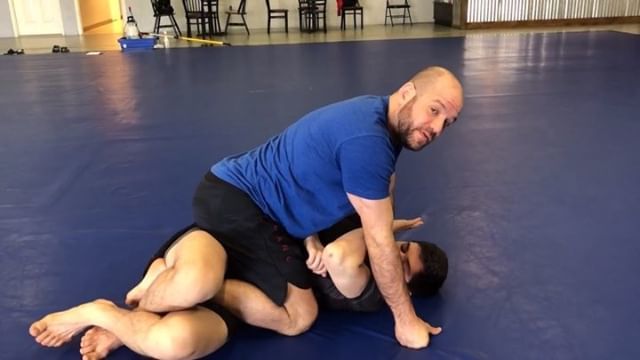
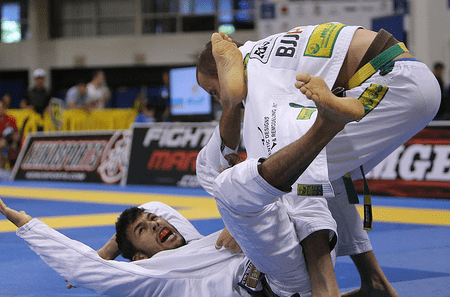
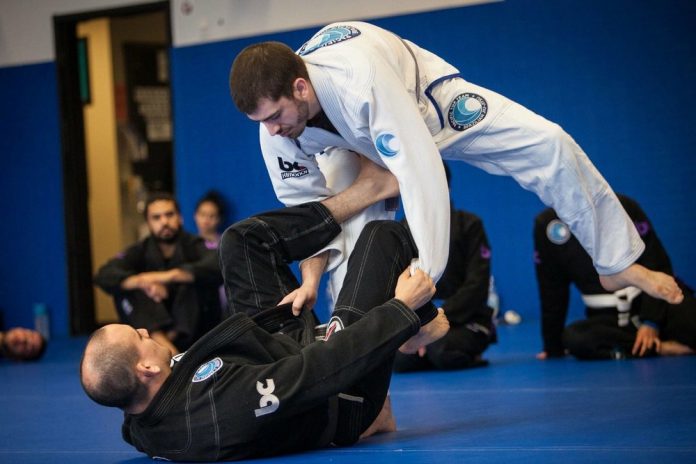
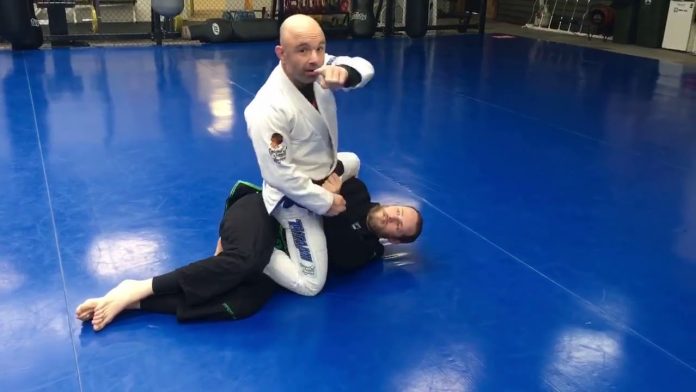
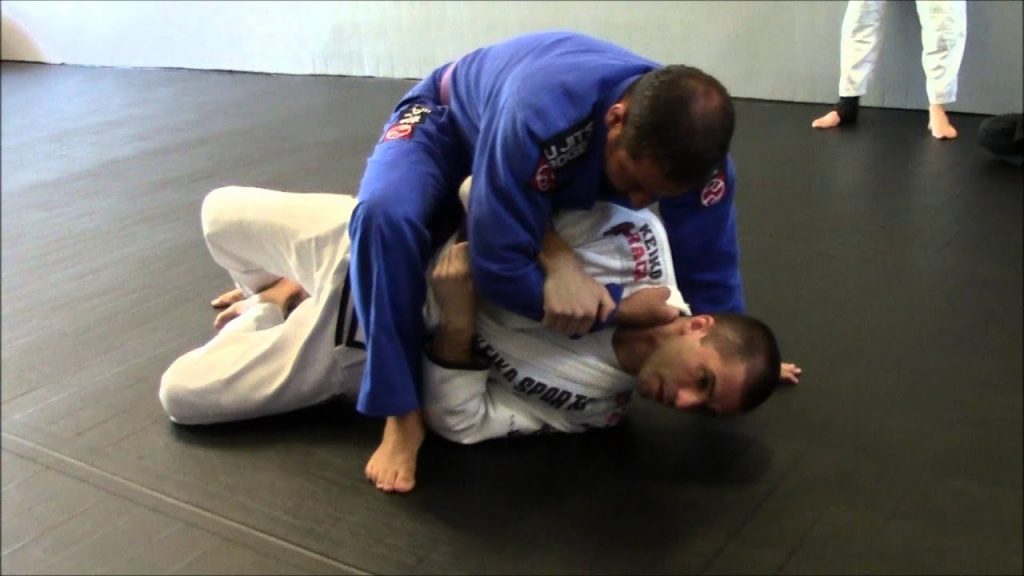
3/4 mount in BJJ - positionHowever, the quarter guard is far from the most irritating guard out there. The ¾ mount in BJJ might not be considered a guard per se, but point-wise it is just that – a guard. Get past it and you get both pass points and mount points, which usually amounts to a total of 7. The position itself is beyond simple. Imagine you’re in someone’s mount, only the have their legs wrapped in a triangle around one of your feet. It is just like the quarter guard, but with the top person in the mount, rather than in half guard. And getting out of the ¾ mount can be a real hustle, one that could easily end up with the tables turning due to acting angrily and rashly.

A Foolproof Way To Pass The ¾ Mount In BJJ

The approach to passing the 3/4 mount in BJJ is a simple one. It has to be, given that you’re dealing with a simple position that’s highly effective precisely because it is not too complicated. The fact of the matter is that an opponent can’t do many things for the ¾ mount in BJJ if you’re patient and stay in place. Moving around, frantically trying to get the leg loose will open up all the space they need to get out, reverse you, or go for counters like leg locks. So, the first thing to do in the 3/4 mount is to relax and be patient. If they can’t do anything to you, you’ll eventually find a way to solve this particular grappling fraction.

The one thing that will both help you to stay in place, and will open up a pass is to be heavy. Focus on loosening up, so that your opponent has to carry “dead” weight on top of them. In terms of gripping, you could go for a crossface by placing the arm on the far side under the head. This is the option I prefer, but there’s also another one. You could grip the belt with the same arm, given that the opponent is on their side, leaving their back open for grips.
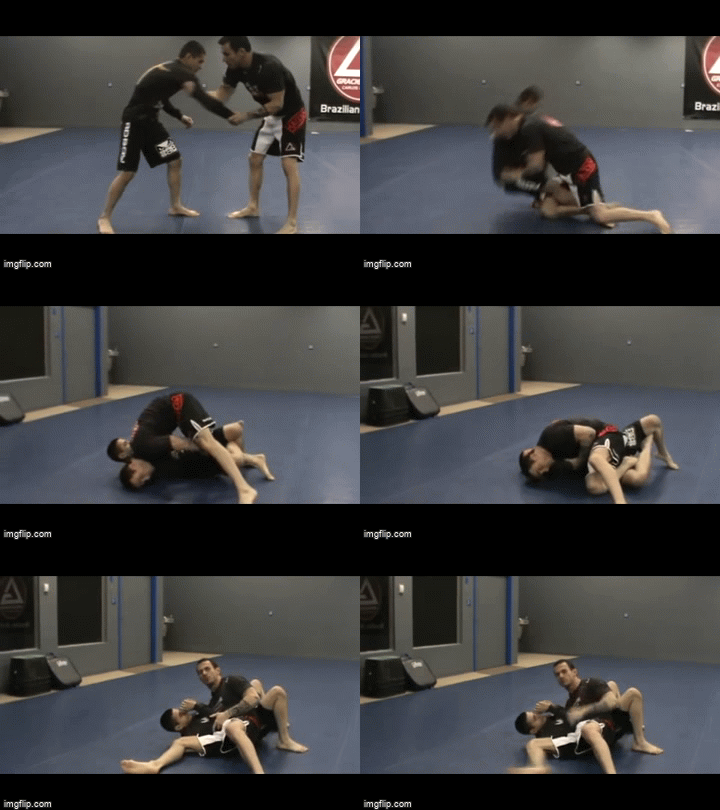
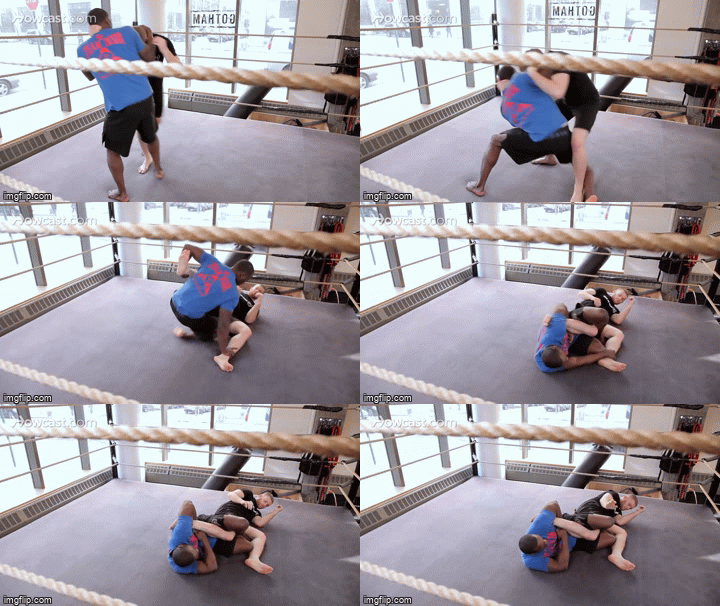
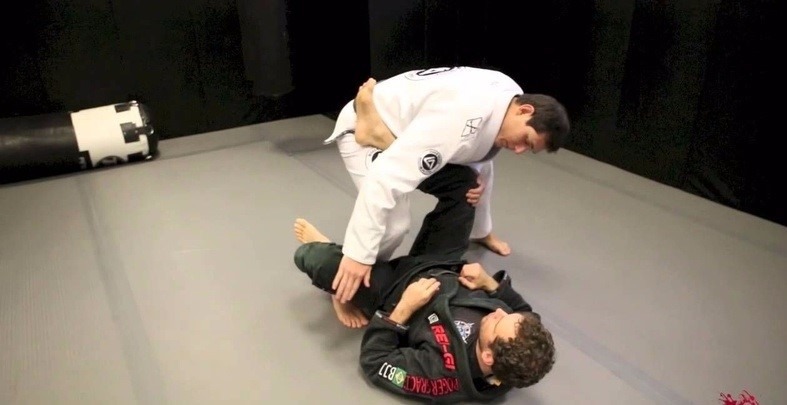
3/4 mount in BJJ - PassingAs for the pass itself, think of a knee slice, just done on the opposite side of what you’re used to. In other words, you take your free leg, and place the knee right next to the opponent’s hip, on the side where they have your leg in the ¾ mount. This will give you the wedge you need to get your foot free, while also providing you with lots of pressure to keep them in place. A little trick to consider when freeing your foot – all you need to free up is the heel. Once it pops, you can get the rest out with ease.

Completing the pass is possible in two directions. One will take you to side control and earn you 3 points for the pass. After you free your foot up, use the knee that’s already on the ground in front of the hip as a pivot, and surf your hips over to the other side. With the crossface/belt grip you’ll end up in a very strong position.

Another option is to head to mount, by placing the knee of the leg you just freed up next to your other knee. This allows you to shift the pivot point and run the nearside knee across the belly right into full mount.

Rolling Back Takes

Let’s make things a bit more interesting here. Sometimes, the ¾ mount is not at all easy to pass, even with the high percentage modified knee slice pass. It has to do with how you and/or your opponent are built, leg strength, foot mobility, and other individual factors. Luckily, freeing the leg is not the only way to get points. With the rolling back take you might not get 7 points, but you’ll certainly get 4 for back control and a perfect position to finish your opponent from.

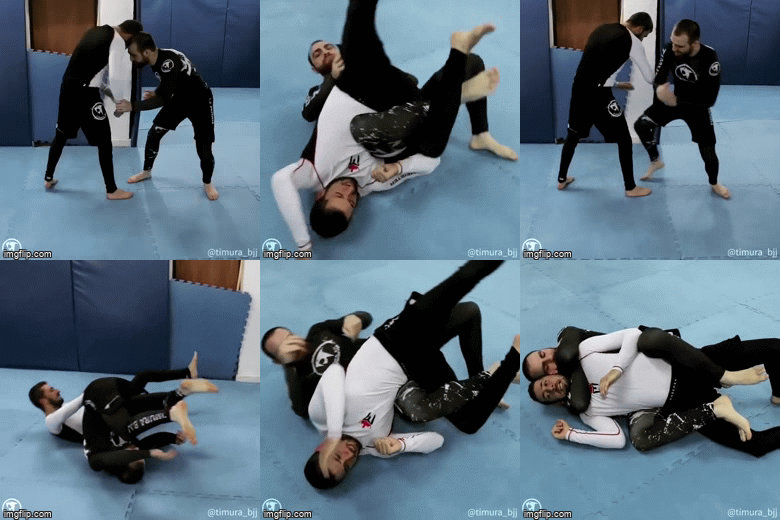
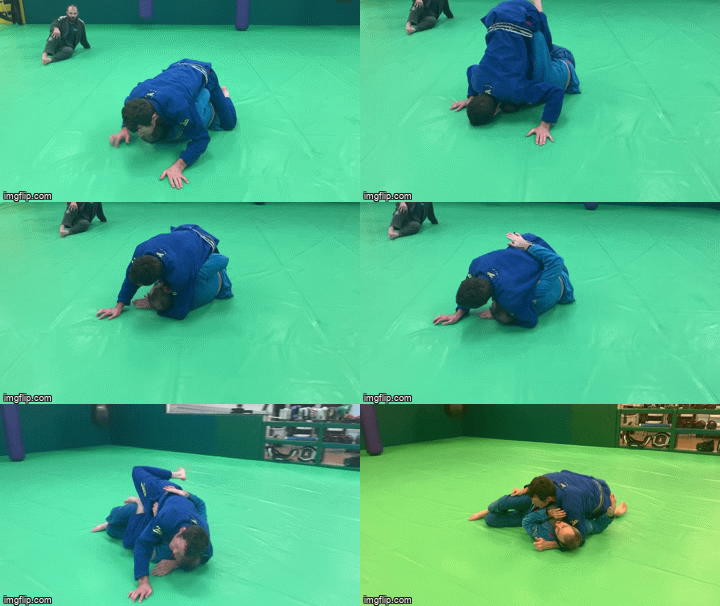
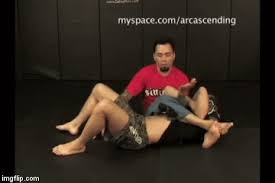
3/4 mount in BJJ - rolling back takeOnce again, stay heavy, loose, and patient. If they can’t get out, you’re in no rush to get your points. Next, use your free leg to lockdown the shin of the top leg of the opponent. Since your leg is already trapped in ¾ mount in BJJ, half the job is done for you. The cool part comes next – turn your body to face in the direction of the legs and focus on grabbing the bottom leg’s foot of the opponent. All you need now is to lay on your back. You’ll end up in the truck positions with lots of options. One is to finish right there with a calf slicer, while another would be to extend the legs and get the back. Of course, you could settle halfway between them too, and finish with a Twister too.

Conclusion

Passing the ¾ mount in BJJ can be difficult, but it is far from impossible. The trick is dealing with the psychological part of the puzzle, i.e. accepting that as close as you might be to full mount in BJJ, you won’t get there quickly. In fact, you might not get there at all, but getting the back is a fair trade, wouldn’t you agree?

Quarter Guard – The Final Frontier Of BJJ Guard

Butterfly Guard: Timeless Sweeps And Submissions Rafael Lovato DVD Review
How IBJJF Rankings Work And Why They Are A Mess

The Inside Trip Takedown For Brazilian Jiu-Jitsu

Inside Trip takedown

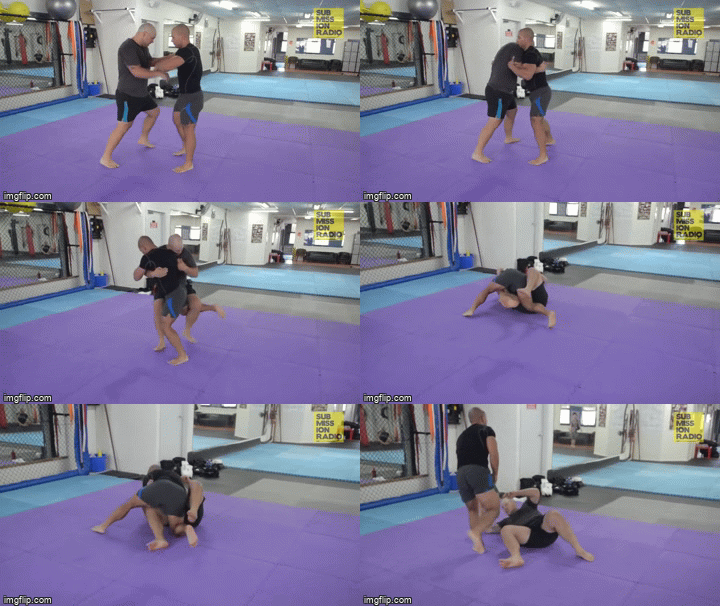
Takedowns are a painful subject for many folks in BJJ. It is not that we can’t learn them, or the old excuse that there are entire martial arts that revolve around takedowns and we can’t find a way to fit them all in our “busy” Jiu-Jitsu schedules. The truth is, we’re just lazy. Being lazy has its perks in Jiu-Jitsu, but not in the realm of takedowns. We can, however, be smart about them and figure out stuff that fits into BJJ standing exchanges rather than trying to learn high-percentage takedowns that work better in other grappling martial art. The inside trip takedown is the perfect example of a move tailor-made for BJJ.

The takedown game is usually perceived as a game of surprise, explosion, and speed. Instead, it is much simpler than that – it is a game of angles. You could certainly employ all of the above qualities in your game, but given that they’re more or less based on athleticism, they are not sustainable over a lifetime of training. Looking to exploit weaknesses by creating favorable angles and off-balancing people is a much better strategy over the long haul. The inside trip takedown will work for you in both cases, but it is much easier to set up and execute if you master the “lazier” aspects of it. It is the BJJ way after all, isn’t it?

The Inside Trip Takedown – Mechanics

Apart from the fact that it doesn’t require you to explode into penetration steps or crazy exchanges, the inside trip takedown has another specific quality that makes it perfect for BJJ and MMA. It works from the clinch, which is pretty much where we find ourselves in both Jiu-Jitsu and mixed martial arts. Unlike wrestling, the danger of strikes in MMA and the presence of the Gi in BJJ guarantee people engage in a clinch-like fashion. Setting up double legs from the position, or even certain Judo throws oftentimes proves to be extremely hard. The easy way out, or rather down, is via the inside trip takedown.

Let’s start by looking at the mechanics of the inside trip takedown by dividing it into upper and lower body mechanics. While I did mention a clinch it doesn’t necessarily have to be any specific clinch position. As long as people are connected at the upper body level, you can look for the inside trip takedown. A usual set up involves an over-under, which allows you to push/pull an opponent into any desired direction. It is the rotational control that allows you to pivot an opponent straight into the inside trip. On that note, the underhook side is the one that matters most.

Inside Trip takedown mechanicsWhen it comes to the lower body, you want to have distance between your hips and those of your opponent when in a clinch situation. The only time you need to get the hips close is for the takedown itself. However, if you try and step in for the inside trip, folks will just step back. So, the goal is to get them to step forward. That’s where upper body control comes in – use the underhook to pull the opponent forward, forcing them to step. The moment they plant their foot you can go for the inside trip takedown.

Finishing mechanics is easy. You have great balance because you’re in a bladed stance, while your opponent is more square. Entangling your front leg with the leg they step forward (at knee level, heel to the outside) is all you need to undermine their balance. And upper body push is all it takes to tumble anyone over to the floor.

Entry Options

The most important aspect of the inside trip takedown is not the mechanics. You can master those in a week, and keep them crisp with constant drills. It is the entry that will take more training than anything. That is where those angles I talked about earlier really come into play.

First and foremost, you have motion. Getting to the clinch in a way that allows you to be safe and set up the inside trip takedown involves is what determines its success most of the time. Two things make or break the motion when looking for an inside trip – a bladed stance, and the proper grip structure to give you the advantage. The over/under described above was just an example. In reality, you like to crate dominant angles by body locking, or going for an arm drag to set the inside trip takedown up.

Inside Trip takedown BodylockThe body lock basically provides you with double underhooks on each side, giving you huge dominance over your opponent. It is not always easy to get it, but it does provide you with the safest and most reliable entry to the inside trip takedown, mostly because you can use it to force either leg forward and finish on each side. As long as opponents don’t pummel back, and you keep a bladed stance, you’ll have the perfect angle to ragdoll anyone.

Inside Trip takedown arm dragAnother great setup is with an arm drag. This is particularly useful in Gi Jiu-Jitsu. The arm drag basically forces your opponent to step forward, without you having to be in a clinch situation before. In fact, with an arm drag, you get the clinch you need, along with the step forward at the same time. Just keep a bladed stance when you pull. It is easy to know which leg goes for the trip given that the leg that will step forward is the one on the arm drag side.

What Comes Next?

Inside Trip takedown backtakeAn interesting option that is perhaps a bit out there, but very creative nonetheless, is using the inside trip takedown to take the back. The trick here is to employ a rolling back take (AKA the Ninja Roll) straight off of the takedown. In order to make it work, both your arms need to be on the outside of the opponent’s body as they are falling so that you can use inertia to roll further and get the back, or the truck position.

Inside Trip takedown Ankle lockLeg locks are also a very viable option. There are actually plenty of options, and they’re based on where you end up. This takedown usually gets you in top half guard, meaning all the back step entries into the Honey hole are a go at any moment. A more legal version would be to hunt for the free leg once you complete the takedown, and attack with an ankle lock. Seeing that you can transition into the knee reap positions at will, I prefer this option since you’re not limited to just one position for leg locking.

All In All

The inside trip takedown is an easy one to implement in your game. It works in Gi, in No-Gi, it is very useful in MMA and any other grappling situation you might find yourself in. Khabib Nurmagomedov, Alexander Volkanovski, Yoel Romero are just some of the fighters that have had immense success with it. Try and introduce it to your takedown game and use angles and tactics over speed and power to get people down to the mat.

Scissor Takedown (Kani Basami) – Is It Really So Dangerous?

Chain Wrestling For BJJ: Real Takedowns That Work!

Forbidden And Dangerous Moves: A Look At The Slam In BJJ

Slam in BJJ - dangerous and illegal

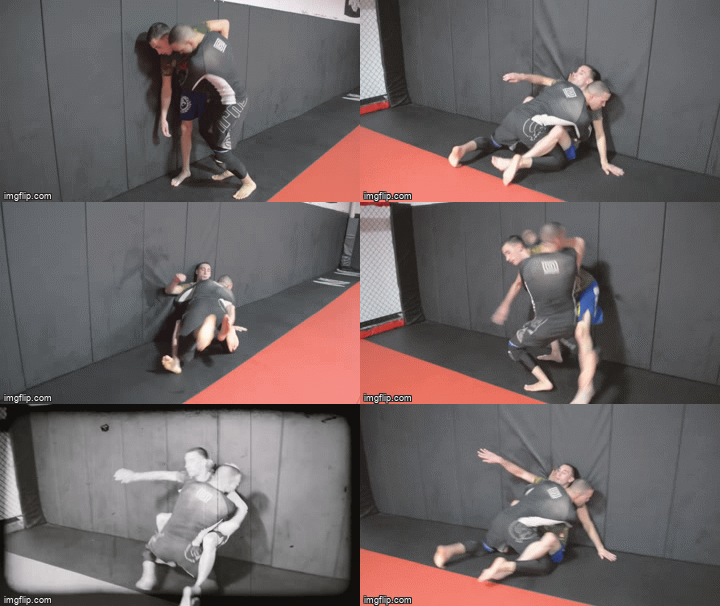
It is no secret that Brazilian Jiu-Jitsu has some controversial techniques, made even more notorious than they should be by even more controversial rules. Among the rules, some make sense, some not so much. In terms of the moves, some are really dangerous and probably have no place in sport BJJ, while others just have a bad name due to a string of circumstances. In any case, Brazilian Jiu-Jitsu is more than a sport, which means some people might need to use the skills in situations where a rulebook doesn’t apply as much, be it self-defense or MMA, Jiu-Jitsu, in my opinion, should prepare people for everything. One such thing that we have to consider at least covering in classes is the slam in BJJ.

A slam in BJJ is not unheard of, though they are extremely rare. Three’s a good reason for that – they can really end up injuring someone. When we are rolling, or even competing, there’s no point to causing devastating and potentially life-risking injuries. It is a sport, after all. However, Jiu-Jitsu does place us in positions where we might be open to being on the receiving end of a body slam. That is no fun at all, and it is even worse if it is done outside the bounds of a sport. To that extent, knowing what the slam is, how it works, and how to prevent it is key to staying safe and keeping others safe.

The Slam / Power Bomb

The body slam in BJJ is completely and utterly forbidden. However, we’ve seen plenty of instances of it in MMA, and even some in WWE, as unbelievable as it may sound. The former was the real deal, with Quinton Rampage Jackson’s body slam knockout of Ricardo Arona in Pride topping the list. WWE style powerbombs or Batista bombs were the signature of Dave Bautista but were no less dangerous than their MMA counterparts.

Slam in BJJ, RampageThe slam is a simple move – you pick up a person that’s on the ground, lift them in the air, and slam them back on the ground, mostly with their backs being the surface that hits first. In some instances, slams might end up with the person that’s receiving them on their head, which is obviously a potentially deadly situation. The move is obviously dangerous, but we have to consider it as grapplers. Why? Well, because we are very open to it on many occasions.
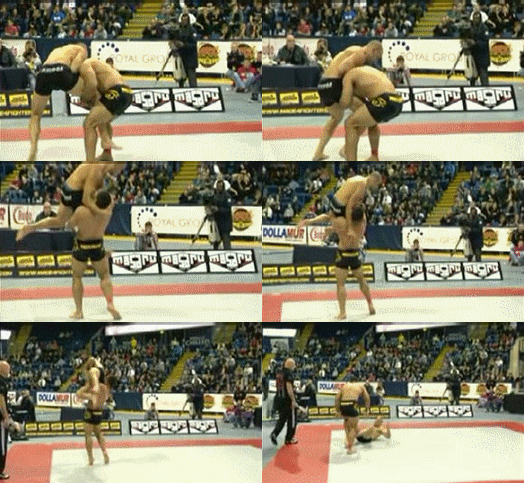
Many of the guards we play have the potential of subsequently leading into slams. In Sports BJJ, with slams being outlawed, this is no problem at all. However, people do instinctively get the urge to lift you off the ground (if they can) when in a triangle, or an armbar, or any other similar situation. Conversely, slamming you back down also seems like a good idea, instinctively speaking. How many times have you had to warn a new student who is either really strong or perhaps has a grappling background to refrain themselves from slamming folks? Of course, they don’t know it is illegal, but that is the problem – neither will someone in a self-defense scenario. In an MMA fight, on the other hand, slams are legal, giving us even more reason to introduce them to our curriculums, even if it is only from a defensive standpoint.

Can You Slam In BJJ?

The slam in BJJ is rare, but when it does occur, it earns an instant DQ. However, there are loopholes just like with everything else, which makes learning the slam in BJJ an even more important task. Even if you’re the most well-intentioned person ever, and would never consider even slightly slamming someone to the ground, you might just end up slipping or making a mistake from a position that results in a slam. Even more importantly, people might not be as well-intentioned as you, not holding back on doing barely legal moves that have slam components in them.

The illegal version of a slam, according to the IBJJF rulebook, which is pretty much the gold standard nowadays, a slam is any motion where you pick someone up, whether it is from the guard or during a takedown, and suspend them in mid-air for a short while, before sending them down to the ground.  Picking up an opponent who has you in a triangle is probably the most obvious example of an illegal slam that will get you immediately DQed. Another example is back control, where jumping violently backward is also considered a slam. As per the IBJJF, the height does not matter, as you might be DQed even for lifting someone a couple of inches of the ground, pausing, and then send them crashing down.

Slam In BJJ, Legal loopholeHowever, others are also legal versions of the slam that can still end up being dangerous and painful for the recipient. One legal way is to gently place an opponent to the ground. This would not constitute a slam in BJJ, even if you first raise them several feet off the ground. That, though is the safe version. Given that slams are not strictly defined, there are takedowns that mimic slams but are legal simply because they’re done in continuous motion. One such example would be a power double where you lift the opponent on top of your shoulders and spin them before crushing them to the ground while you’re running forward.

Preventing The Body Slam

The easiest defense to a slam in BJJ is to let go of the guard/triangle/back/ whatever position you are in, and stand. Even if it is in a sport setting where people will get DQed for doing it, it is not worth the risk. Moreover, you don’t have to completely abandon the ship.

One great way of deterring slams from the guard or even a triangle choke is to aim to remain in a guard (of sorts) while beginning completely safe. The mermaid sweep is the answer, with your goal being to lock a closed guard around the knees of an opponent. There’s no way anyone is slamming you from there, and you can perform one of the best, and most ego-bruising sweep in Jiu-Jitsu. Also, an option is to look to hook one leg, especially from the back, which will either get you a standing body lock that you can use to get back to back control or perhaps a leg lock entry.

Further options to counter a slam in BJJ include working against the opponent’s posture. With there’s you might risk an eventual slam, but you always have the option of letting go and transitioning to standing. The idea is to move backward so that you cause your opponent to lean into you. The more they lean forward, the less they’ll be able to pick you up. This is actually a great strategy for finishing triangle chokes, or even setting up closed guard armbars.

Final Thoughts

The slam in BJJ is dangerous, risky, and definitely not a move that should be legal. Coming from someone who likes the painful side of grappling, that’s saying something. Still, just like with everything else, ranging from heel hooks to neck cranks, I believe we should learn about the potential danger s of these moves, and be able to understand them so we can defend them. Getting slammed in a tournament, even if it DQs and opponent, might leave you with lasting injuries and that is just not worth it. Know the dangers of everything that grappling can throw at you so that you can choose which moves to avoid yourself.

The Dragon Sleeper Hold – A WWE Move That Works?

Getting Tired During BJJ? Here’s What You’re Doing Wrong

How Many Brazilian Jiu-Jitsu Techniques Do You Really Need?

BJJ Hall Of Fame: Brazilian Jiu-Jitsu Records To Break

BJJ Hall OF Fame: BJJ Records

Have you ever wondered what some of the BJJ records out there are? Like for example, who won the most matches in arrow, or who got the quickest submission ever to date? It is not just about the BJJ Hall Of Fame and knowing who the best is it is about having something to work towards, a benchmark that you’d like to overcome, a record to break. It doesn’t mean anyone will ever break some of the records, but it is certainly a fun thing to try, and a lot of progress will surely follow if you set off on that path.

Some things that competitors have accomplished in Brazilian Jiu-Jitsu are truly exceptional. We all know a phenom when we see one, but not everyone really lives up to the hype. In fact, I’d argue that only a few manage to accomplish what people expect of them, or even surpass that. A clear example, of course, would be Gordon Ryan. Most others do start off brightly, but due to a set of circumstances usually do not achieve exceptional feats in the world of grappling. That said, the BJJ Hall OF Fame is reserved only for the best of the best, the grapplers that set records that are yet to be broken.

BJJ Hall Of Fame: Notable Grappling Records To Date

A BJJ Hall Of Fame does exist, but it is no one that truly represents the best to ever be in the sport. Namely, it is an IBJJF Hall Of Fame, which, naturally, means it only refers to records accomplished in terms of the events organized by them. The goal though is to really dive deep into the sport and figure out who has managed to accomplish some impressive feats that will take years, if not decades to be surpassed. In other words, we need a BJJ Hall Of Fame that takes everything into consideration and not just IBJJF-set parameters.

Moreover, Brazilian Jiu-Jitsu is not just a competitive sport. It is a martial art that people train for purposes other than competing for medals or glory. Even in that case, there should be people that make it to the BJJ Hall Of Fame for different reasons that make them stand out from everyone else. It may be the fastest black belt promotion or being the oldest person to ever get a black belt. Whatever it is, competition is not the only area where records in BJJ can be set, and we need to recognize that fact.

IN terms of records, it is not about deciding the GOAT of BJJ. We have an entire article dedicated to that. Instead, it is about exploring what people have managed to accomplish that sets them apart from everyone else. If you train jiu-jitsu, which you should if you’re reading this, you know that achieving things like winning more just one title is a hard thing, let alone managing to get double numbers of World titles at black belt level, for example. All these feats need to be respected, but for that to happen you need to know that they took place. While we wait for a real BJJ Hall OF Fame to materialize, let’s pay due respect to what some people have achieved in the world of Jiu-Jitsu.

Longest Winning Streak

BJJ Hall OF Fame: longest winning streakGoing without defeat is something that nobody has achieved so far in Brazilian Jiu-Jitsu. However, people have gone on long win streaks. To bee honest, some will find that there should be a Gi win streak and  No-Gi win streak or starks that factor in all the different types of tournaments there are. I like to keep things simple, so I’ll just say that we’ chose simple criteria here – most wins without a defeat, regardless of apparel, ruleset, or tournament style/type. The winner is Gordon Ryan, who managed to go on an incredible 29 wins and 2 draws earlier in his career before an eventual loss to Vinny Magalhães brought his hot streak to a halt in 2018.
Most Titles

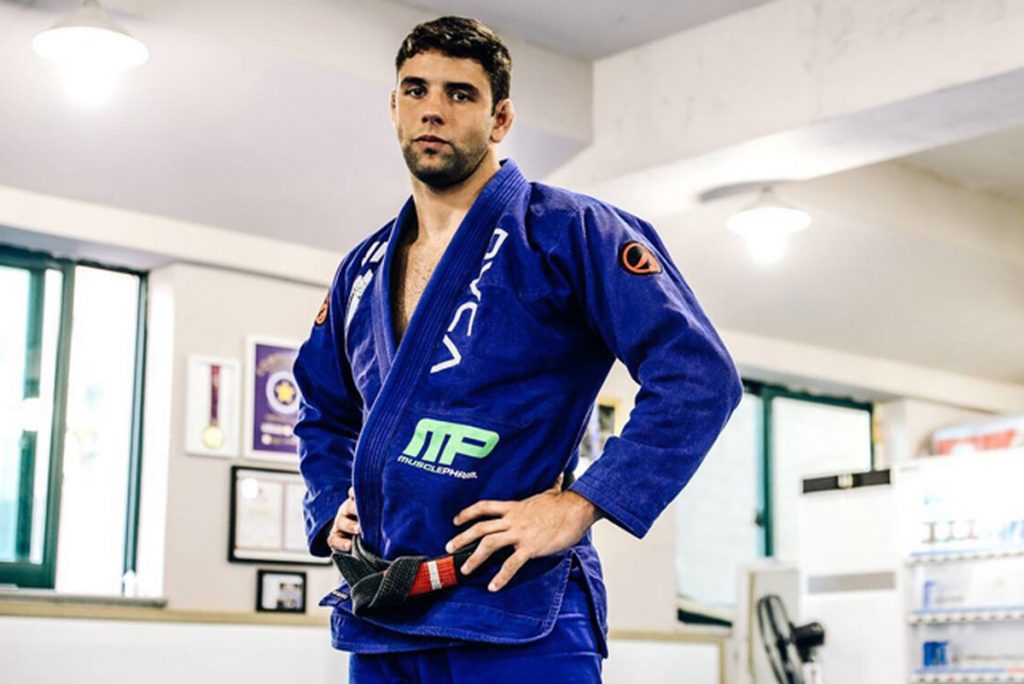
BJJ Hall OF Fame: Most TitlesThis one is easy – Buchecha. The man who has a spot guaranteed in any BJJ Hall of Fame and the man who has 13 IBJJF World titles to his name as a black belt. That’s before we throw in a couple of ADCC titles, 4 No-Gi World titles, two Pans titles, an IBJJF Grand Prix, and 6 UAEJJF Abu Dhabi Pro titles. The best part is that he is far from done and will undoubtedly add to that tally making braking his recorded even more difficult for anyone hoping to achieve it. The total number of titles he has so far is 28.
Most Submissions

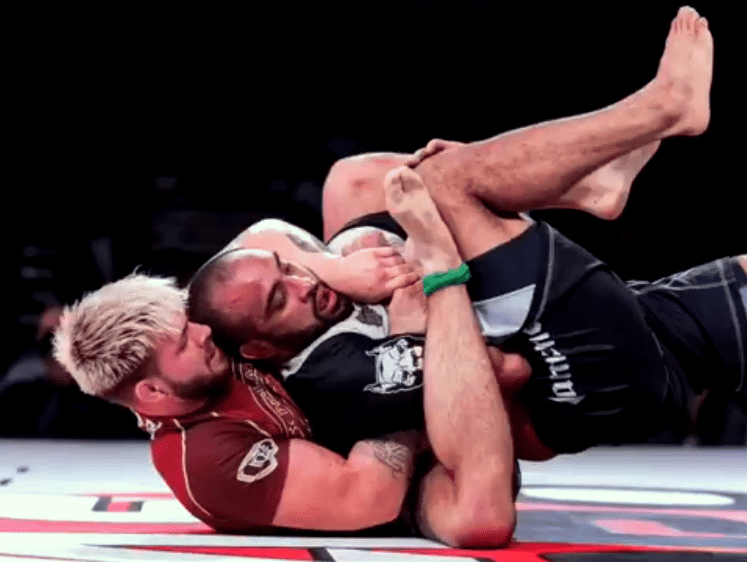
BJJ Hall OF Fame: most submissions No-GiWhen it comes to BJJ records, of course, we’d all like to know who the undisputed submission king is. It will come as no surprise that it is the man dubbed “the King” that holds the record, which makes it a second BJJ record for him – Gordon Ryan. There is, however, a plot twist. To be completely fair, we have to take a look at who has the most submission wins in the Gi as well, seeing as Ryan is an exclusively No-Gi grappler.

BJJ Hall OF Fame: Most submissions GiGordon Ryan, according to records, has a total of 65 submissions wins, making him the man with most submissions so far. His Gi counterpart, if we could call him that, is Roger Gracie, totaling at a number of 46 submissions in Gi matches.
Fastest Black Belt Promotion

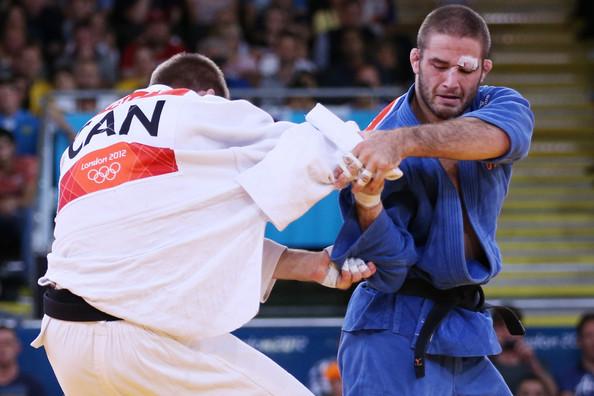
How To Schedule Judo Classes For BJJThis is a subject we’ve covered before and it is one that many people often like to bring up, hoping they could best the BJJ Hall Of Fame record for the fastest ever black belt promotion. The general rule of thumb is that it takes around 10 years to get a BJJ black belt. Of course, everyone hopes to get it in less, although very few succeed. The extremes that people strive to are 3-4 years, which is a hallmark set by some of the biggest names in the sport, like BJ Penn and Geo Martinez. However, the record for fastest ever promotion goes to Travis Stevens, the famous Olympian Judoka who got his black belt from John Danaher in just 18 months!
Quickest Submission Win

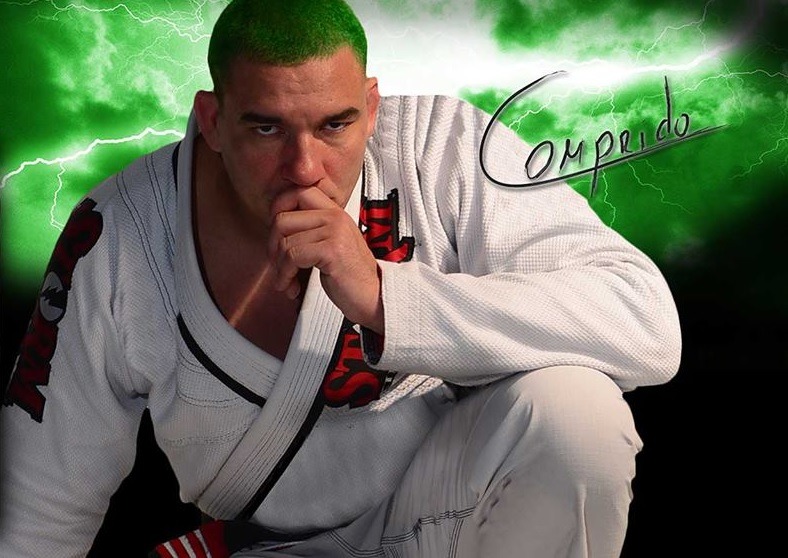
BJJ Hall OF Fame: Quickest SubmissionTo be honest, this is the one BJJ record I was really interested in. As it turns out, it is not easy to figure out who got the fastest submission in a sport that’s growing daily. The criteria had to be more specific, given the sheer amount of matches out here. So, we ended up looking into the fastest black belt submission to date. The answer came in the form of Rodrigo Leite de Medeiros (AKA Comprido) who got a submission in the final of the 1999 IBJJF World Jiu-Jitsu finals, in Rio de Janeiro in just 17 seconds. His opponent was Roberto Magalhães.
Most Points In A BJJ Match

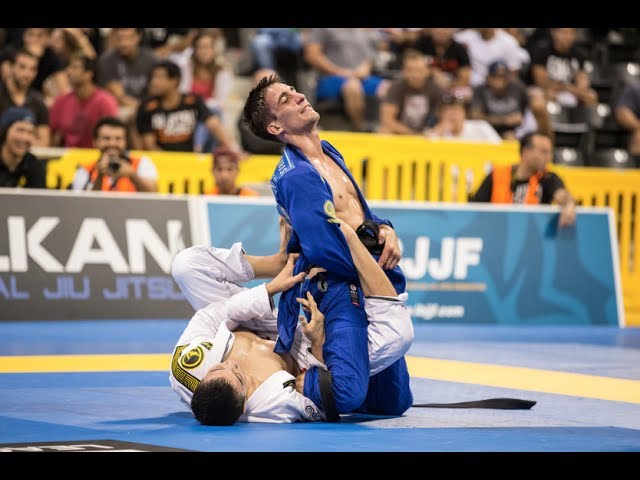
BJJ Hall OF Fame: Most Points in A MatchThis is somewhat of an open dispute if I’m being honest. There is plenty of information out there pointing to different score lines, but I opted for something that can actually be proven. To that extent, it is Gui Mendes going into the BJJ Hall Of Fame with his incredible score of 51: 0 in one of his black belt matches. I doubt there have been more points scored in a black belt division to date, but feel free to correct me if you’ve got the evidence to prove it.
Oldest BJJ Black Belt

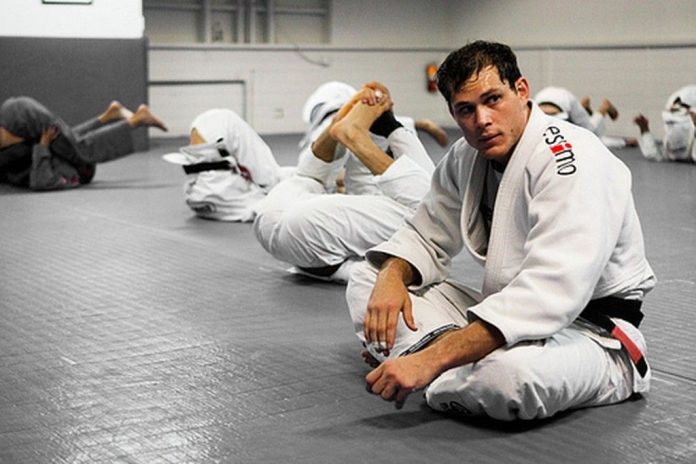
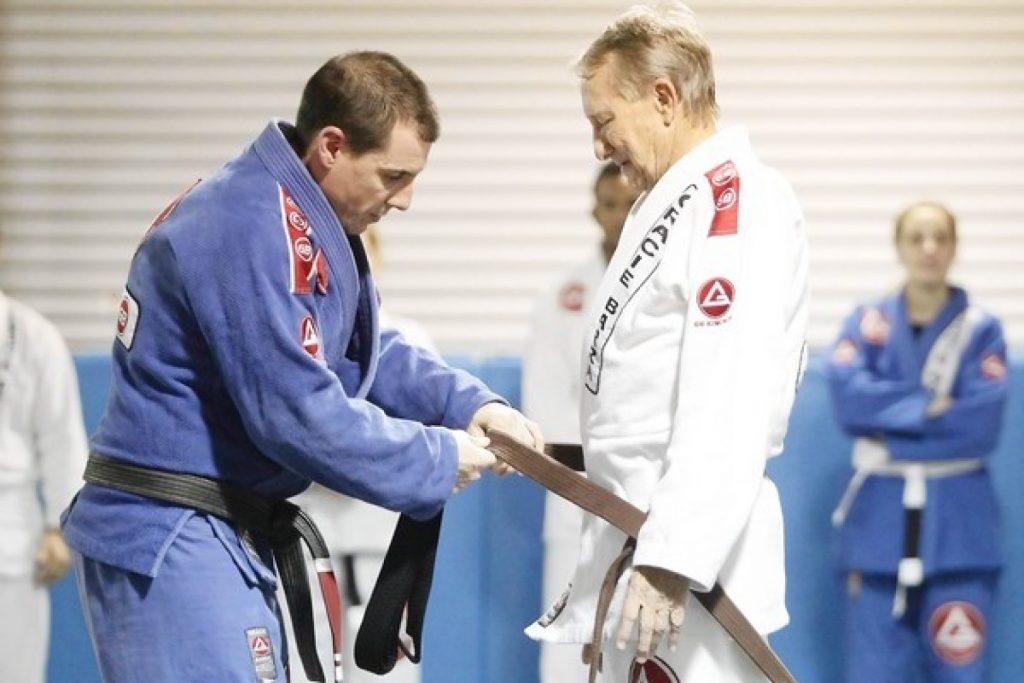
BJJ Hall OF Fame: Oldest Black BeltOnce again, we take a break from competitive records and look towards the achievement of the black belt rank. While it may be hard beating Travis Stevens’ record in getting one, you could try and be the oldest person to get a black belt. Of course, that doesn’t mean you have to wait, but let me say it won’t be easy. Gene Pace is a black belt in Brazilian Jiu-Jitsu who earned this rank at the young age of 78, after 15 years of training. He trains at Gracie Barra Costa Mesa, California. Given that he accomplished the feat in 2012 I have no idea if he is still training.
Youngest BJJ Black Belt

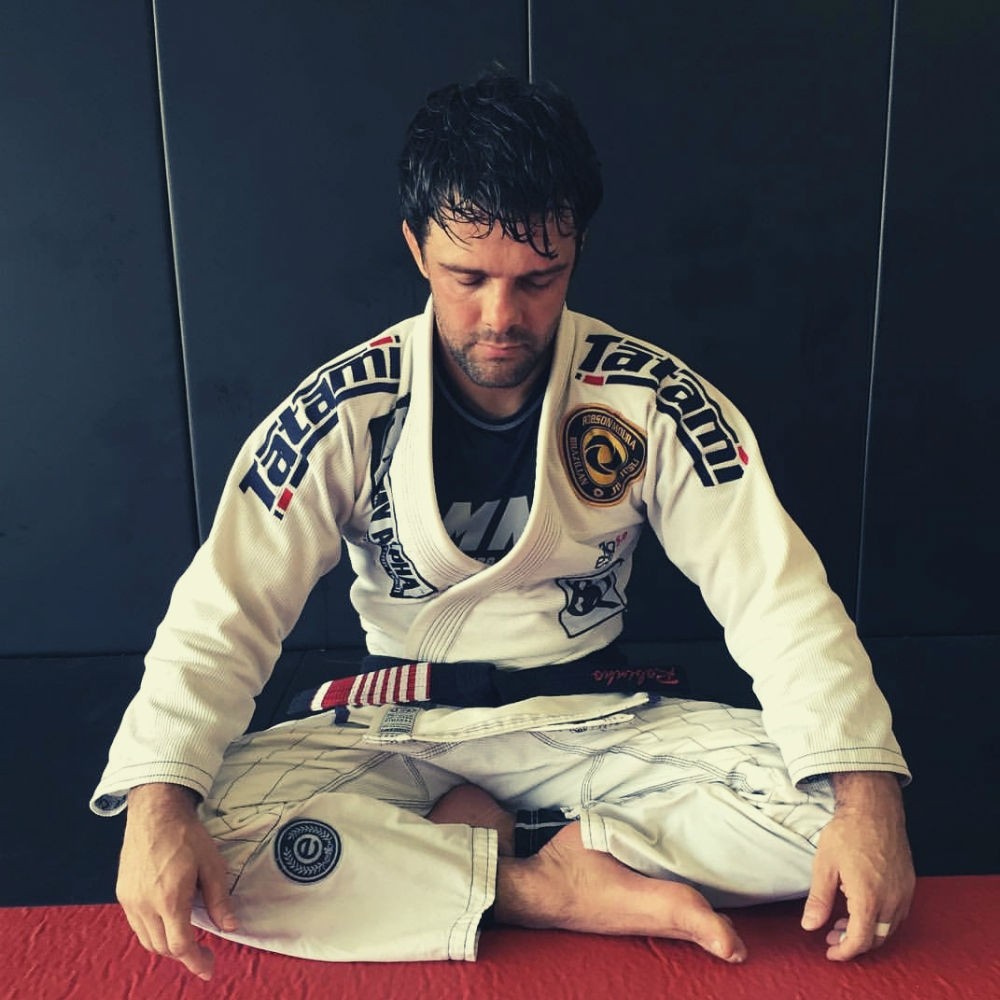
BJJ Hall OF Fame: youngest black beltOn the other end of the spectrum is the youngest ever person to get a black belt. That seems like it wouldn’t be too hard, given that 19 years of age is considered the earliest on can get a black belt. However, rules have been bent no order to awards a black belt to one specific person, so that he could compete in the worlds at the highest possible level. The man is Robson Moura, who got his black belt on his 18th birthday in 1997. Subsequently, he won the Mundials that year, and 4 more times afterward.
In Summary

Records are there to be broken. However, a look at what some of the BJJ records show how humongous of a task trying to get into the BJJ Hall Of Fame is. There are, of course, other records to break and other things to consider as well. That said us grapplers like a challenge, so pick one of the above recorders and give it your best to break it and get your name written in BJJ history!

Wrist Protection For BJJ: Mobility Drills

Wrist Protection For BJJ: Drills

In BJJ, very often we tend to look over what is really obvious. For example, we all want to train hip flexibility, shoulder mobility, and overall strength, trying to look like the Hulk. At the same time, we forget about developing healthy tendons, strong connective tissue, or focus on the smaller and more complicated joints of your bodies like the wrists and ankles. In fact, it is my opinion that the wrists are the most overlooked body part by grapplers until they get an injury. Strong and flexible wrists can make a world of difference, which is where wrist protection for BJJ and specific mobility training comes into play.

Drills are not just for practicing guard passing or other Brazilian Jiu-Jitsu techniques. Mobility drills should be right up there in terms of importance with all the technical work you’re doing on a daily basis (or should be doing). Wrist protection for BJJ does not involve just direct protection methods like wrist braces. They can really help, but we only turn to them after we get an injury. Prevention of injuries, along with developing wrist strength and mobility are a much better way to make sure that those small, yet very complex joints are able to function without impediments.

The Importance Of Wrists (Not Just For Wristlocks)

Yup, the wrist sin BJJ are not just there to be wrist locked. Despite this category of submissions gaining popularity lately, our wrists have actually been playing a huge role in grappling even before we ever thought of attacking them with submission holds.

First up, when it comes to wrist protection for BJJ, you have to think strength. Even though people think mobility is important (and they’re not wrong) strength comes first. For the purposes of grappling all joints need to be strong and stable first and flexible second. The wrists play a huge role when it comes to grips which are essential for just about anything in BJJ, from finishing submissions to holding positions. In Gi BJJ, with all the Gi grips, the role of wrist strength and stability is even more pronounced.

It is not just the offensive aspect of grappling that requires strong wrists. In defense, it is even more important to be able to use your wrists in all kinds of awkward positions. How many times have your arms been trapped between you and the opponent in an awkward way when in bottom side control or mount? With the correct strength and mobility of the wrists, getting your arms free is not just a possibility, but it will be easy, instead of painful.

Finally, probably the most important aspect of wrist strength in BJJ – posts and frames. Anytime you need to place an arm on the ground as a post, your wrists have to bear the weight of your entire body, and in certain cases, that weight of your opponent as well. The same holds true for frames from the bottom, and those pesky bottom posts, like posting on the hip while working on guard retention. Plenty of injuries in BJJ happen precisely in these two situations (posts and frames) and especially during scrambles. And that is easily remedied by some preventive strength and mobility training for wrists protection in BJJ.

Injury Prevention

The most important part about your wrists is not how strong they will be for choking or posting. The most important part is not getting them hurt. It is crazy that nobody really trains the wrists before we even take a look at all the wrist injury factors we face on a daily basis. Yeah, our wrists are in more danger in modern days than they ever were before. Why? All of the time we spend in front of computers, on desks, typing on keyboards and working with a mouse are not things our wrists were originally made for. Carpal tunnel syndrome is now something that can affect anyone, and especially those that spend a lot of time in front of a computer. Throw in BJJ into the mix and injuries to the wrists are a certainty, the only question is when they will happen.

The wrist joints are complex ones. In fact, only the ankles have more moving parts than the wrists. * Different bones make up the carpal joint (wrist) on top of the bones of the forearm on one side, and the fingers on the other. Moreover, they’re all interconnected with ligaments, tendons, and muscles that make up one of the most complex joints in the human body. AS you can see, that’s a lot of potential tissue for injuries.

All these bones and connective tissue allow the wrists to move in all directions. However, not all directions are geared to handling the same load, unless specifically trained to. Injury prevention in terms of Jiu-Jitsu comes in the form of getting your wrists used to handling the full range of motion while under pressure while keeping all the supporting tissues strong and healthy. When it comes to wrist protection in BJJ, the one test you can do to try and figure out if you need to work on your wrists is a handstand. You don’t even have to do a perfect one. Just do handstand propped against a wall, hold it for a minute and see if there’s pain and stiffness in your wrists when you get back to your feet. If there is, you need to start working on your wrists. Luckily, we have the perfect drills for you.

Wrist Protection For BJJ: Mobility Drills

The place to start with wrist protection is strength, we already summarized that. However, just like with strength and conditioning, it doesn’t have to be all divided. Instead, you can train qualities like wrist mobility and strength all together at once.  Moreover, you can do it daily as these drills don’t take too much time and can be done everywhere.

  • Finger Pulses

Wrist Protection For BJJ: finger pulsesThis is a great drill not just for wrist protection in BJJ, but also for strengthening the grips. Simply go on all fours, place your palms in front of you and use your fingers to lift the palms up, so that only your fingertips are on the mats. Pulse through your fingers without bouncing for 10 to 30 times.

  • Side To Side Wrist Stretch

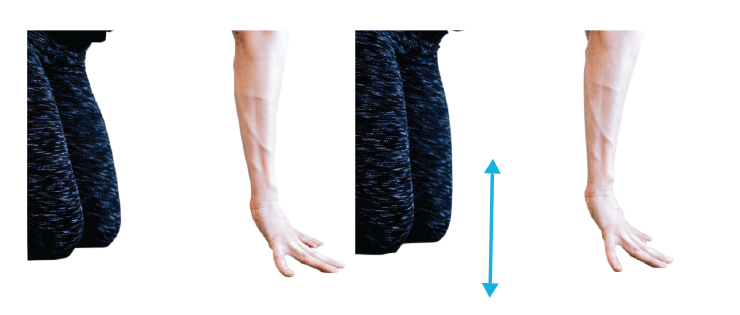
Wrist Protection For BJJ: side to side stretchStill on all fours, make sure your elbows are straight and your palms are firmly placed on the ground. Then, rotate your palms so that the fingers so they’re pointing to each side.  The drill is to shift your weight from side to side, making sure that you really place pressure on the side you’re’ leaning on to while letting the other relax before you switch. Once again, the benchmark is 10 – 30 repetitions on each side.
  • Rear Stretch

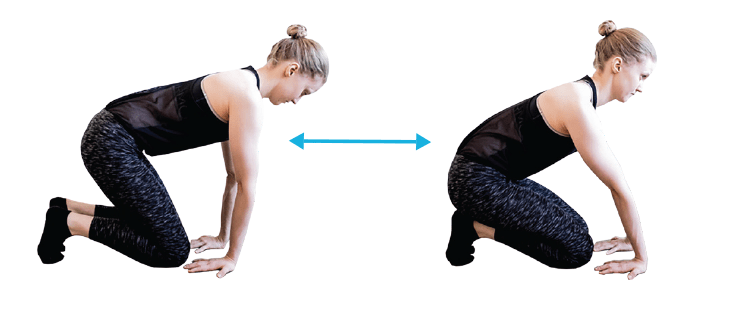
Wrist Protection For BJJ backwards wrist stretchThe rear stretch is one of the most important drills for wrist protection in BJJ. It will help you work on a range of motion that is often forgotten. On all fours, place your palms on the ground so that the fingers are pointing towards your knees. In fact, the fingers need to be as close to your knees as possible, at least at first. The drill has you shifting your weight backward towards your heels to put your wrists under pressure. Repeat 10 – 30 times.
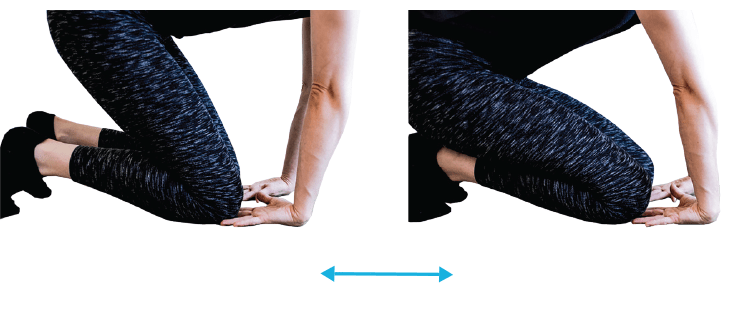
  • Palms Up Rear Stretch

Wrist Protection For BJJ: reverse palm stretchThe rear stretch drill also works with the palms facing up. Once again, your fingers need to point to your knees and you’ll shift the weight backward before releasing forward. It can be very uncomfortable, so make sure you start off slow with this one and build up to 30 reps. It is crucial for BJJ though, especially when it comes to wristlock safety.
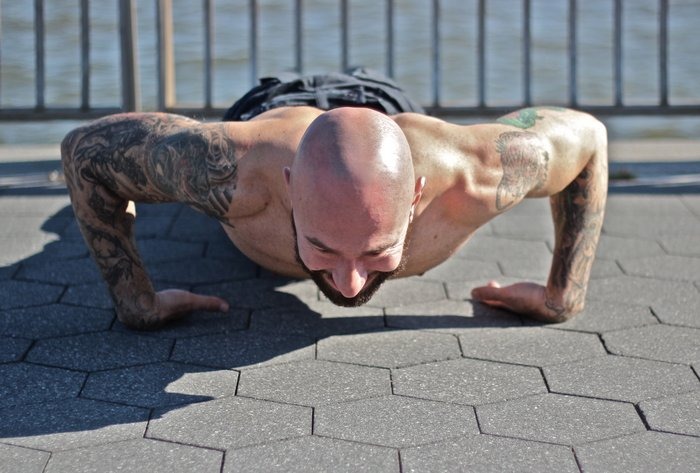
  • Back Of The Palm Pushups

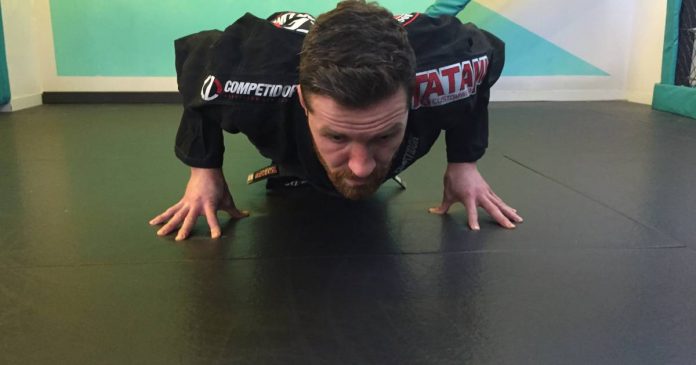
Wrist Protection For BJJ: side to side stretchLast but not least, a real strengthening exercises for wrist protection in BJJ. This one is really hard and you need to make sure you can do all the previous ones without issues before “graduating” to this one. The drill is easy – do pushups. The trick is, you have to do them with the back of your palm on the ground and your fingers pointing towards your toes. Extremely hard and demanding on your wrists, but essential for any grappler.
Conclusion

Wrist protection in BJJ should really be a priority when it comes to joint strengthening and mobility. Granted, flexible hips and mobile shoulders are helpful, but if you can’t grip and hold, you can’t do BJJ. And, there’s no grappling if you feel pain in your wrists every time you grip, post, frame or pull. Make sure you do all the drills above at least several times a week, and preferably every day. You’ll see notable improvements in just a couple of weeks.

Short Choke BJJ Submission – Rear Naked Choke Alternative

The Short Choke BJJ Submission

Choking people out is a daily thing in BJJ. In fact, the art/sport has so many different ways to choke a person unconscious, that it can be downright scary when you come to think of it. Still, if you’ve ever tried pulling off a choke in a roll, or a match, you know that it can be a notoriously difficult thing to get. It is not hard to see why that is the case, given that people know what you’re after from certain positions and will do their best to thwart your efforts. A great example is choking from the back, with either a Rear Naked Choke or some variation of a collar choke. Both are very hard to get, mostly because they’ve been used so much. The short choke BJJ strangle, though, is an entirely different story.

The short choke BJJ submission is like something out of a movie. It is so simple, that it should probably not work. And yet, it does work, and it works perfectly, I might add. It is one of the favorite ways to strangle people of Marcelo Garcia, and we all know that anything Marcelo likes is very worth looking into. This particular choke is the perfect fallback option if you’re failing at an RNC/collar choke from the back. However, it can also serve as a checkpoint when setting them up.

The Hardest Thing In BJJ – Finishing From the Back

I really do tend to throw this “hardest thing in BJJ” phrase a lot, don’t I? I’ve used it before when describing guard passing, and on occasion, in regard to other submissions, or even guard retention. It is true, they’re all hard. In fact, BJJ is hard! That said, submissions are truly the most difficult task to accomplish, especially when it comes to tapping out a seasoned opponent. Since winning by submission is what everyone’s after, people tend to be really stubborn about giving those up.

The second highest percentage finish in Brazilian Jiu-Jitsu (after the armbar) is the Rear Naked Choke. As the name implies, it is a chokehold done from the rear, or as we like to say in BJJ, from the back. Back control is a tough spot to get out of, mainly because of three things. One is the rotational control of the hips, the second is the similar control over the shoulders and the third is the constant threat of submission, mainly consisting of strangles. The Rear Naked Choke ranks the highest among them, and for a good reason – it works. However, the more we try to use it, the harder it becomes to get the finish. The choke still works perfectly, but people are wising up to the setups and mechanics more and more, making execution harder.

One reason for this is that we do tend to overcomplicate things in BJJ. Yes, having plenty of steps and entails on how to place every fingertip is cool, but at the end of the day, it is supposed to achieve a goal – put someone to sleep. All the micro battles form the back are resulting in us becoming less and less effective at doing what was originally intended – submitting someone. That’s where moves like the Short choke BJJ strangle come in to play. Those are moves that I like to call “flash” submissions. They work in an instant, without too much fuss and physics. Simply put they get the job done when the fancy stuff fails.

The Short Choke BJJ Submission

The Short choke is a BJJ submission move that is painful, effective, extremely hard to defend, and very easy to set up. Sounds like the perfect move, doesn’t it? The thing is, it only works like this because it is an auxiliary move to the more established Rear Naked Choke and all the collar strangles we do from the back. That means that you should have it in your arsenal, use it whenever needed, but don’t go for it as your first move. Otherwise, people will just get used to it, much like they are used to your RNCs by now.

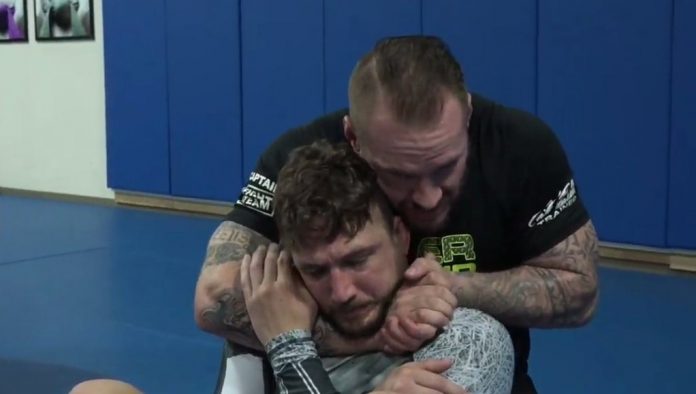
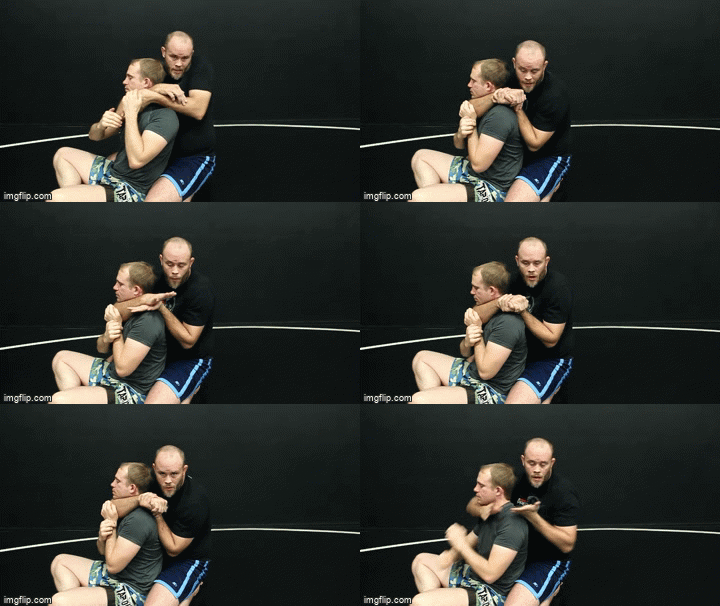
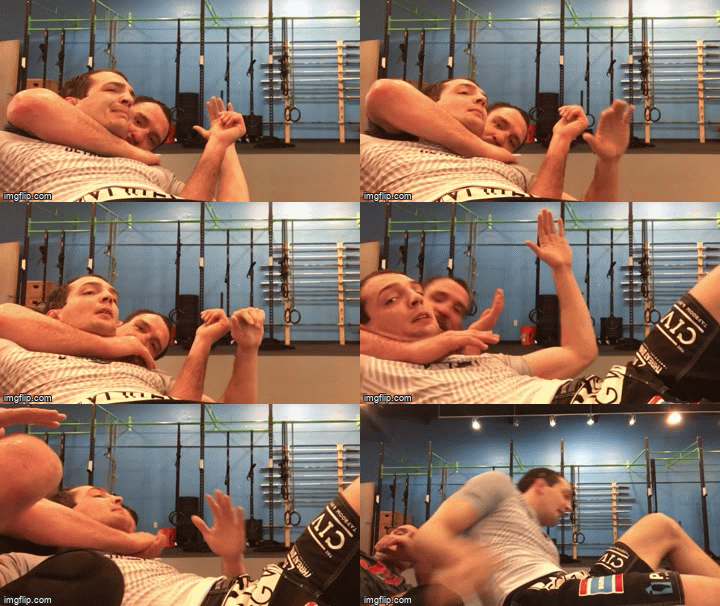
Short Choke BJJ strangle MechanicsMechanically speaking, the short choke BJJ submission is just that – a short choke. To finish it, all you need is a forearm across the neck. No need to go deep, hunt for elaborate grips or look to cling on to a Gi. One main difference is that this choke is more of a crushing choke than a blood choke, give n that the forearm runs across the throat. That introduces a factor of main that is missing with other chokes from the back. In fact, it is similar to the bow and arrow, just more direct and brutal.

Finishing the Short choke BJJ strangle requires you to get a palm to palm grip over the shoulder, and place the elbow of the free arm behind the back. This creates a very powerful structure that an opponent can’t break out of. Moreover, it amplifies the strength of the choke, which you could finish even with one arm if need be. For a tight finish, it is not just about the squeeze – you also need to pull across, in the direction of the elbow of the arm that’s across the throat.

Introducing The Short Choke To Your Game

How do you add the short choke BJJ submission to your arsenal of back attacks? There are actually two great ways of adding it to the hooks and seatbelt back control we all love to use. One is when you can’t manage to get the Rear Naked Choke because the opponent is grip fighting too much. Whenever the arm can’t go across all the way over the shoulder, you should opt for the short choke instead. Having a seatbelt means you can get the forearm across the throat at any time.

Another option I really like to use is to fall back to the choke when a collar choke fails. For example, I like to try and set up a Rear Naked Choke even with the GI. If for some reason it doesn’t work, the collar is always there so that II can transition into collar chokes. If those fail, once again, there’s a backup – the short choke BJJ strangle. The thing is, this one rarely fails, or it just opens up one of the other two options, creating an endless loop from hell that will eventually lead to a tap.

Short Choke BJJ Submission From CurcifixAlso, you could consider using it from other back-related positions, like the Crucifix, for example. Especially in No-Gi, where you have fewer handles to hold on to from the Crucifix, the short choke makes a real difference. All you need is to sneak the forearm across the throat, which is much easier than with any other choke. Once you have it, you could even be creative with how you grip with the second arm, so that you don’t lose control over the opponent’s arm trapped in the Crucifix.

Closing Arguments

The short choke BJJ submission is one of those flash moves that can make the difference in any match, even if it is against higher-level opponents. It is unexpected, difficult to defend, and requires no very little time to learn. As such it goes against the grain of intricate and complex BJJ submissions, and I more of a catch-wrestling style sub. However, when you put effectiveness first, this choke really starts to shine. Give it a try!

The Anatomy Of The BJJ Guard Position

BJJ Guard position anatomy

What exactly is the guard in Brazilian Jiu-Jitsu? Not many people can give you a precise definition that would refer to all the possible guard variations that exist. This is to be expected as BJJ really does have an endless supply of guards when it comes to the sport aspect of it, especially with the Gi. And still, Jiu-Jitsu is first and foremost, logical, that is why it is so effective. Conversely, if it is logical, there is systematization to it, and that must include a way to define the BJJ guard position in a way that would encompass all possible Jiu-Jitsu guards. Well, there is a definition, and that definition will further help us understand the fundamental anatomy of every possible guard.

The BJJ guard position is pretty much what made the sport/art stand out so much in the midst of all other martial arts. Fighting off the back was never really thought off as a possibility until Royce Gracie beat everyone up in the early UFCs. In the decades to follow, though, BJJ transformed into a sport, one that very much gravitates towards guard positions. So much so, in fact, that one could argue that we have an overabundance of guards that don’t’ really do us too much good at this point. So regardless if you want to play or pass the guard, you need to understand it, and that’s exactly what we’ll do today.

Defining the BJJ Guard Position

Open Guard Sweeps for BJJWhat is the most important question to answer in regard to any Jiu-Jitsu technique, concept, principle, position, or whatever else there is? It is not how things work, but rather why things work that we need to answer. And the answer is usually not easy when it comes to Jiu-Jitsu positions. In fact, the BJJ guard position is probably the one that took me the longest figure out.
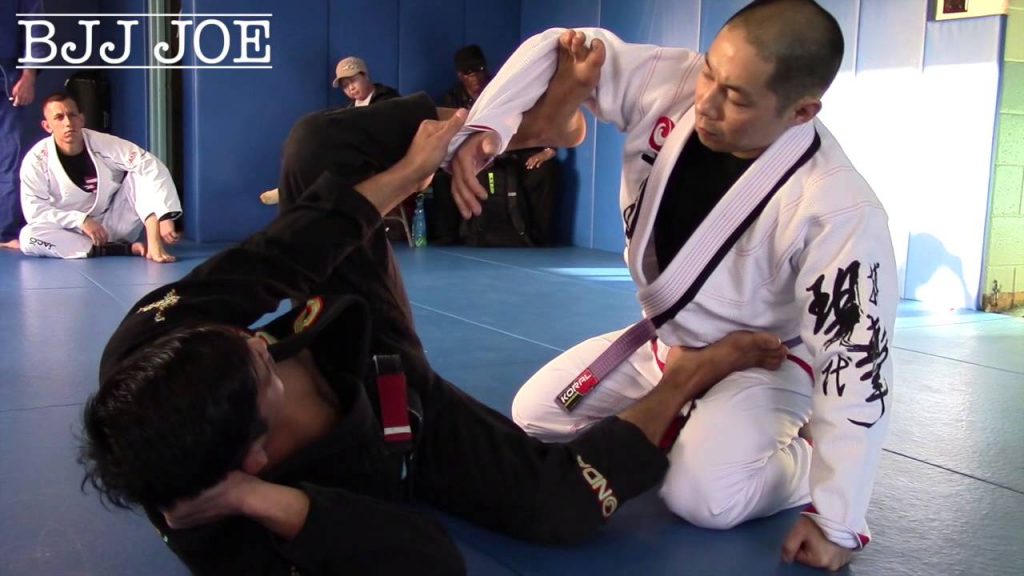
The closed guard, as the initial Brazilian Jiu-Jitsu guard, is a very practical thing. You use your legs to control the inside space of an opponent’s torso. That’s not by accident. Your legs are the strongest part of your body, and allow you to manipulate the opponent any way you see fit, helped by your grips and body movement in general. That right there, the fact that you’re using your legs to manipulate someone’s body while on the ground is what actually helps us define a guard.

Any BJJ guard position, be it a closed or open variation can be defined as a position in which you, as the person on the bottom, have your legs in between yourself and a person on top. It doesn’t matter which configuration you’re in, but as long as there are legs in between you and the op person, you can consider yourself to be in a guard.  All the different combinations of leg placement just make the guard positions more effective compared to simply keeping legs in between two people.

If we define the BJJ guard position in this manner, we can then look to figure out a common denominator that makes all guards work. In other words, we can figure out the “why” behind every Jiu-Jitsu guard. Whether you use the information to improve your guard gem, improve your passing game, or both, is entirely up to you.

What Do All BJJ Guards Have In Common?

Using the definition we came up above, we can summarize that in keeping our legs in between us and our opponent, we need to maximize effectiveness in terms of the guard with certain configurations of those legs. Leaving the closed guard to the side, for now, we’ll talk about what makes all open guard tick.

The way I see guard positions is as follows: In each BJJ guard position, you have one leg that I call the hook leg and one leg that I call an active leg. They can change their roles during live situations and can go back and forth, but in order to heave an effective guard, you need to have a configuration of the legs that allow you to use them in this manner.

Speaking of effective guards, let’s define what that means as well. First and foremost, you need to be able to prevent people from getting past your legs. That’s the main point of playing guard in BJJ. Only when you’re certain that you’re safe, you can think about using offensive options to start and achieve one of two things – sweep the top person, or submit them.

The Hook Leg

The way things work in BJJ is that if you’re not connected to someone, you can’t hope to grapple with them. While people usually look towards grips to achieve this, legs play an even more important factor, particularly when you’re the bottom person. To that extent, you need to figure out a way to “hook” the top person with one of your legs, establishing a structure that allows you to be connected and prevents them from being able to pass.

BJJ Guard position: hook legLet’s look at some examples to make everything clearer. IN the De La Riva guard, the hook leg is the most obvious – it is the one hooking their leg. You’ll notice that the hook leg is bent, thus allowing you to connect. However, keeping the leg bent also achieves something else – tit allows you to keep the knee of the leg near your chest, which helps you protect your inside space, or, in other words, prevents people from passing. It serves a dual purpose – while connecting you to the opponent it also prevents them from moving, while also covering your inside space.
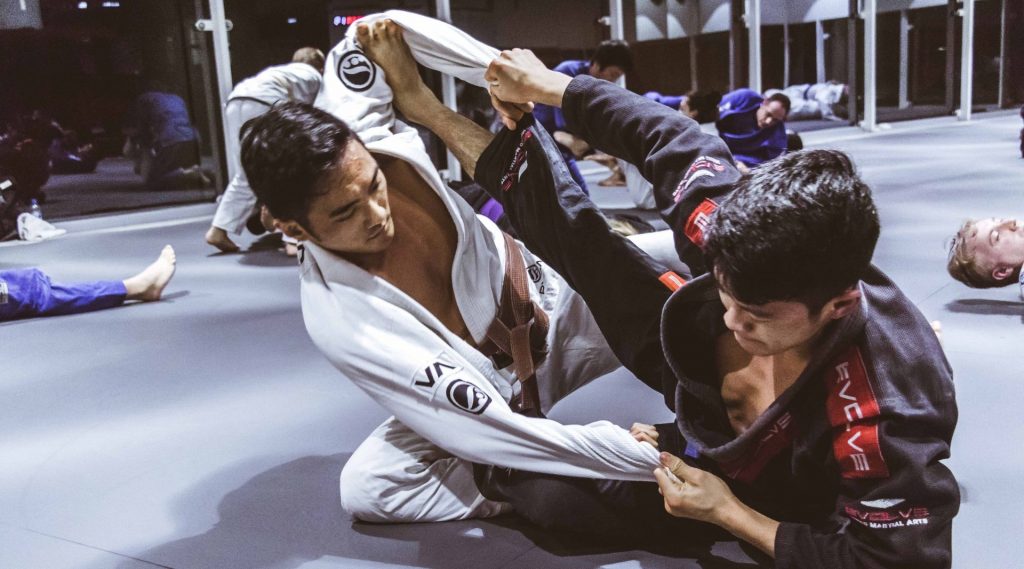
You can find this configuration in any BJJ guard position. In the spider guard, it is the leg that is on the bottom, staying bent and heavy on the biceps. In the 50/50, it is the inside leg. When it comes to the single leg X guard, it is the leg that’s on the outside of the hip. In the Reverse De La Riva, it is the leg that goes on the inside of the knee, and in the Z guard, it is the bottom leg that in the actual half guard.  You get the point.

Active Leg

On the other side of every BJJ guard position is the active leg. This is the leg that helps you reinforce the defensive tasks of the hook leg, and eventually, allows you to transition into more attacking options. Namely, this is the leg that is usually not attached to an opponent to tightly but is rather free to move around. It is the leg that helps your cause unbalances, that is a power source for all your hip escapes, that tangles arms and break grips so that you can set up your submissions.

BJJ Guard position: active legLooking at some practical examples it is the leg that goes on the hip in the De la Riva guard. That is the leg that pushes on the hip, or pushes/hinges the knee, redirects the head, deals with grips, etc. In the 50/50 guard, that would be the outside leg, the one tasked with creating motion and helping you go on the offense. Looking at the spider guard, the active leg sit he one that is extended, given that it is directly responsible for the Kuzushi that leads to sweeps, or setting up the infamous triangle chokes from the Spider guard. IN the Z-guard it is the shield, in the Single leg X, it is the leg behind the butt, etc.
How To Use This Knowledge

So, now that you know the definition of what a BJJ guard position is, and from there, you know why guards work, how can you put this to good use? Well, as a guard player, your tasks are already determined by your legs. As long as you have a hook leg, you won’t’ get passed. Since we took this as the primary goal of every guard that should be the first leg you’re looking to establish. The active leg comes next, and it is the one that will help you reinforce guard retention and transfer into attacks from the bottom.

Form a passing standpoint, you know now that you need to deal with the active leg first, in order to make sure you’re not being attacked. Figuring out a way to neutralize the active leg is what will make getting past the hook leg later on possible.

Finally, let me touch on the subject of the closed guard. While the closed guard as a position does not feature the configuration of the legs we talked about before, the fact t is that in order for you to do anything from the closed guard, you’ll need to switch to a configuration that includes both legs. Think about it: scissor sweeps, pendulum sweeps, triangles, armbars, etc – they all require you to =unlock the legs and establish a hook leg and an active leg.

All In All

The BJJ guard position was a really hard one to define. Given that the goal was to find the common characteristics shared by all guard variations it really took me a long time to figure it out. The way I presented above, though, has helped me understand each and every guard position I’ve tire to play since then. It has also helped me develop a foolproof passing formula that helps me deal with even the most annoying modern guards of today. Let me know what you think in the comments!

Challenging Absolutes And Dogmas In BJJ

Dogmas in BJJ - never turn your back

Brazilian Jiu-Jitsu is a very weird sport. No seriously. Just think about it for a little. We’re simulating murder in padded rooms that are more often than not, basements while wearing either funky looking pyjama blankets (Gis) or rashguards and spas combinations that are painful to the eyes. The strangest thing about it is that people are absolutely obsessed with Jiu-Jitsu and can hardly function whiteout getting their daily “fix”. That said, there are other strange aspects to BJJ as well. For example, for a sport where people claim to be open-minded and looking to progress constantly, we still fall prey to absolute claims and dogmas in BJJ.

Dogmas in BJJ are an everyday thing, and they’re starting to get on my nerves. It took me a decade to begin to see where they are, and I don’t like what I’m seeing – they’re everywhere. We have so many claims that thing should be done one way or not at all, or that we should never do certain things. Why? If someone can answer the why, then I’ll give them merit, shut up, and perhaps even accept dogma or two. However, most of the time I’ve asked folks why have not resulted in a satisfying answer.

The Absolutes Of An Endless Sport

What is the point of Brazilian Jiu-Jitsu? You’ll probably get as many different answers as there are academies across the world. Different things make different sense to people, and that is perfectly okay. However, we can all agree on several things that are true for BJJ no matter where you’re training, what belt you are, or what your favorite technique is.

First of all, the point of Jiu-Jitsu is to try and control another person against their will, so much so, that they willingly give up (tap to a submission). That would be the perfect scenario. This is exactly where we encounter one of the biggest dogmas in BJJ. There’s absolutely no way for us to expect to achieve this outcome every time we roll or go into a match. So, if we can’t expect to get to our main goal every time, how can we absolutely claim other stuff? I’ll go deeper into more practical examples later on.

Every now and then, I hear a student, usually an advanced blue or a purple belt, claim they’ve finally figured out the solution to something, and that nobody will be able to perform it on them ever again. Statements like that make me want to pluck my beard out since I’m bald and there’s no hair to pull. In a sport that is endless and unpredictable in terms of evolving, how could we possibly claim something to be absolute when we have no idea how things will turn out a week from now, a month from now or years from now? This is one more example of ego in BJJ, which is something we’re supposed to leave at the door, right?

Challenging Some Common Dogmas In BJJ

Let’s try and look at some of the things that, throughout the years, have proven to be not as set in stone as we thought. I will reiterate the concept that there’s no right and wrong in BJJ, so I can’t use an absolute myself and claim they’re wrong. What I can do is tell you why I think there are more effective ways to approach things, and that we should not just blindly accept that things are forever set, just because someone, even if it is a world Champion professor, says so.

The best way to learn Brazilian Jiu-Jitsu is by yourself. Don’t get me wrong, you need the gym, training partners, professors, and everything. However, it is just like learning to drive a car. You get the vehicle, the instructor, the classes but at the end of the day, you’ll have to start driving a car on your own in traffic to really learn and develop your driving style. It is the same with BJJ – professors are only there to teach you about traffic and the way a car works. That means that what works for them, might not work for you as good. And that’s the whole point of Jiu-Jitsu!

BJJ evolves with every student that walks through the doors. If we can get past the ego of being upper belts or coaches or professors, and accept that everyone has something to show us, we’ll all begin to learn more. This is the way BJJ evolves, but it will require us to really think outside the box, not just claim to be doing so. Let’s get into a few examples of Dogmas in BJJ that don’t make sense anymore.

Turning Your Back

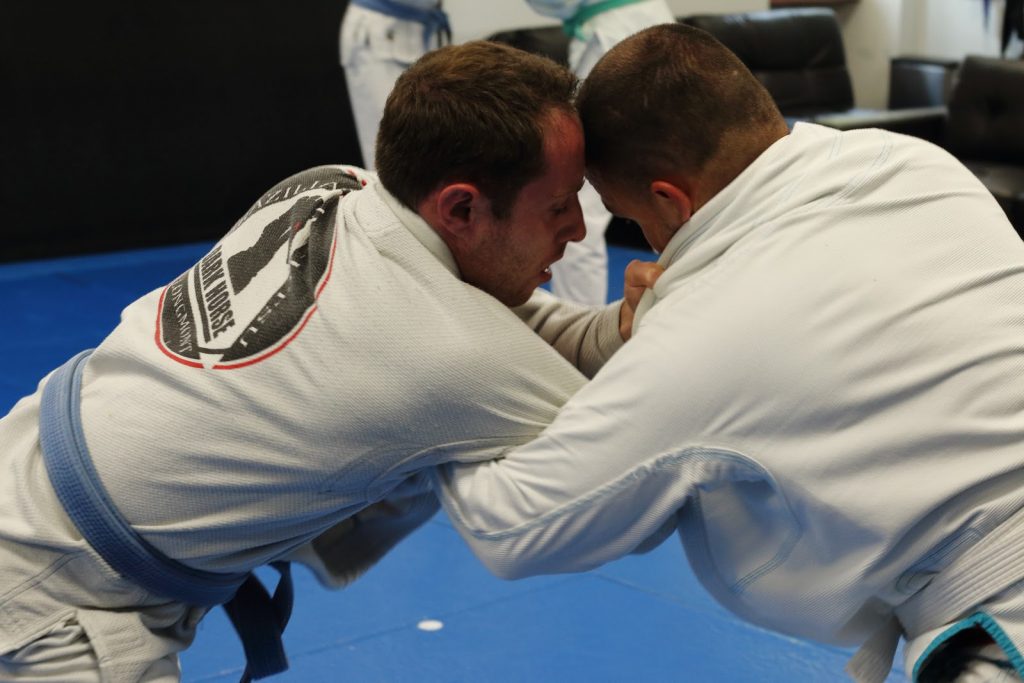
Never turn your back, either standing or on the ground! This is one of the dogmas in BJJ that you’ll hear over and over again in BJJ and MMA gyms all around the world. For a while there, it might have made sense. However, nowadays you need to ask yourself why? If the answer is “because they’ll choke you”, nothing could be further from the truth. Between someone being on your back, and someone choking you out is the entire sport of Brazilian Jiu-Jitsu. With all the crazy new turtle systems, back defense systems, and other innovative concepts, turning your back to an opponent actually opens up more opportunities than dangers.

Passing The Guard

Dogmas in BJJ passing guardThis is one of the dogmas of BJJ that I am really trying hard to dispel in my own gym. I’ll admit it is hard especially with the upper belts, who already have habits when it comes to passing. The notion is that you can’t pass a guard, and that phrase is now old and defunct. Guards are there to allow the bottom person to attack; hence, any attempt at getting past a guard will and should end up with the bottom person prevailing. Instead, my approach is to pass the legs. To get to that point, you’ll need to do two other things: neutralize the guard’s dangers first and break the guard’s structure second. Now you’re left with passing a pair of legs, which present no danger to you.
The whole problem is that people should teach and verbalize it like this, saying passing the legs instead of passing the guard.

Staying Out Of Bad Spots

This absolute ties once again with the defensive systems and positions that are going to be the next big thing in BJJ. To be honest, the concept of being the person on top, and preferably past the legs, still stands as a desirable way to grapple. However, saying that you never want to be caught in the mount, or side control, or knee on belly is only going to create unrealistic expectations in people., Moreover, it’ll create extreme reactions of panic and stress once they’re inevitably caught there.

Instead,  you should encourage people to get caught in “bad spots” When they relax, they’ll start learning that the bad spots are not really that bad. Yeah, you might be down on points, but it is a sport. The best thing about it is that there’s always a way out, a counter, or an escape that will turn the tables in your favor. All it takes is adjusting your approach a bit, and not demonizing being on the bottom of BJJ positions.

Technique Beats All

Nope. This might have been the selling point for Aikido somewhere in the 80s. Since then, modern contact combat sports, mostly MMA, have proven this to be a very misguided notion. Where there’s strength, there’s no justice, according to an old saying.  If you’ve ever tried to battle with a seasoned high-level wrestler, you know what I mean. Strength, explosiveness, and agility all accentuate technical knowledge, and in Jiu-Jitsu, you can expect people to have technical knowledge already. That means that factors like strength can change everything and you need to factor them in, instead of thinking you’ll brush past a wrestler blue belt if you’re a highly-skilled technical purple belt that weighs 130 lbs. there’s a reality check coming your way really soon.

It is not just strength that you need to factor in. there’s also pain that can play a huge role. Have someone place a knee on belly, with all their weight over your floating ribs. You’ll be in a world of pain praying for them to submit you or get to mount. No amount of technical knowledge is going to help there and you need to adjust your belief systems accordingly.

Crossing Your Legs In An Armbar

Dogmas in BJJ - crossed feet armbarThis one is probably not in use as much as it was a few years ago. However, I still see instructors telling people, mostly new students to never cross their feet when they’re going for an armbar. Back when armbars weren’t as developed, this was true, as crossing your feet does spread your knees apart. However, with the evolution of the armbar, and positions like the Spiderweb, this is one of the Dogmas of BJJ that we should hurry to forget.
Extending The Legs In Mount

Dogmas in BJJ - bend your knees in mountThis is one of my favorite dogmas in BJ top challenge people with. Someone is in your mount. You’ve already lost 4 points (at least). Why exactly should you keep your knees bent? The answer that it helps you bridge and escape quicker doesn’t hold. Keeping the legs up opens up better control fro the top person and even leg lock transitions if they know-how. Keeping them extend and glued to the ground won’t get you in more trouble. IN fact, you’ll open up more ways of getting out. Try it.
In Summary

Whenever people in BJJ say they should always do something, or never do something, the best thing you can do for them is taking a leaf out of Danaher’s book and slap them with a stick. Instead, we should always ask why we’re doing something, or not doing something, for that matter. I encourage all the people in my gym, from white to black to constantly ask me why. If I can’t answer than I shouldn’t be showing them a particular move or concept. Keeping things honest helps us learn more, and stop the loop of creating dogmas in BJJ that halt progress.

Jiu-Jitsu Hacks: Using Your Head in BJЈ (Literally)

Jiu-Jitsu hacks : use your head as a fifth imb

You’ve heard the phrase “use your head” more than once in your life. However, how many times have you heard it in a BJJ context? The best thing about this phrase in Jiu-Jitsu is that it can be taken both literally and figuratively. Today’s focus is going to be on the literal side of things. When I say use the head, I mean actually physically using your head to help you with the grappling exchanges of Brazilian Jiu-Jitsu. It is one of the Jiu-Jitsu hacks that can change your entire game in just weeks of practice. 

Jiu-Jitsu hacks are fun, and they’re a great way of breaking through a plateau or learning some new area you’re’ focusing on in less time than usual. He only thing is, finding the right hack for the job. There are basically two ways of coming about Jiu-Jitsu hacks: you could discover them yourself, or someone can tell you what to do/not do. Using your head might sound like an obvious thing when people use it figuratively. In a literal sense, it is truly a BJJ hack worth exploring.

Jiu-Jitsu Hacks: The Fifth Limb

The way head use was explained to me a long time ago was using the fifth limb principle. This principle is all about placing your head in positions where you would otherwise use a limb, in order to gain an advantage over an opponent. While you can’t hope to replace every grip or hook you can do with your arms and legs, you can use your head in creative ways that will help you achieve the goals f BJJ in a much easier fashion.

In Brazilian Jiu-Jitsu, the whole aim of any exchange is to gain an advantage and a better position. The way we achieve this is by making things unfair. Every opponent we’re going to have will have the same two arms and two legs that we do. That means that they can place a grip at the same spot you do, trying to block you in your pursuit of executing techniques. It also means that if you can find a way to reduce the number of limbs they use, you’ll have the advantage of an extra limb to grip/hook. Or two. Another way of looking at things is to introduce a fifth limb into the equation, one that they might not readily expect.

Jiu-Jitsu hacks : use your headIn all those exchanges, we sometimes introduce the head even without thinking. When someone is attacking your back, they have two arms fighting your two arms, but you also have your chin to your chest to defend chokes. That’s just one example of using the head, without even thinking about it (pun intended). However, if you think about actively and consciously using the head, you’ll suddenly start to see plenty of ways to integrate into in your game and gain the crucial “unfair” advantage over an opponent.
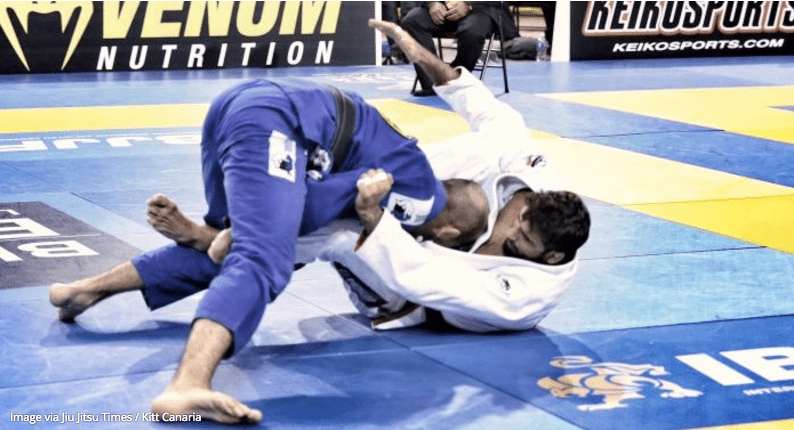
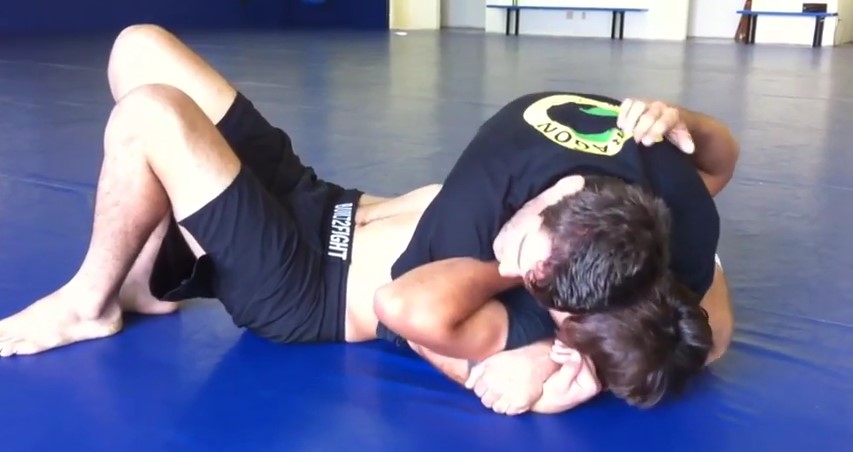
As far as Jiu-Jitsu hacks go, this is probably the easiest and simplest one you’ll lever learn.

How To Use Your Head In BJJ

Let’s check out several practical examples of how you can use your head in Brazilian Jiu-Jitsu to achieve your grappling goals. To be clear from the get-go, you can use the head from both top and bottom. While it may not be able to grip (unless you’re willing to bite on a sleeve or collar), it can be used to post, frame, pivot, pressure, and protect, among other things. In fact, these can all be thought of as serape Jiu-Jitsu hacks, but essentially, it all comes back to the fifth limb principle. It is something wrestlers have known for years. However, the nature of Jiu-Jitsu makes the use of our heads a lot more versatile when compared to wrestling, or any other grappling martial art.

Posting

Posting with your head is probably the number one use of the fifth limb principles that you’ll come across. It can be very useful if you’re into tight passes, especially ones that have your butt over your head.  Even with regular passes, most of the time you’re legs are to busy taking your body past the opponent’s legs, while your arms are battling their legs or trying to anchor to their inside space (torso). In order to hold an opponent down, you could always place the top of the head anywhere in that (on their shoulder, on the ground, on their ribs, etc), to create an extra post which will help you complete your pass.

Form top positions that have you already past the legs (mostly mount and side control) the head can be used to post when you’re’ trying to prevent escapes. In fact, even when you’re caught by surprise with an escape attempt, you can counter it even if your hands are otherwise engaged. Simply use your head to post as you would with an arm or leg, and prevent the opponent from completing their motion.

Framing

When it comes to framing, we’re usually used to do it from the bottom. In this instance, I’ll use a guard example but you can feel free to experiment with the notion from anywhere. Anytime you’re’ in butterfly guard, and an opponent starts pressuring you to pass, you can use your head as a frame to block their body. If you’re controlling their arms tat the same time this will allow you to start going into sweeps or leg locks at any point you want. All you’ll need to do is remove the head and your opponent will be ready to fly wherever you send them. Aren’t simple Jiu-Jitsu hacks like this beautiful?

Pressuring

Jiu-Jitsu hacks: use your head for pressureUsing pressure is probably my favorite of the fifth limb principle Jiu-Jitsu hacks. The head is positioned perfectly to project pressure anyway, we just need to use it more in that context. For example, whenever you’re in half guard, you can place the head underneath the chin before you start driving forward in an attempt to free up your leg. This will leave your opponent in a world of pain.

Another thing I really love using is poking the floating ribs. While you can do it from just about any top position, side control is my favorite. And, instead of using the top of the head, I like to use my chin. Imagine sticking your chin in the opponent’s floating ribs when you’re in North-South. It opens them up completely, given that the pressure is all they can think about. That’s when you attack. Or torture them a bit longer. Your choice.

Pivoting

An essential action that you can execute using your head s the fifth limb in BJJ is pivoting. This is similar to posting, but it does require more dexterity, and some neck strength to go along with it. Once again, it can work form top and bottom. You could use it from the turtle, to transition into inverted attacks. You can actually use an entire guard called the Donkey Guard that is based on this notion. Or you could just use it to help you pass, or transition from one top position to another (like back takes vs. turtle).

Assisting

Jiu-Jitsu hacks: the fifth limbOne of the more unique Jiu-Jitsu hacks that involve using your head is to assist your other limbs in their task. A great example is an Americana from the mount. Whenever you have everything set up, place your forehead right at the point where your arms are creating the figure four. You’ll kill off any hopes of motion and defense and accentuate the submission when you start pulling back.
More examples would be using the head to help your arms hold their head in a certain position (think chin strap), or guiding a limb into a submission (digging for the arm when setting up an arm triangle choke from half guard).

Final Thoughts

All in all, using the head is one of the more fun and easy Jiu-Jitsu hack that you can implement rally quickly. The above examples are just that, examples, and they’re in no way all that you have at your disposal. Be creative when you’re using your head, and try to figure out where it and give you the crucial advantage. You’ll see that it makes a world of difference.

How To Get Better At BJJ: Learn The Muscle Up

how to get better at BJJ - muscle up Cover

What is the toughest bodyweight exercise you can do? Well, that depends on one thing – whether or not you have access to any equipment. If you don’t and you can only use your bodyweight, my choice would be the straddle planche. However, if you do have access to a pull-up bar, though, then that answers shifts directly to the muscle up. If there is just one exercise to help you develop incredible overall athleticism it is the muscle up. When you’re wondering how to get better at BJJ, from an athletic standpoint, you shouldn’t think about it too much – just learn how to do muscle ups.

The muscle up is an exercise that uses your entire body and requires you to be coordinated, agile, and not to mention, very strong. By strength here I do not mean being able to bench three times your body weight or other nonsense like that. IN this sense, strength is the ability to move your body through the air, while hanging off a pull-up bar in a controlled and precise manner. It is the ultimate bodyweight exercise and the answer to the burning question of how to get better at BJJ.

What Is A Muscle Up?

How to get better at BJJ? Just show up for class and train. Then train some more. This is the best advice I can give you but it won’t be enough. Sure, you’ll become extremely technical and well-rounded, but you’ll be missing a crucial ability. When we look at BJJ as a sport, it means that there’s an athletic component to it. That means being able to actually use all the techniques you know (or think you know) during rolls and matches. Achieving this requires strength, conditioning, coordination, and agility, among other things.

how to get better at BJJ - muscle upA muscle up is the one exercise you need to develop all of the above qualities and more. When I say that it is the only exercise you need, I really mean it. When it comes to bodyweight exercises for grapplers and fighters, muscle ups are an absolute must. The thing to consider, though, is that it will take a lot of time for you to be able to execute at last one if you’ve never done them before. Moreover, you’ll need to go through several progressions in order to learn how to do a single, full range of motion muscle up.
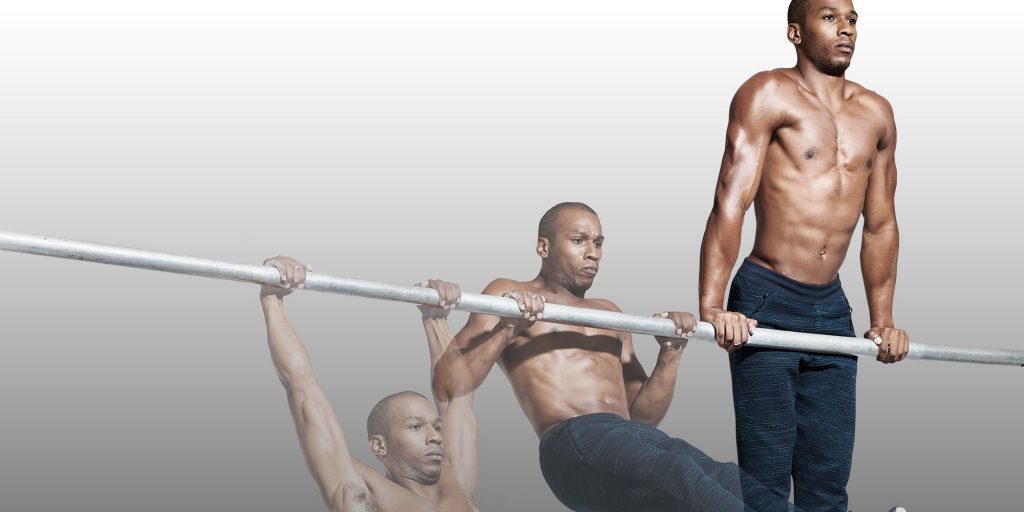
A muscle up is when you do a pull-up, but don’t stop when your chest reaches the bar. Instead, you need to keep pulling, until the pull turns to a push and you end up pulling yourself upwards so that your arms are fully extended. This is the top position of a muscle up, You then need to go back down to a full hang in order to complete one repetition of the exercise.

Learning Muscle Up Progressions

As you can see from the description of a muscle up, it is not at all an easy exercise to master. In fact, it may seem way easier than it actually is, until you try it. There’s a lot of technique to it, especially the part where you need to transfer from a pull to a push, and vice versa on your way back. Given that very few people are able to do a muscle up straight away, there are certain progressions you can do to make sure you learn things the right way.

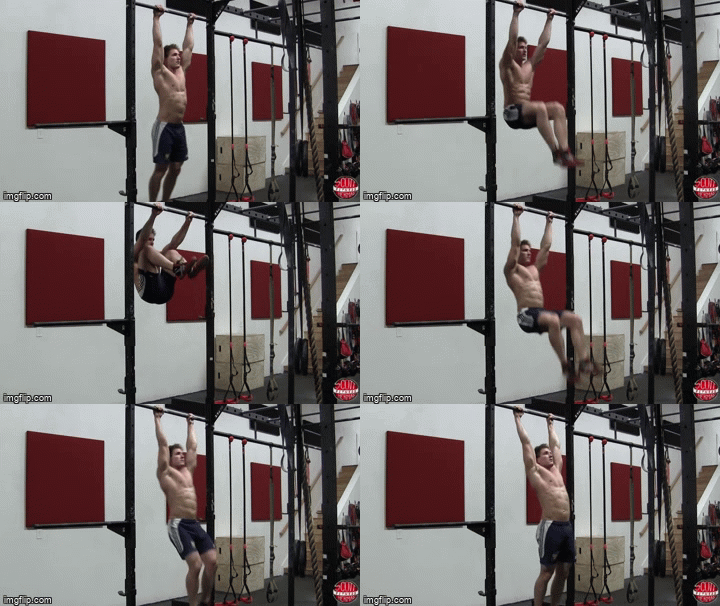
how to get better at BJJ - muscle up momentumFirst of all, you need to be able to perform pull-ups. The more the better, but if you can’t do 20, make sure you reach that milestone first. Secondly, you’ll need to start learning how to use momentum,. Which is essential in transitioning from pulling into a pushing motion. You can see how such qualities will come in handy for those looking how to get better at BJJ. The motion you want is to keep your arms straight and swing your knees towards your shoulders while retracting your shoulder blades.
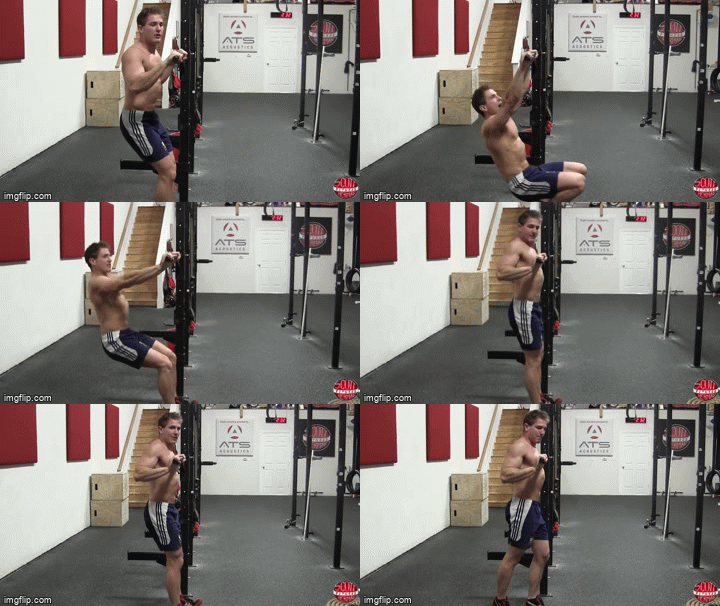
how to get better at BJJ - muscle up transitionNext, you’ll want to find a low pull-up bar, one that’s at your chest level. Here is where you’ll kneel down underneath it, and then extend your legs, practicing how to get close to the bar. The key here is grip placement as the position of your palms has to change in order for you to push upwards.
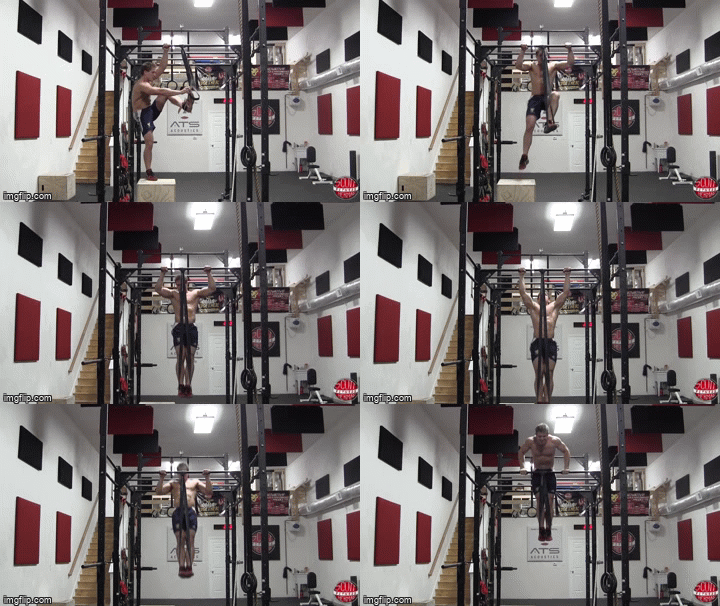
how to get better at BJJ - muscle up assistedLogically, the next step would be to go for a muscle up, but in the form of an assisted muscle up. At first, you should stick to a low pull-up bar, but find one that is higher than your head. You still need to have your feet on the ground, though. Your aim is to now execute the full motion, but use your feet to help propel you off the ground and towards the pushing motion. Later on, you can do the same while hanging completely, but with an elastic band.

Transfer to BJJ

How to get better at BJJ by using muscle ups? To be completely honest, the answer will differ from person to person. It depends on what athletic abilities you need to develop, so programming your muscle up workouts is down to you. I will share all of the muscle groups involved, though, and how they benefit grapplers.

First up, a muscle group you might not consider when you first try a muscle up – forearm muscles. In other words, these are the muscles responsible for your grips, which are crucial for Jiu-Jitsu. The dead hang itself can really help you develop grip power and strength, let alone all the motions you need to go through when executing muscle ups. The dynamic nature of gripping during muscle ups is something you can’t replicate with other exercises

The pulling muscles, consisting of the lats, traps, biceps, glutes, and posterior chain (hamstrings) all have a part to play during a muscle up. Not only that, but they have all kinds of contractions to do – concentric, isometric, and eccentric. The pushing muscles are not far behind with the chest, triceps, shoulders, quads, etc. all putting a real shift in. The key benefit, though, is in the integrated push and pull motion that you constantly go through. This is what makes the body work as one, and is highly transferrable to Jiu-Jitsu.

Which brings us to the core. All the midsection muscles, front, back, and in between have to work to help you swing the body to gain momentum, bring the body together, open it up and stabilize that the top position and on its way down. In other words, your core will hardly get a similar complex task with any other single exercise out there, especially a bodyweight one.

As you can see the muscle up offers a full-body workout. It can help you develop a gas tank, coordination, strength, explosiveness, strong grips, stable core, and a bunch of other qualities hugely transferable to BJJ.

Wrap Up

Apart from doing a muscle up on a pull-up bar (which is usually readily accessible everywhere), you could opt for the original, gymnastic version. It requires a pair of gymnastic rings, thought, Then, you’ll have to really master grips and it will bring a whole new meaning to the word stabilizations and balance. That said, doing a muscle up is what counts, and not whether you do it on a pull-up bar or on rings. All it matters is learning how to do it, and how can you get better at BJJ by focusing on this one hell of an exercise!