It’s OFFICIAL! Floyd Mayweather Will Face Paul in Front of More Than 65k Fans

It's OFFICIAL! Floyd Mayweather Will Face Paul in Front of More Than 65k Fans

Paul Mayweather, one of the best boxers in history has found an opponent who will bring him millions of US dollars.

A few years ago we wouldn’t be able to imagine that something like this will happen. The new exhibition match of former world champion Floyd Mayweather Jr. has been officially confirmed!

Mayweather will return to the boxing ring on June 6 at the event that will take place at the Hard Rock Stadium in Miami.

Mayweather’s opponent on this occasion will be the famous YouTuber Logan Paul, the brother of Jake Paul, who after the knockout victory over Ben Askren became a ubiquitous topic in martial arts circles.

Floyd Mayweather, 44, and Paul, 18, announced their meeting in December. The first idea was to settle in February, but those plans eventually fell through.

However, this story became active again last week with June 5 mentioned as the date, but in the end, an agreement was reached to cross the gloves exactly one day later.

Reason? A Showtime spokesman explained to MMA Fighting that with the new date, they are avoiding coincidence with another boxing event, the one where we will be watching Teofim Lopez and George Kambosos Jr.

Since the fight between Floyd and Logan will take place in Florida, the arrival of fans at full capacity will be allowed. Of course, unless some new precautions emerge in the meantime. But, if everything remains as it is, let’s mention that Hard Rock Stadium can accommodate more than 65 thousand fans …

Some details, such as the number of rounds, we still don’t know, but let’s mention that last week there was information that Mayweather will not be allowed to weigh more than 72.6 kilograms, while the upper limit for a noticeably bigger Paul will be 86.2.

This will, let us emphasize, be an exhibition. By the way, as a professional, Mayweather retired with a perfect 50-0 score, while Logan has only one match behind him, and that is the one in which he lost to his fellow YouTubee known by the nickname KSI by a divided decision of the referees.

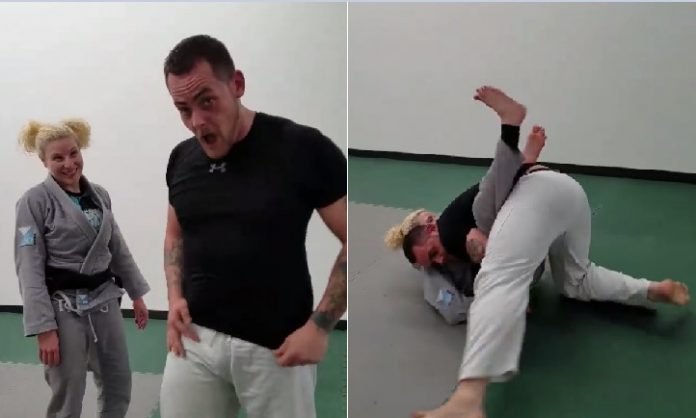
Female Grappler, BJJ Black Belt Destroys Much Larger Male Challenger

120 lbs Female BJJ Black Belt vs Much Larger Male Challenger 257 lbs

Female Brazilian Jiu-Jitsu Black Belt was challenged by a much larger man in her dojo. What actually happened was that she showed this man why grappling martial arts are one of the best for subduing much larger opponents or attackers.

Her name is Monica Brogan and she’s Brazilian Jiu-Jitsu Black Belt and also Judo Black Belt. She’s only 4.4 120lbs but we can say that she’s very well rounded in grappling martial arts. She was challenged by Jack Decyk and who’s 6’1 257 lbs. He’s much larger than Monica but with only a bit of experience in grappling martial arts.

We can find out from this video that before they were filming she choked him three times.

Jack said that he took this video to show everybody what the actual purpose would be behind the dangerous Damsel’s program. And we find this video to show how BJJ and grappling martial arts are effective. Effective in the way that it doesn’t matter how much smaller you are than your opponent. All it counts is your technique advantage.

Recently there was an MMA fight with Female MMA Pro Tara LaRosa vs Internet troll Kristopher Zylinski. Kristopher Claimed that no woman can beat a man no matter how trained she was. No matter if a woman is trained in Grappling martial arts or any other martial arts. He was proved wrong in a very short time. You can check that match with Tara LaRosa and Kristopher Zylinsky in the link below:

FIGHT VIDEO – Female MMA pro vs Internet Troll Kristopher Zylinski

You can also check BJJ Female vs Muay Thai Instructor in an MMA fight:

https://bjj-world.com/woman-vs-man-challenge-match-brazil/

BJJ Girl Destroys young Wrestlers in the Park

BJJ Girl Destroys wrestlers in the park

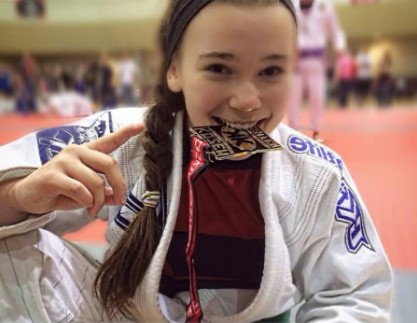
The name of a girl grappler in this video is Riley Breedlove. She’s 16 yr old and a member of Megaton Competition Team Brazilian Jiu-Jitsu. Young Riley started training Jiu-Jitsu 9 years ago when she went to BJJ class with his brother. Since then she’s competing and she has medals from all major tournaments.

Riley Breedlove

What we can see in this video is Riley Breedlove submitting young wrestlers in the park and that happened because young wrestlers saw her videos and asked her for a friendly skirmish. As we can see she managed to defeat all of them using her BJJ skills. She’s also a BJJ blue belt and who’s still training and competing in Brazilian Jiu-Jitsu.

If you’re interested in how effective Brazilian Jiu-Jitsu can be for women even in a real fight check the video below. This BJJ girl is fighting a Muay Thai instructor and she managed to defeat him without any major problems.

https://www.bjj-world.com/woman-vs-man-challenge-match-brazil/

Every woman should train Jiu-Jitsu and here is why:

5 Reasons Why Women Should Train Jiu-Jitsu

How To Pass The 50-50 The Guard: the Passing Formula

How To Pass The Guard: The 50-50 guard Passing Formula

The 50-50 guard is a staple of open guards in BJJ. It has been proven to be a highly effective guard for top competitors across the sport. From Gi point fighters to No-Gi submission hunters, one of the rare common things that work for everyone in Jiu-Jitsu is the 50-50 guard. One of the reasons why this guard is so successful is that it is quite hard to pass, while at the same time offering easy sweeps and access to submissions. There is not much we can do about the sweeps and submissions. However, there certainly is lots to do when trying to figure out how to pass the guard.  

The 50-50 guard has gotten a bad reputation over the years. First, everyone was saying it is just a leg locking position, and with heel hooks being the Devil’s spawn, not many were willing to experiment with it and evolve it. Then, it was a stalling position when done in gi competitions, but that turned out to be a result of the ruleset involved more than the guard itself. Finally, the guard is now recognized as one of the best bottom positions to play in BJJ. That, of course, raises another question – who to pass the guard that offers so many offensive options?

Hоw To Pass The Guard: A General Philosophy

What is the best way to learn something? Understand the thing that makes it all work. When it comes to passing the guard, the biggest obstacle people face with any guard is that they try to actually pass a guard. You can’t do that. There is no way that you can actually pass someone’s guard in BJJ. The phrasing we use is largely at fault for such a wrong impression people have of passing.

In essence, that means the answer to the question of how to pass the guard is there is no way to pass the guard. You can, however, pass the legs. If you focus your efforts on getting past the legs, you’ll have a much easier time than if you are trying to beat a specific guard. Once you start applying this philosophy to your passing, even the 50-50 guard is not going to be an obstacle anymore.

Let’s dumb things down even further. What is the end goal of passing? The easiest way to make it easily understandable is to give a very specific endpoint. In other words, the moment your knees and hips are past the hips of an opponent, you can consider a pass to be complete.

That takes care of the philosophy of passing (pass the legs, not the guard) and the end goals (knees and hips past the hips). All that remains now is a methodology, and I am going to generalize with it as well. To achieve your goal y using the philosophy of passing you need three things – stay safe from sweeps and submissions, break the structure of the guard and get past the legs. As long as you think in this direction, any guard pass you look to set up will work, even if you’re dealing with a seasoned 50-50 guard player.

50-50 gaurd pass

The Formula For Passing The 50-50 Guard

The one thing to keep in mind is that passing any guard (or rather, legs, now that you know better), works very similarly in both Gi and No-Gi. Still, when it comes to passing the 50-50 guard, I’ll offer a couple of examples that get you past the legs with a very high percentage of success. In addition, they offer ways to pass in two different directions. This will demonstrate that you can do pretty much anything you want as long as you adhere to the general philosophy of how to pass the guard.

In any situation involving the 50-50 guard, if you want to deal with it, you will need to make sure you are the person on top. That means not sitting on your butt and trying to solve the puzzle from there.

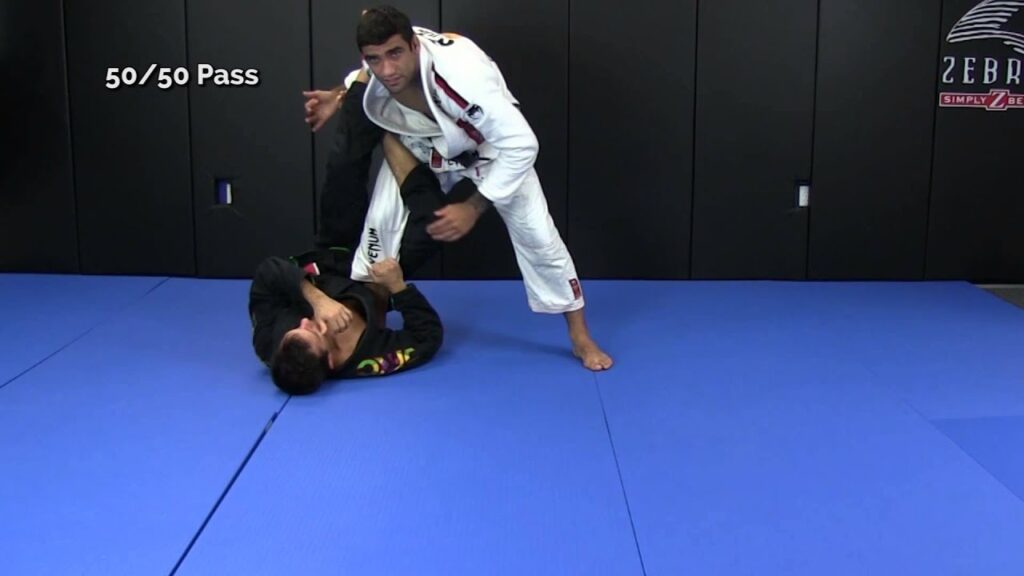
So, once you are standing, you need to address balance first, (staying safe from sweeps). The leg that is caught in the 50-50 should be planted on the ground, but you shouldn’t keep all your weight on it. The goal is to step wide with the free leg, changing the angle so that your hips are square in relation to your opponent.

This I “safe spot” of sorts that will allow you to break the structure of the guard. The easiest way to do it is to reach back and push the ankle of the opponent’s far leg towards their head. Keep a grip at ankle level, whether it is direct or a pants grip.

Now the guard is no more and you just have to get your knees and hips past one leg. You have the option of stepping back before solving the second leg, or you could go directly. In both situations, the leg needs to go down to the ground (kind of a stack) and you simply push it back, X-pass style.

In No-Gi, the stages are the same and what you are doing is pretty much the same as in Gi up to the point where you need to pass the one remaining leg. Instead of going back forward, and trying to push the leg to the ground and clear it, the lack of grips in No-Gi allows you to simply spin back for a direct route to a pass.

How To Practice 50-50 Guard Passes

let’s be honest, the first few times you try passing the 50-50 guard in this manner, you will see that it is harder than it looks. Most of it has to do with balance, and the moments before you establish a base and an angle in which the opponent can get you back to the ground or go for other attacks. That simply means that after you get the hang of the passing philosophy and specific 50-50 passing pattern, you need to get some drills under your belt.

Using progressive resistance drills will require a partner with experience and focus. If you want to master how to pass the guard, especially the 50-50, you will need to do things 100%, no slacking. Here’s who to set it up:

First, the person that is doing the passing has to “win” all the time. there’s no point in the bottom person sweeping them while they’re trying to learn something new. Second, the resistance the bottom person provides would increase as the top person’s performance gets better, but it should never jeopardize their 100% success while they are learning.

The drills should work in stages, just like that passing philosophy. However, you need to start backward. the first resistance drills you will do are from the moment you have the guard structure broken and are about to pass the one leg left. When you feel comfortable there, you move backward through the stages, before looking to train the entire movement starting from a seated position. It will take months, but once you get it down, no 50-50 guard is ever going to be a problem again.

Wrapping Up

There’s no need to be afraid of any position in BJJ. Most times it is the fear of the 50-50 gaud that gets people to freeze up and accept a sweep or submission. In reality, it doesn’t have to be that complicated. the 50-50 is just another guard, and when you know the general philosophy of how to pass the guard, it doesn’t matter which guard you’re up against. As long as you put in the reps and hours doing the drills, of course.

Blood vs Air Jiu-Jitsu Chokes: Which Are Better?

Blood vs Air Jiu Jitsu Chokes: Which Are Better?

What is your favorite choke? I guess we’ll get plenty of different answers to this question, but the bottom line is that everyone in BJJ does have a go-to choke. yes, even you armbar enthusiasts and leg lock addicts have your own “rainy days” choke. That said, let me ask one more question. Is the choke you’re using a blood choke or an air choke? If you haven’t thought about it, this is the time to give it some attention. While these are not the only types of Jiu Jitsu chokes they are the two most utilized, and the question is, which one is better? 

Jiu Jitsu chokes are some of the most fun things to do in rolling. They are the ultimate weapon – there’s no way anyone can withstand a properly placed strangle. There are no thought guys (and girls) when it comes to chokes most people tap out. A few stubborn ones might choose to take nap instead of tapping, but at the end of the day, chokes work. However, we often take chokes for granted and try to go through the motions without really understanding what we are doing. Is it blood or an air choke? What are the mechanics that differentiate the two? Lastly, which is a more efficient choke to go for?

Types Of Jiu Jitsu Chokes

When it comes to attacking the neck, there are four different categories of moves that you can do. That said, not all of them fall within the choke category. Neck cranks are obviously not chokes or strangle, but they are an important piece of the puzzle. Chest compression is another thing that you can do whenever you’re attacking the neck. Crunching people up so that their chest can’t expand will slowly lead to them running out of air, which by definition, could be categorized as a coke. There is no direct pressure on any of the neck’s structure’s though, so the jury is still out on this one.

Blood and air chokes are the final two pieces of the puzzle. We’ll discuss them in detail later on, but for now, it is enough to know they are direct neck attacks. They look to put pressure on specific structures of the neck, resulting in blocage of oxygen. There are different pathways that make this possible, hence the two very different categories of blood and air chokes.

The truth of the matter is the whenever you’re attacking the neck,. you’re most likely using all four of these different categories of moves. Given that usually, one of them is more prominent than the other,s people often categorize their attacks accordingly. In reality, even the best blood choke has elements of air chokes, chest compressions, and neck cranks. the same goes for each and every one of the categories of neck attacks. This is an important thing to keep in mind whenever you’re setting Jiu Jitsu chokes up.

Types of JIu Jitsu chokes - arm traiangle

Blood vs. Air Chokes in BJJ

Let’s break down the mechanics of blood and air Jiu Jitsu chokes before moving to confront them and try and pick out a winner.

Blood chokes work by constricting the blood flow to the brain by way of direct pressure on the carotid arteries. There is no way to completely block the arteries off, and there’s also no way to completely block blood flow to the brain, given that the carotids are not the only arteries supplying it. When the level of oxygen in the brain drops beneath a certain level, it will shut down as a safety mechanism. These are also better known as strangles.

Air chokes work in a more direct and somewhat painful way. Basically, you need to block the trachea, as the main pathway of air towards the lungs. The most efficient way is to push on the larynx, causing the trachea entry to close, thus making people choke, literally.

Now that mechanisms are out of the way, let’s look at a few examples of each, as well as some in-between chokes that might just turn out to be the best possible option

Air Choke Representatives

Ezekiel Chokes are an example of how air Jiu Jitsu hcokes can work with a very high degree of success. While they can work as blood choke s as well, it is the air choke version that really gets people to panic, whether it is done from the mount, from the back, or even in No-Gi.

Air chokes BJJ - Ezekiel choke

Guillotines are the obvious representative of air chokes. However, it is the arm-in guillotine and variations of the low elbow (like the 10 finger guillotine) that are truly air chokes. The front headlock positioning ensures that all four categories of neck attack elements are present, although forcing the trachea opening closed and pressuring the windpipe itself are the main reasons for people tapping out.

The Short Choke is something you do from back control when you can’t thread the arm deep enough for a Rear Naked Choke or collar chokes. Placing the forearm across the neck will do the trick, and the usual way of finishing is by going for a palm-to-palm grip over the shoulder. Very painful but also very effective – one of Marcelo Garcia’s favorites.

A Gogoplata is probably the lowest-percentage choke you’ll get, but that’s down to the difficulty of setting it up. In the situation of a Gogoplata, you use the top of your foot to constrict the trachea, causing the person on top to choke.

Team Blood Chokes AKA Strangles

The Bow And Arrow Choke is dubbed the most devastating and effective choke in BJJ. It is done from the back when you use the collars of the opponent’s own Gi against them. It is powerful and it uses the Gi on one side of the neck, and the forearm/wrist on the other to block off the arteries.

Rear naked chokeA gold standard among strangles. It works by applying direct pressure on the arteries on both sides with your arm (biceps on one, forearm on the other). The configuration of the grip creates a wedge which makes it notoriously difficult to get out of – one of the main reasons why it is so effective.

A Cross Collar Choke is one of the classics in BJJ. It works when you cross your hands, four fingers on the inside of the collar on each side of the opponent’s Gi jacket. These are the handles that will allow your wrists to compress the arteries. Works both from the top and bottom positions.

Cross collar BJJ blood choke

Triangle Chokes are Jiu Jitsu chokes done with the legs or arms and have a common thing in the fact that they utilize the shoulder of the opponent to block off the artery on one side. The other artery is blocked by a leg or an arm, depending on the variation. These strangles can be set up from virtually anywhere.

Hybrid Jiu Jitsu Chokes

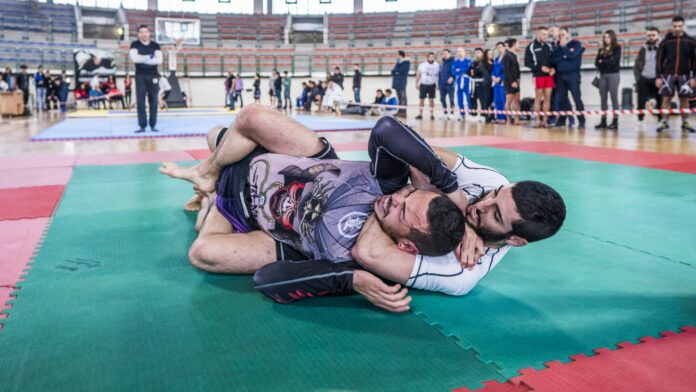
These are the chokes that you can never really tell if they were a choke or crank, as the common expression goes. However, the truth is that all four neck attack elements are present during these types f attacks which actually makes them really powerful and reliable. The representatives of this category are Darce chokes, Anaconda choke variations, and all the neckties.

The Verdict

Blood chokes are highly reliable in terms of outcome – you get them right and they will render anyone unconscious in 20-30 seconds. That said, getting everything in place can be difficult, especially when going against seasoned opponents that know how to defend. For this type of Jiu Jitsu chokes to work, you need access to both sides of the neck, which can be difficult to obtain.

Air chokes, on the other hand, will take significantly longer to actually render someone unconscious. It will take over a minute for them to start feeling the effects of a lack of oxygen – similar to holding their breath in. However, the paradox is that you get way faster taps with air chokes, due to the pain factor of compressing the windpipe. Also, finishing them only requires access to the front of the neck, which is way easier than getting access to both sides of the neck.

In terms of how quick you get taps and accessibility, air chokes get the nod. However, blood chokes are way more reliable and safer to use in a training environment. Conversely,m they are the better option in a self-defense scenario as well, given how quick they render someone unconscious.

The Dangerous Side Of Jiu Jitsu Chokes

IN terms of blood vs. air Jiu Jitsu chokes, the bottom line is that they both carry dangers when done all the way. That is why we have taps and a gentleman’s agreement of how far we go when training BJJ.

Air cheeks can be really dangerous in terms of the pressure you put on the trachea and larynx. Crushing the trachea can cause severe complications and even lead to a lethal outscome. This has to be something that is clearly stated when learning how to do air chokes.

On the other hand, blood chokes can be harmless for most people even if they go to sleep. The real danger lies in holding on to the choke for too long, which is pretty much hard to fathom in a Jiu Jitsu training or competition environment. However, there’s the hidden danger of putting the vascular system under unneeded stress when putting someone to sleep in cases where people are not aware they have some vascular insufficiencies. that can also be fatal and has to be considered.

The bottom line is that both types of Jiu Jitsu chokes can be dangerous, and potentially lethal. Knowing how long it takes for them to work, why people tap, the correct mechanics, and the gentleman’s way of attacking in BJJ is crucial to being able to practice them in a safe environment.

Wrap Up

All in all, I find it hard to choose a winner between blood and air chokes. Both have ap lace in BJJ and I tend to use them both. to be honest, the hybrid chokes like the Darce ara actually my favorites. they provide the option to hunt for air or blood chokes from the same position, meaning you get the best of both worlds. What’s your preferred way of choking people out in BJJ?

The Mermaid Guard: An Intriguing New Jiu Jitsu Position

An Intriguing New Jiu Jitsu Position: The Mermaid Guard

What is your favourite guard to play in BJJ? Better yet, how long have you been playing it for? We all have our go-to positions in BJJ, but the problem is, we tend to become really comfortable with them. this is a two-sided word though. The more comfortable we are with a position, the more we tend to slack with the details. At the same time, people are getting used to using playing it and figuring things out. So, refreshing your BJJ game with a new Jiu-Jitsu position from time to time is the perfect way of keeping your options fresh and your opponents guessing. The Mermaid guard is just such a position. 

In most cases, I tend to be a bit skeptical for new BJJ guards. However, a big fan of the lockdown half guard, I can see the potential uses of the Mermaid guard immediately. The guard also utilizes a powerful principle that just recently clicked with me. In other words, its new Jiu-Jitsu position won’t require you to rethink your entire game or have to learn some crazy new movements. It is just an adjustment to something we’ve used, and it opens up the door to plenty of options and future developments. Who knows, it may just turn out to be your next favorite secret weapon.

The Element Of Surprise

Even ancient battle strategies cite the element of surprise as an important tactic in warfare. In a sport like BJJ, where you are trying to throw pretty much the same things at a person that they are trying to throw at you, it is basically all about who can surprise the other person with cunningness and technique. As such, the mermaid guard plays directly into this approach.

What you want to do when introducing a new Jiu Jitsu position to your game is not just go for it all the time. You probably won’t get it to work that way. Instead, you need to be looking at introducing the position to your own game, setting it up from different spots, and getting all the benefits without your training partner or opponents being any the wiser. As they are left guessing you get to both figure out different uses for your new secret weapon(s) and put the reps in.

When it comes to playing guard, people are usually wary of sweeps and submissions. After all, they’re the only offensive options you have from the bottom. Manipulating other aspects such as base, for example, is easier to sneak through and even the most diligent top player will have a hard time fending off the Mermaid guard once you start entering into it from everywhere. While the mechanics of the guard are sound 9as you’ll see further on), it is the element of surprise both in terms of the guard’s structure and entries that really makes it a very promising position in both Gi and No-Gi BJJ.

New Jiu Jitsu Position: The Mermaid Guard

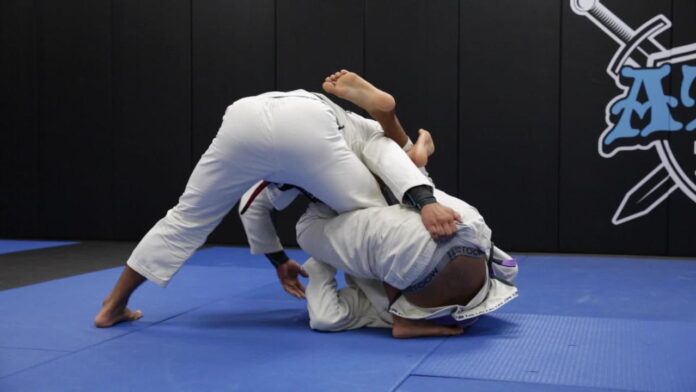
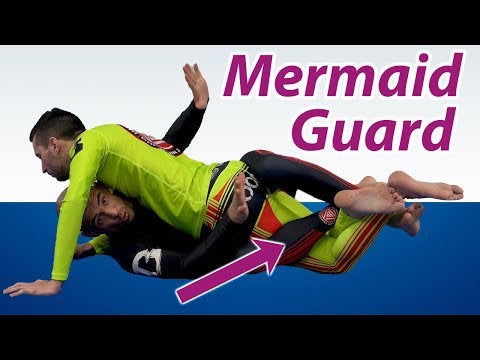
The mermaid guard, roughly explained is a lockdown done on both legs instead of just one. I only say this to get an idea of how it looks into your head. This Jiu Jitsu position is a lot more intricate than just locking both legs down. As every lockdown player will tell you, it is not just about lying there and swinging your legs. The fact that you are locking both legs down with a specific structure means you’ll have a tendency to go on your back – that is something you should avoid doing in the mermaid guard. Instead, look to be at an angle, like for a side guard, in relation to the opponent, when placing the double leg lockdown to enter the guard. The positioning of the arms varies in relation to the direction you want to go into, but a low placed underhook (hip level) is something to look for whenever possible.

The options from the Mermaid guard are mainly sweeps. The fact that you have both legs tangled mean you have a huge advantage. Controlling both legs means you pretty much have the base of your opponent completely under your control. That makes sweeping available in two directions, mainly to the sides, just like from half guard but without the potential that the top person will post or transition into a leg locking position. Moreover, once you use underhooks and some intelligent tie-ups you will see that sweeping overhead and diagonally also open up as opportunities.

Getting to the Mermaid guard is available from plenty of positions. The lockdown and half guard variations are an obvious choice, However, you can also get there from the closed guard as well, either directly, or by heading for the Mermaid sweep setup against a standing opening. Let’ not forget that plenty of modern leg locking transitions also open up the chance for you to tie up both legs, as do other half guard variations like the fishnet.

What’s Cooking Under The Sea? 

One of the greatest advantages of the lockdown, in my opinion, is that it can be just as useful from top positions as it is from the bottom. This is just a teaser as to where the Mermaid guard could lead in the future if we try and apply the principles to other situations. Basically, as I said, the mechanics of the guard and the element of surprise make it a very potent weapon. In terms of mechanics, it is ht fac that you get both legs together, and you lock them down with a very powerful hook.

This opens up a whole new can of worms though, for people who love to experiment. LEg locking entire, going inverted in terms of controlling both legs, trying to control from the top, looking to tie up the arms with a lockdown-like configuration… the options are endless it just took someone like Wim Deputter to get the ball rolling. Knowing how creative he is, I do not doubt he has even more ideas in mind of where to take the mermaid guard.

The best thing though is that we also have a chance to experiment with a new Jiu Jitsu position. Jumping on the te train early means you get to have a better understanding of it, as it will inevitably catch on. That, and it is a lot of fun to mess around with it (tried and tested in the gym, albeit shortly, given how new the concept is, at least to me).

Final Thoughts

The Mermaid guard might not end up in the latest Gracie Barra curriculums, but ti is certainly a fun option to explore. It may give birth to a full system and end up being a guard of its own, or it may just stay as a surprise option from the bottom that gets you an easy sweep and a pass to mount or the back. In any case, it is not something to disregard, if nothing else, simply because it is easy for everyone to do it and it has a sound mechanical and tactical foundation. Simply put, it makes sense.

Learn 4 Kimura Submission Defenses And Escapes

Do You Know These 4 Kimura Submission Defenses And Escapes

How many times have you tapped to a Kimura lock in BJJ? I have done so more times than I can count. In fact, to this day, I still do not enjoy having to defend and escape that particular submission hold, given how much versatility it offers, especially to experienced and creative grapplers. Defending the Kimura submission is not easy though, not at all. It takes both an understanding of the move’s mechanics and the directions in which people can take it when they catch it against you. That, however, does not mean that you don’t have ways out. Quite the contrary. 

The Kimura si s staple submission in Brazilian Jiu-Jitsu, and for a good reason – it works like a charm. While Marcelo Garcia is famous for claiming the Kimura submission is a strong man’s move, most people tend to disagree, I included. The sheer versatility of the Kimura along with the fundamental mechanics means the move is a highly reliable one regardless of the size or experience of the opponent. The tricky part, as always is setting everything up correctly, which is exactly what most of the efficient KImrua defenses we’ll look at today are based upon.

The Kimura – Know The Dangers!

What is the main threat of the Kimura? Your shoulder might get severely dislocated. That is not something to glance over easily, as it may turn out to be a very debilitating injury, sometimes requiring surgery and significant time out to fix. So, in short, whenever you’re defending this submission, be aware of the point of no return and the fact that the tap is your way out unscathed.

That said, the power of the Kimura submission lies in the mechanics of the position that comes right before refinishing, as well as the direction of the force during the finish itself. These are two big things to be concerned about and are the staple of any successful defense against Kimuras.

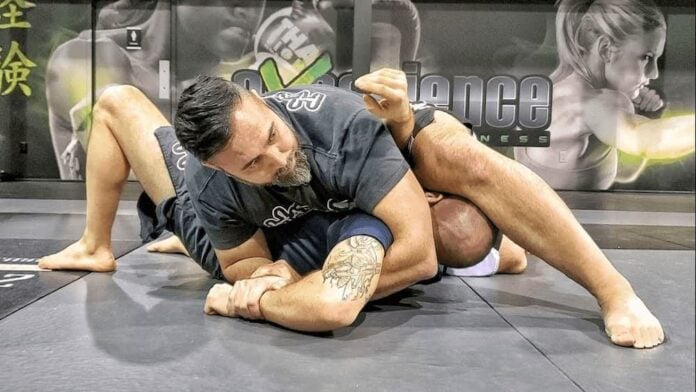
In terms of the position, the configuration of figure four the grip means the opponent has immense control over your elbow by controlling the entire lever that leads up to – your forearm. In most cases, whoever is attacking also has some pressure on the neck, whether it is direct (legs in side control) or indirect (broken posture in closed guard). The bottom line is, the Kimura offers control over the two neighboring joints (elbow and neck) in relation to the one being attacked with the submission.

In terms of the power of the finish, the submission uses a rotational application of force via a bent lever to multiple the force that takes the shoulder in a direction it is not anatomically intended to go to. To apply such force, though, the person doing the submission must have a very specific structure and positioning, which are both spots to targeted when mounting high-percentage defenses and counters.

4 Kimura Submission Defenses You Can Rely On

Let’s take a look at four solutions for the Kimura that you can actually rely upon. While the armlock might come from pretty much everywhere, those that know what they’re doing will try and get it from the half guard (top and bottom), closed guard (bottom), and side control (top). There is also the dreaded Kimura trap system that opens up a whole new can of worms. The defenses that follow address all of these situations.

Closed Guard

It would be awesome if you could prevent the bottom person from ever setting a Kimura submission up by not allowing your hands to reach the floor, This, however, does not guarantee that they can’t get the submission, so you have to have an effective defensive strategy at hand.

The goal when they get the actual grip is to prevent them from ever getting a sharp angle in your elbow and aligning their head with both your shoulder and the elbow of the arm they’re attacking. This calls for an early defense in which you thread your palm towards your belly the moment they slap on the figure four grip. Immediately go for a grip with your other arm, to secure everything in place, and try to pull your elbow inside. This will radically change the angle of their attack and force them to let go before they even get a chance to think about finishing the move.

North-South

From the bottom of North-South, dealing with a Kimura requires patience and precise timing above anything else. The biggest problem is that your arm that is under threat is on the top with lots of space to move into, and the person controlling you is pretty much sitting on your head. That man that you want to return the control over one of the two neighboring joints as soon as possible, and in this case, that is the head. Before you do, though, you’ll need to grip your arms together or hide the arm under attack by protecting it with your top thigh.

Getting out will require you to spin out so that your head is no longer under the control of the opponent. this leads to a position that might open up armbar attacks for the other person, but only if you don’t put your elbow on the ground immediately. Luckily, that requires no longer than a fraction of a second, and you can rest assured that the Kimura is no longer a threat.

Easy Grip Break

This one qualifies as a quick fix, but it will also be the one you turn to most of the time. The grip break means you’re addressing the control people have over your elbow, and that’s on the opposite side of the spectrum of releasing your head. The concept is simple – as soon as they have the figure four grip in place, use your free arm to wedge your fingers underneath the thumb of the hand that is holding your wrist. There is a hole there which you can exploit and it is easy to pry that grip ope and extend your arm. getting out from there is easy and can be done in several different directions.

Kimura Trap

The Kimura trap means that the opponent has you in a situation where they can use the grip to set up a myriad of attacks, from armbars to cheeks from the back and crucifix. In order to nullify all that you have to change the angle at which the top person is controlling you before you completely strip the grip off. To achieve this all you need to do is walk your feet towards the opponent’s head in an aggressive manner. At the same time, you should aim to put your elbow on the ground, effectively killing the kimura trap. From there you could look to grip a kimura grip of your own in order to completely set yourself free, to go for the grip break discussed previously.

Countering The Kimura

When we’re talking about defending anything in BJJ, whether it is a submission or a position, there are two directions to head to. One is an escape from the position altogether. The other is going straight into a counter submission or very dominant position of your own. Counters are much more difficult and need a lot more precision, but they are worth it more when you get to pull them off. In terms of Kimura submission counters, there are two that are really worth exploring.

One is the Kumura counter to a Kimura, when an opponent is trying to get the lock from the bottom half guard. As they go for your arm and establish the grip, you want to connect your hands and get your elbows to your ribs. From there, your goal is to posture up, spine straight, Pulling your arms to your chest (like for a guillotine)_ will actually trap their arm in a Kimura-like position and often get you a tap right then and there.

Another highly reliable counter to the Kimura is turning it into an armbar attack for yourself. Form the top half guard, all you need to do when an opponent is going for a Kimura submission is to spin over their top arm, landing in a position to hit an armbar yourself. The same move can work when they’re going for a top side control Kimura and you spin under cathing them in an armbar that is available because of their grips.

In Summary

Defending the Kimura submission is not an easy task. There are plenty of positions that open up different variations of the hold, and it is impossible to be ready for each of them specifically, Defending by escaping the control and killing the power of the move is an efficient way of setting up your defense. Well, that and gong for high-percentage counters.

Chris Weidman Broke His Own Leg in the First Seconds of Fight at UFC 261

Chris Weidman Broke His Own Leg in the First Seconds of Fight at UFC 261

Chris Weidman will remember UFC 261 for one of the worst injuries in UFC history, probably thinking about Karma and Anderson Silva.

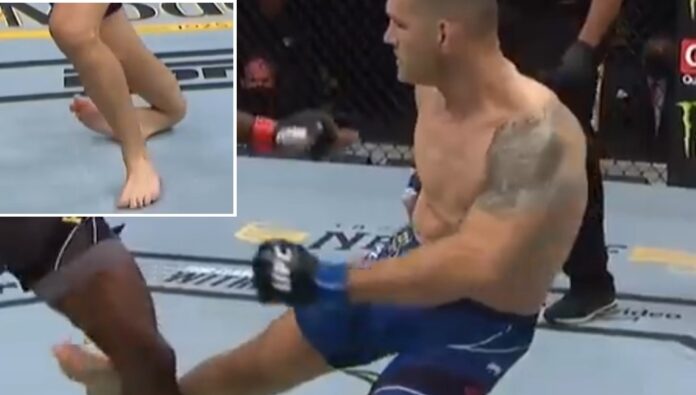
Right at the beginning of the fight against Urijah Hall, Weidman did a lowkick to Hall’s shin, and his leg could not withstand it. Weidman’s Tibia couldn’t stand it and it snapped.

The rematch of Hall and Weidman was immediately interrupted and the victory went to Urijah Hall as a TKO.

What’s ironic about the whole situation is that Weidman defeated Anderson Silva in the same way back in 2013. Anderson Silva did the exact same low kick and lost to Weidman due to a leg snap what forced him to be out of octagon for one year.

“I got nothing but respect for Chris Weidman. He is truly one of the best. It is a crazy story that he was the first man I fought that defeated me and introduced me to fear. I didn’t know what fear was and during that time we went different paths. He was the first one to defeat Anderson Silva, and I was the last. It’s just crazy how we ended up here again.” ” – Hall said after the fight.

Dana white wrote on his instagram profile: “the first fighter in UFC history to win without a single strike thrown”


View this post on Instagram


A post shared by Dana White (@danawhite)

Daniel Cormier Confronts Jake Paul at UFC 261: ‘I’ll Smack You in the Face’

Daniel Cormier Confronts Jake paul

The UFC 261 show ran as usual, until the moment when Jake Paul was disrespected by the audience.

Randy Brown and Alex Oliveira were doing their job in the cage, and suddenly chanting began and there was confusion in the stands. The crowd was chanting “f*ck Jake Paul”

When the main UFC commentator Joe Rogan realized that Cormier met Paul he mentioned it on the broadcast after Jake Paul took his seat.

“What are they chanting?” Rogan wondered during the broadcast, revealing the reason a few seconds later.

“I found out what it was. Jake Paul showed up, so there was a hook.”

This situation greatly upset Daniel Cormier. The former champion and YouTube star had some quarrels via Twitter, Paul directed several insults at the expense of DC who didn’t take it well.

Cormier told Rogan:

“I just saw Jake Paul and I pointed at him and I+ve said don’t play with me,” Cormier said. “Cause I’ll smack him in the face. He’s right there. I’ll slap him. I don’t play those games, Joe.”

Watch the camera record:

Cormier responds to Jake Paul’s challenge: ‘Why would I fight him? I would kill him!’

Watch Jake Paul in an MMA fight vs AJ Agazarm


Basic Jiu-Jitsu Stuff All Beginners Have To Master

Basic Jiu Jitsu Stuff All Beginners Have To Master

One of the hardest things I have faced as a BJJ coach is trying to figure out what basic Jiu-Jitsu is. It may be simple to just show people how to shrimp and do armbars from the guard, just like it has been done for decades now. But is that really what the basics of the sport are? On the other hand, trying to go too deep into concepts will have people, especially brand new students, equally as confused about it all as they are with techniques. So what is basic Jiu-Jitsu, something that can actually be taught to everyone and have them actually understand, learn and progress?

First of all, let me make it clear that basics are not just things that new students should learn. People usually have quite big holes in their understanding of what makes BJJ tick even when they have higher ranks. Basic Jiu-Jitsu is all about the things that make it possible to do what we do – and that means going painfully simple in terms of things that you should consider basic. What you’ll soon realize is that people will start thinking instead of copying, and that will yield much better grapplers in just a fraction of the time it takes going about the “traditional” way.

What is Basic Jiu-Jitsu? 

That is a really difficult question to answer with any level of preciseness. Basic BJJ is not about the closed guard, nor is it just about self-defense. Thos e are just some of the things that pop to mind when we talk about basics or fundamentals.

Moreover, this approach is quite widespread throughout the BJJ community, as it is what the people that are currently teaching were taught themselves. If the school education system has taught us something it is that teaching what you were taught without questioning and developing results with unmotivated people that haven’t been pushed to use their full potential. It is the same in BJJ.

There are different approaches to what is basic in terms of Jiu-Jitsu, and all of them have some merits. However, they are based on techniques, for the most part. Teaching new students stuff like the armbar from closed guard on their first day, or a standing opening pass seems logical, just as they were taught to us first.

However, think of it this way: to understand what you are saying, they’d need to know what the guard is, what the armbar is, and how to get there. Those are three areas of BJJ that we spend months understanding, and yet, somehow, we expect people to pick them up from day one.

What is even more important is that those have nothing to do with basics. The basic idea of BJJ first and foremost is to be able to defend yourself, particularly when on the ground. Of course, guards, setups, and the likes have their place, but they enter the picture as people train. Basic Jiu-Jitsu means understanding some key concepts and mechanics that make everything else you are to pick up, later on, make sense. Think of it as the alphabet.
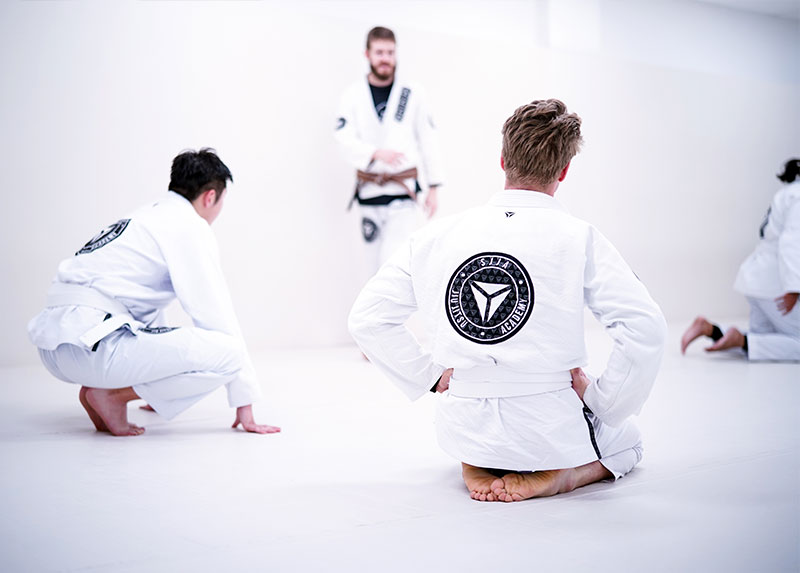
BJJ basics for beginners

5 Basic Things Every beginner Has To Master

To be honest, I still haven’t completely figured out the best way to get all basic Jiu-Jitsu into a curriculum, if you will. I have had, however, lots of success with using a system that I am about to share with you. Give that I have also taught for years using the old systems, I certainly have enough data to compare the two.

  • Submissions

Let me be clear – by submissions I mean submission mechanics. That simply means teaching people how to do an armbar, triangle choke, or a kneebar from the end position. No entries, no setups, no grip fighting.

The mechanics of the submissions provide an interesting subject for people, will give them confidence and teach them when to tap, and they’re highly useful in self-defense situations. There’s nothing more basic in BJJ than submission holds, and the high percentage ones at that: armbar, kneebar, ankle lock, triangle choke, guillotine, rear-naked choke, and the likes.

  • Top And Bottom

One of the most important things that everyone in BJJ has to understand is the principle of aiming to be the top player. As Chris Haueter puts it: “Be on top and stay on top”. Conversely, teaching people about the top and bottom positions is a crucial concept that is not approached like that.

Simply put, the closed guard is a great basic Jiu-Jitsu starting position, as it explains that you can be safe off your back. However, people need to understand that you only have two options from it – get on top or submit. Thus, the guard is the ultimate bottom position example.

Conversely, the ultimate top positions people need to consider are the mount and the back. They are, after all, the best positions you can be in BJJ. It doesn’t really get much more basic than the closed guard, the mount, and the back when you’re explaining what is top and what is bottom in BJJ. PLus ti makes teaching sweeps really easy, given that people already understand what the end goal of them is  – to end up on top.
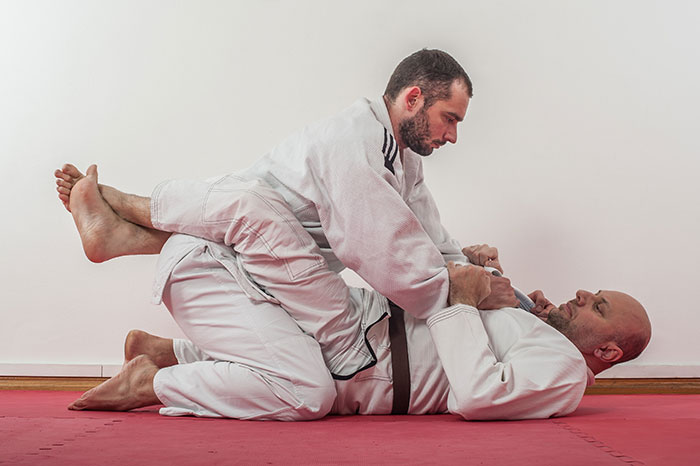
Basic Jiu Jitsu Stuff

  • The Sweep-Submission Relationship

One of the things that have haunted me has been how bad beginners are with sweeps. I mean, it takes almost up to blue belt for most people to really become good with some of the sweeps we show white belts. That said, looking at the scissor sweep, sit-up sweep, and pendulum sweep, the reason for this is more than obvious. these are all movements that require boy awareness that newcomers don’t have just yet. As such, it is wrong to consider them as basics.

Give that making a difference between top and bottom is a key concept, my take on approaching sweeps are simple – use what you already told them: submissions. Namely, it is really easy for people to realize that setting up a submission from the guard (triangle choke, guillotine, or Kimura) also means that you can use that position to easily put someone on their back.

In other words, the conditioning for sweeping someone is having a submission that either near completion or going for one. Going for direct sweep setups that involve 10+ steps is definitely a no-no.

  • The Art Of Escaping

Escapes, at least proper ones, are a subject matter that is difficult for pretty much everyone in BJJ to truly grasp. And yet, it has to be taught as part of basic Jiu-Jitsu. This way, the people will learn to lose the fear of exposing their back or being at the bottom of the mount. they have to understand that there are ways out, and there’s no need to be overly technical about that. SImple key concepts like keeping elbows together, and never allowing both shoulder blades on the ground will be more than enough to get them going. That, and of course, showing them the turtle position as their proverbial safe heaven.

  • General Goals

What is the point of every exchange we do in Brazilian Jiu-Jitsu? Submission of course, but that is the very end. The thing that makes every scoring position or submission possible, is occupying the opponent’s inside space (space between the shoulders and knees) and controlling it. Once you have that, everything else will not be hard to hold, get, or finish. Along with being the person on top, and keeping your elbows together as often as possible during exchanges, you give people easy goals to follow. That is what basic Jiu-Jitsu is all about.

Keeping An Open Mind

20 years ago, it would be considered preposterous to go to a BJJ academy and not learn how to shrimp or attack from the guard in your first few classes, followed by rolling. The fact of the matter is, Jiu-Jitsu has evolved since then.

Along with it, so ahs the understanding we have of it, as well as the people involved in BJJ. Claiming that basic Jiu-Jitsu has not changed since those days makes us no better than Karate. There’ son point in teaching stuff the way they were when we have evidence that there’s a better way.

In another 20 years, I have no idea what people will consider to be basic Jiu-Jitsu that is a must for beginners. I do know two things though – the evolution of the sport means that today’s basics are taught from a different perspective compared to a couple of decades ago. I also know that failing to evolve along with the sport means coaches are doing a disservice both to themselves and the students they are teaching.

The bottom line is that the fundamentals of BJ Jhave not changed, but rather our views and understanding of them have. That, in turn, means that we should also change the way we teach it to beginners. After all, the point should be to teach them more in less time, rather than having them question what is going on around them every class.
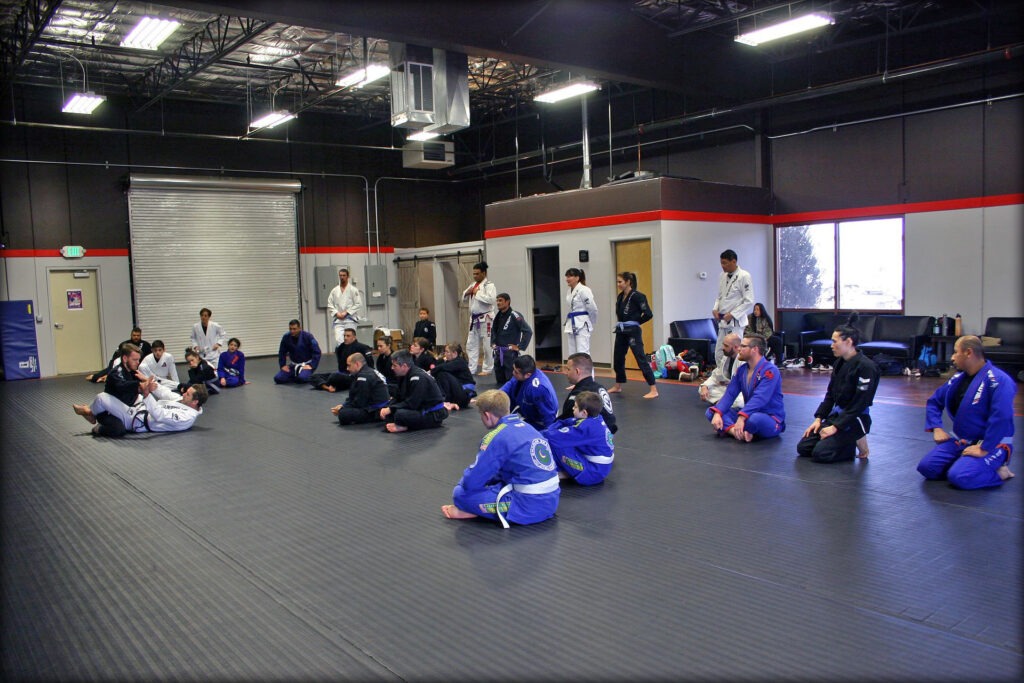
Fundamental BJJ for beginners

Conclusion

All in all the focus of what is basic Jiu-Jitsu has shifted. That is great because it does not just mean beginners get to learn in a better and more understandable way. it all means coaches and instructors get a different perspective on things. For me, switching things up proved to make a huge difference compared to the traditional method used before. Seeing how other top coaches around the world teach, I can see that this type of approach is definitely the way forward.

Related Articles:

Basic BJJ moves for Beginners
The first month of BJJ training
Common armbars mistakes and finishing tips for beginners
Brazilian Jiu-Jitsu basics for rolling
BJJ side control essentials