


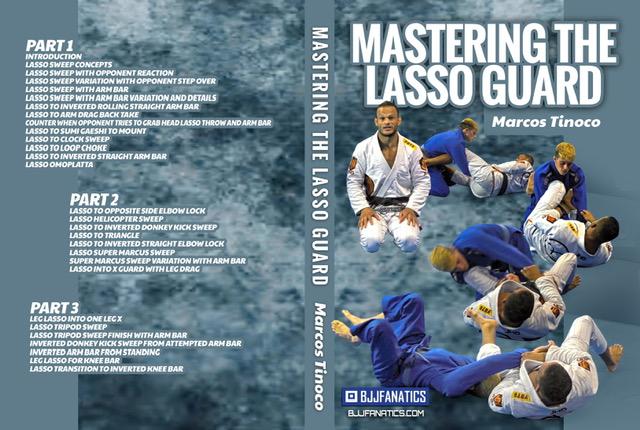
Marcos Tinoco DVD Review: Mastering The Lasso Guard 

Marcos Tinoco Lasso Guard DVD Digital Instructional

Mastering The Lasso Guard is a Marcos Tinoco DVD set that is going to make you one of the best guard players in your academy. Be warned though you’re fast going to become the person people hate, given how annoying the lasso guard is. However, if your goal is to control bigger and more experienced grapplers from the guard, and set up effortless sweeps and submissions than this shouldn’t be of any concern to you. Instead, check out our detailed review of what “Lekinho” is going to teach you in his groundbreaking instructional and the order it and get to work! Time to take your guard game to that very annoying next level!

ON SALE HERE:
Marcos Tinoco – Mastering The Lasso Guard (DVD/DIGITAL)
REVIEW:Marcos Tinoco DVD Lasso Guard
Personally, I hate the lasso guard from the bottom of my soul. In fact, I hate it so much that I avoid playing it as much as I can! However, playing it does bring some irrefutable results. It is a great guard to help you prevent people from speed passing or even pressure passing. The guard itself is not an easy one to dial in, or at least, it was.  The Marcos Tinoco DVD we have on review today has quite a different take on the lasso guard. Where everyone looks to entangle things more, Marco looks to simplify them. I got to admit, his approach to the lasso guard might even get me on the bandwagon. But that is one big “might”.

“Lekinho”

Marcos “Lekinho” Tinoco Silva is a Marcelo Garcia BJJ black belt from Rio De Janeiro, Brazil. He is one of Marcelo’s top black belts and competitors, and a member of the NYC Alliance team. Marcos is notorious for his success with armbars and the lasso guard in particular. As you’d expect, both feature heavily in the “Mastering The Lasso Guard” Marcos Tinoco DVD.

MIssing only a world title at black belt (Lekinho has one at brown belt), Tinoco has all major IBJJF accolades. The middleweight started Jiu-JItsu as a 16-year-old under the tutelage of Juarez Soares in Brazil. The team Soares led was a highly competitive one, so Marcos was into swimming in the deep from the get-go. Later on, through his future wife, he met Marcelo Garcia and started training with him.

Tinoco got his black belt in 2015 and has since conquered the Pans, Europeans, and got a bronze and silver in two consecutive Worlds. A lot more is yet to come from the 31-year-old.

Marcos Tinoco DVD Review – Mastering The Lasso Guard 

Marcos put together one hell of a DVD here. To be honest, the subject matter is not one that is easy to teach via a digital instructional. Yet, Marcos has a crazy simple approach that makes complete sense. It is exactly what a position like a lasso guard requires. Basically, the more entangled the position, the simpler instructions, and movements need to be. Honestly, I’ve never seen a Marcos Tinoco DVD before this one, so I did not know what to expect. The no-nonsense instructional that is the “Mastering The Lasso Guard”, is definitely an instructional I do not regret having.

In terms of organization, Marcos uses a very simple system. There are sweeps and there are submissions from the lasso guard. In all three parts of the DVD, you get a lot of moves from both these categories. However, there’s a clear progression in terms of difficulty. marcos starts easy, and then slowly graduates to more advanced moves. Still, he manages to keep things simple even with things like the inverted donkey kick sweep from a failed armbar. This is the true mark of a real high-grade teacher. With Marcelo Garcia as his mentor, you wouldn’t expect anything less.

Part 1

In volume one of the Marcos Tinoco DVD, you first get an introduction to the lasso guard. In essence, this is an open guard in which you have one leg entangled around one of the opponent’s arms, utilizing the help of the Gi to grip on. Some basic lasso guard concepts pave the way here before Lekinho goes into the attacking portion.

here’s where simplicity really shines through. Marcos has you focused on your opponent’s reactions. If they react in a certain fashion, you get a sweep or submission. If they stay still, you get a different sweep or submission. Easy, right? OF course, with Tinoco as the coach, most of the submission options here are in the form of straight armbars.

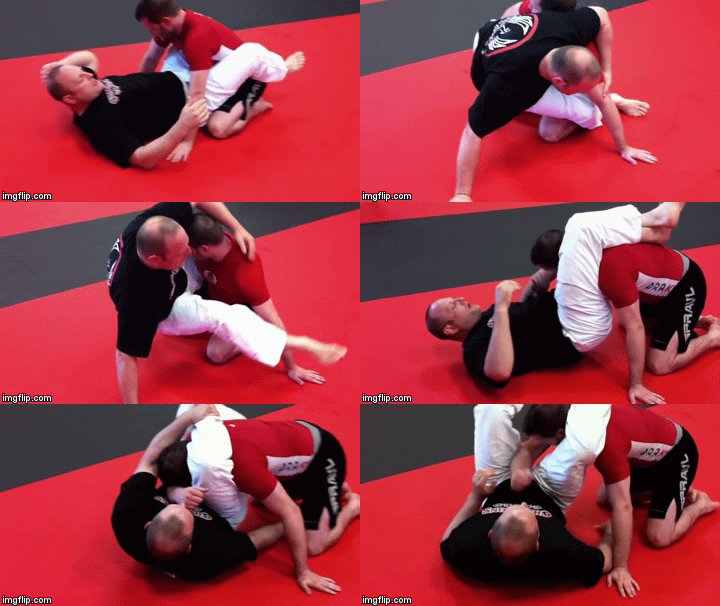
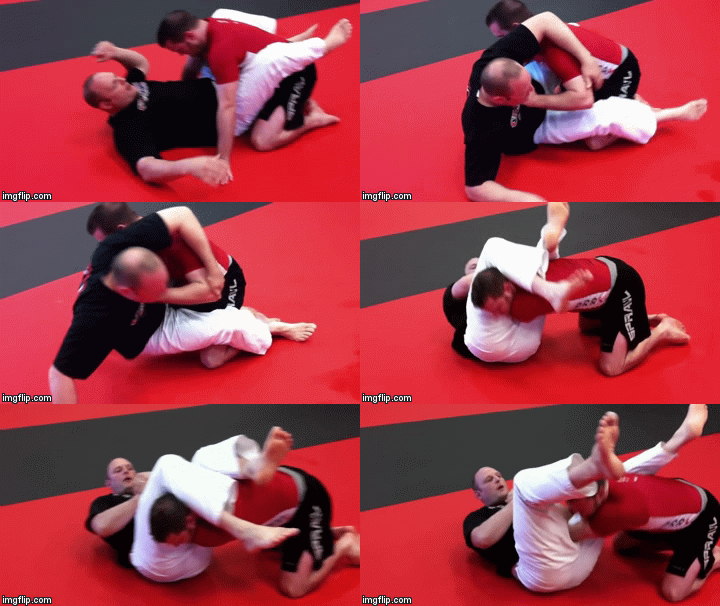
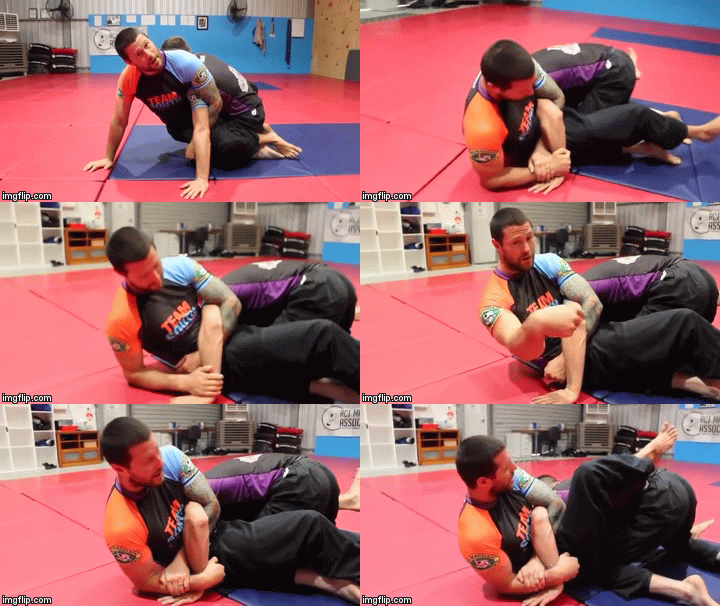
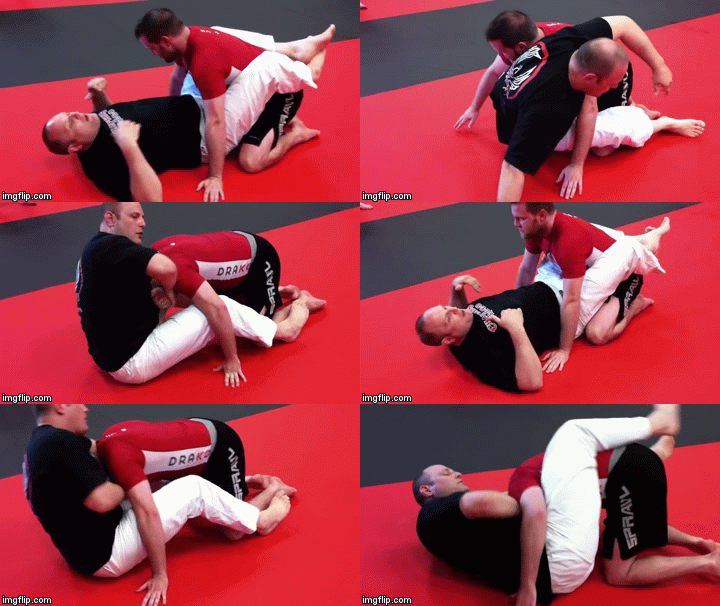
Techniques that merit mention (i.e. really caught my eye) are the lasso to inverted rolling armbar, the lasso Sumi Gaeshi to mount and the loop choke off the lasso, to mention just a few. Worry not, the names of the moves sound much more complicated than the techniques themselves. Moreover, these are just a fraction of more than a dozen of great moves that feature on this first volume.

Part 2

In volume two, Marcos starts to explore some more advanced options. If you are a beginner, stick to the first volume until you feel comfortable with all the moves demonstrated there. If you’re into the lasso guard already, you’ll be able to grasp and execute most of the moves in |Part 2 without much difficulty.
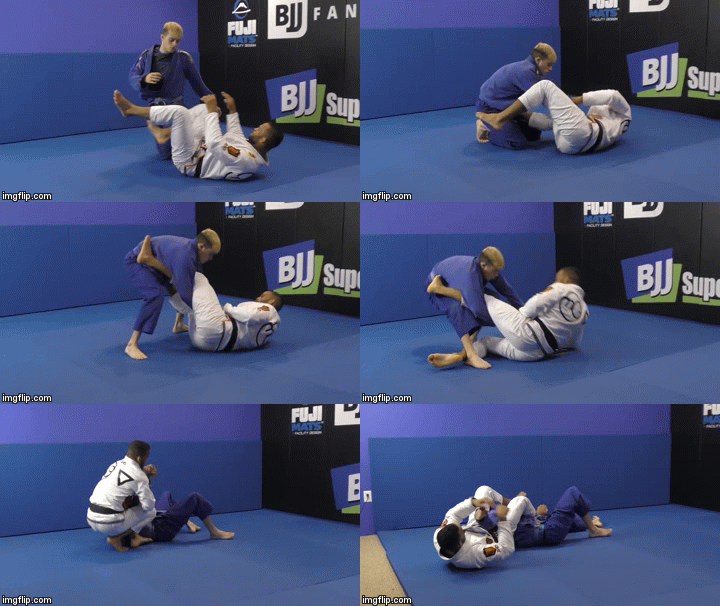
Marcos Tinoco DVD Lasso Guard REVIEWOnce again, the recipe is sweeps, submissions, or sweeps that lead into submissions. Stuff like the helicopter sweep makes its way here. I never really fancied the move previously, but form the lasso, it makes a lot of sense. The opposite side elbow lock is also a simple move that’s going t catch lots of people by surprise. It a blitz submissions that might come in really useful. Haven’t gotten to giving it a try yet, though.

In this portion of the Marcos Tinoco DVD, you also get to learn some of his specials. The Super Marcos sweep ins one such example. More armbars and sweeps follow, along with a triangle to freshen things up. The transition into X guard and subsequent leg drag after the sweep is also a very good sequence to have in your arsenal.

Part 3

The final portion has a total of 7 chapters, each looking into options out of the lasso guard. here, Marcos covers a lot of transitions to the X-guard and its variations. Once again, Tinoco follows the same principles of using either a sweep or armbar or both, to get what he wants. Most of the submissions here are armbar variations, apart from a really hefty knee bar setup that I tried and fell in love with. It is one move from this DVD that I’m going to be trying a lot in the following weeks.

The sweeps here tend to go in different directions, allowing you a lot of variations. There’s a tripod sweep, for example, along with a donkey kick sweep. Both work from the same setup and both can also contain the threat of an armbar or kneebar. The best part is that even if you fail a submission, Marcos has a way back into a seep and vice versa. This makes every chapter in this last volume a sort of an endless loop of attacks in which you can keep your opponent until you finish them.

In Summary 

It is always great when you can use one defensively sound position to launch a myriad of attacks. The lasso guard is such a position, allowing you to attack indefinitely and with lots of variety without ever changing the initial starting position. Moreover, this Marcos Tinoco DVD simplifies everything, from holding and positioning to executing even the most complex multi-stage attacks.

ON SALE HERE:
Marcos Tinoco – Mastering The Lasso Guard (DVD/DIGITAL)
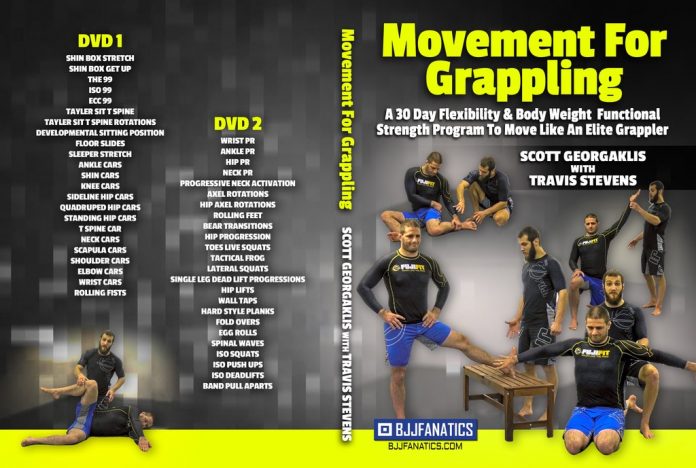
REVIEW:Marcos Tinoco DVD Lasso Guard

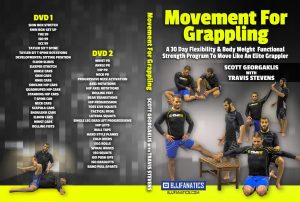
Scott Georgaklis – Movement For Grappling (DVD/DIGITAL/E-Book)

Scott Georgaklis - Movement For Grappling (DVD/DIGITAL/E-Book)

If you enroll in a Judo class, you’ll soon start to comment about having to train break falls for 30 minutes each class. In wrestling, you get much of the same, only with movement and hand fighting drills instead of falls. Why don’t we have this practice in BJJ as well? Isn’t the essence of grappling in the mastery of the most fundamental sport-specific movement? There’s a clear lack of movement specific training in Jiu-Jitsu and the effect is that people need more time to progress through the belt system. However, if you want to learn BJJ the right way, and get to black belt in the shortest amount of time possible, you need to focus on movement.s Especially if you are a complete beginner. Scott Georgaklis has the ultimate resource to get you going – his “Movement For Grappling” DVD.

ON SALE HERE:
Scott Georgaklis – Movement For Grappling (DVD/DIGITAL/E-Book)
Scott Georgaklis - Movement For Grappling (DVD/DIGITAL/E-Book)

Movement is the basis of all martial arts. People usually get bored with having to go through the same repetitive motions for endless amounts of time. Yet, when students turn into coaches, they’ll start teaching and preaching the same thing they hated as beginners. Isn’t it much easier to accept straight of the bat that you need to learn how to move in order to be good at any sport? With Jiu-Jitsu, which takes place mostly on the ground, this is that much more important as it is not something we do daily! The “Movement For Grappling” DVD is a two-part system. It is going to teach you everything you need to know about BJJ movement. Easy to use and well organized, this DVD is a must-have for anyone just starting with Jiu-Jitsu.

The Instructors

The people behind the “Movement For Grappling” DVD are Scott Georgaklis and Travis Stevens. This is the absolute perfect combination for an instructional of this kind. Both are experts in their respective fields and try to solve the BJJ movement conundrum with joint efforts.

Scott Georgaklis is a licensed massage therapist and certified functional strength coach. He works as a therapist at Movement As Medicine. He learned his trade working with Mike Boyle, who is a legend in kettlebell training for martial arts. Scott himself has a background in kettlebell training and martial arts as well. Scott is a movement coach, nutritionist and strength coach working with a wide array of clients. This includes the Olympic Judo team as well.

Travis Stevens is a Judo black belt and an Olympic silver medalist. He is also a John Danaher black belt in Brazilian Jiu-Jitsu and one of the toughest competitors in both sports! In the “Movement For Grappling” DVD, Travis acts like the perfect guinea pig. In fact, he is a real representation of the walking disasters that grapplers are. Scott applies his training methodology to Travis throughout the DVD. It is an instructional like no other, as you get to see how the methods actually work right in front of your eyes!

Movement For Grappling DVD

The “Movement Fro Grappling” DVD is not one to teach you how to do penetration steps, hip escapes or bridges. This is actually what you need to do before you even consider training grappling. In fact, this guide has the task of getting you healthy and limber enough to actually learn sport-specific movements correctly. And I can’t emphasize the importance of this enough! The “Movement Fro Grappling” DVD is the one best resource that’ll teach you how to correct all your body’s imbalances and turn it into a grappling machine!

The way this DVD is organized is in two main parts. The first one addresses breathing techniques and ways to get your body moving pain-free. Once your body is fluid in movement, you can use the second part to develop insane grappling specific strength. Here you learn how to use a different approach and lots of isometrics to become a real force to be reckoned with on the mats.

Part 1 – Corrective

As the DVD begins, Scott takes us through some stretches that are amazing to use as a  warm-up. Whether you’re warming up for strength training, training, a tournament or just trying to start your day limber, this is the routine to do. Some key moves like shin box stretch, the 99 and the Tyler sit T-spine are going to make you more flexible than you’ve ever imagined.

The second part of this first volume of the “Movement For Grappling” DVD set is all about Scott’s CAR system. Basically, it is a system of exercises designed to take you through a maximal range of motion on all your joints. The goal here is to make the joints move further and better, strengthen the associated musculature and tendons and help you reach new levels of flexibility. The system addresses 13 articulated body parts in total, helping you improve coordination, agility and build a more efficient grappling body.

Part 2 – Strong As An Ox

Part 2 is where Scott, with Travis’ help, moves into exercises to help make you a lot stronger for Jiu-Jitsu. Some preparatory work that includes ankles, neck hips and wrists starts this second volume. Following closely are some activation exercises that make a world of difference. When I first saw them, I didn’t think much. However, I quickly changed my mind when I gave them a try, particularly the progressive neck activation series. As a grappler with a neck hernia, I can tell you that this helps, a lot!

In this part, you’ll encounter a lot of exercises you never thought can make you a stronger grappler. You get a lot of squats and deadlifts, as well as some unique moves, like bear transitions and hardstyle planks. I can guarantee you two things with this instructional: you won’t get bored, and you will become a lot stronger. The spinal waves are something to look forward to, trust me.

The DVD ends with a series of isometric exercises that will challenge even the strongest grapplers. Nothing but the basic squats, pushups, deadlifts and pull apart here, but they’re torturous, I can promise you that!

E-Book

The best thing about the “Movement For Grappling DVD” is that it comes with a complimentary free E-book. The combination of a video guide and demonstrations, along with the detailed E-book is almost as good as the combination of Scott and Travis.

The E-book contains information on everything you see in the DVDs but in a more detailed version. Here, Scott breaks down each exercise with the help of high-resolution photos and short and concise textual explanations. After you see the exercises in the videos, you can expand your knowledge of them with the help of the E-book. Moreover, the e-book contains a lot of ways in which you can build programs to suit your needs. All in all, the E-book turns this already great DVD into an awesome one!

Conclusion

If your goal is to reduce soreness and inflammation, get better cardio, become stronger, more coordinated and perform to your maximal potential on the mats than this is the bundle for you. The DVD paves the way with clear and precise video instructions and the E-book just piles on knowledge and programming patterns. With two volumes and the E-book, you get everything you’ll ever need in both terms of strength and conditioning and mobility and flexibility for BJJ.

ON SALE HERE:
Scott Georgaklis – Movement For Grappling (DVD/DIGITAL/E-Book)
Scott Georgaklis - Movement For Grappling (DVD/DIGITAL/E-Book)

Satoshi Ishii DVD – Japanese Judo Secrets REVIEW

Satoshi Ishii DVD Japanese Judo Secrets

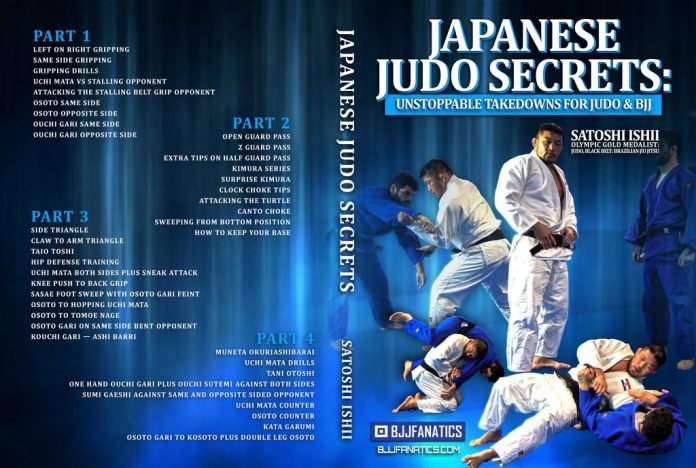
There are people in grappling that are outstanding competitors and champions, and then there are legends. Achieving legendary status in combat martial arts is an achievement not many can claim. In terms of grappling, and particularly Japanese Judo, Satoshi Ishii is as legendary as it is possible! The 32-year-old is still going at it, active in MMA and one of the best grappling competitors alive. At long last, there’s now a Satoshi Ishii DVD that’s here to help us learn how one of the best has used Judo to gain success in multiple combat sports. The “Japanese Judo Secrets” DVD set is out, and it reveals everything Satoshi knows about Judo for BJJ an MMA. 

ON SALE HERE:
Satoshi Ishii – Japanese Judo Secrets (DVD/DIGITAL)
Satoshi Ishii DVD Japanese Judo SecretsJudo is the martial art that influenced the development of Brazilian Jiu-Jitsu directly. Maeda was a renowned Judo master and that is exactly how he came to the attention of the Gracies. The rest, as we know it, is history, as the Japanese traditional art subsequently gave birth to the ultimate grappling system in existence. to this day, we still use Judo a lot when we’re training Jiu-Jitsu. I come from a Judo background and, despite really liking parts of wrestling, still like it as my go-to supplemental art, particularly for standing. Imagine how stoked the Satoshi Ishii DVD got me, particularly because it is heavy on footsweeps, which are my absolute favorite! Time to reveal some of Judo’s best-kept secrets!

The Japanese Olympic Judo Champion

Satoshi Ishii is a true legend of Judo. Why? Well, he won an Olympic gold medal at the 2008 Bejing Olympics. He also has a silver medal from the 2006 Asian games. And he is a two-time champion of the ALL-Japan Judo Championships, which in Japan, is a bigger deal than the Olympics. This is all without even mentioning his 28-8-1 professional MMA record. At 32 years of age, he is still active in MMA and has a lot more successes coming.

Satoshi Ishii Judo DVD InstructionalSatoshi is also the depiction of the Japanese Samurai spirit. Even as early as his MMA debut in 2009, Ishii never wanted an easy introductory fight and didn’t get one. his first pro-MMA match was against the much more experienced Hidehiko Yoshida in Dream. From there on Ishii ha fought the who is who of MMA heavyweights over the years. This includes legends like Heath Herring, Quinton Rampage Jackson, Mirko Cro Cop, Pedro Rizzo and a bunch of others. Out of those efforts came a huge friendship with Cro Cop which led to Ishii moving to Croatia to help the national Judo team.

Grappling-wise, we last saw Satoshi in the all of the initial 3 Quintet grappling championships. he also has notable performances at Polaris. Just recently, Satoshi got his Brazilian Jiu-Jitsu black belt from Yuki Nakai who is a black belt under Carlos Gracie Jr. Now, even though he is bang in the middle of his career, the Japanese legend decided to issue the Satoshi Ishii DVD to once and for all clear up Judo for BJJ.

Satoshi Ishii DVD Review – Japanese Judo Secrets

This DVD is truly a masterpiece. Satoshi is a real master of Judo, which is apparent from the very first second. He is also a heavyweight that moves like a featherweight, meaning his moves will work for everyone. Satoshi also speaks perfect English and is one of the best teachers I’ve ever had the pleasure of listening to. A lifetime of two-a-day Judo sessions would do that to you.

Satoshi Ishii DVD "Japanese Judo Secrets"The “Japanese Judo Secrets” Satoshi Ishii DVD is a roadmap for everyone looking to improve their Judo for grappling and/or MMA. lacking takedowns? You’ll learn the most effective moves that have been perfected for centuries. Lacking takedown defense? You’ll become almost as unbeatable standing as Satoshi is himself! PLus, do not forget that Ishii is also a black belt. that means you can expect great connections between throws and passes and submissions. After all, Ishii is a huge fan of the Kimura!

Gripping And Sweeps

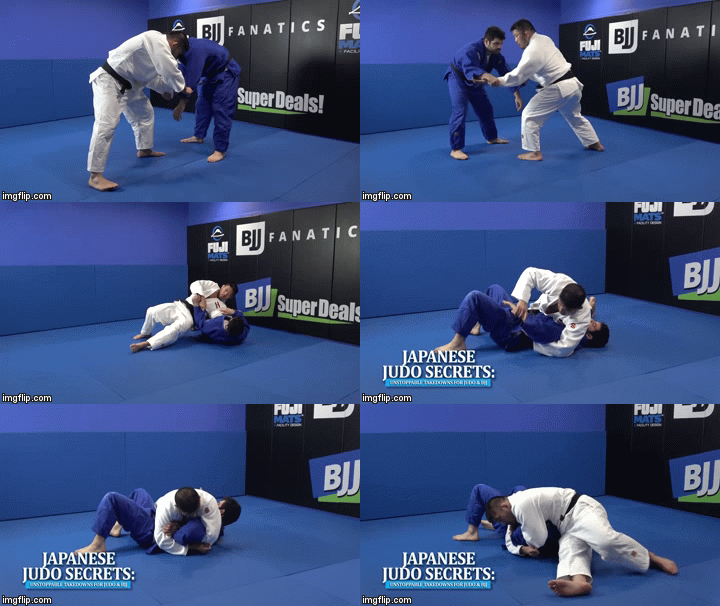
IT all starts with the grips. if you’ve ever trained Judo, you know how much time and effort Judokas spend training their grips. it’s not all about strength though, as grip sequences and grip fighting is the precursor of effective throws and sweeps. Satoshi simplifies greatly a very complicated part of Judo and gives it a very practical context.

The first half of this volume focuses on the art of grip fighting. You get a really clear outline of how both same and opposite side grips work, what you want to achieve with them, and how to prevent your opponent from getting them. He even covers belt grips as he goes int strategies to deal with a stalling opponent.

The second portion of this DVD are basics of foto sweeps. Once again, he goes over Judo staples that you get to learn from white belt onwards – the Osoto and Ouchi Gari

Guard Passing And Submissions

The second volume of this Satoshi Ishii DVD is the most BJJ specific one. Here, Satoshi takes a short break from specific Judo techniques and works on connecting Judo and BJJ. Namely, he goes over some guard passing options and some submission options. Normally, they’re all intended to work right after you get someone down by using effective Japanese Judo techniques.

Satoshi Ishii DVD ReviewMost of the passes are about dealing with open guards, but there’s also a very sick Z-guard pass in there. Half guard passing closes the section and leaves the stage to submissions. Of course, Satoshi’s signature Kimura features heavily here. he has a complete series that’s based on the Kimura, ending with a really cool sneaky Kimura setup.

Another submission that’s really big in Judo is the clock choke. Ishii also goes over it wit ha fine tooth comb, revealing all its powerful secrets. The canto choke is also covered, along with a bunch of ways you can use both chokes to destroy the turtle. The very last chapter is one that’ll benefit BJJ guys with no Judo or wrestling background the most – how to develop and keep your base.

The Art Of Throwing

DVD 3 gets back to Judo with a bang. You can see that Satoshi is a huge fan of foot sweeps or Ashi Waza. You get a whole bunch of Osoto Gari based setups that all but ensure you get someone down. In fact, Satoshi uses foot sweeps to set up other throws like the Uchi Mata and Taio Otoshi. Here, you also get to learn how more complicated combinations like Kouchi gari to Ashi Barai work.

A very important chapter on this volume is the one about hip defense. it is a concept you absolutely have to master if you aim to stop Judo attacks before they even happen. Satoshi also covers some triangle chokes here, in the form of the side triangle and claw arm triangle.

High-Level Judo For BJJ – Conclusion

Yasuyuki Muneta is another huge Japanese Judo legend that was incredible with the Okuri Ashi Barai in particular. Now, this Satoshi Ishii DVD uncovers the secrets behind the Muneta Okuri Ashi Barai in detail! Some much-needed drills also feature in this volume. The Uchi Mata is arguably the most difficult Judo throw to master, and you can’t do it without drills. Ishii offers some killer Uchi Mata specific drills to help you master the move quickly.

Also, this is the volume that’ll apply to smaller grapplers and people who like to pull guard the best. Here, Satoshi goes over the Judo throws that have you going to your back and pulling an opponent up and over yourself. Same and opposite sides Sumi Gaeshi setups are covered in great detail.

A lot of counter-throws to common Judo throws announce the end of this magnificent Satoshi Ishii DVD. However, there is one more sneaky throw setup hidden in the very end. The Kata Guruma or fireman carry is a very effective throw, once you know it like Satoshi. And, with the help of the Japanese Judo Secrets DVD, you will.

ON SALE HERE:
Satoshi Ishii – Japanese Judo Secrets (DVD/DIGITAL)
Satoshi Ishii DVD Japanese Judo Secrets

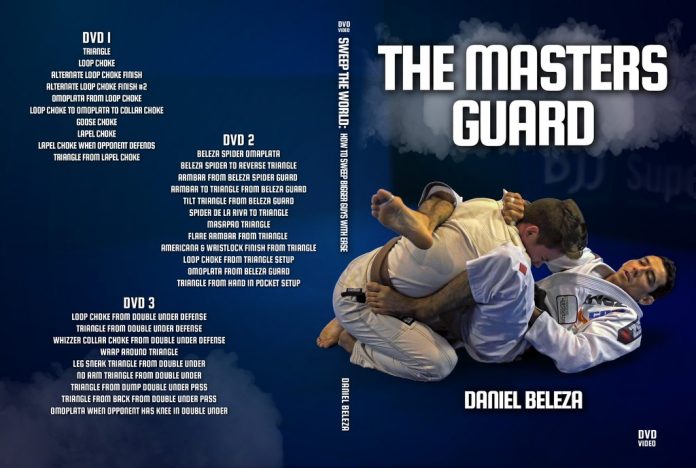
Daniel Beleza DVD – The Masters Guard – Review

Daniel Beleza Masters Guard DVD Instructional

All you young gun grapplers just coming up in the game, look away. This BJJ DVD instructional is intended for “senior” grapplers only! The Masters Guard DVD is the ultimate blueprint for evening the planes between masters and adult competitors! This DVD is not only going to make you dominate the masters’ divisions but also take you toe-to-toe with all the young guns that dare challenge you! Daniel Beleza is the culprit behind this awesome 3-part instructional, who, as a master competitor himself, know exactly what you need, and more importantly, need not do!

ON SALE HERE:
Daniel Beleza – Masters Guard (DVD/DIGITAL)
Masters Guard DVD ReviewAs a master myself, (creeping in on Master 2) every opportunity to learn from a black belt master competitor is a godsend. Getting the chance to learn the secrets of a multiple time Masters World Champion was beyond my wildest dreams. Now, I can do it on a daily basis, wherever I am at. Even more importantly, the “Masters guard” DVD set really, actually works! You can take this at face value from a majorly injured, featherweight masters grappler. Or you can go on to read the full review and come to the same conclusion by yourself.

4 Time IBJJF Master World Champion

Daniel Beleza is a BJJ black belt under Carlos Pinto Sá “Sazinho”. However, he is no ordinary black belt. He has been one for almost 20 years now. Beleza is one of the very best to ever represent the “Sazinho” Fortaleza Academy. A curious thing is that he is not a black belt form the “common” Gracie lineage, but instead, one from the much more rare Takeo Ino lineage.

Daniel Beleza43-year-old Beleza was born in Rio De Janeiro and didn’t start BJJ until the age of 18 after he moved to Fortaleza. He started rolling in the Nova Uniao – CEP gym along with many of his friends. Very soon, Beleza turned into one of the most feared grapplers in all of Brazil. Since 2008, Daniel is a resident of York, Pennsylvania. there, he runs his ACA academy.
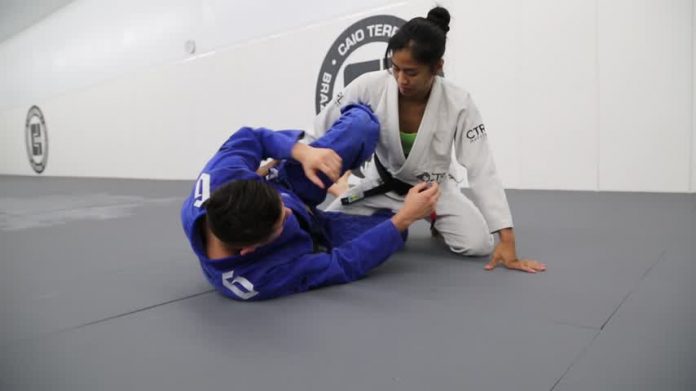
Beleza is a grappler who won many accolades during his BJJ journey. A black belt since 2000, Beleza has a total of four Master World Championship titles, the last from 2015. Furthermore, he is also a Brazilian national champion, 4 time Pan American, and CBJOO World Champion. Now, the light featherweight is also behind an awesome instructional in the “Masters Guard” DVD set.

Daniel Beleza “The Masters Guard” DVD Review 

WhenI wrote that young guns should look away at the very beginning of this article, I was actually joking. This DVD is a really useful tool to make your guard a real fortress. Even if it may not fit your game now, look at it as an investment in your masters’ competition days that’ll surely come. For masters grapplers, it is the best way to inject a quick fix into your bottom game. And a world class quick fix at that.

The one thing you won’t get with the “Masters Guard” Daniel Beleza DVD instructional is a boring closed guard game designed to stall. That you can learn from a host of people. Learning how to become a human submission flytrap off your back is something entirely different. Beleza is going to take you through submission after submission of your back that requires no athleticism or strength. Even people with injuries can use his concepts to get one over younger training partners. Tournament-wise, this DVD set is all you need to build a complete bottom game.

You get three volumes, all done extremely professionally in terms of production and technical aspects. Each DVD contains well over a dozen chapters filled with information that nobody without Beleza’s rich experience could ever teach you.

#1 How Many Loop Chokes Are There?

No, really how many variations of the loop choke are there? I mean, I knew of a few at best, but it seems Beelza has a whole DVD worth of them! Yeah, the first volume of his instructional is all about loop chokes from the bottom. It turns out, he can catch them from every angle, and in every collar/lapel configuration imaginable. Nonetheless, all his secrets are available for everyone to learn now!

The DVD actually starts with a triangle choke. This is understandable, as Daniel has one of the nastiest flying triangles in the history of BJJ. From there on, it ‘s all about loop chokes. The very first one is the most basic one. A couple of alternate loop choke setups follow, which do raise eyebrows but are nothing spectacular. Which is exactly where Beleza changes gears. Lapel chokes, the “goose” choke, loop chokes off Omoplatas and other craziness ensues. Fittingly, the volume ends with another triangle choke setup, this time off of a lapel choke.

#2 The Beleza Guard 

In part two of “The Masters Guard” DVD, Beleza goes over his signature guard, which is ideal for masters. The first half of this volume starts with a host of spider guard subs that include Omoplatas, reverse triangles, armbars, and a very unusual tilt triangle choke. Moreover, there’s also the Masaspao triangle which you’re going to have to see to believe.

Speaking of triangles, the second part of the second volume is all about triangle chokes. There are the odd flare armbar and Americana/wristlock combo to bring in variety, but it’s mostly about strangling people. Loop chokes to triangles, spider De la Riva triangles, and many other variations and combinations are discussed. The final chapter is a masterclass on triangling people forms the “hand in pocket” position. This one will skyrocket the finishing rate of your triangle chokes.

#3 Double Under Pass Traps

Masters Guard DVD Daniel Beleza Review
Watch Full Technique

This final part of the DVD is my very favorite. Lots of people in my academy, with my instructor in the lead, love to pass with the double under. there are a whole host of variations, many including lapels, that make this pass really annoying to deal with. Well, Beleza has the ultimate solution or, better said, about a dozen of them.

You can probably guess the first two moves that Beleza likes to use as counters. Yeah, you got it, they’re the loop and triangle chokes. From there on, he continues to do a bunch of stuff that’s going to make your opponent’s think twice about passing under your legs. The Whizzer lapel choke is awesome, and the leg sneak triangle is a real “Eureka” moment. Ther’es even a no-arm triangle setup that works like a charm! Moreover, a few more triangle variations come before the very final chapter of an Omoplata against a double-under pass.

Conclusion

This awesome instructional is definitely something you absolutely have to have in your collection if you’re older than 30. Do not fool yourself in thinking Berimbolos and inverted guards are going to carry you much further. You need to keep your guard tactics simple and effective. Actually, you need to look into basing your guard game on high-percentage submissions. In essence, you need “The Masters Guard” DVD set and Danie Beleza’tutelagege to become a monster guard player when nobody expects you to.

ON SALE HERE:
Daniel Beleza – Masters Guard (DVD/DIGITAL)
Masters Guard DVD Review

The Best BJJ DVD Instructionals For Masters Divisions

The BJJ Z-Guard and Why Is It So Popular?

Why is BJJ Z-Guard Popular?

The BJJ Z-Guard is arguably the most famous guard variation used today. People of all levels are playing it and everyone seems to be having success with it. The position as such is nothing revolutionary, but it seems that it is more effective against the modern game than virtually any other. What is that the BJJ Z-Guard offers exactly, to be so superior? How come this so basic knee shield half guard works in both GI and No-Gi? ISn’t it too simple to work at the highest level? We’ll answer all these questions today, and get to the bottom of the reason the Z-guard is such a popular jIu-Jitsu guard nowadays. 

When it comes to playing guard in BJJ, people simply love to overcomplicate things. On top of that, everyone wants to be just as effective from every guard position there is. Suffice to say, this is pointless and unattainable. The closer you go to fundamentals, the more successful you’ll be. The BJJ Z-Guard is a standing indictment of this. Just take a look at all the star level grapplers that are crushing with it, like Craig Jones and Bernardo Faria among many others! This guard is so widespread precisely because it is so fundamental! To be honest, working an effective guard without needing super strength or crazy flexibility is a real relief in modern Jiu-Jitsu. I’m all for it!

Craig Jones DVD Z Guard EncyclopediaLearn from the best by picking up Craig Jones’ Z-Guard instructional! The “The Z-Guard Encyclopedia” 3 DVD set is a resource like no other on mastering BJJ’s most popular guard position! All of Craig’s secret Z-Guard attacks and concepts are explained in this DVD!!!

Just Another Half Guard?

In essence, the BJJ Z-Guard is just a half guard variation. We already know that the half guard is one of the most effective ways to attack from the bottom. In my eyes, the half guard trumps both open guard variations as well as the BJJ closed guard.

The reason I favor the half guard is that it provides a lot of safety, mobility and offensive options at the same time. Open guards allow for a lot more mobility, and even offensive options, to be honest. However, they lack a solid defensive structure. This makes them great for young, flexible and mobile grapplers, but not so much for the rest of us.

The closed guard, on the other hand, is defensively superior but very short on mobility. There’s no real lack of attacks, but the lack of mobility limits their number as well. The half guard, along with most of its variations, bridges this particular gap easily, by offering everything you’d want from a bottom position. And the Z-Guard is the pinnacle of half guard variations, at least for now.

There’s one more crucial aspect of the half guard that’s uniquely specific to this position. The way in which you’re set up as you both on the inside (between the legs of the opponent) and the outside. This means that you’re in a prime position to easily go into any other guard variation, closed or open, whenever you want to. Moreover, you can always get back to the half guard at all times. The half guard is the king of fundamentals, and it the Z-guard is it’s cutting edge.

The BJJ Z-Guard Secret

What the BJJ Z-guard brings to the table is literally a safe spot to start your complete game from. You can start as easily as standing, by pulling half guard and going straight into the Z-guard. The one main difference that sets this guard aside from other half guard variations is the “knee shield”. Actually, this is the name we knew this guard by for a long time. It is also the main secret behind the success and popularity of the BJJ Z-Guard.

Why is BJJ Z-Guard Popular?That knee shield is arguably the most powerful frame in JIu-Jitsu and the main reason behind the guard’s success. Yes, it sounds painfully obvious, but try to play the Z-guard with your knee an inch to either side, and you’ll realize that the correct frame makes or breaks the guard. A part of the half guard’s success was always due to the fact that it gets you under the opponent. This gave birth to the underhook, which eventually lost its effectiveness as a result of the modern front headlock game. Enter The Z-guard.
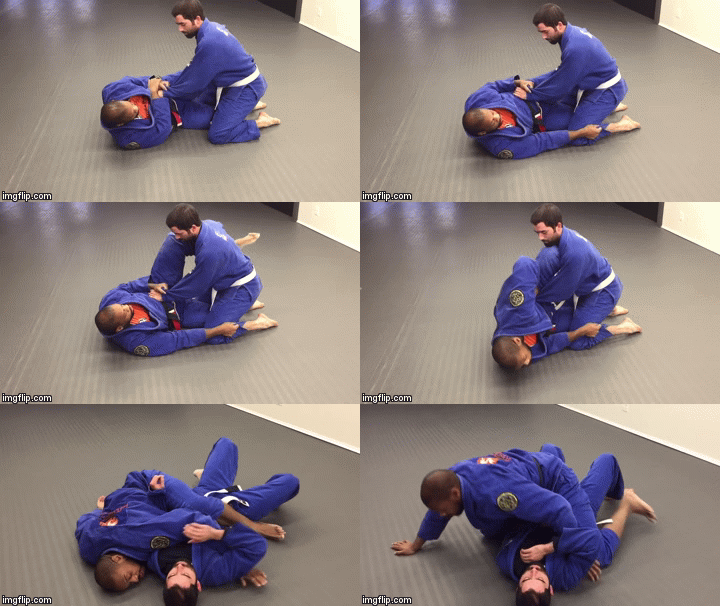
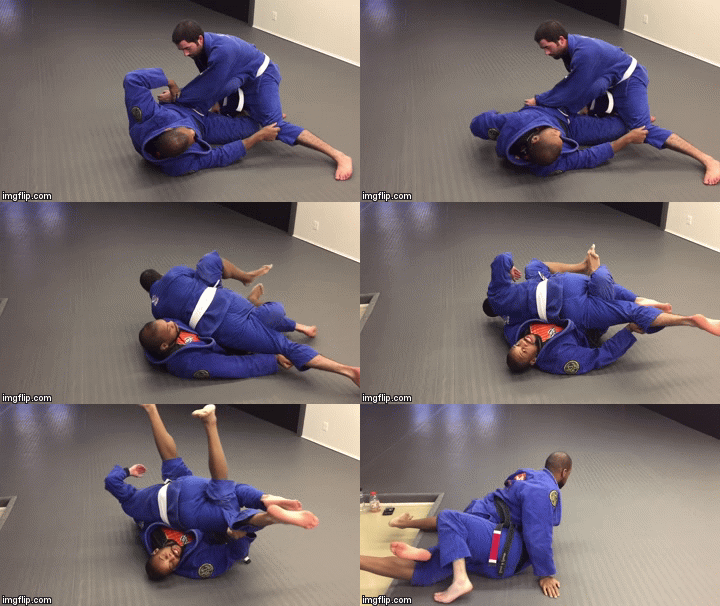
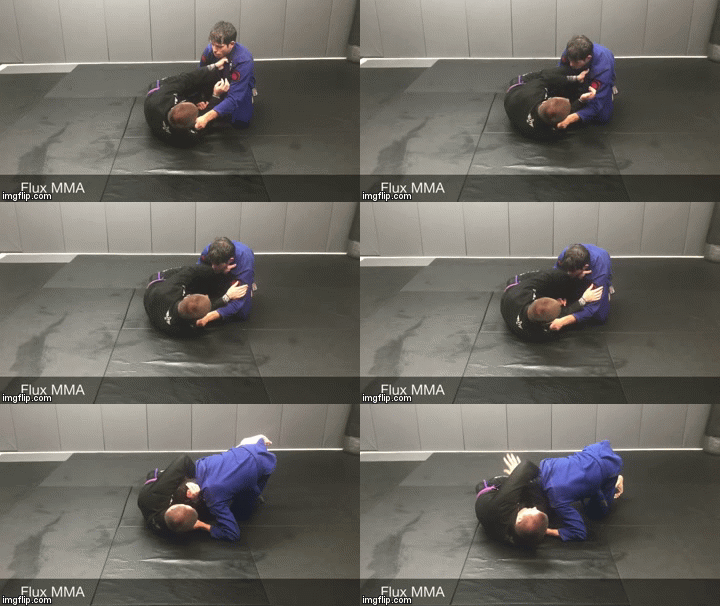
Another aspect of the Z-guard is the fact that you can not only stay mobile, defense and attack, but also control distance. This is what all other half guard variations lack. Once again, it comes down to the knee, or rather, shin placement, and the opportunity such positioning brings. Speaking of opportunities, let’s look at just some of the possibilities you have from the Z-guard. Just remember that it is all about that shin position!

An Overview Of Options

With the BJJ Z-guard, it is hard to pick a place to start from. SImply getting to the position itself feels like a threat to people on top. Yes, certain passes exist but passing means the opponent opens up for attacks that much more.  Plus, guard retention and recovery is a breeze, given that you’ve got inside position and distance control. For now, however, let’s look at attacking.

Attacking from the Z-guard sis no different in essence from attacking form any other bottom position, You either want on top or to get a submission, The sneakier the submission, the better. Well, the Z-guard reigns supreme here. Working from it in the Gi offers so many weapons your greatest problem is going to be choosing ho to finish an opponent. No-GI? No problem! The lack of lapels does not reduce the attacking options, nor the guards basic dynamic.

Sweeps

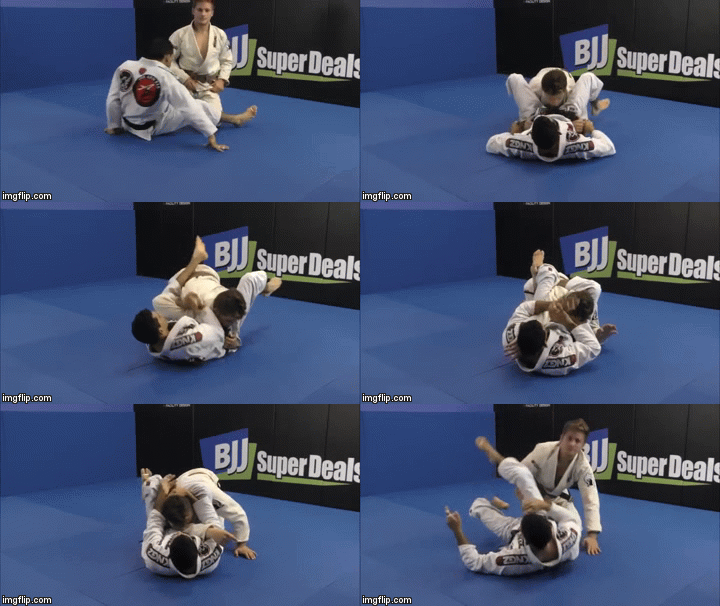
BJJ Z-Guard Scissor SweepGetting a sweep from the BJJ Z-Guard is almost half done just by getting to the guard. The shin across the belly/chest, plus a couple of solid grips means you’re halfway through a scissor sweep already. But the scissor sweep doesn’t work at black belt level! Check out some of Craig Jones’ matches for clear evidence to the contrary. We’re talking fundamentals here, remember? The simpler the better, and a scissor sweep from the Z-guard is as simple and efficient as it gets.

BJJ Z-Guard Rollover SweepAnother extremely basic sweep you can do is a half guard rollover sweep. This one is not just easy to get but also works as a continuation to the scissor sweep. For the scissor, you want distance and grips on the sleeve (cross grip) and the pants. For the rollover, you’ll use the same two grips, only this time, in a different direction. This time, you’ll send the opponent to flying in the opposite direction. All you need to do is get their torso past your shield and they’ll be ready to roll!

There are a lot more sweeping options that include going in every possible direction. This is not an article on Z-Guard sweeps, however, but rather one on its effectiveness. So we’ll keep it short and basic and provide you some fundamental sweeping ideas to play with the next time you hit the mats.

Submissions

BJJ Z-Guard Loop Choke Once again, we’ll keep things sweet and simple. On offer today we have an arm lock, a leg lock, and a choke. Our top strangle option from the BJJ Z-guard is the loop choke. One reason is that it takes just a nominal effort to get it in place. Another is that it works great off an initial threat with the scissor/rollover sweeps. Whenever you tilt your opponent to the side, you can think about hitting a loop choke, regardless of your initial success with the sweep. SImply use a collar grip when starting the sweep and the opponent’s neck is going to get in place pretty much on its own.

BJJ Z-Guard Kimura Another option that ties in great with both fundamental sweet, as well as the loop choke, is the Kimura. The Kimura from Z-Guard works much better than the regular half guard one because of the distance. Her, the opponent can’t go towards you because fo the knee shield and they can’t pull back because of the figure four grip. So whenever you see the arm on the floor, you know what to do!

BJJ Z-Guard KneebarFinally a leg lock option for those that just can’t live without them. When nothing else seems to work, f#*^ it and go for a leg lock. From the BJJ Z-guard, getting an underhook on the free leg, means you have a pivot point to rotate around. This means you can kneebar that same leg just by swinging the knee shield leg over and doing a Granby. Oh, and there’s a heel hook there as well.

In Conclusion

The BJJ Z-Guard is a popular choice among top grapplers because it is simple and very hard to beat. The attacks from there are so fundamental, that people underestimate them, and the guard as a whole. This gives you a huge edge over everyone you grapple against. Just remember to keep things basic and go slow. After all, there’s no guard you’re safe from while attacking apart from the Z-guard! Time to give it a try once again now and leave the berimobolos and lapels guards to others.

DVD and DIGITAL Instructionals Related to Z-Guard :

  1. The Z Guard Encyclopedia by Craig Jones

  2. Dynamic Z Guard attacks by Hiago Gama

  3. Cross Sleeve Grip Guard Beyond The Basics by Thomas Lisboa

Deep Half Guard in BJJ – Everything About

Craig Jones DVD Instructionals Collection

Dynamic Underhook Half Guard No-Gi Sweeps

Training At Different BJJ Gyms – Acceptable Or Not?

Different BJJ Gyms Cross-training

Training Jiu-Jitsu is always connected with a lot of talk about respect, loyalty, and teams. Of course, respect is absolutely essential in a sport where we play with other people’s bodies. however, all the loyalty talk can often be misplaced and lead to some very stupid practices. One such everyday example is cross-training at different BJJ Gyms. In other sports, like MMA or Muay Thai, for example, this is not really a big thing. Training in different places actually makes a lot of sense. Team allegiance when in a tournament is great, and a completely different subject. We’ll touch on that briefly later on. Still, training at multiple BJJ academies is very likely to get you branded a “persona non grata”, or in BJJ terms, a “creonte”. 

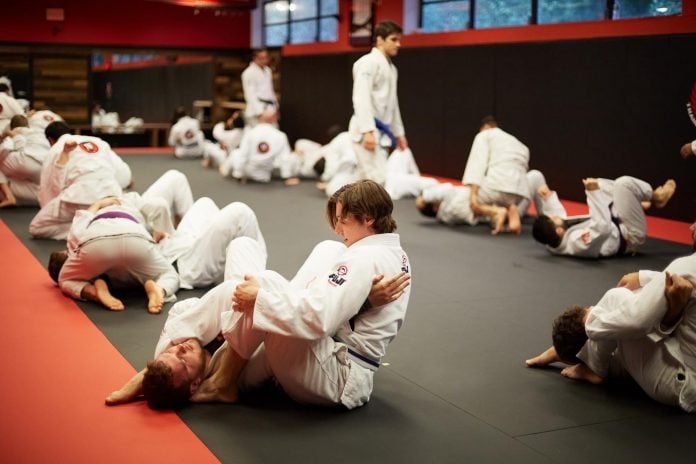
Open am ap in front of you, place a finger anywhere in the world, and you’re likely to find a BJJ academy in the near vicinity. Jiu-Jitsu has taken over the world, and we wouldn’t have it any other way. In fact, where there’s one, you’re very likely to find two or more academies as well. Since most academies follow a similar structure, they all have an open mat day. At open mats, people from different BJJ gyms might end up training at the same spot. And it is most often not a big deal if a little frowned upon. So why is training in a regular class, at more than one neighboring BJJ academy such a drama then? DO you really think you’ll steal people’s secrets, or reveal your own, in just a few classes? Better yet, what secrets???

The “Creonte” Phenomenon

BJJ is original in many aspects. As a martial art, it was something never before seen and it continues to evolve each day. It is also famous for the friendly attitude most people have towards each other, even when they’re competing. It also has its nuisances as well, the phenomenon of creonteism being one of them. What Creonte is, is basically a slur for a traitor. One of the surefire ways to get this brand is by indulging in training at a neighboring gym, or, god forbid, switching gyms after even a short while.

The Creonte way of thinking is actually very dumb when you come to think about it. Let’s use traveling as an example. If you decide to travel to another town or a nearby state for that matter, training somewhere is going to be all good. It may even be encouraged. However, doing the very same thing in your town or city might make you public enemy number one. Of, course most of this is down to the instructors and Academy policy, but it is not a rare occurrence. Quite the contrary, unfortunately.

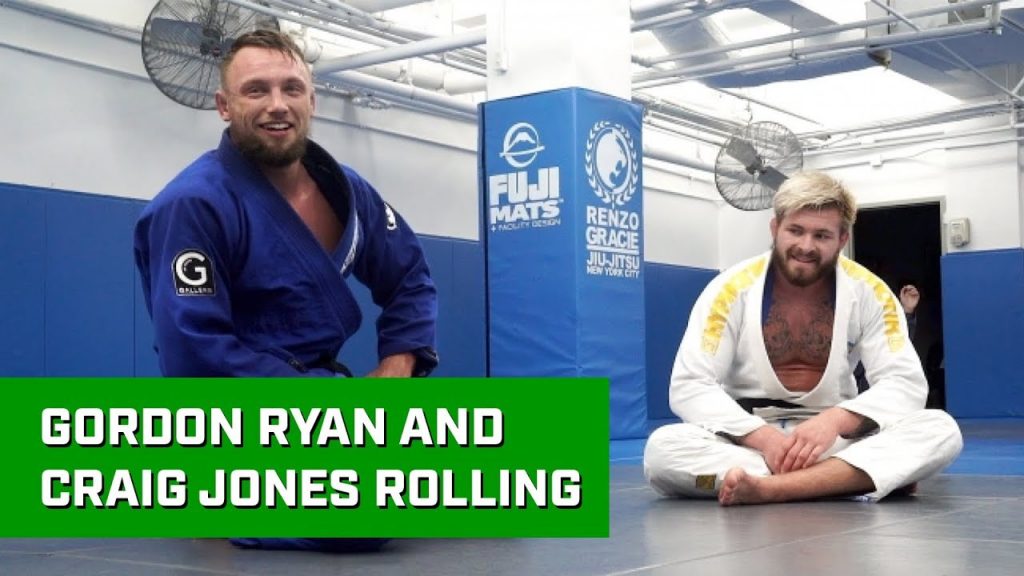
Training At Different BJJ GymsReasons, why this practice is stupid, are multifold. One example is that you’re most likely going to be competing against guys/girls from neighboring towns and states quite often as well. Still, if you train there while traveling for work for a couple of weeks is ok, but visiting a couple of classes in an academy near you isn’t. Doesn’t make much sense, does it? And, if that’s not enough, let’s look at world-class grapplers. Gordon Ryan and Craig Jones went toe to toe so many times, yet Craig is always welcome at Renzo’s. Examples like this are too many to count among professional grapplers.
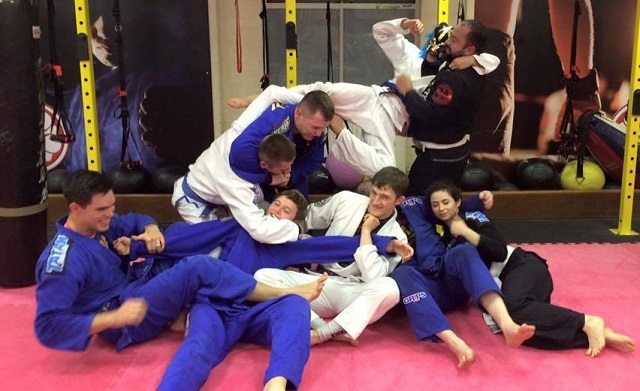
Reasons To Cross Train At Multiple BJJ Gyms

Training at different BJJ gyms is something that comes naturally to people. Imagine having a couple of academies about 30 minutes apart. If you are in a gym that doesn’t have training every day 9most don’t), you now have a chance to train every day. All it takes is to get to the other spot and keep training. Normally, if you can allow yourself to do so from a financial perspective.

Training in different BJJ gyms actually has a lot of benefits, and next to no drawbacks. Apart from the creonte bull and some instructors’ ego trips. Be warned that a heavy cult organization of a BJJ academy is one of the tell-tale signs of a McDojo. Other than that there’s only the competition conundrum, which we’ll discuss later. For now, let’s look at some great benefits cross-training can bring to your Jiu-Jitsu.

BJJ Globetrotters area community that has to cross-train down to a science. they are open to everyone, from any gym, and hold some of the best training camps in the world! One of their stand-out black belts is Priit Mihkelson, an Estonian grappling magician when it comes to practical BJJ. Check out his “Grilled Chicken guard retention System” DVD set is a unique way of making sure your guard will never get passed! 

Style of grappling

First of all, training at a certain BJJ academy is usually connected to style. If you are a competitor, in particular, you’re most likely drilling and working n your instructor’s style. this is logical since the instructors can explain their BJJ style much better than other styles. As effective as this might be, learning different grappling philosophies is never going to hurt. This is where visiting other BJJ gyms comes into play.

If you have access to two, or even better, three or more BJJ gyms, and you can afford to train at all, you’re going to build one hell of a grappling style. The influence of different instructors is a great way to discover your own personal direction. plus, it makes training so much more fun!

New Friends

Training At Multiple BJJ GymsThe bonds built in a Jiu-Jitsu academy are often really strong and end up in friends for life. People in BJJ gyms are usually outgoing and love to interact, especially on the mats. You won’t just get more training partners, but also people you can be friends with. it is not rare that people will follow you back to your academy for a class or two, building a great local BJJ community. If we’re truly like to “hang loose” as we try to show every time we throw the Shaka sign, we need to look forward to training with other people from different gyms as opposed to acting like we have the ultimate BJJ secret that other “clans” must never find out.
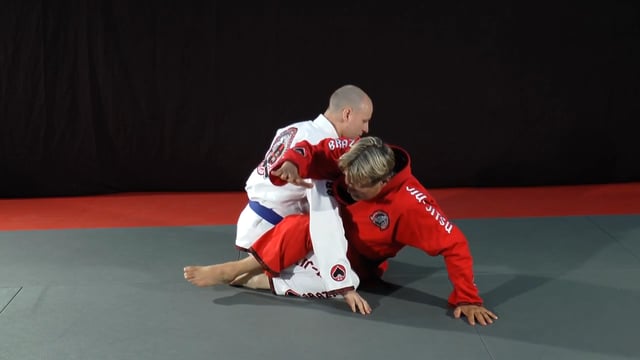
More Rolling Partners

This one is of incredible value to anyone looking to improve in Jiu-Jitsu. you do not have to be a competitor if you want to learn BJJ, you need as many different partners as you can get. the trouble with training at one spot only is that you get to know everyone’s game and you know how to act against different partners. Going to a different BJJ gym usually means encountering very different types of Jiu-jitsu games. For example, there might not be a deep Half Guard aficionado at your gym, but a neighboring one might have a couple of them. It’ll do you a world of good to train with as many people as possible.

Getting Over Mental Obstacles

This is also a huge one. mentally speaking, training at different gyms is going to benefit you in many ways. Two major ones include overcoming the fear of working with people you’re not familiar with. If you compete, you need this kind of experience. Secondly, you need to be able to overcome plateaus. Sometimes, you need the guidance of people with a different viewpoint or different training partners. We all hit plateaus in Jiu-Jitsu. The more advanced we are, the more we’re going to run into different types of plateaus.

Cross-training brings a type of diversity that benefits your mental approach to BJ jas much as it does with your physical and technical. It often feels like pressing “refresh” on your mind, even if you visit other academies for just a class or two.

The Competition Conundrum

The one thing that might confuse you is what to do when competition time comes. If you regularly cross-train at few different BJJ gyms, which one are you going to represent at the tournament? This is a valid question and the answer is simple. Cross-training doesn’t mean training at all the gyms at all times. It is virtually impossible to do so anyway. You need to have a “base” academy, which is most often the one you’ve learned your fundamentals at. As long as your instructor is ok with it (and they should be) occasional visits to other academies should not be a problem.

One more thing you need to consider is letting instructors know which your base academy is. Some might not be too open t having you in their class from time to time. That’s okay, as you should look for the ones that are open anyway. After all, you won’t steal their secrets or copy their style just by visiting for a few classes. Your benefits are in polishing your own game and opening a door of friendship for your local BJJ community.

In Summary

ALL in all, occasional visits to other BJJ gyms’ open mats are a great way to improve your BJJ. Visiting their regular classes is an even better option. Try to accumulate as much knowledge as you can from as many different places as possible. BJJ is all about evolution and the more information you have, the more you can develop your own and contribute to the sport in general. And, if you’re in a tight spot because of some antiquated ideas about creonteism, make sure that you can at least visit the occasional neighboring open mat. Or, go for private classes.

Creonte Culture – Loyalty, Disloyalty, and Traitors in BJJ

Background Checks for Every BJJ Student

Erberth Santos Brawl With Felipe Pena: DQs, Bans & Chaos

BJJ Basics – Hip Bump Sweep Attacks Combination

Hip Bump Sweep
Photo By Richard Norton BJJ

Never underestimate the BJJ basics! HAve you ever heard the phrase “advanced basics”? As conflicting as it may sound it is how high-level BJJ works. Fancy innovative moves and positions are by all means very effective. However, one thing they have in common is an expiry date. As soon as people figure out how to shut something new down, it becomes pretty much useless, unless it evolves into a meaningful system. BJJ basics, on the other hand, are evergreens. They never get old, and the more you look into them, the more you’ll learn during each occasion. The advanced part comes in when you mix in one basic position with another, or a few of them. This is exactly what we’ll cover today. 

With all the craziness that engulfs the BJJ world lately, people rarely turn to the stuff that made it popular back in the day. Contrary to popular belief, the basic stuff still works just as good, if not better than before. Yes, we need innovation to keep Jiu-Jitsu growing as a sport but that doesn’t mean abandoning the foundational principles. The closed guard is a great example of positions that people underestimate until they get caught in it. Yes, closed guard variations like the Williams or Rubber guard have their merit, but they are still miles from what the closed guard offers. The only thing about BJJ basics from the closed guard that they might not look fancy enough for people involved in modern Jiu-Jitsu. Do not be one of those people.

Closed Guard BJJ Basics 

What is the first BJJ sweep you ever learned? Most likely it is a closed guard one, and one of two main choices – the scissor or the hip bum sweep. Both are very simple, very effective and not complicated for beginners to learn. Out of the two, the hip bump comes a bit more naturally, since it doesn’t involve sport-specific movements like hip escapes. It is, to this day, one of the best ways to attack from the closed guard. However, simply ending up on top is far from the only thing you can do once you initiate a hip bum sweep.

The reason people of all levels use the hip bump sweep is because of its simplicity. The hip bump sweep works by forcing your opponent towards the back. This happens due to all your weight pressing onto their hips. It is a sweep that people usually do not expect, a common practice has people pulling from the closed guard. This is where another key trait of the hip bump sweep comes into play.

The main thing people from closed guard look to achieve is to break the opponent’s posture down. Since this is the main thing the opponent’s trying to prevent, this is very often where the main closed guard battle takes place. The hip bump sweep removes posture breaking from the equation by taking you up towards the opponent. In fact, this is essential for the hip bump’s success.

One reason why people choose to abandon such effective BJJ basics after the white belt is that they stop having success with the most obvious option – the sweep, usually after the blue belt. However, there’s a lot more than the hip bump has to offer, even as far up the ladder as the black belt.

Hip Bump Sweep Attacks Combination

The hip bump sweep works by off-balancing your opponent into the direction they’re not defending – backward. Since the position of the legs, doesn’t allow you to push directly backward, you need to finish the sweep in a twisting manner. To do so, you want to anchor yourself with one arm across the opponent’s opposite shoulder. You do see the opportunities here, right? I mean, apart from the sweep?

In terms of BJJ basics, even the submission follow-ups from the hip bump are fundamental. “The powerful four” of closed guard submissions are all easy to get – the triangle, armbar, Kimura, and guillotine. Actually, training with the Gi offers one more opportunity which we’ll go over later. It’s a killer though!

The Sweep

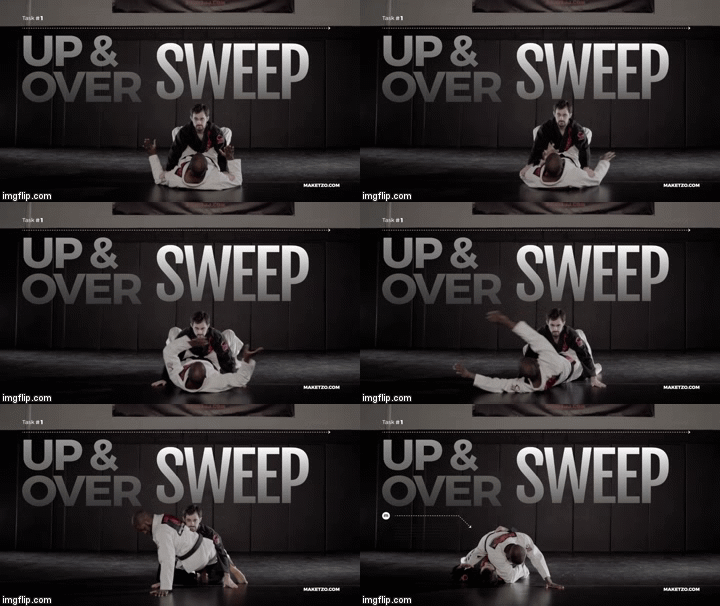
Hip Bump Sweep BJJ BasicsThe sweep works quite easy, as long as you know how to deal with the grips. If you’re looking into BJJ basics, all you need to do is make sure one of the opponent’s palms touches the mat. That’s’ the sie you’re’ going to sweep to. If you’re more of an advanced fundamentals grappler than you can play with posture breaks as threats to set the hip bump up. These are just examples of what you can do.

The sweep itself has only one main rule – stay connected. The closer your upper body is to the opponent’s the better the sweep will be. Remember to turn your hips to the side of the shoulder under your control. Also, the power for this sweep comes from the hips, so do make sure to do a strong bump!

Triangle

The triangle is one option here that is not really obvious but is effective nonetheless. One of my personal favorite ways to set u pa triangle, if I’m being honest. If you do not have particularly long limbs, you also might want to look into this option.

Hip Bump Sweep BJJ Basics Triangle Submissions off the hip bump sweep work when opponents react to your initial sweep attempt. If they don’t, just go to mount, get the points and then finish from there. For the triangle though, you’re waiting for the most instinctive and basic reaction they have – posting the arm. Once they do, you have an open route for a triangle. Since your legs are under the armpits now you can extract one leg and throw it over the shoulder. At this point, you’ll need to use your own arm as a post to offer stability while you transition. While in most cases you’ll finish off your back, you can still use the triangle to sweep and finish mounted.

Armbar

Hip Bump Sweep BJJ Basics ArmbarThe armbar from the hip bum sweep is another one of the BJJ basics which transcends belt levels or experience. As long as you time it right, you’ll get a  deep armbar. Once again, the setup is off of a reaction from your opponent. This time, though, instead of posting with their arm, they’ll try to push on your chest to get you back to the ground.

As that happens, make sure you throw an arm over the elbow, and cusp it with your palm. Elbow control is essential to end up in an armbar position. As you get back to the ground, you once again get a free leg from under the arm you’re controlling. This leg then swings over the opponent’s head for a classical, basic armbar finish.

Kimura

The Kimura is the most obvious attacking option from a failed hip bump sweep. It is so intertwined with it, that you may do it to set u pa hip bump sweep or off of it. The Kimura and the hip bump are a match made in heaven when it comes to closed guard BJJ basics.

Hip Bump Sweep BJJ Basics KimuraOnce again, the arm post is your signal to pounce. You may try it off the same post as the triangle, however, for the Kimura, you’re better off doing it when the posting arm is nearer to the opponent’s upper body. The moment you feel your opponent’s hips pushing back, you should look to transition out of the hip bump sweep. At such a point the Kimura is already half in. Simply thread the arm inside and use your other arm to establish the figure four as you’re going to your back.

Guillotine / Loop Choke

Our final move from the hip bump sweep is a nasty choke that has plenty of variations. Out of all the BJJ basics, we went through today, this one is by far my favorite. In No-gi, you have the option of hitting the regular, high elbow or arm-In guillotine from the position. In Gi Jiu-Jitsu, you have the added benefit of the loop choke as a potent threat.

Hip Bump Sweep BJJ Basics Guillotine A guillotine is a great option when you do your best to sweep but your opponent ends up retaining base at the very last moment. Since you’re already high up their body, you might as well make something of the position. Once again, the arm that is over the shoulder is going to be the attacking one. Just wrap it around your opponent’s head and pull back towards the guard. Depending on how you set your grips up, you’ll have one of three guillotine variations ready to go. Moreover, you can interchange between them all to ensure a finish.

The loop choke is a sort of a shortened guillotine and by far the best Gi option. All you need is a shallow lapel grip from a guillotine setup. Once down, you can get your second arm behind their head and finish with next to no effort!

Submissions From Guard: The Holy Trinity

The Only BJJ Half Guard Sweep You’ll Ever Need!

Check Out These Three Armbar Escapes That Really Work!

Armbar Escape by Gordon Ryan vs Craig Jones

The armbar is one of the most iconic submissions of combat sports. The move is arguably as old as grappling itself and was perfected by the Japanese through years of training. BJJ got it from Judo and evolved it into one of the most effective submission holds of today. The bar works in any setting can be set up from the top and bottom and is not hard to master. This means that it is a go-to move for a lot of people, and even those who do not particularly enjoy it will get it, given the opportunity. Such widespread use of the armbar is precisely why you need to make your armbar escapes count. In that sense, we reduce the clutter to just three escapes, that’ll get you out of the most troublesome armbar tight spots.

Doing the armbar is easy. Escaping the armbar is quite hard. This is what makes this submission so effective. However, it is far from an inescapable move. In terms of armbar escapes, you need to identify what the opponent wants, and you need to know the direction in which to move to deny them. From there on, escaping an armbar gets just as easy as finishing one. Still, many people often get stuck or move in completely the wrong direction. This is down to too many options out there, the majority of which are ineffective against thigh level opponents. Let’s give somersault escapes a rest and focus on three armbar escapes that actually work.

Juji Gatame Trouble

The armbar or Juji Gatame is one of those grappling moves that never lost popularity. Whether you look at a Gracie training room from a few decades ago, or any BJJ academy today, you’ll see at least one armbar during any given roll. The armbar works and people from white o black belt opt to use it more often than not.

But what exactly makes the armbar so effective? The answer is easy – leverage. During an armbar, you have your entire body working against an isolated arm. No wonder how strong the arm is, your body is going to be stronger. Add to this some superior positioning and you can double or triple the power of your body against the muscles of an arm.

Furthermore, the armbar works from virtually any top position, as well as from most open and closed guard variations. This means that people specializing in armbars can hit them from virtually anywhere. The combination of isolation, multiple setups, and great leverage is the trifecta behind the armbars success. That makes armbar escapes easily because the armbars strengths are precisely the main threats you’ll e trying to avoid. So, the first step to escaping armbars would be learning how they work.

John Danaher, as usual, has the ultimate resource for learning the ins and outs of armbars. His armbar DVD instructional is the last part of the widely popular “Enter The System” video series. Check out a complete review of his 8 part instructional and make sure you’re’ among the first to get it at a top price!

Armbar Escapes That Work 

When we’re looking at armbar escapes, we need to make sure that we address all the dangers in the correct sequence. In the sense of a fully stretched armbar, you need to know that a tap is the only 100% defense. Other than that, you need to address the leverage first (think opponent’s hips) and arm isolation second to escape. Early defenses include preventing top and bottom setups so you do not end up in an armbar in the first place.

Today’s selection of armbar escapes is going to include three very high-percentage escapes from three different positions. The first is going to be an armbar from the guard known as the stack defense. The second one is the famous “hitchhiker” escape that is as last resort of an escape as possible. Finally, we’ll see a simple and effective way to dismantle the dreaded spiderweb position that’s extremely hard to escape for most people.

The Stack

Starting very basic here, we’ll imagine that you find yourself in an armbar when you’re on top. The setup can be an open or a closed guard, which is not overly important now. Armbar prevention is a topic for another day and another article. For now, we’ll imagine that you’re deep in an armbar from the bottom. Forget about most armbar escapes and focus on the important things. The way an opponent is going to finish an armbar is by extending their hips. The further they can extend their hips, the more leverage they’ll have over your elbow. So, as discussed, leverage first.

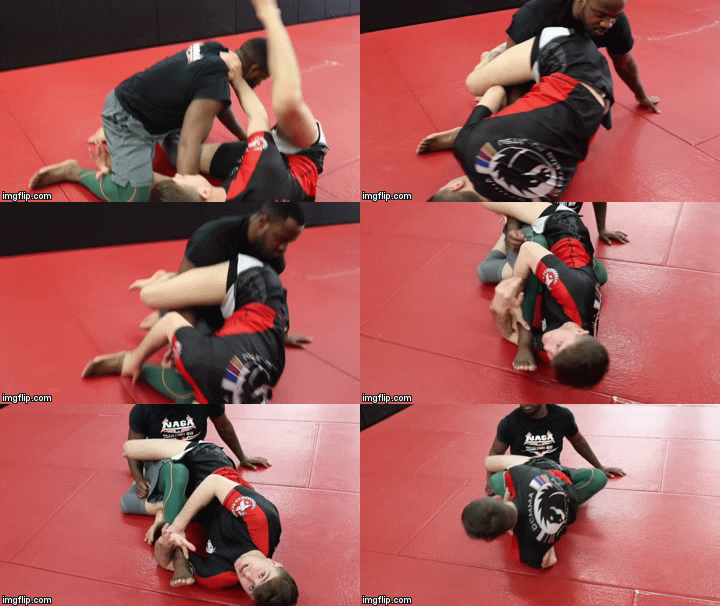
BJJ Armbar EscapesBeing on top means that you have gravity working for you. The moment you see that you’re in an armbar position, your first focus needs to be to deny the opponent the chance to extend their hips. For that purpose, aim to put your free arm under their head, while angling to apply downward pressure. You absolutely need the arm under the head as it anchors you to your opponent. This means that any attempt to extend the hips is going to make your opponent work against themselves.

When you’re arm is safe from the finish, it’s time to think about escaping completely. At this point, it is all about getting your arm out (i.e.e dealing with arm isolation). Simply wiggle your arm until the point that your elbow is outside of the hips. Now you’re out.

The Hitchhiker

The hitchhiker is one of the armbar escapes that people think they know until they need to use it in a real setting. In order to avoid begin one of those people, you need to make sure you understand the hitchhiker. Getting this escape wrong means you’ll make an armbar worse. So pay attention.

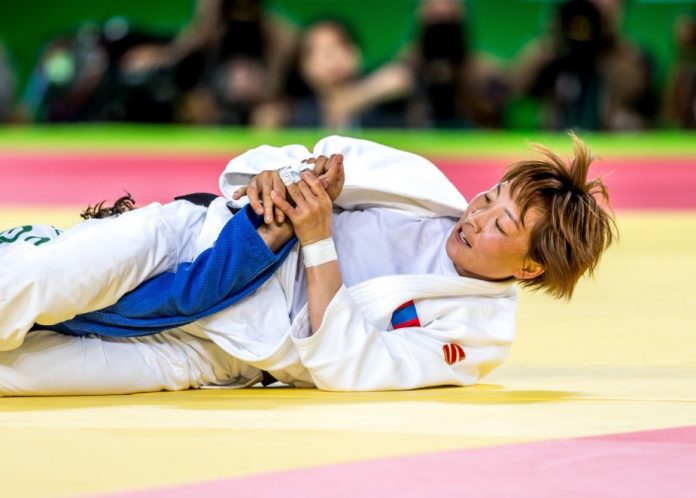
Armbar EscapeWhenever an opponent has a top position armbar and has your arm extended, you need to think about the hitchhiker. The basic idea here is to deal with the opponent’s leverage by using angles. The first thing you want is to point your thumb upwards, in the direction of your head. This relieves pressure on the elbow and allows you to start the turn. Next, try to bend your elbow and much as possible in the same direction as your thumb.

The most important part is the turn itself. When you’re turning, never start from the position you’re in originally. Use your legs to get your body lined up with your opponent’s body. That means your feet and their feet should be in the same direction. Now, you continue rolling over the shoulder of the trapped arm in order to completely get out. The bend in the elbow takes care of leverage, and the turn gets you out of isolation.

Spiderweb Escape

This is the only positional escape we’ll include today, but it is a very important one. Out of all armbar escapes, getting out of the spiderweb armbar is the most difficult one. For this, you need to be careful of both an armbar and a biceps slicer. DOuble the danger means double the caution.

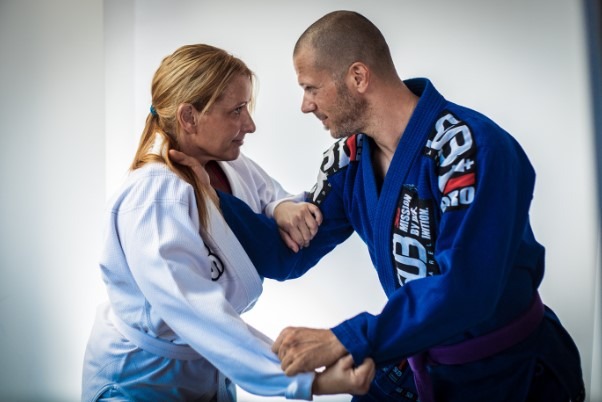
Armbar EscapesThe main problem with the spiderweb is that your opponent has control over your nearside leg as well as the arm. This means that you’ll need to get the leg free before thinking about abandoning the position. First and foremost, keep your arms in figure four and grip the leg that’s over your head. This will give you temporary security. The next step is to get your free arm out and use it to push down on the leg that’s over your waist and trap it with your legs. Just make sure you get your arm back as soon as possible to help protect the trapped arm.

Once you have the leg, it is easy to push the other leg of your head, and turn into the opponent for a direct pass.

Bernardo Faria DVD Escapes From EverywhereBernardo Faria has a video instructional out that deals with escapes from hundreds of tight spots. His “Escapes From Everywhere” 4 DVD set is a great way of making sure you become unsubmittable. Armbar escapes are included! 
Conclusion

In conclusion, armbar escapes are going to work effectively as long as you know and understand armbar attacks. To that extent, the less practical moves you have, the higher the chances of success. So, instead of trying a dozen different armbar escapes, focus on the three that’ll get you out of any armbar situation!

5 Alternative Submissions From The BJJ Triangle Position

The Collar Guard – A Simple Guard For Advanced Grapplers

Are You Hitting The Monoplata As Often As You Should?

5 Reasons Why BJJ is the Best Martial Art for Women

Brazilian Jiu Jitsu woman doing an armbar on her opponent

Man vs woman in BJJ sparring

Due to the sheer volume of different disciplines, deciding which martial art to learn can often be a difficult decision, especially if you’ve never been exposed to a variety of styles the world has to offer.
With this in mind, we’re going to take a closer look as to why BJJ is the perfect martial art for women, exploring what BJJ involves and how you can get started.

What is BJJ?

Before we begin to look at some of the reasons why BJJ may be the best martial art for
women, lets’ take a look at a brief history of BJJ and what it entails.

The origins of BJJ can be traced back to the 1920s, where a world-renowned Japanese
Judoka and Jiu-Jitsu practitioners named Mitsuyo Maeda settled in Brazil. Here he opened
up his own Jiu-Jitsu academy, with one of his first students being a man named Carlos
Gracie (this is actually being turned into a Netflix film).

After a number of years studying with Maeda, Carlos and his brothers soon opened up their
own school, teaching an adapted version of Jiu-Jitsu, which many people would call the birth of BJJ (Brazilian Jiu Jitsu).

Here they created the Gracie Challenge, where the family would accept no-holds-barred
matches from anyone of any discipline. This, in turn, allowed for them to develop BJJ into a discipline that was able to rule supreme over many others, including striking based martial arts.

Now we know how one of the worlds most popular martial arts came to fruition, let’s take a
look what BJJ involves.

BJJ is a grappling based martial, that takes place predominantly on the ground. Based on the Ne Waza aspect found in Judo, a fight is typically won by submitting your opponent via
various techniques, such as a choke or joint lock.

In competitive BJJ, if no submission is performed, the winner is determined by whoever has
accumulated the most points. Typically, the point system is as followed:

  • Takedown or Throw = 2 points
  • Sweep = 2 points
  • Pass opponent’s guard = 3 points
  • Mounted position = 4 points
  • Back Mount with Hooks in = 4 points
  • Back Mount knees on the ground, opponent flat on stomach = 4 points (Additional 4
    points are scored by putting the hooks in from this position)
  • Body triangle from the back = 4 points
  • Knee on stomach = 2 points

The Reasons Why BJJ is the Best Martial Art for Women:

Reason 1: Size Isn’t Everything

BJJ at its core is designed to allow smaller, less strong practitioners to submit potentially
stronger opponents through technique and skill. While brute strength may help some
degree, a BJJ practitioner with a higher fight IQ and a greater understanding of technique
can utilize their knowledge to outmaneuver and defeat a larger opponent.

This, in turn, makes BJJ a great candidate for women, as both men and women are able to
train together, with the winner often determined by who has the larger, more in-depth skill
set.

Having transitioned from Judo to BJJ a number of years ago, I was made aware of this first
hand. During one of my first BJJ classes, I rolled with a young woman much smaller than me and believed I would dominate the roll with my somewhat limited knowledge of BJJ, and confidence in my Judo background.

The first minute or so seemed to go well, however, beyond that things took a turn for the
worse. I was introduced to positions and techniques I had never seen before and spent
most of the time tied up in one way or another. This was an incredibly humbling experience and one in which opened my eyes to the many different levels of knowledge that BJJ practitioner’s posses.

No matter your size or shape, BJJ allows you to utilize knowledge in order to prevail.

Brazilian Jiu Jitsu woman doing an armbar on her opponent

Reason 2: One of the Most Effective Forms of Self Defense

Unfortunately, statistic shows that women are at a far greater risk of sexual assault than
men. While the best way to look after yourself is to avoid conflict at all cost, this isn’t always a possibility.

In a world where potential threats are very real, arming yourself with the knowledge to
effectively defend yourself is incredibly important. This is where BJJ comes in. There’s no
denying that BJJ is an extremely efficient method of self-defense that provides you with the
ability to neutralize an aggressor larger than yourself.

This somewhat links in nicely with my previous point in that size isn’t everything in BJJ,
which in turn makes BJJ one of the most ideal forms of self-defense, especially for women.

Reason 3: Teaches the Importance of Your Ability, Rather Than Appearance

While BJJ will undeniably help you get into shape, it will also teach you to love the body that you have. Currently, women are statistically far more likely to suffer from eating disorders than men.

Whatever the reason for this, it’s a reality of the world we live in. Fortunately, martial arts
such as BJJ teach you to appreciate your body for its capabilities, as opposed to what you
look like, or even what you wish you looked like.

Knowing you have the ability to roll for 20-minutes straight, submitting both men and
women allow you to feel a sense of self-confidence that you may never have felt if you
didn’t attend that first BJJ class.

Admittedly, this may not be a sense of instant gratification, as it’s highly unlikely you’ll be
submitting anyone in your first class, or your second, or even your third. However, when the day does come, the fulfillment and satisfaction will allow you to appreciate your capabilities, and be proud of what your body can do.

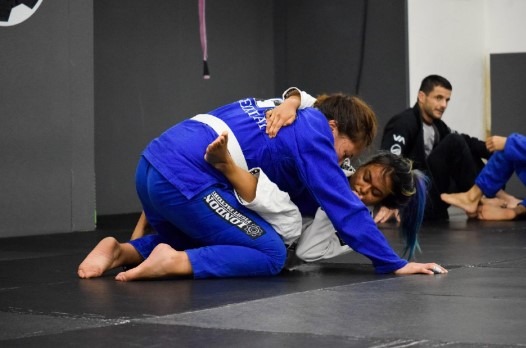
Woman in Closed Guard Trying a Sweep
Image source: londonfightfactory.com

Reason 4: You Can Practice Defending Yourself in a Safe Environment

One of the greatest aspects of BJJ is how it allows you to effectively and safely spar, often
referred to as ‘rolling’. Unlike a lot of other martial arts, especially the striking disciplines,
it’s pretty difficult to fully spar without the risk of sustaining an injury.

A prime example of this is Krav Maga, which is often the primary martial art taught in self-defense classes. The only issue with this is, you can’t exactly practice striking your training
partner with a palm strike to the nose. While it may be effective in a street fight situation,
how well are you able to throw the strike, having never fully practiced it before?

BJJ, however, allows you to practice the techniques learned in class while running a pretty low risk of injury. If you’re being submitted, tap your training partner three times to let them know you concede, or verbally let them know you wish to tap.

Depending on your club, your instructor will often say to roll at 60% intensity, or 70% and so on. This again is designed to make the sparring situation safer, as you’re not trying to
instantly break your training partners arm, and are focusing more on technique, as opposed to power.

Reason 5: Create Strong Bonds with Fellow Female BJJ Practitioners

Finally, the bond you create with your fellow club members is a fantastic reason to take up
BJJ. You get to meet like-minded people, train together and learn from each other. To be
honest, it’s fairly hard not to create a bond with someone you spend so much time with,
sweat with and often fight with.

Admittedly, BJJ and many other grappling based martial arts are a fairly masculine sport and I’ve noticed a stronger bond, even kin-ship amongst female BJJ practitioners that train and roll together on the mat.

What You’ll Need to Get Started

While there are a few pieces of BJJ gear you may need, for example, a gi or a BJJ training bra, but don’t worry about it too much for your first few lessons.

I always say this whenever someone asks me about taking up a martial art, and that is to
just start. Don’t worry about what you do or don’t need, find a club near you, head down
there whenever you can and you’ll soon figure it all out.

Admittedly, it’s never nice being the new person, wearing your gym clothes whilst everyone
else is wearing their gi. Remember though, this is only for your first few lessons and your
club may even have a spare gi to lend you.

If this is something you’re worried about, you can usually find a fairly cheap women’s gi
online, or even ask to borrow one from someone at your club on your first lesson.

Whatever you do though, make sure you make the trip down to the class, as you won’t
regret it.

Final Thoughts

All in all, BJJ is a brilliant martial artist, one in which you can spend a lifetime studying and
always have more to learn. You’ll make some great friends, get in shape and be equipped
with both the knowledge and ability to effectively defend yourself.

About the Author

James is a martial arts fanatic who became National Judo Champion at the age of 12 and a
member of the Great British Judo Team, competing at an international level. Since then,
James has studied various different disciplines such as BJJ, Muay Thai, wrestling and MMA.

He spends his time blogging about different martial arts on his website MMAStation.com
and obsessing over the UFC.

Sources:

https://www.cdc.gov/ViolencePrevention/pdf/NISVS_Report2010-a.pdf


ADCC 2019 Fighters List: Best ADCC In Decades?*UPDATED*

ADCC 2019 Fighters List

It is an ADCC year!!! I know that he ADCC happens every two years, but still, I can’t help but feel like it’s a lifetime! So far, we’ve seen nothing but the best of the best at the Olympics of grappling. Yet still, this year is going to surprise everyone, and in a positive sense! There has never been such a stacked ADCC event in history, and it’s barely half-full!!! While we wait for some of the most exciting, invitation-only names to drop, we do have an ADCC 2019 Fighters List which includes all trial winners so far. Just one look at this list will tell you how sick the 2019 ADCC is going to be! 

ADCC 2019 Fighters ListThere’s hardly a more exciting grappling event in the world than Abu Dhabi Combat Club. All the Gi tournaments have no chance of living up to it, so they fall out of the running from the start. IBJJF World No-Gis brought some excitement, but far from what we’re used to from other events. Speaking of other events, EBI seems to be shifting more and more towards combat Jiu-Jitsu. While we have to admit it is entertaining, it’s a completely different animal. PLus, EBIs are rare and invite only.

The ADCC, on the other hand, is the perfect blend of professional and up and coming grapplers. People that won the trials get to measure their strength against seasoned veterans that get direct invites. Then there are super fights. And, of course, it is a two-day tournament featuring 16 fighters per division. That translates to lots of fights that’ll keep us entertained for a while! One look at the  ADCC 2019 Fighters List and you immediately know there’s going to be fireworks in California!!!

The ADCC 2019 Fighters List

The way the ADCC works is by holding trials at every continent in the world. The winners of the trials get the chance to compete at the biggest grappling event in the world! Yet, even people who fail to win can get a chance, since those who really impress can get an invite. there’s the alternates list as well, so there might be some last minute mixups. However, the majority of the ADCC 2019 fighters list is now known, and here is what you can expect:

ADCC 2019 Fighters List: Men -66kg 

  • 2nd European Trials Winner: Thomas Halpin (Ireland)
  • Asia And Oceania Trials Winner: Kenta Iwamoto (Japan) 
  • South American Trials Winner: Ruan Alvarenga (Brazil)
  • North American 2nd Trials Winner: Nicky Ryan (USA)
  • Richard Alarcon (Invited)
  • Tye Ruotolo (Invited)
  • Geo Martinez (Invited)
  • Matheus Gabriel (Invited)
  • Augusto “Tanquinho” Mendes (Invited)
  • Paulo Miyao (Invited)
  • Jamil Hill  (Invited)
  • Pablo Mantovani (Invited)
  • Gianni Grippo (Invited)
  • Keith Krikorian (Invited)
  • Bruno Frazzato (Invited)
  • Kennedy Maciel (invited)

The focus here is on whoever Nicky gets, as a rematch with AJ is a no-go after he dropped out. I’m not sure I’m as excited about that prospect as I am to see a rematch between Nicky and Geo Martinez! Ethan is also a beast and there’s always the highly experienced current champion Cobrinha. Plus, you’ve got the always fun to watch Paulo Miyao. With just about half of the spots still open, this is going to be one of the best divisions to watch!

ADCC 2019 Fighters List: Men -77kg

  • 2017 champion: JT Torres 
  • 1st European Trials Winner: Ross Nicholls (United Kingdom)
  • 2nd European Trial Winner: Mateusz Gamrot (Poland)
  • 1st North American Trials Winner: Jon Satava (USA)
  • 2nd North American Trials Winner: John Combs (USA)
  • South American Trial Winner: Servio Tulio (Brazil)
  • Asia And Oceania Trial Winner: Lachlan Giles (Australia)
  • Lucas Lepri  (Invited)
  • Vagner Rocha(Invited)
  • Dante Leon (Invited)
  • Oliver Taza(Invited)
  • Edwin Najm(Invited)
  • Renato Canuto  (Invited)
  • Celso Venicius (Invited)
  • DJ. Jackson (Invited)
  • Garry Tonnon (invited)

Once again, a badass champion heads this list. The list of invites is also a who-is-who of the division with Lucas Lepri, Oliver Taza, Renato Canuto, Vagner Rocha, Dillon Danis, and Edwin Najmi all confirmed. We’ll see what the 3 trial winners are going to bring to the table, along with the 7 other grapplers.

ADCC 2019 Fighters List: Men -88kg

  • 1st European Trials Winner: Adam Wardzinski (Poland)
  • 2nd European Trials Winner: Ben Dyson (England)
  • 1st North American Trials Winner: Alec Baulding (USA)
  • 2nd North American Trials Winner: Josh Hinger (USA)
  • South American Trial Winner: Gabriel Almeida (Brazil)
  • Asia And Oceania Trial Winner: Keller Locke-Sodhi (Australia)
  • 2nd North American Trials Winner: Josh Hinger (USA), moved from -99kg
  • Craig Jones (Invited)
  • Rustam Chsiev (Invited)
  • Mike Perez (Invited)
  • Murilo Santana (Invited)
  • Gabriel Argaes (Invited)
  • Matheus Diniz (Invited)
  • Jon Blank (Invited)
  • Mason Fowler (Invited)
  • Valdir Araujo (Invited)
  • Pedro Maringo (Invited)

Here’s where things get interesting. Gordon Ryan gets an automatic invite by default, seeing how he won the division last time around. However, he is now much bigger and is moves up a division. Polish prodigy Adam Wardzinski is expected to put on a show, but legend Xhande Ribeiro and the unorthodox Keenan Cornelius might have something to say. Furthermore, Craig Jones is also in the mix and one of the favorites. With a division that has Murilo Santana and Kit Dale also featuring, though, we never know! Another ultra-stacked division!

ADCC 2019 Fighters List: Men -99kg

  • 1st European Trials Winner: Perttu Tepponen (Finland)
  • 2nd European Trials Winner: Mraz Avdoyan – Germany
  • 1st North American Trials Winner: Tim Spriggs (USA)
  • South American Trial Winner: Paulo Jose (Brazil)
  • Ben Hodgkinson (Invited)
  • Patrick Gaudio (Invited)
  • Vinny Magalhaes(Invited)
  • Gordon Ryan (Invited, moves from -88kg)
  • Lucas Barbosa (Invited)
  • James Puopolo (Invited)
  • Jackson Sousa (Invited)
  • Romulo Barral (Invited)
  • Paul Ardila (Invited)
  • Felipe Andrew (Invited) 
  • Dan Martinez (invited)
  • Aaron Tex Johnson 1st North American Trials Winner – moved from +99kg

Where do we start with this one? Yuri Simoes is the man to beat this year, and those lining up to do so include Vinny Magalhaes, Mahamed Aly, and Tim Sprigsgs to name a few. Four more spots are still to be announced, though, so you can expect more excitement! Gordon Ryan also confirmed his invitation for this division and potential matchups with the likes of Lovato Jr and Lucas Barbosa have us ecstatic from now!

https://www.instagram.com/p/BuchyXGB7Jp/

ADCC 2019 Fighters List: Men +99kg

  • 2017 champion: Marcus Buchecha Almeida
  • 1st European Trials Winner: Eldar Rafigaev (Moldova)
  • 2nd European Trials Winner: Mateusz Juskowiak (Poland)
  • 2nd North American Trials Winner: Nick Rodriguez (USA)
  • South American Trial Winner: Antonio Braga Neto (Brazil)
  • Roberto “Cyborg” Abreu (Invited)
  • Orlando Sanchez (Invited)
  • Jared Dopp (Invited)
  • Kaynan Duarte (Invited)
  • Yuri Simoes (Invited)
  • Victor Hugo (Invited)
  • Mahamed Aly (Invited)
  • John Hansen (Invited)
  • Eliot Marshall (Invited)
  • Max Gimenis (invited)
  • Hudson Taylor (Invited)

Boxing, MMA, Grappling, regardless of the combat sport, everyone loves to watch the heavyweights! Well, with 5 names out of 16, I’m already looking forward to this one. It’s not just any 5 names though, with Buchecha in the lead, and Cyborg not far behind. I’m also really stoked about seeing how far young Eldar “Yakuza” Rafigaev is going to get. Orlando Sanchez, Kaynan Duarte, and Jared Dopp are also confirmed to make things even more interesting. What a crazy division!

ADCC 2019 Fighters List: Women -60kg

  • 2017 champion: Beatriz Mesquita
  • 2nd North American Trials Winner: Jena Bishop (USA)
  • 2nd European Trial Winner: Livia Gluchowska (Poland)
  • Asia & Oceania Trial Winner: Rikako Yuasa (Japan)
  • Bianca Basilio (Invited)
  • Elvira Karppinen (Invited)
  • Ffion Davies (Invited)
  • Catherine Perret (Invited)

The ladies divisions at the ADCC feature 8 elite grapplers in total. In fact, so far half the competitors in the -60kg division are confirmed. The first is that of champion Bea Mesquita and the second is the North American Trials Winner: Jena Bishop. Bianca Basilio, which always puts on a show, especially against Mesquita, is also among those invited. Furthermore, 4 additional grapplers feature, but we can be certain we won’t see mainstay Mackenzie Dern this year after she recently announced her pregnancy. However, the woman that eliminated here last time around, Elvira Karppinen is ready to give it another go.

ADCC 2019 Fighters List: Women +60kg

  • 2017 champion: Gabi Garcia
  • 2nd North American Trials Winner: Amanda Leve (USA)
  • South American Trial Winner: Carina Santi (Brazil)
  • 2nd European Trial Winner: Stephanie Egger (Switzerland)
  • Tayane Porfirio (Invited
  • Nathiely Jesus (Invited
  • Ana Carolina Vieira (Invited
  • Jessica Da Silva (Invited) 

So far, not many women have managed to beat Gabi Garcia. the champion returns to defend her title once again, with two other well-known names in Amanda Leve and Jessica Da Silva confirmed as challengers. Anyhow, the division is yet to gain it’s final form, with 5 more competitors still not announced.

Superfight

This year’s super-fight will once again feature Andre Galvao, who walked away champion last year. His challenger is the man who beat Gordon Ryan in the finals of the absolute last year, the always entertaining Felipe Pena. As if there weren’t enough fireworks in the divisions already!

Summary 

So far, there are still a few more trials to go through, and quite a few more people to get and respond to invites. The 2nd ADCC European Trials take place on April 27 and will yield more names to throw into the mix. Watch this space as we’ll keep updating the list as competitors are confirmed!

So far, we know that the location of ADCC 2019 is going to be Los Angeles at the Anaheim Convention Center. To be more precise, the dates are September 28-29. A huge uncertainty thus far is whether or not Gordon Ryan is going to make it to the mats. Ryan just underwent surgery on his knee, and how his recovery goes is going to determine his presence at the ADCC.

One man we can confirm is not going to take part, at least this time around is Khabib Nurmagomedov. Despite Mo Jassim’s best efforts, it seems that the UFC champion is not interested to participate for now.

An Interview With Mo Jassim, The Man Behind The ADCC 2019