The Curious Case Of The BJJ Stiff Arm Concept

BJJ Stiff Arm Concept Cover

The BJJ stiff arm concept is something that most people perceive as highly efficient. While it does work perfectly under certain circumstances, you have to understand that this concept also comes with several highly notable drawbacks. Only when you become aware of them, can you start using stiff arms in the way they were intended to?

The BJJ stiff arm is one of the base concepts behind framing as a defensive strategy in Jiu-Jitsu. However, that is only one dimension of the stiff arm. The concept can also be used offensively, as well as a means of countering. That makes this concept a lot deeper and more complicated than it first appears, and also explains why very often you end up having issues with making anything happen with stiff arms.

The BJJ Stiff Arm Concept

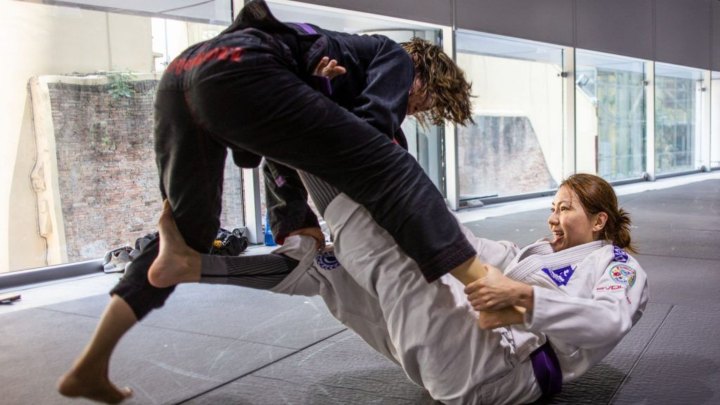
Before we discuss the BJJ stiff arm concept, let’s talk frames a little bit. In Jiu-Jitsu, every time we use our arms, legs, or a combination of them to build a structure that reminds us of a picture frame, we are framing. The goal of such a structure is to help us keep the weight of an opponent from falling upon us, while not having to use our muscles to achieve it. There are plenty of different frame configurations depending on the position you’re in and the escape or counter you’re looking for.

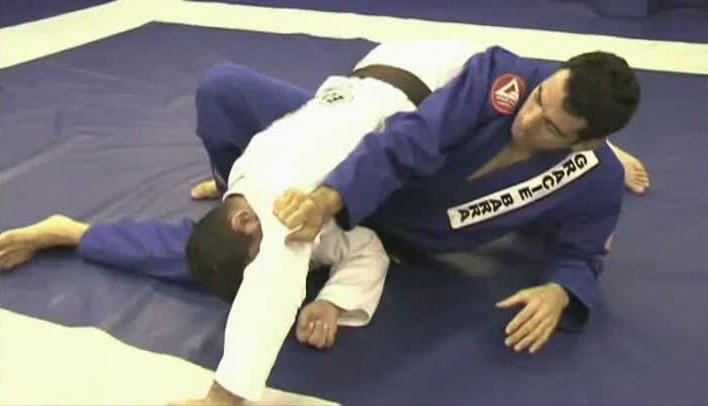
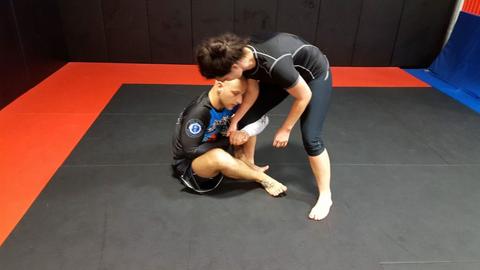
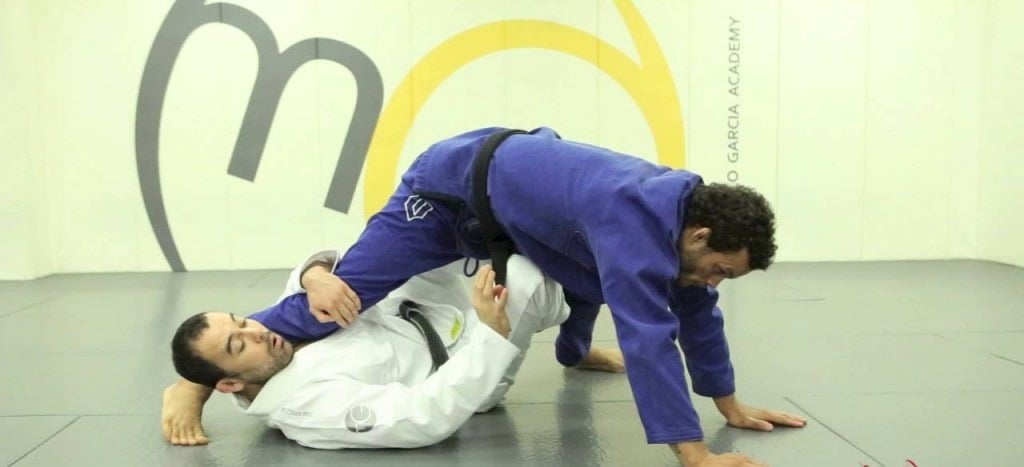
In that context, the BJJ stiff arm concept is a variation of framing. In most circumstances, people use that stiff arm to make a long frame, by using a grip on a specific body part as an attachment point, and their skeletal strength as the support behind it. Holding the sleeve of the bottom (over) arm against someone doing an over-under pass on you, with a stiff arm of your own is a great example.

BJJ Stiff Arm standing

The idea behind the concept is that an opponent can’t push in a certain direction if you’re using the BJJ stiff arm concept. Your arm acts as a rod, with the skeletal structure making it impossible to tire out, or bend. The grip attaches this rigid structure to the body, allowing that side of the “rod” to move along with the opponent. As you can see, it makes a lot of sense, especially in certain situations. But what happens if you try and use it outside of those situations?

When To Use A BJJ Stiff Arm

The BJJ stiff arm concept will do wonders for your if you use it to prevent people from occupying space. Since stiff arms mostly work from the bottom, they actually tend to create space, which is any guard passer’s worst enemy.

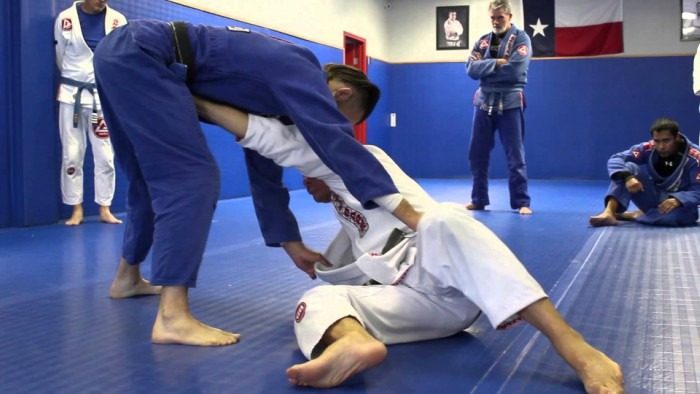
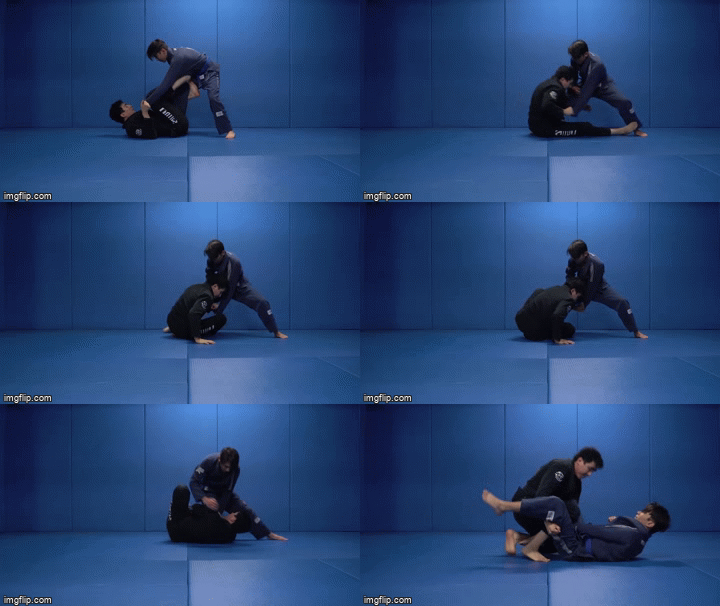
The collar guard is a great example. With a cross grip on the collar from the seated guard, you can actually prevent your opponent from coming forwards imply by stiffening your arm and placing your knuckles on their collarbone. However, you’ll need the support of your entire body, so your other arm needs to be in a stiff rm configuration as well, and propped behind you, similarly to a technical stand up. Finally, opening up your shoulder blades will connect the two arms, creating a really sturdy structure that’s next to impossible to break.

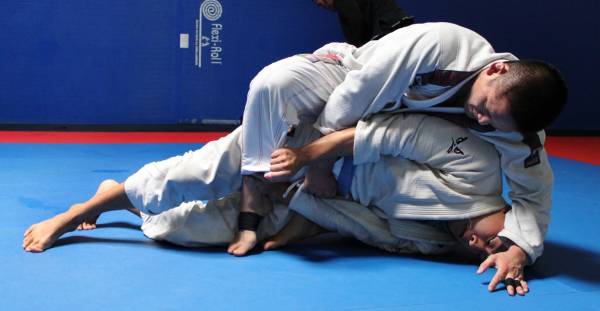
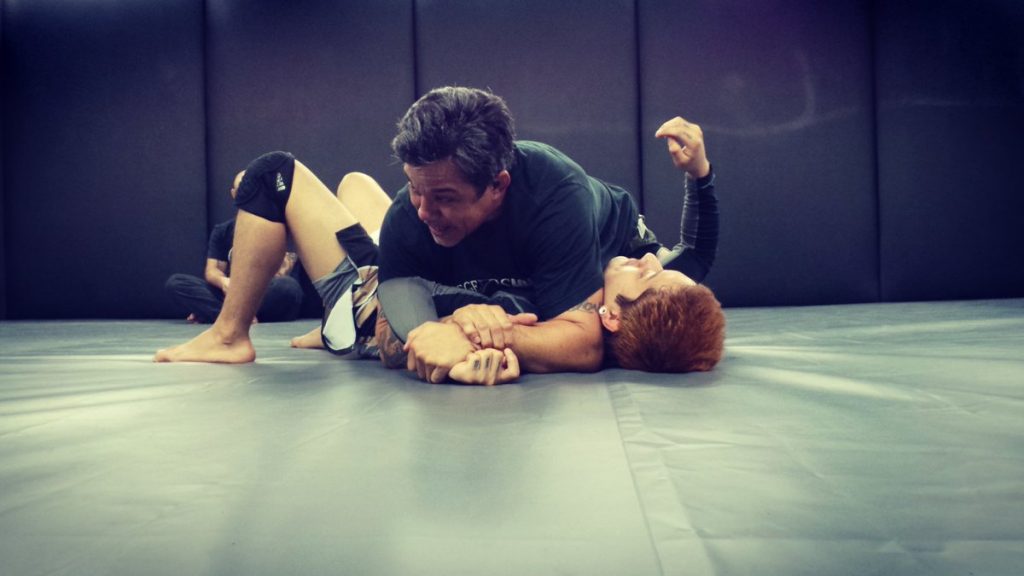
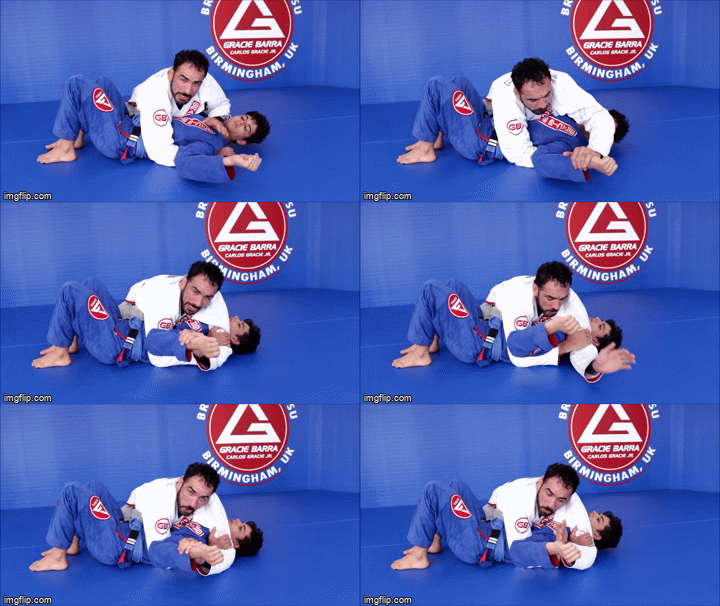
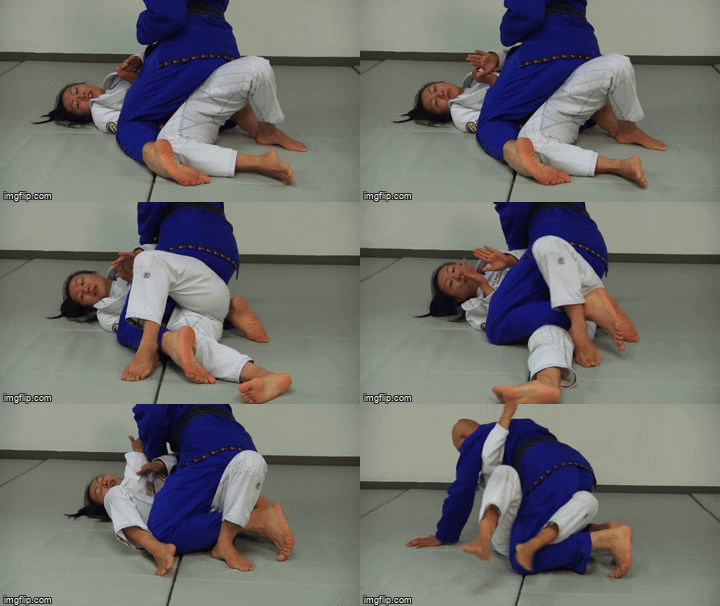
BJJ Stiff Arm Escape side controlSide control is another situation where stiff arms really do make a difference. If you can set them up early under an armpit, for example, they’ll prevent even an Olympic level Judoka from holding you in Kesa Gatame. This also applies to plenty of other side control scrambles and plenty of attachment points. There are also some instances where the BJJ stiff arm comes in really handy from half guard bottom as well.

When Stiff Arms Will Get You In Trouble

Arguably the most important aspect of the BJJ stiff arm concept is knowing when not to use it, or even better when to abandon it. both of these aspects of the stiff arm are heavily underrated, which often result s in ale less than efficient use of stiff arms.

An obvious example would be the mount, where extending your elbows away from your body translates as trouble. You’ll basically be giving armbars away. The same is true for the closed guard. Gripping someone with a stiff arm will only allow them to control you better without actually having to hold you with grips.

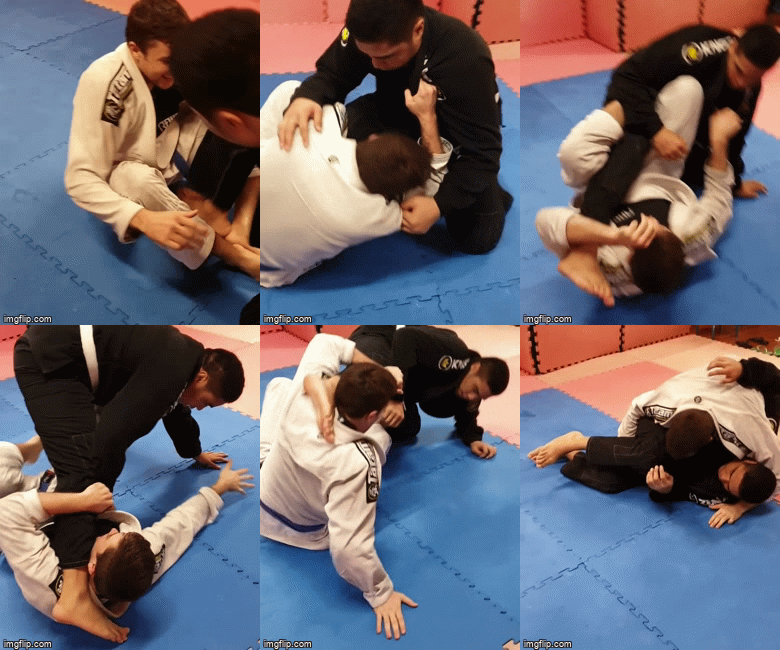
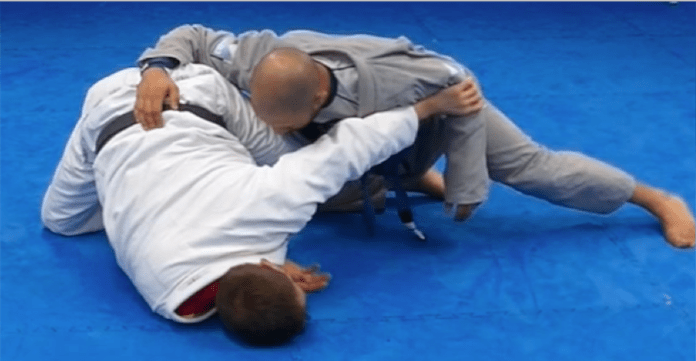
BJJ Stiff Arm troubleOne of the situations that people hardly realize unless others point it out is the relation between frames and levers. If an opponent can sufficiently change the angle of the body part you’re trying to stiff arm away from you, then the mechanical advantage of the farm,e will turn into a mechanical advantage for them, in the form of a lever.

From the top, stiff arms might help you pin people, but you’ll need to be really careful about it. Every time you use a BJJ stiff arm to pin a body part to the ground, it means you’re putting weight behind it. This can easily turn it into a pivot point for an opponent, or a limb that can be attacked with submission (think Kimura or straight armlocks).

The bottom line is, knowing when to bail on the stiff arm and go for something else is what will make it work for you.

Final Words

The BJJ stiff arm concept is an integral part of Jiu-Jitsu. It can’t be your only way of defending, but it does have an irreplaceable place in the overall game. Know when to use it, who to set it up, and most importantly, when you’re losing the advantage and need to bail. This will ensure your stiff arms work every time you decide to use them, from top or bottom.

Shin-On-Shin Guard – How To Play It Right

Shin-On-Shin Guard Attacks

Seated guard. It can be a guard none shall pass or a guard that you can’t keep a hold of. It all depends on how you position yourself.  There are actually several different versions of the seated guard, one of which is the shin-on-shin guard.  This seated guard has never gotten the recognition it deserves. Namely, people usually look at seated guards including the butterfly guard as inferior and not effective. Contrary to all the evidence, these guards are only used sparingly. The Shin-on-shin guard can be an extremely powerful weapon if you use it to its full potential.

Trying to figure outstanding opponents from the guard can be a very tricky business in Jiu-Jitsu. If you’d like to be on your back, you actually have a myriad of guards you can use. However, if you like to be a bit more offensive and look for attacks instead of retention, you’ll need posture. In other words, you’ll need a seated guard variation. The shin-on-shin guard can be an ultra-effective one for you and a highly annoying position for your opponents. You need to figure out three things, though, before you can take it for a test drive – how to hold it, how to attack, and how to get in and out of it. Preferably, in that particular order.

Holding the Shin On Shin Guard

The shin-on-shin guard looks like a koala bear hanging on a eucalyptus tree. Let me reiterate the point that this guard will be effective if the opponent stands up. Otherwise, there’s no point in attempting to go shin-on-shin. That’s why we have the butterfly guard. That said, the shin-on-shin should b your first reaction when you see a straight leg in front of you.

The guard position itself is not complicated. You are seated on the ground, with the shin of your leg on the shin of your opponent’s same side leg. Your arm on that side goes around the knee, hugging the leg, while you have the other arm free to post and move around. Easy right?

Shin-On-Shin Guard OptionsHold your horses. If you set up in that position, you might just be able to hold that new girl/guy that has been training for a few months. Everyone else will literally smash you to the ground, face first. Holding the shin-on-shin guard works only if you set every little thing to perfection.

First of all, the shin. The area of the shin right above your ankle. is the only thing that should be in contact with the opponent’s shin. That allows your foot to act like a butterfly hook, meaning your fingers need to be pointing up. Next up, knee. The closer your knee is to the ground, the worse your guard shall be. The knee should actually be pointing up and slightly to the side.

Finally, the arms. The arm you have around the opponent’s leg should be positioned elbow deep, right behind the knee. This brings us to the crucial part that makes or breaks the shin-on-shin guard. Your elbow should be propped up against the inside of your knee, forming a tight and stable frame. This along with positioning your head to the inside of the thigh will make the guard solid all over. Moreover, the often-used defense of pushing your head to the ground does not work here. This brings us to attacks.

A Few Sneaky Attacks

Shin-On-Shin Guard sweepAs usual, sweeps and submission are the way to go from the shin-in-shin guard. To begin with, the easiest sweep you can do is actually a butterfly-like one. It works when an opponent goes down with one knee, which is a reaction you’ll get very often. The solution is, grabbing their free arm with your free arm. From there, put your elbow on the ground and think about extending your leg as much as possible. The combination of the shin-on-shin guard structure and the grip on the arm will completely take everyone out of balance for the easiest sweep you’ll get in BJJ.

Conversely, when they decide to stay up, you can opt for yet another sweeping attack. This time though, you’ll be using a lapel to make things even tighter. In essence, you’ll be doing the same sweep, just holding on to a lapel with the arm that’s around the leg. Or, even better, holding on to the far side arm with that same arm of yours, after you pass it off. This ends up being a skull crusher-type of sweep with the opponent having nothing to post with.

Shin-On-Shin Guard leg lockFinally, we can’t talk about the shin-on-shin guard without mentioning leg locks. The shin to shin actually opens up every possible Ashi Garami variation. You can go for a straight Ashi or outside Ashi on the leg you’re controlling, or hunt an Inside sankaku on the far leg. Whatever you do look for the Ashi Garami first rather than a lock straight away. The Shin-on-Shin guard lets you place the opponent’s weight on one leg or the other, meaning you always have a leg to hunt for.

Getting In And Out Of The Shin-On-Shin Guard

There’s another aspect to the shin-on-shin guard that makes it so attractive to people. That’s transitioning to other guards. You see, with most guards that you play with your back to the ground, you have limited transitioning options. The shin-on-sin, on the other hand, allows you to go where ever you want. You can go to other seated guards to choose a supine guard or even go for takedowns.

Any X-guard variation is readily available from the shin-on-shin guard. In fact, going to X-guard is the most common destination. Single leg X is the closes, but the full X and reverse X are not far away either. Whatever the case, there’s another caveat here – you can go to the X guards or come out of them back into the shin-on-shin. A magic circle of no escape for your opponent.

Shin-On-Shin Guard TransitionWhenever there’s a level change you can also opt for other options, like going for a de La Riva, or transitioning into deep half guard. Conversely, going to the closed guard or half guard are also options. Going back from them might be trickier though, so I’d stick with open guard variations that allow you to use the shin-on-shin as a checkpoint between bottom attacks the best part of it is that if you figure out how to hold it, you won’t need to work on retention or recovery at all.

Wrap Up

The Shin-on-shin guard is an awesome one to use. It allows you to just sit there and wait until an opponent tries to do something. Or, you could go about attacking them in various ways, with and without the Gi. The guard is extremely easy to figure out, and if you learn how to hold it first, you’ll have crazy amounts of success with it.

What Are The Best Jiu-Jitsu Exercises For Holiday Damage Control

Jiu-Jitsu Exercises For Holiday Damage Control

This period of the yea is never easy.  November and December, in other words, are a period of the year where eating is a major activity during anyone’s days. Of course, this is why people later resort to New Year’s resolutions, which somehow, always get stretched to at least past the halfway point of January. Since we’re entering that stage of the year, where some will have resolutions and others will look to get (back) into fighting shape, there is a smart way to do it – specific Jiu-Jitsu exercises. It won’t be an easy one, at all, but it will most certainly be an efficient way of undoing some of that holiday damage you amassed during the last month and a half. 

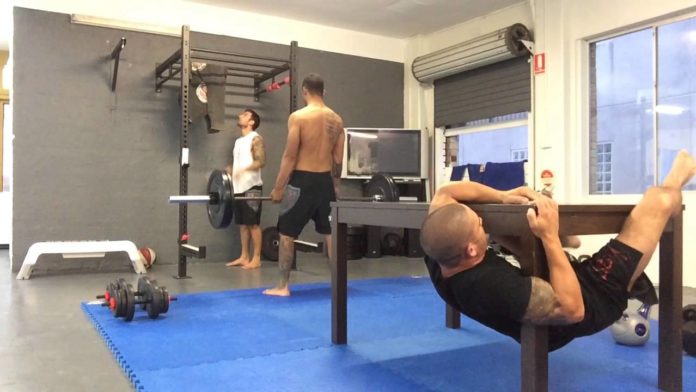
Training BJJ only is a perfect way to get into shape – until it isn’t. If you’ve been training for more than a couple of years, you already have a certain level of efficiency when it comes to grappling. Once or twice you might pull off training and roll at a higher intensity as a means to get your “beach body” back. However, after a while, all that you’ll notice is that you now have an extra layer preventing you from doing stuff like inversions or folds. At a certain point, you’ll have to complement your grappling with Jiu-Jitsu exercises to really get the most bang for your buck. Why just run on a treadmill and do bench presses when you can actually speed everything up, gain strength, a better gas tank, more mobility, and get into peak fighting shape? Here’s how.

Holiday Damage Control

Let’s face it, you’ll overeat during the holiday season. Not only that, but you’ll also stretch it way past its due date. For most, that means deep into January, when you can still enjoy a few days of New Year’s leave and no training. And you know what? It is perfectly okay, as long as you have a way back. I’ve tried being disciplined and eating clean, even cutting weight in January (for the Europeans). Suffice to say, that was the hardest weight cut I’ve ever done!

New Year’s resolutions actually come with perfect timing. You’re fat enough to need some Jiu-Jitsu exercises to help you get back in shape, and there’s not much you can do unless you live in a tropical paradise. So why don’t people just go and train like they decided they’ll do? Well, because it is still cold and nobody can see how they look under all the layers of clothing we usually wear this time of year. However, if you do Jiu-Jitsu, it is about much more than just looking good or reducing some holiday blubber.

You actually need to be able to move when you grapple, and trust me, I know, holiday excesses can really throw a wrench into those plans. Moreover, if you’re a competitor, you’ve not only got to get to your weight division, but also improve performance. It is easy, the lazier you get, the more your cardio will suffer. I’ve tried for years and years to break this cycle and never really got far. Until this year. I have now found the perfect combination of Jiu-Jitsu exercises, that along with regular BJJ training will get you in peak shape in no more than a month’s time.

What Are Your Best Options?

So, you’ve decided to strip some of that holiday blubber off. Congratulations. That said, with a lot more meals coming your way as Christmas time looms, it would be even better if you kept yourself in check with some carefully selected Jiu-Jitsu exercises.

To begin with, running is actually your best friend when it comes to preventing everything you eat from sticking to your body. However, unless you’re live in the Caribbean or an equally warm spot, you’ll probably hate running outside. That is where treadmills, ellipticals, jumping rope, and other alternatives come into play. Make it a habit of doing either longer stints of lower intensity or short but brutal high-intensity intervals and enjoy the festive season.

Strength training is another thing you can hardly go wrong with. Just Lift heavy objects and you will get stronger and in better overall shape. And keep it simple – the high powerlifting three, with several extra moves, is more than enough if you’re a grappler first and foremost.

Trying to do more BJJ is also a highly efficient way of sneaking in more intensity. By more BJJ her I mean roll more, and try to make rolls more intensive, rather than being overly technical and trying to learn too many new things.

Jiu-Jitsu Exercises To Get In Fighting Shape Fast

Let’s look more closely at actual jiu-jitsu exercises that will help you shed some weight, or at least remain at your desired one while you indulge a bit more than usual during the holiday season. Why are these Jiu-Jitsu exercises? Because they’ll both help you with your BJJ performance, as well as your fitness goals.

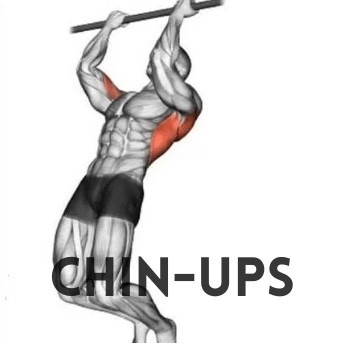
  • chin upsChin-ups are the absolute first thing you should do, strength-wise. Do them as chin-ups, pull-ups, muscle-ups, do them with a Gi, keep your legs in an L-shape… The opportunities are plenty and you’ll get a great return!
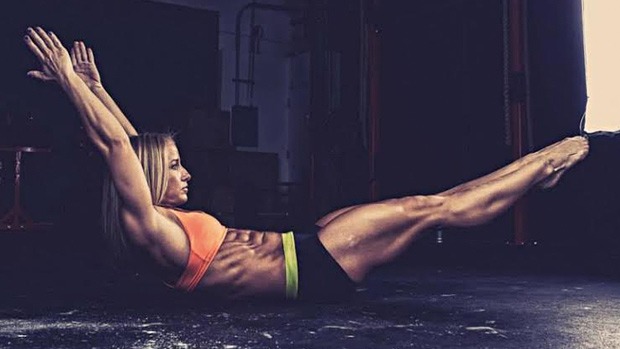
  • Hollow Body Holds are another crazy effective exercise. This one is from gymnastics and has you using your core to keep your feet and your shoulders lifted off the ground while keeping your limbs as straight as possible. You can hold it, or you can rock your body while holding it for some crazy results in core strength!
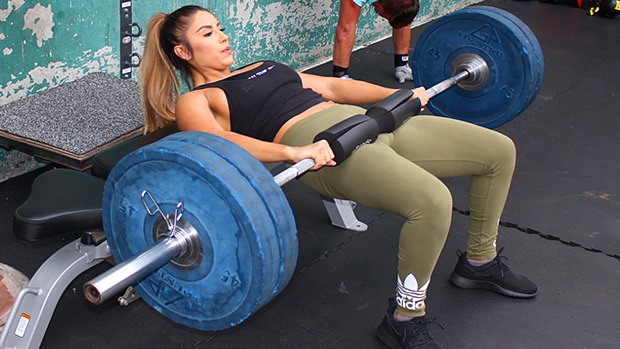
  • Barbell Hip Thrusts are one of the Jiu-Jitsu exercises you have to do. Lying on the ground, you’ll need to prop your back against a bench, And place a barbell across your hips. The goal is to explode with your hips up, although that explosion will look really slow with big weights.
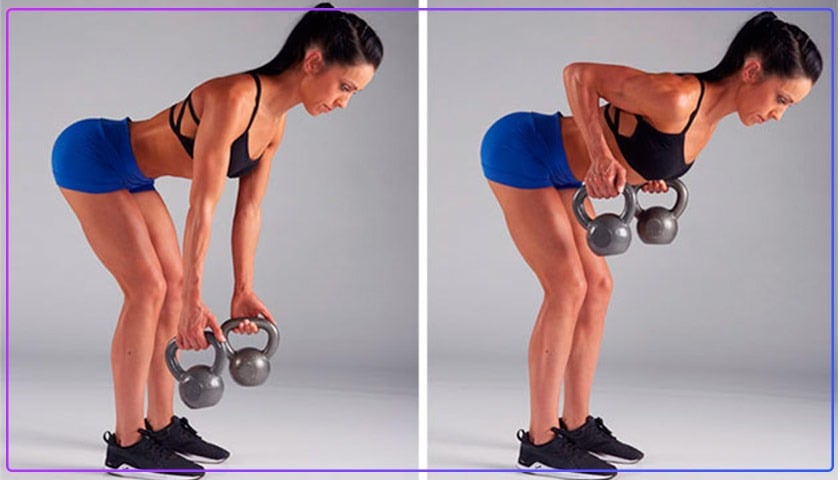
  • Kettlebell rows, done in an alternating fashion should also be high on your list. Whether you’ll do them bent over or supported over a bench is down to you. the motion is one we use constantly in BJJ, and it activates plenty of muscles in the back to really give you a good workout. Plus, you get to stabilize the weight of kettlebells while you’re doing it.
  • Crawls are the number one bodyweight and grappling-specific exercise you need to do. It will not only improve your BJJ movements, but also teach you plenty about coordination, and moving when in a fatigued state, while really challenging your heart, lungs, and muscles. Plenty of crawl variations are variable!
  • Sprinting intervals come last. since maintaining or losing weight is the focus, you’ll need some resistance here. If outdoor conditions allow it, go for hill sprints. The steeper the hill, the better. If not, sled pushes or drags are your best bet!

Conclusion

Do anything. Grasse the groove, do circuits, CrossFit style workouts, old-school roadwork… Organize the Jiu-Jitsu exercises above in any way you see fit as long as you’re off the couch and working all those thanksgiving turkeys and whatever else you’re going to cram during the holidays off.

The Best Strength & Conditioning DVD and Digital Instructionals

14 Biggest Mistakes in Brazilian Jiu-Jitsu

14 biggest BJJ mistakes cover

If you’re hoping to learn BJJ in a way that you’ll be able to execute things flawlessly, you’re fooling yourself big time. Every single thing you do in Jiu-Jitsu is not going to be perfect – there will be mistakes, no matter how small and tiny. The pursuit of the flawless BJJ technique is a futile effort, but one that is very fun nonetheless. That said, you will be making mistakes in BJJ, some big and some small. Some will cost you, others will go by unnoticed. The one thing you can control is avoiding the biggest BJJ mistakes that really do interfere with your progress. 

As I like to say to new students in my academy, there’s no right and wrong in BJJ, There’s just the easy way, the hard way, and the dumb way. The easy and hard ways of doing things are pretty self-explanatory, and it is often the dumb way that needs further elaboration. Put simply, whenever you make a mistake in BJJ and give your partner/opponent a gift, that’s when you’ve done a dumb thing. however, there’s a catch – the biggest BJJ mistakes are not only of a technical nature.

Brazilian Jiu-Jitsu: A Game Of Mistakes

biggest BJJ mistakes trainingIn the game of Brazilian Jiu-Jitsu, every exchange that’s a part of a roll or a match comes down to one thing – who makes fewer mistakes. If your opponent makes one mistake more than you, and you capitalize on it, you’ll end up winning, or at least in a better position. That said, not capitalizing on someone’s mistake is, in itself, a mistake. You get where this is going.

BJJ is a game of mistakes. Executing something perfectly simply means the other person made a mistake in executing the counter or defense to that particular move. In other words, they did not do it perfectly. During most exchanges, it comes down to exploiting our opponent’s mistakes. However, in the higher levels of the sport, it is more about learning how to force the opponent to make mistakes, rather than waiting for them to do it.

The keynote here is that you shouldn’t hope that an opponent will make mistakes, especially at the highest levels. It is not like they won’t make any mistakes, or that they avoid the biggest BJJ mistakes successfully. It is just that you’ll have to make people do them, instead of hoping to capitalize on their ignorance and the dumb way.

Finally, you’ll need to be aware of what you’re doing every time you roll or complete. That’s fairly easy, as long as you can keep your composure. first, avoid doing the biggest BJJ mistakes, and then, weed out any smaller ones you recognize. Or, in simple terms, do one less mistake than your opponent.

The 14 Biggest BJJ Mistakes Holding You Back

While the selection below might not be the ultimate list of the biggest BJJ mistakes, these are all certainly things you’ll want to avoid. As you will notice,. these aren’t just mistakes of technical nature. There are also tactical, hygienic, and even mental errors among them, which you should be able to recognize and avoid if you want to progress in Jiu-Jitsu.

Straight Arms

If there is one thing you don’t need in BJJ it is straightening your arms. Better said, you do not want to have your elbows leave your body whenever that is possible. Granted, at certain points, framing with a straight elbow (stiff arm) makes sense, but you’ll have to be very careful about timing t right. As a general rule though, no grip is worth holding on to, after your elbow is straight and away from your body. Try focusing on this for awhile and you’ll learn why I placed it at the top of our 14 biggest BJJ mistakes list.

Breaking Alignment 

Another conceptual mistake many people make is using their body out of alignment. If you try and use different parts of your body on their own, you’ll have a hard time dealing with stronger or more athletic opponents. If, on the other hand, you use your entire body as a whole, you’ll be able to defend almost everything and make most attacks work.

From top positions, this alignment is often referred to as posture, but what’s important to know is that the same principles apply when you’re on the ground. It would e a massive mistake to compromise body alignment regardless of where the match is taking place.

Tensing Up

biggest BJJ mistakesThis is one of the biggest BJJ mistakes people make throughout all belt levels. It is a natural response of our bodies to tense up when something unexpected happens, i.e .spomeone starts bucking suddenly from the bottom mount. However, we’re only doing a disservice to ourselves by becoming tense.

A relaxed body is much heavier than a tense one. Conversely, it is much harder to move someone who is relaxed, be it top or bottom positions. The key here is simple – relax your jaw, and your body will follow. And, there’s a simple formula for relaxing the jaw – smile!

Going 100%

This is along the lines of tensing up and has to do mostly with training. It is a huge mistake to treat every roll like itis the finals of the Worlds and go all out. In fact, it is one of the absolute biggest BJJ mistakes to think you should go 100% in competition as well. While the intensity should be higher, you should always aim to have something left in the tank and force the other person to make mistakes.

If you want to be able to remember what you did wrong in rolls you’ll need to literally slow them down. Along with understanding, progress inevitably follows.

Coming In Sick

IF this was a mistake before, in today”s day and age it is definitely one of the biggest BJJ mistakes that should be punishable by law. In fact, in most places it probably is. Coming in with a cold is just a huge no-no and has always been one. That said, all health-related issues you might have, that would keep you from doing anything else, should also keep you off the mats. Just stay at home with a cold, a runny nose, a funky itch and rash, and other similar health issues.

Not Diversifying Your Game

One of the biggest BJJ mistakes blue and p[purple belts do, along with competitors of all levels is not introducing diversity to their game. Okay, you’ll figure out how to become a nuisance with back takes, chokes and Omoplatas, for example. But what’s next? A few years from now,w you’re still doing the same things, but now they don’t even work against white belts, let alone others. Even more importantly, they don’t work nearly as well in competitions either.

Simply put, for progress, you’ll have to open up your game. Experiment, do new things, fail at them, suffer, and learn from your mistakes.

Training Injured (Stubbornly)

Probably the most obvious thing on our list, and yet, a mistake that we all willingly and consciously do. Fooling ourselves about being fine and forcing training when we’re not recovered yet from an injury is one of the dumbest things that we can do as athletes. And yet, everyone does it, me included. There’s no way around the fact that every injury takes time and attention to heel, and there should be absolutely no BJJ during that period.

Not Listening To Your Instructors 

HUgely important, once again obvious, and yet, one of the biggest BJJ mistakes people keep on repeating. From experience, these are mostly purple belts that think they’ve got everything they need from Jiu-Jitsu. Sadly, that’s not the case. There’s a reason why someone is your instructor – they are there to help show you the easy way of doing things. Listen to them, even if something doesn’t really make sense at the moment. Further down the road, it would be better to say “now I see it” and know it, rather than “now I see it” and having to start to learn it.

Inconsistent Training

This one is dependent on your goals. If you’re coming into training just for recreation and to blow off steam then you can use whatever schedule fits you. If you want to be a competitor, or simply learn Jiu-JItsu as much as you can, then you can’t be inconsistent about training. Every academy worth its while has a curriculum. That means that every time you come to train, instructors connect stuff from previous classes and introduce stuff for future ones. Skipping classes randomly will leave you with huge gaps in your knowledge which will definitely affect your progress and goals.

Not Tapping

Duh! Still, to this day, I am amazed at the stubbornness of people that have been in the game for long and refuse to tap on time. Why would you risk an injury? Ego is the hardest person to submit, I know, but you’ll have to figure out a way to accept that you’ll tap, and do it on time, if you don’t want to commit one of the biggest BJJ mistakes over and over again.

Burnout

Guilty of his one lately myself, training too much will have the same results as inconsistently training. There is only so much information that the mind can process and so much work the body can do. they both need rest and nurturing, and they need it on a daily basis. If you enter burnout, nothing you do will work, you’ll be unable to learn new things and you’ll start giving things away left and right, becoming a mistake machine yourself.

Flat On Your Back 

UNless you’re resting in between rounds, there’s absolutely no reason for you to ever be flat with your back on the ground. Whether you’re in the bottom of side control, or playing guard, at least none of your shoulders, and preferably your shoulder blade with it should be off the ground. Give this one a try and you won’t believe the impact it will have on your BJJ game.

Focusing On Belts

biggest BJJ mistakes belt huntingAs far as a mentality for training BJJ goes, you can have a whole host of individual goals and nobody can call them wrong. Except for one. Working only with the intention of getting the next belt means you’re not doing Jiu-Jitsu, but rather belt hunting. The trick is, the more you’re after a belt, the further away it is going to be. If you want to have a worry-free BJJ journey, stop focusing on the belts and avoid one of the biggest BJJ mistakes ever as early as p[possible.

Asking “How Did I Do?”

Along the lines of belt hunting, just way more annoying for everyone around you that you aks. It is okay to look for progress on daily basis, in everything you do, but it should be you that recognizes it, leans from it, and grow it. there’s no point in asking others how you did, especially if they have the right mindset and focus more on how they did, rather than you. LEt go of what others think and enjoy the journey.

Final Words

Learn to love mistakes. They will help you identify where you need to improve and even help you figure out how to improve. Since you’ll constantly make them, you should learn how to make the most out of them. That said, however, the 14 biggest BJJ mistakes above are ones that you should be avoided at all costs. There’s a reason why we laid them out for you – they’ll only hold you back. get them out of the way and keep learning from the small mistakes you’ll inevitably keep on making while you’re grappling.

15 Eddie Bravo Quotes To Make Your Day

Eddie Bravo quotes jiu jitsu

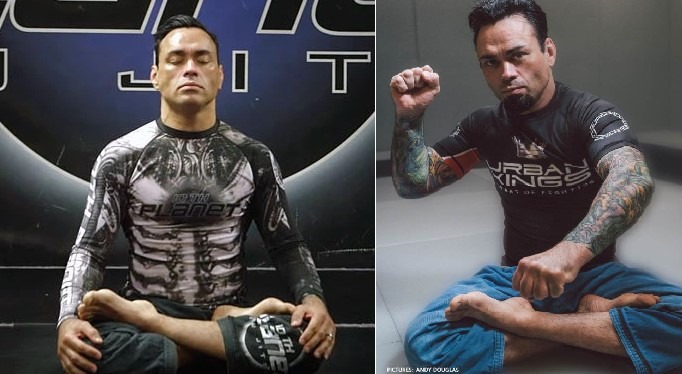
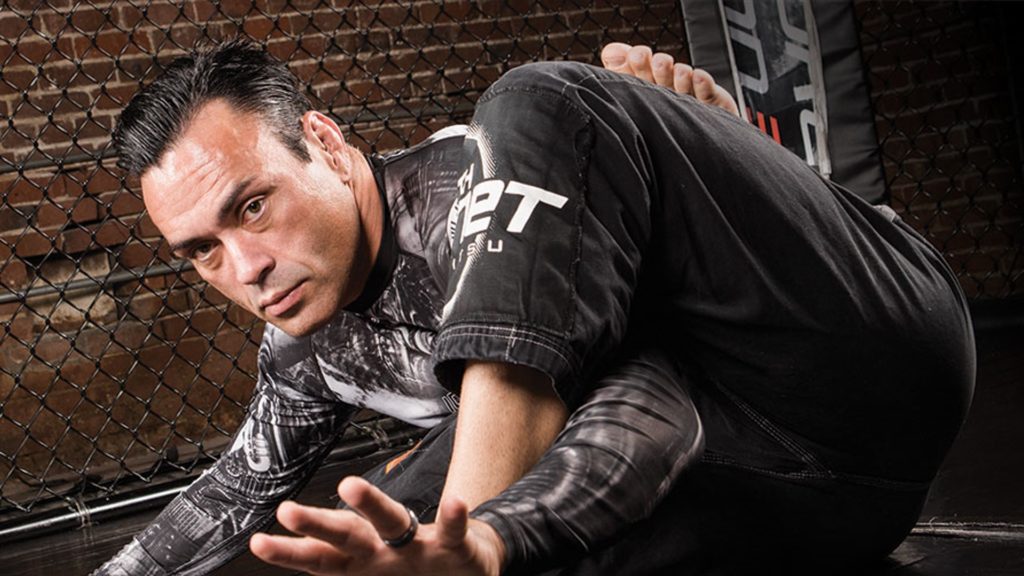
You know who Eddie Bravo is. There’s no way you don’t if you’re a grappler, an MMA fighter, or simply a fan of combat sports. The man is a legend in combat sports circuits, and that’s for a good reason. He’s not just fun and completely off the hooks crazy, he is also brilliant when it comes to Jiu-Jitsu and innovating in a technical sense. Eddie is also one of the people that made professional Jiu-JItsu possible. A lot has been said about his technical and overall contribution to BJJ. Besides many Jiu-Jitsu quotes, today, let’s talk about his funny and philosophical contribution – let’s talk about Eddie Bravo quotes.

Eddie Bravo has had an impact on everyone’s game, whether you’ll admit it or not. So many of the things we’re doing on a daily basis in training are products of some of his original 10th Planet Jiu-Jitsu ideas. Speaking of his original stuff, there’s hardly anyone in the entire sport that has named BJJ techniques more originally or wittingly than Eddie. That’ is exactly why you simply have to read these 15 Eddie Bravo quotes.

Eddie Bravo – The Man, The Conspiracy, The Legend

Eddie Bravo is the man behind one of the most widespread and popular BJJ associations in the world – 10th Planet Jiu-Jitsu. They’re known for training exclusively No-Gi They also develop crazy moves that have people frowning before they realize that most of the stuff works and add it to their game. Eddie has been at the had of many different revolutionary things in Brazilian Jiu-Jitsu over the years.

Eddie Bravo quotes 1First of all, the Jean Jacques Machado black belt has created some staple positions of today, like the Rubber guard, the lockdown half guard, the Truck, refined an old wrestling move into the Twister and really took reverse Kesa Gatame into new heights with his twister side control. And those are only a few of the most important ones.

Eddie also helped propel professional Jiu-Jitsu with his EBI tournament. They not only featured quite a high cash reward for competing athletes but also revolutionized the ruleset for BJJ. to this day, it still remains the best possible set of rules for submission-only competition.

Bravo also brought to s a different concept of warming up with his crazy, yet extremely effective 10th Planet Jiu-Jitsu warm-up sequences.

But, let’s be honest. His appearances in Joe Rogan’s Podcasts, his unique “Rubber Guard” online instructionals, all the conspiracy talks, and all the Eddie Bravo quotes out there are just as important, if not more, like everything else he has done for BJJ.

15 Eddie Bravo Quotes To Brighten Your Day

Check out these unique Eddie Bravo quotes that will surely make your day brighter. However, as crazy and funny as most of them are, do pay attention. Eddie’s philosophy of Jiu-Jitsu is a really deep one and there’s a lot to learn even from the things that don’t seem to be serious. And, if nothing else, you’ll have the stuff to say that makes everyone both laugh and think tonight when you hit the mats.

  1. “I was diagnosed with paranoia for fear of never smoking weed again.”
  2. “I’m selling evolution. You grow or you die.”
  3. “The only guys that make it through are the guys that have complete control of their ego where they tap out in the beginning, all the time, you’re always losing in the beginning… Your ego can get bruised if you don’t have control of it. So what ends up happens is Jiu-Jitsu is the ultimate douchebag filter.”
  4. “My main direction in Jiu-Jitsu has always been to make Jiu-Jitsu better in MMA.”
  5. “Most of the Jiu-Jitsu community is still resistant, and I thought let me build an empire.”
  6. “We’re seeing all these black belts, they come in fighter after fighter…all these guys, black belts. But when they’re on their back, they’re not used to offense from the defensive position.”
  7. Eddie Bravo quotes 2“I’m going to teach Jiu-Jitsu and be my own boss and not worry about s***. 10th Planet was born and little by little I’m adding schools and growing associations.”
  8. “I hated Royce Gracie just beating Karate guys and Kung Fu guys, like who is this guy? I was sold. By this point I was like f*** Karate, I’ve got to find some of this Jiu Jitsu s***.”
  9. “I went in there and got choked 37 times by a purple belt, he put a clinic on me. Most people run when that happens to them, most people’s DNA will activate their primal monkey DNA and say listen, you just got humiliated in here, you are the weakest one in the room. You want to get the f*** out of here and never be exposed like that again get out. When I got tapped out 37 times I didn’t run.”
  10. “I appreciate everything that Jui Jitsu has gotten me. It’s got me off the grid, making my money off Jiu-Jitsu, I’m my own boss. I love that.”
  11. “A lot of people were like, this guy turned his back on Jiu-Jitsu. I was like, actually 10th planet was designed to improve Jiu-Jitsu in MMA. I just tried to improve it.”
  12. “Marcelo Garcia is one of those fighters who train with No-Gi and is also great with gi. When you train with no-gi you actually get better with gi too. I am spending all the time on no-gi, so it becomes a different animal.”
  13. “The more affiliates I have the more I can sit back and let my brown belt and black belts do the work.”
  14. “So, when you train no-gi all the time, the no-gi style evolves quicker, twice as fast. Especially, the way we do it at 10th Planet, I am not just the one conveying the knowledge. All my students are involved.”
  15. “A lot of times I’ll show someone a technique I got really good with, but I didn’t put all the hours in. I didn’t do the research and development. I didn’t take it to the next level.”

Closing Thoughts

Eddie Bravo always has something to say. Whether you like Eddie Bravo’s quotes on Jiu-Jitsu, weed, flat earth, or chemtrails, one thing is for sure. There’s at least a couple of them out there that you agree with!

Related Articles:

Famous Jiu-Jitsu Quotes

Cop Uses Jiu-jitsu to Stop the Fight, No arrest, Just a Hug at the End

Cop Uses Jiu-jitsu to Stop the Fight Between Two Guys, No arrest, Just a Hug at the End

The fight between two young guys was stopped by a humble Policeman.

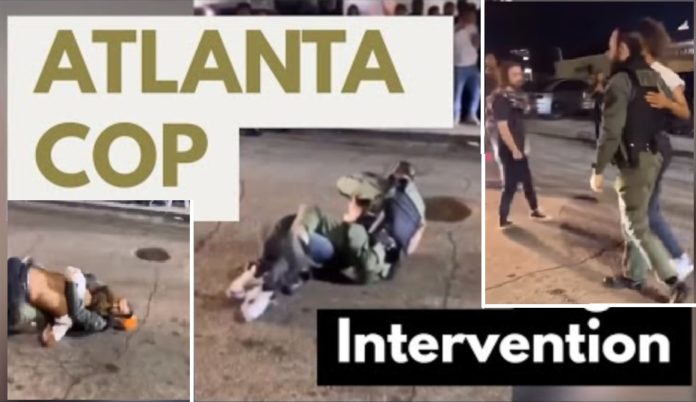
Atlanta police officer was working the bars when a fight broke out between two young men. The officer intervened by grabbing one of the attackers from the back and took him to the ground. The civilian got up and fell on his back again crashing down on the pavement. Both officer and civilian tried to get up but the civilian was the first one on top. After ending on top civilian did a mistake of overcommitting pressure which the policeman used to sweep him into full mount and took full control of the fight. Most importantly, the policeman did not throw a single blow or harm the guy. After that, he started calming down the guy who probably didn’t even know the cop was on his back.

An interesting situation occurred when one of the passers-by tried to pull the policeman from the civilian. The policeman’s reaction is unbeatable. He just did a Death Stare which was enough for a passerby to leave him immediately. Soon after the policeman got up from the civilian and even helped him get up to his feet. He hugged him and let him go.

Is This The Best Americana Arm Lock Variation?

Tighetest Americana Arm Lock Grip

When was the last time you hit an Americana arm lock in BJJ? If you’re a white belt, your answer doesn’t count, unless you caught a higher belt with it. Jokes aside, the Americana arm lock is a submission that doesn’t often work in rolling, and even less in competitive matches. But the reason for that is not the lock itself, it is our execution of it. Well, that and secret little detail that will make all the difference in your finishing rate when the Americana is in question. 

The Americana arm lock is one of those submissions people usually learn early on, they try it a few times, and then abandon it. As blue and purple belts, they might come back to it, but only opportunistically, mostly because a white belt presented it on a silver platter. However, when it comes to using it against skilled opponents, and particularly in a competition people usually never consider it as a submission, but more of a move that will open up other options. Well, it is time to think twice about the Americana.

The Submission That “Never Works”

After this article, you’ll never peg the Americana arm lock as the submissions that “never works” again. First of all, you have to understand that every submission hold in Brazilian Jiu-Jitsu works, at the very least once. It is only a question of increasing a move’s percentage rate of success that makes it seem like it is working or not. And, there is a way to do this with the Americana arm lock.

BJJ Americana AttacksFirst, though, let’s look at some of the misconceptions behind the Americana and the most often quoted reasons why this move doesn’t work. The very first thing is thinking about it as a strong man move. Oftentimes people say that bent arm locks, and the Americana, in particular, is a strong man move. What that means is that strong folks should be the only ones able to use it. It also means that it won’t work against people stronger than you. Nothing could be further from the truth.

Secondly, people get positioning completely wrong. The Americana is a submission you do from the top. Period. Top side control and mount are your go-to positions for an Americana arm lock. the top half guard might be an option as well, but not as often as the previous two. Forget about all the fancy bottom side control or open guard Americanas – now those are moves that won’t even work once. They also happen to be the reason why the Americana gets a bad reputation as being ineffective.

The Americana Arm Lock: Technical Basics

The Americana arm lock is a submission that attacks the shoulder joint. What that means is it abides by the same principle that makes all other armlocks work. In order for it to work, you’ll need to isolate the two neighboring joints, in relation to the one you’re attacking. Since you’re going for the shoulder, the two joints on each side would be the elbow and the neck. This neck part is what most people get wrong, and then they claim Americanas don’t work.

In terms of isolation of those joints, the wrist grip that pins the arm to the ground helps isolate the elbow, restricting its movement via a lever which is the forearm. And no, you don’t need a figure four grip at wrist level to hold, and definitely not to finish an Americana arm lock. As far as neck isolation goes, all it takes is pushing the head to the side with your elbow to take away most of the neck’s range of motion.

Finally, there’s the angle. While most people look for a 90-degree angle between the forearm and upper arm, it should actually be a lot less than that. The closer you can get the wrist of the arm you are attacking to the shoulder, the better your pressure on said shoulder will be. That, along with the grip variation that follows will transform the Americana in one of your most powerful attacks!

The Brauilo Estima Americana Arm Lock

To begin with, credits. this Americana arm lock variation is a product of Braulio Estima, and if you don’t know who he is, then you’re probably just an infant in BJJ terms and still can’t tell an Americana apart from a Kimura. While Braulio shows this move from side control, it does work equally as good form mount as well. I haven’t really tried it from top half guard, but you can be m guest and experiment.

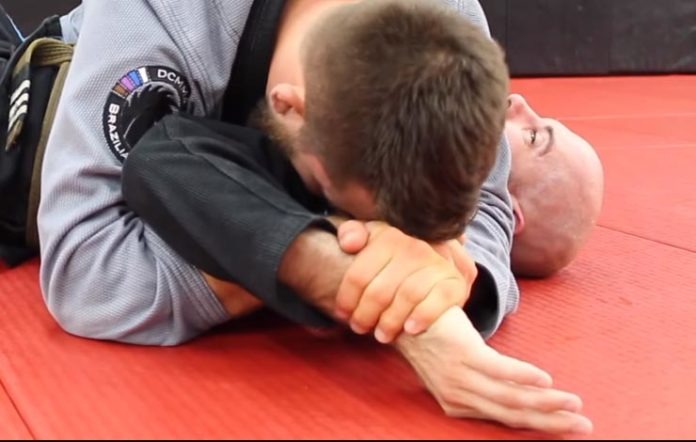
Americana Arm Lock Finsih The main idea here is that the figure four grip we lock at writ level, actually allows the shoulder to be on the ground, and hence, leaves space for it to move before the opponent feels the lock. Instead, Brauilo’s take on thing is to lift the shoulder off the ground, blocking it off completely before applying braking pressure in the familiar direction. in order to achieve that, you’ll need to do a different grip that allows for all of that to happen.

The goal is to place the forearm of your free arm underneath the shoulder, instead of placing it underneath the upper arm of the opponent. This also means you’ll be unable to grab a figure four Kimura-style grip. Instead, you’ll aim to grab your own triceps, above the opponent’s shoulder. This grip variation will bring on the tightest Americana arm lock submission you’ve ever set up. The pressure is there before you even start to move the arm, and there’s even more space to move it in because the shoulder is off the ground.

All In All

The Americana arm lock will work for anyone, under any circumstances, at all belt levels. All you need to remember is that it should be done from the top, you should follow the basic principles that make arm locks work, and you should definitely use Braulio Estima’s grip variation for the finish. Suddenly, this white belt move is going to make a comeback in your submission arsenal and you’ll be tapping people left and right with it!

DVD and DIGITAL Instructionals Related to Arm Attacks :

Arm Bars: Enter The System by John Danaher

Winning From Full Mount by Andre Galvao

Side Control Attacks & Submissions: Old School Evolution by Fabio Gurgel

Side Control Masterclass by Matheus Gonzaga

Do You Know These 4 Crucial Jiu-Jitsu Escapes?

4 Jiu-JItsu Escapes You Must know

How comfortable are you with your Jiu-Jitsu escapes? Do you panic when you get caught or do you have ways to calmly sneak out and launch counterattacks? Escaping is an absolute must in BJJ, but not all escapes are made queal. Of course, it is a matter of personal preference, body type, and character, but at the end of the day, there are simply some Jiu-Jitsu escapes you can’t do without. We have four of those lined up for you today.

Jiu-Jitsu escapes are the most underrated aspect of Brazilian Jiu-Jitsu. We take them for granted and never think we’ll need one until we actually do. At that point, though, it will be hard to recall ti, and we end up tapping or ending up stuck. that, in turn, leads us to think the escape doesn’t work and we try and fish out flashy stuff on YouTube that seems like they’ll solve our problem. This loop then goes on until you recognize the fact that you have to train escapes pretty much like you train submissions – systematically and regularly.

The Art of Jiu-Jitsu Escapes

Getting out of dominant positions and BJJ submissions is really nothing short of an art within the art of Brazilian Jiu-Jitsu. Escaping is probably the hardest thing you’ll have to learn in grappling. Yeah, holding side control is difficult to figure out, as are leg locks. However, when it comes to escaping the mount or getting out of a triangle, you’re in for a world of pain before you start figuring things out.

Getting out of bad spots is absolutely necessary,y though, and I’m amazed at why people don’t’ spend more time perfecting this aspect of the art. Think of it this way: one person is always on the defense in every exchange during every roll and most certainly, every match. So how come we focus so much on attacks all the time and leave escapes to be our muscle moves, when they’re the moves that are the most technical and precise?

Jiu-Jitsu escapes are what actually makes your attacks possible, and even better. If you’re able to get out of a back attack, for example, you’ll be able to launch a counter that can finish the match. Throughout it all, you didn’t spend energy escaping, because you have a system that works, and you know that at the end of the exchange it will be you getting the tap. This is how escaping in BJJ should look like as opposed to the spazzy, ill-timed stuff we often see people attempt and fail miserably.

The Jiu-Jitsu Escapes You Have To Know

Speaking of Jiu-Jitsu escapes, even if don’t like to train them, you have to know several ones that will allow you to actually play a BJJ game. In fact, there are four escapes that you simply can’t do without in grappling. Unless you possess the skills of getting out of the mount, beating a triangle choke, escaping an armbar, or slithering away from back control, you’ll have a very hard time in Jiu-Jitsu indeed. And it won’t get any easier until you manage to figure these four defensive aspects of it out.

Mount

4 Jiu-JItsu Escapes: Mount escapeEscaping the mount should be among your priorities not just among Jui-Jitsu escapes, but in grappling in general. the best way to think about it is that you’ll be doing it against technically better, bigger opponents. Moreover, you should be doing it by spending the least possible amount of energy in the process.

The mount escapes to swear by is when you use a frame with an elbow on the inside of the opponent’s thigh. You won’t be able to move opponents too much, but you can move. Use your knee to force the shin of that leg to the outside, so that it is more accessible and you can easily trap it with your other leg and pull it into half guard.

Triangle

The triangle choke is one of the submissions you really have to know how to beat in Jiu-Jitsu. That said, escaping the triangle can be done at several stages, but the Jiu-Jitsu escapes worth exploring are either really early ones or really late ones.

4 Jiu-JItsu Escapes: Triangle choke escapeA late one that you simply have to have in your arsenal involves using the fact that your arm is across their body to help you escape, Place the palm of the hand that’s across on the inside of their thigh and use the elbow to push on their belly. This will allow you to set up a twist, eventually pinning the knee of the choking leg to the ground. Now you can pop on to your feet, rotate towards the choking leg, and try to extend your spine so that you look upwards.

Armbar

For the armbar, it is easy – escape when they have the arm extended. if you can master this skill, you can rest assured that you’ll give away far fewer armbars than you are used to. OF course, the Hitchhiker escape is the one to go for here,. although there are some interesting new theories emerging as well.

4 Jiu-JItsu Escapes: armbar escapeFor the Hitchhiker escape, you want to rotate your body, using your arm as the pivot point. The goal is to first rotate your body so that your feet point in the same direction as the opponents. Then, you can use the arm as a pivot point to rotate all the way to your belly, and eventually end up on top while getting out of the armbar.

Back

Nobody is ever going to be able to choke you from the back if you know how to free up your hips. So, when it comes to JIu-Jitsu escapes from back control, you should think hips first and then shoulder, rather than the other way around.

4 Jiu-JItsu Escapes: back escapeTo begin with, place grips on the choking arm so that you prevent it from sliding into a submission. Next, the bottom hook is always the one to beat. However, that might mean that you need to create space by pushing the top one off with your arm, before turning into the bottom hook and simply stepping over it. The moment you have it beat, you can easily get out of a choke and back control altogether.

Final Thoughts

Jiu-Jitsu escapes should be the foundation of your game. If you can escape from everywhere, you can then be confident about dominating positions or finishing with submissions. SImply spend time in bad spots and try to figure things out. However, if you don’t already have the four escapes above in your arsenal, focus on them first. If you can beat the back, the mount, the armbar, and the triangle all other escapes will be easy to learn.

Andre Galvao, Multiple ADCC and BJJ World Champ Announces Comeback in MMA

Andre Galvao Announces return to mma after 10 years of retirement
Photo by Mike Calimbas
Andre Galvao Announces return to mma after 10 years of retirement
Photo by Mike Calimbas

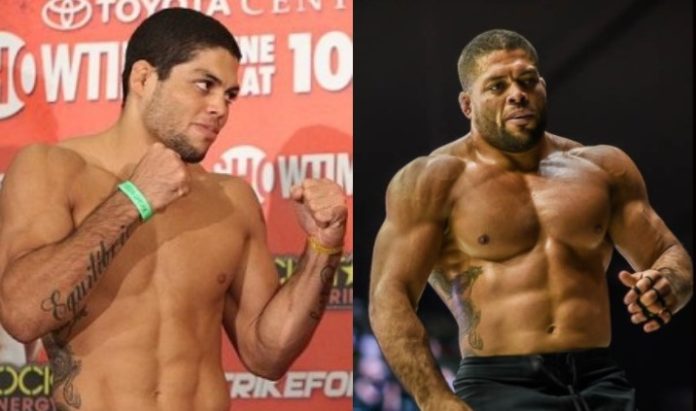
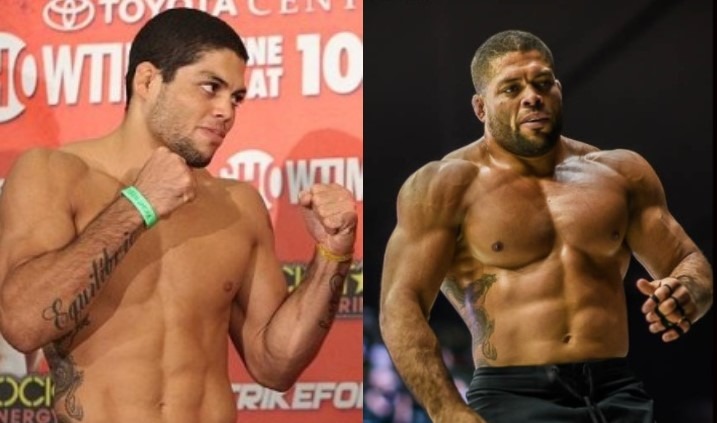
One of the biggest names and one of the most successful competitors of all-time Andre Galvao announced his comeback in the MMA. He decides to return to MMA and step again in the cage after 10 years of retirement.

Andre Galvao, certainly one of the most famous names in the BJJ world. He is one of the greatest BJJ competitors of all-time, he won 6 IBJJF World Tittles as a black belt, and also six ADCC World Championships. He finished his great GI career in 2018 at the Abu Dhabi King of Mats 2018. His last grappling match was on the ADCC 2019 Worlds, where he defeated Felipe Pena in the ADCC Super-Fight.

Galvao wrote on his Instagram profile:

“If you didn’t know about it…now you know it.
7 fights 5-2-0 in 2.5 years. Between 2008-2011 I did MMA. Yes. Lots of BJJ fighters were happy about that during those years. They had the chance to win my world titles.
I didn’t fight worlds 2009-2012. Yeah! They all super happy about it. I could win a couple more world titles in BJJ. Haha!
Back in the day, I had no wrestling and no ADCC World Titles. My no-gi game is different now.
I competed only against top fighters never thought about making my cartel…I was ready for anyone.
Much respect to all my opponents ✊?.
All of my opponents has way more experience than me.
I want to show the world I can do it!
I want to get back and show the world I can do it well.
God’s plan…not my plan ✍??.”


View this post on Instagram


A post shared by Andre Galvao Official (@galvaobjj)

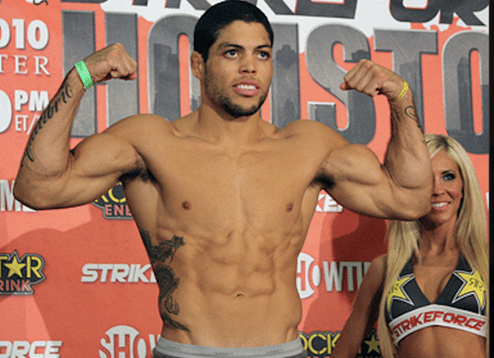
What most people did not know is that Galvao fights in the MMA as well, and has a record of 5-2-0. He began his pro career in 2008, and fight until 2010. Throughout his career, he fought in some of the best MMA promotions in the world, such as DREAM (Japan), and Strikeforce (USA).
He showed his superiority in Jiu-Jitsu already in his first matches, where he achieved three submission victories. All three of them were via an armbar.

Last MMA Fight

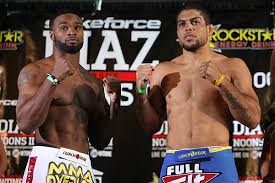
His last fight was on Strikeforce event: Diaz vs. Noons II, in 20010. Andre lost this fight against Tyron Woodley via TKO (punches). Tyron Woodley is one of the big names in the UFC, he is #6 in the UFC welterweight rankings, and he is also former UFC welterweight champion. In one interview for BJJ Heroes, from 2010, Galvao explained his plans to join The Ultimate Fighter TV show. However, that did not happen. But maybe that could be a plan for the near future, who knows …

galvao-woodley
Andre Galvao vs Tyron Woodley

Predictions

How would Galvao look today in the MMA world? Without a doubt, his grappling and his wrestling skills are at the highest level. His style of grappling, with pressure passing, as well as his wrestling, powerful takedowns can be very well translated to MMA. He has already shown that in his earlier career. His athleticism is also on the top level, honestly, at 38 he looks better than 90% of today’s fighters.

andre-galvao


But there is an interesting question for sure, what is with his striking and punching? To be honest we can’t find or see much of his striking abilities. In his previous fights, he used punches to shorten the distance, and immediately looked for takedowns, or throws, where he gets the fight to the ground.
However, it remains to be seen whether we will see his comeback into the octagon and when.

BJJ Knee Injury: Types, Symptoms and Rehab Protocol

Coming back quickly form a BJJ Knee Injury

Getting injured in Brazilian Jiu-Jitsu can vary from stubbing a toe to a fully blown-out knee. There’s no need to hide and downplay the fact that injuries are a part of Jiu-Jitsu. They are a part of any port, and trying to say they don’t happen in grappling only makes them seem worse when they inevitably do. That said like in any sport, some injuries are more prevalent in Jiu-Jitsu compared to others. BJJ knee injuries rank very high among those that you can expect to experience at least once.

If you’ve never had to deal with a BJJ knee injury, you’re either not serious about Jiu-Jitsu, or you’re just about to get one. They just happen, especially in academies that don’t shy away from training takedowns on a regular basis. The knees are sensitive joints under the best of circumstances, and getting one of the nastier injuries on a knee will keep you sidelined for months or might even force you to quit. So, while not getting one would be ideal, how you come back from an injury is extremely important.
BJJ knee Injury

Quick Knee Injury Facts

  • In Jiu-Jitsu the knee injury is one of the most common due to legs playing a huge role.
  • The most common injuries that will occur in BJJ are strains, sprains, dislocations, fractures, meniscus tears, bursitis, and overuse injuries.
  • Knee injuries are generally caused by bending or twisting force applied to the knee. Also, falls, direct blows, or extending the leg while side force is applied may cause injuries too.
  • Knee Pain and swelling are usually the signs and the symptoms of a knee injury
  • Knee injuries are best diagnosed with MRI. X-ray can’t “see” soft tissues like ligaments and tendons. History and Physical examination may be very useful.
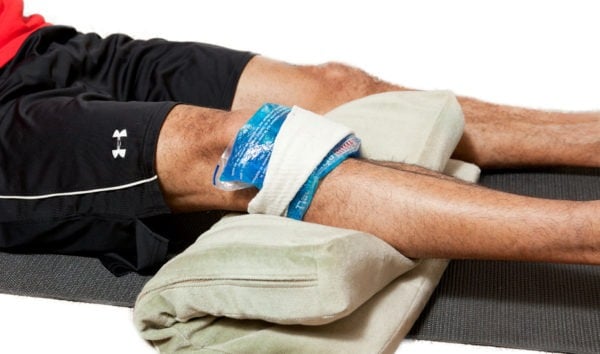
  • The treatment of an injured knee may involve RICE (rest, ice, compression, elevation) method, immobilization, physical therapy, or surgery.
  • The prognosis for a knee injury depends on the injury itself and whether it requires surgery or not.

Know The Extent Of Your Injury

The knee joint is a complicated joint, with a key role in our everyday lives and in grappling. The bones that this joint connects are huge ones, and all the muscles on top and below the joint are also massive. After all, the legs are the strongest part of our bodies. However, the joint itself is extremely vulnerable, much of which is due to the fact that its most sensitive structures are really exposed.

BJJ knee injury meniscus tearJust take a look at a leg, even a powerlifter’s or a sprinter’s leg and you’ll see that no matter how bad the thigh and calf muscles are, the knees are always the same size. And the knee joint doesn’t just work when we train, but round the clock. That means our knees really do get a beating on a daily basis, even without Jiu-Jitsu. If you work standing, and/or have a few pounds more than you should, this just exacerbates the p[pressure your knees have to withstand every day.

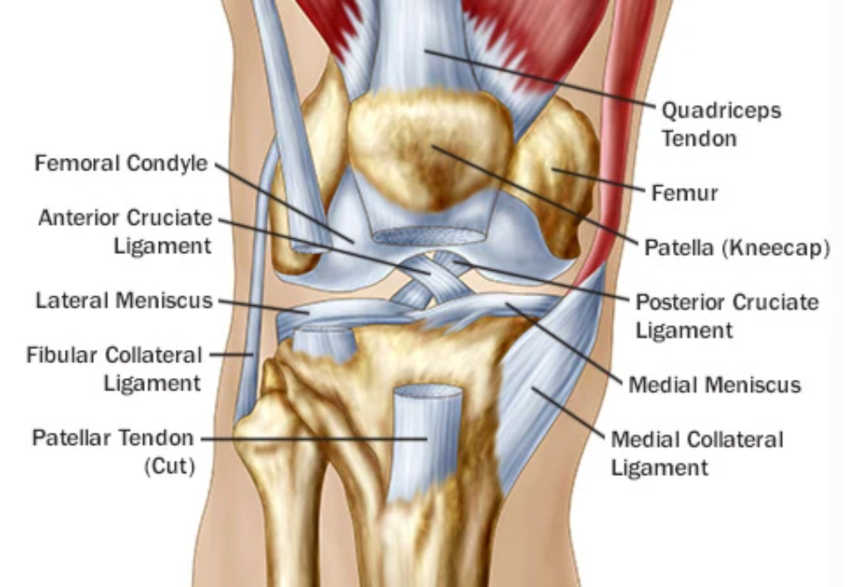
Any BJJ knee injury is based around two major sensitive structures of the knee – ligaments or meniscus. The former is the elastic strings that help keep the knee joint together, while the menisci are the cartilage pillows that prevent the thigh and shin bone from touching each other inside the joint. Tears to any of these structures require surgery and a rehab process that you just can’t skip. However, full tears are not as common as you might think, and oftentimes you can get back on the mats quite quickly after a partial tear if you follow a solid protocol.

Most Common Types of Knee Injuries in Brazilian Jiu-Jitsu and Grappling.

Knee Sprains

Knee sprains are the type of injuries that damages ligaments that hold your knee. There are 4 ligaments in your knee:

  • ACL – Anterior Cruciate Ligament
  • PCL – Posterior Crucicate Ligament
  • MCL – Medial Colateral Ligament
  • LCL – Lateral Colateral Ligament

ACL and LCL are ligaments placed across each other in the middle of the knee and they stabilize the knee movement from back to front.

LCL and MCL are ligaments that stabilize your knee so the upper and lower bone don’t slide from slide to the side.

Ligament sprains injury depends on the amount of stretching or tearing of the ligament and how much instability in the knee injury caused.

There are three grades of knee sprains:

  • Knee Sprain Grade 1 is when your ligaments are stretched and painful but no torn of ligaments and no instability is present.
  • Knee Sprain Grade 2 is when the ligament is partially torn, and you feel light instability.
  • Knee Sprain Grade 3 is when fibers of the ligament are torn and you feel that your knee is completely unstable

Knee Strains

Knee Strains are the type of injury when muscles or tendons that are surrounding the knee are stretched. It usually happens due to hyperextension or hyperflexion of the knee. You will usually feel pain outside of the knee joint, and you may feel dysfunction of the normal range of motion of your knee. The patellar tendon is stretched from the lower knee cap to the front of the leg in from of the tibia bone.

Knee Bursitis

Knee bursitis is when Bursa (fluid-filled pouch) in the knee is highly irritated, infected, or inflamed. Bursa is a shock absorber located around the joints. Its function is to absorb and minimize the friction between tissues. In the knee, there are two Bursas. One is above the knee cap, and the other one is below the knee joint near and in front of the tibia bone. Bursitis in BJJ is usually an acute injury, but in some cases, it’s a chronic problem.

Meniscus Tears

Tears of Meniscus happens inside of the knee. Tears may happen on the medial and lateral meniscus which are semi-round. The meniscus is articular cartilage that acts as a shock absorber. It usually locks your knee. While you can unlock it with some specific movement the chances are it will lock again. Due to low blood flow in the meniscus, meniscus injury requires surgery, but you’re back on the mats in about two months.

Knee joint dislocation

Dislocation of the knee joint usually happens due to high impact to the knee. It’s a very rare injury in Jiu-Jitsu and grappling sports. Once it happens it may damage the nerves and the blood vessels in the knee. This type of damage requires immediate surgery.

Patella Dislocation

Patella dislocation is the type of injury where your patella moves to one side of the knee. You can usually pop it back by use of your hand. While it’s not a dangerous injury it may hurt a lot and it requires rest, splinting, and physical therapy. Patella dislocation may happen again if not treated well the first time it happened.

Knee Fractures

Knee fractures are very rare in Jiu-jitsu and they happen due to high impact direct blows to the knee. They may occur due to sudden falling to the knee and people with osteoporosis are at a higher risk. Fractures of the long bones like the Tibia, Fibula, and Femur are less likely to be fractured in BJJ.

What causes a knee injury in BJJ, Jiu-Jitsu, and other Grappling Sports?

Most injuries in grappling sports happen by an external force twisting or bending the knee. Remember that the Knee is not flexible. It’s created to stay in place with only forward and backward movement. What makes the knee less likely to get injured is your hip flexibility. The hip flexibility allows your knee, read leg, to rotate.

Twisting of the knee usually happens due to Heel Hook submission, or sudden rotating movement while your lower leg is blocked by your training partner.

Bending of the knee where MCL or LCL may get hurt is when someone falls on your extended or less-extended leg.

One interesting injury that may happen in BJJ is when you’re playing guard and you suddenly extend your leg while your partner is holding it or blocking it. You’ll feel pain outside of the knee and you’ll have problems with bending the knee but in about 2 weeks you’ll feel completely ok.

Bursitis may be caused by overuse of the knee and in BJJ, prolonged kneeling usually causes it.

Degenerative joint disease, gout, and arthritis infections.

Knee Injury Signs and Symptoms

  • Knee pain
  • Swelling
  • Heat
  • Redness
  • Tenderness
  • Difficulty bending the knee
  • Clicking sounds
  • Popping Sounds
  • Knee Locking
  • Instability, and feeling of instability
  • Bruising

Acute knee injury usually involves swelling and knee pain. Chronic and overuse injuries symptoms are popping and clicking.

Should you be worried about your knee injury?

When you get a knee injury, there’s a simple auditory cue that will usually let you know whether or not it is severe even before the onset of pain. If you hear the dreaded sound of a cloth being torn, or a loud pop, you can rest assured that you’ve messed up your knee, possibly big time. Of course, I’m saying this in the context of a knee injury, as those sounds apply to any joint of our bodies as well.

BJJ knee injury rehab protocol that works

A second marker that should really have you take your BJJ knee injury seriously is swelling. The knee won’t swell up unless it is something really big, which full ligament or meniscus tears usually are. So if it swells up, especially the morning after, and it locks up, you shouldn’t take the “it’ll pass on its own” route of thinking but go to a doctor immediately.

Rehab Protocol To Recover Fast From A BJJ Knee Injury

If you have any type of BJJ knee injury following the checklist below is going to really shorten the time you spend off the mats, regardless of how serious the injury is. I speak from experience.

Go To A Specialist

The first thing to do is get some professional help and more importantly, a diagnosis. There are two menisci(plural of meniscus), two key tendons, and 4 ligaments that might be the reason for a BJJ knee injury. And that is when things have gone smoothly. In many cases of devastating injuries, more than one of these structures suffers damage.

When I’m saying go see a doctor, I don’t just mean any doctor. Go see a specialist. GO directly to someone who not just specializes in orthopedics, but really knows knee injuries. It would be ideal if they’ve grappled as well, but that is not a realistic expectation. Go to a specialist, get the diagnosis, and hear what they have to say. Following their advice in the early days of your injury is the smartest thing you can do, even if it is a small one.

Do The Time

The next point in our checklist is the hardest one for any athlete, and especially for BJJ athletes – rest. The fact that you can’t do anything athletic is scary, even when I think about it now, with all my limbs working just enough for me to train later today. When you’re nursing a BJJ knee injury you’ll need to rest, leg up in the air.

And you will have to listen to the recommendations for how long that rest should last. Doctors usually prescribe more than you need, but you’ll need to heed the advice for at least two-thirds of the recommended time on the sidelines. And this part is crucial!

If you get back on the mats too soon, you’ll be looking after your BJJ knee injury and you’ll have your other knee and other joints overcompensate, meaning you’ll likely get an injury on them as well. So, stay at home!

Rehab Exercises

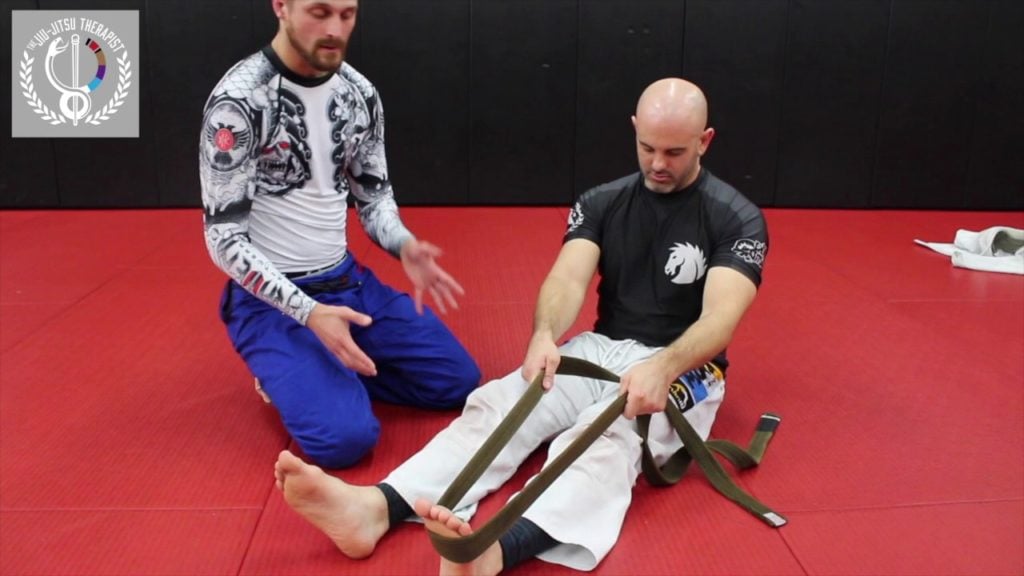
Doing the time might feel like a prison sentence when it comes to training Jiu-Jitsu, but it does not mean that you can’t do anything. On the contrary, you should e looking into rehab protocols and especially rehab exercises.
BJJ knee rehab protocol

One thing to remember is to skip the urge of doing the first YouTube clips that seem like it will help. First of all, do your physical therapy bid, as you should according to the type of injury you have. Next, figure out a rehab training protocol with the help of your physical therapist and specialist that will actually help you strengthen the knee.

Strengthen Up

Speaking of strengthening your knee after a BJJ knee injury, you will need to think not just about the knee, but the entire leg. Even during your time off the mats, your other leg did a lot of the work while you were recuperating. So, you’ll need to bring the injured leg up to par, and then some, if you’re to go back to the mats. If you had surgery done on the knee, this is even more important.

Single leg exercises are the way to go here. First, you should aim to get back range of motion, carefully, while supporting your weight. You can then move on to bodyweight exercises, and isometric exercises that will help you build tendons of steel. Then you will “graduate” to using resistance bands, before finally going on to machines or free weights. At that point, it is time to contemplate a return to that mats after watching all those BJJ DVDs during your time off them.

Your “Back To The Mats” Schedule

This is probably the most important thing you can do to ensure your BJJ knee injury doesn’t re-activate, or you don’t get a new one. As you come back on the mats, you should know one thing – no rolling for at least two weeks, regardless of how ready you feel. In my academy, this is the norm for any injury.

Your return on the mats is going to be purely technical for at least one week. After that time, if you and your instructor feel like you’re okay, you could do some light drills, to see how your knee reacts at a faster pace. Flow rolling, with the instructor only, will follow.

After at least two weeks you can think about position sparring if there was no discomfort during the previous phases of your reintroduction. One or two weeks of position sparring with no issues will mean a complete return to rolling, although I’d refrain from takedowns for the time being if I were you.

Choose Your BJJ Knee Brace

Finally, let’s be realistic. If you had a medium to really serious BJJ knee injury, you’ll need support if you want to train hassle-free, both physically and psychologically. Picking up a knee brace that fits your injury is simply a must and not just any old knee wrap is going to do the trick. Check out the best BJJ knee brace options you have to train pain-free!

But, don’t wear a knee brace forever as it can create the feeling that you are incapable of training without it and you’re 100% healed. Instead, wear knee pads to protect your knees from bruising and to absorb impacts.

What is the recovery time after you suffered a knee injury?

Simple strains can last for up to two weeks.

Injuries like meniscus tears that require arthroscopic surgery could keep you off the mats from one to 3 months.

Major injuries like an ACL rupture, which is probably the most common major injury in grappling, may keep you off the mats for up to a year.

Chronic knee injuries may come and go from time to time and you never know with them. Medications, physical therapies, cortisone injections, etc. may provide relief for some time.

Conclusion

A BJJ knee injury can be something that keeps you home for a week or something that might threaten your entire Jiu-Jitsu career. Being smart about it is the right approach, and following the above protocol will make sure that you get back on the mats quickly and without endangering the injured joint, or any other body part.

Related:

What happens to your knees from a Heel Hook Injury?

What Happens To Your Knees From A Heel Hook Injury?