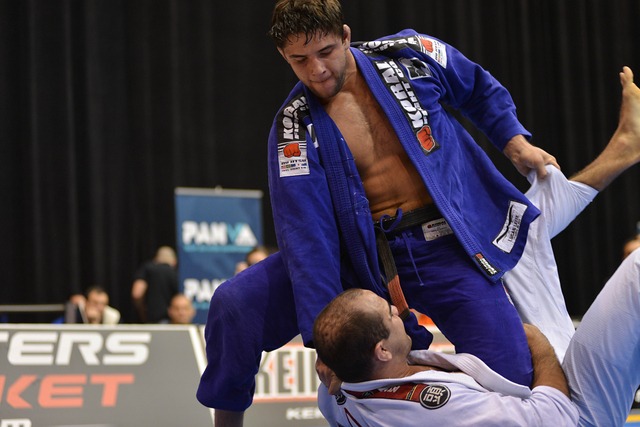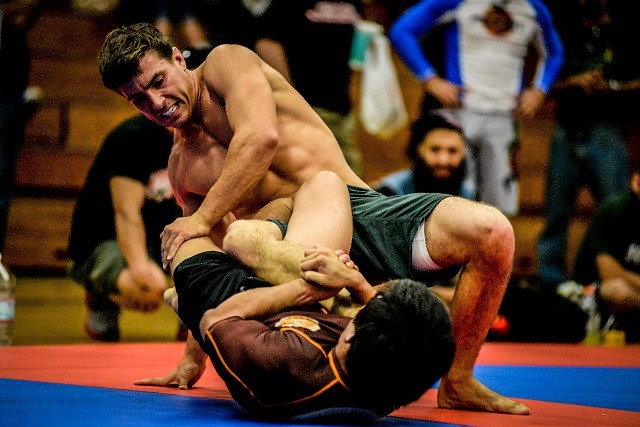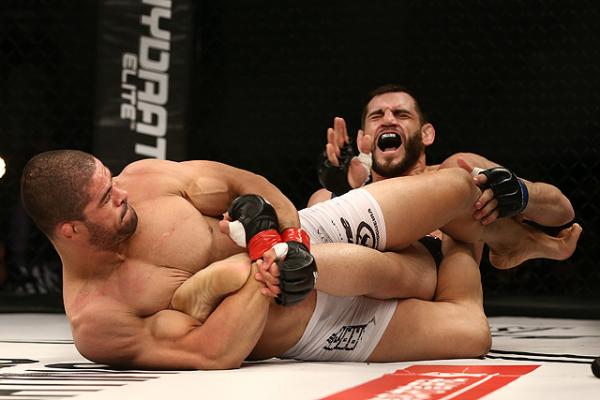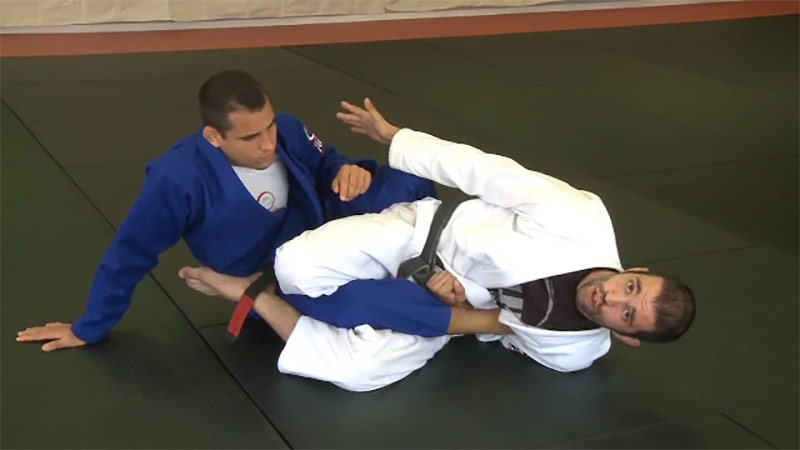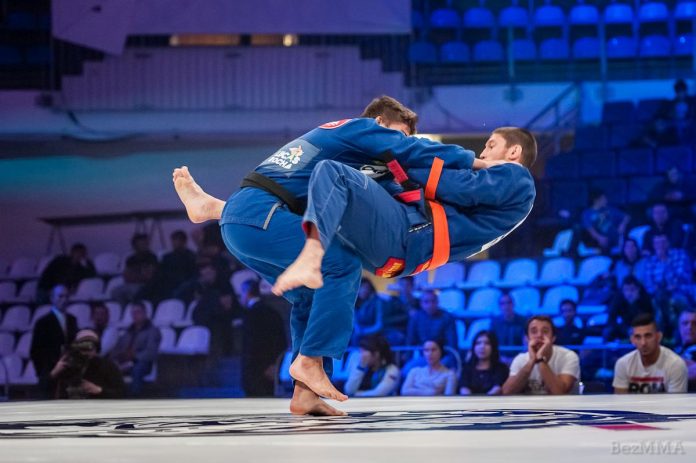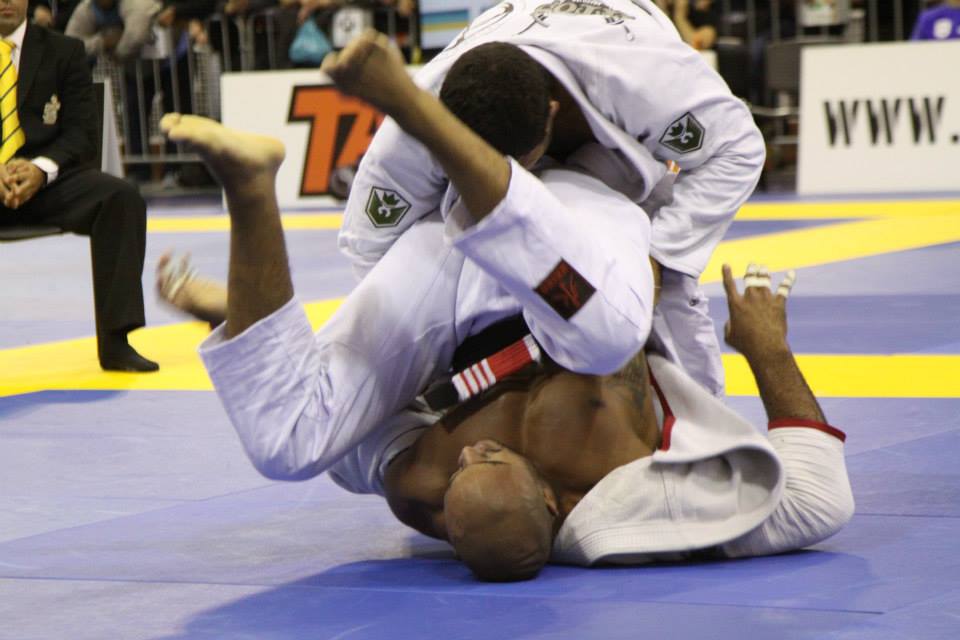




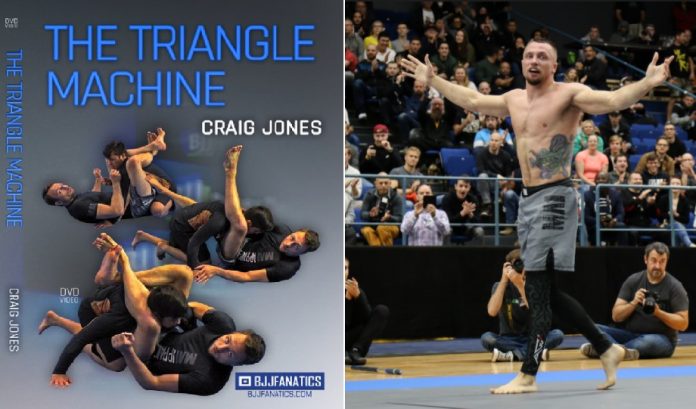
The Triangle Machine – Craig Jones DVD REVIEW

Craig Jones the triangle machine dvd review

Ladies and gentlemen, he’s back! The most exciting grappler from Australia and one of the top competitors of today, Craig Jones is back! Since his meteoric rise to stardom, Jones has been relentless in putting out high-level digital material. So far, Craig Jones DVD instructionals have outlined his grappling brilliance in all aspects of the Gentle Art. From leg locks, through Z-guard magic to lightning-fast back takes, Craig Jones has done it all at the highest level of competition. What you get with a Craig Jones DVD instructional is exactly what you see from him in competition.

Back before the world knee Craig as one of the most proficient leg lockers of today, he was winning matches via his favorite submission. Surprisingly, his favorite submission is not the heel hook or any leg lock for that matter. Craig managed to wind the No-Gi World Championship at brown belt thanks to the use of the triangle choke.jones is extremely well versed in hitting the triangle from everywhere, especially from his Z-Guard. Now, he has come out with an in-depth instructional on the triangle choke, bringing to light some amazing never before seen details! As with any other Craig Jones DVD, this one is a must-have so hurry up and get it before your opponents do!

A Craig Jones DVD Review: The Triangle Machine
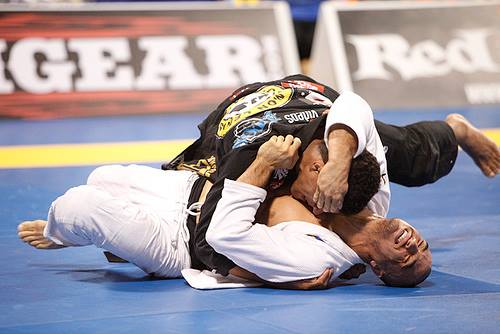
The triangle choke is one of the very basics of BJJ. It is a move that people learn at a white belt and usually sticks with along their entire Jiu-jitsu journey. The triangle has been proven to work at every level of competition and across all competitive formats. However, this choke is anything but a simple submission that has lots of details and nuances to it. it is a true embodiment of the BJJ spirit – technique over brute strength. The triangle choke is a giant killer when used correctly. It also has an astonishing number of just as high-percentage variations that literally take people’s breath away.

The Latest Craig Jones DVD is structurally different from his previous releases. In all honesty, Craig does seem to enjoy switching digital formats with every new release, but this one is quite the change. Instead of the usual 3 or 4 disc instructional that slowly progresses into a complete system, this time Craig goes a different route. This DVD is organized into chapters that are surprisingly long and full of detail. Expect to re-watch this material a few times before you truly get the knack of it. No matter what level you’re at, you’re going to find new and useful information in this digital release.

As always, Craig is very easy to listen to, despite the lengthy chapters. His way of teaching is so encompassing that you won’t even notice how long a demonstration is. Of course, he offers countless follow-ups, adjustments, transitions and everything associated with triangle chokes.

Finishing The Triangle

In a sense, Craig Jones starts his explanation from the end and works his way backward. When learning submissions, this is according to me, the best way to approach the subject. You need to know exactly what you’re looking for when you’re entering a position, so it makes a lot of sense to learn the finishing sequences first. This is exactly how this latest Craig Jones DVD instructional is structured.

A crucial detail that I found very useful from this DVD was adjusting the triangle before locking in the legs. What Craig demonstrates is the best way not only to keep the triangle structure but also tighten it up before you even transition in for the kill. Although it goes pretty much against everything you’ve learned about the triangle so far, it has worked for Craig. So far, it has also worked for me at the gym so there is a method to the madness, even though it may only be apparent to Craig.

Top Position Triangle Choke Setups

What really stands out about this Craig Jones DVD is the focus on entering into the triangle choke from top positions. Craig demonstrates plenty of triangle entries from positions that are usually not connected to the triangle.

First up is side control. Craig shares a very original way of getting one of the best BJJ chokes from one of the most often used positions. While other triangle setups from top side control are usually telegraphed, Craig’s take on it is not. It is a sneaky and subtle way of slapping on the triangle choke before your opponent has an idea of what’s going on. Oh, and it is going to work for everyone. Craig shared details of how to get the choke regardless fo body type or size.

Next, Craig connects two of the most dominant positions in Jiu-Jitsu, the back and the mount via a triangle choke! He offers great insight on how to set the choke up while in the mount. As if that wasn’t enough he also offers s a triangle variation from the back. The best thing is that the triangle between these two positions is interchangeable. This means that f you get it from the back, and you fail to finish it because you still haven’t seen every little detail on the DVD, you can just transfer to mount and finish it from the top.

Flying Triangle Counterattacks

As I pointed out earlier, the DVD starts with finishing details so you know where you need to land. In typical Craig Jones fashion, the instructional has some wicked entries that you haven’t seen before. Well, you have, but only if you saw Craig Jones at the ADCC.

What I really, really like is his triangle choke follow up to a kneebar submission. With people hunting leg locks left and right, defense against these submissions is also evolving at a fast pace! As such, hitting a kneebar is getting more difficult by the day! Luckily, Craig has a reverse triangle option off an unsuccessful kneebar attempt. Another move that is slightly counter-intuitive but undoubtedly works like a charm! Which gets us to the final, and most attractive part of this Craig Jones DVD.

When Craig fought at the ADCC last September, he managed to hit a sweet flying triangle that nobody saw coming. Now he dissects his move and how you can do it as well. I’m not really big on flying submission but I got to say, I am tempted to give this one a try! But that’s not all. There’s also a move Craig calls the low flying triangle. it is done as a follow up to an Uchi Mata attempt and looks to be a very formidable weapon in both Gi and No-Gi!

You Might Also Be Interested in:

How To Torture Everyone With Crushing Knee On Belly Pressure

Knee On Belly Crushing

Out of the many uncomfortable positions that BJJ has to offer, there’s one that remains above them all. No matter how many new ways grapplers imagine to torture each other in training, nothing beats the knee on belly position. A far as discomfort, pressure, and sadism go, knee on belly is the peak. This position ensures that you keep your opponent under enormous crushing pressure while you do…well, nothing. the idea is to keep them struggling until they give away a submission for free. It’s like taking candy from a baby. Perhaps even easier, provided you understand how to be heavier than a mountain from knee on belly.

The first thing to understand about the knee on belly position is that it is not a position of safety. Structurally, it offers a way out for your opponent, so you should always be ready to switch. The bonus is that you either get it on the opposite side or transition to a superior attacking position. Wherever you end up, you’re still going to dominate. Another great aspect is the submission options. Everything from chokes, armbars all the way to heel hooks can be set up from the knee on belly. Just take a look at the success Lucas Lepri has had with it, and he’s only a lightweight!

How To Maintain The Knee On Belly Position

Most lower belts are very familiar with the crushing and inescapable pressure from their instructors and/or higher belts. The knee on belly position is unlike any other side control variation. In fact, it is considered a position on its own and earns 2 points under IBJJF rules if you can hold it for 3 seconds.  It is extremely effective and easy to get to. The low risk-high return principle is why most higher belts tend to favor this position over other “more” dominant ones.

The knee on the belly can be dated back to Judo, where it is known as uki gatame or ‘the floating hold’. This is actually a perfect name for the position and should be the goal when looking to master it. The ability to float and smoothly transition while maintaining pressure is a sign of very advanced grapplers.

Structurally, the only points of contact from this position are the shin of one of your legs and the palms. While using the shin across the hips is an effective form of control, it does limit your movement and weight distribution capabilities. It is far better to have the shin across their belly, at an angle that puts your knee at their sternum. Grip placement varies according to the situation. Gi or No-Gi, there are a lot of grips available to control, transition or attack from the knee on belly.

If you’re using this position correctly then you’re driving down into your opponent with all your weight. The goal is to make it hard for them to breathe and force them to present openings for submissions.

Getting Into The Position

The knee on belly position mainly serves as a form of transitionary dominant control. What this means is that it is often used as a link between the other dominant top positions. In order to successfully use it in such a manner, we have to understand how exactly to enter into the position in the first place.

You can enter the position from a wide variety of scenarios. It is a great pit-stop on your way to mount after a throw or a guard pass. You could also enter with ease from any side control variation. For more advanced players,  even retreating from mount is an option, when you want to maintain a high level of mobility while still placing tremendous pressure on the opponent.

With a knee on belly, the focus is more on transitions in response to your opponent as opposed to a pinning control. Further, many guards passes end up directly in the knee on belly position. Switching from one side to another is what everyone looking to maintain the position should master. this is going to keep your in control while tiring our your opponent. The crucial things are timing and weight distribution. same side-to-side knee on belly switch in a different way.

There are no right or wrong ways of going into or out of the position. However, keep in mind that some ways offer you great control, while others afford you mobility. Using them under the correct circumstances is what truly matters and brings results. When you run into someone who is so tough they can endure the position without giving in is where transitions come into play.

Knee On Belly Submissions

If you are a submission hunter, the knee on belly position has to be in your arsenal. There are many high percentage submissions from there, particularly with the gi. Armbars, both near and far- side and readily available with next to no effort. Chokes, like the baseball choke, triangles, and other lapel chokes are also quite standard for the position. For those braver, and mostly doing No-Gi, there are also great entries into Ashi Garami positions that result in tight leg locks. All in all, if you like to finish off your opponent, then knee on belly posting is for you.

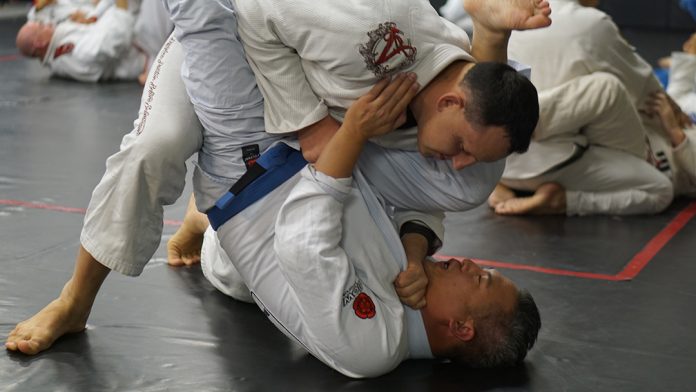
The triangle choke from the knee on belly position is one of the most effective submissions available. This move is best used as a sneak attack. It is unorthodox in nature and will catch many opponents by surprise.

For a sneaky and powerful attack, you should always be open to a good lapel choke when in the knee on belly. The Samurai choke, Brabo, baseball choke or even simple collar choke variations are all available.

When looking for an armbar, it is of the utmost importance to make sure you isolate the limb as best you can. The position offers great stability that allows you to slide into position easily when you know what you’re doing.

Don’t stress if you don’t know much about the position when you start to experiment with it. Mastering the knee on belly position takes practice but it has a great return. It’s one of those “basic” but advanced techniques that is very often the deciding factor in a match. So, get out there and start drilling the position!

DVD and DIGITAL Instructionals Related to Knee On Belly :

  1. LUCAS LEPRI KNEE ON BELLY PART ONE
  2. LUCAS LEPRI KNEE ON BELLY PART TWO
  3. Knee On Belly Domination by Stephen Whittier

Top And Bottom Baseball Choke Setups For Jiu-Jitsu

Grappling Hacks For Finsihing All Jiu-Jitsu Submissions

7 Awesome Tips To Make You A Formidable White Belt

Safety Guidelines for Training BJJ Leg Locks

BJJ leg Locks Safe training

Leg locks are the great equalizer in BJJ. Or at least, they were until a short while ago. Now BJJ leg locks are being trained at every academy around the globe. They’re now the focus of competitive grapplers, instead of being shunned as ineffective and dangerous. While all competitive grappling formats still do not allow all leg locks, people do tend to train them on a regular basis. This raises the questions, how to safely train leg locks since they’re so potentially dangerous?

Well, seeing how top-level leg locker the likes of Dean Lister, Craig Jones, and the Danaher Death Squad are still up and about claiming the legs of opponents in tournaments, there is obviously a safe way to do so. Actually, training BJJ leg locks is no different than training any other BJJ move. All it takes is some (not much) common sense.

The John Danaher Leg Lock System Explained: https://bjj-world.com/john-danaher-ashi-garami-system-leg-locks/

Submission-only events during the last few years have featured many grapplers dominating with leg locks. The trend among most BJJ academies was to ban beginners and even some advanced level students (like blue and purple belts) from performing leg locks in training. IBJJF rules prohibit many BJJ leg locks in competition, especially below the brown belt level. Those schools and competitors who are focused on IBJJF tournaments still spend next to no time training techniques and strategies that do not contribute to tournament success. So, how should BJJ students approach leg locks training? After all, the legs make up half of our body and jiu-jitsu is all about submissions, isn’t it?

The Risks Of Practicing BJJ Leg Locks

As with all good things, politics is the main culprit behind the ostracization of leg locks from BJJ curriculums. One such source of grudge towards leg locks is when Helio Gracie’s students lost a challenge to Oswaldo Fadda’s due to leg locks. The leg locks were seen as cheap moves, done by people with insufficient knowledge of technique. Doing leg locks at tournaments a couple of decades ago would make you the target of shoe-throwing. In fact, one such instance happened to Erik Paulson, a catch wrestler with a great leg locking game, back in the day.

BJJ Leg Locks Injury

Inherently, the logic behind the fear of BJJ leg locks was the lack of control of positions. With armlocks, there is usually more pain before any damage occurs. Conversely, the opponent has plenty of time to tap out and avoid injury. The presumption was that with leg locks it was the other way around. There is discomfort and not much pain in many leg locks (especially heel hooks) until there is a pop. In all honesty, this was true up to a point. With a control-based approach to leg locks, though, all this goes out the window.

A Masterclass On All Leg Lock Positions And Submissions: https://bjj-world.com/leg-locks-ultimate-guide-positions-submissions/

Students that are still inexperienced in grappling, have less understanding of the limits of their bodies. They can often be caught in a submission and yet may not feel like they need to tap. Suddenly there’s a pop and a doctor saying “Sorry to tell you this but you’ve torn a knee ligament. No jiu-jitsu for you for the next 6 months.” Nobody wants to see this happen. All it takes is adhering to a few simple principles and leg lock training is not going to be different than training any other Jiu-jitsu technique.

Safety Rules For Training Leg Locks

To begin with, it is crucial that grapplers understand the anatomy of the legs. net, they need to grasp the mechanics behind controlling the lower body and executing submissions. To begin with, the ankles and knees are often easier to access and attack than passing the guard. While achieving mount is great, so is achieving the 4/11 Ashi Garami position. Furthermore, leg locks can be a great equalizer between smaller and larger opponents.For a complete grappling game, you need to have an understanding of all aspects of jiu-jitsu.  This very much includes BJJ leg locks.

While leg lock raining can be safe, some safeguards still need to be in place. One of them is listening to the instructor and obeying academy rules. If you’re a blue belt and heel hooks are allowed from purple up, stick with foot locks. After all, leg locks also have a hierarchy and you need a strong base before going deeper into the “dark side”

BJJ Leg Locks Safety

When you attack the legs, look for control before anything else. Only then gradually, slowly apply the lock to allow your partner adequate time to tap. If you are caught in a leg lock yourself, do not thrash about wildly. Accept that you have been caught and tap. Remember that tapping is a very viable and 100 % effective defensive technique in BJJ. Also, always use the catch-and-release technique against less experienced, opponents. No need for a tap at any cost, once you know you had them deep enough to finish.

Remember that investing time in leg locks is very important. Don’t be a white belt at leg locks and a brown belt at everything else in BJJ, If that’s the case, you’ll have al lot of catching up to do!

10 Best Leg Locks DVDs and Digital Instructionals

Legal BJJ Moves That Could Leave Grapplers Crippled

Crippling BJJ Moves

Everybody watch out! Do not do leg locks because they’ll surely destroy your partner’s leg joints! If you do a neck crank, you’re out of the gym! never do the twister or you’ll make your partner suffer from a long-term injury! The can opener is the most devastating BJJ move and is rightfully banned from training and competition! News flash! There are way more “legal” moves that are much more dangerous than the BJJ moves outlined above.

Training Brazilian Jiu-Jitsu is about control, over both your partner and yourself. In truth, the most dangerous thing in BJJ is the human factor. People not paying attention hurts others, not the moves. In order to balance the scale, we’re going to look at some of the most dangerous moves in Jiu-Jitsu that are legal at virtually every level.

First and foremost, every grappling technique has the potential to result in an injury.  We’re talking about a combat sport that is aimed at manipulating the body of an opponent in ways that cause immense pain. That said, if every BJJ move was too dangerous to train, we wouldn’t be able to practice the art. A submission or position is only as dangerous as the people involved in its execution. The truth is that there are, statistically, way more dangerous “legal moves” than their illegal counterparts.

Potentially Crippling BJJ Moves

The Stack Pass

The stack guard pass is a very basic pass all white belts learn during their first few months of training. It is also a move that is seen in competitions as often as any other Jiu-Jitsu technique. People from white to black belt are doing it, and it does result in potentially life-changing injuries more than it should. The stack pass looks to be relatively safe but injuries do tend to happen. Depending on the application of the move, cervical spine injuries are a real threat.

Gabriel Diniz was 15-year-old fighting in the adult division, who subsequently lost the use of all of his four limbs. His opponent, a much bigger and stronger grappler,  attempted the stack pass on Diniz. The opponent lifted Diniz before stacking him straight on his head. He then threw his whole body weight on him, looking to pass the guard. The result was a very severe neck injury for Diniz, which unfortunately left him paralyzed.

Learn The Proper Mechanics Of the Stack Guard Pass: https://bjj-world.com/stack-guard-pass-bjj/

Dangerous BJJ moves stack pass

The Biceps Crusher

A biceps crusher (also called a biceps lock or biceps slicer) is a compression lock on the inner muscles of the upper arm.  Basically, it involves compressing the biceps into the humerus. An effective biceps slicer can be applied by using one of your shins or forearms as a fulcrum on the opponent’s arm.  Placing your shin, for example, inside of the arm by the elbow creates a fulcrum. The submission is applied by flexing the opponent’s arm over the fulcrum. It is a devastating injury that can tear the biceps muscle in half.

The biceps slicer is a very potent armlock submission. Very often it is a natural continuation of an armbar attempt. When applied correctly,  the leverage causes an elongating and separating tension in the elbow joint. In Brazilian Jiu-Jitsu competitions, the biceps crusher is an illegal technique in lower level divisions.  It is legal for execution from the brown belt onwards. It’s a dangerous technique because the reaction time between the pain and the tap is very short. Once it’s locked on, inexperienced grapplers might attempt to tough it out and resist. This only results in a debilitating injury, like the lock, which comes on very fast. AS far as dangerous BJJ moves go, this one is certainly top of the charts.

The Estima Lock

The Estima Lock is quite the controversial footlock that was created by the BJJ standout Victor Estima. Victor Estima won all his matches by Estima lock at the 2011 World Championship in No-Gi. The move, however, is legal both in the Gi and in No-Gi. Not only is the Estima lock legal in every discipline, but it is also allowed at all belt levels as well.

The Estima lock mechanics are quite simple, yet brutally effective.  In essence, the point is to put a Rear Naked choke grip on an opponent’s ankle and trap the foot under your belly. The submission is due to torsion, very similar to the toe hold. the Estima lock is, however, stronger and faster than a toe holds not leaving much time for the opponent to tap. Usually, a scream follows the submission faster than a tap does, but by then it is too late.  Plenty of feet have been destroyed thanks to this move and due to people not recognizing the need to categorize it as an advanced technique.

Jumping Guard

Speaking of unrecognized dangerous BJJ moves, nothing is worse than the simplest one. Even John Danaher himself defined takedowns as the most dangerous techniques across all grappling martial arts. Jumping guard is certainly at the pinnacle of this category.

Under IBJJF rules, jumping guard is illegal for white belts. In truth, it should probably only be legal from the brown belt onwards. The dangers of the move are so apparent that they’re brushed aside as inexperience. However, it only takes a small error and even the most experienced grappler can succumb to serious injury. With many moving variables, this move is actually one that is legitimately too dangerous to even train safely, let alone use in competition.  There are huge risks for lower back injuries, knee injuries, and even worse. Head trauma from being knocked unconscious from intentional and unintentional slams is also a huge concern with this move.

https://www.youtube.com/watch?v=BYdltqB3-Q4

Wrist Lock Submissions

Even though these are only legal in the competition after the blue belt level, most grapplers learn some form of wrist lock in training well before that. As submissions, wrist locks are incredibly effective. However, at the same time, they’re very dangerous to your opponent, since their effectiveness is closely related to the manner of application. In that sense,  wrist locks need to be fast and explosive in order to be effective. This, in essence, means is that it works better as a surprise attack than a controlled positional one. When someone attacks your wrist joint suddenly, it is most likely relaxed, leading to even greater damage. Another point to consider is the range of motion. Generally,  the wrists move in quite a short span of motion, which makes it really hard to tap early.

“Flying” Submissions

Just by having the word “flying” in BJJ moves is going to cause cringing in purple belts and above. The reason is that these moves are dangerous in their very essence and are rarely worth the risk.  Take the flying triangle submission as an example. The dangers to the guy attacking are really high, with potential falls on the back or head that lead to spinal injuries. If aimed poorly, the grappler who is attacking might end up kicking the opponent in the face or laying on their head.

There’s an even more dangerous representative flying BJJ moves, and that is the flying armbar. The treble for the attacker here is that their body is at a different angle to the flying triangle. This means that it is way easier to cause an injury to the spine when falling. For the guy being attacked the same applies, they might get kicked or fall badly on top of the attacking opponent.

10 Best Leg Locks DVDs and Digital Instructionals

Dean Lister’s Most Lethal Legal Straight Ankle Lock Explained

Tarikoplata – The Shoulder Lock Nobody Can Defend

Brown Belt Knocking out His Opponent With Crazy SUPLEX at IBJJF Austin

How To Be Completely Ready For A Jiu-Jitsu Competition

Jiu-Jitsu Competition Tips

Competing in a Brazilian Jiu-Jitsu tournament is a real thrill! You get to go against multiple opponents (provided you win) and put your skills to the test. Apart from your first couple of Jiu-Jitsu tournaments, which are learning experiences, going unprepared is just a waste of your time and money. That said, preparing for a Jiu-Jitsu competition is not a simple thing to do. You need to be technically prepared, well-conditioned, on weight and tactically sound. Each one of these areas, and more, are going to get tested at a Jiu-Jitsu tournament, you can rest assured of that. So, when it comes to preparation for competition, what you need is a good plan and some time to put it to action.

When you’re getting ready for a Jiu-Jitsu competition, there’s no need to go full MMA-camp style and forget about everything. Doing three sessions a day while working a full time job is going to break you down. No matter how many “magical” pre workout drinks you gulp down, more doesn’t necessarily mean better in Jiu-Jitsu. Just like a match, getting ready fro a Jiu-Jitsu competition needs to be methodical and adjustable. Let’s take a look at every aspect you need to consider in order to maximize your chances of standing on top of the podium.

Should You Brag With A Medal You Didn’t Fight For In A Tournamenthttps://bjj-world.com/medals-without-winning-tournament-people-praise-success-social-media/

Jiu-Jitsu Competition Preparation

Competition day is a scary affair. Most people see it as the ultimate day of proving how good they actually are. This is not a wrong way to see it, but it is not the only way. While the point of a competition is to put your skills to the test, the real goal is to succeed in utllizing what you’ve trained. If you lose a match but managed to pull off a sweep you’ve been working on relentlessly, that’s one goal complete, despite the result.

In order to be able to have the peace of mind needed to apply your techniques and tactics, you need to be ready. Preparing for a Jiu-Jitsu competition is no a one way street, however, You need to be completely prepared in multiple faucets. Ok, you’ve trained your ass off on the mats. You also have the gas tank to match and a high level of strength. But those are just the physical aspects of preparation.

There are certain things you can do in the few days leading to a Jiu-Jitsu competition that are going to ensure you get the best result. They include proper nutrition and hydration, a positive mental attitude and solid fight strategies. However, remember that things that work for some grapplers, won’t be as effective for others. The following are just concepts that are applicable to everyone. if you’d like to go deeper into any one of them, talk to your instructor. They’ll know what to do.

Jiu-Jitsu Competition

Nutrition Essentials

Let’s tackle the elephant in the room first. Cutting weight can make all the difference in a grappling match. It needs to be done with surgical precision in order to keep you sharp and focused. A bad weight cut means you’re already down on points. In terms of cutting weight, if you’ve done it successfully before, stick to the protocol you know. There’s no point in trying out a new protocol that you have no idea complies with your metabolism. IF you’re new to it, your best bet is not to try to lose more than a few pounds, otherwise it’ll be the only thing you’re thinking about.

On a more general nutrition note, what you eat in the few days leading up to a Jiu-Jitsu competition really mattes. Whatever you’ve been doing thus far, needs to remain the same. There’s no point in switching to the Gracie Diet three days out and thinking it’ll do wonders. It’ll actually, just do the opposite. Our bodies hate adaptation and need a long time in order to achieve it. Any shortcuts you attempt are almost certainly going to backfire on you. So, stick to what you’re doing and make sure you’re n weight as early as possible.

The same goes for supplements. Don’t give something new a try just before a tournament. It might have effects that are completely opposite of what you’re expecting. Furthermore, it may mess your weight cut up as well. The period before a tournament is not one for experimentation.

A Good Night’s Sleep

Here is another huge one – get some sleep. Sleeping before a tournament is no easy task for anyone. nerves are going to make it almost impossible to shut your mind down enough so that you get  a good night’s sleep. Here’s an example. When you see someone that has not slept the night before, what is the first thing they let you know? They say that they didn’t sleep. They might even say it before the even say hi. It has that much of a central effect on someone’s attention that it’s impossible to focus on something else. Now imagine having to compete in such a state.

However, you have to find the sweet spot in terms of sleep. Too much and you’ll be all tired an lazy, too little and you won’t have the strength and focus you need. Basic is the best – everybody should try to sleep eight hours a night, no exceptions. The night before competition shouldn’t be any different.

Nerves do play a large role in being able to sleep, so if you can’t there is an easy strategy. If you can’t sleep, just stay in bed with your eyes closed. As long as you are in bed and not doing anything, you will be able to rest enough to do your best the next day.

Even if that happens, try to not worry too much — you might end up having a great performances after barely sleeping the night before due to how nervous you are. However, try to make this the exception rather than the rule. Competing after a night lacking proper rest won’t do much good when it comes to longevity in BJJ.

Strategy And Teammates

This one is easy – always stick with what you’ve been using in training the most. Normally, you shouldn’t try anything different on the day of a competition. That is, with the exception of going all out when all of your main moves are failing. A common mistake is learning something the week of the tournament and trying to use that position in the competition. Maybe it can work but in reality, the chances that it won’t are very high.

Furthermore, always pay attention to the advice you get from your corner but you also try to filter what you listen to during the fight. Many times your teammates don’t even know your game plan. When the instead scream out tips that fit their approach instead of  yours you should stay the course and disregard them. While it’s good to listen to your coach and some teammates at times, it’s also beneficial to have faith in your techniques. It helps if you choose your main corner man carefully and discuss your gameplan before the competition.

Jiu-Jitsu Competition Tournament

A Few Words On Mental Attitude

Some people don’t get nervous at all, while others get very nervous. A useful tip is to always remember that you are there because you want to be. Try to enjoy that moment.

The training is the toughest part. A Jiu-Jitsu competition is the fun day. You worked hard, and you really dedicated yourself. Now is the time for you to do just your best and enjoy the tournament. Also, remember that getting a little nervous is actually good, because it means that you are ready to go.

Sometimes you wake up feeling great, like nobody can stop you but when you get to the competition you lose in the first match. Other times you wake up nervous, and you go there and dominate everyone to win the tournament with a lot of submissions. So it doesn’t matter too much how we are feeling. What really matters is going there and doing your best.

Never Skip The Warm Up

Always, always, always warm up, thoroughly and properly! What happens a lot is that we are supposed to fight at a particular time, and it ends up getting delayed. It may even get delayed by 30 or 40 minutes, enough to get cold again. Depending on the tournament, it may be delayed by hours. That’s why your best bet is to do some stretching and get your body moving when they call up your division. It doesn’t have to be anything crazy, just to make sure you start getting that fire to go. Just don’t go doing deep stretches and Yoga because you’ll end up with overstretched muscles. Instead, look to mobilize and loosen up.

Once they call your name to compete, that’s the time when you really turn the warm up a notch. Normally when they call you out, you still have five or 10 minutes. Be sure to plan ahead and use this time to go through your best warm-up routine.

When Are You Experienced Enough To Be A Jiu-Jitsu Instructor?

Jiu-Jitsu Instructor BJJ

Getting through the white belt days of Brazilian Jiu-Jitsu is a difficult task at best. Surviving blue belt, for some reason, seems to be an even harder one. People need good teachers in order to correctly learn the Gentle Art. Finding that one teacher that is going to suit your need is as important as selecting the right academy and the perfect Gi for your body type. A good Jiu-Jitsu instructor is more than just a trainer. Your Jiu-Jitsu instructor should become your friend and a true teacher, not just a figure that hands out training assignments. The teacher role extends far further from just demonstrating moves in class. Teachers need to know how to pass the knowledge along.

In Jiu-Jitsu, where you’re constantly in positions that are unnatural for the body, the ability to do this becomes an art form. This is without even touching the subject of BJJ philosophy or preparing students for tournament.

Being a Jiu-Jitsu instructor is a full time job that requires passion and dedication. Everyone can demonstrate martial arts techniques. However, not everyone is fit for the mantle of Jiu-Jitsu instructor. The art requires a certain level of technical knowledge before one can even think about assuming a teaching role. But what is the cutoff point, below which people are still not prepared to teach? Previously, we discussed how belt levels do not truly represent the depth of knowledge a grappler has. So, how do we decide when a grappler is ready to give back to the Gentle art and start teaching others?

Why The Color Of the Belt Means Nothing In BJJ: https://bjj-world.com/jiu-jitsu-belts-true-rank/

When Should You Begin Teaching?

It is common among the Brazilian Jiu-Jitsu community to consider purple belts as ready for teaching. This does make sense, since purple belt is the first “advanced” belt in grappling. Purple belt is a lot about refining yourself and crating meaningful connections between compatible techniques. You start to chain things together and evolve your personal game. It goes beyond just being able to perform a lot of separate techniques. A purple belt starts understanding the philosophy o the art at a fundamental level.

Sometimes, fresh purple belts describe that they lacked focus during the blue belt tenure. In terms of their game, they often describe refer to not having a coherent style of grappling. Namely, a style is often shaped by the techniques one is exposed to in addition to what they choose to add based on their personal preference or an inkling. This is why you’ll rarely see two grapplers with the exact same style and technique details. Especially after the blue belt days.

So when is someone ready to pass on the knowledge? What level should one be before they assume a teaching role?

Many say that purple belt level is just it. The idea behind the notion is that this is the time when a student can be considered advanced. It is not uncommon for solid purple belts to get the better of brown and black belts on a regular basis. In fact, many world-class competitors took up teaching at exactly this level. But, there are also examples, like Ze Radiola, of people who started teaching from the time they were blue belts. So, is purple belt truly the condition for someone to start working as a Jiu-Jitsu instructor?

Jiu-Jitsu Instructor BJJ

Becoming A Legitimate Jiu-Jitsu Instructor

Rickson Gracie has one of the best takes on when someone is ready to receive their blue belt. According to him, once someone get sufficient knowledge of facts, they can leave the white belt behind. In truth, blue belts usually have an understanding of what Jiu-Jitsu is, as broad as it might be. From there, all the way to black belt, it is all about perfecting each and every part of the art as much as possible. After you get the blue belt, getting to a black is only a matter of time, dedication and perseverance.

The next level, purple belt, is when someone enters the “advanced” levels of Jiu-Jitsu. Generally, people tend to pair purple belts with brown and black ones when there’ a lack of competitors at tournaments. In fact, back before BJJ got famous worldwide, there were no belt divisions in competitions. People looking to fight were either labeled as beginners or advanced. Purple belts were always categorized as advanced during those times.

Those who are old enough to remember the old days of ADCC are going to recognize this pattern. In it’ early days the “Olympic of BJJ” had beginner, intermediate and advanced categories, the last one made up of purple, brown and black belts. So the conclusion is that if purple belts are advanced enough to compete against black belts, they’re also advanced enough to teach.

The bottom line is that even a white belt can teach. However, a colored belt brings about a sense of authority for students. As such, there’s not one school in the world where a purple belt teaching class is frowned upon. A good instructor is not necessarily a black belt. In fact, a purple belt might be better in certain circumstances!

Teaching Is Not For Everyone

Now that everything is clear, let’s look as tome of the markings of a great Jiu-Jitsu instructor. First and foremost, make sure everyone can understand what you’re teaching. It is essential that an instructor speaks clearly and in context with the techniques they’re teaching.

Furthermore, it is very important to be aware of the time. People do like details but if you spend 20 minutes explaining a move and students drill it for 3 minutes each it tends to annoy people. It shouldn’t be the other way around, but a solid Jiu-Jitsu instructor has balance over teaching, drilling and rolling time.  In those terms, having a predetermined curriculum is of great help. That way students know what subject they’re own and there’s a clear system in place.

Ju-Jitsu Instructor

Also, make sure you reflect on what it is you’re demonstrating to students. Ask yourself if you did the best you could. Remember, instructors learn as much as they teach, so use every opportunity to improve. Actually, so far nobody has mastered BJJ completely, which means everyone has something to learn. Even top black belt competitors can learn a thing or two from Danaher, can’t they? So make sure you always keep learning, talking to other instructors, attending seminars, collecting DVDs etc. After all, it’s all about the lifestyle, right?

Pressure Passing For BJJ: The Stack Guard Pass

Pressure Guard Pass

There are many ways you can pass the guard in BJJ. You could do it standing up, half kneeling or even kneeling. You may choose to take the aggressive approach with speed or go slowly and methodically applying pressure. All of these approaches have their merits in BJJ. However, most people tend to find they’re stele in one of them, only utilizing the others occasionally. This holds true for guard passing techniques as well. A good guard pass tends to remove space between you and your opponent before breaking the structure of their guard and passing the legs. One great way to do so is to fold your opponent in half. The best tool to do so is a pressure guard pass known as the stack pass.

The stack guard pass is one of the staples of pressure passing in BJJ. This guard pass has been proven to work at every level of competition grappling martial arts have to offer. Pressure passing is arguably the most uncomfortable way to pass someone’s guard (for the bottom person, at least). The stack pass brings this to a whole different level, causing the opponent to bear both your and his weight. It is a surefire way of passing that has subtle nuances to it.

Tricks For Passing The DDreaded Worm Guard: https://bjj-world.com/worm-guard-pass/

Deconstructing The Stack Guard Pass

The sense of being able to control someone and make it uncomfortable is somewhat sadistic. It is, however, a feeling unlike anything else. The stack pass allows you to feel and do just that when performed correctly.This pass works well when you open the guard of an opponent. Standing passing, and/or knee slice pass is the best places to start from. That said, the stack guard pass is not limited to just these two starting positions. Once you get the knack for it, you’ll be able to transition into it against every guard variation.

When your opponent is in open guard, place both hands under their legs at the same time. The goal is to place both legs on your shoulder. If you keep them on your arms, you’ll find it hard to control the legs, meaning you won’t be able to pass.  In order to get your opponent’s legs on your shoulders, you may have to get really low. This may even mean you get your chin down to the mats, for a short while. Your face may, in fact, have to be right at your opponent’s crotch.

Next, make a gable grip with your hands around both of your opponent’s legs. Keep your elbows tight against your opponent. To create pressure you have to get on your toes, lift your knees off the ground, and drive your head forward.  When your opponent’s hips are off the ground, place your knees under their hips and sit back down on your feet.

Grip your opponent’s collar on one side (or shoulder in No-Gi) so that your forearm is across their throat. The other hand grips the belt or top of his pants and lifts up. Staying on your toes, thrust your hips and chest to complete the guard pass.

Variations Of The Stack Pass

If you look at stacking, the only “innovation” lately has been around what happens after you get the opponent on their shoulders. The “traditional” thing is pinning the arm with a knee and throwing the legs aside. New “moves” include leg dragging or spinning upside down to take the back. A lot of these moves look great and sometimes work. Ultimately, if you can get someone on their shoulders, lots of stuff can become high percentage.

Murilo Santana has modified “traditional” BJJ to turn the humble stack into a lethal weapon. His simple innovations change the whole complexion of stacking. First of all, Murilo starts on his feet. After walking in he keeps his head tucked in, either pinning the head or the hip of his opponent.

The immediate problem with the stack guard pass, getting someone on their shoulders, is dealt with. With all weight pressing down, the guard play is immediately working against gravity. Compare this to starting on your knees and trying to pull someone on to your knees or just up in general, where you are the one working against gravity.

This variation is something that can be successfully used against people who are known for being ridiculously flexible. When you’re unable to stack your opponent fully, a simple trick is to dip to the side and “burry” your head to the chest, bypassing the flexible legs problem.

What To Do After You Pass

One thing you can do is kip the pass and go directly to the back. These are advanced techniques and require significant drilling to master.  Back takes from the stack guard pass are a part of a much larger game and are not intended for everyone.

The stack pass is an uncomfortable position if you’re on the receiving end, which results with errors being made or positions being given in order to relieve some of the pressure. These reactions are exactly the ones that the passer looks for when setting up submissions off of the pass.

Going forward, these cool and very effective arm locks are always there for the taking. When your opponent is defending the stack pass they open up these submission opportunities for yourself.

Getting someone on their shoulders and trapping them there is the fundamental problem. This issue has to be addressed correctly when performing this pass. Actually, this needs to be the primary focus when learning the stack pass. Leave inventing flashy “finishes” for late, when you’ve actually passed. That way you’ll know exactly what you’re doing. Remember that simplicity is key to a successful Jiu-Jitsu game.

This is one of the reasons why stacking gets a bad reputation is when we see is a bigger/stronger passer bullying a defensive guard player.  Smaller grapplers should avoid getting caught on their shoulders during “balling up”. Apart from the submission threats off the stack pass, gruesome injuries are possible as well.

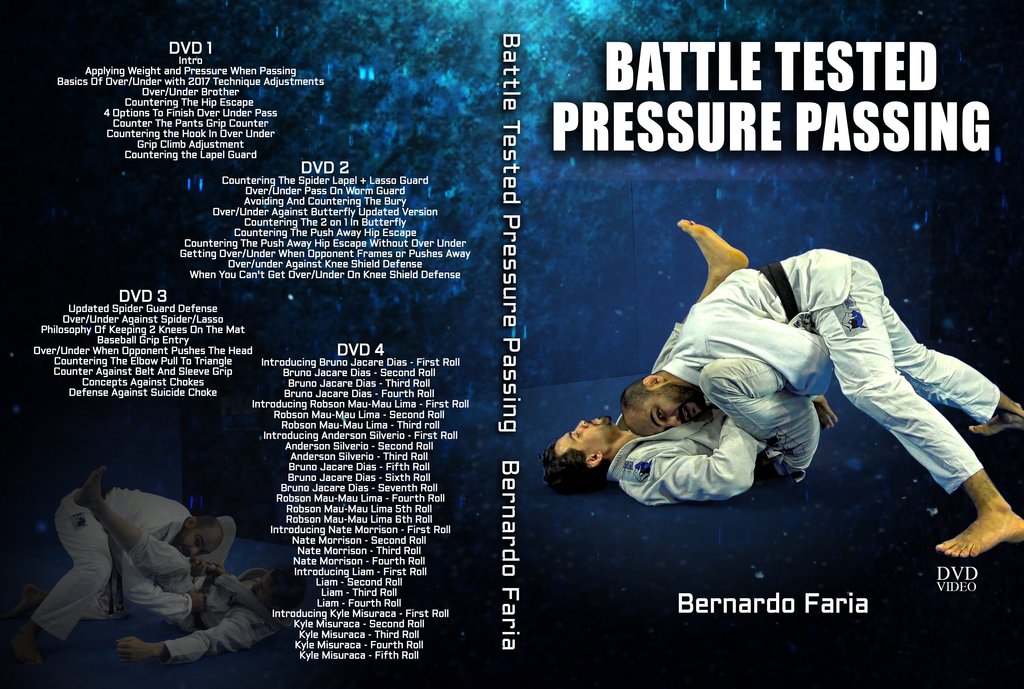
If you’re about pressure passing or you want to focus on that type of BJJ Gameplay you should consider learning from Bernardo Faria. Bernardo, 5x World Champion is the worlds most proven pressure passer. The good thing about Bernardo Faria’s DVD and Digital Instructionals is that you don’t have to be young, strong and flexible. All you have to know is the right technique and you will be able to apply it in any circumstances and against any opponent. Check out Bernardo Faria DVD Battle Tested Pressure Passing and the List Of Techniques. There are tons of techniques involved in this product and you can’t go wrong with it.

Faria DVD Battle Tested Pressure Passing

Danaher Shows Leg Lock Entry and his Wisdom, Gordon Ryan in The Gi

Danaher Shows Leg Lock Entry and his Wisdom, Gordon Ryan in The Gi

We caught up with the Danaher Death Squad in NYC ahead of Kasai Pro 2.

Gordon Ryan was training in the gi, Nicky Ryan training heel hooks for his match against Geo Martinez on April 14th and John Danaher was dropping wisdom as usual.

How John Danaher’s Leg Lock System Re-shaped Jiu-Jitsu

Understanding Coach John Danaher Philosophy of Jiu Jitsu

The Best Ways To Earn From BJJ And Turn Pleasure Into Profit

Do What You Love - How To Earn From BJJ

Brazilian Jiu-Jitsu is far more than just a sport for most people involved in it. It turns into a passion bordering obsession very fast. BJJ is not only addictive but its ever-evolving nature means it is going to keep even those with ADD interested for a long time. BJJ has the power to change lives, figuratively and literally. However, it is everything but a cheap sport to train in.

First of all, an academy needs students in order to keep working. That means paying for the class, which is granted more sports. Gis and rashguard are not cheap to come by either, and competition takes a good portion of an average salary, especially when you include travel. Most people train Jiu-Jitsu and have a job at the same time. But everyone has at least once thought about a way to earn from BJJ.

The cruel reality is that, even if you own a Jiu-Jitsu academy, you still might not earn from BJJ enough to make a living. Most academy owners also have other jobs as well. People involved in Brazilian Jiu-Jitsu come from all walks of life and most of them would give it up in an instant if they knew they could make a living through the Gentle Art. There are, however, certain options within the world of grappling martial arts that can provide satisfactory income. Not all are going to require that you wear a Gi for the better part of a day, though. BJJ is rapidly growing and spreading which opens up plentiful opportunities. Just keep an open mind and use everything at your disposal, and you might just make Jiu-Jitsu a profitable profession that you also enjoy. The dream job for any grappler!

Online Grappling Jobs

Along with the growth of grappling martial arts across the globe, their presence on the World Wide Web is also growing exponentially. So, all those who have a knack for writing along with rolling are in luck! There is a real demand for information out there and the Internet is the best platform to provide it. All it takes is the desire to write and at least some experience in grappling.

Blogging is a great way to get your thoughts on a subject to a worldwide audience. In terms of BJJ, bloggers often start by sharing their thoughts regarding daily training and competition experiences. Those that are more creative often get picked up by major sites that appreciate good writing, like BJJ-World.com.

The beauty of writing content about the art that you love doing means that you reach a wide community. Once people find something they enjoy reading, they tend to go back to it looking for new content. Your personal experiences do mean a lot to other people training, especially those that are just starting.  Furthermore, you could always start your own blog and slowly build up an audience. The better your reach, the more opportunities you’ll have to strike deals with supplement companies, apparel manufacturers etc. There are also ads that you could host which in turn, might raise revenue for you. You could make a decent wage, provided you work diligently and constantly. Remember that people are thirsty for BJJ information and if you slack they’ll move on to another source before you have the time to say “rear naked choke”!

Becoming A Professional Grappler

Most grapplers do end up competing at least a few times in their life. While many are content with just putting their skills to the test from time to time, some really embrace the competitor lifestyle. For those that really thrive under the lights, a professional BJJ career might not be such a far-fetched idea. And the prospect of earning some cash along the way won’t do you any harm either.

For starters, look to enter any and every cash prize competition at a local level. Building up a reputation and experience is more important than looking for huge prizes only. IN order to get to the “big money” tournaments you need the small stage momentum.   From there on you can look to truly earn from BJJ by making it to the top cash-prize tournaments of today.

For all Gi-only grapplers out there, the Abu Dhabi Pro offers quite a lot of money. Granted, unless you’re a black belt you won’t get a chance to compete for hundreds of thousands of dollar, but you’ll get more than decent amounts if you’re a lower belt as well. The Abu Dhabi Combat Championship offers $200,000 in total prize money. Winning your weight class brings you $10,000while an absolute victory will earn you $10,000 more.  Remember that this is only the case with the main ADCC event, which takes place every couple of years.

Of course, Eddie Bravo’s EBI submission only tournament is probably the best bet to earn from BJJ. Taking place multiple times during the year, competing grapplers get the chance to make between $25,000 and $50,000. The way to do it is by submitting everyone on the way through, which is no easy task.

Earn From BJJ Competition

Grappling-Specific Digital Art

Jiu-Jitsu websites are always looking to provide original content and stand out among the plethora of resources that cover grappling. Nothing captures the spirit of BJJ better than well-composed photographs of athletes engaged in a battle. The art of photography is one that can bring you an income in many sports, but none will offer the uniqueness that grappling does. High-quality BJJ photographs are sought after assets, seeing as they are few and far in between. If you’ve ever been at a BJJ tournament you know the unbelievable positions grapplers get into. Catching moments like that is one surefire way to earn from BJJ.

As a Jiu-Jitsu photographer, you could cover everything, from competitions to seminars and classes. It doesn’t take much to place your product on a BJJ related website or a photography one. Even better, you could go for both as a freelancer and roll, take photos and get paid at the same time. Your creativity is the only limit.

Another aspect of digital art is making videos. Digital publishing is easier than ever with YouTube, podcasts etc. In all honesty with today’s technology, it takes almost no technical skill to record decent audio or video. Publishing it take even less of an effort.  With social media platforms, it is very easy to promote yourself. You could even go a step further and ask a BJJ website to promote your stuff. That way you’ll be helping the community and receive help in return. As long as you publish relevant information that’s fresh and interesting, you can expect your audience base to grow. You could take any direction you want with your product. Technical videos, lifestyle videos, conditioning tips, even recipes are in high demand among grapplers. You just need to provide the camera.

Earn From BJJ By Teaching

Speaking of the dream job, nothing beats teaching. The reason people enjoy teaching BJJ so much is that they learn and polish everything they teach as well. Plus you get to spend even more time on the mats.

Seminars Earn From BJJ

In order to open an academy, you need to be patient and take things to step by step. First, you need to know how many students you could get at a certain location. If the location is profitable, you can look to buy or rent a space. Associating yourself with a strength and conditioning gym is a great way to both get space and exposure to a customer base. Since it goes both ways, plenty of strength gym owners are open to a relationship of this kind. Also, be sure to prepare a business plan and contact a few investors, preferably from the grappling community. Like Jiu-Jitsu, entrepreneurs is challenging and unpredictable so be ready to adapt and evolve.

Remember that you do not need to be a black belt in order to be a successfully BJJ teacher and academy owner. You can earn from BJJ as a brown, purple or even a blue belt instructor.

Once you’re well established as a teacher, you can broaden your range by teaching seminars. Teaching a seminar is a really fun and practical way to earn from BJJ. Whenever you land such an opportunity, look for travel expenses and make sure you agree on a fee beforehand. As you get more experienced and sought after, you can raise your fee.  Make an effort to help the community and associate yourself with apparel manufacturers and BJJ websites and photographers. That way the whole community is going to grow stronger, providing more financial opportunities for everyone involved.

Make Sure to avoid being a McDojo:

Top 10 Signs of a McDojo Gym

https://bjj-world.com/best-bjj-books/

Everyday Porrada, Nutella BJJ – What Does It All Mean?

Simple Side Control Escape Concepts You Must Know

Side Control Escape

Being stuck on the bottom in BJJ sucks! While being mounted or tortured from half guard can be uncomfortable, there’s one top position that is devastating! There’s a reason why one of the side control variations is named 100 kilos. An opponent that knows how to be heavy from side control can be a real nightmare to deal with. This is why having an effective side control escape approach is crucial for all BJ belt levels.

Despite getting you back in a more favorable position, side control escape has an even more important task. Its primary goal is to get you out of the line of pressure of your opponent. One such brutal example is the shoulder of justice, more commonly known as the cross-face. A good Jiu-Jitsu side control will primarily give you space to work before eventually leading you completely out of danger. This is where the conceptual approach comes in. Given that side control is a very dynamic position, going for techniques isn’t going to yield great results against experienced opponents. Understanding the idea behind side control escapes, on the other hand, is much more effective.

Side Control Escape – The Concepts

First and foremost, here are a few crucial points that every  Brazilian jiu-jitsu practitioner need to understand about escaping side control. In order to improve your side control escape rate, make sure you know what is important to address when you’re at the bottom.

To begin with, having someone on top is always going to restrict your breathing. So, before you look to escape, you need to make sure you can breathe. This will help calm your mind and allow you to think. Furthermore, it allows for a steady flow of oxygen to the muscles, preventing you from tiring out. When people get in bad spots, often they breathe very sporadically.

Focus on using the BJJ moves you’ve learned rather than just pushing and shoving blindly. It is a natural and understandable reflex to want to displace someone’s weight off you. Just make sure you do it the right way.

Moreover, make sure you dedicate a lot of time to drilling and position sparring. open mat is a great time to find a partner and start working on your side control escape plan. The single best way to improve your ability to escape bad positions is to spend more time on them.

With all this in mind, let’s look at the building blocks of the concept for escaping even the heaviest side control pressure.

Recovering Head Control

Your first battle during a side control escape is the fight for the head control. If your opponent manipulates your head, they can control your body. In General, before your opponent establishes side control, you’ll have the opportunity to prevent head control. It just depends on the pass that’s used.

When you understand how passes works, it’s easier to focus on the right details that will lead you to win the fight for head control during transitions. And if you never allow an opponent to control your head, you’ll never be caught in tight and heavy side control. The little details like being crushed under shoulder pressure, correct weight displacement through driving off the feet, and shifting their hips all allow your opponent to stay secure on top. However, it all starts (and ends) with control over your head. Even in the worst-case scenario, their control must focus firstly on your head and then on your hips. Knowing that your task easy – destabilize that control.

Read on to see how to establish correct frames against their shoulder, rendering their control of your head inert.  After your chin is free, you can maximize your ability to move towards a side control escape.

Building Protective Frames

The key concept about frames is that they need to be structurally sound. The idea behind framing is to create a structure that can easily bear the weight and pressure of your opponent. If you use muscular strength, you’ll inevitably tire out. When that happens, you won’t have the strength to look for escapes. Instead, focus on building frames that are mechanically strong so that they can help you breathe, and eventually, escape.

Essentially, you’re going to look to frame against two major areas of your opponent’s body. During side control transition, there’s an opportunity to block your opponent’s top arm. The best approach to do so is to create a frame against the bicep. The point of it is to prevent them from getting control of your head. Without that control, as we already saw, they can’t stop you from moving. You have to take advantage of it, immediately. Give your opponent no opportunity to figure out a way to get past your frames.

The second target area of your frames is your opponent’s hip. Without a hip frame, not only will it be harder to move, but it will also be easier for your opponent to take back any space you create. Losing the battle for space is the easiest way to get completely stuck in the position. Remember, first regain head control, then create frames before you look for the next step.

Creating Space

Remember all those boring bridges instructors make you do during warm-ups? Well, there’s a reason why the bridge is a fundamental move. As basic as it is, it is also what lots of people seem to forget in side control. They bump instead of bridging. Just lifting your hips for just moment won’t get you out. It’ll actually get you more stuck when your opponent inevitable lands back on you. When you bridge, you must bridge into your opponent and onto your side, ending up on one of your shoulders. And it must be done with a strong base, giving you stability and structure. That will allow you to easily move when at the highest point of the elevation. Why? Because you’ll have lots of space. And that’s exactly what you’re looking for. After that, it’s time to create some movement.

Make sure you do not just leave it at bridging. Connect the shrimp and the bridge together into a seamless motion that is going to get you out of side control in two stages. The bridge, in the first stage, is going to create the space to move. The shrimp, during the second stage, is going to use this space to get your body outside of the range of pressure.

Are you familiar with all the fundamental BJJ moves you need to know? Check them here: https://bjj-world.com/bjj-fundamentals-white-belt-know/

https://www.youtube.com/watch?v=OQVZYYPu5d4

Never Stop Moving

It is crucial to accept that when you concede side control, you’ll be involved in a dynamic battle when you look to escape. This means that you need to be prepared for your opponent’s moves and be able to adapt to his actions.

Once you improve at creating space on the bottom, your opponent is very likely going to look to adjust and adapt. The more experienced the opponent, the faster and more precise the adjustments will be. They’ll start transitioning to different positions and modify how they control you from the top.

Some of these top side control position variations add a different element to the mix. It is no longer going to be enough to just get head control and frames and launch your escape. You’ll now have to deal with the fact that both of your shoulders are firmly pinned to the mat. That gives your opponent another aspect of control – rotational control. This is a real game-changer since rotational control completely removes your ability to move.

You must again look to destabilize their position with movement. By movement, I mean any action that you can take without leaving an opening for them to attack. It’s not easy, but that’s the price you pay for letting things progress to this point. Again, you’ll need to start all over as before. Head control, frames and finally, space and movement. Just make sure you anticipate your opponent’s adjustments this time so that you’re not stuck in a loop in addition to side control.

You do not have to think only defensively from bottom side control. Here’s how to attack and surprise your opponent: https://bjj-world.com/staying-aggressive-bottom-side-control-can-done/

Tom DeBlass Half Guard Escapes