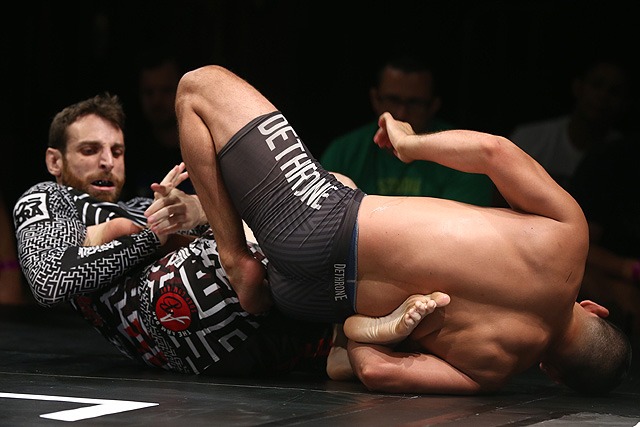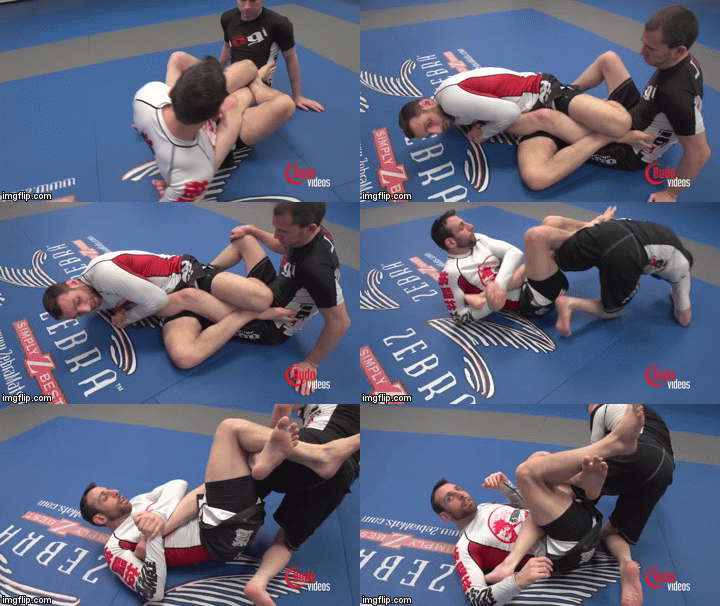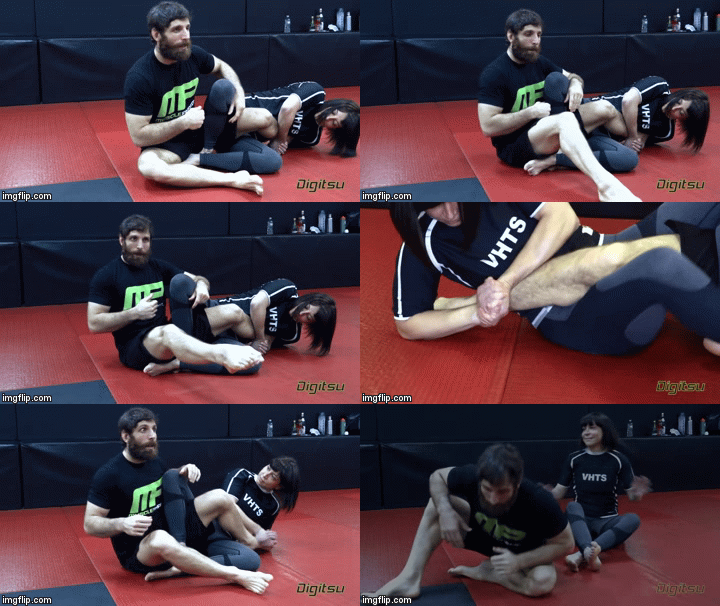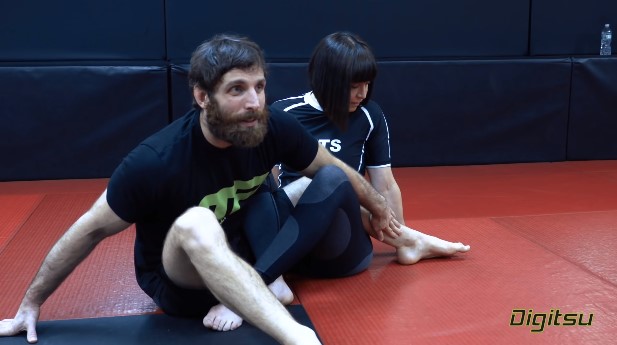


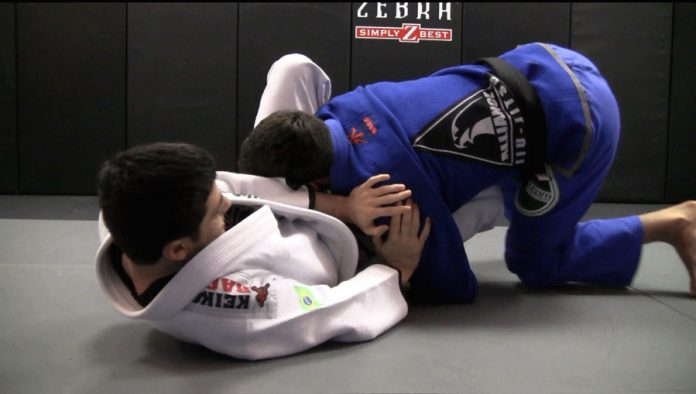
The Only Butterfly Guard Passes That You Need!

Butterfly Guard Passes

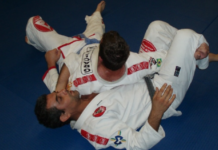
The butterfly guard is one of the most simple, yet effective open guard positions in Jiu-Jitsu. It is a tool that usually beginners and really advanced guys use. While between people seem to shun it because of its simplicity. However, getting stuck on the wrong side of it can quickly turn in to a Herculean task. As simple as it is, the butterfly guard is a notoriously hard one to pass. it’s easy for the bottom person to follow you with ease until they bait you enough to throw or submit you. As such, there is plenty of butterfly guard passes out there, but only few that work. Today, we’re going to categorize them for easier understanding and look at the most effective ones!

Passing the guard can be a really fun thing to do. In the natural progression of Brazilian Jiu-Jitsu, people usually start off from a guard position. This is new, easier to control and more likely to be effective. As people progress through the Gentle Art they tend to discover the pleasure of passing. Especially pressure passing. It works against even the stubbornest of guards, if and when you do it right. However, most of the conventional guard passing methods go straight out the window against a high-level butterfly guard. Butterfly guard passes are an art for mon their own. They need to be precise, quick and properly selected to fit the given circumstances.

Basically, the issue that butterfly guard passes face is directionality. the butterfly guard is set up in a manner which allows the opponent to move you in every direction possible. Even if you’\re standing, it’s not hard for an opponent to pull you straight back in, constantly hunting to send you flying. This can make passing the butterfly guard even more fun or it can frustrate you to the brink of madness. Depends on how good your opponent is, your understanding of the butterfly guard and the appropriate use of efficient passes.

Mr. Bernardo Faria is the ultimate source on pressure passing. Not only the butterfly guard but all kinds of guards you can imagine. Check out the “Pressure Passing Encyclopedia” DVD and become an unstoppable force from the top! 

Butterfly Guard Dynamics

The butterfly guard is a fairly simple guard as far as structure goes. it is an open guard variety and falls under the “close distance” guards. However, the butterfly guard is a flexible position that easily adapts to plenty of distances. It works close and far, against a standing or kneeling opponent. The butterfly guard configuration itself is a defensive one. Its main attribute, which is our focus today, is preventing movement and passing sequences.

For a successful butterfly guard game, you need to have your hooks set up right and have upper body control via grips. Just resting your step on an opponent’s thigh is not going to do you any good from the bottom. You need to have your fingers pointing towards your knee and for the knees at about halfway between the mats and their top position. Against a kneeling opponent, both hooks need to go in. Against a standing one, a single hook is enough, with the other foot helping pivot you on the ground.

The butterfly guard does not work without grip, though. there’s no point in hooks without upper body control. Sleeve grips, sleeve and collar grips or two-on-one grips are the most usual ones. There’s also the option of double underhooks. Whatever the choice, the ultimate goal is to get under the hips of an opponent. Once there, sweeping is as easy as choosing a direction. the fact that all directions are open means you can send an opponent lying wherever you want. Even if they attempt to block, you can switch directions, systematically taking away their posting options until the fall. Or you could get into a leg lock, Guillotine choke or arm drag and back control at will.

Pressure Passing

Butterfly guard passes usually work in two major directions. You could either look to smash the guard’s structure an apply pressure passing, or stan up and go from there. For now, we’ll start with passing from the knees with the help of pressure.

First a few crucial pointers. When you’re looking to pass the butterfly guard from the knees, remember to first and foremost, break all grips on your arms. Next, the goal is to find the balance between pressure and mobility of your hips. Since the goal of the butterfly is to send you flying you need to have the opponent on their back. Next, you need to sit back as heavy as possible. Yet still, you need to be able to switch to floating hip movement the moment your opponent manages to elevate you. Remember that whenever your opponent has their legs too close to their butt, their butterfly guard won’t work.

  • Push Pass

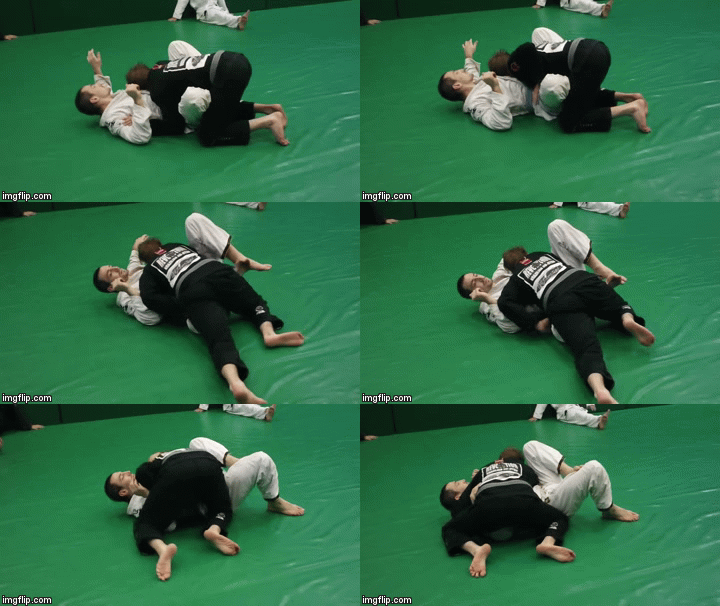
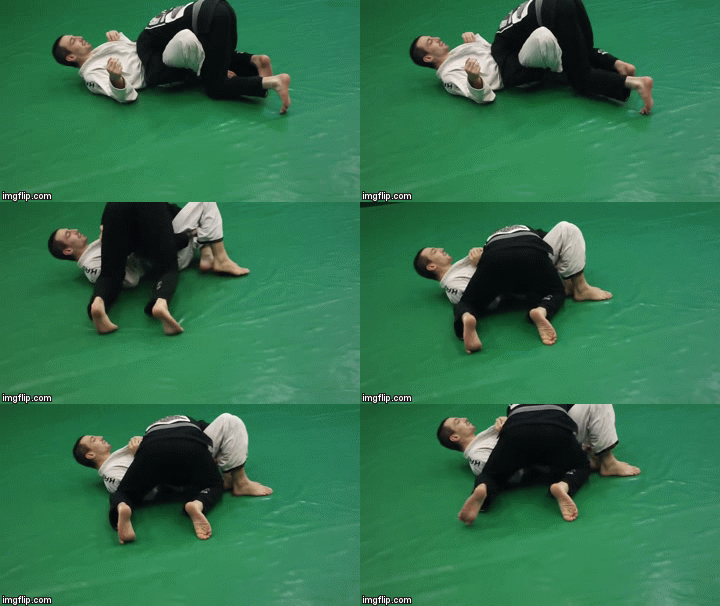
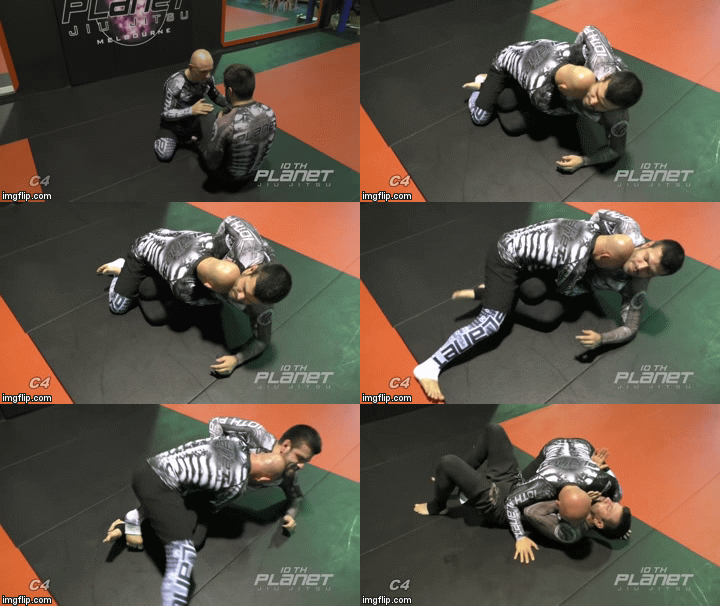
Butterfly Guard PassesOnce you have no grips, an opponent on their back and heavy hips, proceed to control both biceps of the opponent. Make your head and chest as heavy as possible without lifting your hips. Next, you’ll need to choose a side and use the arm on that side to push down the knee fo the opponent. Keep in mind not to open up too much space while doing so. Once you have a palm on the knee, shift your weight to that side, sprawling your hips laterally. Passing is easy from there.

  • Weave Pass

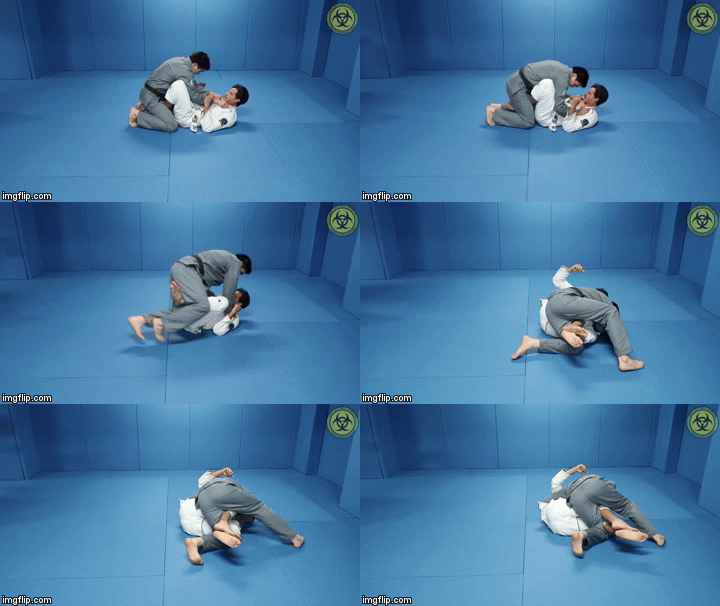
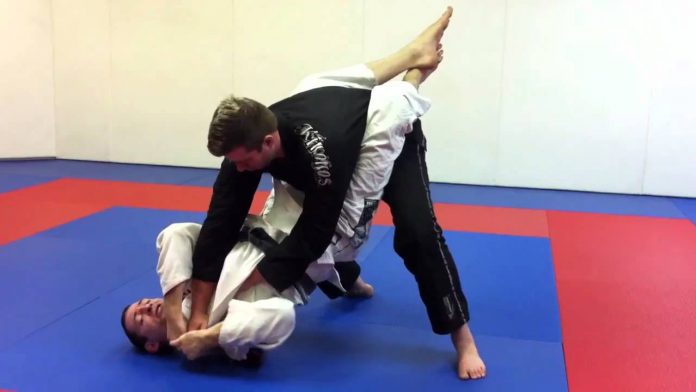
Butterfly Guard Passes Weave PassFor the weave pass, look to push one knee from the outside in when you put forward pressure. this is going to land your opponent in a position with both knees pinned. Control the torso to stop them turning and walk your way into side control.

  • Leg Surfing

Butterfly Guard PassesThe leg surf passes a great option when an opponent already has you in the air. Switching your hips from left to right is crucial here, as is already going to make it difficult for them to find the precise direction to throw you in. The moment you can, use the hip shift to place all your weight on the end of their leg, forcing them to the ground. You’ll end up in a similar position to the weave pass.

Standing Butterfly Guard Passes

Passing the butterfly guard form your feet is a daunting task. What you absolutely need to remember is that you can’t just stand upright. When butterfly guard passes from the knees don’t work, do not just stand up, or place just one leg up. The basics of trying to push the opponent’ legs to their but still apply here. Actually, the starting position is the same. Brak the grips, get the opponent on their back and control their biceps, putting pressure on them with the head and chest.

When all else fails, you’ll look to pass by raising your hips to increase pressure on the opponent and open up additional space. Remember that raising the hips is dangerous if you’re not controlling their legs. To that extent, you’ll need a grip on one foot whenever you decide to pass standing. Also, be aware that standing passes require some jumping and flipping around.

  • Hip Switch Pass

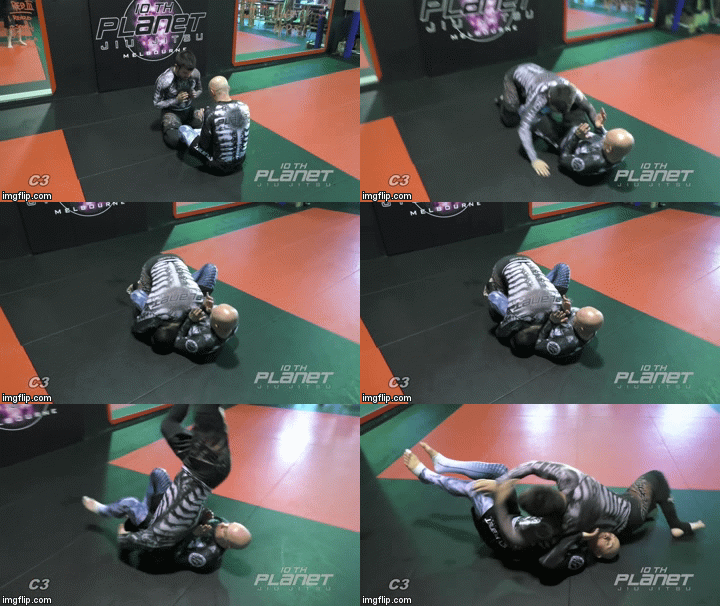
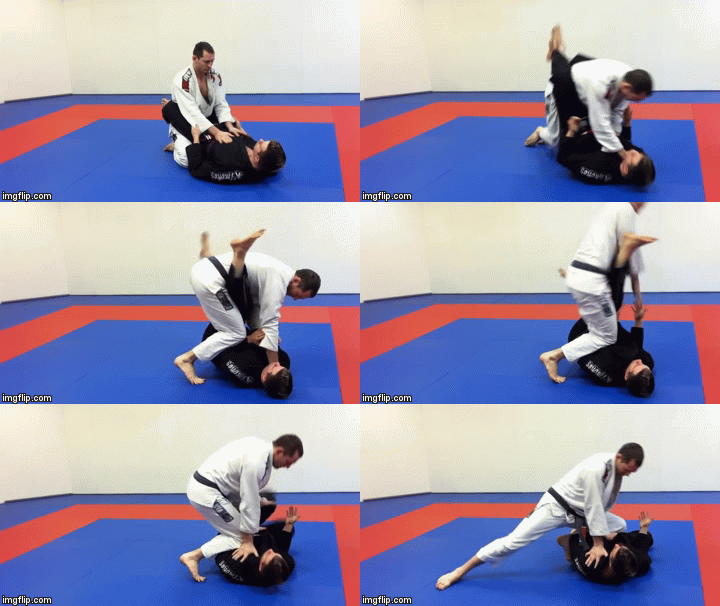
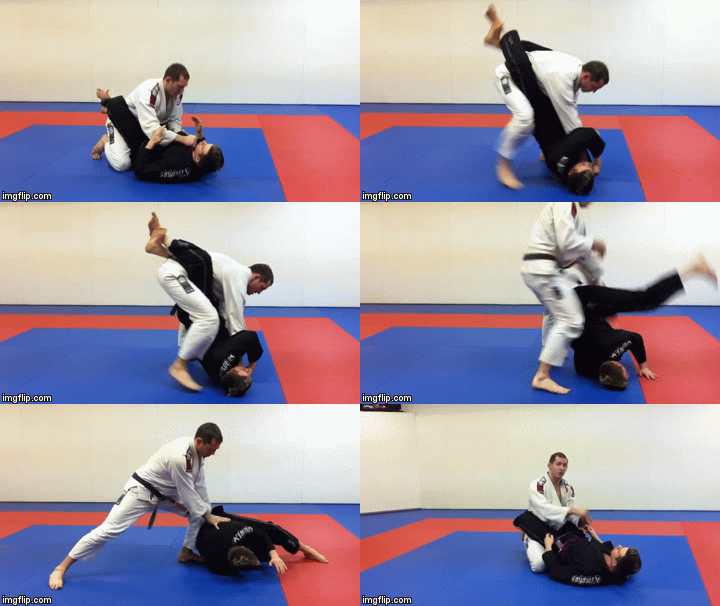
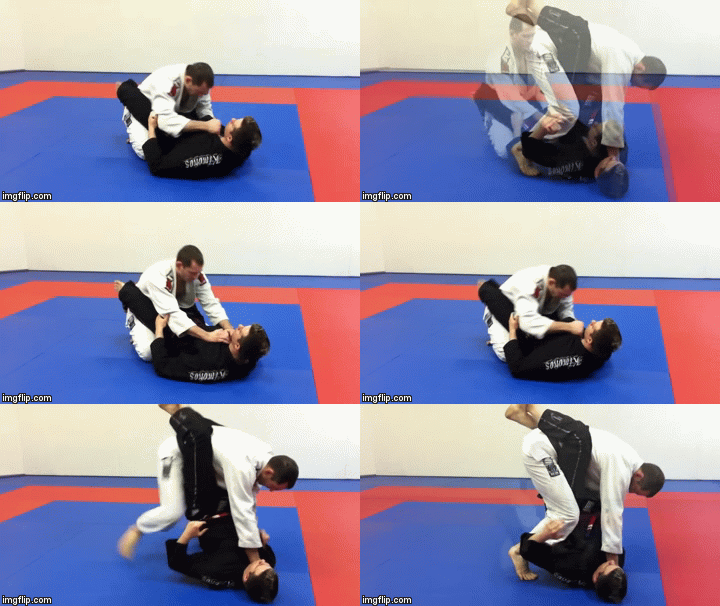
Butterfly Guard Passes Hip SwitchThe hip switch pass is a real gem amongst butterfly guard passes. It works against all kinds of opponents and just requires good timing and control on your side. To execute it, use knee control with one arm, like in the push pass only from the outside in. Put your head on the other side of the opponent’s torso so that your shoulder is on their belly. Now raise your hips, push the kee into the newly created space and jump to headstand. Do not spend time standing on your head though. Once you’re above 90 degrees switch your hips to the side and you’ll end up in Kesa Gatame.

  • Jump Over Pass

Butterfly Guard PassesThis one is the most acrobatic of the bunch, and probably the most attractive one too. It also lands you directly into North-South which is arguably the best place to be straight off a pass. The set up is the same, their feet in and place pressure. Now use one arm to reach behind their butt and control the foot of the opposite side leg. This’ll have the opponent all tied up. Once you have it, place the head on the side of the torso again and jump straight over. Your goal is to flip all the way over and end up in a bridge-like position. A simple spin and you have North-South.
Adam Wardzinski DVD – Butterfly Guard Re-Discovered

Battle Tested Pressure Passing – Bernardo Faria DVD Review

Weight Distribution For BJJ – Black Belt Pressure Tips

Pressure Passing For BJJ: The Stack Guard Pass

Benefits Of Drinking Coffee And Green Tea For Jiu-Jitsu Training

Benefits Of Drinking Coffee And Green Tea For Jiu-Jitsu Training

Most athletes in the world have a habit of turning to a stimulant or two for better performance. Grapplers and combat athletes are no exception to this rule. Jiu-Jitsu training is hard, especially if you’re doing it after a hard day of work. For professionals that have multiple training sessions during a day, anything that can provide more energy is very welcome. To that extent, let’s make something very clear at the beginning. We’re only talking about legal substances. Actually, we’re not even talking about it. Today’s topic of discussion is the best stimulants for grapplers that come in a cup. Ladies and gentlemen, pick your poison – coffee or green tea?

Reaching for a cup of joe or a steaming mug of tea is a morning ritual for most people worldwide. Starting the day off with your favorite stimulant beverage is a strong habit among grapplers a well. So much so, actually that there are several BJJ and MMA-related companies out there that produce their own blend of coffee. Regardless of the choice, these beverages provide a much-needed pick me up in the morning, before or after training, and at any other time of day. However, they offer a host of other health benefits to people training Jiu-Jitsu apart from the instant flood of energy while consuming.

This article is not going to be a coffee vs. green tea debate. Those thinking, we can pick one out over the other, are going to be disappointed. The real reason why we put these two favorite beverages shoulder to shoulder is taste. Most people that are really into tea are not coffee’s biggest fans and vice versa. So in order to satisfy everyone’s taste (apart from those few freaks that don’t like either), we’re going to cover the benefits of both. Not that they’re too much different really.

Effects Of Caffeine 

So, why do we really like coffee so much? Apart from the taste, which can be manipulated in countless ways, the effect is the crucial thing most grapplers area after. Both the effects of coffee and tea are down to a few active ingredients that get our blood pumping for Jiu-Jitsu training.

As we all know, caffeine is the main active ingredient of coffee, and to a lesser extent, green tea. Caffeine is a methylxanthine and falls into the category of stimulants. It gets absorbed into the bloodstream really quickly. From there on, caffeine starts having almost immediate effects on the body. First and foremost, it affects the central nervous system. The feeling of alertness you get from caffeine helps keep you awake and function a ta a higher pace. It also has a relieving effect on migraines and headaches.

Caffeine has a stimulating effect on blood pressure as well, raising it slightly, but significantly. This is mainly due to the release of adrenaline that accompanies the ingestion of caffeine. Caffeine has an overall positive effect on the heart as well, helping with a steadier heartbeat.

In terms of behavioral effects, coffee (or green tea) increase our attention. Caffeine promotes a better overall mood and even helps with memory. It is actually a component of many Alzheimer’s treatments nowadays.

Benefits of Caffeine For Jiu-Jitsu Training

How exactly might caffeine help Jiu-Jitsu training? Well, as we saw above, it has a myriad of effects on multiple systems of the body. All these effects translate into benefits that are very helpful for grapplers. Of course, as with everything else, it’s all down to dosage. Caffeine can also have adverse effects when taken in large doses often, so be careful. Since all of us react differently to it, you might need some tinkering to find the perfect dose to take before Jiu-Jitsu training.

Cofee For BJJ

In terms of health benefits, coffee has more than 1.000 biologically active components. Conversely, it boasts several B vitamins along with rich mineral content. Coffee is also a great source of much-needed antioxidants.

As stimulant caffeine helps prove the function of muscles, making it the perfect pre-workout drink. It can help you produce an increase in muscle output and power. Furthermore, it speeds up metabolism, making our bodies much more efficient. Coffee also helps with weight loss. This makes it a very useful (and tasty) tool for those grapplers that are looking to cut weight. Caffeine raises the resting metabolic rate by several percent, which in combination with good nutrition and Jiu-Jitsu training is a certain way of losing fat.

By boosting mood and memory, coffee allows grapplers to be sharper and more focused when rolling. The mood-boosting effect also helps keep you calmer under pressure and more creative in your game. Coffee has also been shown to improve the cognitive power of the brain, helping you win all the human chess matches you might get into.

Grapplers Choice – Green Tea

Green tea is coffees, the next-door neighbor. For those that prefer slightly lesser caffeine hit, or simply a different taste than coffee, green tea is usually the number one choice. When it comes to people in Jiu-Jitsu training, green tea is far superior to other kinds of tea, and not just because of its caffeine content.

Green tea is made from unfermented leaves containing a very high amount of antioxidants. While it may fall back behind coffee in terms of caffeine, it definitely makes up antioxidants. The role of antioxidants is the protection of your cells from damage, and we all know how damaging Jiu-Jitsu training can be on all levels of the body. What green tea really helps with his recovery after a hard rolling session.

The fat-burning effect of green tea is another major benefit. Green tea helps lower the body’s cholesterol levels by blocking its absorption. Add to that the stimulative effect on metabolism and you have the recipe for fat loss. Green tea salo helps protect from certain types of cancer and is really rich in iron. Plus, it tastes awesome if you’re into tea more than you are into coffee.

A neat little trick to further unlock the magnificent potential of green tea is to throw in some lemon into it. The vitamin C from the lemon helps boost green tea’s antioxidant power very significantly. Plus, it adds some much-needed flavor.

https://bjj-world.com/george-lockhart-nutrition-dvd-book/

Are Pre-Workout BJJ Supplements A Good Idea?

The Only Supplement You Need – Creatine For BJJ

How To Set Up A BJJ Nutrition Plan On A Budget

Can Ginastica Natural Help Your BJJ Conditioning

Ginastica Natural

When people get involved with BJJ, they start to look for strength and conditioning methods very soon after. For the regular Joe, training grappling for the sake of it, strength and conditioning can help stay injury free and with a sufficient gas tank to roll. For professionals, conditioning is a large and very important part of the puzzle. That said, where most people, amateurs and professionals alike go wrong is the choice of methods. Standing on a Pilates ball with weighted clubs and swinging like a scarecrow is certainly not specific for grappling. Going too specific is also not enough, despite what Marcelo Garcia might claim. So, should you lift weights, do gymnastics, run, swim or do Yoga? Or simply do more BJJ? Well there’s an option out there that combines most of these. have you ever given Ginastica natural a try?

Just after Conor McGregor exploded on the MMA scene so abruptly, so did everything related to the man. One of the aspects people were amazed to find out was his conditioning. Conor did (and probably still does) something most people never associated with combat sports. With the help of a guy named Ido Portal, Conor spends a lot of time practicing the so-called natural movement. Natural movement is essentially BJJ drills, animal drill, and acrobatics on steroids. This explanation does it absolutely no justice but it’s not wrong either. However, just a short YouTube search away is none other than the legend, Rickson Gracie, part taking in a similar style of exercise during his prime. What Rickson did, though was Ginastica Natural, something a fellow Brazilian named Alvaro Romano came up with.

Ginastica NaturalGinastica Natural translates as natural gymnastics. If you think this involves training on gymnastic rings while in nature you’re way off the mark. Ginastica Natural is, in essence, a hybrid training method involving a lot of Yoga, Gymnastic floor work, and freestyle movement. Since the founder was also a BJJ practitioner, there are plenty of BJJ drills like shrimping and Granby rolls included in this methodology. This makes it by far the perfect supplemental training choice for grapplers because of an number of reasons. Let’s look deeper into what Ginastica natural brings to the table.
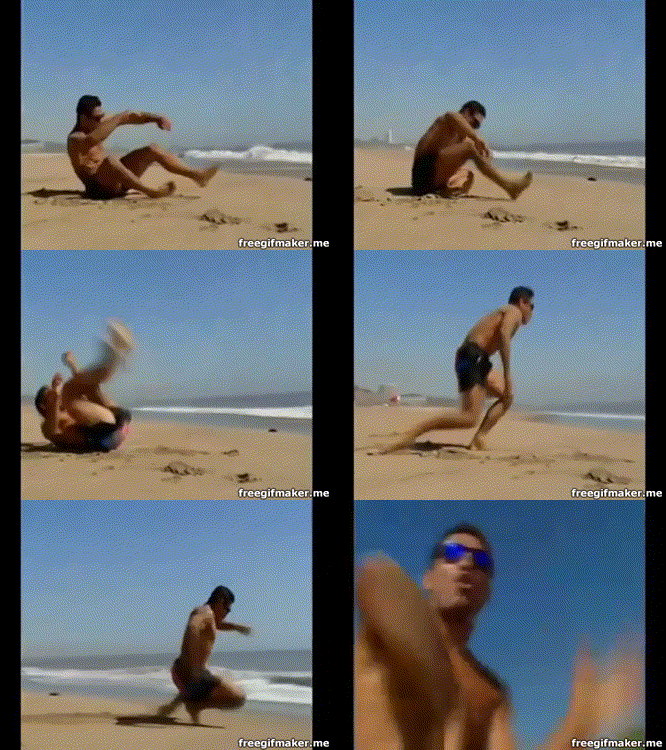
Alvaro Romano

Alvaro Romano is BJJ black belt under Rickson Gracie. before getting his black belt from him though, Alvaro trained with Rolls up until his death. He also spent some time training with Carlos Gracie. SO, in terms of his BJJ pedigree, Romano is definitely the real deal.

Born in a very poor part of Rio de Janeiro, Alvaro was a typical Brazilian kid, spending most of the time outdoors. He did all the usual activities for the time, running on the beach, surfing, climbing trees. He liked it so much that he even enrolled in University, studying physical training. Romano discovered Hatha Yoga soon after and started to incorporate it into his training methodology. He wanted to create something new and effective, which he ultimately achieved. Training BJJ with none other than Rolls Gracie taught Alvaro much about ground movements and drills. he added that to the mix as well, coming up with what we know today as Ginastica Natural.

Alvaro went on to spread his newfound methodology all across Brazil. HE not only managed that but also spread his trade to the USA. A huge roster of distinct BJJ and MMA athletes used his knowledge to get in top shape for competition. Roger Gracie, the Ribeiro brothers, Anderson Silva, Vitor Belfort and a host of others all benefited from training Ginastica Natural. To this day, Alvaro, along with his son Raphael, still teaches Ginastica classes in San Diego.

Ginastica Natural

Ginastica NaturalGinastica Natural is a full body training system that works only with your body weight. There’s no need for any additional tools or equipment. All that you need is space, preferably ample amounts of it. The nature of this training system is unique in the manner in which it incorporates different athletic skills. Strength, conditioning, explosiveness, a range of motion, flexibility, balance, and coordination all get the same attention. Not only that, but you can train and develop all these capabilities simultaneously.
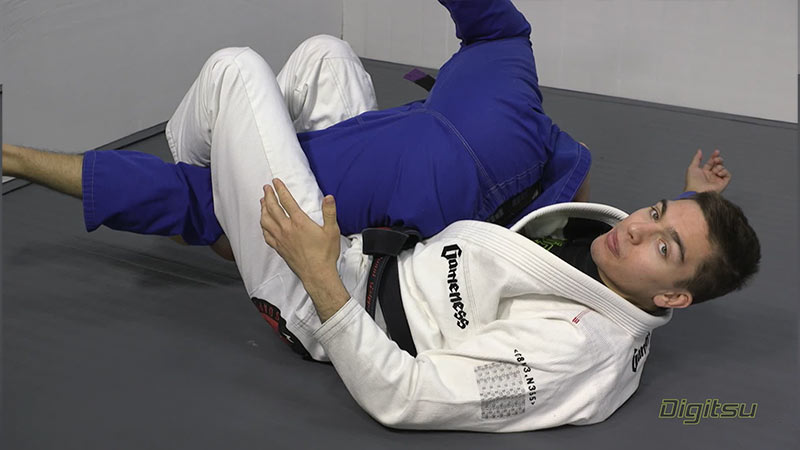

For people training Brazilian Jiu-Jitsu, the benefits of such a training system are more than obvious. First of all, Ginastica is a low impact system, meaning you won’t get exhausted like lifting the weight with a max effort method, for example. Furthermore, ti is very easy to integrate into your routine, and you might even end up doing it at your academy. Since Ginastica has a lot of movement patterns borrowed directly from BJJ, you get to train very specific movement patterns. Those patterns are supplemented with a lot of other moves, some acrobatic, some more strength oriented. In all, your body needs to work as one to overcome being in mechanically disadvantageous positions. Very much like in BJJ.

Making Ginastica a part of your BJJ lifestyle is also not difficult at all. Namely, Alvaro’s system is divided in stages, each progressively harder than the previous one. This means that you can start off easy, and work your way up. As you become more proficient, you can start using the earlier stages as specific warmups before class, reaping even more of the Ginastica benefits. Anybody, regardless of age, weight, experience, and athletic abilities can safely train Ginastica.

Breathing Benefits

You’ve probably never thought that breathing techniques could lead to better conditioning. That old saying “train smarter not harder” really has something behind it. Alvaro’s system is based heavily around age-old Hatha Yoga breathing practices. Remember that funky stuff Rickson did in his “Choke” documentary? Well, that’s Ginastica Natural.

Knowing how to breathe under pressure is a crucial trait for any grappler. Ginastica is the only conditioning methodology that helps you develop this skill as well. When you breathe without much thought about it, you’re only puffing up your chest and using the top od the lungs. Leaving the lower parts of the lungs out of it leads to diminishing your lung capacity. It can be reversed, but it’ll take time. Ginastica will teach you how to breathe from your diaphragm up, using your full lung capacity. Even better, it’ll teach you how to breathe calmly when executing complex full body movements. It’s as close to Jiu-Jitsu as anything can come.

Despite better conditioning, regular breathing practice helps immensely with anxiety. This can be very useful before the competition, or simply before rolling. Breathing also helps recovery, thanks to the increased oxygen levels. The beauty is that you can use Ginastica Natural breathing on its own, or as part of the complete training system.

If you still feel like you need more than just Ginastica, you can always throw in some kettlebell work into the mix. There’s no need to go and pay a coach on a monthly; basis. Just pick up Mike Perry’s “KB Essentials – An Instructional Guide To Kettlebell Training” DVD. 

The Perfect Strength And Conditioning Workout For BJJ

Are Pre-Workout BJJ Supplements A Good Idea?

A Jiu-Jitsu Workout Program To Lose Fat And Improve Performance

Gianni Grippo DVD Collection – Complete Guide

Gianni Grippo DVD Collection

Nowadays, it’s all about leg locks. A few years ago the BJJ world was going crazy about inverted guards and Berimbolos. Before that, it was the age of the knee cut pass. Brazilian Jiu-Jitsu tends to produce trends that change every few years. It is what makes art interesting and appealing. If nothing ever changed, it wouldn’t be much different than Karate or Judo. Evolution is what makes Brazilian Jiu-Jitsu such an addictive sport. In the sense offers, every trend has its own generation of pioneers. One of those pioneers is Gianni Grippo, who could be called a member of the Berimbolo generation. The exciting young black belt has a few digital releases that are more than worth your while. Even if you do not particularly like the Berimbolo, you need to check out the Gianni Grippo DVD Collection!

Every time some high profile grappler comes out with a DVD or a digital instructional, people go crazy. very often they manage to provide the drooling audience with high-quality material on a specific subject they’re exceptionally proficient at. However, not many top black belts manage to replicate this in subsequent releases. Especially when they widen the subject matter and start teaching other aspects of Jiu-Jitsu. There are exceptions, of course, and they’re not just a few. One of them is Grippo, the man whose DVDs are each better than the previous one. The Gianni Grippo DVD Collection has four titles, all of which work perfectly as standalone or combine together into a complete BJJ blueprint.

The success Grippo has with all of his titles is due to the manner in which he approaches teaching. he manages to find the balance between variety and proficiency in a subject. Namely, he is a huge fan of Berimbolos and, understandably, the De La Riva guard. However, instead of just focusing on this, he expands his expertise to neighboring subjects that can really help improve the inverted guard game. He also likes to change everything up by issuing both the bottom and top game instructionals that can make anybody a better grappler. You do not have to do the Berimbolo to find any DVD of the Gianni Grippo DVD Collection useful and insightful. You could even learn things from the Berimbolo specific volume without even going for the Bolo. Yup, his stuff is that good!

A Modern Day Grappling Phenom – Gianni Grippo

Gianni Grippo is a black belt under none other than the legendary Marcelo Garcia. However, Grippo’s knowledge and rich competitive pedigree are not exclusively due to the Brazilian’s tutelage. Up until brown belt, Grippo spent all his grappling hours on the mats of another New York City BJJ lion’s den – The Renzo Gracie Academy. He is, ultimately, a hybrid of the two finest New York City BJJ academies. No wonder he is such a prolific grappler and an outstanding teacher.

The featherweight is an NYC native who was brought up in an athletic family. Under the influence of his father, Grippo competed as a swimmer during his young days. he even made it to the Junior Olympics on three occasions. Normally, his athletic spirit demanded more challenges so he took up boxing along with swimming. However, after his first steps in combat sports, his allegiances quickly changed. After several amateur bouts, Grippo somehow found his way to Jiu-Jitsu.

Finally, Grippo appeared to have discovered his true calling. he began his BJJ journey in the “blue basement” of Renzo Gracie’s NYC academy. Grippo dabbled with swimming along with BJJ until he witnessed THAT a famous match between Jacare and Roger Gracie live in Brazil. That was the spark that turned Grippo into a full-time professional grappler.

As Gianni Grippo advanced through the belt system, he conquered every major tournament there was. More impressively, he did so at every belt level. However, his style of grappling steered him away from the Renzo Gracie Academy and towards Marcelo’s school. There, he found the teacher and style perfect for him and ended up getting his black belt in 2013. A style he now unselfishly teaches to everyone through the Gianni Grippo DVD Collection.

A Complete Guide To The Gianni Grippo DVD Collection 

Now that we got the introductions out of the way, let’s see what the Gianni Grippo DVD Collection is all about. The whole bundle is available at a cut-price through Digitsu. The collection has four total titles, each focusing on a very specific subject. All of the subjects are deep into Grippo’s area of expertise, as proven time and time again in the highest levels of grappling competition.

Grippo is a full-blown modern-day grappler. Although some might argue that the Berimbolo game is a Mendes/Miyao brothers thing, Grippo would disagree. The smart grappler he is, he used all the knowledge gathered of Renzo and Marcelo and applies it to his specific game. The result, as most featherweight black belts know and fear is a deadly guard game, supplemented with unstoppable leg drags from hell. Now, you have the chance to learn everything directly from the source. Even better, you do not have to discover anything, just follow the blueprint and you’ll end up developing a complete game to scare your opponents.


1. All About The Bolo DVD

Understandably, we’re going to start with a title that’s focusing on the Berimbolo. Although it might not be the most popular thing in Jiu-Jitsu at the moment, it is still a very effective technique.

The “All About The Bolo” DVD instructional is a two-DVD set, that explains everything you need about the Berimbolo. There are no funky setups that do not work in reality. No unclear instruction and uber-complicated techniques that you can’t replicate in training.

Gianni Grippo DVD CollectionThe first volume focuses on the basics. And by basics, I mean really essential fundamental stuff. Honestly, there’s not even a mention of the Berimbolo during the first half of the DVD! All there is is a list of solo drills that you absolutely have to master before even attempting to Bolo around. Gianni also goes over gripping strategies and the basic ways of bringing an opponent down for the Berimbolo. Finally, at the very end of the volume, he goes into the Berimbolo itself. he demonstrates the basic Bolo and analyzes the Twister hook and all the ways you can use it to get the back.

In the second portion of this instructional, Grippo shifts his attention to some more advanced techniques. Despite their appearance, these moves actually work and are not truly complicated in nature. They might be if you skip over the drills and the content of the first DVD and jump straight into them. Grippo continues with the twister hook but also opens up some cool subs like calf slicers along the way. There’s also a BJJ take on an old wrestling classic in the Crab Ride. There’s even a Berimbolo setup from the closed guard! The very final chapter is an introduction to the next piece of the Gianni Grippo DVD Collection- The Single Leg X Guard instructional.Shop-Now


2. Single Leg X Guard DVD

While you might think that the Single Leg X is only a leg locking guard, Grippo is here to prove the opposite. the guard was very much an effective position long before leg locks came into the spotlight. Actually, some of the top names in grappling have built unstoppable bottom games around it. One of them is Gianni Grippo, who not only uses it to perfection but connected to his favorite move – the Berimbolo.

Gianni Grippo DVD CollectionThis DVD is a one-volume release, with a total run time of more than 90 minutes. During that hour and a half, Grippo demonstrates 20 techniques related to the Single Leg X Guard. For starter, Grippo offers basic mechanics and some very interesting ways in which you can enter into the guard. He uses the Reverse De La Riva and the Spider guard to set up efficient entries.
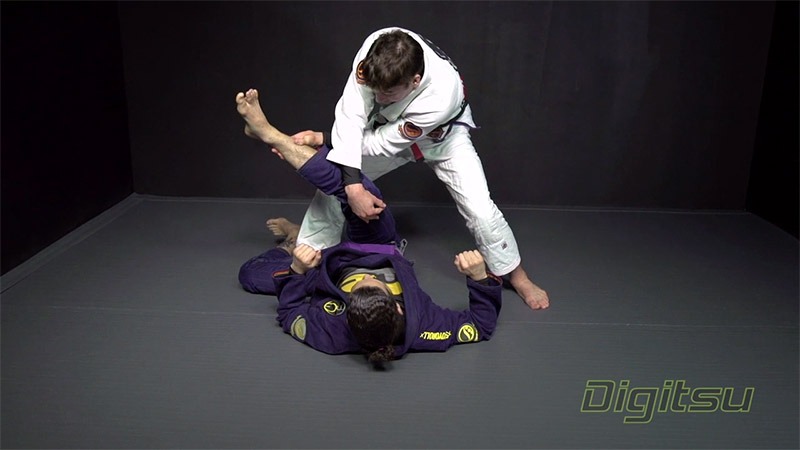
Once in the Single Leg X, you’re going to learn how to sweep someone in a few very basic ways. The single-leg X is a multi-directional guard, offering sweeping options in literal every direction. What you’re probably not used to getting from the Single Leg X is a toehold and a tight one at that. Grippo offers fantastic detail on this col land lightning-quick submission!

The second half of the DVD goes over some more advanced sweeping and transitioning options, there’s a great way to utilize the waiter sweep from the Single Leg X, along with a few direct routes to the back. Of course, there’s no way to skip over the X guard when doing a Single Leg X instructional. Grippo wraps things up with a few very cool transitions and attacks from the X guard. Of course, there are Berimbolo entries lurking around every corner!Shop-Now


3. Dynamic Leg Drags And Drills DVD

The next member of the Gianni Grippo DVD Collection is one that switches dynamics a little bit. namely, Grippo gets off the ground and starts demonstrating his favorite way to pass the guard. in Gianni’s case, that’s the leg drag pass and all assorted variations. For those of you that don’t know the leg drag is another easy way to get to back control. Right down Grippo’s ally. Even better, it opens up more Berimbolo setups, this time from the top.

Gianni Grippo DVD CollectionOnce again it’s a one-volume release, offering 20+ techniques for an hour and a half. Grippo has been highly successful with the leg drag against very experienced black belts. he has a difference of it to what you might be used to, which is a great thing. Once you master his take on the leg drag, passing is going to become a breeze. This time, however, Grippo goes straight into the deep. he kicks the instructional off with back taking options off the leg drag pass. He continues to demonstrate how to set up the leg drag against all kinds of the guard. The RDLR, the leg lasso, even the dreaded Z- guard, Grippo has a drag to pass them all.
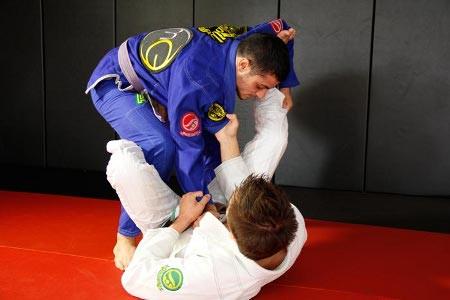
Something I particularly enjoy about this DVD is the drills portion. It is at the very end for a  reason. All drills work form specific guard positions, the same ones Grippo covers throughout the title. There are drills to get you comfortable with some of the most frustrating open guard variations. Do the drills and you’re going to be leg dragging everyone before you know it!Shop Now


4. NextGen De La Riva Guard DVD

Finally, another title connected directly to the Berimbolo. The De La Riva Guard is position zero for anyone looking to invert. It is where the original Berimbolo originates from. The De La Riva is a classic open guard, one that slowly falls behind in today’s game. However, this doesn’t mean that this guard doesn’t work. Quite the contrary, in fact.

Gianni Grippo DVD CollectionAcross 90 minutes, Grippo goes over two dozen techniques that are going to make you a De La Riva guard machine! Even from the get-go, things are kicking off with a bang – an entry against a standing opponent. From there on it’s a bonanza of attacks, stemming across submissions, sweeps, and transitions. Hitting triangles and Omoplatas form the De La Riva is nothing new. However, Grippo has some crucial new details thanks to his vast experience in the position.
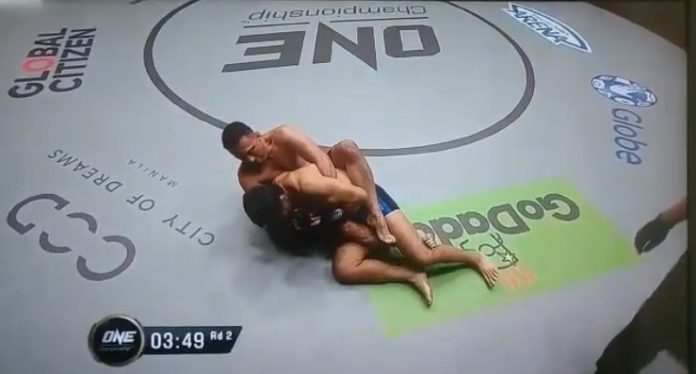

Grippo throws in a couple of takedown transitions as well, going into ankle picks and low singles from the DLR. After that, it’s a Bolo time! Gianni offers his unique entries in the Berimbolo along with every possible follow-up. Back takes, leg drags, mount transitions and even a blitz toe hold all features in this key pie of the Gianni Grippo DVD Collection.

Wrapping things up, Grippo switches to the Reverse De La Riva, offering some great insight. A teaser of an upcoming next DVD, perhaps? I certainly hope so!Shop-Now


VIDEO: Renzo Gracie(51) Submits Yuki Kondo in his MMA Returning Bout

VIDEO: Renzo Gracie(51) Submits Yuki Kondo in his MMA Returning Bout

Renzo Gracie managed to submit his opponent in his returning MMA Fight against Yuki Kondo at One Championship: Reign of Kings in Manilla Philippines

The first round wasn’t very active so both fighters were given yellow cards for inactivity.

As soon as the second round started Renzo was very aggressive and he managed to take Yuki Kondo down. Very soon Renzo managed to transition to Kondo’s back and it was just about time when he’ll choke Kondo with RNC like he did.

This is Renzo’s first fight After 8 years of pause and a loss to Matt Hughes at UFC 112 and now he holds a record of 13 wins, 7 losses, and 1 draw.

https://youtu.be/8X5IzVgJSDQ

Renzo Gracie: Fighter Has to Have Blood in His Eyes

Renzo Gracie Challenged by an “Unchokeable” Man in His Gym

Renzo Gracie’s Favorite Knee on Belly Escape

Renzo Gracie vs Paulo Miyao – Rolling

Gas Station Clerk Knocks and Chokes Out a Robber With A Guillotine Choke

Gas Station Clerk Knocks Out and Subdues a Robber With A Guillotine Choke

Ebrahim Gawaragi is a clerk on a gas station and this should be his usual day at work until a robber came in trying to take the money from the cash register. Luckily for him he’s trained by BJJ Black Belt.

With his 5″7′ he probably looked pretty harmless to a robber probably because the robber didn’t know a fact that Ebrahim is Martial artist training at Connor’s Martial Arts Academy in Norwood.

Ebrahim Ggawargi told to Boston 25 News:
“I just do it to have fun, I don’t do anything, just come to training, get some fun over there.”

As you can see in a video below it shows a robber trying to take the money and also punching Gawargi a few times. It didn’t take much for Ebrahim to get the upper hand. After taking few punches Ebrahim took off robbers jacket, threw a few punches and choked him out with a guillotine choke.

“I just tried to do what I had to do,” said Ebrahim Gawargi. “He grabbed my hand, I had over six hundred dollars in my hand.”

“I didn’t want to kill him, I needed to let him breathe, [but] when he kept moving I gave it more pressure to let him sleep again,” said Ebrahim.

Police identified a suspect as a 46-year-old John Benedict from Dorchester.

“If I had my way when people got robbed they would just turn over some cash and separate and then call police when it’s safe to do so,” said Norwood Police Chief Bill Brooks. “This was a little bit unusual because of the skills of the clerk.”

Gawargi also said: “I never thought I’ll use my training skills outside of the gym but when he attacked me I had to do something”

His teacher and owner of the martial arts academy that Ebrahim Gawargi is training at, John Connors, BJJ Black Belt, describes Gawargi as a great student and one of those who takes his training pretty serious.

“He’s an excellent student, he’s very respectful, he takes his training very seriously. He’s a very determined guy, a very scrappy guy, so I’m not surprised he got the best of the guy, said Connors.”

Store clerk subdues a robber with a guillotine from David Grappler Bista on Vimeo.

Source: https://www.boston25news.com/news/man-thwarts-gas-station-robber-with-martial-arts-techniques/798468983

How to Evade and Counter an Execution Using Everyday Gym-Based Exercises

This is probably an answer to “Kinetic Chain” CrossFit Self Defense and you can find it on this link: https://bjj-world.com/crossfit-self-defense-video-adrian-gonzales/

Coach John:
“If you’ve been training at the regular basis you didn’t know it but you’re actually preparing for tactical combative scenarios. Today we’re gonna cover execution evasion movements using everyday gym-based exercises we’ve done.”

CrossFit Self-Defense Video! Try not to Laugh!

Choke Your Opponent While Passing With The Amassa Pao

Amassa Pao

What’s your favorite way of opening the closed guard? Usual options out there include either opening and passing from your knees, or from standing. A less frequently used but effective nonetheless option is passing via Sao Paolo type passes. The Sao Paolo passing system includes going against all principles that you know you should apply when opening the closed guard. In that sense, this is a more advanced version, which is probably why people do not use it so often. Still, there’s a great option of breaking some closed guard opening principles and still getting out of the guard reasonably easy. Actually, you might just get a choke out if not too, or even use it to improve positioning. It is the Amassa Pao, an old-school pressure-style move fro dealing with the closed guard.

The closed guard is a  very tough position to be in. Regardless of what people say, if an opponent likes playing closed guard you’re in trouble. Yes, you might finally end up passing but you might be utterly exhausted by then. it is much easier for the bottom person to control the pace of teh match and even attack. As for the person on top, until you manage to open the guard, there’s not much available. Or, so you thought. There are certain moves that trace back to the Gracies themselves, and which still work effectively to this day. Working with the Amassa Pao to nullify the closed guard is an easy, proven and reliable method. The only drawback is that it requires a Gi to work.

The Amassa Pao works by using the thickness of BJJ Gi collars against an opponent. Namely, you break a major rule of the closed guard, by placing an arm high on the opponent’s torso. This, however, is not going to be an issue if you perform the technique properly. The idea is to thrust the opponent’s collar into their neck, this finishing them or opening the guard. While the risk of an armbar or Omoplaa is present, it is not really concerning once you get this move down. I, personally, came across it completely by accident but immediately added it to my competition gameplan. It hasn’t failed me since!

Luis Heredia is a 6th-degree black belt under Rickson Gracie. It doesn’t get much more old-school than that. In his “Pure Jiu-Jitsu” DVD set, Heredia offers plenty of simple, yet brutally effective techniques. Tthe Amassa Pao is one of them. Learn it from a true master of the art. Check out all other techniques available in this 4 DVD set.

What is the Amassa Pao

The Amassa Pao is often translated as the “thrusting choke”. The basic mechanics involve your whole body’s weight plus gravity focused on one point of the opponent – their neck. The move is as efficient as it is simple. However, no many people opt to go for this technique, which actually adds to its merit. You can surprise even higher ranked belts with it once you master it.

For an Amassa Pao, you need be in the closed guard of an opponent. From there, you’ll look to place both your hands on the opponent’s collars. The grip to use is with four fingers in and the thumb on the outside. The goal is to thrust the Gi collar into the neck of the opponent’ making them wince in pain and tap or give the pass away. Since this isn’t as easy as it sounds, you need to achieve a proper mechanical advantage.

First, in order to make sure you are as heavy as possible you need to get on your feet once you establish the grips. Your aim is to force one hand to the opposite side of the opponent’s neck, creating a “noose” of sorts with their collar. Keep the arm straight to make sure you’re using a frame-like structure to support your weight. You should have your head low and your butt high, leaning forward in order to make sure you place the opponent under maximal pressure.

Once there, you’ll also need to make sure you have the correct angle. On the side of your choking arm, you need to get your knee really tight to the opponent’s hips. Not only that but you also need to collapse it towards them, ending up standing at a slight angle in relation to the opponent.

Regaining Posture

One very important aspect of the Amassa Pao is to use it in order to regain posture. It is one thing to be stuck in closed guard trying to pass. You’ll need to go through some really aggressive grip fighting, but you have the chance to establish your structure and game. If the opponent has your posture though, you’re halfway to being well-roasted. Unless you get posture back you’ll tap or end up on the bottom for sure.

Amassa Pao Posture
Click on gif for full technique video

In order to avoid closed guard attacks, you need to regain posture as quickly as possible. In that sense, a broken posture places you in perfect position to establish Amassa Pao grips. Most opponents are not going to really pay attention to this. Once you have the grips, choose your side and use the leverage to force yourself back into the posture. The only catch here is what to do when you have posture back. You need to either immediately let go of it, or go right into a passing with the Amassa Pao. If you just stay on your knees in closed guard, arms extended, you’re going to get armbarred.

Opening And Passing 

This is where things get interesting. For me, setting up a pass is where I really like using the Amassa Pao. The trick is getting the grip. If your posture was broken, you already have a route to establish grips. If, however, you need to get them with good posture, you need to be tricky about it. Namely, you can’t leave your opponent time to go for arm locks. Once you get a grip on them, make sure you pop up to your feet as fast as possible.

Amassa Pao Pass
Click on gif for full technique video

Your first priority is to make sure your arm is fully extended. Your second priority is to get the knee close to their pelvis and push it inwards. the angle you create here, along with continuous forward pressure on the neck is going to enough to open the guard. Well, in most cases. Once you feel the legs open up, you’ll be free to get into an even better angle and brush the legs away. In most cases, you’ll end up in a knee on belly, with strong pressure on the neck.

Amassa Pao
Click on gif for full technique video

If the opponent is really tough, a lot taller or extremely flexible, you’ll need a bit more pressure to open. In this scenario, the opponent is trying to maintain distance by extending their hips as much as possible. The trouble with this is that, while you can place pressure on the neck, you can’t get the angle you need to open. The solution is easy. Try to get as close as possible with your hips and simply go for a hip extension yourself. This is going to pop open even the most stubborn of closed guards. However, you’ll have to sacrifice the collar grip in order to get the maximal extension.

The Amassa Pao Choke

The final piece of the puzzle is getting a tap while in the process of opening the closed guard. For that, you need to make sure you utilize both grips as best as you can. The beginning part of the choke set up is the same as previously. You need to be on the feet, arm extended and get the angle ASAP. Once there, if an opponent still has their legs locked, you can look to pressure them into submission.

Amassa Pao Choke
Click on gif for full technique video

The goal is to place the knuckles of the fist you have gripping their near side collar to the ground on the opposite side. In order to really sink it in, make sure you twist your knee even further into their hip, improving the angle even more. USe the other arm to pull on the opposite side collar, taking away any slack. This is where you’ll get most your Amassa Pao taps.

However, in the case of fidgeting and stubborn opponent’s you’ll need to adjust a little bit. Remember that you begin the move by establishing TWO grips on their collar? Well, the second one not only helps tighten everything up but also offers you more cooking options. Whenever an opponent is thrashing around resisting the choke, simply lift the collar on their other side and switch your arms. Make sure you also adjust your angle to the other side as well. Otherwise, you’ll put yourself into an Omoplata.

Related Articles:

Ezekiel Choke – GI and No GI Details and Mechanics
ALL BJJ Necktie Variations
Two Forgotten Jiu-Jitsu Chokes
Three Ways to open up the closed guard
Closed Guard opener by Rickson Gracie

Eddie Cummings DVD – Ashi Garami Seminar

Ashi Garami Seminar Eddie Cummings DVD

Okay, 2018 is officially the craziest year in BJJ. We saw championships change hands, we saw the rise of new promising promotions like Quintet and we saw a boatload of DVDs we never thought would come out! First, Craig Jones came out with a masterpiece on leg locks and went on to release content on all his favorite moves. The biggest bang of them all was the release of the long-awaited John Danaher leg locks instructional. Not only did it come out, but did so twice, due to technical difficulties. Now, as we await Danaher’s back takes masterclass something else popped up out of the blue. It is an Ashi Garami Seminar, coming to us in the format of an Eddie Cummings DVD! Yes, the Wolverine, just like his mentor, has finally produced a BJJ video instructional!

My personal exposure to leg locks apart from a visiting grappler that destroyed my legs on a couple of occasions was EBI. The now premiere (apart from ADCC) No-Gi promotion featured a little-known grappler by the name of Eddie Cummings during its first events. What took me by surprise was the sheer amount of leg lock attempts I saw at those first few tournaments. Not only attempts but very fast and seemingly inescapable submissions. Suddenly, even though I was a purple belt at the time, I was looking at BJJ not understanding a thing. A whole new area of the sport suddenly opened up and I became obsessed with finding out more. The trouble was, there was no Eddie Cummings DVD then. No Ashi Garami Seminar to explain everything, not even a Youtube video to get me going.

Currently ON SALE:
Eddie Cummings Ashi Garami DIGITAL
Free Technique Video & Techniques List
Eddie Cummings Ashi Garami Seminar

For someone who spent all of his time grappling in the Gi and competing under IBJJF rules, the leg lock game was a world apart for me. It was like a whole new grappling martial art, actually. From there on there was no stopping. A few years forward and a bunch of slow-motion analysis of Eddie Cummings matches, I can proudly call myself a leg-locker. By no means an accomplished one, I’m just fascinated by this aspect of BJJ that was “locked” for me up until a while ago. So, imagine my joy when I found out about an Eddie Cummings DVD. At this point, I’d take anything from the Wolverine, let alone a full-blown, in-depth Ashi Garami Seminar! Let’s travel together into the world of leg locks, led by the Wolverine himself and re-discover the finer points of the Ashi Garami positions.

Eddie “The Wolverine” Cummings:

Eddie Cummigns is a charismatic grappler who is a BJJ black belt under the now legendary Joh Danaher. He used to train at the Renzo Gracie Academy in New York until a short while ago. Lately, he’s been trying to make a Jiu-Jitsu brand of his own. The Wolverine is one of the most accomplished No-Gi grapplers from the submission only scene featuring events like Kasai, EBI, Polaris, Fight to Win, etc.

Cummings is born and bred in New York. He started training Jiu-Jitsu fairly late in life, at the ripe age of 26 during his Stony Brook University days. Cummings was a physics student who found out there was a No-Gi grappling class in the basement. That led to him falling in love with the gentle Art and quickly getting his blue belt. 3 years later Eddie joined Renzo’s gym when he moved and the rest is history.

It was at the “blue basement” that Eddie’s fascination with leg locks met its other half – Danaher’s knowledge of them. This potent combination resulted in Cummigns smashing the highest level grapplers with ease and ultimately, gave birth to the Danaher Death Squad. Cummings got his black belt in a record 5 years which is just another testament to Wolverine’s grappling prowess.

The Modern Leg Lock Game 

The Danaher Death Squad emerged quite literally, wit ha bang. Out of nowhere, a group of few grapplers, led by Cummins started claiming limbs and championships left and right. The IBJJF Gi scene didn’t really take notice early on since heel hooks are not allowed. However, the submission only community was taken aback. Along with the astonishment at Wolverine’s submission method of choice came challenges.

Ashi Garami Seminar Eddie Cummings DVD
Click for Full Video

The old “leg locks don’t work” mantra came to the surface again. Any and all top-level grapplers tried to prove that leg locks were shunned for a reason. It didn’t really work out for them, as the Wolverine and the squad went unbeaten under the tutelage of Danaher. As Eddie’s success with leg locks grew, so did interest in these long-forgotten techniques. People started digging up all kinds of material, but something was lacking. No matter how many old Sambo instructionals they went through, nobody outside of the Squad got even close to their heel hook prowess.

This is when the nerdy BJJ community went into overdrive trying to reverse engineer it all. As a part of that community, I can tell you that the process was slow, frustrating and barely worth it. However, with no clear sight of an Eddie Cummings DVD, his material and a couple of short YouTube clips were all we had to go on. It took this long to actually get unrestricted access to Eddie’s leg locking methodology. As much as the Squad’s grappling success molded the modern leg lock game, expect the Ashi Garami Seminar to re-shape it once again. I guess it’s not a coincidence that the master of the dark side and his most prized pupil both produced amazing leg locking content within months of each other.

Ashi Garami – What We “Know” So Far

So, before we actually take a look at Cummings’ Ashi Garami Seminar, let’s see what we think we know about Ashi Garami. The term itself translates as “leg entanglement” from Japanese. It used to be a part of Judo, although not one that really took on in competitive formats.

Basically, what the BJJ community thought to be Ashi Garami was a prone single leg x guard. The position offers a way of hip control that exposes the foot of submissions. Both heel hooks and ankle locks work great here. However, what Eddie Cummings’ matches demonstrated is that there are way better Ashi Garami variations out there. For instance, having both feet on the outside of an opponent’s hips offers much better control and finishing options. This is the Outside Ashi Garami.

Getting even further up the leg locking hierarchy was a classic of BJJ, the 50/50 guard. The only trouble with this one is that the opponent has equal attacking opportunities, turning everything into a race. The ultimate checkmate positions came from old Sambo positions. The Inside Senkaku and Game Over are positions that offer immense control and very easy, very brutal submissions. These positions open up inside heel hook submissions and are notoriously difficult to escape. At least when Cummings does them.

What soon became apparent is that reverse-engineering left a lot of space for improvement. Even people who took privates were unable to grasp the complete leg locking concept of the Wolverine. The finer points of control, finishing details, as well as counter leg locking concepts all, feature heavily in this Eddie Cummings DVD. Which is why every grappler, and especially aspiring leg lockers, needs to get a hold of it.

The “Ashi Garami Seminar” Eddie Cummings DVD 

Danaher’s take on Ashi Garami is one of control. Nobody put all his teachings to practice better than Eddie Cummings. The general principle of leg entanglement is all about control. This is the main feature of the Ashi Garami Seminar Eddie Cummings DVD. The hierarchy goes like this: First, you need to understand the position and the mechanics of the submission. In the case of the Ashi Garami Seminar, it’s the heel hook. From there on, you have to learn how to enter the positions and retain control over your opponent as you dig for a submission. Finally, you need to understand how all Ashi Garami variations tie together in a system of effortless transitions.

This Eddie Cummings DVD offers up a complete and systematic approach to Ashi Garami leg locks. He kicks the Ashi Garami Seminar off with outside heel hook setups and progresses through the hierarchy towards the dreaded inside heel hook from the Inside Senkaku. The material structured as a digital download, divided into 4 major volumes. Each volume, in turn, has several chapters, each addressing a specific subject in a systematic manner.

Eddie Cummings is a great coach that has the ability to hold your attention awhile transferring only the knowledge that’s actually important for a given technique. This is unsurprising, as Cummings did spend a while teaching university-level physics. The technical aspect of the release is flawless, with perfect camera work and nothing to criticize about the audio.

Outside Heel Hooks

Eddie Cummings DVDThe outside heel hook is the first aspect of leg locking that Eddie Cummings addresses. He likes to attack from the outside Ashi Garami position and focuses on it a lot. Forget what you think you know about the outside heel hook. There are details in here that’ll change your heel hooking game forever! The pinky toe tendon concept is unbelievable. it’ll ensure you never lose another outside heel hook again!

A very key chapter of this volume is also the one on maintaining control of the knee line. Losing the knee line means you lose both the position and submission opportunity. Keeping your opponent under control allows you to set up the outside heel hook perfectly and without having to rush things.

What I particularly like is that he circles back to summarize everything before moving on to the next chapter.

Inside Heel Hooks

On the subject of inside heel hooks, the Ashi Grami Seminar is all about the Inside Senkaku. The first issue of the position is controlled. Everybody who has ever attempted it against a top-level black belt knows that staying in it is no easy feat. Cummings goes over the inside heel hook in amazing detail. Even the most proficient leg lockers are going to benefit from the way the Wolverine likes to set up this submission. In case you think you’re just going to hear Danaher’s advice all over again, you’re much mistaken. Even though Cummings learned the secrets from him, he sprinkles a lot of experience-based details into the mix.

One of those sprinkles includes a very interesting concept regarding the opponent’s knee. Turns out, the angle of the knee in relation to your hips has a lot to do with how you finish. This is the one thing I never could figure out just from looking at matches. Pay attention to the laces inside the heel hook. There are a few chapters dedicated to it at the very end and they bring whole new levels of viciousness to the inside heel hook.

Escapes And Counters 

In truth, this is the main focus of the instructional. A good portion o it, more than half, is dedicated purely to getting out of the Ashi Garami. It gives this Eddie Cummings DVD a lot more value, as there’s hardly a better person to teach you leg lock defense than a cream-of-the-crop leg locker.

Eddie Cummings DVD Ashi Grami Seminar
Click for Full Video

Just like with attacks, defensive strategies are organized depending on the submission. Actually, the Ashi Grami seminar begins with ways of escaping the outside heel hook. Cummings refers to escapes as “slips” and offers a lot of them. Once again, it’s all about the details and the basic movement principles of escaping a tight leg lock attempt. He also includes a complete volume dedicated to battling for the grips when in outside Ashi Garami. There are several grip braking strategies, all referring to different outside Ashi positional dynamics.

Inside heel hook slips also get a lot of attention. If there’s one thing only you need to focus on in order to survive the Inside Senkaku, it’s how to turn your toes. Eddie’s method for alleviating heel pressure is unique, based on mechanics and works like a charm. Just like before everything ends up with a summary in case you missed something.

Troubleshooting Leg Locks

This is arguably my most favorite part of the Eddie Cummigns DVD. Apart from attending the Ashi Garami Seminar itself, mastering this portion is enough to bring your leg lock game to new heights. If you’ve been into leg locks for a while now, you already have the basic issues you’re facing on a regular basis.

Eddie Cummings DVD
Click for Full Video

One thing I often face from the outside Ashi Garami position is getting smashed. It may be because of insufficient control or a very strong opponent. Whatever the reason, you need to know how to stay on track and eventually finish with a heel hook. Leg pummeling and extensive leg positioning details are covered in-depth, allowing you to capitalize even on a “fleeting” outside Ashi Garami.

Rounding things off are several key leg locking drills that are going to make you extremely good at both offense and defense! Get the Ashi Garami Seminar Instructional. Get better at leg locks. It is as easy as that. By the way, the price is an absolute bargain for the very first Eddie Cummings DVD.

Currently ON SALE:
Eddie Cummings Ashi Garami DIGITAL
Free Technique Video & Techniques List
Eddie Cummings Ashi Garami Seminar


More About Eddie Cummings:

  • Full Name: Edward Cummings
  • Age: 34 (Born in October 1984)
  • Nickname: “Wolverine” – When Wolverine was asked about his nickname and what’s behind it he answered: “They ask me why people call me Wolverine. It’s because I am small, furry and mean-spirited”
  • Lineage: Mitsuyo Maeda > Carlos Gracie > Helio Gracie > Carlos Gracie Jr > Renzo Gracie > John Danaher > Eddie Cummings
  • Achievements:
    EBI 4 Champion
    (2015 – 145lbs)
    EBI 7 Champion
    (2016 – 145lbs)
    Polaris 2 Superfight Winner
    (2015)
    ADCC US East Coast Trials Champion
    (2015)
    Grapplers Quest World Series of Grappling Champion
    (2012)
    Grapplers Quest US Nationals (Rough Zen) Champion
    (2013)
    Long Island Pride XVI Champion
    (2012 purple weight + absolute)
    Grapplers Quest World Series of Grappling 3rd Place
    (2012 absolute)
    Grapplers Quest US Nationals 3rd Place
    (2012)

Why Eddie Cummings Left the Danaher Death Squad?:

There was a lot of fuss on whether Cummings Left the Danaher Death Squad or not. At the beginning of 2018 rumors were spreading around that he’s not attending Danaher’s classes for more than a year. In the end, all of those rumors ended up as a truth.

Danaher himself explained the situation with Eddie in his Instagram post. Danaher explained that Eddie Cummings left due to concerns to train with people with whom he’ll compete with. Danaher also said that some athletes like Gordon Ryan or Garry Tonon and others don’t have any problems with training with people they’ll compete against.

As we can find out Eddie is still active at RGA (Renzo Gracie Academy). He trains there and also teaching classes over the weekends.

Learn More

Eddie Cummings Seminar on Ashi Garami & Awesome Heel Hook Escape

Eddie Cummings Seminar on Ashi Garami & Awesome Heel Hook Escape

Eddie Cummings The Wolverine is finally here! Eddie Cummings and Digitsu came together to film an extremely candid and eye-opening seminar focusing on the mechanics of the Ashi Garami – Leg Entanglement System.

The objective of this seminar is to provide the students an immediately usable understanding of both the submission side and the escaping side of the Ashi Garami. Eddie’s breakdowns are extremely detailed and methodical.

If you are looking to get a deeper understanding of the Ashi Garami – Leg Entanglement System, this is the place for you. If you’re interested in buying full DVD as it’s priced only $20 Click HERE.