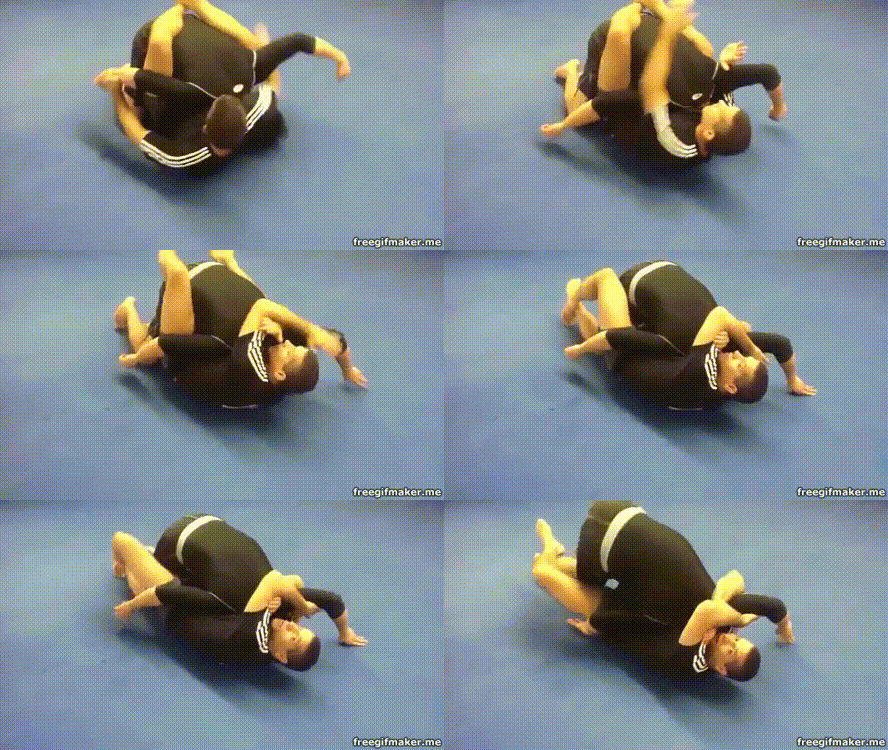
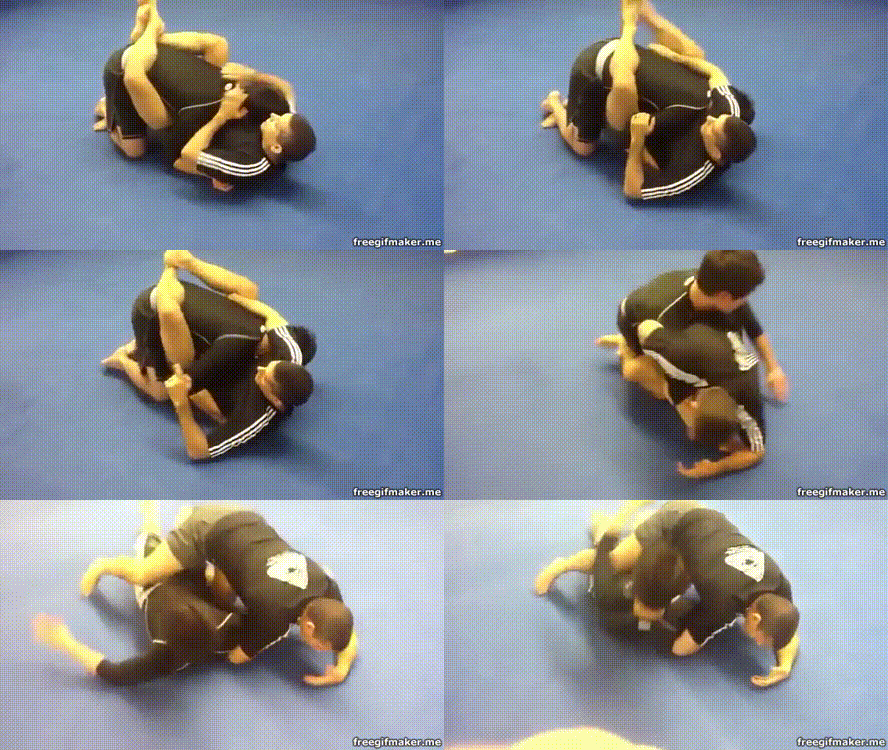
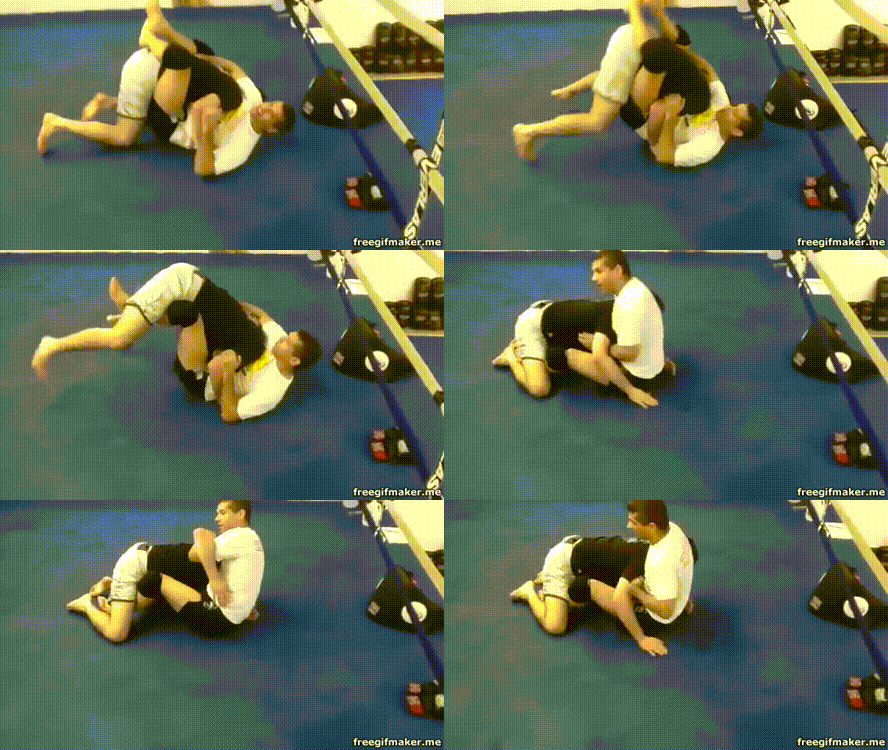
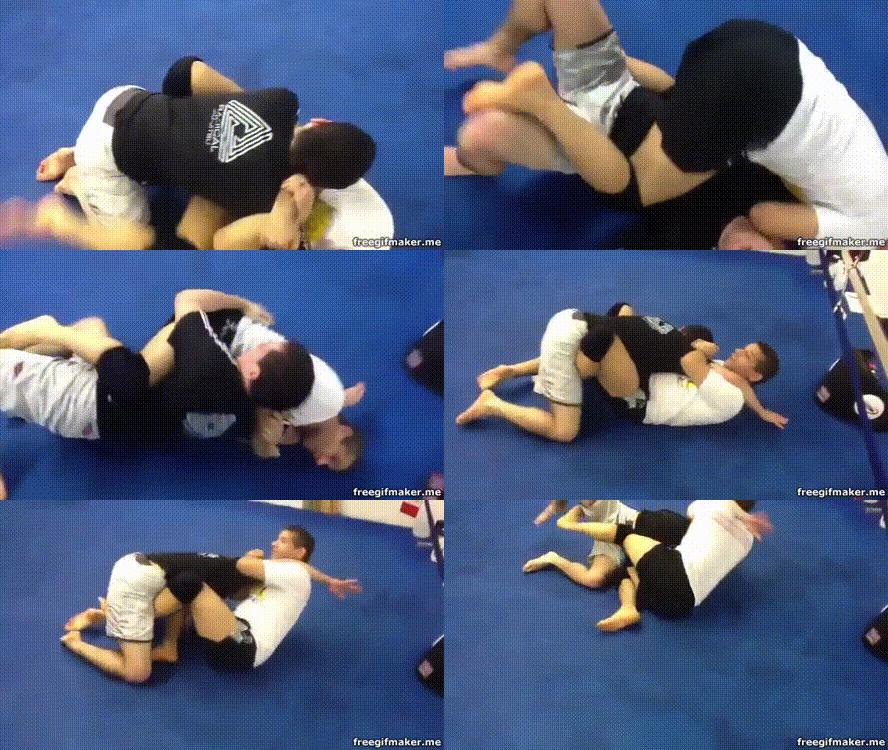
Grappling Without Limits: Wrestling And Judo For BJJ

Wrestling And Judo For BJJ

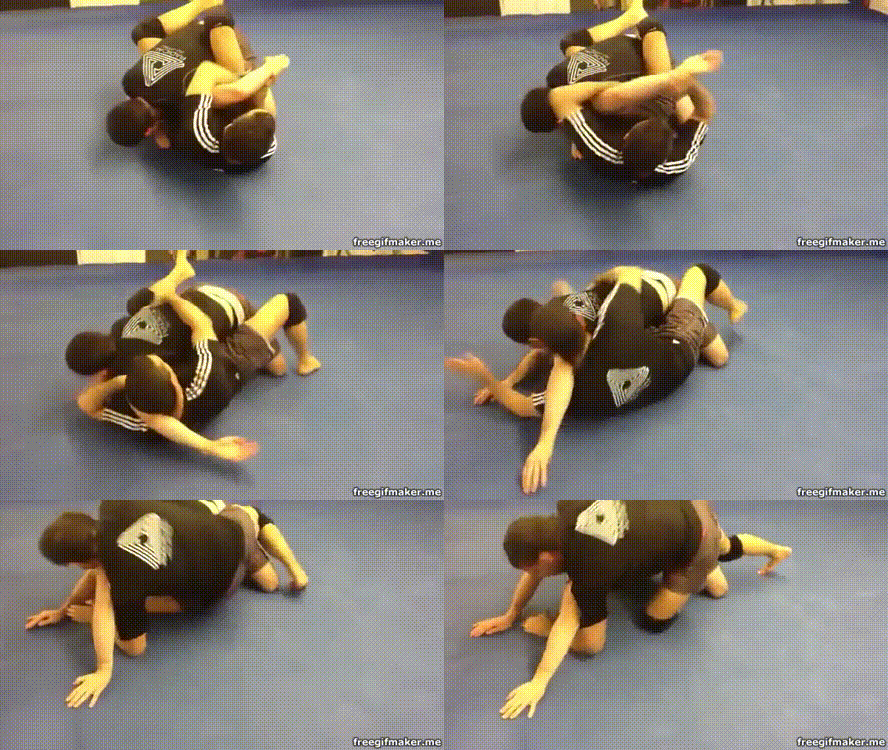
Brazilian Jiu-Jitsu is the melting pot for all grappling martial arts. This description catches the very essence of the sport. Much like Bruce Lee’s philosophy of taking only what works and discarding what doesn’t, BJJ is a filter for the best grappling techniques in existence. In the quest to become the best grappling martial art of all times, BJJ has turned to every other art in the category in order to improve upon its base. Wrestling, Judo, and Sambo have been the three largest contributors to the Gentle Art since its inception. As such, they all continue to have a great influence in certain areas of Jiu-Jitsu. In accordance with the Bruce Lee approach, these arts cannot be incorporated in their entirety. As such, only the best techniques have been taken from Wrestling and Judo for BJJ.

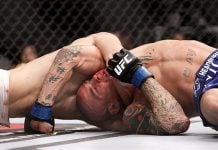
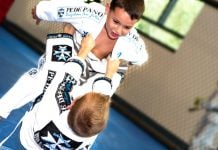
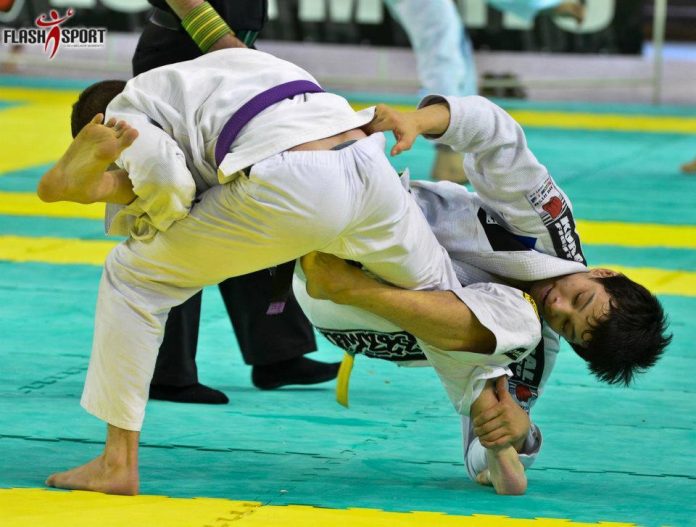
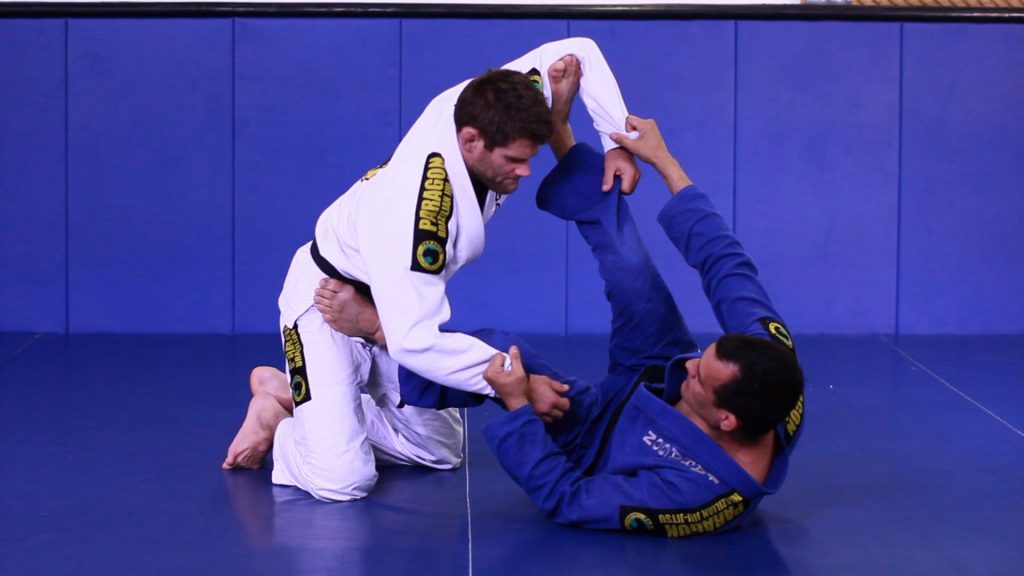
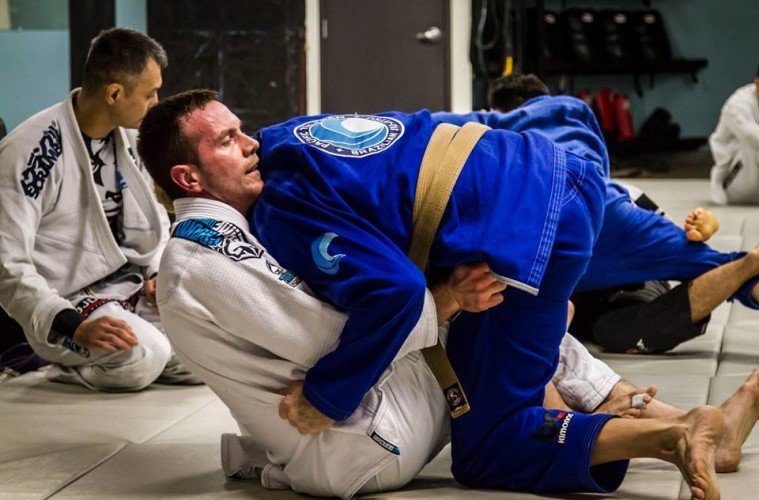
Both Wrestling and Judo are grappling martial arts that are quite different from each other. While the purpose is the much-less the same, the path is very different. Judo is done with the Gi and emphasizes upper body control via grips in order to throw the opponent to the ground. Once there, Judo offers submission options to finish off a downed opponent. Wrestling, on the other hand, is done without a Gi and favors leg grabs and explosive takedowns. The format of the sport gives victory to the practitioner who can hold (pin) the opponent to the ground, rather than submit. Every BJJ practitioner needs to practice selected moves from Wrestling and Judo for BJJ in order to advance and develop into a well-rounded grappler.

How Cross Training Improves Jiu-Jitsu

Cross training in other grappling arts is the best way to go about improving your Jiu-Jitsu. They both offer techniques that translate perfectly to BJJ. The biggest gain that a BJJ practitioner gets from doing wrestling and Judo for BJJ is in the standup department.

Inherently, Brazilian Jiu-Jitsu’s focus is on the ground. There’s no more elaborate system for dominating while on the ground than BJJ. However, for all its proficiency in a “prone” position, BJJ lacks the moves to effectively get the fight to the ground. It is not necessarily devout of original takedown ideas, it just has a smart approach when it comes to it. Use the best of the best in order to be maximally efficient with minimal effort. That’s when both, Wrestling and Judo for BJJ come in.

Why go for both Judo and Wrestling, you might ask? Well, it is exactly those fundamental differences between the two, we already mentioned, that make them a very potent combination. BJJ is mostly done in the Gi, so Judo’s grip-heavy approach is perfect. However, what Judo lacks, due to sports rules, is manipulation of the legs while standing. That’s where Wrestling shines. Now imagine controlling an opponent with grips on the Gi and setting up a powerful double-leg takedown. That’s just one of the countless possible combinations that cross-training offers to grapplers.

Judo For BJJ

Let’s begin with the predecessor of BJJ, the ancient Japanese art of Judo. BJJ originally came into existence as a direct result of Judo. It is, in essence, a modification of the sport with a heavy evolution of the ground fighting portion of the art. Today, Judo is an Olympic discipline and a worldwide martial art trained by thousands of people.

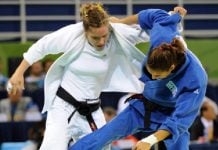
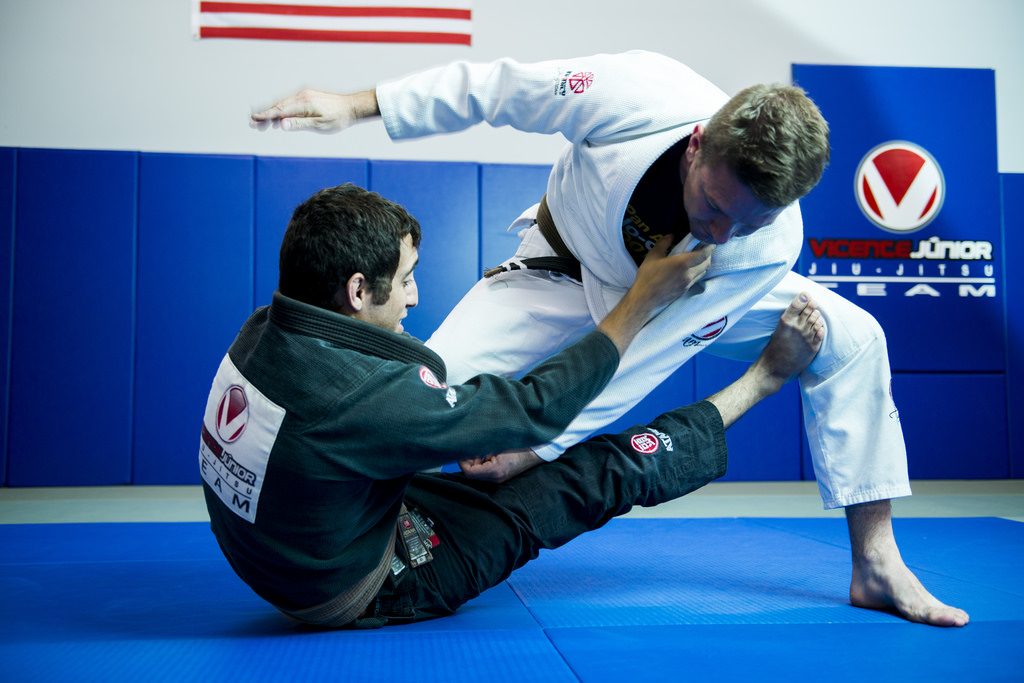
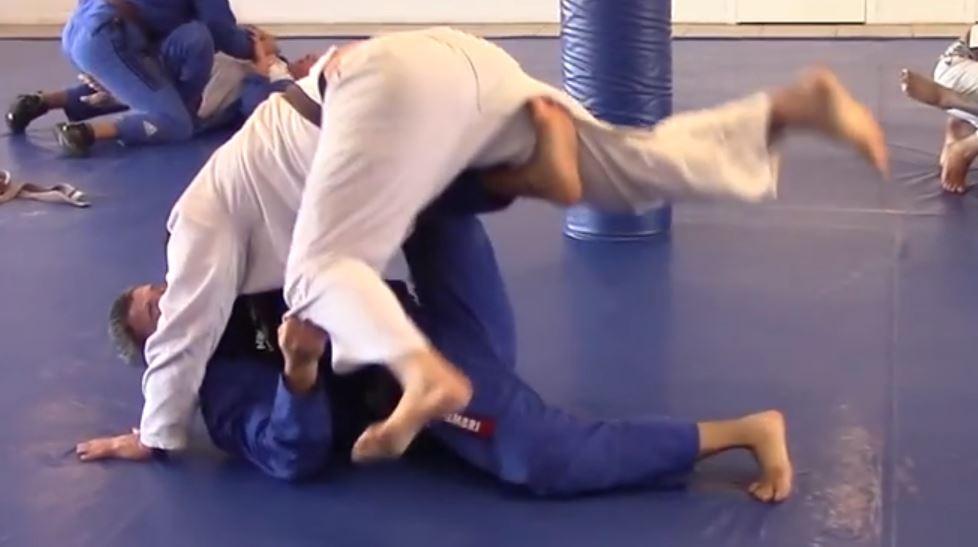
One very strong point to make about the usefulness of Judo for BJJ is the use of the Gi that is common for both sports. The Gi is more than just a ceremonial outfit to wear during training. It is a weapon that can be used against any opponent very effectively. Technically, Judo offers not just plenty of throwing variations, but also lighting quick transitions into submissions. Due to the ruleset, Judokas do not spend too much time on the ground and are jumping straight into submissions when applicable. This is a great way to connect the standup portion of Judo with the ground fighting portion of BJJ. A match made in heaven.

Apart from the technical aspect, Judo is a martial art known for its strong and well-conditioned competitors. Training Judo, even in very specific areas that relate to BJJ, is a great way to get in fighting shape. Expect your grips to improve tenfold after taking up Judo for BJJ. There are some great people, like Travis Stevens that prove how great the combination of the two grappling arts can be. Check out Travis Stevens’ DVDs to see what I mean.

Travis Stevens DVD Instructionals

Improve Your BJJ Conditioning And Body Composition: https://bjj-world.com/jiu-jitsu-workout-program-to-lose-fat/

Wrestling And Judo For BJJ

Wrestling For BJJ

The original Olympic sport, Wrestling has been around for generations, in one form or another. Just like Judo, Wrestling is one of the top arts to cross train in for BJJ practitioners. The lack of the Gi benefits Jiu-Jitsu athletes in two ways. First, it gives the Gi player opportunities to grip and take opponents down in a different manner than Judo. Secondly, it offers those involved in No-Gi Jiu-Jitsu a complete system for fighting on the feet.

Imagine yourself doing a sweep on your opponent, while they’re attempting to stay in base. When a sweep doesn’t quite work out, you’ll often end up in a position for a Wrestling takedown. Whether it is a single or a double leg, if you have no Wrestling experience, you’ve done all the hard work for nothing. The same positions often occur during side control escape attempts as well. In those terms, the takedown game that Wrestling offers to BJJ is unrivaled.

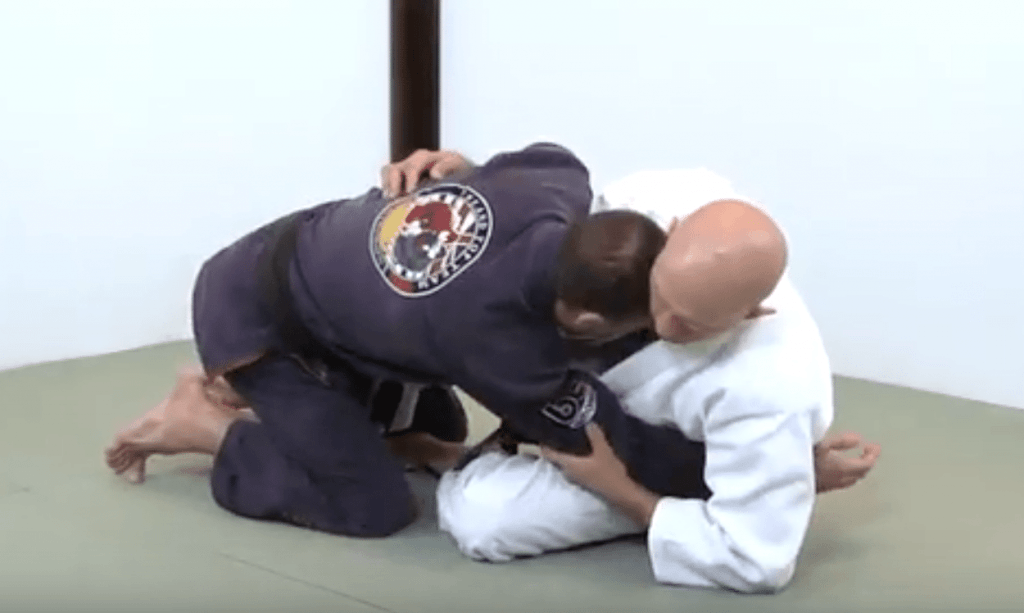
However, Wrestling is much more than just double and/or single leg takedowns and ankle picks. Remember Marcelo Garcia? He made Wrestling a huge part of his game, especially the arm drag. The front headlock is another position that translates beautifully to Jiu-Jitsu, offering both takedown and submission options. Relentless top position pressure, weight distribution strategies as well as immovable pins are all part of the Wrestling arsenal that is helpful to BJJ.

Wrestling Technique For BJJ: https://bjj-world.com/master-the-arm-drag/

On the same conditioning note as Judo, Wrestling is a much more fast pace sport than BJJ. The explosive nature of Wrestling is very beneficial to BJJ practitioners. It is a great way to improve conditioning, balance, improve your timing and develop mental toughness for competition.

Wrestling for BJJ
Wrestling for BJJ

The Dual Nature Of The Jiu-Jitsu Half Guard

Dual Nature Of the Half Guard

The BJJ closed guard is a thing of beauty. It is as simple as it gets, yet offers all the control you need to be safe. This holds true for both sports Jiu-Jitsu, MMA, and self-defense. However, as people got over the initial surprise of the closed guard when BJJ first emerged they started figuring out how to open the full guard. Imagine people’s surprise when all they managed to do is get to the half guard. Brazilian Jiu-Jitsu Half Guard guard is a much better attacking position than the full guard, despite looking less structurally safe.

Through the years we’ve seen an incredible evolution of the half guard. From the basic position, through knee shields all the way to tornado guards and the deep half, they’ve all been the pinnacle of the half guard at one point in time. Bernardo Faria, Lucas Leite, Tom Deblass, Xande Ribeiro are just some of the notables that have won World titles with the help of the half guard. However, this variety within the position, along with the relentless evolution of grappling martial arts, raises another question. Which variation and approach is the best when it comes to playing this versatile position? Should you go the simple route or incorporate more “modern” variations into your game?

The Brazilian Jiu-Jitsu Half Guard

The half guard is a bottom position in BJJ where you control one of the opponent’s legs with both of your own. While it may seem like your just clinging on for dear life, this is not the case. Quite the contrary. When done correctly, the half guard is a position that’s easy to retain and attack from. Let’s take a look at a few rules of thumb for this versatile Jiu-Jitsu position.

The most important structural building block of a successful half guard game is staying on your side. Whenever you’re playing the half guard, always aim to be on your side, facing your opponent. Having both your shoulders on the ground is not a smart idea. As versatile as the half guard is, there are options from there, but creating an angle is your best strategy.

The next key thing in retaining the half guard is keeping your head safe. If an opponent can get to your head, you’re either going to end up in a guillotine attempt or get your shoulders pinned to the mats. Given the structural advantage of the half guard, it is very easy to protect your head and neck. All it takes is to have your bottom arm control the far arm of your opponent. Similarly, controlling the leg requires you to use both of yours in order to have a key lever to the opponent’s hip. With it, you can go for a multitude of sweeps or go for the kill. You can also transition between all the half guard variations until you reach your preferred position.

In terms of grips, Gi or No-Gi dictates the particular gripping patterns, but the principles stay the same. Get to your side and protect your head while controlling one leg. Easy, right?

Half Guard’s Traditional Simplicity

In the BJJ community, the half guard has a label as a lazy guard. Many of the older guys in BJJ often go for a variation of this guard because of the advantages it offers. The reason why people regard it as a lazy position is mainly due to its simplicity. As with most of the very fundamental techniques of BJJ, the half guard was a position the Gracies developed because it suited their style. It doesn’t take Eddie Bravo-like flexibility to work the half guard, neither any particular athletic capabilities. It actually really helps against aggressive opponents, especially wrestlers that thrive in the top position. The half guard is a very effective way to nullify an aggressive and stronger opponent’s athletic advantages.

Old Man Jiu-Jitsu Is Real And It Works: https://bjj-world.com/old-man-jiu-jitsu-training-tips/

As far as effectiveness goes, the half guard is undisputed. When in a strong half guard, all it takes to completely turn the tables on an opponent is getting an underhook. It is the simplest and most direct route to a sweep, often closely followed by a pass. It takes next to no effort, given that the positioning is pristine. If you’re looking for a simple half guard game that works miraculously all you need is to look at Bernardo Faria. The 5 time World champion has one of the simplest, yet efficient half guard games in the world. He even has a very detailed DVD on the subject.

Bernardo Faria Battle Tested Half Guard


The Innovative Complexity Of The Half Guard

As far as half guard evolution is concerned, you just need to pick a direction. During the years, the position has become the root of a very big tree that branches out in every direction. As simple as it is, it can get notoriously complicated and confusing. Depending on the variation of half guard you like to play, you are going to need different athletic abilities.

While finishing with an underhook is quite simple, transitioning to a single or double leg from the bottom is going to require you the same level of explosiveness that it takes to finish these moves on their own. Add in the cost of getting there and you can see why not every variation is a good fit for every grappler. Another problem with the position is getting pinned with your shoulders on the mats and a heavy opponent on top. The half guard does offer ways out, but none as simple as just inserting an underhook Unless you’re well versed in the lockdown (a quite advanced unorthodox variation) you might be in trouble.

Furthermore, there are plenty of lapel dependent variations and inverted versions like the Tornado guard that requires some serious dexterity. While the Tornado guard, for example, is great for people in the adult division, a master 4 competitor is probably going to remain folded if they attempt it.

How To Develop Flexibility For Grappling: https://bjj-world.com/how-to-get-flexible-fast/

As you can see, there’s a half guard for everyone, You just need to be aware of your capabilities and, most of all, weaknesses when choosing your favorite. Once you do though, You’ll be an unstoppable force from the bottom. Tom DeBlass can certainly help, thanks to this amazing release of his Half Domination DVD

Tom DeBlass Half Domination

REVIEW: The Catch Wrestling Formula Neil Melanson DVD

Neil Melanson DVD Catch Wrestling Formula

BJJ, as a grappling martial art has always been open to cross-training in other arts from that category. The constant evolution of art is mainly due to this openness. Historically, Brazilian Jiu-Jitsu is a mixed grappling art, to begin with. It was founded on the principles of Judo, which has roots in Japanese Jiu-Jitsu and later embroidered with skills from Wrestling and Sambo. Even to this day, BJJ still accepts any grappling concepts that work into its huge toolbox. One of the major contributors to Brazilian Jiu-Jitsu has always been catch wrestling. In terms of bringing the two arts together, there’s probably nobody better than Neil Melanson. If there’s one catch wrestling digital resource you should own, it is the Neil Melanson DVD called “The Catch Wrestling Formula”.

ON SALE HERE:
Catch Wrestling Formula by Neil Melanson 

The Catch Wrestling Formula

Mr. Melanson is a real grappling expert that often puts out amazingly detailed content via YouTube. I, personally, am a huge fan of catch wrestling for BJJ. You can imagine my joy when I heard of a Neil Melanson DVD that focuses exactly on this subject! Suffice to say I never even read the content before ordering. The result – I became unstoppable from the top, more precisely top half guard, thanks to this Neil Melanson DVD. Here’s what I think about it:

Catch Wrestling For BJJ

The art of Catch wrestling is an old and very brutal one. In fact, in complete contrast to Jiu-Jitsu, it’s often dubbed as the “Brutal Art”. Catch wrestling is based very much on the wrestling principles of pinning. However, there is a “catch”. Whereas wrestling is only focused on the pin as the ultimate way to win, catch wrestling favors submissions.

The use of submissions in catch wrestling is exactly why it is such a good fit with Jiu-Jitsu. The main difference is in the way submissions are set. While in BJJ it is all about control before submission, catch wrestling utilizes submissions to set up pins. Despite the similarly reverse methodology, BJJ has a lot to learn from the catch wrestling approach. That’s exactly why every grappler needs this Neil Melanson DVD.

The ‘Brutal Art” tag is mostly due to the pain and discomfort that catch wrestling looks to create in every position possible. Much to that extent, catch really favors leg locks, which we all know have been proven to be highly effective at the highest level in BJJ. Now imagine going for heel hooks of a crushingly painful cradle. Pick up the Neil Melanson DVD “Catch Wrestling Formula” and you won’t have to imagine it any longer.

Who Is Neil Melanson?

Neil Melanson is an accomplished grappling coach with boatloads of experience. He spent a long time as the head grappling coach at Xtreme Couture and Alliance MMA. He specializes in catch wrestling, but also favors Judo, having worked with Gene LeBell.  Some of the other notable coaches he’s worked with to develop his game are Gokor Chivichyan and Karo Parysian. No wonder Melanson likes leg locks so much. Triangles and a tight close guard game are also his forte.

Neil Melanson has produced some high level grapples himself, the likes of Randy Couture, Gray Maynard, Chael Sonnen, and many others. He has a very effective and submission oriented style that he demonstrates in high detail in his DVD release.

The Catch Wrestling Formula Neil Melanson DVD Review:

As far as catch wrestling goes, I’ve always looked at it from one perspective in relation to my BJJ game. Top pressure. Despite the fact that it is a well-rounded art both standing and on the ground, this was one area I personally was looking to improve. What I found was that catch wrestlers not only know how to distribute weight to perfection, but they also know how to make someone really uncomfortable while doing it. Moreover, they even know how to induce pain from pinning positions. This discomfort is key in both controlling an opponent and causing an opening for a submission.

Since acquiring the Neil Melanson DVD “The Catch Wrestling Formula” I ended my quest. Everything a grappler needs to know about pressure and passing into submissions is there. The DVD is mostly focused on submitting from and/or passing the half guard. Neil is very methodical in his explanation and devotes a lot of time to every move. This instructional is unlike most of the “classic” BJJ instructionals. Melanson spends between 20-30 minutes on every move, talking about every single detail.

The content is spread across four DVDs, each working on a very specific subject. Each DVD is an hour long and filled with techniques that connect to each other. Melanson’s instructions create a system that covers every “what if”  that might arise from a specific position or submission.

Underhook Counters

The first DVD starts in the top half guard position. Neil focuses on dealing with the inevitable underhook from the bottom player. The underhook bottom half guard game is the most common one in BJJ, even at the highest level. Suffice to say, you’ll never suffer from it any longer after watching this Neil Melanon DVD.

The first option Neil demonstrates is how to pass while utilizing the opponent’s underhook. From the pass, he continues to offer great attacking options. His details on head control prior to setting up the Darce choke are impeccable. Neil also makes a very clear distinction between a Whizzer and an overhook, which I didn’t know before. He offers attacking options from both, as well as options to connect them. On a final note, the Mizzou choke is so effective and easy to get that it quickly became one of my favorites.

Cow Catcher

The Cow-catcher is a very interesting position that was always kind of a puzzle for me. After watching Melanson’s DVD it all became clear. For the uninitiated, the cow catcher is a variation on the front headlock which leads straight into multiple chokes.

Melanson offers not only the D’arce and Guillotine but also a variety of neckties as well as transitions to the rear-naked choke. All of the moves are explained in great detail and work as a tight system. Oh, and his “Half Helch” segment is a thing of pure grappling beauty. It is going to revolutionize your top half guard game, no matter how good you think you are now.

Cradle Series

As far as I’m concerned, this is the masterpiece of this Neil Melanson DVD. The third volume is all about a position that is a wrestling staple – the cradle. Since I’ve never done wrestling I had no prior knowledge of it. What I got from Melanson is not only the essential details on holding and getting to the cradle position but the catch wrestling aspect as well. namely, he uses the position to get to a number of submissions that are as tight as it gets.

The DVD outlines how to transition from one cradle position to another while constantly keeping the pressure on the opponent. Watch out for every little detail here, since they’re all crucial in maintaining control during transitions. The transition to the back is my favorite because it not only gets you a great position but sets you up for a choke immediately.

Closed Guard Shoulder Pin

In all honesty, the cradle series spills into the fourth DVD, at least in the beginning. Remember how I wrote that Melanson really likes going for leg locks? Well, he shows us how in this volume and it is groundbreaking. He uses catch wrestling positions like the cradle to enter into tight heel hooks and kneebars. For those who are proficient in the leg lock game, he offers very original ways in which to get into dominant positions.

The final part of the fourth DVD is dedicated to a bit of a bottom game and a guard that is Melanson’s specialty. The shoulder guard system he offers is a closed guard variation that gives a whole new dimension to the guard. it is a great ending to offer variety and demonstrate just how knowledgeable coach Melanson really is.

ON SALE HERE:
Catch Wrestling Formula by Neil Melanson 

The Catch Wrestling Formula

Loop Choke – Submit Your Opponents From Everywhere

loop choke

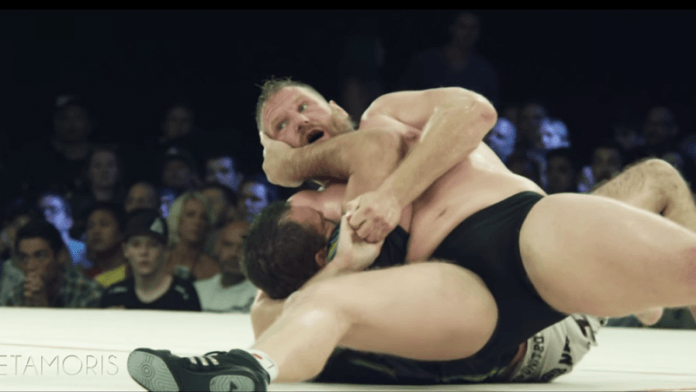
When it comes to submitting people in BJJ the choke is the ultimate weapon. A choke leaves no doubt as to whoever won. Some people are quite resistant to joint locks, and might even be willing to let something snap. In those terms, there is one choke submission that’s pretty underrated but is as efficient and as tight as any other in Brazilian Jiu-Jitsu. It is the one and only Loop Choke.

Strangles are as close to killing someone as you can get, without legal repercussion, of course. When a person taps to a choke, they attest to the fact that you had their life in your hands. As far as chokes go BJJ can boast that it arguably has the largest number of strangling techniques in all of grappling martial arts. A big reason for this is the utilization of the Gi for a number of different chokes. And that’s where Loop Choke comes in as the ultimate Lapel Choke Submission.

About Loop Choke

The loop choke is one of those chokes you learn at an early “grappling age”. It is not quite considered basic, but it’s right there among the fundamentals. People often forget about really fast and tend to go for bow and arrow or other fancy lapel chokes. How efficient this move is in high-level competition has been proven by those who stick with it. It is really uncanny how underrated and underused this choke is seeing as you can hit it from almost every position in BJJ.

Setting The Loop Choke Up

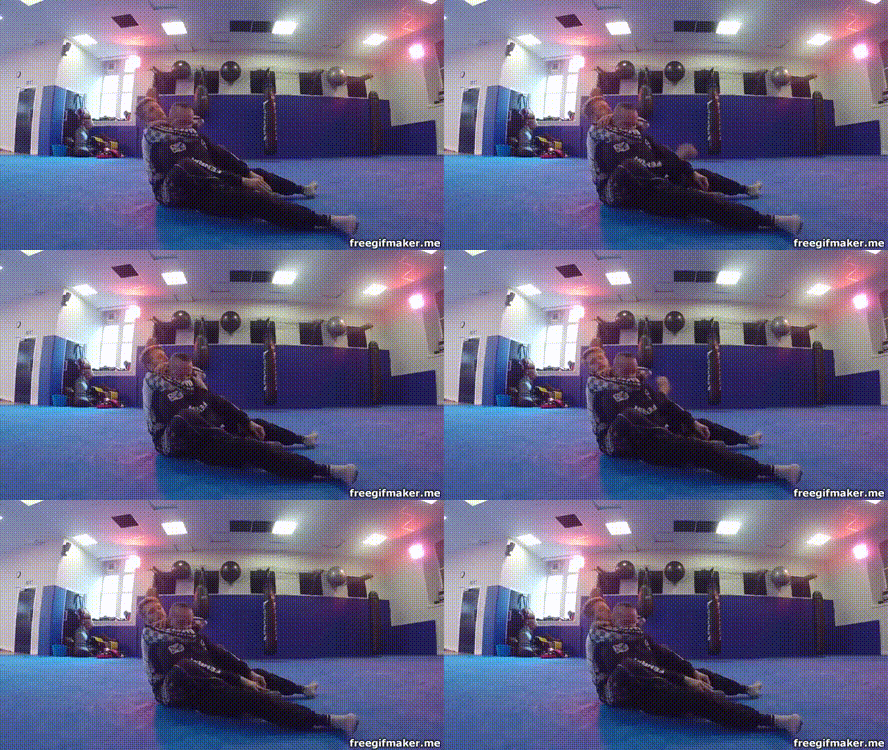
Loop choke is a Gi-only choke that works really well in Jiu-Jitsu. The idea, as with any lapel choke, is to use the opponent’s own Gi against them. For that to work, the lapel has to be positioned properly and tightly around their neck. For the choke to work, apart from grips, body positioning has to really be spot on. But let’s look at each and every one of these aspects more closely.

The loop choke submission starts and ends with the grips. Or better said the grip. One of the main differences between this submission and other Gi chokes is grip depth.  Almost every choke In BJJ needs as deep a lapel grip as possible. This choke is on the other side of the spectrum, requiring a mid-level grip in terms of depth. Too much depth and you won’t be able to hold it because of the pressure on your wrist. For the best grip go for a collar bone-level grip.

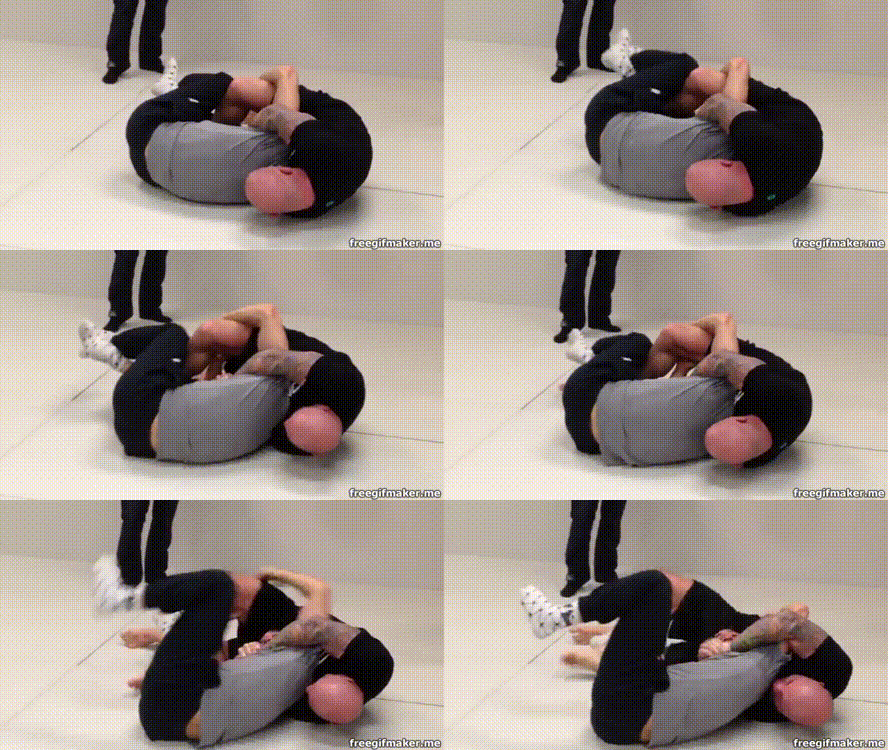
As far as body positioning goes, the loop choke requires a gator roll-like movement in order to finish. From a front headlock position, with the grip in, the aim is to go under. However, unlike a rolling anaconda choke, with the loop, you need to go perpendicular to your opponent. To do so, when you roll under, the aim is to thread the head near their hips.

One more thing to note is the placement of your free arm. It needs to go under the opponent’s armpit all the way to the back of their head. This is where a lot of the tightness comes from.

And for all those No-Gi only grapplers out there, remember that the Guillotine is always there without the GI.

Top Position

The half guard is one of the bread and butter positions for executing the loop choke. It can be done from both the top and bottom of this position, but for now, we’ll stick with the top.  A great position to start from is with a strong grip on the opponent’s lapel. In order to set it up, you’ll need to switch your base and get a guillotine-like grip around the opponent’s head. Furthermore, you’ll use the arm that’s strapped around the head to get the grip on the lapel. From there, an underhook from your opponent is just going to make things easier to finish. In the worst-case scenario, you’ll free your leg so that you can either stay in side control or finish from a front headlock position.

Loop Choke Variations
Click For Full Video with 2 Loop Choke Variations

One of the most effective ways to get the finisher is from the front headlock position. Conversely, the sitting guard and/or butterfly guard are also great positions to hunt from. The first thing to get is the grip on the lapel. It offers both control and a lever to finish the choke. From all of these positions, it’s all about correct rolling and head pressure in order to finish. Do not be hesitant to roll under your opponent, as you won’t stay on the bottom. You’ll just end up on top with a tight choke on.

standing Loop Choke
Click For Full Video

For those that are into flying submission, it is a comfort to know that you can hit this submission from standing as well. While it is not “flying” per say, it comes pretty close. A snap-down is all you need in order to get the lapel grip and gator roll your way into a win.

Setting Traps From The Bottom

Loop Choke from The Half Guard
Click For Full Video

While effective from the top, the loop choke is also the perfect bottom side trap. AS with the top, the bottom half guard offers a great opportunity to slap the choke on. Instead of looking for an underhook, make sure you have a tight grip on the opponent’s far side lapel with your near sidearm. A push with the arm is going to cause the opponent to push back. This is the momentum you need to loop your arm around their head. There’s no need to leave the half guard in order to finish. Just thread your arm through and it’s a tap.

Loop Choke from The Closed Guard
Click for Full Video

The closed guard is another common position for setting it up. It is even easier to set it up from the full guard than the half guard since people do not pay too much attention to a lapel grip from there. Especially when it is a shallow grip. While staying in closed guard, the goal is to break your opponent’s posture so that you can thread your arm through to the back of the head. Sitting up slightly to cover more space is a good trick to make things even tighter.

The Sickest Loop Choke ever made by Alexandre Vieira:

Without a doubt, the most savage loop choke you’ll ever see: Alexandre Vieira puts his opponent to sleep in less than one minute at Tokyo Grand Slam. Also, don’t forget to check Vieira’s Instructional on that choke and many others.

Alexandre Vieira – The Crucifix and Loop Chokes

We have to mention the NEW Alexandre Vieira DVD – The Crucifix and Loop Chokes. If you’re interested in loop chokes of all kinds and also the crucifix position I must say there is no better instructional anywhere around than Alexandre Vieira DVD is. It’s an instructional with so many techniques (check techniques list) and so many options to get the loop choke from any position that it’s a real game-changer. I won’t even mention the crucifix position because Alexandre showed the ways of getting there so easily that it’s almost impossible to defend it. Make sure you check it HERE if you’re interested in crucifix position and loop chokes.

Alexandre Vieira - Crucifix and Loop Choke
Techniques List

Related Articles:

REVIEW: Alexandre Vieira DVD- The Crucifix And Loop Choke
Different BJJ Chokes For Different Folks
Guillotine Choke Essentials
Subtle Tricks For Developing World-Class BJJ Chokes

How Far Are You Willing To Take A BJJ Submission?

How Far TO Take A BJJ Submission ?

We’ve already beaten to death the fact that BJJ is all about respect. Whether it is common courtesy in training, behavior outside the academy or competition etiquette it all boils down to respect. But respect is a very general expression that is quite open to interpretation. While bowing is generally considered to be a sign of respect, other actions might not be so clear. In all honesty, the complete situation has to be taken into account to understand the context. One such example are submissions. While we all agree that it is respectful to give an opponent the time to tap, what happens if they’re stubborn. How far are you willing to take a BJJ submission?

One huge aspect of grappling martial arts competition that is of big importance is etiquette among competitors. For that matter, this does not start nor end with grappling.  Anyone involved in competitive sports, and in particular combat sports, need to adhere to competitive etiquette.  What is okay, and not okay, to do at a competition? The subject of taking a BJJ submission too far is a very complex one. It is hard to take anything for granted or talk in absolutes when attempting to resolve this issue. A huge number of factors play crucial roles in whether the correct decision is to “go all the way”.

Common Competition Etiquette

One thing that can happen during a BJJ competition is that a competitor sustains an injury.  Sometimes it can just be something minor. On other occasions, however, it might be a major injury. It is a common sight at every Jiu-Jitsu competition worldwide. There are competitors sitting down, focused on taping up a joint or two)to protect them from further injury.  This begs the question if attacking an injured body part is in poor taste or if it is simply tactically sound. It’s just one of those situations where respect can be interpreted very differently by different people.

How To tape Your Fingers For BJJ: https://bjj-world.com/best-bjj-finger-tape/

If you know your opponent has a specific hole in their game, should you avoid that hole in order to level the playing field? Is that respectful or just plain stupid?  If you know that a guy got his elbow popped in a prior round and that elbow is on the side that you like to armbar, is it fair game? Furthermore, how far would you take a BJJ submission on a limb you know is injured?

BJJ Submission Respect

A few years ago, there was an incident that springs to mind. It was an instance in which a blind competitor faced a sighted competitor. What allegedly happened is that the competitor with full use of his sense of sight avoided contact with the blind competitor. In turn he, literally, blindsided him with a takedown to win the match on points.  He won the match, but did he dishonor himself in the process?  Did he break an unwritten rule of etiquette?

Takin A BJJ Submission All The Way

Logically, taking into account that BJJ is a combat sport based on submitting your opponent, there are a few obvious things that you should avoid. For example, do not poke your opponents in the eyes and to not grab their fingers.  Attacking a joint that you know to be injured shouldn’t be a no-go, given the competitive structure of the sport.  However, a higher degree of sensitivity should be applied to the submission.  After all, this is just Jiu-Jitsu and we are all part of the same small community.  Going for a disability is a tactic on its own, but would you change your complete tactical approach just because of the opponent’s newly acquired weakness? Competitions aren’t cheap and we are there to try to win. With the rise of professional Jiu Jitsu and money on the line this subject goes into a whole new dimension.

Tap Early to Learn: https://bjj-world.com/how-to-learn-jiu-jitsu-fast-tapping-out-in-bjj/

What about submission speed and viciousness?  This is also something that has been explored before. Some people feel that you should give your opponent time to tap, and not actually try to break joints that you have locked.  This isn’t the tactic of many.  In competition, you need intent behind a BJJ submission in order to get the tap.  If a competitor is stubborn to tap, and the person applying the submission hesitates that could cost them the match.

Remember the 2004 Worlds epic battle between Jacare and Roger Gracie? We all know that even despite an injury due to a BJJ submission, your opponent can still beat you via points.  It’s always advisable to do your best to tap early in competition when you get caught. The idea is that you should always assume that the opponent is trying to cripple you. Why risk everything on stubbornness?

https://www.youtube.com/watch?v=bIcf_r2rhyI&t=3s

The Verdict

There are very few absolutes on the competitive playing field. While we all like to be respectful, competition, professional or not is a different playing field than training. Tugging on a BJJ submission on a teammate in rolling is just plain wrong. Even in competition, whenever teammates meet, submissions should be gentle and taps fast. In all honesty, when real competition is in questions, I think that you should go all the way. Unless your opponent is physically disabled, of course. Even then, a win is a win, you just need to be more careful how you obtain it.

It is contradicting that in a sport based on respect, the best way to the ultimate goal of victory is often the most violent one.  Once the match is over, it is important for to carry yourself like a martial artist, with discipline and respect.  However, during the match, all bets are off.

Tips For BJJ Competitors: How To Avoid Overtraining

BJJ overtraining competitor tips

So, you’ve been grappling for a while now. You’re aware that when you enter into BJJ, you agree to feel beat up every once in a while. You also agree to joint pain, numerous tweaks, and small injuries that are going to stay with you for the rest of your life. But you have to be careful not to take it too far.

When a grappler feels it is progressively more difficult to get out of bed and/or injuries are worse than usual, it’s time to step back. If you feel like you’re coming down with something, or you seem to need to skip those last few rounds of rolling you should reevaluate things. What happened? Where did it all go wrong? The problem isn’t the exercise or even the intensity. The problem is not balancing stress with recovery. The solution is in smart planning that helps you avoid overtraining.

When it comes to competitive grapplers, overtraining is a major issue that has t be addressed. Each and every one of them is obsessed with doing more. More cardio. A few more squats. More rolling. More drills. Fewer calories. They throw everything at their improvement in the weight room and on the mats alike, all in order to achieve competitive goals.  This full-throttle approach seems to work for a little while. Until… it doesn’t. If you’re not careful, “more” can lead to overtraining, injury, and illness.

Avoid Overtraining

Understanding Training

Before looking at how to avoid overtraining we must first understand it. But we can’t look at overtraining if we do not grasp what training is all about. First and foremost, exercise is a stressor. Usually a good one, but a stressor nonetheless. If you exercise intensely and/or often, you add stress to a body that may already be stressed from other life stuff like work, relationships, travel, late nights, etc. This isn’t a bad thing. Exercise can actually help relieve stress and balance everyday life better.

But in terms of physical demand, our bodies still need to recover from all the stress we experience. How well you’ll recover depends on how much total stress you’re under at any given moment. In other words, it’s those days when you were late for work and your boss yelled at you. Even worse, you spilled ketchup on your favorite shirt and you were up all night caring for a sick child. On top of all that you went to the gym and tried to roll 10 x 10 rounds with the competitors in your team. Or maybe go for a new PR on one of the basic lifts.

A Conditioning Program For Jiu-Jitsu: https://bjj-world.com/jiu-jitsu-workout-program-to-lose-fat/

It’ll take longer for you to recover from that workout than it would have if you’d done it on a day you slept well, woke up to sunshine, and had a terrific breakfast. So, overtraining is not something that you can achieve in a few training sessions. Much like training it has cumulative effects that extend well beyond the mats.

Understanding Overtraining

Our bodies have complex feedback loops and elegant shutdown systems that actively prevent us from over-reaching or pushing ourselves too hard.

Two systems are at play in terms of overtraining. Our central nervous system (CNS) and local fatigue. The CNS acts like a car engine regulator. If the engine on a car revs too high for too long, it shuts down. Similarly, if we train too much, our brain tries to protect our muscles by reducing the rate of nerve impulses so we can’t move as much. And we certainly can’t work as hard. Local fatigue is the result of energy system depletion and/or metabolic byproduct accumulation. This mechanism makes your muscles feel really tired, lethargic, and weak. Using our car analogy, this is sort of like running out of gas.

Energy System Training For BJJ: https://bjj-world.com/cardio-for-bjj/

Training too frequently and intensely without prioritizing recovery means that stress never subsides. As a result, you might experience blood sugar ups and downs, depression, anxiety, and/or racing thoughts. You might even have trouble sleeping or early wakeups. Food cravings, trouble to control your eating, and lower metabolism due to decreased thyroid hormone output are also symptoms of overtraining. Also, the production of sex hormones gets disrupted which means less mojo overall, and in women, irregular or missing menstrual cycles.

You don’t get to decide if you need recovery or not. Your body will decide for you. If you don’t build recovery into your plan, your body will eventually force it. The more extreme your overtraining, the more you’ll “pay” via illness, injury, or exhaustion. That is why you need to know how to avoid overtraining before it sets in. The more severe the payback, the more “time off” you’ll need from training. And you can’t do BJJ from home.

How To Avoid Overtraining

How To Avoid Overtraining

Here’s your first tip: Overtraining isn’t exactly the problem. The problem is more like under-recovering. Your body can actually handle a tremendous amount of work… if you recover properly and fully from that work.

In order to avoid overtraining, your stress-recovery pattern should look like rolling hills. For every up (training or life stress) there’s a down (recovery). For every intense workout, there’s an equally intense focus on activities that help your body repair and rebuild. This doesn’t mean you need to retreat to your dark and quiet blanket fort and get massages every day… although that does sound awesome. One way is to find small ways of getting movement whenever and wherever you can. That includes real-life functional movement, such as biking or walking to work or walking to the grocery store and carrying your groceries home. When you think of moving this way, it stops becoming “a workout”.

If you’re feeling some of the symptoms described in this article, here are a few steps you can take to start feeling better. For some, skipping a workout is no biggie. For others, taking a day off requires effort. Doing less can make you feel uneasy. If you’re looking to avoid overtraining ask yourself how do you feel? Are you constantly in pain, tired but wired, hungry, etc? Are you getting results? If you’re beating yourself up and not getting anywhere, you’re most likely heading towards overtraining. Maybe it’s time to take a different approach.

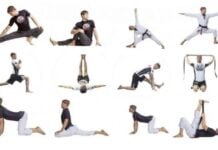
First. do a mind-body scan. Lie quietly for a few minutes and bring your focus slowly from your feet to your head. What does your body feel like when it’s well-rested? How do you know when it needs a break? Next, schedule a massage. Block off Sunday afternoon for guilt-free goof-off time. Whatever you do, remember that your recovery — what you do between workouts — is just as important as training BJJ.

BJJ Overtraining: How To Know If You’re Grappling Too Much

How To Recover From BJJ Training – Try Float Therapy

Things To Do After a Brazilian Jiu-Jitsu Class

A Detailed Examination Of The Inverted Heel Hook From The 4/11

4/11 Inverted Heel Hook

Ever since Eddie Cummings started claiming people’s legs in competition, the grappling world has turned its attention to the leg locks game. The influence of the Danaher Death Squad is unquestionable, but so is their secrecy. Apart from that Joe Rogan interview, neither John Danaher nor his students disclose the details behind their leg lock game. They have every right to do so since it’s how they win tournaments. Even during seminars and private lessons, the Renzo Gracie crew keeps their secrets well hidden. So, what the grappling world is left with is reverse engineering. At least until Coach Danaher sees fit to release his groundbreaking heel hook details.

Before we go further into the how and what of the heel hook submission, let’s make something clear. Although it is one of the highest percentage submissions in Jiu-Jitsu, the heel hook is not the holy grail. The Danaher Death Squad are very well versed in both other kinds of leg locks and other submissions in general. Remember that the submission hunting game is a complex one, including a variety of systems and strategies. That said, having a great leg lock game based around the heel hook is always a big advantage. When we’re talking about the inverted heel hook from the 4/11 this is even more so the case.

Our Review Of The Most Comprehensive Heel Hook DVD Available: https://bjj-world.com/craig-jones-down-under-leg-attacks-review/

The 4/11 Position

As the BJJ saying goes, it is always position before submission. In the case of Danaher’s Jiu-Jitsu philosophy, it is “control before submission”. The 4/11 is an ashi garami or leg entanglement position that offers supreme control over the opponent. The position originates from Sambo, where it is known as ‘The Saddle”. However, there are significant differences in both control and attacking between the original and modern position.

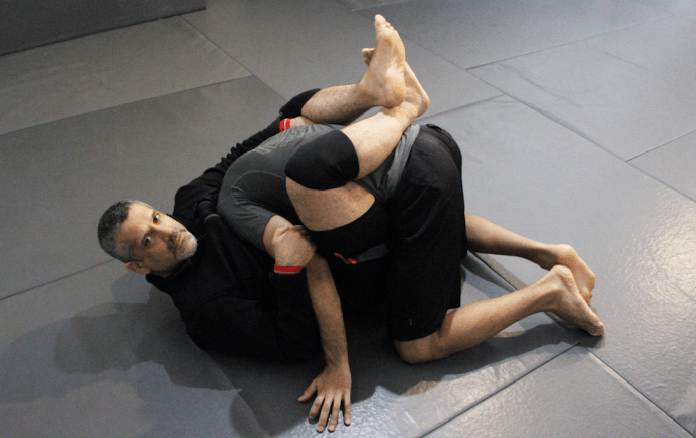
The idea behind control in the 4/11 is nothing new. The concept is to use your whole body to completely isolate one of the opponent’s limbs. As with an armbar, for example, your own legs play a huge role. They are the strongest part of our bodies and therefore offer the most control. In the 4/11 you have your legs triangled around one of your opponent’s legs. The triangle is then locked in between the opponent’s legs. For the best control, your shin needs to be on the opponent’s hip fold, with your knee on the ground. The other leg should be triangling the first one at a slight angle so that it tightens the triangle. Furthermore, remember to push into the ground with this leg in order to completely immobilize the opponent’s hips.

The arms also play a crucial role in controlling the position. What I found really increases the control in the 4/11 is placing a grip on the tendons of the hamstring, just above the opponent’s knee. To do so, you need to use the arm that is closer to the floor and keep your elbow in. Along with proper leg control, this is going to prevent every escape your opponent attempts.

Danaher’s double trouble principle has to be mentioned here as well. until you’re ready to finish, always control the free leg with your top arm.

Heel Hook Mechanics

Now, that you know how to control the 4/11 position let’s pay closer attention to the heel hook. The heel hook is a highly technical submission that requires a lot of knowledge in order to be performed correctly. The old Pride heel hooks, as effective as they once were, are not enough in today’s control based game. You need to truly understand both the control position (in our case the 4/11) and the heel hook itself. Only then can you hope to achieve success with this powerful submission.

The heel hook is a twisting submission that places immense pressure on numerous structures of the leg. Despite their name, most of the damage of heel hooks happens in the knee. Primarily damage occurs inside the knee joint, particularly in the ligaments. It acts very much as a wrench in terms of mechanics. Twisting the foot while pinning the hip joint and controlling the knee joint transfers force upwards to the knee. That is why the structures of the knee are the first to give way.

However, the damage extends past the knee joint. The heel hook also causes damage to the ligaments of the ankle joint, causing a painful break. The reason why this is rarely seen in competition is that the damage to the knee occurs very fast and well beyond that of the ankle joint. With the inverted heel hook, this effect is even more pronounced.

The 4/11 Inverted Heel Hook

Let’s pick up where we left off. You find yourself in a perfect 4/11 position. You have a great triangle, knee on the floor, a grip behind the knee and control of the free leg. Now you’re all set for the inverted heel hook. Well, almost.

The point of controlling someone is breaking their will. Once they know that they can’t escape, only then should you go for the kill. In terms of getting the inverted heel hook from the 4/11 you’ll first need to dig the heel out. Having great control means your opponent is either going to go for your grips or try to hide the foot. To get the correct grip you need to focus on trapping the opponent’s toes between your triceps and latissimus muscle. When trapping the fingers, it is important to make sure that they’re not extending past your armpit. This trapping motion is going to pop the heel right out so you can place your grips.

In terms of grips, there are three major grip combinations for finishing the inverted heel hook. The first is the “generic” heel hook palm to palm grip. It is the “loosest” of the three but the easiest to obtain. Second, you have the butterfly grip which requires you to reach further on your forearms than the palm to palm grip. Finally, there’s the reverse butterfly grip, the tightest and most painful of the bunch.

In order to finish the submission first forget the old school way of twisting your torso. From a tight 4/11 and an even tighter grip, the first thing to look for is to bring your clasped arms towards the center of your chest. Next, tighten your elbows and shrug your shoulder. This will get you a tap in most of the cases. When you’re up against a particularly tough opponent, you might need a bit more work. After you shrug, you’re going to look to lift your hips upwards, using the foot that’s on the floor as a power source. From there, you first think about hip extension and pulling the gripped heel towards your face. Only after all of these checkpoints, you’ll look to twist towards the floor.

Craig Jones DVD
Check Out the Craig Jones – Down Under Leg Attacks DVD and DIGITAL Instructional

How To Have Your BJJ Gi Last Longer

BJJ Gi Longevity

Remember that first UFC event that exposed the world to Brazilian Jiu-Jitsu? Two things stood out above anything else that night. First, everyone was amazed at how efficient ground fighting can be. Second, people were surprised to see Royce Gracie come out and compete in a BJJ Gi. The Gi is an essential part of BJJ history, as it was the original attire worn by the founders of the art. Most of the Gracies that competed in the early UFC events or Pride did so wearing a BJJ Gi.

Although the No-Gi scene is growing rapidly, it is still a long way from the Gi competition scene. The BJJ Gi remains the number 1 training tool of most academies worldwide. In today’s world of grappling martial arts, there are literally hundreds of Gi variations to choose from. You could buy a generic white, go for pink or camo, and even have a Gi made out of hemp. It is a whole industry that is based on the intent to sell as much product as it can. However, BJJ Gi’s do not come cheap, and you often need more than one, so you need to really have them last as long as possible.

Buying A Brazilian Jiu-Jitsu Gi

Buying a BJJ Gi is an investment into the grappling martial art of Jiu-Jitsu. It’s a uniform, a tradition, a protective layer. It is also a useful tool to submit and defend against your opponents, and often a sizeable purchase. But whether you spent $40 or $400 on a BJJ Gi, you’ll always want it to last for as long as possible. This, on the other hand, requires constant care.

A Gi will only last only so long before it begins to fray and tears beyond repair. However, there’s no reason that a solid kimono can’t last for at least a few years of regular usage before it gets put out to pasture. For that matter, a strong BJJ Gi can even last for close to a decade. The only condition is to treat it correctly, along with a little training knowledge and a bit of luck. Regardless of how much you spent or how long you’ve been training, give proper care to your Gi. That way you ensure that you’ll get the most out of your purchase.

One of the best ways to ensure your Gi lasts for a long time is just to buy a high-quality heavier Gi. The basic principle is that lighter and thinner fabric is more likely to tear than its thicker counterparts. Although a heavy Gi may be hotter and tougher for some to train and compete in, it’ll almost definitely last longer. Also, remember that most kimonos are heavier and more durable than the pants that come with them. That means you may be looking at purchasing another set of pants long before your heaviest kimonos begin to tear.

Although the price isn’t necessarily an indication of the Gi’s durability and construction, going with an established brand is almost always a safe investment.

How To Properly Wash And Dry A BJJ Gi

Although throwing stuff in a laundry machine may be pretty straightforward for most of your wardrobe, A BJJ Gi is different. There are a few things to keep in mind when washing a Jiu-Jitsu Gi. The first important note actually occurs before you even load the washer. Namely,  you always want to allow your Gi time to hang dry after training. Washing your Gi while it’s still drenched in sweat is a good way to give it a permanently funky smell. Allowing it to dry for several hours or overnight will help prevent that.

It’s also best to wash your Gi in cold water to avoid shrinkage. Some people find that adding a splash of white vinegar to each load will help in numerous ways. It is considered to help with cleaning both your Gi and the rest of your workout clothes. In addition, you certainly don’t need to buy specific detergent for a Gi, but using something with powerful stain and smell removers is never a bad idea. They can only help extend the care of your Gi without unwanted side effects.

An important piece of advice is to avoid using a dryer on your BJJ Gi. Although it may say on the kimono that it’s “pre-shrunk,” you’ll soon find that throwing it in the dryer still has a tendency to shrink even further. Simply hang dry it and you should find that it’s ready to wear again in about 20-30 hours. Of course, it all depends on the climate you live in and where you’re hanging it.

It’s also worth keeping your wet Gi away from radiators, heaters, and any other artificial heat source. To check if a Gi is dry, simply feel or squeeze the collar for any dampness.

Taking Care Of Smell

In the event that fresh air drying isn’t enough to prevent your Gi from getting funky, try the white vinegar. Just a splash added to your laundry can provide an extra level of scent protection. If you accidentally left your BJJ Gi in your gym bag or something equally stench-inducing this will definitely help. Soaking a Gi in a mixture of water and white vinegar overnight can often freshen up even the smelliest Gi.

Allowing it to dry in direct sunlight is also helpful against unwanted odor. However, this can also cause discoloration on darker-colored ones and even weaken the fabric a bit. Powerful smell-removing detergents and sprays are also an option.

For a slightly more drastic approach, try adding some hydrogen peroxide to a load of laundry. It can make a white Gi sparkle like it’s brand new. Even better, applying it directly can get rid of blood spots and many other harsh stains. It is admittedly, slightly controversial due to the wear and tears it can put on the materials of a Gi. However, using a little bit of bleach when washing and/or allowing a Gi to dry in direct sunlight can both be effective ways of keeping a white Gi looking cleaner.

BJJ Gi Odor

How To Safely Shrink A Gi

It’s generally not recommended to attempt to shrink a Gi down to your size. If you simply must do so, begin by washing your Gi in warm (or hot, if you need a lot of shrinkages) water and throwing it in the dryer on the lowest possible setting. Once the lightest dryer cycle is done, try it on. If it’s still a little too big, go ahead and let it finish hang drying since it’ll shrink a little more from that anyway.

If you ordered the wrong size then your Gi might still be way too large even after washing it on warm or hot. In that case, put it in the dryer on a medium or high setting for about 5 minutes at a time. Do this until it’s only a little too big and then hang dry it. You may want to begin this last process at only 3 or 4 minutes in the dryer. remember, it’s better to play it safe and have your Gi a little too big than leaving it in too long and not be able to fit in it.

Eventually, every Gi will reach a point where it’s no longer wearable. Despite that, being smart with how you care for them and use them will keep every Gi in your closet around for a lot longer. With a good rotation and maintenance plan outside of the academy, you won’t have to worry about your Gi when you’re on the mat.

The Best BJJ GIs in 2024

The Art Of Linking BJJ Submissions Together

BJJ Submissions

Brazilian Jiu-Jitsu is high-level problem solving under extreme stress. For me, Joe Rogan nailed it with this definition. What need to be understood is that this goes both ways. Durig a BJJ roll or a march, both partners are trying to solve a puzzle. One is looking at the problem defensively, while the other is looking to attack. Conversely, one needs to break through the opponent’s defense, and the other to escape and turn the tables. In attacking terms, BJJ submissions are the best way to finish a match, obviously. However, getting them against resisting opponents is no walk in the park.

BJJ is a game of imposing your will on a resisting opponent’s body. To do so you must find a way to break their resistance in order to apply a technique. An opponent who is stronger or more technical, even when caught in a bad spot, is going to stay calm and defend. The end result is going to be muscling out (the stronger ones) or time their escape perfectly (the more advanced ones). In order to be successful in your attack, you need to apply it when you wish. If you attack on terms created by your opponent you’ll most likely fail. So as opposed to just reacting to their defense, you must direct multiple threats towards them.

Principles Of Submission Hunting

Let’s use a simple example to paint a picture. Let’s say you keep going for a guillotine choke from a front headlock position. All the while your opponent is turtled up and has a good wide base. Even more so, they’re defending with both arms, hiding the neck in the process. If you keep forcing a guillotine you’ll most likely burn out trying to open them up and get that choke at all costs.

Everything You Need To Know About The Guillotine Choke: https://bjj-world.com/guillotine-choke-basics-bjj-submission/

However, if you threaten to transition to the back, attacking their turtle position from a different angle, you will elicit a different defense. Their consequent response will, in turn, open up the neck for your original guillotine attack.

In JiuJitsu there are four main ways to make your opponent react to you. you need to understand how to use them in unison when your hunting for BJJ submissions. After blue belt single submission attacks are rarely going to work. Yneedll nee to start chaining your BJJ submission in a system so that you can keep the threat level high. Here’s how to do it:

Kuzushi & Pressure

In Judo “Kuzushi” stands for disbalance. An opponent out of balance is always more open to attacks. They have the choice to let you come on top or to recover balance. In order to recover balance, the need to post a limb and push back against the force causing them to lose their balance. This is how you create a perfect opening for sneaking in BJJ submissions.

Another major factor that precedes BJJ submissions themselves, is pressure. When not addressed, the pressure will drain your opponent of their stamina. The opponent has to create space either by pushing (bad) or framing, bridging and hip escaping. All of these actions expose a limb or their neck to your submission attacks.

Submission Options

The threat of a joint lock blocks your opponent from moving in one direction and gradually forces him into the opposite direction.The opponent has the choice between going in the direction of the force or possibly injuring a limb. When looking to set up an armbar, for example, it’s always good to start trying to get a Kimura first, if you’re on top.

The choke is the king of the BJJ submissions. While a lock can be ignored at the price of possible injury, a properly executed choke has to be addressed. The opponent has the choice between defending their neck or passing out. When they look to defend, all the previously mentioned options (armbar, Kimura and other locks) open up. You just need to keep looking and do not be stubborn with any one move.

BJJ Submissions Choke

How to Attack BJJ Submissions

When fighting in a tournament, where time and points act as an external oppressor, the threat of a sweep or takedown can be largely ignored. This is usually based on your game plan and the duration of the match. Worst case scenario, you’ll only lose position.

Pressure can be also ignored for a good amount of time until you are completely drained. Of curse, handling pressure in the absolute division might not be your best competition strategy.

Which brings us to BJJ submissions. With a joint lock, you still have the ‘choice’ of risking your limb and maybe squeezing out a points victory (granted, at the greatest of costs). However, a properly executed choke is the only threat were all choice is taken away. If you decide to do anything but tap (and early, at that) when caught in a mechanically sound choke, you’ll sleep. There’s no going around it.

In a perfect scenario, you’d get on the mat and choke your opponent right away. However, perfection is a fleeting thing that’s rarely (if ever) attainable, so you’ll have to develop a more realistic strategy.

A Very Tight And Powerful BJJ Submission – The Calf Slicer

Applying Combinations In Competition

When a match starts, you gauge your opponent for a few moments and then manage to hit a takedown. After a short scramble, you land in top side control. That’s the principle of Kuzushi taken care of. From there it’s pressure, pressure, pressure. Pressure is going to take you to the mount, where you hunt for an armbar. Your opponent, however, is experienced in recognizing the armbar. In defense, they and turn at the right moment, managing to get you on your back. That’s when you, as the grappler who’s applying the concept of stringing BJJ submissions together go for the ultimate finish by wrapping a triangle choke. This transitional attack results in the inevitable tap or nap!

Another version, for the more advanced grapplers out there, would be the concept of using a submission threat, one of lesser consequences, as bait ot set up on of the higher ranked threats.

Let’s say you’re on the bottom and have managed to get a single leg X guard. You’re aware that your opponent has an outstanding base. After all, you’ve spent half the match trying to sweep from your open guard anyway.

Once you got that single X perfectly wrapped, you go all out for a spiral sweep. You might even overreach, which will cause your opponent to use all his balancing talent to stay upright. What you managed to accomplish though, by utilizing Kuzushi,  is to open up the heel of the leg you have wrapped in the single leg X. This sets you up for a heel hook or a toehold, depending on the rules.

Approach BJJ as the art of deception and you’re submission rate is going to sky-rocket. Use the submission combination system to constantly keep your opponent guessing, while you tap them at will.

The Best Way Of Cutting Weight & Avoiding Common Mistakes

Cutting Weight For BJJ

Cutting Weight is very usual in weight class-based sports and BJJ is one of them. As such, competitors are required to weigh within a certain weight limit. The worst reason for getting disqualified even before you enter a tournament is because of being over the weight limit.  So, in order for people to be able to compete, they must be on point with their weight. However, most people in competitive sports, especially grappling martial arts, are always looking for even the slightest edge. It might be supreme technical knowledge, an endless gas tank, high-level strategy, or even weight manipulation. With weight manipulation, people tend to look to subtract rather than add. that’s where the weight cut takes place.

Cutting weight for BJJ is a very common practice among grapplers of all kinds of grappling martial arts. It is very common among high school and college wrestlers. Their approach to making weight is to get super heavy over the weekend and then start eating well on Monday. By Wednesday, they’re cutting back on food and water. It goes even further by Thursday when all they have are snacks and sips of water. It stays like that all the way until Saturday and the cycle starts over again. In terms of the weight cut, it is as worse a method as possible.

Weight Cutting In Sports

One common thread that ties most grappling sports together is weight-class-based competition. Consequently, there is the practice of cutting weight for BJJ. However, weight cutting is not a practice that’s solely relegated to grappling and combat sports. It’s also done by jockeys, rowers, and gymnasts. So, if you’re training in a sport where you have to cut weight to compete, makes sure to read on. Even if you’re just dedicated to strength, conditioning, and wellness, it’s still helpful to know how hydration and dehydration can affect your body.

First, let’s look at the science behind an unexpected strategy for cutting weight. Namely,  drinking a ton of water and saving your weight cut for the last day is actually better than gradual dehydrating. It doesn’t make sense now, but stick with us and we’ll explain it all. In this case, slow and steady does not win the race.

Cutting Weight For BJJ

The Role Of Hormones In Cutting Weight

The key reason behind this big weight-cutting method is an antidiuretic hormone called vasopressin. This hormone plays an essential role in maintaining the water volume in the spaces between your cells.

An important facet of vasopressin’s function is how it reacts to dehydration. Even mild dehydration causes an increase in vasopressin secretion, which stimulates urine concentration. In other words, as soon as you’re even a little bit dehydrated, the body kicks in water conservation mechanisms. On the other hand, a state of super hydration reduces the production of vasopressin. Conversely, your body begins flushing out your excess water through more frequent urination and a higher propensity for sweating. You can see where we’re going with this.

Cutting Weight With Water Strategy

When looking to shed the pounds but keep your strength intact for competition, it is essential to develop a detailed, step-by-step plan. Cutting weight for BJJ is only effective when done correctly.

What you should aim for is to be full and hydrated for about 24 hours out. No need for starvation. A solid nutrition and hydration plan with a hard weight cut the day before will be tough. However, it’s way safer and less torturous than having to go through dehydration for days to little effect. The right approach to cutting weight for BJJ should allow you to stay fresh and energetic during the competition,  even (or better said, especially) in the latter stages.

The key is maintaining hydration until about 24 hours before weigh-ins. You have to drink water early and often. Here is a basic water-intake guide, which you can follow leading up to a fight or a match. The method starts from five days out and yields impressive and safe results:

  1. Day 5: drink 2 gallons of water throughout the day
  2. Day 4: reduce to 2 gallons
  3. Day 3: 1 gallon
  4. Day 2: 2 liters
  5. Day 1: 1 liter
  6. Stop all water intake about 16-20 hours before your weigh in, barring occasional small sips
  7. Pre-Weigh-In: A few small sips

Next, you need to sweat, sweat, sweat! But, don’t use passive water-loss strategies like diuretics or Epsom salt baths. These can be dangerous and deplete water from places like joints, leading to poor performance and higher chances of injury. Instead, dress warm and work out. Generate sweat by practicing the skill sets needed for your sport. This way you’re improving while cutting weight for BJJ. You could also go for short sessions in the sauna (no longer than 10 minutes) or a hot tub.

Cutting Weight For BJJ

How To Recover From A Weight-Cut

Even more important than your cutting program is how you recover from it. Dehydration is the number one limiting factor in athletic performance. So, in order to be ready to compete, you need an effective recovery strategy.

Remember that after the weigh-in, it’s not just about water. You have to get carbs and consider macronutrient kinetics. This is the speed at which your body absorbs nutrients. That means no fats, fibers, or meat after weigh-ins. These types of products slow down the absorption in your gut. Instead, have liquid carbs and liquid proteins – specifically, fast-digesting carbs that are low in fiber.

One final, interesting bio-phenomenon to consider in you reefed strategy – warm foods. Warm food causes vasodilation, meaning nutrients will absorb faster. Fancy a warm tea, anyone?

Cutting weight for BJJ is never fun, but it certainly shows passion for your sport if you’re willing to put yourself through the experience. What type of strategies do you use and how will you adjust them next time you’re required to step on the scale?

Avoid This Common Mistakes For An Easy Weight Cut

Every edge is more than welcome in Brazilian Jiu-Jitsu. Some people use freakish flexibility to become unpassable and win matches. Others are just insanely strong, and nothing seems to work. Furthermore, there are those grapplers that are so technical that whatever you do has no impact whatsoever. In the constant quest to edge out their opponents, grapplers turn to every little trick in the book. As long as it is not against the rules it is all fair game. That said, some practices have turned into more of the rule than the exception for grappling martial arts competitors. Since most combat sports, BJJ included, are divided into multiple competition categories like for example weight classes. People that compete in grappling are no strangers to the weight cut practice, regardless of the lack of information and numerous potential health hazards.

A weight cut has just one goal – to strip off bodyweight as fast as possible within the shortest amount of time.  This practice is as safe as much as it sounds reasonable. Yet it provides grapplers with the added benefit of the weight advantage. Namely, being the heaviest person in a weight class means you can handle most smaller opponents with ease. Well, that’s the working theory, at least. In reality, most people cut weight so it is not uncommon for almost every competitor in a weight class to be near the upper limit. However confusing, people still see the weight cut as a necessity and try to compete in as low a weight class as possible without fainting from exhaustion. As with most things in BJJ you can do weight cut correctly or not. Let’s look at both.

Competition Weight Cut

Cutting weight is not something that is new to the grappling world. Even before BJJ came along wrestlers were doing weight cuts.  The practice goes as far as high school wrestlers and there’s not much information on how to do it correctly. Every so-called expert has the right formula while claiming all others are wrong. it is a vicious circle that puts kids and everyone else’s health, at risk.

The first trouble with weight cutting, in general, is first and foremost in the lack of information on performing a correct weight cut. For once, we can’t actually lose much body weight in a period of a few days. Most weight cut strategies revolve around extreme dehydration. Again it is baffling how people still go for weight cuts when it has several impacts on performance levels.

Furthermore, competition frequency plays an even more important role. For wrestlers in season, weight cutting can be potentially deadly because they compete every weekend.  With BJJ competitors this is not such an issue, but it still plays a major role. Rebounding from a difficult weight cut every couple of weeks to compete in a high-stress environment is not smart. Coupled with the wrong approach to shedding the pounds you have a recipe for disaster. Ambition and lack of information are the main causes of mistakes in weight cutting. Without knowing it, athletes make their weight loss harder for themselves.

Common Weight Cutting Mistakes

If you’re still dead set on cutting weight after reading this far, then at least do it right. Apart from a few actual nutritionists, like George Lockhart, there is not much prudent information out there. Lockhart’s stuff is great and now easily available on DVD and in E-book format. If you have your own protocol and are stubborn enough to do it, then cut out any mistakes that might cost you dearly. Here are some of the most common mistakes that can turn a weight cut into a disaster:

  • Commercial Drinks

Weight Cut Sports Drinks BJJ Commercial sports drinks should be of an athlete’s menu completely to start with. Despite this, lots of grapplers keep drinking sports drinks during their weight cut. The basic idea is that a grappler is going to skip meals but chug a Gatorade before practice.  First of all, commercial sports drinks are full of sugar. Those that claim to be sugar-free are the worst, so stay away from them completely. Furthermore, contain a relatively high amount of salt. Salt and sugar actually bind water, which means that they directly counteract your weight-cutting efforts. A good idea is to give them up completely, and an even better one is to ditch them when cutting weight.

  • Fruits And Vegetables

Do not confuse weight cut with weight loss. Cutting weight is an aggressive and short-term practice that does not last. Weight loss is s slow process that aims to strip weight off and keep it off. There is a big difference in the method of weight loss over a long period of time and the tactics of weight cutting.

Eating an abundance of fruit and vegetables is a smart way to keep yourself feeling full during long-term weight loss. This is a staple of sports nutrition and is a bit of sound advice. However, it is not the right approach for a weight cut. Fruit and vegetables contain a lot of fiber which stays in the intestines for a long time. This means that grapplers who need to cut weight for competition end up with dead weight. This is the last thing an athlete wants before stepping on the scale.

  • Breakfast Errors

When a competition is far from home grapplers often arrive a day or two early. this means they find themselves exposed to hotel food. In this case, finding the right food to support a weight cut is difficult. Eggs for breakfast is a very common hotel practice and a tempting treat. Actually, eggs are very healthy and contain very high-quality proteins. However, there is no telling how much salt the chef uses. If you can’t ask them to prepare the omelet without salt cool. If not you better skip it and go for something else. The closer your competition day breakfast is to your normal one, the better.

  • Airplane Meals

When traveling for competition, air travel is the preferred choice for most, depending on the distance. This means that you’ll be confronted with the usual airplane cuisine. SHorter destinations mean just snacks, which is not hard to pass. However, a longer journey means full airplane meals. Airplane food always contains a lot of preservatives and additives which will surely interfere with your weight cut efforts.

  • Dehydration Timing

Weight Cut Grappling DehydrationWeight cutting can be very stressful, especially before a competitive event. Some grapplers prefer to play it safe and start dehydrating as far as a week before the tournament. This way they reach their weight limit a couple of days before weighing in. It seems a smart way to do things and skip the worrying part. However, any level of dehydration, no matter how small, severely damages performance. It’s better to start dehydration as close to weigh-in as possible. This is going to keep your performance as high as possible and your dehydration levels lower.

George Lockhart Nutrition & Weight Management System DVD/Book
An Easy Nutrition Plan For Grapplers
Drop Weight Fast With This Jiu-Jitsu Workout Program
The Essential Stack Of Supplements for Jiu-Jitsu
Nutritional Guidelines For Going Up A BJJ Weight Class
How To Train Outside Of Jiu-Jitsu To Get In Fighting Shape