



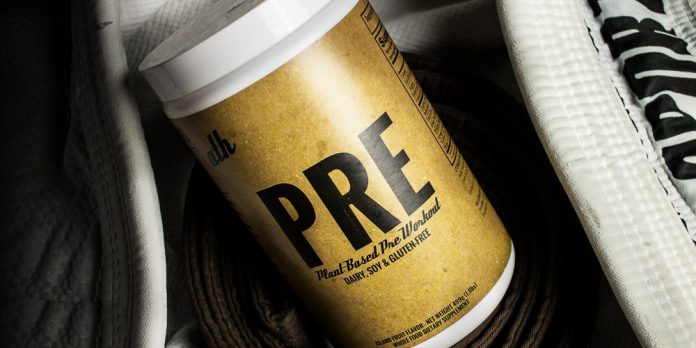
Do you have the habit of gulping down a cup of Joe before you go to BJJ class? Maybe you prefer to get your energy from Red Bull type of drinks. or, if you’re really hardcore, perhaps you take pre-workout supplements to get you going for sparring. Whatever your choice is, you should know that some things work, while others do not. So, instead of drinking ruthless marketing, drink the stuff that’s really going to help you train better. For that purpose, today we’ll talk about pre-workout BJJ supplements and their (lack of) effectiveness.
in the modern age of “nutritionists” and countless supplement manufacturers, it is very easy to go astray. In terms of BJJ supplements, there are things that work like a charm (creatine, others that greatly help with nutrition (whey protein isolate), and those that are pure marketing. Sadly, this last group of supplements makes up about 80 % of the total supplements in your average supplement store.
Recently the trend is to get ready for a workout by ingesting a pre-workout drink of one sort or another. While this is the norm mainly among bodybuilders and meatheads, it is pretty prevalent in the grappling society as well. But are pre-workout BJJ supplements really worth your time?
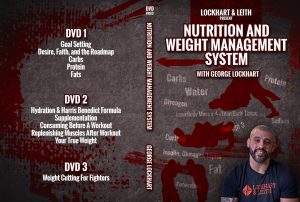 If there’s one person that can school you what you need to eat/drink before you train Jiu-Jitsu it’s George Lockhart. Even more importantly, he can teach you what not to consume. His “Nutrition And Weight Management System” bundle, which includes A DVD set and a nutrition E-Book contains guidelines and a complete nutritional plan for grapplers.
Do You Really Need Pre-Workout BJJ Supplements?
So, you’re about to go to class. You know that class is certainly going to end with a few rounds of rolling. You want to really push the pace so you decide to go for maximal effort during rolling. You’re going to tire out your opponent no matter what the cost. The problem is, you yourself are not in great shape so cardio is not on your side. What do you do?
For the sake of argument, let’s say you gulp down the latest and greatest pre-workout supplement available. It contains a bunch of things you can’t pronounce and boatloads of caffeine, beta-alanine, guarana, and the likes. It’s a stimulant bomb that’s supposed to get you into beast mode.
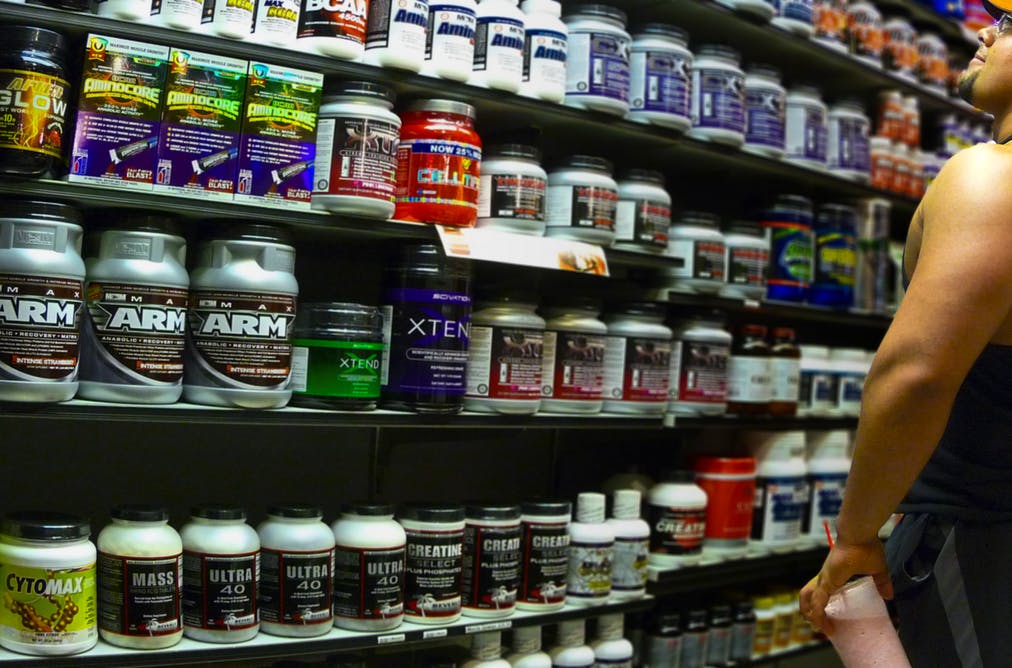 The primary effect your body is going to feel is alertness. You are going to be much more focused, we grant you that. But at what cost? The usual effects of a pre-workout supplement include an improved physiological answer to the training stimulus. Increased heart rate, perspiration rate, and muscle work output. The drawback is that this state of alertness is taxing on the organism. So while you might feel great in the first roll, every subsequent roll is going to be tougher and tougher. The side effect is that once you start getting tired, you’ll be much more tired, much faster than before.
All these stimulants release dopamine which is the feel-good neurotransmitter. It tells our brains that we’re doing something right even if our bodies disagree. In this instance, listening to your body is a wise choice.
How Stimulants Affect The Body
So, let’s look at what stimulants actually do to your body. Mind you, you get a huge dose of a few of them per pre-workout dose, so the effects are likely exaggerated.
Stimulants simply make you feel energetic they do not provide you with energy per se. Most of them basically act as blocks to certain neurotransmitters which helps you stay more alert. Physiologically, they do not help you create nor burn energy more efficiently. Another thing to consider is that your metabolism gets used to processing them, even if the doses are unreasonably high to start with.
Meanwhile, inside the brain, stimulants take over some of your endocannabinoid receptors. These are the receptors that help you calm down. It is also how weed acts when you consume it. Stimulants confuse the brain completely by helping the release of feel-good transmitters like dopamine, while at the same time stimulating receptors that slow us down (similar to weed).
The Best Pre-Workout “Supplement”
 If it is not clear so far, the message is to stay away from commercial pre-workout supplements! Let’s make one point very clear though. One cup of coffee (or a couple, for that matter) before training is not going to come even near a supplement. The dosage of caffeine is so low compared to commonly used BJJ supplements it’s like drinking water. What you get is a small kick to get you going but none of the “feel unstoppable” mojo.
However, even with coffee, you need to exercise moderation. Being awake and alert in training is one thing. However, drinking 4 scoops of who-knows-what and a giant star bucks latte is completely another. So stick to 3, or 4 maximum, cups of coffee a day. Schedule one of those, right before you go to BJJ. Make it the strongest one if you need to. However, stay away from all the pre-workout powdered stuff if you want to live long enough to get your black belt.
Check Also:
George Lockhart Nutrition and Weight System Management E-book
Performance Nutrition For Grapplers
Grappling Mistakes: How Dehydration Makes You Weaker
BJJ and Alcohol
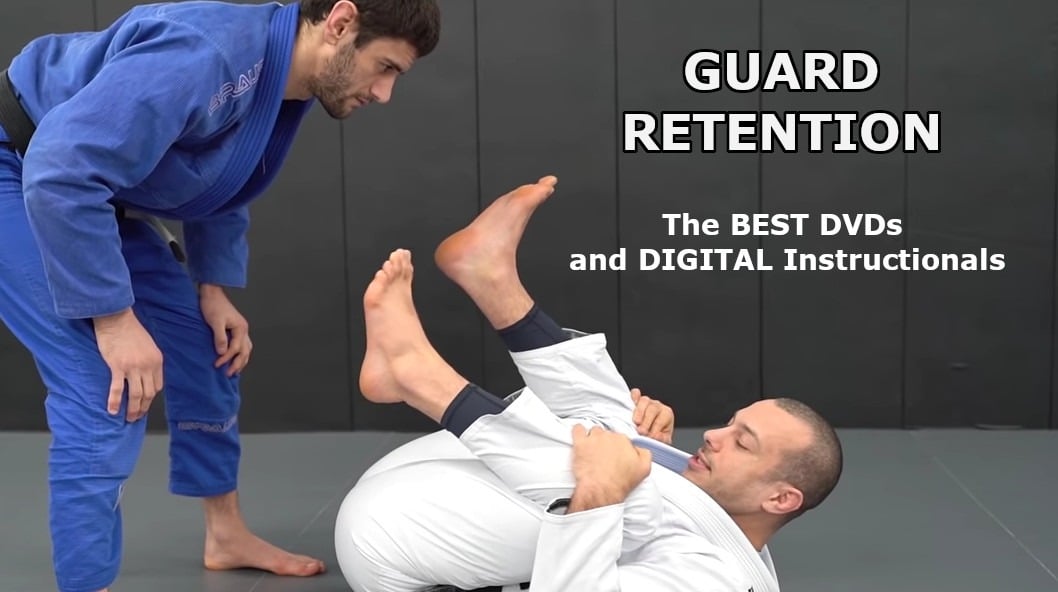
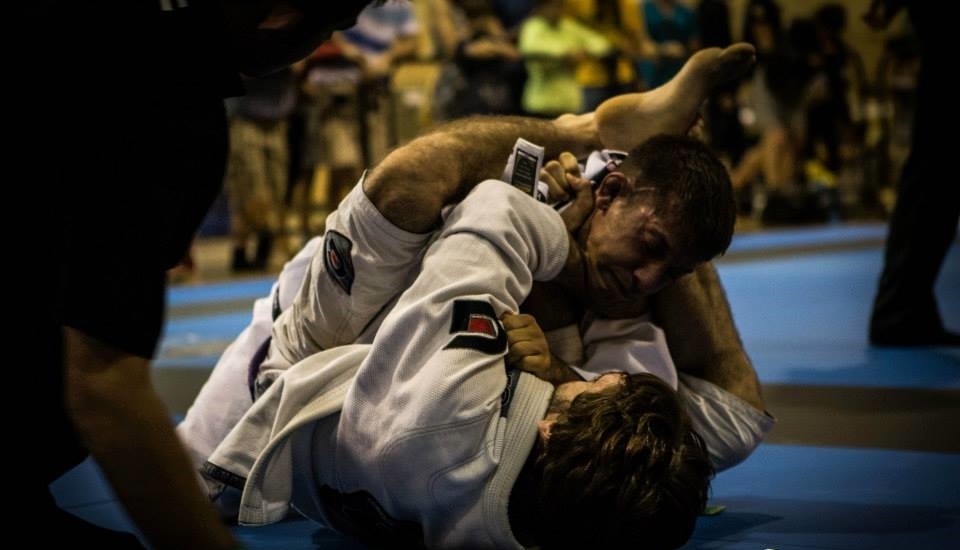 From there on, Brazilian Jiu-Jitsu gained worldwide popularity, MMA kicked off as a sport and the Jiu-Jitsu guard started its relentless evolution. When I’m referring to guards, for the purpose of today’s article, I mean all kinds of guards. This means the closed guard, the half guard, the open guard, and anything in between. The only defining variable is being on your back.
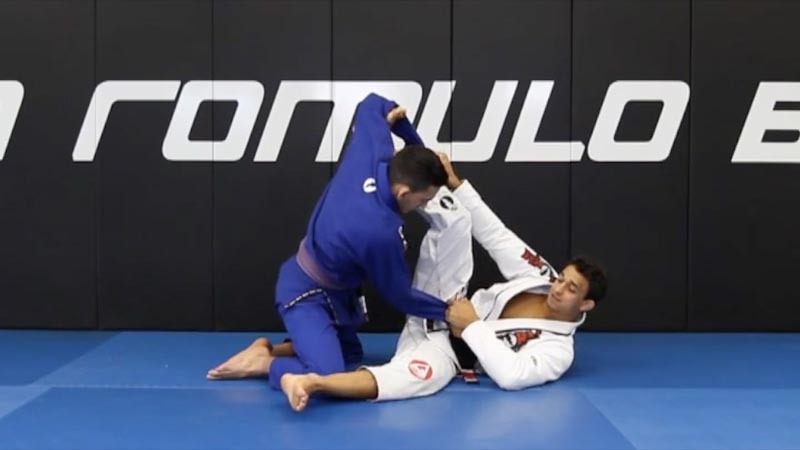 To that extent, the best thing to remember is that not every guard is suitable for every situation. For example, there’s no point in playing spider guard if your opponent is too far back where you have no leverage. The stubborn pursuit of one aspect of the guard game is sure to backfire on you. Her, safety first concept should be the focal point. The opponent’s goal is to break the structure of your guard and use their weight against you.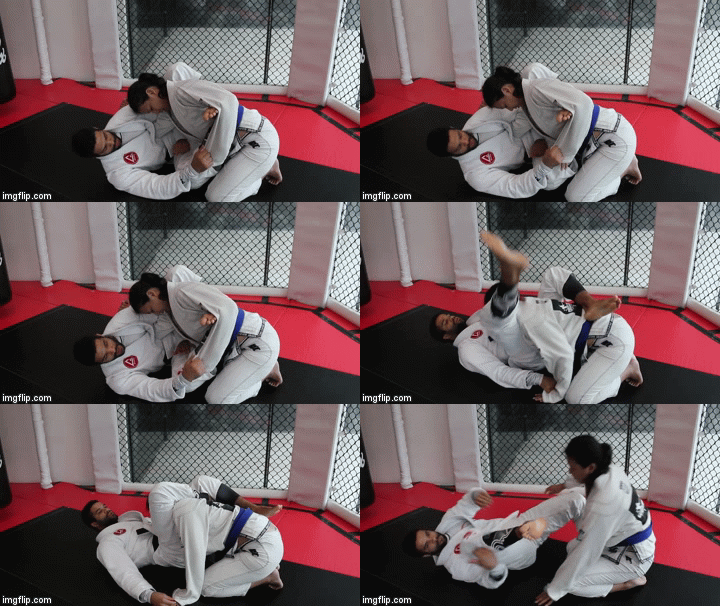
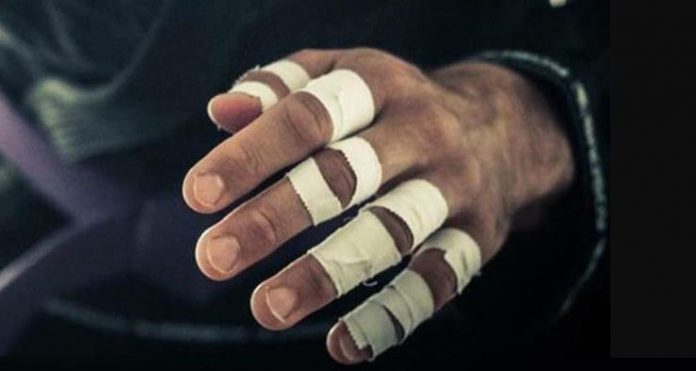
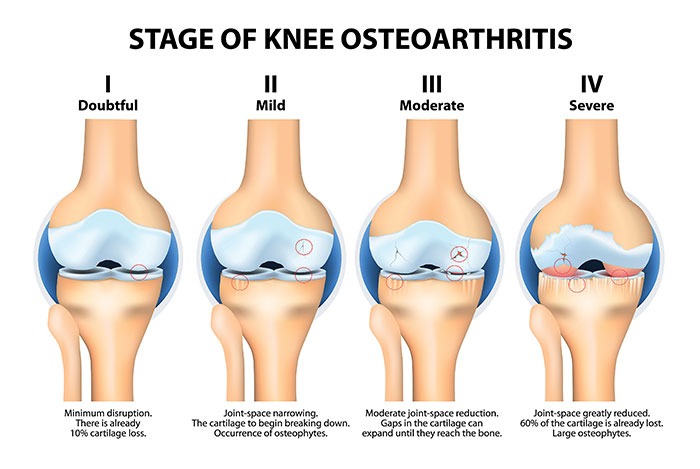 Basically a joint is the connection of two bones in our bodies. Since bone-on bone connections are painful, our joints use cartilage to cushion the interaction. Cartilage both connects and protects the bone ends within the bounds of a joint. Cartilage is expendable, though, and slowly degrades with everyday use. Now add to that the stress of grappling and you’ve got a major factor influencing cartilage health.
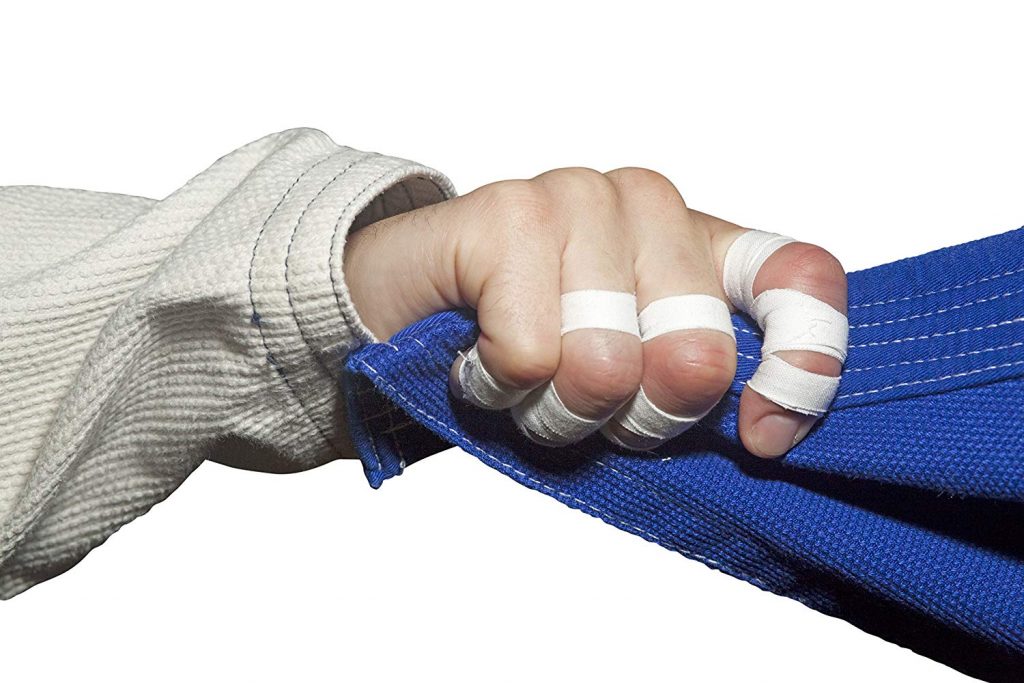 One very important way of dealing with arthritis of the fingers, in particular, is adopting a No-Gi game. This doesn’t necessarily mean dropping the Gi altogether. It means staying away from spider guard and employing more No-Gi grips even when you’re rolling with the Gi. It is going to give your knuckles some much-needed rest.
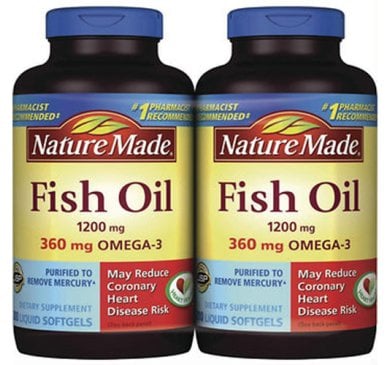 Right from the start, do not expect miracles from anything we mention. That said, some of this stuff has been proven to help so it’s worth giving it a try. Omega 3 fatty acids rank really high on the list of stuff that works. In other words, get your fish oil in and you’ll score one over arthritis. fish oils Now, the best way to get Omega 3 acids is directly from fish. However, it is doubtful that you can get the required amount from food only, so supplements might be a better choice. Krill oil supplements or Omega 3 fatty acids in any form should be sufficient.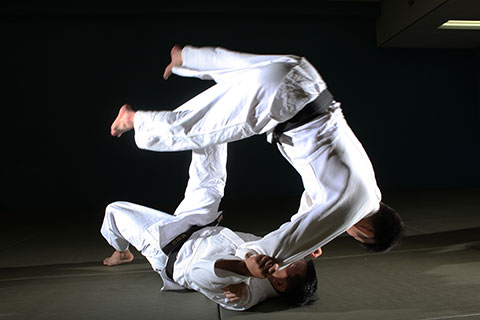
 The Sumi Gaeshi depends on a few mechanical principles in order to work ta a high percentage rate. First, you need to have the correct grips in order to even think about going for it. Secondly, you need to have correct foot placement and posture control. Finally, the throw itself needs you to position yourself correctly underneath the opponent.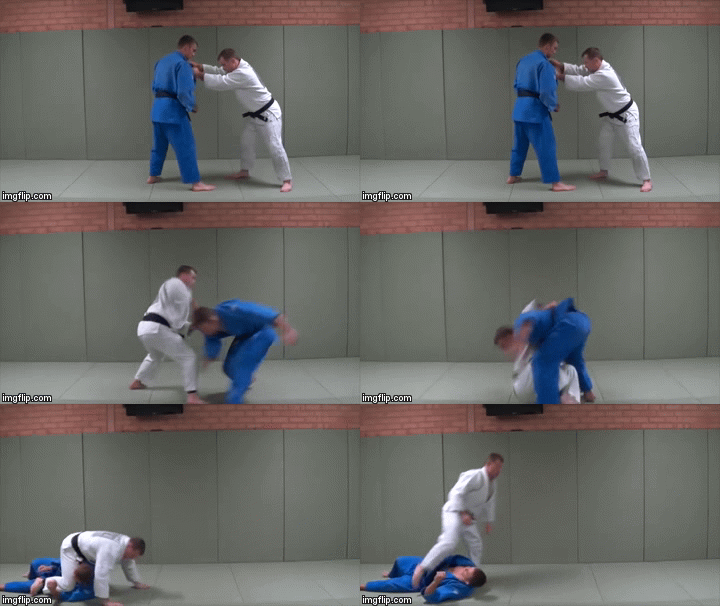

 Furthermore, alcohol consumption affects the muscles. It both impairs muscle growth and interferes with muscle recovery. Now, the first aspect is not really a big concern for grapplers as we’re not into building muscle that much. However, muscle recovery is a big one, especially if you’re looking to roll every day. Over time, it may prove to have a huge cumulative effect on your ability to recover. Of course, this is in the case of regular and massive consumption.
 In that sense, go for one type of alcohol for the entire night. Whether you’re a wine guy, a whiskey girl or just a beer lover, stick to what you like the most. Even within the bounds of an alcohol section, avoid mixing drinks. Stick with IPA if that’s your beer of choice, rather than switching between ale, lager, and porter. With wine, choose a color and go for it. The same holds true for hard liquor.
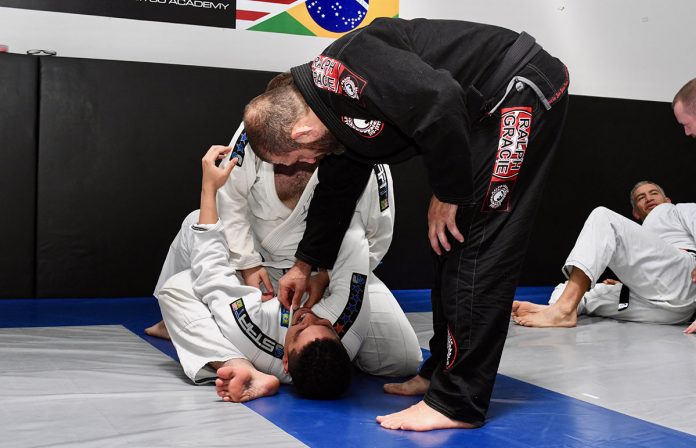
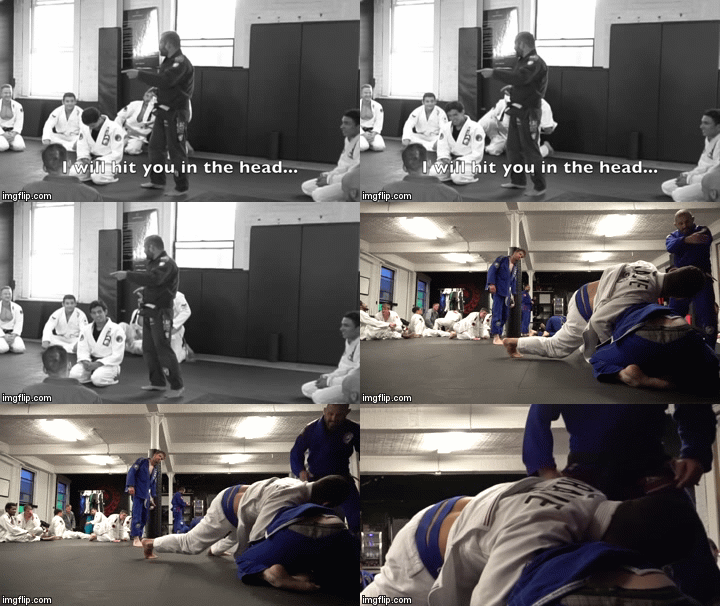 Ralph Gracie is one of the legendary Gracie family members. He is a brother of Renzo and the owner of multiple academies across California. Ralph is also a distinguished MMA fighter as well as a proficient grappler. So, when he decides to base his teaching on a “questionable” method, you can hardly hold it against him. His pedigree is enough to justify the use of some “antiquated” teaching methodology. Or is it?
 Should negative reinforcement techniques come in the form of strikes to the head? My two cents on it are that in the case of classrooms full of children, the answer is absolutely not. In a very competitive martial art that involves sparring, this is simply part of the sport. In more traditional martial arts, old school teachers often revert to many forms of “punishment” in order to enforce a point. Does it have to strike to the head? Of course not, but this method has its place in the sport of Brazilian Jiu-Jitsu.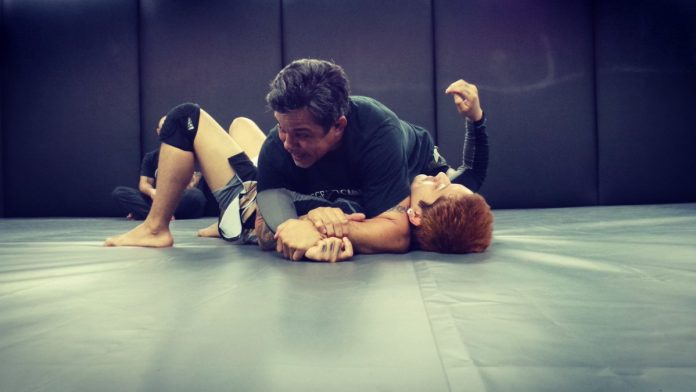
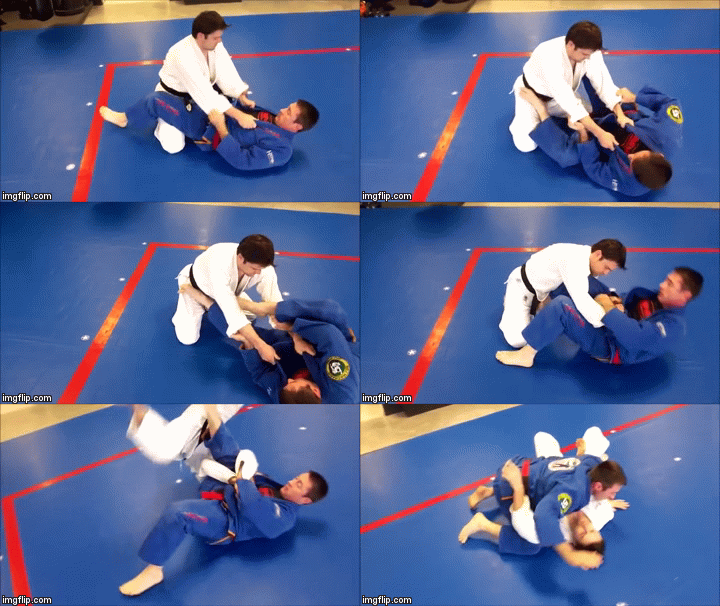
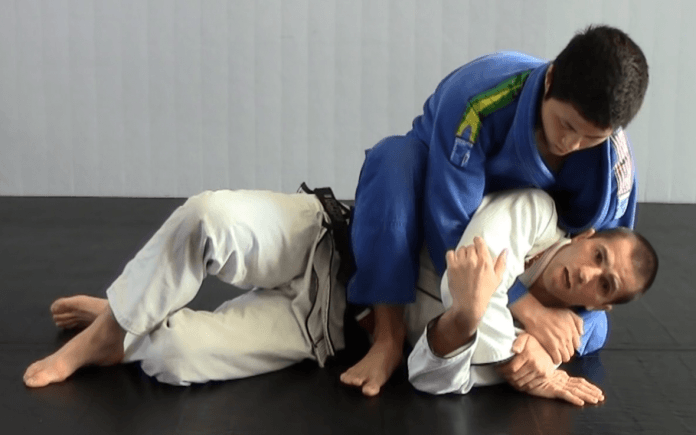
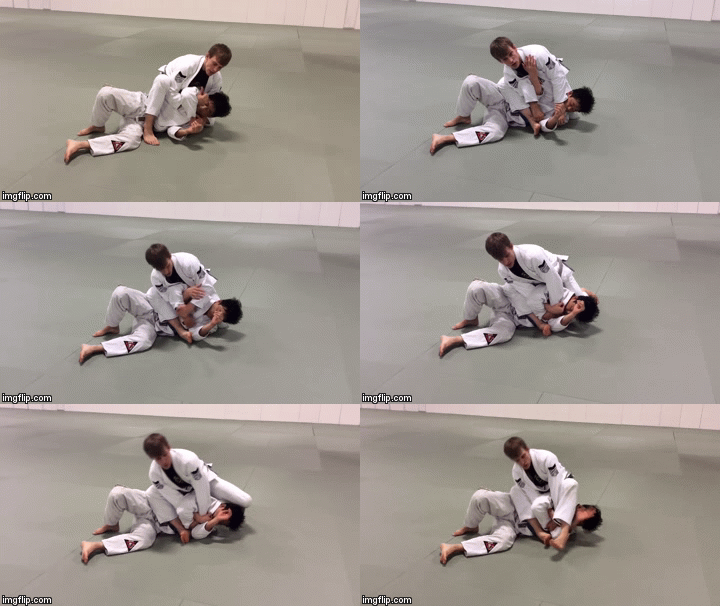
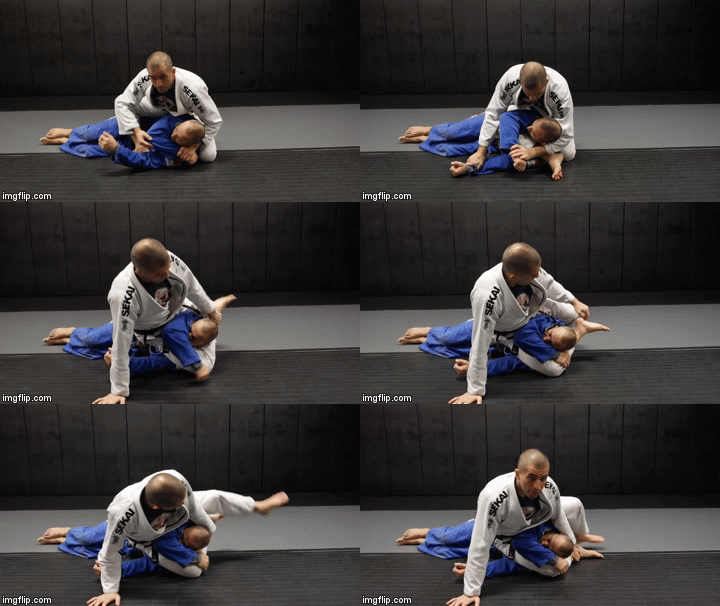
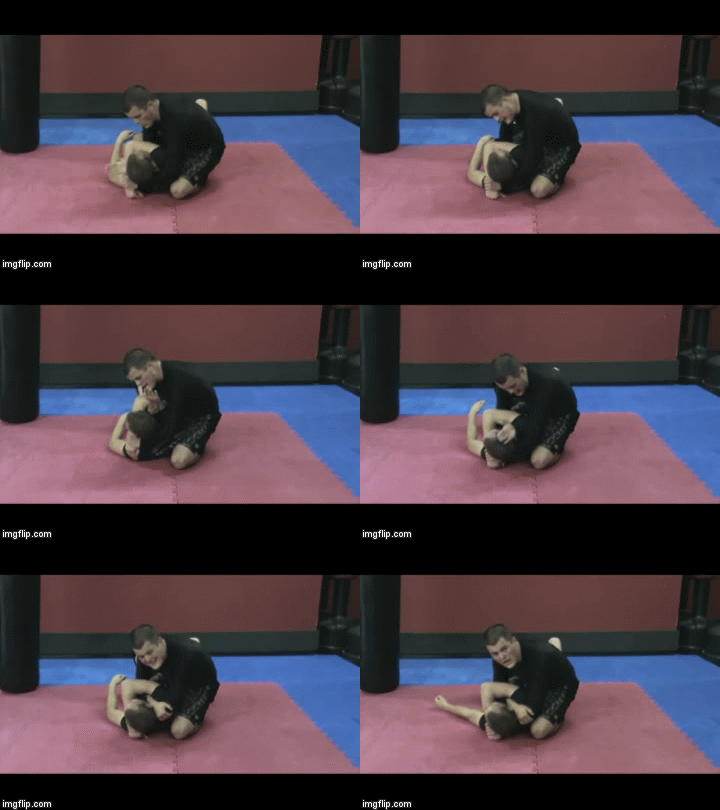
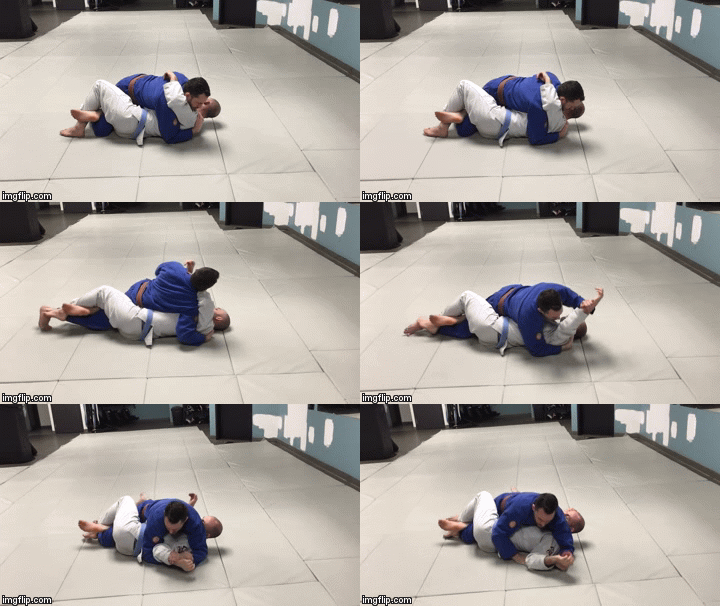 Whenever you find yourself in the top half guard, you need to make sure you deny your opponent an underhook. It’s not the end of the world if they get it, but a Kimura is the better option in that case. For a BJJ Americana, you need to pin the opponent’s wrist down to the far side mat. Whenever an opponent tries to frame from the bottom, you have an open path. Once you pin the wrist, shift your weight completely on top and proceed to insert the second arm. Since the half guard is somewhat limiting, if you lag with the finish, simply switch your hips again and you’ll expand the range of motion. An easy and tight submission to beat every opponent!
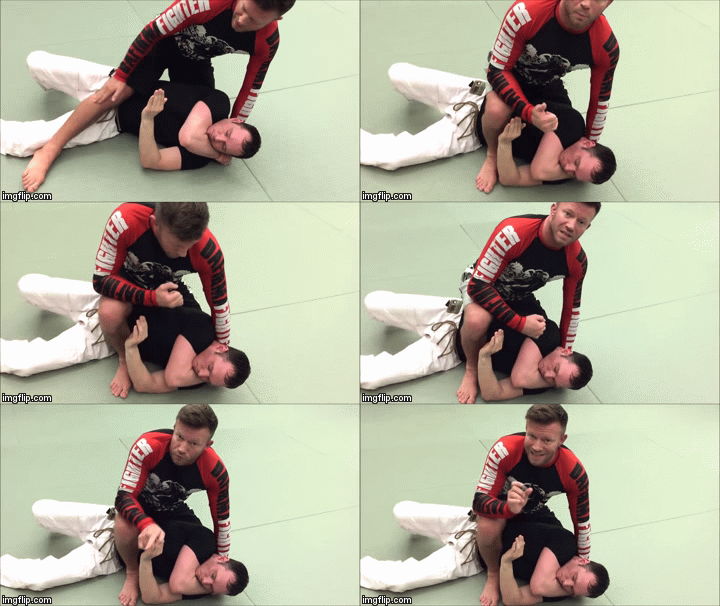
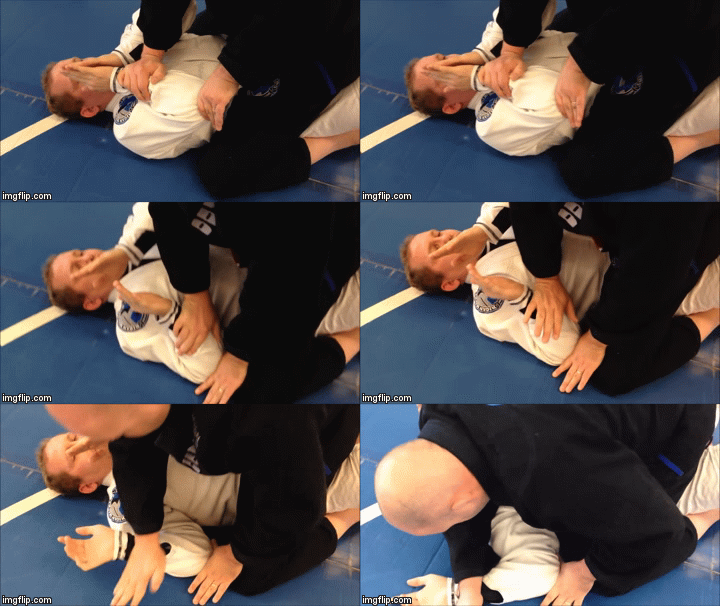 The mount is the quintessential American hunting position. it offers the best mechanical advantage for getting the lock. It is also the perfect option to use against someone defending chokes and armbars. Namely, whenever an opponent has their arms T-rexed, you simply use the position against them. Place one arm on their wrist, and another on the elbow and use your body weight to force the arm to the ground.
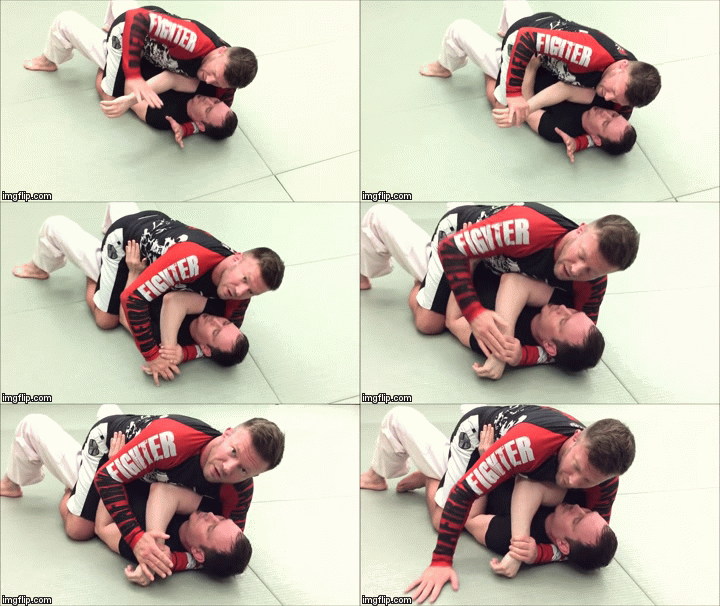
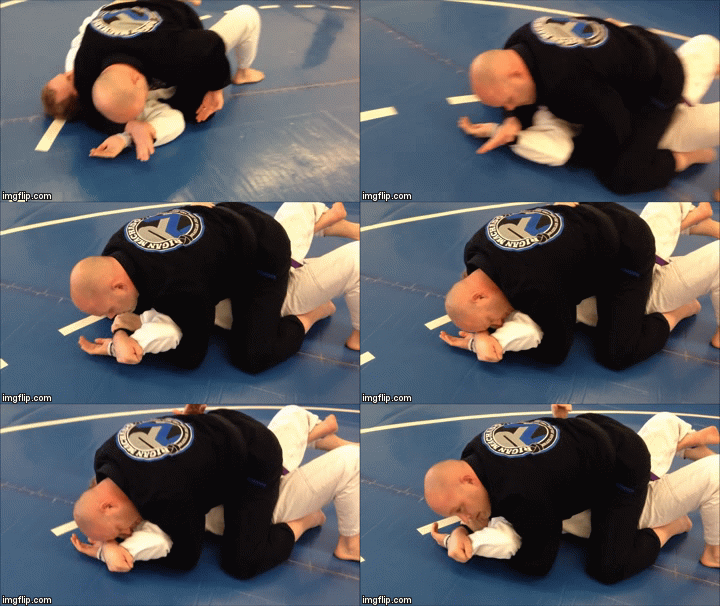 Once there, first make sure the opponent cannot retrieve the hand. To do this, push the elbow of your nearside arm into the side of their head. This is going to break their posture and keep them pinned. Once you have that you can think about threading the second arm through and getting the figure four. IF you’re up against a bigger opponent you can even sue your forehead to reinforce the figure four grip. finishing is really easy as you have loads of space to move the arm.
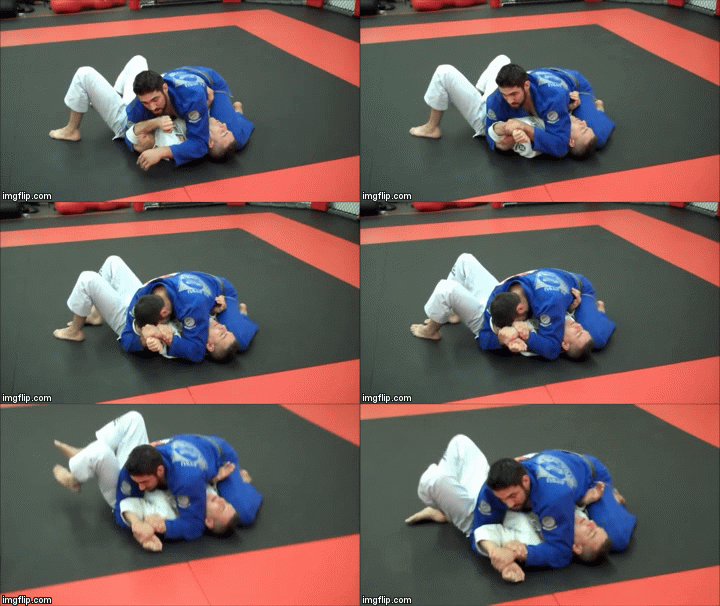 Once again, you’ll use the opponent’s frame against them. For the initial grip, place your hip side arm on the opponent’s biceps. You’ll use it to pull the opponent’s arm away from their body so that you can place the wrist grip in. From there on you proceed to pin the arm to the ground, just like in the other instances.
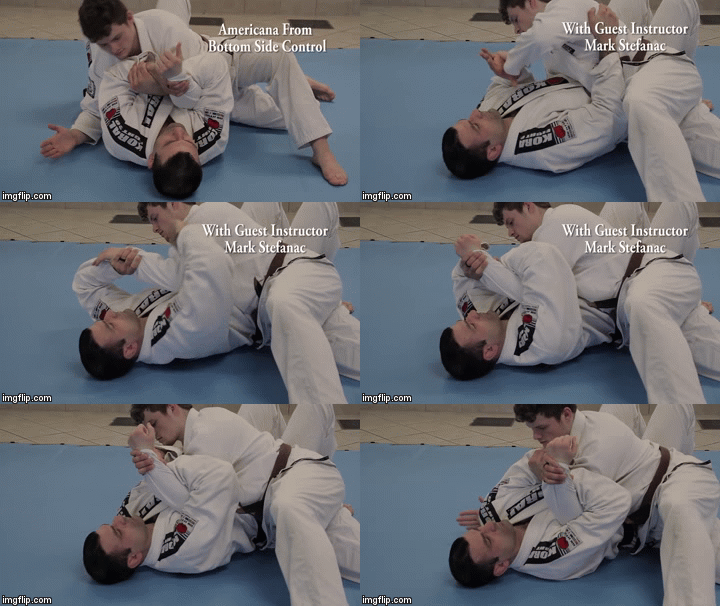 The idea is to grab the wrist of the arm with your opposite side arm. Once you have that grip, you place the second grip by wrapping the other hand over the opponent’s upper arm and into the figure four grip configuration. Finishing the lock is a bit different to top side Americans, as you’ll bend the arm at a different angle. Your goal is to force their arm towards the opponent, thus putting immense pressure on their shoulder joint. In the worst case scenario, the opponent is going to fall to their back in an attempt to escape. This gets you to top position with a fully locked Americana ready to go.