


The guard is what got BJJ off the ground in the first place. Moreover, to this day, it remains the most complex part of Jiu-Jitsu, with too many variations to count. Whether it is the closed r open guard or anything in between, there’s certainly no lack of option in BJJ. However, there are certain guards that people deem to be ultra-successful. AS expected, everyone is giving them a go, which in turn, makes them easy to predict, prevent, counter and pass. So, is our approach to using the “highest percentage” guards really the right one? Because it seems that little-known BJJ guards might just turn out to be way more effective than the stuff everyone’s using. The Pocket Guard is one such guard variation.
While playing guard can be fun, playing a guard nobody expects and seeing people’s reactions is priceless. There are plenty of examples of guards that people rarely use, but at the same time, they have a really high rate of success. Most of Keenan’s guards are like this, with the exception that he centers them around his needs and more importantly, his body type. Well, among all the BJJ guards people try and put away “for rainy days” there’s one that rarely gets taken for a spin. The best part about this guard is that it requires next to no effort to play. And yet, it yields amazing results. The guard in question is the pocket guard, a closed guard variation that’s as underground as they get!
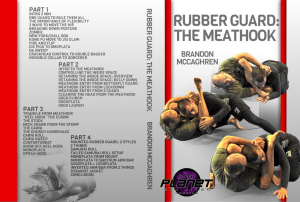 Speaking of BJJ guards that are highly effective, Brandon McCaghren unveils all the secrets of the Rubber Guard in his crazy instructional “Rubber Guard: The Meathook. This is the one and only instructional that breaks down the Rubber Guard in four different volumes in the set.
Credit Where Credit Is Due
In Brazilian Jiu-Jitsu everyone can have a contribution to the art. There are no obstacles to people inventing and trying to develop their own moves, or even entire systems and concepts. Even if they don’t work for everyone, every person that trains can contribute, regardless of the belt level. However, when a seasoned black belt ends up conjuring something seemingly out of thin air, it is almost always certain to be effective. I don’t have the exact story about the Pocket Guard. Still, I bet it is a fun one having personally met the man behind it – Chad Wright.
The Pocket Guard is one of those BJJ guards that’s going to annoy just about everyone that ends up in your closed guard. OF course, you’d expect nothing less from a man nicknamed Fat Jesus. Chad Wright is a black belt under Neil Owen. Chad originally comes from Australia, where he is the man behind Infinity Martial Arts. He is also a member of BJJ Globetrotters and loves to travel the world. During one of his travels, he ended up in the Academy where I train at, and taught there for a week. That’s where I first saw the concept of the pocket guard and I immediately thought it would come in useful one day. So, full credits in terms of the position go to Chad Wright.
That said, I also put the guard idea away, particularly as it is Gi-based one and I was all about No-Gi at the time. However, as I progressed through BJJ I came back to this guard and discovered I actually had a very powerful weapon all along. So, today I’ll try to explain it as easy as I can and leave you with a position that’s wide open for further development and experimentation.
Pocket Guard 101
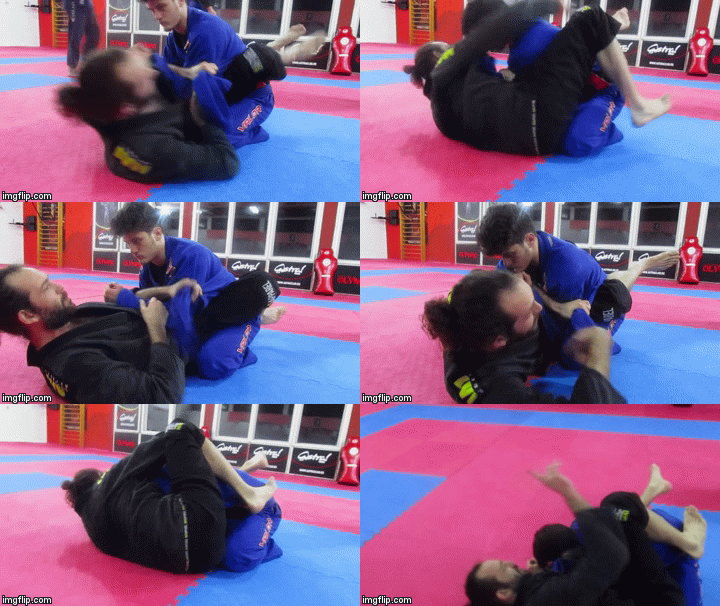 What is any BJJ guard about? Control from a distance. Ryan Hall has this down to a science – you have several different distances in Jiu-Jitsu engagements. Each one merits a different category of the guard. The closer you are to the opponent’s hips, the more control you have. Well, since the Pocket guard is a closed guard, you’re going to work from a close distance guard. That’s an advantage, to begin with.
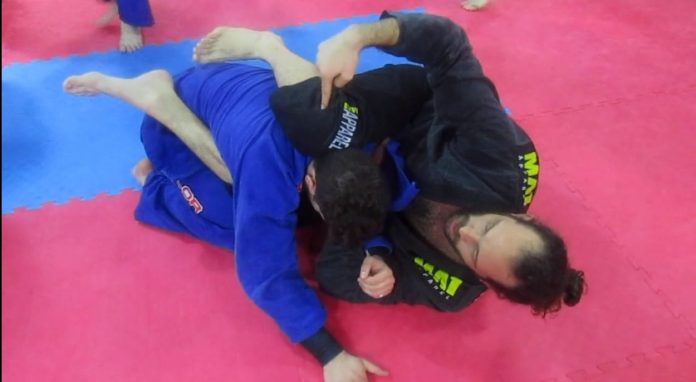
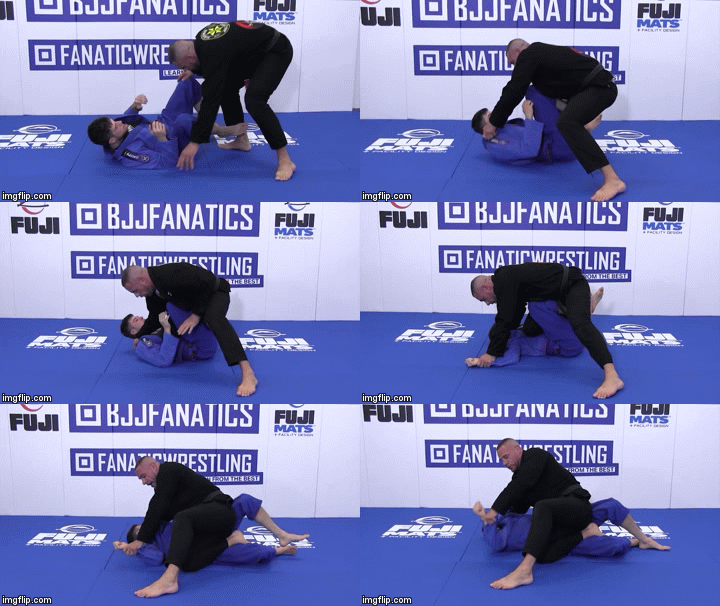
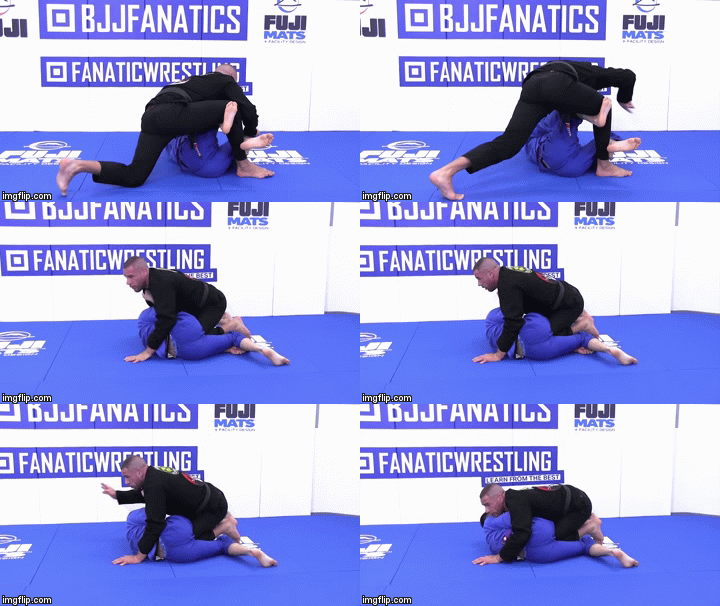
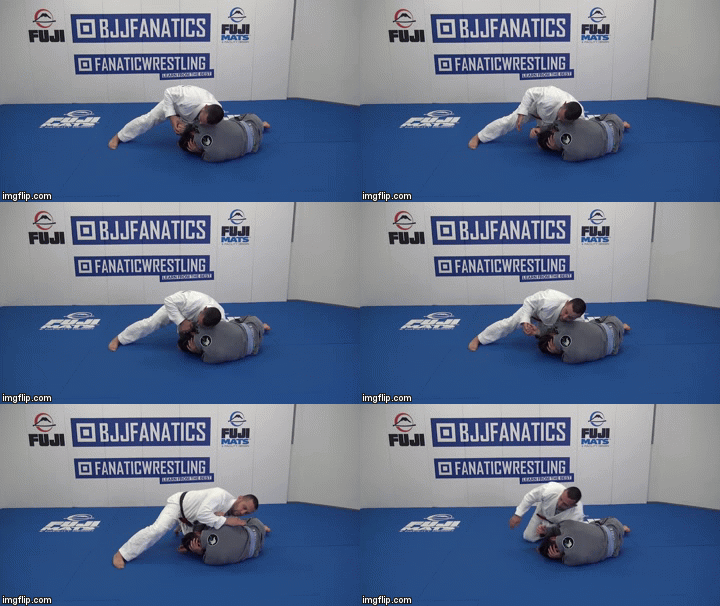
The pocket guard works really simple – it is a side guard variation. In other words, you go for an arm drag. Once you get one, do not proceed to the back, but rather stay in guard. At all times the elbow of the arm you are dragging stays really close to your hip, like being in your pocket. That’s the gist of it. In terms of getting more and more control over the arm in question, you have several options. You can go like an arm drag, and figure out how to keep someone there if you can.
One of Chad’s variations is to grab the lapel on the same side and use it as a wedge behind the elbow. This makes for an extremely tight control position. One variation that appeared during training is actually going for an “inside pocket”. This means making a small “pouch” right beneath the elbow crease and getting a grip there. It is notoriously hard to break and very easy to keep a hold of!
Position-wise, once you have the nearside arm in your pocket, you use your free arm to grip the Gi in the armpit area on the other side. Moreover, your top leg goes up and you use your knee to put pressure on their shoulder, so that they can’t regain posture. Now, you can go to work.
The Power Of Unknown BJJ Guards
The main power of the closed guard comes from breaking the posture. Once you have posture, though, you need to keep it. So, any guard variation that does this, from the Rubber guard to the Pocket guard will have a high degree of success. From this guard in particular, once you’re on the side, your options are plentiful. Of course, you can always g for a back take, but you can also hunt for wristlocks on the trapped arm or sweep with ease. There’s also a wicked bent armlock right from the spot along with a straight armlock on the far arm.
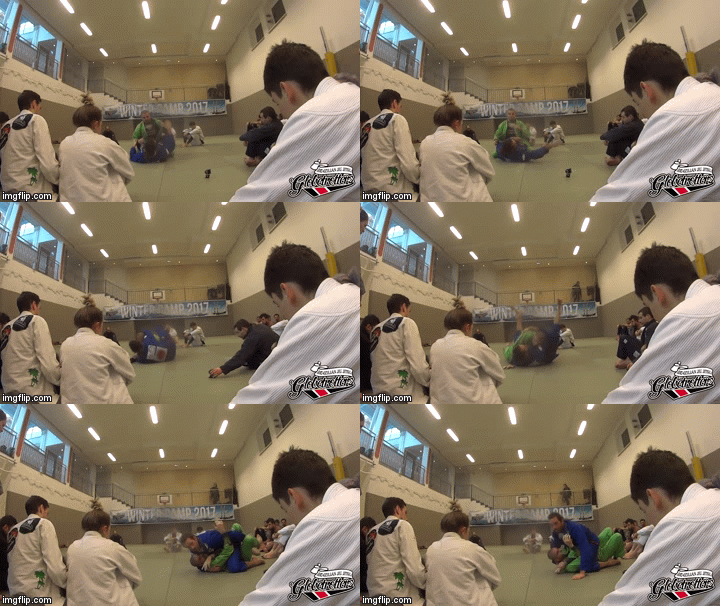 The guard actually came to be as a result of Chad’s struggles to get an armbar from the guard. The whole idea of the pocket guard is to block the elbow from going back. AND this makes it one of the most effective BJ Jguards out there, albeit a very underrated and underused one. However, it is precisely this “unknown” factor that makes these little-known guards so powerful. However, just like with anything else, these “underground” guards come with a few drawbacks as well.
One issue is learning them correctly. Unless you have access to the “founders” or great video material on the subject, you’ll need to experiment for yourself. The advantage here is that you can make the position your own, and make it fit your game. Another drawback of this particular guard is that it is a Gi-only guard, given the heavy involvement of Gi and/or lapel grips. It is, however, an awesome thing to do from the bottom. Especially when you do not want to bother about keeping someone’s posture broken.
Conclusion
Get out of your comfort zone. Try something new, have fun with all the BJ Jgaurd s that are available. Next time you end up in the closed guard, try going for sneakiness and surprises instead of dueling for a better position. Use the pocket guard to surprise people both when rolling and in tournaments. You’ll be amazed at how easy it becomes once you put some time into figuring out the dynamics of the position.
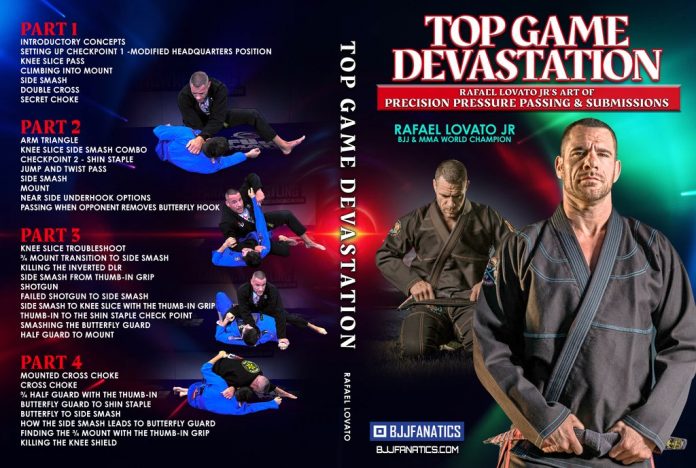
 The first volume of this Rafael Lovato Jr DVD starts with a throwback to his earlier pressure passing systems. In other words, the Headquarters position makes a comeback, much to my personal pleasure. That said, This time around it is a modified version of the position, or better said an updated one. It leads into the Knee Slice Pass yet again, and yet again, Lovato finds a way to make it tighter. However, he does not go much deeper than the basic knee lice. Rather, he shows us how to slide into mount next without releasing an ounce of pressure.
 What I loved the most is the option to always return back towards checkpoint one or two from the side smash. The Thumb-In grip is the reason for this and it is a great way to improve your game with the simplest of moves. Not to mention all the shotgun armbars you can find along the way. Finally, Lovato moves to demonstrate his system on passing the most dangerous modern guard of all – the butterfly guard. However, in this volume, all we get is a tease on the subject. Volume four is where all the real action is.
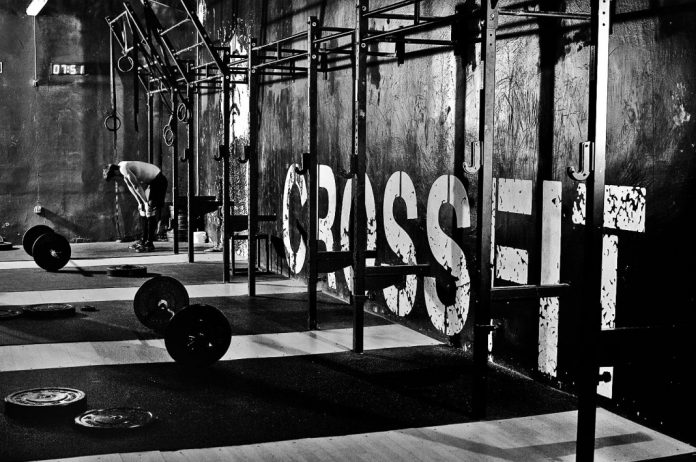
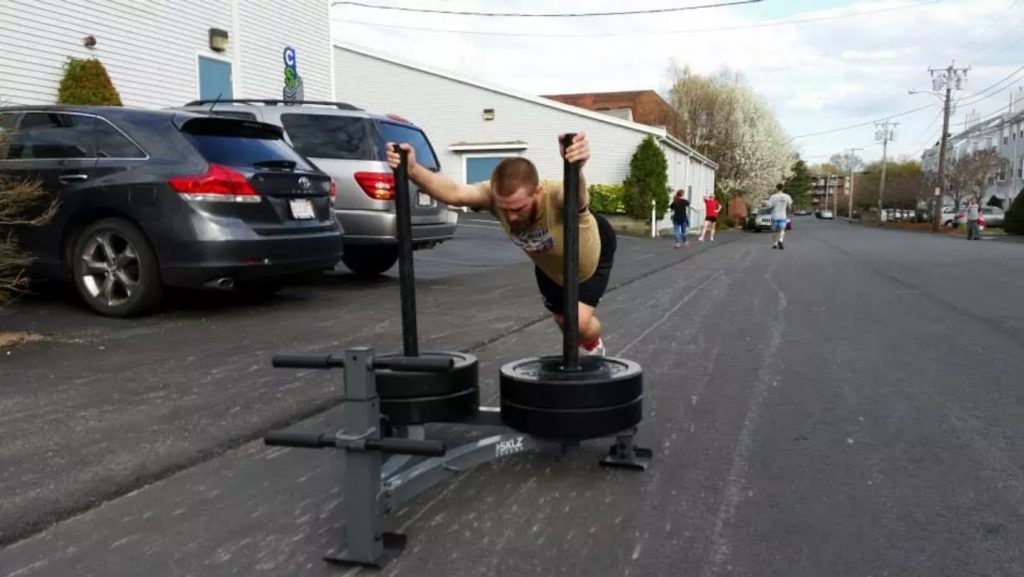 It all seemed too good to be true for a while there. Constantly changing workouts that don’t take up much time but produce chiseled physiques? No wonder people from different sports were looking at Crossfit to make them better for their primary athletic discipline. Of course, Crossfit for BJJ also became a “ting”. But that’s when some of the hate started pouring in. And I have to say that I could see sens in it as well. First of all, how come the guy who invented Crossfit looks like your ordinary couch potato? isn’t this supposed to get you in the best shape ever? But things like this fade to the background in light of some of the more serious concerns.
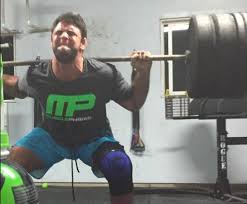 Organizing Crossfit for BJJ WODs would probably require me to write an entire E-book. I might just do that one day. Until then, let me just point out a few things. In BJJ, particularly with the gi, we spend a lot of time pulling. That means that you should factor in two pushing movements for every pulling one. Moreover, front-loading exercises, like Zercher squats or deadlifts will give you much more transferrable benefits than others. Finally, protect your shoulders and watch pout for intensity. If you center most things around bodyweight, with the odd kettlebell or Olympic lifting exercise you won’t go wrong.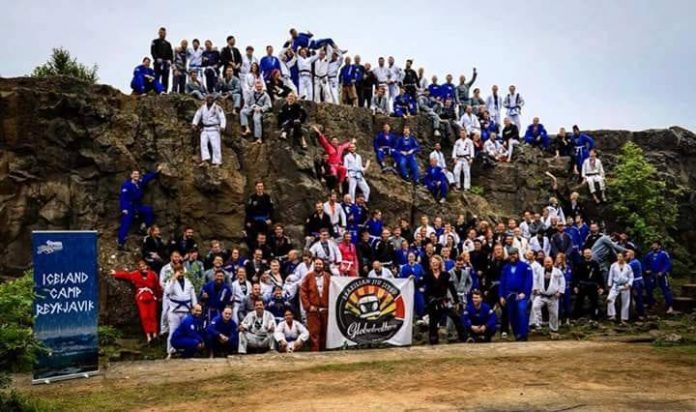
 Still, this type of travel does tend to have a point of diminishing returns. At a certain point. You need to stop and ask yourself if you’re suffering more than you’re gaining? While getting comfortable with suffering is a great way to learn BJJ, as a great black belt once told me, that doesn’t have to extend to every aspect of life. So commuting for BJJ, whether it is by yourself or via public transport needs to have a limit. I’d say that anything above there hours is pushing it. That means that you spend a total of six hours just driving from point to point. Add to that a couple of hours of training and an 8-hour workday and only have 8 more hours for everything else, including sleep. That’s a great way to start hating BJJ because of traveling so much.
 Planning a ‘traincation” is bound to lead you into one of several spots that are undeniably the best for grapplers to visit. At least at the moment. Of course, we have to start with Brazil, where Rio and Sao Paolo are unmistakable designations. Speaking of both, there’s just no way to pick one single academy to go to. Everywhere is great! Moreover, there’s New York City, that’s a real grappling Mecca nowadays. OF course, Danaher’s Renzo Gracie Academy Layer is the frit one on everyone’s list. Just a few blocks away si the always entertaining Marcelo Garcia academy too. Over on the other side, in L.A, the unmistakable Mends Brothers and 10th Planet HQ academies are the spots to visit.
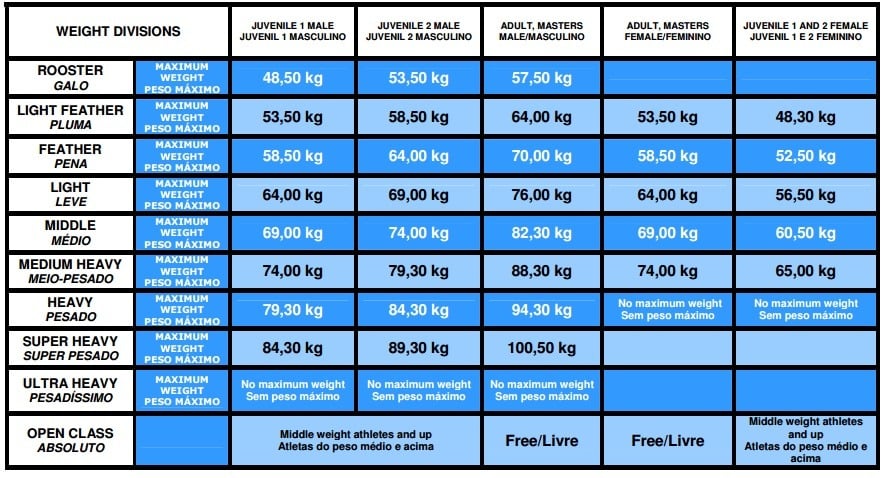 First and foremost a little introduction into Brazilian Jiu-Jitsu weight classes. Similar to other combat sports, weight classes are a huge part of BJJ. A lot of the tournaments are built in accordance with several categories of competitors that are there to provide a fair challenge for everyone. The idea is that you get people to be close in age, weight, and blet level in order for technical knowledge to be the deciding factor. Unfortunately, this is not always the case, as everyone is looking for an edge in any way possible. One such example is manipulating your body weight to fit in a Jiu-Jitsu weight class.
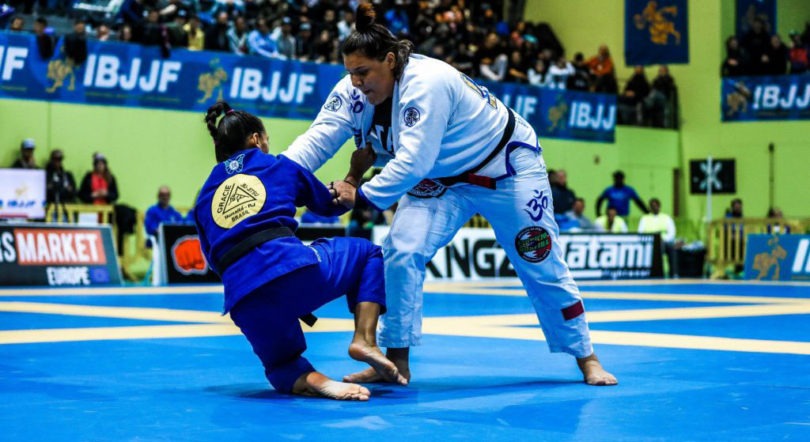 Having said that first up is the horrible experience of cutting weight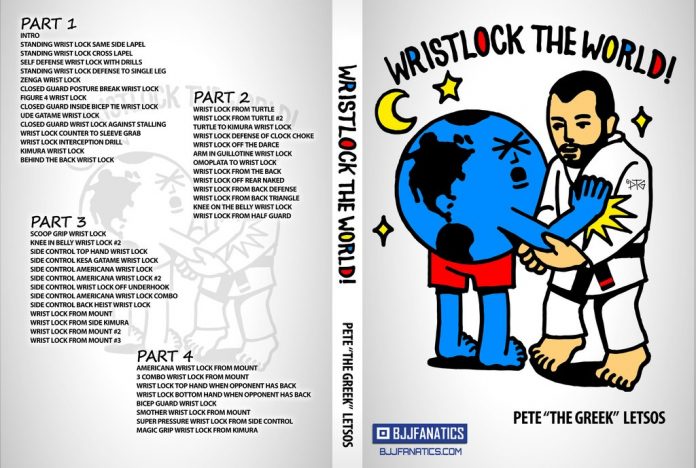
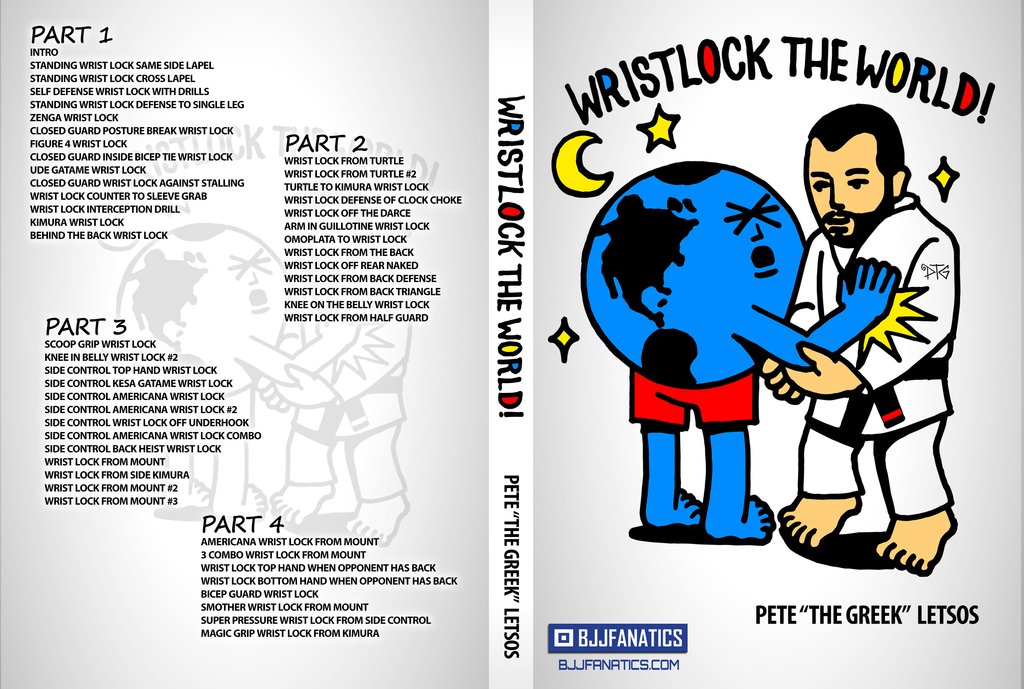
 The turtle is one position that I’ve never really hunted for wristlocks from. However, the “Wristlock the World” Pete The Greek DVD really opened up some options for me. Particularly as I enjoy working the front headlock. In that sense, Pete offers wrist-locking options from guillotines, D’arces, and even clock chokes. In other words, the perfect addition to anyone with a half-decent front headlock game.
 Here, Pete starts with a 3 combo wrist lock from the mount, paving the way for the craziness that follows suit. The next few chapters address wristlocks from the back again – but this time, when you’re the one that has their back taken. Talk about a sneaky submission setup! And still, there’s more. One absolutely stunning setup si the smother wrist lock from the mount. This is one that every top pressure grappler in the world will love. A very neat and tight “magic” wristlock from a Kimura grip completes the “Wristlock The World” Instructional.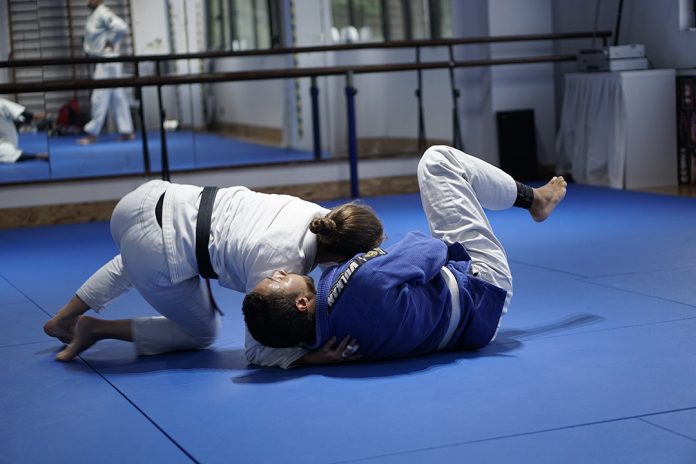
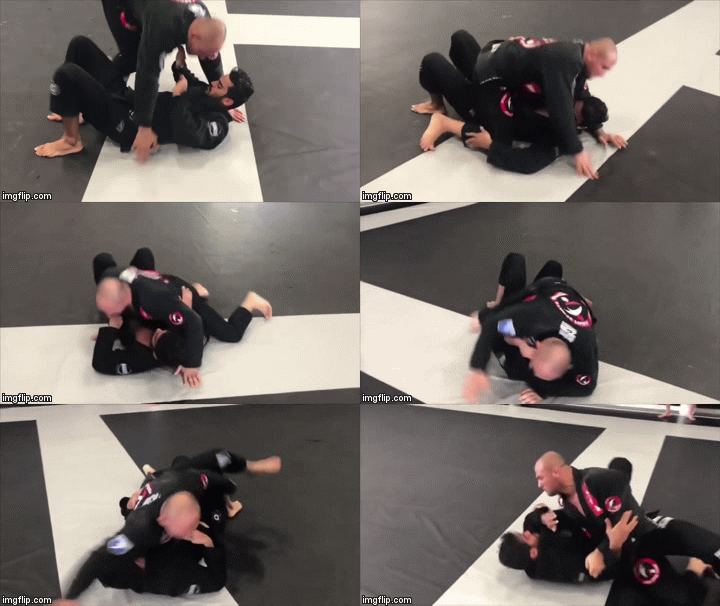 On the other side of the spectrum is the BJJ flow approach. That’s the “keep it playful” one, where people go as easy as it is possible while you still can learn a lot. That means never really trying to go high intensity, but rather looking for perfect technique and immaculate timing. At the same time, you need to get rid of the “I have to hold positions” approach and let yourself get swept or passed. This is yet another ego killer milestone that you’ll need to reach as a grappler.
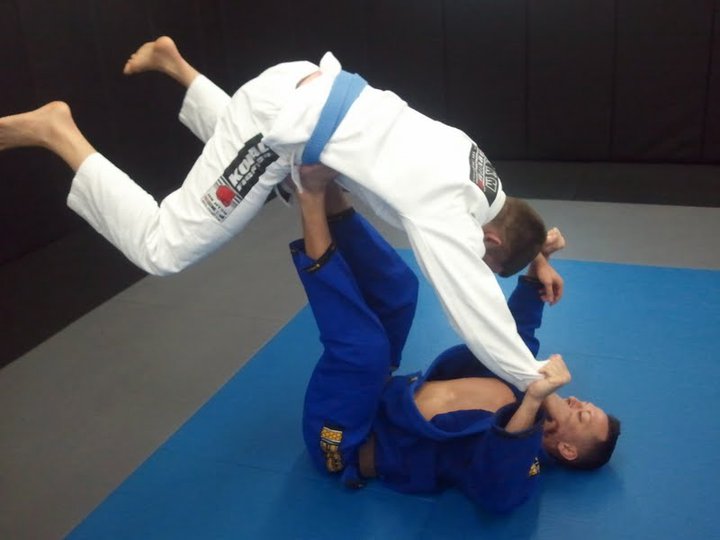 Once you agree on that you need to choose where you start. That said, avoid takedown training as there’s no real safe way of doing that in a slow and controlled manner. So, the starting point will be a specific position or form of the knees. The basic idea is that you relax completely and use no muscle power whatsoever when doing things. A great way to ensure you remain relaxed is to keep smiling all the time. It relaxes your jaw muscles and eases tension in your entire body.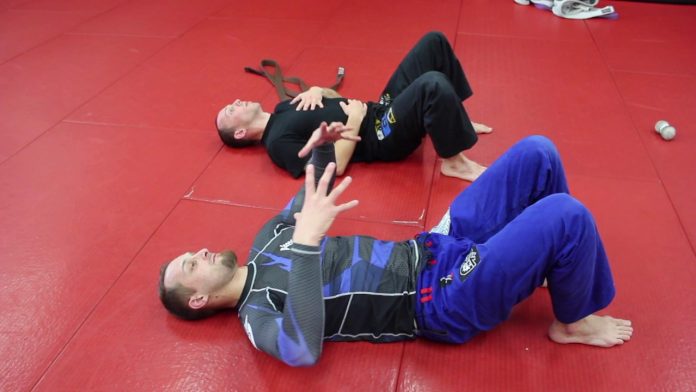
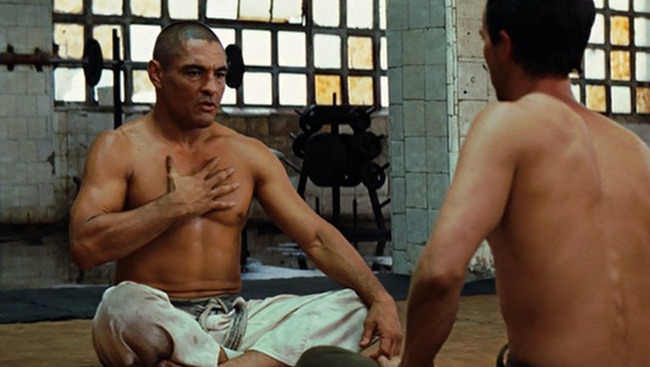 For the most part, we take breathing for granted. However, it can play a huge roll in relaxing us when we’re under stress. And there are only a few things that can stress you more than rolling or competing. Very often you might hear a coach yell “relax”. That’s easier said than done and we’ve all thought that during competition or rolling. The trouble is when people tell you to relax they often forget to tell you how exactly. And no, “breathe” is not the explanation I’m thinking about.
 We’ll start with Rickson’s “percussive breathing”. This is a type of breathing that focuses on the exhale, thus helping your body get rid of the pent up carbon dioxide from cellular metabolism. The method in all the best breathing exercises is using your belly to move your diaphragm, rather than just your intercostal muscles. For Rickson’s breathing, you inhale deeply and then use several (5-6) sharp exhales to force air out of your lungs. You can practice this on ti’s own, or use it the entire time you spend rolling.