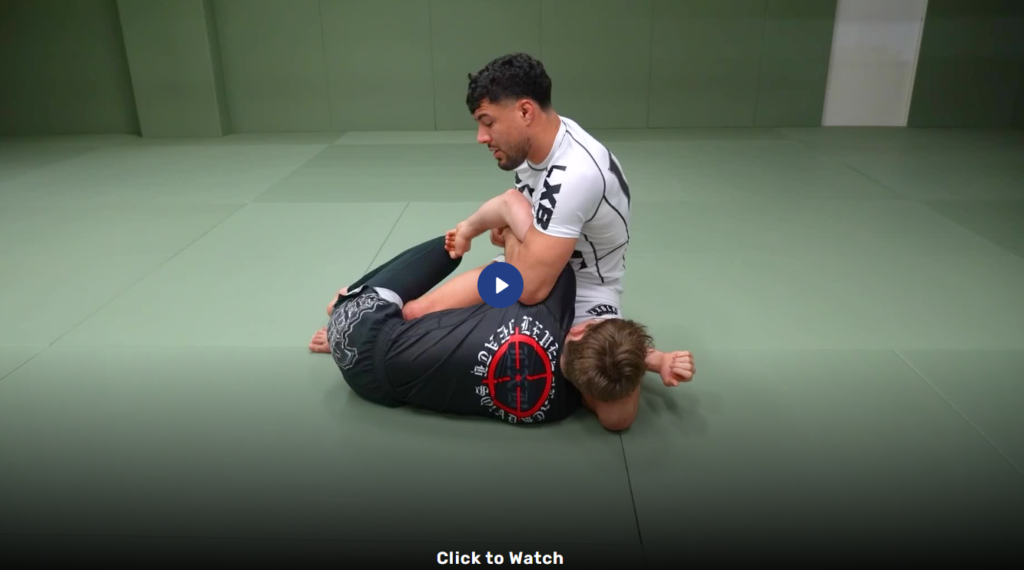





Gordon Ryan Octopus Guard Counter Is Coming As Craig Jones Donates $30,000 From Octopus Guard 2.0 Sales

Gordon Ryan Octopus Guard Counter Is Coming As Craig Jones Donates $30,000 From Octopus Guard 2.0 Sales
  • Gordon Ryan has teased a full Octopus Guard counter project, after previously saying he’d break it down for free on YouTube.
  • The latest Gordon Ryan Octopus Guard tease frames it as “systematically dismantling” the position (and other “low percentage” moves), with a YouTube sneak peek and a release tied to BJJ Fanatics.
  • Craig Jones’ Octopus Guard 2.0 reportedly cleared major early sales numbers — and he says $30,000 of that revenue has already gone to charity.
  • The rivalry angle is obvious, but the bigger story might be what instructional money is doing in modern No-Gi.

Gordon Ryan Octopus Guard: From “Free YouTube” Promise To A Full Counter-Instructional

This started the way a lot of modern grappling “meta wars” start: one guy drops a system, it catches fire, and the other guy publicly decides he’s going to build the extinguisher.

Back on January 5, 2026, Gordon Ryan said he was going to put out a free YouTube breakdown aimed at shutting down the overback grip from bottom side control — the key connection most people associate with Octopus Guard-style attacks.

“Gonna make a YouTube video on how to easily shut down an overback grip from bottom side control, or ‘octopus guard.’ Seeing as crooked Creg hit this move 0/9487 times on me in training or competition and also can’t coach any of his athletes to hit it in competition, I think I’m qualified. It’ll be free on my YouTube soon :)”
– Gordon Ryan (Instagram) –

Fast-forward to the newest tease, and the vibe has shifted from “quick free breakdown” to something that looks a lot more like a full product rollout: Ryan has promoted a “sneak peak” on YouTube while describing a larger release as “coming soon” through BJJ Fanatics, framed as a systematic dismantling of the position (and more).

That’s the key pivot. Gordon Ryan Octopus Guard isn’t just a clapback anymore — it’s being positioned as the next entry in the never-ending cycle of technique → instructional → counter-instructional.

Craig Jones’ $30,000 Donation Changes The Story

If this was only about two elite grapplers arguing about who “invented” what and who can shut it down, it would still do numbers — but Craig Jones poured gasoline on the story in a totally different way.

On January 27, 2026, Jones announced a $30,000 donation to 1800RESPECT, a crisis support service. The donation was described as 10% of revenue from Octopus Guard 2.0, tied to the instructional’s early sales window.

“Help is available. Speak with someone today,”
– Craig Jones (Instagram) –

Jones also shared that the instructional generated roughly $300,000 in gross sales over a short early run, with the donation coordinated through BJJ Fanatics and with help from Mayra Wojcik (a social worker connected to the B-Team circle).

That charity angle matters because it reframes the whole “instructional arms race.” It’s not just who wins the technique debate — it’s how big the ecosystem has become, and what athletes can choose to do with that money once the sales start stacking.

Why Octopus Guard 2.0 Triggered An “Arms Race”

Octopus Guard has always been annoying in the exact way that makes something spread: it turns a miserable position (bottom side control) into a situation where the bottom player can threaten the back, disrupt pressure, and create movement off a tight connection.

Even if you’ve never watched an instructional on it, you’ve probably felt a version of it: the passer settles in, the bottom player clamps an overback grip, and suddenly your “safe” side control starts sliding into a scramble you didn’t ask for.

Jones’ update — Octopus Guard 2.0 — reportedly blew past 2,000 copies sold in 48 hours, which is the kind of number that instantly turns a niche trend into a full-on league-wide problem.

At that point, it’s not just Craig teaching it — it’s every blue belt in your room trying it, every coach fielding questions about it, and every top competitor deciding whether they need a response before it shows up in their next camp.

That’s where Gordon Ryan Octopus Guard becomes a clickable headline and a real technical storyline at the same time: it’s the most famous “pressure-first” technician in the sport publicly committing to a counter, right as the position hits peak popularity.

Free Teasers, Paid Systems, and No-Gi’s Latest Trend

There are two timelines running in parallel here.

Timeline one is technical: can the overback-based attacks keep evolving past the obvious counters, and does the “2.0” version already account for the shut-down routes Ryan is showing?

Timeline two is business: once a move becomes a product category, the incentives change. A hot instructional creates demand, the counter creates demand, then everyone ends up studying both — not because they love drama, but because they hate getting stuck in bad positions.

That’s why this particular rivalry works. Jones sells the system. Ryan sells the response. The community buys both to survive the next roll.

And Craig Jones $30000 donation adds a third layer: this isn’t just internet trolling or technique sniping — it’s proof that the instructional economy is big enough now to fund meaningful contributions outside the sport.

Whether Ryan’s upcoming release lands as a surgical anti-Octopus blueprint or just the opening move in the next counter-counter cycle, one thing is already clear: Gordon Ryan Octopus Guard is no longer just a technique conversation — it’s the latest example of how fast No-Gi trends become content, products, and culture.


Strategic Back Exposure Defense Steve Hordinski DVD Review [2026]

Strategic Back Exposure Defense Steve Hordinski DVD Review

Key Takeaways

  • A concise, concept-first defensive course built around the moments you’re about to lose the back — not after you’ve already been strangled twice.
  • Focuses on the seat belt situation and a tight set of structural answers (including a core “DAB” sequence) with short live demos to connect the dots.
  • Expands into common finishing problems (chokes, hooks, and the body triangle), plus a useful “philosophy & mindset” wrap-up that frames decision-making under stress.
  • Best for grapplers who want a repeatable “back exposure checklist” they can pressure-test immediately in positional sparring.
  • Rating: 8/10

BACK EXPOSURE DEFENSE STEVE HORDINSKI DVD DOWNLOAD

Back exposure is one of those problems that feels unfair: you can be winning the round, make one sloppy turn, and suddenly you’re fighting for air with a seat belt locked in. That’s the lane Strategic Back Exposure Defense Steve Hordinski DVD lives in — not a giant encyclopedia of back escapes, but a compact defensive framework aimed at the transition moments where people lose the back in the first place.

The selling point here is clarity. Instead of collecting 27 unrelated escapes, Steve Hordinski tries to give you a structure for reading what’s happening (seat belt control, hook configuration, choke threat) and then responding with a small set of high-percentage choices. That matters, because “back safety” is not a vibe — it’s a habit you earn by surviving the exact same nightmare position dozens of times without improvising new mistakes.

Get the Back – Easier Said than Done

Back exposure is a broader problem than back control. Back control is the end of the story: seat belt secured, hooks in, hips glued to you, and the choke is loading. Back exposure is the chapter before that — the scramble, the turn, the failed granby, the turtle exchange, the moment your hips drift away from your shoulders and your opponent starts climbing.

Most people train back defense too late in the timeline. They start drilling once the hooks are already set, which is useful, but it ignores the biggest leak: letting the seat belt settle and accepting control. In live rounds, the back is usually lost in the messy hand-fighting and shoulder-line battle — not in some clean, textbook back-take.

This is why a system like Strategic Back Exposure Defense Steve Hordinski DVD can be valuable even if you already know escapes. If your training has a gap here, you end up with the classic experience: you’re pretty good everywhere… except the back, where you turn into a white belt again.

Reality-Focused Coach Steve Hordinski 

Steve Hordinski brings a very real-world lens to grappling: decades in martial arts, a strong emphasis on self-defense applications, and a teaching style that aims to make complicated situations feel navigable. He’s widely associated with Gracie Jiu-Jitsu and is listed as a black belt under Master Caique Elias, with a background that started in Kenpo Karate before deepening into Brazilian Jiu-Jitsu during his time in the U.S. Navy.

He’s also an academy owner (Katharo Training Center) and the kind of instructor who clearly cares about repeatable fundamentals — the stuff that keeps your students safe and functional, not just flashy highlight-reel solutions. That matters for a topic like back exposure, because the goal isn’t “escape once.” The goal is “stop bleeding points and chokes for the next ten years.”

In other words, he’s a credible person to build a defensive framework: not just showing techniques, but organizing the chaos so you can teach it, drill it, and apply it when your nervous system is screaming.

Strategic Back Exposure Defense Steve Hordinski DVD Review

If you’re the kind of grappler who freezes when your back starts to open up, Strategic Back Exposure Defense Steve Hordinski DVD is built to replace panic with process. It’s also short enough that you can actually do the right thing: watch it, take notes, and start drilling the same week.

Volume 1 – Breaking the Sturctur of the Back Mount

Volume 1 of Strategic Back Exposure Defense Steve Hordinski DVD starts exactly where most rounds go wrong: the seat belt position. Instead of treating it like a static “escape this exact hold” scenario, the material feels like a set of priorities for protecting your shoulder line, winning hand position, and preventing the control from becoming permanent.

The chapter list is tight and focused (seat belt, under-under, securing the shoulder), and that’s a good sign — it suggests Hordinski is trying to build one coherent solution rather than touring the entire back-escape museum. The short live demo segments are a nice touch too, because back exposure is one of those topics where a move can look great in isolation but fall apart when your partner adds even mild realism.

The DAB segment reads like the hub concept of the volume: the actionable piece you’re meant to take away and use as a repeatable answer when the seat belt threat is forming. If you’ve been looking for a simple “do this first” protocol when your back starts to open, this is the most important part of the course to pay attention to.

Volume 2 – Escaping Choke and Hooks

The second part of Strategic Back Exposure Defense Steve Hordinski DVD shifts into the finishing problems that typica lly follow once you’re behind in the exchange: choke danger, hook configurations, and the body triangle. This is where defensive instruction often gets messy — because the details change depending on whether you’re dealing with modified hooks, both hooks, or the body triangle clamp that turns your hips into furniture.

The value here is the scope relative to the runtime: you get specific attention to arm triangle defense, choke defense more broadly, then distinct sections for escaping modified hooks, double hooks, and the body triangle. That’s smart structuring, because those scenarios are not interchangeable, and treating them as one generic “escape the back” problem is how people waste rounds.

The closing philosophy & mindset section is more useful than it sounds. Good back defense is partly mechanical, but it’s also decision-making: when to fight the hands vs. when to fight the hook, when to rotate vs. when to flatten, and how to stay calm long enough to execute anything.

Putting it to the Test

If you want Strategic Back Exposure Defense Steve Hordinski DVD to show up in your sparring quickly, don’t treat it like a “watch once, understand forever” instructional. Treat it like a positional sparring program you can run for 2–3 weeks.

Start in a seat belt scenario with your partner behind you but not fully locked with hooks. Your only goal is to apply the structural priorities and prevent the position from becoming stable. Go short rounds (1–2 minutes), reset often, and track whether you’re escaping or just delaying the inevitable.

Run separate blocks for modified hooks, double hooks, and body triangle. This is crucial: don’t mash them together. Each round should have one clear constraint so you can learn the correct “first problem to solve” under pressure.

Now add the realistic entry: start from turtle, a sloppy granby, a failed single leg finish, or a guard pass scramble — and your partner’s job is to initiate back exposure and chase the seat belt. Your job is to catch it early and apply the system before the room goes dark.

The reason this works is simple: most back exposure mistakes happen because the defender starts responding late. The entire premise of Strategic Back Exposure Defense Steve Hordinski DVD is early recognition and clean priorities, so your training should reward early responses — not heroic last-second escapes.

GET IT: STRATEGIC BACK EXPOSURE DEFENSE STEVE HORDINSKI DVD

Who Is This For?

Strategic Back Exposure Defense Steve Hordinski DVD makes the most sense for white belts who keep getting their back taken and need a simple, repeatable defensive structure (as long as they’re willing to drill and spar from bad spots).

For blue and purple belts who already “know escapes” but still lose the back in transitions, the DABS Defensive Adaptive Back Ssystem aspect should tighten that gap. Coaches get a very teachable framework for back safety that doesn’t require 10 hours of content to explain. Finally, No-Gi and MMA-adjacent grapplers who see chaotic scrambles and back exposure constantly get some systematisation.

Skip if you’re hunting a massive, comprehensive back-escape encyclopedia with endless variations and niche scenario or you only care about highly specific sport meta problems (e.g., very particular rule-set strategies) and want deep, competition-specialized branching. This course feels more foundational and principle-driven than hyper-meta.

Pros & Potential Drawbacks

Pros:

  • Clear focus on the danger window. It targets back exposure moments — the real point where most people lose the back — rather than only teaching once you’re already cooked.
  • Two-volume structure that’s easy to implement. The course is short enough to turn into a training block without getting lost in options.
  • Hook configuration separation is practical. Modified hooks, double hooks, and the body triangle are treated as distinct problems, which mirrors real rolling.
  • Live demo segments. Back defense is notorious for “looks good in drilling, fails in sparring,” so any live-context bridging helps.
  • Mindset framing. The “philosophy & mindset” section reinforces decision-making, which is often the missing piece in defensive work.

Potential Drawbacks:

  • Narrow lens: back exposure and immediate defense. If you want lots of offensive counters, re-attacks, or extended transition chains beyond regaining safety, you may need to pair it with other study.
  • Best results require positional sparring. If someone only watches instructionals and never starts from bad positions, they won’t get much from this (but that’s also kind of the point).

DABble with Back Defense

The best compliment you can give a defensive instructional is: “I used it without thinking.” Strategic Back Exposure Defense Steve Hordinski DVD aims for exactly that — a compact framework that tells you what to protect first, what threats matter most, and how to stay functional when the back is on the table.

It won’t overwhelm you with volume count or endless chapter sprawl. Instead, it gives you a seat belt-centered foundation, then builds into the most common finishing problems (chokes, hooks, body triangle) with a practical mindset layer on top. For most grapplers, that’s a smart tradeoff.


Foundation No-Gi Jiu-Jitsu Defense Rory Macdonald DVD Review [2026]

Foundation No-Gi Jiu-Jitsu Defense Rory Macdonald DVD Review

Key Takeaways

  • A defense-first No-Gi course built around the situations grapplers actually get stuck in: late-stage submissions, bad pins, and “get-up” battles.
  • The structure is clean and progressive: submission escapes → positional escapes → wrestle-ups → takedown defense, so the pieces connect instead of feeling like random escape clips.
  • Best value comes from the habits Rory repeats—hand fighting, posture, frames, and staying calm—more than any single “secret” move.
  • The material is extremely practical for MMA-minded grapplers and anyone tired of burning energy in bad spots.
  • Rating: 8/10

NO-GI JIU-JITSU DEFENSE RORY MACDONALD DVD DOWNLOAD

Defense doesn’t feel “fun” until it starts winning you rounds. The big promise of Foundation No-Gi Jiu-Jitsu Defense Rory Macdonald DVD is that it turns the most miserable parts of training—being pinned, being strangled, being armbarred, being leg locked—into predictable problems with repeatable answers.

Rory MacDonald is the right kind of instructor for this topic: he’s known for composure under pressure, and that theme runs through the whole course. The goal here isn’t to teach you a flashy escape you’ll forget by next week. It’s to build a baseline where you’re hard to finish, harder to hold down, and increasingly confident about standing back up or recovering guard without panic.

If your No-Gi rounds often feel like a cycle of “defend, defend, defend… tap,” this instructional is aimed straight at you—and it’s organized in a way that makes it easy to actually apply.

Defending When Things get Slippery

Good No-Gi defense is less about memorizing fifty escapes and more about consistently winning small battles: head position, inside space, grip/hand fighting, and hip alignment. Most submissions don’t appear out of nowhere—they arrive after a sequence of smaller losses. That’s why “defense” isn’t just the last-second escape; it’s also the ability to recognize danger early and interrupt the chain before it becomes a finish.

Another big piece that gets overlooked is what you escape into. Plenty of people can technically “get out,” but they pop out with no structure—hands floating, base compromised, neck exposed—and they get re-attacked immediately. The best defensive systems connect the dots: survive → escape → recover guard or get to a standup → re-engage on your terms. That throughline is exactly what the No-Gi Jiu-Jitsu Defense Rory Macdonald DVD is aiming to build.

Finally, the most underrated skill in defense is emotional control. Panic makes you extend your arms, turn the wrong way, or bench-press your way into fatigue. A defense-focused instructional should, ideally, reduce decision-making under stress—give you a small set of reliable cues you can access even when the round is going badly.

Rory MacDonald – The GSP Deciple Who Disappeared

Rory MacDonald is best known to most fans as an elite MMA welterweight with a long career at the highest levels, associated with TriStar Gym and widely recognized by the nickname “The Red King.” He’s listed at 6’0″ and has competed for years against world-class opposition, building a reputation for composure and durability under pressure.

On his own official site, MacDonald describes starting combat sports as a teenager, competing in amateur formats (including No-Gi Jiu-Jitsu), and turning professional at 16. He also outlines a career path that included signing with the UFC at 20, later becoming a Bellator world champion, and competing in two seasons with the PFL before retiring from professional fighting.

For an instructional centered on defense, that background matters. The athlete who has spent years dealing with elite-level finishing ability—and still had to keep solving the “how do I survive this position right now?” problem—tends to value fundamentals that hold up under chaos. That’s the lane this course sits in.

The Complete No-Gi Jiu-Jitsu Defense Rory Macdonald DVD Review

The No-Gi Jiu-Jitsu Defense Rory Macdonald DVD is divided into four volumes with a total runtime of a little over two hours, and the organization is practical: start with submission escapes, then escape pins, then rebuild with standups/wrestle-ups, and finally cover takedown/clinch defense themes that often lead into the bad spots in the first place.

Volume 1: Submission Escapes

Volume 1 is a greatest-hits survival toolkit for the submissions that end the most rounds. The chapters move through kimura defense and escapes, grip-breaking in armlock situations, triangle responses, armbar escapes, guillotine defense, head-and-arm choke counters, rear naked choke defense, leg lock defense, and even Americana and Ezekiel choke responses.

The value here is less about secret techniques and more about building automatic priorities. When someone attacks your arm, are you immediately addressing the lever and clearing the angle? When someone threatens your neck, are you solving head position and hand placement before you start rolling?

This volume is best viewed as your “don’t die to the obvious stuff” layer—especially if you’re newer to No-Gi and keep getting clipped by the same three attacks.

Volume 2: Positional Escapes

If Volume 1 is “escape the submission,” the next part is all about stopping you from losing rounds on the bottom. It covers half guard underhook escape work, reguarding to butterfly, side control underhook escape options, and ways out of mount. A couple of effective two north-south escapes also feature (including one that rolls to the back).

The positions listed are exactly where people burn energy, accept bad frames, and get stuck. The inclusion of multiple back escape ideas is especially useful because back control is the position where many grapplers mentally tap before they physically tap. If you’re the type who can survive but can’t reliably exit pins, this volume will likely be the most replayed.

Volume 3: Standups and Wrestle-Ups

Volume 3 is short, but strategically important: it addresses how to stand up and re-enter the fight instead of staying pinned and hoping for a miracle. The material includes a push-away full guard standup, the technical lift, and standup themes tied to open guard and butterfly guard contexts.

This is where defensive Jiu-Jitsu starts becoming offensive again. Even if you’re not trying to wrestle, the ability to stand safely forces the top player to change priorities—and that alone creates space. For many grapplers, wrestle-up is a scary word, but the practical reality is simple: if you can get your feet under you with posture, you stop being a stationary target.

Volume 4: Takedowns and Defensive Overviews

The final volume shifts to the exchanges that often cause the worst downstream problems: takedown entries and clinch control. It includes overviews and key considerations for double leg defense, single leg defense, over-under defense, double underhooks defense, and back control defense concepts.

This isn’t framed as a giant wrestling encyclopedia. It’s more like a defensive checklist—what you need to understand to avoid getting folded into bad positions off the initial engagement. For pure sport grapplers, this volume can help reduce the number of times you get driven into a pin right off the standing exchange. For MMA-minded athletes, it connects nicely with the broader “stay safe, then reset” philosophy.

Figuring Out No-Gi Defense

The fastest way to get value from this kind of defensive material is to turn it into a weekly loop, not a binge-watch. A simple approach would have you pick one “problem family” per week (e.g., guillotines, side control, back control).

Watch that section once for the big ideas, then again while taking a few quick notes (what triggers the escape, what is the key hand/hip position, what is the exit position). Drill the entry into the bad spot first. Defense falls apart when you only practice the escape from a static position; you never arrive at it cleanly in live rounds.

Don’t forget to try everything live – finish with short, constrained positional rounds: start in the exact danger spot, bottom player’s goal is to escape to guard or stand, top player’s goal is to finish or hold.

That’s where the No-Gi Jiu-Jitsu Defense Rory Macdonald DVD fits well: it gives you “repeatable answers” you can pressure-test quickly. And because the topics are core positions and core submissions, you’ll get reps constantly—meaning progress is measurable within a few weeks, not a few months.

GET HERE: NO-GI JIU-JITSU DEFENSE RORY MACDONALD DVD

Who Is This For?

This is a strong fit for white through blue belts, especially those who keep getting finished by the same high-percentage attacks and need a clean defensive foundation. It’s worth a watch for hobbyist No-Gi grapplers who want to roll longer rounds without feeling like they’re constantly one mistake away from tapping and MMA fighters or MMA-curious grapplers who value survival, composure, and getting back to the feet.

It may be less ideal for advanced specialists looking for deep, niche problem-solving in modern leg entanglement ecosystems (the course covers leg lock defense, but it’s not positioned as an encyclopedic leg-lock meta).

Pros & Potential Drawbacks

Pros

  • High-percentage focus: the chapters target the submissions and pins that actually decide most rounds, making the learning immediately relevant.
  • Clear progression from crisis to reset: No-Gi submission escapes → positional escapes → standups → takedown/clinch defense is a logical pipeline for real training.
  • Multiple answers for common traps: back control and north-south aren’t treated as dead ends; there are several exit routes to explore.
  • Broad applicability: the material fits sport No-Gi and MMA-style grappling because the problems are universal—neck safety, pin escapes, and getting your base back.
  • Good “plug-and-play” structure for drilling: the chapter list makes it easy to build weekly themes without guessing what to train.

Potential Drawbacks

  • Breadth over deep specialization: by covering a wide defensive landscape, it may not go as deep as some advanced, position-specific instructionals.
  • Some athletes will want more chaining to offense: the course emphasizes defense and recovery; if you want heavy counter-submission and attack layering, you may need to add that with your own game planning.

Never Fear Bottom!

Defense isn’t glamorous, but it’s the thing that makes everything else work. If you can’t survive the first wave, your guard, passing, and submissions never get a chance to show up. The No-Gi Jiu-Jitsu Defense Rory Macdonald DVD succeeds because it treats defense like a system: handle the most common submissions, escape the worst pins, rebuild your base with standups, and reduce the number of times you end up in trouble off the initial contact.

For newer grapplers and practical-minded intermediates, this is a smart buy because the problems it addresses will show up in your very next training session. For advanced players, it’s still a useful reference—especially if you want to tighten up fundamentals or teach a coherent defense block at your academy. The broad scope keeps it from being a hyper-specialist masterpiece, but it delivers on what it promises.

BJJ Harassment Study Finds a Worrying 61.6% Of Women Have Been on The Receiving End

BJJ Harassment Study Finds a Worrying 61.6% Of Women Have Been on The Receiving End
  • A BJJ harassment study of women training in Brazil reports that 61.6% experienced harassment connected to their Jiu-Jitsu environment.
  • The same research cites earlier survey data showing teammates and instructors were the most commonly reported sources.
  • Researchers argue the issue is often normalized or minimized inside martial arts culture, making it harder to report.
  • For academies, the question is no longer “does it happen?” — it’s whether there are clear policies, reporting options, and consequences.

The 61.6% Number That Won’t Go Away

Brazilian Jiu-Jitsu runs on trust. People agree to simulated violence — chokes, joint locks, pins — because everyone is supposed to respect boundaries and stop on the tap. That’s what makes the art addictive. It’s also what makes harassment especially corrosive when it shows up in the same room.

A recent BJJ harassment study surveying 193 female practitioners across Brazil reported that 61.6% had experienced harassment during training. The figure is blunt, and that’s the point: it turns a “maybe” into a measurable pattern.

If the majority of women have dealt with harassment at some point, then “we’ve never had an issue” starts to sound less like reassurance and more like a lack of visibility.

BJJ Harassment Study Women

Training Partners And Instructors Show Up In The Data

The study describes harassment across moral, verbal, and sexual categories, tying it to “machismo” inside the training environment. But the detail that hits hardest is who the research points toward — because it’s not a faceless outsider problem.

Within the paper, the authors reference an earlier survey of 259 Brazilian women that reported the same 61.6% harassment rate and broke down where it came from. In that survey, 50.4% identified training partners as the source, while 34.1% identified instructors. Nearly half (48.4%) said they knew someone close to them who had also been harassed.

That combination matters. Training partners are the day-to-day contact, and instructors are the authority. When those two groups are where most complaints cluster, it helps explain why so many incidents never get handled openly — speaking up can threaten a person’s ability to train at all.

“Our investigation reveals a prevalence of gendered harassment in martial arts… and a tendency to minimize the possibility of harassment being fostered in training spaces.”
– Harassment of Women Martial Artists (peer-reviewed paper) –

Why Grappling Culture Makes Misconduct Easier To Minimize

A big theme in the BJJ harassment study is normalization: sexist jokes treated as “locker room talk,” women’s ability underestimated, and boundary-crossing behavior reframed as awkward flirting or a misunderstanding.

Add the coach–student hierarchy and reporting can feel like stepping into a social minefield — especially for newer students who don’t want to be labeled “dramatic” or “difficult.”

That pattern isn’t limited to Jiu-Jitsu. Broader research on harassment in women martial artists describes the same cultural reflex: to individualize harassment as someone’s ego problem, rather than recognize how training spaces can quietly enable it.

When a gym’s only “policy” is vibes, the safest choice for many women becomes the quiet exit — switching class times, changing academies, or just disappearing.

“Victims changed class times or gyms twice as often as harassers were removed from the gym.”
– Shut Up & Train report –

What “Women-Friendly” Looks Like In Real Life

The most valuable use of this BJJ harassment study isn’t outrage — it’s prevention. The fixes that actually help are practical and boring, which is exactly why they work.

Start with clarity: a written code of conduct that spells out boundaries and consequences, not just “be respectful.”

Then build reporting options that don’t funnel everything back to the same hierarchy. If the problem can involve instructors, academies need an alternate contact and a process that protects privacy early on.

Next, make consent a coaching habit. Ask before hands-on adjustments. Be explicit about what contact is necessary for the technique. Treat “no” as complete — no explanations required. And for private lessons and minors, remove ambiguity with written rules on one-on-one sessions, communication, and supervision.

Finally, teammates have to matter. In the survey data referenced by the study, training partners were the most commonly identified source.

That’s also a reminder that training partners can be the fastest line of defense — calling out “small” behavior early is easier than dealing with escalation later.

BJJ Harassment Study Results

The New Standard For A “Good Academy”

A gym doesn’t prove it’s safe by saying the right things online. It proves it by what happens when a boundary gets crossed: people know how to report, they believe they’ll be taken seriously, and there are real consequences.

The 61.6% harassment figure is uncomfortable, but it’s also actionable. If Brazilian Jiu-Jitsu wants to keep growing — and keep women on the mats — the sport can’t rely on silence as its safety plan.

Return To The X Verse Chris Newman DVD Review [2026]

Return To The X Verse Chris Newman DVD Review

Key Takeaways

  • A modern lower-body guard blueprint built around shin-to-shin, single leg X, and X-guard—aimed at creating reliable sweeps and top position.
  • Best for grapplers who want a connected system (entries → off-balance → sweep/stand-up → transitions), not a bag of random techniques.
  • Strong emphasis on details that make these positions “stick” in live rounds: angles, inside positioning, weight distribution, and grip choices.
  • Slight drawback: the product breakdown (as published) is very “Part 1”-heavy, so buyers who want a crystal-clear volume-by-volume map may wish for more structure detail up front.
  • Rating: 7.5/10

RETURN TO THE X VERSE CHIS NEWMAN DVD AVAILABLE HERE

Lower-body open guard has become the default language of modern grappling. Even if you’re not hunting heel hooks, the best athletes use shin-to-shin, single leg X, and X-guard as engines—ways to tilt people, force posts, stand up into takedowns, or land on top in clean passing sequences.

That’s the promise of Return To The X Verse Chris Newman DVD: not “here are a few X-guard sweeps,” but a blueprint for building a guard you can actually rely on when opponents scramble, posture, and try to disengage. The instructional frames these positions as a connected system—enter, control, off-balance, sweep, and transition—rather than isolated moves you hope will work on Tuesday night.

In practice, that’s a refreshing goal. X-guard is one of those positions everyone recognizes, but far fewer people can maintain against someone who knows how to backstep, kick free, or simply stand tall and deny the angles. If you’ve ever felt your X-guard turn into “hanging on until you get smashed,” this is exactly the kind of systemized approach that can turn it into a real weapon.

The Best Open Guard in BJJ?

The biggest misconception about X-guard is that it’s a sweep position. It’s more accurate to think of it as an alignment position—a way to put your legs under their base and force your opponent to carry your frames. Once you get the alignment right, the sweep often feels inevitable. When the alignment is wrong, you end up burning your grips, getting flattened, or conceding the pass.

That’s why shin-to-shin is such an important hub. A good shin-to-shin guard isn’t just “a way to get to single leg X.” It’s a place where you can manage distance, win inside position with your legs, and start moving your opponent’s weight before you ever commit to being underneath them. When people treat shin-to-shin as a brief checkpoint, they miss the part that makes the whole chain work: off-balancing mechanics that make the opponent light and predictable.

Single leg X is the bridge. It’s often the safest way to get underneath a standing opponent without fully committing both legs inside (which can expose you to knee cuts and backsteps if you’re late). It also gives you a very practical decision tree: tilt for a sweep, come up on a single, or transition to deeper X-guard when the opponent’s reactions open the door.

A good single leg X guard system should do two things well:

  1. Make you hard to peel off (good angle control and connection), and
  2. Give you predictable follow-ups when the opponent tries the standard answers—posting hands, backstepping, slipping the knee, or simply refusing to engage.

If an instructional can make those reactions feel “scripted,” it’s doing real work.

X-Guard Guru Chris Newman

Chris Newman is a London-based Brazilian Jiu-Jitsu black belt and long-time instructor at Fightzone London. According to Fightzone’s coach bio, he joined Marco Canha’s Jiu-Jitsu program in January 2013, earned his blue belt later in 2013, and quickly became a standout on the UK competition circuit.

He won a British National title in 2015, then made a major leap in 2018, taking four gold medals across featherweight and open weight divisions in both Gi and No-Gi. Newman later captured the IBJJF European Open (Gi) in 2018 and 2019, as well as the IBJJF No-Gi European Open in 2019, receiving his black belt from Marco Canha in November 2019.

That competition résumé matters for this topic. Lower-body guard systems—especially X-guard—tend to expose “empty technique” quickly. If your angles are off by a few degrees, or your weight distribution is wrong, good opponents don’t just defend… they pass. Newman has spent years solving those problems against athletes who expect shin-to-shin and X-guard and still can’t fully shut it down.

Detailed Return To The X Verse Chris Newman DVD Review

The DVD is pretty straightforward and somewhat short, but that doesn’t mean that it doesn’t deliver any value. On the contrary, every second of this instructional is going to offer you revelations about the X-guard.

Entries Into X and High-Percentage Follow-Ups

The Return To The X Verse Chris Newman DVD reads like Newman’s answer to the most common X-guard failure: people can hit the position in drilling, but they can’t enter it cleanly from real guard situations. The section includes multiple pathways into X-guard from recognizable positions—arm-drag scenarios, knee shield to deeper underhook-style entries, Reverse De La Riva routes, and closed guard/K-guard style transitions.

That matters because entries are where open guard systems usually die. If you don’t have reliable access points, your “system” becomes a highlight reel: it works when you magically arrive in perfect X-guard, and nowhere else.

From there, he emphasizes practical outcomes: sweeps, top-position transitions, and the ability to punish common counters. The outline includes examples that go beyond “finish the sweep” and into “what now?”—like using X-guard to create a leg drag, answering an X-guard counter with a backtake, and chaining De La Riva to single leg X into stronger entanglement-based follow-ups.

One of the more interesting themes is how the course frames X-guard as a connector between positions rather than the endpoint. You can see it in the chain choices involving De la Riva variations, halfgaurd options and modern guards such as K, all hybridized into the X verse.

That’s not just variety for the sake of variety. It’s a strategic message: if your opponent is defending one entry, your guard should naturally “spill” into another pathway without forcing you to reset. In that sense, Return To The X Verse Chris Newman DVD does what good modern instructionals do: it focuses on transitions and reactions, not just end techniques.

Attaching Guards to the Single Leg X-Guard

To get real value from Return To The X Verse Chris Newman DVD, treat it like a positional language course, not a move list.

First build your shin-to-shin and single leg X entries. Pick one main entry path that fits your current guard (for many people, that’s shin-to-shin → single leg X). Do short, high-quality reps, then immediately do positional sparring starting from shin-to-shin with the goal of reaching single leg X or X-guard.

Then look to add one alternative entry (for example, a Reverse De La Riva route or a knee shield-to-under entry). The goal isn’t to “learn more,” it’s to avoid being one-dimensional when your first path gets stuffed.

When you’re ready, start chaining to the top deliberately. Every time you hit the sweep, your job is to land with intent: leg drag, stabilize passing angle, or come up to a strong single. This is where the system becomes competition-relevant.

Finally, focus on counter-problems: backsteps, knee slips, posting hands, and opponents refusing to engage. That’s where the “unbreakable lower-body guard” claim either becomes true for you—or it doesn’t.

If you’re also a Gi player, the key is to use the system principles rather than trying to copy-grab everything. Shin-to-shin guard and angle management transfer well across rule sets; you may just adjust how you connect (and how you slow the scramble) with grips.

DOWNLOAD RETURN TO THE X VERSE CHIS NEWMAN DVD

Who Is This For?

This is a strong fit for Blue belts through black belts who already understand open guard basics and want a more coherent lower-body guard game and competitors who want a No-Gi-friendly X-guard sweep approach that leads to top control, not just a scramble.

Guard players who enjoy playing shin-to-shin as a true hub (not a temporary stop), and who want to connect it to single-leg X and deeper X systematically, will also have fun with this one.

Newman’s instructional is definitely going to help those who struggle with bigger opponents disengaging or trying to brute-force posture—this system repeatedly stresses angle and distance solutions that matter when strength is a factor.

It’s a weaker fit for brand-new white belts who still don’t have stable guard retention and framing fundamentals. You can absolutely start learning shin-to-shin early, but the payoff of this kind of interconnected system is much higher once you can keep someone in front of you.

Pros & Potential Drawbacks

Pros

  • Systematic approach: it emphasizes connections between shin-to-shin, single leg X, and X-guard, which is how these guards actually function in live rounds.
  • Entry diversity from real positions: arm-drag, knee shield/deep half/waiter routes, Reverse De La Riva, and closed guard/K-guard style pathways give you multiple “doors” into the same game.
  • Practical outcomes: the outline repeatedly points toward sweeps, standing up, and top-position transitions rather than staying stuck underneath.
  • Addresses common resistance patterns: the course description explicitly targets typical counters like backsteps, knee slips, posting hands, and disengagement—exactly what kills many X-guard attempts.
  • Gi/No-Gi relevance: the framing is modern and scramble-aware, and the core mechanics (angle, inside position, weight distribution) transfer well.

Potential Drawbacks

  • Not a beginner fundamentals course: if your guard retention and framing are still shaky, you may need to build those first to make the system reliably “unbreakable.”
  • Requires live positional work: this material won’t turn into skill through passive watching; you’ll need positional sparring from shin-to-shin/single leg X to make it stick.

X Marks the Spot

Return To The X Verse Chris Newman DVD is a smart, modern take on building a lower-body guard that actually functions in today’s fast exchanges. The emphasis on shin-to-shin as a real hub, single leg X as a reliable bridge, and X-guard as a connector (not an endpoint) is exactly how successful guard players think—especially in No-Gi where you don’t get to “hold” people in place with grips.

The instructional’s biggest strength is its system logic: entries from familiar positions, off-balancing mechanics, and practical follow-ups that land you on top or in dominant transitions.

BJJ Instructor Blows Out Knee After “Punishing” Student For Using Lockdown In Class

BJJ Instructor Blows Out Knee After “Punishing” Student For Using Lockdown In Class
  • A BJJ Instructor blows out knee of a student on purpose while demonstrating a “counter” to the Lockdown, then continues to slap him after the student taps.
  • The moment crosses from rough coaching into something that looks like punishment and intimidation, not instruction.
  • The Lockdown can create risky knee angles when people panic or resist the wrong way—but none of that excuses ignoring a tap.
  • The bigger story is gym culture: if taps aren’t respected in class, the problem isn’t the position—it’s the coach.

The Clip That Has Grapplers Fuming

Footage making the rounds this week has struck a nerve across the grappling world—because it doesn’t look like a hard roll gone wrong. It looks like an instructor trying to “teach a lesson.”

In the video, a student appears to be playing the Lockdown from half guard—an entangling leg weave meant to stall the passer and set up sweeps.

The instructor responds by standing up and driving into a calf-cruncher style counter. So far, that could be a legit technical demonstration, if it’s controlled and the student is allowed to tap and reset.

That’s not what viewers believe they’re seeing.

The student taps. The instructor continues anyway. Then the moment escalates into what many people have described as outright gym bullying: the instructor appears to add extra force after the tap and even slaps the student.

Whether the knee is blown out or simply badly tweaked isn’t something the clip can medically confirm—but the dynamic is unmistakable: this wasn’t a cooperative demo anymore. This was dominance.

BJJ Instructor Blows Out Knee of a Student on Purpose

Every academy has a spectrum of intensity, and rough training isn’t automatically unsafe training. Plenty of world-class rooms roll hard, crank pressure, and still keep their students healthy for years—because the rules are clear:

  • When someone taps, you stop.
  • When someone is trapped, you don’t “prove a point.”
  • When you’re the instructor, your job is to protect the room, not win the room.

That’s why the BJJ Instructor Blows Out Knee clip hits so hard. It’s not a highlight. It’s a cautionary tale.

If you’re demonstrating a counter to a position you hate, you’re already in a danger zone psychologically. You’re teaching from emotion.

Add an audience (the rest of the class) and suddenly it’s easy for ego to sneak in: “Look how stupid this position is. Look how I can punish it.” That’s where coaching turns into performative cruelty.

And in Jiu-Jitsu, performative cruelty gets people hurt—because students trust instructors more than training partners. A student can choose not to roll with the gym spaz. But when the person wearing the authority is the one ignoring taps, the normal safety valves break.

Lockdown Position: Why Knees Get Hurt When People Panic

It’s worth separating two different conversations that always get mashed together:

  1. Can the Lockdown create knee injury risk? Yes—like almost any entanglement that traps the leg and twists the knee line.
  2. Does that justify “teaching a lesson” with pain? Absolutely not.

Mechanically, the Lockdown is designed to limit the passer’s ability to drive forward and apply pressure. When the top player tries to “win” the position by forcing movement the wrong direction—especially by driving forward, twisting, or trying to explosively rip the leg free—things can get sketchy.

A black belt and physical therapist summed up the safest response for the top player in one sentence:

Advice for the top player: Do not resist the pressure on your knee, your goal should be to move in a way to alleviate pressure.
– Dr. Mike Piekarski, DPT –

That’s the key: don’t fight the torque—remove it. You can back your hips out, change angle, move down the body, or simply concede the sweep if you have to. In a competition, maybe you gamble. In a class, you don’t.

But even if someone believes the Lockdown is “dangerous” or “cheap,” the answer is coaching and boundaries—never punishment.

“Teaching” Vs. Bullying: What Safe Training Actually Looks Like

If you want to teach students how to deal with the Lockdown (or any position with injury potential), it’s not complicated:

  • Demonstrate the counter at low intensity.
  • Tell the student exactly what the tap will feel like.
  • Give the student full permission to tap early.
  • Reset instantly when the tap happens.
  • Repeat with control, not revenge.

That’s how you build a room where people learn without fear. And fear matters here—because a student who feels intimidated will delay tapping, hesitate to speak up, and keep training through “minor tweaks” until they become major injuries.

Also: instructors set the tone. If the coach treats tapping like weakness, students will copy it. If the coach treats pain as a teaching tool, students will copy that too.

The end result is a room full of people who confuse toughness with negligence—and eventually someone pays for it with surgery and months off the mats.

If Your Coach Ignores Taps, The Culture Is The Problem

The uncomfortable truth is that this story isn’t really about the Lockdown. It’s about power.

A coach has near-total authority in a gym: promotions, mat access, social status, competition opportunities. That power can create incredible communities—or it can create a culture where students feel trapped.

So here’s the simple litmus test sparked by the BJJ instructor blows out knee of a student moment: Do you trust your coach with your body? If the answer isn’t an immediate yes, that’s not “drama.” That’s a safety issue.

A good academy can roll hard and still feel safe. A bad academy can roll light and still feel dangerous—because the danger isn’t always speed or strength. Sometimes it’s ego, humiliation, and the unspoken rule that the instructor is allowed to hurt you “to make a point.”

Nothing in Jiu-Jitsu is worth that price.

Teen Chokes to Death with Jiu-Jitsu Belt: Mom Sues TikTok After Viral “Blackout Challenge” Goes Wrong

Teen Chokes to Death with Jiu-Jitsu Belt: Mom Sues TikTok After Viral “Blackout Challenge” Goes Wrong
  • Teen chokes to death with Jiu-Jitsu belt while attempting a viral TikTok challenge.
  • Six families are suing TikTok and ByteDance, alleging the app’s recommendation system pushed a dangerous “Blackout Challenge” to minors.
  • The Delaware portion of the case involves Michelle Ortiz, who says her 17-year-old son Jaedon Bovell died in 2020 after attempting the trend using a Jiu-Jitsu belt.
  • Five UK families are tied into the same filing, pushing for “Jools’ Law” to preserve a child’s platform data after a death.
  • TikTok is trying to dismiss the case, setting up a wider legal test around algorithmic recommendations and responsibility.

Mom Sues TikTok After Son Dies Attempting Viral “Blackout Challenge”

A Delaware lawsuit is dragging a grim, very BJJ-adjacent detail into the mainstream: Teen chokes to death with Jiu-Jitsu belt is the headline-level shorthand for what one family says happened after a dangerous “Blackout Challenge” trend surfaced on TikTok.

At the center of the Delaware claim is Michelle Ortiz, who says her son, 17-year-old Jaedon Bovell, died in 2020 after allegedly attempting the challenge.

Five other families from the United Kingdom are part of the same legal action, arguing that platform design and recommendation systems can accelerate risky behavior faster than parents—or even schools—can realistically keep up.

The case is now sitting at a crucial early stage: if the judge allows it to proceed, the families hope the legal process will force disclosure about what content their children were shown, how it was recommended, and what internal safeguards existed (or didn’t) at the time.

What The Lawsuit Claims And Why Jiu-Jitsu Gear Is In The Headline

The families’ core argument isn’t just “dangerous videos exist online.” It’s that the delivery system matters. They claim TikTok’s “For You” feed is engineered to keep users watching—and that, for minors, that can mean being served more extreme material once the algorithm thinks it’s found a hook.

For grapplers, the Jiu-Jitsu belt detail hits differently because it’s familiar household gear: thick cotton, long, and easy to leave in a gym bag or draped over a chair in a bedroom.

No one in Jiu-Jitsu is “responsible” for a viral trend, obviously—but the detail underscores a bigger point: a platform-fueled dare can hijack everyday objects in the worst way possible.

TikTok, for its part, has argued it shouldn’t be held liable for content created by third parties, and has leaned on longstanding legal protections that tech companies often cite in these cases.

The families’ side is pushing the opposite framing: that algorithmic recommendation is not passive hosting—it’s an active product feature with foreseeable consequences. This incident, where a teen chokes to death with Jiu-Jitsu belt is not as isolated as it may seem.

Teen Chokes to Death with Jiu-Jitsu Belt: Mom Sues TikTok

Teen Chokes to Death with Jiu-Jitsu Belt: What Michelle Ortiz Alleges Happened

Ortiz’s claim centers on her son’s death in 2020, and her allegation that TikTok’s design exposed him to a trend with life-or-death stakes. The lawsuit’s broader theme is that minors don’t engage with a neutral library of content—they engage with a system that decides what comes next.

Children make decisions not knowing finality like adults do, and they bank on this.
– Michelle Ortiz –

That idea—kids making impulsive choices inside an environment engineered for compulsion—shows up repeatedly in how families are talking about the case. The parents involved say they’re not only seeking damages; they’re trying to force changes that reduce the chance another family ends up living the same nightmare.

And for BJJ readers, it’s hard to ignore how the phrase Teen chokes to death with Jiu-Jitsu belt lands: it’s not a “martial arts story,” but martial arts equipment is now part of the public conversation around online safety.

The UK Families, “Jools’ Law,” And The Bigger Data Fight

Alongside the Delaware family, five UK families are tied into the filing, with their own painful common thread: they believe an online trend played a role in their children’s deaths, but they say they can’t fully prove what their kids saw because they can’t access the relevant platform data.

That’s where “Jools’ Law” enters the picture—an effort that would require social media companies to preserve a child’s data quickly after a death, rather than letting it vanish behind retention policies, privacy arguments, or jurisdictional roadblocks.

In plain terms: parents are arguing that “we deleted it” shouldn’t be the end of the story when a child dies and a platform may hold the answers.

This is also why the courtroom stage matters. If the case moves into discovery, families hope they’ll finally learn what content was served to their children and why.

TikTok has suggested that, especially for UK-based accounts, the matter should be addressed in the UK rather than in a US court—another layer in a legal battle that’s as much about geography as it is about technology.

TikTok has a For You page that deluges young kids with dangerous material… material they can’t turn away from.
– Matthew Bergman, Attorney For The Families –
Viral “Blackout Challenge” Goes Wrong

What Parents And Coaches Can Do Right Now

While courts argue about liability, families and coaches are stuck dealing with the reality: viral challenges move at the speed of an algorithm.

A few practical takeaways that don’t depend on lawsuits or legislation:

  • Don’t wait for a kid to call it “self-harm.” These trends are framed as “challenges,” “tests,” or “dares”—and that language can lower the perceived risk.
  • Use restrictions, but assume workarounds exist. Time limits and content controls help, yet reposts, coded captions, and reaction clips can slip through.
  • Explain how the feed works. A useful conversation isn’t “don’t do dumb things.” It’s: the app learns what holds your attention and then escalates what it serves you.
  • Make training gear boring and safe at home. If your household has Jiu-Jitsu belts (or anything long and strap-like), don’t treat it like a harmless accessory in a teen’s room. Basic risk reduction beats wishful thinking.
  • For coaches: a 60-second reminder can matter. You don’t need a lecture—just normalize that internet “challenges” are real, and training gear isn’t for messing around.

Because the headline phrase Teen chokes to death with Jiu-Jitsu belt shouldn’t just function as clickbait—it should function as a warning.

This lawsuit is a collision between two realities: parents live in consequences; platforms live in engagement metrics. The families argue that when recommendation systems amplify dangerous trends, harm isn’t a freak accident—it’s a predictable risk of design choices that prioritize watch time.

Whatever the judge decides next, the grappling community will keep seeing these stories for a simple reason: Jiu-Jitsu is mainstream now. Belts, rash guards, and gear are common in homes—especially with teens who train. And as long as viral dares exist, the risk won’t stay “online.”

The Gift Rap 2: A BJJ Black Belt Album That Tells Jiu-Jitsu Stories Through Music

Lear Kirkland The Author of the Git Rap 2

Brazilian Jiu-Jitsu has a strange way of following you outside the gym.
You finish training, take off the gi, get in the car — and the rounds keep going in your head. The mistakes. The small wins. The things you almost hit but didn’t.

For most of us, jiu-jitsu doesn’t stop when class ends.
It becomes part of how you think.

That’s why The Gift Rap 2 stands out.

This isn’t music made by someone looking at jiu-jitsu from the outside. It’s created by someone who has spent years on the mats, competing, teaching, losing, winning, and going through the same mental cycles every long-term grappler knows.
Lear “Learycal” Kirkland is a Brazilian Jiu-Jitsu black belt, and this album feels exactly like something that could only come from that perspective.

Instead of trying to explain jiu-jitsu or sell an image of it, The Gift Rap 2 documents the lived experience — the grind, the mindset shifts, and those quiet moments after training when everything suddenly feels clearer.


A Black Belt Perspective That Actually Matters

Lear has been training Brazilian Jiu-Jitsu for 11 years and received his black belt in January 2024 under Bill Konkel. He trains and teaches at Voyage Jiu Jitsu in Saint Clair Shores, Michigan, and remains an active competitor.
Outside the academy, he’s also the co-owner of For The Art BJJ, a jiu-jitsu apparel and sportswear brand founded in 2024.

That background matters.

In jiu-jitsu, credibility isn’t something you claim — it’s something that builds slowly. A black belt doesn’t just represent technical skill.
It represents years of failure, repetition, ego checks, and learning how to think long-term.

The Gift Rap 2 is Lear’s second BJJ-focused album, following The Gift Rap: Volume 1, released in December 2021. This sequel wasn’t planned as a marketing move. It happened because the first album actually connected with grapplers.

“This is actually my second BJJ rap album,” Lear explains.
“After the first one came out, a lot of people told me how much they enjoyed it and kept asking if there would be another one. I wanted to challenge myself and also give people more music that’s made specifically for grapplers.”

The Gift Rap 2 cover


Why The Gift Rap 2?

The title immediately tells you where this project lives — right between Brazilian Jiu-Jitsu and hip-hop culture.

“The Gift Wrap is a common control position in BJJ,” Lear says.
“Switching ‘Wrap’ for ‘Rap’ felt like a clever crossover between jiu-jitsu culture and hip-hop culture.”

But it’s not just wordplay.

“To me, The Gift Rap is my unique way of giving back to the BJJ community,” he adds.
“I’ve received so many benefits from being involved in the culture that it only felt right to contribute something back.”

That idea — contribution, not promotion — runs through the entire album.
Instead of putting himself on a pedestal, Lear focused on experiences most grapplers recognize immediately.


Music Built Around the Real Rhythm of Jiu-Jitsu

Music already plays a huge role in jiu-jitsu.
Warm-ups. Competition prep. Walkouts. Training clips. Social media edits.
What grapplers put on while warming up before class or walking into competition.

And yet, very little music is made specifically for grapplers.

Lear saw that gap and stepped into it.

One of the standout tracks, “Run It Back,” came straight out of a tough competition loss.

“It was one of those losses that sticks with you,” he explains.
“I was frustrated and disappointed right after, but I decided to take those thoughts and feelings and turn them into something productive.”

The song is about mindset — staying humble, staying hungry, and using losses as feedback instead of letting them define you.

“Losses aren’t fun,” Lear says,
“but if you approach them the right way, they can become some of the best tools for growth.”

Another key track, “Post Tap Clarity,” captures something almost every long-term practitioner knows.
That feeling after a hard session when your body is wrecked, but your mind is sharp.

“It’s that feeling after training where you’re driving home physically exhausted but mentally stimulated,” Lear explains.
“You’re replaying every detail of a roll and breaking things down.”

Instead of anchoring songs to very specific personal moments, Lear wrote from a shared perspective — which is why the album feels relatable whether you’re a white belt or a black belt.

The Gift Rap 2 tracklist by BJJ black belt rapper Learycal


Competition, Humor, and Self-Awareness

The Gift Rap 2 doesn’t take itself too seriously — just like good jiu-jitsu shouldn’t.

  • “Double Gold” captures the confidence and chaos of competition day, framing tournament success like a fast, clean heist for medals.

  • “Keep It Playful” hits on one of the most universal BJJ experiences: agreeing to roll light and realizing 30 seconds later that nobody is actually rolling light.

  • “Walk Out” was written specifically as a walkout track for superfights or MMA bouts — aggressive, focused, and built to flip the switch.

Together, the tracks reflect what jiu-jitsu actually feels like: intense, obsessive, competitive — but also self-aware and, at times, playful.


More Than an Album — A Cultural Snapshot

What makes The Gift Rap 2 work is that it doesn’t try to explain jiu-jitsu to outsiders.
It assumes the listener already understands the culture.

As Brazilian Jiu-Jitsu keeps growing worldwide, projects like this help document what the lifestyle actually feels like, not just how it looks on social media.

Lear’s work outside music follows the same idea. Through For The Art BJJ, he focuses on building things for the community, not selling an image of it. Both projects feel aligned in purpose.


Who This Album Is Really For

The Gift Rap 2 isn’t for everyone — and that’s why it works.

If you’ve ever:

  • sat in your car after training replaying rounds in your head

  • lost a match and quietly adjusted your goals

  • struggled to balance humility with ambition

  • trained for years without external validation

this album will resonate.

It doesn’t exaggerate the jiu-jitsu experience.
It reflects it.

Where to Listen & Follow

The Gift Rap 2 is available on major streaming platforms:

Spotify (Album):
https://open.spotify.com/album/0qpwZjubnhwug2o7Dqu6bR

Apple Music (Album):
https://music.apple.com/us/album/the-gift-rap-2/1864817287

Follow Lear “Learycal” Kirkland:
https://www.instagram.com/kinglearycal/

For The Art BJJ:
https://www.instagram.com/fortheartbjj/

Lear Kirkland
“Learycal”

Unpinable Henry Akins DVD Review [2026]

Unpinable Henry Akins DVD Review

Key Takeaways

  • A four-volume escape-focused instructional built around “hidden” mechanics: denying connection, winning underhooks, and rebuilding posture instead of panic-bridging.
  • Best for grapplers who hate being stuck under pressure—especially smaller athletes, older practitioners, and anyone who wants calmer bottom survival.
  • The strongest value is conceptual: Akins keeps returning to why common escapes fail and what to prioritize before trying to move.
  • Volume 4’s live Q&A helps connect the dots and troubleshoot common “yeah-but-what-if” scenarios.
  • Rating: 9/10

UNPINABLE HENRY AKINS DVD DOWNLOAD HERE

Getting pinned in Jiu-Jitsu isn’t just uncomfortable—it’s where rounds go to die. Even good athletes can look helpless once a crossface settles in, the near-side arm gets stapled, and their “frames” turn into a slow-motion surrender. The promise of the Unpinable Henry Akins DVD is basically the antidote to that feeling: not a highlight-reel escape, but a method for making bottom position manageable again.

Henry Akins’ angle is familiar to anyone who’s followed his “Hidden Jiu-Jitsu” philosophy: stop trying to out-muscle the pin and start removing the mechanical reasons the top player can hold you in the first place. If you’re the person who “knows the escape” but still can’t get out once the pressure is real, this is the kind of instructional that can finally explain what you’re missing.

The Part Nobody Wants to Train 

Most BJJ pin escapes get taught like a recipe: frame here, shrimp there, recover guard, done. The issue is that pins aren’t static. A good top player is constantly re-pinching space closed—walking hips, re-crossfacing, pummeling for the underhook, and reattaching chest-to-chest connection the moment you create a gap.

That’s why people feel like they’re working twice as hard just to stay exactly where they started. Akins’ big reframing (and the tone of the Unpinable Henry Akins DVD) is that the first battle isn’t “moving away.” It’s breaking the pin’s attachment points so movement becomes possible. If the top player owns your near-side shoulder line, your hips can slide all day, and nothing changes.

If they own your head position via crossface, your spine is twisted, and your power disappears. If they can freely pummel for inside control, every escape attempt becomes a trap that feeds them a better pin. There’s also a psychological element that matters: when people feel crushed, they default to explosive bridging and frantic framing.

Sometimes that works for beginners. Against experienced pressure, it often just gives up better angles, exposes the back, or burns your gas tank. The “calm under pressure” theme isn’t motivational fluff—it’s a practical requirement if the system is built around micro-adjustments and timing instead of scrambles.

The Hidden Jiu-Jitsu Genius: Henry Akins

Henry Akins is a long-time Rickson Gracie black belt whose teaching reputation is strongly tied to fundamentals, pressure management, and details that don’t always show up clearly on video—weight distribution, alignment, and the feel of connection. In his broader body of work and branding, he’s consistently pushed the idea that the most valuable Jiu-Jitsu isn’t necessarily the flashiest, but the stuff that holds up when someone is bigger, stronger, or determined to smash.

A key point for this instructional is that Akins isn’t presenting pin escapes as a competition-specific “get out and wrestle up” series. His perspective is closer to classic, survival-first Jiu-Jitsu: preserve your structure, deny the top player the grips/angles that make pressure work, and then rebuild to a position where you can stand, recover guard, or re-engage on your terms.

He’s also well known for coaching and teaching at a high level for years, and for leaning hard into conceptual explanations—what to prioritize, what mistakes to avoid, and how to troubleshoot when the opponent reacts correctly. That teaching style fits the subject perfectly. Pin escapes are one of those areas where a small detail can change everything, but only if someone actually explains what “right” feels like.

The Full Unpinable Henry Akins DVD Review

Across four volumes (three technique volumes plus a live Q&A), Akins targets the specific problems that make pins feel inevitable—connection to the shoulder line, crossface control, knee-on-belly staging, and even the head-and-arm threats that punish sloppy turning.

Volume 1 – The End od Framing

Volume 1 of the Unpinable Henry Akins DVD sets the foundation with a theme that’s going to surprise a lot of people: Akins argues that the typical “framing” approach can be the wrong instinct when someone is passing and settling pressure. Instead of treating your arms like rigid bars you push with, he’s steering you toward hand and elbow placement that guarantees meaningful inside position—especially the underhook battle that decides whether bottom person can build up or just gets flattened.

This volume is also where the “hidden mechanics” framing starts to make sense: he talks about killing connection to the shoulder line, stopping the opponent from pummeling back in, and dealing with common counters like the elbow pluck. In practice, it feels like he’s building a checklist: if you don’t solve these specific problems first, your escape won’t work—because you’ll never be allowed to reassemble posture and hips at the same time.

Volume 2 – Cross Face and Knee On Belly Solutions

The next portion shifts into one of the main pin-killers in modern Jiu-Jitsu: the crossface. Akins doesn’t treat it like an annoying detail; he treats it like the steering wheel of the entire pin. If your head is turned and your shoulders are pinned, you’re basically trying to escape with half a spine.

In the Unpinable Henry Akins DVD, this section is structured around shutting down the crossface, clearing it when it’s already in, and then using that win to get back to your knees—because knees under you changes the whole game. He also splits knee-on-belly into stages: a “preliminary” phase and a later phase where the top player has stabilized. That’s a smart inclusion, because most people only train for the moment the knee lands, not the moment the attacker has already built posture and started hunting transitions.

The final chapters here deal with reactions you’ll recognize immediately in rolling: the top player grabbing legs to prevent your build-up, or staying low to keep you stuck. This is exactly where a lot of escape instruction becomes unrealistic, and it’s good to see those problems addressed directly.

Volume 3 – Underhook & Back Door Escapes

Part 3 is where the material starts acknowledging the price of escaping wrong: head-and-arm control and front headlock-style threats that catch people the moment they turn. Akins opens with shutting down and reversing the Darce, which is a very “real round” problem—especially for anyone who tries a turning side control escape and gets instantly punished.

From there, the Unpinable Henry Akins DVD goes deeper into underhook-based escapes from head-and-arm situations and cross side pressure, plus “back door” style escapes for when the normal route is blocked. Importantly, he also includes a scenario where your elbow is trapped underneath your body—one of the worst feelings in grappling—and a “flattened out” situation where the opponent is holding with both arms near side.

Those are the spots where people usually accept defeat and wait for the round to end, so having dedicated coverage is a big practical win. This volume reads like the “okay, but what if they’re actually good?” answer to the first two volumes.

Volume 4 – Live Q&A

Volume 4 is a live Q&A with Mike Zenga, and it functions like a glue layer. If the first three volumes give you the mechanics, this gives you context: when to choose which solution, what details matter most when the opponent is adapting, and how to troubleshoot when your escape keeps stalling in the same place.

For many instructionals, Q&A is filler. Here, it’s a strong closer because this Unpinable Henry Akins DVD is heavily principle-driven. The questions help reinforce the hierarchy: what to solve first (connection, head control, inside position), what not to do when pressure is mounting, and how to keep the whole system coherent instead of collecting “random escapes” you can’t apply under stress.

Learning How to Actually Escape

If you opt for the Unpinable Henry Akins DVD and try to “remember everything,” you’ll probably stall out. The better approach is to treat it like a pressure-testing project for a few weeks.

Win one battle consistently first. Pick a single priority—like hand placement to secure the underhook, or clearing the crossface—and make the round about that, even if you don’t fully escape. If you can reliably deny the opponent their best attachment point, the rest improves fast.

Add positional sparring with constraints next. Start bottom side control with the top player’s goal being “keep the crossface for 30 seconds” while your goal is “clear it and get to knees.” Then swap. This turns concepts into timing, which is what escapes actually require.

A good idea is to record one common failure and fix it. Maybe you keep getting elbow-plucked. Maybe you get stuck when they grab the legs. Maybe you expose your neck turning in. Use the structure of the instructional to isolate that failure and solve it instead of “trying harder.”

Integrate into full rolling with a clear trigger. For example: the moment you feel the crossface settle, you don’t flail—you go straight to the crossface solution you’ve drilled. The point of this system is that it gives you a calmer default response when you’re under load.

OUT NOW: UNPINABLE HENRY AKINS DVD 

Who Is This For?

The Unpinable Henry Akins DVD is a strong fit for grapplers who regularly get stuck under side control pressure, crossfaces, and long pin chains, and who are tired of doing the “right” escape steps only to get stapled back down.

It’s also ideal if you want an approach that prioritizes efficiency, posture, and those “invisible” mechanics that make pressure work—rather than relying on athletic explosions that don’t always show up when you’re tired or undersized. And whether you train Gi, No-Gi, or both, the concepts carry over cleanly because they revolve around universal problems like connection, head control, and inside position.

In terms of level, solid white belts through blue belts tend to get immediate value if they already understand basic positions and simply need their escapes to stop collapsing once the top player applies real pressure. Purple belts and up will likely appreciate it for a different reason: the “why” behind details you’ve felt for years but couldn’t fully articulate, plus troubleshooting for common counters that experienced opponents use to shut down standard escape sequences.

That said, a couple groups might not squeeze out maximum value right away. Brand-new white belts who still don’t understand what the crossface and shoulder connection are actually doing may need a few months of positional vocabulary before the details click. And pure competition scramblers who prefer to wrestle up and live in chaos might find the pacing more methodical than their style—although the mechanics will still help them survive longer, waste less energy, and choose better moments to explode.

Pros & Potential Drawbacks

Pros:

  • Clear emphasis on mechanics before movement: you learn what actually makes pins work, not just a scripted escape.
  • Strong coverage of high-percentage problems (crossface control, knee-on-belly staging, pummeling battles) that decide real rounds.
  • Underhook-focused approach provides a coherent “spine” to the system, so the material feels connected rather than random.
  • Includes ugly, common realities—like elbow-plucks, leg grabs, getting flattened out—where many instructionals get vague.
  • The Q&A volume adds practical troubleshooting that helps convert concepts into decisions under pressure.

Potential Drawbacks:

  • If you want a big menu of flashy escapes from every pin variation, the Unpinable Henry Akins DVD is more selective and principle-driven than encyclopedic.
  • The “micro-adjustment” style may require patience; people who only trust explosive movement might need time to buy into the method.
  • Some chapters are framed as “what not to do” (like the framing discussion), which can challenge what many academies teach—useful, but it may cause friction if you try to apply it without understanding the underlying goal.

Unpinnable is not a Myth

There are a lot of “pin escape” instructionals that teach you how to move. Unpinable Henry Akins DVD is one of the better ones for teaching you how to stop being controlled, which is the actual problem. The structure makes sense, the chapter selection is realistic, and the system repeatedly points you back to the same handful of priorities that decide whether escapes work: deny connection, neutralize head control, win inside position, and rebuild to your knees with calm intent.

Chris Haueter Dojo Closing: The End Of A Bucket-List Garage Mat Room After 21 Years

Chris Haueter Dojo Closing: The End Of A Bucket-List Garage Mat Room After 21 Years
  • Chris Haueter is shutting down the Redondo Beach garage dojo that’s been the home of Combat Base for nearly 21 years, with the final closure expected in February.
  • The reason isn’t burnout or “losing love for Jiu-Jitsu” — it’s coastal economics and the brutal math of turning a small, intimate mat room into a commercial lease.
  • Melissa Haueter laid out what that jump would really cost per month, and why the numbers don’t work without building a completely different kind of academy.
  • The Chris Haueter dojo closing doesn’t mean Combat Base isn’t disappearing: the Haueters plan to keep teaching through their online platform, seminars, and the wider Combat Base network.

The Garage That Became A Grappler’s Bucket List

There are plenty of famous academies in Jiu-Jitsu, but there are only a handful of places that feel like mythology — and Chris Haueter’s Redondo Beach garage dojo has lived in that category for years.

Now, the Chris Haueter dojo closing story is official: after nearly 21 years, Combat Base is shutting the doors on the physical space that many traveling grapplers treated like a must-visit mat room.

The details matter here. This wasn’t a “mega-gym” with a front desk, a retail wall, and a kids program doing the heavy lifting. It was a garage that became a training hub — mats first laid down in 2005 — and it ran on a model that only works when the location itself doesn’t bleed you dry.

That model also shaped the vibe. Combat Base wasn’t built to cram 200 members into a schedule grid. It stayed intimate, with a relatively small group of regulars — reportedly around 20 — and a room heavy on experience rather than bodies.

Chris Haueter Dojo Closing: Breaking Down the Math

If the headline feels emotional, the reason is painfully practical. Haueter framed it as a coastal real estate reality: beach land is finite, and the price of “being near the beach” keeps climbing until it pushes everything else out.

He’s watched the neighborhood shift from rougher, working-class edges into the kind of place where homes can sell for millions. That change doesn’t just raise property values — it changes what “running a gym” means in that zip code.

And that’s where Melissa Haueter steps into the center of the story. She’s not just “the coach’s wife.” She’s a third-degree black belt, a longtime instructor, and the operations manager behind the Haueters’ wider business ecosystem — including their online platform and other projects.

When she broke down the finances, it was less “we’re sad” and more “here’s the spreadsheet reality.”

“We are actually in the hole like $11,000…”
– Melissa Haueter –

That figure came from stacking commercial rent with the income they’d have to give up to make a traditional school model work. In other words, opening a “normal academy” doesn’t just add rent — it can also remove revenue from everything else they do.

That’s why Haueter’s blunt one-liner hit so hard.

“I get paid to work and I will not pay to go to work.”
– Chris Haueter –

It’s not a quote you hear from someone chasing expansion. It’s the quote you hear from someone refusing to turn a lifestyle-driven mat room into a high-stress business machine.

Combat Base Was Never A “Normal Academy”

The Combat Base identity has always been a little anti-template. Even the branding tells you what Haueter values: fundamentals, longevity, and a kind of philosophical approach to grappling that doesn’t fit neatly into “sport-only” or “self-defense-only.”

Haueter is widely known as one of the “BJJ Dirty Dozen” — the early wave of non-Brazilian black belts — and Combat Base has long positioned itself as a place with minimal hierarchy and maximum personal responsibility.

His teaching slogans became their own kind of curriculum: “Think Street. Train Sport. Practice Art.” The “Combat Base” position itself — that one-knee-up, one-knee-down posture — is literally a piece of vocabulary he helped popularize.

This is also why the garage mattered so much. It matched the message. A small room makes it harder to hide behind marketing. The training either works, or it doesn’t. That kind of environment attracts a very specific student: experienced, curious, and usually not looking for belts on a conveyor belt.

It also explains why visiting names mattered. Over the years, the garage hosted seminars and visitors that reinforced its reputation as a pilgrimage spot — the kind of place you drop into once, then talk about forever.

The Haueters’ Influence Includes The Good, The Bad, And The “Please Stop Doing That”

The best way to understand the Haueters is to look at the size of their ripple effect. Chris Haueter isn’t just a coach with a room — he’s one of those figures whose ideas quietly shaped the culture.

Sometimes that influence is unquestionably positive: concepts like longevity, simplicity, and staying functional as you age. Sometimes it’s messier — like the belt promotion gauntlet, a ritual he’s openly said he regrets helping popularize as it spread and escalated in the wider scene.

“Within a year it was viral, and then it got brutal.”
– Chris Haueter –

That honesty is part of the Haueter brand too: not pretending every tradition aged well, and not acting like leadership ends when something leaves your control.


The Garage Doors Close, But The Teaching Doesn’t

The most important thing about the Chris Haueter dojo closing isn’t that Combat Base is “gone.” It’s that the physical room is ending — while the work continues in a form that better fits the Haueters’ actual priorities.

They’ve already built an ecosystem that isn’t dependent on a single address: online instruction, a broader Combat Base network, and a seminar schedule that lets Haueter teach without turning his life into rent-chasing. Haueter’s closing thought on the whole shift makes that point clear:

“I am interested in the art of jiu jitsu, not in running a jiu jitsu academy.”
– Chris Haueter –

For the Redondo Beach regulars, it’s still a gut punch — because mat rooms are communities, not just square footage. But for the bigger Jiu-Jitsu world, the takeaway is sharper: the old-school “legend garage” model is getting squeezed out by modern economics, even when the room is packed with black belts and history.

And that’s the real reason this story is sticking. The Chris Haueter dojo closing isn’t just about one garage. It’s a snapshot of where Jiu-Jitsu is right now — and what it costs to keep things small, pure, and personal in a world that keeps getting more expensive.