





Key Takeaways
- A three-part, chain-based approach to dismantling the knee shield that leans heavily on squaring the hips and winning wrist control before you try to pressure through.
- The system’s backbone is the wrist pin—used to shut down frames, prevent guard resets, and connect directly into passing routes like the over-back and leg weave sequences.
- Best moments come when Faris links pass threats and finish threats together, so the knee shield stops feeling like a dead-end and starts feeling like a funnel.
- Not a pure “beginner crash course”: you’ll get more out of it if you already understand half guard, underhooks, and leg entanglement danger.
Rating: 7.5/10
GET HERE PASSING KNEE SHIELD FARIS BEN-LAMKADEM DVD
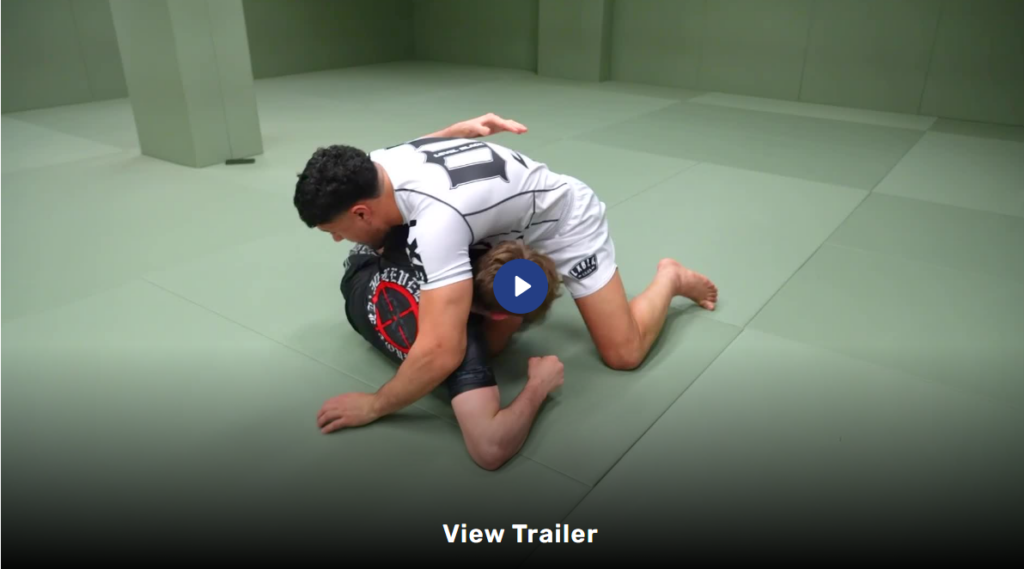
Knee shield half guard is the kind of position that makes otherwise confident passers feel like they’re trying to run through a closed door. You’re close enough to feel the guard player’s pressure, but still stuck at arm’s length—eating frames, losing posture, and getting your forward momentum turned into a reset (or worse, a leg entanglement).
That’s the problem Passing Knee Shield Faris Ben-Lamkadem DVD aims to solve with a clear, connected roadmap. Instead of giving you twenty unrelated answers to the knee shield, Faris builds a sequence that starts with structure—how to square the guard player up, how to deny inside position, and how to win wrist control—then progresses into specific passing routes and finishing options.
The Knee Shield Problem
The knee shield works for one reason: it creates distance while still keeping the bottom player connected enough to threaten. A good knee shield player can frame your shoulder, hide their hips, block your chest-to-chest pressure, and constantly angle their knees and toes toward inside position. That’s the real danger zone—once the bottom player starts winning inside space, your passing becomes risky and your base becomes vulnerable.
Most people fail against the knee shield in predictable ways:
- They chase pressure too early. They try to flatten the guard player before they’ve neutralized the frames and underhooks that make flattening possible in the first place.
- They accept bad alignment. They pass while being angled, which makes them easy to off-balance and easy to re-guard.
- They ignore wrist control. They treat hands as a nuisance instead of the steering wheel of the entire position.
A good knee shield passing system isn’t just about which side you pass to. It’s about how you force the guard player to stop rebuilding the same shape. That’s why squaring up is such a recurring theme in modern pressure passing: you don’t need to be heavier, you need to be better aligned.

What I like in principle about Faris’ approach is that it respects how modern guard players behave. They don’t just sit there with a static knee shield. They frame, pummel, underhook, and hunt entanglements. So a passer’s first job is to reduce those options—then apply pressure. If you try to do it in reverse, you’re basically giving the bottom player your momentum for free.
Faris “Faradinho” Ben-Lamkadem
Faris Ben-Lamkadem is a British black belt under Roger Gracie and is widely associated with the Roger Gracie Academy lineage. He built his reputation through consistent performances across major circuits, with notable success in No-Gi at black belt, and he’s also competed extensively in Gi earlier in his career. He’s often referred to by the nickname “Faradinho,” and he’s been part of high-level competitive rooms where details matter—especially in grinding positions like half guard and knee shield.
One of the things that makes Faris a credible voice on this topic is that his competitive era is the era where knee shield isn’t half guard-lite. It’s a full-on hub for frames, underhooks, and leg-lock transitions. You can see that reality reflected in how this instructional is structured: he doesn’t just show passing routes—he spends real time on avoiding inside position and connecting the pass to control or finish.
He’s also been publicly vocal about athlete-treatment issues in the sport, including speaking out about a payment dispute with Polaris—something that, at the very least, signals he’s not trying to play the polite PR game when he feels something is off. That same bluntness shows up in his teaching style here: direct, practical, and geared toward what works when someone is actually resisting you.
Gringo Guard Passing Knee Shield Faris Ben-Lamkadem DVD Review
This is a course that feels more system-first than move-first. It doesn’t pretend the knee shield is easy. It just gives you a way to stop treating it like a puzzle and start treating it like a repeatable problem with repeatable solutions.
Volume 1 – Avoiding Danger
Part 1 of Passing Knee Shield Faris Ben-Lamkadem DVD is where Faris sets the tone: you don’t beat knee shield by forcing forward pressure. You beat it by making the guard player lose structure. The early chapters focus on squaring the opponent up, clearing the basic knee shield, and—crucially—addressing inside position before it turns into a bigger problem.
This is also where the conceptual framing becomes obvious. He’s not treating the knee shield as one static configuration. He’s treating it as a dynamic problem where your alignment and hand positioning decide whether you’re passing or scrambling. That’s why the upper body vs upper body idea matters: if you can win that battle, you can stop getting held at arm’s length, and you can start controlling how the exchange evolves.
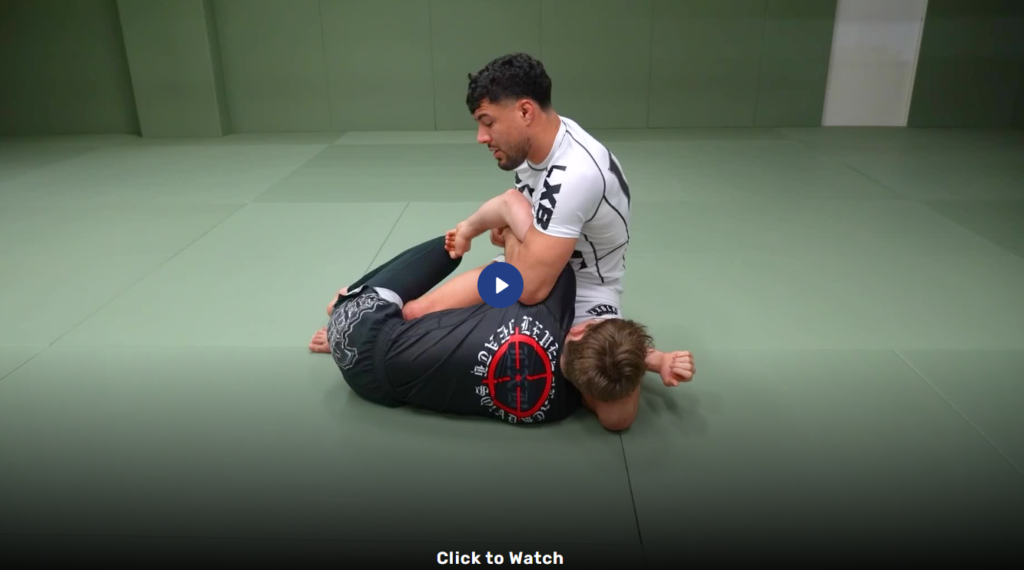
The final piece of this first section is the introduction of the wrist pin and the goal behind it. The wrist pin isn’t presented as a gimmick grip—it’s the control mechanism that stops the bottom player from resetting frames and buying time.
Volume 2 – Knee Shield Passes
The second part is the engine room: this is where Faris stacks a series of knee shield passes around connected ideas—frame removal, wrist pin control, and forward pressure that arrives at the right time. The section starts with a knee shield passing route that includes a cross-shoulder frame and a Rau drag, and quickly moves into a chain that connects the Rau drag into an over-back pass, then into leg weave options.
This is where the course feels most like a wrist pin knee shield pass system rather than a loose collection of moves. You’re not just learning a pass. You’re learning how one control choice creates a predictable next choice. Faris shows multiple ways to use wrist pins to pass, how to square the opponent up when they try to angle away, and how to pummel legs and smash knees together so the bottom player can’t rebuild the shield.
One of the more valuable inclusions is a specific answer to the underhook battle—an over-back pass counter that addresses the underhook via a reverse body lock concept. If you’ve ever felt your pass collapse the moment the bottom player wins an underhook, you’ll immediately understand why that matters.
Volume 3 – Finishing After the Knee Shield
Volume 3 is where Faris adds teeth to the system. Instead of stopping at you passed, he builds in finishing options and higher-risk transitions that punish the guard player for overcommitting to defense. This includes submissions off the wrist pin (Kimura and armbar variations, plus a Darce sequence), as well as leg-lock threats like heel hook and kneebar options that appear once the opponent’s hips and knees are compromised.
There’s also an important conceptual message baked into the structure: if the guard player knows you only want to pass, they can defend the pass forever. If they think passing pressure might also lead to immediate submissions or back exposure, the entire defensive posture changes.
That’s why the wedge back take material is a smart inclusion—it turns the knee shield exchange into something that can end with back control, not just side control if everything goes perfectly.
Breaking the Shield
The best way to get value out of Passing Knee Shield Faris Ben-Lamkadem DVD is to treat it like a short training cycle, not a one-night binge-watch. Start every positional round in knee shield half guard. Your only goal is squaring up and clearing the basic knee shield structure. Don’t rush to pass—win alignment first.
Add wrist pins. Focus on preventing resets: if the bottom player frames and rebuilds, treat it as a failed rep and immediately restart the sequence. Choose one passing chain (Rau drag → over-back → leg weave options, for example) and run it repeatedly with progressive resistance.
Proceed with introducing one punishment layer—either a back take or a submission threat—so opponents stop defending with the same lazy frames. If you do it this way, the instructional becomes a practical skill-builder instead of a technique library you forget in two weeks.
PASSING KNEE SHIELD FARIS BEN-LAMKADEM DVD DOWNLOAD
Who Is This For?
This course is best for solid blue belt through black belt grapplers who already understand half guard basics and want a cleaner, more connected answer to knee shield. It’salso good for passers who like structure and control—especially people who prefer pressure passing but keep getting stalled at the“can’t get chest-to-chest stage.
No-Gi athletes who regularly run into opponents using inside position threats and want more confidence engaging half guard without instantly ending up in a scramble will gain a lot from the Guard Passing Knee Shield Faris Ben-Lamkadem DVD.
It’s less ideal for brand-new white belts who don’t yet understand the underhook/frame battle in half guard. You’ll still learn, but you might not know what to prioritize and people looking for “entering half guard passing from standing.” This is primarily about solving the knee shield once you’re already in the exchange.
Pros & Potential Drawbacks
Pros:
- Systemic structure instead of random answers: the course is built around connected progressions, not isolated cool moves.
- Wrist control as a real passing tool: the wrist pin concepts are practical and help solve a common problem—endless frame resets.
- Clear passing chains: the over-back and leg weave sequences give you repeatable routes that don’t rely on perfect timing.
- Leg entanglement awareness: early emphasis on avoiding inside position keeps you safer in modern No-Gi exchanges.
- Built-in punishment layer: submissions and back takes make the knee shield defense more costly for your opponent.
Potential Drawbacks:
- Wrist-pin dependency: if you don’t develop the hand-fighting and control feel, some of the system loses its punch.
- Not a omplete half guard passing encyclopedia: it’s focused on the knee shield problem, not every half guard scenario from scratch.
Pass Like a Gringo
As a targeted solution for one of the most annoying modern guard problems, Passing Knee Shield Faris Ben-Lamkadem DVD mostly delivers. The strongest value is the structure: square the opponent up, deny resets with wrist control, and run connected passing chains that don’t collapse the moment the bottom player frames or underhooks. The system leans heavily on specific controls (especially wrist pins), and it doesn’t try to be a full half guard passing from every situation course.