




Key Takeaways
- A conceptual passing system built around three distances: far, mid, and close.
- Very structured coverage of passing open guard, seated guard, De La Riva-style guards, knee shields, half guard, and deep half.
- Geared toward making you think in passing “phases” rather than collecting random techniques.
- Strong fit for modern guard-heavy training rooms where you’re constantly dealing with seated and supine players.
- Best for blue belts and up who already have basic balance and passing fundamentals.
- Rating: 8/10
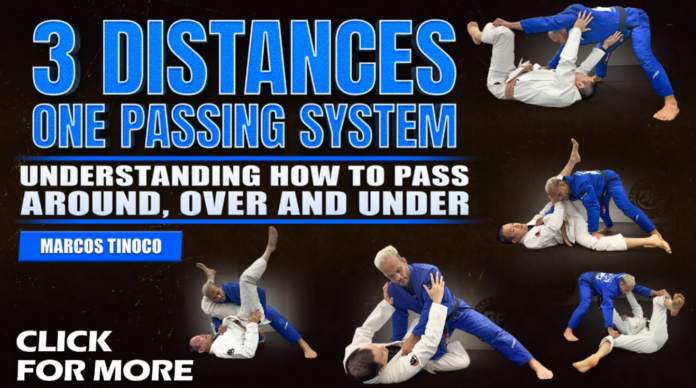
3 DISTANCES ONE PASSING SYSTEM MARCOS TINOCO DVD GET HERE
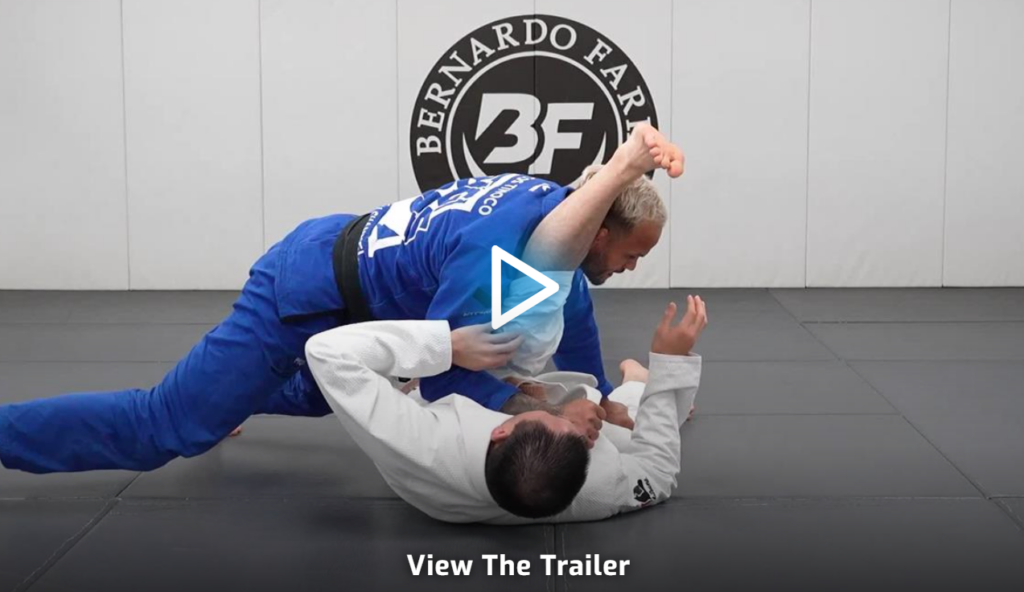
If you’ve ever felt overwhelmed trying to memorize a dozen different passes for every single guard variation, 3 Distances One Passing System Marcos Tinoco DVD goes in the opposite direction. Instead of adding more techniques to your plate, it gives you one structured framework built around three universal distances: around, over, and under.
World-class black belt Marcos “Lekinho” Tinoco uses this instructional to walk you through how he thinks about passing in real matches: where you stand in relation to the guard player, what threats you should respect at each range, and how to systematically move from one “distance” to another until the guard breaks.
The end result is a passing roadmap that’s designed to work in both Gi and No-Gi, with a clear bias toward simplicity and repeatability rather than flashy one-offs. In this review, we’ll break down who Tinoco is, how the three-distance system is structured across the volumes, what kind of grappler will benefit most, and where the instructional sits in the current landscape of passing-focused BJJ instructionals.
Figuring Out Distances When Passing
Guard passing is one of those areas of Jiu-Jitsu that can easily spiral into chaos. You face spider guard one round, De La Riva the next, knee shield after that, and soon you feel like you’re studying five different sports at once. A distance-based framework, like the one behind 3 Distances One Passing System Marcos Tinoco DVD, tries to cut through that noise.
By categorizing engagements into far, mid, and close distance, you start from where you are in relation to the guard rather than which specific guard you’re in. That’s a big mental shift. Far distance means you’re mostly on your feet, dealing with open legs and frames. Mid-distance is where hooks, De La Riva, and knee shields come alive.

Close distance is when you’re chest-to-chest and trading underhooks, stacking, or smashing from half guard-style positions. When you view passing this way, guards stop being isolated problems.
Instead, they become variations inside one passing ecosystem. That’s the underlying promise of this Marcos Tinoco passing DVD: once you understand the three distances, you can adapt to new guard trends without having to rebuild your top game from scratch every time.
Who Is Marcos Tinoco?
Marcos Vinícius da Silva Tinoco, better known as “Lekinho”, is a Brazilian Jiu-Jitsu black belt under Marcelo Garcia and a long-time representative of the Alliance team. As BJJ Heroes notes, Tinoco is part of a stacked generation that bloomed under Marcelo’s coaching in New York, where he became known for a well-rounded, technically sharp game.
Tinoco racked up serious credentials on the world stage: CBJJ Brazilian Nationals champion, multiple-time IBJJF European Open champion, IBJJF New York Summer Open champion, and a World Championship silver and bronze medalist at black belt, along with No-Gi Pan titles and No-Gi Worlds medals.
These results make it clear he’s not just a competent passer – he’s proven himself against the best in both Gi and No-Gi across major IBJJF events. Tinoco now channels that experience into teaching kids and adults in the Boston area, with a strong emphasis on helping students reach their competitive and personal goals.
That teaching background shows in the way he structures this three-distance guard passing framework: methodical, progressive, and focused on making concepts stick for regular students, not just elite competitors.
Detailed 3 Distances One Passing System Marcos Tinoco DVD Review
The 3 Distances One Passing System Marcos Tinoco DVD instructional is organized into three volumes, each anchored to one of the core distances. That structure lines up nicely with how real rolls feel: you start at range dealing with open guard, get entangled in hooks and knee shields in the mid zone, and eventually have to smash or stack your way through half guard and deep half to actually score the pass. Let’s break down each volume.
Volume 1 – Far Distance
The first volume introduces the overall idea behind 3 Distances One Passing System Marcos Tinoco DVD, and immediately drops you into far-distance scenarios. You’re mostly standing while the opponent is open or seated, trying to control distance with their legs and grips.
Tinoco starts by passing open guard and even “tornado-style” scrambles without grips, which is a bold but very useful way to force you to rely on footwork, angles, and timing rather than clinging to the pants.
From there, he covers seated guard passing, showing how to approach and off-balance opponents who are scooting toward you and trying to get under your base. The X-pass features as a core tool here, acting as a bridge from a far distance into either mid or close distance, depending on how the bottom player responds.
Tinoco then looks into classic Gi-style open guards: lasso/spider and collar-sleeve. He doesn’t try to cover every tiny detail of each guard; instead, he shows how the same pass principles apply. You learn to step off center, clear hooks and frames, and commit to angles that make guard retention difficult, all while staying conscious of the opponent’s ability to swing into modern attacks.
Volume 2 – Mid Distance
Part two is where a lot of people will feel they’re finally getting answers to the guards that annoy them most. Mid-distance is where De La Riva, headquarters positions, knee shields, reverse De La Riva, and butterfly all come into play, and this volume is essentially Tinoco’s playbook for navigating that chaos.
He opens with De La Riva and headquarters, outlining how to pin the leg lines and upper body so the bottom player can’t freely invert or swing into leg entanglements. Knee shield passes and weave passes show up next, with a strong emphasis on when to prioritize smashing straight through versus when to redirect and circle.
The classic knee cut gets a lot of love, which will make any mid-range passer happy, but it’s framed inside the bigger pass over distance rather than as a random stand-alone move. Tinoco also addresses reverse De La Riva and butterfly guard, tying them back into the same themes: control the inside space, dictate which side the opponent can face, and force them into predictable reactions.
Volume 3 – Close Distance
The final part is all about close distance passing, where you’re chest-to-chest or heavily connected and trying to finish the job. Half guard is the central hub here: double underhook half guard passes, single underhook with lapel, and options when opponents dig into deep half.
Stack passing, over-under, and double-under passing are all treated as part of the same “pass under” universe. Rather than teaching them as disconnected systems, Tinoco explains how your upper-body position, head placement, and control of the hips and shoulder line interact across each variation.
That’s important for grapplers who struggle to decide which type of stack or over-under they should commit to in the moment. The volume concludes with single-underhook options, a set of dedicated passing drills, and an outro that reinforces how to tie all three distances together.
Learn While You Roll
On the mats, a system like this lives or dies based on how easy it is to remember and apply under pressure. The good news is that 3 Distances One Passing System Marcos Tinoco DVD is built to be drilled in chunks.
You can spend a week focusing only on far distance against open and seated guard, then gradually layer in mid-range sequences vs De La Riva and knee shield, and finally devote time to close-range half guard smashing and stack passing.
The volumes also lend themselves well to positional sparring. You can start rounds only from seated guard or headquarters and allow yourself to use only the tools from that distance. That makes it easy to collect enough reps in each scenario without getting derailed by a completely different position every thirty seconds.
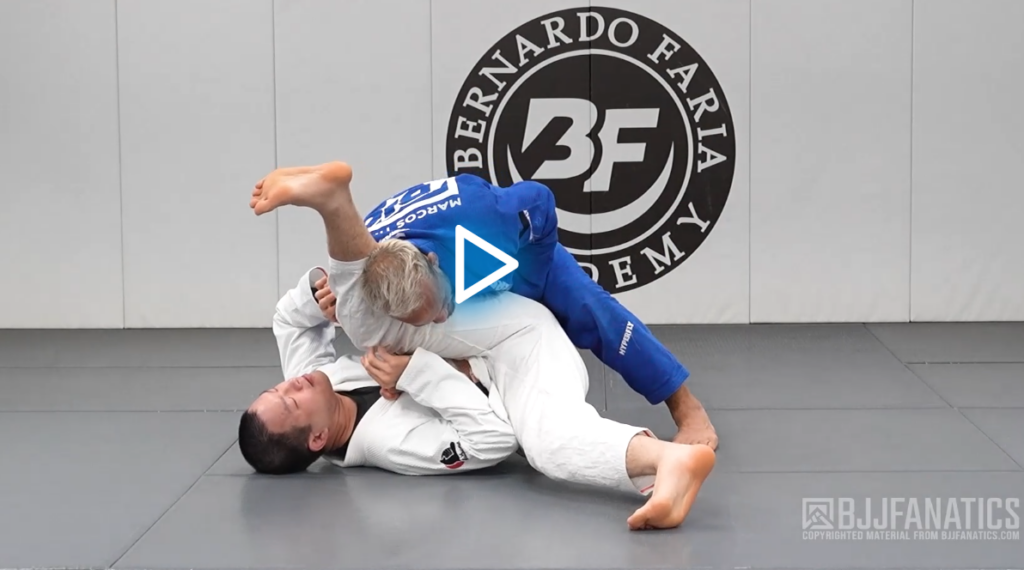
DOWNLOAD 3 DISTANCES ONE PASSING SYSTEM MARCOS TINOCO DVD
Who Is This For?
This is not a day-one white belt DVD. Beginners can watch it, but they’ll get far more value if they already have basic balance, stance, and movement from the top. Realistically, blue belts and up will benefit most from 3 Distances One Passing System Marcos Tinoco DVD, especially those who are tired of collecting random passes and want a clearer conceptual map of the guard-passing problem.
Guard-oriented players who usually pull and stay on bottom can also gain a lot here, particularly if they’re trying to round out their game for competition. Seeing how a high-level Alliance New York guard passing DVD structures engagements from the top can help bottom players understand what their opponents are actually trying to achieve and what reactions their guards tend to trigger.
Pure No-Gi specialists will still find value – the concepts are universal and the product page explicitly emphasizes that the framework works in both settings – but visually, some sequences lean on Gi grips, especially in the collar-sleeve and lapel-based half guard entries. If you never train in the Gi, you’ll have to mentally translate a few sequences into wrist- or head-control versions.
Pros & Potential Drawbacks
Pros:
- Clear three-distance framework – Organizing passing into far, mid, and close distance helps you make sense of a chaotic area of Jiu-Jitsu and reduces decision fatigue in live rolls.
- Well-structured volumes – Each part focuses on a logical cluster of guards (open/seated, De La Riva and knee shield variations, half guard and stacks), making it easy to focus your drilling.
- Gi and No-Gi friendly concepts – While some examples are Gi-specific, the underlying principles of angle creation, pressure, and shoulder-line control translate well to No-Gi.
- Emphasis on drills and skill development – The inclusion of passing drills at the end of the instructional helps bridge the gap between “I watched it” and “I can actually do it.”
- Instructor credibility – Tinoco’s major IBJJF titles and history under Marcelo Garcia and Alliance give weight to his ideas about high-level passing.
Potential Drawbacks:
- Not ultra-beginner friendly – Brand-new white belts without solid base and posture may find the pacing fast and the positional context hard to follow.
- Some Gi-heavy sequences – Players who are 100% No-Gi may wish there were more explicitly grip-agnostic demonstrations in positions like collar-sleeve and lapel half guard.
- Less focus on entries to top – The instructional assumes you’re already on top; there’s minimal coverage of how to reliably get there from guard or stand-up, which some people might see as a gap.
Master the Distance – Master the Pass
Overall, 3 Distances One Passing System Marcos Tinoco DVD delivers exactly what the title promises: a unified passing framework that revolves around managing three core distances, rather than a grab-bag of techniques. If your current top game feels like a collection of isolated passes that don’t quite connect, Tinoco’s approach can give you the connective tissue you’ve been missing.