

Brazilian Jiu-Jitsu Concepts Explained: The Tripod Principle

Jiu-Jitsu Concepts Tripod Principle

The martial art of Brazilian Jiu-Jitsu becomes a more complex puzzle the more you study it. Contrary to the popular expectation that you are going to learn it better the more time you spend doing it, Jiu-Jitsu just offers more complicated mazes. Don’t get me wrong, you will understand it better, you might even turn out to be a world-class competitor. But it is hard to imagine anyone fully grasping the essence of the Gentle Art. It all starts with techniques, which are simply motion patterns that can easily be mastered. Next, it is all about connecting them in a working system, creating an individual game for yourself. However, once you have sufficient technical mastery, Jiu-Jitsu takes a surprising turn. Suddenly it’s not about strategy and tactics anymore. Jiu-Jitsu concepts start to take over where techniques left off. This is where the abyss of Brazilian Jiu-Jitsu truly opens up.

In a series of future articles, we’re going to attempt to clarify as much of the Brazilian Jiu-Jitsu concepts as we can. Of course, feel free to throw in your experiences and opinions on the subject, so that we can all come to understand our art just a little bit better. To start things off, I’m going to lay out a founding principle that has massively influenced my game. It is one of those crucial Jiu-Jitsu concepts that open up areas of the art that are so obvious that most people miss them. let’s talk about the Tripod principle of Jiu-Jitsu.

Learning Jiu-Jitsu Concepts

Jiu-Jitsu concepts are not hard to understand in theory. When it comes to practicing them, things get a bit trickier. Do you know how every time you look to practice a new technique during rolling, you have to stop and think about it instead of flowing? Well, with Jiu-Jitsu concepts it gets even more complicated. When you add in a technique, let’s say a mounted armbar, you start thinking only form the mount. While in other positions during rolling, you’re going to go with your usual flow.

However, concepts apply to every part of grappling martial arts. As such, you’ll suddenly seem worse off when you first attempt to integrate a concept into your game. That is why the conceptual game is much better suited for advanced students (purple belts and above). So, whenever you include a new concept into your game do not be afraid to take it slowly. It is going to take much more time to get comfortable with a Jiu-Jitsu concept than with a technique, especially when going live.

The Tripod Principle Of Jiu-Jitsu

As far as the Tripod principle goes, it is very simple in theory. Jiu-Jitsu, much like a tripod stool, is based on three main pillars. These pillars are base, posture, and structure. Staying in line with our tripod stool analogy, if you take away one of these foundational pillars, the structure’s stability is weakened. Take away another one and it can barely stay upright, if at all. if you take away all three, the tripod stool seizes to exist.

From an opposite perspective, you want to have all three foundational pillars for yourself. Before I go on I want to make something very clear. The Tripod principle applies to both the bottom and the top game. For that matter, it applies both standing and when on the ground. It is not limited to top positions only. So, wherever you find yourself positionally, you need to make sure you have all three foundational pillars of the tripod principle. In an ideal situation, you would have all three firmly in place, while taking all of them away from your opponent. Ideal situations, though, are in reality extremely rare in grappling.

A great approach to always staying ahead of your opponent is watching out for the score. Let’s say that you have all three pillar and your opponent has all three. The chess game here is taking all of his away while keeping all of yours. Since in reality, this is quite difficult to obtain, you need to at least make sure you lead the score. So while the ideal score is 3:0 for yourself (you have base posture and structure, your opponent has none), in real life it’s going to be 3:2, 3:1 or 2:1 way more often. A draw means you need to regain advantage before looking to dismantle your opponent.

Jiu-Jitsu Concepts Tripod

The Principle Of Base

First of the three pillars that make the Tripod principles is base. As far as Jiu-Jitsu concepts go, this is one that you learn during your first weeks of training. A strong base is a starting point for a successful game. Once again, the base is not just a top game concept. While clear base on the bottom is not always apparent, the opportunity to build one is. let me explain.

If you find yourself in side control, you’re going to need the power of your feet on the mats in order to go for an escape option. Even the most basic bridge and shrimp escape require at least one foot on the ground. That is base. Now imagine that your opponent has both your feet wrapped and off the ground. Escaping becomes much more difficult now.

From the top position, this concept is easier to grasp. A good base means good balance which in turn means you can start looking to take away one of your opponent’s pillars. Usually, when standing, a staggered stance translates to a better base than a parallel one. It’s one of the basic concepts of martial arts in general.

Taking base away from your opponent is usually the first thing people think off when they’re on the bottom. Every sweep or submission from the bottom requires a shift in weight, which means disrupting the opponent’s base. We’ already talked about an example of taking base away from an opponent that’s on the bottom. In both cases, taking away their base while retaining your results with a clear advantage for you. It sounds simple, but it gets complicated when you try it. Well, at least in the beginning.

Posture For The Win

Posture is also one of the foundational Jiu-Jitsu concepts you learn as a beginner. What most people fail to do is retain this information in the long run. Failure is a great teacher, and this soon gets rectified, although after numerous errors. Staying upright when attacking from the top is once again clear. As long you have correct posture there’s not much an opponent can do attack wise. Well, other than attacking your base.

JIu-Jitsu Concepts Tripod Princile

Before we look at how posture helps a grappler fighting of his/her back, let’s define the term first. Most people perceive posture as the prevention of a forward lean. While leaning to the front, back and sides do constitute a broken posture, so does twisting. Twisting one’s spine also breaks posture. This is an often overlooked concept in battles for posture. So, whether you’re on the top or bottom, keep your posture strong in order to dominate. This includes every plane of motion that the spine is capable of going through. Form the top, think about folding and opponent in half. From the bottom, think about a hip rewind. Both are great examples of completely broken posture.

The Pillar Of Structure

The structure is probably the most complicated pillar of the Tripod principle. Before we get lost in the maze that is structured, let’s dumb it down. In terms of Jiu-Jitsu concepts, the structure is defined by the placement of your body and limbs in regard to your opponent.

Let’s use top side control as an example. The concept of side control is to get your body across your opponent’s body. Holding side control requires correct weight distribution and precise angling of the body. Both of these aspects fall into the “structure” category. Furthermore, placing your arms in one of the few dominant positions from top side control completes the principle. From side control, a structural concept is placing your arms either on one side of your opponent’s body, or staggered across both. Every placement of the arms opens up different attacks while preventing different movements of the opponent. That is structure at work.

Now, when looking to shift the score to your advantage, the aim is to take their structure away with the help of your own structure. The structure is also the primary tool for taking away both base and posture. As such, it should be the one thing you safeguard most carefully during a roll or a match. That way, you’re at least be able to get o a 1:0 score, the minimal required for successful attacks. Simple yet complicated right?

Jiu-Jitsu Concepts Tripod

Now that you are aware of the Tripod principle you can expect two things. The first is that your rolls are going to become a lot less efficient before they improve. It takes time to consciously integrate the principle into your game, so be patient. Second, you can expect that whatever technique you choose to apply is going to work if you outscore your opponent by at least 1.

A Practical Blueprint for the Journey Through Brazilian Jiu-Jitsu

Submissions From Guard: The Holy Trinity

Specific Vs. Well Rounded Brazilian Jiu-Jitsu Game

Versatile Attacks From The BJJ North-South Position

BJJ North-South Attacks

The one position that always causes amusement among non-grappling people is the BJJ North-South position. As funny as it may seem to the untrained eye, this position os a very advantageous one for the top player. It is notoriously difficult to escape and is as uncomfortable as Jiu-Jitsu gets. It has been proven to work in the highest tiers of competition and is one of the top submission hunting positions from the top. The positions easily connectable with every side control variation, allowing for seamless transitioning between them. This in turn oftentimes opens up attacks while preventing escapes at the same time.

The basic notion behind the BJJ North-South position is control over your opponent by proxy of the head. The positioning from the Nort-South is such that your hips and legs, which are the strongest part of your body, come up against the opponent’s shoulder girdle. In addition, it is quite easy to control the hips from there, which completely immobilizes opponents. In an attacking sense, there are plenty of different submissions available from the position. Today we’re going to look at lots of chokes and a few arm locking options.

Controlling The BJJ North-South Position

This position is a variation of side control and you can easily move into this position if you’re in classic side control.  Usually, it’s easiest for the transition when your opponent tries to bring their legs underneath you. While the BJJ North-South position is considered distinct from side control, in terms of scoring, there is no difference. In the traditional IBJJF rules, just like side control, the position itself does not score any points. However, points come from the act of passing the guard. In the popular NAGA rules, in the No-Gi scoring system, North-South falls under the classification of a ‘side control variation’.

The BJJ North-South position is a very secure hold down to control a larger, stronger opponent. If you can secure your proper grips and apply your body weight, escape for your opponent is very difficult!

Now let’s take a look at some of the reasons a grappler might wish to transition to the North-South position from side control. One of the main advantages that the North-South position has over other side control variations is hip distance. In most side control variations, the top grappler’s hips are very close to the bottom grappler’s hips. Usually, the top grappler’s hips are used to help check and control the bottom grappler’s hips. This allows the bottom grappler to affect the top grappler’s base with powerful hip bridges. This is particularly true when there is a significant size disparity. Most grapplers have had the experience of having their side control painfully reversed by much larger opponent simply through greater strength and weight. This is not the case with the North-South.

Choking From The North-South

North-South chokes are very high-percentage submissions that a grappler can finish from the BJJ North-South position.

The North-South is a very stable position to control a fresh, strong, thrashing opponent. But once you have secured the position and controlled your opponent…what do you do next? The North-South choke may start in side control and get sunk in during the transition to North-South with various setups.

in Judo, North-South is known as “Kami Shio Gatame” or North-South mount. Judo has developed this position highly, as it is possible to win by holding/immobilizing the opponent for 25 seconds. Judo legend Katsuhiko Kashiwazaki was known for his groundwork and demonstrates many different fine details of the basic North-South choke:

The North-South Choke Instructionals

No one is better known for the North-South choke than MMA fighter and ADCC Champion Jeff Monson. Now Jeff Monson has some huge, muscular arms, but smaller guys can hit this choke as well. Big guns are not enough to get the choke, although it probably doesn’t hurt.

The question with the North-South choke is: How do you actually get into the submission position? Marcelo demonstrates his setup on how to get into the choke position. Marcelo also proves that one does not need Monson-esque arms to be effective with the choke!

Next, here’s a video that goes over three different finishing options for the North-South choke.  Often times grapplers will write off a move as “not for them” when in reality a simple variation is all that is necessary to make a technique work perfectly well for them. Try these variations and see which works best for you.

Lapel Based Chokes

The bead cutter or paper cutter choke is another common submission from the position. It can also be set up from the kimura attack by trapping their own arm with their own lapel or belt. It is a very potent choke that can leave an opponent sleeping in just seconds.

Here Are A Few More Gi Choking Options: https://bjj-world.com/unorthodox-gi-chokes/

North-South Armlocks

The north-south position is a Mecca for attacking chokes, as we already saw. This is mainly due to the fact that you have the neck of your opponent at your disposal while they’re lying flat on their back. In instances, however, in which the opponent attempts to reverse the position, they often end up tilting to one side. Once they get into such a position, the top side of their body is open for attacking armlocks of all kinds. And all the while you retain the high level of control the position offers.

A North-South Kimura 

The Kimura from North-South control might be the number attack you can look for from North-South position. Check out this tricky variation on the Kimura shoulder lock where you “Lion Kill” your arms to make the lock

An Armbar Followup

In the technique demonstrated below, you can see a perfect demonstration of sequencing and timing different moves. First, it’s the North-South choke and once the opponent defends, the next move is the armbar. It is pulled off at a very precise time that doesn’t give the opponent a chance to defend.

Wrist Locks For Sneaky Folkes

For all those small and technical people out on the mats that don’t rely on strength, wrist locks are a very useful attack. Since stronger opponents might decide to defend a North-South Kimura like they’re hanging off a cliff, it takes a lot of effort to pry the arm free. In such cases, going fro the weakest link in the chain is the best course of an attack. Although some people look down upon wrist locks for being sneaky and dishonorable, just remember that people hated on leg locks too. After the Danaher Death Squad, everyone is now desperately trying to catch up though. Who knows, you might end up pioneering this useful submission from the BJJ North-South position!

Everything You’ve Ever Wondered About Wrist Locks, Explained: https://bjj-world.com/wrist-locks-bjj-nobody-defened/

How To Stay Safe From Common BJJ Gym Bacteria

Safe From Gym bacteria

Brazilian Jiu-jitsu is an art that exposes the body to the maximum amount of microorganisms possible. Most sports either have limited contact between the surface of the body and the ground or spend a short time in a prone position. Constantly rolling around and grinding every imaginable (well, almost) body part on the ground is a Jiu-Jitsu trait by all means. Furthermore, the mats are a surface that can be a fertile ground for the growth of microorganisms. So are certain types of Gis. All in all, there are plenty of opportunities for grapplers to catch a nasty bug or two while training. In that sense, protecting ourselves from the most common gym bacteria is not complicated. It just takes some due diligence and basic hygiene.

What you have to understand is that you have basically three kinds of bacteria (and fungi as well) living on us. First are beneficial ones, than the ones that cause you to get sick, and finally, those that can cause you to get sick when given the chance. There’s this beautiful and important balance that occurs when one is healthy. When one is sick and the proportion of the latter two categories overwhelm the beneficial bacteria, then you have problems. So let’s explore the best strategies to keep common gym bacteria at bay.

Unwritten BJJ Rules Every Grappler Should Know: https://bjj-world.com/unwritten-bjj-rules/

Basic Personal Hygiene

Washing with plain old warm soap and water is the best thing you can do to stop the spread of disease. The mechanical action of washing your hands is the best way to get gym bacteria off of your body. Hand sanitizing using alcohol-based hand sanitizers is not a substitute for hand washing. It can, however, be used to supplement a hand-washing regimen. The germs a normal person might be exposed to on a daily basis don’t really require any fancy antimicrobial soaps.

Furthermore, how often you wash and what you wash with really does depend on certain factors. For people who are exposed to nasty bacteria on a daily basis, due to their profession, need to pay better attention. Stronger sanitizers are the way to go here. For the majority of the grapplers out there, they could probably do with using an alcohol-based hand sanitizer. The best time to use it is after rolling, in addition to washing their hands/showering.

As far as antimicrobial agents go there’s an issue with their constant use. You see, bacteria tend to be adaptable little critters. After all, they’ve managed to survive for millennia. Over usage of such products very often results in bacterial resistance.  The real problem with this is cross-resistance. This is when resistance to one antimicrobial also protects the bacteria from another unrelated antimicrobial. This is how common gym bacteria can turn into a really scary problem.

Jiu-Jitsu Gym bacteria Protection

Post Workout Hygiene 101

This is an interesting and really great question. Bacteria can absolutely live on bars of soap, especially ones that are frequently used for hand washing. Its recommended that bar soaps not be used in public places. there is, however, a study that showed there’s no evidence that “in-use” soap bars can transfer bacteria to naive hands.

So, to address the body wash issue. As long as the body wash container isn’t being refilled (which is common in gym environments) everything is fine. Refillable hand soaps/body washes have been shown to transfer bacteria and can become easily contaminated. So as long as it’s your personal bar of soap, and not a community one, you should be fine.

On warm, sweaty skin all bacteria would be able to multiply rather quickly This includes any bacteria one might have picked up from the mat or a grappling partner. It is best to take a shower as soon as you can after the session was over.

In a community shower, fungi and bacteria on the feet are the greatest concern. There are some methods, though, that can help. As long as you’re bringing in your own towels, soap, and shower shoes, the risk of taking home anything you don’t want would be minimized.

Keeping Your Gi Safe From Gym Bacteria

Bacteria are really good at clinging to things, especially S. aureus. It’s an undisputed champ. It is particularly good at clinging to natural fibers like cotton.

Your skin has an amazing abundance of bacteria that call it home. Acne and our sweat are at the top of their menu. That said, a sweaty cotton belt would be a perfect place for bacteria to set up shop. So if the goal is to encourage the growth of bacteria not washing a cotton belt is a great idea. In all other instances, please, throw it in the washer!

Moving on to Gis. After proper washing, by the time most things make it to the dryer, they’re no longer viable. Any vigorous mechanical agitation would definitely help in dislodging gym bacteria and other things from the fabric. As far as peroxide goes, the concentration you get in the drug store (usually 3%) isn’t nearly enough to make a difference. Bleach would definitely work, as long as the Gi is white. For a colored Gi, hand washing in warm water with detergent and air drying is a good way to keep everything clean.

Gym Hygiene And Bag Disinfection

When it comes to keeping the mats clean, most people overdo things. There’s no need for most fancy sanitizers that cost a small fortune every month. A diluted bleach solution works best here. Bleach kills just about everything. Just make sure to correctly figure out the dilution ratio. A 2:1 ratio is the best to kill gym bacteria but keep the mats safe from degradation. That’s two parts water to three parts bleach. If you’re feeling particularly paranoid, you could always go for a 3:1 ratio. Just make sure you thoroughly clean the mat area.

Gym Bacteria Hygiene

Keeping a clean gym bag would be a huge help in stopping the growth and spread of harmful bacteria. A cotton gym bag needs to be washed regularly, to begin with. In case of a vinyl one, spraying with Lysol or wiping it out with a dilute bleach solution, are more than enough.

In conclusion, the grossest thing is not washing a sweaty, cotton belt. Why wouldn’t you wash a sweaty, cotton belt? The other thing is having common sense. We have an immune system for a reason, and our own flora is part of what keeps us healthy. Wash your hands and your body regularly. For most people, antimicrobial products are unnecessary. Stay safe and keep the training area clean.

Unorthodox Gi Chokes From Every BJJ Position

Unorthodox Gi Chokes

The Brazilian Jiu-Jitsu Gi is a mighty weapon for those that understand it as such. The Gi is a medium that allows a grappler to obtain dominant control over another grappler. In order to achieve this control, one must know how to correctly position their grips. Not all surfaces of the Gi are equally efficient in terms of gripping efficacy. The sleeves (at their ends and behind the elbows) and collars (between collarbone and neck) are the two favorite spots. Closely behind are bottom-of-the-pants grips. Every once in awhile, gripping the belt also helps in controlling an opponent. However, the Gi is not just a tool for control, it is also a powerful tool for submitting. While armlocks and leglocks with the Gi are a scarce and low percentage, Gi chokes are a huge category of submissions that all grapplers need to have at their disposal.

Gi chokes have been around since the inception of BJJ. They’re not uncommon in other grappling martial arts that utilize the Gi too. Some of the Gi chokes used in BJJ today have deep Judo origins. Some of them are still in active use in Judo competitions today. Gi chokes come in all varieties and work at all levels of the Gentle Art. They can be done with virtually every part of the Gi and are extremely tight, due to the material Gis are made of. Wrapping a lapel around someone’s neck is a foolproof way of getting a tap.

Gi Chokes Explained

Lapel chokes (and all Gi chokes for that matter) are effective on even the best martial artists. However, most newcomers to the world of Brazilian BJJ often perform Gi chokes using the incorrect technique.

For example, If you have a shallow grip on your opponent ’s lapels, you should not try to pull on their them.  This will most likely not work and it will use up your grip strength, leaving you vulnerable to counterattacks. A better method is to get just one hand deep into your opponent’s collar. Look to grab the Gi material on the back of their neck. If you do this, the sharp part of your forearm and wrist will be on the neck of your opponent and you’ll be in a great position to cut off his circulation.

When it comes to using a lapel choke, the tighter your hands are and the deeper the grip, the better. If both of your grips are shallow, you will be unable to do much to your opponent. If both grips are deep, though, you have a great chance of finishing the choke and the match.

Gi Chokes From Side Control:

Attacking with Gi chokes can be done from virtually anywhere. There are a few positions, although, that offer the best advantage. From these few select positions, it doesn’t take much time to sneak a lapel through and set up a tight choke. Furthermore, you’re not limited to using only your opponent’s lapel. When in the correct position, you can easily alternate between your own lapel and that of your opponent, confusing them as to what your next move might be.

Side control is one of the top positions for hunting gi chokes. What many people fail to comprehend at the beginning is that side control is an extremely volatile and active position. In side-control, you need to be able to switch between a number of positions, from Kesa Gatame to North-South in order to control your opponent. All these transitions open up plentiful opportunities to finish the match with a Gi choke.

The Baseball Choke

When your opponent sets up their frames from the bottom of side control, use the newly created space to free their far-side lapel. Pass the lapel to the cross face hand and transfer your weight to knee on belly.  From there, you grab the lapel with your front side hand and slide your hands together.  Switchback your hips and circle to apply the baseball choke. This is a great high percentage set up, but the finish is a bit difficult to get. Well, at least until you get the hang of it.

https://www.youtube.com/watch?v=QIprvyBWLus

The Brabo Choke

This choke is especially useful when your opponent defends the baseball choke.  The set up starts from the top side control.  You then pass your opponent’s far side lapel under their far side arm and grab with the near side hand.  Then, like with the baseball choke, you switch grips. This time, however, your opponent defends the baseball choke by pushing up.  You then grab your opponents posting hand and pull it across to secure the choke.  You can either finish with a one-handed Brabo or you can re-secure the baseball choke.  Both the setup and the finish are a high percentage.  You can even fake the baseball choke just to get your opponent to post and sink in the Brabo.

The Punch Choke

The first step is to isolate and secure the opponent’s near side arm. Next, you take their near side lapel and “punch” it across their body through to the hand you have under the neck. For this choke, your opponent manages to get their hand trapped when defending the punch-through. So, you go to knee on their belly and push forward so that they are facing away from you a bit. Then, with your opponent’s head and shoulders elevated, take your free hand and push your first into their neck. To finish, you need to pull their lapel with your other hand.

The Samurai Choke

Start in top side control.  Your opponent is keeping their arms in very tight. So, you pass the far side lapel over (rather than under) their far side arm and grab it with the hand you have under the neck.  Get a good grip and with your free hand, keep your opponent’s trapped arm attached to his side. Having secured your opponent’s far side arm, you are going to use your hips and legs to isolate their near side arm as well. With both arms secured, you go to knee-on-belly while posting your front foot by their head.  Now, you can apply the samurai choke.  Since both their arms are trapped, your opponent can’t defend. This is one of the highest percentage Gi chokes you can pull off.

A Lapel-Choking Game From The Back

Back control is the traditional choking position in BJJ. The Rear Naked Choke is a Brazilian Jiu-Jitsu classic and is the first attack you think of from the back. There are, however, numerous other attacking options in terms of choking. And, a lot of them include the use of the Gi. So without further ado, let’s take a look at some classical and some unorthodox Gi choke options from the back.

Bow And Arrow Choke

Starting off with the classics, there’s nothing that screams Brazilian Jiu-Jitsu more than the bow and arrow choke. From seatbelt and hooks back control you first look to thread your arm inside the opponent’s lapel. The deep the better. You need to look to keep the elbow of the choking arm back sot hat there’s constant pressure. In order to get into finishing position, you need to tilt the opponent completely to the choking side. This is going to allow you to pull your bottom leg out and get into a chair-sit position. From there you grab the opponent’s pants with your free arm and sit back. Before you think about finishing you need to get your bottom leg over their shoulder, so that you kill all defensive grips they might have. From there on just spread your opponent like firing a bow and you get an instant tap.

Chilean Necktie

This is a quite unexpected one. Set up from back control with seatbelt grip.  You pass your own Gi under the opponent’s arm and to the hand, you have over your their other shoulder.  You then fall to the same side where you’ve passed your lapel under your opponent’s arm.  Finally, use your leg to apply pressure to the opponent’s neck while pulling grip tight.

The Murder Choke

Set up from back control when the opponent is doing a good job of defending his neck. You sneak your own lapel over your opponent’s shoulder and pass it to the hand you have across their neck. You then thread your own arm through the grip and grab your opposite bicep. To finish you fall to the side you have the lapel grip and slide your hand down to your other hand. This is a really sneaky and high percentage choke. The key is not letting your opponent see what you’re doing when you make the first lapel pass.

Attacking The Turtle:

The turtle is an old extremely defensive position that comes from Judo. There’s really not much you can do against an opponent that knows how to defend from the turtle position. However, if you know the basic concepts of creating openings, even the smallest space can help you go for undefendable Gi chokes.

The Gerbi Choke

This one is similar to the Chilean necktie except you set it up from top turtle position. It’s helpful if you thread your arm from outside in and secure you opponent’s cross side lapel.  Then you simply pass your own Gi over the top and switch grips from the opponent’s lapel to your own.  Then, much like the Chilean necktie, you use your own leg to pressure the back of opponent’s head/neck while pulling grip tight. This is a high percentage choke with a really sneaky setup.

https://www.youtube.com/watch?v=VRGRfscQNa8

The Rolling Choke

ThIn some sense, the set up here is like a reverse Gerbi.  To start, you pass your own backside lapel under your opponent’s arm and secure it with your free far side hand. this, in turn, goes over your opponent’s far side shoulder to secure the grip underneath. Once you’ve secured the grip with your far side hand, you use your free hand to underhook your opponent’s near side arm.  Then, your roll under your opponent on the near side.  Once you land, you slide the free hand down to their neck for the finish.

When we talk about unorthodox chokes there’s probably the best instructional out there by Travis Stevens. Named, Chokes By Travis Stevens. It’s showing chokes as you probably never seen them before. It’s a mix of Judo and BJJ chokes and there is no better guy to show it than Travis Stevens is.

Travis Stevens is John Danaher’s Black Belt and Olympic Judoka, 2x Us Olympian in Judo and also BJJ 2x Copa Podio Finalist. In this Instructional he’s showing his best chokes and also the most common places that people get stuck in. It’s one of the easiest Instructionals to follow and It’s a very quick way to improve your BJJ choking game.

Check out this Instructional and the list of techniques here: “CHOKES” BY TRAVIS STEVENS

Chokes by Travis Stevens

How To Develop Crushing Grip Strength For BJJ

https://bjj-world.com/killer-ezekiel-choke-details/

The Easiest North South Choke Setup

A Few Very Nasty Submissions From Side Control

Stop Blaming Your Defeats On The Jiu-Jitsu Referee

Jiu-Jitsu Referee

People competing in Brazilian Jiu-Jitsu are never short of a way in which to win a match. Of course, the most sought after the manner of victory is via submission. Nothing makes you feel better than making your opponent give up completely. In most competition formats there is also a point system included. This point system comes into play in the event that no submission attempt ends up successfully. Furthermore, in the majority of tournaments, there’s the highly controversial advantage system that accounts for successful attempts and activity. Finally, there’s the referee’s decision, the final manner of concluding who won a match. And this is the main source of hatred that a Jiu-jitsu referee experiences at every tournament.

Being a Brazilian Jiu-Jitsu referee is no easy task. To begin with, you are solely responsible for the well-being of the athletes companioning under your supervision. Next, you’re required to pay close attention to every little detail happening. During the match you’re also tasked with awarding points, deducting them, awarding negative points and or warnings and stopping and restarting the match. At an IBJJF tournament, a referee is going to have an upwards of 60 matches like this during the day. Imagine the level of focus required. It is no wonder that they sometimes make mistakes. but the fact is that the Jiu-jitsu referee is not the reason someone lost as often as people might think.

How referees Can Save Careers: https://bjj-world.com/guy-refuses-tap-getting-injured-referee-saves-damage/

What Is a Referee’s Decision?

The most common phrase heard after a grappling tournament is usually not “great job,” “congratulations,” or “awesome performance.”  Unfortunately, it was not any form of encouragement whatsoever. The most-used phrase is “the referee got it wrong again.” But the question is, did you really get robbed? Or was it just a really close match that could have gone either way?

It is called a “referee decision” for a reason – because it is subjective. A Jiu-Jitsu Referee can choose a winner based on, but not limited to, your takedown style, your submission attacks, your position control, your aggressiveness, or your strategic performance.

This does not mean that the referee has to choose the athlete who was most aggressive or the athlete who attacked for the most submissions. Referees do not have to choose the athlete who controlled the majority of the match. Neither do they have to choose the athlete who ended the match with a balls-deep triangle locked and loaded just as time expires.

The point is, if the score is tied, it is no one’s fault except the athletes’ for forcing the referee to choose a winner and a loser.

Jiu-Jitsu Referee Decision

Don’t Blame It On The Jiu-Jitsu Referee

The problem with the over usage of the word “robbery” is that if an actual robbery was to occur, the statement carries no weight. In all fairness, there probably were some legitimate robberies that have occurred over the years at various tournaments.

No one Jiu-Jitsu referee is perfect. But when someone is telling a story about how referees robbed them of victory because of points or advantages, it’s best to stop listening. The smartest thing to do is to get as further as possible from the conversation. Is that rude? Maybe. But the fact is that your perceived robbery is in the past. It doesn’t matter anymore. Leave the past behind you, learn from it, and move on.

In many of the cases, people are actually mistaking “a wrong decision” for inconsistency. In the case of a robbery, the meaning is to take something from someone while knowing that what you are doing is wrong. What takes place more often, in reality, is the inconsistent application of the rules based on the referees’ interpretation.

For example, in 2013, Ary Farias lost his black belt world title just seconds after the finals match ended due to a penalty for stepping outside of the competition mat area as he celebrated his victory. This match has been infamously referred to as a “robbery.” As much as it might seem wrong, the penalty was correctly given based on the way the rules are written. The IBJJF has made the match unavailable on YouTube since. However, many grapplers often step outside of the competition mat area without receiving a penalty. It is hard to say that it was a wrong decision when ta referee just follows the rulebook. The problem is inconsistent rule enforcement, not a mistake per say.

Understanding The System

This may sound stupid and cliché, but Jiu-Jitsu is a martial art. And like all art, it is up for interpretation. That is the very nature of art. Everyone can look at a painting or sculpture and describe what he or she sees, and surely no one will see the same thing. Jiu-jitsu is art that is in motion. Surely everyone will see individual performances differently.

At the end of the day if the athletes were unable to, at a minimum, secure a solid positional advancement and consequently the match ends in a tie score, then the athlete has no room to argue that he or she “should have” won. And by solid position, we’re talking about one from which the athlete has complete control. That means that they can literally look up at the referee and watch him or her award undeniable points. If you cannot take your opponents down and keep them down, or pass their guards and control them for five to 10 seconds, then you don’t deserve points. It’s as simple as that.

Jiu-Jitsu Referee

The Advantages Controversy

Another important point to remember is that advantages are not points. They are nothing. They are meager little assistants that help determine tied matches. It seems ridiculous to try and rely on an advantage to win a match. So, if you don’t get the win because you were trying to game the advantage system, that’s your own fault for not securing the position. If you let the match go the referee decision, then you should just plan on losing, because you certainly did not do enough to deserve a win.

There is nothing awesome about squeaking out a win by an advantage. Advantages are helpful because they act as a form of transparency for decision making in the event of a tie. They keep the coaches and athletes informed and motivated to push the pace. When the score is tied but one athlete is being more aggressive they, therefore, get a victory by advantages.

The problem is that athletes have begun relying on advantages to win when they can’t actually do anything of significance to their opponents. The reality is that if you did not outscore or submit your opponent, then you didn’t deserve to win. Don’t complain about the system like you are a victim. And certainly, do not blame it on the Jiu-jitsu referee. Take your loss like an adult and work to improve yourself. Stop whining about how the referees get it wrong all the time. You’ll only progress if you know how to move on.

REVIEW: Tom DeBlass DVD: High Tech BJJ In The Gi

Tom DeBlass DVD High Tech BJJ In The Gi

Ladies and gentlemen, he is back! Not only is he back but he is back with a GI! People’s favorite coach, Tom DeBlass certainly knows how to keep his fans happy. The New Jersey-based Brazilian Jiu-Jitsu black belt doesn’t sit still. He is enormously active on social media, runs a Jiu-Jitsu Academy and manages to corner and train the Ryan brothers and Gary Tonon at every opportunity. Yet, the 35-year old still manages to find the time to issue DVD instructionals on a regular basis. This time around, though, it is a whole different Tom DeBlass DVD. This time, it is a highly technical Gi instructional.

ON SALE:
Tom DeBlass High Tech BJJ in The Gi COMBO (DVD+DIGITAL)

Tom DeBlass High Tech BJJ In The Gi

So far all Tom DeBlass DVD instructionals have been No-Gi ones. Seriously, even in his “Ripped In 12 Weeks” DVD, he doesn’t wear a Gi. Although many people might make him out to be a No-Gi guy, he most certainly is not. He is a highly accomplished Gi practitioner and instructor. Actually, he is the guy that gave both Gordon Ryan and Gary Tonnon their black belts in the Gi. He goes over to train with the Danaher Death Squad at Renzo Gracie’s academy on a regular basis.

Previous Tom DeBlass DVD Releases

Who wouldn’t want to train with Tom DeBlass? I mean, really, the guy is arguably the most famous Jiu-Jitsu coach in the world today, bar John Danaher. He is also a very active competitor in every competition format available. If you take into account his MMA background a well, you have as well rounded a coach as you can imagine. Well, learning in the flesh means that you need to be able to visit the Ocean County BJJ Academy. The next best thing is booking him for a seminar, but that’s unlikely as he is booked more than 2 years in advance. Thankfully, he is as active in releasing DVD instructionals as he is in all other areas of grappling.

On a couple of previous occasions, DeBlass issued digital releases on various subjects. His trademark position is the half guard, so it is not surprising that he recorded a release on that. The Half Domination Tom DeBlass DVD is probably the most complete No-Gi half guard instructional you can get. Across 4 volumes Tom shares his comprehensive expertise on the position, sparing no details on groundbreaking techniques.

Staying the No-Gi course, DeBlass’ next release was a submission-related one. However, it’s not a submission hunting DVD, but rather an escape blueprint. DeBlass has not been submitted in the last decade, if not longer. Now, he brings all his Submission Escapes in a well organized digital release.

If you’re looking to complete a Tom DeBlass DVD collection, the only missing piece is his intermittent fasting release. In it, you get a complete guide on healthy eating, weight cutting and strength and conditioning for grappling martial arts. A DVD well worth your while.

High Tech BJJ In The Gi DVD

Now, the collection has grown by one more release. DeBlass just released the latest title and surprised most of us by showing up in a Gi in front of the camera. What you can expect is a high level of Jiu-Jitsu presented in Tom’s unique style. His larger than life personality is as apparent as always, finely complementing his immense technical knowledge. Once again, it is 4 DVD volumes lasting in excess of 1 hour per DVD.

ON SALE:
Tom DeBlass High Tech BJJ in The Gi COMBO (DVD+DIGITAL)

Tom DeBlass High Tech BJJ In The Gi

Volume 1

It all starts with passing the guard. If you’ve ever trained Brazilian Jiu-Jitsu in the Gi, you know how hard it could be to pass the guard. There are countless guard variations that employ the Gi to great effect. Tom DeBlass addresses all of the situations in which you might find yourself when passing a Gi based guard player.

First on the plate is a concept for passing the De La Riva Guard. For the impatient submission hunters there’s a really tight toe hold available that’s going to become your go-to move instantly. Moreover, there are great never-before-seen passing variations for one of the most annoying Gi guards in Jiu-Jitsu – the spider guard. It is actually a mini-seminar on spider guard passing. Oh, and he also demonstrates the Sao Paolo pass. If you have no idea what it is, it is only the best-closed guard passing system available.

Volume 2

In the second volume, passing continues, addressing the butterfly guard. This dynamic guard variation can be a true nuisance in Gi Jiu-Jitsu due to grips on the lapels. DeBlass offers options to pass the bodylock, z-guard, and half guard as well.

Once done with passing, it is all about how to get the back. Marcelo Garcia’s signature crucifix is one of the first subjects Tom addresses in this DVD. He then moves on to the mechanics of rolling back takes. After demonstrating how to become a human backpack, he doubles back to passing. This time though, instead of techniques he offers a complete chain of passing along with appropriate tactics for certain situations. This, for me, was the true masterpiece of this volume.

Volume 3

The last two volumes are dedicated to playing the bottom Brazilian Jiu-Jitsu game. Of course, Tom’s signature half guard is the starting point. he is as well versed in this position in the Gi as he is without it. The sweeps he uses to open the bottom game chapter are effective, easy and unexpected.

Going forward, Tom transitions into X guard territory. This remains the subject of the disc for a while, with a few easily connectable techniques presented by DeBlass. After the X guard, it’s all about my personal favorite half guard variation – the butterfly half. I must admit, I found a few brand new things to do from this hybrid guard position. Some Gi specific work rounds off the volume, mainly regarding the lasso guard.

Volume 4

The final DVD in this set is a counter-attacking one, again, from the bottom. Some shin-on-shin guard fundamentals kick the volume off. Then, it is all about lapel drags to plant your opponent flat on the ground. I also loved the kneebar setup against a standing closed guard pass.

The real cherry on the cake is the end itself. Tom goes into a long-winded elaboration of his principles of grappling. He also shares his competition mindset, outlining the most important concepts. DeBlass is regarded as one of the JIu-JItsu people with a deeply philosophical approach, so every advice he shares is worth his weight in gold. Get the DVD to complete your collection and become a Jiu-JItsu beast like DeBlass himself!

ON SALE:
Tom DeBlass High Tech BJJ in The Gi COMBO (DVD+DIGITAL)

Tom DeBlass High Tech BJJ In The Gi

How To Develop Crushing Grip Strength For BJJ

Grip Strength

BJJ is an athletically unique discipline. A very common complaint among new students is feeling fatigued in muscles they didn’t know they have. The fact that BJJ takes place on the ground for 90% of the time is enough to guess that you’ll need a different type of strength than that required to lift weights, for example. First, you’ll discover that your body has stabilizing muscles apart from the pushing and pulling muscles. They’re going to take some time to get used to the new movement patterns you expose your body to. Next, and much more important, is the realization that your arms have more than just deltoid, biceps, and triceps muscles. Brazilian Jiu-Jitsu is going to make your forearms burn like never before. Only after your first class in Gi, you’ll realize how important grip strength is. And you’ll also realize how much you lack in this department.

There is not much you can’t do in most grappling martial arts if you have a strong grip. This holds especially true for Brazilian Jiu-Jitsu. However, even knowing this, many BJJ athletes choose to focus their training more on other things. When training strength and conditioning for grappling people tend to train for overall instead of specific strength. While this type of training has its place, completely ignoring their grips is a big mistake. Grip strength can be the difference between winning and losing a match. Anyone who has ever comped knows how “dead” your arms can feel in between fights. Why would you ignore the, arguably,  most important body part for grappling when training to be better in grappling?

Grip Strength Gi

The Importance Of Grip Strength In Gi BJJ

Why do you need grip strength in Brazilian Jiu-Jitsu? This is an easy one. If you have a strong grip, you’ll find that you can basically ‘ragdoll’ your opponent around the mat. Having such dominance makes getting a submission hold or a sweep a fairly easy task. The most beautiful thing is that there is not much they can do about it.

Now, this is an overgeneralization of why we need strong grips, but it is a real one. Let’s look at BJJ as the art of controlling another human being. This has been my favorite depiction of the Gentle Art for a while now. Whenever we look to control something, we need to have mechanical leverage over it. When you drive the car, the steering wheel, along with an elaborate system of levers, allows you to control the direction of the vehicle. In today’s modern vehicles this is an effortless task. Take an old truck though, and you’ll soon discover that it takes huge forearm strength to control the stirring wheel.

It is pretty much the same in Brazilian Jiu-Jitsu. The Gi provides indirect control over the most important levers of the body. Those are the legs, arms, and head. All of them are much more easily controlled by way of proxy, which is the Gi. However, in order to control the Gi, you need to be able to grasp it tightly and maintain the grip as long as possible. To do so, you need to have forearms capable of the task. In short, stronger grips translate to stronger control.

Grip Strength For No-Gi Grappling

All those that think grips only matter when training in a Gi, is severely mistaking. Actually, it takes way more effort to hold someone when rolling in No-Gi. The slippery surface of the skin on the neck, arms, and legs means there’s way less traction. Without a Gi to help you, you need direct control over levers that are difficult to hold on to. Grip strength is a huge factor here, often underestimated by grapplers.

Imagine a front headlock scenario. Let’s say that you have an s-grip on your opponent, with one of their arms trapped. How long are you going to be able to hold on to the grip? What if your opponent starts tugging on your arms? From a position like the front headlock, body positioning and your grips are the only things keeping you in control. Whether you look to transition to another position, toss them to their side, or go for a choke, you’ll need to maintain, or change, your grip.

Grip-fighting from back control is another instance of grip strength importance. Granted, grip fighting is primarily a strategic and tactical en devour, but what happens once you sneak an arm through? An often seen scenario is having an arm around the neck, but now the opponent is holding your free arm with both of his. That first arm needs to stay in place while you win the grip fight and get the second arm in for a figure four. Again, as technical as it may be, it all comes down to grip strength.

Best Methods For Training Grip Strength for BJJ

  • Free Hanging
  • Pulling Strength
  • Rope Climbs

The muscles that control the motion of our fingers are primarily situated in the forearms. Unlike hamstrings or back muscles, these are thin muscles that fatigue quite easily. The good news is that they can be trained to be stronger and last longer. However, there are specific methods that need to be applied for maximum success. Squeezing on grippers all day long won’t do much for grip strength that translates to grappling. Things like climbing ropes, on the other hand, are going to do wonders. This is mainly due to the fact that we use grips along with other muscle groups when rolling, as opposed to isolating them.

Grip Strength

Free Hanging

For this, all you need is a vertical bar suspended between two walls or horizontal bars. Jump up and grab the bar with both of your hands and just hang there for 60+ seconds. Sound easy? Trust me it isn’t. By 30-40 seconds, your hands will be burning. However, if you manage to keep hanging, you’ll eventually build an iron grip your opponent can’t get out of. Wanna go even further? Trow a Gi top over the bar and hang by holding the collars. Once you master the collars, start holding the sleeves above the elbow. For true mastery, go for the bottom of the sleeve grips.

What you gain by this is an isometric strength. The more you keep a muscle under tension, the more resistant it will get to fatigue. You have to be careful to start easy and build yourself up. there’s a huge difference between the positive adaptation of specific muscles due to training and burning a body part out. If you can’t hold on to a grip in class the day after then you need to scale it down. Just take it easy and progress is sure to follow.

Pulling Strength 

This is another great way to boost the strength of your grips. The primary idea of pulling is not so much to build grip strength, but other parts of your body. That said, exercises like rows, deadlifts and pull-ups are still very useful for the grips. Do you think you’re an experienced lifter? Wrap a couple of towels around the bar and let’s see how much you can deadlift.

What you get from this type of training is to teach your muscles to work in coordination. Have you ever noticed the wraps that powerlifters use when they deadlift insane amounts? Well, those are there to aid their grip, since grip strength is the limiting factor for the deadlift. Because you can’t use such aids in BJJ, you’ll need to load your deadlift appropriate to your grip strength. The towel method is very specific for grappling that is insanely effective. Give it a try next time you hit the iron. You can also use the same approach with pull-ups, and even add weight if it’s too easy.

The One Grip Exercise To Rule Them All – Rope Climbs

Rope climbing is one of the best ways to get a really strong grappling grip. The basic high-school PE class method of using your feet in climbing is great to start with. Alternatively, what you can also do is just hold the rope with your hands. Whatever you choose will greatly improve your grip for Brazilian Jiu-Jitsu. With rope climbing, you get both dynamic and static training of the muscles, while the rest of your body gets a workout as well.

There are, of course, other ways to improve your grip strength, such as rock climbing for example. There are also some other “specific” tools that you can find all over the Internet. If you really want to have Rodolfo Vieira grip strength though, stick to what we recommend above. These are all classic methods that have been proven to work. Just keep in mind to take things slow and methodical.

How To Train Outside Of Jiu-Jitsu To Get In Fighting Shape

Fighting Shape For Grappling

The moment you enter a Brazilian Jiu-JItsu academy you’re going to realize how out of shape you are. I don’t care if you can run Spartan races in record time or swim for miles. Once you attempt grappling you’ll be in a whole new world of movement. As such, only grappling is going to get you in fighting shape for grappling. However, if you’ve never trained grappling before, there are certain athletic disciplines that can help you improve your conditioning. Keep in mind, though that Jiu-Jitsu legend Marcelo Garcia had it right all along. the only way to get in top Jiu-Jitsu fighting shape is to do Jiu-Jitsu.

One thing that is always helpful is cross training in other grappling martial arts. Different arts require different body parts and energy systems that are helpful to Jiu-Jitsu training. Also, it is not just about having the cardio to endure rolling. For Brazilian Jiu-Jitsu you need flexibility, strength, mobility, agility, power… The list just goes on. All of these athletic capabilities can be developed, but it takes time to devote attention to each one separately. Luckily, in order to obtain top fighting shape for grappling, there are some disciplines that provide the best bang for your buck.

Grappling Specific Cross-Training

Cross-training in other grappling martial arts, such as Judo, Wrestling, Sambo, Luta Livre or Catch-Wrestling to name just a few, will directly impact and improve your Jiu-Jitsu. Even the greatest grapplers often choose to cross train for added benefits. For example, Roger Gracie trained Judo at London’s mythical Judo dojo “The Budokwai”. He also trains wrestling on a weekly basis. Some of the Gracies (Rolls, Rickson, Igor, Rolles, and Gregor) have quite a long love affair with Olympic wrestling. The Ribeiro brothers, on the other hand, have long been training with Judo star Flavio Canto.  In turn, they’ve helped Canto perfect his ground fighting skills.

The main emphasis in Brazilian Jiu-Jitsu is the ground game. That’s why some gyms, especially those competition oriented ones, don’t put enough emphasis on the stand-up portion. Some judo or wrestling training will open your eyes to a different aspect of grappling. And not only in a technical manner. Yes, you’ll learn how to throw somebody and instantly apply an armbar in Judo. But, you’ll also get a real forearm battering due to the grips and looser design of the Gi. Judokas are also notorious for their strength, which is a direct byproduct of training modalities. Do Judo. Become better at Jiu-Jitsu. Easy, right?

Sambo, on the other hand, is great for including a nasty leg lock or two in your game. Catch wrestling and Luta-livre offer a variety of cranks and heel hooks that you may never learn in Jiu-Jitsu because they are illegal. What you can take away from wrestling in a conditioning sense is drilling. Wrestlers are in amazing fighting shape, with matches every weekend during the season. Their philosophy of constant drilling is the backbone of their shape.

Getting In Fighting Shape For Jiu-Jitsu

Apart from other grappling martial arts, which bring the added benefit of increased technical prowess, some athletic disciplines are just tailor-made to complement Jiu-Jitsu training. If you’re short on time you can always go for the Marcel oaapproachWhen you go for a roll, find a willing partner and go 10 0%. That’s a 100 % effort, not mindless cranking on arms or legs. The idea is that 5 minutes can look and feel very differently in Jiu-Jitsu. You can take things slow and steady, or put in some cardio work along with the technical stuff.

For those that like doing athletic “homework” to get in fighting shape, here are your top options:

Free Movement For A Huge Gas Tank

If you train Jiu-Jitsu, then you have most probably heard of or have seen some videos of your favorite fighters training natural movement. But how can you define this type of workout? Connor McGreggor’s movement coach, Ido Portal calls this natural movement. In a more Brazilian Jiu-Jitsu friendly context, there’s Ginastica Natural.

Ginastica Natural is a complete bodyweight training method that develops physical qualities like strength, power, endurance, mobility, durability, balance, flexibility, coordination. Some of the benefits include increased muscle tone, weight-loss, and core stability. Ginastica Natural is also heavy on breathing techniques, providing the practitioner with great progress in both mental and motor control.

Ginastica Natural was developed in the heart of Brazil, 25 years ago by fitness trainer and black belt Alvaro Romano. Romano adapted ancient techniques, modern and natural in a completely unique manner. Master Romano has been around the Gracie family for years and his training techniques have been used widely by the Jiu-Jitsu community. Some famous practitioners of Ginastica Natural include Rickson Gracie, Saulo, and Xande Ribeiro, Vitor Belfort, Georges St Pierre, Anderson Silva, Minotauro, Roger Gracie etc…

The movements of Ginastica very closely resemble those of Jiu-Jitsu, and as such create familiar motor patterns. You won’t really get used to technical standups while running. However, integrating them into a free-flowing routine along with bodyweight moves, you get a great workout while getting in specific fighting shape.

Limber Up With Yoga

Yoga is a great complement to Jiu-Jitsu since it stretches your muscle fibers giving you much more flexibility. This will automatically translate into fewer injuries. The benefits are so many that it leaves no doubts why many top athletes choose to use it as a tool in their arsenal.

Apart from preventing injuries, which is already a great plus, it will also help you strengthen your joints. It also helps you concentrate more on your breathing patterns. This really helps to keep you calm during a fight a. Yoga also helps in avoiding losing positions often, since some kinds of Yoga will work on your isometric strength a lot. Once more, we can mention the name of Rickson Gracie, who used Yoga and breathing exercises to complement his training routine.

Some of the major benefits of doing Yoga for Jiu-Jitsu include fewer injuries, better breathing, and increased flexibility. You also get a stronger core, smoother movements, energy conservation and improved balance. Perfect for grapplers.

Incorporating Gymnastic Strength Training Into Your Routine: https://bjj-world.com/use-gymnastics-to-become-strong/

Surfs Up

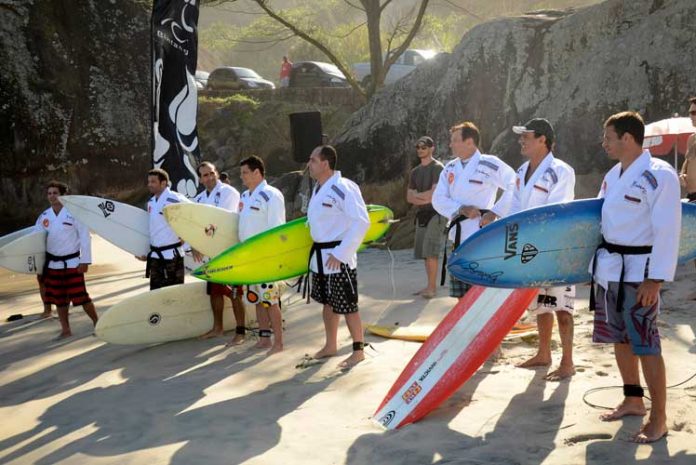
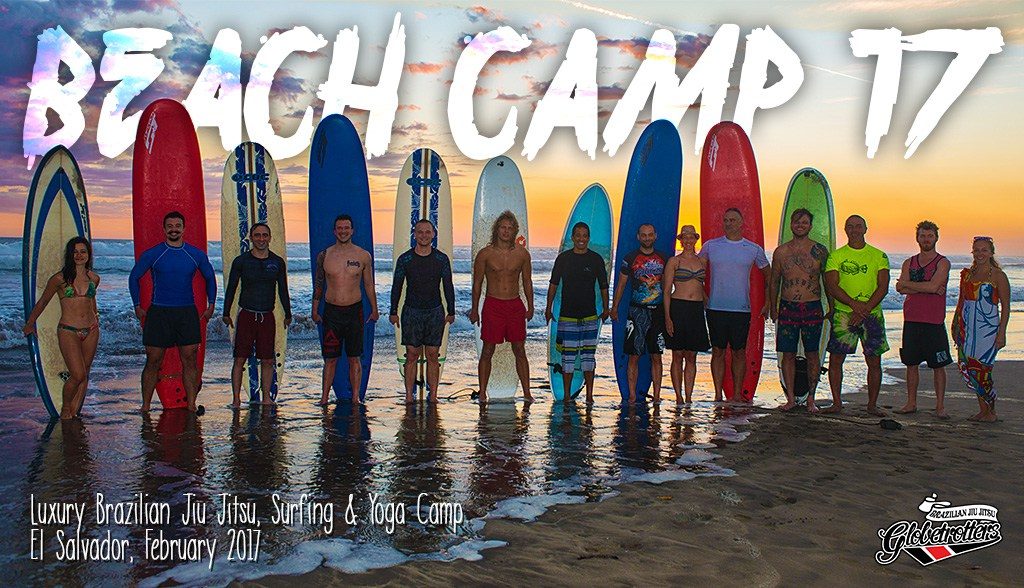
It’s already well known that many Jiu-Jitsu practitioners also surf. Grappling legends from Rickson Gracie to Marcus “Buchecha” have been known to enjoy the waves. Even major apparel brands like RVCA and Red Nose are connected to both sports. The reason isn’t only because Jiu-Jitsu actually started and got greatly developed in Rio. It is also because surfing demands a lot from both the body and mind. You need to have very good physical attributes and balance. You also need that special instinct that tells you where to go and what to do while surfing a massive and dangerous wave. It is exactly the same as during a tough Jiu-Jitsu fight.

Surf and Jiu-Jitsu have a lot in common as both are a lifestyle. Many surfers train Jiu-Jitsu. Some of the most famous ones are Joel Tudor (a Jiu-Jitsu black belt) and the Michael Jordan of Surfing: Kelly Slater.

Lifting Weights

This is a no-brainer and most of us probably already do some kind of strength and conditioning training. This is actually a very broad term because different forms of weight training can vary drastically. Some might go for a powerlifting style of training, focusing more on pure strength. Others might choose a cross-training approach more connected to conditioning and explosive strength, making the options almost infinite. Weight training can also help with rehab prior to returning to training after an injury.

To get into top fighting shape, you can also include running into your conditioning plan. However, for most grappling-related benefits ditch the slow and long duration work. Instead, go for sprints or HIIT intervals. That way, you’ll both be done faster and increase your gas tank fast!

MMA Fighter Submits a Guy Who Was on His Back

MMA Fighter Submits a Guy Who Was on His Back

Very interesting submission happened at HEX Fight Series 13 in an MMA fight between Yoo Young Woo and Simon Carson. They fought in the Light Heavyweight division.

Simon Carson was pounding Yoo Young Woo from the back mount. And it seemed like the fight is over until Simon Carson suddenly started to tap. Simon Carson was ankle locked from the most inferior position in BJJ. Yoo Young Woo used one of the biggest mistakes that you can do when you’re on your opponent’s back. Simon crossed his ankles when he was on Young Woo’s back and that was enough for Yoo Young Woo to submit him. All he had to do is to get his legs over Carson’s legs and push his hips in.

It’s really weird that this is still happening in MMA fights as it’s something that you learn on the first few days of your Brazilian Jitsu-Jitsu training. But, as we can see in a video below, Simon Carson crossed his ankles and he got submitted. He literally lost the battle he already won and learned a lesson the hard way.

If you’re interested in all kind of sneaky submissions and you want to become or you consider yourself as a Submission Hunter make sure you check these instructionals.

https://twitter.com/Jolassanda/status/977115841975259136

The same thing happened in a fight between Sergei Kharitonov and Jeronimo Dos Santos. They were fighting in the M-1 League in September of 2017. It was a heavyweight bout where Kharitonov lost his back and it was only about the time when he will be choked.

But his opponent Jeronimo Dos Santos did the same mistake as Carson. He crossed his legs while on Kharitonov’s back and he got submitted. The weird thing is Dos Santos was holding his legs crossed for almost two minutes until Kharitonov figured out what option he has in that position.


The Leg Lasso Guard – A Masterclass On Playing And Passing

Lasso Guard Play and Pass

The Brazilian Jiu-Jitsu guard is one of the unique aspects of the Gentle Art. Other grappling martial arts usually consider being on the back as an inferior position. The evolution of Jiu-Jitsu has seen the guard develop into many branches. Today, both the open and closed guards have numerous variations. it is doubtful that any grappler alive has mastery over all of these variations. From the De La Riva Guard to Worm Guard inversions, the open guard is a vast territory that still has more unexplained areas than familiar ones. One of those fairly known territories in the area of sleeve and lapel guards.  While there are many variations of this variation of the open guard (confusing, I know), one has been battle tested over and over again and has come out on top regardless. It is the very effective (and annoying to be in) LEG LASSO GUARD.

Gi based guards keep growing in popularity in modern Jiu-Jitsu. While most innovative concepts, like Keenan’s animal guards, are still infants, the lasso guard is a very well developed position. Despite the fact that it is not a concept for beginners, it is fairly easy to understand. As such, it doesn’t take long to master it sufficiently to be able to frustrate opponents of all levels. Due to its structure, it is one of the most frustrating open guards to pass, often leading opponents to give away sweeps or submissions out of pure desperation. If you haven’t used this open guard before it’s time to add it to your toolbox, the sooner the better.

Attacking Combinations From The Lasso Guard

The main reason why the lasso guard is such a dominant position is that of control. Once you manage to get into the lasso guard it is going to be extremely difficult for an opponent to pass. It is also a great gateway into other open guards and can be used back and forth. Easy guard retention is another very important aspect of this guard.

One of the best options to enter the lasso guard is via the Spider guard. The spider guard consists of double sleeve grips on your opponent. At the same time, both your legs are positioned on their biceps, severely restricting movement. In order to get the leg lasso, you need to get one of your legs off of the biceps control and take it to the outside of your opponent’s arm. From there, the leg goes over the opponent’s biceps from the outside in and continues past the armpit. This gives you one point of control over the arm, via your leg. The other control on the same arm is with the initial grip you have on the sleeve.

When in a correct lasso guard structural position, it is safe to let go of the Spider control on the opposite side. Keeping this control, however, means that you’re in an effective hybrid guard that offers plenty of attacking opportunities.

Attacking from the leg lasso guard is simple, which makes it very effective. All it takes is a slight change of angle and you can sweep an opponent of any size. Preventing the guard pass causes imbalances in itself, and pass attempts only make sweeps easier. The Omoplata is right there, along with all other submission chains that derive from it, like armbars and triangles.

https://www.youtube.com/watch?v=H8E_3XQvtpA

The Reverse Triangle Decoded: https://bjj-world.com/reverse-triangle-choke/

Dealing With The Leg Lasso Guard

In the lasso guard, both your arms are trapped so you won’t be able to make effective grips. Due to the tremendous leverage of the position, you’ll be off balance all the time. Conversely, it is very difficult to maintain your posture.  That is without even mentioning the continuous threat of sweeps, triangle chokes, and Omoplata attacks. All in all, if you have no idea how to behave in the lasso guard you’re going to be very frustrated.

To pass the leg lasso you’ve first got to use technique and positioning to unravel and neutralize the position.  Once control over you is diminished, then you can start using a wide variety of guard passes to effectively pass the legs.

What you’ve got to do in leg lasso guard control is turn one of his frames into a lever and use that against him. The only such opportunity you have is with the leg that’s trapping your arm. There are two main methods to help you achieve the frames-into-levers concept. First, you’ll need immaculate timing. You need to make your move just as your opponent is swinging their leg into position. As they bring it outside, up and over, you have to re-pummel your hand. This effectively brings it to the outside where you can get a dominant hand position and nullify much of the power of the lasso.

The second method is used if you’re already caught in the full-on leg lasso.  In this case, you maintain your base, your posture, and your structure as best as you can. Only then you’ll access a lever (his lower leg) by using your knee right at the tip of his foot. Both methods are very effective as long as you use them in the right context and moment.

The Leg Lasso DVD by Samir Chantre

Check out the masterpiece DVD Instructional By Samir Chantre. Lasso Guard by Samir Chantre. Samir is the 9 time American National Champion. He was using the leg lasso guard since he started competing and made it a perfect guard. From his lasso guard, you’ll be able to dominate beginners and advanced students with ease. With all the grips, guards and positions it’s really hard to defend it as it’s very specific BJJ game.

In his Instructional you’ll be able to find out everything about the leg lasso guard. He’ll get you through the basic lasso, lapel grip lasso, de la Riva lasso, x-guard lasso, and half guard lasso.

Through Samir’s instructional, you will get a thorough overview of the basic lasso, the spider lasso, the lasso with lapel grip, De La Riva lasso, half guard lasso, and x-guard lasso. In this instructional, you will get all Samir’s knowledge and years of competing. The DVD Leg Lasso has 32 chapters very well explained with so many details and it is definitely the best instructional ever that broke down lasso guard system. Check The Lasso Guard DVD and the list of Techniques

If you’re interested in Buying Samir Chantre’s Lasso guard you can but it HERE as it’s on sale at the moment.

Lasso Guard by Samir Chantre