Revolutionary Sweatshirt/BackPack Invented by RENER GRACIE

Revolutionary Sweatshirt/Back Pack Invented by RENER GRACIE

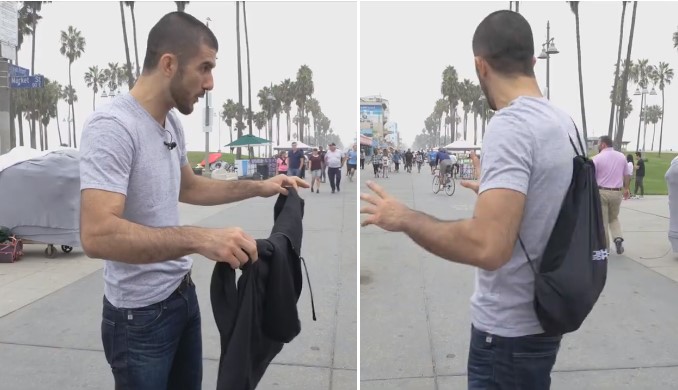
Rener Gracie once more proved him self as a great businessman. This time he invented revolutionary Sweatshirt that can easily be transformed into a backpack every time you need to take it off. You don’t need to wear it around your waist or holding it in your hands. Once you make back pack of your sweatshirt you’re free to do whatever you want without your sweatshirt bothering you.

Rener named his sweatshirt/backpack a HeroHoodie. Check in the video how useful it really is.

Order now at HeroHoodie.com – Patents Pending Worldwide

Rener Gracie Challenged by 270lbs Guy convinced that BJJ wouldn’t Work on Him

BJJ Recovery Training: 6 Useful Tools For Optimal Grappling Recovery

Recovery, training, BJJ, BJJ recovery, Grappling recovery, BJJ recovery training

Training is a process that takes its toll on the body. Whenever we take part in physical training, our bodies go through a myriad of changes. Such changes are a part of one of our bodies’ most important abilities – adaptation.

These “meat wagons” of ours, as Joe Rogan refers to them, have a miraculous ability to create equilibrium whenever they’re out of balance. So, after our bodies handle the shock of training, it’s time for them to enter BJJ recovery mode and start re-balancing.

During any physical exercise, our bodies put in a real shift to get us through the increased demands we place. Most people are aware of the role our muscular and skeletal systems play during training but often oversee the finer physiological processes that run in the background.

Training Physiology

For simplicity’s sake, we’re going to divide how our bodies respond to training into two parts: One is the physical aspect of handling the increased load that the body is under. The second is the physiological, encompassing all the biochemical processes that take place during stress. 

Our musculoskeletal system is a work of art, designed to adapt to a wide variety of situations and handle huge outside influences. The skeletal system forms the structure upon which our bodies are based, while the muscles are tasked with dynamic motion. 

The muscles are a physiological furnace, demanding substrate for every contraction that they make. The intensity and duration of they work at is by the available energy system for the task at hand. That, however, is a subject for another day. 

For now, it’s suffice to say that every muscular action burns “fuel” and wears and tears the tissue. Recovery is the process that helps replenish fuel and repair the tissues in question.

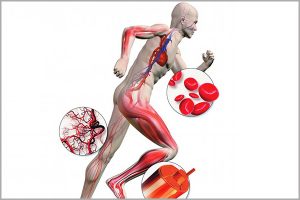
Physiologically speaking, the stress of training is handled by countless simultaneous processes. Hormones “go haywire”, the liver is working overtime and the lungs and heart get a beating. Most of the fuel readily available to our bodies is stored in the muscles and liver in the form of glycogen. 

These depots are quickly spent during exercise, depending on the intensity. The heart and lungs are tasked with delivering oxygen to the working tissues to complete the equation. However, the capacity and duration of work that these systems are capable of, are limited and have to be replenished.
Recovery, physiology

The Role of Proper BJJ Recovery

All of the systems mentioned above are not capable of working constantly without the need for a break. On the contrary, their ability to sustain the increased demands is very limited and they require adequate rest. This means ceasing all external sources of stress (training) have to stop for our bodies to reset. This is where BJJ recovery comes into play.

Recovery is our bodies’ ability to bring order back to chaos and return the body to equilibrium. However, recovery cannot take place in the same time as training stress, which takes careful planning. BJJ recovery is a highly trainable quality that has to be an integral part of any strength and conditioning program.

Recovery starts with repair. As soon as the training stimulus ceases, the body aims to return to balance as soon as possible. First and foremost, the body aims to rest the heart and lungs and lower the working heart rate into more acceptable ranges. 

From there, it’s time to start mending and refilling, by focusing on replenishing glycogen and fixing broken-down muscle tissue. All of these processes that define our recovery ability can be improved and optimized with a correct approach.

The following options are by no means the most comprehensive, nor the only available tools to speed up BJJ recovery. They are, however, the staples of the body’s ability to return to homeostasis:

Mobility Work

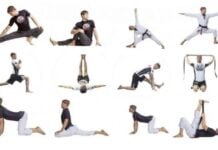
Stretching is probably the first thing that springs to mind when you hear the word ‘recovery’. Post-workout stretching seems to be taken for granted though, and done in a completely wrong manner. Stretching needs to be perceived as a tool to aid recovery, not just a ritualistic routine to end training.

Despite what your PT teacher told you when you were in primary school, static stretching is not the only way to stretch. Sure, static stretching has its uses, but going deep into a hamstring stretch shouldn’t be the first thing done after rolling. Recovery should be aided by our post-workout mobility protocol, not hindered by it. Going too deep into inappropriate stretches will do more harm than good.

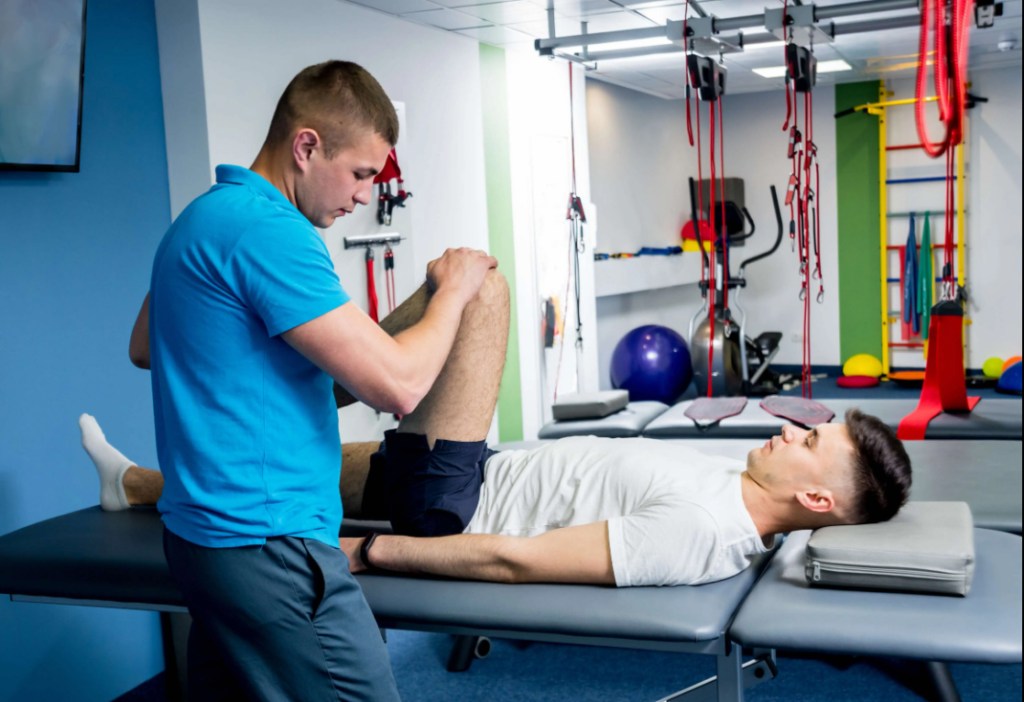
The adequate approach here is a combination of active and static stretching, combined together. It can be done as a sequence of moves or as a yoga-style flow. This way, the muscles get both lengthening and a massage, resulting in faster BJJ recovery. Another great mobility option is oscillated stretching, meaning moving in a short range of motion while holding a stretch position.

Self Myofascial Release (SMR)

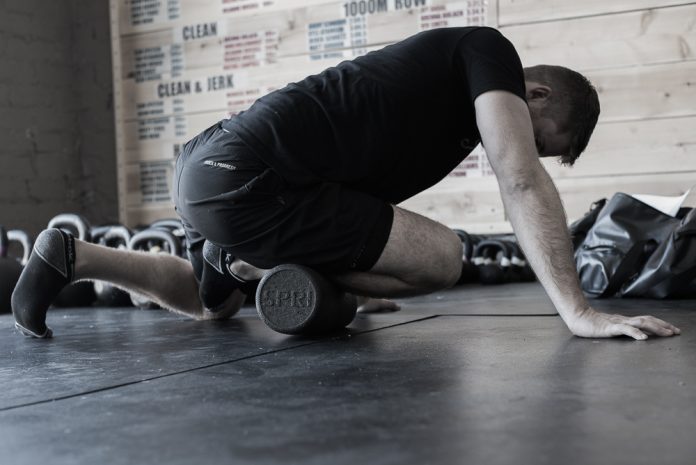
Going for a massage is by far the best option for athletes, but unfortunately rarely affordable for most. This is where Self Myofascial Release comes in. SMR is a technique that utilizes different tools in order to treat trigger points in the muscles. 

Apart from the ability to resolve muscle knots (trigger points), full-body SMR also calms the nervous system down. The tools most often used are foam rollers and lacrosse balls. There are a bunch of ways to use them and most of them work. 

The rule of thumb is to avoid feeling pain whenever you’re doing mobility work. Slight discomfort is OK, especially with SMR since the point is to dissolve the muscle knots formed during training. 

It’s a very useful technique that immensely helps BJJ recovery and should be a part of your post workout routine. Still, try and allow someone who is a licensed chiropractor to professionally fix you up at least once a month.

The Right Kind of Shower

Post-workout showers are not just a way to wash and clean your smelly body. Contrast therapy is a technique of alternating hot and cold water to aid recovery. The concept behind the technique is that the warm water widens blood vessels, increasing blood flow, while the cold does the opposite, causing constriction of the vessels. 

As an added benefit, the lymphatic system gets the same treatment as the blood vessels. Contrast showers allow the body to recover, alleviating soft tissue trauma, muscle spasms, and soreness.

A simple way to approach contrast showers for BJJ recovery is to build a routine. Remember to always begin with hot water. Start with a small temperature range, around 10°F at first and ultimately build up to ranges of 45°F. Go for 40 seconds of hot (~97°F), followed by 20 seconds of cold for the first week (~86°F). Do this for a total of three times. Increase the range the following week.

Active Recovery

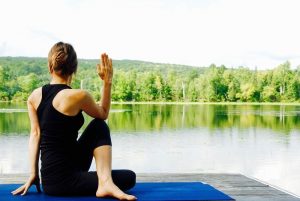
Although most people won’t find it hard to get in a full day of rest, some athletes simply must do work every day. In either case, active recovery is a great option to get your body back in tune. Just be careful not to be too active and turn it into a full-blown training session.

For those of a lazier predisposition, I recommend taking the dog for a walk, going for an easy hike, or a light swim if you’re lucky enough to live by the beach. Those who want to be more active may go for a yoga session or even have a bit of outdoor fun at the monkey bars. 

Remember to make sure you’re aware of why you’re doing all of it in the first place – recovery. So a walk in the park with your significant other is probably a better option than doing a CrossFit WOD at the bars.
Active recovery, BJJ recovery, Grappling recovery, BJJ recovery training

Nutrition

The last piece of the puzzle is nutrition. How we eat after working out is crucial to our recovery ability. Proper nutrition will result in timely and correct glycogen repletion and allow the body’s systems to go into BJJ recovery mode. Food is the fuel that drives our training, but it’s also the building block of our tissues.

Getting the right stuff in at the right time is crucial for complete recovery. The main idea is to stop protein breakdown and replenish glycogen stores. It doesn’t matter if you’re having a solid or a replacement meal after training – just make sure you get it in a hurry. By hurrying I mean to go eat as soon as possible after working out.

To prevent protein breakdown aim to keep insulin levels high after training. Insulin has anti-catabolic properties which are essential for post BJJ recovery. Getting insulin levels up puts a stop to protein breakdown and shifts the focus towards protein synthesis.

For glycogen repletion, it’s again, all about the insulin. Two things are crucial in the post-workout window: an adequate amount of carbohydrates being available and keeping insulin high. The first is the substrate that allows for glycogen synthesis to take place. The second is the method that allows the ingested carbs to enter the muscles.

R&R

As bodybuilders often say “you don’t build muscle in training, you build it when you’re resting“. Although as grappling athletes our needs are different than bodybuilders, the same BJJ recovery principles still apply. Rest is the best way to ensure that our bodies have the time to repair the damage we did by training. So, get some quality shut-eye and get straight back on the mats!
BJJ Recovery Training: 6 Useful Tools For Optimal Grappling Recovery

Treat Yourself!

You do not have to do each and every recovery method we listed above every day in order to recover from your BJJ and supportive physical training. Be free to pick one, two, or perhaps three methods and cycle them, throughout the week.

For example, you could opt for two SMR sessions per week, but contrast showers and mobility work can be daily occurrences. What matters is showing your aching body some attention, at least if you want it to keep operating at a high pace on the mats.

Top 5 Essential Post Workout Stretches

How to Fix your Low Back Pain and Never Feel it Again – Simple Exercises

https://bjj-world.com/3-common-stretching-mistakes/

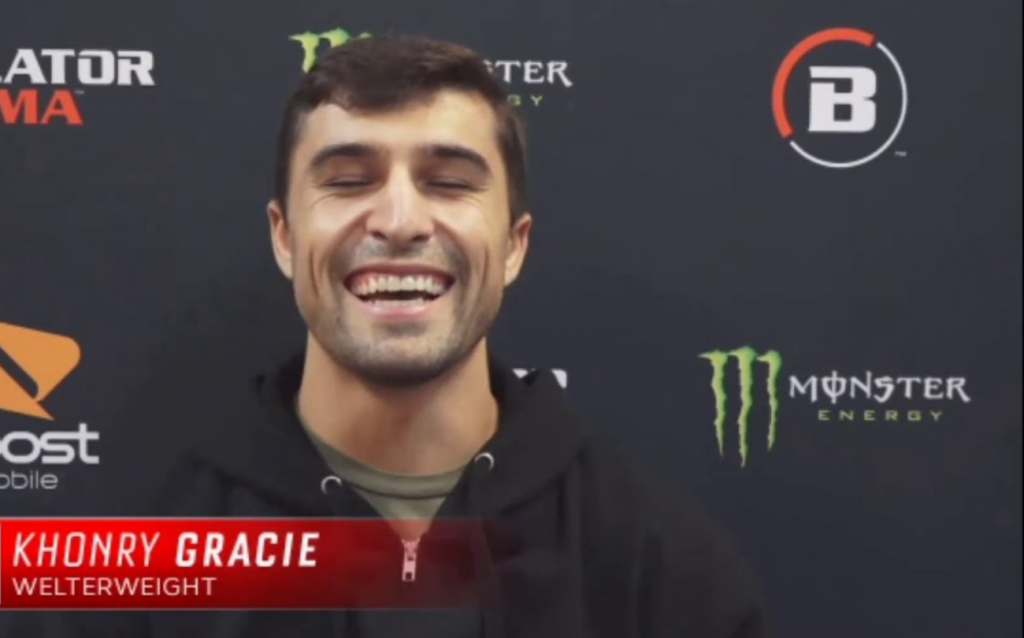
Royce Gracie’s Son Khonry Gracie Signs With Bellator, Debut Set

Khonry Gracie is the 20-year-old son of MMA Legend Royce Gracie the winner of the first UFC tournaments, and the fighter who is actually the most responsible for what the MMA has become over time, due to the presentation of Brazilian Jiu-Jitsu and its power against a lot of bigger and stronger fighters.

Royce Gracie's Son Khonry Gracie Signs With Bellator

Bellator Snaps up Young Prospect Khonry Gracie, Son of Royce Gracie

Khonry Gracie is now officially a member of Bellator and is ready for his first professional MMA fight on January 20th at the first Bellator event in 2018 on Bellator 192.

Khonry made his amateur MMA debut in September and went into the cage wearing Bellator’s gloves. However, after the fight, he confirmed that he would sign for the first big promotion that came after him and that he would love to fight in the UFC.

With the UFC not interested in casual combatants at the moment, Bellator seized the moment. The promotion was working with Royce Gracie earlier when he had a short MMA comeback in their cage in February last year, so it is not unfamiliar ground for young Khonry’s mentor, and most likely, manager.

Gracie Jiu-Jitsu is a major part of a mandatory skillset for those looking to win MMA fights, and it is safe to say that the young Gracie will have no issues in that area. However, in this day and age, winning with grappling only is no longer a reliable strategy – he’ll need to mix it up.

Khonry is still very young, but he does have the wealth of Gracie experience behind him. Royce remains a legend in the sport and is the first-ever MMA champion in modern combat sports history, having won the inaugural UFC. Some shoes for Khonry to fill!

Royce Gracie's Son Khonry Gracie BJJ experience

Khonry Gracie on His MMA Plans, the UFC, and Singing for Bellator

Day After his debut, Khonry Gracie spoke with MMA Fighting:

[Fighting in the UFC] would be fun, I think it would have some kind of meaning,” he said, “but, like you said, my dad is with Bellator now, so… Again, it’s first come first serve. I’ll go anywhere.”

I just want to fight, I just want to represent my last night, my grandfather’s jiu-jitsu. I’m here for the family, I’m not here to see what promotion I fight for. That has nothing to do with it.

What’s my biggest goal (in MMA)? Represent my family. Represent jiu-jitsu as best as I can. I didn’t come here and join MMA to do boxing, Muay Thai. I came here to represent jiu-jitsu, represent ‘vovô’ Helio’s Jiu-Jitsu.

As it is apparent from his one amateur MMA fight, Khonry does have the potential to be a great MMA fighter:

Can Khonry Replicate Royce’s Feats in the Cage? 

Bellator 192 is scheduled to take place at the Great Western Forum in Inglewood, California, with the main event of the evening featuring Rory MacDonald vs Douglas Lima for the welterweight Bellator title.

The question is, how much of the Gracie family’s fighting spirit is Khonry going to bring to Bellator? It is clear he has talent, but if we compare him to his father, Royce was already an established black belt, with brawling experience from Gracie challenges, when he won the first UFCs.

Khonry Gracie is still a brown belt in BJJ, and at the age of only 20, he most likely has tons of space to improve and grow. As long as he brings tenacity and a demonstrated he has willingness to listen to his corner, we expect him to do good, and perhaps, one day, fulfill his UFC dream.

Anyway, we wish Khonry all the best to represent our beloved sport and his family in the best light. We’ll be keeping an eye on his performances, however they turn out.

The Gracie Family Tree: Tracing The Origin of Jiu-Jitsu’s Founding Fathers

The Gracie Mindset: 12 Commandments of Jiu-Jitsu by Carlos Gracie

The Origin Story Of The Famous Gracie Garage

Aikido Instructor’s First Jiu Jitsu Tournament versus MMA Guy after 3 months of Training!

Aikido Instructor's First Jiu Jitsu Tournament versus MMA Guy after 3 months of Training!

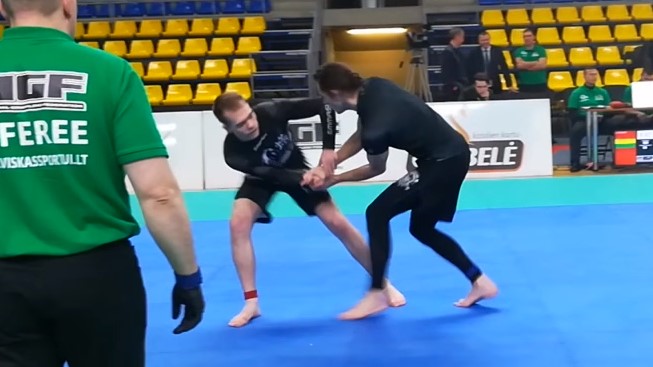
Rokas’ ( Aikido vs MMA guy’s) first No Gi BJJ competition where he’s trying to both pull off some Aikido and also test his BJJ skills after learning it for about three months.

Check how he did while trying to apply some Aikido Moves

Aikido vs Grappling – Fantasy vs Reality – Wrestler vs Aikidoka

Grandmaster with 12 Black Belts and 7th Degree in Grappling

Rickson Gracie’s First Ever Instructional Video – Finally

Rickson Gracie's First Ever Instructional Video - Finally

Rickson Gracie never released an instructional video before because he thinks that Jiu Jitsu needs to be felt and not learned from a video.

You can check Rickson Gracie Instructional HERE: Rickson Gracie Instructional

Rickson Gracie Instructional
Rickson Gracie Instructional!

This is what he told in Grappling Central Podcast:

Man, how you going to explain the taste of wine for somebody who never try it or never see it? It’s hard…

The invisible aspect of jiu-jitsu for me by far the greatest and the most interesting. Because it is not based on what I see it. It is based on how I feel it. That’s why it is invisible. It’s not about seeing. You may see the same guard position, but you feel different if you put pressure here, if you lie a little more here. So the invisible results are the ones that really please me because they are the ones that I really deeply felt you know?”

But, looks like things are about to change and Rickson Will release his first ever instructional video. His new video is scheduled for February, 2018.

Rickson wrote on his Instagram Profile:

The long awaited Self.Defense.Unit. from prof. Rickson Gracie is coming in February 2018. This is a one-of-a-kind resource from one of the greatest minds in the art. Sign-up to be one of the first to access the material!” 

https://www.instagram.com/p/Bb7Rvnmnbgn/

As you already know this will be instructional from one of the greatest minds in Braziliaj Jiu Jitsu so make sure you’re first one to see it. Sign up here.

Invisible Jiu Jitsu – What Is It and 5 Most Effective Techniques

Rickson Gracie on How to close the distance in a fight!

Rickson Gracie: Modern BJJ Black Belts Remind Me of Karate Practitioners Clueless of Jiu-Jitsu

Rickson Gracie: Rule Number One For BJJ Students

Australian Teen Muay Thai Practitioner Passed Away due to Weight Cut

Cutting weight is probably the worst thing in Combat sports. Weight divisions are designed for safety but fighters always want to have an advantage or at least they want to be roughly equal to their opponent. But what fighters don’t get is that they’re in much more danger from weight cutting than fighting a heavier opponent. There is a big list of athletes who died from weight cutting and, unfortunately, Jessica Lindsay is one more on that list.

18 yr old Jessica from Perth who was an amateur Muay Thai fighter collapsed on November 10 while she was weight cutting for the Muay Thai event. She was immediately taken to the hospital and she passed away 4 days after. She died from severe dehydration.

She announced the cut on her instagram profile. On November 1. she wrote “Fit and Healthy” and on November 8. she wrote: “Yeah nah cutting weight is sick hey“. Four days after that she passed away.

Jessica Lindsay is the second Muay Thai athlete who died this year as Jordan Coe, Scottish professional fighter died earlier this year trying to make weight.

What happens while weight cutting is extreme dehydration and it cause heat shock and great exhaustion. What happens is that athletes simply ignore those warning signs because they have focused on “greater” things that they’re trying to achieve and that’s exactly what’s killing them. You should never ignore those signs. This problem mostly hit amateur fighters as pro fighters are usually coached and monitored while weight cutting and they have a much smaller chance of tragic aftermath.

https://youtu.be/1kwpmKNQ3TI

Superman on His Way to Work After Jiu-Jitsu Training!

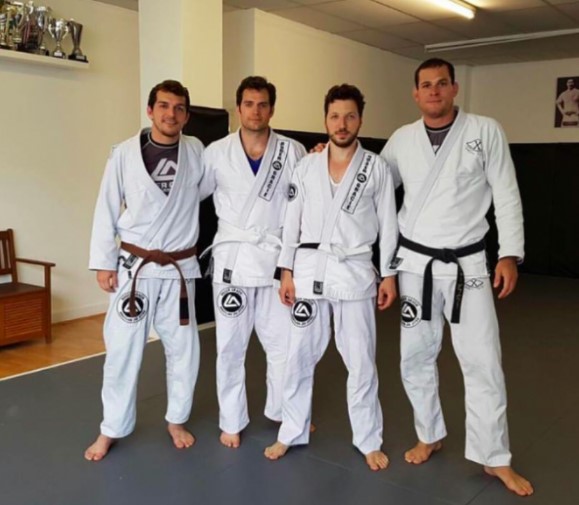
In May, 2016 Superman Henry Cavill took a picture of himself training Jiu Jitsu with Roger Gracie at Roger Gracie Academy and that’s probably the time he began training BJJ.

Superman BJJ Jiu jitsu

As we can see now he’s still training BJJ and he’s really living a BJJ lifestyle. In his last post Henry Cavill wrote:

“On my way to work after some morning Jiu-Jitsu with Roger Gracie!
Happy Monday everyone!”

https://www.instagram.com/p/Bb_7MJ4FQXK/

https://www.instagram.com/p/BYngB1YFuLq/

Jiu Jitsu is getting more and more attention from famous celebrities. You can check the list of 58 celebrities who trains Jiu Jitsu:

58 Famous Celebrities who Train Jiu-Jitsu

Keanu Reeves: Deeper You Get into Jiu Jitsu The Less You Have Normal Life

Demi Lovato: My Ultimate Goal is to be a Black Belt

Gordon Ryan Submits Ralek Gracie At Metamoris

Gordon Ryan Submits Ralek Gracie At Metamoris

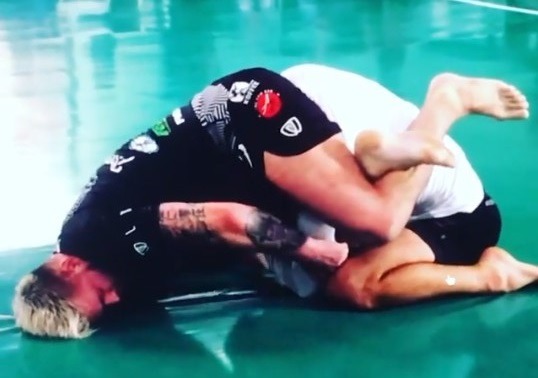
Gordon Ryan fulfilled his promise that he will submit Ralek Gracie, Metamoris Promoter, with an armbar or triangle.

Gordon Ryan posted on Facebook. “I will submit Ralek with one of 2 moves in between 10 and 18 minutes. The first move being some kind of triangle and the second being a variation of an arm bar.”

Nine minutes after the match started and Gordon Ryan’s complete domination, Ryan managed to get on Ralek’s Gracie’s back and submit him with a Triangle from the back.

After the match was over both fighters complimented each others with humility. As this Metamoris probably earned more than any Metamoris before, Ralek Gracie will finally be able to give money to athletes he owned money from previous Metamorises.

https://www.instagram.com/p/Bb-iiBDHlKN/?tagged=gordonryan

Guess who?

https://www.instagram.com/p/Bb-cqLdF4YI/


We Have a New Submission in Jiu Jitsu

How to Fix your Low Back Pain and Never Feel it Again – Simple Exercises

How to Fix your Low Back Pain and Never Feel it Again - Simple Exercises

Lower back pain is by far the most common source of discomfort we deal with. A lot of times what we feel in the lower back is caused by muscles, not in the back. In this video, you will see how the gluteus medius could be the real cause of your back pain and an exercise you can do to relieve your discomfort instantly. Once gone, you will see a few additional exercises you can do to make sure your low back pain never returns.

The Gluteus Medius

Gluteus Medius

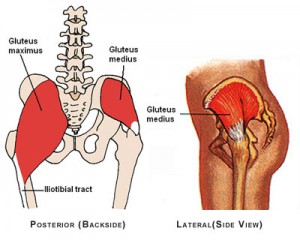
The gluteus medius is between the glute Maximus and minimus and lies in and around the hip area. The role of the muscle is to abduct your hip or lift your leg out to the side in either standing or side lying and to keep your pelvis level whenever you take a step. Prolonged sitting during the day as well as an unequal weight distribution when standing is two of the most common reasons for this muscle to get weak and imbalanced.

How to Test Your Gluteus Medius Muscle

You can quickly test to see if you have the makings of a weak glute medius by standing with your feet shoulder-width apart and lifting one foot off the ground. First, take note whether or not your opposite hip drops significantly. If it does, this would indicate a glute weakness on that side. You would repeat with the opposite foot as well. When you do this you would also want to see if you had to dramatically shift your weight to one side just to lift that foot off the ground. If you do, this would indicate that you have an unequal weight distribution when standing and it would be especially troublesome when squatting.

How to Fix your Lower Back Pain

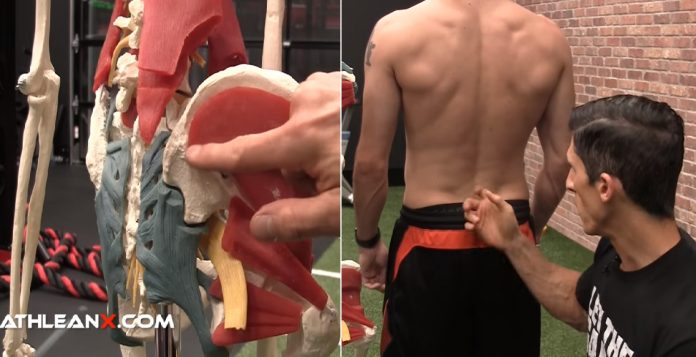
To fix this quickly, you will want to lay down on the ground with your affected side on top. If your right lower back was bothering you then you would want to lie on your left hip. From here, take your thumb and place it on the area most sore. You should feel that this is going to happen just to the outside of the bony prominence of your pelvis. From here, push to hold back the trigger point and start flossing your leg down and in front of you and then back and up. Your hip should be extended and then lifted into abduction towards the ceiling (being sure to point the toes down to keep the glute medius in focus). Do this about 10 times until you feel the tension in the muscle release.

Now, you can burn out the spasm in the trigger point by getting into the fully contracted position of the glute medius muscle and holding as long as you can. Generally, because this muscle is often very weak, this may not be any longer than 30 seconds to a minute. Once you cannot hold it anymore, stand up and you should notice an immediate relief of the pain on that side.

This is the quick but not permanent fix for this problem. Since the underlying cause is a weakness in the gluteus medius muscle you will want to back this up with some exercises for your low back that you can do a few times a week. I show you three options for this. The first is the hip bump against the wall. The second is called the sack swinger and can be done with a dog leash if you don’t have a formal dip belt. The last is actually doing the same movement that you did for the treatment, but this time as a strengthening exercise for your low back.

Conclusion

Whatever you do, just be sure you are consistent. You will also see that as you relieve the tension in this muscle that your squat performance improves as well. Your depth should be increased and any low back pain that you felt by doing the exercise should be gone since you will now be able to do them with equal force through each leg.

https://bjj-world.com/solving-the-strength-conditioning-puzzle/

10 Strength and Condition Bodyweight Exercises for Jiu Jitsu – Tutorial

Performance Nutrition For Grapplers: 2 Things Everyone Gets Wrong

Performance Nutrition For Grapplers: 2 Things Everyone Gets Wrong

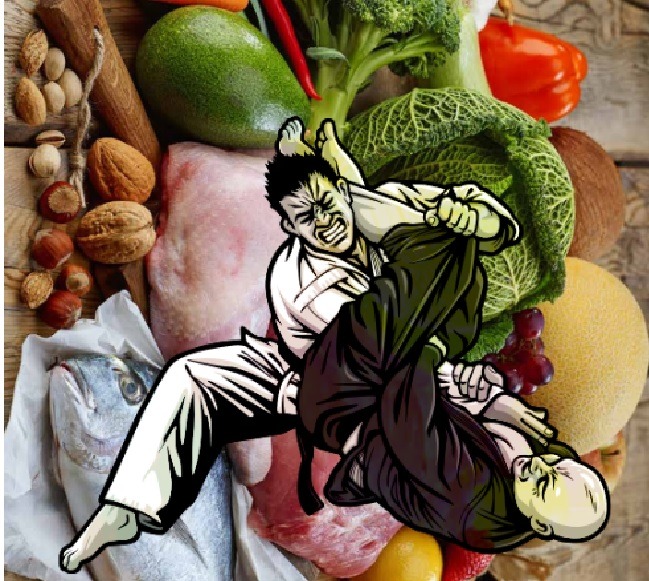
Grapplers nutrition guide

The “food is fuel” statement is commonly known among athletes, but very few seem to take it seriously. An integral part of athletic health and well-being, nutrition should not be taken lightly. Along with proper recovery and training strategies, it creates the tripod of athletic performance. If one of the tripod’s legs is bent or crooked, the stability of the whole structure is at risk. If one of the legs is missing then there’s no tripod to start with, and sitting on a two-legged one is a challenge in the best of circumstances.

The Main Problem with Nutrition for Combat Athletes

So, why do most athletes seem to ignore or completely misunderstand nutrition? Personally, I see two main reasons for it:

  1. People are not well informed on the subject and opt for shortcuts and/or the advice of incompetent sources;
  2. People are too much into nutrition and suffer from “paralysis by analysis”, not giving anyone option the required time to be effective.

Let’s explore them further to find out which one of these key issues is your stumbling block before we offer ways to deal with it and set up a perfect nutrition for grapplers.

Not Enough Knowledge

Nutrition is a complex subject that requires not only knowledge of nutrients but of the human body as well. It’s a subject that has been notoriously under-covered by modern medicine during the formal education of doctors.

As a result, there’s an avalanche of experts whose credentials nobody can verify with any authority. All of these online certified experts claim to have the best formula for weight loss or gain, depending on their target group.

Performance Nutrition For Grapplers: 2 Things Everyone Gets Wrong

When it comes to the average Joe, working out to stay alive it’s not really that bad. Unless someone has an underlying illness, in which case listening to anyone except a well-trained medical professional is a bad idea then any correct nutritional advice can be of help.

With athletes, however, it’s a whole different ball game, and nutrition often dictates the outcome of an athletic endeavor. When athletic performance is the goal, there’s no place for the “Lose 20 pounds in 3 weeks” approach, unless you’re willing to seriously endanger your health.

Nutrition has to be dialed into perfection, the older the athlete the finer the details. General nutritional guidelines have to be a way of life before an event-specific diet is even considered.

With athletes involved in combat sports, weight cuts are a regular, though unwanted, occurrence. Nutrition plans leading to an athletic event need to work up to a properly designed weight cut, put together by certified experts.

Even if the athlete has sufficient knowledge, planning nutrition takes time and patience, which should be directed toward training. So employing a real expert is the first and most important step towards building one stable leg of the tripod.

Paralysis by Analysis

If you’re one of those types whose hobby is nutrition, or maybe even a doctor or a nutrition expert, you’re in for a trap. When choosing to part take in an athletic competition, too much information can lead to another pitfall.

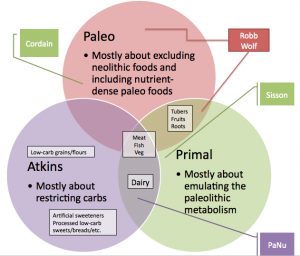
Let’s say you’re focused on a bodybuilder-style of diet, with all your macros and micros carefully calculated. While you’re on your plan you come across the principles of the Paleo approach. So you modify your diet habits accordingly and you’re now ready to train and prep for competition.

After only a couple of weeks, it’s time for you to try that new intermittent fasting protocol you read about while in the toilet. And the cycle continues.

Such a cycle accomplishes nothing because you’re not giving anything the time to show effects. Jumping from diet to diet is like doing berimbolos one day, then Kata Guruma the next while preparing for a competition – it is a waste of time.

The body needs time to adjust to any external stimulus. It is a complex machine of hormones that need to be kept in equilibrium and carefully manipulated towards your goals. So, choose an option that is sustainable for you and doesn’t change it for at least 6 months.

Nutrition for grappling

Basic Nutrition Guidelines for Competitive Grapplers

As a competitive athlete, it can be hard to juggle nutrition along with training, recovery, and everyday obligations. So, even if you can’t allow for professional nutritional help, you can go by your own common sense. Here are a few nutritional starting points that can make a world of difference:

1. Stay Hydrated

Our bodies are made of around 65 % water and muscle tissue is comprised of 79 % water! So staying hydrated should be the number one priority for a BJJ competitor. Also, don’t be fooled by all the commercial superhydration concoctions available out there.

Most of that stuff is pure sugar (see point 2) and is going to lead to health deterioration in the long run. Stick to good old water and develop a habit of drinking it. Take a 30 oz bottle with you and make sure you’ve filled it up at least three times a day. Coffee, tea, and pre/post-workout shakes do not count.

2. Ditch Sugar

This one is as hard as it is obvious. Processed sugar is in almost every product surrounding us. That low-fat yogurt you picked up in the market actually contains more sugar to replace the fat. The healthy, full-grain cereal you eat for breakfast is a sugar bomb, containing enough sugar for a whole family.

Even the bacon Paleo people so devoutly worship has been packed with preservatives that are, in essence, sugar-based. Even that zero-sugar diet drink is filled up with sugar substitutes – much worse for our health than the original culprit.

The solution is to go about carefully reading labels and stick to what is actual food (see point 3). You can’t do much damage by going for meat, eggs, veggies, fruit, and some healthy fats. And there are plenty of options for those with an insatiable sweet tooth in the form of dates or raisins.

3. Go Green

Before I get to stick to trying to turn you all into vegetarians stop. I’m not. Simply go for a salad with as many colors as possible with every meal. It’s as easy as that.

Broccoli, kale, spinach, ginger, all kinds of peppers, beets, carrots, etc should be the staple of every athlete’s diet. They contain valuable vitamins and minerals to go along with all the fiber and a surprising amount of protein. Your guts will be grateful for this one.

4. Eat as You Train

As previously mentioned, nutrition is only one-third of the whole picture. The way you train (intensity-wise) and your recovery abilities are going to determine your nutritional needs. Food is fuel for training and the main substrate to aid and speed up recovery.

It is not recommended for grapplers to shy away from carbohydrates, because of the intensity of grappling training alone. Add in strength and conditioning to the mix and going Paleo doesn’t seem like such a great idea. That’s because it isn’t.

Eat your potatoes, rice, quinoa, and whole grain stuff (bread, pasta) without worrying too much. Just stay away from the processed stuff and do not confuse carbohydrates with sugar. Donuts are not athletic-friendly carbs. Baked sweet potatoes are.

Performance Nutrition Tips For Grapplers: 2 Things Everyone Gets Wrong

5. A Word on Supplements

A subject that can be discussed in at least a series of articles, let’s just stick to the basics here. The reason why there is such a well-developed supplement industry is just that – it’s an industry. And industries are aimed at profit.

Next time you’re in your favorite supplement store pay attention to the marketing. You’ll notice that every product claims to build muscle, burn fat, and give energy, regardless of type. If that was all true then only one supplement would’ve done the trick, wouldn’t it?

Without diving into this too deeply, again go for the basics. Whey protein, preferably isolates, creatine, fish oil, multivitamins, and the optional box of BCAAs. Everything else is as useless as sugar and should follow it into nutrition purgatory.

Nutrition for combat sports athletes is not that hard. And not just competitive athletes, everyone with a little common sense should adhere to the basics. The advice laid out above will allow everyone to build good habits in a sustainable and easy manner. As much dedication as it takes, in the beginning, it’s become effortless if you only stick with it. Much like with BJJ.

Final Thoughts

Nutrition has one main task for grapplers – fuel performance. What you want out of your food, apart from some flavor (forget about boiled chicken breast) is to give you the energy to do your thing on the mats and in the weight room, and the building blocks to help you recover.

You also want to be able to easily stay on weight, so weight cuts end up being a breeze when fight week comes. All ti takes is understanding the key issues and the main components of a solid nutrition for grapplers plan. Bon Appetit!

George Lockhart Nutrition And Weight Management System

Grappling Nutrition: Improve Gut Health To Improve BJJ Performance

Jiu-Jitsu Nutrition: How To Pull Off A Plant-Based Diet

Best MMA Nutrition Books 2022 Guide And Reviews

You Might Also Be Interested In:

Top 5 Best BJJ Supplements For High-Level BJJ Performance
How To Be Completely Ready For A Jiu-Jitsu Competition
Paleo Diet for BJJ Lifestyle
REVIEW: George Lockhart Nutrition & Weight Management System DVD/Book