


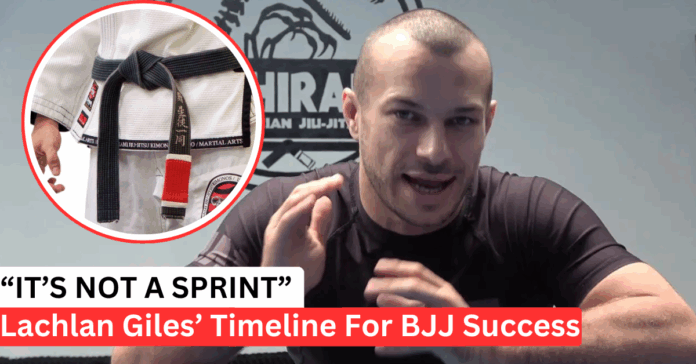
Lachlan Giles Explains How Long it Really Takes to Peak in Jiu‑Jitsu

Lachlan Giles Explains How Long it Really Takes to Peak in Jiu‑Jitsu
  • Australian coach and ADCC bronze medallist Lachlan Giles says reaching your peak in Jiu‑Jitsu isn’t a matter of months but a journey that realistically takes 5 to 10 years.
  • His own path from a teenager inspired by Jet Li to the “Giant Killer” at ADCC 2019 underscores the long, methodical climb to the top.
  • Giles emphasizes that true mastery combines physical adaptations, technical knowledge, tactical awareness and mental resilience; rushing the process leads to burnout.
  • Embracing a long‑term mindset toward the peak in Jiu‑Jitsu helps practitioners avoid shortcuts, enjoy the journey and build skills that stand the test of time.

BJJ’s Marathon: Why the Peak in Jiu‑Jitsu Demands Patience

Brazilian Jiu‑Jitsu is often sold to newcomers as an art where a smaller person can topple a giant using leverage and technique. That sales pitch hides a harder truth: mastery is a marathon. Among combat sports, BJJ has one of the steepest learning curves.

The fundamentals of guard, passing and submission defence alone can take years to feel natural; turning them into a seamless game often takes a decade. “Quick fixes” promise magical results but rarely deliver.

When top coaches talk about the peak in Jiu‑Jitsu, they speak in terms of years, not camps. Lachlan Giles’ recent comments on the subject cut against the grain of instant‑gratification culture. Many grapplers expect to medal at major tournaments within a few years of training.

Giles, who has trained athletes like Craig Jones and Livia Gluchowska, says that kind of thinking sets people up for frustration. Elite competitors, he notes, typically began serious training ten years before their breakout performances.

They logged thousands of rounds, adjusted to countless rule sets and learned to execute under pressure. If that sounds daunting, it’s meant to be. The peak in Jiu‑Jitsu is earned through patience and repetition.
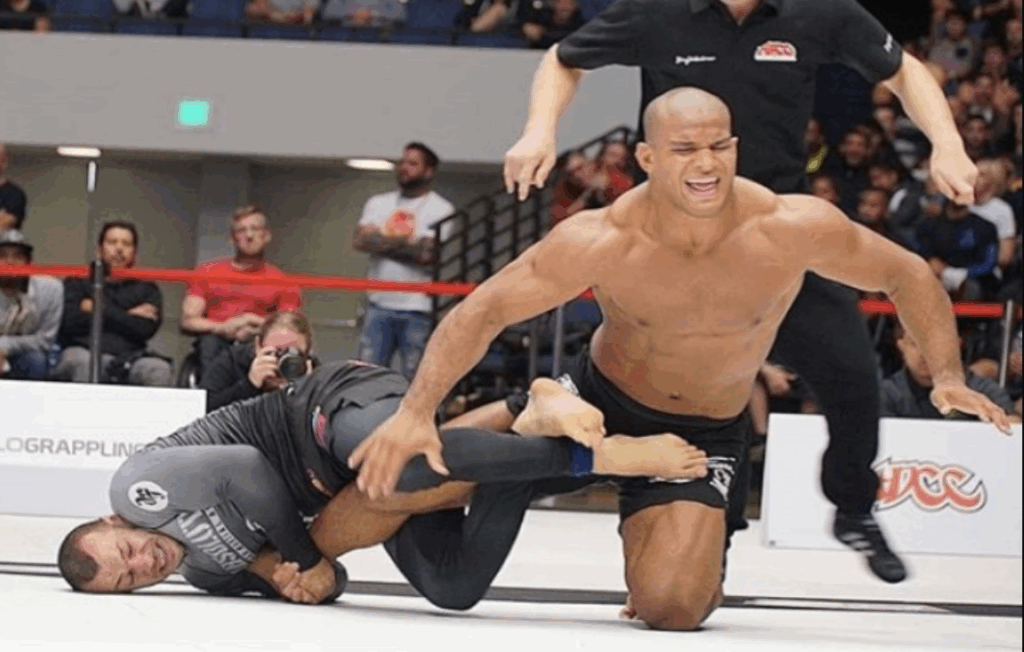
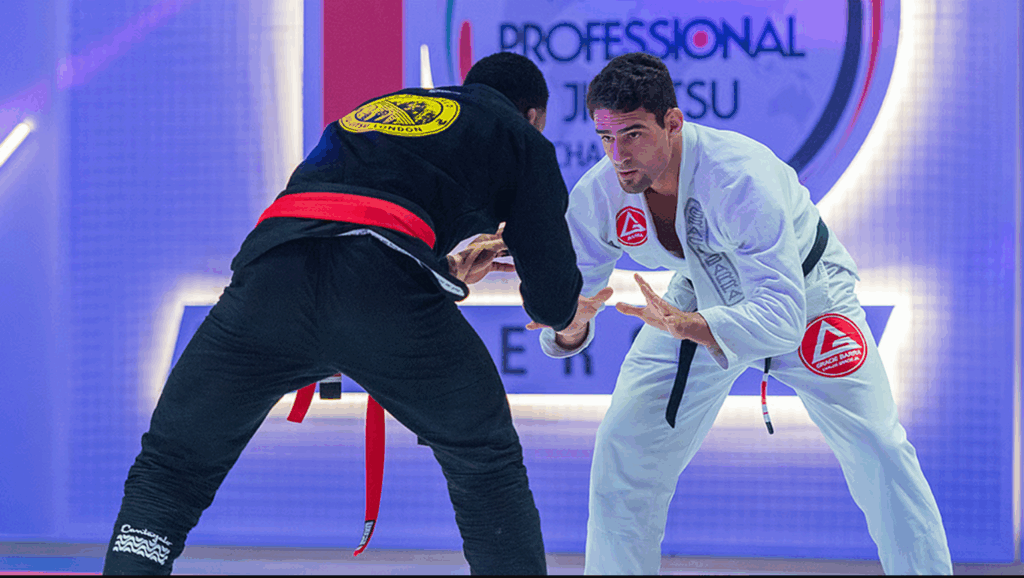
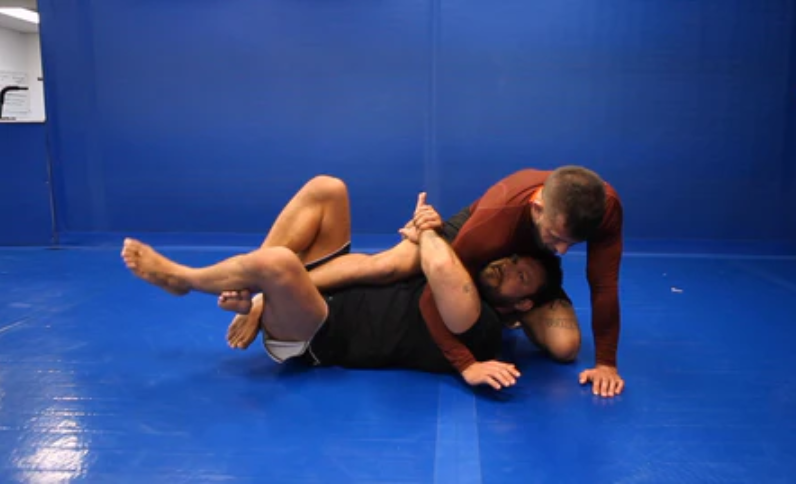
Lachlan Giles ADCC heel hook

The Giant Killer’s Journey: From Victoria to ADCC Bronze

Giles didn’t stumble upon this philosophy by accident. Born in Victoria, Australia, he grew up watching Jet Li films and began training Kung Fu as a teenager.

His passion shifted when he discovered Brazilian Jiu‑Jitsu tapes featuring Royce Gracie’s early UFC fights. Under coach Tyron Crosse he climbed from white to purple belt, but a severe knee injury halted his progress. After recovery, he continued under John Simon, earning his BJJ black belt in 2012.

Giles’ competitive record evolved alongside his coaching career. At Absolute MMA in Melbourne Lachlan Giles refined his leg‑lock game and became an instructor. In 2019 he made headlines at Kinektic Invitational by submitting five opponents in a team‑format tournament.

Later that year, he shocked the world at the ADCC World Championships. Competing in the open weight division, the 77 kg Australian submitted three much larger opponents – including Kaynan Duarte and Mahamed Aly – with inside heel hooks to secure a bronze medal.

The performance earned him the nickname “Giant Killer” and demonstrated that technique could overcome huge size disparities. His career arc illustrates just how long it can take to approach the peak in Jiu-Jitsu, and why focusing on fundamentals pays off.

Beyond the mats, Giles is an academic. He holds a PhD in physiotherapy and has published peer‑reviewed research on patellofemoral pain.

This blend of athletic and academic expertise informs his training philosophy. Students praise him for clear explanations and an emphasis on longevity over momentary glory. That credibility is why his comments on the time frame to peak in Jiu-Jitsu resonate so strongly in the grappling community.

Five, Seven or Ten? Lachlan Giles on the Real Timeline to Peak in Jiu-Jitsu

When asked how long to master BJJ and reach your full grappling potential, Giles doesn’t sugar‑coat his answer:

“If you want to peak in Jiu‑Jitsu, it’s a process that takes at least 5 to 7 years, probably 10 years in reality”
– Lachlan Giles –

In other words, even at the low end, you’re looking at half a decade of consistent effort. What justifies that timeline? Giles points out that BJJ development involves far more than memorizing moves.

Physical conditioning, technical knowledge, tactical decision‑making and psychological toughness all evolve on different clocks. It takes time for your joints and ligaments to adapt to the stresses of grappling.

Many practitioners train hard for two or three years, plateau and wonder why they haven’t won a major tournament.

Giles says that unrealistic expectations often lead to burnout. He stresses that the early years should focus on building a base: understanding positional hierarchies, escapes and fundamental submissions.

Those layers eventually coalesce into a game that can handle world‑class opponents, but only if given time. His observation that “most top competitors started training seriously a decade or more before reaching their peak in Jiu‑Jitsu” aligns with data across the sport.

Equally important to Giles is how you train during those years.

“I feel like if you’re going hard all the time, a lot of people are just going to drop off”
– Lachlan Giles –
 

Pushing to failure every session may feel productive, but it often leads to injuries and mental exhaustion. Giles advocates for sustainable intensity: periods of hard rolling balanced with lighter drilling, strategic study and strength work.

Playing the Long Game in Grappling

For hobbyists and competitors alike, chasing the peak in Jiu‑Jitsu means embracing a long game. That starts with setting realistic expectations. You may achieve early wins, but those don’t equate to mastery.

Recognize that technical depth and tactical sophistication emerge over thousands of hours. Celebrate incremental BJJ progress—passing a guard you used to fear, defending a submission you once always tapped to—as milestones on the way to the summit.

The lesson from Lachlan Giles is clear: there are no shortcuts to mastery. His own evolution from injury‑plagued purple belt to ADCC bronze medallist and sought‑after coach took nearly two decades.

His advice to others—commit for the long haul, balance intensity with sustainability, and relish the slow climb—offers a blueprint for anyone serious about reaching their potential. In a sport that values patience and precision, the real reward isn’t just the peak but the journey itself.
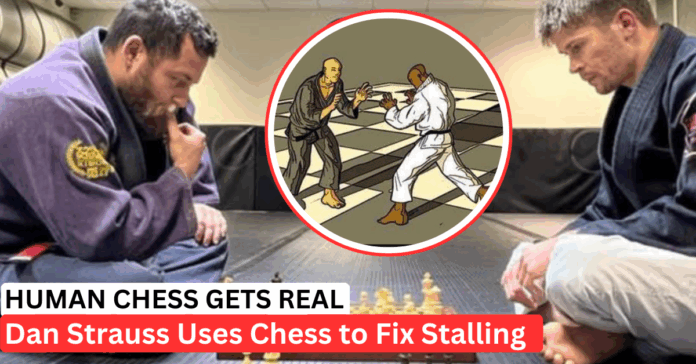
Dan Stauss’ Chess Grappling Demands Brains and Brawn—Are You Ready to Play?

Dan Stauss' Chess Grappling Demands Brains and Brawn—Are You Ready to Play?
  • Chess grappling is Dan Strauss’s new hybrid sport that uses chess performance to determine starting positions in grappling rounds.
  • The rules reward strategic board play: material advantage on the chessboard gives a dominant position on the mat, while losses leave you defending in mount or back control.
  • The format features nine rounds—five of chess and four of grappling—with victory coming by checkmate, submission, clock forfeit or points.
  • Strauss, a black belt under Roger Gracie, has open‑sourced the rules and encourages practitioners worldwide to try chess grappling.
  • The broader lesson: BJJ athletes can draw from chess tactics such as gambits, forks and pins to sharpen their mat strategy.

Beyond Human Chess: Why the Mat is Ripe for a New Game

For decades, coaches have compared Brazilian Jiu‑Jitsu to chess. The analogy is compelling—both disciplines reward patience, position and thinking several moves ahead—but it has its limits.

Chess is turn‑based and bound by strict movement patterns, while grappling is a living scramble where speed, strength, and pressure matter as much as calculus. Yet the metaphor persists because it captures the sport’s cerebral side.

When black‑belt coach and competitor Dan Strauss looked at that comparison, he saw an opportunity to go beyond metaphor and create a competition that literally stitches the games together. His answer is chess grappling, and it’s capturing imaginations because it forces grapplers to respect both board and mat.

The concept emerges at a time when hybrid formats are booming. Chessboxing has existed since 2003, alternating chess rounds with boxing rounds, but the punches and pawns never really interacted.

Strauss, who has fought on some of the world’s biggest grappling stages and taught at more than 250 gyms, wanted to fix that disconnect. In his words, the original hybrid format treated each discipline as separate:

“My issue with the chessboxing ruleset was that the chess and boxing were very separate, one didn’t affect the other,”
– Dan Strauss –

Having spent years coaching and competing, he understood that mental effort and physical engagement can and should influence each other. His innovation: make chess mistakes cost you on the mat, and make grappling dominance feed into your board strategy.

That simple idea unlocks strategic depth missing from the human‑chess cliché and invites casual fans to think about Jiu‑Jitsu through a fresh lens.

From Chess Boxing to Chess Grappling

Strauss’s ruleset is precise, and the key details are easy to digest when listed clearly:

  • Ten‑minute chess clock for each player, with the game continuing across all chess rounds.
  • Nine rounds – five blitz‐style chess rounds (four minutes each) and four grappling rounds (two minutes each), totalling about twenty‑eight minutes.
  • Coin toss for White – a single flip decides who takes the first move; a checkmate ends the match on the spot.
  • Submissions end grappling rounds – tap at any time, and it’s over.
  • No checkmate or submission? The match is decided by time forfeit on the chess clock or by IBJJF points.
  • Position ties into the board – round one begins standing; from round two onwards, whoever has a material advantage starts in a more dominant position (side control, then mount, then back control).
  • Material matters – losing pieces puts you in worse starting spots, forcing you to manage the board carefully to avoid being smothered on the mat.

Strauss says he developed the format after testing it at camps, where participants loved the interplay:

“I’ve run some matches in this format at various camps and it’s always been a tonne of fun,”
– Dan Strauss –

By openly releasing version 1.0 of the rules, he hopes promoters will experiment and refine the system. The process rewards balanced skill sets: a strong chess player who struggles in grappling can buy precious time by winning material and starting in mount, while a submission specialist may need to sharpen openings to avoid an early back take.

With clear victory conditions—checkmate, submission, clock or points—and a built‑in time limit, the format also avoids the endless stalling that plagues some grappling events. In short, chess grappling turns the metaphor into a dynamic ruleset where intellect and athleticism feed each other.

Grappling Strategy Lessons From 64 Squares?

Beyond the novelty of chess grappling lies a deeper lesson: the strategic principles that chess players hone at the board can improve a grappler’s training and vice versa.

Chess is about creating small advantages—gaining a tempo, controlling a file, forcing a trade to open a path. Brazilian Jiu‑Jitsu thrives on similar micro‑edges: a grip that sets up a guard pass, a hip angle that opens a sweep, a sequence of attacks that hides your true intent.

As one chess‑player‑turned‑grappler wrote, matches between grandmasters often hinge on a few precise victories followed by a series of draws. Great BJJ competitors know how to build a points lead and stall out an opponent in the same way.

The parallels run deeper when you look at specific tactics. Consider the chess tactic known as a gambit—sacrificing a pawn to gain initiative. On the mat, experienced grapplers will give up a dominant position temporarily to bait a transition that leads to a submission.

Another tactic, the discovered attack, involves moving one piece to reveal an attack from another. In BJJ that’s akin to using a seemingly innocuous lapel grip to set up a choke as your opponent reacts.

Forks in chess—attacking two pieces at once—mirror submission chains like threatening both triangle and armbar. Pins and skewers, where a piece is immobilized because a higher‑value piece sits behind it, resemble baiting an opponent into defending a sweep and exposing an arm.

Even the principle of zugzwang, where a player is forced into a losing move, has a BJJ analogue: pressure passing and cross‑face control can force your opponent into awkward escapes that open submission opportunities. For coaches and competitors, studying chess tactics is not a gimmick, but a way to frame the mental game of Jiu‑Jitsu.

Dan Stauss' Chess Grappling Rules

Is There a Chance for Chess Grappling to Stick? 

Where does chess grappling go from here? Strauss is clear that version 1.0 is a starting point rather than a final product. He released the rules openly—“Take it, play with it, have some fun,” he said—to invite feedback and encourage experimentation.

Already, the format has ignited debates about whether the metaphor of BJJ as human chess should be literal. Some purists bristle at the comparison, arguing that grappling moves can’t be reduced to turn‑based logic. Others see potential in creating a platform that rewards well‑rounded athletes and opens Jiu‑Jitsu to new audiences.

For a generation raised on Jiu‑Jitsu instructionals and chess puzzles, chess grappling could become a niche festival event, a training tool for developing strategic thinking or even a new spectator sport.

At the very least, the format underscores a simple truth: mastery in BJJ is not just about strength or speed but about making good decisions under stress. Whether you ever compete in chess, grappling or not, studying the interplay between positions and plans can make you a smarter grappler.

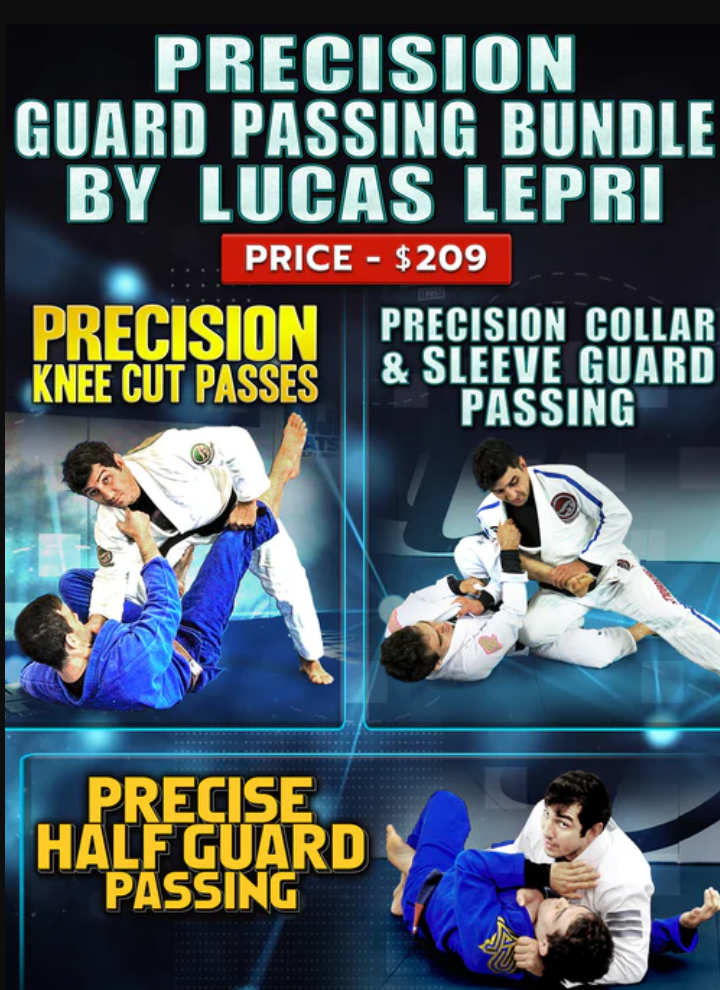
Precision Guard Passing Lucas Lepri DVD Bundle Review [2025]

Precision Guard Passing Lucas Lepri DVD Bundle Review
Precision Guard Passing Lucas Lepri DVD Bundle

Key Takeaways

  • A three-part BJJ DVD bundle on effective passing with the Gi by World Champion Lucas Lepri.
  • Covers technical instructions on different passes, as well as addressing dealing with different guards.
  • 5+ hours of world-class passing moves, methods, and tactics, including dismantling lapel guards.  
  • BJJ World Expert Rating: 8 out of 10.

 PRECISION GUARD PASSING LUCAS LEPRI DVD BUNDLE GET HERE

You can’t hope to master the ability to beat any guard in BJJ – there are too many. You can, however, destroy guards with ease while you’re setting up passes. If you can figure that out, it won’t matter which guard you’re up against – you’ll be able to breeze past it.

The Precision Guard Passing Lucas Lepri DVD Bundle holds lots of information on this subject in a mere 5 hours. While it may be a short bundle, it does cover more aspects of guard passing in the Gi that you’ll probably ever need, even if you’re a pro grappler aiming for the Worlds podium.

Alliance Team Legend Lucas Lepri

In the realm of Gi BJJ, the name Lucas Lepri is one etched straight into competitive folklore. Every Gi competitor has been drawn to try out stuff we’ve seen Lucas do on the mats. The success of these attempts is varied, but that just gives even more credit to what a special competitor Lepri is.

A black belt under Elan Santiago (Carlson Gracie lineage), Lepri is a 10-time IBJJF World Champion (97 Gi, 3 No-Gi titles) as well as a multiple-time Pans, Brazilian Nationals, and Abu Dhabi World Pro winner. Known as a guard-passing machine, the Alliance competitor holds notable victories over greats such as Lachlan Giles, Kaynan Duarte, Renato Canuto, and JT Torres, to name a few.

While his game might not fit everyone, the Lucas Lepri Passing Bundle is worth exploring, particularly if you’re struggling with guard passing. Saying this bundle delivers options would be an understatement at the very least.

Precision Guard Passing Lucas Lepri Passing DVD Bundle Review

The highly entertaining and useful Precision Guard Passing Lucas Lepri Passing DVD Bundle offers a Gi-specific system that lets you target any guard you come up against using the same proven passes against it.

Knee Cut Passes DVD – AVAILABLE HERE!

Subject:

The first installment of the Lucas Lepri Passing Bundle is all about a position he kind of pioneered in the BJJ world — the knee cut pass, a staple move for competitors around the globe for over a decade.

Key Points Covered: 

This Gi instructional begins with Lepri’s De la Riva busting tactics, including the tripod knee cut, sliding knee cut, and the flying knee cut (you must-see that one). He follows up on the basics by sharing directions on how to beat complex guards, such as Lasso variations, using the simplicity of the knee cut.

Lucas also offers instructions on Knee cut setups, linking it to other super-effective passes such as the Toreando. He includes lots of troubleshooting as well, covering how to beat common knee cut defenses and counters.

The sit-up guard, half guard (along with the deep half), and X guard variations also get dismantled in this DVD, using only one move – the knee cut pass.

Technical DVD specifications:

The Precision Guard Passing Lucas Lepri DVD Bundle starts off with an instructional made up of four volumes, each with about 3 minutes of material, which translates to a two-hour knee cut pass BJJ DVD by Lucas Lepri.

Collar and Sleeve Guard Passing DVD – GET IT HERE

Subject:

The second part of the Precision Guard Passing Lucas Lepri DVD Bundle is all about Gi-specific passing aimed at beating one of the most dangerous Gi guards out there – the dreaded collar and sleeve guard.

Key Points Covered: This DVD introduces a complete system aimed at destroying the collar and sleeve guard. In it, Lepri delivers techniques that will help you kill the guard and transition to other guards using different passes.

The knee cut, already covered in the Lucas Lepri Passing Bundle, features again, as do stack passes, leg drags, and Toreandos. Lepri spends a lot of attention delivering solutions to popular lapel engagements from the collar sleeve, opening routes to side control, mount, and the back.

Technical DVD specifications: 

This instruction is a carbon copy of the first one — the material is spread over four volumes, each with about 30 minutes of running time, bringing two more hours of quality material to this Lucas Lepri bundle.

Half Guard Passing DVD – FULL DOWNLOAD

Subject:

The last part of the guard passing bundle by Lepri looks into dealing with another super-common and very dangerous guard — the half guard, along with all of its top-level variations.

Key Points Covered: Precision

As we reach the final part of the Guard Passing Lucas Lepri DVD Bundle, we get the moves most of grapplers crave for — those that can help you beat the half guard. Once again, Lucas delivers immense pressure through simple and effective Gi-based passes.

He begins with the knee cut first, banking on the information already shared about it, and builds on with a set of direct top-half submissions that work great with it. You’ll find stuff like Brabo and baseball bat chokes in this part of the DVD.

Solutions to kill off the Coyote half guard also feature, along with routes to the back mount, crucifix, and rear triangle against the single leg half guard. Deep half guard counters and passing solutions wrap this DVD up, but not before Lepris shares some of his World-winning moves, including kneebars, loop chokes, and back step passes.

Technical DVD specifications:

The final member of the Guard Passing Lucas Lepri DVD Bundle provides an hour and a half of material dedicated to beating half guards in Gi BJJ. Lucas spreads the materiel over three different volumes, opting for efficiency over fluff, which is much appreciated.

BJJ World Champion Level Passing

Grappling at a world-champion level is no joke, as you’ll run in some of the best guards ever on those mats. Having a proven method to deal with every guard variation thrown at you by top-level grapplers is a must if you are to have any hope of making it out of the local competition scene.

For those looking to dominate the world championship mats, as well as for those looking to kill guards on open mat, the best strategy is to turn towards a method used by a World Champion. Finding systems that people have used over and over again to beat everyone at a world-class level is a foolproof way of figuring out what works and what doesn’t.

The Precision Guard Passing Lucas Lepri DVD Bundle offers a system put together by a man who spent the better part of a decade collecting Gi and No-Gi world championships. Proven in his weight class, and even taking names in the absolute, Lepri’s guard passing system will improve any grappler alive — that much is certain!

PRECISION GUARD PASSING LUCAS LEPRI BUNDLE DOWNLOAD

Crush Any Guard!

Instead of trying to figure out how to stop guard attacks, ensure they never happen in the first place. The Precision Guard Passing Lucas Lepri DVD Bundle will teach you how to crush guards before they become dangerous, allowing you to get past them whenever you want, and without much resistance. Ready to take your passing to the next level?

Adele Fornarino’s Three Rules for Men Rolling With Women in BJJ

Adele Fornarino’s Three Rules for Men Rolling With Women in BJJ
  • Adele Fornarino, a double ADCC champion and rising superstar of women’s grappling, recently offered three pieces of advice to male training partners.
  • Her tips include not stopping rolls to coach, being mindful of strength differences and meeting a partner’s pace – key lessons for anyone rolling with women in BJJ.
  • The explosion of female participation in Brazilian jiu‑jitsu has forced gyms to confront BJJ etiquette and respect on the mats; Fornarino’s voice is part of this cultural shift.
  • Her comments came on Andre Galvao’s podcast and were later shared by ATOS BJJ on demand.
  • Embracing her approach to rolling with women in BJJ can help gyms build safer, more inclusive communities while sharpening everyone’s technique.

Rolling With women in BJJ: Basic Etiquette Demands

Twenty years ago, a woman on the mats was a rarity. Today, gyms around the world have women’s classes, female black‑belt coaches, and international champions headlining marquee events.

The increase has been so dramatic that etiquette and training norms are being reevaluated. In many gyms, rolling with women in BJJ still triggers an awkward pause: should male practitioners go light, avoid certain grips, or offer unsolicited pointers?

These questions reveal a larger issue: as the gender balance changes, so must the culture. Against this backdrop, Adele Fornarino’s comments resonate.

The Australian phenom made history in 2024 by winning both her weight class and the absolute division at the ADCC world championships, becoming the first woman in 17 years to accomplish the feat.

That achievement cemented her status as a role model. When someone with that résumé speaks about rolling with women in BJJ, her words carry weight. Her advice underscores how technical training thrives on mutual respect rather than outdated assumptions.

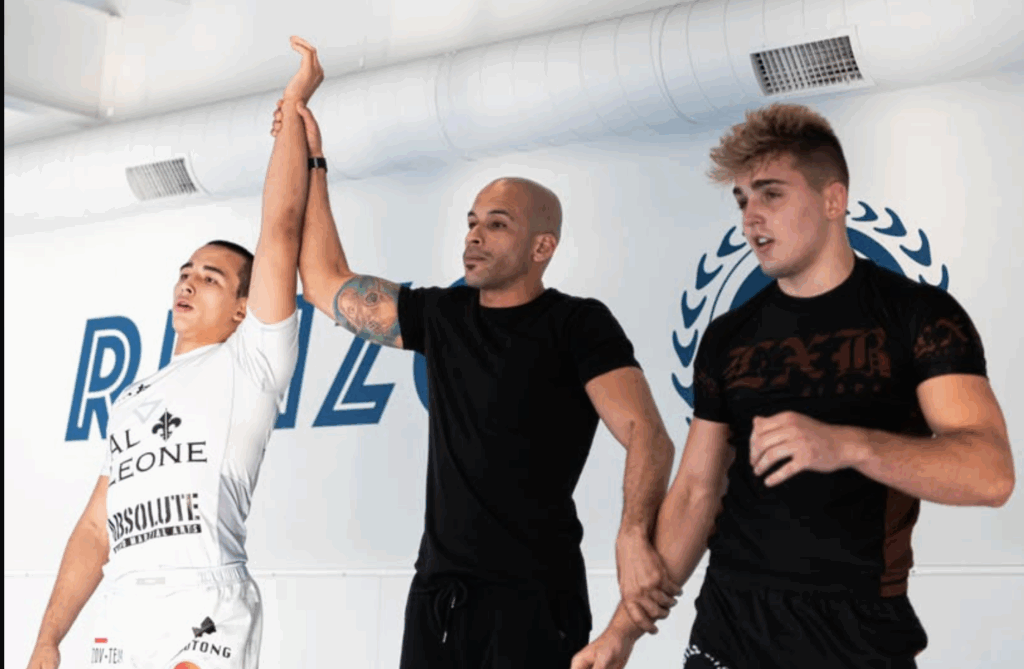
Adele Fornarino Rolling With Men in BJJ

Adele Fornarino’s ADCC Triumph and Why Her Voice Matters

Fornarino didn’t appear out of nowhere. She was already one of Australia’s most accomplished grapplers before ADCC 2024, but her double‑gold performance turned her into an international star.

In an era when many women still have to justify their place on the mats, her success sends a message: excellence transcends gender. It also gives her the license to challenge entrenched behaviors.

On a recent episode of the Andre Galvao Podcast, she addressed a question about men training with women. Rather than couch her comments in polite generalities, she spoke plainly.

Adel Fornarino’s Three Rules for Men Rolling With Women

Fornarino’s advice boils down to three actionable rules. Each one addresses a common misstep and offers a roadmap for better sessions. For men who find themselves rolling with women in BJJ, these guidelines can be transformative:

Flow, don’t coach. Interrupting a round to explain what just happened may feel helpful, but it often masks discomfort with losing. Trust your training partner. Talk about setups and escapes after the bell rings.

As Fornarino put it:

They shouldn’t stop the roll every three seconds to explain something… just roll
– Adele Fornarino –

Let technique lead. Strength and size are undeniable factors in grappling, but they shouldn’t be the default strategy in the gym. Focus on positional awareness, timing, and leverage. That mindset levels the playing field. Fornarino’s reminder captures it perfectly:

Be aware of the strength discrepancy. Try and be technical, don’t just try and be bigger and stronger
– Adele Fornarino –

Match your partner’s pace. Rolling lightly or hard isn’t dictated by gender. Pay attention to cues and adapt. You wouldn’t assume a world‑class featherweight is looking for a rest round, so don’t make that assumption about women. Fornarino’s words get to the heart of it:

Don’t assume that a female’s gonna be a rest round. Don’t go into the round assuming that it’s going to be a rest round
– Adele Fornarino –

Each rule emphasises mutual respect. They also highlight the central theme of this article: approaching rolling with women in BJJ as an opportunity for growth rather than a social minefield.

By embracing flow over ego, technique over strength, and communication over assumptions, male practitioners can elevate their own game while helping create a better training environment for everyone.

From Mat Etiquette to Mutual Growth

The conversation sparked by Fornarino’s podcast appearance isn’t just about etiquette; it’s about the future of the sport. As more women earn titles, open academies and become high‑profile coaches, the days of treating them as novices or afterthoughts are over.

When men refine how they approach rolling with women in BJJ, they send a signal that women belong – not as special cases but as equals. That shift has tangible benefits beyond optics. It raises the overall technical level of the room and makes gyms more attractive to newcomers who might otherwise be intimidated.

Fornarino’s rules dovetail with broader discussions about safety and respect in martial arts. Mixed‑gender training demands awareness of body mechanics, of personal space, and of the purpose of each round.

By following Fornarino’s example, gyms can build inclusive spaces where the phrase “rolling with women in BJJ” isn’t notable at all – it’s just part of training. And for male practitioners, embracing these guidelines isn’t a concession; it’s a path to becoming better grapplers and better teammates.

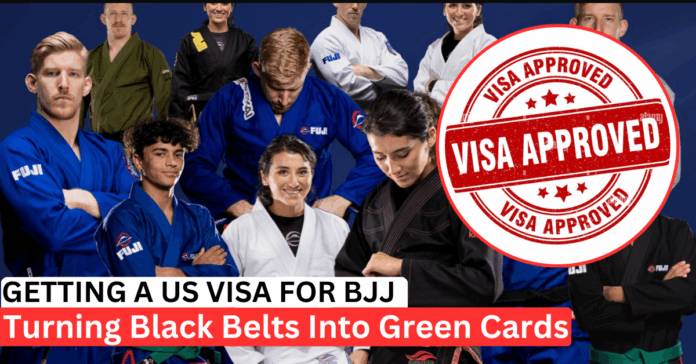
How to Get US Visas for BJJ Athletes: A Deep Dive Into The Paperwork

How to Get US Visas for BJJ Athletes: A Deep Dive Into The Paperwork
  • The professionalization of Brazilian Jiu‑Jitsu has created a surge in competitors seeking to live, train, and compete in the United States.
  • Athletes typically enter on P‑1 visas (for internationally recognized professionals) or O‑1 visas (reserved for the top tier of talent); each option carries different requirements and flexibility.
  • Documentation and timing on US visas for BJJ athletes matter as much as medals. Lawyers stress that athletes must meticulously prove their accomplishments and file early.
  • B‑1/B‑2 tourist visas do not allow athletes to earn income; misusing them can jeopardize future immigration prospects.
  • The choice between P‑1 and O‑1 visas shapes an athlete’s long‑term strategy, influencing whether they can teach seminars, sign sponsorships, or eventually pursue permanent residency.

Riding the Wave: US Visas for BJJ athletes in High Demand

Brazilian Jiu‑Jitsu has exploded into a global sport over the past decade. As events like the ADCC World Championships and the Craig Jones Invitational offer six‑figure purses, the United States has become the premier destination for training camps, superfights, and sponsorship deals.

This boom has produced an unexpected side effect: an immigration bottleneck. With gyms opening from Manhattan to Southern California, athletes who once flew in for a weekend now seek multi‑year stays.

Navigating US immigration law on info about US visas for BJJ athletes has thus become as critical as learning to defend leg locks.

The US Department of Homeland Security created several categories specifically for elite athletes. For BJJ competitors, the two most relevant are the P‑1 visa (for internationally recognized athletes) and the O‑1 visa (for individuals of extraordinary ability).

According to immigration attorneys, athletes must show a record of international acclaim to qualify. That record may include ADCC medals, IBJJF world titles, significant sponsorships, and global media coverage.

Because the United States treats immigration as a national‑security function, the burden of proof for US visas for BJJ athletes falls squarely on the athlete and his or her team.

US Vissas for BJJ Athletes

The O‑1 Visa Playbook

The O‑1 visa is reserved for athletes who sit at the very apex of their sport. Under federal regulations, an applicant must either hold a major, internationally recognized award (think ADCC gold) or meet at least three of eight criteria, such as notable prizes, memberships, media coverage, or evidence of high salaries.

The O‑1 visa for athletes initially runs for up to three years and is renewable in one‑year increments. Lawyers emphasize that the O‑1 category rewards breadth as much as trophies.

Paris Lee, an immigration attorney and BJJ black belt, notes that O‑1 petitions often hinge on detailed narratives:

Everything must be explained and detailed so that the officer has a proper contextual understanding
– Paris Lee –

Because adjudicators may not know the difference between a World Pro title and a regional open, athletes must supply photos of medals, signed contracts, and translations of foreign articles.

Unlike the P‑1, the O‑1 allows athletes to engage in teaching seminars, brand ambassadorships, and media appearances, making it ideal for top stars who see themselves as entrepreneurs.

An O‑1 can also serve as a springboard to permanent residency via the EB‑1 green card, which mirrors O‑1 standards but offers a pathway to citizenship.

Athletes who have won multiple world championships or dominated professional circuits may leverage their O‑1 record to self‑petition for an EB‑1—a strategy several BJJ icons have successfully employed.

P‑1 and Beyond: Team Visas, Documentation & Common Pitfalls

For most professional BJJ athletes, the P‑1 visa is the workhorse. It permits internationally recognized athletes or teams to compete and train in the US for up to five years.

Unlike the O‑1, the P‑1 visa requirements are tied to specific events, contracts, or seasons, and involve the need for a US sponsor or employer. It also allows athletes to earn prize money, collect salaries, and bring essential support staff, including coaches and trainers.

Attorney Johanna Keamy, who advises foreign athletes, suggests visualizing the US visas hierarchy for BJJ athletes hierarchy:

B‑1 is a Rising Star, P‑1 is a Star, the O‑1 is a Shining Star and the EB‑1 is a Superstar
– Johanna Keamy –

In other words, the P‑1 suits athletes who have international recognition but aren’t yet at the very top of their field. Key evidence includes proof of global ranking, media coverage, contracts and letters from governing bodies.

Teams traveling to competitions must also supply itineraries and demonstrate that the events require athletes of international caliber. One of the most common mistakes involves misusing tourist visas.

Some athletes assume that a B‑1 or B‑2 visa allows them to compete and accept prize money. Immigration specialists warn that this practice is illegal and can bar athletes from future entry.

Timing is another obstacle. Standard processing for P‑1 and O‑1 petitions can take months; while premium processing shortens the wait to roughly 15 business days, attorneys recommend filing well ahead of major tournaments.

Documentation remains paramount in getting US visas for BJJ athletes. As Lee writes:

Photos are important… everything must be proven
– Paris Lee –
How to Get US Visas for BJJ Athletes

Documents Required for BJJ Visa

Although each case is unique, successful US Visas for BJJ athletes petitions typically include:

  • Competition records: IBJJF Worlds, ADCC trials, Grand Prix placements and professional superfights. Photos of medals or trophies help adjudicators unfamiliar with the sport.
  • Media coverage: Articles, podcasts and interviews in reputable outlets to demonstrate national or international recognition.
  • Contracts and itineraries: Written agreements with promoters, event schedules and proof of payment.
  • Letters of recommendation: Statements from recognized experts, such as world‑champion coaches or federation officials, attesting to the athlete’s impact and skill.
  • Financial evidence: Salary comparisons or sponsorship deals to show that the athlete commands a high remuneration relative to peers.

Athlete immigration law’s “public charge” test—designed to bar applicants likely to depend on government assistance—rarely applies to elite athletes but remains a background consideration.

Nonetheless, lawyers advise avoiding long‑term Medicaid usage or other benefits that could complicate US visas for BJJ athletes petitions.

Visa Battles Off the Mat

BJJ’s global talent migration shows no sign of slowing down. As the sport professionalizes, the ability to secure the right US visas for BJJ athletes has become a competitive advantage.

Whether you’re an emerging athlete or a seasoned champion, understanding the difference between P and O visas is critical to building your US career legally and sustainably
– Immigration attorney –

The choice shapes not only where an athlete competes but also whether they can coach, sign sponsorship deals, or lay the groundwork for permanent residency. Looking forward, attorneys expect increased scrutiny from immigration officials unfamiliar with grappling—a sport still considered niche in bureaucratic circles.

Federations and promoters are beginning to provide template letters and educational materials to assist athletes. Meanwhile, the rise of free‑to‑watch events like UFC BJJ and thriving promotions like BJJ Stars will likely inspire more international competitors to dream of US visas for BJJ athletes.

Proper planning, thorough documentation, and expert legal guidance remain the keys to turning that dream into reality.

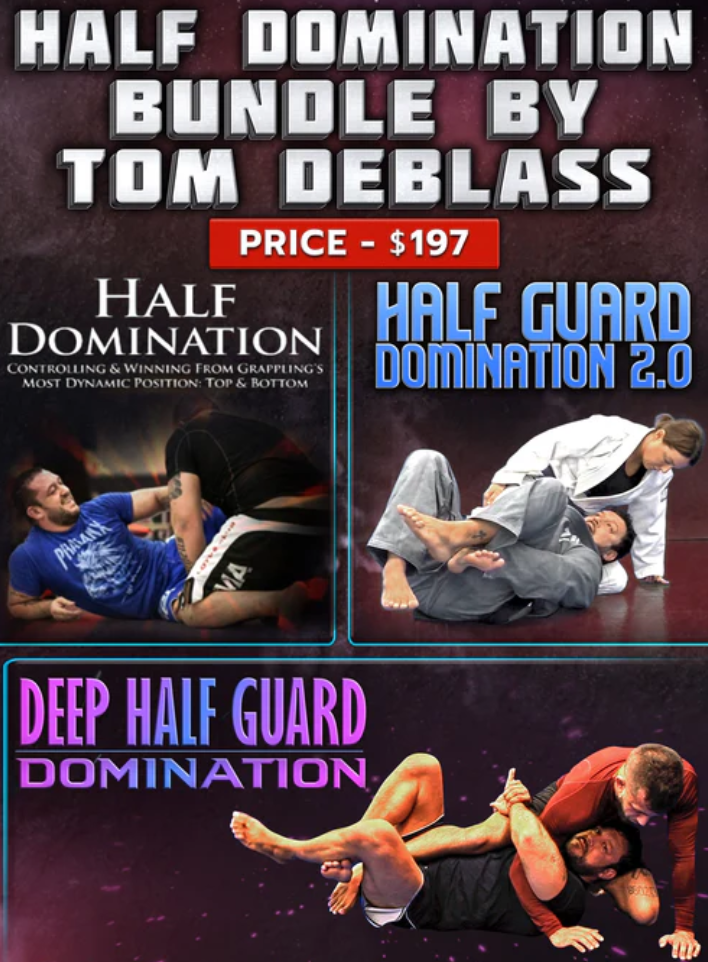
Half Domination Tom DeBlass DVD Bundle Review [2025]

Half Domination Tom DeBlass DVD Bundle Review

Key Takeaways

  • A three-part BJJ DVD bundle containing Tom DeBlass’ Gi and No-Gi half gaurd systems. 
  • Features use of different half guard variations, combining them into an attacking system and details on passing.
  • 7+ hours of details on half guard sweeps, submissions, leg lock entries and recovery.  
  • BJJ World Expert Rating: 7.5 out of 10.

HALF DOMINATION TOM DEBLASS BUNDLE AVAILABLE HERE!!!

The Half Domination Tom DeBlass DVD Bundle is the rootkit for learning half guard – there’s no way around it. Even if you go about putting together a half guard game a different way, you’ll end up with a lot of the same things that are boiled down in this one.

Why start with the bundle? Well, for starters, Tom is both a competitor and the coach of some of the most high-level grapplers out there. Secondly, he has proven his system works, as he became renowned for being the guy whose guard was not passed for years, even by expert passers.

Interested to learn more? Go through the detailed review of the bundle we offer below.

Half Guard Master Tom DeBlass

The man who is such a stand-up fellow that he completely divides the BJJ World. People either love or hate Tom DeBlass, and it is all because he is a great guy — too great for some people.

His personality and attempts to right every wrong in the world aside, Tom’s Jiu-Jitsu skills are beyond a doubt some of the very best in the world. He is not just a high-level black belt, promoted by Ricardo Almeida, but also one of the top teachers in the sport.

Let’s not forget that both Gordon Ryan and Garry Tonon are originally Tom’s students, with the latter being promoted to black belt by DeBlass. Having fought at the highest level of Gi and No-Gi in the early 2000s, as well as in the UFC and Bellator, DeBlass has more extensive competitive experience.

Most of his game is based on effectiveness and moves that work not just at every level, but also for grapplers of all ages. The half guard is one particular strong side of Tom’s game, to the point that he, at one point, spent years without having his guard passed once, in training or competition.

Paints a pretty clear picture of what you get in the Tom DeBlass Half Domination DVD Bundle. 

Full Half Domination Tom DeBlass DVD Bundle Review

The Half Domination Tom DeBlass DVD Bundle contains everything you need to figure out the half guard- top and bottom. He covers Gi and No-Gi applications in this bundle.

Half Domination DVD — AVAILABLE HERE

Subject Matter:

Tom’s first instructional of the bundle targets the half guard as an attacking position that offers not just sweeps, but also leg locks. Passing principles and a short seminar on retention also find their way into this one.

Key Points Covered: 

The first DVD of the Half Domination Bundle Tom DeBlass instructional, is also one of Tom’s first digital BJJ releases. In it, he covers his versatile half guard game, which somehow spans to include stuff inspired by Renzo Gracie, all the way to Eddie Bravo 10P moves.

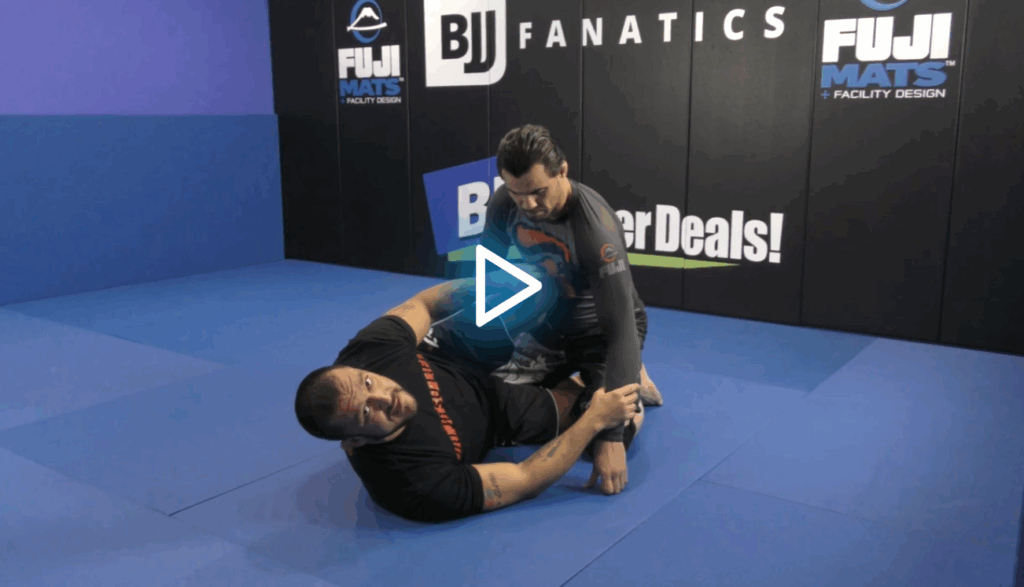
In this No-Gi DVD, DeBlass starts off with the Z-guard, talking about the different ways you can set up your shield and how to make the most out of underhooks. He also shares several directions of attacks, based on whether you’re going towards the near or side leg.

Waiter sweeps feature heavily, along with some great options to get out from the smashed half, sweeping in different directions. Tom also pioneered the use of the half butterfly to leg locks in this DVD, adding a whole layer of attacks to the guard.

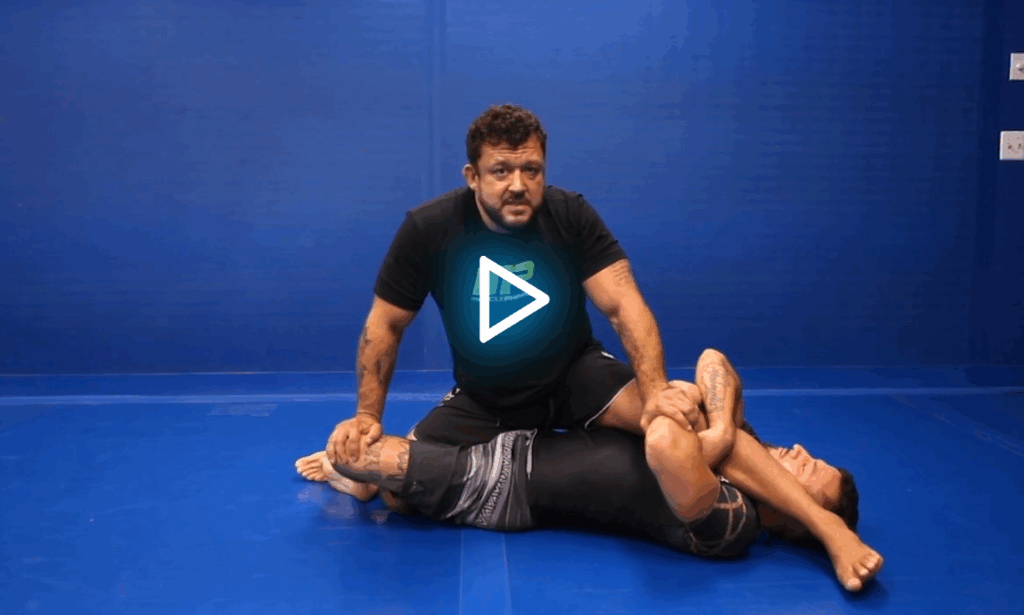
DeBlass also talks top half guard in this instructional, sharing some of his thoughts on how to beat the guard he loves to play. He ends in a very original way, providing a 30-minute-long guard retention workshop that’s essentially a full-blown seminar in its own.

Technical DVD specifications:

The Half Domination Tom DeBlass DVD Bundle is a No-Gi instructional with four different volumes, the last of which contains the aforementioned retention seminar. The total running time of the DVD is just over two hours.

Half Guard Domination 2.0 DVD — GET IT HERE

Subject Matter:

The second part of the Half Domination Tom DeBlass DVD Bundle is literally the continuation of the first, bearing the same name. It addresses the same attacking aspects of the half guard, but this time, with the Gi on.

Key Points Covered:.

Tom DeBlass starts off with deep grips in this one, sharing his system of attacking with the cross collar grip. The routes he takes are those of sweeping, choking with collars (loop choke), and getting to the back. He also covers a lot of reactions your opponent might have, and how to deal with them, answering questions before you know you have them.

One of the best parts of this DVD is the section covering how to attack a defensive opponent who is stalling rather than trying to pass. Lots of levitation into Ashi Garami features here, along with some interesting uses of lapels from the bottom half to prevent passing.

X Guard and butterfly guard combos are dissected and explained by Tom, as well as he leaves the half guard for short periods, looking to pounce on submission opportunities created by common passes. The collar sleeve half guard system wraps this DVD up.

Technical DVD specifications: Four more volumes added to the Half Domination Bundle Tom DeBlass, offering Gi alternatives and variations, and providing another two and a half hours of material.

Deep Half Guard Domination DVD — FULL DOWNLOAD

Subject Matter:

Finally, Tom arrives at one of his bread and butter positions — the deep half guard. This is the position that guarantees a ‘lazy’ Jiu-jitsu player with guard success, but it does come at a somewhat high technical price.

Key Points Covered:

You can only play the deep half guard if you know what you’re doing and already understand the ins and outs of shallower half guard variations, already explored in the Half Domination Tom DeBlass DVD Bundle.

In this final instructional of the pack, DeBlass addresses how to get to the deep half guard and how to immediately sweep using underhooks and the super-effective Waiter sweep. Lots of reversals feature in this one, taking you toward the back door, the lower leg, or into a very cool leg trap.

Receive scenarios, based on the top person’s actions, are also covered, making it easy to deal with stalling partners, heavy sprawls, and back take attempts. The final part of this Tom DeBlass half guard DVD is all about recovering the deep half against passes and linking it to other, more offensive guards such as the DLR and Z-Guard.

Technical DVD specifications:

Tom sticks to the four-volume format for each of his three contributions toward the Tom DeBlass Half Domination DVD Bundle. The instructional covering deep half guard is the longest in the bunch, offering just under three hours of material.

The Unbeatable Half Guard Idea

How do you develop a half guard that is unbreakable? You need to think outside the box for that one, but you don’t have to look outside the half guard box to achieve it. Confusing, I know, but allow me to clear it up.

If you base your entire half guard game, Gi and No-Gi, on just one half guard variation, you’re setting yourself up to fail. Let’s say you only play the butterfly half guard as your main guard while rolling and competing.

There’s only so much that this guard can offer — it’s an inside guard, meaning it provides levitation for sweeps and around to leg locks. If the top person can find a way to kill off these two routes, you’re stranded, and most likely, very easy to pass.

If you add another half guard variation to your game, such as the Z-guard, you’re now both opening a door to different attacks (upper body submissions and more sweeps) and building another wall to prevent passes.

If you are versatile enough to also include the deep half and smashed half guard options, you now have a very effective recovery strategy, applied with super-sneaky attacks that lead to the back.

So, the perfect half guard? The one that includes many different half guard variations, as you can add, without overcomplicating things. The Half Domination Tom DeBlass DVD Bundle has the perfect balance of variety and effectiveness for building a slick and dangerous half guard game.

HALF DOMINATION TOM DEBLASS BUNDLE DOWNLOAD

It Only Takes Half!

Stick to the half guard. It is a great position to conserve your energy in, while staving off attacks and setting up your own offensive options. Playing a half guard game is just as tactical as it is technical — both of which are covered in great detail in the Half Domination Tom DeBlass DVD Bundle. If I had to build a half guard game all over again, I’d start here.

The Secret to Jozef Chen’s Success? These Three BJJ Instructionals!

The Secret to Jozef Chen’s Success? These Three BJJ Instructionals!
  • Rising BJJ star Jozef Chen recently shared the instructionals that shaped his elite grappling style.
  • His top three picks come from Gordon Ryan, John Danaher, and Craig Jones.
  • Chen favours instructionals with clear systems, clean mechanics, and real-world success.
  • His minimalist study method mirrors the sharp, efficient approach seen in his matches.
  • The Jozef Chen instructionals top list is now influencing how students and pros structure their training.

Chen Names His Top Picks: Simple, Precise, Effective

In an era overflowing with content, Jozef Chen’s best BJJ instructionals stand out not for how many he consumed, but how selectively. Instead of bingeing on dozens of courses, Chen zeroed in on just a few that helped systematize his game.

His three foundational picks:

  1. Gordon Ryan’s “Pin Escapes & Retention”
  2. Craig Jones’ “Power Ride System”
  3. John Danaher’s “Feet to Floor: Takedown Theory”

Each one covers a critical phase of grappling: bottom, top, and stand-up. Chen revealed in an interview that these choices weren’t random—he specifically picked systems that gave him repeatable results during live training.

The clarity of instruction and high-level applicability were his top criteria.

It’s not about tricks. It’s about understanding why something works—and when.
– Jozef Chen –
Jozef Chen’s Favourite Three BJJ Instructionals

From Gordon Ryan to Danaher – What He Took from Each

What makes the Jozef Chen instructionals list compelling is not just who made it, but why.

From Gordon Ryan, Chen adopted the importance of structured defensive layers. Ryan’s “Pin Escapes & Retention” isn’t flashy, but for Chen, it was revolutionary.

It helped him build the confidence to play guard aggressively, knowing his ability to recover was sound.

From Craig, he borrowed pressure-based riding logic—slower, heavier, and more deliberate, plus a bit unusual in BJJ, since the system is inspired by wrestling.

Craig doesn’t try to out-speed his opponents. He puts himself in places where the other guy has no good options.
– Jozef Chen –

John Danaher’s takedown series gave him a roadmap to stay upright or dictate when the fight goes to the mat. Chen praised the way Danaher broke down concepts like stance, posture, and grip fighting in a language that didn’t feel foreign to jiu-jitsu players.

These instructionals, taken together, gave him a full-game architecture—defend, pass, attack, repeat.

Why Chen’s Picks Reflect the Evolution of Modern Jiu-Jitsu

Chen’s taste in instructionals reflects a broader shift in how elite athletes learn BJJ. Gone are the days when modern jiu-jitsu meant just chaining submissions together. Instead, the new generation studies systems, not just moves.

Rather than memorizing 50 guard passes, Chen opted to master one body position at a time.

Pick three systems. Learn them deeply. Ignore the noise.
– Jozef Chen –

This philosophy is echoed in BJJ learning methods being used in top gyms today. Students are encouraged to focus on principles and reactions rather than techniques in isolation. In this way, Chen is more a product of the Danaher-Ryan lineage than most realize.

How These Instructionals Appear in Jozef Chen Highlights

Watch any of the viral Jozef Chen highlights floating around Reddit or YouTube, and you’ll see his instructional-based approach in action.

  • His defensive guard work shows shades of Ryan’s pin escapes—shrimping in small angles, rebuilding frames with composure.
  • His top game borrows heavily from Craig’s riding system and top transitions, applied with tactical patience.
  • In stand-up exchanges, you’ll often spot him baiting grips and changing levels, classic Danaher wrestling theory.

It’s no coincidence. He’s said openly that he drills sequences from these instructionals until they become reflexive. He doesn’t try to copy their styles—he adapts the blueprints to his own physique and timing.

I only study what I can actually pull off in training. If it doesn’t work in the gym, it doesn’t make it into my game.
– Jozef Chen –

For students looking to reverse-engineer elite games, this is a powerful insight: Pick three systems. Learn them deeply. Ignore the noise.

Final Thoughts – What the Jozef Chen BJJ DVD Top Picks Say About His Style

The growing popularity of Jozef Chen instructionals isn’t just about name-dropping big stars. It’s about what his choices reveal: a methodical, cerebral approach to jiu-jitsu.

Rather than hop between trends, Chen built a game that’s balanced across all phases. He studied from the best, implemented what worked, and ignored the rest. The results speak for themselves.

The Maia Backpack System Demian Maia DVD Bundle Review [2025]

The Maia Backpack System Demian Maia DVD Bundle Review

Key Takeaways

  • A three-part bundle containing the complete back-attacks game used by Demian Maia.
  • Features back control principles, varied and effective submission finishes, and more retires than you’ll ever need. (Note: “retires” appears to be a typo; possibly meant “retreats” or “details” or “variations” — if not, please clarify.)
  • 10+ hours of super-detailed instructions on how to make your back mount game adaptable and dangerous, rather than predictable.
  • BJJ World Expert Rating: 9 out of 10.

MAIA BACKPACK SYSTEM DEMIAN MAIA DVD BUNDLE AVAILABLE HERE

The Maia Backpack System Demian Maia DVD Bundle Cover
The Maia Backpack System Demian Maia DVD Bundle

Thinking about developing world-class back control? With everyone focused on the work by the New Wave coaches and competitors in the field, the same game tends to be on display all around. As effective as it is, there are alternatives that have been proven to work at the highest levels.

The Maia Backpack System Demian Maia DVD Bundle offers one such alternative, providing you with one of the simplest and most effective back attack systems in the history of grappling. It takes you from control to submissions and transitions, checking every box that matters for a super-scary and well-rounded back attack game.

True OG Back Take Expert Demian Maia

In the early 2000s, Demian Maia was at the top of the grappling world. He won the IBJJF Worlds, the ADCC, and was thought to be heading the second coming of Jiu-Jitsu to MMA. The legendary Brazilian, who had one of the longest stints in the UFC to date, managed to grapple himself to a few title shots but never got that UFC belt.

At the time, Maia’s Jiu-Jitsu was thought to be next to unbeatable. He was all about the old-school too — he’d fight smart on the feet, get to the mats as quickly as possible, and always go for the back. Once he had it, bookies would close the betting — a choke finish was guaranteed.

Throughout the years, we’ve seen different back attack systems develop, but the OG methods used by Maia remain relevant and effective to this day. If you truly want to learn how to control the back and finish, the Straight Jacket system isn’t enough. You have to understand the roots, and to do that, you need the Maia Backpack System Demian Maia DVD Bundle.

Maia Backpack System Demian Maia DVD Bundle Review

This three-part Demian Maia bundle delivers a wealth of information on developing a great back attack system by focusing on nothing but the things that we know work at every level of BJJ and MMA.

Controlling the Back DVD — AVAILABLE HERE!

The Maia Backpack System Demian Maia DVD Bundle Back Control
The Maia Backpack System Demian Maia DVD Review Back Control

Subject:

The Demian Maia Backpack System DVD Bundle begins with the most important aspect of back attacks — how to keep the chest-to-back position despite all the counters and escapes your opponent might attempt.

Key Points Covered:

This opening DVD set focuses on back retention, with the foundations set by Maia from the very first volume. He begins by explaining the wide scope of BJJ before covering the principles of his system and the fundamentals of upper and lower body control.

Maia covers lots of back recovery scenarios throughout the material, including dealing with turning escapes, hook displacement, grip fighting, and even holding on with no hooks. The body triangle gets lots of attention, too, along with ideas on how to constantly readjust to improve control.

There’s a lot of focus placed on the turtle and belly-down back mount as well, once again through the prism of upper and lower control, and common defense prevention tactics. Demian also addresses a common modern problem — standing up — offering several super-effective solutions.

Technical DVD Specifications:

The first DVD in this Maia Backpack System Demian Maia DVD Bundle contains four different volumes, each with a slightly varying length. The full running time of this instructional is just under four hours.

Submissions From the Back DVD — AVAILABLE HERE!

Subject:

Next up in the Demian Maia bundle is a DVD series covering the best submission finishes from the back. This instructional builds on the control principles from the first one, and it offers a lot more than just rear-naked choke variations.

Key Points Covered:

Arguably the most interesting and sought-after part of the Maia Backpack System Demian Maia DVD Bundle. Here, Maia talks about all the ways you can finish someone from the back, which include chokes, armlocks, neck cranks, and leg locks.

Demian lays down the key principles of finishing from the back, such as priorities of attacks, leverage, optimal positioning, and applying pressure. His attacks are organized by way of access, rather than by the body part they primarily attack.

To that extent, he offers RNC variations, including shallow ones, arm-in finishes, and triangle chokes, along with nasty shoulder locks that he seems to prefer to straight armbars (also included). Not withholding anything, Maia also provides a couple of very painful neck cranking options from the back.

After a really cool heel hook setup, Maia explores alternative finishing positions, starting with the Crucifix. The inverted Omoplata really stood out here. Wrapping up, Demian talks arm triangles, mostly in terms of finishing in transition as people succeed somewhat in escaping your back mount.

Technical DVD Specifications:

This second part of the Demian Maia Backpack System DVD Bundle runs for about three and a half hours. Maia sticks with the standard four-volume format and delivers all the material in No-Gi.

Transitions to the Back DVD — FULL DOWNLOAD

Subject:

One of the most important aspects of any back attack system is left last in the Maia Backpack System Demian Maia DVD Bundle — how to get to the back from different positions, and even leave it for better options (in rare cases).

Key Points Covered:

In the final part of the back attacks puzzle, Demian focuses mostly on dynamic back control and entries. Using the material on control and finishing, he guides you toward already established goals, removing lots of the unnecessary complications on the way to the back.

Maia bases his back exposure tactics on forcing, inducing, and reacting, building a three-pronged system that is bound to find a weakness in anyone’s defense. He covers passing to the back, sweep prevention as an entry point, using the mount as a gateway, and plenty of guard-based back takes.

All of the setups feature the three-pronged system, ensuring there’s a path to the back even against super-cagey opponents. In a very welcome twist, Maia reserves the final volume of this DVD, and the entire bundle, for defensive strategies that he likes to use when his back gets taken.

Technical DVD Specifications:

The final portion of the Maia Backpack System Demian Maia DVD Bundle contains three different volumes, but that doesn’t mean that it delivers less material than the others. Once again, the running time of this No-Gi instructional is around the three-and-a-half-hour mark.

Outdated or Timeless Jiu-Jitsu?

Looking at Demian Maia’s UFC fights, or his grappling matches from the early 2000s, it is apparent that he is all about efficiency. His Jiu-Jitsu is as representative of Gracie Jiu-Jitsu as that of anyone from the family, including Roger.

With Maia, it’s all about the basics — get to the back, stay there being patient, and expose a limb or the neck at the right moment to get an unstoppable finish. So, why is his system not as popular as Danaher’s or Ryan’s these days?

The answer is very easy, and just as dumb — it doesn’t look cool. Just like with Roger Gracie’s or Marcelo Garcia’s stuff, the sheer effectiveness of simplicity does not seem to attract people as much as fancy lapel-ridden stuff or lots of spinning and crazy submission hunting.

The Maia Backpack System Demian Maia DVD Bundle is anything but outdated, even though it may seem that people can easily defend the stuff presented in it. It is actually just as effective, if not more, as when Maia first started dominating with it.

Maia still holds the record for most consecutive submission wins in the UFC and has the third-most submission wins in the promotion. Impressive stats, given that he hasn’t fought since 2021, when he retired after 14 years with the promotion.

MAIA BACKPACK SYSTEM DEMIAN MAIA DVD BUNDLE DOWNLOAD

Pack the Backpack!

Time to turn yourself into a human backpack and pack everyone up with inescapable control and submission combos they won’t see coming. The Maia Backpack System Demian Maia DVD Bundle literally has everything you need to set up a leak-free back-attacking game. The best part? This bundle is all No-Gi, meaning everything shown works perfectly in Gi BJJ too!

The Open Guard Shawn Williams DVD Bundle Review [2025]

The Open Guard Shawn Williams DVD Bundle Review

Key Takeaways

  • A two-component BJJ DVD bundle combining two passing methods into one super-effective system.
  • Features Shawn’s take on passing with the body lock pass for pressure and float passing for movement.
  • 10+ hours of details on how to set up pressure and pummel your way past all the most popular BJJ guards in No-Gi.
  • BJJ World Expert Rating: 8.5 out of 10.

THE OPEN GUARD SHAWN WILLIAMS DVD BUNDLE AVAILABLE HERE!!!

Passing is hard, and it is going to remain hard no matter what you do. However, if you want to figure out how to succeed with it, then you need to think past just singular methods of passing. Combining passing methods, not passes, is the best way to break all types of guards you’re going to encounter.

Just to make things clear — the Guard Shawn Williams Bundle is a set of BJJ DVDs about passing the guard, not playing it. Why should you pick up a bundle about passing made by one of the foremost experts on playing guard in BJJ? This question already holds the answer.

Guard Prodigy Shawn Williams

I was a big fan of the closed guard for a long while, but could never make my attacks work like people showed them to me. The problem was that I was trying to do stuff that was not optimal, even when I tried my hand at different closed guard variations or hybrids.

Then, sometime during my guard struggles as a blue belt, I came across a fellow called Shawn Williams and his take on the closed guard. He called it the Williams guard, and to this day, some 12 or so years later, it is still my favorite closed guard variation to play. In fact, I avoid using it these days — it just feels like I’m rolling with a cheat code.

For those unfamiliar with Shawn, he is a black belt under Renzo Gracie and is one of the old-school crew that made the blue basement such a popular place to train. He is also one of the most exceptional guard players, Gi and No-Gi, to ever step (or pull guard) on the mats — just take a look at the Shawn Williams Open Guard Bundle!

Components Of The Open Guard Shawn Williams DVD Bundle Review

The Open Guard Shawn Williams DVD Bundle does a perfect job of blending together two passing methods — one with upper-body focus and the other targeting mostly the lower body — into one cohesive and very effective passing system.

Body Lock the World DVD – FULL DOWNLOAD

Subject:

Passing, but with a twist. The first part of the Open Guard Shawn Williams DVD Bundle is all about tying up the guard player’s hips with your arms, as you pressure past any attacks and kill off all hopeless retention and recovery attempts.

Key Points Covered:

Shawn kicks it off by explaining how you should use the material presented in his first DVD from the Open Guard Shawn Williams DVD Bundle. He also talks about the intentions and goals of guard players, mostly relating to the butterfly guard.

This sets him up to demonstrate the best ways to kill out using the body lock pass. Williams begins by addressing the underhooks — more precisely, the near side only — and how to attack and pass the guard using just it and some good ol’ smashing.

He then introduces his shins, teasing at pummeling, as he presents plenty of different ways to get your legs over the guard player’s hips. Only when all of this is covered does Shawn connect his arms (or, better said, underhooks) into the body lock pass.

A host of internet passing scenarios follows, including spinning passes, rolling back takes, and killing off all counters the guard player can throw at you. A bit of half guard smashing concludes this DVD.

Technical DVD specifications:

This Shawn Williams passing DVD brings almost 6 hours of material to the bundle, spread over no fewer than eight volumes. The structure is pristine, and there’s pretty much nothing missed by Williams in this one.

Dynamic Leg Pummeling DVD – DOWNLOAD NOW

Subject:

In the second, and final, part of this Shawn Williams BJJ bundle, the focus is on another key movement for pressure passing — this time covering what your legs need to do: pummeling.

Key Points Covered:

After the broader range of the first component of the Shawn Williams Open Guard Bundle, we get to go deeper into just one aspect of passing in the second one. That motion you’ve most likely used to warm up — or perhaps drill — is now the star of the show as Williams breaks down how to pummel your legs past most guards.

He starts with a bang, explaining how his signature ladder pass works, complete with passing instructions, common scenarios, and even troubleshooting. He ties in the body lock pass to pummeling early, making the entire bundle make sense.

After ladder passing, Shawn focuses on near-side shin-to-shin work and pummeling, as he explores how to beat the locked-legs half guard variations, such as the Z-guard and knee shield. He shares plenty of grip positions that make the actual pummeling effective before moving on to open leg passes.

Lots of floating, hip switching, and back-stepping precede a flurry of Ashi Garami attacks introduced through smash passing. Towards the end, Shawn also covers how to keep passing even after pummeling fails, as well as plenty of examples of how to set it up against the most common guards in BJJ.

Technical DVD specifications:

The second instructional in the Open Guard Shawn Williams DVD Bundle delivers half the volume of the first — it comes in the standard format of four. Length-wise, it is pretty much the same ratio, with this DVD running for a total of three and a half hours.

It’s All About Pressure and Pummeling 

Why try to pass only using one means of passing? Why not float and move as you pressure your opponents into letting you past their crumbling guard? Oh, is it because nobody told you how to do it? Well, that’s no longer true.

The Open Guard Shawn Williams DVD Bundle delivers a great interplay of two popular passing methods, which, when combined, result in a method of guard passing that few will be able to stop. Seriously, if anyone knows what a good guard is, it’s Shawn, so when he delivers you a way to beat his guard, it means beating others’ guards is going to become an effortless task.

After all, when you’re passing, you have a huge ally on your side — gravity. It actually pays off to be semi-lazy and slow when passing, rather than rushing it. Let the guard player carry your weight, put your grips in to increase the pressure, and be ready to pummel and slip past their guard the moment they attempt to do something. Easy, right?

OPEN GUARD SHAWN WILLIAMS BUNDLE DOWNLOAD

Unstoppable Passing!

Well, okay, it’s not really unstoppable, but it is as close to it as you can get. The Open Guard Shawn Williams DVD Bundle doesn’t just talk about passing — it solves it. You don’t have to know what guard you’re up against anymore, as all it takes is combining the pressure and pummeling concepts in it to get your pin or your submission. In some cases, even both!

Can You Really Earn a BJJ Black Belt Through Private Lessons Alone?

Can You Really Earn a BJJ Black Belt Through Private Lessons?
  • A recent case involving Derek Moneyberg stirred controversy after he used private lessons only to earn a BJJ black belt in less than 4 years.
  • Coaches like Nick “Chewy” Albin have criticized the practice for lacking live sparring and community integration.
  • While privates offer tailored feedback, they may not provide the full pressure-tested experience needed to earn a legitimate black belt.
  • Community sentiment remains deeply divided, with many viewing this path as a shortcut that undermines the belt’s credibility.

The Rise of the BJJ Black Belt Private Lessons Debate

In recent years, a quiet but controversial trend has emerged in the grappling world: earn a BJJ black belt through private lessons alone.

While private sessions have long been a staple of Brazilian Jiu-Jitsu (BJJ) training — particularly for refining technique — they were never intended to be the sole path to mastery.

Today, however, some individuals are bypassing group classes and live rolls entirely, opting for one-on-one instruction as their exclusive route.

This development has sparked outrage across the community, with many arguing that it devalues what a black belt represents. One vocal critic is Nick Chewy Albin, who took to social media to slam the notion:

If you’re not rolling with the general population and pressure testing what you’ve learned, then you haven’t earned it.
– Nick Albin –

The Derek Moneyberg Controversy Adds Fuel to the Fire

Few cases have stirred more backlash than that of Derek Moneyberg, a finance guru-turned-BJJ practitioner who recently received his black belt under Rigan Machado.

What’s raised eyebrows isn’t just his promotional background — which is riddled with high-ticket coaching and celebrity marketing — but also the absence of any competition record or visible sparring footage.

According to multiple reports, Moneyberg’s BJJ black belt promotion was based on years of private instruction. That fact alone has drawn ire from long-time practitioners.

The Derek Moneyberg black belt situation is exactly why people don’t take some gyms seriously anymore. This is BJJ, not a luxury coaching retreat.
– Reddit user –

The optics of the promotion have triggered debates about belt inflation, elitism, and whether access to money — not mat time — is becoming a legitimate path to black belt.

Derek Moneyberg earns a BJJ black belt with private lessons only

Are Private Lessons Enough to Legitimately Earn a BJJ Black Belt?

Advocates of BJJ private lessons argue that personalized coaching accelerates learning. Without the distractions of a crowded mat, students receive direct attention, customized feedback, and the ability to drill precisely what they need.

For professionals with tight schedules or those who dislike group settings, it’s an appealing solution. But is it enough to earn a BJJ black belt?

But critics argue that what private lessons offer in precision, they lack in authenticity. Without the chaos of live rolling, the resistance of varied sparring partners, and the emotional ups and downs of group class, many feel you’re missing the soul of the art.

As one Reddit user put it:

If you’ve never been crushed by a white belt on their fourth Red Bull, have you really lived the BJJ experience?
– Reddit user –

The heart of the issue is that BJJ isn’t just about knowledge — it’s about adaptability, grit, and communal development. Critics maintain that you can’t simulate that in a private bubble.

McDojos, Marketing, and the Belt for Sale Accusations

To earn a BJJ black belt through private lessons is now an idea being associated with “McDojo” culture — a term for martial arts schools that prioritize profit over quality. Critics say this approach mirrors pay-to-win models seen in other commercialized sports or traditional martial arts schools.

Even Rigan Machado, the instructor who awarded Derek Moneyberg his black belt, has adopted a controversial stance by promoting what he calls “flow rolling” for certain high-profile students.

This emphasis on movement without resistance — and the downplaying of competition — has led to concerns that some black belts are being awarded without ever having endured a real test.

When we stop requiring adversity as a condition for black belts, we stop making martial artists. We start making mascots.
Earn a BJJ Black Belt Through Private Lessons only

When Private Lessons Work: Context Matters

That said, not all private lessons-based progress is illegitimate. There are scenarios where private lessons play a huge role in development — for example, competitors using them to complement regular training, or injured athletes rebuilding their game slowly.

Some world-class grapplers even swear by weekly privates to sharpen specific sequences or work around plateaus.

But even those high-level practitioners never fully rely on private lessons. They continue to roll, compete, and exist within the larger academy ecosystem.

That’s what many argue is the dividing line: in a quest to earn a BJJ black belt, private lessons can support development, but they cannot replace it entirely.

Closing the Gap Between Mat Time and Belt Expectations

In the end, the path to black belt is supposed to be long, humbling, and deeply personal. Whether it’s earned in a sweaty group class or refined through elite coaching, the essence of BJJ lies in proving your skills under pressure.

The recent controversies have shown that belt rank still matters — not just as a personal milestone, but as a symbol of credibility and integrity within the sport. If people think they can earn a BJJ black belt using private lessons only, a new debate emerges: are we preserving the art, or just selling the belt?

If the community wants to keep the belt meaningful, it may need to draw a line between enhancing your game — and shortcutting the journey.