



Half Guard Submissions From Top And Bottom

Half Guard Submissions

Everyone loves the half guard. But why? Is it because it is easy to play? Or easy to get to? In all honesty, the reason most people love the half guard, at least according to me, is because they can do a lot form both top and bottom, without having to waste too much energy. Let’s face it, BJJ folks like to be lazy. In fact, BJJ works best when done slowly and with tons of pressure. And yeah, you can apply pressure from the bottom as well, which is a subject for another article. That said, there’s another aspect of half guard that really appeals to people – half guard submissions. You can get them from top, you can get them from the bottom, and anywhere in between. In fact, there’s no type of submission that you can’t get from the half guard. 

Half guard submissions are probably (I haven’t really checked) among the most utilized subs in Jiu-Jitsu. Come to think of it, if we include both top and bottom half guard, it may just be the position that offers the highest percentage finishes. Throw in all the half guard varieties and you have an entire game you could play for years and still have more to figure out. However, just like with everything else, some half guard submissions are simply better than others. Our focus today is on the very best moves you can do to tap an opponent out.

The Best Position For BJJ Submissions?

That’s highly arguable. The first position to go through your mind in this context is probably back control. Mount is also somewhere there, along with the modern Ashi Garami game. You’ll probably rarely hear people talk about half guard as being a favorite submission option. And yet, it is a position of relative safety, (if you know how to play, from both top and bottom, that offers more versatile submission options than any other position out there.

While all the other top submission positions like back control or mount bring you points in the competition, the half guard will only get you an advantage. But that is in terms of the point system. Half guard submissions will easily get you plenty of wins, and you do not have to go through the same defenses you do when hunting form them from positions like mount or back mount, and even Ashi Garamis.

The half guard is uniquely tailored to allow you to attack every possible submission category. You can go for leg locks, arm locks, and chokes without having to reposition too much. Moreover, you can hunt for all these submissions categories from both the top and bottom half guard. That makes playing bottom half guard one of the best options. Why? Just as you can pass the half guard by threatening with a half guard submissions, so you can sweep from the bottom by doing the same. The combinations here are endless.

Half Guard Submissions: The Arsenal

The arsenal of half guard submission you have at your disposal is huge. Most likely, you’ll like to specialize in one as you go through the ranks of Jiu-Jitsu. You can certainly do so, and use the half guard as the launching pad for your favorite submission, whether you’re an armbar, choke or leg lock type of grappler. However, the arsenal is much bigger than just one type of submissions.

When you’re looking at half guard submissions, you need to remove all the usual requirements you have of a submission hold. Certain moves, like the arm triangle, for example, are not the best idea form half guard due to the positioning of the hips. However, fro others, you need nothing more than just getting the correct grips. Moreover,r you can hunt for whatever you want from top and bottom, oftentimes switching between the two without letting go of the submissions.

Chokes
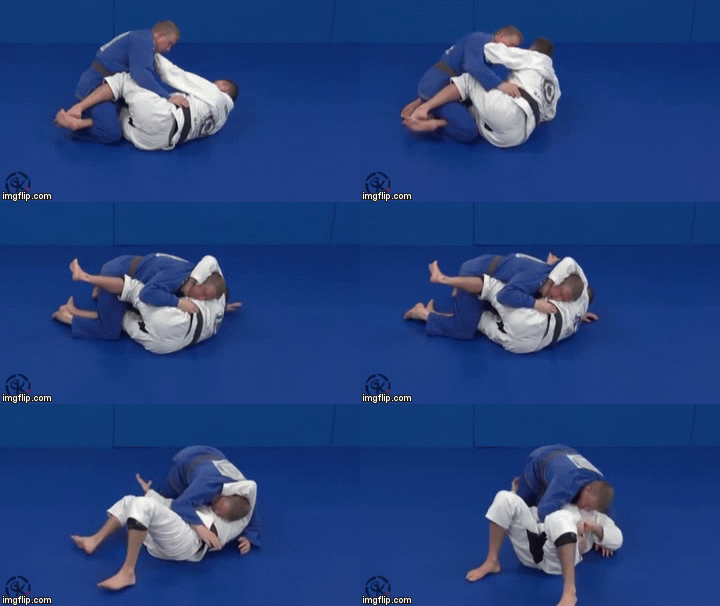
Half Guard Submissions - Loop ChokeFirst choice of a choke from the bottom half guard? The loop choke. This Gi choke is perfect for baiting people into coming toward you in order to pass. A sneaky collar grip makes the entry rally easy. Once you lock the other arm behind the neck, everything is pretty much over. A thing to remember is to place the forearm of the second arm as near the crown of the head as possible. This will make your loop chokes feel like an anaconda squeeze.

Top position half guard submissions mostly come in the form of Guillotines and front headlock ones. Here’ the guillotine is the best move to use. You can hit it from top and eve from the bottom. Moreover, you can use it to pass the guard at will. All you need to do is place a knee ins the opponent’s hip and go for that headwrap grip. From there on, it is smooth sailing if you’re patient.

Finally, an unusual choking option that you can easily pull off from both bottom and top half guard. The Ezekiel choke is a very effective weapon and is one of the most used half guard submissions form the top. Well, you can now do it from the bottom as well. If you’re using any sort of tight, clamp-style hip control, like the Lockdown, for example, you’ll be able to catch Ezelikes not only form the bottom but also without the Gi as well.

Arm locks

My personal favorite half guard submission from the bottom is the inverted armlock. There’s something about the half guard that makes people extended their arms, giving away submissions. The inverted armlock is right there for the taking any time somebody attempts to establish a cross-face. Simply catch the arm at the elbow, extend your hips and place pressure on the extended arm for a quick and very annoying tap. Works every time.

The Americana from top half guard is a real classic when it comes to half guard submissions. The far arm is the one you want to attack, and the goal is to simply place the Americana grip on. You can even do ti with the head trapped, ina catch wrestling style. Or, you could just finish like you would any Americana lock.

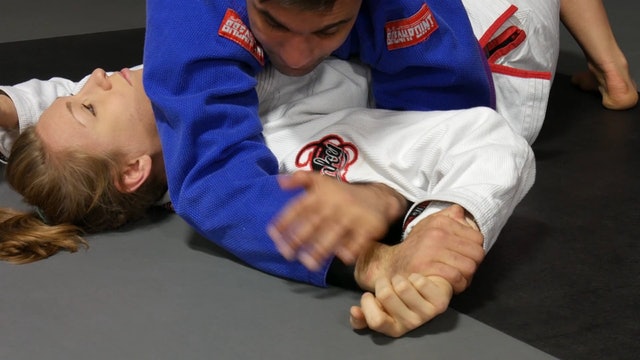
Half Guard Submissions KimuraThe Kimura is probably the best bet to hunt for, though, when it comes to half guard submissions. It works form the top, it works from the bottom, it works as a trap system to help you achieve other objectives… Whatever you choose to do, from half guard, top or bottom, just grab a Kimura. At the very least you’ll get a quick tap.

Leg Locks

Speaking about leg locks, I’ll only use high percentage moves, which, of course, means going to Ashi Garami before doing any actual leg locking. Half guard variations come in handy here, like for example the butterfly half. That hook will allow you to achieve elevation, which in turn opens up Ashi Grami entries of your choice. A straight Ashi Grami on the free leg is the highest percentage scenario, though, Form there on, finish with any lock you want.

One of the best entries to an Ashi Garami is getting to the Inside Senkaku / 411 position from top half guard. This is one of those half guard submissions that take you away from the half guard for a second, only to open up both submission and passing opportunities. Whenever you’re battling a really tight half guard, a simple backstep will take you over the leg and straight int an Inside Snekaku / 411 position. From there on, you can have your pick of submissions or simply pass.

Weird Half Guard Stuff
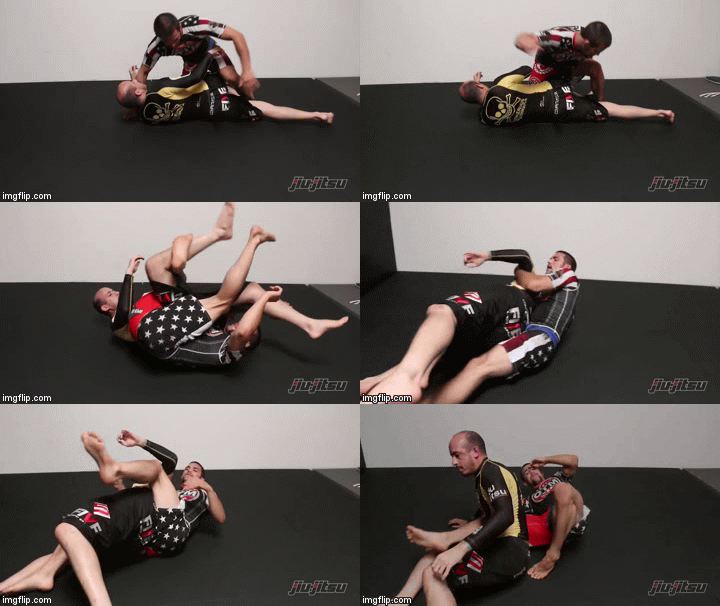
Half Guard Submissions: Rolling back takeYup, this is an article about half guard submissions, so I have to throw in a few things that are not as straight forward as the subs above. The first one is rolling back takes. The half guard top position is actually a great spot to hunt for back takes. The less conventional approach, though, is the one that will yield the best results. The tighter the opponent is squeezing their legs, the easier it is for you to place your shoulders on the ground and do a Granby roll. A back take or the Truck position will pop up immediately.

Neckties are also some of my favorite half guard submissions. While the most famous Peruvian necktie doesn’t really work form there, others, like the Japanese and German neckties, for example, do more than admirably. These choke-cranks will surprise anyone, and the best part is that they work because you’re located in half guard. If an opponent lets you pass you actually have nothing.

Final Words

Half guard submissions are one of the main reasons why the half guard is such a favored position among grapplers. In that sense, the position offers extreme versatility, plus it offers you the chance to chain submissions together, to use them to pass and/or sweep. The best part is, that even if you sweep or pass someone from a submission attempt form half guard, in most cases, you’ll be able to actually finish the submission form top position. So, whatever submission you get a hold of from half guard, do not let go!
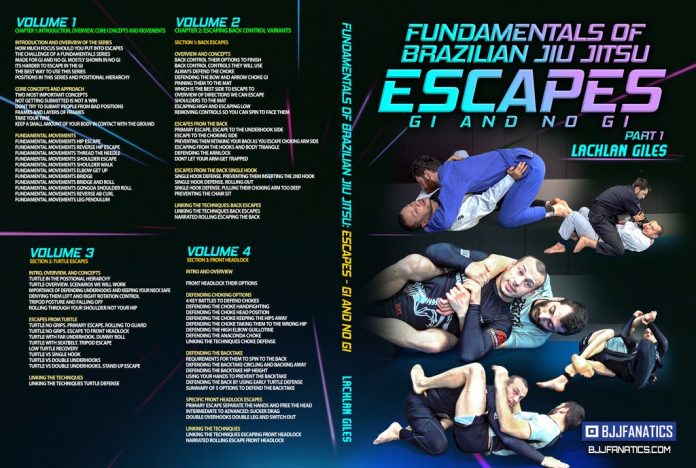
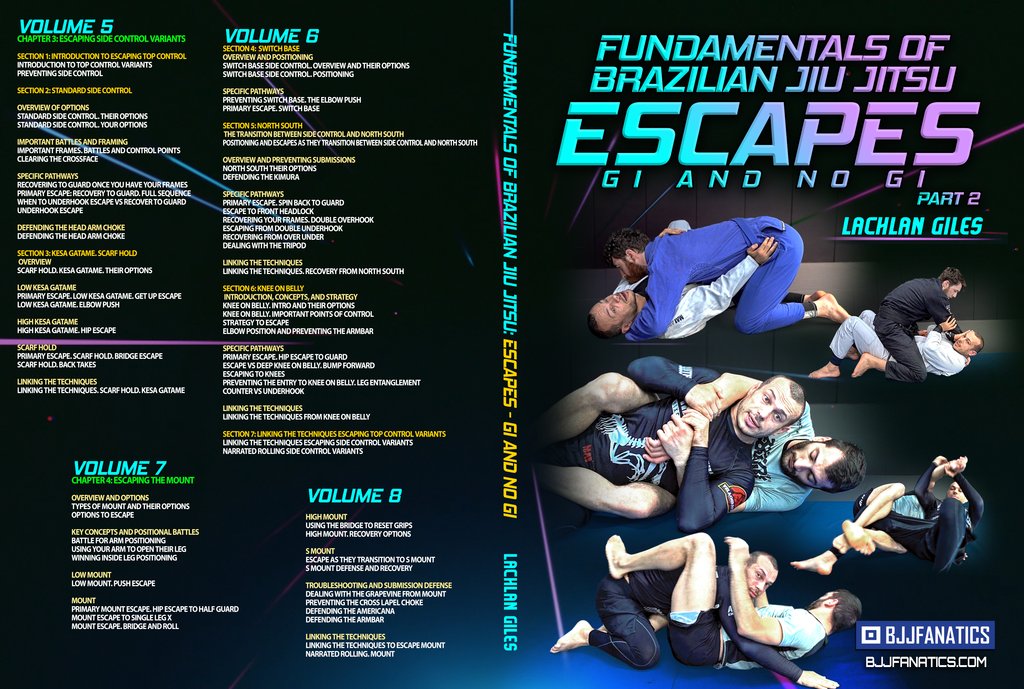
Lachlan Giles DVD Review: Fundamentals Of BJJ Escapes Gi And No-Gi

Lachlan Giles DVD Review: Fundamentals Of BJJ Escapes Gi And No-Gi

Lachlan Giles is back with another DVD instructional. The Australian sensation is already a well-established coach and the man behind some of the best BJJ DVDs in existence. His leg locks DVD is one that any grappler should own. particularly after his impressive ADCC 19 display. That said, Gules is much more than just a submission artist. he has an airtight overall game and is a master of everything, including escapes. His latest instructional is all about escaping, titled ‘Fundamentals Of BJJ Escapes Gi and No-Gi”. As usual, we have the very first Lachlan Giles DVD review of his brand new instructional.

ON SALE HERE:
Lachlan Giles – Fundamentals Of BJJ Escapes Gi And No-Gi

NEW Lachlan Giles DVD Review: Fundamentals Of BJJ Escapes Gi And No-Gi
Techniques list

There’s something that sets Lachaln GilesDVDs apart from others. It may be his highly entertaining character, or the way he teaches, or his groundbreaking concepts. I really can’t put my finger on it. Whatever it is, Lachlan is the man to turn to for anything BJ related. Particularly when it comes to  No-Gi. Well, the man is just as versed in the Gi, and his latest “Fundamentals of BJJ Escapes” instructional is unique in bringing the two together. Check out the detailed Lachlan Giles DVD review below if you’d like a sneak peek into what you get in this DVD.

Beware Of The Quiet Small One

Lachlan Giles didn’t really burst on the scene right away. People knew who the Aussie was mostly due to his str student, Craig Jones. However,  after seeing some youtube clips of Lachlan teaching, the BJJ world did start paying more attention. A few DVDs followed soon, confirming that the small Aussie is just as innovative in his approach as John Danaher. Moreover, he also has a knack for explaining things in terms that people can easily understand and incorporate in their own game.

Lachlan started BJJ at 15 and got his black belt in 2012. Soon after, he started teaching at Absolute MMA in Melbourne and the rest is, well, history. Lachlan himself is no stranger to competition, having won the UAEJJF continental pro, the IBJJF PAn-Pacific in both gi and No-Gi, as well as the ADCC Asia and Oceania trials.

To be honest should’ve been a huge warning sign to everyone in the ADCC 2019. Lachlan did lose his first match in his weight division. he came back with a bang, though, submitting +99 kg champ Kaynan Duarte, along with heavyweights Mahhamd Aly and Patrick Gaudio to get bronze in the ADCC absolute division. The thing that not many noticed si that he was rarely in danger during his competitive effort at the ADCC. If you want to learn why check out the detailed Lachlan Giles DVD review of his Fundamentals Of BJJ Escapes instructional.

Escaping Is An Art

Offense is the best defense, people often say. However, if you read Sun Tzu or any other great strategist out there, you’ll learn that in war there are no absolutes. the same holds true for any BJJ battle, whether it is a match or just a friendly roll. So, when the offense doesn’t really work, and you find yourself stuck, which in BJJ will most certainly happen, you’ll need to know ways out of bad spots. the great thing about Jiu-Jitsu is that there’s always a way out.

Lachlan Giles DVD Review: Fundamentals Of BJJ EscapesEscapes are an art form of their own inside the Gentle Art of Brazilian Jiu-Jitsu. Being able to escape requires much more than just being able to replicate a few moves. Escaping has a lot to do with timing, precision, and understanding of positions. As such, you need someone really experienced at teaching to explain it. However, if you manage to understand BJJ escapes, and develop a foolproof system, ou can be certain to win just about any exchange you get into. Or, at least, not lose a grappling exchange. the idea is that if you can get out of anything safely, you can go and do your own attacks.
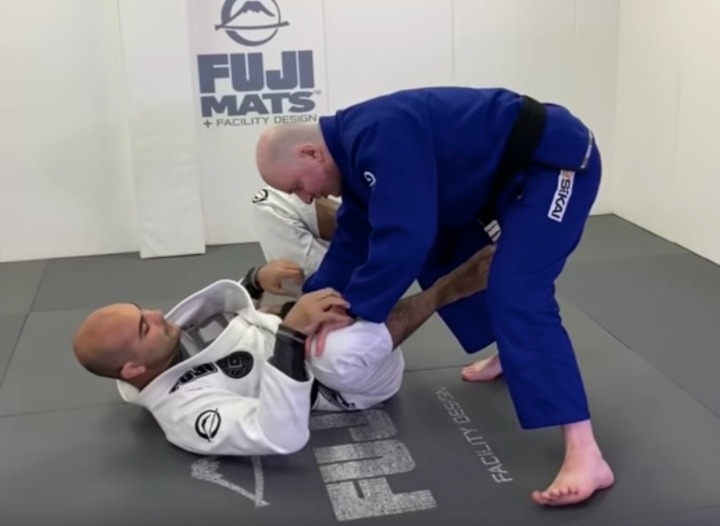
“Fundamentals of BJJ Escapes” by Lachlan Giles will provide you with the toolset to do just that. Read our full Lachlan Giles DVD review to see what you’re getting in this instructional/.

Fundamentals Of BJJ Escapes Gi And No-Gi FULL Lachlan Giles DVD Review

As we’ve come to expect, this Lachlan Giles DVD features eight volumes. that, once again, brings the total duration of his instructional to well over 10 hours. Fundamentals Of BJJ Escapes Gi and No-Gi is a unique blend of a system of Jiu-jitsu escapes. Apart fro featuring Lachlan’s own original philosophies, the DVD manages to bring together the similarities and differences when it comes to escapes in the Gi and without it. it is safe to say that none other BJJ DVDs have managed this before.

As you’ll see in our Lachlan Giles DVD review the instructional has 8 volumes, and they start with the core concepts of escaping and the fundamental movements. He goes on to address the toughest position first – back control. Turtle, front headlock and side control escapes follow before the escaping mount rounds things off. Let’s go chapter by chapter.

Volume 1: Fundamentals

In the first volume of this instructional, Giles covers his philosophy of escaping. he talks about things like how much time you need to put into escapes, as well as the challenges of being as good in escaping with the Gi as you are without it. he also has a very interesting take on why Gi escapes are harder. before he moves on, he also shares the best way to use his Fundamentals Of BJJ Escapes DVD.

Following are his core concepts and the fundamental movements. He starts off with the two most important concepts, before moving on to a key concept. that is the notion that not getting submitted does not equal a win. he also talks about not attempting submission from bad positions, before sharing his knowledge on frames and timing.

The first volume wraps up with a section on fundamental movements like the hip escape, bridge, leg pendulum, etc. There are a total of 11 fundamental movements Lachaln covers here, and they are literally everything you’ll lever need to escape any BJJ position.

Volume 2: Back Escapes

As you’ll notice in this Lachlan Giles DVD review, the DVD is organized in four main sections. The first is bout core concepts, and the second about back control escapes. however, it extends well past the second volume, encompassing the turtle and front headlock as extensions of the back position.

That said, part two begins with an overview of the position, and ways to address back escapes from a conceptual standpoint. He talks about what opponents are looking for, before offering ways toge out of back control. And it all starts with defending the choke, the most important part of it all. Stuff like the best side to scape to, and pinning the opponents to the mat, as well as other crucial concepts, are right here on this disc.

However, Lachlan doesn’t just cover back escapes. He covers ways to fend off follow-ups like armbars and rear triangles as well. Moreover, he does offer different ways of escaping at different stages of back control, like signal hook back control. Wrapping up is a portion on how to put all the information together, as well as a few narrated rolls

Volume 3: Turtle Escapes

In the third portion, Lachaln goes on to cover the turtle position. This is still a part of the back escapes series, as the turtle is one of the spots you might end up before or after facing back control. I really loved Lachlan’s take on the turtle and where it stands in the positional hierarchy of things. Again, there are key concepts here, like defending your neck and keeping hooks off.

The way Lachlan organizes the escapes in this volume of his “Fundamentals OF BJJ Escapes” DVD is in stages. The first is when the opponent has no grips. The second is when they have far underhook, then a seatbelt and then, escaping with one or two hooks in. Again, a portion linking all the escapes together marks the end of this volume.

Volume 4: Front Headlock Escapes

The final portion of the back escapes section is dealigned with the front headlock. Once again, the options the opponents have to kick things off. Following suit is hand fighting, which is the most important part of dealing with the front headlock, according to Giles. From there, he offers different routes out, based on some of the fundamental movements outlined in volume 1 of this Lachaln Giles DVD review.

A cool transition si that of defending back attacks that start in a front headlock. this is definitely something not many people have addressed before. Once again, the fundamental movements like hip heisting and circling away are integral to executing successful escapers.

A few specific headlock techniques, with the “sucker drag” being my favorite bring this volume to a close. Of course, there’s the mandatory chapter on linking it all together, as well as some more narrated rolling.

Volume 5: Side Control Escapes

In the fifth volume of Fundamentals Of BJJ Escapes Gi and No-Gi, we arrive at the side control escapes. Lachlan starts with side control variations, and the different threats they present. As usual, there’s an analysis of the opponent’s options vs. your options. Frames and hand fighting battles make up for most of the opening chapters as does some key advice on dealing with the crossface. Lachlan Giles DVD Review 

From there on, Giles goes on to explain how and when to escape. Solid frames can open up guard recovery for you, or direct reversals. An escape from the head and arm choke also feature here, as do several options of beating the Kesa Gatame position. The categories here are low and high Kesa Gatame, each with its own respective escape directions. Linking the techniques, as always marks the end of the volume.

Volume 6: North-South & Knee On Belly Escapes

This is a continuation of the previous volume. Still, on the subject of side control escapes, Giles goes on to explore other side control variations. The dreaded North-South makes and appearance, with several innovative ways of getting out. The majority of this volume refers to the North-South, dealing with positions, progressions and most common submission threats. Before it, though, there are several chapters on people switching base in side control, and how you should address that.

Wrapping up both this part of the Lachlan Giles DVD review and the volume is a section on the knee on belly escapes. This is what really got my attention and I have to admit, Lachlan has finally hacked it. He offers crazy new concepts of addressing the knee on belly, and they all seem to be working perfectly. Unfortunately, there’ no way to test them for now, until the Covid-19 quarantine is over.

In any case, escape in all directions, specific pathways, getting to leg locks and linking everything together makes up the knee on belly escape system. Of course, narrated rolls bring things to a close.

Volume 7: Low Mount Escapes

This is where Lachlan addresses the mount position, in the fourth and final section of this DVD. Once again, in order to cover all variations, his escapes extend to two volumes of the Fundamentals Of BJJ Escapes Lachaln Giles DVD. Types of the mount, basic hand fighting, and options for both grapplers open this volume up. Interestingly, there’s also a lot of leg fighting there, organized in a way never before seen.

The resto fo this volume covers the low mount position and every attack that might come out of it. From the push escape to getting out into different guards, Lachlan offers some great new perspectives on classic escapes here. his go-to guard sare the half guard and Singel leg X guard. Before wrapping up, Lachlan also covers the bridge and roll escape in extreme detail.

Volume 8: High Mount Escapes

As we draw our Lachlan Giles DVD review to a close, we do so by learning how to get out of the high mount position in the final volume. The very first chapter offers a great concept of using the bridge to recover positive grips.  I really loved the portion on S-mount escapes, as that is definitely the hardest mount variation for me to deal with.

There’s a huge chunk in this final volume on resisting submissions from the mount. The Americana, armbar and cross collar choke all feature. However, the star of the show is the grapevine escape, which is extremely easy to master and will work on anyone! Lachlan Giles DVD Review 

One final time in this DVD Lachlan links everything together and offers a few more narrated rolls to put things into perspective.

Conclusion

The “Fundamentals OF BJJ Escapes Gi And No-Gi” is the first DVD you should pick up, and truly master while having to spend time stuck at home as a result of the Covid-19 outbreak. Given that the instructional has over ten hours of material, you’ll have something to do until the quarantine is lifted. In the meantime, sue this Lachlan Giles DVD review a guide to watching the DVD and knowing what to expect before you even acquire it.

ON SALE HERE:
Lachlan Giles – Fundamentals Of BJJ Escapes Gi And No-Gi

NEW Lachlan Giles DVD Review: Fundamentals Of BJJ Escapes Gi And No-Gi
Techniques list

Passing The Guard Danaher DVD Instructional – Detailed Review

Passing the guard Danaher DVD INStructional Review

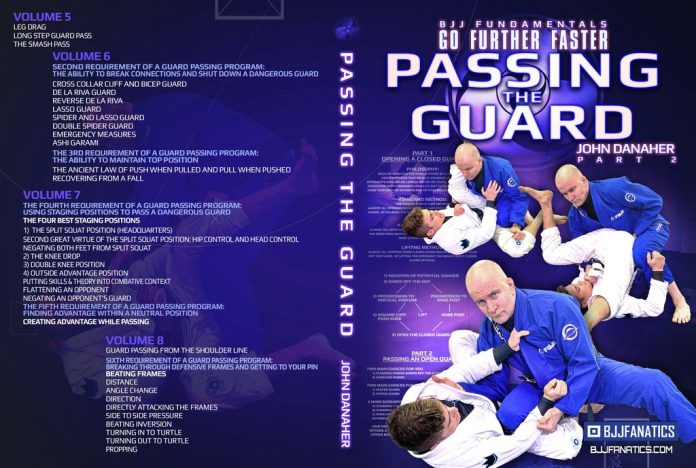
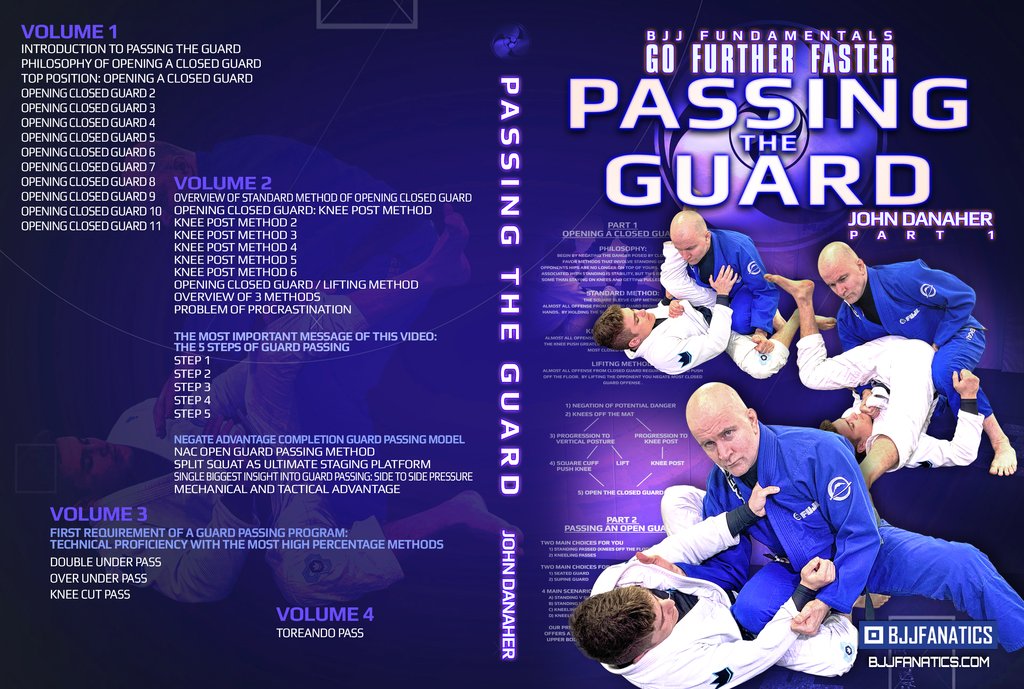
I love leg locks and front headlocks just like the next BJJ guy or girl, perhaps even more. However, I have been waiting for a John Danaher DVD on passing the guard ever since he first started issuing them. Of course, there was none of it in his submission orientated No-Gi series. In the Gi series that is still not complete, Danaher certainly took his time delivering on such an instructional, That said, the Go Further Faster: Passing the Guard Danaher DVD Instructional went live yesterday, which is long overdue. Luckily I had the chance to sneak a peek earlier for a review.

ON SALE HERE:
John Danaher – Passing The Guard

Passing the guard Danaher DVD Instructional
Techniques List


Gi or No-Gi, you can’t argue that John Danaher’s methods work. He is weird and unusual in his approach but the results of his students speak volumes. It is not just Gordon Ryan – every grappler who has dedicated to training full-time with Danaher has achieved incredible results. His systems work, as long as you have the patience to study them. As usual, this Passing the Guard Danaher DVD instructional is a 10hour long, 8-volume set that will have you occupied for months. What you’ll get in return though is a foolproof formula for passing any guard that any opponent decides to play against you. I’ve only gone through the entire DVD once, but I’d go as far as calling it Danaher’s most groundbreaking one yet.

Go Further Faster Series – DVD Number Six       

I have to admit, I’m not fully immersed in the Go Further Faster series yet. I’ve seen them all, of course, but it did take me by surprise that we’re up to the sixth DVD of the system. Not complaining, of course, but that just means there’s a lot of catching up for me to do once I decide to brush up on my Gi skills. That said, I’m certainly making an exception with the guard passing one.

So far, Danaher has DVDs out on the closed guard, open guard, half guard, and guard retention. He also has a crazy good instructional on how to escape pins and the turtle position. In other words, he covered pretty much every subject when it comes to staying safe and launching attacks from the bottom. So far, though, there hasn’t been anything regarding top positions. Let’s hope that the new Passing The Guard Danaher DVD Instructional will serve as the starting point for more of his future DVDs that will explore and explain how the top game of Jiu-Jitsu is played, DDS-style.

The one thing that I can attest is entirely true about Danaher’s Go Further Faster Series is that it really lives up to its name. If you want to learn BJJ fast, this is the series to get. It will take you time to go through it all, but what you’ll discover is that you become an expert in certain fields of Jiu-Jitsu much faster than your peers. I’m seeing this happen in the academy over and over again, with those that follow the DVDs step by step showing the most impressive results. Currently, I’m taking this brand new guard passing one for a test drive, and I’m loving it!

The Curious Subject Of Passing Guard in BJJ

Guard passing is one of those skills that nobody can teach you. Yes, I really mean that. There’s a reason why every black belt has a different game when it comes to passing the guard. Everyone discovers their own formula that leads to success. Usually, solving the guard passing puzzle has to do with understanding guards and finding a rhythm that best suits you to disengage and pass them. The real challenge, though, is not passing a guard once you develop a system. It is teaching it to others in a successful manner that truly sets a guard pass or a system of passes aside from all the others.

So far, not many professors, instructors, coaches, call them however you want, have been able to truly convey their guard passing skillsets to as many people s possible. At least not with a  success rate at the highest levels. We all know Danaher doesn’t fit this mold, as he’s proven over and over again. However, I had to admit, I was curious as to how he will approach a tricky subject like this. After all, the goal is not just to figure out a guard passing formula that you can pick up fast, but also one that works at the highest levels of the sport, as Danaher often likes to say.

AS I said, I still need to really get a grasp on even the most basic of principles outlined by John. However, If early indications are anything to judge by, we finally might have a solution forth e guard passing puzzle of BJJ. And it is one that you can apply not just to any guard in existence, but also any new guard that might spring up in the future.

Passing The Guard Danaher DVD Instructional Chapter-by-Chapter Review

A John Danaher DVD Instructional has two main characteristics. First, it is longer, and better organized than any other BJJ DVD you might come across. Secondly, it contains information that you’ll find nowhere else. I’ve seen every minute of every Danaher DVD so far, and I can attest to these two things being ever-present in each of them.

The latest Passing The Guard Danaher DVD Instructional checks all these boxes, as expected. It is organized in 8 volumes, starting, of course, with the philosophy of guard passing, mostly regarding the closed guard. A lot of attention goes to positioning and base, as well as the steps that make up a guard pass. Technical details on all of the highest percentage passes follow, covering the Torreando, double and single underpass, knee slice, leg drags, smash pass, etc. All of that falls under the first requirement of guard passing. From there on, Danaher covers 5 more requirements that are certain to get you past anyone’s legs, as long as you follow them correctly.

Part 1 – Closed Guard Passing Philosophy

Opening this Passing the Guard Danaher DVD Instructional is the mandatory introduction to the entire set. I’d suggest you pay close attention to the second chapter, which outlines Danaher’s innovative guard passing philosophy in detail. It will make instant sense, and you’ll wonder why you haven’t thought of some things in that manner before.

The technical focus of this portion, sort of speak, is on the closed guard. Beginning inside someone’s closed guard, Danaher offers his insights into what the top position is all about in this case. He moves on to cover the ins and outs of opening a closed guard, before offering a staggering 12 options to open up anyone’s guard. Suffice to say, I wish I had a cess to all of this knowledge when I was a white/blue belt struggling with the closed guard. Better late than never, though!

Part 2 – The 5 Steps Of Guard Passing

The second volume stays on the track of opening the closed guard. Here, John covers the so-called “standard” method of opening (from the knees). He also clears up the Knee post method, something we’ve all been doing incorrectly, as it turns out. In fact, almost half of this part is all about the knee post method. The lifting method wraps up the closed guard portion, but not before Danaher shares and ultra-interesting concept on procrastinating when passing the guard.

What Danaher himself addresses as the most important message in this DVD, which is Danaher’s groundbreaking 5-step formula for getting past any and all guards. After watching it, I completely agree. I have my own guard passing “understanding” but I have to admit, this 5-step formula makes everything so much better.

Wrapping up si yeat another interesting 4-chapter section covering the Negate Advantage Completion guard passing model. As the name suggests, it is elaborate and complex but makes all the sense in the world. Part two ends with notes on mechanical and tactical advantages.

Part 3 – First Requirement Of Guard Passing

Here’s where this Passing The Guard Danaher DVD instructional really gets interesting. The first requirement, according to John is having a sufficient technical proficiency in guard passing methods. In that sense, he chose the ones that are by far the highest percentage passes in the history of the sport.

The DVD kicks things off with an explanation of the double underpass, in a way you haven’t seen before. And yes, that includes Gordon Ryan’s way of doing it in his own instructional. On the same subject, Danaher also covers the over under pass as well, again, with an understanding that even Bernardo Faria would be jealous of. The knee cut pass also gets attention here, with a special mention of how Danaher sets up in base when executing it.

Part 4 – The Torreando

Unusually for John Danaher, the fourth volume has just one chapter – the Torreando guard. No elaborate principles and mind maps, just one simple chapter. However, watching this particular part of Danaher’s DVD is a real experience like you’ve never had before. The Toreando is anything but simple, but it can be categorized and executed systematically. This Danaher DVD instructional will show you exactly how.

Part 5 – Drag, Step And Smash

The trio of passes that pretty much defines the modern Jiu-Jitsu top game – the leg drag, long step and smash pass. These all fit in together into a mini-system of their own. I’m a leg drag person myself, so this portion of the Passing The Guard Danaher DVD instructional really came as a gift to me. The details there are mesmerizing. The same holds true for the other two passes, especially the long step.

This trio completes Danaher’s take on the first requirement for passing any guard out there. There are seven passes in total that John considers as the first requirement to building any kind of a sustainable and high-level guard passing system.

Part 6 – Second & Third Requirements Of Guard Passing

Part 6 and 7 each feature two of the guard passing requirements of Danaher’s system. This is where everything starts to make sense. So far, Danaher covered things from a technical perspective, demonstrating guard passes and sharing the 5 steps that make a successful pass. From here on, it is more about core concepts and principles that really make passing make sense.

Passing the guard Danaher DVD INStructional Full ReviewThe second requirement is the ability to break connections and shut down guards. The notion here is still that guards are offensive weapons and you can’t just pass them. You should first disable them, before launching your own attacks. Danaher offers examples of different guards and how this strategy applies to them. Some of the guards that feature here are the lasso guard, De La Riva, collar and biceps guard, and others.
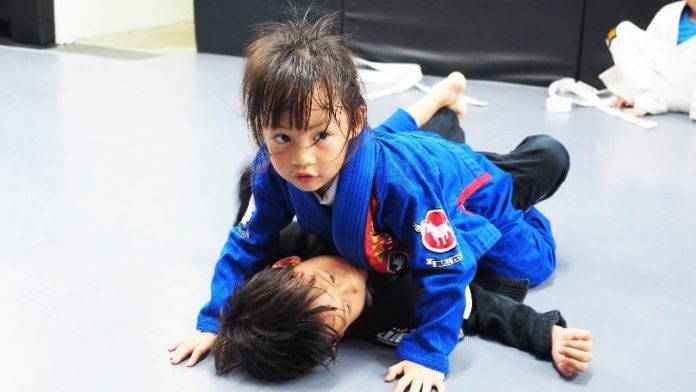
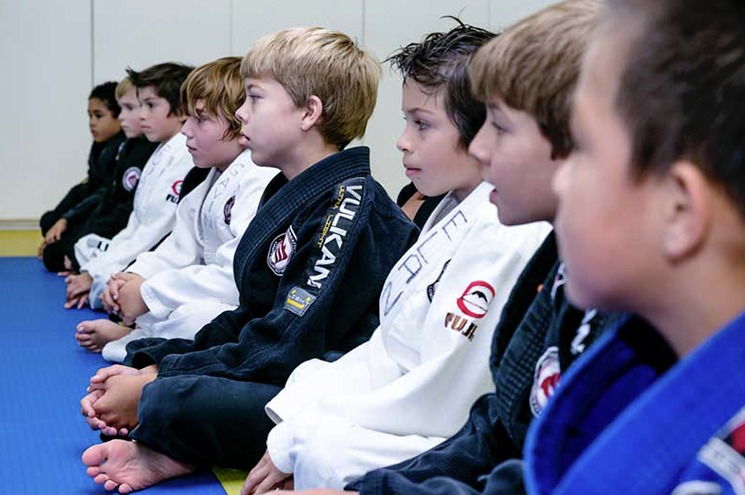
The third requirement has to do with the ability to maintain top position. You won’t pass many guards if you end up going to the ground, despite the possibility of getting leg locks that way. But that, as Danaher says, is an emergency measure. The principle is simple – push when pulled and pull when pushed. A key chapter on recovering from a fall (which his not the same thing as a sweep) wraps this part up.

Part 7 – Fourth & Fifth Requirements Of Guard Passing

Now that technical foundation, ways to shut down guards and top positions are no longer mysteries, it is time to explore staging positions. This is truly a magnificent concept that you can actually apply throughout BJJ, not just in guard passing. It involves the best positions you can use to start a guard pass from, particularly against dangerous guards. The positions include the split squat, knee drop, double knee and outside advantage positions. Setting yourself in one of these will immensely increase your chances of completing a pass.

The fifth requirement is something that I guess will take more time than anything. It is one of those concepts that requires not only practicing, but trying in rolling as well. The idea is that you should be finding advantages that lead to passes every time you’re in a  neutral position. Innovative, logical and something I’m yet to give a try. I guess it’ll take some time.

Part 8 – The Final Requirement

Wrapping this Passing The Guard Danaher DVD Instructional up is the sixth and final passing requirement. It takes place after you pass the legs and you’re up against the final defensive layer – guard recovery. This usually involves the opponent using frames f different varieties while attempting to recover guard.  In other words, this is the DVD on beating frames you’ve always wanted but never really got.

Once again, this is a full-blown, typical Danaher volume full of nothing but principles. However, presenting them at the very end ties everything together in a very logical manner. Everything you’ll ever need to know about angles, direction, pressure, dealing with inversions and turtled up opponents is right here. Out of all the volumes, this one is my favorite by far.

In Summary

As I said, we’ve come to expect a lot from a Danaher DVD Instructional. He never stops delivering and did it once again with this Passing The Guard Danaher DVD instructional. I guess we can call one of the most difficult subjects of BJJ resolved, given the amount of information and perfectly structured system in the instructional. As far as I am concerned, I noticed changes in the way I approach guard immediately. It’ll take a lot more test driving, but I have a feeling this system is here to stay. Time to see what guards will be born now, in an attempt to beat this crazy new system.

ON SALE HERE:
John Danaher – Passing The Guard

Passing the guard Danaher DVD Instructional
Techniques List

The Jiu-Jitsu Belt Ranks For Kids Fully Explained

Explaining Jiu-Jitsu Belt Ranks For Kids

In nearly 20 years spent teaching kids martial arts, including BJJ, I can claim with certainty that there’s hardly anything better a kid can do than train Jiu-Jitsu. Physically speaking, it may only be second to gymnastics for kids, particularly young ones. However, in an overall sense, BJJ beats any physical (and many mental) activities a kid can do. Particularly in this modern age. Kids simply love it as well, making it the perfect combination. What they also love are the belts and stripes as well, which are different than those with adults. Let’s see how these Jiu-Jitsu belt ranks for kids actually work. 

The belts really do make Jiu-Jitsu more interesting. They’re a huge deal, even among adults. To kids though, they mean the entire world. Stripes, for example, can make kids the happiest people alive. Getting their next belt, is a life-changing event for them. And it should be the Jiu-Jitsu belt ranks are there in order to provide a much-needed structure for kids. They represent much more than just a BJJ rank and help teach them very valuable lessons in a unique way.

Brazilian Jiu-Jitsu For Kids       

Kids Jiu-Jitsu Belt RanksKids’ BJJ classes are one of the things in my life that I plan on doing as far as I am capable of. I’ve taught Karate and a bit of Judo for about a decade before starting to do the same with BJJ. What Jiu-Jitsu has to offer is everything that other martial arts have. It offers a very solid foundation for kids to learn about structure. However, as opposed to traditional martial arts, the structure of BJJ is pretty flexible.

It will teach kids discipline, passion, courage, respect, and other huge lessons. However, it will do it In a less rigid way, compared to other sports. Moreover, it encourages critical thinking on a different level than any other educational system out here, including the school system. Jiu-Jitsu teaches kids to embrace their individuality and use it to their full potential. At the same time, it is successful at making kid team players and helps them build strong friendships and social bonds. They will also learn the lesson of progress and perseverance through the Jiu-Jitsu belt ranks.

On a more physical note, Jiu-Jitsu will help any child develop properly. Classes are organized not just in a way to teach them techniques, but also feature lots of movement and coordination drills, spatial awareness, and other physical aspects that are forgotten nowadays. Of course, there’s also the self-defense aspect, with BJJ being the number one way of helping kids deal with bullying. Plus, there’s the added value of teaching kids how to play – something we don’t see as often as we should from them these days.

The BJJ Belt System

Jiu-jitsu has a slightly different system than other martial arts. Between the white and black belts, there are only a few belts as far as adults are concerned. The roots of the belt system are still in Japanese Judo, but some belts are missing. In fact, the Gracies initially only wore white and blue belts, blue marking the advanced students. Even Japan had a single or dual belt system in the past, for Judo.

The modern way of awarding multiple different colored belts has to do with the spread of Judo throughout the western world. Instant gratification is what most westerners are after, so Judokas decided to give it to them by introducing colored belts n addition to the white and black they had. BJJ has a system that is based on this evolution of the Judo belt system.

In BJJ, you don’t get a blet by demonstrating techniques. There are some gyms that do it, but in general, belts are earned by working every training. The way you get promoted is you get called out in front of everyone, and your instructor wraps a new belt around your waist. It is immensely more rewarding and motivating when done this way than when you’re doing a test. Now imagine if adults are so happy, how ecstatic the kids are when they go up through the Jiu-Jitsu belt ranks.

How The Jiu-Jitsu Ranks For Kids Work

The JIu-JItsu belt ranks for kids include many more colors and variations of blets than the adults. Even more so, there are also more stripes involved. This allows kids to make visible progress on a regular basis which is huge for them. Waiting for a year to get a promotion is a long time, even for adults. For kids, that’s eternity. Instead, the kids’ Jiu-Jitsu belt ranks work by offering them incentives and reward on a much more frequent basis than adults, that is the reason there are so many variations of the belts and stripes for kids.

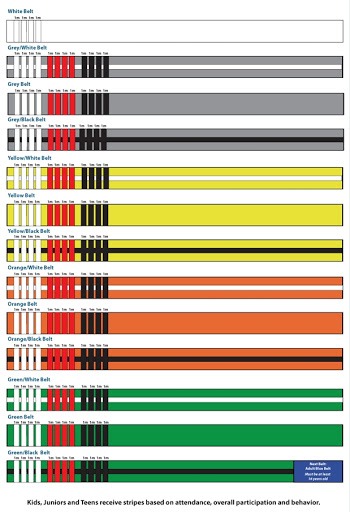
Kids Jiu-Jitsu Belt Ranks listIn the kids’ Jiu-Jitsu belt ranks, there are 13 belts in total. The white belt is the same as in adults, there’s just one more stripe with 5 being the total number The final one is red, setting it apart from the classic white ones. Following the white are grey, yellow, orange and green. However, each of them has three variations of the belt color, making them 12 in the ranks. The first in each category has a horizontal white line running the length of the belt. The second one is plain colored, while the third has a black stripe identical to the white one. In other words, there’s white to black in each of the kids’ belt ranks.
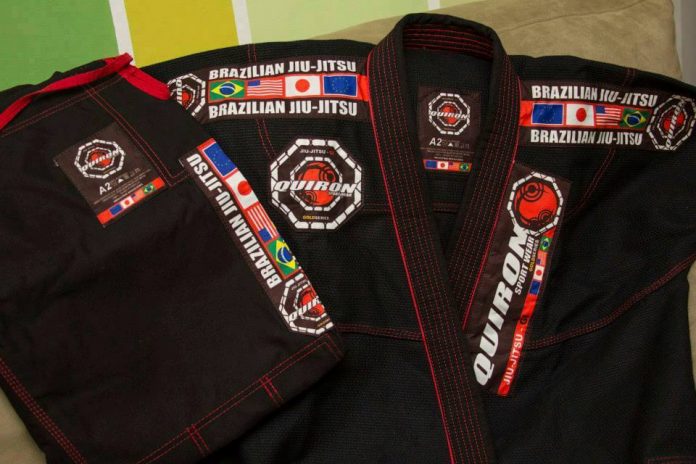
In terms of stripes, after the white belt kids need 4 white stripes, 4 red ones, and 3 black ones to get the next belt. That provides lots and lots of motivation and allows for promotions to be held way more often. In turn, kids get to visually measure their progress and learn that hard work will get them up the ladder in a very quick time. The whole system works, and when you understand why there are so many belts and stripes it makes even more sense.

Conclusion

The kids’ Jiu-Jitsu belt ranks only help Brazilian Jiu-Jitsu kid’s classes become more efficient in their goal – raise kids to be successful adults. Look at BJJ classes as part of the educational process rather than just sports. There is a lot that kids will learn in JIu-Jitsu, that they can’t really learn elsewhere, at least not at an early age. And not, the large number of belts is not there for any selfish reason. It is there for the kids.

Related Articles:

Brazilian Jiu-Jitsu Belts Explained: The Ultimate BJJ Belts Guide
What Is The Best Age For Kids To Start Jiu-Jitsu?


Types Of BJJ Gis You Need To Know

Types of BJJ Gis

One of the defining characteristics of Jiu-Jitsu is the BJJ Gi. While Kimonos are used in a number of different martial arts, the BJJ Gis are definitely different. In the early days of the sport, competitors started putting patches on their Gis to make them stand out. The Gis back then were Judo style Gis which, along with this customization, gave birth to the modernBJ jGi. From there on, certain modifications were made until the finished product we all wear today emerged. Nowadays there are different types of BJJ Gis that you can get, and they’re not all best suited for any occasion.

While I’m a No-Gi guy myself, I definitely train in the Gi. A lot. Throughout the years. I’ve figured out my Gi preferences and now I know where I stand – the lighter the Gi, the better. However, this realization didn’t just come to be. I spent a lot of time experimenting with different types of BJJ Gis. I’ve tried different colors, different weaves, and materials, different cuts and uses. The fact remains, you’re going to need more than one BJJ Gi, and you will need at least a couple of different types if you’re going to train Jiu-Jitsu full time.
What Are You Looking For In A Gi?

BJJ Gis have certain requirements that they have to fulfill. One main thing is longevity. BJJ Gis does not always come cheap, meaning that you can’t just buy another one every couple of months. That said, a Jiu-Jitsu kimono will definitely have to be able to take some abuse. In just about every moment on the mats, a Gi gets pulled, tucked, twisted, etc. This goes on and on as you train, so it is no wonder that sturdiness and resilience area main gi properties. The Gi weave, and, to a certain extent, the material, play the key roles in this department.

Apart from a long life, the next aspect of a BJJ Gi should be intended for use. Training is easy – you can go about it in any Gi out there if academy rules permit it. However, competition is different and if you are also a competitor, you’ll have considered that when you’re choosing your Gi. Three are certain color, style, cut, etc, limitations when it comes to Gis that are acceptable in tournaments. Of course, this is not the case in every competition, but in most of them, run by the major promotions, there’s no way around it.

BJJ GisFinally, you have your own personal preferences. Do you want to wear a Gi that has different colored pants and a jacket? Or maybe you want the heaviest gi out there, for some reason known only to yourself. There are also all the nutty Gi designs out there that are certainly eye-catching, to say the least. Whatever the case, as long as you know the different types of BJJ Gis, you can easily make a smart decision that‘ll tick all the boxes when it comes to Gi preferences and purpose.
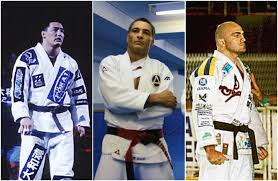
The Common Types OF BJJ Gis

By types of BJJ Gis, I do not mean the Gi designs per se. In terms of design, we can go on and on, as there are hundreds of different variations out there. Instead, types refer to the material, cut, style and purpose of GIs. And the one characteristic that plays the most important role is the Gi weave.

The weave refers to the way in which the Gi fibers align to form the Gi. In most cases, this mostly refers to the Gi jackets, as pants mostly come in a rip-stop version. The weave determines the strength, and in many cases, the weight of the Gi. The general options, in order of strength, are single weave, pearl weave (the most common), gold weave and double weave. Ther are also some modern and new weave,s like the diamond, etc, but they don’t seem to offer many new properties.

The weave also determines how heavy a Gi is, which is measured in ‘Grams per square meter” or GSM. The usual range is between 375 and 890 GSM. There are, of course, lighter and heavier Gis at the appropriate ends of this spectrum.

Training Gis

Not many of you would start competing without some actual training, so this is the first category of BJJ Gis we’ll talk about. In training, the most important thing is that you’re comfortable. You’ll spend most of your time training, so you need a multi-purpose Gi for that, particularly if you’re just beginning with the competition. A training Gi should be long-lasting, tough, and fit you snugly. Apart from that, you can go in whichever way you want in terms of color or GI design, as long as that’s all right in your academy. A single or pearl weave Gi is the way to go here, or even a lightweight one if you’d like to really go for comfort.

Beginners Kimonos

As a beginner, you’ll most likely come in completely confused when it comes to buying your first Gi. While the resident Gi geek in the gym will most certainly be able to help you, you can also keep things simple. Go with a single weave and rip-stop pants and you’ll do just fine. Moreover, these types of BJJ Gis are usually the cheapest, so if you decide the sport is not for you, at least it won’t cost you a fortune. The downside is that these Gis are not the best when it comes to how long they’ll last. Stitching can also be dodgy, but for a first Gi, it’ll do just fine. It may even serve in your first couple of tournaments as well.

Oh, and if you’re unsure of the color, just go with a white Gi. You can always upgrade later on.

Competition Gis

This is where you’ll really need to be careful with your choices. A competition Gi is something you can wear for training, but in most cases, dedicated competition Gis only comes out when it’s time to put your BJJ to the test.

First up, know the Gi requirements of the tournament(s) you’re competing in. That usually means you’re down to blue, black or white color. In terms of designs, how much weight you cut will certainly influence how heavy a Gi you choose. Weigh-ins take place with the Gi on, be mindful of that. The weave is huge here, nut just for weight but also for an advantage. If your Gi is hard to hold, you’ll have an easy time dealing with grips. A pearl or gold weave is the way to go here and make sure the cut fits your body type. The better the fit, the better the performance.

Don’t expect a good competitor Gi to come cheap, though. It will last longer and most likely be of exceptional quality, plus you can wear it for training as well.

Lightweight

A lightweight Gi is not for everyone. If you’re like the standard pearl weaves and heavier BJJ Gis., you’ll probably feel strange in one. At first. These weigh less than the usual Gis and take up less space.

Lightweight Gis are usually 1005 cotton and feature lighter, simpler weaves. As expected they score sky-high on comfort and performance but do not last as long as heavier Gis. Competition-wise, you can wear one, but you might find it hard to stir grips off. Plus, competing in a lightweight Gi just means you’ll have it tear quicker. Perfect for training, though, particularly in hot weather conditions. Dries quicker than heavier BJJ Gis as well.

Backup Gis

This is where you can have fun with different types of BJJ Gis. If you already have your training, competition and perhaps even travel Gis sorted out, you can look into a backup GI. Once again, if it is a backup Gi for both training and competition, choices are limited due to rules and performance requirements.

However, in most cases, a backup Gi is just one more Gi that you’re going to use sparingly. My take on this is to experiment. You can go to the extremes here, given that you already have enough Gi types for specific occasions. Plus, you can train in any type of Gi out there. Extra-heavy double weaves, diamond weaves, extremely lightweight Gis, crazy designs – they all fit in this category.

Travel Gis

Intersting BJJ Gi typesThis is where you go illegal – at least when it comes to competition. Ultra-lightweight Gis are certainly innovative in terms of weave – often times they have none. I have a couple that have a jacket made out of ripstop material, like that of BJJ pants. There’s noo denying they’re lightweight, and they are much stronger than they look. However, Gi’s like this are only good for training, as you can’t wear them in competition. For a frequent traveler that likes o train, though, they’re perfect. They’re easy to fit anywhere, fry off in no time and will actually last you quite a long time.
Unusual BJJ Gis

Finally, a bit of fun. These types of BJJ Gis come in all possible designs, but they also often feature crazy material. Premium Gis, custom Gis, some limited editions Gis all feature here. I guess they could go into the backup gi category, but they’re only for training. They’re mostly gis you show off in, and they’re often really really expensive. Wil last nearly a lifetime, though, as most of them are ultra-high quality.

How Many Gis Do You Need?

The question every Gi grappler gets asked on a daily basis. It is also a question that has no real answer, although everyone would most likely like to answer with “more”. In all seriousness, consider hygiene first when you’re trying to figure out the ideal number of Gis. Even if you’re a beginner, training more than three times a week means you need at least two Gis. And yes, you need to wash your Gi after each and every training session.

In terms of tactical preparation, a couple of training Gis (different colors), a competition Gi and a travel gi are the bare minima. I’d throw in a backup Gi in there as well. That’s five right there, which is not a cheap thing to accomplish. This combination of different types of BJJ Gis, though, will have you ready for just about anything from training in your academy, to rolling on an open mat at some summer resort you decide to visit.

Final Words

If you train with the Gi, you’ll end up collecting Gis. Knowing what you need will make the selection process easier. Once you have all the minimum required types of Gis, you can go and have fun. Widen your collection to include everything you’re interested in giving a try. After all, there are new designs and even types of Gis coming out every week! Make sure you check out our best BJJ Gi section to find the gi that suits you.

Oil Wrestling In The Balkans – A Century Old Tradition That Still Exists

Balkans tradition: Oil Wreslting Comeptitions

Do you know what was common for Asia, Europe, and Africa for more than 5 centuries? They all had areas that were under the control of the Turkish Empire, also known as the Ottoman Empire.  An Empire can by no means sustain itself for centuries if it is not run efficiently and adaptibility. One main characteristic of the Ottoman Empire was creating a blend of cultures.  They brought their own culture over to the places under their rule, but also adopted select parts of local culture. As the superpower they were they brought various benefits to governing countries in cultural terms. The age-old tradition of Oil Wrestling is one such cultural aspect that has managed to linger even a couple of centuries after the Empire was gone.

Origins And Rules Of Oil Wrestling

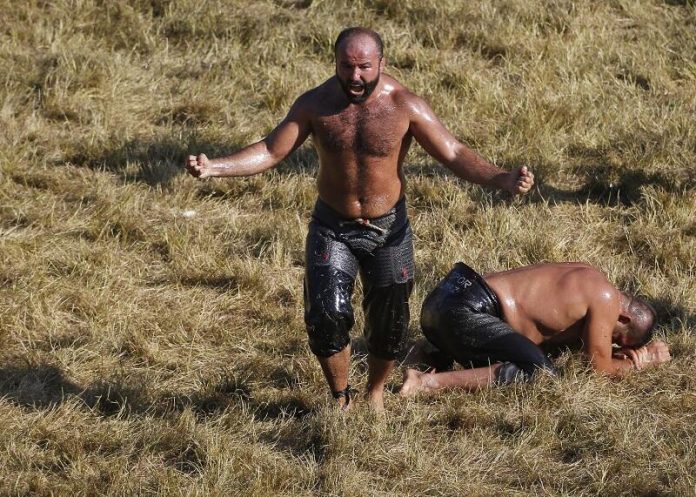
Turksih Oil Wreslting Oil wrestling can be traced back to the Perisan Empire, when wrestling was used for combat rather than a sport. This tradition spread across all Islamic countries along with other aspects of Islamic culture. In Turkey, the legend says that a couple of soldiers wrestled for fun while resting from a march. They were so evenly matched that none could beat the other. Seeing their prowess, their commander decided to award a pair of leather pants to the winner. Both soldiers wrestled deep into the night and died as a result. The place where they were buried later became a spot for wrestling tournaments and a tradition was born.
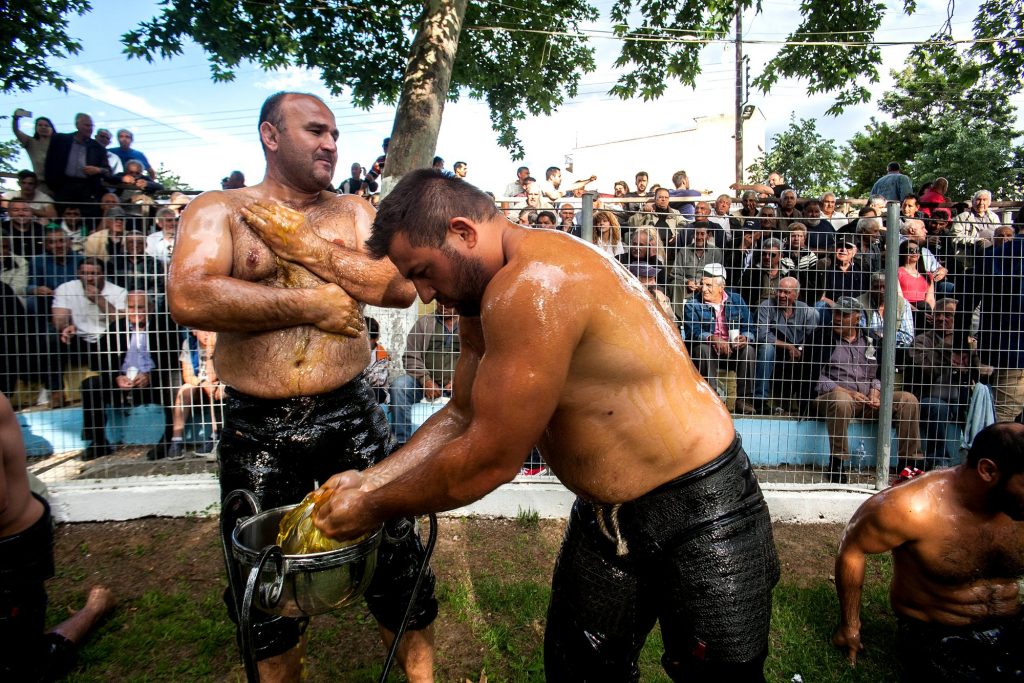
The precise reason for applying oil remains vague to this day. Some claim that it has religious roots while others point to olive oil’s protective properties against mosquitos. Whatever the reason, it became an everyday occurrence for people in the Mediterranean and it carried over to wrestling.

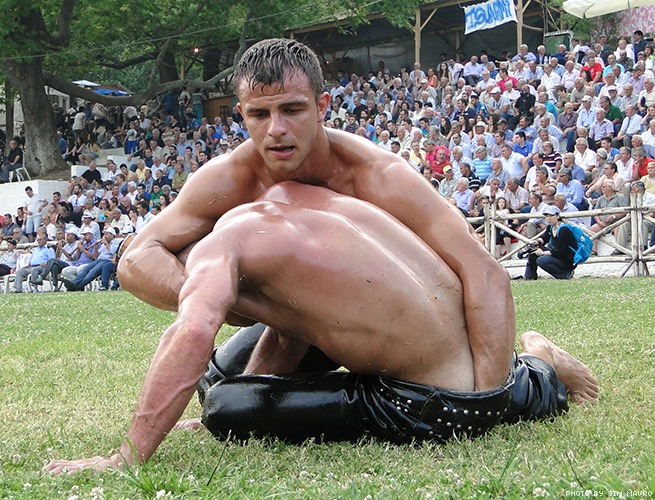
The oil wrestling season in Turkey lasts 8 months out of the year. It is a national sport that involves lots of teams and travels to local tournaments, all leading up to a final event known as Kirkpinar. Wrestlers are naked, but for traditional leather pants called Kispet. The Kispet isn’t just a garment though, as wrestlers reach inside them to get a better grip.

The categories of competition are 13 in total and, wrestlers are matched against one another by judges, according to weight, age, and experience. A bout can last up to 30 minutes, followed by 7 minutes overtime when scoring is introduced. Sudden death is the last. Ways to win in regulation time include exposing the belly of the opponent to the sky, pinning them to the ground, surrender or a carrying pin (lifting and carrying and opponent for 5 steps).

The Oil Wrestling Tradition

The Republic of Macedonia, located at the heart of the Balkan Peninsula was under the reign of the Ottoman Empire longer than any of its neighbors. Five centuries of cultural mixing resulted in the creation of traditions that have remained in place to this day. Macedonia’s citizens are predominately Orthodox Christian, with Muslims coming in second. During the Turkish reign, much of the people switched religion, going both ways, which means that traditions today are upheld by both major religions in the country.

Oil Wreslting In the BalkansMusic plays a huge part in traditional oil wrestling in Macedonia. Traditional bands of two drums and two pipes, or three drums and two pipes are an integral part of tournaments. Much like in Muay Thai, wrestlers come out with a dance demonstrating respect. Two wrestlers pass each other during the dance, brushing each other with different body parts each time. After a prayer to God, the match can begin.
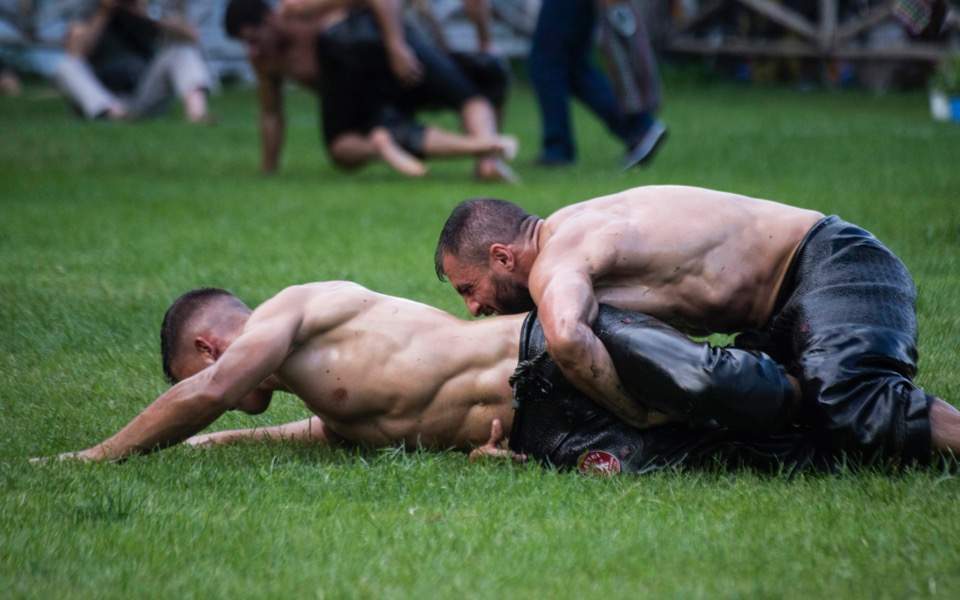
In modern times, wrestling tournaments are held for various reasons, from celebrating circumcision or weddings to marking large national festivities. Traditionally, larger tournaments are held in the middle of the summer, meaning temperatures well above 100 °F. Matches last the usual 30 minutes, which is exhausting in the heat. A mixture of olive oil and water is used and the matches are held outside on large grassy surfaces.

In the Balkans, oil wrestlers are known as “pehlivans”. They represent well-respected members of the community, who demonstrate high moral values throughout their life. Pehlivans are renowned for their impeccable sportsmanlike behavior and respect they show each other. Large crowds gather to watch these events and there are cash prizes for the winners, as well as gifts from the crowd.

Pehlivans Across The Balkan Countries

While the Republic of Macedonia is by far the one most engaged in the oil wrestling tradition, other neighboring countries also take part. Bulgaria, Kosovo, Albania, and Greece all have remnants of the Ottoman culture kneaded throughout their own. Oil wrestling does have a role in their culture, albeit to a lesser extent compared to Macedonia and Turkey.

Turksih oil wrestling in southern EuropeOil wrestling tournaments organized at a regional level are a great way of maintaining the tradition. Very often, pehlivans from all aforementioned nations come together to prove their grappling dominance.  While the supremacy of oil wrestlers coming from Turkey is undisputed, the runner-up spot is often up for grabs. Lately, Macedonian pehlivans have had notable success, bringing home multiple medals from regional competition events. One standout Macedonian pehlivan, by the name of Boban Danov wrestled with one of the best pehlivans to come out of Turkey, Ertan Erkan a couple of years ago. The epic match went on for more than an hour, with the Turkish wrestler coming out on top.
Oil Wrestling is considered to be the only grappling martial art that is indigenous to the Balkan region. Add to that the traditional and cultural value and it is clear why this very entertaining sport is held in such high regard in this part of Europe.

In Conclusion

ALthough Oil wrestling is originally from Turkey, the Balkans are the hotbed fo this interesting and unusual grappling style. This form of wrestling has stuck with the people of these regions and remains one of the best spots to see the traditional form of the oil wrestling of old. The Balkans remain a spot where you can witness oil wrestling in it’s rawest form, somewhat different from the more modern version that’s custom for turkey nowadays.

Neck Bridging In Jiu-Jitsu – How To Do It Correctly

Neck Bridging Fro Jiu-Jitsu, the correct way

Whenever you see wrestlers train, you notice several different things. First, that training session s are grueling. Second, these girls and guys have a real heart. And third, what’s that crazy neck bridge thing they’\re doing that seems like it will snap their necks like a twig? Speaking of neck bridges, have you ever tried doing one? Just the regular, basic, neck bridge? It can be scary as hell when you first give it a shot. And then, you see all these wrestlers perform crazy windmill like moves while holding a neck bridge. Of course, you have to ask yourself how does the neck bridge relates to BJJ and should I learn how to do it properly?

The easy answer to this question is yes. Actually it is more of a categorically, absolutely YES! However, don’t just goof trying to figure out neck bridging by yourself. That is an almost certain recipe for disaster. There are levels and progressions to learning how to do neck bridges. And, if you don’t have access to a wrestling coach, try asking a wrestler. One is most certainly easy to spot on the mats of your BJJ academy.

Safety Concerns First

It would be really irresponsible to head straight into one bridging and how it helps BJJ Jwihtout talking about safety first. So, whenever you’re trying to do anything neck related, be careful. Okay, that’s out of the way, now, let’s talk bridges! Nope, not so fast. Neck safety should be your number 1 concern in BJJ. I’m not overreacting, and I have the herniated discs to prove it.

Neck bridging for fightersNeck bridging is not a joke. Don’t’ take it lightly, as you can cause real damage to your spine by not even doing BJJ. The movement is huge and will give you a lot of advantages when rolling, but you need to learn how to do it right. It is not like the BJJ bridge where you can just start exploding after a few attempts.
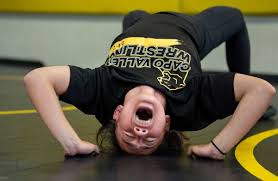
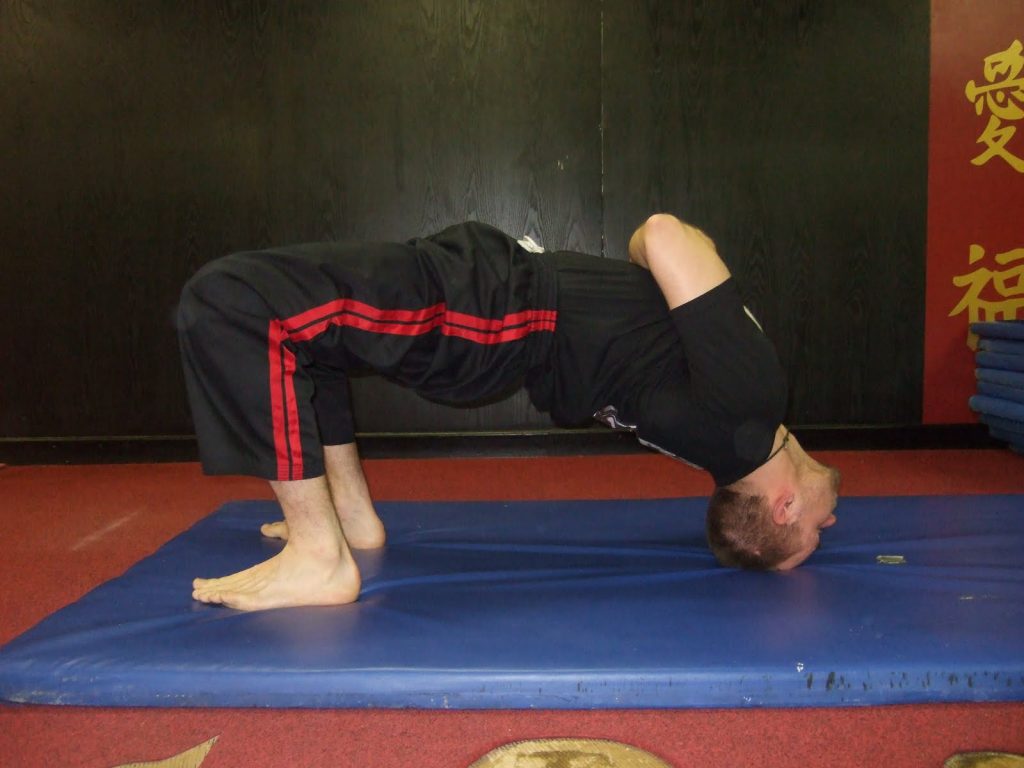
The muscles that get stronger with neck bridging are the cervical muscles of your neck. They help stabilize your head and spine as well as move them in specific directions. These muscles connect to specific parts of the vertebrae. One potential injury risk is the muscles pulling ton the vertebrae during poorly execute neck bridges, resulting in herniated discs. While the exercise is designed to strengthen the neck muscles both isometrically and dynamically, it may cause more harm than good if you do not know how to do it. Neck damage in grappling is usually cumulative, so bad neck bridges won’t necessarily end up with an injury straight away.

The consequences of herniated discs can be dire, ranging from an uncomfortable tingly feeling due toa pinched nerve, to full nerve damage and muscle atrophy. Not really worth it, so stay safe when neck bridging and look to strengthen your neck, not injure it.

Neck Bridging For Jiu-Jitsu

In BJJ, bridging is actually an extension of hip escaping. Think of it as a hip escape done with the hips as far off of the ground as possible. The wrestling neck bridge, on the other hand, is a very different thing. Once again, it is intended to keep the hips (and shoulders) off the ground, but also offers a pivot point that shoulder bridges do not. As such, it is tailor-made for the craziness of a Jiu-Jitsu roll.

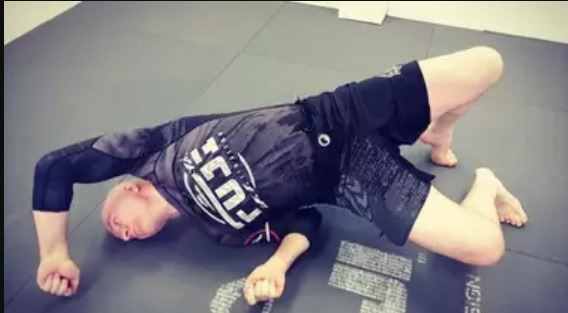
Neck bridging drillHow exactly does neck bridging help in Jiu-Jitsu? Having a strong and mobile neck allows you to use your head as an extra post. Your head becomes the fifth extremity you can use to help you in any aspect of BJJ. While sweeps and escapes are the most common things that benefit from neck bridging, training the neck like this can actually help you in many other areas. Both when you’re passing the guard or trying to keep a top position via pressure, head placement plays a huge role. Even when you’re keeping a tight head trap from back control, you need neck engagement. And the neck bridge makes you stronger in each and every one of these areas.
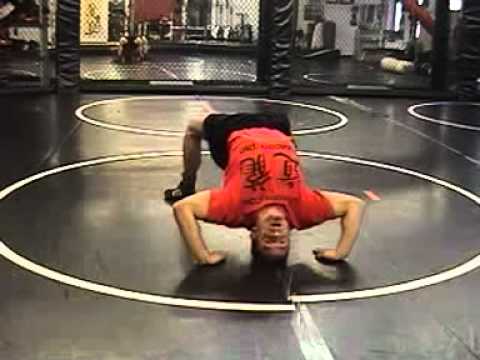
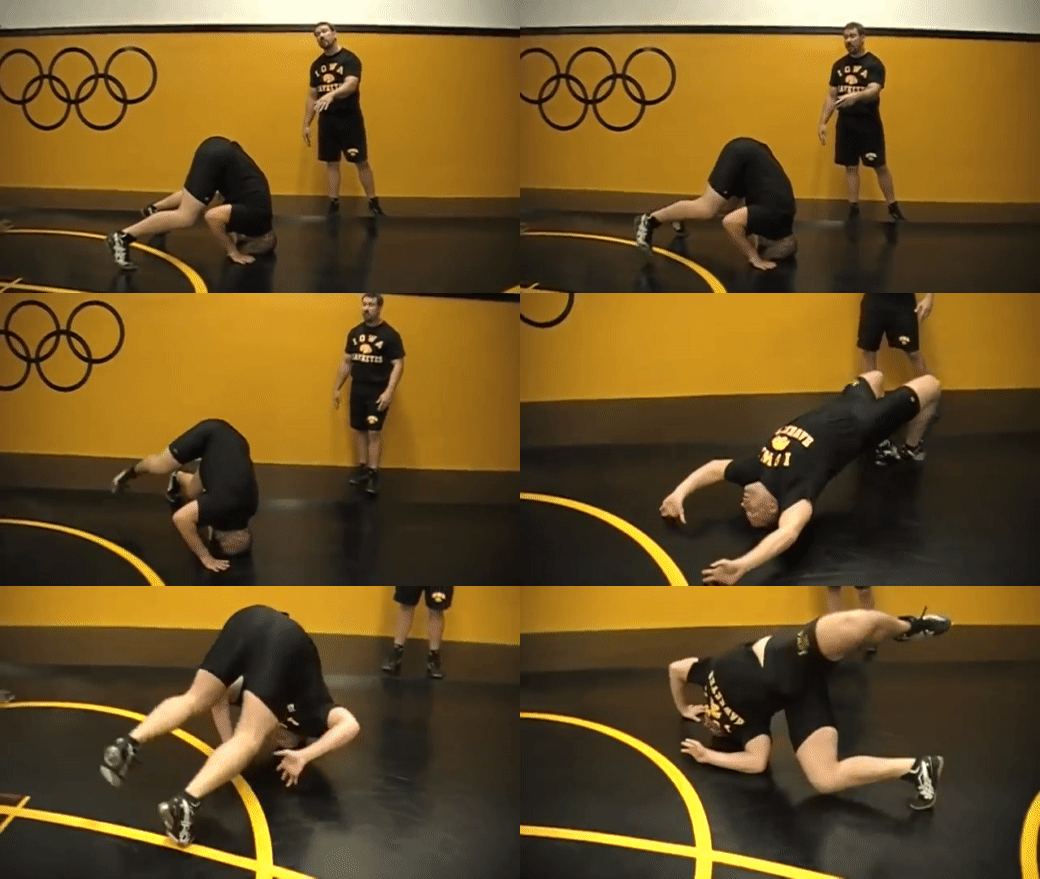
The best way to approach training neck bridging is to start frontally, that mans place your forehead on the ground and lift your but up, downward dog style. From here, you should use your hands to help you balance and take some pressure off until you’re strong enough and comfortable. Then you move on to dynamic movements in each direction. Only then, can you switch things and lie on your back to do a “proper” neck bridge. Once again, help yourself with your arms before you get to work only the neck. Remember not to rush complex moves here like going in a circle or jumping over. Step by step.

Pros, Cons, And Alternatives

Apart from the potential for creating injuries, neck bridging has the potential for aggravating existing ones. That means that if you have a neck injury, you should probably look into the pros and cons of bridging before you go straight into it. Or, even better consider alternative ways of strengthening your neck.

neck bridging grapplingThe pros of neck bridging are that it strengthens your neck in a 360-degree fashion, which few other exercises can do, Moreover, it is highly sport-specific, meaning you actually get your muscles stronger in exactly the way you’ll be using them most of the time. As strange as ti may sound, strengthening your neck with neck bridges can actually decrease the potential of a BJJ-related injury when done right.
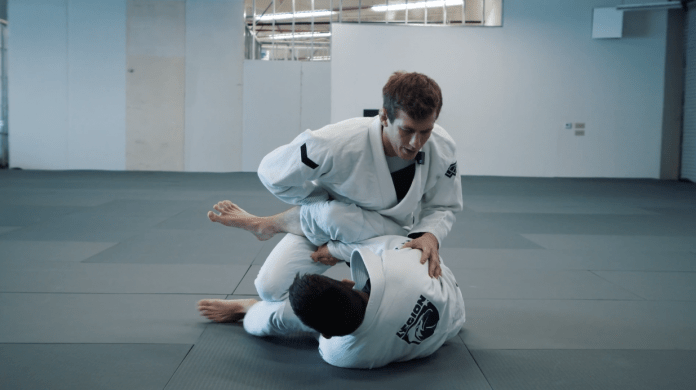
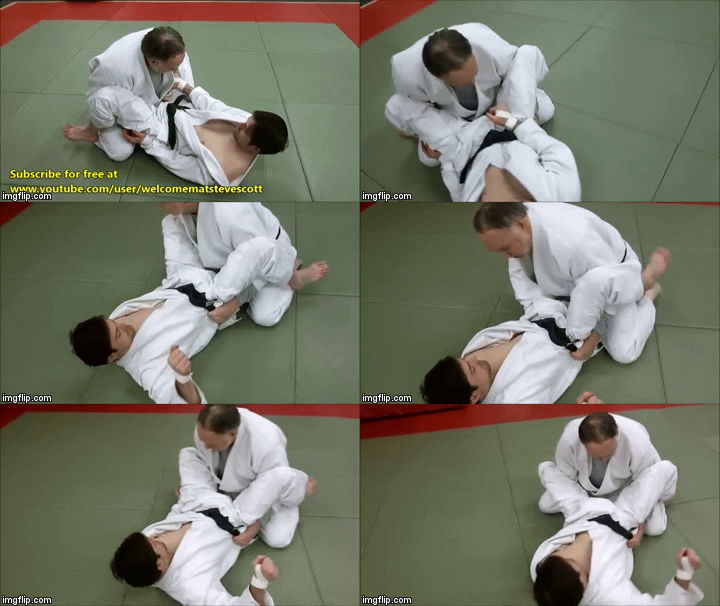
ON the cons side, neck bridges require time and patience to master. Also, every progression increases the risk of something going extremely wrong. Some people’s necks just aren’t built to take such a strain, so that makes neck bridging a movement that won’t fit every type of grappler out there. The compressive force on the vertebrae is also huge, and will eventually result in cumulative damage, though.

Finally, if you want an alternative, you could always place your head on a bench for example, and just hold statically to strengthen your neck safely. Also, you can experiment with different neck harnesses nad even elastic bands in order to lessen the compressive load on your vertebrae.

All in All

Do your neck bridging responsibly and sparingly. The neck bridge can help you build 360-degree strength like nothing else., However, you can’t just rely on this motion at all times in Jiu-Jitsu. If you use the neck bridge smartly, and the strength that you gain from it strategically, you’ll definitely add to your BJJ arsenal.

The Arm Trap BJJ Pass To Sneak Past Any Guard

The Arm trap BJJ Pass - All variations

Can’t pass guard? There’s a good reason for that – you can’t. Like you really can’t actually physically pass anyone’s guard in Brazilian JIu-JItsu. The perfect example is the closed guard. Pass it without opening. Can’t, right? Then why would you presume that you could pass all other guards directly? The one single thing that makes guard passing really difficult is trying to pass an actual guard. You’ll get a successful pass by getting past the legs. Guards are designed to keep you from doing that. Hence you can’t just pass a guard. You can pass the legs, though, with a 100% success rate. And achieving that requires a bit of sneakiness ion your part. At least if you want to be successful with your BJJ pass rate.

Passing is extremely hard, and just as fun, if not more. However, being smart about it is going to make your life a lot easier. If you want to mask leg lock attacks with passes, then by all means, keep doing what you’re doing. But, if you want to actually get past someone’s legs and into a better top position, you’ll need to finish a BJJ pass or two. Why not turn the tables to your advantage completely? The Arm Trap BJJ pass is one option you have at your disposal. AS long as you’re aware of the stages of passing, you can gain a real advantage by introducing this concept into your game.

The Concept Behind The Arm Trap BJJ Pass

The stages of passing guard are something I’ve talked about before. The concept is that guard is impossible to pass because they’re designed to keep you at distance and offer attacks to the bottom person. However, you can most certainly get past them. The thing is, you need to make sure there’s no guard stopping your form passing the legs. To achieve that, you need to make sure the guard you’re up against is not a threat. That can be done with minimal movement and some grip and weight distribution adjustments, depending on the guard. Step two is breaking the structure of the guard, thus arriving in a position where you can easily go past the legs. Breaking the guard’s structure is opening it, in the case of the closed guard, or removing a hook or two, in the case of most open guards.

However, passing is still not that easy. Regardless if you’re after points or simply a better position to submit from, you’ll have to settle in a good spot after you pass the legs. That is not an easy task to accomplish. One thing people forget to factor in when passing is guard recovery. That is the ability of the bottom person to recover a guard position after you get past their legs, but before you settle in side control, for example. In other words, there are layers to passing the legs, and you need to anticipate them in order to execute any BJJ pass.

So, the concept behind the arm trap is to make sure you peel an entire layer of defense before it even comes up. Somewhere between the stages of making the guard ineffective and passing the legs, you need to look to tie up one of the opponent’s arms. There are many ways to do this, but if you can get it behind their back, you’ll really leave them defenseless once your BJJ pass takes you past the legs.

Passing The Closed Guard

The closed guard used to be a nightmare for me to pass. I just couldn’t get out of it and it lasted well into my blue belt days. No wonder I went so deep into trying to figure out how passing works. Well, if you want to do a BJJ pass by using the Arm Trap method, you actually have several options.

clsoed gaurd BJJ Pass with trapped armThe simplest one has you working form a scoop grip on one leg, following and guard opening of your choice. The part about staying safe and braking the guard’s structure is beyond the scope here. Going for an Arm Trap BJJ Pass will require you to grip the sleeve of one arm, on the same side where you have an underhook on the leg (the scoop grip side). The goal is to stick the arm you have a grip on under the opponent’s butt. You can then proceed to pummel under the other leg (watch out for the triangle) and pass form a double under position.
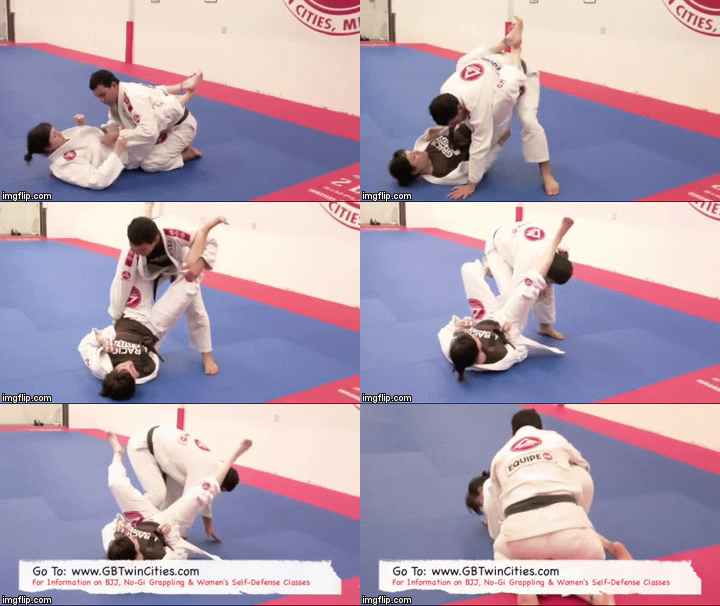
Closed Guard BJj Pass With Arm trapAnother arm trap BJJ pass option works form the standing opening. This one uses the lapel and will take you straight to the back. From a broken posture inside guard, release the lapel on one side and use it to trap the arm. Passing the lapel behind their back to your other arm will allow you to effortlessly stand up and open the guard. The bonus is that now, they’ll have no layer left to recover guard, meaning your BJJ pass is guaranteed.
The same arm position as in the lapel arm trap also works perfectly with the Tozi pass.

Passing Half Guard

You can use the same concept of arm trapping to pass the half guard as well. The only thing you’d do differently is the method of trapping the arm, which depends a lot on the half guard variation you are in.

Arm trap BJj PASS- HAlf guard Lapel PassingOne version that works like a charm is trapping the arm of the opponent in a Kimura like fashion using the lapel. From a half guard with your hips facing the opponent, the goal is to get one arm over the top of the far arm, like for a Kimura grip. Instead of sinking in a Kimura, you take the same side lapel and pass it ver their wrist to the arm you already have sneaked in. That’s it. You now have a free arm to clear the legs and there will be absolutely no resistance as a result of the arm trap.
Arm tap BJj Pass - Butterfly guardA second-half guard BJJ pass works from the over-under position. Sometimes opponents keep hugging you in order to affect your posture and keep you from going forward. It can be really annoying and take time to deal with. What you can do instead is use the arm that’s on the “over” side to trap the arm on that side at the level of the shoulder. This will render that arm useless. Now, you can simply switch to a three-quarter mount and get your foot out with ease. As a bonus, the same pass works just as well against the butterfly guard.
Conclusion

A BJJ pass concept that takes care of guard recovery even before the opponent realizes they need it, is a BJJ pass worth knowing. The concept looks easy but does require a lot of repetition in order to get the timing right. Once you do, though, you’ll have an easy time passing any guard you come up against

Corona Drills – BJJ Home Drills To Stay Sane In Isolation

BJj Home Drills To Get Through Isolation

Okay, it is officially a very weird time in our existence. While the entire world is acting like something out of a movie (with a good reason), most people that train BJJ never really worried much. Because, as long as you can go to BJJ, everything else is going to work out just fine. Well, the pandemic spread of the new Covid-19 Corona virus sure put a stop to that. Currently, there are very few BJJ academies that are open across the globe. I expect that to change soon too. While we’re not going to fall into a zombie apocalypse (hopefully), we have tough times ahead, times when we can’t go and do what we love the most – Jiu-Jitsu. However, all is not lost, with BJJ home drills coming to the rescue.

The current situation with this virus is no joke. People shouldn’t’ spend time together as hard as that might be for some of us. That effectively means that BJJ, in just about any form is completely out of the question. I guess this is the oen lat time when no-touch martial arts experts can make a few bucks. Jokes aside, the situation is serious, probably more because we can’t train, rather than because of the viral outbreak affecting the world. And, since training with a partner is completely out of the question, solo BJJ home drills are just about the last thing we have at our disposal. Luckily, there is a bunch of them to choose from, meaning the mandatory two weeks of isolation do not have to be boring at all.

Revisiting BJJ Drills

First, let’s see why we have to stay at home. In case you’ve been living under a rock, there’s a virus out there infecting almost everyone and killing quite a few people in the process. The virus is dangerous only to the elderly and chronically sick patients, but anyone can transmit it to them. So, currently, in order to protect ourselves, we are advised to use social distancing. That means staying at home unless absolutely necessary, not gathering in groups, and maintaining a safe distance between people at all times. In addition, all schools, gyms, theaters, malls, etc are closed down, and most travel is suspended. If we keep this up for a couple of weeks, we’ll end up on the other side of this outbreak, safe and ready for grappling.

In the meanwhile, though, our BJJ obsessed minds are having a hard time coping with the fact there’s no training. Apart from the first few days when our bodies were grateful for the rest, every minute until the end of isolation is going to be torture. But it doesn’t have to be. This is a great time to brush up on some much-needed BJJ drills.

When I come to think of it, drilling in BJJ is somewhat of a lost art. Apart from a few competition originated gyms, not many places in the world really dedicate time to drills. Particularly no when it comes to beginners, who I’d argue need BJJ drills the most.

Luckily, not all Jiu-Jitsu drills require a partner and an instructor to stand over you. It is quite easy to keep learning or polishing your Jiu-Jitsu even when you’re stuck at home. Moreover, you don’t even need mats to execute most of them, although having a mat area would be helpful. BJJ home drills are something you can do in the space you have available in our home and still ensure you keep learning and progressing in Jiu-Jitsu. After all, you can’t just watch BJJ DVD instructionals and not do anything.

BJJ Home Drills To Do In Isolation

What can you do when you’re stuck at home and there’s no one to drill with? BJJ home drills are the obvious answer, but how do you set them up? What kind of drills do you do? The first and obvious answer is that you’ll need to stick to solo BJJ drills unless you’re blessed to live with a significant other, or family member that trains. IN terms of how to set your drill up, the question is, what are you looking for from a drilling session? I’d suggest breaking things up in two major categories – specific technical drills, and conditioning drills. Organize them in separate days and you’ll easily avoid boredom until this outbreak is over and we can go back to choking people out.

Specific drills

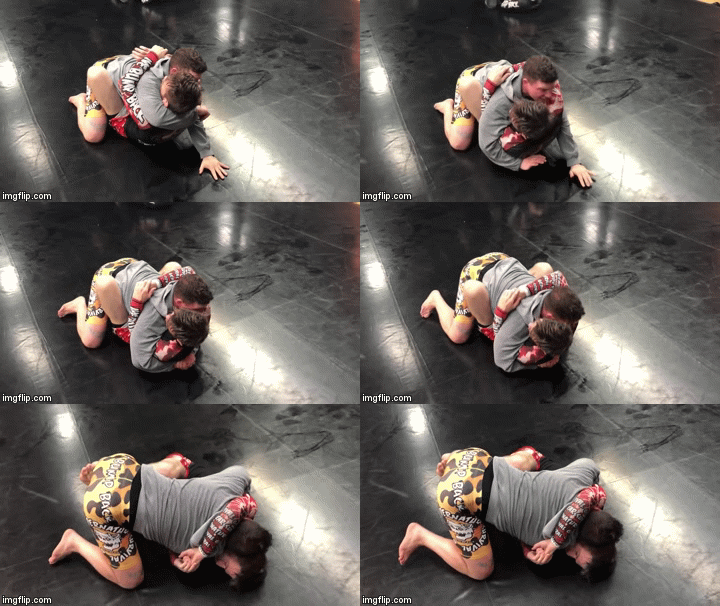
BJj Home Drills - hip escapeFirst up, let’s talk about a few BJJ home drills that are really done solo. The first one you absolutely have to do is the hip escape. In an article in the future, I’ll explain why I think the hip escape is the only defensive movement you’ll ever need in JIu-Jitsu. For now, Just stick to your hip escapes. Do them with both legs, with e one leg, going on your shoulders, rolling away, etc. Basically, do every shrimp variation you know of.
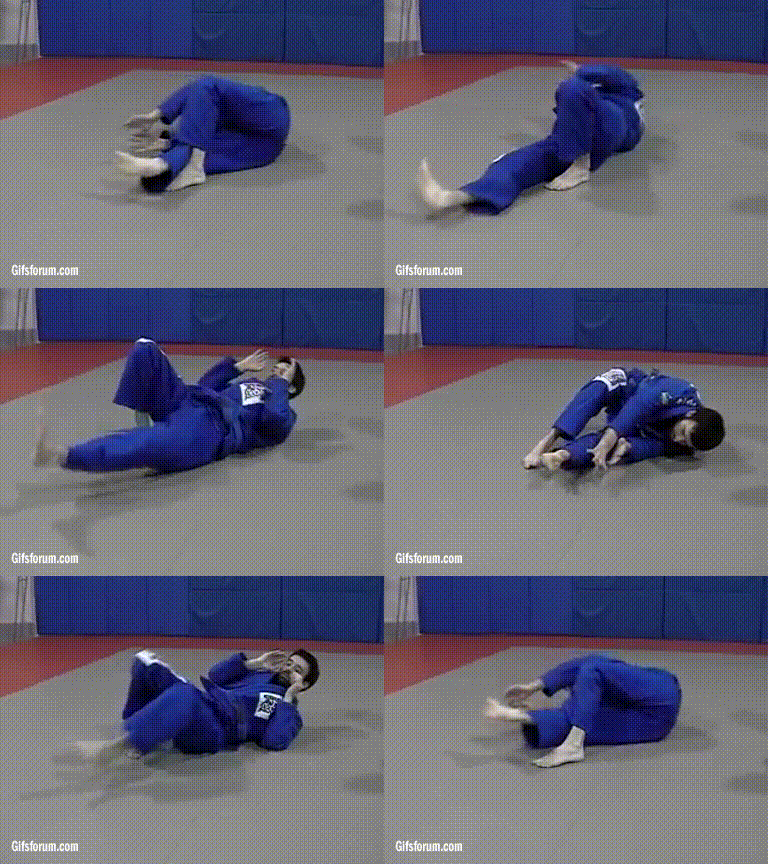
BJj Home Drills - Granby RollOf course, the technical stand up, bridge and Granby roll are the trio that usually follows hip escapes. They’re all integral moves of Jiu-Jitsu and can be fun to drill, particularly if you organize them as a routine rather than going for reps on each.
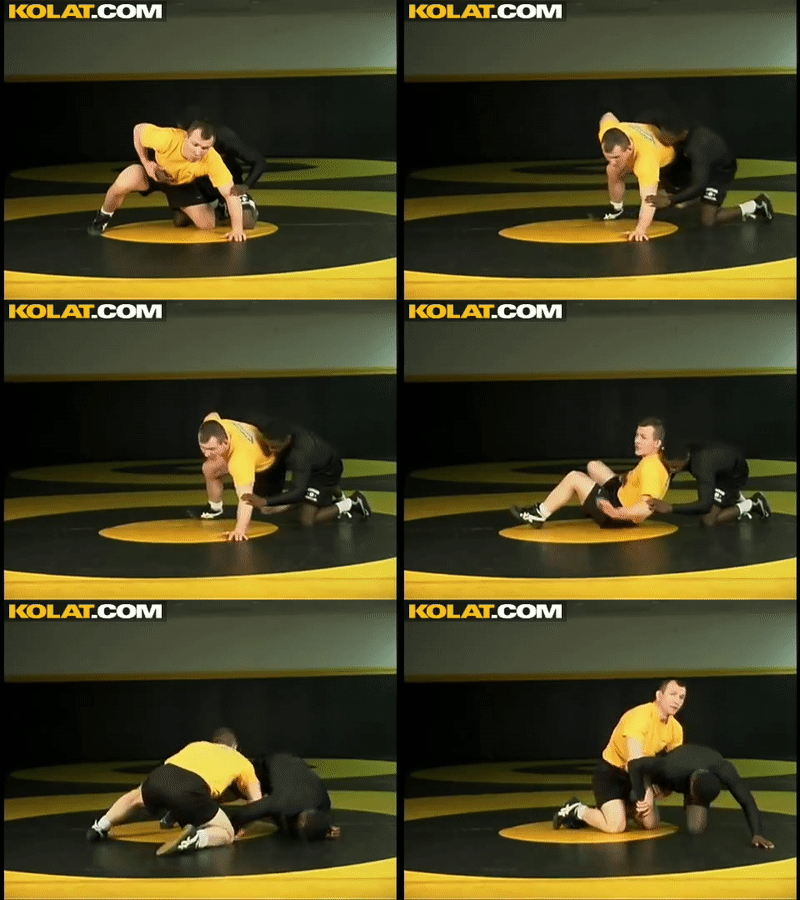
Solo BJj Home Drills - sit outsChair sits, standing guard openings, sit-outs, penetration steps, etc. come next. These are movements that help you obtain or maintain top position and can still be done as solo BJJ home drills. Once again, tying them with all the other basic drills is easy, leaving you with a very cool looking routine.
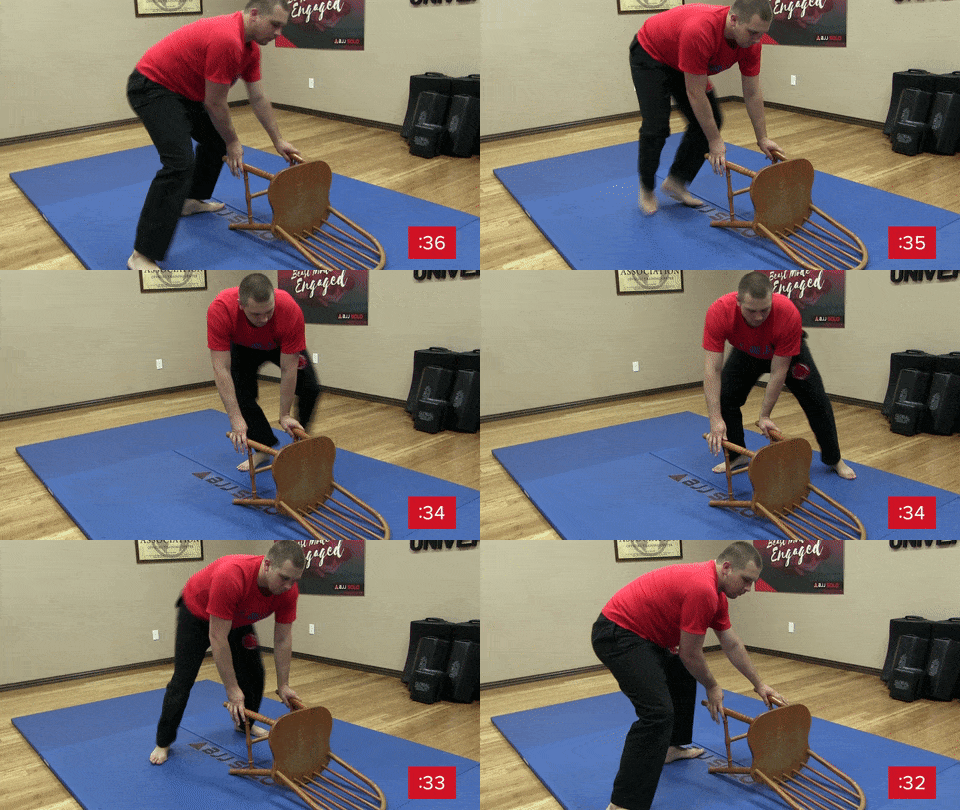
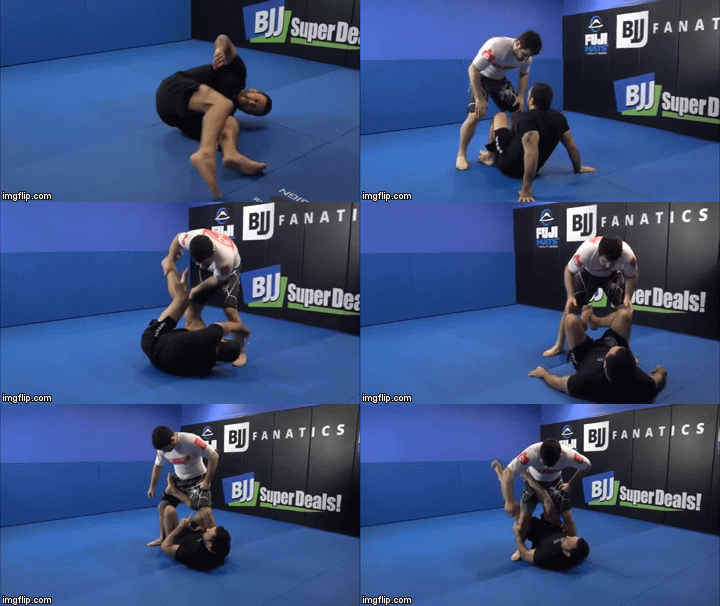
Corona BJj Home Drills - chair DrillsFinally, not being able to train with a partner doesn’t mean you can’t figure out how to do partner drills. Have a chair? Perfect, you don’t need anything else. You can use a chair to do loads of guard passing drills, like X-passes for example, and/or shin circles.
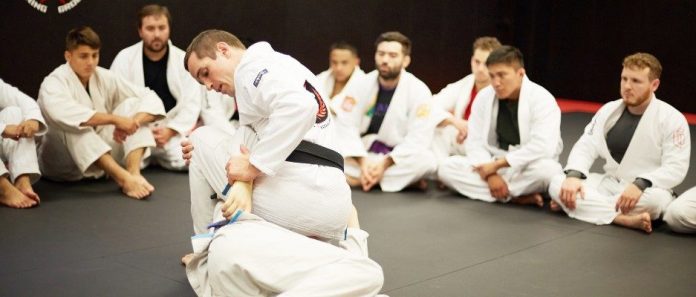
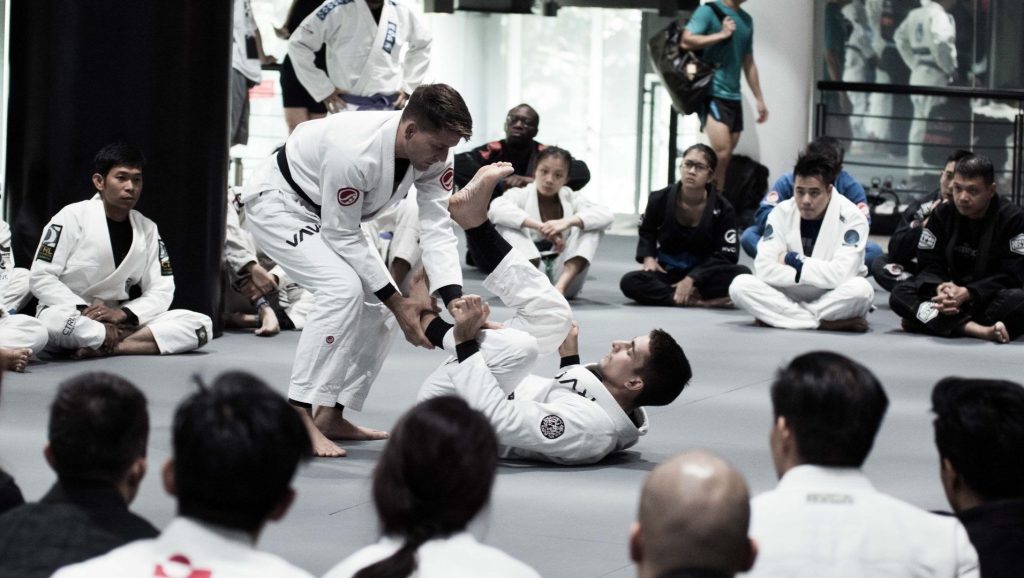
Furthermore, a stability ball, if you have one, will do you a world of good. Ther are so many BJJ specific drills you can do with one that you’ll most likely end up with an abundance of drills.

Of course, if you want to go crazy, you can always enlist the help of your dog for drilling as well. Yeah, dog Jitsu drills exist and they can be extremely fun!

Conditioning

Apart from BJJ specific drills, you can opt to go more down the conditioning road. If you haven’t got access to a spot with mats or a soft surface, you’ll probably better off doing more general BJJ home drills rather than hip escapes and break falls. Once again, there are plenty of options.

The best possible option, by far is Ginsastica Natural. There are many routines you can do, and the movements are a combination of gymnastics, BJJ movements, yoga and animal movements. It is a unique combination created by a Brazilian named Alvaro Romano, and something that Rickson used a lot in his fighting days.

Another, more laid back option is yoga. Yoga for BJJ comes in many varieties so you can actually choose which qualities you like to develop. From flexibility, through balance to isometric strength, yoga is the perfect way of moving through space in a similar fashion to\ BJJ, only without a partner.

Bodyweight conditioning yet another option for BJJ home drills. While both yoga and Ginastica Natural are done with just your own body weight, you can always go the more “traditional” route. Pushups, pull-ups, dips, squats, tumbles, handstands are just a few great exercises that you can organize any way you want in order to get a great workout.

Instructors Having The Last Laugh

The funniest thing about this viral outbreak (as serious as the situation is) is that people will finally start doing BJJ warm-ups. Instructors everywhere will be laughing as people finally turn to those same movements they’ve been trying to avoid so hard. From jumping jacks to bridge break falls with technical stand-ups, it seems there’s no hiding from BJJ warm-ups now that they’ve become the only way you can train Brazilian Jiu-JItsu.

I certainly hope that so much drilling (we do have at least a couple of weeks left of this insanity) will make people appreciate BJJ warm-ups even more. The alternative is that people will start hating them even more. In that case, we’ll have to start thinking of new and exciting ways to warm-up for class. Whichever way you look at it, it is positive!

Wrapping Up

The bottom line is, we need to stay safe during the Covid-19 outbreak. To achieve that, we need to stay at home. We should all follow the official guidelines and safety measures. However, as grapplers, we also need to keep our sanity. So, instead of going into a withdrawal crisis, get your daily dose of Jiu-JItsu by utilizing BJJ home drills. At least until we can get back on the mats again.

Take This Test To See If You Are Obsessed With BJJ

Are you Obsessed With BJJ - TheTest

How many people do you know that train Jiu-Jitsu casually? Nope, not those that claim they just train casually, but those that are really taking BJJ lightly? Yeah, there aren’t many of those around .and that is all down to the fact that Jiu-Jitsu is a highly addictive thing and people get completely obsessed with it. That said, if there is one thing in this world that is good to be addicted to, it has to be Brazilian Jiu-Jitsu. So, are you one of those that are already completely obsessed with BJJ, or are you still not totally immersed in the best thing that is going to happen to you in this lifetime?

Oftentimes, people that do not train wonder how everything we do can be about JIu-Jitsu. That goes on until you actually take them to class and get them to give BJJ a try. Once they spend a week or two training, they’ll suddenly start understanding why you’re so obsessed with BJJ. Then, the cycle continues with people that they know, and so on, and so forth. If only this cycle could spread as fast as the Corona virus, we’d all be in a much happier world, with everyone training Jiu-Jitsu. However, until such an utopia materializes, check out if you’re really obsessed with BJJ, or just highly enthusiastic.

The Addictive Nature Of Brazilian JIu-Jitsu

I have been training martial arts for the better part of my life. My dad took me to Judo training when I was six, and I haven’t looked back since. Of course, I went through just about any martial art I could’ve in the 28 years that followed, and managed to settle down into BJJ. How come nothing else I ever did, from Karate, through Krav Maga to kickboxing could hold my attention as Brazilian JIu-JItsu does?

Are you obsessed with BJJ?I really spent a lot of time thinking about this and the one thing I can conclude is that it is the endlessly mysterious nature of Jiu-Jitsu that really keeps me coming back for more. No matter how much I uncover and understand a certain aspect of Jiu-Jitsu, another mystery, even greater than the first inevitably follows. Every time. As a person that gets bored with things quickly, I’m still baffled that almost a decade down the road I’m actually more obsessed with BJJ now, than when I started.
When you come to think of it, the addictive nature of Jiu-Jitsu makes sense. You get to go in a padded room and wrestle around with other like-minded people. First and foremost, it satisfies a primal need to close human contact, something that’s a rarity in the modern way of life. Second, it allows us to play, also something that’s lost nowadays, even among children. But that’s not all.

On top of it all, we get to “fight” with people in a way that ‘s as realistic as possible, without actually hurting anyone. Not tome nation that everything we do can be personalized and customized. Moreover, there’s engaging our brain to solve the puzzles of grappling while under extreme stress. No wonder everyone’s going crazy about Jiu-JItsu.

How To Know That You Are Obsessed With BJJ?

Let me make it clear – whether or not you’re obsessed with BJJ, as long as you’re training, you’ll see progress. Being obsessed doesn’t necessarily mean you’ll get better fast. It just means you’ll enjoy every second of it a bit more.

That said, there are certain tell-tale signs that clearly confirm you’re one of those lucky ones that are obsessed by BJJ and will likely devote their lives to it. If you’re unsure where you stand, answer the questions below and you’ll know for sure!

1. How Do You Get Out Of Bed?

It may sound crazy, but try and notice how you get out of bed every morning. Do you do a hip heist do maneuver into position? Or perhaps you’re more of a technical stand up kind of guy or girl. Whatever it is, you can count yourself obsessed with BJJ if you’re getting out of bed with Jiu-Jitsu movements. Noticing that your pillow is deformed form attempting rear-naked chokes is one more strong sign of your obsession.

2. What Dominates Your Social Media Feed?

What kind of posts are all over your social media feeds? From Facebook to Instagram and even Youtube, all your new, recommendations and friends have something to do with Jiu-Jitsu. Of course, you are obsessed when there’s hardly anything appearing in your notifications apart from technique videos, new Gi suggestions, and tournament dates.

3. How Many Of Your Closest friends Also Train?

Check your circle of friends. How many of your friends and family also train Jiu-Jitsu? IF the answer is most of them, you’re most definitely obsessed with BJJ. So much so, in fact, that you’ve surrounded yourself with like-minded people crazy about pyjama grappling. Good for you!

4. Wardrobe Selection

Obsessed with BJJ T-shirtsNext on the test is a trip to your closet. Take a look at what is inside. I’d wager most (if not all ) T-shirts are BJJ related. The same holds true for hats and hoodies as well. Even your jeans might have grappling embroidery on them. Your backpacks and bags are most certainly BJJ specific. Even your jackets have BJJ badges or similar accessories hanging at a spot or two. And, if your pajamas are BJJ related as well, you’re most certainly neck-deep in The Gentle Art.

5. Check the Browser History On Your Work Computer

Yeah, we already know what you’ll find at your home computer and phone. However, a quick look at the history of your work computer’s browser will paint the true picture of your obsession with BJJ. Even though it may not be Youtube due to company policies, there will undoubtedly be countless articles and gear searches in there. Yet another clear sign of your healthy addiction.

6. Laundry Statistics

Next time you do laundry, take a look at what constitutes most of it. If you have Gis and rashguards in every laundry load, there’s no doubt that you’re one of those infamous BJJ geeks. Doing laundry is no easy thing when you have to organize all your rashies and Gis, but looking forward to doing that really sets you apart, even from fellow grapplers. That is dedication right there.

7. Dreaming And Daydreaming

We all do this but to different degrees. Of course, what happens during most of our day impacts what we dream in most cases. So, if you’re dreaming about Jiu-Jitsu at night, that clearly shows what you’ve been doing / thinking throughout the day. Daydreaming about grappling moves and concepts is nothing anew, but it also is a clear sign you’re obsessed with BJJ

8. What Does Your Significant Other Think?

This is not about what they thin, as much has it is about what they experience. If you’re spending most of your time together with your significant other trying out moves on her/him, there’s no need to look for more confirmation. You’re officially among us BJJ nuts.

9. How Do You Wave At People?

Another huge one, and one I’m becoming more and more conscious of doing way too much. Any time a hand gesture is required, from waving to saying Ok and anything in between, the Shaka inevitably forms before I even think about what I’m doing. I guess my pinky permanently stuck in the Shaka position which is yet another proof that I’m obsessed with BJJ.

10. Vocabulary

It is not about using BJJ phrases in your everyday life. That is something everyone involved in BJJ does. it is when you start saying “Zhuzhitsu” instead of Jiu-Jitsu that your obsession becomes clear. Moreover, switching “Rs” with “Hs” when you talk won’t help your case there.

Final Thoughts

No matter what the outcome of the test is, you can expect that you will certainly become obsessed with BJJ at one point. For the most part, this obsession will remain with you for the rest of your life. This, however, a very positive obsession. In fact, as far as addictions go, there’s no healthier one out there than being addicted to Brazilian Jiu-Jitsu.