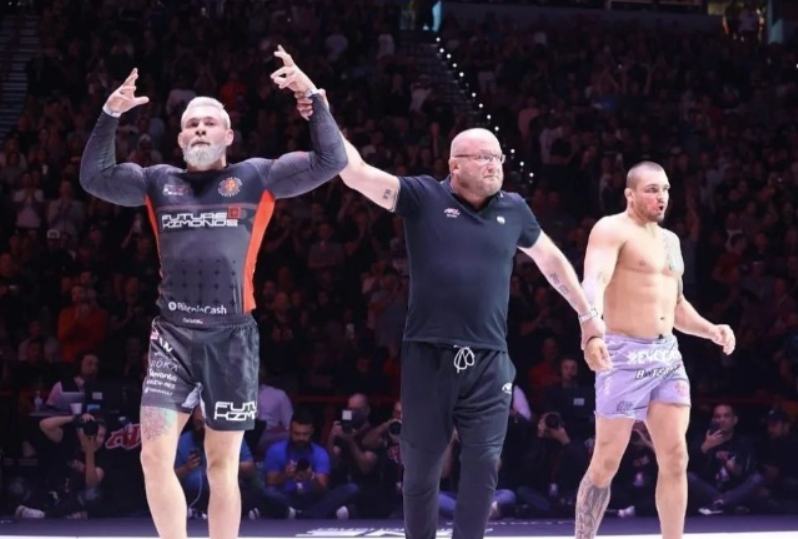
Gordon Ryan has decided that the agreement between B-Team and New Wave Jiu-Jitsu team members is no longer in place, as he has dropped bombs about former Danaher Death Squad teammate Nicky Rod, claiming that he is fake, claiming techniques he learned from Ryan and Danaher and regularly greases for his matches.
Gordon Ryan Accuses Nicky Rod Of Greasing For Matches
In his latest post, Gordon Ryan fired shots at former teammate Nicky Rod, despite and obvious agreement between them to refrain from talking smack about each other publically. As per one of his most recent Instagram posts:
“I am a man of my word. We had an agreement to not talk shit about one another publicly when the team split. The old cliche that “winners focus on winning and losers focus on winners” is true. I have just been focused on winning while this fuck*** lo*** has been busy losing to Sloan Clymer. Between ADCC 2019 and ADCC 2022 this guy had a losing record (fact check on bjjheroes.com) yet made you believe that he was good by highlight reeling his poor blue belt students at his academy.
He is on camera admitting to greasing multiple times, I’ve seen him before competition grease up multiple times, and I purposely wore a long sleeve rash guard at ADCC for ONLY ONE MATCH because I knew he would be greased.”
Gordon Claims Nicky Has Been Stealing Techniques And Passing Them Off As His Own
Going deeper into the issue, Ryan then openly accused Rodriguez of building an entire brand on moves he picked up from Gordon and his coach, world-renowned John Danaher:
“Could you imagine building a brand and BLATANTLY LYING about everything in your life ? Wanna know our 1st introduction ? Me teaching him a private on body locks, which he claims to have “invented” this system, yet it’s clearly just a blatan rip off of mine and John’s shit, yet gives us no credit. So now what do you have ?
A brand built on a body lock system that you claim to have invented, yet everyone knows its just a shitty version of mine and John’s (you can easily see this by the level of comparative instruction).”
“You’re As Natural As Liver King Is”
Gordon finished his post by pointing out toward Nicky’s long-suspected steroid use and his claims that the is all-natural, by writing:
“Can you explain to the fans please how in one photo you look like a fat dad who used to play hs football, yet now has a left titty, and in the other photo look like Arnold getting ready for Olympia? The difference between me and everyone is that I’m real. I say it like it is. This guys about as natural as liver king and like liver king, built an entire brand about blatant lies, and those brands usually collapse when they’re exposed.
If you think this guy invented some intricate body locking system when he can’t even formulate a fucking paragraph properly for an ig post, you’re even dumber than if you believe he’s actually natural.”
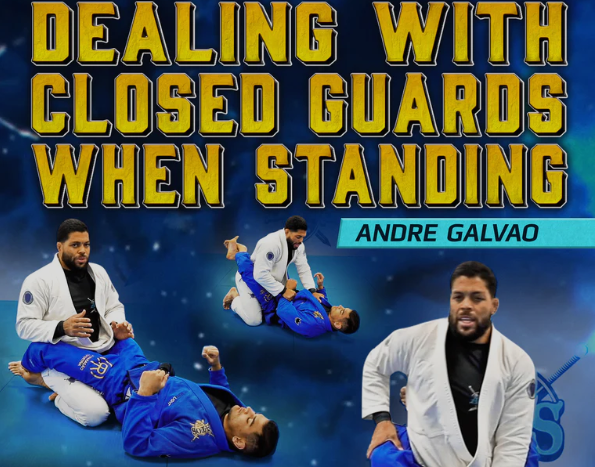
Andre Galvao is one of the people who have been recording instructionals since the VHS days. The man has a lot to teach, as all the monsters that keep coming out of his Atos den testify. Galvao has been active with shooting new material for instructional lately, with his “Dealing With Closed Guard When Standing” release being the latest Andre Galvao DVD review we did.
ON SALE HERE:
Techniques List and More Info
Overview
Dealing with the closed guard is a difficult task for BJJ athletes of all levels, with and without the Gi, from the inception of Jiu-Jitsu all the way to today. In this particular DVD, Galvao targets a subject that remains constantly important and is somehow just as constantly overlooked by coaches and instructors.
As you’ll see from the detailed Andre Galvao DVD review that follows, this is instructional with a modern look, containing 4 volumes of material, but still carrying Andre Galvao’s signature touch of shooting instructional with few subjects explained in extreme detail.
The multiple ADCC and IBJJF champion is well versed in both Gi and No-Gi, but this particular instructional is a Gi-specific BJJ DVD.
Instructor Background
Andre Galvao is a two-time ADCC winner, three-time ADCC super fight winner, and seven-time IBJJF world champion, among many other huge accolades in the last couple of decades.
A black belt under Luis Dagmar, Galvao is considered to be one of the best competitors ever in the sport of Jiu-Jitsu, particularly with the Gi. Galvao is the man behind one of the best-ever BJJ competitor gyms based out of San Diego, CA, the Atos Jiu-Jitsu Academy. Throughout the years, the academy has produced the likes of the Mendes brothers, Keenan Cornelius, the Ruotolo brothers, and many other world champions.
Galvao has a hands-on approach to teaching, constantly training with his competitors and still competing himself at the highest levels of the sport.
His teaching methodology is old-school Brazilian, with Andre sharing an extreme amount of details during long-winded explanations of even the smallest steps of a technique. This makes him one of the best coaches in the business, as he can make the same subject interesting and useful to white and black belts alike.
Subject
The subject covered in this Andre Galvao DVD review is his approach to dealing with the closed guard whenever you get stuck in it. As specific and precise as he is, Galvao focuses on dealing with the closed guard solely by employing standing up, a concept that seems to be dominating modern BJJ in the past year or so.
The DVD covers staying safe from sweeps and submissions, successfully opening the closed guard and executing several different passes, and shutting down any recovery attempts along the way. He even shares a few submissions to ensure you stay past the bottom person’s dangerous legs.
Complexity
The subject is a basic one, and despite taking it very deep into detail and covering transitions that include some advanced stuff like defeating the Spider guard, Andre Galvao is a master of making subjects interesting and appealing to grapplers of all experiences.
As such, this is a DVD great for anyone that would like to learn how to deal with the closed guard in the Gi.
Technical Details
This Andre Galvao DVD has four volumes, each of them lasting about 45 minutes. this brings the total running time to just over 3 hours. Moreover, each of the volumes has only a few chapters, in that typical Andre Galvao instructional fashion, allowing for an easy way to follow topics in terms of organization.
The downside of the long-length chapters is that it can be difficult to rewind and find precise elements once you’re coming back to re-watch the material.
The camerawork, video and audio quality, cover design, and all other technical aspects are at the industry standard set by BJJ Fanatics.
“Dealing With Closed Guard When Standing” is available both in hardcopy DVD and digital high-definition formats.
Detailed Analysis
DVD #1
The way Andre kicks off his instructional is by sharing a very crucial concept that clearly demonstrates a way of thinking when it comes to working from inside someone’s closed guard. That concept is the notion to “be first” and be able to avoid the closed guard game by breaking it down before an opponent has the chance of applying all the layers of their game.
This concept takes about 30 minutes of the first volume and covers a myriad of details and scenarios, which are hard to represent at the level they should be represented in this Andre Galvao DVD review. Let’s just say that you’ll re-watch this portion at least several times given the quality of innovative information in it.
The second and third chapters focus on approaching the closed guard game while standing up, with some drills for balance and strength preceding a very important crucial chapter on jumping guard tactics.
DVD #2
The second part of Andre’s “Dealing With Closed Guard When Standing” DVD contains only two chapters, each lasting in excess of 20 minutes.
The first one covers a very cool concept on blocking sweeps, particularly muscle sweeps by shifting your weight and breaking the bottom person’s posture so that they are unable to disrupt your base and off-balance you.
Some grip tactics follow in the second chapter, with Andre giving a fresh perspective on an old Gi BJJ classic – standing up to open the guard with the cross-sleeve grip control.
DVD #3
The third part of this instructional contains a whole of 4 chapters, which is a lot by Galvao standards, However, the way the content is organized leaves nothing to chance, so this structure makes lots of sense.
Galvao keeps going where he stopped in volume t open2, discussing the cross sleeve grip further, in terms of not just opening the closed guard while standing, but also passing directly to the crucifix position.
The best part of this Andre Galvao DVD review was the portion on the so-called magic grip, which is truly a game-changer when it comes to winning the grip fight from inside the closed guard.
The final two sections in this BJJ instructional cover counter-attacks off of muscle sweep attempts that lead directly into submissions.
DVD #4
Galvao already surpassed many expectations with the quality of material so far in this DVD, but there was still more to come as icing on the cake in the last volume.
There is lots of focus on stuff happening outside the closed guard here, with useful moves and tips on approaching the front leg trap, dealing with the very common spider guard follow-up to the closed guard, and spicing it all up with the very final chapter making the cartwheel pass seem extremely simple and doable even for complete novices.
How We Grade The “Dealing With Closed Guard When Standing” Andre Galvao DVD Instructional
Considering this “Dealing With Closed Guard When Standing” instructional DVD’s technical aspects and quality of content, we come to an overall score for this instructional that I’ll deliberate on in short below.
Technical Quality: 9/10
The chapter length is the only thing that might annoy people, as 20-30 minutes of uninterrupted material is quite a lot to sift through when you are looking for something specific.
Apart from this inconvenience, all other technical aspects are pristine.
Quality of Content: 9/10
Content-wise, the instructional is truly a gold mine for every level of grappler, with the only drawback being that it is a very Gi-specific instructional which makes most of the moves demonstrated completely unusable in No-Gi. That is a real shame, as there’s great quality in the presented content.
Overall: 9/10
The final outcome of our “Dealing With Closed Guard When Standing” Andre Galvao DVD review is that unless you mind long chapters and are a predominantly Gi BJJ athlete, you can consider this instructional to be a 10.
Even those that might find an issue with the above-mentioned nuisances are going to benefit greatly from picking this DVD up.
Wrap Up
All in all, this might be Andre Galvao’s best instructional so far in my humble opinion. The subject matter is definitely one that lacks coverage in general, at least when it comes to a logical high-percentage system that is going to work. Here’s to hoping Andre shares a No-Gi follow-up to this DVD soon.
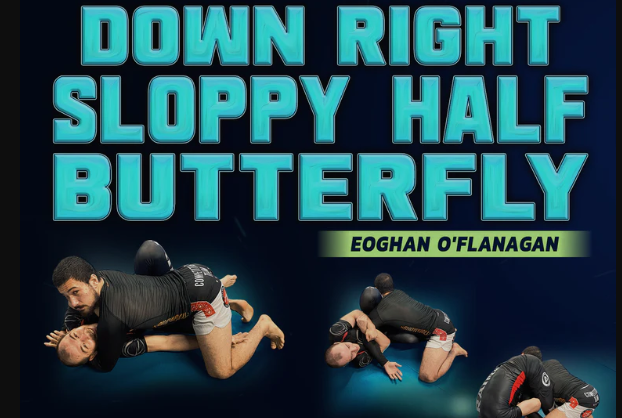
Perhaps not many people knew who Eoghan O’Flanagan was prior to ADCC 2022, but now everyone is more than aware of the British leg lock aficionado. The submission hunter is somewhat of a unique personality, training mainly at open mats and learning more from instructional than actual live coaches. His level is unquestionable, though, and his teaching skills seem to match his competitive ones, as the Down Right Sloppy Half Butterfly DVD clearly proves.
Overview
This Eoghan O’Flanagan BJJ instructional covers a very popular position in the half butterfly guard. While many people see it as a lazy person’s half guard for sweeping, or a launching pad for leg locks, O’Flanagan demonstrates in his Half Butterfly DVD that you can do a lot more from the position. His instruction is a precise and detailed guide into everything related to the half butterfly, from gripping and controlling to switching between offense and defense and upper and lower body focus.
ON SALE HERE:
Techniques List and More Info
Instructor Background
Eoghan O’Flanagan is a BJJ black belt from Harlsedon, London, UK, with a lifelong pedigree in grappling. He started Judo at the age of just 4 and through it, ended up in Brazilian Jiu-Jitsu, earning his black belt at the age of 21.
A predominantly No-Gi grappler, O’Flanagan states YouTube, Flograppling, and UFC Fight Pass as his main sources of learning. Another curious thing is that although he is associated with New school BJJ and New Wave Academy, he mostly trains nomadically, visiting open mats as much as he can. Given his affinity for leg locks, it is not surprising that Eoghan O’Flanagan states Gordon Ryan, Eddie Cummings, Garry Tonon, and Ethan Crelinsten as his inspiration.
His performances at the 2022 ADCC turned many heads when the European trails winner faced off against Xande Ribeiro and Mason Fowler, defeating both.
Subject
The Down Right Sloppy Half Butterfly DVD by Eoghan O’Flanagan is pretty straightforward when it comes to the subject matter. The directions O’Flanagan covers in this instructional is where this BJJ DVD differs from all others covering the same subject.
O’Flanagan starts covering the defensive aspects, retaining the guard despite the actions of the person on top, including even body lock attacks. He then covers offensive grip fighting by way of arm saddles which expose sweeps, submissions, back attacks, and the like.
Many submissions also feature, ranging from armlocks to leg locks, with chokes and strangles sprinkled in between. Leg locks, of course, make up most of the submissions in an Eoghan O’Flanagan BJJ DVD instructional.
Technical Details
The instructional is well put together, with a very nice progression content-wise. Eoghan O’Flanagan starts with basic positioning and pass prevention, then moves on to attacking the base, before switching to submissions hallway through. The third volume covers all types of submissions, while the fourth is dedicated to the half-butterfly leg-locking game.
The instructional has four volumes, like every other modern BJJ DVD. Each volume lasts around 30 minutes, with a total time of 2 hours. Given O’Flanagan’s pedigree, the Half Butterfly DVD is a No-Gi instructional.
All the production aspects of the DVD, like video quality, audio quality, camera work, and the like are up to BJJ Fanatics standards.
The instructional is available in DVD and digital formats, both with high-definition quality.
Complexity
This is a No-Gi DVD only, and despite most stuff without the Gi being applicable to Gi, that is not the case here. The grips change dramatically when it comes to playing half guard, so this instructional is mostly going to benefit No-Gi players.
In terms of the position itself, despite the half butterfly being somewhat complicated, O’Flanagan does a great job at really, really simplifying your tasks from the position, and yet, offering depth and detail that will keep the interest of even seasoned half-guard players/leg lockers peaked.
I guess the only pre-requisite for this one is knowing what half-guard is and some of the half-guard basics, since O’Flanagan brushed over those quickly, but I think most people that have a few months of training under their belt will be able to use the Half Butterfly DVD immediately.
Detailed Analysis
DVD #1
After the mandatory introduction, Eoghan O’Flanagan starts explaining the position, although he doesn’t spend too much time on body positioning. Instead, the focus is on gripping in order to maintain guard against some of the most common passes that often foil the half-butterfly.
A really cool chapter covers dealing with negative partners which are often an issue for any guard. There’s an easy solution how to make someone engage when they’re trying to stall from the half-butterfly, though.
The passes that Eoghan O’Flanagan solves in this DVD are mostly from the smash variety, like weave pass variations and body locks. He also explains the knee lever (shoveling concept) really clearly and concisely.
DVD #2
In the second volume of the Down Right Sloppy Half Butterfly DVD goes on the offense. He focuses his offensive salvo around the arm saddle, using it to break the top person’s posture and take away their base.
Most of the volume covers grip fighting to achieve the arm saddle, which is a point of no return for the top person – once you get it, they can’t do anything if they do not break it.
The volume ends with a few really cool and applicable reactive scenarios based on the opponent’s actions/
DVD #3
Offense intensifies in past the halfway point of this instructional, with O’Flanagan turning to submissions in the form of Kimura, Triangle choke, Shotgun armlocks nad a couple of slick back takes, including fun inversions.
All of the submissions for ma loop are interchangeable, meaning that when one fails, either another one opens, or you can immediately turn to concepts and techniques from the previous volumes to constantly stay in control.
DVD #4
This is the volume most people probably thought of when they saw the words Half Butterfly DVD and Eoghan O’Flanagan. It contains leg lock entries and threats, along with a few more transitions to the back.
Once again there is a heavy focus on grips that work to set up the saddle as well as utilize false reaps to counter sprawling and shin staple pass attempts. The K-guard is never far away from false reaps and the saddle, and O’Flanagan presents it as the best friend and neighbor to the half-butterfly guard.
The Boston crab double leg lock helps O’Flanagan wrap this one in style.
How We Grade The “Down Right Sloppy Half Butterfly DVD” By Eoghan O’Flanagan
Considering this Down Right Sloppy Half Butterfly instructional DVD’s technical aspects and quality of content, we come to an overall score for this instructional that I’ll deliberate in short below.
Technical Quality: 9/10
The fact that this is an exclusive No-Gi instructional takes away from the perfect grade. Apart from that every other technical aspect of the DVD, down to the cover art is impeccable.
Quality of Content: 10/10
Eoghan O’Flanagn leaves nothing to be desired. Submission hunters, leg lock specialists, and half-guard players are all going to find things in this that they will immediately be able to integrate into their games.
Moreover, it offers a complete offensive and defensive approach to the half-butterfly position and a tested system that you can put to use quickly.
Overall: 9/10
A solid DVD instructional across the board. Flanagan has a bit of an eccentric flare which further makes him an unorthodox and entertaining coach, who has lots of knowledge on the subject he is covering in this BJJ DVD.
Wrap Up
Among the huge number of half-butterfly DVD instructionals available, Eoghan O’Flanagan’s is one of the first ones to begin exploring the position, if you don’t already know how the guard works. Even then, you’ll find an approach not many others have, including seasoned leg lockers like Eddie Cummings and Robert Degle.
Firas Zahabi is the man to turn to when you’re trying to simplify something in grappling. Since there’s hardly anything more complex and diverse than BJJ guards, he is the perfect man for the job of providing an in-depth and simple-to-follow course for guard attacks. In yet another of his unique Firas Zahabi BJJ DVD instructionals, the Danaher black belt draws, talks over, and demonstrates a bunch of very useful offensive guard concepts.
Overview
Zahabi offers a No-Gi instructional that is as simple as they come – he covers true attacking basics but does so in a way that will mesmerize beginners and professional grapplers alike. The two-part Firas Zahabi BJJ DVD focuses on direct submissions off the back, gravitating around the classics like triangles and armbars spiced up baby a few interconnecting super basic sweeps. A true evergreen instructional for everyone training in combat sports that include grappling.
ON SALE HERE:
Techniques List and More Info
Instructor Background
Firas Zahabi is one of the best BJJ and MMA coaches around. Based out of Montreal, Canada, where he heads the famous Tristar gym, he is famous for travelling constantly to New York and back while going through the ranks to learn from John Danaher, who awarded him his black belt in 2011.
In the meantime, Zahabi produced one of the best MMA fighters ever in Georges St Pierre. He is also the man behind huge combat sports stars like Rory McDonald, Miguel Torres, Ethan Crelinsten, and Oliver Taza to name a few.
Zahabi is an avid researcher of the Gentle Art, constantly trying to break down what works and why, as well as why some things that are considered staples of the sport have become redundant over the years. He is second to none in roll analysis, which is basically his signature way of making instructional.
He is also constantly active with Q&Aich YouTube sessions in which he is not afraid to voice his opinions, which sometimes air on the controversial side.
Subject
The subject of the Guard Attacks Made Easy Firas Zahabi BJJ DVD is pretty easy to deduce from the title. While Zahabi does tackle the vast subject area of the guard in this instructional he does so by simplifying everything by funneling all guard variations toward a select group of complementary submissions that have been proven to work effectively at every level of the sport.
Complexity
The instructional is easy to follow for everyone as it really covers things that everyone has encountered, even if they’ve only been training for a couple of months. Triangles, armbars, Omoplatas, pendulum, and hip heist sweeps make up the meat and potatoes of this Firas Zahabi BJJ DVD.
Zahabi is primarily a No-Gi grappler, meaning all the material is easily transferable to Gi BJJ.
The best part is that where beginners will only look to grasp the big picture concepts, advanced grapplers will encounter details and connections in between the material laid out in the Guard Attack Made Easy DVD.
Technical Details
A BJJ Fanatics release means that this instructional adheres to the gold standard of BJJ DVDs in terms of technical quality.
The DVD has just two volumes, which is somewhat short, and the only major “flaw” that we can outline in it. Each of the volumes lasts around 30 minutes, with the entire instructional being just over an hour long.
Guard Attacks Made Easy is available as a DVD and in digital format, both in high-definition video and audio quality.
Detailed Analysis
DVD #1
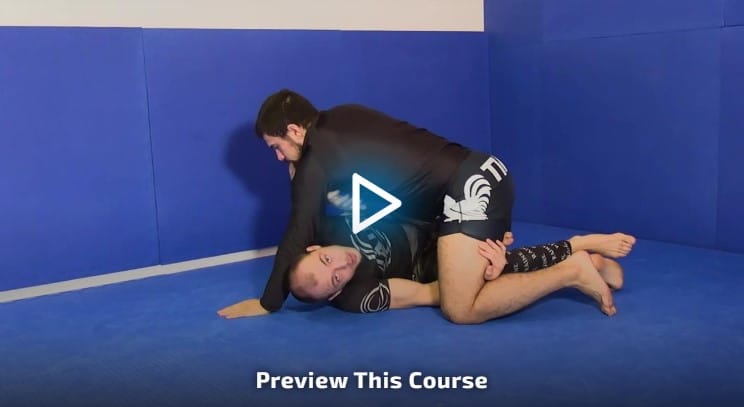
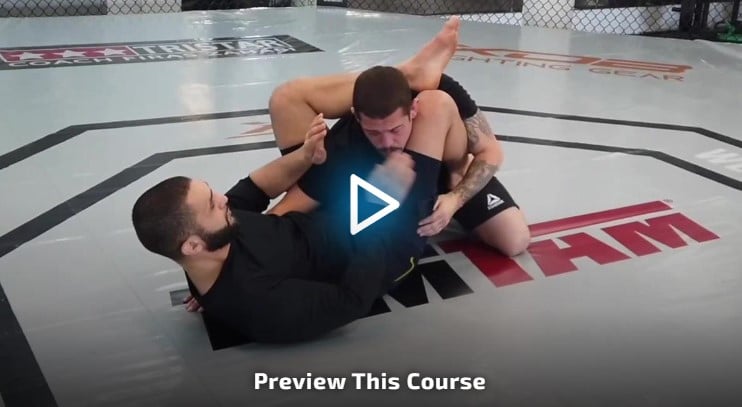
Firas opens up directly with an armbar chapter that is around 15 minutes long. Skipping any unnecessary introductions and needless talk, he goes straight into showing breaking mechanics, and several different ways of baiting armbars when you’re playing guard. The best takeaway is that he removes the unnecessary steps in setting up an armbar off the back, leaving no time for the opponent to react.
The Triangle and Omoplata follow, both getting quite long chapters (in excess of 10 minutes) of the same detailed information as with the armbar.
DVD #2
The second (and final) volume of the Guard Attacks Made Easy Firas Zahabi BJJ DVD has more chapters than the first one. It keeps exploring submissions in the beginning, in the form of the Kimura and Guillotine choke, following the same outline in which the other submissions were demonstrated.
The rest of the volume covers sweeps, starting with the pendulum sweep, and moving on to include the hip heist as well.
In true Firas Zahabi fashion, the Canadian coach brings everything together in a final couple of chapters, allowing for those looking for a system to get an entire highly-effective one in just an hour of material.
How We Grade The “Guard Attacks Made Easy” Firas Zahabi BJJ DVD Instructional
Considering this Guard Attacks Made Easy instructional DVD’s technical aspects and quality of content, we come to an overall score for this instructional that I’ll deliberate in short below.
Technical Quality: 9/10
While the quality of the material somewhat makes up for the lack of quantity, it does leave us wondering if Zahabi could not have added a bit more material to this. There is certainly space for it.
The lack of length is the only aspect of this instructional that is not up to par to what we’ve grown to expect out of a modern-day BJJ DVD.
Quality of Content:10/10
No question marks whatsoever in the quality of the material Zahabi presents in this instructional. Whether you’re looking to refine your triangle finish, your Omoplata setup, or looking for a ready-to-use sweep-submission combo system, you’ll find it in this DVD.
Overall: 9/10
A nearly perfect score and a nearly perfect DVD. Perhaps the inclusion of leg locks would make it the unique instructional we know Firas Zahbai can produce, but we’ll have to wait and see if he has a second edition brewing.
Wrap Up
Firaz Zahabi has never had a miss in terms of BJJ DVD instructionals and this one is just another in a long line of creative, original and super useful guides to perfecting some of the crucial aspects of Brazilian Jiu-Jitsu.
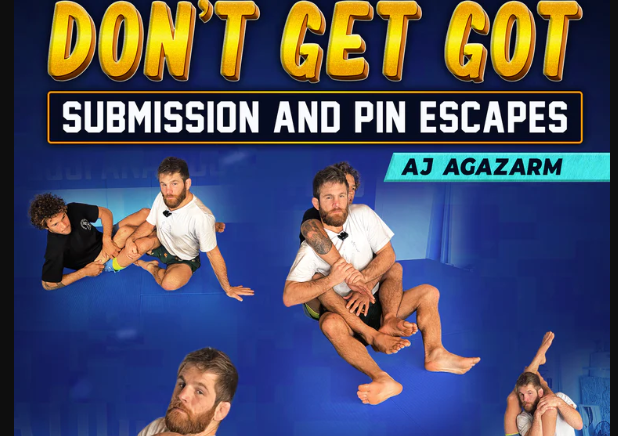
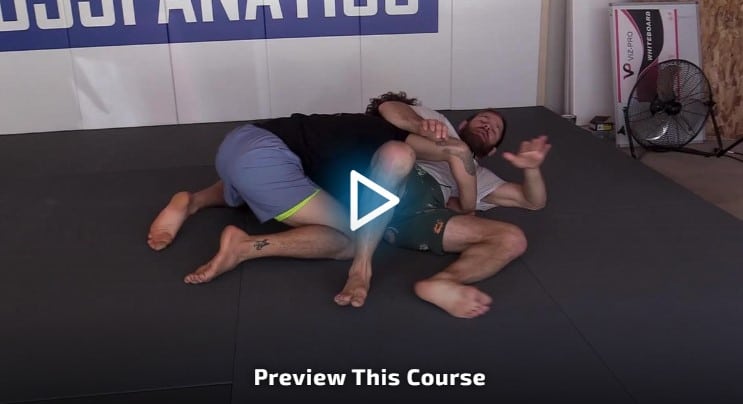
AJ Agazarm is hardly anyone’s favorite character in Jiu-Jitsu, but he is good at it. He has held the spot of one of the best competitors for going on 10 years now and shows both intentions of stopping, despite perhaps not having a Gordon Ryan-like career. AJ is notorious for not tapping out and frustrating opponents with his game. Now, you can learn all of his defensive secrets through the latest AJ Agazarm DVD “Don’t Get Got”.
ON SALE HERE:
Techniques List and More Info
Overview
This is a three-part No-Gi BJJ DVD that covers escapes from bad spots, mostly submission holds, named almost as weirdly as 10th Planet Jiu-Jitsu techniques are. Jokes aside, this AJ Agazarm DVD is probably the only DVD you should get from him. After all, he avoids taps when everyone thinks he’s done for, so who better to teach you how to be cocky than the master of cockiness himself?
Instructor Background
AJ Agazarm is a Gracie Barra team representative and coach. He earned his black belt from Eduardo De Lima. When he began training he was so good that Carlos Gracie Jr. offered to take him to Brazil and make him a champion. Agazarm did not accept the offer as he was chasing Division one wrestling glory at the time.
Agazarm got his black belt in 7 years, after he won the Brazilian Nationals in No-Gi, becoming the first non-Brazilian to ever achieve the task.
AJ has a very aggressive and versatile game and a seemingly endless gas tank. He never stops or slows down when he is competing and has gone toe to toe with some of the very best grapplers in the past decade. He has not been submitted in quite a while with just 15 of his 84 losses coming by way of submission.
The “Don’t Get Got” AJ Agazarm DVD outlines his approach to defending when you’re in really bad spots.
Subject
Defense is an aspect of BJJ that is often overlooked in favor of offensive techniques. The people that decide to focus on defending, can end up frustrating even the best submission hunters in the world, as AJ Agazarm has proven over and over again.
AJ’s focus is mostly on submission defense, featuring armlock, leglock, and choke defense from some of the worst positions imaginable. He shares a bunch of moves that work just as well in stand-alone mode, as they do in combination with one another.
Complexity
This AJ Agazarm DVD focuses mostly on fundamental positions (back, mount, guard, Ashi Garami) and submissions which makes it a good fit for everyone. Since most black belts are purple belts at best when it comes to defense, this BJJ instructional is going to be both challenging and informational for almost anyone involved in Jiu-Jitsu.
Technical Details
“Don’t Get Got” features three volumes, each lasting approximately 30 minutes, which brings the full running length of this AJ Agazarm DVD to around 90 minutes.
The way AJ presents things is a bit frustrating, as he is going through lots of things as if they are a given, which leaves people struggling if they have no idea what he is talking about.
Apart from the fairly short length and lack of progressive structure, all other technical aspects of this instructional are on point, from camerawork, video, and audio quality, to cover art and available formats (hardcopy DVD, and digital).
Detailed Analysis
DVD #1
Opening this DVD is a great section by AJ Agazarm on body mobility. These are crucial in allowing the body to move in the desired direction when it comes to submission defense.
The techniques covered in the DVD starts with the hitchhiker armbar escape and continue into Omoplata solutions to break the attacker’s submission chain. He also covers Kimura defense as well as ways to shut down arm triangles.
DVD #2
Part two of this AJ Agazarm DVD covers leg lock defense, something that people both need and AJ know to perfection. He does demonstrate some slick ways of defending toe holds, and ankle locks when direct submission threats are in question.
His take on dealing with tight controlling heel hook positions like the 50/50 and the knee reap is also an interesting one, and makes sense, especially for those that have no working understanding of how leg locks work and only want to learn how to defend and escape them.
DVD #3
The final part of the “Don’t Get Got” Aj Agazarm DVD instructional focuses on the back mount, side control, guard, and mount, offering ways of first shutting down submission threats from the positions before safely getting away from the bad spots themselves.
There are a couple of chapters dedicated to each position, with plenty of references to the previous two volumes where the focus is on submission defense.
How We Grade The “Don’t Get Got” AJ Agazarm DVD Instructional
Considering this Don’t Get Got instructional DVD’s technical aspects and quality of content, we come to an overall score for this instructional that I’ll deliberate in short below.
Technical Quality: 8/10
Technically speaking, the fact that the techniques only cover No-Gi moves, and he short length of the instructional leave you with a feeling like something is missing from this instructional, like maybe a couple more volumes.
Quality of Content: 7/10
AJ’s defensive techniques are effective, but he only shares them in specific scenarios and does little to connect the material he presents in a system that people could apply immediately. There are positions and submission holds that have completely been left out, leaving blind spots when it comes to having a strong defensive game.
Overall: 7/10
A solid instructional if you’re looking for specific defensive strategies and approaches to dealing with certain positions and submissions. Great for people with no defensive experience, but will hardly turn you into the unsubmittable monster grappler that AJ is.
Wrap Up
If you have no idea how to defend submissions, you’ll learn a lot quicker from this short DVD. If you want to learn positional escapes though and understand defense in a more deep fashion, this is just a stepping stone toward a truly powerful defensive game.
Throw a stone in any Brazilian Jiu-Jitsu gym and you’re likely to hit someone attempting a guillotine on their training partner. The guillotine choke is all over grappling, a real staple in no-gi and making its way even into gi circuits. However, there is a guillotine move version out there called the wrestling guillotine which has nothing to do with the front headlock choke we know and love in Jiu-Jitsu but has a lot to offer.
The Original Guillotine
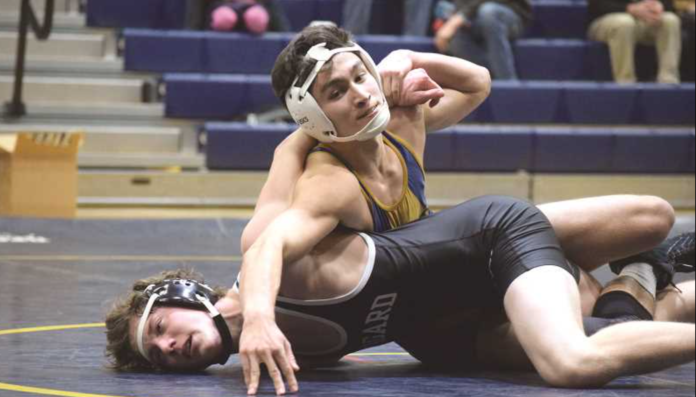
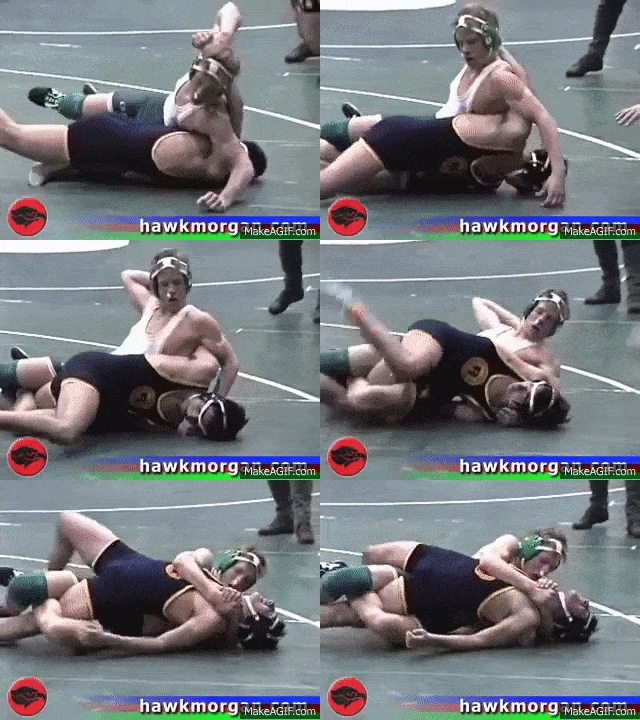
While many grapplers and combat sports athletes think of the guillotine purely as a choke, mostly from the front headlock position when they hear the word “guillotine”, the wrestling guillotine actually has nothing to do with it. It is a move that wrestlers use to pin their opponent to the ground rather than get a tap.
A pin in wrestling is when both shoulder blades of one person touch the mats and stay there for three seconds. Just like submissions in BJJ, pins immediately win the match for the grappler executing the move.
The wrestling guideline provides a very strong pinning position, which is something we’re constantly after in BJJ.
The move was originally founded by Ralph Leander Lupton in the 1920s. The Cornell 1928 NCAA champion managed to figure out a way to pin someone from the referee’s position by manipulating the upper body.
The Wrestling Guillotine Pin
The wrestling guillotine is mostly taught at the high school level but works at every level of wrestling, BJJ, and MMA. In Brazilian JIu-Jitsu, there is a version of the wrestlers guillotine that most people will recognize as Eddie Bravo’s Twister. However, it is not really the same as the original wrestling guillotine and offers different options for that attacker.
So, what is the Guillotine move in wrestling?
The wrestling guillotine starts when someone is in the referee’s position (or turtle, in BJJ lingua).
The top person first weaves the near-side leg through the opponent’s legs, blocking their near-side leg.
The far side arm is the next target, usually starting with a biceps-to-biceps grip to elevate the arm, before passing the arm behind the head, while sneaking the near-side arm in.
The near-sidearm of the top person then goes around the opponent’s head and the move is set.
Getting the pin requires the person doing the wrestling guillotine to roll forward over the arm that is not holding the opponent’s head. This should result in an immediate pin, bringing both the opponent’s shoulders to the mats.
https://www.youtube.com/watch?v=sLRdigvlhmw
As you can see this move is completely different from the guillotine choke, like for example high elbow guillotine that we usually do in BJJ.
That raises a common question can you guillotine choke in wrestling? The answer is no. Apart from catch wrestling, no version of wrestling allows submission holds, including chokes.
The funny thing is that the wrestlers guillotine is not allowed in BJJ (some versions of it)as it constitutes a neck crank. However, there is an application for both moves in the grappling sports which ban them, as long as you approach them with a few key adjustments.
The Wrestler’s Guillotine vs. Eddie Bravo’s Twister
Eddie Bravo’s famous Twister is a move he invented inspired by the wrestling guillotine. The Twister is a purposeful neck/spine crank though, which makes it useless under most BJJ rules.
The subtle differences between the Twister and the wrestling guillotine mean that you can actually get all of the pinning benefits of this move with none of the risks of using illegal moves which could get you DQed.
The legs during a twister entangle the opponent in a triangle, which makes it difficult for them to wiggle out, as opposed to the wrestlers guillotine where only the initial hook with the leg is in.
The arm positioning, in terms of acquiring the grip around the head, is much more methodical in Eddie’s Twister, but only up to the point of getting a hold of the head. If This is the grey zone of neck cranks, so if you purely want to pin, using the setup by getting the hand position in from the top, like in wrestling will clear things up rule-wise.
Finally, the goal of the position in the Twister is to submit, while in the wrestling guillotine, it is to get both shoulder blades on the mats. Pinning the shoulders to the mats is extremely useful in BJJ as well and this move offers a different way of pinning someone, leaving transitions to mount, side control, and the back all available at the same time.
Wrestling Guilltine Variations And Applications For Jiu-Jitsu
The regular wrestling guillotine is going to work like charm every time you sneak a leg in against a turtled up opponent. Moreover, you can use the half guard to force people into their position, since your leg is already in at that point.
The best utilization is to pin like in wrestling, carefully dropping the opponent on their back. Once there you can opt to mount easily, use side control if the opponent tries to wiggle out, or transition into the back, or some 10th Planet Jiu-Jitsu positions like the Truck.
Getting banana split submissions is also an option when you can’t reach the far sidearm against t a person in turtle. Instead, you can use the single leg ride you have (hook with your leg on theirs) to drop down to a calf slicer/banana split position which will help you either tap the opponent out, to make them leave the turtle position and get your pin.
Final Thoughts
Wrestling is a big help when it comes to BJJ, and not just in the sense of takedowns. Things like the wrestling guillotine are irreplaceable when it comes to pinning people in place and taking a breath while having a multitude of options open. Just make sure to resist the urge to do a Twister and keep things legal.
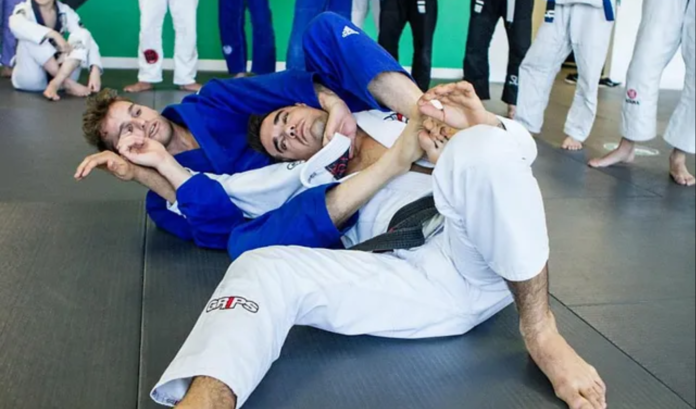
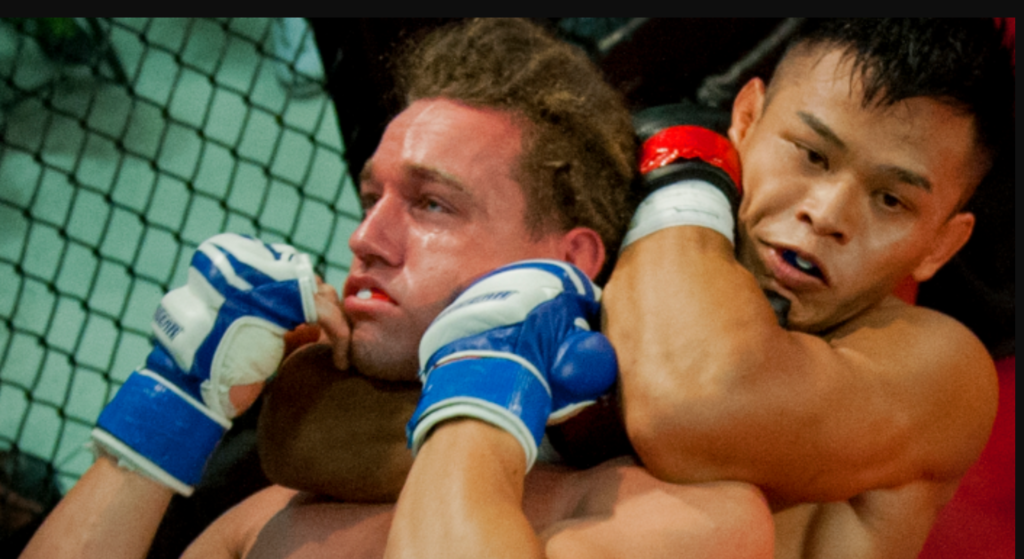
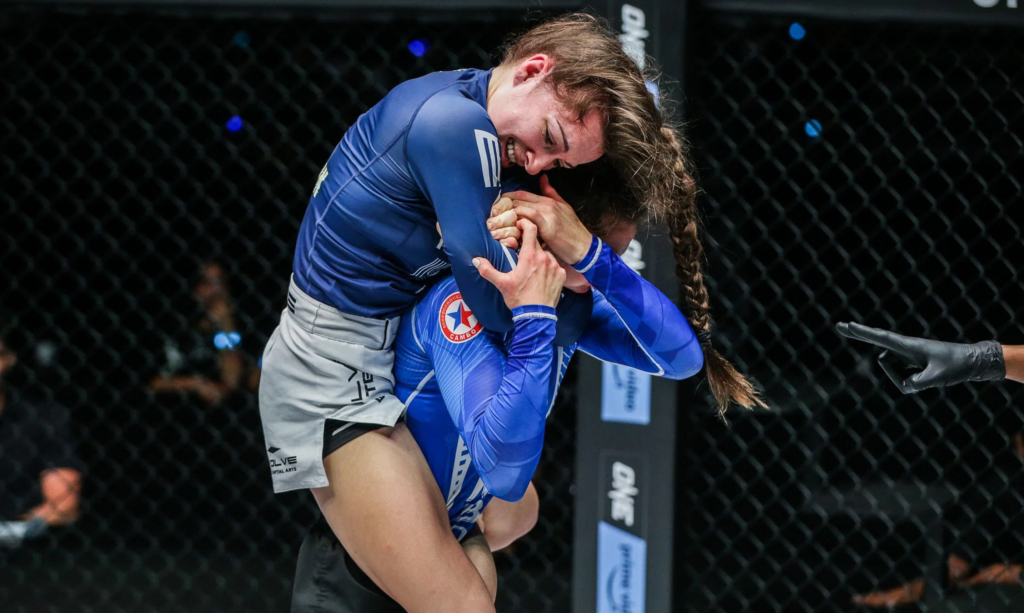
Chokes are one of the main features of grappling-based combat sports which include submissions, like Jiu-Jitsu, Judo, catch wrestling, Luta Livre, MMA, etc. Very often getting g choked out is taken for granted in these sports. However, choke holds are actually the most devastating and potentially lethal weapon in a grappler’s arsenal. It raises the question of whether or not the ban on chokes in Sambo has any merit to it.
Choking People Out In Jiu-Jitsu
Enter any Brazilian Jiu-Jitsu gym in the world and you’re guaranteed to see someone being choked. The difference that is important to note is between someone being under attack via a choke hold submission vs. someone getting choked out completely. Chokes are a big part of BJJ, but they also are pretty underrated in how much potential damage they can do, especially in a post Covid-19 world.
The reason we can practice chokes safely in Jiu-Jitsu is the almighty tap. It is the ultimate safe word (well, more of a safe move, practically) that helps keep us from the harm of getting choked out unconscious over and over again. I doubt BJJ would be as attractive (and fun) as it is if people were going to sleep every time someone caught a choke.
The reason why chokes are still a danger in BJJ, and should not be taken lightly, are escapes. Getting out of a choke hold is not impossible, quite the contrary there are many ways to defend, counter and escape getting choked out. The more people train, the further they go into deep waters trying to apply these moves, which adds up to a lot of total time under the pressure of choke holds.
So, if you are keen on really practicing choke, both attacking with and defending them, then you should make sure you understand the ins and outs of getting choked out in BJJ.
7 Things You Must Know About BJJ Choke Holds
So, are BJJ chokes dangerous? They can be. There are plenty of things to consider, from individual factors to the type, duration, and force of the choke itself. However, when you’re trying to choke someone or stop someone from choking you during rolling, it is imperative that you read and understand the following 7 key moments behind BJJ choke holds:
1. What Does Being Choked Out Feel Like?
If you’ve been caught in a choke, you’ve probably tapped too early because of the panic. Pain on the neck is not one of the signs of choking that should worry you. There are much more subtle things that you’re on your way to dreamland and should tap out as fast as possible.
The main things people can feel are:
Having a feeling of lightheadedness (one of the very first things that you can feel.)
“Seeing stars” also happens often, depending on the force of the choke.
Auditory signs, like hearing a low-pitched continuous buzzing sound are another clear mark of getting choked out
A metallic taste in the mount appears sometimes as well.
If you start seeing the light at the end of the tunnel moving away from you, then you’re already too late.
Of course, the exact time it takes for someone to go to sleep is highly individual, as is the experience people have with the signs above. You are certain to feel at least one of the signs of being choked out though.
2. Side Effects Of Being Choked Out
Getting choked out is not something you should take lightly. A precise choke is a potentially lethal move, so side effects can vary from a headache to well, death.
Going to sleep from a choke might seem like it is not a serious thing, but many things happen when you fall asleep as a result of an assault on your windpipe or carotid arteries.
Headache – you’ll most likely feel a headache after a blood choke, given that your body was in shock and the brain was devoid of oxygen for a short while.
Blood flow issues – in a post Covid-19 world, many people have issues with their blood vessels, and getting choked out is one way of pronouncing them. Thrombosis is one of the most common side effects that can happen after going to sleep from a strangle hold.
Convulsions – sometimes, in certain individuals, convulsions similar to those in an epileptic seizure can occur.
Hypertension – following a choke, even people who are not prone to high blood pressure will find the values elevated.
Difficulty swallowing – if the choke placed pressure on your windpipe, bruising may cause discomfort while swallowing.
Brain damage – in cases where the choking pressure goes on for more than 2-3 minutes, upon waking up the person might experience brain damage as a result of oxygen deprivation.
Can you survive being choked out? Yes, you can survive if you can get out of the choke hold, or the person doing it does not hold for longer than 3-5 minutes.
3. How Long Does It Take To Pass Out From Choking?
This is also a highly individual characteristic, but in essence, it takes anywhere between 8 and 15 seconds for someone to go to sleep. The average is around 10 seconds, but for people who are trained in grappling, like BJJ athletes, this time might be double, extending up to 20 seconds.
Of course, you might be now be wondering how long does it take to regain consciousness after being choked out?
This depends on individual factors as well as the duration of the choking pressure. The longer someone applied a choke hold, the more time it will take for oxygen levels to get back to normal. Usually, people wake up somewhere between 3 and 10 seconds.
4. Do You Lose Brain Cells When You Get Choked Out?
Yes, you can end up with dead brain cells from a choke, but only if it extends past the one-minute mark. In most cases, getting choked out and released is not going to result in brain damage and loss of brain cells.
Data is unclear on whether getting choked out repeatedly has a cumulative effect.
5. Does Getting Choked Out Cause Permanent Damage?
Choking to death is extremely rare, in terms of getting choked out in a combat sport setting. In fact, there is not one recorded death that is a direct result of choke holds in Judo and BJJ.
That said, lasting and serious damage to the brain can happen when a choke is held for long:
10 – 60 seconds of oxygen deprivation leads to loss of consciousness.
After 1 minute, brain cells start dying.
After three minutes lasting brain damage happens.
Upward of five minutes, certain death occurs.
6. What To Do If You Choke Someone Out BJJ?
Given that most choke outs in BJJ happen via blood chokes, there is a system in place to help people that have been choked out recover safely and quickly.
The recovery position is a term that refers to turning the choked-out person on their back and holding their legs up so that blood rushes back into the brain quicker. They usually wake up after a few seconds.
Check for breathing. Always check whether the person that is unconscious is breathing or not. If they are not, make sure you tilt their head back, as in most cases, the tongue obstructs the airway as a result of relaxation.
Call an ambulance in cases where the person is not waking up after more than 30 seconds. Keep them in the recovery position while waiting for the ambulance.
7. What Is The Choke Out Challenge?
The choke out challenge refers to a choking game that became popular via TikTok and which required kids to strangle themselves (or have someone choke them out) until they pass out. In some cases, kids resorted to using nooses and the result was the death of a 12-year-old girl a few weeks ago.
It is sometimes a thing in BJJ gyms to see who can make it the longest in terms of withstanding chokes, and people are going to sleep on a regular basis.
Obviously, none of the above versions of messing around with getting choked out is safe or recommended to do.
The Bottom Line
Is getting choked out dangerous? Certainly. Can it be done safely? yes, you can train chokes in a safe and controlled manner, by tapping out if caught in one, and not trying to put people to sleep if you’re the person doing the move. In other words, taking choking out to the end is never a good idea, regardless of where you are.
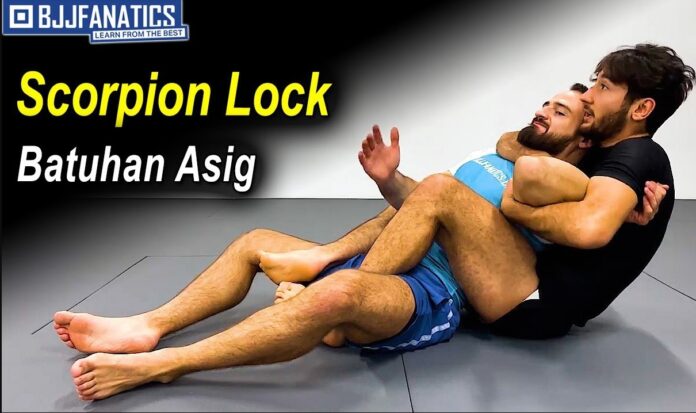
Some of the best submissions in grappling are based on the catch-as-a-catch-can principle which means if you can get, it to work, you should. The Scorpion Lock shoulder lock submission is one such submission, especially when set up from back control.
If you want people to be surprised when you attack a submission, do not do the submission that they expect you go for from s specific position. For example, you don’t have to only look for a rear naked choke from back control when you can easily switch things up and add surprise submissions like the Scorpion Lock from the same position.
The Scorpion Lock works off of a rear-naked choke threat, which is one of the reasons why this shoulder lock has such a high percentage finishing rate. As an opponent is using both their arms to defend a rear-naked choke, you use their actions against them.
The first thing to do is place the foot of the leg which is on the side opposite of your choking arm on the hip of your opponent. This provides ample space for you to sneak your free arm in over their shoulder as if you were switching arms for the choke.
Instead of choking, though, you will circle your arm to the outside, trapping the opponent’s wrist in your armpit. This puts the opponent’s arm in the Scorpion Lock position, which is essentially an Americana lock, just done from a weird angle.
For the finish, turn into your opponent with your entire upper body. It is important to resist the urge to extend your hips and lie backward, as this will help the opponent get the arm out, instead of placing pressure on their shoulder. As long as their elbow goes forward while you have the wrist trapped, the Scorpion Lock is going to work and break the opponent’s shoulder.
Jocko Willing needs no introduction, he is one of the biggest Brazilian Jiu-Jitsu advocates out there. When recently asked how to keep kids in Jiu-Jitsu from a young age onwards, Joco had an experience-based answer, given that all his kids actively train.
At a recent camp (Origin Immersion Camp, someone asked Jocko about his daughter’s training (she has a blue bel) and how to keep kids in Jiu-Jitsu and prevent burnout, to which Willink had a very simple and straightforward answer:
“Make it fun, and you got to remember “make it fun” is different for different kids. There are kids that fun for them is playing a game. If you make a game, playing sumo makes it fun for them, it is fun because, grab a sword, fun games like that. There are other kids that fun for them is going out and annihilating the opponents. So you’ve got to figure out what fun is for your kids, and you’ve got to make it fun for them.”
Jockownt on to talk about what happens to kids in Jiu-Jitsu when they are forced to train by parents, sharing some really useful advice:
“There is no food that is so delicious that you’ll like it if I force it down your throat. And it is the same thing with Jiu-Jitsu, and it is the same with basketball and football, studying, and anything. What you’ll end up with is rebellion. Mutiny. And, you know, a kid that doesn’t want to participate in really anything that you do.
So, just use caution.”
Jocko’s previously shared his “failure” in his approach to involving his kids in Jiu-Jitsu. According to him, it is better to make training fun once a week is better than making kids hate it three times a week.
“The best possible thing you can do is not make them train in Jiu-Jitsu, make them enjoy it,” said Jocko.
His approach was to take his daughters to Jiu-Jitsu, 6 days a week when they were around 6 years old. He also made them compete, and put them in a higher weight class, against older kids, and if they lose, it won’t matter because it will make them tougher. It didn’t.
They got beat and was not fun. By age 10 they didn’t want to do it anymore.
Jocko’s advice for getting kids in Jiu-Jitsu is to find a good school, with fun Jiu-Jitsu, classes and not force it down their throat if they don’t want it at the moment.
He is also a big advocate to put kids in JIu-JItsu in order to make them bully-proof:
“Get your kid into Jiu-Jitsu immediately to start to learn how to deal with people physically and built real confidence. You want your kid to train Jiu-Jitsu. You want your kid to train boxing, you want your kid to be an actual force to be reckoned with.”
As effective and attractive as they might be, Judo throws for BJJ are not easy to master, at least when the goal is hitting them in competition against elite opposition. Simply put, Judo throws take a lot of time to master, as there are many fine details to motion and balance that are crucial for the success of the techniques. Judo throws, on the other hand, like the Osoto Gari, are simply perfect for use in Jiu-Jitsu.
Judo Fundamentals: Osoto Gari – The Outside Major Reap
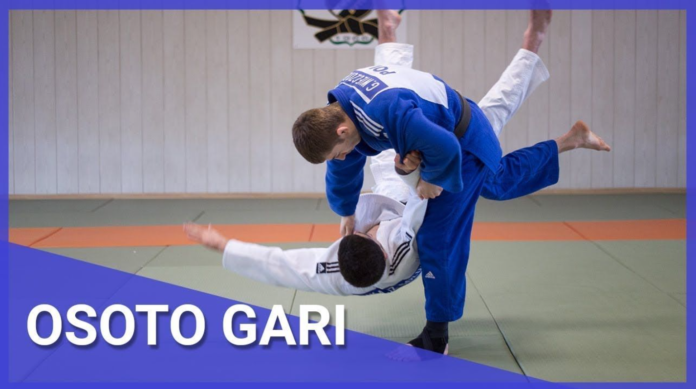
The Osoto Gari, a.k.a. the Outside Major Rip or Outside Trip is one of the first things taught to Judokas. It is part of the foot sweeping techniques in Judo (Ashi Waza) and a move that is deceptively complex. It is far easier to master than hip throws and complicated motion set ups, but it will still require you to understand balance and timing.
The Osoto Gari is like a basic schoolyard fight trip – you grab a hold of the opponent’s torso step to the side and use your leg to hook their leg, pushing them over the tripping point you’ve created with your leg.
It is a bit more complex than that In Judo, of course. You’re holding a collar and sleeve grip while standing in front of the opponent. hips squared. The goal is to use the grips to off-balance the opponent, pulling them towards the leg you’re tripping and pushing them back while moving your body to the side of theirs, and using the calf of your leg to hit the calf of theirs.
The Osoto Gari works perfectly in combination with other trips and footsweeps too, but for Jiu-Jitsu purposes, mastering the really basic version is going to be all you’ll ever need to throw anyone to the ground, white belt to black.
Markings Of An Effective Outside Trip Takedown
There are plenty of technical aspects to the Osoto Gari that you’ll need to learn, especially the footwork and hand motions, but those can only come after you understand the three things that make every trip, regardless if it is from Judo, wrestling, Sambo or something you’re making up on the spot, work.
Those three things are connection, manipulating balance, and being precisely aware of timing.
Connection
The way you connect to an opponent is crucial in standing, as your hands are the first part of the body that makes contact and in most cases the only method of connecting you to the person you’re looking to throw.
The connection for an outside trip needs to provide you with the means of keeping the opponent from switching the angles in terms of hip positioning while allowing you to start moving into position for the trip. The connection is also key for disrupting balance and completing the action once the time is right to execute the trip.
Balance
Disrupting balance, or Kuzushi is one of the founding principles of the entire sport of Judo. The same applies to throwing people in all other grappling martial arts. If you want to use the Osoto Gari (or any other trip, throw, or takedown) against someone, you will have to off-balance them first, otherwise, they won’t fall to the ground.
For the purpose of tripping someone with the outside reap, you will need to make sure their weight is on the leg you’re tripping, so that once you take it away, they’ll have no choice but to fall. This is where the technical aspects of the Osoto Gari are important, including footwork, hand motions, and finishing mechanics.
Timing
The third foundational component of every Judo throw, after connection and manipulating balance, is timing. Takedowns happen as the two opponents are moving around, not from a stationary starting point. This means that you will have to be aware not just of the direction an opponent is moving in, but also if they’re lifting the leg you’re after off the ground or set it down on the ground. This is something that will take practice to really get the hang of.
How To Set Up The Osoto Gari Throw
Setting up the Osoto Gari is best described in steps, with a strong emphasis on footwork. In every step that follows, I will mention the three staples described above, thus providing the full picture in your quest to master tripping people up in Jiu-Jitsu.
Step 1
Grab the collar and sleeve of your opponent. The collar grip is at collarbone level, and the sleeve grip is behind the triceps. You want to start using the grip to off-balance your opponent immediately as you take your first step.
Step 2
If you’re going to trip the opponent’s right leg, with your left leg to the side of their right leg. The aim is to step with your left foot parallel to their right foot, right next to the opponent, on the side where you’re holding the sleeve grip.
As you step forward imagine you’re driving a huge truck and your hands are on the stirring wheel. You want to turn the stirring wheel towards the direction you’re stepping in for at least 45 degrees.
Step 3
Placing your weight on your left leg, get your right leg through in between your left leg and the opponent’s right leg. At this point, the opponent should be tilted towards the side you’re stepping in as a result of the grips. That is connection and balance all taken care of.
The moment your right leg comes in between, make sure you extend it forward so that it goes past the leg of your opponent. Your hips should be next to theirs, but facing the opposite side at this point.
Step 4
Use the calf of your right leg, which is swinging like a pendulum at this point, to strike the calf of the opponent’s right leg. Avoid trying to hook their leg at knee level as this can get you out of balance and open up counter throws.
Make sure you use the leg forward first and hit back at their calf swinging your legs backward as if you’re trying to kick behind you. As you kick back, use the arm gripping the collar to push the opponent backward, placing the fist of your gripping hand on their collar bone.
Step 5
The final part of the puzzle is staying on top after executing an Osoto Gari. To achieve this, as you feel your opponent falling after kicking their leg and pushing them backward and sideways, lift with both your palms towards your chest. This will cause the falling opponent to spin around their spine as the axis, landing them sideways.
It will also help you stay postured up and avoid getting pulled down to the mats and reversed by way of inertia.
The fact that the opponent is falling sideways means there’s also an armbar right there for the taking.
Osoto Gari No-Gi Variation For Jiu-Jitsu
For the No-Gi variation of the Osoto gari, not many changes in the way of mechanics, especially in terms of off-balancing and timing. The only slight difference is in the connection, with the collar grip being replaced by a collar tie, and the sleeve grip at the triceps level replaced by an outside biceps tie.
In Conclusion
The Osoto Gari is a very powerful trip that can be a great asset for BJJ athletes. It requires less time to drill to perfection compared to many other Judo throws and also works perfectly in No-Gi. You will need to be patient though, and give it time and reps before you figure out the exact variations that best fit your game.






 rip off of mine and John’s shit, yet gives us no credit. So now what do you have ?