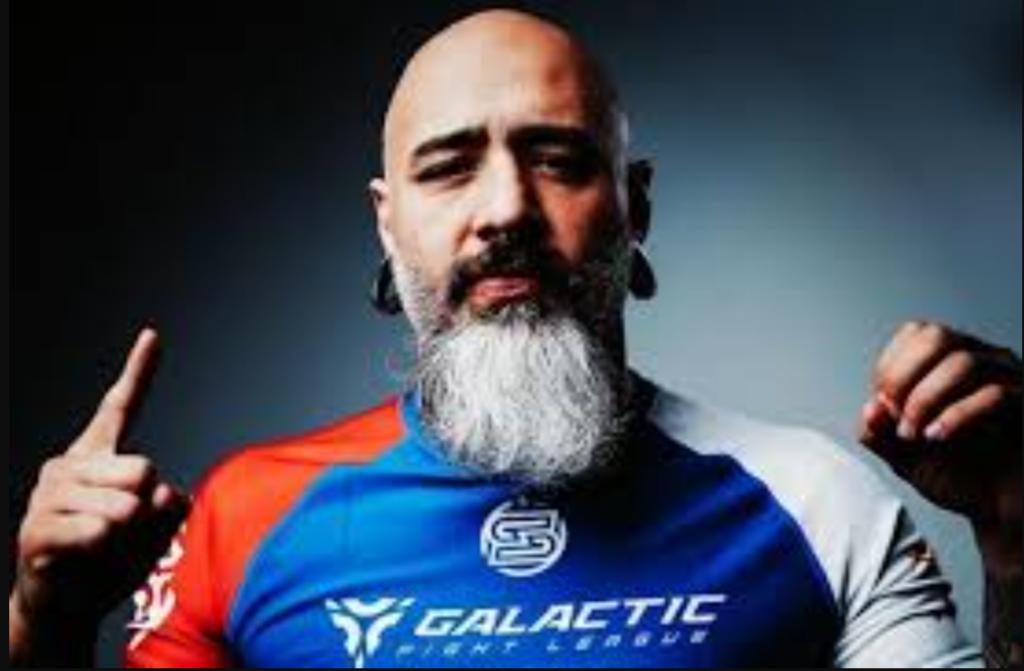




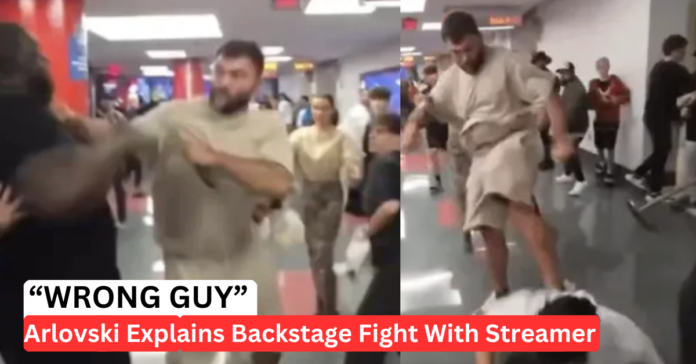
Andrei Arlovski Jack Doherty Brawl: Viral Clip Shows Doherty Crew “Got The Wrong Guy”

Andrei Arlovski Jack Doherty Brawl: Viral Backstage Clip Shows Streamer Crew “Got The Wrong Guy”
  • Former UFC heavyweight champion Andrei Arlovski got into a brief backstage fight with streamer Jack Doherty’s entourage after the Jake Paul vs Anthony Joshua event in Miami.
  • Multiple angles of the Andrei Arlovski Jack Doherty brawl went viral, showing Arlovski getting swung on and firing back while security rushed in.
  • Arlovski later framed it as self-defense, saying he was protecting his wife, child, and friends and that the group was “looking for content.”
  • His blunt summary of the night: they “got the wrong guy.”

The Jake Paul vs Anthony Joshua card in Miami had plenty of spectacle, but the clip that grabbed fight fans’ attention didn’t happen under the bright lights.

It happened in the concourse and backstage chaos, where former UFC heavyweight champion Andrei Arlovski found himself in a fast, messy scuffle with streamer Jack Doherty’s crew — and, in the process, delivered the most clickable takeaway of the weekend: they picked the wrong target.

If you’ve spent any time on combat sports social media, you already know why this blew up. It’s the collision of two worlds: influencer “content” culture and a veteran fighter who has spent decades dealing with real violence in controlled (and uncontrolled) environments. And on video, it looks like one side expected a reaction… just not that kind.

What Happened In The Andrei Arlovski Jack Doherty Brawl

Video footage circulating online shows Arlovski and Doherty crossing paths in a crowded walkway area. The moment starts like a typical “bump-and-argue” scene — quick words, people posturing, the usual entourage energy.

Then it escalates.

In the clearest angles, a member of Doherty’s group swings first. Arlovski responds immediately, throwing back with enough force to drop one person and force the rest of the crew to hesitate for a beat — the exact beat that separates “this is content” from “this is a problem.”

Security and bystanders pour in quickly. The scuffle doesn’t last long, but it’s chaotic: multiple people reaching in, shouting, trying to separate bodies, and Arlovski still throwing as he’s being pulled away.

If you’re looking for the reason fans are glued to the clip, it’s simple: it looks like one side expected a controlled confrontation… and the other side treated it like a real one.

Why The Clip Blew Up After Jake Paul vs Anthony Joshua

Big events create big hallways — and big hallways create moments. When you stack a mainstream boxing spectacle (Jake Paul vs Anthony Joshua), packed exits, security lanes, and influencer crews filming everything, you’re basically begging for an incident to go viral.

One detail that keeps coming up in coverage and fan breakdowns: Doherty appears to be wearing a wireless microphone during the walk.

That matters because it pushes the conversation toward intent — not just “two groups bumped into each other,” but “someone was recording a segment.”

That doesn’t automatically prove the entire thing was planned. Crowded arenas are messy. But when the footage shows microphones and cameras in the mix, the public reads the situation through an “influencer content” lens.

And once a “new angle” hits the internet, the debate turns into a frame-by-frame courtroom: Who initiated contact? Who threw first? Was it self-defense? Was it provocation?

That’s the modern fight ecosystem — the footage is the story.

Arlovski’s Statement: “I Just Stopped The Threat”

Arlovski didn’t leave the narrative entirely up to social media.

In comments attributed to him afterward, he pushed back hard on the idea that he “beat up” anyone. His framing was self-defense — specifically, stopping a threat around his family and people close to him.

First of all, I didn’t beat [up] anyone, I just stopped the threat.
– Andrei Arlovski –

He didn’t stop there. Arlovski also described the encounter as something more deliberate than an accidental bump in a crowded corridor — suggesting the group was hunting for a reaction and that the “content” setup was obvious in real time.

They just got the wrong guy, that’s all.
– Andrei Arlovski –

That line is doing a lot of work — because it turns the incident into a cautionary tale. In the influencer world, antagonizing strangers can be framed as a prank. In the fight world, antagonizing the wrong person becomes a fast lesson.

Who Is Jack Doherty, And Why Fight Fans Reacted The Way They Did

Doherty is widely known online for pushing boundaries to generate engagement — the kind of content where the “reaction” is the product. That’s exactly why the Andrei Arlovski Jack Doherty brawl landed differently with fight fans.

Combat sports culture has a built-in skepticism toward performative confrontation.

Most grapplers and fighters have seen the difference between playful roughhousing and genuine escalation — and the moment a punch gets thrown, you’re no longer in the “internet antics” category. You’re in the “real consequences” category.

That’s also why Arlovski’s name carries weight here. He’s not just a random guy who got clipped on camera.

He’s a former UFC heavyweight champion with decades of experience and a reputation for toughness — the kind of person you shouldn’t be testing in a crowded hallway, especially with family nearby and adrenaline in the air.

Influencer “Content” Meets Real Violence

The most interesting part of the Andrei Arlovski Jack Doherty brawl isn’t the punches themselves — it’s what the clip represents.

More and more, fight events have become content farms. Influencers show up to film, provoke, and package moments into short-form drama. Usually, the risk is minimized by numbers, security, and the assumption that most people will back down.

But that assumption fails when the target is a trained fighter who reads a swing as a threat and responds like a professional.

Arlovski’s takeaway — “stop the threat” — is a phrase you’ll hear in self-defense circles for a reason. It’s not about “winning a fight.”

It’s about ending the danger as quickly as possible. When that mindset collides with influencer provocation, you get exactly what we saw in Miami: a split-second shift from performative confrontation to a very real scramble.

And if there’s one reason this story will keep getting clicks, it’s because people can’t stop watching the same lesson play out:

If you’re chasing viral moments around fighters, eventually you’re going to run into someone who doesn’t care about the camera — and you’re going to learn what “the wrong guy” really means.
Top 10 Sweeps and Reversals Magid Hage DVD Review [2025]

Top 10 Sweeps and Reversals Magid Hage DVD Review

Key Takeaways

  • Beginner-friendly sweep menu built around 10 staple reversals you can plug into Gi or No-Gi right away.
  • Very “no fluff” structure: two volumes, short runtime, and each section is a recognizable position (tripod, butterfly, deep half, octopus, etc.).
  • Strengths: simplicity, timing, and leverage-first mechanics—great if you’re tired of “cool” sweeps you can’t land in live rounds.
  • Limitations: This is a Top 10 sampler, not a full guard system with exhaustive entries, troubleshooting, and chaining.
  • Rating: 7.5/10

TOP 10 SWEEPS AND REVERSALS MAGID HAGE DVD GET HERE

If your bottom game feels like a coin flip—sometimes you sweep, sometimes you just stall and hope—Top 10 Sweeps and Reversals Magid Hage DVD is meant to fix that with the simplest possible approach: pick high-percentage sweeps from common guards and hit them clean under pressure.

This isn’t positioned as a “secret move” instructional. It’s more like a fundamentals refresh that focuses on reliable off-balancing, correct angles, and finishes you can actually repeat in sparring without needing perfect athleticism or a super-specific reaction from your partner.

At its best, this kind of format is exactly what most grapplers need: fewer techniques, more trust. At its worst, a “top 10” list can feel like disconnected techniques. The big question for this review is whether Magid turns these 10 choices into something that feels like a usable system—or just a greatest-hits reel.

Mastering the Skill of Getting on Top

Sweeps are the hidden engine of Jiu-Jitsu progress. Submissions get the glory, but the ability to reverse and come on top is what makes your guard dangerous—especially once you start facing people who don’t hand you easy armbars or triangles.

The tricky part is that most “sweep instruction” fails at the same place: it shows the movement, but not the reason it works. Good sweeping is usually a blend of breaking posture, controlling a post, and creating a direction your partner can’t safely step into. When any one of those is missing, you end up muscling things and burning out.

That’s why I generally like the high percentage BJJ sweeps framing. It pushes you toward repeatable mechanics: controlling ankles on tripod-style attacks, separating knees in Single Leg X, lifting and steering in butterfly, or collapsing the hip line in deep half and octopus-style reversals. If you can consistently win posture and posts, you can sweep people who are stronger and more technical.

Grappling Origin Story: Magid Hage IV

Magid Hage IV has been around high-level rooms for a long time and is widely recognized in the community for his effectiveness, especially his reputation for the baseball bat choke. What matters for this particular instructional is that he’s not teaching sweeping like a highlight-reel athlete who expects every student to move the same way.

His broader reputation has always leaned toward practical finishes and clean fundamentals, even when he’s known for a “signature” submission. From the available background, he was introduced to Jiu-Jitsu early through his family, began training seriously young age, and reached black belt at a notably early age.

He’s also been associated with the Southern California training scene for years, which tends to produce a very “make it work in the room” style—less theory, more results. That’s a strong match for an instructional built around Magid Hage sweeps instructional style fundamentals: getting on top with the minimum number of moving parts.

Detailed Top 10 Sweeps and Reversals Magid Hage DVD Review

The Top 10 Sweeps and Reversals Magid Hage DVD is split into two volumes, and the structure is very straightforward: each “chapter” is a named position/sweep category (tripod/double ankle, seated guard, helicopter sweep, Single Leg X, butterfly, then armdrag, pendulum, knee lever, deep half, octopus). That’s 10 total techniques/segments, matching the title’s promise.

Because the runtime is relatively short for an instructional, the value here is not “endless variations.” The value is whether the details are clean enough that you can immediately add them to positional sparring and start seeing results.

Volume 1 – Basic Guards 

The opneing volume feels like the “open guard sweep toolkit” side of the set. It opens with the tripod and double ankle sweep, then moves through seated guard concepts, the helicopter sweep, Single Leg X options, and finishes with butterfly guard sweeps.

If you’re the type of grappler who wants a simple rule like “control the feet, tip them over, come up safely,” the tripod and double ankle sweep section is a strong place to start. These attacks tend to reward good distance and timing more than flexibility, and they also teach you a broader concept: if you can dominate the opponent’s base, you can sweep without needing to “win” a complicated grip battle.

The seated guard and helicopter sweep material adds a different flavor: more rotational off-balancing. This is where many people get sloppy—helicopter-style movement can turn into random spinning if you don’t understand when the opponent’s weight is actually committed.

Single Leg X is the most modern sweep hub in Volume 1. If you’ve been looking for a Single Leg X sweep tutorial that stays sweep-focused (instead of turning into a leg lock branching tree), this is where the DVD earns its place. Finally, butterfly guard is a smart finishing chapter because it’s one of the most common guards in both Gi and No-Gi, and it’s a position where small details decide everything.

Volume 2 – The Fun Stuff

Volume 2 shifts into more classic guard/closed-guard style mechanics and “come-up” reversals, built around armdrag, pendulum, knee lever, deep half guard, and octopus.

The armdrag chapter is a big deal for a “top 10” list because armdrags aren’t just sweeps—they’re direction changes. A good armdrag doesn’t merely pull the arm; it redirects the opponent’s shoulders so their base has to adjust. Pendulum and knee lever are also smart inclusions because they represent two different sweep principles.

The deep half guard is where a lot of people get stuck. They either can’t get underneath cleanly, or they get smashed and flattened before they can build anything. This chapter matters because it’s the part that can start turning a “bad half guard day” into a consistent reversal plan—especially if you approach it as a leverage problem rather than a speed problem.

The octopus section is an interesting choice because it’s both a reversal system and a survive-to-sweep approach when you’re forced into awkward half-guard-like scrambles. In practice, octopus-style reversals often reward patience and structure: don’t rush, connect your torso, then come up when the base is compromised.

Overall, part 2 feels like the “make sweeps work when you’re already in contact” half of the instructional—less open-space movement, more pressure and connection.

Mastering Sweeps in Four Steps

The fastest way to get value out of Top 10 Sweeps and Reversals Magid Hage DVD is to treat it like a 2–4 week training plan, not like a video you binge once.

Here’s a simple way to run it:

  • Pick two sweeps that match positions you already hit in sparring (example: tripod/double ankle + butterfly).
  • Drill for 10 minutes, but only the entry + off-balance, not the finish. The finish usually becomes easy once the off-balance is real.
  • Positional sparring: start in the exact guard position, give yourself 60–90 seconds to sweep, then reset.
  • Add one “backup” sweep from Volume 2 (like armdrag or knee lever) that triggers when your first option fails.

This format is where a short instructional shines: you can build confidence quickly. If you go into live rounds thinking “I’m only hunting these two sweeps today,” you’ll improve faster than if you try to copy all 10 techniques at once.

Also, don’t ignore the “reversal” part. Sweeps aren’t only for when you’re comfortable playing guard. They’re for when you get knocked to your hip, forced into half guard, or flattened for a second. That’s why having deep half and octopus in the mix makes the set more useful than a pure open-guard compilation.

DOWNLOAD TOP 10 SWEEPS AND REVERSALS MAGID HAGE DVD

Who Is This For?

Top 10 Sweeps and Reversals Magid Hage DVD is best for White and blue belts who need a reliable sweep base instead of random experimentation. Gi and No-Gi practitioners who want sweeps that translate without needing niche grips will also find plenty of good stuff in it.

So will the people who like stall on bottom because they don’t trust their off-balancing yet – no offense. It’s also useful for higher belts who want to tighten fundamentals or add sweeping options ot their game without having to watch entire systems and long-winded DVDs.

Who it’s not ideal for: Grapplers who want a full sweeping system with exhaustive entries, reaction trees, and advanced troubleshooting for each guard. Those looking for a hyper-specific competitive meta (for example, a deep dive into one guard with dozens of chained options) will also find this to be lacking in details or structure.

Pros & Potential Drawbacks

Pros

  • Straight to the point: two volumes, clear chapter titles, and no wandering into unrelated material.
  • High-transfer positions: tripod, Single Leg X, butterfly, deep half—these show up in almost every room.
  • Good “confidence builder” format: a top-10 list is easier to commit to than a 12-hour encyclopedia.
  • Works as a coaching resource: easy to structure classes around one chapter per session.
  • Leverage-first focus: this style helps smaller grapplers and beginners avoid strength-based habits.

Potential Drawbacks

  • Sampler by design: if you want a complete guard framework, this will feel light.
  • Not volume-heavy: the short runtime means some viewers will want more troubleshooting depth per position.
  • Limited chaining emphasis: You may need to build your own “if this fails, go here” connections in training.

Who are You Sweeping First?

As a concept, I like what Top 10 Sweeps and Reversals Magid Hage DVD is trying to be: a clean list of sweeps you can rely on when you’re tired of complicated sequences that only work on compliant partners. It gives you open-guard sweep staples and rounds out with connected reversals. It’s the kind of “save the position, then come up” material that shows up in real rolling.

Women Come Forward on Izaak Michell Sexual Assault Allegations, Danaher Speaks Out

Women Come Forward on Izaak Michell Sexual Assault Allegations, Danaher Speaks Out
  • Multiple women have now publicly alleged violations of consent involving Izaak Michell, with new statements continuing to surface.
  • One of the most detailed accounts came from Hannah Griffith, who said she felt “morally obligated” to speak up despite being a private person.
  • Another woman, Ariel De Haro, said she is not part of the Jiu-Jitsu community but chose to post a limited statement in solidarity with others.
  • John Danaher publicly responded to Griffith’s post, praising her for coming forward and referencing guidance around not compromising an “ongoing investigation.”
  • As the Izaak Michell sexual assault allegations gather, the biggest question is no longer whether the scene is paying attention — it’s what accountability and due process look like from here.

Izaak Michell Sexual Assault Allegations: The Testimonies Keep Growing

The latest wave of Izaak Michell sexual assault allegations has shifted from whispers and secondhand commentary into a clearer pattern: people putting their names behind what they say happened, and doing it in a way that’s measured, intentional, and focused on consent — not spectacle.

In recent days, after his dismissal from Kingsway Jiu-Jitsu by Gordon Ryan, new statements have been shared publicly that describe violations of consent and the emotional reality that often follows: fear, shock, shame, and the weight of believing you won’t be believed.

The common thread isn’t graphic detail — it’s the decision to stop carrying it alone.

That choice matters in any sport. In a tight-knit one like Jiu-Jitsu — where teams are families, reputations are currency, and social circles overlap — it can feel like stepping into a storm.

But that’s exactly why these testimonies are landing so hard: they’re not framed as “drama.” They’re framed as boundaries, and what happens when someone ignores them.

Hannah Griffith’s Statement and the Timeline Around Worlds

One of the most significant updates in the Izaak Michell sexual assault allegations came when Hannah Griffith shared a multi-slide public statement describing what she says happened to her — and why she decided to speak.

“Recently, I was sexually assaulted by Izaak Michell.”
– Hannah Griffith –

Griffith described the incident as a clear violation of consent — not a misunderstanding or “mixed signals.”

She also explained the timing: she said the alleged assault happened shortly before she traveled to compete at the IBJJF World Championships, and that the weeks that followed were emotionally overwhelming.

A key part of Griffith’s statement was the theme of silence — and why it can feel safer in the moment, even if it’s heavier long-term. She wrote about fear and shame, and the pressure that comes when the person being accused is well-known and influential inside a team environment.

Griffith also said she had support early, including from her brother. And she addressed something that instantly became part of the broader story: how her coaches and training environment responded once she spoke up.

“They removed Izaak from the gym and made it clear that my safety and well-being were their priority.”
– Hannah Griffith –

She also emphasized she knows many people don’t have that kind of support, which is part of why she said she’s speaking publicly now.

Griffith invited anyone who believes they may have been harmed by Michell to reach out to her directly, offering to connect them with confidential victim advocacy resources or direct them to authorities.

Ariel De Haro’s Post: “You Are Not Alone”

Another statement tied to the Izaak Michell sexual assault allegations came from Ariel De Haro, who identified herself as a realtor based in Austin, Texas.

De Haro wrote that she is “in no way part of the BJJ community,” but felt compelled to share a limited statement because of what she says she experienced — and because of what it might mean for other people weighing whether to speak.

“Months ago, I experienced a violation of my consent by someone I knew, Izaak Michell.”
– Ariel De Haro –

De Haro stressed that her silence wasn’t uncertainty — she framed it as fear, shock, and needing time to process. Just as important: she made it clear she is handling the situation privately and does not intend to share further details, while asking others to respect her privacy.

Her message wasn’t a call for internet pile-ons. It read like a flare in the dark — a way of telling other people that taking time doesn’t make you weak, and that protecting yourself doesn’t make you wrong.

And she ended with the line that has become a rallying point in these posts: you are not alone.

John Danaher’s Comment and What It Suggests About Process

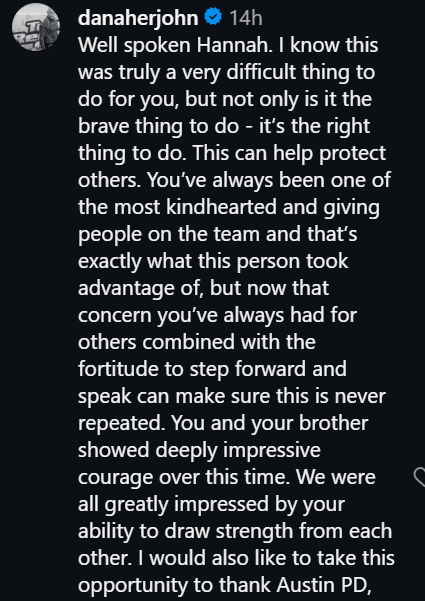
As the testimonies continued to circulate, one of the most closely watched responses came from John Danaher, who commented publicly on Griffith’s post.

Danaher praised Griffith for speaking up, calling it both brave and “the right thing to do,” and framed her decision as something that can help protect others.

But the most notable part of his comment wasn’t encouragement — it was what he referenced about process.

“Well spoken Hannah. I know this was truly a very difficult thing to do for you, but not only is it the brave thing to do – it’s the right thing to do”
– John Danaher –

Danaher also thanked Austin PD and victim advocacy representatives for their time and effort, and referenced protecting identities until victims were comfortable making statements.

Without adding details beyond what he wrote, the language itself signals that the situation is being treated seriously behind the scenes — and that public communication is being weighed against whatever formal steps may be underway.

For many readers, that matters because it draws a line between two forces the sport often struggles to balance: supporting those who come forward, and not turning an active situation into a content cycle that contaminates due process.

Izaak Michell Sexual Assault Allegations Danaher Speaks Out

The Community Is Watching Closely

The immediate reality is simple: the Izaak Michell sexual assault allegations are no longer a single account.

They’re a developing series of public statements from women describing violations of consent, alongside public commentary from a prominent coach referencing a process designed not to compromise an “ongoing investigation.”

At the same time, the public still lacks a clear, official picture of what’s happening legally — and that gap is where speculation thrives.

The most responsible thing the community can do right now is resist the temptation to fill in blanks with narratives that aren’t confirmed, while still taking firsthand testimonies seriously.

If there’s one clear through-line in the statements themselves, it’s this: people are speaking in order to reduce harm — to themselves, and to others who might be in the same position next week, next month, or next year.

And whether this moment becomes a turning point for how Jiu-Jitsu handles safety and accountability will depend on what comes next: how teams respond, how athletes use their influence, and whether the sport can hold space for both compassion and due process at the same time.

Lara Trump BJJ Training Follows Ivanka’s Viral Grappling Posts And Kid Belt Milestones

Lara Trump BJJ Training Follows Ivanka’s Viral Grappling Posts And Kid Belt Milestones
  • Lara Trump BJJ training started with a first session filmed for TV, focused on basics and self-defense.
  • Former Bellator fighter Leah McCourt oversaw the session and shared moments from it online.
  • Lara’s kids, Luke and Carolina, have already earned Grey belts under Carlson Gracie Jr.
  • The broader “family trend” ramps up after Ivanka Trump publicly shared her own Jiu-Jitsu training and talked about how it spread through the household.

If you’ve been following the steady drip of Trump-family Jiu-Jitsu content online, the latest update feels less like a surprise and more like the next domino falling: Lara Trump BJJ training is now officially a thing.

After Brazilian Jiu-Jitsu became a regular part of her household through her kids’ training, Lara Lea Trump recently stepped onto the mats for her first filmed session — with the “intro class” vibe leaning hard into fundamentals, self-defense concepts, and the classic Gi vs No-Gi talk that every new grappler gets on Day 1.

How Lara Trump Ended Up On The Mats

The most interesting part of this story isn’t that Lara tried a martial art — it’s the context around it. Jiu-Jitsu has already been embedded in the family routine through the kids, and this latest step reads like the parent finally joining in rather than starting from scratch.

That’s also why the moment landed so well online: it’s familiar.

Plenty of grapplers have watched Jiu-Jitsu enter the house through the children’s program first, then pull in a parent who initially planned to just sit on the bench and scroll their phone.

Only in this case, Lara Trump BJJ training arrived with cameras present.

The session was filmed for Fox News and positioned as an introductory experience rather than a “watch me roll” highlight reel.

That framing matters — because it sets expectations: fundamentals, controlled drills, and the broad-strokes conversation about why people start training in the first place.

Lara Trump BJJ Training: What Happened In The First Session

From what’s been shared publicly, Lara Trump BJJ training was less about athletic fireworks and more about the beginner on-ramp: movement patterns, practical concepts, and self-defense basics — the stuff that makes sense on TV and in real life.

Leah McCourt, a veteran mixed martial artist best known for her Bellator run, oversaw the session and posted about it afterward. Her caption gave a clear snapshot of what the class revolved around:

So much fun talking all my favourite things, MMA, Women’s Self defence, Brazilian Jiu Jitsu and the difference between wearing a gi and no gi.
– Leah McCourt –

It’s also worth noting what wasn’t emphasized: hard sparring. Everything about this looked like controlled instruction, not a “let’s see if you can survive a round” initiation. For anyone who’s coached beginners, that’s the smart move — especially when you’re filming.

Lara Trump BJJ Training

Ivanka Trump Jiu-Jitsu And The Family Domino Effect

The bigger click-driver here is the pattern: this isn’t a one-off celebrity dabble. Lara Trump BJJ training is the latest addition to what’s starting to look like a full-family Jiu-Jitsu phase.

Ivanka Trump has already made her own training public over the past year, including sharing footage and photos that showed her getting after it with experienced instructors.

She’s also spoken openly about how the whole thing started in a very normal way — not through politics or branding, but through a kid asking for confidence and self-protection.

One quote that keeps getting repeated because it’s genuinely relatable: her daughter was the spark.

It’s almost like a moving meditation… It’s like three-dimensional chess.
– Ivanka Trump –

Whether you love that description or roll your eyes at it, it’s a line that Jiu-Jitsu people instantly recognize. It’s also the kind of “outsider translating grappling” quote that spreads fast — because it communicates the obsession without requiring any technical knowledge.

And once the family narrative is established, Lara Trump BJJ training becomes part of the same arc: the sport spreads through the household, the adults get curious, and suddenly Jiu-Jitsu is the family activity.

The Trump Family Sticks With Jiu-Jitsu

Right now, Lara Trump BJJ training looks like a first step — an introduction, filmed and packaged in a way that’s friendly to non-grapplers. The more interesting question is whether it stays at “one TV segment” or turns into something consistent.

If the family keeps training, the next beats write themselves: more class footage, small milestones (first stripe, first live roll, first seminar), and — if they really get into it — the inevitable “why Jiu-Jitsu changed my life” soundbite that every new grappler eventually delivers.

Either way, it’s another reminder of a trend Jiu-Jitsu has been riding for years: once the sport gets into a family, it spreads. And in this case, it’s spreading in a very public way.

Locks and Levers Submission Geometry Joseph Capizzi DVD Review [2025]

Locks and Levers Submission Geometry Joseph Capizzi DVD Review

Key Takeaways

  • A short, concept-first upper-body submission course built around angles, leverage, and structure (not “muscling” finishes).
  • Most of the actionable material is anchored around the Kimura family and arm-locking mechanics from North-South, crucifix, and closed guard-to-mount.
  • Best for grapplers who already reach these positions and want cleaner, more “inevitable” finishing mechanics once they’re there.
  • The runtime and scope feel narrow for anyone expecting a broad submission encyclopedia or lots of positional entry work.
  • Rating: 7.5/10

SUBMISSION GEOMETRY JOSEPH CAPIZZI DVD DOWNLOAD HERE

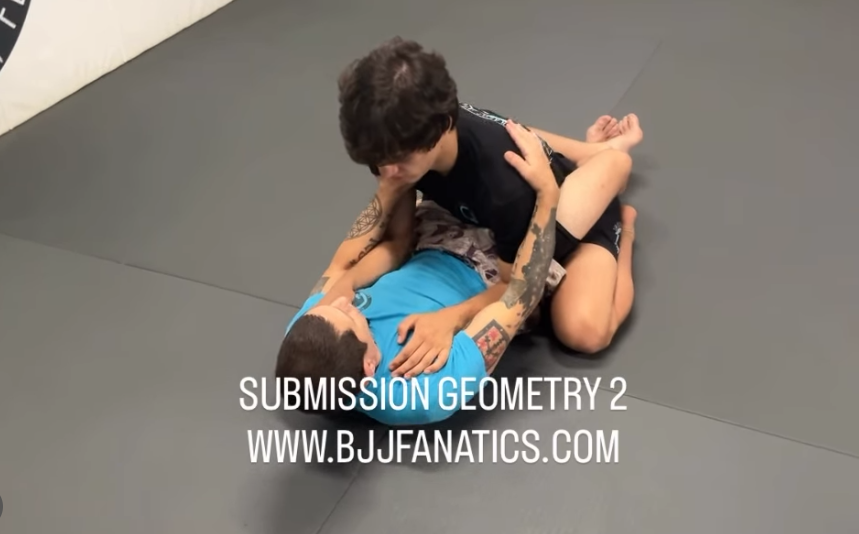
The Submission Geometry Joseph Capizzi DVD sits in a niche that a lot of instructionals claim to occupy, but rarely deliver on: making submissions tighter through mechanics rather than through adding more moves to your hard drive.

The premise is straightforward—if your finishes are inconsistent, it’s usually not because you “don’t know enough submissions.” It’s because your alignment is off, your lever is short, your opponent’s structure is still intact, or you’re trying to finish before your control is doing any real work.

This release is essentially Capizzi saying: stop treating armlocks like isolated tricks and start treating them like solvable geometry problems. If that sounds abstract, don’t worry—most of the material is shown through very recognizable positions and very recognizable families of attacks. You’re not being asked to reinvent your game. You’re being asked to clean up the physics.

The Submission Finishing Playbook

Submission geometry is a fancy label for something every good finisher learns the hard way: you win submissions by breaking structure, then using leverage to force the joint past its safe range.

The mistake most grapplers make is trying to jump straight to the breaking point. They’ll grab a Kimura grip and immediately crank. Or they’ll swing for an armbar without first winning the elbow line.

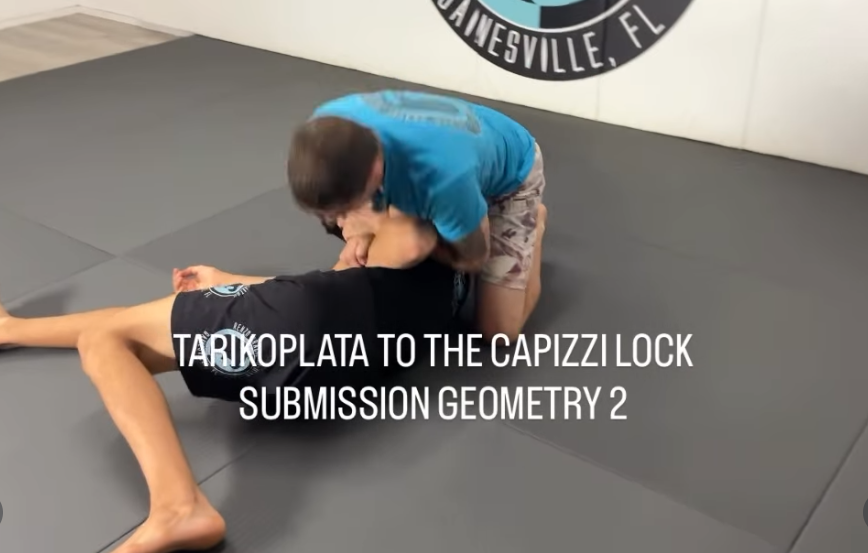
Or they’ll throw a Tarikoplata-style configuration without making sure the shoulder is truly pinned, and the opponent’s posture is dead.

The better model is: control first, then isolate, then shorten the lever, then apply pressure along the correct line. That’s why systems built around the Kimura trap, crucifix control, and closed guard armlocks can feel “unfair” when done well—your opponent isn’t fighting your strength, they’re fighting a losing structural battle.

The Submission Geometry Joseph Capizzi DVD leans into that idea by keeping the focus on repeatable mechanics across multiple positions. If you’re the kind of grappler who wants a reliable “finish engine” more than a bag of random submissions, you’re in the right neighborhood.

Joseph Capizzi

Joseph Capizzi comes from the Renzo Gracie lineage and is presented as a long-time high-level competitor and coach, with experience competing in major IBJJF events in both Gi and No-Gi. He’s also strongly associated with a tight, technical style typical of lighter-weight specialists—where precision matters because brute force simply isn’t on the menu against bigger training partners.

What makes Capizzi a credible instructor for this topic specifically is the consistency of the theme across his work: the idea that submissions should feel inevitable when the mechanics are correct. That’s a very “coach’s coach” lens—less about highlight finishes, more about why your submission fails at 80% and how to get it to 95% without changing your entire identity on the mat.

In other words, the Submission Geometry Joseph Capizzi DVD isn’t positioned as “watch this, and you’ll learn ten new cool moves.” It’s positioned as “watch this and your existing arm attacks stop leaking power.”

Full Submission Geometry Joseph Capizzi DVD Review

The course is relatively narrow in scope and runtime. If you want a massive encyclopedia, you’ll come away wishing for more. If you want your armlocks and Kimura-based attacks to feel cleaner and more repeatable—especially when your opponent is defending hard—this is a useful, focused addition.

Volume 1 – Modern Bent Arm Locks

The Locks and Levers Joseph Capizzi DVD starts in a very telling place: North-South, immediately tying the system to a control position where the top player can flatten posture and limit scrambling. From there, Capizzi uses the Kimura as the hub, showing variations and follow-ups that make sense as a single chain rather than disconnected endpoints.

The early chapters build through Kimura variations (including a hammer fist version), then connect into armlocks that live “inside” the trap—exactly the kind of detail that helps when opponents defend the obvious finish but still leave the arm compromised.

This is also where the Capizzi Lock is framed as part of the broader locks-and-levers theme rather than a random named technique. The big value here is the sense of continuity: you’re being nudged to think in terms of “I have the shoulder line and elbow line—what’s the cleanest lever available right now?” instead of “I must finish this one submission I decided on.

If you like Kimura trap entries as a practical attacking platform, this first volume is the clearest snapshot of how Capizzi wants you to treat that control as a system.

Volume 2 – Capizzi’s Crucifix

Part 2 shifts to crucifix, which is a smart choice if your goal is to teach “geometry” through control. The crucifix is basically a mechanical advantage generator: you’ve already removed one major defensive limb and created predictable reactions.

Here, Capizzi pushes the idea of stacking attacks—starting with dual versions of his signature lock concept, then moving into options that feel like audible calls based on what the defender gives you.

The most useful part of this section, conceptually, is the emphasis on recycling submissions: when an opponent escapes the first line of finish, they often expose the next lever if your control stays intact. That’s the difference between “I almost had it” and “I finish people from here all the time.”

The volume is short, but it’s focused, and it makes a strong case for building a crucifix submission chain that doesn’t rely on speed—just on denying structure until the arm is stuck in the wrong place. If you already play crucifix or want a better reason to start hunting it, the Submission Geometry Joseph Capizzi DVD is at its most “systematic” here.

Volume 3 – More Armlocks

Volume 3 is where the course feels most “Jiujitsu applicable” for the average student, because it lives in closed guard—an environment most people actually reach regularly.

Capizzi again uses the Kimura as a primary control point, then branches into his lock concept, a Barataplata, and a Rogers-style armlock configuration, before shifting into training-oriented pieces like a “90 degree” guard movement drill.

That blend matters: it suggests he’s not just showing you finishes; he’s trying to influence how you create the angles that make the finishes possible. The back half of the volume ties the submission threat to real outcomes: sweeping with the armlock threat, sweeping with the omoplata threat, and then continuing into mounted variations.

That’s a strong learning arc because it mirrors how closed guard attacks work against decent opponents—often you don’t get the clean tap first, but you force posture breaks, create reactions, and ride the threat into top position.

This is also where you’ll most naturally connect ideas like Tarikoplata variations and shoulder/arm alignment to actual rolling: you can test these quickly, because closed guard gives you reps on demand. In terms of “most usable for most buyers,” Volume 3 carries a lot of the practical weight of the Submission Geometry Joseph Capizzi DVD.

Add Armlocks, Don’t Substitute Them

To get real value from the Submission Geometry Joseph Capizzi DVD, treat it less like entertainment and more like a mechanics lab. The course is compact, so you can rewatch key segments without it becoming a six-week binge—and that’s a good thing, because this kind of material only sticks when you troubleshoot it under resistance.

A simple way to integrate it:

  1. Pick one hub position for two weeks. If you’re a top player, make it North-South. If you’re a guard player, make it closed guard. If you like back exposure and pinning, choose crucifix.
  2. Build a 3-attack loop. Example: primary lock → secondary armlock → tertiary transition (sweep or position upgrade). Your goal is not “finish the first move.” Your goal is “never lose the limb.”
  3. Positional spar with constraints. Start in the hub position with the grip/structure already in place and give your partner the job of defending intelligently. You’re training the geometry, not your entry timing.
  4. Audit your failures. When it doesn’t work, ask: Did I lose elbow line? Did their shoulder rotate back into safety? Did my lever get long? Did I rush the breaking pressure before the control was settled?

If you approach it this way, the Submission Geometry Joseph Capizzi DVD becomes a skill amplifier: fewer techniques, cleaner finishes, more predictable outcomes.

LINK: LOCKS & LEVERS SUBMISSION GEOMETRY JOSEPH CAPIZZI DVD 

Who Is This For?

This is best for solid white belts through black belts who already understand basic positional control and want their armlocks to stop feeling like coin flips. If you’re the grappler who keeps catching almost Kimuras, almost armbars, or almost Omoplatas, the focus on angles and structure is likely to help.

It also fits:

  • Guard players who want closed guard armlock sweeps that connect submission threats to top position.
  • No-Gi grapplers who like upper-body attacks and need a more reliable finishing framework.
  • Competitors who want tighter mechanics without adding complexity.

Who might not love it:

  • Brand-new white belts who are still struggling to recognize positions and control lines—this is refinement more than fundamentals.
  • People looking for lots of takedown-to-submission entry work (the emphasis is more on finishing once you’ve arrived).

In short: the Submission Geometry Joseph Capizzi DVD is a “finishing mechanics” buy more than a “build my whole submission game” buy.

Pros & Potential Drawbacks

Pros

  • Concept-first approach that prioritizes leverage and structure over memorization.
  • Strong cohesion around the Kimura family and arm-locking mechanics, making the material easier to integrate.
  • Multiple positions covered (North-South, crucifix, closed guard, and mounted follow-ups), which helps the system feel transferable.
  • Compact runtime makes it rewatchable—important for mechanics-heavy instruction.
  • Clear “chain mentality” that encourages recycling attacks instead of stalling when Plan A fails.

Potential Drawbacks

  • Scope is narrow: if you want a broad submission curriculum, this won’t cover that territory.
  • The value depends on whether you already reach these positions; entries are not the main event.
  • Because it’s compact, some buyers may want more depth, more examples, or more rounds/variations per scenario.

Locks and Levers

The Submission Geometry Joseph Capizzi DVD does a good job of delivering what its title implies: a mechanical lens on locks and levers, shown through practical upper-body submissions rather than abstract theory. The strongest parts are the way Capizzi connects familiar control positions (especially North-South and closed guard) to a consistent finishing philosophy—one that rewards patience, alignment, and smart chaining.

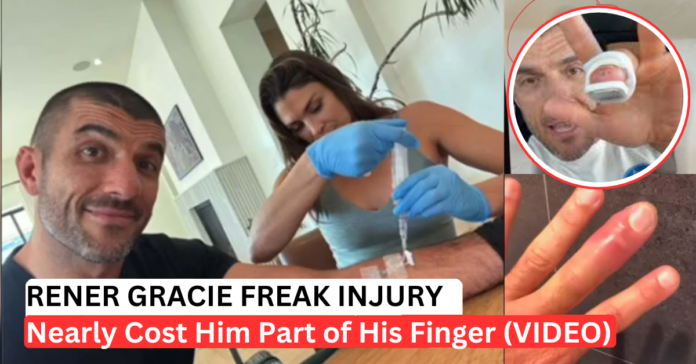
Rener Gracie Finger Injury: He Considered Fingertip Amputation After A Freak Pocket Accident

  • The Rener Gracie finger injury didn’t happen in training — it started when the tip of his middle finger got caught in his shorts pocket and snapped the tendon (mallet finger).
  • He chose surgery, with pins placed through the fingertip bones to lock the finger straight while it healed.
  • Weeks later, he accidentally hit the finger hard enough to bend the pins, and it soon swelled badly.
  • Emergency surgery removed the pins, and doctors later confirmed a bone infection, requiring a long antibiotic treatment via a PICC line.
  • The infection cleared, but the fingertip joint fused, leaving the finger stiff and vulnerable to repeated breaks.
  • Gracie seriously considered fingertip amputation to avoid ongoing problems and keep training.

Jiu-Jitsu has a special talent for producing injuries that sound made up. Torn ligaments from a gentle scramble, ribs cracked during “light” rounds… and now, a Rener Gracie finger injury that started with a shorts pocket and escalated into a bone infection serious enough that he weighed amputating the tip of his middle finger just to keep rolling.

In a video update, Gracie explained that the whole saga began with an everyday movement — adjusting his shorts — when the tip of his left middle finger caught in the pocket and snapped the extensor tendon that helps straighten the finger.

“The tip gets stuck in my pocket and that’s what snaps my tendon — unbelievable.”
– Rener Gracie –

From there, the “stupidest injury” turned into a months-long medical detour that even seasoned grapplers will find hard to ignore.

The Rener Gracie Finger Injury Started With A Pocket, Not A Grip Fight

Gracie has spent decades on the mats and is best known as a high-profile instructor and coach, so the irony was immediate: the worst finger issue of his life didn’t come from grip fighting, it came from clothing.

The snapped tendon caused mallet finger, where the fingertip droops and can’t actively straighten. Many athletes go the conservative route — splint and wait — but Gracie opted for a surgical fix where pins lock the fingertip like an internal splint.

“We embed two pins straight through the bones of your fingertip and it locks it out.”
– Rener Gracie –

At that point, it sounded like an annoying setback with a clear timeline. Then it got worse.

Mallet Finger, Bent Pins, And A Bone Infection: How It Escalated

Roughly three weeks after the pin procedure, Gracie traveled to London. During a demonstration, he accidentally struck the finger hard enough to bend the pins inside it. Ten days later, the swelling hit.

“My finger blows up like a strawberry.”
– Rener Gracie –

Doctors suspected infection and performed emergency surgery to remove the hardware. Imaging later confirmed the scary part: a bone infection, which typically means aggressive treatment and a long road back.

Gracie said he was put on an extended course of antibiotics through a PICC line — a catheter that delivers medication directly into the bloodstream for weeks.

The infection cleared and the bone regenerated strongly, but the combined trauma left him with a new problem: the bones at the fingertip fused, and he couldn’t bend the joint.

Fingertip Amputation Was On The Table — Until A Surgeon Pushed Back

A fused fingertip might not sound catastrophic… until you picture it catching on a Gi, slamming into the mat, or taking bodyweight in a scramble. A stiff joint turns into a lever, and repeated breaks become a real possibility.

Gracie explained that he was effectively facing an ugly choice: accept a permanently compromised finger and protect it every session, or remove the damaged tip and eliminate the “break it again” risk entirely.

“I was 100% prepared to cut it off purely for the love of jiu-jitsu.”
– Rener Gracie –

But the story didn’t end with amputation. Gracie said he was referred to a specialist hand surgeon who insisted on attempting to save the finger first.

The surgeon reportedly performed a procedure on December 23, and early results suggested Gracie could regain full function — a turnaround he described as the best Christmas gift he could have received.

Freak Jiu-Jitsu Injuries That Prove The Mats Aren’t Always The Problem

The Rener Gracie finger injury feels extra ridiculous because it began off the mats — but the escalation is a familiar Jiu-Jitsu pattern: small problem, bigger complication, long recovery.

And it’s not the only recent reminder that grappling injuries don’t always follow logic. Fans have watched a competitor suffer a shocking break to her own arm while applying a rear-naked choke.

A former UFC champion competing at Masters had his run derailed after feeling multiple pops in his knee during a leg entanglement.

And the clips that ignite the loudest arguments are usually the same: a heel hook held a beat too long, a scramble that turns into a pile-up, or a joint that simply goes the wrong direction.

Not every story is freaky. Plenty are just the wear-and-tear of a sport built on control and joint pressure. But the freak ones matter because they show how fast a “minor” issue can become a bigger, time-stealing problem — especially when infection enters the picture.

The Boring Lesson Hidden Inside A Clicky Amputation Story

It’s easy to click for the fingertip amputation angle. The takeaway is much less dramatic: don’t treat red flags like background noise.

Swelling that spikes days after an injury, sudden heat, unusual color changes, or pain that ramps up instead of down — those are the moments where “I’ll tape it and train” stops being toughness and starts being gambling with your training time.

If nothing else, the Rener Gracie finger injury is a reminder that Jiu-Jitsu isn’t just hard on the big joints. Sometimes it’s a tiny tendon, a stupid pocket, and one bad twist away from a decision you never thought you’d have to make.

Shoulder Clamp Ude Gaeshi Vlad Koulikov DVD Review [2025]

Shoulder Clamp Ude Gaeshi Vlad Koulikov DVD Review

Key Takeaways

  • A short, tightly focused instructional on turning the shoulder clamp into a true offensive “hub” for sweeps, submissions, and transitions.
  • Best suited for grapplers who like upper-body control from guard and want a simple, high-leverage way to knock opponents off base.
  • The technique menu is surprisingly broad for the runtime: it connects the clamp to armbars, back takes, triangles, omoplatas, plus several stand-up follow-ups.
  • Because it’s concise (and essentially one “volume”), you’ll need to do your own mat-time layering to make it stick under pressure.
  • Rating: 8.5/10

SHOULDER CLAMP UDE GAESHI VLAD KOULIKOV DVD DOWNLOAD

The Shoulder Clamp Ude Gaeshi Vlad Koulikov DVD is built around a simple promise: take a position that many people treat as just control, and turn it into an aggressive engine that keeps producing outcomes. If you’ve ever latched onto a shoulder clamp and felt like you were close to something—close to a tilt, close to a sweep, close to a submission—but couldn’t consistently convert, this is exactly the kind of niche instructional that can tighten the bolts.

What makes Vlad Koulikov a good fit for this topic is that he doesn’t treat the shoulder clamp as a single move. He treats it like a connector. In practical terms, that means you’re not learning just one sweep. If you like compact systems, you can drill tonight and start testing tomorrow. The Shoulder Clamp Ude Gaeshi Vlad Koulikov DVD lands in a very sweet spot.

The Clamp Concept in Grappling

The shoulder clamp is one of those control structures that sits in a weird place in Jiu-Jitsu. Plenty of people recognize it, and plenty of people touch it during scrambles, but far fewer people build an actual game around it. That’s a shame, because the clamp solves two of the biggest problems in sweeping and attacking from guard: posture and predictability.

When you clamp the shoulder correctly, you’re not just “hugging an arm.” You’re stapling the relationship between their shoulder line and their spine. That matters because sweeps don’t work when your opponent can freely post, widen their base, or simply back their head out of the line of force.

A good shoulder clamp takes away those easy resets. It also creates a strong asymmetry: one side of their body becomes heavy, pinned, and late to react. Ude gaeshi fits this perfectly because it’s not a brute-force lift. It’s a timing-based off-balance that rewards correct angles.

Done well, it feels like the opponent falls into the hole you dug for them. Done poorly, it feels like you’re trying to roll a sandbag uphill while they posture, strip grips, and start passing.

Another reason the clamp is underrated is that it naturally chains into attacks people already love: armbars, triangles, omoplatas, and back takes. That means the position can serve different “player types.” If you’re a sweep-first guard player, the clamp becomes a reliable way to get on top without gambling on low-percentage spins.

So the big question isn’t “is the shoulder clamp real?” It is. The question is whether someone can show you a clean set of controls and conversions that work against resistance. That’s where the Shoulder Clamp Ude Gaeshi Vlad Koulikov DVD tries to earn its keep.

Vlad Koulikov – A Walking Grappling Encyclopedia

Vlad Koulikov’s credibility comes from living in the overlap between grappling styles instead of staying inside one lane. He’s a lifelong grappler with deep roots in Sambo, plus experience across submission grappling and Brazilian Jiu-Jitsu, and he’s built a reputation for technical, detail-first instruction.

He’s also not shy about competing and pressure-testing. Across his competition background, he’s been associated with medal finishes in Sambo events in the U.S., representing Team USA in Combat Sambo at the World Championship level, and collecting wins in well-known American grappling circuits.

Beyond the medal lines, the consistent theme is that he’s a mechanics-focused technician—someone who cares about making a position work with leverage rather than relying on attributes. That matters for this specific topic because shoulder clamp attacks often fail for predictable reasons: loose connection, wrong head/hip alignment, and poor timing when the opponent bases or posts.

If you’ve followed Vlad’s broader work, you’ll recognize the pattern: he likes systems that start with control, then branch into throws, trips, submissions, and transitions. The Shoulder Clamp Ude Gaeshi Vlad Koulikov DVD is a small, concentrated version of that exact approach.

Shoulder Clamp Ude Gaeshi Vlad Koulikov DVD Review

The Vlad Koulikov instructional delivers the perfect Sambo for Jiu-Jitsu combination—guard control into stand-up resolution—won’t be everyone’s favorite flavor. But it’s honest. A lot of sweeps don’t end with a clean “ta-da, I’m in mount.” They end with both people trying to win the next two seconds. The Shoulder Clamp Ude Gaeshi Vlad Koulikov DVD acknowledges that and gives you routes for those moments.

Part 1 – Shoulder Clamp

The entire Shoulder Clamp Ude Gaeshi Vlad Koulikov DVD is essentially one concentrated volume, and it moves quickly. The opening is about defining the shoulder clamp through points of control—which is the right place to start, because most people think they have a clamp when they actually just have a hug.

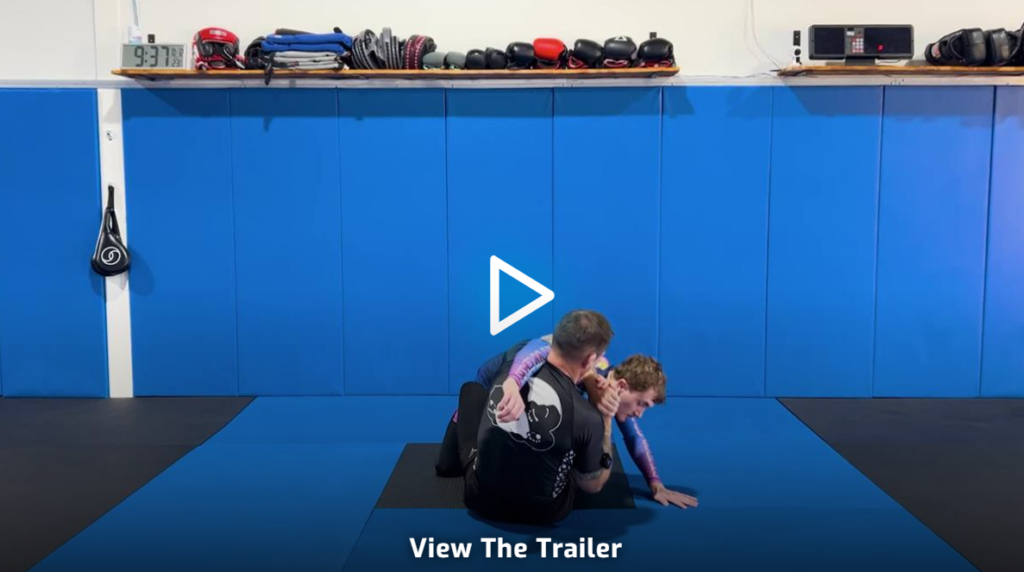
From there, the instructional gets straight into methods of obtaining the clamp and then immediately begins paying you off with outcomes. You see the shoulder clamp feeding into an inverted armbar, a juji roll, and a back take option—three branches that already cover a lot of real-world grappling situations: the opponent tries to posture, tries to turn, or tries to free the arm by rotating out.

The mid-section continues building the “hub” idea with options like a sweep to inverted armbar, a bear trap direction, and then clean transitions into classic submission threats like the triangle and the omoplata. This is where the course feels most useful to everyday grapplers: it’s not asking you to learn exotic movement. It’s showing you how the clamp can force familiar positions to become available more often.

Part 2 – Throws and Takedowns

Then the Shoulder Clamp Ude Gaeshi Vlad Koulikov DVD takes an interesting turn that will make sense to anyone who thinks like a grappler rather than a “guard-only” specialist: once you start using a clamp to disrupt posture, you can end up in transitional moments that look like stand-ups, half stand-ups, or clinch-y scrambles.

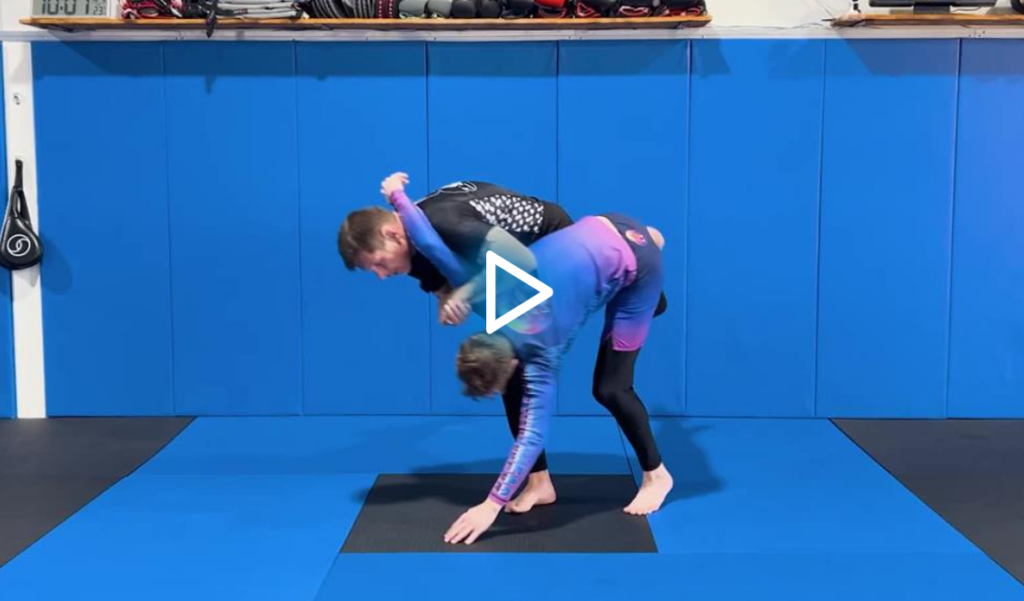
Vlad leans into that reality with a set of follow-ups that include a floating knee cut pass idea, plus a run of standing options (including recognizable throw/trip names like Sasae, Uchi Mata, Tai Otoshi, Harai Goshi) and a few wrestling-adjacent finishes like sum gaeshi and an ankle pick option.

Merging Sambo and BJJ

The best way to use the Shoulder Clamp Ude Gaeshi Vlad Koulikov DVD is to treat it like a micro-curriculum you revisit repeatedly, not like a “watch once” instructional.

To start, pick one entry into the shoulder clamp and one finish (the Ude gaeshi-style reversal concept, for example). Drill it for a while, then do positional rounds starting from the clamp. Your only goal is to keep the clamp connected long enough to force the opponent to react.

Later, you can add exactly one secondary outcome—either a back take, an armbar direction, or a triangle/omoplata pairing. This is how the shoulder clamp becomes reliable: you’re not “doing moves,” you’re punishing predictable defenses.

If you like the stand-up and scramble resolutions shown in the instructional, simply isolate that phase. Start from a near-sweep where the opponent posts and begins to rise. Your goal is to either finish the sweep clean or transition to the next control without losing connection. This is where people usually abandon the clamp too early.

GET IT HERE SHOULDER CLAMP UDE GAESHI VLAD KOULIKOV DVD

Who Is This For?

The Shoulder Clamp Ude Gaeshi Vlad Koulikov DVD is best for white belts to blue belts who already understand basic guard control and want a simple, high-percentage sweep/attack hub that doesn’t require crazy flexibility. Guard players who like upper-body connection (overhooks, head-and-arm control, clamp-style grips) wil also enjoy the material in this DVD.

The instructional will also be beneficial for No-Gi grapplers who want a shoulder clamp setup that can connect to front headlock-y or scramble-friendly finishes. I think that those that’ll love it the most are cross-training folks (Sambo/Judo/Wrestling-curious) who enjoy systems that don’t pretend grappling is neatly separated into “ground” and “standing.”

On the other hand, brand-new beginners who don’t have decent posture control yet, grip awareness, or the ability to maintain connection under light resistance might struggle with the material. The ideas are accessible, but you’ll need some basic mat literacy to cash them in.

Pure “Gi-only” students who want deep lapel-based variations and grip sequences might say this is boring stuff, as it is super direct. The system can still apply, but the emphasis here is clearly broader grappling mechanics rather than Gi-specific grip tangles.

Pros & Potential Drawbacks

Pros:

  • Control-first framing. The instructional treats the clamp like a position with requirements, not a vague squeeze-and-hope moment.
  • Immediate conversion options. You’re not stuck doing minutes of theory before seeing how the clamp leads to sweeps and submissions.
  • Good chaining logic. The system connects to familiar attacks (armbar/triangle/omoplata/back takes), which makes it easier to integrate into existing guard games.
  • Acknowledges the “scramble reality.” Including stand-up or transitional resolutions is practical for people who compete or roll hard.
  • Easy to rewatch and drill. The short runtime makes it genuinely usable as a repeated study tool.

Potential Drawbacks:

  • It’s short. If you want hours of layered troubleshooting, you may feel like you’re done right when you want “more.”
  • Some names, fewer long explanations. Because it covers a spread of options quickly, you’ll need to slow it down in training and build your own reps to solidify timing.
  • Not a full guard system. It’s an offensive hub from the shoulder clamp, not a complete guard program with entries from every scenario.

The Sambo Connection

If you like compact, mechanics-heavy instructionals that give you a repeatable position and a handful of sharp outcomes, the Shoulder Clamp Ude Gaeshi Vlad Koulikov DVD is a smart pickup. The shoulder clamp is a legitimately underrated control, and this course does a good job of turning it into something more than “a place to stall.” You get direct pathways into armbars, triangles, omoplatas, back takes, and a few realistic transitional finishes that acknowledge how scrambly sweeps often become.

Richie Boogeyman Martinez Retires After Winning No-Gi Worlds 2025 Gold

Richie Boogeyman Martinez Retires After Winning No-Gi Worlds 2025 Gold
  • Richie Boogeyman Martinez retires from professional competition right after taking gold at IBJJF No-Gi Worlds 2025.
  • He won the Master 3 super-heavyweight division by running through four matches in an 18-man bracket.
  • Martinez finished every match the same way: rubber guard to the Carni, the omoplata variation that’s become a signature of his game.
  • After the final, he left his black belt on the mat — a traditional gesture that signals retirement from competition.
  • The move caps a career that helped define 10th Planet’s rise in elite No-Gi grappling.

A Storybook Ending in Las Vegas

Richie Boogeyman Martinez retires on the kind of ending most competitors only joke about: win No-Gi Worlds, leave the belt on the mat, and walk away.

At the 2025 IBJJF No-Gi World Championship, Martinez entered the Master 3 super-heavyweight division and battled through four matches to claim gold.

The bracket included 18 black belts in the same age range, and it demanded more than a single “good day” — it demanded a game that holds up under pressure.

Martinez delivered it with a familiar blueprint. In every match, he relied on 10th Planet’s trademark rubber guard and finished with the Carni, an omoplata variation from that position that has followed him for years.

When the final ended, he set his black belt down on the mat and let the gesture speak for itself.

“My Farewell tournament wasn’t about chasing anything new. It was about trusting the Jiu Jitsu I’ve trained and lived by for so many years.”
– Richie Martinez –

From Breakdancing to BJJ Black Belt

In grappling, retirements can be flexible. People step away, come back, and step away again. But when Richie Boogeyman Martinez retires in his 40s, with a full academy to run, it lands differently.

Martinez has competed less frequently in recent years, but his name still carries weight in the No-Gi world: he was part of the first wave of elite 10th Planet competitors who proved the system could work against the best in the sport.

As 10th Planet grew from “that weird rubber guard team” into a major force, Martinez was one of the faces people associated with that shift.

That’s also why the belt-on-the-mat moment matters. It wasn’t just a personal milestone — it was a visual marker that one of the affiliation’s most recognisable originals is turning the page.

Martinez is a black belt under Eddie Bravo and is widely known by the nickname “Boogeyman,” a name he originally used during his breakdancing career.

Alongside his younger brother Geo Martinez, he became well known in California’s B-boy scene before eventually moving into grappling. The brothers would later become known among fans as the “Freak Brothers,” a label that fits both their creativity and their willingness to do things differently.

That background helps explain why Martinez’s Jiu-Jitsu never looked like a standard “No-Gi fundamentals” template. From early on, his approach leaned into movement, misdirection, and chaining attacks from angles opponents weren’t comfortable defending.

Richie Boogeyman Martinez Retires: A Career Built on Being Hard to Copy

Plenty of athletes have a signature technique. Not many have a signature style — something that’s immediately identifiable even if you don’t know who you’re watching. Martinez is one of those rare cases.

His competitive résumé includes high-level results across multiple rulesets and eras.

He took silver at the 2016 IBJJF No-Gi World Championship at Master 1, finished runner-up at the first EBI Invitational in 2014, and also earned runner-up honours at the 2015 Onnit Invitational. Earlier, he collected wins at events like NAGA Phoenix and NAGA Las Vegas in 2014.

But the bigger story is what his success represented: a proof-of-concept that an unorthodox system — built around rubber guard control, attacks like the omoplata, and front-headlock threats like the Japanese necktie — could translate to elite competition.

Even as the wider No-Gi meta shifted toward wrestling-heavy scrambles and leg lock systems, Martinez stayed committed to his lane. And at No-Gi Worlds 2025, he didn’t just win — he won with the same ideas he’s been known for all along.

Richie Boogeyman Martinez Retires After No-Gi Worlds 2025

The Legacy: Competitor Turned Coach

Retirement doesn’t remove Martinez from the sport — it just changes where we’ll feel his presence most.

As a coach, he’s been credited with helping develop the next generation of 10th Planet talent, including standouts like Keith Krikorian and PJ Barch. If Richie Boogeyman Martinez retires from competition for good, it won’t feel like the end of his story.

It’ll feel like a changing of the guard: the athlete stepping back, the teacher stepping forward, and the same creative Jiu-Jitsu continuing through the students he’s shaped.

Reporting notes (not part of the article): Key event details (No-Gi Worlds 2025 win, 18-man bracket, four Carni finishes, belt left on the mat) were cross-checked against the provided write-ups.

The Grapplers Recovery System Alvaro Romano DVD Review [2025]

The Grapplers Recovery System Alvaro Romano DVD Review

Key Takeaways

  • This is a BJJ recovery mini-course focused on getting your joints and tissues back to “trainable” after hard rolling, not building strength or a new S&C plan from scratch.
  • The structure is simple: 2 volumes covering static stretching and dynamic mobility + partner-assisted stretching, with a strong “do this right after training / on off-days” vibe.
  • The biggest win is its low-friction usability: no equipment, no complex programming, just repeatable recovery blocks you can plug into real Jiu-Jitsu life.
  • The main limitation is also its identity: if you want deep rehab protocols, strength progressions, or highly individualized fixes, you’ll need to pair it with something more comprehensive.
  • Rating: 8/10

GET HERE GRAPPLERS RECOVERY SYSTEM ALVARO ROMANO DVD

Recovery instructionals are tricky to review because everyone wants the same result—less pain, more mat time, fewer “I woke up like a question mark” mornings—but everyone arrives with different problems. Some people are cooked from No-Gi scrambles and sore necks.

Others are Gi players with angry fingers and hip tightness from endless guard rounds. The Grapplers Recovery System Alvaro Romano DVD aims at that messy middle ground: practical, repeatable recovery work that fits into the schedule of someone who trains Jiu-Jitsu more than they stretch.

Instead of selling a complicated “12-week transformation,” this is positioned as a system you can run consistently, with mobility, stretching, and breathing-based work designed around what grapplers beat up the most—hips, lower back, shoulders, neck, and the thoracic spine. It’s short, direct, and intentionally accessible, which is exactly what most athletes need when the post-class adrenaline fades, and the couch starts calling.

How Limber Should You be for BJJ?

Most grapplers don’t get hurt from one dramatic moment. They get hurt from the boring stuff: accumulated fatigue, repeated positions, and the gradual narrowing of the range of motion that makes normal movements start feeling “sticky.”

If your hips stop rotating well, your guard retention becomes harder. If your thoracic spine is locked up, your posture and breathing suffer, and now you’re compensating with your neck. If your shoulders live in forward roll, frames start collapsing, and your pummelling feels weaker. None of that sounds dramatic… until it becomes chronic.

It calms the system down after intensity. Hard rounds are a nervous-system event. If you finish class and stay in “fight mode,” you’ll carry that tension into sleep and wake up stiff.

It also restores range of motion you actually use. Grappling is rotational, asymmetrical, and full of flexion/extension demands. Your body adapts to what you repeat—half guard crunches, shoulder pressure, hunched grip fights—and it tends to adapt by getting tight.

That’s the lane this instructional sits in. It isn’t trying to replace a physio or a strength coach. It’s trying to give you a reliable “reset” that supports training consistency.

Ginastica Natural Founder Alvaro Romano

Alvaro Romano is best known in the Jiu-Jitsu world as the creator of Ginástica Natural, a movement and conditioning method built around bodyweight training, fluid ground movement, and the blending of athletic development with broader health and longevity ideas.

His background is rooted in physical education and long-term work with athletes, and his name has been attached—across different eras—to the broader conversation of “how do fighters stay functional when the sport is constantly taking something from their body?”

What’s relevant for this review is not the mythology, but the fit: a recovery instructional benefits from an instructor who has spent decades thinking about movement quality, mobility, and how an athlete’s body holds up over time.

The Full Grapplers Recovery System Alvaro Romano DVD Review

The Grapplers Recovery System Alvaro Romano DVD is lean by instructional standards: two volumes and a clear split between static stretching and more active mobility / partner work. That simplicity is a feature, not a bug—because recovery content tends to work best when it’s easy to revisit.

Volume 1 – Static Stretching

Volume 1 is built around static stretching, presented in two parts. This is the “downshift” volume: slower work you can slot in after training, later in the evening, or on a lighter day when your body feels compressed.

The structure makes sense for grapplers because static stretching is less about chasing extreme flexibility and more about restoring comfortable positions: hips that open without pinching, a lower back that doesn’t feel like it’s bracing for impact, and shoulders that can move without that clicky, protective tension.

The real value here is that it’s packaged as a routine rather than a random list of stretches. Grapplers tend to cherry-pick: “I’ll stretch my hamstrings because they feel tight,” while ignoring the chain of issues that made them tight in the first place. A guided sequence helps you stay honest—and helps you actually finish.

Volume 2 – Dynamic Mobility

Volume 2 shifts toward dynamic mobility movements and partner-assisted stretching, broken into a clear series of segments. This is the “get moving again” volume—useful pre-training as a warm-up (especially if you’re stiff from sitting all day), and also useful post-training if you want to restore movement without dropping straight into long holds.

The partner stretching sections are the standout conceptually because they match real gym life: training partners are already there, and grapplers already understand controlled pressure and positioning. When done responsibly (and with communication), partner-assisted stretching can help you explore range with more precision than you can get alone—especially around hips, shoulders, and the torso.

The key is that it should feel like guided mobility, not a who-can-hurt-who contest. If you’ve ever had someone “help you stretch” like they were trying to pass your guard, you know exactly what not to do.

Overall, Volume 2 feels like the bridge between “I’m tight” and “I’m functional again,” which is often what you need to keep training frequency high without your body protesting.

Smart Mobility Drills for Grapplers

If you buy a recovery instructional and treat it like entertainment, you’ll get entertainment results. The best way to use this system is to build it into your week with the same seriousness you give technique study.

After hard training (2–4x/week), try to pick one short block from the system, focus on the areas that get smoked in your style (hips/low back for guard players, shoulders/neck for pressure passers, etc.). On off-days, you might opt for a fuller session when you’re not rushed, and pay attention to breathing and pacing.

Before training focus on the dynamic mobility concepts from Volume 2 to arrive at the first round already moving well. The point isn’t to become a yogi overnight. The point is to show up to class with better movement options, recover faster between sessions, and reduce the background tightness that makes everything—guard retention, passing posture, scrambling—more expensive.

This is also one of those systems where consistency beats intensity. If you do it at 70% effort, four times a week, you’ll usually feel better than if you do it once at 110% and then disappear for ten days.

GRAPPLERS RECOVERY SYSTEM ALVARO ROMANO DVD DOWNLOAD

Who Is This For?

The Grapplers Recovery System Alvaro Romano DVD is best for virtuall all grapplers of any belt level (white belt to black belt). The caveat is that you can follow basic movement instructions and aren’t trying to turn stretching into a competition.

Hobbyists training 2–4 times per week who want to feel better day-to-day and keep training without accumulating unnecessary aches will also benefit from this. So will competitors in hard training cycles who need a repeatable recovery routine that doesn’t require equipment or a full gym setup.

Finally, the OGs or “mat veterans” who have learned the hard way that durability is a skill—and that the cost of training is paid in recovery now have a new tool to try and get some Mojo back.

People looking for a fully individualized rehab plan for a specific injury as well as grapplers who want strength training progressions or performance programming (this is recovery-first, not a strength block), might find it less useful.

Pros & Potential Drawbacks

Pros:

  • Simple structure that you’ll actually repeat: two volumes, clear themes, and routines that fit real training schedules.
  • BJJ-specific emphasis: it’s framed around the common problem areas grapplers hammer—hips, back, shoulders, neck, and rotational movement.
  • No equipment required: easier to stay consistent whether you’re at home, at the gym, or traveling.
  • Includes partner work: a practical addition for athletes who train in groups and want guided range work with feedback.
  • Pairs well with any style: guard players, passers, wrestle-heavy No-Gi athletes—everyone benefits from better range and calmer recovery.

Potential Drawbacks:

  • Not a deep-dive medical/rehab course: if you need assessment-driven injury rehab, this won’t replace a qualified professional.
  • Limited breadth by design: advanced athletes may want more variation, longer programming guidance, or more granular “if/then” solutions.

Pain Free Grappling

Recovery content lives and dies by one question: will you use it when you’re tired? The Grapplers Recovery System Alvaro Romano DVD does a good job of keeping the barrier to entry low while still delivering a structured approach—static stretching, dynamic mobility, breathing emphasis, and partner options—that makes sense for the way grapplers actually train.

It’s not pretending to be everything. It’s a compact, BJJ-oriented recovery toolkit designed to help you feel better, move smoother, and stay on the mats longer—especially if you’re the type of person who trains hard but knows you’re leaving mobility “money on the table.”

The Bread and Butter Series Bubba Jenkins DVD Review [2025]

The Bread and Butter Series Bubba Jenkins DVD Review [2025]

Key Takeaways

  • The Bread and Butter Series Bubba Jenkins DVD is a short, fundamentals-first wrestling mini-system focused on defence, tie-ups, and high-percentage transitions rather than “move-of-the-day” flash.
  • Best value for No-Gi grapplers and MMA-minded athletes who want reliable ways to survive front headlocks, shut down shots, and win hand-fighting exchanges.
  • The structure is clean (3 volumes), but the overall runtime is compact, so you’ll need to rewatch and pressure-test the ideas to get full mileage.
  • There’s a clear effort to bridge into grappling (including a front headlock segment framed for BJJ), but it still leans heavily wrestling-first.
  • Rating: 7/10

BREAD AND BUTTER SERIES BUBBA JENKINS DVD DOWNLOAD

The Bread and Butter Series Bubba Jenkins DVD is exactly what the name implies: a small set of techniques Jenkins trusts under pressure, aimed at making your stand-up exchanges more repeatable. Instead of promising a sprawling takedown encyclopedia, it narrows in on three practical lanes that decide a lot of real rounds—front headlock defence, shot defence, and cleaning up tie-ups so you can get to your attacks without eating constant snaps, whizzers, and scrambles.

If you’re a Jiu-Jitsu athlete who’s tired of the same pattern—get grabbed, get snapped, panic-shot, end up sprawled on—you’ll recognise why this approach is appealing. The question is whether this particular package is deep enough to justify the time (and the purchase) for your level and ruleset.

After going through it, the answer is: useful, especially for No-Gi and MMA crossover, but it has a few limitations that keep the ceiling at “solid toolset” rather than “complete system.”

A Wrestling Game That Works Under Pressure

“Bread and butter” wrestling isn’t just about the takedown itself—it’s about the battles that happen before the takedown: posture, head position, grips, and the ability to keep moving without giving away clean reactions. In grappling terms, these are the exchanges that decide whether you end up playing guard on your terms… or getting dragged into a front headlock and spending the next minute defending your neck while your opponent circles to your back.

A big theme in the Bread and Butter Series Bubba Jenkins DVD is that defence isn’t passive. Good defence creates offence—by forcing the attacker to overcommit, opening angles, and letting you come out of bad positions into something stable. That matters in No-Gi where collar ties and front headlocks show up constantly, and it matters even more in MMA where giving up posture or exposing your hips can turn a “grappling exchange” into a bad night fast.

The other often-missed part is tie-up hygiene. Plenty of BJJ athletes learn a couple of shots, but they never learn how to clear hands and win inside position consistently enough to hit those shots without crashing into frames and underhooks. When you fix that layer, your entire stand-up improves—even if your “takedown game” stays relatively simple.

Bubba “Bad Man” Jenkins

Bubba Jenkins has a wrestling résumé that actually matches the way he teaches here: competition-tested, pressure-friendly, and built around doing the same things well. He’s an NCAA Division I champion and a Junior World gold medalist in freestyle, which already signals that the “fundamentals” he’s talking about aren’t beginner-level fluff—they’re the repeatable mechanics elite athletes lean on.

Jenkins also comes with a long run in professional MMA across major organisations, which tends to shape how he prioritises reliability: you’ll see a consistent bias toward techniques that keep you safe in scrambles and don’t rely on perfect timing. For grapplers, that’s usually a good thing—especially if you compete, train No-Gi often, or simply want your stand-up to stop feeling like a coin flip.

The Bread and Butter Series Bubba Jenkins DVD Review

The Bread and Butter Series Bubba Jenkins DVD is organised into three short volumes. Each one is tight and theme-driven, and the chapter naming makes it clear what Jenkins is emphasising: recurring defensive series, specific transition patterns, and simple tie-up solutions that funnel into attack options.

Volume 1 – Front Headlock Defence

Volume 1 is built around surviving and escaping one of the most common BJJ-wrestling collision problems: the front headlock. The chapter list signals a series-based approach—multiple answers and variations rather than a single escape you’re supposed to force every time.

You get several named sequences (including variations on the “mixer”), plus specific transitions like a guillotine step-over and a body lock follow-up. The standout for grapplers is the explicit “front headlock for BJJ” segment, which helps anchor the material to how people actually grab heads in No-Gi rounds, not just in a wrestling room.

Volume 2 – Shot Defence Series

Volume 2 is shorter and tighter, focusing on shot defence with a handful of connected responses. The theme is clear: don’t just sprawl and hope—have structured ways to move through the defence and come out somewhere productive.

The chapter names show repeated returns to the same core ideas (for example, the mixer appears again), plus a step-over, roll-through, and a Whizzer roll-through option. If you’re a Jiu-Jitsu athlete who gets stuck in that awkward mid-sprawl limbo—hips back, head down, no clear direction—this volume gives you a framework to move.

The trade-off is depth: because it’s compact, you may need to treat it like a “go-to menu” rather than a fully explained troubleshooting guide.

Volume 3 – Cleaning Tie-Ups

Volume 3 is about hand-fighting and tie-up clarity—how to clear, redirect, and create lanes for attacks without forcing ugly entries. You’ll see straightforward solutions like drags and slide-bys, then branching attack options, and a noticeable focus on Russian tie variations (including what to do when the opponent defends).

There are also more specific control ideas (like wrist trap ) that point to Jenkins’ preference for winning the exchange before you ever commit to a shot. For BJJ athletes, this is the volume that can quietly change your stand-up the most—because if you can reliably clean tie-ups, you’ll spend less time reacting and more time choosing when to engage.

Putting the Theory to Pracice

To get real returns from the Bread and Butter Series Bubba Jenkins DVD, treat it like a small training block, not a one-night watch. The best use-case is picking one lane per week:

  • Week 1: Front headlock defence (start from front headlock positions during positional rounds)
  • Week 2: Shot defence (start from failed shot / sprawl situations and demand a clean finish to the exchange)
  • Week 3: Tie-up cleaning (start standing with collar ties/inside ties and focus only on clearing + re-engaging)

The key is to pair the material with constraints that reflect live grappling: short rounds, repeated resets, and a clear “win condition” (escape the headlock and get to a stable position; defend the shot and get to an angle; clear the tie-up and get to your preferred contact).

That’s also where the wrestling-first feel becomes a positive—because these sequences are meant to function at speed, not just look clean in drilling. One caution: some of the movement-based defences (like cartwheel-style reactions) can be risky if your timing and spatial awareness aren’t there yet.

If you’re not confident, scale the value by focusing on the concepts—head position, hips, angles, and re-attacking—before you commit to the more dynamic options.

GET IT HERE BREAD AND BUTTER SERIES BUBBA JENKINS DVD

Who Is This For?

The Bread and Butter Series Bubba Jenkins DVD is best for:

  • No-Gi white belts with mat time through advanced blue belts who need their stand-up to stop being chaotic.
  • BJJ competitors who keep getting stuck in front headlocks, snap downs, and sprawls during tournaments.
  • MMA-focused grapplers who want reliable defensive structure that doesn’t depend on perfect grips.
  • Coaches looking for a small set of teachable stand-up answers they can plug into class without turning the room into a pure wrestling practice.

However, it’s less ideal for:

  • Gi-only players who don’t spend much time in No-Gi tie-ups and collar ties.
  • People looking for a massive takedown library or a “complete wrestling for BJJ” course.
  • Brand-new beginners who still need stance, motion, and basic shot mechanics explained in slow, foundational detail.

Pros & Potential Drawbacks

Pros:

  • Clear, theme-driven structure: front headlock defence, shot defence, and tie-up cleaning all connect logically.
  • Emphasis on repeatable solutions over highlight-reel techniques.
  • Includes explicit grappling relevance with a front headlock segment framed for BJJ.
  • Tie-up volume is particularly practical for improving entry quality and reducing “panic wrestling.”
  • Compact enough to revisit often—good for athletes who prefer a small menu they can actually remember.

Potential Drawbacks:

  • Short runtime: you may want more troubleshooting detail and more scenario coverage per theme.
  • Wrestling-first framing means some viewers will need to do the work of translating details into their specific Jiu-Jitsu ruleset and habits.

Stick to Bread and Butter

If you want a quick, usable set of wrestling answers that can immediately improve your No-Gi exchanges, the Bread and Butter Series Bubba Jenkins DVD does its job. The front headlock material is the obvious first stop, the shot defence gives structure to messy sprawls, and the tie-up volume helps fix the “I can’t get to my attacks clean” problem that plagues a lot of BJJ athletes.