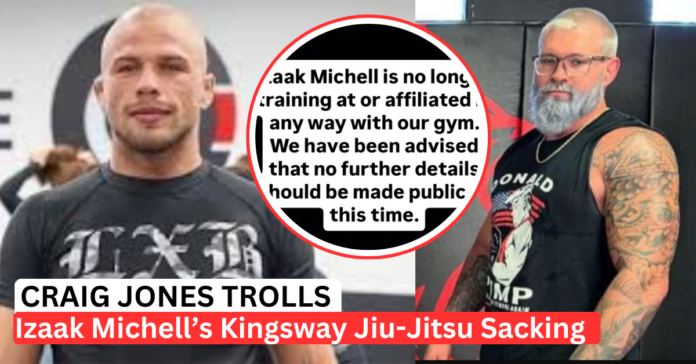
Kingsway Jiu-Jitsu co-founder Gordon Ryan announced that Izaak Michell is no longer training at, or affiliated with, the team.
The statement offered no public explanation and said the gym had been advised not to share further details “at this time.”
Ryan also said comments were turned off to stop sexual misconduct rumours spreading — a move that intensified speculation online.
The timing matters, coming weeks after Michell earned an invite to ADCC 2026 at the Asia & Oceania Trials.
The Gordon Ryan Statement That Set Everything Off
The Izaak Michell Kingsway Jiu Jitsu split went public when Kingsway Jiu-Jitsu confirmed the news with a brief message from Gordon Ryan, making it clear that Michell is no longer connected to the gym.
“Izaak Michell is no longer training at or affiliated in any way with our gym. We have been advised that no further details should be made public at this time.” – Gordon Ryan –
The biggest reaction wasn’t to the removal itself — it was to what wasn’t said. The line about being “advised” not to share more immediately pushed the conversation into speculation territory.
Ryan then addressed another detail people noticed quickly: comments on the post were disabled.
“We have also been asked to turn off comments so that rumors are not spread.” – Gordon Ryan –
In the current No-Gi climate, that combo of silence plus comment lockdown tends to create more noise, not less.
Izaak Michell Kingsway Jiu Jitsu Banishment: What We Know For Sure
The confirmed facts are straightforward: Izaak Michell is no longer part of Kingsway Jiu-Jitsu, and the team is not giving reasons publicly.
Since the announcement, online chatter has ranged from generic “team drama” to more serious allegations, including unverified claims of misconduct and even rumours involving law enforcement.
As of now, those claims have not been confirmed publicly through official channels connected to the team, and Michell has not released a detailed statement addressing the situation.
That’s worth underlining because this is how reputations get shaped in modern grappling: one vague post becomes a thousand “explanations,” and the loudest version starts to feel like the truth.
For Kingsway, the decision to cut ties is the story. For Michell, the lack of explanation becomes the story — because it leaves promoters, sponsors, and training partners guessing about what comes next.
Who Is Izaak Michell?
For anyone just catching up, the Izaak Michell Kingsway Jiu Jitsu situation involves an Australian No-Gi competitor who has spent the last few years in the orbit of the sport’s biggest rooms.
Michell is also someone whose team relationships have repeatedly become public conversation.
Before the Izaak Michell Kingsway Jiu Jitsu split, Michell represented B-Team Jiu-Jitsu, and his exit from that camp was widely viewed as contentious. The fallout didn’t stay behind closed doors; it became part of his public narrative.
That backdrop is why this latest news hit so fast. Some people see it as another chapter in a pattern — not necessarily proof of anything specific, but evidence that wherever Michell goes, things tend to get complicated.
At the same time, his recent competitive results matter. Michell earned an invite to ADCC 2026 by winning the ADCC Asia & Oceania Trials, which is one of the clearest “earn it on the mat” pathways in the sport.
Craig Jones Weighed In, And The Rumour Machine Did The Rest
Shortly after Ryan’s announcement, Craig Jones posted about the situation. He stopped short of a direct accusation, but the tone and timing were widely interpreted as insinuating he had insight into why Michell was removed.
Jones is also deeply connected to the same ecosystem — Australian ties, the Austin scene, and years of overlap with the people involved — which is why even indirect posts can carry weight.
But indirect is still indirect, and when influential voices hint without stating, the internet fills in blanks aggressively.
This is the messy reality for teams right now: say nothing and people assume the worst; say too much and you risk privacy and legal blowback; say “just enough,” and you create a vacuum that speculation rushes to occupy.
In practical terms, Kingsway Jiu-Jitsu will keep moving. Elite rooms always do. The bigger question is how this affects Michell’s next six to twelve months, especially with ADCC 2026 on the horizon.
ADCC invites aren’t “team invites,” they’re athlete invites. Michell earned his spot, and unless something official changes his status, he can still show up and compete.
However, grappling is also a business: promoters weigh risk, sponsors weigh optics, and gyms weigh culture. If this stays vague, the uncertainty alone can become the problem.
For now, the only confirmed reality is the split itself: Izaak Michell Kingsway Jiu Jitsu is over, and the people closest to it aren’t expanding publicly. Until Michell speaks in detail — or something verifiable changes — everything else is noise.
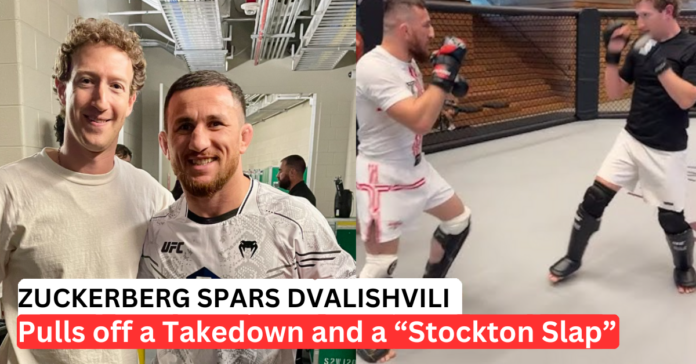
Mark Zuckerberg did three rounds of sparring with UFC bantamweight standout Merab Dvalishvili, and the footage quickly spread online.
Dvalishvili is back in the gym days after losing his UFC bantamweight title to Petr Yan at UFC 323 — an immediate return that fits his reputation.
Mark Zuckerberg Sparring With Dvalishvili is just another step in his consistent training with high-level MMA talent.
The most replayed moment: Zuckerberg completes a takedown, then eats a playful “Stockton slap” for his trouble.
Mark Zuckerberg Sparring with Dvalishvili Didn’t Look Like A Photo-Op
“Billionaire trains MMA” is an easy headline to dismiss — until the clip looks like real sparring. That’s why Mark Zuckerberg sparring with Dvalishvili grabbed attention this week: it’s three full rounds with movement, contact, and enough live reactions to show both men are actually working.
The session was shared publicly on Wednesday, December 17, and it shows Zuckerberg trading punches and clinch entries with Dvalishvili — the kind of pace-heavy fighter who makes almost everyone look exhausted.
Merab is the pro, he’s controlling the danger, and he’s clearly not trying to hurt him. But Zuckerberg doesn’t look panicked or lost, which is usually the first tell when someone’s new to the mat.
If you train, you know the difference between “posing” and “participating.” This was participation.
The Takedown, The “Stockton Slap,” And The Clip’s Viral Sweet Spot
The highlight is simple: Zuckerberg hits a takedown, and Dvalishvili answers with a slap that looks straight out of the Stockton meme folder — part joke, part reminder of the pecking order.
It works because it’s readable for everyone. Casual viewers see a tech CEO getting checked. Fighters and grapplers see a controlled exchange where a professional lets the round breathe while still steering it.
Dvalishvili also sounded genuinely positive about the work afterwards:
“He’s the man, I love it.” – Merab Dvalishvili –
That line matters. It frames the whole thing the way it looks on tape — hard rounds, but still a gym atmosphere, not a “celebrity fight.”
Mark Zuckerberg MMA Training Keeps Showing Up In Real Rooms
The bigger story is repetition. Mark Zuckerberg sparring with Dvalishvili isn’t an isolated moment; it fits a pattern of him training for years, then popping up in clips with elite UFC names.
One reason this keeps getting traction is that the footage doesn’t show a guy trying to look tough for the internet. It shows someone trying to do the round: stay balanced, keep his eyes up, enter and exit safely, and accept that he’s going to get hit.
That’s also why the takedown moment lands. You can’t fake timing and confidence on an entry if you’ve never done the work.
It doesn’t mean Zuckerberg is “on Merab’s level” — it means he’s got enough reps to attempt things under pressure without freezing.
Merab’s Quick Turnaround After Petr Yan At UFC 323
For Dvalishvili, the timing is almost the point. He’s coming off a UFC 323 title loss to Petr Yan, and instead of disappearing he’s already back in the gym, logging rounds and staying visible.
The loss also re-opened the bigger storyline: Dvalishvili and Yan are now 1–1, and the division immediately started buzzing about a potential rubber match down the line.
Whether that happens next or not, Merab’s message is the same — he’s not taking a long break.
In bantamweight, that matters. Momentum and matchmaking move fast, and a former champion who keeps his engine running is a former champion who can jump back into the mix quickly — whether that’s a contender fight, a rematch, or a long road back to the belt.
Zuck Getting Real Skills?
On the surface, Mark Zuckerberg sparring with Dvalishvili is just a wild crossover: three rounds, a takedown, a slap, and people arguing online about what it “means.”
But the real takeaway is simpler. Zuckerberg keeps showing up, and the sessions keep looking like actual training — not a one-off stunt. And for Merab, it reinforces what everyone already knows about him: win or lose, the work doesn’t stop.
If this trend continues, don’t be surprised if the next viral clip isn’t a novelty at all — just another day at the gym, with another big name stepping into the round.
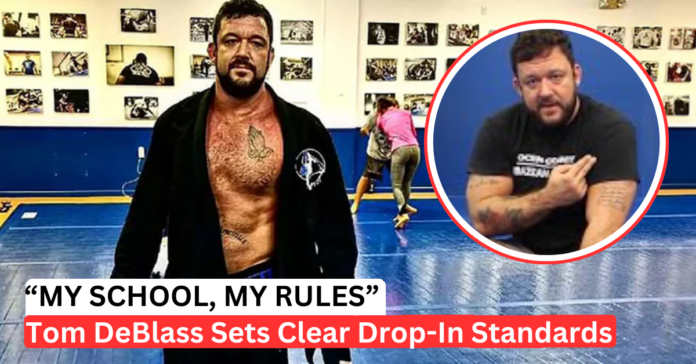
Tom DeBlass posted blunt “house rules” for visitors at his academy, triggering the usual internet split: “fair” vs “too much.”
Two rules were the main flashpoints: shorts over spats for men and a rash guard/shirt under the Gi.
The bigger takeaway isn’t the wording — it’s that drop-ins work best when expectations are clear before you step on the mat.
If you’re visiting a new room, treat it like someone else’s home: ask ahead, follow the rules, train clean, and don’t make it weird.
The Two Tom DeBlass Gym Rules for Visitors
In a recent social media post, DeBlass laid out what he says are his academy’s expectations for visitors, with an opening that’s hard to argue with: he wants people to feel welcome.
“I have had visitors at my Academy from all over the world. I welcome everyone, from all affiliations.”
Then came the part that lit up comment sections: two “main rules” directed at men who train No-Gi (or mix No-Gi with Gi rounds).
First: Shorts over spats.
“Just two main rules, men, you must wear shorts over your spatz.”
Second: A rash guard (or at least a shirt) under the Gi.
“Next, rash guard or shirt under the gi. My non competitors don’t want your sweaty man chest all over their face.”
He finished with the most old-school gym-owner sentiment imaginable — you don’t have to like it, but you do have to follow it if you want to train there.
“Needless to say, my school, my rules. Not really my concern if you agree or not.”
Whether you found the delivery funny, abrasive, or unnecessary, Tom DeBlass gym rules hit a nerve because they sit right on the line between personal preference and shared mat culture.
BJJ Gym Etiquette: What Visitors Actually Owe The Room
Drop-ins are one of the best things about Jiu-Jitsu. You travel, you train, you meet different styles, and you walk away sharper. But visiting a new academy is also a little like stepping into someone else’s kitchen mid-service: there’s a rhythm, there are standards, and there’s a way of doing things that isn’t up for debate in the moment.
At minimum, good BJJ gym etiquette looks like this:
Ask before you show up. A quick message solves 80% of misunderstandings.
Arrive early and introduce yourself. Don’t stroll in during warm-ups like you’re the headliner.
Be a good partner. Match intensity, don’t crank subs, don’t “win practice.”
Respect mat fees and policies. If a gym charges, pay it without acting offended.
Follow the academy rules. Even if your home gym does the opposite.
This is where Tom DeBlass gym rules become less about spats and more about a simple principle: the visitor adapts. The host sets the tone.
Shorts Over Spats, Rash Guards, And The Real Reason Gyms Get Strict
Let’s strip the drama out of it: the two rules DeBlass highlighted are not rare, and they’re not always about “morality” or “control.” Most gyms that enforce them do it for some combination of comfort, hygiene, and consistency.
Shorts over spats is usually about modesty and presentation. Spats-only can be pretty revealing on some body types, and not everyone wants to be the person explaining that to a brand-new hobbyist who wandered in for their first trial week. In mixed classes, it’s also an easy way to keep a baseline standard that doesn’t rely on awkward judgment calls.
Rash guard under the Gi is even easier to understand once you’ve rolled with enough people. Sweat happens. Chest hair happens. Skin-to-skin happens. Some gyms want to reduce that for comfort, hygiene, and just keeping training pleasant for the majority — especially if the room includes plenty of older hobbyists, newer students, or people who aren’t there to “tough it out.”
The truth is, Tom DeBlass gym rules aren’t revolutionary — the delivery is what made them viral. And delivery matters, because gyms aren’t just rules on a wall; they’re communities. The same policy can land totally differently depending on how it’s communicated.
Visiting A BJJ Academy Without Becoming “That Guy”
If you’re travelling and want to train, you can avoid almost every drop-in headache with one simple move: ask about the uniform rules before you pack your bag.
Here’s a practical checklist:
Message the gym: “Hey, I’m in town. Any rules for drop-ins? Gi/No-Gi requirements?”
Pack the safe options: shorts, spats, rash guard, and a spare T-shirt if needed.
Bring tape and flip-flops: nobody wants bare feet in the bathroom situation.
Don’t argue policies on arrival: if you don’t like the rules, quietly train elsewhere.
Roll like a guest: flow first, then match intensity. Your goal is to be invited back.
That’s the clean version of what Tom DeBlass gym rules are really saying: don’t show up and turn someone else’s mat into a negotiation.
House Rules Are House Rules, But Culture Is A Choice
There are two truths that can exist at the same time.
A gym owner has every right to set standards. If a room wants shorts over spats and rash guards under the Gi, that’s not tyranny — it’s a dress code. And Tom DeBlass gym rules are, at their core, exactly that.
How you communicate those standards shapes your culture. Some people respond well to blunt, old-school leadership. Others don’t. In a sport that’s growing fast — with more beginners, more casual trainees, and more diverse rooms — the tone matters almost as much as the rule.
The best drop-in environments meet in the middle: visitors show respect and adapt, while hosts set expectations clearly (and ideally without turning it into a public shaming session).
If nothing else, this little flare-up is a reminder that Jiu-Jitsu doesn’t just happen on the mats — it happens in the tiny social contracts around them. And the easiest way to keep training drama-free is still the same: ask ahead, pack smart, and follow the room.
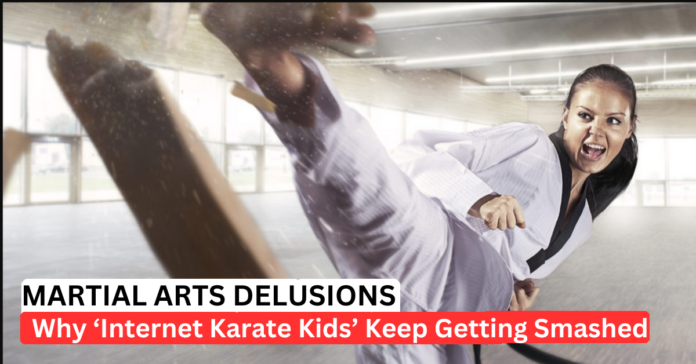
A viral “Internet Karate Kid” clip is a cartoonishly loud example of a very common quiet problem: martial arts delusion in MMA & BJJ.
Delusion often starts online, in echo chambers built from movie tropes, YouTube techniques, and no-contact “systems” with no real resistance.
Matt Thornton’s concept of “aliveness” explains why honest, resisting training partners act as a self-correcting filter for bad ideas long before anyone gets hurt.
Don Heatrick’s “Am I ready for my first fight?” framing shows what healthy self-testing looks like, grounded in preparation rather than ego.
Coaches and students can keep gyms safer by setting clear expectations, embracing humility, and treating delusion as a training problem to solve – not just a meme to laugh at.
Inside The ‘Internet Karate Kid’ Moment
If you’ve spent any time on fight Twitter, you’ve probably seen it: a young guy walks into an MMA gym, full of online clout and backyard credentials, and proceeds to “correct” the coach. Footwork, guard, striking mechanics – nothing is safe from his commentary.
Before long, the coach stops talking and starts sparring, and the clip turns into a live-action “find out” to match the “f**k around” bravado.
The “Internet Karate Kid” is an extreme case, but the underlying pattern is familiar to every instructor. Someone walks in convinced they already know how to fight, despite never having tested their skills against trained, resisting opponents.
When that confidence meets reality – in MMA or in a hard Jiu-Jitsu round – it collapses fast, often with a bruised ego and a sore neck. That’s martial arts delusion in MMA & BJJ in its purest, most viral form.
What makes this more than just a funny clip is that it shows what happens when fantasy is allowed to grow unchecked for too long.
By the time these students arrive at a legitimate gym, they’ve built an entire identity around being “dangerous” – and reality has a lot of catching up to do.
Internet Karate Kid shows up to an MMA training session and tries to teach the coach… pic.twitter.com/lXdt4LKHah
How Martial Arts Delusion in MMA Gyms Starts Online
Most of this delusion doesn’t start on the mats. It starts on screens.
Endless highlight reels, choreographed movie fights, and YouTube “street-defense systems” create a world where no-contact drills and cooperative demos are mistaken for proof.
Algorithms feed you more of what you already believe, and before long you’ve watched 200 hours of spinning elbow breakdowns and zero footage of yourself trying to land one on a fully resisting partner.
Add in online forums and comment sections and you get a perfect echo chamber. People trade stories about “one punch knockouts” and “secret techniques that don’t work in the cage because of rules,” reinforcing the idea that sport-based Jiu-Jitsu and MMA are somehow less “real” than what they’re doing in the dojo or in their bedroom shadowboxing sessions.
Fake martial arts self-defense systems thrive in exactly that gap between theory and testing.
By the time these students walk into a proper gym, they’re not blank slates. They’re convinced experts. That’s why martial arts delusion in MMA & BJJ feels so stubborn: you’re not just dealing with bad habits, you’re dealing with a narrative they’ve told themselves for years.
Aliveness, Self-Correction, And The Matt Thornton Filter
Coach Matt Thornton has spent decades arguing that the key difference between effective and ineffective martial arts isn’t style – it’s aliveness.
Alive training means timing, energy, and resistance: drilling with partners who are trying to stop you, adjusting on the fly, and constantly exposing ideas to failure.
In that environment, bad ideas don’t last. If your knife defense doesn’t work against a training partner actually trying to stab you with a rubber blade, you don’t need a YouTube comment to tell you – you feel it immediately.
If your takedown is built on fantasy, sparring partners will sprawl, counter, and put you on your back. The gym becomes a self-correcting lab.
Martial arts delusion in MMA & BJJ thrives where aliveness is missing. In no-contact dojos, purely theoretical “street only” systems, or highly choreographed drills with fixed outcomes, there’s no meaningful feedback loop. T
he student can train for years, collect ranks and titles in an isolated ecosystem, and never once experience a genuinely resisting opponent. The first live, honest round – often in an MMA or Jiu-Jitsu gym – is when the bill comes due.
From First Fight Readiness To Healthy Ego Checks
Contrast that with the mindset Don Heatrick pushes when he tackles the question: “Am I ready for my first fight?” He doesn’t talk about secret tricks or perfect performances.
He talks about comfort zones, the “104% rule,” and deliberately stepping just beyond what you can currently handle so you grow without getting wrecked.
That’s a completely different relationship to testing yourself. Instead of walking into a gym trying to teach the coach, you turn up acknowledging that you’re a beginner.
You expect to get tired, to get tagged, to be put in bad positions in Jiu-Jitsu. The goal isn’t to prove you’re already a killer; it’s to find out where you actually stand and how to move the needle.
A student who approaches their training this way is far less likely to fall into martial arts delusion in MMA & BJJ. They’re constantly collecting real feedback: from sparring rounds, from coaches, from competition, from honest self-reflection after a tough session. Ego still stings, but it doesn’t drive the bus.
That humility doesn’t just make them safer; it makes them much more dangerous in the long run – in the way that actually matters.
Keeping Jiu-Jitsu Gyms Safe From Delusion
So what can coaches and training partners do, beyond laughing at the latest “Internet Karate Kid” clip in the group chat?
First, set expectations early. New students should hear, clearly and kindly, that whatever experience they bring – from other arts, backyard brawls, or online tutorials – will be tested under pressure. That’s not disrespect; that’s exactly what they’re paying for.
Second, enforce boundaries. If someone starts “teaching” in their first week, cutting in with corrections mid-drill or trying to coach the coach, address it directly.
Calmly explain that the gym runs on a hierarchy of experience, not on self-declared expertise. A quick, controlled round can sometimes do what ten minutes of talking can’t – but it should be handled responsibly, not as a hazing ritual.
Third, build a culture of curiosity over certainty. Encourage questions, experimentation, and respectful disagreement – but always back it up with live training.
If someone has a “new move,” great: test it in positional sparring. If it works repeatedly against skilled resistance, it stays. If it doesn’t, it goes back to the lab.
In the end, martial arts delusion in MMA & BJJ isn’t just an internet meme for us to share. It’s a reminder of why alive training, honest feedback, and a bit of humility are non-negotiable. The goal isn’t to humiliate people who’ve been misled; it’s to give them a chance to finally align their self-image with reality – before reality does it for them.
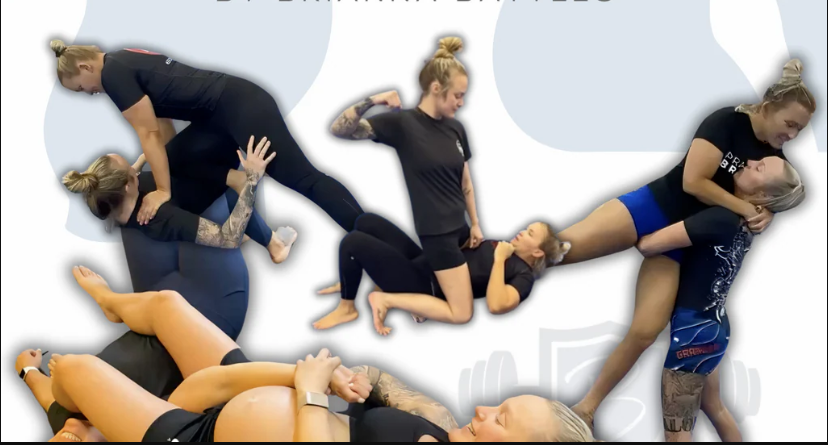
A niche, education-first course aimed at pregnant and postpartum grapplers rather than a “moves and drills” Jiu-Jitsu DVD.
Focuses on mindset, safety, and practical adjustments to rolling and drilling so women can stay on — or sensibly step off — the mats when needed.
Includes a structured return-to-BJJ framework, a case study, and a Q&A that address real-world concerns like FOMO, core and pelvic health, and coach communication.
Best suited to pregnant/postpartum athletes and coaches who want evidence-based guidance tailored to Jiu-Jitsu, not generic gym advice.
Limited appeal if you’re just looking for new techniques or competition strategy — this is about how to train, not what to submit people with.
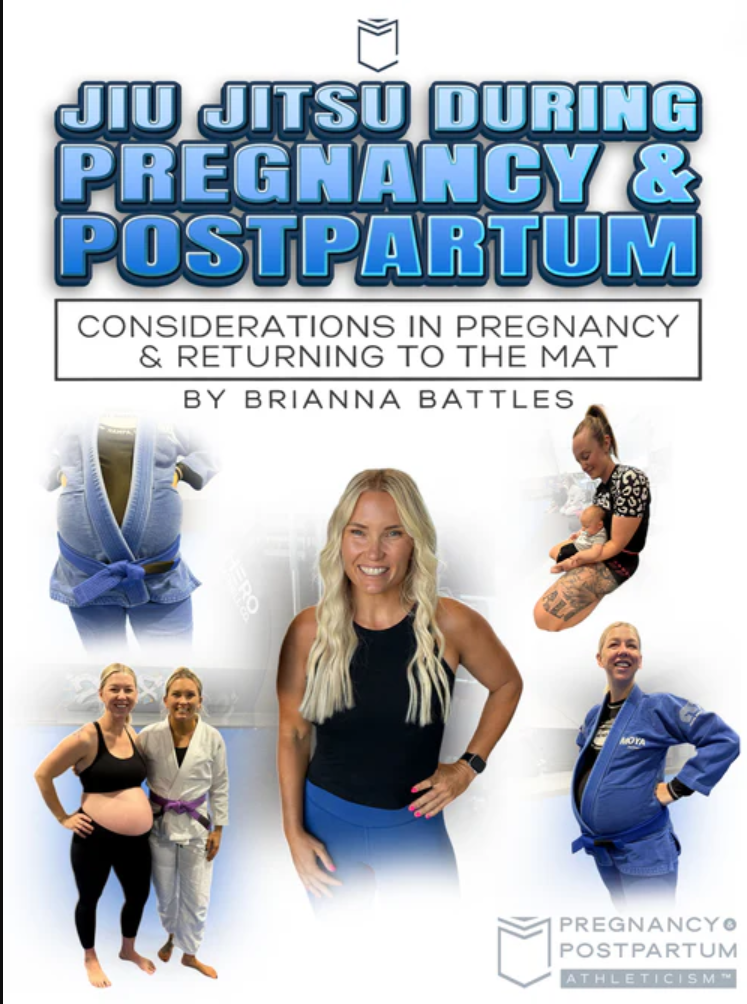
Training Jiu-Jitsu while you’re pregnant, or coming back after giving birth, sits in a weird grey area at most academies: everyone has opinions, but very few people have actual expertise. That’s the gap the Jiu Jitsu During Pregnancy Brianna Battles DVD tries to fill.
It’s a workshop-style instructional by Brianna Battles, a strength and conditioning coach, CEO and Founder of Pregnancy & Postpartum Athleticism, and a Jiu-Jitsu purple belt who lives in this niche full-time.
Instead of showing thirty new guard passes, this course is built around principles: mindset shifts, training adjustments, core and pelvic health considerations, and a sensible path back to sparring after pregnancy. If you’re expecting, recently postpartum, or coaching women who are, the Jiu Jitsu During Pregnancy Brianna Battles DVD might end up being more valuable than yet another leg-lock system.
Why Training Jiu-Jitsu Through Pregnancy Needs Its Own Playbook
Jiu-Jitsu is a contact sport. Even in a chill open mat, you’re dealing with pressure, rotation, sudden scrambles, and people’s full bodyweight landing in unpredictable places. During pregnancy and postpartum, those same stresses land on a changing body: shifting posture, joint laxity, a stretched abdominal wall, and a pelvic floor that is doing a lot of extra work.
Most gyms solve this with vibes: “Just flow roll”, “Tap early”, or “Train until you don’t feel like it anymore.” That’s not enough. Pregnant athletes need some form of pregnancy-safe Jiu-Jitsu training that respects both the demands of the sport and the realities of pregnancy and recovery.
Battles leans into that tension rather than pretending it doesn’t exist. Her material speaks to classic BJJ problems — pressure passing, closed guard, scrambles, takedowns — but reframed through questions like:
How much direct belly pressure is appropriate for you right now?
Which directions of movement are irritating your core or pelvis?
Where do you draw the line between beneficial stress and “I’ll regret this tomorrow”?
The course makes it clear that “you can do something but your body isn’t ready for everything (yet),” a phrase she also repeats in her free resources for pregnant and postpartum athletes.
It’s not fearmongering, but it is a wake-up call for women used to just muscling through every round.
About Brianna Battles MS, CSCS and BJJ Black Belt
Brianna Battles isn’t a random influencer who picked up a Gi last year. She’s a long-time strength and conditioning coach with formal degrees in coaching and kinesiology, and she built an entire business — Pregnancy & Postpartum Athleticism — around helping athletes and coaches navigate this exact phase of life.
On the mat, she’s a Jiu-Jitsu purple belt and co-runs Battles Jiu Jitsu with her husband Jared, who has been training for around 20 years and recently earned his black belt. Their family is very much “all in” on BJJ, which is why pregnancy and postpartum participation in the sport comes up so often in her podcast and coaching work.
Off the mats, Brianna Battles known for educating both athletes and other professionals: she offers online courses, runs the Practice Brave Podcast focused on pregnancy/postpartum athleticism, and has certified thousands of coaches on how to support women through these stages.
That combination — actual mat time plus deep women’s health and S&C experience — is what makes a Brianna Battles BJJ instructional on this topic worth taking seriously.
Inside the Jiu Jitsu During Pregnancy Brianna Battles DVD Review
The Jiu Jitsu During Pregnancy Brianna Battles DVD is structured more like a focused workshop than a sprawling multi-volume technique library. On BJJ Fanatics and her own Teachable platform, the course is broken into two main sections that mirror a live seminar: one focused on training during pregnancy, and one focused on the return to training postpartum, including a case study and Q&A.
The first “volume” (labelled as Section I on the product page) opens with an overview of the workshop and big-picture BJJ considerations in pregnancy and returning to the mats. Battles lays out her credentials and athletic background, then shifts quickly into mindset and basic BJJ principles — things like base, posture, and pressure — and how they intersect with a pregnant body instead of an off-season competitor’s body.
From there, the Jiu Jitsu During Pregnancy Brianna Battles DVD digs into adjustments: which positions tend to be tolerable, which can become problematic as pregnancy progresses, and how to modify rolling intensity, partner selection, and drilling habits. Expect more conceptual coaching than hyper-technical breakdowns.
A lot of the value is in how she gets you to think about guard retention, takedown risk, and top pressure through the lens of breathing, pressure management, and pelvic health instead of ego and toughness. This section feels like a reality check for both athletes and coaches: you can keep training in many cases, but not in the exact same way you did before, and not at any cost.
Volume 2 – Returning to the Mats, Case Study, and Q&A
Section II acts as the postpartum roadmap. Battles outlines a “returning to BJJ program” that acknowledges there’s usually a big gap between being medically cleared for exercise and being genuinely ready for live rounds, takedowns, and high-pressure positions. She walks through a case study of Miranda Granger — a professional fighter who trained through pregnancy and came back to competition — to show how these principles play out in real life.
The Jiu Jitsu During Pregnancy Brianna Battles DVD also speaks directly to coaches and professors here: what they need to know about postpartum timelines, common symptoms (like coning, leaking, pain), and the kind of questions that should trigger a referral to a pelvic-health or medical professional rather than “just keep drilling”.
This is followed by closing thoughts, resources for further learning, and a Q&A that addresses the questions she hears most often from pregnant/postpartum grapplers — everything from FOMO and identity to when to bring back hard rounds. It’s not a “do these three exercises and you’re fine” vibe; it’s more about equipping you with a framework so you can make better decisions with your own healthcare team.
Practical Application
Because this isn’t a standard technique-heavy release, the way you use it matters a lot. The Jiu Jitsu During Pregnancy Brianna Battles DVD works best as a reference you come back to across trimesters and into postpartum rather than something you binge in one sitting and forget.
For pregnant athletes
Watching Volume 1 early on, then re-watching key sections as your body changes. Using her questions and red-flag examples to decide when to skip certain rounds, positions, or training days.
Pairing the course with your own rehab plan, whether that’s a pelvic-health PT, one of Battles’ broader exercise workshops, or another trusted professional.
For postpartum athletes
Volume 2 can serve as a reality check and pacing tool. It complements concepts like “you can do something, but not everything yet” with a Jiu-Jitsu-specific lens: how to step back into drilling, positional rounds, and eventually competition prep without treating childbirth like a minor off-season.
Coaches can treat the material as a BJJ coaches pregnancy guidelines primer. You’re not suddenly a medical professional after watching it, but you’ll be much better at recognizing when to modify training, when to suggest external help, and how to speak to pregnant/postpartum students without either dismissing their concerns or treating them like glass.
This course has a very specific lane, and that’s a good thing:
Pregnant Jiu-Jitsu athletes who want to keep training in some capacity and are willing to adjust expectations and intensity.
Postpartum grapplers looking for a structured, sport-specific way to rebuild their relationship with rolling, instead of going straight from six-week clearance to full rounds.
Coaches and academy owners who regularly work with women and want to make their space safer and more welcoming for women’s Jiu-Jitsu during pregnancy and postpartum.
Partners and teammates who may not need to watch every minute, but could benefit from better understanding what their training partners are dealing with.
It’s not ideal if:
You’re a male hobbyist just looking for more techniques to add to your game.
You want a competition strategy DVD — this won’t help you pass modern guards or refine your leg-lock entries.
You’re expecting a fully prescriptive rehab plan with sets, reps, and diagnostics; this is education, not a replacement for individualized medical care (and Battles is clear about that across her platforms).
Pros & Potential Drawbacks
Pros:
Highly niche and much-needed topic – Very few instructionals speak directly to pregnancy and postpartum in a combat-sports context, and almost none are BJJ-specific.
Instructor genuinely specialises in this area – Battles’ blend of coaching, kinesiology, and pregnancy/postpartum athleticism background makes her unusually qualified to tackle this subject for grapplers.
Clear, principle-driven framework – Instead of rigid rules, you get questions, red flags, and mindset shifts you can adapt to your own context.
Includes a real-world case study – Seeing how an athlete like Miranda Granger navigated pregnancy and a return to high-level combat sports helps make the ideas concrete.
Coach-friendly content – Specific sections on “what coaches and professors need to know” make this a valuable watch for instructors, not just athletes.
Integrates with her broader ecosystem – The themes line up with her free guide and courses, so if you’re already in that world, this slots in neatly as a Jiu-Jitsu-specific module.
Potential Drawbacks:
Very light on actual Jiu-Jitsu technique – If you’re hoping for new submissions, passes, or takedown entries, you’ll be disappointed; this is education about training, not new systems of attack.
Narrow target audience – It’s incredibly valuable if you’re pregnant, postpartum, or coaching women — but offers limited direct value if that’s not you.
Workshop feel may not suit everyone – The structure and pacing feel more like a seminar than a tightly edited technique series, which some viewers may find less engaging.
Still requires outside support – You’ll likely need to combine this with medical and rehab guidance; it won’t tell you everything you should do in the gym week by week.
Final Thoughts on Jiu Jitsu During Pregnancy Brianna Battles DVD
Overall, the Jiu Jitsu During Pregnancy Brianna Battles DVD fills a hole in the BJJ instructional landscape that has been empty for far too long. It doesn’t try to be all things to all people; instead, it speaks directly to pregnant and postpartum grapplers (and the coaches who train them) with practical, evidence-aware guidance and a realistic mindset about what training can and should look like in these seasons.
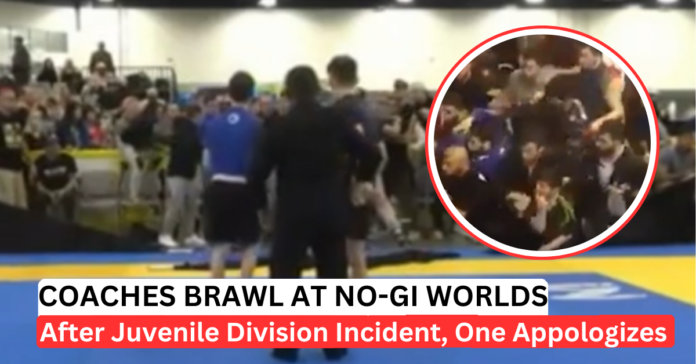
A No Gi Worlds coaches brawl broke out mat-side at the IBJJF No Gi World Championships on Saturday, December 13, 2025, during a juvenile division match area.
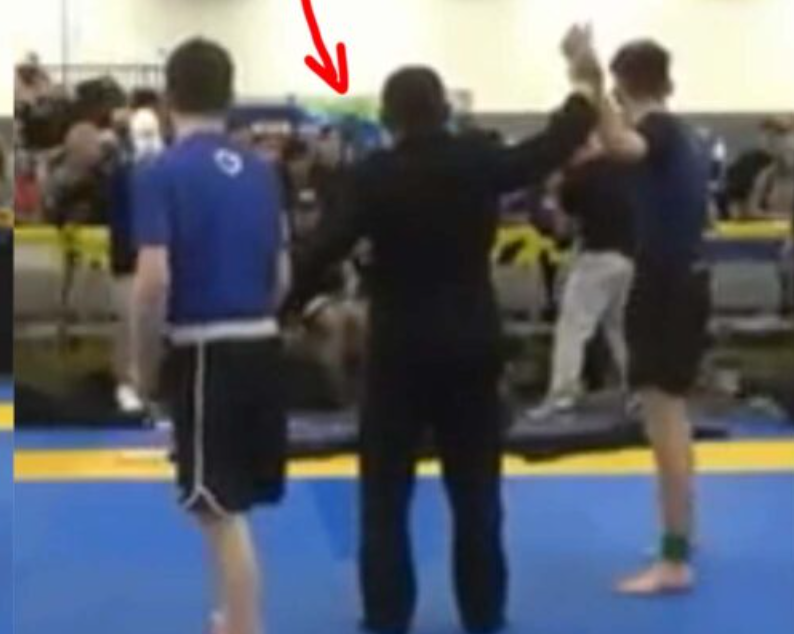
Coach Jeff Haddad says the incident happened near Mat 20, and he has since apologized directly to the IBJJF and publicly.
In his statement, Haddad took responsibility, saying he failed to act like a coach and that there were “no grounds” for his actions.
The situation has reignited debate around coach conduct—especially when kids and teens are competing on the sport’s biggest stages.
The Mat-Side Blowup At No Gi Worlds 2025
The IBJJF No Gi World Championships are supposed to be the cleanest showcase of Jiu-Jitsu competition: the best athletes, the highest stakes, and—ideally—the best behavior. But this year, one of the clips that traveled fastest wasn’t a slick guard pass or a last-second finish.
It was a No Gi Worlds coaches brawl that flared up during a juvenile match and spilled into the mat-side coaching area. Footage circulating from the venue shows coaches getting physical near the edge of the competition space as people rush in to separate them.
The optics are brutal no matter which “side” someone thinks they’re on—because the competitors involved were teenagers, and the adults were the ones who lost control.
What made this incident stick wasn’t just the video. It was the fact that one of the coaches involved, Jeff Haddad, followed up with a written coach apology and took ownership of the moment publicly.
No Gi Worlds Coaches Brawl: What Sparked It Near Mat 20
Based on Haddad’s own description, the incident took place near Mat 20 on Saturday, December 13, and it stemmed from an exchange after one of his athletes lost.
Haddad said another coach taunted his competitor—an athlete he describes as 16 years old—and that the tension escalated from there.
Even with that context, Haddad’s key point was simple: provocation doesn’t matter when you’re the adult with responsibility in the corner. In other words, you can’t claim “heat of the moment” as a pass when you’re coaching a kid at a world championship.
That’s the uncomfortable truth sitting underneath the meme-able headline. A No Gi Worlds coaches brawl in an adult match is already a bad look. In juvenile divisions, it’s worse—because it drags teenagers into adult ego, adult conflict, and adult consequences.
Jeff Haddad Statement: “I Am A Coach, And I Did Not Carry Myself As Such”
Haddad’s apology wasn’t vague, and it wasn’t written in the classic “sorry if anyone was offended” tone. He framed it as a professional failure—something that reflected badly on him, his team, and the event itself.
I am a coach, and I did not carry myself as such. I carried myself as an irresponsible adult who did not control his actions. – Jeff Haddad –
He also addressed the idea that taunting can “justify” anything physical—flatly rejecting it.
Taunting an athlete after a loss is not grounds to push someone. There are NO grounds in which I should have done that. – Jeff Haddad –
One detail that stood out is how he described writing the apology: outside the venue, with the reality of the moment settling in. He also noted that he didn’t yet know what punishment—if any—would come from the IBJJF.
I am not sure when a decision will be made on what my punishment will be. However, I understand this behavior cannot and will not be tolerated at all. – Jeff Haddad –
That last line is doing a lot of work. It’s not just regret; it’s an acknowledgment that the sport’s biggest organizations can’t afford coach-side chaos—especially in divisions where the athletes are minors.
Juvenile Divisions Make Coach Behavior A Bigger Deal
Most grapplers have seen it: corners getting loud, coaches barking, parents trying to “coach the coach,” and the tension that comes with a close match.
But juvenile divisions change the stakes because the athlete’s experience is still being shaped. Teens don’t just remember who won—they remember how the adults behaved when it mattered.
A No Gi Worlds coaches brawl in a juvenile setting raises questions that go beyond one bad decision:
What message does it send to young athletes about “acceptable” conduct under pressure?
What message does it send to newer families deciding whether Jiu-Jitsu culture is a good fit?
And what message does it send to the broader combat sports world that already stereotypes grappling events as disorganized?
There’s also a competitive fairness angle. Corner interference and emotional escalation can affect referees, opponents, and the pace of a match day. Even if no athlete is directly harmed, the environment gets worse for everyone in the building.
The Real Fallout
For Haddad personally, the timing is rough. He’s not an anonymous spectator—he’s a visible figure in the competition scene and a listed founder of a Connecticut-based event platform, with notable competition credentials attached to his name.
That means the consequences of a No Gi Worlds coaches brawl don’t stop at a viral clip. They follow you into your academy culture, your athlete recruiting, and your wider reputation in the sport.
As of now, the most concrete “aftermath” is the apology itself: Haddad taking responsibility and emphasizing that the behavior shouldn’t be tolerated.
Whether the IBJJF issues a formal penalty is a separate question, and one the community will keep watching—because enforcement (or lack of it) sets precedent.
The bigger takeaway, though, is painfully simple: if Jiu-Jitsu wants to keep growing—especially for kids—then the adults have to act like adults. The athletes already carry enough pressure at Worlds. They shouldn’t have to carry their coaches’ too.
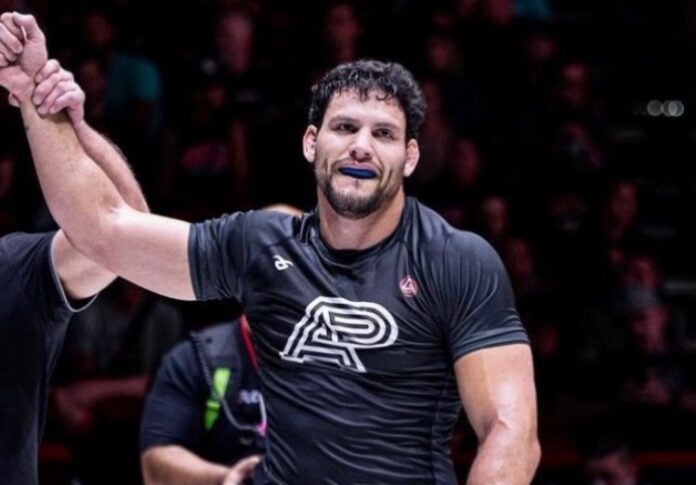
Felipe Pena, also known as “Preguiça,” is one of the most accomplished and technically complete Brazilian Jiu-Jitsu athletes of the modern era. A multiple-time IBJJF World Champion and two-time ADCC World Champion, Pena is widely respected for his elite guard systems, submission versatility, and consistent success against the highest level of opposition in both gi and no-gi competition.
Unlike many champions who rely primarily on athleticism or pressure, Felipe Pena built his legacy as a guard-based grappler capable of defeating physically stronger opponents through timing, structure, and technical precision. His victories over several of the best competitors of his generation, including multiple wins over Gordon Ryan, cement his status as a true all-time great.
Quick Facts – Felipe Pena
Full name: Felipe Pena
Nickname: Preguiça
Date of birth: June 11, 1992
Place of birth: Belo Horizonte, Minas Gerais, Brazil
Style: Guard-oriented, submission-focused
Primary divisions: Middle-Heavy, Light-Heavy, Absolute, ADCC 99 kg
Competition formats: Gi & No-Gi
Felipe Pena BJJ Career Overview
Felipe Pena began training Brazilian Jiu-Jitsu as a teenager and quickly stood out for his flexibility, composure under pressure, and advanced understanding of guard mechanics. From early in his career, Pena showed a clear preference for technical efficiency over explosive movement, a trait that would later define his competitive identity at the highest level.
As he progressed through the colored belts, Pena became known for defeating larger and more physical opponents using sweep chains, off-balancing, and submission setups rather than raw strength. This approach translated seamlessly into elite black belt competition.
Black Belt Lineage and Team Background
Felipe Pena received his black belt under Marcelo Azevedo and was long associated with the Gracie Barra lineage during his early black belt career.
Commonly cited lineage: Carlos Gracie → Hélio Gracie → Carlos Gracie Jr. → Gracie Barra → Marcelo Azevedo → Felipe Pena
Throughout his career, Pena competed under multiple banners, gradually placing greater emphasis on his individual competitive identity rather than long-term team affiliation.
Major Titles and Achievements
IBJJF World Championship (Black Belt – Gi)
🥇 Gold – 2016
🥇 Gold – 2017
ADCC World Championship
🥇 Gold – 99 kg – 2017
🥇 Gold – 99 kg – 2024
IBJJF Pan Championship (Black Belt)
🥇 Gold – 2016
🥈 Silver – 2017
IBJJF European Championship (Black Belt)
🥇 Gold – 2016
These accomplishments place Felipe Pena among a very small group of athletes to achieve elite success across both IBJJF gi competition and ADCC submission grappling.
Felipe Pena ADCC Record and No-Gi Success
Felipe Pena’s transition to no-gi competition is often cited as one of the most technically impressive adaptations in modern grappling. Rather than abandoning traditional guard concepts, Pena successfully adapted gi-based guard principles to ADCC rules, using precise leg positioning, upper-body control, and submission threats to dictate the pace of matches.
His ADCC titles at 99 kg demonstrated that guard-focused grappling can succeed even at the highest level of submission wrestling against physically dominant opponents.
Felipe Pena vs Gordon Ryan – A Defining Rivalry
The rivalry between Felipe Pena and Gordon Ryan is one of the most significant matchups in modern submission grappling history. Pena is one of the very few athletes to record multiple high-profile victories over Ryan, particularly during the early stages of their rivalry.
These matches highlighted Pena’s ability to:
Neutralize pressure passing
Maintain guard integrity under extreme pace
Capitalize on small positional errors
Regardless of later outcomes, Pena’s success against Ryan permanently established him as one of the most dangerous and technically refined competitors of his era.
Competitive Style and Technical Identity
Felipe Pena is best described as a guard-oriented, submission-focused grappler with exceptional adaptability across rulesets.
Signature Technical Traits
Elite closed guard and open guard systems
Strong triangle, armbar, and omoplata chains
High-level guard retention and sweep timing
Effective back-take sequences
Calm pacing and energy efficiency
Pena’s style is often studied by athletes looking to develop long-term, sustainable grappling systems rather than relying on athletic advantages.
Weight Classes and Divisions
Throughout his career, Felipe Pena has competed successfully in:
Middle-Heavy
Light-Heavy
Absolute divisions
ADCC 99 kg
His ability to remain competitive across multiple weight classes further reinforces his reputation as a technically complete grappler.
Professional Match Record Summary
100+ publicly recorded professional matches
Victories by submission and decision in both gi and no-gi formats
Losses primarily against elite, world-championship-level opponents
Consistent participation at IBJJF Worlds, ADCC, and major international events
A full chronological match record is available below.
Legacy and Influence in Brazilian Jiu-Jitsu
Felipe Pena’s legacy extends far beyond medals and titles. He represents the viability of guard-based grappling at the absolute highest level and continues to serve as a technical benchmark for competitors transitioning between gi and no-gi formats.
For many athletes and coaches, Pena’s career stands as proof that technical depth, patience, and structure can consistently overcome size and athleticism in elite competition.
Frequently Asked Questions About Felipe Pena
What is Felipe Pena’s nickname? Preguiça.
Is Felipe Pena a gi or no-gi competitor? He has achieved world-championship success in both formats.
Did Felipe Pena defeat Gordon Ryan? Yes, multiple times in high-profile competition.
Is Felipe Pena still active? Yes. He continues to compete at the elite level.
Craig Jones is an Australian professional grappler and one of the most influential figures in modern no-gi Brazilian Jiu-Jitsu. Widely recognized for his innovative leg lock systems, composure under pressure, and consistent success against elite competition, Jones has played a defining role in the evolution of contemporary submission grappling.
Primarily competing in no-gi formats, Jones has achieved podium finishes and high-profile victories across the sport’s most prestigious events, establishing himself as both a top-level competitor and a technical reference point for modern leg lock-based grappling.
Early Life and Background
Craig Jones was born on June 17, 1991, in Adelaide, South Australia. Unlike many elite Brazilian Jiu-Jitsu athletes, he began training later than most of his peers, entering grappling without a long childhood background in the sport.
Prior to fully committing to jiu-jitsu, Jones explored various athletic pursuits. His analytical mindset and willingness to challenge conventional approaches would later become defining characteristics of his competitive style.
Introduction to Brazilian Jiu-Jitsu
Jones began training Brazilian Jiu-Jitsu in Australia, with an early emphasis on no-gi competition rather than traditional gi-based development. His initial progression focused on positional awareness, leg entanglements, and submission efficiency, rather than point-oriented strategies.
As he started competing internationally, Jones quickly gained recognition for defeating more experienced and higher-ranked opponents, particularly through leg lock attacks and transitional submissions.
Connection to John Danaher and the Danaher Death Squad
A major turning point in Craig Jones’ career occurred when he began training under John Danaher at the Renzo Gracie Academy in New York City.
Within this environment, Jones trained alongside several of the most influential no-gi grapplers of the era, including:
Gordon Ryan
Garry Tonon
Eddie Cummings
Nicky Ryan
This collective later became known as the Danaher Death Squad (DDS).
Under Danaher’s systemized coaching framework, Jones refined his leg lock entries, back attack transitions, and positional control, transforming from a dangerous submission specialist into a consistently elite-level competitor.
Danaher Death Squad Era
During his tenure with DDS, Craig Jones achieved widespread international recognition through repeated high-profile performances at major professional events, including ADCC, EBI, Quintet, and Kasai Pro.
This period established Jones as one of the most technically creative and strategically adaptable leg lock specialists in submission grappling, known not only for winning, but for consistently threatening submissions against the best competitors in the world.
Formation of B-Team Jiu-Jitsu
In 2021, John Danaher announced the dissolution of the Danaher Death Squad as a unified team. Shortly thereafter, Craig Jones became a founding member of B-Team Jiu-Jitsu, alongside athletes such as:
Nicky Rodriguez
Nicky Ryan
Ethan Crelinsten
The formation of B-Team marked a cultural and competitive shift, emphasizing experimentation, openness, and athlete individuality while maintaining elite competitive standards. Jones emerged as one of the team’s most recognizable figures and competitive leaders.
Competitive Style and Technical Identity
Craig Jones’ competitive style is defined by adaptability, creativity, and opportunistic submission attacks.
Signature Technical Traits
Elite leg lock entries and counters
Strong back-taking ability from scrambles
Calm defensive awareness under pressure
High submission threat from transitional positions
Rather than relying on rigid positional systems, Jones thrives in dynamic exchanges, frequently converting defensive moments into offensive opportunities.
Gi vs No-Gi Performance
Craig Jones is primarily known as a no-gi specialist.
No-Gi: World-class leg lock systems, transitional submissions, and submission-focused strategies
Gi: Limited competition compared to no-gi, with primary competitive focus remaining on submission grappling formats
His career is closely associated with the rise of professional no-gi competition.
Weight Classes and Competitive Range
Throughout his career, Craig Jones has competed successfully across multiple divisions, including:
77 kg
88 kg
99 kg
Absolute (open weight)
His success across weight classes highlights both technical adaptability and the ability to compete effectively against larger opponents.
Major Achievements
ADCC World Championship
🥈 Silver Medal – 88 kg (2019)
🥉 Bronze Medal – Absolute (2019)
🥉 Bronze Medal – 88 kg (2017)
Eddie Bravo Invitational (EBI)
🥇 EBI Absolute Champion (2017)
Quintet
🥇 Quintet 3 Champion – Team Australia (2018)
Kasai Pro
🥇 Kasai Pro Champion (2017)
Who’s Number One (WNO)
🏆 Multiple Superfight Victories (2020–2023)
Notable Rivalries
Gordon Ryan
One of the most discussed rivalries in modern no-gi grappling. While Ryan holds multiple victories, Jones has consistently challenged him at the highest level, particularly in leg lock exchanges and transitional positions.
Felipe Pena
A stylistic contrast between pressure-based control and dynamic leg lock attacks, producing several high-level encounters across major tournaments.
Career Summary
Based on publicly recorded professional competition data:
90+ professional matches
Majority of victories by submission
Losses primarily against elite, championship-level opposition
Consistent submission threat regardless of match outcome
Jones’ career is characterized by creativity, adaptability, and long-term relevance at the highest level of submission grappling.
Complete Professional Match History
Opponent
Result
Method
Event
Weight Class
Stage
Year
Nathan Orchard
W
Inside heel hook
EBI 11
77KG
R1
2017
Darragh OConaill
W
Kneebar
EBI 11
77KG
4F
2017
Vagner Rocha
L
EBI/OT
EBI 11
77KG
SF
2017
Micah Brakefield
W
RNC
SUG 4
N/A
SPF
2017
Leandro Lo
W
RNC
ADCC
88KG
E1
2017
Murilo Santana
W
Flying triangle
ADCC
88KG
4F
2017
Keenan Cornelius
L
Pts: 13x0
ADCC
88KG
SF
2017
Alexandre Ribeiro
L
Pts: 2x0
ADCC
88KG
3RD
2017
Chael Sonnen
W
Outside heel hook
ADCC
ABS
E1
2017
Gordon Ryan
L
Katagatame
ADCC
ABS
4F
2017
Ben Egli
W
Outside heel hook
SUG 5
88KG
SPF
2017
Bob Firas
W
Heel hook
Coffs Harbour Inv
ABS
SPF
2017
Andy Burke
W
Inside heel hook
EBI 14
ABS
R1
2017
Marcel Goncalves
W
Inside heel hook
EBI 14
ABS
4F
2017
Tex Johnson
W
Inside heel hook
EBI 14
ABS
SF
2017
Gordon Ryan
L
EBI/OT
EBI 14
ABS
F
2017
Murilo Santana
L
Pts: 4x4, Pen
Kasai Pro
ABS
SPF
2017
C. Negromonte
L
Pts: 7x0
NoGi Worlds
85KG
4F
2017
Jake Shields
W
Inside heel hook
Polaris 6
84KG
SPF
2018
Mindas Verzbickas
W
Kneebar
Quintet
ABS
RR
2018
Sergei Grecicho
D
---
Quintet
ABS
RR
2018
Marcos Souza
W
Kneebar
Quintet
ABS
RR
2018
Nick Calvanese
W
Triangle
Kasai Pro 2
84KG
RR
2018
Dante Leon
W
Pts: 2x0
Kasai Pro 2
84KG
RR
2018
Michael Perez
L
Pts: 3x2
Kasai Pro 2
84KG
RR
2018
Richie Martinez
W
Inside heel hook
Kasai Pro 2
84KG
3RD
2018
Roberto Frias
W
Pts: 7x0
Boa Super 8
ABS
4F
2018
Ben Hodgkinson
W
Outside heel hook
Boa Super 8
ABS
SF
2018
DJ Jackson
L
Pts: 0x0, Pen
Boa Super 8
ABS
F
2018
DJ Jackson
L
Referee Decision
Spider Inv. 4F
O76KG
SPF
2018
Rousimar Palhares
W
Referee Decision
Kasai Pro 3
ABS
SPF
2018
Matheus Diniz
W
Referee Decision
Grapple Fest
ABS
SPF
2018
Richie Martinez
W
Terra footlock
Quintet 3
ABS
SF
2018
Adam Sachnoff
W
RNC
Quintet 3
ABS
SF
2018
Antoine Jaoude
W
RNC
Quintet 3
ABS
F
2018
Gordon Ryan
L
Short choke
Quintet 3
ABS
F
2018
Keenan Cornelius
W
Referee Decision
Polaris 8
93KG
SPF
2018
Gabriel Arges
W
RNC
GrappleFest 4
ABS
SPF
2019
Tim Spriggs
W
Inside heel hook
Grappling Ind.
ABS
SPF
2019
Pedro Marinho
D
---
Kasai 5
93KG
RR
2019
Jon Blank
W
RNC
Kasai 5
93KG
RR
2019
Kaynan Duarte
L
Short choke
Kasai 5
93KG
RR
2019
Jackson Sousa
W
Terra footlock
Kasai 5
93KG
3RD
2019
Denis Hallman
W
Toe hold
SUG 8
88KG
SPF
2019
M. Lutes
W
Referee Decision
Polaris 10
85KG
SPF
2019
M. Perhavec
W
Inside heel hook
GrappleFest 5
88KG
SPF
2019
Matheus Diniz
L
Points
Third Coast
85KG
SPF
2019
Tex Johnson
W
RNC
KASAI SS Florida
92KG
SPF
2019
Anthony Johnson
W
Inside heel hook
SUG 9
ABS
SPF
2019
Ben Dyson
W
Inside heel hook
ADCC
88KG
R1
2019
Mason Fowler
W
Arm in guillotine
ADCC
88KG
4F
2019
Jon Blank
W
RNC
ADCC
88KG
SF
2019
Matheus Diniz
L
Pts: 2x0
ADCC
88KG
F
2019
Adam Wardzinski
W
Reverse triangle
GrappleFest 7
100KG
SPF
2019
Fredson Paixao
W
RNC
Quintet Ultra
ABS
SPF
2019
Gilbert Burns
W
Outside heel hook
SUG 10
88KG
SPF
2019
Kevin Casey
W
Outside heel hook
SUG 12
ABS
SPF
2020
Vinny Magalhaes
W
verbal tap
SUG 13
ABS
SPF
2020
Vagner Rocha
W
EBI/OT
SUG 14
88KG
SPF
2020
Gabriel Checco
W
EBI/OT
SUG 15
ABS
SPF
2020
Mason Fowler
L
EBI/OT
SUG 16
ABS
SPF
2020
Mason Fowler
L
EBI/OT
SUG 17
ABS
SPF
2020
Roberto Jimenez
W
Inside heel hook
WNO 4
93KG
SPF
2020
Brent Primus
W
RNC
SUG 19
ABS
SPF
2020
Satoshi Ishii
W
RNC
SUG 20
ABS
SPF
2020
Ronaldo Junior
W
Inside heel hook
WNO 6
88KG
SPF
2021
Luiz Panza
W
Inside heel hook
WNO 9
92KG
SPF
2021
Tye Ruotolo
W
Referee Decision
WNO 10
90KG
SPF
2021
Davi Ramos
W
Referee Decision
Polaris 17
85KG
SPF
2021
Sean Brady
L
Referee Decision
Fury Pro
90KG
SPF
2021
Pedro Marinho
L
Referee Decision
WNO 11
93KG
SPF
2022
Eldar Savidov
W
RNC
AIGA
ABS
SPF
2022
Joao Costa
W
Violin armlock
ADCC
99KG
R1
2022
Kyle Boehm
W
Guillotine
ADCC
99KG
4F
2022
Nicholas Meregali
W
Referee Decision
ADCC
99KG
SF
2022
Kaynan Duarte
L
Pts: 12x0
ADCC
99KG
F
2022
Felipe Pena
W
EBI/OT
UFC FPI 4
ABS
SPF
2023
Gregor Gracie
D
---
Quintet 4
ABS
NA
2023
Richie Martinez
W
Toe hold
Quintet 4
ABS
NA
2023
Geo Martinez
W
Triangle armlock
Quintet 4
ABS
NA
2023
Kyle Boehm
D
---
Quintet 4
ABS
NA
2023
Gerald Meerschaert
W
RNC
Polaris 26
93KG
SPF
2023
Rafael Lovato
W
Inside heel hook
UFC FP6
ABS
SPF
2024
Rinat Fakhretdinov
W
Triangle
Karate Combat
NA
SPF
2024
Phil Rowe
W
Triangle
Karate Kombat
NA
SPF
2024
Gabrielle Garcia
W
RNC
CJI
NA
SPF
2024
Chael Sonnen
W
Buggy choke
CJI 2
ABS
SPF
2025
Instructionals and Influence
Beyond competition, Craig Jones is one of the most influential instructional creators in modern grappling. His educational material emphasizes:
Leg lock systems
Escapes and counters
No-gi guard retention
Transitional submission chains
His teaching approach focuses on conceptual understanding rather than rigid sequences, influencing how modern no-gi grappling is studied and trained.
Legacy and Influence
Craig Jones’ impact on no-gi Brazilian Jiu-Jitsu extends beyond medals and titles. He represents a shift toward creativity, openness, and adaptive problem-solving within elite submission grappling.
As a competitor, teammate, and instructor, Jones continues to shape the technical and cultural direction of modern no-gi jiu-jitsu.
Frequently Asked Questions
Is Craig Jones primarily a gi or no-gi competitor? Primarily no-gi.
Who has coached Craig Jones? John Danaher (formerly), B-Team Jiu-Jitsu coaching collective.
What is Craig Jones best known for? Leg lock innovation and elite submission grappling.
Is Craig Jones still active? Yes. He continues to compete and teach internationally.
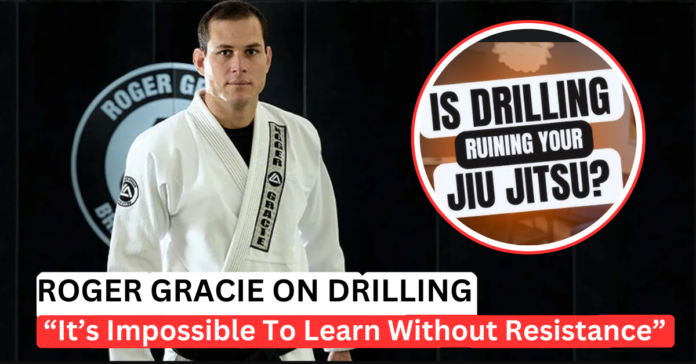
Roger Gracie has doubled down on his long-held view that drilling is overrated, arguing that ground techniques only really develop under resistance.
He prefers specific sparring over traditional “repeat the move 1000 times” drilling, saying improvement comes from solving the same live problem again and again.
His emphasis on resistance, task-based training and problem-solving closely mirrors today’s ecological / constraints-led approach to Jiu-Jitsu.
The message isn’t “never drill” – it’s “drill just enough to learn the mechanics, then shift quickly to positional sparring and live scenarios”.
For everyday students, his stance is a strong push to rethink class structure: more specific rounds, fewer zombie reps, and training that looks a lot more like the roll itself.
Roger Gracie Drilling Is Overrated: How His Training Philosophy Mirrors Ecological Jiu-Jitsu
When a ten-time world champion says “I’m not a believer of drilling,” the Jiu-Jitsu world pays attention.
Roger Gracie has been consistent for years: he’ll drill enough to understand the mechanics of a move, but once that’s in place, he believes endless repetitions without resistance are largely a waste of time.
That “Roger Gracie drilling is overrated” stance has resurfaced in a recent conversation with John Danaher and in an IBJJF Q&A clip – and it happens to line up almost perfectly with the modern ecological, constraints-led approach that’s now dominating coaching debates.
Instead of canned sequences, Roger talks about spending most of his mat time in specific sparring, solving live problems from defined positions. For him, that’s where real Jiu-Jitsu skill comes from: exposure, resistance and adaptation, not choreography.
Roger Gracie Drilling Is Overrated
Roger’s starting point is simple and brutally honest: once you understand what a move is supposed to do mechanically, blindly repeating it doesn’t magically turn it into a live skill.
I’m not a believer of drilling. – Roger Gracie –
In his talks about training, he explains that there is a place for drilling – at the very beginning. You drill to learn the mechanics, to feel the movement and understand where your hips, grips and weight should be.
But once that basic map is clear, he doesn’t see value in running the same sequence a thousand times on a partner who never really fights back.
He often compares this to Judo. Standing throws, with their timing and explosive entries, do benefit from huge amounts of drilling reps.
On the ground, though, he argues that the chaos of real grappling – shifting weight, frames, reactions and scrambles – means you quickly hit a ceiling if your partner stays compliant.
That’s where specific sparring replaces rote drilling. Instead of running an armbar entry from closed guard 50 times, Roger would rather you spend rounds starting in closed guard, actively trying to set up that armbar against someone who is doing everything they can to stop you.
You’re still repeating the situation – but the repetitions are alive.
I don’t drill, but I am a huge fan of specific sparring. For me, specific sparring is where I make the most improvements and refine my technique. – Roger Gracie –
Specific Sparring, Resistance And Ecological Jiu-Jitsu
In that IBJJF Q&A clip, Roger is introduced with the line: “It’s impossible to learn without resistance.” That one sentence might be the cleanest bridge between his ideas and the ecological Jiu-Jitsu approach everyone is arguing about online right now.
Ecological / constraints-led training basically says this:
Skills develop best in live, information-rich environments
You learn by solving problems that look like the real thing
Coaches should design tasks and constraints, not memorize-this-move scripts
That’s almost a textbook description of how Roger says he built his game. He talks about picking a position – say, escaping side control – and living there:
When you do this specific sparring, it’s the repetition that tells you what you’re doing wrong – even what you’re doing right – because when you go over the same movement over and over again with sparring, then you see… . – Roger Gracie –
Modern ecological coaches use different language – “attuning to information”, “solving affordances”, “task design” – but the core looks very familiar to any old-school room that spent half the class in positional rounds. Some veterans even argue that ecological Jiu-Jitsu is just a fancy rebranding of how Brazilians used to train before the YouTube and DVD era.
When you put it in that light, the Roger Gracie drilling is overrated idea feels less like a hot take and more like a reminder: resistance and context have always been where real grappling skill lives.
Don’t be afraid to put yourself in tough situations. You learn every time you tap. Let go of your ego and watch your Jiu-Jitsu get better. – Roger Gracie –
How This Challenges Traditional Jiu-Jitsu Classes
Most students know the classic format: warm-up, technique demo, drilling in pairs, then a few rounds of rolling. In that model, static drilling often eats the biggest chunk of class time.
Roger’s philosophy – and ecological thinking – quietly ask some uncomfortable questions:
How many of those reps actually transfer to live rolling?
Are students just memorizing steps, or are they learning to solve problems?
Could you get better faster by sacrificing some drilling volume for more targeted, resistant rounds?
Crucially, the Roger Gracie drilling philosophy is not saying to delete drilling from the curriculum. He explicitly acknowledges its role in teaching basic mechanics. But he argues that once the move “exists” in your body, the training emphasis should shift fast – away from zombie reps and towards positional sparring and constrained games.
That’s straight out of the constraints-led playbook. Instead of “do this sweep 20 times each”, you get tasks like:
Start in side control bottom; top’s goal is to hold, bottom’s goal is to escape to guard or turtle.
Start in triangle; bottom finishes, top’s goal is to posture and escape.
Start with back control hooks in; one round only finishing, one round only escaping.
Every round becomes a live experiment. The technique you drilled is the hypothesis; specific sparring is the test.
For coaches, this forces a rethink: if Roger Gracie built one of the most efficient, high-percentage games in history with minimal drilling and tons of specific work, maybe the default class template isn’t as sacred as we assume.
What Roger Gracie’s Philosophy Means For Your Training
So what do you actually do with all this as an everyday student who hears that Roger Gracie drilling is overrated but still turns up to a normal class three times a week?
A few practical takeaways:
Use drilling as a short onboarding phase. When you learn something new, drill just enough that you feel the mechanics and can hit it without thinking – then politely steer your rounds toward that position.
Ask for or create specific rounds. Even in a traditional gym, you can say: “Can we start in closed guard so I can work this sweep?” or “Let’s do two minutes with you on my back.” That’s Roger’s model in mini-form.
Judge progress by problem-solving, not repetition count. If you drilled a pass 200 times but still can’t hit it on a resisting blue belt, that’s useful feedback: you need more live reps in that exact situation, not more air-reps.
Don’t throw out structure for the sake of it. Ecological Jiu-Jitsu isn’t a license to ignore basics or skip learning mechanics. It’s a call to connect those mechanics to resistance as quickly and intelligently as possible.
The deeper message behind Roger’s stance is less about being anti-drilling and more about being pro-results. Whether you call it specific sparring, constraints-led training or ecological Jiu-Jitsu, the core idea is the same: you learn Jiu-Jitsu by playing Jiu-Jitsu under pressure.
If the greatest heavyweight technician of his era is telling you that’s how he built his game, it’s probably worth listening – and maybe reshaping your own mat time around the kind of training that actually made him Roger Gracie.
Complete Biography, Record, Fight History & Rivalries
Gordon Ryan is an American professional submission grappler and widely regarded as the most dominant no-gi Brazilian Jiu-Jitsu athlete of all time. Known for his systematic approach to grappling, elite submission efficiency, and historic performances at ADCC, WNO, EBI, and other major events, Ryan has built a competitive résumé unmatched in modern submission grappling.
Search queries such as Gordon Ryan record, Gordon Ryan losses, Gordon Ryan vs Felipe Pena, Gordon Ryan vs Craig Jones, Gordon Ryan coach, and Gordon Ryan Danaher consistently rank among the most searched topics in no-gi jiu-jitsu. This page serves as a complete evergreen reference answering all of those questions in one place.
Early Life and Background
Gordon Ryan was born on July 8, 1995, in Monroe, New Jersey, United States. He began training Brazilian Jiu-Jitsu as a teenager, initially drawn to submission grappling and MMA-oriented training rather than traditional gi competition.
From the beginning of his career, Ryan showed a strong preference for no-gi grappling. Unlike many athletes who transition from gi to no-gi later in their careers, Ryan developed almost exclusively within no-gi environments, shaping a style optimized for professional submission-only formats.
Introduction to Tom DeBlass, Garry Tonon & John Danaher
Ryan’s early development took place under the guidance of Tom DeBlass, one of New Jersey’s most prominent grapplers. During this period, Ryan met Garry Tonon, who would become a crucial influence on his career.
Tonon, already an elite competitor, introduced Ryan to high-level no-gi systems and professional invitational competition. As Ryan progressed, he began traveling regularly to New York City to train at the Renzo Gracie Academy under John Danaher.
Danaher’s analytical coaching style played a decisive role in Ryan’s evolution. His emphasis on positional control, mechanical efficiency, and repeatable systems would later become defining characteristics of Ryan’s grappling philosophy.
Danaher Death Squad Era (DDS)
Training under John Danaher alongside Garry Tonon, Eddie Cummings, and other elite athletes, Gordon Ryan became a core member of the Danaher Death Squad (DDS).
During this era, Ryan rose to prominence in submission-only events such as:
EBI
Sapateiro Invitational
Kasai Pro
Metamoris
Fight to Win
This period established Ryan as one of the most dominant submission grapplers in the world, particularly known for:
Advanced leg lock systems
Back-attack sequences
Pressure-based positional control
High submission finishing rates
Black Belt Promotion and Lineage
Gordon Ryan received his black belt in February 2016. The promotion was awarded by Garry Tonon, with shared lineage recognition under John Danaher.
Lineage (Primary)
Carlos Gracie → Hélio Gracie → Carlos Gracie Jr → Renzo Gracie → John Danaher → Gordon Ryan
Lineage (Secondary)
Carlos Gracie → Hélio Gracie → Carlos Gracie Jr → Renzo Gracie → Ricardo Almeida → Tom DeBlass → Garry Tonon → Gordon Ryan
Competitive Style and Philosophy
Gordon Ryan’s grappling style is defined by control before submission. His matches follow a consistent structure:
Neutralize opponent movement
Secure dominant positional control
Limit defensive options
Apply high-percentage submissions
Rather than relying on explosiveness, Ryan emphasizes inevitability. His approach minimizes risk while maximizing control and finishing efficiency.
Signature Strengths
Rear-naked choke variations
Inside and outside heel hooks
Pressure-based guard passing
Back control dominance
Weight Classes and Physical Evolution
Throughout his career, Gordon Ryan has successfully competed across multiple weight divisions:
77 kg
88 kg
99 kg
Absolute (open weight)
His ability to maintain technical dominance while moving up in weight is one of the defining aspects of his legacy, particularly in open-weight competition.
ADCC Career and Historic Achievements
Gordon Ryan’s ADCC career is considered one of the greatest in the history of the tournament.
In 2022, Ryan made history by:
Winning the +99 kg division
Winning the ADCC Absolute Superfight
Becoming the first athlete to win both titles in the same year
His ADCC performances cemented his status as the most dominant no-gi competitor of his generation.
Career Highlights and Major Achievements
ADCC World Champion (multiple divisions)
ADCC Absolute Superfight Champion
WNO Heavyweight Champion
IBJJF No-Gi World Champion
Quintet Champion
Multiple EBI Championships
Ryan has consistently defeated elite opponents across multiple rulesets and formats.
Rivalries and Notable Opponents
Felipe Pena
One of the most discussed rivalries in modern grappling history, defined by contrasting styles and high-stakes matches.
Craig Jones
Ryan holds multiple victories over Craig Jones across different events and formats, forming one of the most lopsided elite-level rivalries in no-gi grappling.
Other Notable Opponents
André Galvão
Yuri Simoes
Nick Rodriguez
Kaynan Duarte
Marcus Almeida
Lucas Barbosa
Head-to-Head Records (Most Searched)
Felipe Pena: 1 Win – 3 Losses
Craig Jones: 6 Wins – 0 Losses
Tex Johnson: 2 Wins – 1 Loss
Yuri Simoes: 4 Wins – 0 Losses
Lucas Barbosa: 2 Wins – 1 Loss
Nick Rodriguez: 2 Wins – 0 Losses
André Galvão: 1 Win – 0 Losses
Gordon Ryan Professional Record Summary
Total Matches: 107
Wins: 102
Losses: 5
Draws: 4
Submission Wins: 82 (approx. 80%)
Most common submissions:
Rear-Naked Choke
Inside Heel Hook
Triangle
Complete Professional Fight History
Below is Gordon Ryan’s complete professional match history, detailing opponents, results, submission methods, events, weight classes, and years.
Gordon Ryan Fight History
Below is a complete professional match history detailing Gordon Ryan’s wins, losses, opponents, methods, and events across major submission-grappling organizations.
Opponent
Result
Method
Event
Weight Class
Stage
Year
Tex Johnson
L
Points
Grappling Ind.
ABS
F
2016
Ian Murray
W
Inside heel hook
Sapateiro Inv.
ABS
R1
2016
Elliott Hill
W
Armlock
Sapateiro Inv.
ABS
4F
2016
PJ Barch
W
Kneebar
Sapateiro Inv.
ABS
SF
2016
Enrico Cocco
W
Inside heel hook
Sapateiro Inv.
ABS
F
2016
Pat Sabatini
W
Inside heel hook
Goodfight Pro
77KG
SF
2016
Kevin Berbrich
W
Choke
Goodfight Pro
77KG
F
2016
Joshua Bacallao
W
Inside heel hook
PTL Sunday Open
ABS
SF
2016
Nathan Orchard
W
Reverse triangle
PTL Sunday Open
ABS
SPF
2016
James Partridge
W
Inside heel hook
Onnit Inv. 2
ABS
SPF
2016
Jacen Flynn
W
RNC
EBI 6
ABS
R1
2016
Marcello Salazar
W
Kneebar
EBI 6
ABS
4F
2016
Yuri Simoes
W
EBI/OT
EBI 6
ABS
SF
2016
Rustam Chsiev
W
EBI/OT
EBI 6
ABS
F
2016
Keenan Cornelius
W
Inside heel hook
Grappling Ind.
ABS
SPF
2016
Matt Arroyo
W
Inside heel hook
EBI 8
84KG
R1
2016
Mike Hillebrand
W
RNC
EBI 8
84KG
4F
2016
Josh Hayden
W
EBI/OT
EBI 8
84KG
SF
2016
Kyle Griffin
W
Inside heel hook
EBI 8
84KG
F
2016
Todd Mueckemheim
W
Kimura
Sapateiro Inv.
ABS
SPF
2016
Vagner Rocha
D
---
Sapateiro 2
ABS
SPF
2016
Felipe Pena
L
RNC
Studio 540 SPF
ABS
SPF
2016
Bryan Brown
W
RNC
Sapateiro 6
ABS
R1
2017
Antonio Carlos
W
Reverse triangle
Sapateiro 6
ABS
4F
2017
Jesseray Childrey
W
RNC
Sapateiro 6
ABS
SF
2017
Matthew Tesla
W
Reverse triangle
Sapateiro 6
ABS
F
2017
Joe Baize
W
Reverse triangle
SUG 3
ABS
SPF
2017
JP Lebosnoyani
W
RNC
EBI 11
77KG
R1
2017
C. MacKarski
W
Arm in guillotine
EBI 11
77KG
4F
2017
Marcel Goncalves
W
Short choke
EBI 11
77KG
SF
2017
Vagner Rocha
W
RNC
EBI 11
77KG
F
2017
Lucas Barbosa
W
Referee Decision
F2W 30
92KG
SPF
2017
Leandro Lo
L
Pts: 4x0
ADCC WC Trials
ABS
SPF
2017
Eliot Kelly
W
Triangle armbar
F2W 34
ABS
SPF
2017
M. Jokmanovic
W
Kimura
Grappling Ind.
ABS
4F
2017
Tex Johnson
W
Reverse triangle
Grappling Ind.
ABS
SF
2017
D. Johnson
W
RNC
Grappling Ind.
ABS
F
2017
Dillon Danis
W
Referee Decision
ADCC
88KG
E1
2017
Romulo Barral
W
RNC
ADCC
88KG
4F
2017
Alexandre Ribeiro
W
Referee Decision
ADCC
88KG
SF
2017
Keenan Cornelius
W
Mounted guillotine
ADCC
88KG
F
2017
Roberto Abreu
W
Inside heel hook
ADCC
ABS
E1
2017
Craig Jones
W
Katagatame
ADCC
ABS
4F
2017
Mahamed Aly
W
Heel hook
ADCC
ABS
SF
2017
Felipe Pena
L
Pts: 6x0
ADCC
ABS
F
2017
Ralek Gracie
W
Reverse triangle
Metamoris
ABS
SPF
2017
D. Borovic
W
Outside heel hook
EBI 14
ABS
R1
2017
P. Donabedian
W
Armbar
EBI 14
ABS
4F
2017
C. Hellenberg
W
EBI/OT
EBI 14
ABS
SF
2017
Craig Jones
W
EBI/OT
EBI 14
ABS
F
2017
Yuri Simoes
W
RNC
Kasai Pro
ABS
SPF
2017
Vinny Magalhaes
L
Points
ACBJJ 13
O95KG
SPF
2018
Max Gimenis
W
RNC
No Gi Pan Am.
ABS
SF
2018
Kaynan Duarte
W
RNC
No Gi Pan Am.
ABS
F
2018
Charles McGuire
W
Tarikoplata
No Gi Pan Am.
O97KG
SF
2018
Max Gimenis
W
RNC
No Gi Pan Am.
O97KG
F
2018
Josh Barnett
W
Triangle
Quintet 3
ABS
SF
2018
Marcos Souza
W
RNC
Quintet 3
ABS
SF
2018
Roberto Satoshi
D
---
Quintet 3
ABS
SF
2018
Craig Jones
W
Short choke
Quintet 3
ABS
F
2018
Vitor Shaolin
W
Armbar
Quintet 3
ABS
F
2018
Gregor Gracie
D
---
Quintet 3
ABS
F
2018
Evangelous Moumtzis
W
Armbar
NoGi Worlds
O97KG
R1
2018
Yuri Simoes
W
Pts: 11x0
NoGi Worlds
O97KG
SF
2018
Roberto Abreu
W
DQ
NoGi Worlds
O97KG
F
2018
Kalil Fadlallah
W
Choke
NoGi Worlds
ABS
R1
2018
Vegard Randeberg
W
RNC
NoGi Worlds
ABS
R2
2018
Patrick Gaudio
W
Pts: 4x4, Adv
NoGi Worlds
ABS
4F
2018
Jackson Sousa
W
RNC
NoGi Worlds
ABS
SF
2018
Yuri Simoes
W
Pts: 0x0, Adv
NoGi Worlds
ABS
F
2018
Joao Rocha
W
Pts: 1x0
Kasai Dallas
120KG
SPF
2019
Gabriel Checco
W
Kimura
Kinektic 1
ABS
R3
2019
Rafael Domingos
W
RNC
Kinektic 1
ABS
R4
2019
G. Vasconcelos
W
Arm in guillotine
Kinektic 1
ABS
R5
2019
Ben Hodgkinson
W
RNC
ADCC
99KG
R1
2019
Tim Spriggs
W
RNC
ADCC
99KG
4F
2019
Lucas Barbosa
W
Pts: 3x0
ADCC
99KG
SF
2019
Vinicius Trator
W
Choke
ADCC
99KG
F
2019
Pedro Marinho
W
Outside heel hook
ADCC
ABS
R1
2019
Garry Tonon
W
Choke
ADCC
ABS
4F
2019
Lachlan Giles
W
RNC
ADCC
ABS
SF
2019
Marcus Almeida
W
Pts: 0x0, Pen
ADCC
ABS
F
2019
Rousimar Palhares
W
Referee Decision
World Festival
ABS
SPF
2019
Bo Nickal
W
Triangle
Third Coast III
94KG
SPF
2019
Aleksei Oleinik
W
Kneebar
Quintet Ultra
ABS
SPF
2019
Gabriel Gonzaga
W
Outside heel hook
SUG 10
ABS
SPF
2019
Tex Johnson
W
Katagatame
Sub Stars
N/A
SPF
2020
Pat Downey
W
Verbal tap
BJJ Fanatics GP
ABS
SPF
2020
David Newton
W
RNC
Grappling Ind.
ABS
SPF
2020
Abraham Hall
W
Triangle
Grappling Ind.
ABS
SPF
2020
Benjamin Dixon
W
RNC
Grappling Ind.
ABS
SPF
2020
Chad Allen
W
RNC
Grappling Ind.
ABS
SPF
2020
Austin Tracy
W
RNC
Grappling Ind.
ABS
SPF
2020
Kyle Boehm
W
Armlock
WNO
ABS
SPF
2020
Matheus Diniz
W
Inside heel hook
WNO 4
ABS
SPF
2020
Roberto Jimenez
W
Armbar
WNO 6
ABS
SPF
2021
Vagner Rocha
W
Reverse triangle
WNO 7
93KG
SPF
2021
Jacob Couch
W
Pressure
WNO 12
O92KG
SPF
2022
Pedro Marinho
W
RNC
WNO 13
O93KG
SPF
2022
Felipe Pena
W
Verbal tap
WNO 14
ABS
SPF
2022
Heikki Jussila
W
RNC
ADCC
O99KG
R1
2022
Victor Hugo
W
Pts: 8x0
ADCC
O99KG
4F
2022
Roosevelt Sousa
W
Outside heel hook
ADCC
O99KG
SF
2022
Nick Rodriguez
W
Outside heel hook
ADCC
O99KG
F
2022
Andre Galvao
W
RNC
ADCC
ABS
SPF
2022
Nick Rodriguez
W
EBI/OT
UFC FP Inv.
ABS
SPF
2022
Patrick Gaudio
W
Armbar
WNO 20
ABS
SPF
2023
Josh Sanders
W
Outside heel hook
WNO 24
O94KG
SPF
2024
Felipe Pena
W
Pts: 2x0
ADCC
ABS
SPF
2024
Yuri Simoes
W
Pts: 21x0
ADCC
ABS
SPF
2024
Legacy and Influence
Gordon Ryan’s influence on no-gi Brazilian Jiu-Jitsu extends far beyond his competitive record. His systematic approach, combined with John Danaher’s coaching philosophy, has reshaped modern submission grappling.
He is widely regarded as a reference point for how no-gi jiu-jitsu can be trained, taught, and executed as a structured, analytical system.
Frequently Asked Questions
Who is Gordon Ryan’s coach? John Danaher.
Does Gordon Ryan compete in gi or no-gi? Primarily no-gi.
Did Gordon Ryan train with Garry Tonon? Yes, extensively during the Danaher Death Squad era.
What is Gordon Ryan best known for? Submission efficiency, leg lock systems, and positional dominance.