







Key Takeaways
- A short, concept-first upper-body submission course built around angles, leverage, and structure (not “muscling” finishes).
- Most of the actionable material is anchored around the Kimura family and arm-locking mechanics from North-South, crucifix, and closed guard-to-mount.
- Best for grapplers who already reach these positions and want cleaner, more “inevitable” finishing mechanics once they’re there.
- The runtime and scope feel narrow for anyone expecting a broad submission encyclopedia or lots of positional entry work.
- Rating: 7.5/10
SUBMISSION GEOMETRY JOSEPH CAPIZZI DVD DOWNLOAD HERE
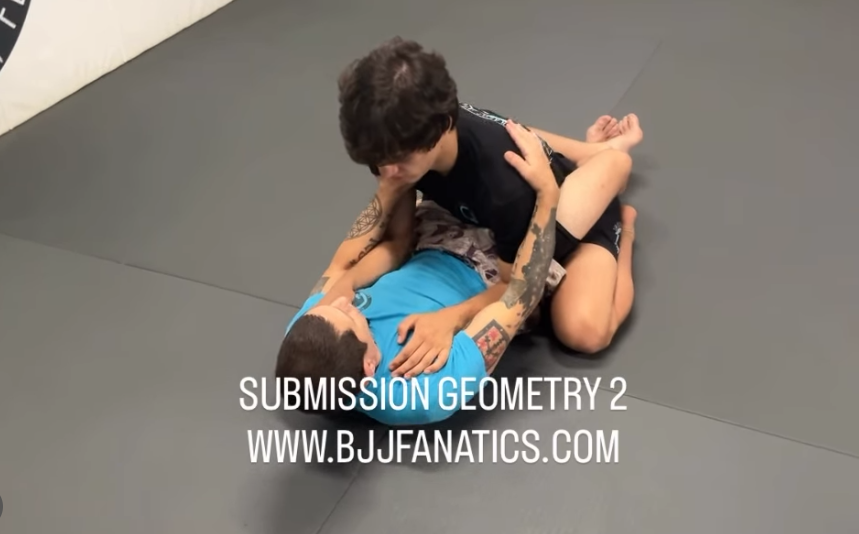
The Submission Geometry Joseph Capizzi DVD sits in a niche that a lot of instructionals claim to occupy, but rarely deliver on: making submissions tighter through mechanics rather than through adding more moves to your hard drive.
The premise is straightforward—if your finishes are inconsistent, it’s usually not because you “don’t know enough submissions.” It’s because your alignment is off, your lever is short, your opponent’s structure is still intact, or you’re trying to finish before your control is doing any real work.
This release is essentially Capizzi saying: stop treating armlocks like isolated tricks and start treating them like solvable geometry problems. If that sounds abstract, don’t worry—most of the material is shown through very recognizable positions and very recognizable families of attacks. You’re not being asked to reinvent your game. You’re being asked to clean up the physics.
The Submission Finishing Playbook
Submission geometry is a fancy label for something every good finisher learns the hard way: you win submissions by breaking structure, then using leverage to force the joint past its safe range.

The mistake most grapplers make is trying to jump straight to the breaking point. They’ll grab a Kimura grip and immediately crank. Or they’ll swing for an armbar without first winning the elbow line.
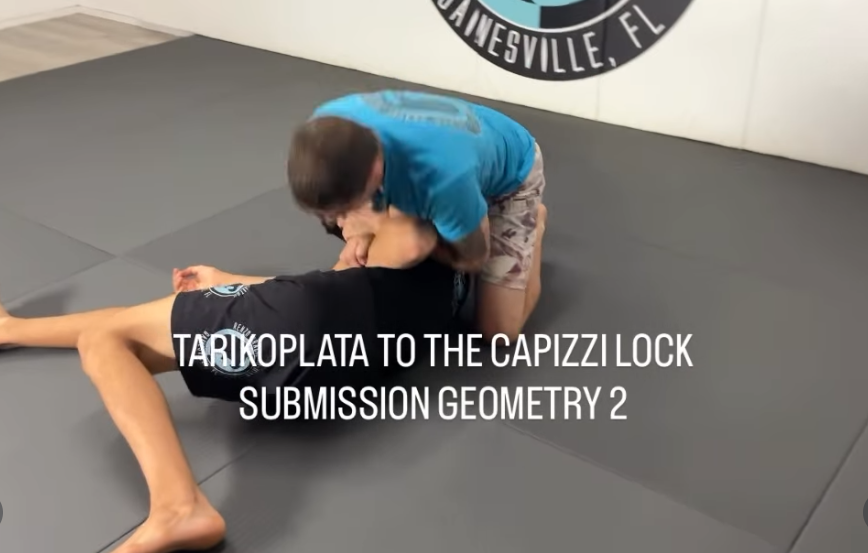
Or they’ll throw a Tarikoplata-style configuration without making sure the shoulder is truly pinned, and the opponent’s posture is dead.
The better model is: control first, then isolate, then shorten the lever, then apply pressure along the correct line. That’s why systems built around the Kimura trap, crucifix control, and closed guard armlocks can feel “unfair” when done well—your opponent isn’t fighting your strength, they’re fighting a losing structural battle.

The Submission Geometry Joseph Capizzi DVD leans into that idea by keeping the focus on repeatable mechanics across multiple positions. If you’re the kind of grappler who wants a reliable “finish engine” more than a bag of random submissions, you’re in the right neighborhood.
Joseph Capizzi
Joseph Capizzi comes from the Renzo Gracie lineage and is presented as a long-time high-level competitor and coach, with experience competing in major IBJJF events in both Gi and No-Gi. He’s also strongly associated with a tight, technical style typical of lighter-weight specialists—where precision matters because brute force simply isn’t on the menu against bigger training partners.
What makes Capizzi a credible instructor for this topic specifically is the consistency of the theme across his work: the idea that submissions should feel inevitable when the mechanics are correct. That’s a very “coach’s coach” lens—less about highlight finishes, more about why your submission fails at 80% and how to get it to 95% without changing your entire identity on the mat.
In other words, the Submission Geometry Joseph Capizzi DVD isn’t positioned as “watch this, and you’ll learn ten new cool moves.” It’s positioned as “watch this and your existing arm attacks stop leaking power.”
Full Submission Geometry Joseph Capizzi DVD Review
The course is relatively narrow in scope and runtime. If you want a massive encyclopedia, you’ll come away wishing for more. If you want your armlocks and Kimura-based attacks to feel cleaner and more repeatable—especially when your opponent is defending hard—this is a useful, focused addition.
Volume 1 – Modern Bent Arm Locks
The Locks and Levers Joseph Capizzi DVD starts in a very telling place: North-South, immediately tying the system to a control position where the top player can flatten posture and limit scrambling. From there, Capizzi uses the Kimura as the hub, showing variations and follow-ups that make sense as a single chain rather than disconnected endpoints.
The early chapters build through Kimura variations (including a hammer fist version), then connect into armlocks that live “inside” the trap—exactly the kind of detail that helps when opponents defend the obvious finish but still leave the arm compromised.
This is also where the Capizzi Lock is framed as part of the broader locks-and-levers theme rather than a random named technique. The big value here is the sense of continuity: you’re being nudged to think in terms of “I have the shoulder line and elbow line—what’s the cleanest lever available right now?” instead of “I must finish this one submission I decided on.”
If you like Kimura trap entries as a practical attacking platform, this first volume is the clearest snapshot of how Capizzi wants you to treat that control as a system.
Volume 2 – Capizzi’s Crucifix
Part 2 shifts to crucifix, which is a smart choice if your goal is to teach “geometry” through control. The crucifix is basically a mechanical advantage generator: you’ve already removed one major defensive limb and created predictable reactions.
Here, Capizzi pushes the idea of stacking attacks—starting with dual versions of his signature lock concept, then moving into options that feel like audible calls based on what the defender gives you.
The most useful part of this section, conceptually, is the emphasis on recycling submissions: when an opponent escapes the first line of finish, they often expose the next lever if your control stays intact. That’s the difference between “I almost had it” and “I finish people from here all the time.”
The volume is short, but it’s focused, and it makes a strong case for building a crucifix submission chain that doesn’t rely on speed—just on denying structure until the arm is stuck in the wrong place. If you already play crucifix or want a better reason to start hunting it, the Submission Geometry Joseph Capizzi DVD is at its most “systematic” here.
Volume 3 – More Armlocks
Volume 3 is where the course feels most “Jiujitsu applicable” for the average student, because it lives in closed guard—an environment most people actually reach regularly.
Capizzi again uses the Kimura as a primary control point, then branches into his lock concept, a Barataplata, and a Rogers-style armlock configuration, before shifting into training-oriented pieces like a “90 degree” guard movement drill.
That blend matters: it suggests he’s not just showing you finishes; he’s trying to influence how you create the angles that make the finishes possible. The back half of the volume ties the submission threat to real outcomes: sweeping with the armlock threat, sweeping with the omoplata threat, and then continuing into mounted variations.
That’s a strong learning arc because it mirrors how closed guard attacks work against decent opponents—often you don’t get the clean tap first, but you force posture breaks, create reactions, and ride the threat into top position.
This is also where you’ll most naturally connect ideas like Tarikoplata variations and shoulder/arm alignment to actual rolling: you can test these quickly, because closed guard gives you reps on demand. In terms of “most usable for most buyers,” Volume 3 carries a lot of the practical weight of the Submission Geometry Joseph Capizzi DVD.
Add Armlocks, Don’t Substitute Them
To get real value from the Submission Geometry Joseph Capizzi DVD, treat it less like entertainment and more like a mechanics lab. The course is compact, so you can rewatch key segments without it becoming a six-week binge—and that’s a good thing, because this kind of material only sticks when you troubleshoot it under resistance.
A simple way to integrate it:
- Pick one hub position for two weeks. If you’re a top player, make it North-South. If you’re a guard player, make it closed guard. If you like back exposure and pinning, choose crucifix.
- Build a 3-attack loop. Example: primary lock → secondary armlock → tertiary transition (sweep or position upgrade). Your goal is not “finish the first move.” Your goal is “never lose the limb.”
- Positional spar with constraints. Start in the hub position with the grip/structure already in place and give your partner the job of defending intelligently. You’re training the geometry, not your entry timing.
- Audit your failures. When it doesn’t work, ask: Did I lose elbow line? Did their shoulder rotate back into safety? Did my lever get long? Did I rush the breaking pressure before the control was settled?
If you approach it this way, the Submission Geometry Joseph Capizzi DVD becomes a skill amplifier: fewer techniques, cleaner finishes, more predictable outcomes.
LINK: LOCKS & LEVERS SUBMISSION GEOMETRY JOSEPH CAPIZZI DVD
Who Is This For?
This is best for solid white belts through black belts who already understand basic positional control and want their armlocks to stop feeling like coin flips. If you’re the grappler who keeps catching almost Kimuras, almost armbars, or almost Omoplatas, the focus on angles and structure is likely to help.
It also fits:
- Guard players who want closed guard armlock sweeps that connect submission threats to top position.
- No-Gi grapplers who like upper-body attacks and need a more reliable finishing framework.
- Competitors who want tighter mechanics without adding complexity.
Who might not love it:
- Brand-new white belts who are still struggling to recognize positions and control lines—this is refinement more than fundamentals.
- People looking for lots of takedown-to-submission entry work (the emphasis is more on finishing once you’ve arrived).
In short: the Submission Geometry Joseph Capizzi DVD is a “finishing mechanics” buy more than a “build my whole submission game” buy.
Pros & Potential Drawbacks
Pros
- Concept-first approach that prioritizes leverage and structure over memorization.
- Strong cohesion around the Kimura family and arm-locking mechanics, making the material easier to integrate.
- Multiple positions covered (North-South, crucifix, closed guard, and mounted follow-ups), which helps the system feel transferable.
- Compact runtime makes it rewatchable—important for mechanics-heavy instruction.
- Clear “chain mentality” that encourages recycling attacks instead of stalling when Plan A fails.
Potential Drawbacks
- Scope is narrow: if you want a broad submission curriculum, this won’t cover that territory.
- The value depends on whether you already reach these positions; entries are not the main event.
- Because it’s compact, some buyers may want more depth, more examples, or more rounds/variations per scenario.
Locks and Levers
The Submission Geometry Joseph Capizzi DVD does a good job of delivering what its title implies: a mechanical lens on locks and levers, shown through practical upper-body submissions rather than abstract theory. The strongest parts are the way Capizzi connects familiar control positions (especially North-South and closed guard) to a consistent finishing philosophy—one that rewards patience, alignment, and smart chaining.