How to Fix your Low Back Pain and Never Feel it Again – Simple Exercises

How to Fix your Low Back Pain and Never Feel it Again - Simple Exercises

Lower back pain is by far the most common source of discomfort we deal with. A lot of times what we feel in the lower back is caused by muscles, not in the back. In this video, you will see how the gluteus medius could be the real cause of your back pain and an exercise you can do to relieve your discomfort instantly. Once gone, you will see a few additional exercises you can do to make sure your low back pain never returns.

The Gluteus Medius

Gluteus Medius

The gluteus medius is between the glute Maximus and minimus and lies in and around the hip area. The role of the muscle is to abduct your hip or lift your leg out to the side in either standing or side lying and to keep your pelvis level whenever you take a step. Prolonged sitting during the day as well as an unequal weight distribution when standing is two of the most common reasons for this muscle to get weak and imbalanced.

How to Test Your Gluteus Medius Muscle

You can quickly test to see if you have the makings of a weak glute medius by standing with your feet shoulder-width apart and lifting one foot off the ground. First, take note whether or not your opposite hip drops significantly. If it does, this would indicate a glute weakness on that side. You would repeat with the opposite foot as well. When you do this you would also want to see if you had to dramatically shift your weight to one side just to lift that foot off the ground. If you do, this would indicate that you have an unequal weight distribution when standing and it would be especially troublesome when squatting.

How to Fix your Lower Back Pain

To fix this quickly, you will want to lay down on the ground with your affected side on top. If your right lower back was bothering you then you would want to lie on your left hip. From here, take your thumb and place it on the area most sore. You should feel that this is going to happen just to the outside of the bony prominence of your pelvis. From here, push to hold back the trigger point and start flossing your leg down and in front of you and then back and up. Your hip should be extended and then lifted into abduction towards the ceiling (being sure to point the toes down to keep the glute medius in focus). Do this about 10 times until you feel the tension in the muscle release.

Now, you can burn out the spasm in the trigger point by getting into the fully contracted position of the glute medius muscle and holding as long as you can. Generally, because this muscle is often very weak, this may not be any longer than 30 seconds to a minute. Once you cannot hold it anymore, stand up and you should notice an immediate relief of the pain on that side.

This is the quick but not permanent fix for this problem. Since the underlying cause is a weakness in the gluteus medius muscle you will want to back this up with some exercises for your low back that you can do a few times a week. I show you three options for this. The first is the hip bump against the wall. The second is called the sack swinger and can be done with a dog leash if you don’t have a formal dip belt. The last is actually doing the same movement that you did for the treatment, but this time as a strengthening exercise for your low back.

Conclusion

Whatever you do, just be sure you are consistent. You will also see that as you relieve the tension in this muscle that your squat performance improves as well. Your depth should be increased and any low back pain that you felt by doing the exercise should be gone since you will now be able to do them with equal force through each leg.

https://bjj-world.com/solving-the-strength-conditioning-puzzle/

10 Strength and Condition Bodyweight Exercises for Jiu Jitsu – Tutorial

Performance Nutrition For Grapplers: 2 Things Everyone Gets Wrong

Performance Nutrition For Grapplers: 2 Things Everyone Gets Wrong

Grapplers nutrition guide

The “food is fuel” statement is commonly known among athletes, but very few seem to take it seriously. An integral part of athletic health and well-being, nutrition should not be taken lightly. Along with proper recovery and training strategies, it creates the tripod of athletic performance. If one of the tripod’s legs is bent or crooked, the stability of the whole structure is at risk. If one of the legs is missing then there’s no tripod to start with, and sitting on a two-legged one is a challenge in the best of circumstances.

The Main Problem with Nutrition for Combat Athletes

So, why do most athletes seem to ignore or completely misunderstand nutrition? Personally, I see two main reasons for it:

  1. People are not well informed on the subject and opt for shortcuts and/or the advice of incompetent sources;
  2. People are too much into nutrition and suffer from “paralysis by analysis”, not giving anyone option the required time to be effective.

Let’s explore them further to find out which one of these key issues is your stumbling block before we offer ways to deal with it and set up a perfect nutrition for grapplers.

Not Enough Knowledge

Nutrition is a complex subject that requires not only knowledge of nutrients but of the human body as well. It’s a subject that has been notoriously under-covered by modern medicine during the formal education of doctors.

As a result, there’s an avalanche of experts whose credentials nobody can verify with any authority. All of these online certified experts claim to have the best formula for weight loss or gain, depending on their target group.

Performance Nutrition For Grapplers: 2 Things Everyone Gets Wrong

When it comes to the average Joe, working out to stay alive it’s not really that bad. Unless someone has an underlying illness, in which case listening to anyone except a well-trained medical professional is a bad idea then any correct nutritional advice can be of help.

With athletes, however, it’s a whole different ball game, and nutrition often dictates the outcome of an athletic endeavor. When athletic performance is the goal, there’s no place for the “Lose 20 pounds in 3 weeks” approach, unless you’re willing to seriously endanger your health.

Nutrition has to be dialed into perfection, the older the athlete the finer the details. General nutritional guidelines have to be a way of life before an event-specific diet is even considered.

With athletes involved in combat sports, weight cuts are a regular, though unwanted, occurrence. Nutrition plans leading to an athletic event need to work up to a properly designed weight cut, put together by certified experts.

Even if the athlete has sufficient knowledge, planning nutrition takes time and patience, which should be directed toward training. So employing a real expert is the first and most important step towards building one stable leg of the tripod.

Paralysis by Analysis

If you’re one of those types whose hobby is nutrition, or maybe even a doctor or a nutrition expert, you’re in for a trap. When choosing to part take in an athletic competition, too much information can lead to another pitfall.

Let’s say you’re focused on a bodybuilder-style of diet, with all your macros and micros carefully calculated. While you’re on your plan you come across the principles of the Paleo approach. So you modify your diet habits accordingly and you’re now ready to train and prep for competition.

After only a couple of weeks, it’s time for you to try that new intermittent fasting protocol you read about while in the toilet. And the cycle continues.

Such a cycle accomplishes nothing because you’re not giving anything the time to show effects. Jumping from diet to diet is like doing berimbolos one day, then Kata Guruma the next while preparing for a competition – it is a waste of time.

The body needs time to adjust to any external stimulus. It is a complex machine of hormones that need to be kept in equilibrium and carefully manipulated towards your goals. So, choose an option that is sustainable for you and doesn’t change it for at least 6 months.

Nutrition for grappling

Basic Nutrition Guidelines for Competitive Grapplers

As a competitive athlete, it can be hard to juggle nutrition along with training, recovery, and everyday obligations. So, even if you can’t allow for professional nutritional help, you can go by your own common sense. Here are a few nutritional starting points that can make a world of difference:

1. Stay Hydrated

Our bodies are made of around 65 % water and muscle tissue is comprised of 79 % water! So staying hydrated should be the number one priority for a BJJ competitor. Also, don’t be fooled by all the commercial superhydration concoctions available out there.

Most of that stuff is pure sugar (see point 2) and is going to lead to health deterioration in the long run. Stick to good old water and develop a habit of drinking it. Take a 30 oz bottle with you and make sure you’ve filled it up at least three times a day. Coffee, tea, and pre/post-workout shakes do not count.

2. Ditch Sugar

This one is as hard as it is obvious. Processed sugar is in almost every product surrounding us. That low-fat yogurt you picked up in the market actually contains more sugar to replace the fat. The healthy, full-grain cereal you eat for breakfast is a sugar bomb, containing enough sugar for a whole family.

Even the bacon Paleo people so devoutly worship has been packed with preservatives that are, in essence, sugar-based. Even that zero-sugar diet drink is filled up with sugar substitutes – much worse for our health than the original culprit.

The solution is to go about carefully reading labels and stick to what is actual food (see point 3). You can’t do much damage by going for meat, eggs, veggies, fruit, and some healthy fats. And there are plenty of options for those with an insatiable sweet tooth in the form of dates or raisins.

3. Go Green

Before I get to stick to trying to turn you all into vegetarians stop. I’m not. Simply go for a salad with as many colors as possible with every meal. It’s as easy as that.

Broccoli, kale, spinach, ginger, all kinds of peppers, beets, carrots, etc should be the staple of every athlete’s diet. They contain valuable vitamins and minerals to go along with all the fiber and a surprising amount of protein. Your guts will be grateful for this one.

4. Eat as You Train

As previously mentioned, nutrition is only one-third of the whole picture. The way you train (intensity-wise) and your recovery abilities are going to determine your nutritional needs. Food is fuel for training and the main substrate to aid and speed up recovery.

It is not recommended for grapplers to shy away from carbohydrates, because of the intensity of grappling training alone. Add in strength and conditioning to the mix and going Paleo doesn’t seem like such a great idea. That’s because it isn’t.

Eat your potatoes, rice, quinoa, and whole grain stuff (bread, pasta) without worrying too much. Just stay away from the processed stuff and do not confuse carbohydrates with sugar. Donuts are not athletic-friendly carbs. Baked sweet potatoes are.

Performance Nutrition Tips For Grapplers: 2 Things Everyone Gets Wrong

5. A Word on Supplements

A subject that can be discussed in at least a series of articles, let’s just stick to the basics here. The reason why there is such a well-developed supplement industry is just that – it’s an industry. And industries are aimed at profit.

Next time you’re in your favorite supplement store pay attention to the marketing. You’ll notice that every product claims to build muscle, burn fat, and give energy, regardless of type. If that was all true then only one supplement would’ve done the trick, wouldn’t it?

Without diving into this too deeply, again go for the basics. Whey protein, preferably isolates, creatine, fish oil, multivitamins, and the optional box of BCAAs. Everything else is as useless as sugar and should follow it into nutrition purgatory.

Nutrition for combat sports athletes is not that hard. And not just competitive athletes, everyone with a little common sense should adhere to the basics. The advice laid out above will allow everyone to build good habits in a sustainable and easy manner. As much dedication as it takes, in the beginning, it’s become effortless if you only stick with it. Much like with BJJ.

Final Thoughts

Nutrition has one main task for grapplers – fuel performance. What you want out of your food, apart from some flavor (forget about boiled chicken breast) is to give you the energy to do your thing on the mats and in the weight room, and the building blocks to help you recover.

You also want to be able to easily stay on weight, so weight cuts end up being a breeze when fight week comes. All ti takes is understanding the key issues and the main components of a solid nutrition for grapplers plan. Bon Appetit!

George Lockhart Nutrition And Weight Management System

Grappling Nutrition: Improve Gut Health To Improve BJJ Performance

Jiu-Jitsu Nutrition: How To Pull Off A Plant-Based Diet

Best MMA Nutrition Books 2022 Guide And Reviews

You Might Also Be Interested In:

Top 5 Best BJJ Supplements For High-Level BJJ Performance
How To Be Completely Ready For A Jiu-Jitsu Competition
Paleo Diet for BJJ Lifestyle
REVIEW: George Lockhart Nutrition & Weight Management System DVD/Book

Merging Gi And No-Gi Rules To Create The Best Competition Platform

Evolving BJJ competition

Among all the debates in the world of Jiu Jitsu, there’s one that stands out profusely in modern times. The Gi vs. No-Gi debate has been around since the first time someone in Brazil was too hot decided to take the top of the Gi off, but it’s gotten a different dimension lately. The popularity of No-Gi competition formats with original rules has caused the debate to shift towards the question ‘which type of competition is better’?

The rise of EBI and, more importantly, it’s unique and effective ruleset, has seen an old debate sparked into a new life. With plenty of organizations worldwide accepting the improved ruleset No-Gi seems to threaten the reign of Gi competitions as the proffered option. What makes the difference more than anything is the type of rules that apply to the competition, not the clothes worn by competitors. Before we decide on any common solution, let’ take into consideration all the arguments for both styles.

Traditional Gi competition format

Competing in the Gi has been associated with BJJ from its roots, and especially so after the world met Royce Gracie. The winner of the first few UFC events was a little Brazilian guy in a Gi, who destroyed every opponent with ease. Since then competing in the GI has become a BJJ staple.

All the major competitions against which the success of top competitors is measured are in the GI. The IBJJF is the leading world organization (although UAJJF is catching up fast) when it comes to traditional competition formats. Most of the events worldwide, and all of the highest level events are held by one of these two organizations. Seen by many modern competitors as too restrictive, both organizations have a very elaborate ruleset.

One might argue that IBJJF rules enforce stalling and it’s easy to see where that stems from. First of all, an IBJJF match can not end in a draw – there has to be a (clear) winner. The best way to win, of course, is by submission. Second, best are points, which are gathered according to positional dominance and control displayed throughout the match. When two competitors are really close, small details in the form of advantages decide the outcome. And if everything is in complete balance, it’s down to the referee’s decision.

Ruleset-wise, the “traditional” approach to Brazilian Jiu-Jitsu imposes a variety of restrictions when it comes to techniques and moves that can be used during a match. Namely, the IBJJF (and UAJJF) insists that different levels of competitors have should stick to a selection of techniques adequate to their level. For example, toe holds and kneebars are only legal for brown and black belts, while heel hooks are illegal for everyone.

The sub-only No-Gi competition format

No-Gi competitions are a completely different animal. Most of the No-Gi competitions are organized in a submission only, long duration format, in which there are no points. This platform is based on the idea that without worrying about or gunning for points to win, submissions are going to be the main focus. Every and all techniques an moves are considered legal at all levels.

Two major rulesets prevail when it comes to No-Gi competitions: Eddie Bravo’s EBI rules and those of the ADCC. 10th Planet founder and No-Gi ambassador Eddie Bravo have come up with arguably one of the best systems for competition. His system also offers a winner in every fight, though in a completely different fashion than the IBJJF. The EBI format is a sub-only one, putting the emphasis on submissions as the most desirable way to end a match. It allows for an extended time to work (10 minutes) after which, if there’s no winner, overtime rounds kick in. And overtime is where this formats gained its popularity. This is the unique fashion in which Bravo organized overtime rounds:

  • A coin flip decides which competitor is on top
  • The top competitor chooses on of two dominant positions to attack from and needs to submit the opponent. The bottom competitor has to escape the position before a submission is applied. The opponents get equal turns at the top position.
  • There’s no time limit for the rounds. If after three repetitions of the above there’s no submission, the fastest escape time decides the winner.

ADCC (referred to as the Olympics of grappling) is set up in two-part rounds. The first part is sub-only with no points awarded, after which points come in to play. Overtime rounds are also included, very similar to IBJJF rules, but without limiting techniques.

The problem

When both of the competition formats are compared, there’s a clear reason why such large differences exist. And it is not because of the clothes that competitors wear. In all fairness,  Gi does allow for increased control over the opponent, which can lead to stalling, but this is not always the case. Actually, sub only matches can be stalled just as effectively. So, the main problem lies elsewhere – the rules.

Rulesets are what defines the manner in which competitors approach matches. First of all, competitors are going to look for the win in any manner available. So if holding a position brings the victory they’re going to hold on for dear life.

The techniques that are allowed also play a major rule in how the match is going to take place. A competitor might decide that he/she is going to hold a position of unreal safety, where there’s no threat of submission just because all the attacks from the position in question are banned by the ruleset.

Two things are clear from the situation in which competitions are organized at the moment. Primarily, the rules of the format dictate the speed, direction and thus the level of entertainment of the match. Secondary, not one ruleset out there is perfect, guaranteeing entertainment and high-level Jiu Jitsu at the same time.

The hybrid solution

A practical approach would be to create a hybrid platform, taking the best out of both worlds in a unified ruleset. Politics aside (yeah, I wish) a unified ruleset would bring about both a great platform to compete on. Not only that, but one unified platform will settle the question of who the greatest competitors are once and for all.

Let’s look at a few ideas for improving competitive Jiu Jitsu:

  1. Throw advantages and referee decisions out. They’re just illogical safety nets for competitors who are shy to engage.
  2. Use an IBJJF/ADCC like the point system, with a few tweaks. Actually, Rickson Gracie has the perfect concepts for a practical point system for BJJ. Points should be awarded for submission attempts over positions, thus encouraging people to look for the finish.
  3. Have a reasonable time limit for open tournaments. 10-20 minute matches might be great for invitational events, but doing so at an open tournament means begin there for days. IBJJF like time limits seems to do the trick.
  4. Include EBI style overtime rounds. Since ADCC overtime rounds are a safety net of their own, a little tweak to EBI overtime would do the trick here. Going down to 1 round instead of three would ensure a winner in a timely and entertaining fashion.
  5. Remove the ban on techniques. Not really going the way of EBI, but limiting only the most difficult/dangerous of techniques for the beginners only. That means all is fair game for purple belts and above, while neck cranks would be out of bounds for blue belts. White belts would have to stay away from heel hooks and toe holds as well, but reaping is allowed for everyone.

BJj competition

Final thoughts

The ideas stated above are my own and are by no means a solution to the competition conundrum we have on our hands. However, it’s a direction of thought, that might offer a simple solution to a complex problem. It’s not that hard to imagine a ruleset that would benefit all involved and show the true beauty of our art at the same time.

After all, if nothing else works, we can always embrace Combat Jiu-Jitsu rules and slap the hell out of each other.

Jiu-Jitsu Tournaments – Do You Really Need Them?

The Grey Zones Of IBJJF Legal Leg Locks

Sonnen’s assertion is true – Ben Askren Declared himself as a Black Belt and “wrecks” Demian Maia

Sonnen's assertion is true - Ben Askren Declared himself as a Black Belt and "wrecks" Demian Maia

The rumor that Chael Sonnen claimed in his podcast is definitely true. Looks like Ben Askren Really promoted himself to a BJJ black belt.

It was very interesting in his Q&A time on reddit:

He was asked: “Was Chaels story about your black belt true? He said you essentially just declared yourself a black belt and challenged people to prove you don’t have the skills to be one.”

His answer was: “Yes”

When asked if anyone accepted his challenge he again gave simple answer: “No”

And he also didn’t have any nice words for Demian Maia:

He was asked: “why didn’t maia watch your tutorial videos before the Woodley fight? I felt some of your takedowns would have been effective.”

He said: “Maia is so basic. I had to imitate Maia in sparring and it was awful bc there was no creativity or ability to keep Tyron guessing what was coming.”

This could be really interesting in the future once the BJJ people starts to challenge him. Check the full Q&A with him HERE.

IF you want to check Ben Askren’s BJJ skills against one of the best, Marcelo Garcia, you can check it in a video below and tell us what you think in the comments.

You can also watch Ben Askren Against Pablo Popovitch on ADCC 2009

Fred Mastro in an MMA Fight – Let’s See if He’s Able to Apply his Techniques in a real MMA fight

4 FAKE BJJ Black Belts that will piss you off and make you laugh at the same time!

Grandmaster with 12 Black Belts and 7th Degree in Grappling

Korean UFC Fighter Sentenced to Prison for Fixing Fights

Koren UFC Fighter Sentenced to Prison for Fixing Fights

According to The Korean Herald, the Seoul Central District Court said that Bang Tae-hyun was found guilty of taking a bribe of $92,160 in exchange for throwing a bout at the UFC event in South Korea in 2015. The brokers who handed  money to Bang Tae-hyun are also sentenced to prison.

“The crime of match fixing damages the credibility of sport, and in international matches, it has a bad effect on the country’s credibility as well,” the court said. “Bang had an obligation to play the game fairly, but he ignored it and took an important role in the scheme. But we did take into consideration that Bang won the bout and returned the money afterwards.”

Bang Tae-hyun will be out of jail after 10 months eventhough he won the bout and returned the money afterwards.

According to investigation Bang was supposed to lose first two rounds against Leo Kuntz at UFC Fight Night 79 in Seoul on Nov. 28, 2015. But at the end of the match Bang changed his mind and won a match against Kuntz via Split Desicion.

The reason why he decided not to throw the match was UFC warned him about match fixing and even the bookmakers changed the odds dramatically. Before the match Bang was slight favorite but few hours before the match started he became a huge underdog.

Anyway, Bang is no longer an UFC fighter after he lost in Germany on UFC fight night against to Nick Hein and after this we believe there is no chance he’ll ever be back in UFC or even compete in any better organization.

Connor McGregor vs Manny Pacquiao in 2018?

Connor McGregor vs Manny Pacquiao in 2018?

There is something weird going on and this may be the start of another Conor McGregors pro fight in Boxing.

Few Hours ago, on Facebook, Manny Pacquiao posted a picture of Conor McGregor sitting on a couch and he wrote: “Happy Thanksgiving! Stay fit my friend.” This could be just one of many others friendly posts but the hashtags are revealing something else. Manny put hashtags: “#realboxingmatch and #2018.”

Anyway, looks like something is cooking and we’re yet to find out what. Stay Tuned!

https://www.instagram.com/p/Bb1sMeOHa1Z/

Elite Strength and Conditioning For BJJ Competitors [Sample Plan]

Strength and conditioning for BJJ competitors, BJJ strength training

BJJ competition preparation is not an easy endeavor. First and foremost, you have to have a solid technical base before even thinking about competitively stepping on the mats.

Second, going in without a defined game plan based on your technical strength is a must. You also have to be smart about choosing your weight class, because weight cuts can be a real nuisance and can greatly hinder performance. And lastly, you have to be in good physical shape to be able to go through all the matches.

What I mean by good physical shape is that you need a solid level of strength as well as a good gas tank in order to compete. There are instances in which technique can only take you so far before strength becomes the deciding factor.

At white and blue belt levels, when the technique is not that sharp anyway, a lot of the match outcomes depend on the physical state of the competitors involved. Even at the elite black belt level, when two competitors are very closely matching in terms of technique, strength, and conditioning is often the edge that decides the match.

BJJ strength training

The Benefits of Strength and Conditioning for BJJ

So even for the average Joe who only trains BJJ a few days a week, a solid strength and conditioning plan is a great idea. Regardless of competition aspirations, supplementing BJJ with physical training has multiple benefits.

A very important aspect of strength training is the improvement of the range of motion for your joints. As far as joint abuse goes, BJJ is high on the list of sports that take their toll. Keeping your joints healthy and strong can prolong your BJJ journey for a significant amount of time.

Also, the tendon strength that you develop through strength training means that you’ll be less prone to training injuries. Of course, there is the obvious benefit of being stronger and more powerful on the mats.

Conditioning, on the other hand, is training for endurance and developing the ability to last longer at a higher pace when rolling. What conditioning offers is the ability to perform with consistent intensity throughout the whole competition.

Obviously, this is the ideal state and is practically impossible, but you can keep your performance level high if you’re well-conditioned. Being able to relentlessly go for submissions for the entire duration of the match offers a huge advantage over the opposition.

Structuring a Supplemental Training Plan

Let’s look at the scenario of a professional athlete preparing for a grappling competition. They train 7 out 7 days a week, juggling high and low-intensity sessions on the mat (tough sparring, perfecting technique, game plan drilling).

On top of that, he has the weekly meal prep crucial for keeping energy levels high while not gaining weight. Since sleep is a major factor in successful recovery, they manage to get their 8 hours a day in. Seems like a handful already without mentioning strength and conditioning training thus far.

In another scenario, we have a recreational athlete, with a 9-5 job and a heap of family obligations who has decided to compete for the first time. They manage to maintain a reasonable eating plan and get on the mats 3-4 times a week. Every time they get close to 6 hours of sleep at night is worth celebrating.

So, how does our regular Joe figure out a way to fit in a strength and conditioning plan that will help them improve physically, but not kill them in the process? We already established that training strength and conditioning is an essential piece of the competition puzzle.

With this in mind, it’s important how you structure the supplemental training in order to help your Jiu-Jitsu instead of diminishing it:

Elite Strength and Conditioning For BJJ Competitors

1. Frequency

To start let’s look at the frequency of training. As stated above, training strength and conditioning should help get you stronger and better, not tire you out. For both professional and recreational athletes, a scheduled rest day is the starting point.

From there, recovery abilities, goals, and time constraints dictate the frequency of strength and conditioning training. Going for 1-3 supplemental training sessions a week is a reasonable range in which all levels of athletes can find the option that best suits them.

Going for more than 3 sessions will most likely have a negative return, but if you really must train harder, then look to up the intensity of the sessions instead of the frequency.

2. Intensity

Which brings us to intensity. Going all out, leaving a sweat angel on the ground, and puking your guts out epitomizes the wrong approach. How tired you are after a training session is in no way an indicator of the productivity of the session.

Your ability to recover will dictate the intensity more than anything. If you’re to beat up in BJJ training the next day, then why do 1 RM squats the day before? One maximum-effort training session might derail your whole week and in the long term lead to over-training.

3. Active Recovery

A subject that we’ll cover in detail in another article, active recovery should be done daily. Yes, that includes your rest day as well, and you might even use it to take it up a notch. During a rest day, do light yoga, walk, hike, take the dog for a walk, or just move around.

On training days, finish the day off with some foam rolling, stretching, contrast showers, or easy stretches. And go for a message. At least once a month go for a message to give your muscles relief.

Strength or Conditioning First?  

Now that structure has been mapped out, and goals have been set, it’s time to decide which quality you want to develop further. There are a couple of indicators that should be the main guides when making this choice.

Fitness levels are the primary determinant in choosing which area you need to focus on the most. A good fitness test can very precisely show what your main weakness is. I recommend that you work with a certified coach for both the test and the actual training itself. You can’t learn BJJ from books and video clips only and strength training is no different.

In addition to the fitness test, the time you have until match day is the second major factor for your supplemental training. There’s no point in starting a program if you’ve got a match in three weeks because you’re only going to tire yourself out. If you’re in a position like this, just stick to BJJ and go out and do your best. Next time around allow yourself more time to prepare.

Focus on Your Weakness

In short, let’s say you have 12 weeks until the competition of your choice. You’ve been running because that’s what Rocky did and you’ve been putting in hours on the mat. A fitness test shows that your conditioning is not at the desired level but not bad overall.

Your strength, however, is far below standards. I’m going to devote a full future article to strength standards for grappling athletes, but for now, let’s just agree that you suck at being strong.

Since conditioning takes less time to develop, and you already have a decent gas tank, strength should be the main focus. A couple of sessions a week, with a carefully planned prioritization, will definitely improve your strength over an 8-week cycle.

Having 4 more weeks left means you can devote 3 weeks to developing energy systems so that you have the gas tank to match. The last week is a recovery week, where you need to peak for the tournament so that one won’t count.

It’s not rocket science. The rule of thumb is that when in doubt, go for strength. Strength will supercharge your athletic abilities and give you confidence. Add in properly structured conditioning and you’ve done all you can to make sure you get your hand raised.

BJJ Competitors: Strength and Conditioning

Final Thoughts

So, short of getting on roids, you now know exactly what it takes to develop strength and conditioning just like any elite-level grappler – time management and dedication. It is more difficult than it sounds, though!

Remember that simply training a lot, even if it is structured to your specific needs is not enough. You also need to factor in rest, recovery, a proper eating plan, the demands of eight cutting, and BJJ training in there.

For those who are also juggling a family and full-time job, I have some good news and some bad news. The good news is that you can pull it all off, and see great results with this approach. The bad news is that you can’t keep it up for long, so you better see it as e period of a couple of years where you can have your fun, rather than something you can keep on doing.

Related Articles:

George Lockhart Nutrition and Weight System – Mcgregors Personal Nutrition Coach
The Perfect Strength And Conditioning Workout For BJJ by T. Stevens

10 Strength and Condition Bodyweight Exercises for Jiu-Jitsu – Tutorial
Bear Crawl Yourself Into Shape For Brazilian Jiu-Jitsu
How To Develop Crushing Grip Strength For BJJ
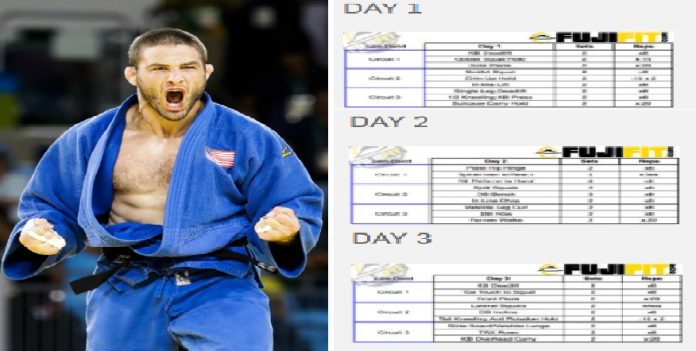
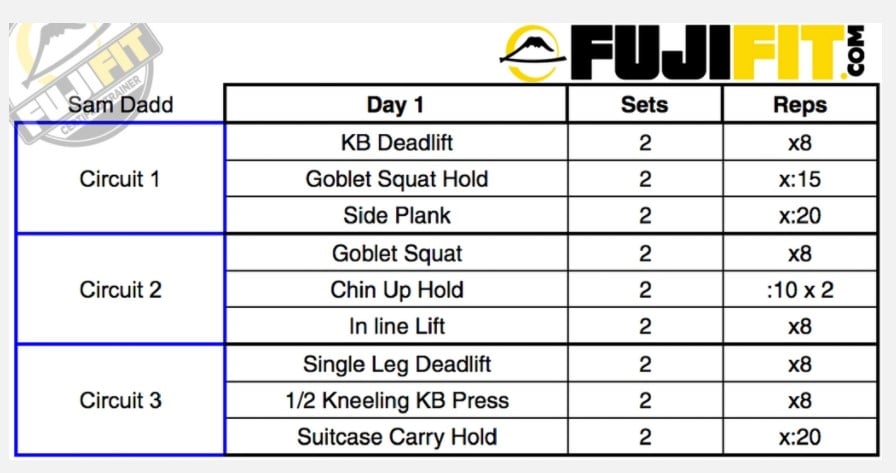
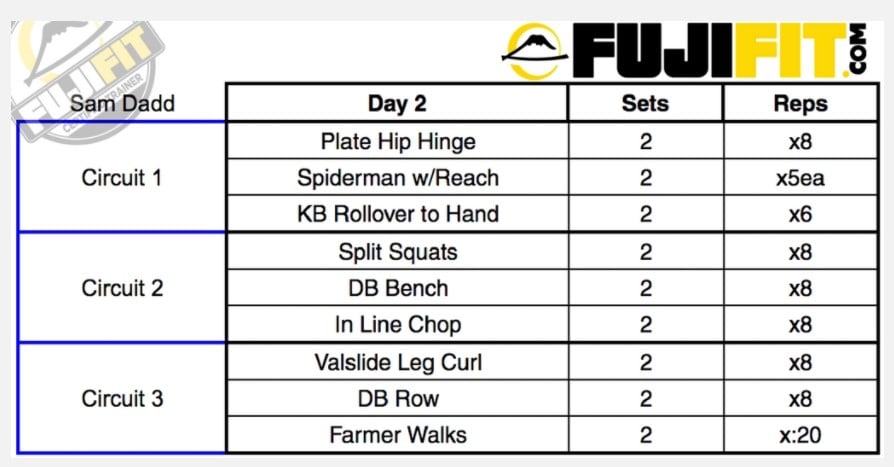
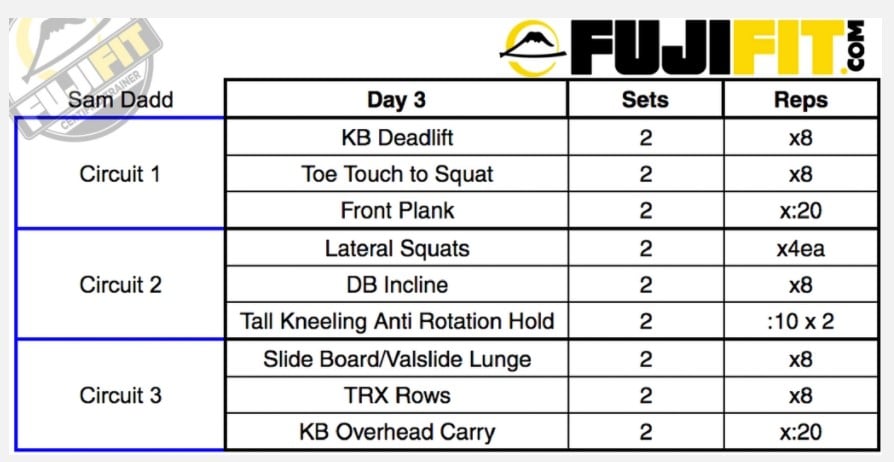
Travis Stevens’ 3 weeks / 3x per Week Weight Lifting Program for Grapplers

The Best Strength & Conditioning DVD and Digital Instructionals

10 Strength and Condition Bodyweight Exercises for Jiu Jitsu – Tutorial

21 Strength and Conditioning Exercises For Jiu Jitsu!

Master Pedro Sauer: The Ultimate Side Control Escape Breakdown

Master Pedro Sauer: The Ultimate Side Control Escape Breakdown

Master Pedro Sauer breaks down the mechanic of side control escaping in only the way he can. This is one of those videos that is so simple yet has so much value in it.

Enjoy everyone and remember to come over to our facebook page where we are releasing new videos everyday.

Guy Groped Pedro Sauer’s Daughter and He Paid a Price for it

Guy Groped Pedro Sauer's Daughter and He Paid a Price for it

Gracie Jiu-Jitsu AcademyProfessor Pedro Sauer was on vacation in Greece and he just texted me this video! Backstory: A crackhead gropes his daughter in the crowd and flees. Pedro’s wife points the guy out sitting on a curb. Pedro’s wrist locks him until he cries and makes him apologize to his daughter. Left hook to the body was just a bonus reminder not to do it again! Learn self-defense, there are crazy people everywhere and unless Professor Sauer is your father, you will have to fend for yourself! Check the Video on Pedro Sauer’s Facebook Profile.


Jiu Jitsu Guy With No Takedown Skills in a Street Fight – FAIL

Guy was attacked on the street but his Jiu-Jitsu resolved the situation very fast

3 Extremely Effective STANDING Chokes for Street Fights

Fred Mastro in an MMA Fight – Let’s See if He’s Able to Apply his Techniques in a real MMA fight

Most Effective Brazilian Jiu-Jitsu Moves For MMA

BJJ Moves For MMA

Jiu-Jitsu moves that you will use in MMA fights may make you an absolute winner or absolute loser. Using “wrong” Jiu-Jitsu moves in MMA can really cost you a lot. So, you’re an MMA fighter and you’re ready for the spotlights on the big stage. But how much confidence do you have in the different aspects of your game? BJJ, wrestling, Muay Thai, boxing, judo…they all have their part to play when the cage door closes.

Let’s say, for argument’s sake, that your stand up game is spot on and that you’re fairly comfortable in clinch situations against the wall. You’re controlling the center, applying your own rhythm and feeling loose. Everything is going as planned, but then, the fight goes to the ground and you find yourself in a whole new dimension. Are you confident enough that your BJJ game can get you through the ground exchange in an MMA match? Do you know what are the most effective Jiu-Jitsu moves for MMA?

The role of Jiu-Jitsu Moves in MMA

Brazilian Jiu-Jitsu is the staple of the modern MMA game, but it is an art in itself that requires a large amount of time in order to be proficient at. In retrospect, getting a black belt in BJJ takes longer than acquiring a high level of knowledge in the other arts MMA consists of.

Let’s use the example of Olympic weightlifting to paint a clearer picture. The Olympic lifts (clean, jerk, snatch etc.) are an incredible tool to develop explosive power and strength. However, they have a larger learning curve than most other forms of plyometric and strength training because Olympic weightlifting is a sport on its own. It takes years for Olympic lifters to become experts in moving such massive weight correctly.

It’s the same with Brazilian Jiu-Jitsu Moves in MMA. Sure, you might decide that you’re gonna guillotine everyone and focus solely on perfecting the guillotine for use in MMA but it’s not going to get you far. Without a strong base in BJJ, you can’t use the art to truly add to your MMA arsenal. But developing the base alone will take years. So now, there’s a decision you have to make. Are you willing to put in the time and gain the much-needed experience for a well-rounded MMA game or are you going to go for the quick fix?

The BJJ quote about Penguin and Eagle

As master Carlos Gracie Jr. black belt, once said on the subject: “Although the penguin has the ability to walk, fly and swim when needed, he’s not very good at any particular one of those qualities. The eagle, on the other hand, has just one quality – to fly, but he does so to perfection“.

Using the examples of Demian Maia or Jacare, it’s clear that with an excellent BJJ background you’re on the right path for MMA stardom.

Jiu-Jitsu moves for MMA, UFC 1 Royce gracie applying RNC choke

The highest percentage of Jiu-Jitsu moves for MMA

Most noteworthy, not all aspects of the BJJ game have the same level of application in MMA. Even with highly restricted striking options, like the example of Combat Jiu-Jitsu, strikes can significantly impact what you can safely do on the ground. In the MMA context, the very basics of BJJ should be the main focus – as much control as possible, from a position of safety, that’ll ultimately lead to a submission.

Let’s take a look at some of the options that are most likely to guarantee you victory when the fight hits the mats.

1. Rear naked choke – The Highest Percentage Jiu-Jitsu Move in MMA

The infamous “Mata leão” or “lion killer” was the original choke that brought BJJ to glory and kicked off the emergence of MMA. It’s a highly reliable technique, not just because it leaves no doubt about the winner (tap or nap) but because you’re doing it from one of the best positions with complete control in BJJ – the back position.

With strong seat belt control and properly aligned hooks, both the shoulder girdle and the hips of the opponent are immobilized. After winning the grip fight, the choke is there, resulting in pressure on the carotid arteries which restricts blood flow to the brain, causing a deprivation of oxygen which leads to loss of consciousness.

2. Guillotine choke

The Guillotine choke is accessible from different levels in an MMA fight, both standing and on the ground. You can perform Guillotine from the front side of an opponent, by placing them in the front headlock position. From there, you place the choking arm across the neck, connecting it to the other arm via a variety of grips. The non-choking arm is used to tighten the choke and can be connected to the choking one with the opponent’s arm included (arm in guillotine).

The Guillotine choke places pressure on the trachea, resulting in disruption of the air flow and subsequent loss of consciousness.

3. Triangle choke – Jiu-Jitsu move in MMA Pulled Mostly by Higher Belts

Offense from the back is a trademark of the art of Brazilian Jiu-Jitsu and the triangle is a great statement on that. Offering tons of varieties, the triangle choke is a powerful weapon when utilized correctly. In the context of MMA, safety in the guard position is the first order of business. Only when strikes are neutralized to some extent, you can think about wrapping a triangle on your opponent.

The mechanics of the choke are in the triangle that you create around the opponent’s neck by your legs on two sides and his shoulder on the third. By using your legs against their neck you ensure that your strongest body part is attacking their weakest. Angles play a major role in finishing the triangle choke and that is a good base of Jiu-Jitsu proves it’s worth. A rushed submission is a bad one in any situation, but when the guy/girl on top can rain punches and elbows on your face it is a whole different story.

4. Armbar

One of the most well-known locks in grappling martial arts, the armbar is as effective a submission as it is simple. You can set it up from virtually every position in BJJ and have a very high finish rate.

Mechanically speaking, the armbar creates tension in the elbow joint, applying force in the direction opposite of the joint’s natural bend direction. Prior isolation of the shoulder joint and control of the wrist is mandatory in order to obtain efficient control before applying the lock. As with the triangle, a very strong body part (the hips) is applied against a week body part (the elbow joint) causing a break in the arm.

Of all the positions the armbar is available from a lot of situations you find your self in a fight (closed guard, side control, back control…). Strikes can be used to “soften up” your opponent before ultimately transitioning into a strong position for finishing the lock.

Focus on what really matters and avoid being a few tricks pony if you’re willing to lay your health on the line in the cage. Give yourself your best shot at staying safe and finishing quick, while dominating the opposition by utilizing the principles and techniques of Brazilian Jiu-Jitsu.

Mackenzie Dern Chokes Mandy Polk for 4-0 in MMA

https://www.bjj-world.com/video-demetrious-johnson-suplex-armlock-ufc-216/

The “Grave” Wrestling Cradle System For Jiu-Jitsu