





Let’s talk about modern BJJ. In fact, I have a better idea. Let’s talk about fusion BJJ. What is that now? Precisely. Fusion Jiu-Jitsu is what everyone is trying to do, but very few are succeeding at these days. All the attempts at putting together old school BJJ stuff with the moves that define modern Jiu-Jitsu, and a sprinkle of other grappling martial arts in there is what Fusion Jiu-Jitsu is all about. If we are being honest, we’re doing this on a daily basis, we’re just not aware of it. And it does require a shift in mindset. For example, do you only see Ashi Garami as a position for executing leg locks? Could there be another use for it, for example, as an Ashi Garami BJJ guard?
People are already starting to see the opportunities that the Ashi Garami BJJ position provides. As most grapplers wised up to leg locks (more or less), the defenses to heel hooks and kneebars are becoming stronger and stronger That still leaves the attacker in the Ashi Garami position though. Until now, we had one track mind – go for another leg lock. That is still an option, but so are sweeps and passes. We are now arriving at a moment where the Ashi Garami is turning into a position of control equal to that of a guard, rather than just a submission hunting sweet spot.
Fusion BJJ: Where Modern Meets Traditional
Let’s talk more about Fusion BJJ. We are at a point in time where Jiu-Jitsu is no longer Japanese or Brazilian. It is simply Jiu-Jitsu, plain and simple. As such, the evolution of the art has taken us to a direction nobody could have foreseen. In fact, there has even been resistance for a while to change the “old ways’ but luckily, it did not prevail. How could it, when Jiu-Jitsu is not some ancient art that has been done for centuries and it would be an insult to some long-dead grandmasters to try and do a move differently, even if logic dictates you do so.
When you enter a BJJ gym nowadays, you will see as many different styles as there are people on the mats. Even in world-class competition dens, where people have inclinations towards certain areas, you can notice that different competitors do the same moves in a very different way. That is what Jiu-Jitsu is all about – letting people express their individuality. And there’s no better way to express yourself than when you have at your disposal everything the art/sport has to offer. And that includes both the old school stuff and the modern innovations that have defined Jiu-Jitsu in the last decade.
When it comes to fusion, you are encouraged to mix everything together, as long as it makes sense. For example, there’s no need to bicker over whether or not you should use Gi or No-Gi grips – use them both as you’re progressing through something. The ASh iGarami BJJ position, seen as guard is the perfect example. In leg locking, you wouldn’t really think about Gi grips, but you would do them if you are in a similar position but you perceive it as a guard. Why not fuse everything together to optimize the outcome?
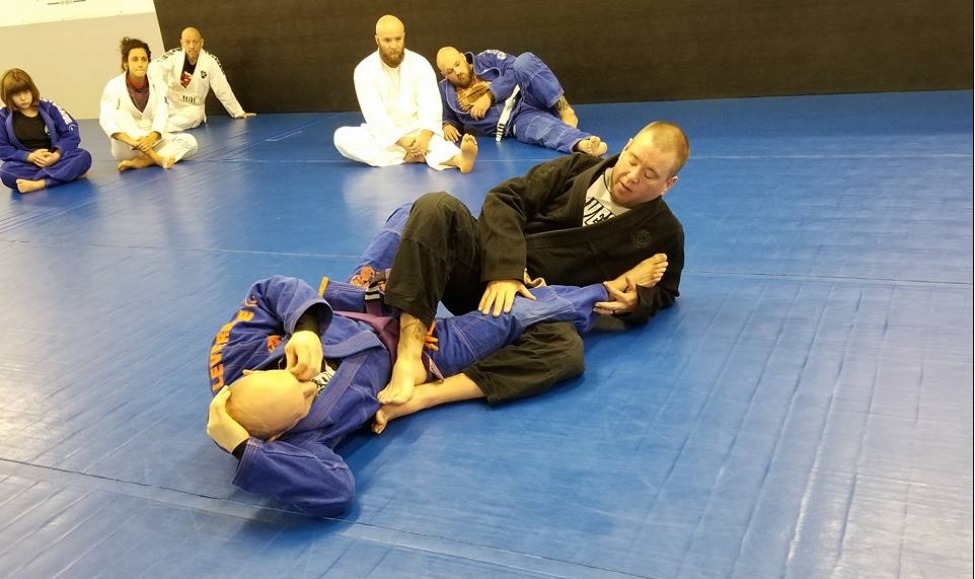
The Case For The Ashi Garami BJJ Guard
The only reason I need to present the case for the Ashi Garami BJJ guard is that people usually do not perceive the position as a guard. When you analyze it and break it down a bit, you will see that the Ashi Garami actually offers more than any other guard in BJJ does.
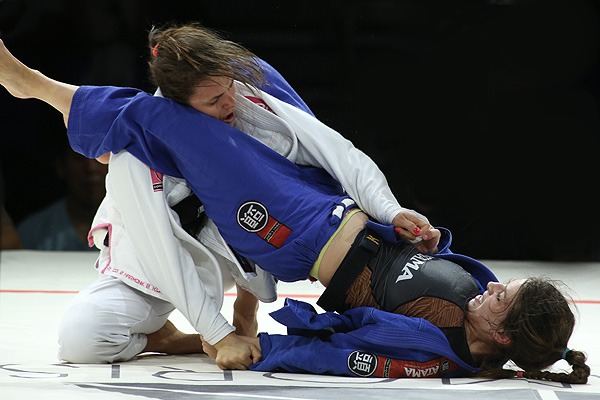
What defines a guard in Brazilian Jiu-Jitsu? One person needs to be on the bottom and the other on top. If the bottom person has their legs in between themselves and the top person, they are in guard, regardless of the specific configuration of the limbs. Universally speaking, this is the BJJ guard, and there are, as we know, countless variations of it.
Going further, what are our options from the guard? You have two, if we are being honest – sweep to get on top (for points) or submit and finish the job then and there. There are no other offensive options that the guard offers. In addition, to be able to execute either of those, you will need to control the position and know how to stay in it when the top person inevitably tries to get past your legs (pass).
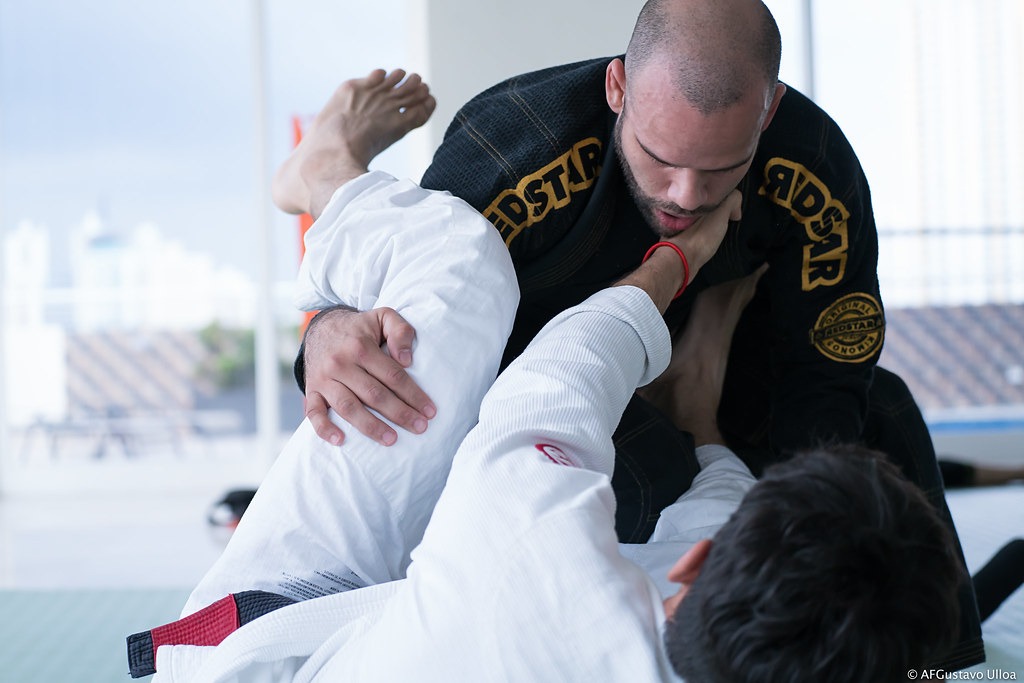
Where does Ashi Garami fit in the story? Well, to begin with, you have you in between you and your opponent – the definition of the guard. Now, it gets blurry when it comes to the top and bottom person sometimes, but that is the good thing. Playing the Ashi Garami BJJ guard provides you with an additional option apart from the sweep and submit – you can directly pass. And this is before I even mention the higher level of control and the myriad of transitional attacks that stem from the position. Interested yet?
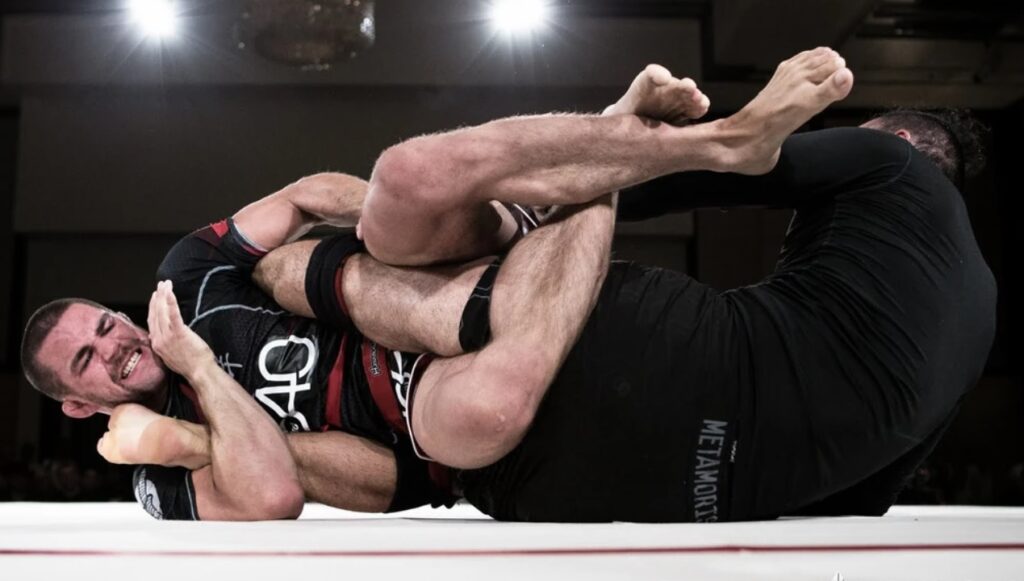
The Perfect Guard For Competitors?
Let’s talk about the applications of the Ashi Garami BJJ guard. The one area in which you can really reap the benefits from this fusion Jiu-Jitsu approach is competition. seeing the Ashi Garami as a guard is a logical step for competitors – you already use it anyway. The Single Leg X Guard and the 50/50, for example, are just a couple of micro-adjustments (pun intended) away from their use as Ashi Garami variations.
IN that context, what I find the most unique about the Ashi Garami BJJ guard si that the person you’re looking to control and attack with it doesn’t necessarily have to be on top. It is perfectly okay if they are on their butt – you’re close to sweeping the way. That said, apart from the 50/50 and the Singel leg X, or the outside Sankaku and Irimi Ashi Garami, in leg locking terms, you also have other variations to use as guards. There’s the Inside Ashi Garami in the form of the Inside Sankaku and the Game Over position. Inside Sankaku is actually legal for everyone, with certain things to look out for when it comes to attacking the legs. If you do it on a standing opponent, though, it will be considered illegal.
From any given Ashi Garami BJJ position you have the option of playing around with positioning and grips to actually increase control and use the position as a guard. Since you’re controlling at least one leg anyway, there’s really no way for an opponent to pass your guard, because they will need both of their legs to do so. Moreover, given that their hips are often on the ground, you can not just get top position, but use the fact that you have inside control and a leg to go straight past their legs and inside control, mount or the back.
The back actually presents itself easier than in any other guard when people try and get out of an Ashi Garami. If you’re not only dead set on heel hooks you’ll notice so many high-percentage options from the position!
Conclusion
Fusing the Ashi Garami BJJ position and BJJ guards is just one example of how the old and the new school of Jiu-Jitsu can come together and give birth to something really powerful and potent. Now imagine if we apply the fusion mindset to Gi, No-gi, old, new, wrestling, sambo, etc. That is the direction in which Jiu-Jitsu is bound to grow, and the sheer number of options we can mess around with is enticing, to say the least!
 #1. Cypress Hill – Get ‘Em Up (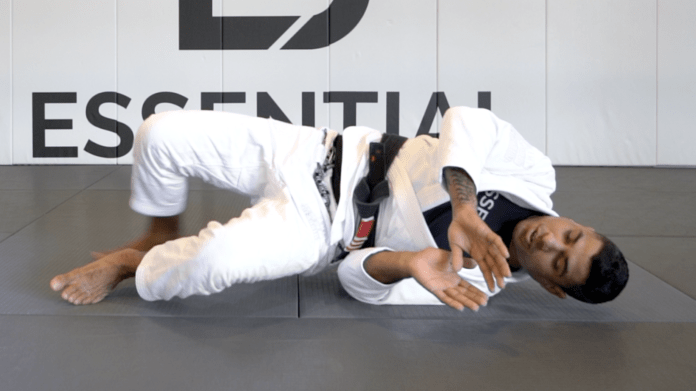
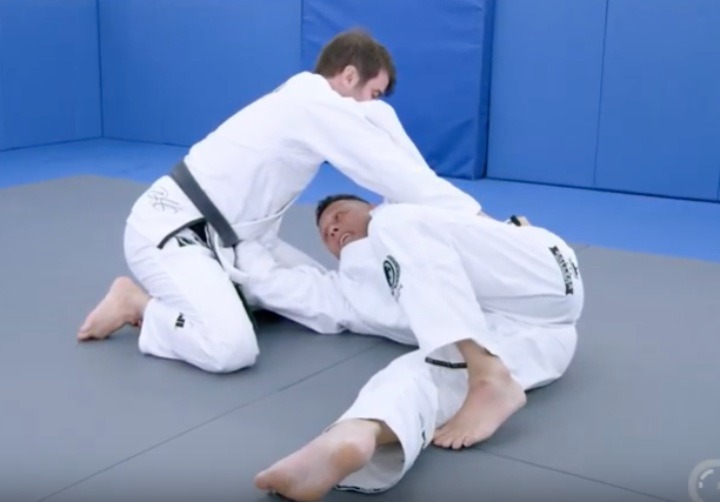
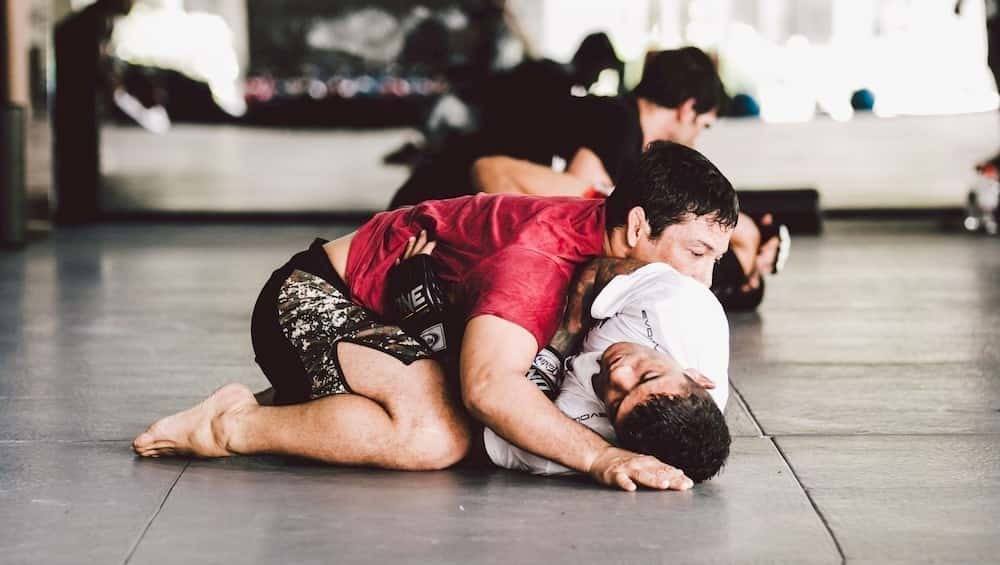



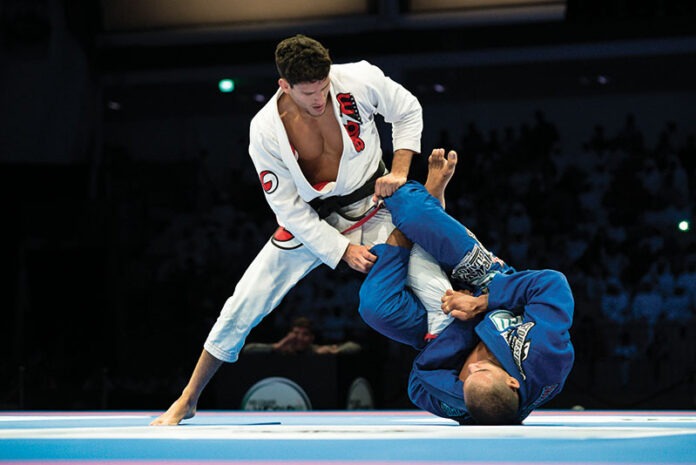
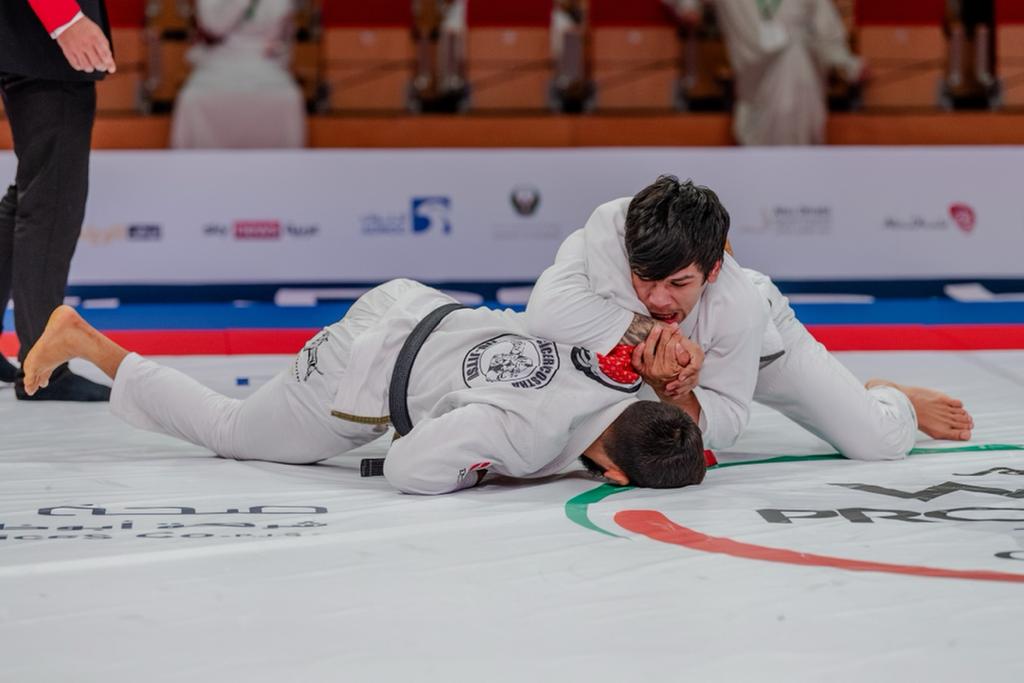


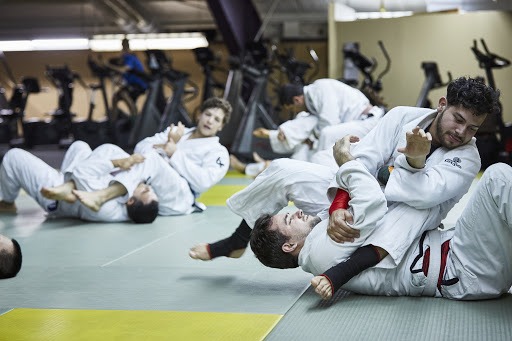
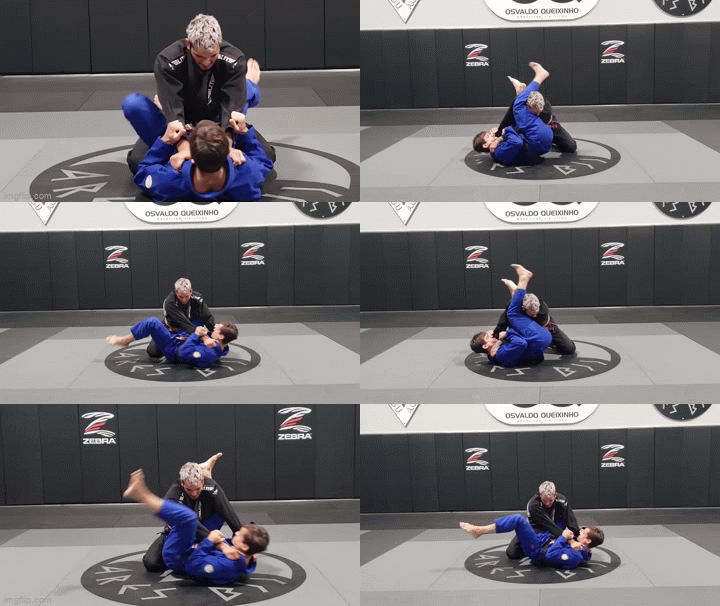 First up, a BJJ drill you probably know pretty well. From closed guard, you set up so that your partner’s arms are gripping your collars. Your partner should have their arms extended and grip firmly – they are your pivot point. The goal for you is to open your guard and swing one leg so that you use the momentum to spin sideways and end up in an armbar position. then, you use your other leg and immediately swing to the other side, relying on momentum to keep going.
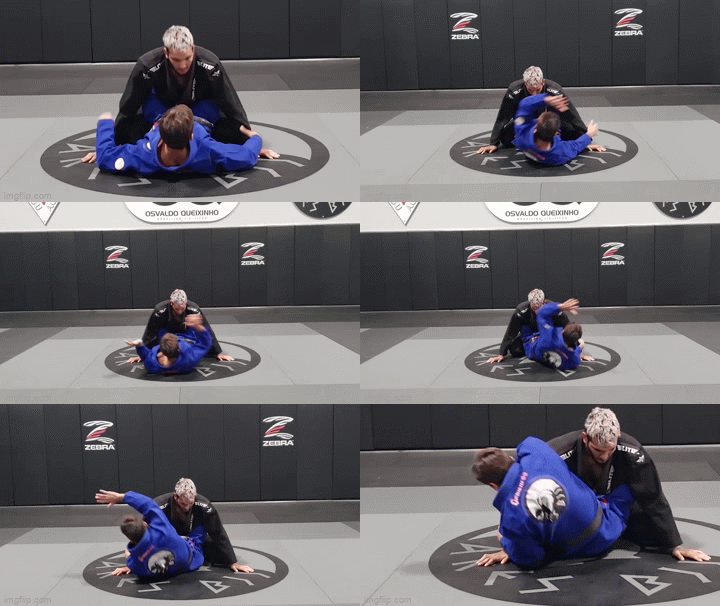 This is a pretty straightforward and simple BJJ drill. Your partner will have their arms on either side of your hips, while in your closed guard. Your task is to sit up while twisting, looking to establish a quick Kimura grip on one arm, before going back on the ground and preparing the same thing on the other side. The goal is to keep alternating sides without rest for an allotted period of time.
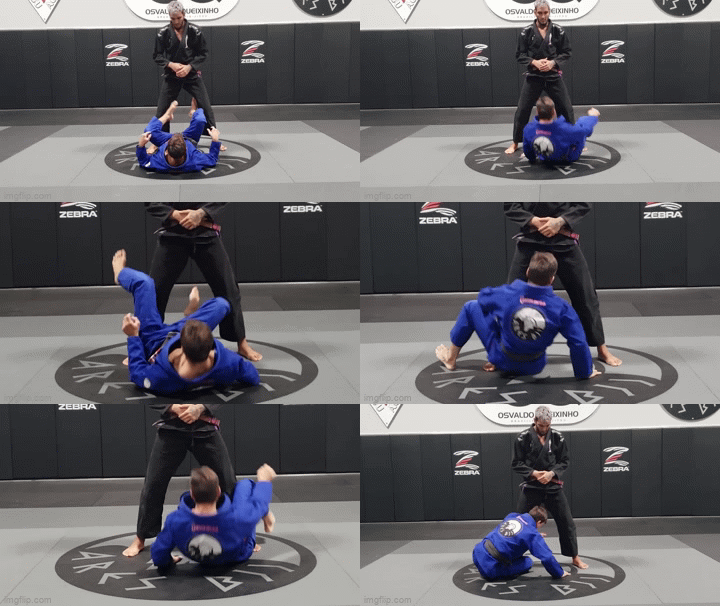 This is a highly interesting drill and that I doubt anyone will grow bored of. Basically, it involves you sitting up from open guard, and going straight into a koala sweep configuration with your legs, posting with the arm, and tightly gripping one of your opponent’s legs. It is a highly useful BJJ drill to develop coordination and speed in executing this sweep, ora follow up single leg takedown.
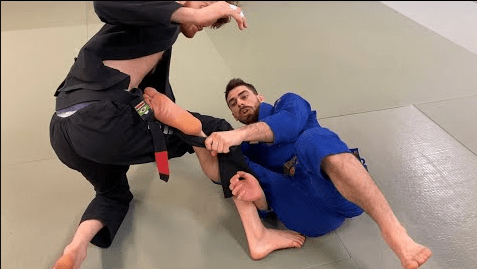
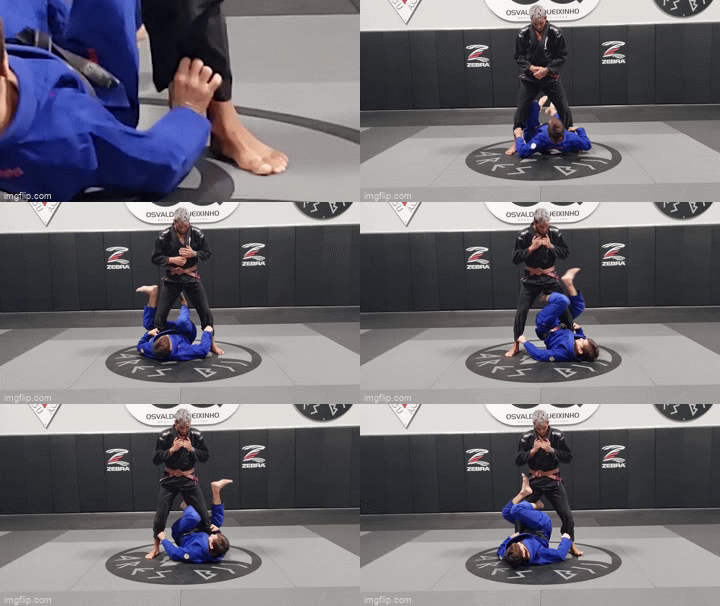 Leg locker or open guard player, this BJJ drill is a must! It is one of the core drills that even Danaher himself teaches to leg lockers. Your task is simple – get into an Ashi Garami from the bottom, against a standing partner (AKA
 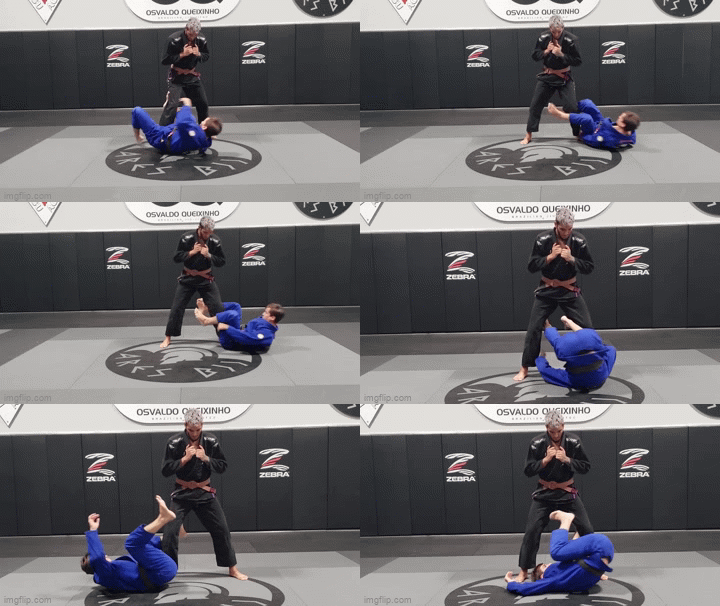 One for all the
 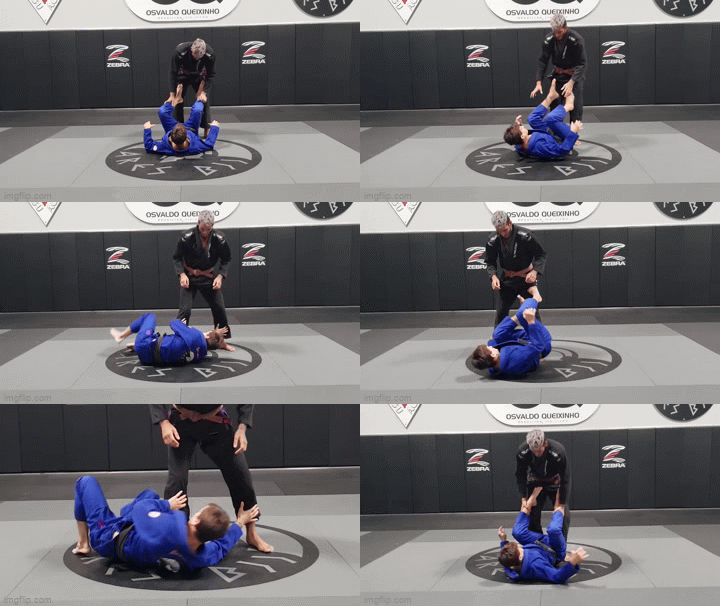 One of the movements you will do every time you step on the mats, guaranteed. As a bonus, this is a speed BJJ drill where your partner needs to actively engage as well, which makes it both fun and challenging. Your partner will be looking to drag both your ankles to one side, stepping to pass your guard. Yoru’s goal is to frame with the arms (an arm on each shin), shrimp away, and use your leg to recover open guard.
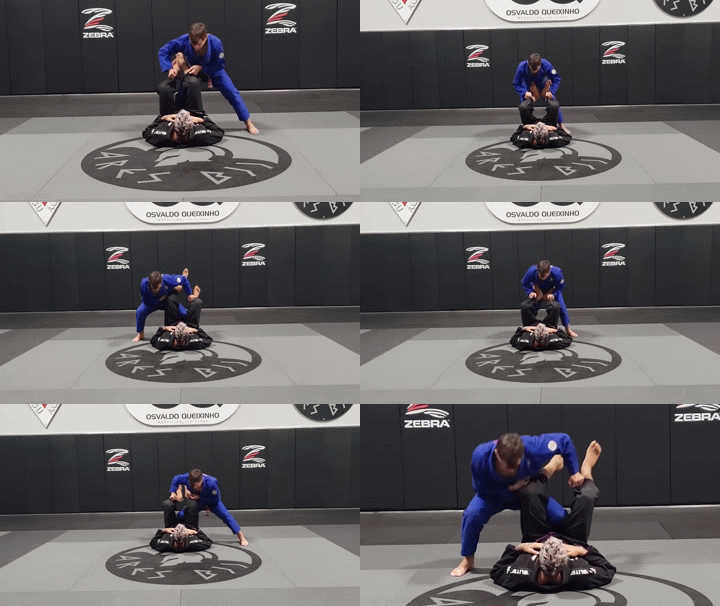 As far as speed drills in Jiu-Jitsu go, this one, along with the following BJJ drill are pretty much the “A” and “B” of drilling guard passes. Your opponent will be on their back, legs bend at the knees, and ankle raised off the ground. Your goal is to place strong grips on the Gi pants, mid-level at the shin, and use them to drag both legs to one side of your body, as you side step to the other. The word “speed” is actually imperative here and not just a description!
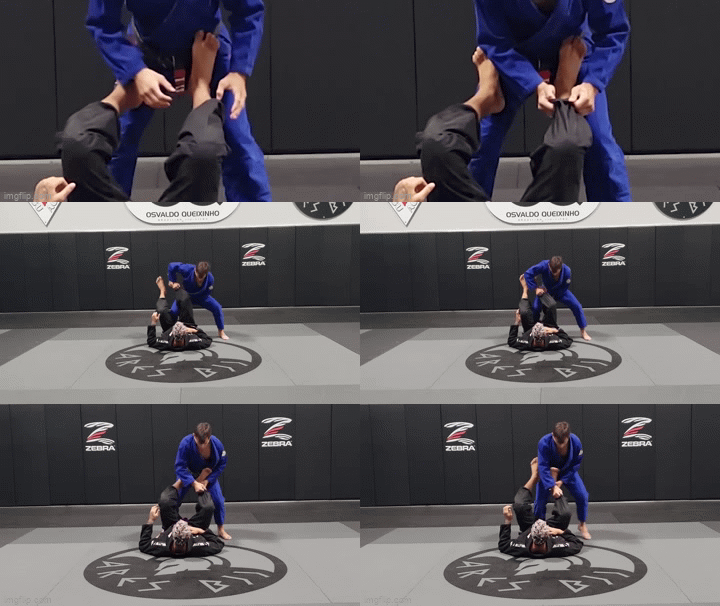 The single leg drag works pretty much like the double on, but you’re focusing on only one leg. This one is a bit more complex, and you should really master the double leg version first, in order to really make this one count. You will only be able to move to one side when doing repetitions, so plan that you will need double the time to cover both legs.
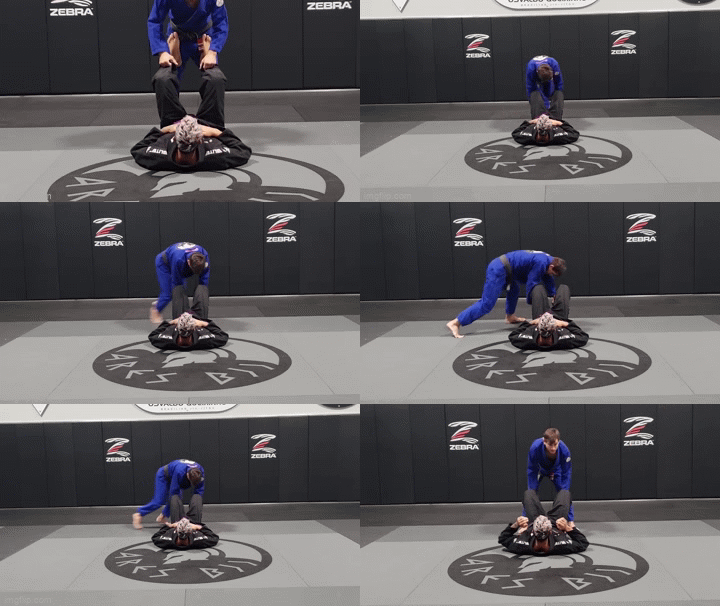 The Torreando pass is one of the most utilized passes in Brazilian Jiu-Jitsu. Not many people realize that it is the initial movement that pins both legs to the ground that makes or breaks this pass. that is precisely why the
 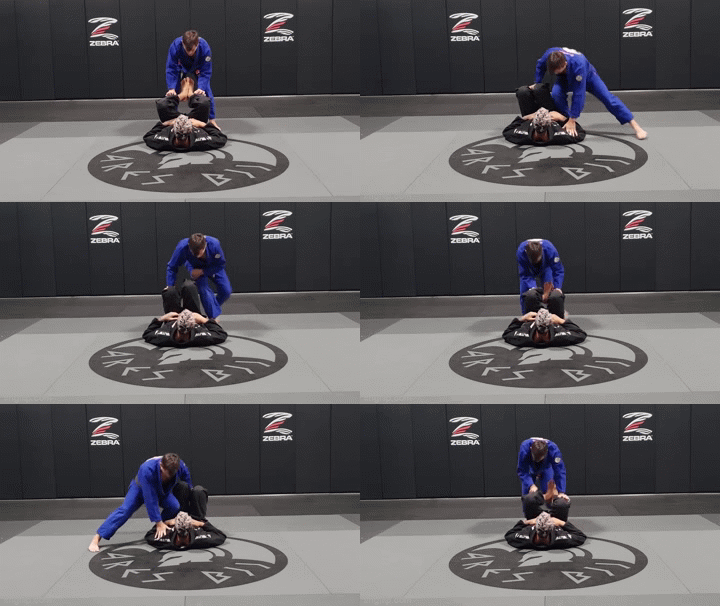 Another BJJ Drill that requires you to turn your brain on and can be challenging, thus making it interesting. The X pass requires you to do some funky side to side and then front footwork in order to get past the legs. The starting position is the same as the other drills above, and the ending position is knee-on-belly. A highly useful ability to develop with this drill si going backward from knee-on-belly so that you can switch to the other side and keep the drill flowing.
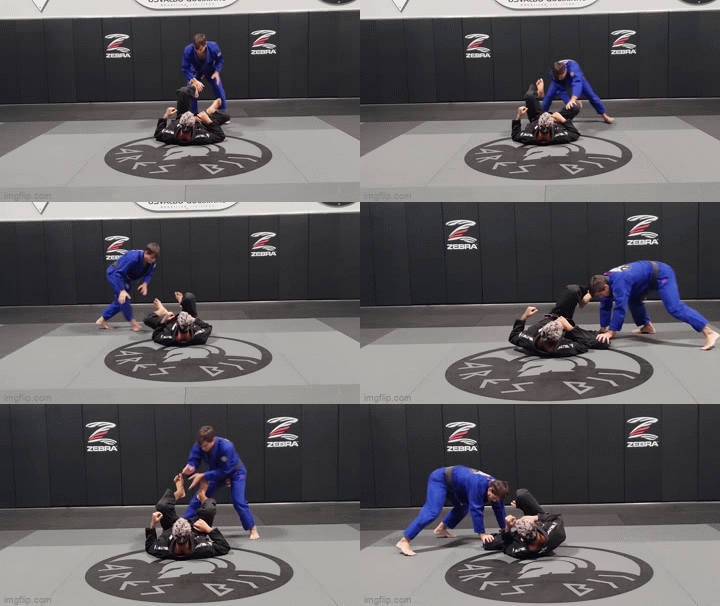 Simple is best, and that is true for both guard passing and setting drills up. In this case, you’re aiming to cross your handstand grip at ankle level and inside the knee. As you do, you will both pin the shin of your partner to the ground, and pivot your body to the side to get a passing angle. Basically, this is an application of the monkey solo BJJ drill.
 One of the hardest things about side control top is staying in control. For this drill, you start in top-side control, and your partner will turn into you looking to underhook you with their far arm. Your task is to sue their movement to switch sides. First up, you’ll press their head into the ground so that you block their initial movement. Then you use the same grip as a pivot point as you move your legs in a semi-circle over their head ending up in side control on the other side. Similar to the shrimp recovery drill, this one requires your partner to actively participate at all times.
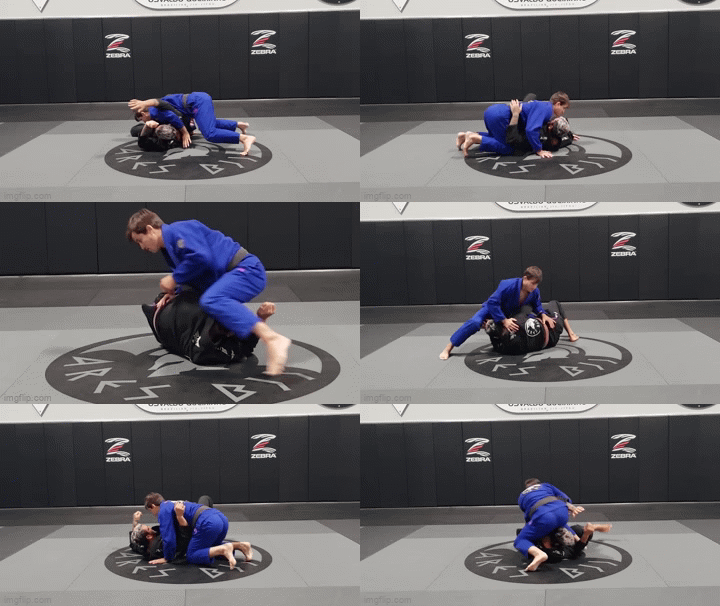 Very similar to the previous BJJ drill, only done from the knee-on-belly position. Your partner’s tas is to turn towards you, trying to push the knee of their belly. You will use that movement to step over their head, and use a backstepping motion with the other leg to end up behind them. As they turn to their back to avoid back control, you jump straight into knee on belly, and the drill can continue to flow.
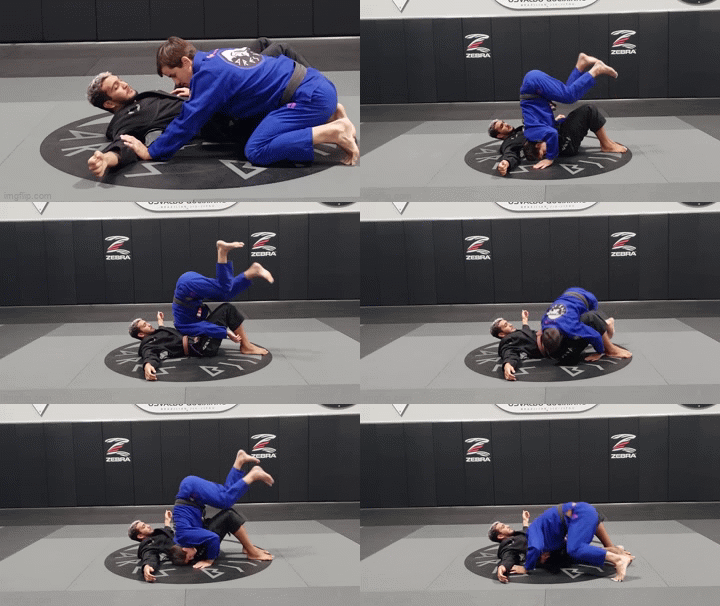 A very amusing and challenging BJJ drill to do, but an extremely useful one against people that are wizards at guard recovery. You star at one side of your partner’s hip. You will place the top of your head on the mats, using the near side arm to grip around the waist of your partner. Then you will balance on your head, skipping over with both legs on the opposite side. The head is going to follow so that you can drill in a flowing manner.