


The Brazilian Tap In Jiu-Jitsu: Disrespectful To The Sport And Yourself

The Brazilian Tap In Jiu-Jitsu: Disrespectful To The Sport And Yourself

Brazilian Jiu-Jitsu is a highly respected martial art that requires a lot of discipline and mental toughness. However, as with any other sport, there are certain unethical practices that can harm the integrity of the sport and the flow of the game. One such practice is the “Brazilian Tap,” which is considered highly disrespectful and can even be dangerous. In this article, we will examine the negative impact of using the Brazilian tap in BJJ, both in the gym and in Jiu-Jitsu tournaments, as well as ways to deal with people using it.

What is a Brazilian Tap in BJJ?

A Brazilian tap is a deceptive move in grappling and combat sports that employ tapping out, during which a practitioner pretends to tap out or signals submission when they are not in any actual danger. The goal is to make their opponent release their hold, thinking that they have won the match, only for the person faking the tap to resume fighting.

This tactic is usually employed to gain an unfair advantage over the opponent and is widely considered a disrespectful and unethical practice.

Where Does The Term Come From?

The term “Brazilian tap” is relatively new and has emerged with the increasing popularity of BJJ. It is not a term that is commonly used in other grappling or combat sports, which suggests that its origins are closely tied to Brazilian Jiu-Jitsu.

The exact origin of the term “Brazilian tap” is unclear, but it is believed to have originated in the BJJ community, most likely in Brazil, as the name suggests. Some sources point out that the term was coined by Brazilian Jiu-Jitsu practitioners who were frustrated by the use of this deceptive tactic in the sport. The term quickly gained notoriety within the BJJ community, and it is now widely recognized although it is something that is heavily frowned upon.
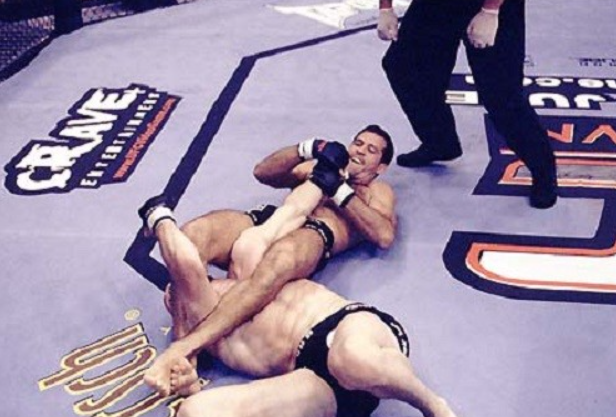
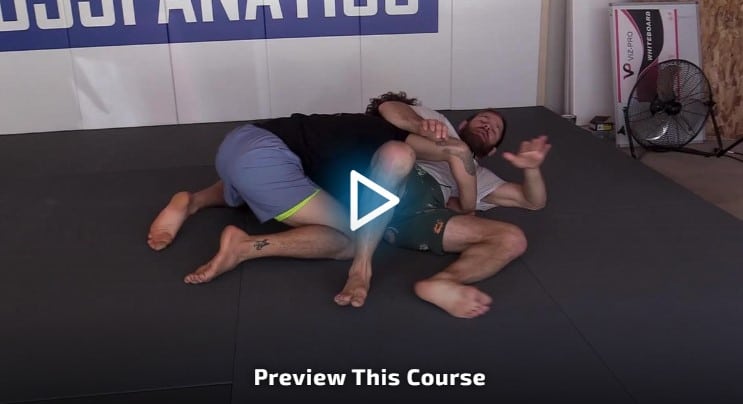
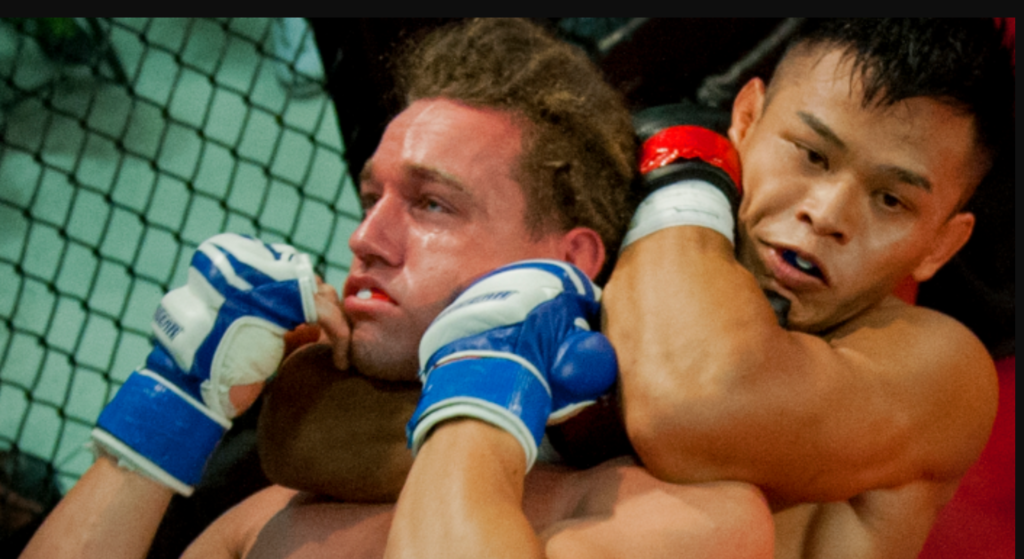
MMA Brazilian tap

Using The Brazilian Tap

The Brazilian tap is a deceptive tactic in which a practitioner pretends to tap out or signals submission when they are not in any actual danger. The goal is to make their opponent release their hold, thinking that they have won the match, only for the person faking the tap to resume fighting. The use of the Brazilian tap goes against the core values of the sport of BJJ, but still makes an occurrence here and there, especially among lower belts.

In The Gym

The gym is a space where BJJ practitioners can train and hone their skills in a safe and supportive environment. However, the use of the Brazilian tap can create a hostile and potentially dangerous atmosphere between training partners. It can lead to mistrust and resentment between practitioners, which can undermine the core values of the sport and create a negative training environment.

The use of the Brazilian tap can also be dangerous, as it may cause the opponent to release their hold prematurely (during transitions and scrambles), potentially causing injury to the person faking the tap. It also disrupts the flow of training and wastes valuable time that could be spent on more productive training techniques. Moreover, it creates distrust between training partners and might lead to people cranking and executing submissions in a much more aggressive manner against someone who is known to utilize fake taps.
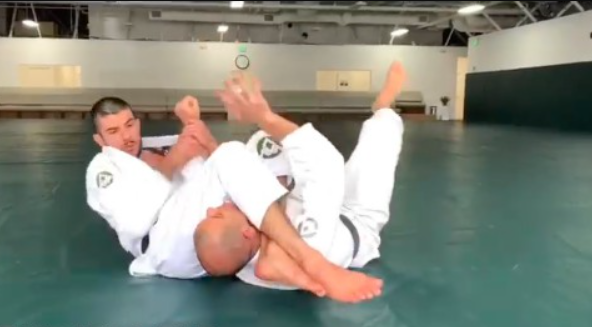
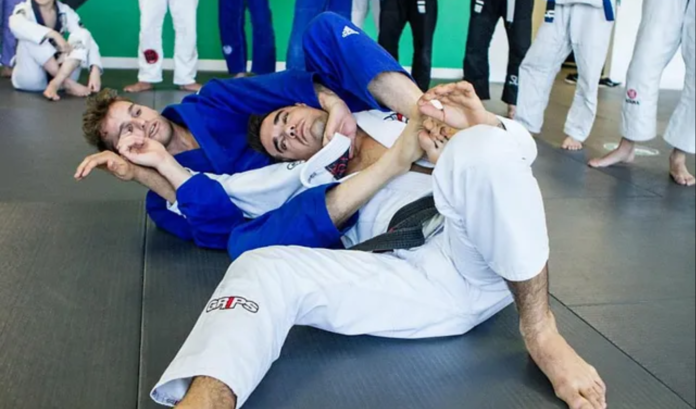
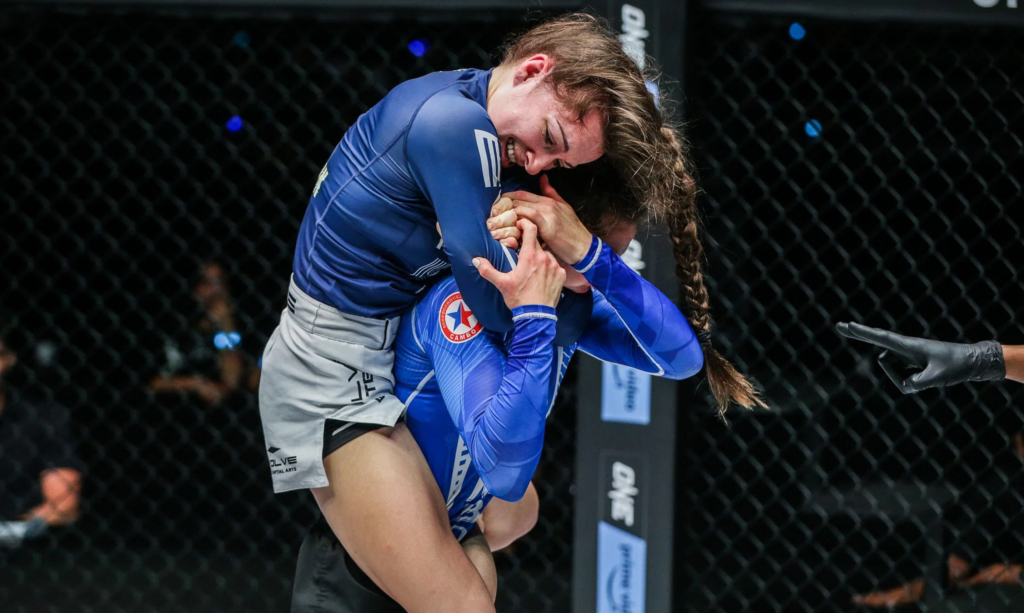
Brazilian tap cheating tactics in Jiu-Jitsu

In Jiu-Jitsu Tournaments

In Jiu-Jitsu tournaments, the use of the Brazilian tap is especially egregious. It can lead to mistrust and controversy, and it undermines the integrity of the competition. Obviously, it creates an unfair advantage for the person using it, and it can cause resentment and anger in other competitors.

Moreover, the use of the fake tap in Jiu-Jitsu tournaments can also reflect poorly on the sport as a whole. It can create a negative image of the sport, and it can deter potential new practitioners from joining the BJJ community.

The Brazilian tap is not defined as illegal, and while referees might give a verbal warning to someone using it, it won’t get a person disqualified and can greatly influence the outcome of a match.

Why The Fake Tap is Disrespectful

The use of the fake tap in BJJ is considered disrespectful because it goes against the core values of the sport, which include respect, trust, and integrity. The use of deceptive tactics like the Brazilian tap creates a negative image of the sport and leads to mistrust and controversy within the BJJ community. You also don’t want to be tagged as being the person that fakes taps to get out of stuff.

Degrading The Sport

The use of the Brazilian tap in BJJ first and foremost degrades the sport by undermining the principles of fair playfulness and respect. It can create a hostile and potentially dangerous environment, with the person faking taps oftentimes begin a target of overly aggressive finishes and, understandably, injuries. It can also lead to controversy and negative publicity, which can ultimately harm the reputation of the sport, or a gym containing people that use it on a regular basis.

Moreover, the use of the fake tap can create an unfair advantage, which goes against the spirit of competition. It is a blatant form of cheating, which is unacceptable in any sport, and it can cause resentment and anger in other competitors.

Bad Personal “Karma”

The use of the Brazilian tap can also affect personal karma. In BJJ, the principles of respect and discipline are paramount, and practitioners who use deceptive tactics like the fake tap can damage their own reputation and karma. It can create negative energy and lead to a sense of guilt or shame, which can ultimately impact personal growth and development.

Moreover, the negative reputation that someone who uses fake taps can impact their relationships with other practitioners and coaches. It can also undermine the trust and respect that other practitioners have for them, which can ultimately limit their potential for progress in the sport. I guess it can also get someone thrown out of a gym if done often enough.

How To Deal With The Fake Tap?

If you roll with someone that is using the Brazilian tap during training or competition, it’s important to stay composed and focused. Do not release your hold until you are sure that your opponent has truly submitted. If you suspect that someone is using the Brazilian tap, it’s important to bring it to the attention of the coach or referee.

Stay Calm and Maintain Composure

The first step in dealing with the fake tap is to stay calm and maintain composure. It’s important to not get emotional or react impulsively to the situation. Instead, take a deep breath, refocus your attention, and continue with the match. Remember, the Brazilian tap is a cheating tactic, and reacting impulsively can play right into the faker’s hands.

Communicate

If you suspect that your opponent is using a Brazilian tap, it’s important to communicate with them in a respectful and professional manner. Let them know that you’re aware of the tactic and that it’s not acceptable. If they continue to employ the fake tap, consider speaking with your coach or a tournament official to address the issue.

Focus on Fundamentals and Positioning

One effective way to counteract the Brazilian tap is to focus on fundamentals and positioning. By maintaining proper positioning and executing fundamental techniques, you can reduce the likelihood of falling for deceptive tactics like the fake tap. Staying focused on the fundamentals allows you to effectively defend against deceptive tactics and maintain control of the match.

Feeling vs. Seeing The Tap

Finally, it’s important to trust your instincts when dealing with the fake tap. If something feels off or your opponent’s behavior seems suspicious, it’s likely that they’re employing a deceptive tactic like the Brazilian tap.

Simply put, wait until you see the partner tap in rolling, or the referee stops the match in a competition. This does not give you the license to crank and go all the way on submissions, but you should definitely tighten them up and let the other person know that you can cause them serious injury if they are not playing by the rules.
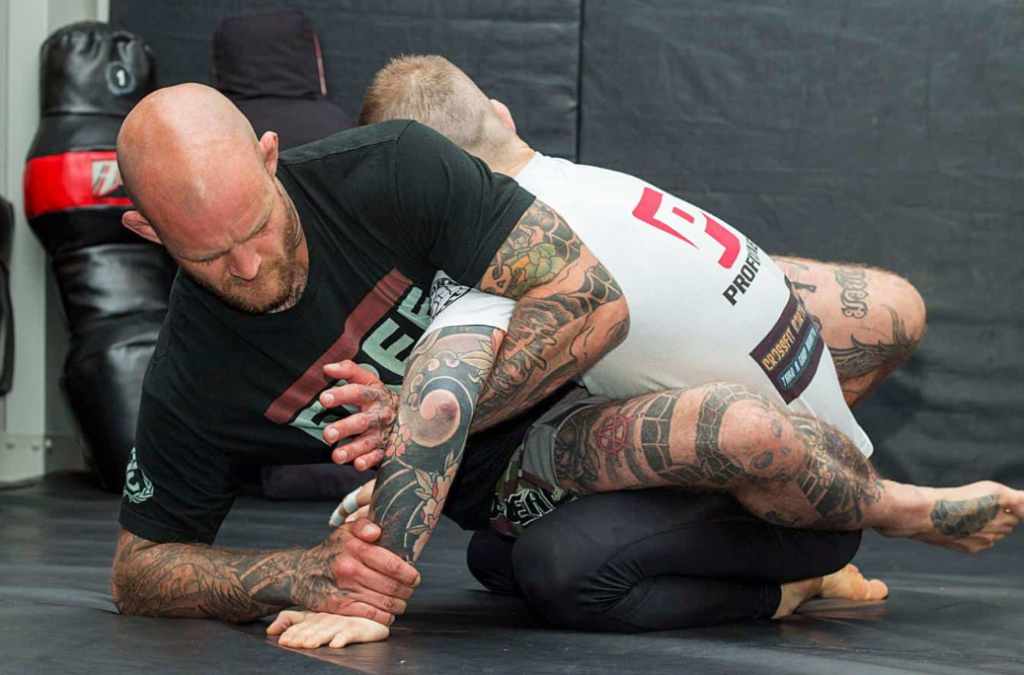
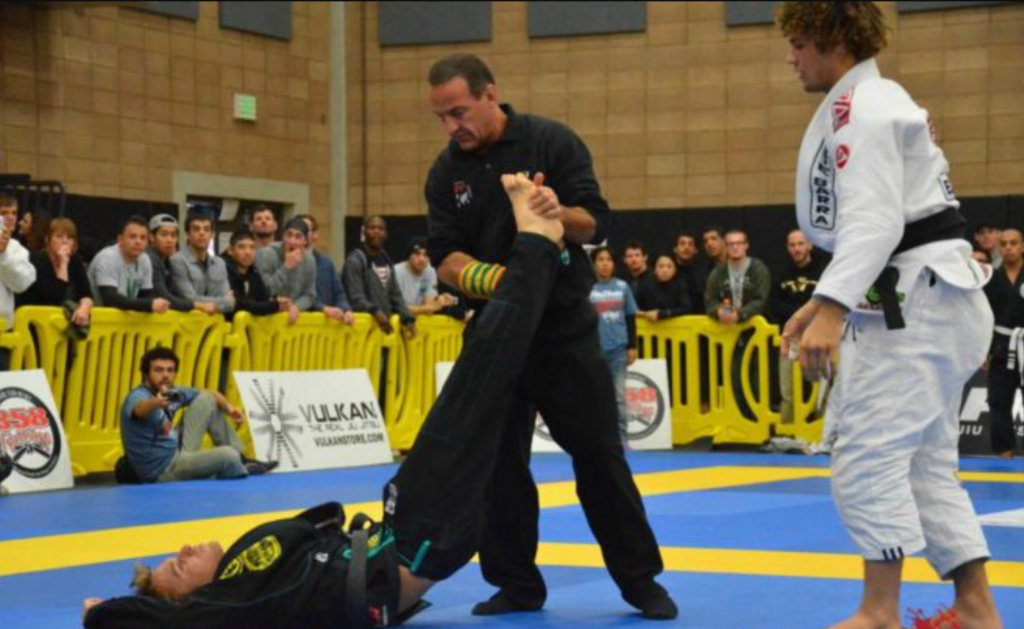
Fake Taps in BJJ - don't be that guy

Conclusion

The Brazilian tap is a deceptive tactic that can be used in Brazilian Jiu-Jitsu to gain an unfair advantage over opponents. While the origins of the term are not clear, it is widely recognized as an unethical tactic that goes against the principles of the sport. If you find yourself facing a Brazilian tap, the best approach is to remain calm, communicate with your opponent and coaches/referees, and stay focused on fundamentals and positioning.

Ultimately, it is up to all of us as practitioners of Brazilian Jiu-Jitsu to uphold the values of the sport, at least at the moment.
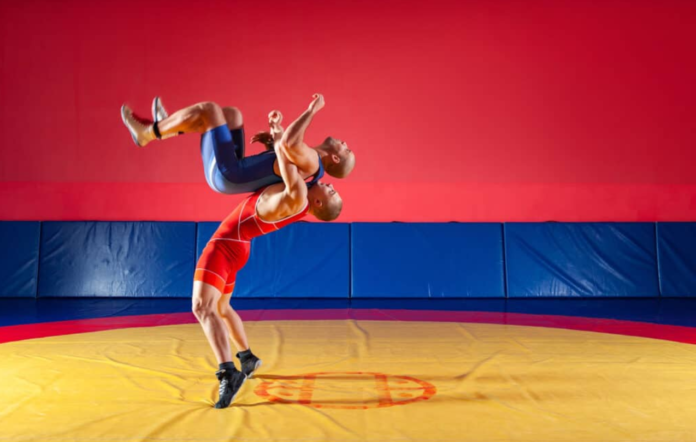
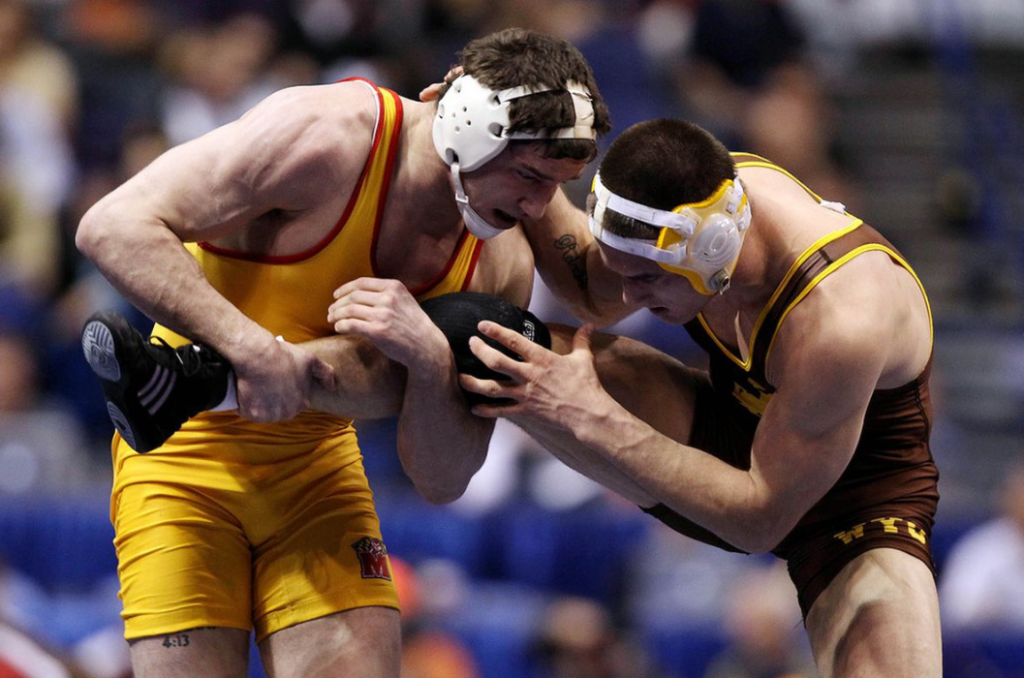
The Ultimate Guide To Folkstyle Wrestling: Moves, Rules And Uses

The Ultimate Guide To Folkstyle Wrestling: Moves, Rules And Uses

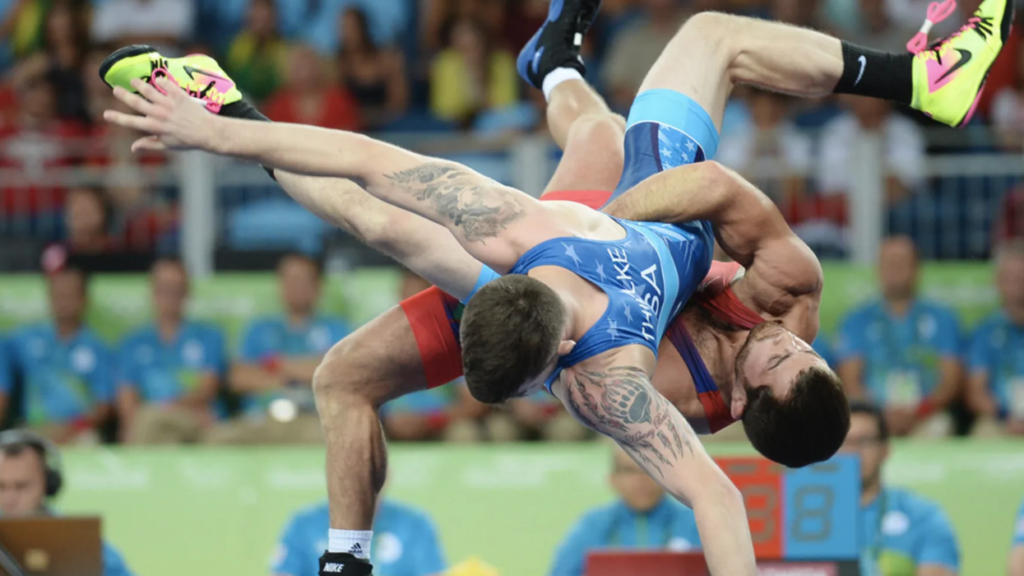
Folkstyle wrestling is one of the three main styles of wrestling, alongside freestyle and Greco-Roman wrestling. It is primarily practiced in the United States and is widely popular at the college and high school levels. It is known for its intense and physical nature, requiring wrestlers to use a combination of strength, technique, and strategy to defeat their opponents. In this guide, we’ll cover the history of folkstyle wrestling, the main moves used, the rules of college wrestling, and how you can integrate it into BJJ.

History Of Folkstyle Wrestling

Folkstyle wrestling has a rich history in the United States, with roots dating back to colonial times. The sport was initially developed as a way for colonists to defend themselves and their communities.

It has its roots in catch wrestling, which was popular in the late 19th and early 20th centuries. It was originally practiced in carnivals and fairs throughout the United States, and eventually evolved into a more organized sport. Over time, this type of wrestling became a popular pastime and was eventually incorporated into schools and universities as a competitive sport.

The first intercollegiate wrestling competition was held in 1850 between Yale and Columbia. Since 1912 folkstyle wrestling has been an NCAA-sanctioned sport.

Main Folkstyle Wrestling Moves

Folkstyle wrestling is an intense and exciting sport that requires a combination of strength, technique, and strategy. The four main categories of moves used in the modern version of this type of wrestling include takedowns, escapes, pins, and reversals.

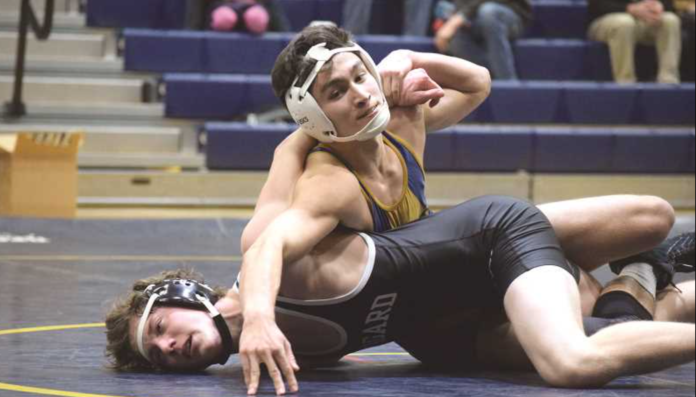
wrestling takedowns

Takedowns

Takedowns are one of the most essential moves in wrestling. They involve taking your opponent down to the mat, gaining control to keep them there, and attempting to score points.

The most common takedowns include the single-leg, double-leg, and high-crotch takedowns.

Escapes

Escapes are used when a wrestler is on the bottom and wants to get back to a standing position. They involve breaking free from an opponent’s hold and, ideally, reversing the position. Some common escapes easily recognizable from this style of wrestling include the stand-up, sit-out, and hip switch.

Pins

Pins are used to win a wrestling match by holding an opponent’s shoulders to the mat for a certain amount of time (usually around three seconds). Wrestlers can use various moves to pin their opponents, such as the cradle, half-nelson, and bar arm.

Reversals

Reversals are used to escape from a disadvantageous position and gain control of the match. They involve reversing the position of an opponent who has taken control. Common reversals include the Peterson roll and the Granby roll.

Rules Of College Wrestling

College wrestling adheres to a strict set of rules which have been well-established, given that the majority of practitioners are high school and college students, and the need for safety is paramount.

Weight Classes

College wrestling has ten weight classes, ranging from 125 pounds to 285 pounds. Wrestlers compete against opponents in their weight class, ensuring fair competition.

Scoring

Points are awarded for various moves and positions in college wrestling. Takedowns are worth two points, escapes and reversals are worth one point, and pins result in an immediate win. Points are also awarded for near-falls, where a wrestler almost pins their opponent.

Time Limits

Folkstyle wrestling matches consist of three periods, each lasting two minutes. The wrestler with the most points at the end of the match wins.

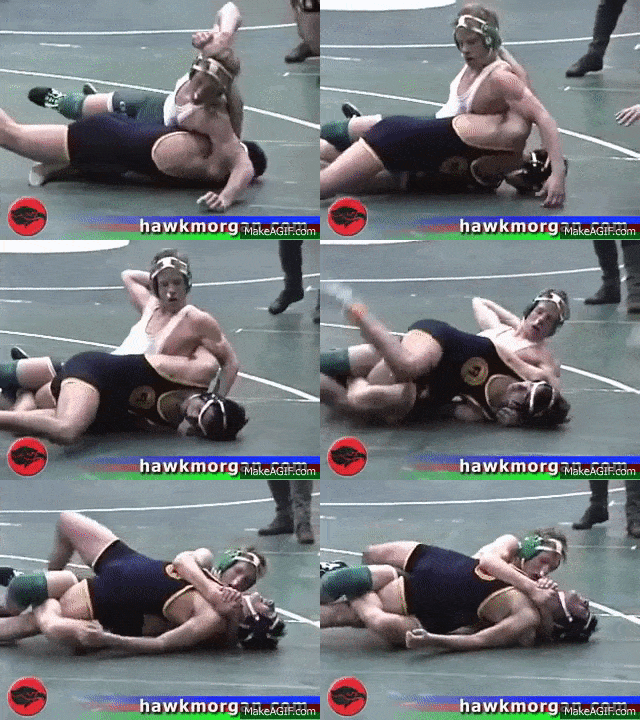
wrestling pin

What Is The Difference Between Folkstyle And Freestyle Wrestling?

Two of the most wrestling popular styles, especially in western countries, are folkstyle and freestyle wrestling. While both styles share similarities, they also have significant differences that make them unique.

The main difference between folkstyle and freestyle wrestling is the set of rules that govern each sport. In folkstyle wrestling, wrestlers score points for takedowns, escapes, and pins, and are penalized for infractions such as stalling. The objective is to gain control over your opponent and pin them to the mat.

In freestyle wrestling, wrestlers also score points for takedowns, escapes, and pins, but the rules are more liberal, and wrestlers are encouraged to use more dynamic and explosive techniques. Wrestlers are allowed to use their legs to trip or throw their opponent, and are not penalized for stalling.

Another key difference between the two sports is the type of mat used. In folkstyle, the mat is typically made of foam or rubber, while in freestyle wrestling, the mat is made of a harder, more durable material that is designed to provide better traction and support.

What is Folkstyle Wrestling?

Folkstyle wrestling, also known as collegiate wrestling, is a popular style of wrestling in the United States. It is typically practiced at the high school and college levels. The goal of folkstyle wrestling is to pin your opponent’s shoulders to the mat for a set amount of time, or to score points through takedowns, escapes, and reversals.

What is Freestyle Wrestling?

Freestyle wrestling is a style of wrestling that is popular around the world, including at the Olympic level. Unlike folkstyle wrestling, the goal of freestyle wrestling is to score points through takedowns, throws, and exposure to your opponent’s back. Freestyle wrestling also has different weight classes and time limits than folkstyle wrestling.

Key Differences

  • Scoring – In folkstyle, points are awarded for takedowns, escapes, reversals, and pins. In freestyle wrestling, points are awarded for takedowns, throws, and exposure to the opponent’s back.
  • Time limits – In folkstyle wrestling, there are three periods of wrestling, each lasting two minutes. In freestyle, there are two periods, each lasting three minutes.
  • Weight classes – The weight classes in freestyle wrestling are different than those in folkstyle wrestling. For example, the lightest weight class in freestyle wrestling is 57 kg, while in folkstyle, the lightest weight class is 106 lbs.
  • Rules – There are different rules in folkstyle and freestyle wrestling. For example, in freestyle wrestling, a wrestler can win by technical superiority if they are ahead by 10 or more points. In folkstyle wrestling, the point differential must be at least 15 points to win by technical superiority.

differences between folkstyle wrestling and freestyle wrestling

How Folkstyle Wrestling Can Benefit Your BJJ Training

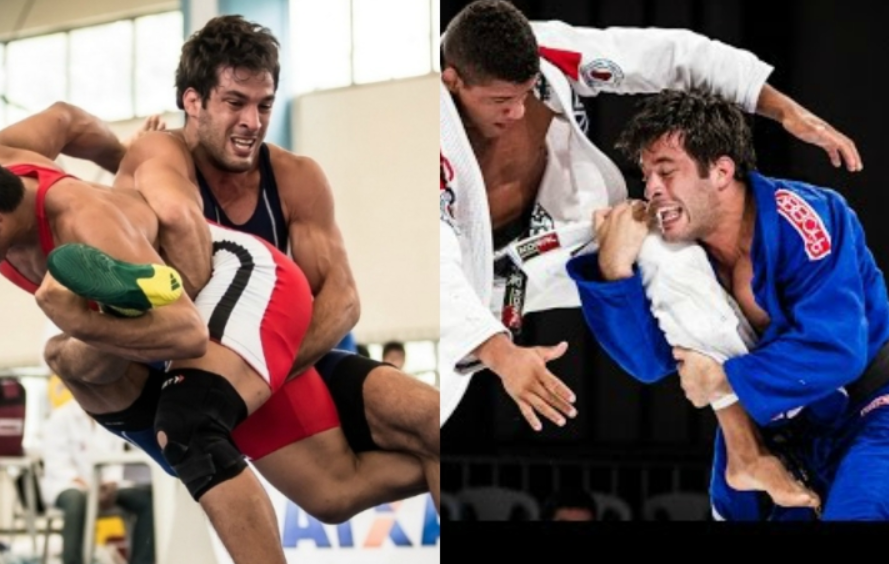
Folkstyle wrestling is a grappling sport that has many benefits for Brazilian Jiu-Jitsu practitioners. The techniques and principles learned in folkstyle wrestling can greatly enhance your BJJ learning curve, through the mastery of better takedowns, improved control and pressure on the ground, increased stamina and conditioning, and the “feel” for effective transitioning.

Whether you are a beginner or an experienced practitioner, adding certain aspects of folkstyle wrestling to your training regimen can help you take your game to the next level.

Better Takedowns

Folkstyle wrestling is well-known for its focus on takedowns. Unlike BJJ, which starts on the ground, folkstyle is all about getting your opponent to the mat. This means that wrestlers develop a wide range of takedown techniques, including singles, doubles, high crotches, and more.

By learning and practicing these takedowns, you can improve your standing game and take your opponents down more easily, effectively and safely. This not only puts you in a dominant position but also makes it easier to apply BJJ submissions and control.

Increased Control and Pressure

Folkstyle wrestling places a lot of emphasis on controlling one’s opponent on the mat. This involves using the directional placement of your own body weight and leverage to apply pressure and limit the opponent’s movement. By mastering these techniques, wrestlers can effectively control and dominate their opponents.

In BJJ, the ability to control and pressure opponents is also crucial, particularly when it comes to maintaining dominant (scoring) positions and eventually applying submissions. By incorporating folkstyle techniques into your BJJ training, you can develop a far more dominant ground game than by only training Jiu-Jitsu.

Improved Stamina and Conditioning

Wrestling, especially folkstyle, is an incredibly demanding sport that requires a high level of fitness and conditioning. Wrestlers must be able to maintain their energy and focus for extended periods, even during the most grueling matches.

By practicing folkstyle in addition to Jiu-Jitsu, submission grapplers can improve their fight-specific conditioning, allowing them to last longer and perform better during rolling sessions and competitions. This can also help to prevent fatigue-related injuries, which are the main cause of injuries in BJJ athletes.

Effective Transitioning

Transitioning is a critical aspect of both folkstyle wrestling and BJJ. In folkstyle, transitions are all about moving between different positions and techniques in a seamless and effective way. In BJJ, transitions involve slower movement between submissions, sweeps, and positional changes, which is how improved positional control connects to its aspect of dynamic grappling.

By training in both folkstyle wrestling and BJJ, you can develop a more effective and versatile transitional game. You can learn how to anticipate and respond to your opponent’s movements and take advantage of openings to gain dominant positions and apply submissions.

How to use Folkstyle wrestling for BJJ

Conclusion

In conclusion, folkstyle wrestling is a rich and vibrant sport with a long and storied history. It is a sport that requires discipline, strength, and perseverance, and it has a variety of benefits that extend beyond the mat. The main moves, including takedowns, escapes, pins, and reversals, are essential techniques that are fundamental to a wrestler’s success. If you are a BJJ practitioner looking to improve your takedowns, control, stamina, and transitioning, incorporating this wrestling style into your training regimen can be incredibly beneficial.

15 Best Drills To Maximize Your Guard Passing Skills

15 Best Drills To Maximize Your Guard Passing Skills

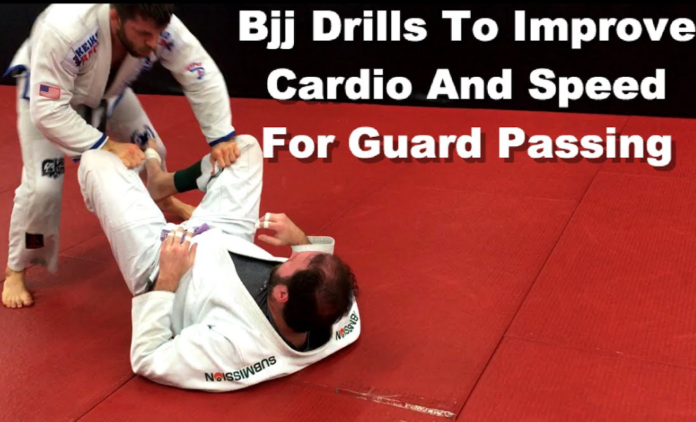
Guard passing is a critical component of Brazilian Jiu-Jitsu that requires a combination of technique, strength, and strategy. The ability to pass the guard is a key factor in determining the outcome of a BJJ match, given that success with a pass is rewarded 3 points. It is a skill that takes time and effort to master. In this article, we’ll explore the best drills for improving your guard passing skills.

Why Drilling Is Important For Guard Passing

Drilling is essential to BJJ training and is one of the best ways to improve your guard passing skills. By repeating specific techniques and movements over and over again, you can develop muscle memory and fine-tune your form and timing. In addition, drilling allows you to train in a controlled environment, where you can focus on specific skills and receive feedback from your training partners.

Drilling allows your body to repeat patterns and motions, while getting no, or very controlled resistance. The more repetitions of drills you perform, the more automatically you’ll be able to do the actual passes in rolling or matches under extreme pressure.

The 15 best drills for guard passing in BJJ will help you achieve all of this in record time if you start doing them today.

Best Drills For Improving Guard Passing

The best way to do BJJ drills is to do them. It does not matter if you do them for reps or time, as long s you put in the work and do them deliberately and with focus, instead of just going through the motions.

The best drills for passing guards include BOTH solo and partner drills, so make time to integrate both into your training routines and schedule.

Partner Drills To Accelerate Your Guard Passing Progress

Drilling with a partner is invaluable in actually learning how to use passing in relation to another person. Start by having the partner aid in your movement, and later, you can instruct them to add just a bit of resistance to give your drills a dose of reality.

Remember the best drills for passing are just that – drills, not positional sparring, so make sure you don’t go overboard with the level of resistance.

The Toreando Pass Drill

The Toreando pass is a fundamental and widely utilized guard passing technique in BJJ Gi training. In order to master this technique and improve your guard passing skills, it is essential to practice it through various drills.

The drill involves your partner lying on the mats in a guard position. You set up grips on their Gi pants at the knee point and throw past their legs on either side in a repetitive motion while stepping so that your feet end up by their hips on each repetition.

Drill Execution Tips: 
  1. Start with your partner lying supine with bent knees;
  2. Grab the Gi at the side of both knees;
  3. Push the legs to one side to open up space;
  4. Move your body to the other using side-stepping to pass the legs;
  5. Place the shoulder on to the partner’s belly;
  6. Repeat this drill on both sides.

The Leg Drag Pass Drill

The leg drag is a more advanced technique that involves controlling an opponent’s hips via just one leg. It starts similarly to the Torreando pass, but instead of controlling both legs, you focus only on dragging one across your belly, creating support using your lead leg for their leg to rest on.

The key to success in this technique is to keep the opponent’s leg near while maintaining control of the tight space and applying weight.

Drill Execution Tips: 
  1. Start with your partner lying supine with bent knees;
  2. Set up the grips on the shin and side of the knee;
  3. Drag the leg on the shelf position for hip control;
  4. Step in to apply pressure and change the level to complete the pass;
  5. Repeat this drill on both sides.

The Over-Under Pass Drill

The over-under pass drill is one of the best drills for developing the skills and techniques required to pass any opponent’s guard. This technique is highly effective in preventing an opponent from re-establishing their guard, making it one of the best guard passing options.

Drill Execution Tips: 
  1. Start in your opponent’s guard;
  2. Place your  arms in the over-under position to control their hips;
  3. Put pressure forward, raising your butt towards the ceiling;
  4. Step over to get to side control;https://www.youtube.com/watch?v=-AgSbTYn8PM
  5. Repeat this drill on both sides.


The Double Under Pass Drill

The double under pass drill is a powerful drill that helps you to develop the strength and technique required to pass your opponent’s closed guard. This fundamental move enables you to bypass the opponent’s legs and is utilized by everyone from white to black belts.

Drill Execution Tips: 
  1. Start in your partner’s guard;
  2. Open the closed guard by using your preferred method;
  3. Place both arms behind the partner’s knees (and level change if standing)
  4. Put your body in a push-up position to place pressure on the partner;
  5. Circle to a side of your choosing to finish in side control;
  6. Repeat this drill on both sides.

The Staple Back Step Pass Drill

The leg staple is a basic guard pass that is widely taught in Jiu-Jitsu. To perform this technique, you will control their lower body first, before switching to upper body control to complete the pass. It is a great option to use against both closed and open guards, making this one of the very best drills for passers:

Drill Execution Tips: 
  1. Start in the staple position, with your shin across one of the partner’s thighs;
  2. Hug their free leg with your arms to establish complete hip dominance;
  3. Drop the hips to the mats towards the stapled leg;
  4. Use your free leg to backstep in a wide motion and control the partner’s head;
  5. Repeat this drill on both sides.

Solo Drills To Become a Guard Passing Pro

Solo drills work best when you don’t have a partner, but they are also a crucial component of training, as they will teach you motion and develop all-important muscle memory that will only make your partner drills a much more useful tool for improving guard passing skills.

The following 10 drills are the very best drills for passing guard that you can do solo:

Deep Squats

Holding the deep quat position with flat feet is essential to developing flexibility and dexterity needed for guard passing.

Drill Execution Tips:
  1. Squat as low as you can;
  2. Keep your knees over your ankles as much as possible:
  3. Move around in the deep squat position, left and right;
  4. Spend as much time as possible holding the position.

Cossack Squats

Cossack squats are one of the best drills for guard passing because they provide you with a side-to-side motion that also features dexterity and flexibility, as well as training balance.

Drill Execution Tips:
  1. Start with straight legs placed wider than hip-width apart;
  2. Bend one knee to go low to one side, keeping the foot flat and the other leg extended;
  3. Switch to the other side by trying to avoid going completely back u to the starting position;
  4. Alternate sides.

The 1-2 Step

An essential motion for guard passers, the 1-2 drill is an entry motion into a variety of different guard passes. If you don’t have a stability ball you can use a chair or whatever else can give you an anchor for your arms.

Drill Execution Tips:
  1. Start in front of the ball, both palms resting on it;
  2. Step to the side, leading with the leg further to the direction you’re going;
  3. After stepping across with one leg, follow up with the other:
  4. Get back into the starting position in reverse (cross-stepping again);
  5. Alternate sides.

The Shuffle Step

The Shuffle Step gets you to the side of an opponent’s guard quicker than the 1-2, but it is easier to counter for guard players. the key with this one is speed, so once you get the hang of it, make sure you execute the drill as fast as possible. Again, use a stability ball or chair or whatever you can find.

Drill Execution Tips:
  1. Start in front of the ball, both palms resting on it;
  2. Step to the side, leading with the leg closer to the direction you’re going;
  3. As it lands, shuffle the other leg as well to end up on the side of the ball;
  4. Get back the same way, leading with the closer leg;
  5. Alternate sides.

Leg And Arm Shuffle

Another version of the leg shuffle, this is one of the best drills simply because it will allow you to be comfortable when you lose balance, or opponents try to sweep you as you pass. You’re simply adding the use of your arms to the leg shuffle.

Drill Execution Tips:
  1. Start in front of the ball, both palms resting on it;
  2. Step to the side, leading with the leg closer to the direction you’re going;
  3. As it lands, place the same side arm on the mats, like doing a pushup;
  4. Get back to the starting position;
  5. Alternate sides.

The Step And Kick

An essential way of passing open guards with the Gi is to use the X-pass. A slight drawback is that it requires you to balance on one leg for a short while. This drill will help you master the balancing and dexterity aspects of it, as well as switching your weight from one leg to another.

Drill Execution Tips:
  1. Start in front of the ball, both palms resting on it;
  2. Step to the side, leading with the leg closer to the direction you’re going;
  3. As it lands, placekick back with the other leg, extending it behind you and keeping it off the ground;
  4. Lift the arm opposite of the leg that is extended backward off the ball;
  5. Get back to the starting position;
  6. Alternate sides.

Long Step

You won’t need any props for this one. Once again a motion that is crucial to developing a diverse guard passing game and one of the best drills you can do to ensure you’re never swept.

Drill Execution Tips:
  1. Start on your knees and elbows;
  2. Lift one leg behind you and allow it to fall backward over the other leg;
  3. As your foot lands on the ground, lift the opposite side arm off the ground so your hip can fall on the mats as well;
  4. Get back to the starting position;
  5. Alternate sides.

Knee Drops

Whether you like to do knee slices, staple passes or knee smashes, this drill is going to be invaluable in providing you with both speed and knee stability for those types of techniques.

Drill Execution Tips:
  1. Start with your feet and palms on the ground and your butt in the air (bear walk position);
  2. Drop the knee of one leg to the mats, sliding it sideways in toward the foot of the planted leg;
  3. As you execute the motion, lift the opposite side arm off the ground;
  4. Get back to the starting position;
  5. Alternate sides.

Hop Over Drill

A fun-looking, seemingly daunting but easy-to-perform drill that is a must for anyone interested in using pressure passing as the centerpiece of their guard passing game.

Drill Execution Tips:
  1. Start on all fours, with the top of your head planned on the mats;
  2. Use both arms for added balance, by placing them extended on both sides of the head;
  3. kick your legs up, so that you’re balancing only on your head and arms;
  4. Shift both legs to one side, touching the ground with the cross leg;
  5. Alternate sides.

Elbow Cartwheel

The most advanced solo drill on the list but one of the best drills if you truly want to become a proficient guard passer in BJJ. Cartwheeling on your elbows is a lot safer, quicker, and much more applicable in passing than doing gymnastic-style cartwheels.

Drill Execution Tips:
  1. Start on your knees;
  2. Bend your arms at the elbows and place one forearm on the mats, swinging for momentum beforehand;
  3. Follow the momentum with your body, lifting the legs so that you cartwheel;
  4. Land on your knees on the other side;
  5. Alternate sides.

Conclusion

In conclusion, guard passing is a critical component of BJJ, and drilling is one of the best ways to improve your skills. Whether you’re a beginner or an experienced practitioner, these select solo and partner best drills will help you to develop your guard passing abilities and take your game to the next level. By incorporating these drills into your training regimen, you can become a more effective guard passer and achieve greater success on the mat.

Gordon Ryan Drops Bombs: Nicky Rod Stealing Techniques And Greasing In Matches!

Gordon Ryan Drops Bombs: Nicky Rod Stealing Techniques And Greasing In Matches!

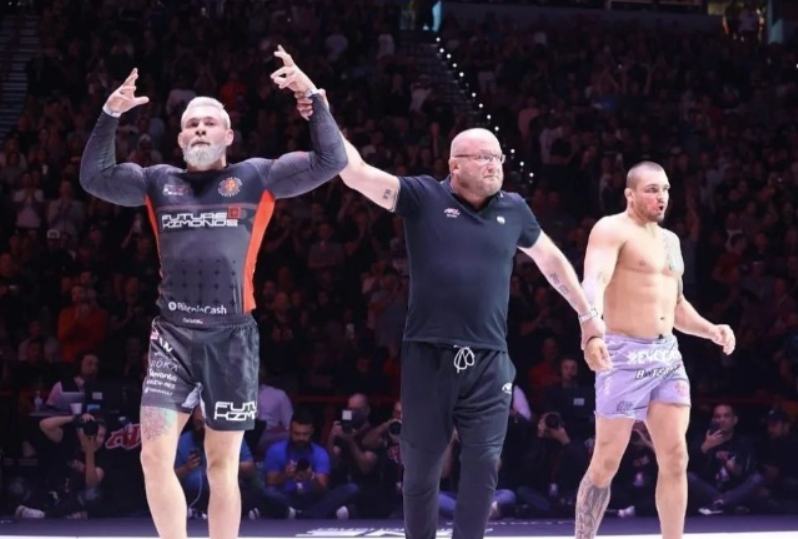
Gordon Ryan has decided that the agreement between B-Team and New Wave Jiu-Jitsu team members is no longer in place, as he has dropped bombs about former Danaher Death Squad teammate Nicky Rod, claiming that he is fake, claiming techniques he learned from Ryan and Danaher and regularly greases for his matches.

Gordon Ryan Accuses Nicky Rod Of Greasing For Matches

In his latest post, Gordon Ryan fired shots at former teammate Nicky Rod, despite and obvious agreement between them to refrain from talking smack about each other publically. As per one of his most recent Instagram posts:

I am a man of my word. We had an agreement to not talk shit about one another publicly when the team split. The old cliche that “winners focus on winning and losers focus on winners” is true. I have just been focused on winning while this fuck*** lo*** has been busy losing to Sloan Clymer. Between ADCC 2019 and ADCC 2022 this guy had a losing record (fact check on bjjheroes.com) yet made you believe that he was good by highlight reeling his poor blue belt students at his academy.

He is on camera admitting to greasing multiple times, I’ve seen him before competition grease up multiple times, and I purposely wore a long sleeve rash guard at ADCC for ONLY ONE MATCH because I knew he would be greased.


Gordon Claims Nicky Has Been Stealing Techniques And Passing Them Off As His Own

Going deeper into the issue, Ryan then openly accused Rodriguez of building an entire brand on moves he picked up from Gordon and his coach, world-renowned John Danaher:

Could you imagine building a brand and BLATANTLY LYING about everything in your life ? Wanna know our 1st introduction ? Me teaching him a private on body locks, which he claims to have “invented” this system, yet it’s clearly just a blatanGordon Ryan vs Nicky Rod: He's Greasing and Using Steroids rip off of mine and John’s shit, yet gives us no credit. So now what do you have ?
A brand built on a body lock system that you claim to have invented, yet everyone knows its just a shitty version of mine and John’s (you can easily see this by the level of comparative instruction).

“You’re As Natural As Liver King Is”

Gordon finished his post by pointing out toward Nicky’s long-suspected steroid use and his claims that the is all-natural, by writing:

Can you explain to the fans please how in one photo you look like a fat dad who used to play hs football, yet now has a left titty, and in the other photo look like Arnold getting ready for Olympia? The difference between me and everyone is that I’m real. I say it like it is. This guys about as natural as liver king and like liver king, built an entire brand about blatant lies, and those brands usually collapse when they’re exposed.

If you think this guy invented some intricate body locking system when he can’t even formulate a fucking paragraph properly for an ig post, you’re even dumber than if you believe he’s actually natural.”

Ryan wrapped it up by calling Nicky out to look him in the eyes next time they fight, and predicted that his brand is quickly going to crumble:

“Keep building your brand on lies while I keep winning. If you focused less on me and more on winning maybe you could win a single tournament of note.

And oh, if you make it to ADCC finals next time, make sure you’re not too afraid to look me in the eyes, you f****** b****.

We’re anticipating Nicky’s response. Stay tuned.

Andre Galvao DVD Review: Dealing With Closed Guard When Standing

Dealing With Closed Guard When Standing Andre Galvao DVD Review

Andre Galvao is one of the people who have been recording instructionals since the VHS days. The man has a lot to teach, as all the monsters that keep coming out of his Atos den testify. Galvao has been active with shooting new material for instructional lately, with his “Dealing With Closed Guard When Standing” release being the latest Andre Galvao DVD review we did.

ON SALE HERE:

Andre Galvao DVD Review closed guard front cover
Techniques List and More Info

Overview

Dealing with the closed guard is a difficult task for BJJ athletes of all levels, with and without the Gi, from the inception of Jiu-Jitsu all the way to today. In this particular DVD, Galvao targets a subject that remains constantly important and is somehow just as constantly overlooked by coaches and instructors. 

As you’ll see from the detailed Andre Galvao DVD review that follows, this is instructional with a modern look, containing 4 volumes of material, but still carrying Andre Galvao’s signature touch of shooting instructional with few subjects explained in extreme detail.

The multiple ADCC and IBJJF champion is well versed in both Gi and No-Gi, but this particular instructional is a Gi-specific BJJ DVD.

Instructor Background

Andre Galvao is a two-time ADCC winner, three-time ADCC super fight winner, and seven-time IBJJF world champion, among many other huge accolades in the last couple of decades. 

A black belt under  Luis Dagmar, Galvao is considered to be one of the best competitors ever in the sport of Jiu-Jitsu, particularly with the Gi. Galvao is the man behind one of the best-ever BJJ competitor gyms based out of San Diego, CA, the Atos Jiu-Jitsu Academy. Throughout the years, the academy has produced the likes of the Mendes brothers, Keenan Cornelius, the Ruotolo brothers, and many other world champions.

Galvao has a hands-on approach to teaching, constantly training with his competitors and still competing himself at the highest levels of the sport.

His teaching methodology is old-school Brazilian, with Andre sharing an extreme amount of details during long-winded explanations of even the smallest steps of a technique. This makes him one of the best coaches in the business, as he can make the same subject interesting and useful to white and black belts alike.

Andre Galvao DVD Preview Closed Guard while standing

Subject

The subject covered in this Andre Galvao DVD review is his approach to dealing with the closed guard whenever you get stuck in it. As specific and precise as he is, Galvao focuses on dealing with the closed guard solely by employing standing up, a concept that seems to be dominating modern BJJ in the past year or so. 

The DVD covers staying safe from sweeps and submissions, successfully opening the closed guard and executing several different passes, and shutting down any recovery attempts along the way. He even shares a few submissions to ensure you stay past the bottom person’s dangerous legs.

Complexity

The subject is a basic one, and despite taking it very deep into detail and covering transitions that include some advanced stuff like defeating the Spider guard, Andre Galvao is a master of making subjects interesting and appealing to grapplers of all experiences.

As such, this is a DVD great for anyone that would like to learn how to deal with the closed guard in the Gi.  

Technical Details

This Andre Galvao DVD has four volumes, each of them lasting about 45 minutes. this brings the total running time to just over 3 hours. Moreover, each of the volumes has only a few chapters, in that typical Andre Galvao instructional fashion, allowing for an easy way to follow topics in terms of organization.

The downside of the long-length chapters is that it can be difficult to rewind and find precise elements once you’re coming back to re-watch the material.

The camerawork, video and audio quality, cover design, and all other technical aspects are at the industry standard set by BJJ Fanatics.

“Dealing With Closed Guard When Standing” is available both in hardcopy DVD and digital high-definition formats.

Detailed Analysis

DVD #1

The way Andre kicks off his instructional is by sharing a very crucial concept that clearly demonstrates a way of thinking when it comes to working from inside someone’s closed guard. That concept is the notion to “be first” and be able to avoid the closed guard game by breaking it down before an opponent has the chance of applying all the layers of their game.

This concept takes about 30 minutes of the first volume and covers a myriad of details and scenarios, which are hard to represent at the level they should be represented in this Andre Galvao DVD review. Let’s just say that you’ll re-watch this portion at least several times given the quality of innovative information in it.

The second and third chapters focus on approaching the closed guard game while standing up, with some drills for balance and strength preceding a very important crucial chapter on jumping guard tactics.

DVD #2

The second part of Andre’s “Dealing With Closed Guard When Standing” DVD contains only two chapters, each lasting in excess of 20 minutes.

The first one covers a very cool concept on blocking sweeps, particularly muscle sweeps by shifting your weight and breaking the bottom person’s posture so that they are unable to disrupt your base and off-balance you.

Some grip tactics follow in the second chapter, with Andre giving a fresh perspective on an old Gi BJJ classic – standing up to open the guard with the cross-sleeve grip control.

DVD #3

The third part of this instructional contains a whole of 4 chapters, which is a lot by Galvao standards, However, the way the content is organized leaves nothing to chance, so this structure makes lots of sense.

Galvao keeps going where he stopped in volume t open2, discussing the cross sleeve grip further, in terms of not just opening the closed guard while standing, but also passing directly to the crucifix position.

The best part of this Andre Galvao DVD review was the portion on the so-called magic grip, which is truly a game-changer when it comes to winning the grip fight from inside the closed guard.

The final two sections in this BJJ instructional cover counter-attacks off of muscle sweep attempts that lead directly into submissions.

DVD #4

Galvao already surpassed many expectations with the quality of material so far in this DVD, but there was still more to come as icing on the cake in the last volume.

There is lots of focus on stuff happening outside the closed guard here, with useful moves and tips on approaching the front leg trap, dealing with the very common spider guard follow-up to the closed guard, and spicing it all up with the very final chapter making the cartwheel pass seem extremely simple and doable even for complete novices.  

How We Grade The “Dealing With Closed Guard When Standing” Andre Galvao DVD Instructional

Considering this “Dealing With Closed Guard When Standing” instructional DVD’s technical aspects and quality of content, we come to an overall score for this instructional that I’ll deliberate on in short below.

Technical Quality: 9/10

The chapter length is the only thing that might annoy people, as 20-30 minutes of uninterrupted material is quite a lot to sift through when you are looking for something specific. 

Apart from this inconvenience, all other technical aspects are pristine.

Quality of Content: 9/10

Content-wise, the instructional is truly a gold mine for every level of grappler, with the only drawback being that it is a very Gi-specific instructional which makes most of the moves demonstrated completely unusable in No-Gi. That is a real shame, as there’s great quality in the presented content. 

Overall: 9/10

The final outcome of our “Dealing With Closed Guard When Standing” Andre Galvao DVD review is that unless you mind long chapters and are a predominantly Gi BJJ athlete, you can consider this instructional to be a 10. 

Even those that might find an issue with the above-mentioned nuisances are going to benefit greatly from picking this DVD up.

Wrap Up

All in all, this might be Andre Galvao’s best instructional so far in my humble opinion. The subject matter is definitely one that lacks coverage in general, at least when it comes to a logical high-percentage system that is going to work. Here’s to hoping Andre shares a No-Gi follow-up to this DVD soon.

ON SALE HERE:

Andre Galvao DVD Review closed guard front cover
Techniques List and More Info

REVIEW Down Right Sloppy Half Butterfly DVD By Eoghan O’Flanagan

REVEIW Down Right Sloppy Half Butterfly DVD By Eoghan O'Flanagan

Perhaps not many people knew who Eoghan O’Flanagan was prior to ADCC 2022, but now everyone is more than aware of the British leg lock aficionado. The submission hunter is somewhat of a unique personality, training mainly at open mats and learning more from instructional than actual live coaches. His level is unquestionable, though, and his teaching skills seem to match his competitive ones, as the Down Right Sloppy Half Butterfly DVD clearly proves.

Overview

This Eoghan O’Flanagan BJJ instructional covers a very popular position in the half butterfly guard. While many people see it as a lazy person’s half guard for sweeping, or a launching pad for leg locks, O’Flanagan demonstrates in his Half Butterfly DVD that you can do a lot more from the position. His instruction is a precise and detailed guide into everything related to the half butterfly, from gripping and controlling to switching between offense and defense and upper and lower body focus.

ON SALE HERE:

Eoghan O'Flanagan Downright Sloppy Half Butterfly DVD front cover
Techniques List and More Info

Instructor Background

Eoghan O’Flanagan is a BJJ black belt from Harlsedon, London, UK, with a lifelong pedigree in grappling. He started Judo at the age of just 4 and through it, ended up in Brazilian Jiu-Jitsu, earning his black belt at the age of 21. 

A predominantly No-Gi grappler, O’Flanagan states YouTube, Flograppling, and UFC Fight Pass as his main sources of learning. Another curious thing is that although he is associated with New school BJJ and New Wave Academy, he mostly trains nomadically, visiting open mats as much as he can. Given his affinity for leg locks, it is not surprising that Eoghan O’Flanagan states Gordon Ryan, Eddie Cummings, Garry Tonon, and Ethan Crelinsten as his inspiration.

His performances at the 2022 ADCC turned many heads when the European trails winner faced off against Xande Ribeiro and Mason Fowler, defeating both.

Subject

The Down Right Sloppy Half Butterfly DVD by Eoghan O’Flanagan is pretty straightforward when it comes to the subject matter. The directions O’Flanagan covers in this instructional is where this BJJ DVD differs from all others covering the same subject. 

O’Flanagan starts covering the defensive aspects, retaining the guard despite the actions of the person on top, including even body lock attacks. He then covers offensive grip fighting by way of arm saddles which expose sweeps, submissions, back attacks, and the like. 

Many submissions also feature, ranging from armlocks to leg locks, with chokes and strangles sprinkled in between. Leg locks, of course, make up most of the submissions in an Eoghan O’Flanagan BJJ DVD instructional.

Technical Details

The instructional is well put together, with a very nice progression content-wise. Eoghan O’Flanagan starts with basic positioning and pass prevention, then moves on to attacking the base, before switching to submissions hallway through. The third volume covers all types of submissions, while the fourth is dedicated to the half-butterfly leg-locking game. 

The instructional has four volumes, like every other modern BJJ DVD. Each volume lasts around 30 minutes, with a total time of 2 hours. Given O’Flanagan’s pedigree, the Half Butterfly DVD is a No-Gi instructional. 

All the production aspects of the DVD, like video quality, audio quality, camera work, and the like are up to BJJ Fanatics standards.

The instructional is available in DVD and digital formats, both with high-definition quality.

Complexity


This is a No-Gi DVD only, and despite most stuff without the Gi being applicable to Gi, that is not the case here. The grips change dramatically when it comes to playing half guard, so this instructional is mostly going to benefit No-Gi players.

In terms of the position itself, despite the half butterfly being somewhat complicated, O’Flanagan does a great job at really, really simplifying your tasks from the position, and yet, offering depth and detail that will keep the interest of even seasoned half-guard players/leg lockers peaked.

I guess the only pre-requisite for this one is knowing what half-guard is and some of the half-guard basics, since O’Flanagan brushed over those quickly, but I think most people that have a few months of training under their belt will be able to use the Half Butterfly DVD immediately.

Detailed Analysis

DVD #1

After the mandatory introduction, Eoghan O’Flanagan starts explaining the position, although he doesn’t spend too much time on body positioning. Instead, the focus is on gripping in order to maintain guard against some of the most common passes that often foil the half-butterfly.

A really cool chapter covers dealing with negative partners which are often an issue for any guard. There’s an easy solution how to make someone engage when they’re trying to stall from the half-butterfly, though.

The passes that Eoghan O’Flanagan solves in this DVD are mostly from the smash variety, like weave pass variations and body locks. He also explains the knee lever (shoveling concept) really clearly and concisely.

DVD #2

In the second volume of the Down Right Sloppy Half Butterfly DVD goes on the offense. He focuses his offensive salvo around the arm saddle, using it to break the top person’s posture and take away their base.

Most of the volume covers grip fighting to achieve the arm saddle, which is a point of no return for the top person – once you get it, they can’t do anything if they do not break it.

The volume ends with a few really cool and applicable reactive scenarios based on the opponent’s actions/

DVD #3

Offense intensifies in past the halfway point of this instructional, with O’Flanagan turning to submissions in the form of Kimura, Triangle choke, Shotgun armlocks nad a couple of slick back takes, including fun inversions.

All of the submissions for ma loop are interchangeable, meaning that when one fails, either another one opens, or you can immediately turn to concepts and techniques from the previous volumes to constantly stay in control.

DVD #4

This is the volume most people probably thought of when they saw the words Half Butterfly DVD and Eoghan O’Flanagan. It contains leg lock entries and threats, along with a few more transitions to the back.

Once again there is a heavy focus on grips that work to set up the saddle as well as utilize false reaps to counter sprawling and shin staple pass attempts. The K-guard is never far away from false reaps and the saddle, and O’Flanagan presents it as the best friend and neighbor to the half-butterfly guard.

The Boston crab double leg lock helps O’Flanagan wrap this one in style.

How We Grade The “Down Right Sloppy Half Butterfly DVD” By Eoghan O’Flanagan

Considering this Down Right Sloppy Half Butterfly instructional DVD’s technical aspects and quality of content, we come to an overall score for this instructional that I’ll deliberate in short below. 

Technical Quality: 9/10

The fact that this is an exclusive No-Gi instructional takes away from the perfect grade. Apart from that every other technical aspect of the DVD, down to the cover art is impeccable. 

Quality of Content: 10/10

Eoghan O’Flanagn leaves nothing to be desired. Submission hunters, leg lock specialists, and half-guard players are all going to find things in this that they will immediately be able to integrate into their games.

Moreover, it offers a complete offensive and defensive approach to the half-butterfly position and a tested system that you can put to use quickly.

Overall: 9/10

A solid DVD instructional across the board. Flanagan has a bit of an eccentric flare which further makes him an unorthodox and entertaining coach, who has lots of knowledge on the subject he is covering in this BJJ DVD. 

Wrap Up

Among the huge number of half-butterfly DVD instructionals available, Eoghan O’Flanagan’s is one of the first ones to begin exploring the position, if you don’t already know how the guard works. Even then, you’ll find an approach not many others have, including seasoned leg lockers like Eddie Cummings and Robert Degle.

ON SALE HERE:

Eoghan O'Flanagan Downright Sloppy Half Butterfly DVD front cover
Techniques List and More Info

Firas Zahabi BJJ DVD Review: Guard Attacks Made Easy

Firas Zahabi BJJ DVD Review: Guard Attacks Made Easy

Firas Zahabi is the man to turn to when you’re trying to simplify something in grappling. Since there’s hardly anything more complex and diverse than BJJ guards, he is the perfect man for the job of providing an in-depth and simple-to-follow course for guard attacks. In yet another of his unique Firas Zahabi BJJ DVD instructionals, the Danaher black belt draws, talks over, and demonstrates a bunch of very useful offensive guard concepts.

Overview

Zahabi offers a No-Gi instructional that is as simple as they come – he covers true attacking basics but does so in a way that will mesmerize beginners and professional grapplers alike. The two-part Firas Zahabi BJJ DVD focuses on direct submissions off the back, gravitating around the classics like triangles and armbars spiced up baby a few interconnecting super basic sweeps. A true evergreen instructional for everyone training in combat sports that include grappling.

ON SALE HERE:

Firas Zahabi BJJ DVD : Guard Attacks Made Easy front cover
Techniques List and More Info

Instructor Background

Firas Zahabi is one of the best BJJ and MMA coaches around. Based out of Montreal, Canada, where he heads the famous Tristar gym, he is famous for travelling constantly to New York and back while going through the ranks to learn from John Danaher, who awarded him his black belt in 2011.

In the meantime, Zahabi produced one of the best MMA fighters ever in Georges St Pierre. He is also the man behind huge combat sports stars like Rory McDonald, Miguel Torres, Ethan Crelinsten, and Oliver Taza to name a few.

Zahabi is an avid researcher of the Gentle Art, constantly trying to break down what works and why, as well as why some things that are considered staples of the sport have become redundant over the years. He is second to none in roll analysis, which is basically his signature way of making instructional.

He is also constantly active with Q&Aich YouTube sessions in which he is not afraid to voice his opinions, which sometimes air on the controversial side.

Subject

The subject of the Guard Attacks Made Easy Firas Zahabi BJJ DVD is pretty easy to deduce from the title. While Zahabi does tackle the vast subject area of the guard in this instructional he does so by simplifying everything by funneling all guard variations toward a select group of complementary submissions that have been proven to work effectively at every level of the sport.

Complexity

The instructional is easy to follow for everyone as it really covers things that everyone has encountered, even if they’ve only been training for a couple of months. Triangles, armbars, Omoplatas, pendulum, and hip heist sweeps make up the meat and potatoes of this Firas Zahabi BJJ DVD.

Zahabi is primarily a No-Gi grappler, meaning all the material is easily transferable to Gi BJJ.

The best part is that where beginners will only look to grasp the big picture concepts, advanced grapplers will encounter details and connections in between the material laid out in the Guard Attack Made Easy DVD.

Technical Details

A BJJ Fanatics release means that this instructional adheres to the gold standard of BJJ DVDs in terms of technical quality.

The DVD has just two volumes, which is somewhat short, and the only major “flaw” that we can outline in it. Each of the volumes lasts around 30 minutes, with the entire instructional being just over an hour long.

Guard Attacks Made Easy is available as a DVD and in digital format, both in high-definition video and audio quality.

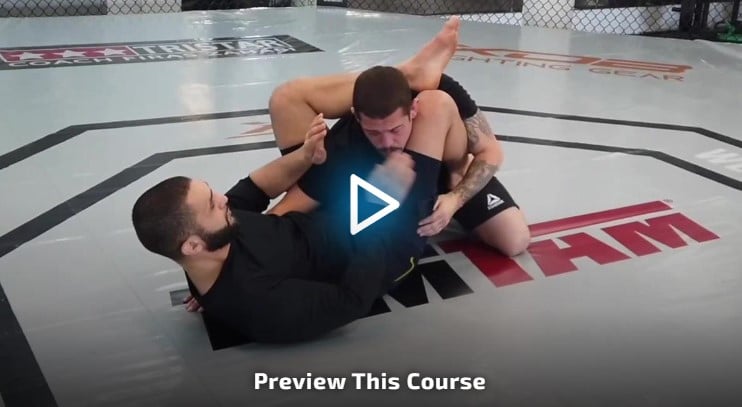
Firas Zahabi Guard Attack dvd preview

Detailed Analysis

DVD #1

Firas opens up directly with an armbar chapter that is around 15 minutes long. Skipping any unnecessary introductions and needless talk, he goes straight into showing breaking mechanics, and several different ways of baiting armbars when you’re playing guard. The best takeaway is that he removes the unnecessary steps in setting up an armbar off the back, leaving no time for the opponent to react.

The Triangle and Omoplata follow, both getting quite long chapters (in excess of 10 minutes) of the same detailed information as with the armbar.

DVD #2

The second (and final) volume of the Guard Attacks Made Easy Firas Zahabi BJJ DVD has more chapters than the first one. It keeps exploring submissions in the beginning, in the form of the Kimura and Guillotine choke, following the same outline in which the other submissions were demonstrated.

The rest of the volume covers sweeps, starting with the pendulum sweep, and moving on to include the hip heist as well.

In true Firas Zahabi fashion, the Canadian coach brings everything together in a final couple of chapters, allowing for those looking for a system to get an entire highly-effective one in just an hour of material.

How We Grade The “Guard Attacks Made Easy” Firas Zahabi BJJ DVD Instructional

Considering this Guard Attacks Made Easy instructional DVD’s technical aspects and quality of content, we come to an overall score for this instructional that I’ll deliberate in short below.

Technical Quality: 9/10

While the quality of the material somewhat makes up for the lack of quantity, it does leave us wondering if Zahabi could not have added a bit more material to this. There is certainly space for it.

The lack of length is the only aspect of this instructional that is not up to par to what we’ve grown to expect out of a modern-day BJJ DVD.

Quality of Content:10/10

No question marks whatsoever in the quality of the material Zahabi presents in this instructional. Whether you’re looking to refine your triangle finish, your Omoplata setup, or looking for a ready-to-use sweep-submission combo system, you’ll find it in this DVD.

Overall: 9/10

A nearly perfect score and a nearly perfect DVD. Perhaps the inclusion of leg locks would make it the unique instructional we know Firas Zahbai can produce, but we’ll have to wait and see if he has a second edition brewing.

Wrap Up

Firaz Zahabi has never had a miss in terms of BJJ DVD instructionals and this one is just another in a long line of creative, original and super useful guides to perfecting some of the crucial aspects of Brazilian Jiu-Jitsu.

ON SALE HERE:

Firas Zahabi BJJ DVD : Guard Attacks Made Easy front cover
Techniques List and More Info

REVIEW: Submission and Pin Escapes AJ Agazarm DVD

REVIEW: Don't Get Got AJ Agazarm DVD

AJ Agazarm is hardly anyone’s favorite character in Jiu-Jitsu, but he is good at it. He has held the spot of one of the best competitors for going on 10 years now and shows both intentions of stopping, despite perhaps not having a Gordon Ryan-like career. AJ is notorious for not tapping out and frustrating opponents with his game. Now, you can learn all of his defensive secrets through the latest AJ Agazarm DVD “Don’t Get Got”.

ON SALE HERE:

Don't Get Got DVD By AJ Agazarm front cover
Techniques List and More Info

Overview

This is a three-part No-Gi BJJ DVD that covers escapes from bad spots, mostly submission holds, named almost as weirdly as 10th Planet Jiu-Jitsu techniques are. Jokes aside, this AJ Agazarm DVD is probably the only DVD you should get from him. After all, he avoids taps when everyone thinks he’s done for, so who better to teach you how to be cocky than the master of cockiness himself? 

Instructor Background

AJ Agazarm is a Gracie Barra team representative and coach. He earned his black belt from Eduardo De Lima. When he began training he was so good that Carlos Gracie Jr. offered to take him to Brazil and make him a champion. Agazarm did not accept the offer as he was chasing Division one wrestling glory at the time. 

Agazarm got his black belt in 7 years, after he won the Brazilian Nationals in No-Gi, becoming the first non-Brazilian to ever achieve the task.

AJ has a very aggressive and versatile game and a seemingly endless gas tank. He never stops or slows down when he is competing and has gone toe to toe with some of the very best grapplers in the past decade. He has not been submitted in quite a while with just 15 of his 84 losses coming by way of submission.

The “Don’t Get Got” AJ Agazarm DVD outlines his approach to defending when you’re in really bad spots.

Subject

Defense is an aspect of BJJ that is often overlooked in favor of offensive techniques. The people that decide to focus on defending, can end up frustrating even the best submission hunters in the world, as AJ Agazarm has proven over and over again. 

AJ’s focus is mostly on submission defense, featuring armlock, leglock, and choke defense from some of the worst positions imaginable. He shares a bunch of moves that work just as well in stand-alone mode, as they do in combination with one another.

Complexity

This AJ Agazarm DVD focuses mostly on fundamental positions (back, mount, guard, Ashi Garami) and submissions which makes it a good fit for everyone. Since most black belts are purple belts at best when it comes to defense, this BJJ instructional is going to be both challenging and informational for almost anyone involved in Jiu-Jitsu. 

Technical Details

“Don’t Get Got” features three volumes, each lasting approximately 30 minutes, which brings the full running length of this AJ Agazarm DVD to around 90 minutes. 

The way AJ presents things is a bit frustrating, as he is going through lots of things as if they are a given, which leaves people struggling if they have no idea what he is talking about.

Apart from the fairly short length and lack of progressive structure, all other technical aspects of this instructional are on point, from camerawork, video, and audio quality, to cover art and available formats (hardcopy DVD, and digital).

Aj agazarm instructional preview

Detailed Analysis

DVD #1

Opening this DVD is a great section by AJ Agazarm on body mobility. These are crucial in allowing the body to move in the desired direction when it comes to submission defense.

The techniques covered in the DVD starts with the hitchhiker armbar escape and continue into Omoplata solutions to break the attacker’s submission chain. He also covers Kimura defense as well as ways to shut down arm triangles.

DVD #2

Part two of this AJ Agazarm DVD covers leg lock defense, something that people both need and AJ know to perfection. He does demonstrate some slick ways of defending toe holds, and ankle locks when direct submission threats are in question.

His take on dealing with tight controlling heel hook positions like the 50/50 and the knee reap is also an interesting one, and makes sense, especially for those that have no working understanding of how leg locks work and only want to learn how to defend and escape them.

DVD #3

The final part of the “Don’t Get Got” Aj Agazarm DVD instructional focuses on the back mount, side control, guard, and mount, offering ways of first shutting down submission threats from the positions before safely getting away from the bad spots themselves.

There are a couple of chapters dedicated to each position, with plenty of references to the previous two volumes where the focus is on submission defense.

How We Grade The “Don’t Get Got” AJ Agazarm DVD Instructional

Considering this Don’t Get Got instructional DVD’s technical aspects and quality of content, we come to an overall score for this instructional that I’ll deliberate in short below.

Technical Quality: 8/10

Technically speaking, the fact that the techniques only cover No-Gi moves, and he short length of the instructional leave you with a feeling like something is missing from this instructional, like maybe a couple more volumes. 

Quality of Content: 7/10

AJ’s defensive techniques are effective, but he only shares them in specific scenarios and does little to connect the material he presents in a system that people could apply immediately. There are positions and submission holds that have completely been left out, leaving blind spots when it comes to having a strong defensive game. 

Overall: 7/10

A solid instructional if you’re looking for specific defensive strategies and approaches to dealing with certain positions and submissions. Great for people with no defensive experience, but will hardly turn you into the unsubmittable monster grappler that AJ is. 

Wrap Up

If you have no idea how to defend submissions, you’ll learn a lot quicker from this short DVD. If you want to learn positional escapes though and understand defense in a more deep fashion, this is just a stepping stone toward a truly powerful defensive game. 

ON SALE HERE:

Don't Get Got DVD By AJ Agazarm front cover
Techniques List and More Info

Do You Use The Wrestling Guillotine In BJJ (And Why Not)?

Wrestling guillotine pin for BJJ

Throw a stone in any Brazilian Jiu-Jitsu gym and you’re likely to hit someone attempting a guillotine on their training partner. The guillotine choke is all over grappling, a real staple in no-gi and making its way even into gi circuits. However, there is a guillotine move version out there called the wrestling guillotine which has nothing to do with the front headlock choke we know and love in Jiu-Jitsu but has a lot to offer.

The Original Guillotine

While many grapplers and combat sports athletes think of the guillotine purely as a choke, mostly from the front headlock position when they hear the word “guillotine”, the wrestling guillotine actually has nothing to do with it. It is a move that wrestlers use to pin their opponent to the ground rather than get a tap.

A pin in wrestling is when both shoulder blades of one person touch the mats and stay there for three seconds. Just like submissions in BJJ, pins immediately win the match for the grappler executing the move.

The wrestling guideline provides a very strong pinning position, which is something we’re constantly after in BJJ.

The move was originally founded by Ralph Leander Lupton in the 1920s. The Cornell 1928 NCAA champion managed to figure out a way to pin someone from the referee’s position by manipulating the upper body.

Wrestling Guillotine For BJJ

The Wrestling Guillotine Pin

The wrestling guillotine is mostly taught at the high school level but works at every level of wrestling, BJJ, and MMA. In Brazilian JIu-Jitsu, there is a version of the wrestlers guillotine that most people will recognize as Eddie Bravo’s Twister. However, it is not really the same as the original wrestling guillotine and offers different options for that attacker.

So, what is the Guillotine move in wrestling?

  1. The wrestling guillotine starts when someone is in the referee’s position (or turtle, in BJJ lingua).
  2. The top person first weaves the near-side leg through the opponent’s legs, blocking their near-side leg.
  3. The far side arm is the next target, usually starting with a biceps-to-biceps grip to elevate the arm, before passing the arm behind the head, while sneaking the near-side arm in.
  4. The near-sidearm of the top person then goes around the opponent’s head and the move is set.
  5. Getting the pin requires the person doing the wrestling guillotine to roll forward over the arm that is not holding the opponent’s head. This should result in an immediate pin, bringing both the opponent’s shoulders to the mats.

https://www.youtube.com/watch?v=sLRdigvlhmw

As you can see this move is completely different from the guillotine choke, like for example high elbow guillotine that we usually do in BJJ.

That raises a common question can you guillotine choke in wrestling? The answer is no. Apart from catch wrestling, no version of wrestling allows submission holds, including chokes.

The funny thing is that the wrestlers guillotine is not allowed in BJJ (some versions of it)as it constitutes a neck crank. However, there is an application for both moves in the grappling sports which ban them, as long as you approach them with a few key adjustments.

The Wrestler’s Guillotine vs. Eddie Bravo’s Twister

Eddie Bravo’s famous Twister is a move he invented inspired by the wrestling guillotine. The Twister is a purposeful neck/spine crank though, which makes it useless under most BJJ rules.

The subtle differences between the Twister and the wrestling guillotine mean that you can actually get all of the pinning benefits of this move with none of the risks of using illegal moves which could get you DQed.

  • The legs during a twister entangle the opponent in a triangle, which makes it difficult for them to wiggle out, as opposed to the wrestlers guillotine where only the initial hook with the leg is in.
  • The arm positioning, in terms of acquiring the grip around the head, is much more methodical in Eddie’s Twister, but only up to the point of getting a hold of the head. If This is the grey zone of neck cranks, so if you purely want to pin, using the setup by getting the hand position in from the top, like in wrestling will clear things up rule-wise.
  • Finally, the goal of the position in the Twister is to submit, while in the wrestling guillotine, it is to get both shoulder blades on the mats. Pinning the shoulders to the mats is extremely useful in BJJ as well and this move offers a different way of pinning someone, leaving transitions to mount, side control, and the back all available at the same time.

Wrestling Guilltine Variations And Applications For Jiu-Jitsu

The regular wrestling guillotine is going to work like charm every time you sneak a leg in against a turtled up opponent. Moreover, you can use the half guard to force people into their position, since your leg is already in at that point.

The best utilization is to pin like in wrestling, carefully dropping the opponent on their back. Once there you can opt to mount easily, use side control if the opponent tries to wiggle out, or transition into the back, or some 10th Planet Jiu-Jitsu positions like the Truck.

Getting banana split submissions is also an option when you can’t reach the far sidearm against t a person in turtle. Instead, you can use the single leg ride you have (hook with your leg on theirs) to drop down to a calf slicer/banana split position which will help you either tap the opponent out, to make them leave the turtle position and get your pin.

Final Thoughts

Wrestling is a big help when it comes to BJJ, and not just in the sense of takedowns. Things like the wrestling guillotine are irreplaceable when it comes to pinning people in place and taking a breath while having a multitude of options open. Just make sure to resist the urge to do a Twister and keep things legal.

7 Key Things To Know About Getting Choked Out In BJJ

7 Key Things To Know About Getting Choked Out In BJJ

Chokes are one of the main features of grappling-based combat sports which include submissions, like Jiu-Jitsu, Judo, catch wrestling, Luta Livre, MMA, etc. Very often getting g choked out is taken for granted in these sports. However, choke holds are actually the most devastating and potentially lethal weapon in a grappler’s arsenal. It raises the question of whether or not the ban on chokes in Sambo has any merit to it.

Choking People Out In Jiu-Jitsu

Enter any Brazilian Jiu-Jitsu gym in the world and you’re guaranteed to see someone being choked. The difference that is important to note is between someone being under attack via a choke hold submission vs. someone getting choked out completely. Chokes are a  big part of BJJ, but they also are pretty underrated in how much potential damage they can do, especially in a post Covid-19 world.

The reason we can practice chokes safely in Jiu-Jitsu is the almighty tap. It is the ultimate safe word (well, more of a safe move, practically) that helps keep us from the harm of getting choked out unconscious over and over again. I doubt BJJ would be as attractive (and fun) as it is if people were going to sleep every time someone caught a choke.

The reason why chokes are still a danger in BJJ, and should not be taken lightly, are escapes. Getting out of a choke hold is not impossible, quite the contrary there are many ways to defend, counter and escape getting choked out. The more people train, the further they go into deep waters trying to apply these moves, which adds up to a lot of total time under the pressure of choke holds.

So, if you are keen on really practicing choke, both attacking with and defending them, then you should make sure you understand the ins and outs of getting choked out in BJJ.

7 Things You Must Know About BJJ Choke Holds

So, are BJJ chokes dangerous? They can be. There are plenty of things to consider, from individual factors to the type, duration, and force of the choke itself. However, when you’re trying to choke someone or stop someone from choking you during rolling, it is imperative that you read and understand the following 7 key moments behind BJJ choke holds:

1. What Does Being Choked Out Feel Like?

If you’ve been caught in a choke, you’ve probably tapped too early because of the panic. Pain on the neck is not one of the signs of choking that should worry you. There are much more subtle things that you’re on your way to dreamland and should tap out as fast as possible.

The main things people can feel are:

  1. Having a feeling of lightheadedness (one of the very first things that you can feel.)
  2. Seeing stars” also happens often, depending on the force of the choke.
  3. Auditory signs, like hearing a low-pitched continuous buzzing sound are another clear mark of getting choked out
  4. A metallic taste in the mount appears sometimes as well.
  5. If you start seeing the light at the end of the tunnel moving away from you, then you’re already too late.

Of course, the exact time it takes for someone to go to sleep is highly individual, as is the experience people have with the signs above. You are certain to feel at least one of the signs of being choked out though.

BJJ choked out

2. Side Effects Of Being Choked Out

Getting choked out is not something you should take lightly. A precise choke is a potentially lethal move, so side effects can vary from a headache to well, death.

Going to sleep from a choke might seem like it is not a serious thing, but many things happen when you fall asleep as a result of an assault on your windpipe or carotid arteries.

  • Headache – you’ll most likely feel a headache after a blood choke, given that your body was in shock and the brain was devoid of oxygen for a short while.
  • Blood flow issues – in a post Covid-19 world, many people have issues with their blood vessels, and getting choked out is one way of pronouncing them. Thrombosis is one of the most common side effects that can happen after going to sleep from a strangle hold.
  • Convulsions – sometimes, in certain individuals, convulsions similar to those in an epileptic seizure can occur.
  • Hypertension – following a choke, even people who are not prone to high blood pressure will find the values elevated.
  • Difficulty swallowing – if the choke placed pressure on your windpipe, bruising may cause discomfort while swallowing.
  • Brain damage – in cases where the choking pressure goes on for more than 2-3 minutes, upon waking up the person might experience brain damage as a result of oxygen deprivation.

Can you survive being choked out? Yes, you can survive if you can get out of the choke hold, or the person doing it does not hold for longer than 3-5 minutes.

3. How Long Does It Take To Pass Out From Choking?

This is also a highly individual characteristic, but in essence, it takes anywhere between 8 and 15 seconds for someone to go to sleep. The average is around 10 seconds, but for people who are trained in grappling, like BJJ athletes, this time might be double, extending up to 20 seconds.

Of course, you might be now be wondering how long does it take to regain consciousness after being choked out?

This depends on individual factors as well as the duration of the choking pressure. The longer someone applied a choke hold, the more time it will take for oxygen levels to get back to normal. Usually, people wake up somewhere between 3 and 10 seconds.

Getting Choked Out In BJJ

4. Do You Lose Brain Cells When You Get Choked Out?

Yes, you can end up with dead brain cells from a choke, but only if it extends past the one-minute mark. In most cases, getting choked out and released is not going to result in brain damage and loss of brain cells.

Data is unclear on whether getting choked out repeatedly has a cumulative effect.

5. Does Getting Choked Out Cause Permanent Damage?

Choking to death is extremely rare, in terms of getting choked out in a combat sport setting. In fact, there is not one recorded death that is a direct result of choke holds in Judo and BJJ.

That said, lasting and serious damage to the brain can happen when a choke is held for long:

  • 10 – 60 seconds of oxygen deprivation leads to loss of consciousness.
  • After 1 minute, brain cells start dying.
  • After three minutes lasting brain damage happens.
  • Upward of five minutes, certain death occurs.

6. What To Do If You Choke Someone Out BJJ?

Given that most choke outs in BJJ happen via blood chokes, there is a system in place to help people that have been choked out recover safely and quickly.

The recovery position is a term that refers to turning the choked-out person on their back and holding their legs up so that blood rushes back into the brain quicker. They usually wake up after a few seconds.

Check for breathing. Always check whether the person that is unconscious is breathing or not. If they are not, make sure you tilt their head back, as in most cases, the tongue obstructs the airway as a result of relaxation.

Call an ambulance in cases where the person is not waking up after more than 30 seconds. Keep them in the recovery position while waiting for the ambulance.

The recovery position for being choked out in BJJ

7. What Is The Choke Out Challenge?

The choke out challenge refers to a choking game that became popular via TikTok and which required kids to strangle themselves (or have someone choke them out) until they pass out.  In some cases, kids resorted to using nooses and the result was the death of a 12-year-old girl a few weeks ago.

It is sometimes a thing in BJJ gyms to see who can make it the longest in terms of withstanding chokes, and people are going to sleep on a regular basis.

Obviously, none of the above versions of messing around with getting choked out is safe or recommended to do.

The Bottom Line

Is getting choked out dangerous? Certainly. Can it be done safely? yes, you can train chokes in a safe and controlled manner, by tapping out if caught in one, and not trying to put people to sleep if you’re the person doing the move. In other words, taking choking out to the end is never a good idea, regardless of where you are.