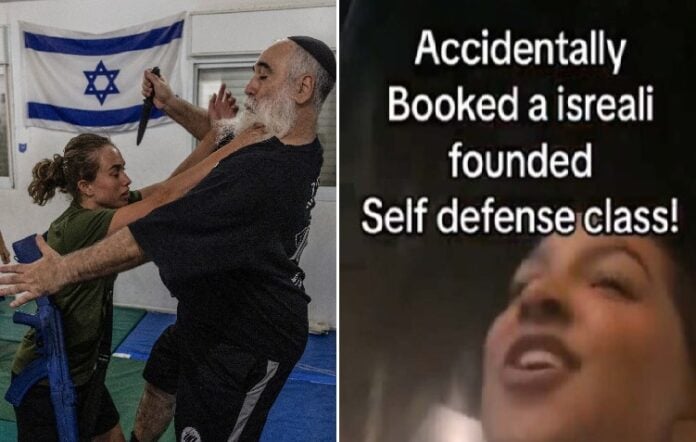
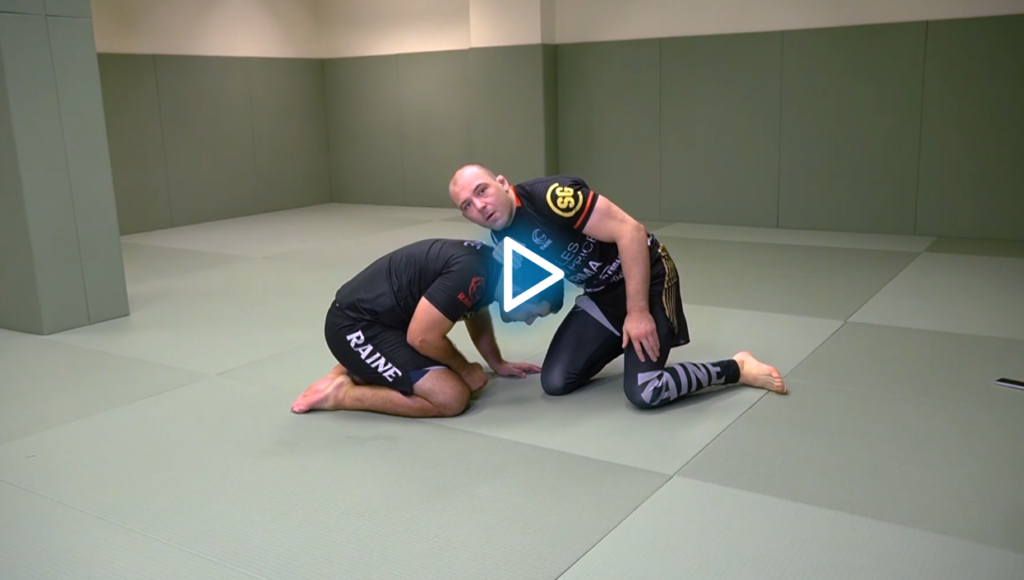
A TikToker went viral after an emotional reaction to discovering the origins of Krav Maga, sparking intense online debates about self-defense and cultural connections.
The TikToker, who attended a women’s self-defense course, was initially thrilled to learn essential techniques. However, her enthusiasm quickly turned into unease upon learning that Krav Maga originated in Israel. She openly shared her thoughts and decision to leave the course, citing her beliefs as the main reason.
“I can’t believe this happened to me. I was literally shaking as I left that course. I had signed up for a women’s self-defense course because it’s important for us women to know how to protect ourselves.”
“I had been looking forward to this course all week, arranged everything, and even got permission to film a vlog. When I arrived, the course began. The instructor was a man, which didn’t bother me that much. But then, the first female instructor said, ‘The founder of this style of self-defense comes from Israel.’ At that moment, my heart dropped. I thought, ‘What have I gotten myself into?’”
Krav Maga, known for its practical and straightforward approach to self-defense, is often praised for its effectiveness. Yet, it is not without criticism. Some argue that its popularity has led to a decline in standards, as the skill level of instructors can vary widely. Since there is no unified regulatory body, almost anyone can claim to be an expert, creating room for questionable practices under the guise of self-defense.
This broader issue fuels skepticism online, where critics often question the credibility of certain demonstrations. Viral videos featuring unrealistic scenarios—like disarming multiple attackers at once—have damaged Krav Maga’s reputation in some circles. Skeptics compare such cases to the “McDojo” phenomenon, where schools prioritize marketing over genuine training.
Interestingly, controversies surrounding Krav Maga are nothing new. Prominent figures like Joe Rogan have discussed its legitimacy in martial arts circles. Rogan acknowledged that Krav Maga has roots in the Israeli military but compared it to Bruce Lee’s Jeet Kune Do, describing it as a hybrid system that combines effective techniques from various disciplines. Despite differences in the quality of schools, Rogan emphasized its practical foundation, which includes striking, grappling, and situational awareness.
For many, the appeal of Krav Maga lies in its adaptability, but the TikToker’s incident highlights deeper divides: the intersection of self-defense, personal values, and cultural identity. Whether Krav Maga is seen as an effective tool or a symbol of broader political issues, it remains a polarizing topic in martial arts and public discussions.
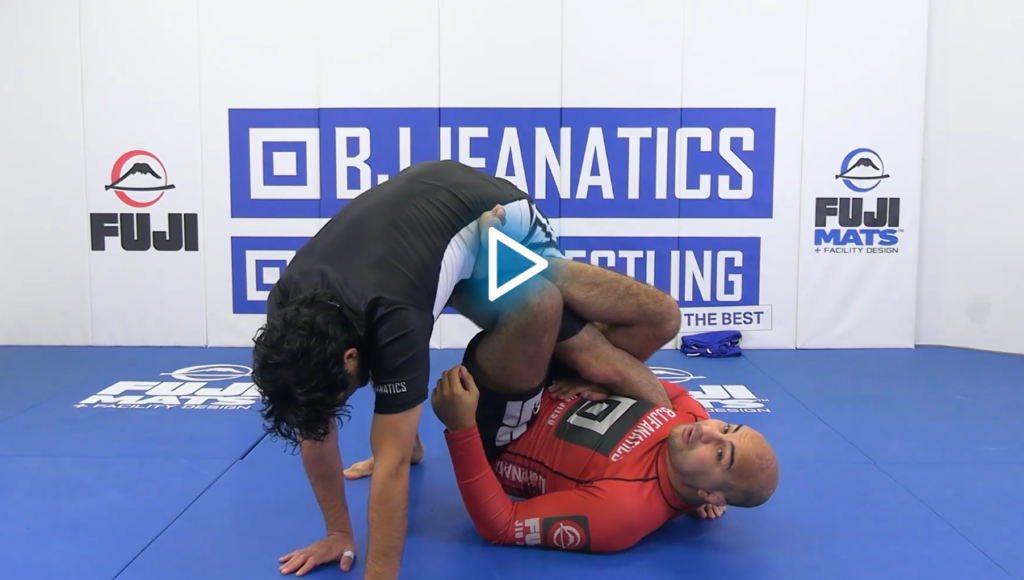
As far as back control goes, I personally prefer to abandon hooks quite early and use my legs to help my arms in hunting for chokes. I accept that this is not the only way to control land hunt from the back, but I like using it.
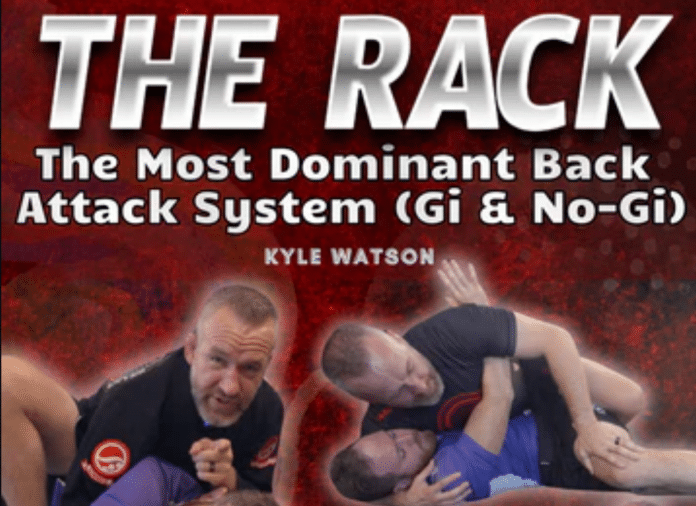
Well, as it turns out I also like another method, the one taught in The Rack Kyle Watson BJJ DVD. Kyle blends some old-school BJJ and some very effective wrestling to come up with one of the best back control systems I’ve seen used in grappling and BJJ. Given his background, all you MMA guys and girls can also pick up on it quickly.
A Hierarchy of Back Control Positions
When I say back control, most of you are going to have different variations of the position in mind. For most, a version of a seatbelt grip and hooks is what defines the back. that’s correct, but where does this ‘classic’ position lie in the hierarchy of back controls, and what can you do to improve it?
The back position is a difficult one to master if you want to finish people from there. There is a very intricate play of control that allows you to choke, given that your hands are constantly engaged, and you need them to finish most submissions that don’t have you leaving the position.
Danaher had a good explanation with his system, but as comprehensive as that one is, it ended up being overly complicated for most. Being a big proponent of ‘less is more’ I tend to prefer simpler versions of back control rather than the complicated ones.
For me, the ones that rank the highest are the ones that work without me having to be able to bench press double my body weight in order to pull them off. So, when lazy grappling is our gold standard, not much is going to work better than the proven techniques of submission grappling for MMA – enter The Rack Kyle Watson BJJ DVD.
UFC Vet Kyle Watson
One of the early adopters of BJJ, Watson has been training since the late 90s, when he supplemented his Jeey Kune Do with BJJ. At the time, this combination was common and is behind some of the best fighters we saw in the octagon in the early 2000s.
Kyle Watson fought in the UFC as well, a spot he claimed through The Ultimate Fighter, but he didn’t spend too much time inside the octagon. His 19-8-1 record definitely had room for improvement, but the fact remains that he was a mean grappler—10 of his 19 victories came by way of submission.
Kyle is a 3rd-degree black belt in BJJ, currently owns Watson Martial Arts, and still competes on the IBJJF masters circuit, his latest medal coming at the 2024 Memphis Open tournament. This guy has been around and knows grappling, especially in No-Gi. So, when you’re picking up The Rack Kyle Watson BJJ DVD, expect a set of instructions that work, even if they look a bit outdated.
Detailed The Rack Kyle Watson BJJ DVD Review
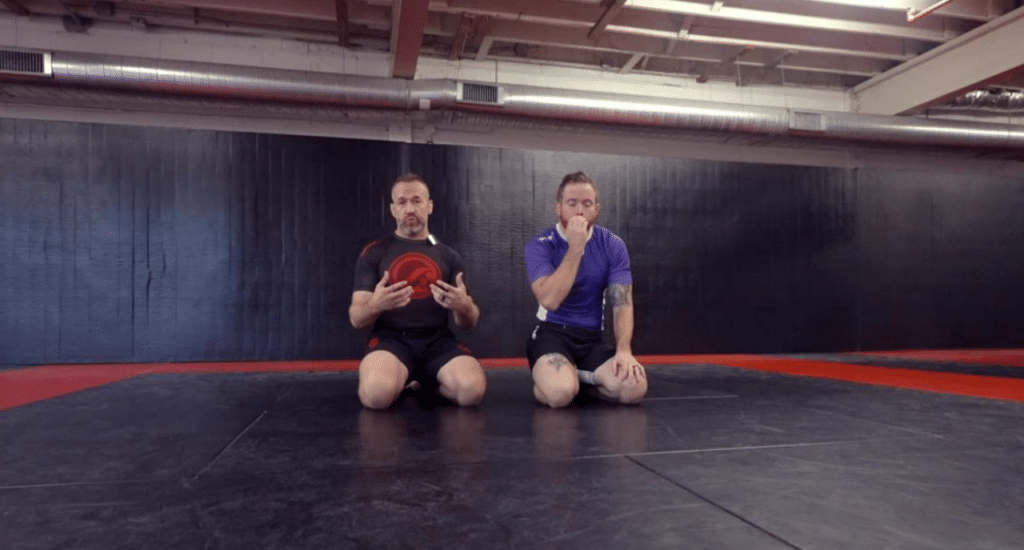
The Rack Kyle Watson BJJ DVD is a 2-part No-Gi instructional that shares an MMA-inspired back control system that seems to bypass common back mount issues while keeping instructionals simple and to the point. The entire instructional lasts about an hour.
Part 1 – Attacking from the Rack
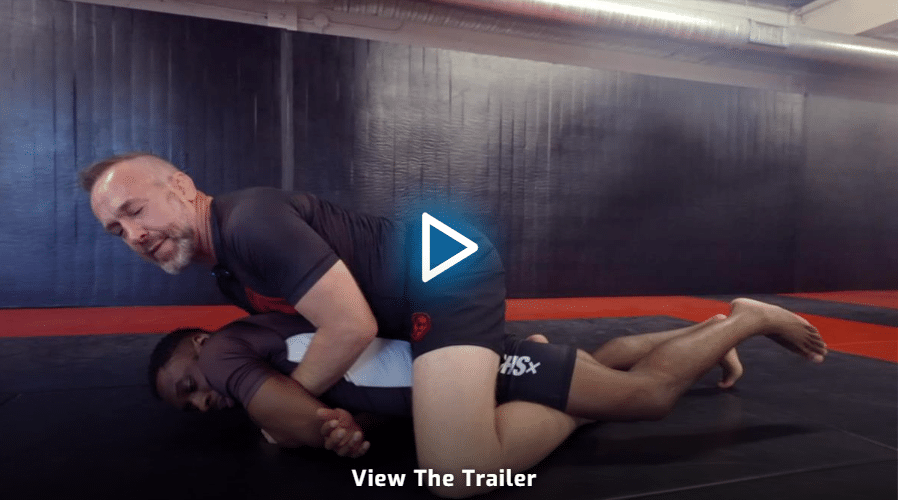
The Rack Kyle Watson BJJ DVD begins with an introduction that contains a roadmap to using the material Kyle offers. His system is simple and straightforward, yet very versatile. It is based on keeping your opponent’s back exposed by manipulating their shoulders, mostly with the Gift Wrap grips.
Kyle’s take on things is more wrestling-inspired, with the claw featuring as the main connection point. That said, we already know it works, and Watson made it the start by building a set of primary attacks (RNC) and secondary submissions (Ezekiel and arm triangle choke) around it.
This first volume outlines the positional control details that will allow you to keep the position as well as how to finish each of the submissions mentioned above, and how to combine them in a mixed threat. Towards the end of the instructional, Kyle starts sharing ways into the Rack, starting with the mount.
Part 2 – Setups and Entries
Part two is where most people will find lots of value in the The Rack Kyle Watson BJJ DVD instructional. Via the forced rotation made possible by the Gift Wrap, Kyle’s way to the Rack back control is to go for upper body control first and hooks second. Pretty old school.
This second volume of the DVD contains entries from side control, and the turtle position, tying into the stuff already covered from the mount. I like that Kyle also shares key concepts such as the one on anchoring, breaking down the functional foundations of the system.
Toward the final stages of the instructional, Watson also goes over the guard, and how you can set up entries while playing guard, or pass into one of the best pins to get you into the Rack. As he explains in the conclusion, the rack is everywhere, and all you need to do is recognize it.
Forcing the Back
With modern defense systems happening in between established pins, such as mount and back mount, for example, understanding how to drive the defender to a clear pin is just as important, if not more, as getting and keeping said pin. That is usually quite a difficult feat unless you have dominant grips.
Enter the claw ride. I have no idea if the Gift wrap emerged as a continuation of the claw, but it sure seems like it. In No-Gi, either of these grips offers extreme control from both the back and the mount, without having to change grips or sacrifice attacking threats.
Focusing on this type of gripping was something I originally saw from Ryan Hall some 10 years ago, but his system was dependent on the Gi. Now, The Rack Kyle Watson BJJ DVD has figured out how to use a similar approach in No-GI, focusing on a grip that will eventually provide both points by way of hooks, and a legit submission opportunity.
Dominating the back is as easy as finding a way to attack from the position, without the other person killing all effective angles. Immobilization is what you’re after, and no amount of hooks is going to help if you don’t use your grips in a smart way. That’s where The Rack Kyle Watson BJJ DVD can help you elevate your back attacks into a whole new dimension of efficiency.
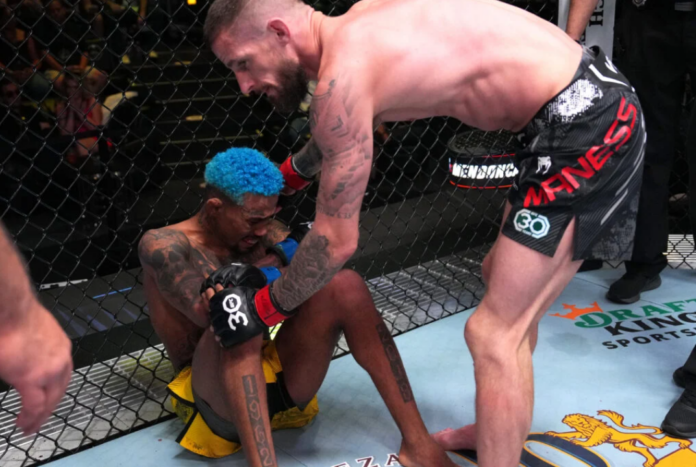
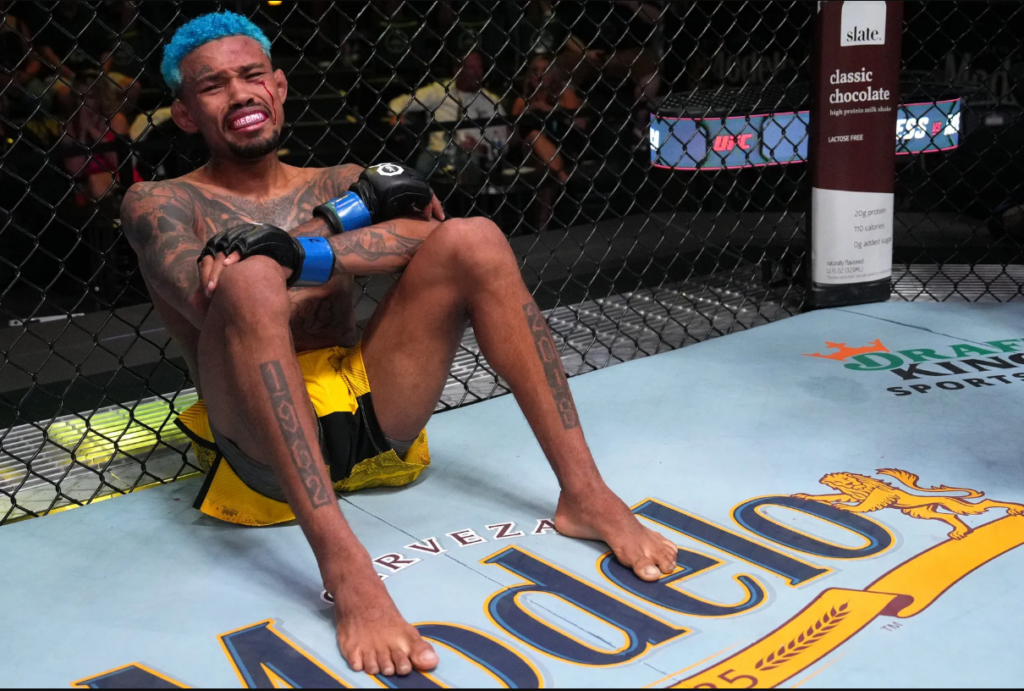
In a startling turn of events, former UFC fighter Mateus Mendonca suffered a rare and excruciating injury during a Brazilian Jiu-Jitsu training session in Maranhao, Brazil. The 25-year-old athlete fractured his penis—a condition as painful as it is uncommon—prompting immediate medical intervention.
Fighter Mateus Mendonca Suffers Penis Fracture in BJJ Training!
Mendonca recounted the incident, explaining that during a grappling session, his training partner’s knee inadvertently struck his groin.
He described experiencing “an absurd pain” and noticed that his genital area appeared unusual, with a noticeable lump. Despite the discomfort, he continued training, initially underestimating the severity of the injury.
It wasn’t until a month later, after persistent discomfort and the appearance of a lump, that Mendonca sought medical attention.
Upon examination, doctors immediately recognized the severity of his condition and transferred him to another hospital for emergency surgery. The procedure was necessary to repair the damage and prevent further complications.
Mateus Mendonca, known by his nickname ‘Bocao,’ entered the UFC with high expectations following a notable win in the Contender Series in 2022. However, his tenure in the organization was challenging, resulting in three consecutive losses.
After his release, he achieved a swift victory in a Centurion Fighting bout, improving his MMA record to 11-3. Despite these ups and downs, this recent injury poses a significant setback in his efforts to rebuild his career.
“It’s a good idea to warn everyone… wear a cup”
This incident has led Mendonca to become an advocate for the use of protective gear during training.
He emphasized the importance of wearing a protective cup to prevent similar accidents, stating, “It’s a good idea to warn everyone… wear a cup to avoid accidents.”
His experience serves as a stark reminder of the potential risks involved in contact sports and the critical need for proper safety measures. That, and whenever you feel something is now quite right, not to hesitate schedule a check with your physician.
“All the guys who train jiu-jitsu, grappling, MMA, anything that involves contact: wear a cup to avoid accidents,” Mendonca said. “This had never happened to me. It was the first time and look what happened. I had to have surgery. I had to be out of action for two months.”
The injury has sidelined Mendonca for at least two months, during which he is unable to train or teach martial arts. To support his family during this period, he has resorted to auctioning off his UFC gear, including shirts and gloves, to raise funds.
This situation highlights the financial vulnerabilities that athletes can face when unexpected injuries occur, especially those who rely on physical activity for their income.
Fractured Penis – Rare and Painful Freak Injury
Penile fractures are exceedingly rare injuries, typically resulting from blunt trauma to an erect penis. In Mendonca’s case, the penis fracture from BJJ occurred during a non-sexual activity, underscoring the unpredictable nature of such accidents.
Immediate medical attention is crucial to repair the damage and prevent long-term complications, such as erectile dysfunction or permanent deformity.
As Mendonca focuses on recovery, he remains determined to return to the sport he loves. His experience serves as a cautionary tale for athletes in contact sports, emphasizing the importance of safety equipment and the need to heed one’s body’s warning signs.
Mendonça’s ordeal is a testament to the unpredictable challenges combat athletes may encounter and their resilience in overcoming them. Brazilian Jiu-Jitsu training is nowhere as naive as it may seem, especially if you don’t have the right gear on you.
Wear a Cup!
Mateus Mendonca’s unfortunate injury sheds light on the inherent risks of contact sports and the critical importance of protective gear. His willingness to share his experience serves as a valuable lesson for fellow athletes, reinforcing the need for vigilance and safety in training environments.
So even when people complain about cups in BJJ being dangerous and uncomfortable, feel free to share this story with them before discussing discomfort and pain!
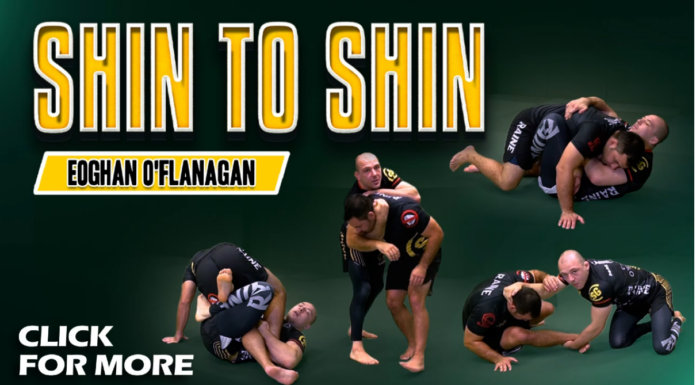
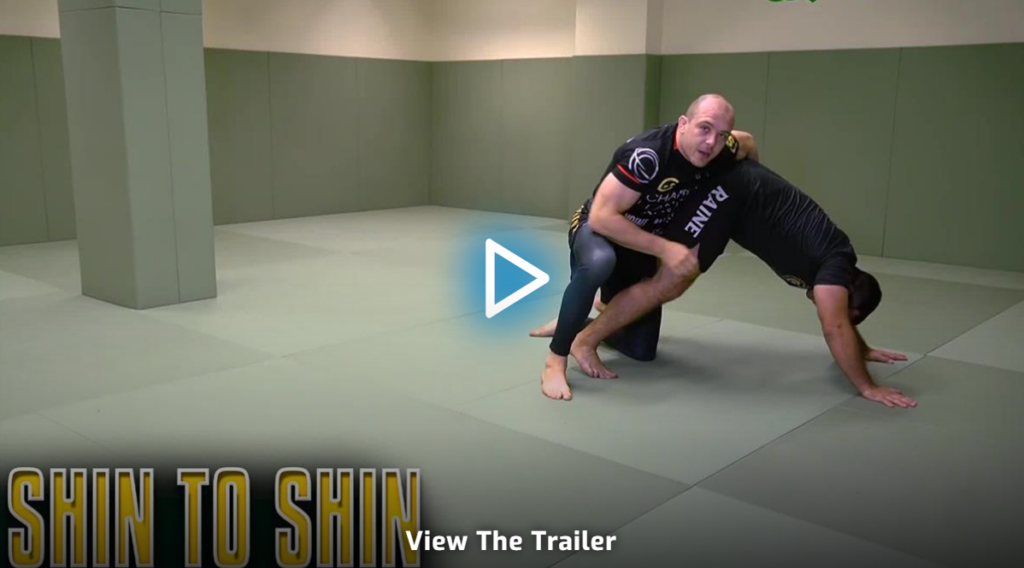
When I picked up the Shin to Shin Eoghan O’Flanagan DVD, I expected a half-assed guard DVD with more leg locks than guard chapters. It has nothing to do with Eoghan, whose DVDs I generally like, but rather the fact that everyone who’s attempted to deliver precise instructions on the shin-to-shin guard has failed pretty miserably so far.
This instructional is different. Somehow, O’Flanagan found the magic bullet to pick apart the shin-to-shin guard, and put it back right before our eyes, helping us understand how it works. This DVD is all about the guard and the different ways you can use it to deal with standing opponents. Worry not, though, there are still plenty of leg locks inside!
The Shin-to-Shin Position
The Shin-to-Shin Guard is a positon that is not going to suit everyone. While it has its strengths, it also has glaring weaknesses and is best suited to the game of leg lockers and perhaps wrestlers.
While this may not be what you want to hear, it definitely is what you need to know. The guard is not easy to play, has plenty of pitfalls you probably won’t see coming, and is notoriously easy to kill off in the Gi.
That said, the guard does offer an incredible way of connecting to your opponent so that you can stop them from moving, while also having excellent chances to chop away at their base. You don’t have to go for leg locks from there, but they’re too available to skip over if you know what I mean.
The Shin to Shin Eoghan O’Flanagan DVD is an instructional by a world-class leg locker – as I said, this guard has very specific uses. If you want to figure out how not to suffer in it when you’re looking for leg locks in No-Gi, though, then this instructional is a great way to kick off 2025.
YouTube Driven Eoghan O’Flanagan
Eoghan O’Flanagan is what Joe Rogan would describe as a ‘strange cat’. The 28-year-old grappler is nomadic, training all across the UK and sometimes, the US. His approach to BJJ has always been that all you need is a mat space and partners to learn BJJ – no coaches required.
Eoghan attributes most of his skill acquisition to YouTube and open mats, as well as from BJJ instructionals. Despite being a very legit black belt, promoted by Helio Soneca, O’Flanagan only spent time training with him sporadically, as they weren’t even on the same continent.
It was 2022 when Eoghan O’Flanagan made waves in the BJJ world, clawing his way to a 4th place finish at the ADCC. He used leg locks to perfection, catching everyone by surprise and making quick work of legends such as Mason Fowler and Xande Riberio along the way.
Having also won the Trials, as well as Grapplefest and Polaris titles on several occasions, Eoghan is a real bundle of knowledge when it comes to submission grappling. I guess instructionals are his way of giving back, since he used them to figure Jiu-Jitsu out initially, His Shin to Shin Eoghan O’Flanagan DVD is the latest in a long line of fairly solid and reliable instructionals.
Shin to Shin Eoghan O’Flanagan DVD Review
The four-part Shin to Shin Eoghan O’Flanagan DVD is a surprisingly detailed instructional, delivering a masterclass on a position, that not many people really know how to play in BJJ. World-renowned leg locker Eoghan shares his experiences with using the shin-to-shin guard against opponents both standing and kneeling, providing over 2 hours of quality material on the subject:
Part 1 – Dealing With Posture
The Shin to Shin Eoghan O’Flanagan DVD starts off dedicating an entire volume to one of the key aspects of playing any guard in the sport – breaking posture and keeping your opponent from resetting. When you’re playing the shin-to-shin guard, where the head is far, this is a whole different problem to solve.
Over half an hour, Eoghan goes over his favorite ways to make opponents bow, mostly through manipulating the legs, as levers to the hip. By threatening balance with foot sweeps, Eoghan forces the opponent to bring the head within reach.
Posture breaking from that point is a matter of grip selection and utilization, a couple of aspects that O’Flannagan also covers in great detail. In this portion, he covers completely grip fighting, along with stripping common dangerous grips.
Part 2 – Heisting
One aspect, not many people associate with playing the shin-to-shin guard is the value of heisting. O’Flanagan puts an offensive perspective on this motion, showing how we can use it to wrestle up from the guard, rather than only try to sweep.
This part of the Shin to Shin Eoghan O’Flanagan DVD uncovers the different ways in which you can wrestle from the knees, forcing takedowns such as ankle picks instead of only trying to sweep a standing opponent without raising, which is next to impossible against good guys.
Speaking of standing opponents, Eoghan also offers ways to heist against half-kneeling ones, introducing snap downs and head-fighting to the mix. Slide bys, collar thighs, and arm drags all feature heavily in this portion.
Part 3 – Setting Up the Shin-to-Shin Guard
Still integrating upper body wrestling control from the shin-to-shin guard against a half-kneeling opponent, Eoghan offers ways to integrate underhooks as another reliable means of control. He also talks briefly about overhooks, before moving on further from the guard.
The third part of the Eoghan O’Flanagan Shin to Shin DVD mainly focuses on how to arrive at the shin-to-shin guard. In it, Eoghan shares how to set up the position against opponents in different stances, as well as how to counter some common pass threats along the lines of knee drops.
Part 4 – Attacks
The final part of the Shin to Shin Eoghan O’Flanagan DVD is all about attacking with a purpose. As you’d expect, leg locks take an important place in Eoghan O’Flanagan’s system – they’re his signature move.
Most of Eoghan’s attacks are reactive, based on the top person attempting to resolve the shin-to-shin position. Pummels, headlock counters, and traps against common pass directions make up the main portion of the material in this volume.
Stopping Standing Opponents
The greatest use of the shin-to-shin guard is not the option to enter leg locks. You can do the same, if not more from the X-guard while lying on the ground – it is way easier. The one aspect of the shin-to-shin that makes it irreplaceable in my arsenal is the ability to restrict the movement of a standing opponent.
There is a fallacy in the battle of passer vs. guard player when the former is standing upright. In cases where there is no contact, passers have the upper hand as speed and range of motion is on their side. Not many guards can help you keep a standing opponent in place without having to sacrifice guard structure, which could lead them into passing opportunities.
Once you figure out how to position your spine so that you don’t end up crumbling, and you figure out grips, the shin-to-shin is what connects a standing opponent who’s trying to outmaneuver you with your favorite guard, filled with traps. The Shin to Shin Eoghan O’Flanagan DVD is the top resource to understand where this guard fits in your Jiu-Jitsu game.
After you pick up the Shin to Shin Eoghan O’Flanagan DVD, make it a point to go through it all. Only attempt the stuff you see in there after you become aware of what the top person is going to try and do. That way, you won’t be discouraged that “things don’t work” and you’ll be able to anticipate the top person’s moves and use slick counters to turn the tides. Perfect tactics for any guard player, especially in No-Gi!
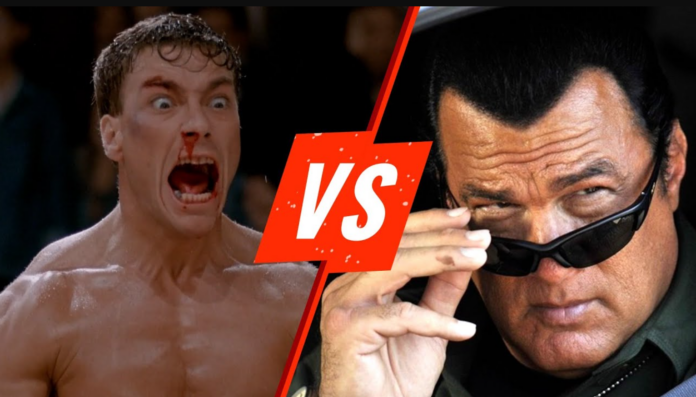
In a recent exchange, Steven Seagal stirred controversy by claiming Hollywood lacks true tough guys, notably dismissing Jean-Claude Van Damme. In response, Van Damme re-issued a $20 million fight challenge, which Seagal has yet to acknowledge. This renewed feud has sparked a heated debate about the authenticity of Hollywood action stars.
Seagal Challenges Hollywood’s Tough Guy Credentials
In a recent interview, martial artist and actor Steven Seagal made waves by declaring that Hollywood lacks legitimate tough guys. Known for his formidable presence both on and off the screen, Seagal didn’t mince words.
“I can’t think of any Hollywood tough guys that are legit,” he stated, dismissing the fighting credentials of his fellow action stars. This bold claim has reignited a longstanding feud with Jean-Claude Van Damme, another iconic figure in the world of martial arts cinema.
From Seagal’s point of view, Hollywood has always been more about showmanship than real martial arts prowess. In his interview, he emphasized that many actors who portray tough characters on screen wouldn’t stand a chance in real combat situations.
“It’s easy to look tough with the right camera angles and stunt coordination,” Seagal said, hinting that true toughness comes from experience and training outside of Hollywood sets.
Van Damme Issues High-Stakes Challenge
Jean-Claude Van Damme, famous for his roles in films like “Bloodsport” and “Kickboxer,” responded to Seagal’s claims with a challenge that has captured the attention of fans and critics alike.
Van Damme, who has openly feuded with Seagal for years, was reportedly ready to back up his reputation with a $20 million offer for a real fight.
Van Damme was quoted saying, “I’m right here. $20 million on the line. Let’s see who’s really tough.”
This challenge, however, went unanswered by Seagal, further fueling the controversy.
The Steven Seagal vs Jean-Claude Van Damme animosity isn’t new. It dates back to the late 1980s and early 1990s when both were rising stars in the action genre.
Their rivalry has been characterized by public taunts, interviews, and even a near-altercation at a Hollywood party. Van Damme has consistently maintained that he is willing to prove his toughness, while Seagal has often dismissed him as an inferior fighter.
The Larger Debate on Authenticity in Hollywood
Seagal’s recent comments and Van Damme’s challenge have sparked a flurry of reactions from within the industry.
Some supporters of Seagal argue that his martial arts credentials and real-life law enforcement background give him a unique perspective on what constitutes a “legit” tough guy.
Meanwhile, Van Damme’s fans emphasize his extensive training and competitive background in kickboxing, suggesting that he has every right to challenge Seagal’s claims.
Jean-Claude Van Damme has always prided himself on blending his on-screen persona with his real-life fighting skills. He has frequently participated in exhibitions and public demonstrations of his martial arts abilities.
As fans continue to debate who would win in a real fight, the conversation also sheds light on the changing nature of action films and what audiences expect from their heroes.
Who You Got?
The ongoing feud between Steven Seagal and Jean-Claude Van Damme serves as a testament to the public’s enduring fascination with real versus perceived toughness in action cinema.
While Seagal questions the legitimacy of Hollywood tough guys, Van Damme’s willingness to back his claims with a $20 million fight offer exemplifies his confidence in his martial arts prowess. This clash of action hero titans not only entertains but also prompts a deeper conversation about the nature of authenticity in the world of action films.
As fans eagerly await any developments in this rivalry, the debate continues to highlight the evolving expectations and standards within the genre.
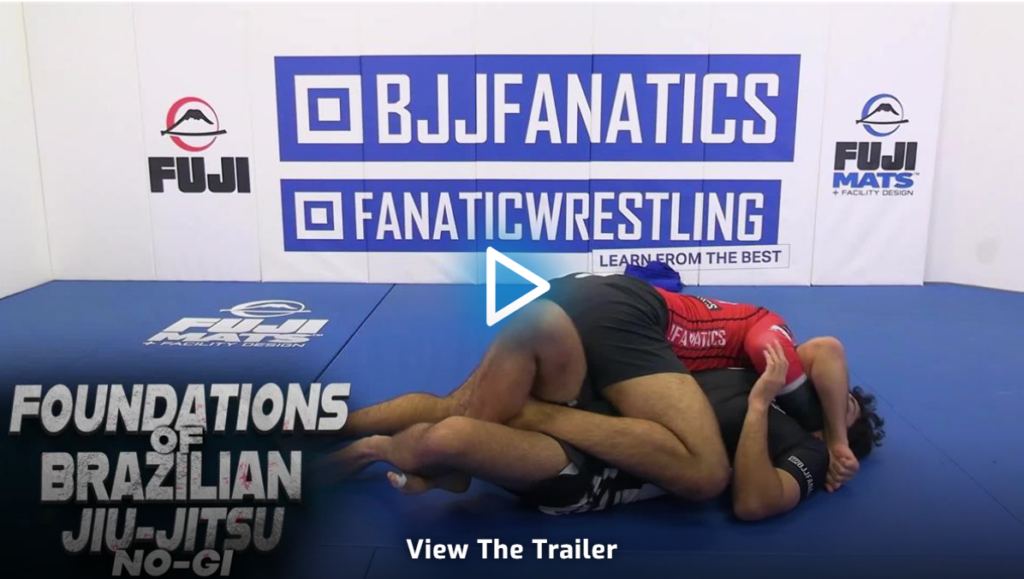
What part of your No-Gi game do you feel needs to improve the most? Perhaps it is all across the board if you’re one of those folks dreading No-Gi open mats. Whatever the reason behind your interest in the No-Gi Foundations of BJJ Bernardo Faria DVD, the content inside it is going to be useful.
No-Gi Jiu-Jitsu is a whole different animal than Gi, and it is not easy to make that transition. I will always be a proponent for practicing both, as that’s the best way to truly learn BJJ. That said, if it is No-Gi time for you, here is how learning from Bernardo Faria can help.
Building Blocks of BJJ
There are certain things you can’t do without in BJJ. You can’t have any hope of offering someone a tough role if you don’t have a proper guard you can attack from, a couple of submission traps that allow you to switch positions, at least one pin you can hold until you become bored, and an idea of which direction you should escape to when you’re on defense.
The above is as oversimplified as I can put it, but I am patiently going to wait with my coffee mug for anyone to change my mind. No? Okay, let’s go on.
What I shared above is not a game plan. There is a huge difference between a game plan and foundations that allow you to even roll. You can’t have a game plan without foundations, so building blocks come before the building itself. It is what the No-Gi Foundations of BJJ Bernardo Faria DVD attempts to, fairly successfully, provide.
Bernardo ‘Huge Honor For Me’ Faria
Depending on how long ago you started training Jiu-Jitsu, you know Bernardo Faria either as a top heavyweight competitor who was unstoppable with the Gi or as the man who built the biggest digital library of BJJ knowledge behind the phrase ‘huge honor for me’.
Bernardo started BJJ as a teenager in his native town of Juiz de Fora, Brazil. He had his eye on a world title since his white belt days, medaling in the Mundials at every belt level without winning the gold until the purple belt. Once he did it, though, he got a knack for it—Faria went on to win the Mundials a total of four times at black belt.
Faria spent all his training under his first instructor, Ricardo Marques until he got his black belt. He then moved to Alliance, looking for a career in Jiu-Jitsu and forged a relationship with the team’s founder Fabio Grugel.
Since hanging up his competition Gi, Faria focused on getting all the biggest names in BJJ to share their knowledge via video instructional, which he records, produces, and releases. Of course, his platform represents the perfect opportunity for him to share some of his knowledge as well, especially in long-form instructionals such as the No-Gi Foundations of BJJ Bernardo Faria DVD.
No-Gi Foundations of BJJ Bernardo Faria DVD Review
The No-Gi Foundations of BJJ Bernardo Faria DVD contains 8 volumes and a ton of information on how to approach grappling without the Gi. There is just under 6 hours of material in it, organized in a way that is methodical and easy to understand:
Part 1 – Standing
I am not the biggest fan of instructionals that try to deliver bits and pieces of standing techniques. Stand-up exchanges never work in such a linear fashion, and this first part of the No-Gi Foundations of BJJ Bernardo Faria DVD, unfortunately, offers exactly this type of information.
There are interesting details on specific moves, but unless you’re comfortable wrestling, they are far from the foundations you need to build a standing game for No-Gi. Faria shares his thoughts on double legs, arm drags, headlocks, and collar ties, as well as a few words on timing. While the material is high quality, it is too much and there are no connections between the subjects.
The one part of this first volume that I quite liked is the precise breakdown of the sprawl – now that’s foundational stuff! Bernardo shows how to execute this staple grappling move against most attacks and how to finish from the position with the usual front headlock chokes.
Part 2 – Pulling Guard
Faria was an exceptional guard player in his competition days, so there’s lots of information on that aspect of the game in this, and the following three parts of the No-Gi Foundations of BJJ Bernardo Faria DVD. That’s a great thing, though.
Guard is an absolute necessity in No-Gi, and most of the guards you can pull off with the help of the Gi are worth nothing once you’re only divided by rashguards )presuming you’re civil in your choice of No-Gi attire). Faria starts by talking about guard pulls in a way that truly covers all the fundamentals.
He shares 2-on-1 setups, collar tie guard pulls, and double wrist grip entries tying them in a neat little system that can lead to closed guard, open guard, or half guard. The exploration of No-Gi guards continues straight from the pull with Faria focusing on the quintessential No-Gi guard – the butterfly, used to sweep and submit kneeling opponents.
Part 3 – Guard vs Standing Opponents
The theme of the butterfly guard continues in the next part of the No-Gi Foundations of BJJ Bernardo Faria DVD where Bernardo adjusts it to deal with standing opponents. He uses sit-up guard variations to offer wrestle-up sweeps mostly by way of Kouchi Gari.
The natural progressions of guard vs. standing opponents also feature in the form of X-guard variations, another staple of No-Gi guards. This part of the DVD focuses on the Single Leg X guard and does a pretty decent job of not overcomplicating but still offering versatile options.
Part 4 – Half Guard & X-Guard
Bernardo stays on track with the X-guard, moving to the full X in the fourth part of his No-Gi Foundations of BJJ Bernardo Faria DVD. Similarly to the Single Leg X, he shares essentials that will teach you how to play the guard or improve it if you already have an understanding. He even goes into the inverted X, providing ammunition for more advanced grapplers.
One of Faria’s signature positions, the half guard finally features, and it’s noticeable in the amount of information he delivers. Bernardo covers a mini system of several half guards, which, I agree are foundational, but one chapter per deep half, knee shield, and the single leg half is nothing more than an overview. I’d have preferred to focus on one, such as the knee shield.
Part 5 – Closed Guard & Passing
The best guard to play in No-Gi, as far as I am concerned is the last guard covered by Bernardo in this instructional. He chose the overhook route to help you master the closed guard quickly, which is the most reliable and easy-to-learn option.
The system includes Kimura lock combo attacks (sweeps and submissions), triangle setups, and classics such as the hip bump sweep. I appreciated a lot that Bernardo addressed a common problem people have, which is people standing up in the overhook closed guard.
About halfway through this part of the No-Gi Foundations of BJJ Bernardo Faria DVD the attention shifts towards passing. Faria shares his signature system of over-under passing combined with body locks.
Once again, I feel he should’ve stopped with those two, and delivered more information. Instead, he also crammed through the legs passing, double under passing, and dive-in passing, ending up with plenty of incomplete information that beginners won’t know what to do with.
Part 6 – Side Control & Mount
The sixth portion of the No-Gi Foundations of BJJ Bernardo Faria DVD is one of the best in the instructional, covering not just attacks from side control and mount, but also ways to combine the two pins.
Faria shares common side control dilemma attacks, focusing on armbars as the submission of choice. Simple, to the point, and easily connectable to mount – material with world-class quality. Transitions to the mount followed by more armbar setups make this my favorite part of the DVD.
Part 7 – Back & Turtle
Another solid volume that will teach you how to strangle people from the back. Bernardo doesn’t complicate at all in this part, sharing several ways to wrap up a Rear Naked Choke, while showing how to easily prevent your opponent from escaping back control.
the crucifix position and turtle get honorable mentions in the closing chapters of this volume of the No-Gi Foundations of BJJ Bernardo Faria DVD. The crucifix stuff is helpful, but the turtle attacks are useless against modern turtle defenses. Only dent in an otherwise solid volume.
Part 8 – Escapes
I have no idea why the escapes volume opens with heel hooks and leg locks, but I guess they had to feature somewhere. Once again, nothing more than a one-chapter overview, lasting less than 10 minutes.
The actual escape material is considerably longer and better organized, featuring key side control, mount, and back escapes. Bernardo uses a system that revolves around a couple of proven directions of escape and pairs them up with counters that only make them more effective. A nice way to wrap up the No-Gi Foundations of BJJ Bernardo Faria DVD.
Grappling Without the Gi
No-Gi BJJ is fun and all, but it is a lot harder than rolling with the Gi. The main reason – there is no Gi. Yeah, I know, painfully obvious, but still, absolutely necessary to point out as people love to ignore this particular fact.
What I see very often when Gi grapplers look toward No-Gi is that they’ll try to focus on stuff that they use with the Gi, even though it is obviously going to fail miserably in an environment where it is not present. My take on things is that everything that works in No-Gi works just as well with the Gi. However, it doesn’t work the other way around.
The bottom line here is that if you want a No-Gi game, you can’t use your Gi game, or learn Gi Jiu-Jitsu from instructionals and expect to carry the knowledge over to No-Gi. You’ll need to be aware that you need a No-Gi-specific approach to things, based on the moves that work the best when the Gi is not there to provide a get-out-of-jail-free card when you mess up.
The No-Gi Foundations of BJJ Bernardo Faria DVD offers a lot of building blocks to help you construct a fool-proof No-Gi game. It may not offer everything you need for each block, but that’s why you have specialized instructionals once you understand where the blocks fit.
Building your game for No-Gi is going to take time, especially if you’ve mostly done Gi BJJ. Figuring it out on your own will take even more time, so investing in a resource such as the No-Gi Foundations of BJJ Bernardo Faria DVD is a great way to accelerate your progress and minimize your error rate.
Feeling too old or beaten down to wrestle with the young bucks at your academy and trade takedowns? Pull guard then! What if I told you that you can pull guard and still outwrestle those super athletic purple belts and end up conquering top position easily?
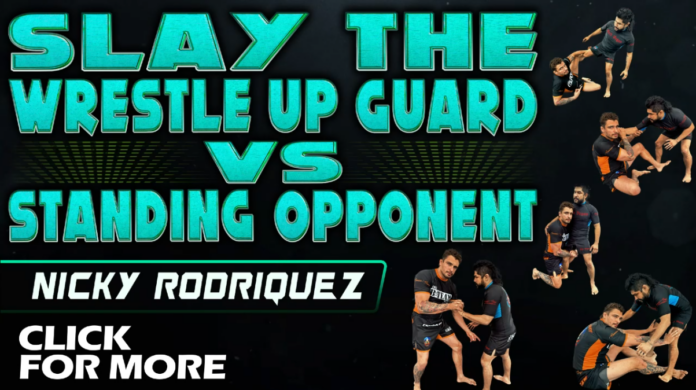
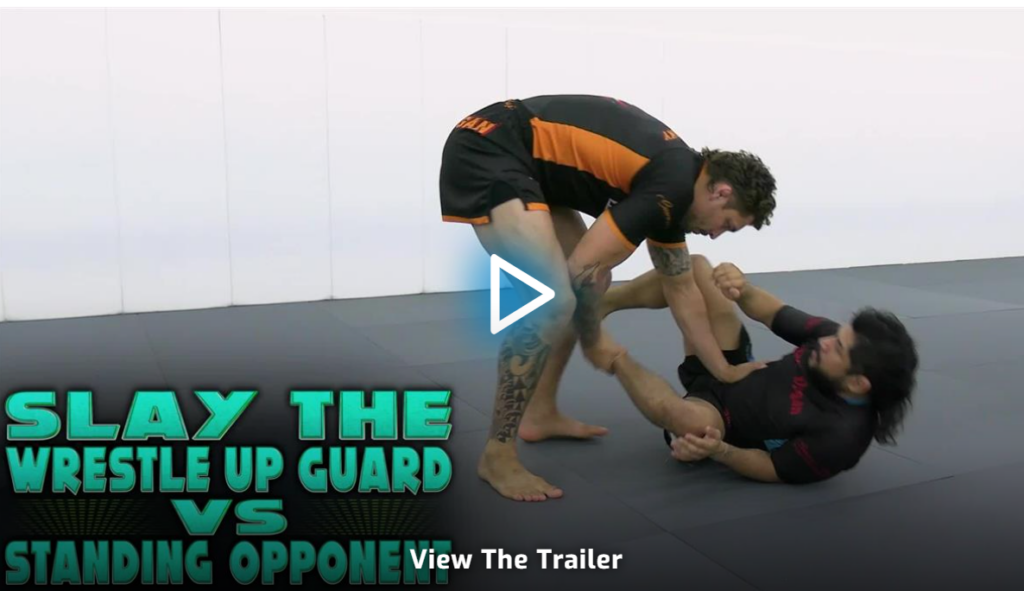
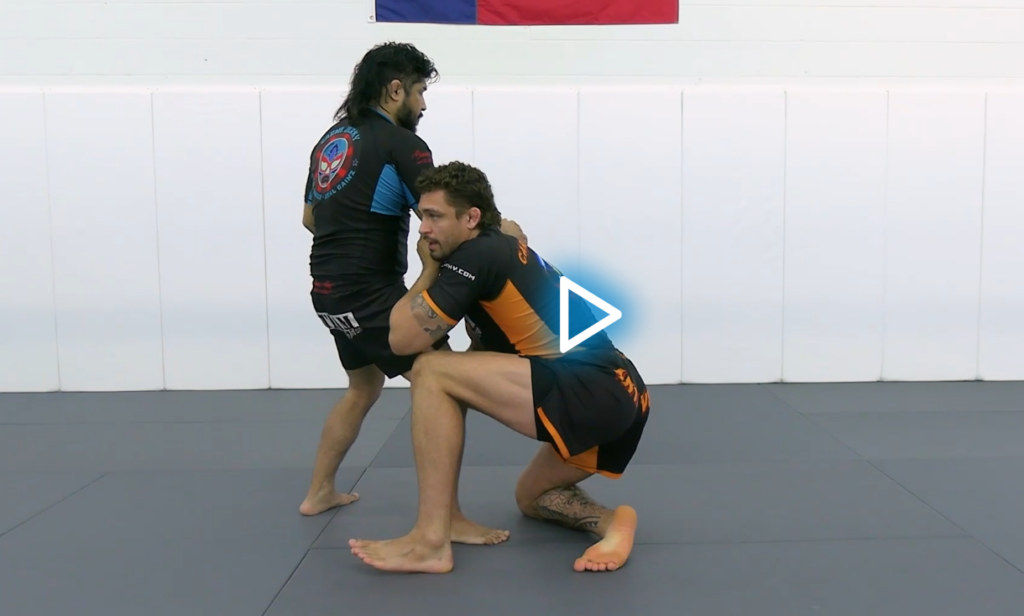
There is even a blueprint on how to best set it up. The Slay The Wrestle Up Guard Nick Rodriguez DVD will show you how one of the best grapplers in the world wrestles from the guard, utilizes fake and real guard pulls, and annoys opponents into submission.
Keeping People Down
For folks who practice an art that allows us to control people on the ground, we’re particularly horrible at keeping people on the ground in the first place. Yes, in a BJJ setting, where the other person accepts that they want to stay on the mats, the game is great and pins work like a charm.
Then you go against a Judoka or a wrestler and you start asking yourself why you can’t keep them down. Well, the reality is that you can’t keep anyone down because you don’t focus on it. Even your regular training partners can get up, they just don’t see it as an option.
So, knowing that people in BJJ lack the ability to keep you on the mats if you have the opportunity to try and use that against them when you’re the bottom player. The Slay The Wrestle Up Guard Nick Rodriguez DVD offers a great set of ideas on how you can develop a complete system around this premise.
Nick “Nicky Rod” Rodriguez
Millionaire, ADCC silver medalist, and overall badass representing the B-team, Nicky Rod is one of the most recognizable names (and physiques) in the BJJ world. He was the first-ever CJI champ in the +80 kg division, winning the biggest prize waiting for pro grapplers to date – $1 million.
The 28-year-old is a black belt under Craig Jones, but he was submitting world-class black belts long before that promotion. Previously a member of the DDS, and one of the main instigators behind the split, he co-founded the B-team with Jones in a bid to establish himself as one of the best in the sport.
It is undoubtedly true that Nicky has tons of talent, is a hard worker, and has the results to boast. The two lingering questions surrounding him are whether he’ll ever be able to best Gordon, as well as the burning question about the heavy use of PEDs behind his performances.
These questions are no reason to skip over his instructionals, though, with the Slay The Wrestle Up Guard Nick Rodriguez DVD covering a very specific subject. But, then again, al the B-team members tend to focus on things others don’t in their instructionals.
Slay The Wrestle Up Guard Nick Rodriguez DVD Review
Nicky Rod’s 4-part, No-Gi instructional dubbed ‘Slay The Wrestle Up Guard Nick Rodriguez DVD’ contains just over an hour and a half of material on how to set up takedowns and wrestling attacks from open guards against standing opponents:
Part 1 – Fake Guard Pulls
Fake guard pulls are quite often a method used in BJJ to set up certain takedowns, such as the ankle pick. They have been proven to work, especially with the Gi but are no longer as surprising these days, as they were some 10-15 years ago.
Nicky Rod tends to have a different take on utilizing fake guard pulls to end up with top control. He literally goes all the way down to a guard, re-launching into takedowns from there and wrestling up.
He does it often and always ends up both surprising and frustrating opponents by doing it. The first part of the Slay The Wrestle Up Guard Nick Rodriguez DVD contains the blueprint to allow you to do the same by using his proven tactics.
Part 2 – 2 on 1
The second part of the Slay The Wrestle Up Guard Nick Rodriguez DVD is the shortest one, with Nicky talking about the 2-on-1 position and how you can use it to wrestle up. For the most part, he uses it to drag people into overcommitting when they try to release their arm, which ends up lifting Rodriguez up to the feet.
The reason why his takedowns seem effortless from there is that the top person already lost their balance by overcommitting – something he lays out bit by bit in this part of the instructional. He also addresses how to approach the dilemma of pulling guard to staying up, with clear directions to help you make a choice.
Part 3 – Reactive Wrestle-Up Tactics
As far as I am concerned, this part of the Slay The Wrestle Up Guard Nick Rodriguez DVD is where the real value of this instructional is. It is counter-grappling at its best, with Nicky covering how to make the most out of defensive actions that you force your opponent into making.
The ankle pick I mentioned earlier makes an appearance here, working mainly as a sweep rather than a takedown, but, then again. that’s what Nicky is teaching in this entire instructional anyway. He demonstrates it as a way to cause a reaction you can then use to capitalize on, but I find that it works great on its own as well.
Part 4 – Guard Wrestling & Leg Lock
The final part of the Slay The Wrestle Up Guard Nick Rodriguez DVD blends the best of the Danaher leg lock system and the B-team’s wrestling tactics from the guard. If you like leg locks, then this DVD is going to teach you how to sweep using takedowns when you can’t seem to get a finish on the legs.
Rodriguez mixes in Ashi Garami attacks, offering different ways to wrestle up, organized by Ashi position and given a number for each variation that starts from a given position. The X guard, Straight Ashi, and Saddle all feature in this part.
‘Mexican Ground Karate’
There is clearly a method to the madness behind most of the B-team’s recognizable tactics, well hidden behind the massive amounts of trolling done by it’s most prominent members. Craig is great at identifying areas of BJJ where people lack the skills to resist and finds highly effective ways of turning them to his advantage.
He might not have been the pioneer behind leg locks, although he is a very early adopter, but the B-team certainly leads the way in the wrestle-up realm. Craig offered the idea of standing up, which spread like a virus. However, people never really figured out how to do it.
Nicky Rod now goes further in ticking out imagination by offering his set of takedowns done from guard, which really sums up what wrestling up is all about. if there is one lesson to take away from the B-team’s approach it is to try and find weaknesses that everyone in BJJ does and exploit them as best as we can.
Until you can pinpoint specific weaknesses to exploit, jumping on the wrestle-up bandwagon seems like a very smart thing to do. The Slay The Wrestle Up Guard Nick Rodriguez DVD can help you with onboarding.
Next time you have no idea who to play guard against a standing opponent in No-Gi – don’t! Opt to stand up, but instead of completely disengaging, focus on forcing your opponent to the ground as you get up. In other words, wrestle up! The Slay The Wrestle Up Guard Nick Rodriguez DVD is all you need to start scoring more points and feeling more like a wrestler, even if you pull guard.
Those who can dominate MMA matches using grappling are the fighters you want to focus most of your standing, takedowns, mat returns, and pinning game on as a grappler. Not many people have proven they can do this over and over again in the octagon, against the best in the world, and end up victorious.
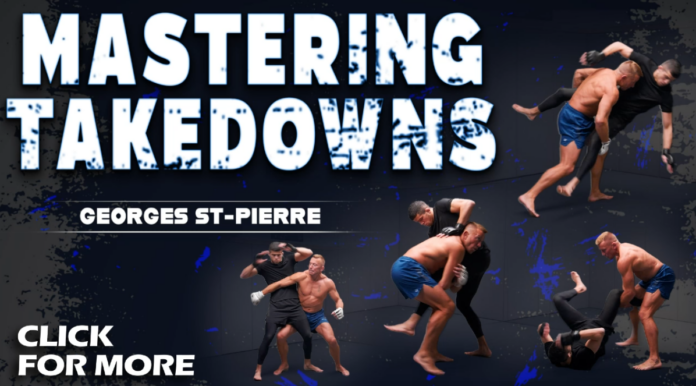
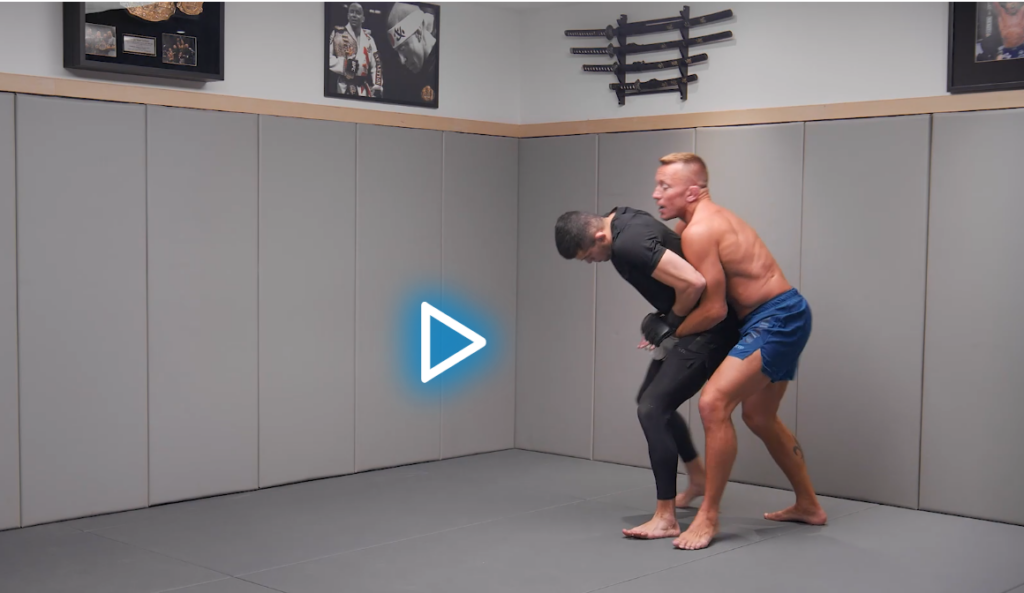
One man who managed to do it in one of the smartest gameplans we’ve ever seen in the octagon is Georges St Pierre. He outwrestled wrestlers, out-grappled BJJ black belts, and finished submission grappling legends. How did he manage to achieve it? Check out what he has to say in his Unstoppable Takedowns Georges St Pierre DVD.
Effectiveness over Flair
I come from a Judo background and have been doing BJJ for almost 15 years now. If there is one thing I can confirm that makes a huge difference in whether a takedown is going to work or not, it is simplicity.
The more you’re trying to go for the attractive, reel-material takedowns, the more you’re going to end up with meme-material instead, if takedown effectiveness is what we’re gauging.
What works is the same that has worked for people in wrestling, Judo, MMA, and BJJ – simple stuff that you can pick up quickly, train live without risking injuries, and replicate against different opponents. In most cases, this means a few staple moves from wrestling, such as the single leg, double leg, body lock, and headlock positions.
For most people, the trouble is getting to these takedowns and further on, connecting them to each other. That’s called chain wrestling and one of the best fighters ever has just made it extremely easy to understand in the Unstoppable Takedowns Georges St Pierre DVD.
An MMA GOAT – Georges St Pierre
It seems that in this day and age, there are youngsters out there who have no idea who GSP is. And you call yourselves MMA fans!
Georges St Pierre is a legendary UFC fighter and two-division champion, UFC Hall of Famer and overall badass. While he started his martial arts journey with Karate, he was particularly keen on Jiu-Jitsu and later, wrestling. GSP earned his black belt back in 2008 from Bruno Fernandes.
Fighting in MMA since he was 16, GSP style was extremely effective, even if it was not the most entertaining to watch to the untrained eye. He used superior grappling to dominate the welterweight division for the better part of 7 years, under the tutelage of the legendary duo of John Danaher and Firas Zahabi.
If there is one aspect GSP was super-popular and feared for, it was takedowns. Knicknamed ‘Rush’, the Canadian had the capability of sending people flying in the octagon, and now he decided to share the details of how he did it in his Unstoppable Takedowns Georges St Pierre DVD.
Unstoppable Takedowns Georges St Pierre DVD Review
This Unstoppable Takedowns Georges St Pierre DVD is a No-Gi insturctional, given that it is a ‘grappling for MMA’ instructional rather than one aimed specifically at BJJ. Nonetheless, it explains a bunch of different ways to set up effective takedowns over the course of two volumes. The total running length is slightly over the hour mark.
Part 1 – Closed Stance Setups
This particular DVD is primarily meant for MMA fighters, but as such it holds even more value for pure grapplers. GSP uses striking to mask his takedowns, which means he works from a distance further than the one we use in BJJ. Substitute striking with grips and you have a blueprint most other grapplers will be unable to follow.
The first portion of the Unstoppable Takedowns Georges St Pierre DVD begins in the closed stance position, which allows you to prioritize counter-attacking hidden by fake strikes. GSP uses chain wrestling to set everything up. looking to secure a single leg position as his entry point.
While he does share plenty of different ways to finish the single leg, he also shows how you can transition easily to other effective takedown moves, such as body locks, slams, double leg takedowns, drips, and crotch lifts.
Georges also covers the specifics of cinching for takedowns, making it easy to understand how to pressure an opponent into giving you the openings you need. He wraps this first part of the instructional up with a few Judo-inspired throws.
Part 2 – Open Stance Attacks
The second part of the takedowns GSP DVD pretty much goes the same way as the first – striking masks single leg entries, and that, in turn, makes a myriad of different takedowns available through the principles of chain wrestling.
The main difference is that the second volume of the Unstoppable Takedowns Georges St Pierre DVD utilizes an open stance, allowing for more action-reaction exchanges to take place. Stuff like GSP’s signature power double appears here, as well as plenty of duck under leading to drag-downs and sweeps.
Making Takedowns Your Own
GSP was called one of the smartest fighters ever in MMA. I will draw the comparison to Khabib once more because they were really similar – they almost never took hard damage or took unnecessary risks. Instead, they opted for grappling-based control to dominate the fight wherever it took place.
Georges was known to practice wrestling with the Canadian Olympic wrestling team regularly. However, that just means he was practicing wrestling to use in a wrestling competition setup. With the demands of the octagon being a lot different to those of Olympic wrestling GSP had to adapt.
Undoubtedly, regular collaboration with Zahabi and Danaher helped him make the transition but at the end of the day, GSP blended his grappling skills to fit the needs of the octagon and to align with his abilities perfectly.
When you’re thinking about developing a takedown system for BJJ or MMA, start there. Think about what you like doing, what works, and how you can learn the moves that will help you achieve those goals most effectively. The Unstoppable Takedowns Georges St Pierre DVD contains a bag of tricks you can start with!
Well okay, you’re never going to be able to wrestle like GSP. You can, however, be as effective as he was using your own take on the classic takedown moves that work universally. The tricks and techniques in the Unstoppable Takedowns Georges St Pierre DVD offer plenty of diversity to fit everyone’s style. Moreover, the instructional is perfect for both those looking for ideas for pure grappling and MMA fighters.
Have you ever used a knee lever sweep? I’d wager you have and didn’t even know about it. Don’t sweat it, it’s quite a common occurrence. After all, it’s not about the name of the sweep as much as it is about its efficiency.
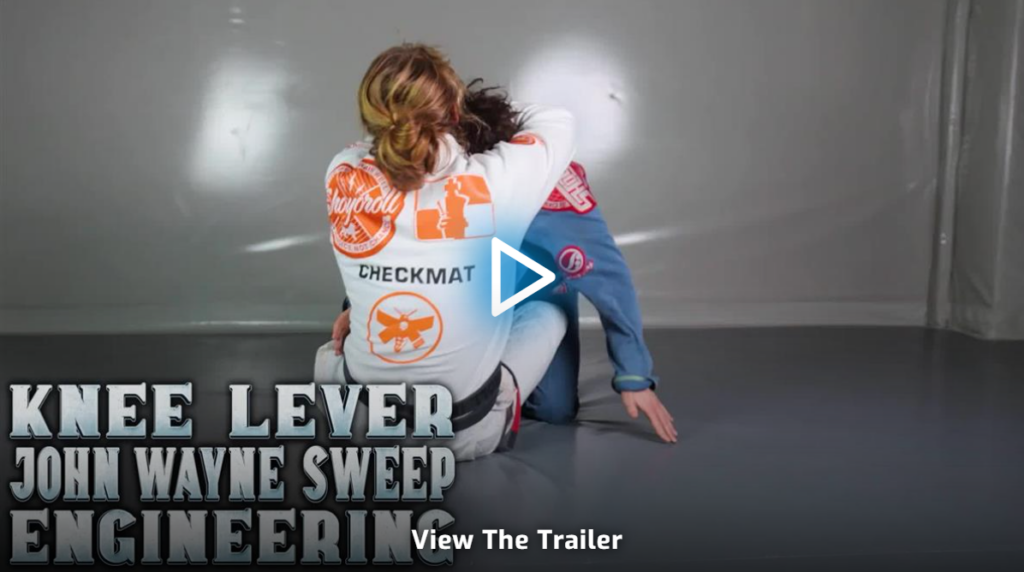
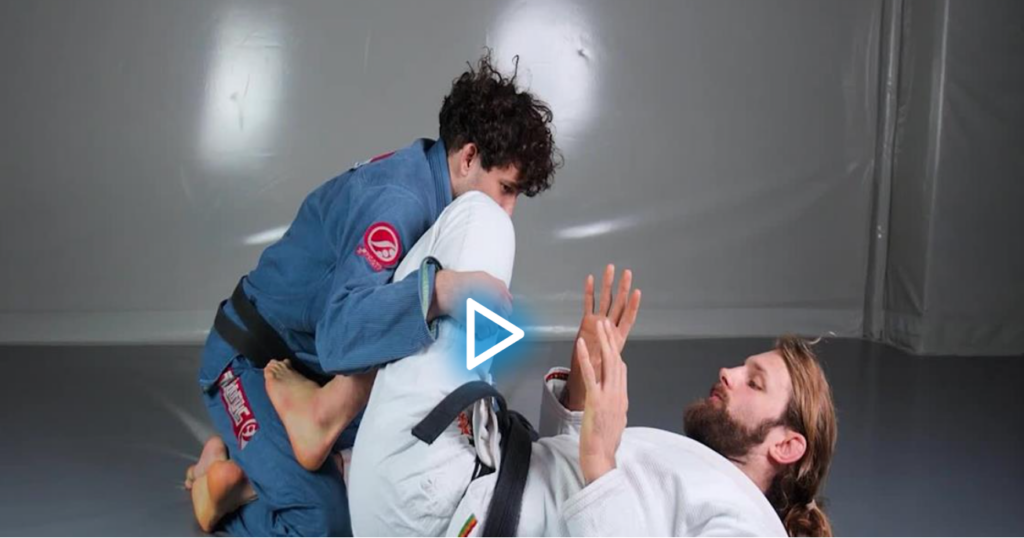
The Knee Lever John Wayne Sweep Adam Wardzinski DVD is a great resource to open your eyes to the mechanics and ideas behind this particular motion for executing sweeps. If you like to play guard, then you’ll certainly find some value in what Adam has to say on the subject.
Figuring out the Knee Lever
What exactly is the knee lever sweep and how can you make good use of it when you’re playing guard? Well, there is an entire DVD on it, obviously, as we take a deep dive into the Knee Lever John Wayne Sweep Adam Wardzinski DVD today.
However, before we begin, a short introduction to the idea of knee levers in BJJ. The knee lever refers to using any type of control using your legs or arms that force the opponent’s knee in a certain direction by manipulating the position of their shin. For the most part, it is done with the legs.
In other words, plenty of the open guard sweeps you already do, and even some closed guard ones, feature a knee lever component. As opposed to hook sweeps (like the butterfly) that target the knee directly, the knee lever is much more powerful as the force used against the knee is multiplied by the length of the shin.
Polsih ‘Cowboy’ Adam Wardzinski
Adam might not have anything to do with a cowboy past his iteration of the John Wayne sweep which is the focus of the Knee Lever John Wayne Sweep Adam Wardzinski DVD we’re reviewing today. However, looking at him lately, the description fits.
Adam Wardzinski is Poland’s most popular BJJ competitor (arguably, of course) and one of the best people in the world at playing the butterfly guard. He decided to become a world champ using this position, and after many years of falling short, he finally clinched the world title in an impressive manner in 2024.
A true specialist in the guard, particularly with a Gi on, Wardzinski has many more tricks up his sleeve than just the butterfly guard. he is a true aficionado of the bottom game, including both unorthodox positions like the Octopus guard and BJJ classics such as the John Wayne sweep from half guard.
Knee Lever John Wayne Sweep Adam Wardzinski DVD Review
The Knee Lever John Wayne Sweep Adam Wardzinski DVD is a four-part BJJ instructional containing an in-depth analysis of the knee lever motion for sweeping, represented mostly by the John Wayne sweep. It is a Gi DVD with a running length of 2 hours.
Part 1 – How the Knee Lever Sweep Works
As the Knee Lever John Wayne Sweep Adam Wardzinski DVD kicks off, Adam first deconstructs the mechanics of the knee lever sweep, which are fairly technical. As impressive and perhaps simple as the sweep appears, there are a lot of intricacies behind it.
Wardzinski does a great job of breaking down exactly what you need to master to make it work, along with the different types of knee lever motions available from the guard. For the most part in this volume, he uses the flat-out half guard to describe the motion, but he also offers some Coyote guard options at the end.
Part 2 – The John Wayne Sweep
The John Wayne sweep is one of the most popular half guard sweeps in BJJ, but we don’t see people using it a lot apart from those specializing in it. There are pitfalls to it, which Adam covers in great detail as goes over the sweep’s applications in this volume of the Knee Lever John Wayne Sweep Adam Wardzinski DVD.
Using the knee lever mechanics already explained, Warzinski plays around with different grips to offer multiple JOhn Wayne sweep setups. The double sleeve and collar-sleeve controls are first up, allowing for the knee lever motion without any meaningful resistance.
Adam also provides plenty of answers in regard to pulling off the sweep from a seated guard position, as well as a great way to counter knee slide passes with it.
Part 3 – Guard Pull Attacks
One thing we see high-level guard players like Adam do in competition matches is directly go for attacks after they pull guard. That is exactly the subject in the third portion of the John Wayne Sweep Adam Wardzinski DVD, with the sole focus being on the knee lever motion.
Adam offers a bunch of ways to immediately off-balance the top person, using different guard configurations and submission attacks to make sure the sweep works. Front chokes like the Guillotine and Loop choke appear to be great options to ensure the knee lever works every time.
Part 4 – Hook Sweep Connections
There’s no way an Adam Wardzinski DVD can skip over the butterfly, a.k.a. the hook sweep. The Knee Lever John Wayne Sweep Adam Wardzinski DVD is no exception with the final volume dedicated to connecting Adam’s favorite sweep with the John Wayne sweep.
Threatening with both pens up other attacking options as well, like Adam’s preferred shotgun armbar. He also shares Single Leg X guard entries and combinations for those who fancy themselves as being leg lockers.
Destroying Base
What is the best way to attack an opponent when you’re playing guard? Disrupt their balance. This is where I get really frustrated with many coaches. Too often I hear about breaking posture and destroying the base, but coaches don’t seem to offer many ways in which students can achieve it.
So, let’s go a step backward. Focus on making the top person unstable by forcing them to reach for the floor with one or both of their arms. That’s how you create an off-balancing, that will allow you to break posture and start attacking with sweeps and submissions.
The base of the top person doesn’t just refer to the structure of their legs. Take balance away and any base will disappear like magic. Pair that up with sweep-submission combos and you have a very solid attack strategy. Just like in the Knee Lever Sweep Adam Wardzinski DVD.
Time to saddle up and stop burning daylight! Start looking for the knee lever from your favorite guard, and people will suddenly appear to pick the option to sit down and give a sweep away! You’ll find every detail you need in the Knee Lever John Wayne Sweep Adam Wardzinski DVD. All it takes is to implement it.
Americanas. Nobody seems to like them, everyone is confident they can defend against them and you rarely see them deployed past the white belt level. If you ask me, the Americana gets the most unfair treatment of all BJJ moves, dubbed a strong-man move that doesn’t work.
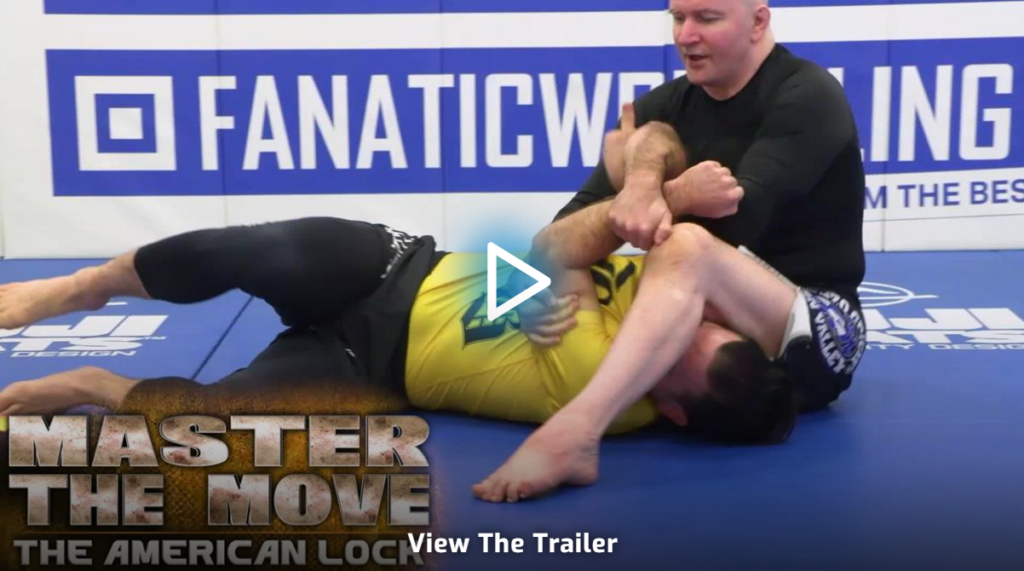
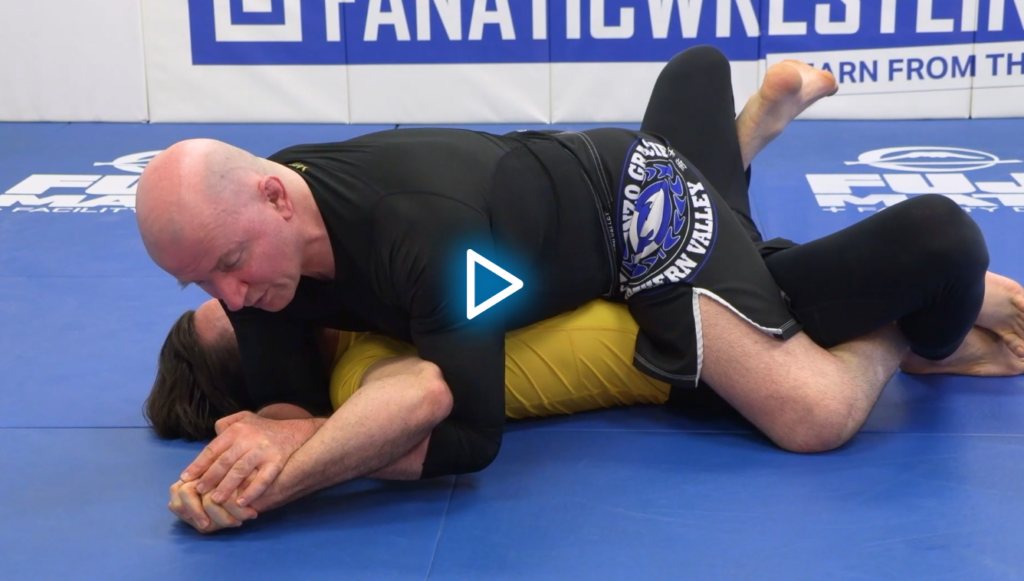
I guess if there is one man who can change this perception of the Americana lock, it is John Danaher. The Master The Move The American Lock John Danaher DVD delivers a complete breakdown of the move and all its applications in BJJ. I know it changed my mind. Will it do the same for you?
What Has the Americana Ever Done to You?
First of all let me make it clear that I’ll use the term I am accustomed to, which is the Americana, throughout this review of the Master The Move The American Lock John Danaher DVD. It’s just easier and more natural to me that way.
That said, let’s talk Americanas. The move is something you learn in your first weeks of Jiu-Jitsu and something most people tend to forget exists past their first year. And yet, the move is very useful and reliable, as we’ve seen in MMA more than pro-grappling.
Seriously, the tendency to overlook certain moves is mind-blowing to me, with people often skipping over the chance of an Americana simply because they think it is too easy, or boring. Try to finish it and then claim it is easy.
The American is one of those moves that has a place in everyone’s game, Gi or No-Gi. Moreover, it has the ability to act as more than just a submission – it is a position of control that allows you to create plenty of other follow-ups and transitions.
I am not immune to this bias myself. Until recently, when I started seeing the Americana as a readily available way to tap people out, especially in transitions, I avoided it as well. I guess we all needed Danaher to release an instructional and put it in perspective.
John Danaher’s Legacy
When Mr. Danaher first started releasing instructional, it sent the BJJ world into overdrive. he already primed us for it, with the DDS squad already reaching legendary status at that point, and that very memorable Joe Rogan Experience podcast.
Fast forward some 10 years or so and there are now more John Danaher instructionals than you can manage to watch, understand, and apply to your Jiu-Jitsu in a lifetime. And even more are coming.
The legacy of one of the greatest minds of Brazilian Jiu-Jitsu is just that – sharing his knowledge in a way that will remain timeless and around even after he is gone. To be honest, none of the other huge names everyone likes to learn from, apart from perhaps Gordon, have resorted to the same way of preserving and sharing knowledge with longevity in mind.
While it is not realistic to own all of Danaher’s work (I don’t doubt some collector out there has them all stacked up), you can develop an entire game, from beginner to advanced, from standing to the ground using his resources. You just have to pick the ones you want to specialize in at the moment.
The very last instructional by the grappling mastermind is the Master The Move The American Lock John Danaher DVD. I was particularly interested in it given the subject and most people’s disinterest in it after the white belt days.
The American Lock John Danaher DVD Review
The latest instructional in the Master The Move John Danaher DVD series is an eight-volume BJJ DVD that deconstructs the Americana lock in extreme detail. It is a No-Gi instructional that contains roughly 5 hours of high-quality material:
Part 1 – Basic Mechanics
As you’d expect from a John Danaher DVD, this instructional begins with a detailed introduction to the origins of the submission most of us refer to as the Americana. Dubbing it the American Lock, Danaher skips on using a Japanese name for the move in the Master The Move The American Lock John Danaher DVD.
Once he introduces the move, he breaks down the basic mechanics of the lock in his typical fashion, using a multi-step system. This volume contains the first step in the series which is digging for the lock, or as John puts it, arm wrestling. He wraps up with key principles of finishing the arm lock.
Part 2 – Central Problems
If you’ve ever seen any of Dahaner’s instructionals you know that he uses the concept of central problems to deliver his content. The American Lock John Danaher DVD is no different, with the second volume outlining the key things you’ll have to learn to overcome if you want to tap people out using Americanas.
Danaher identifies three central problems, starting with wrist-elbow alignment, followed by the most common counter – extending the arm overhead, and finishing with the elbow slip. He offers in-depth solutions to each, some of which are real face-palm moments. Classic Danaher.
Part 3 – Mounted Americanas
The third portion of the Master The Move The American Lock John Danaher DVD explores the second step of the complete Americana system, focusing on how to set it up from the mount and top half guard.
Once again, the material revolves around the central problems outlined above and goes back to the finishing mechanics from the first volume. John expands on these essentials by offering troubleshooting details for other common problems and recognizing opportunistic American lock situations.
Part 4 – Submission Dilemmas
The third step in the system offered by Danaher is explaining the dual nature of the Americana by offering natural and effective follow-ups that the threat of the lock creates.
The arm bar is a logical and commonly seen combo attack that shares a close relation to the Americana, a relation you’ll understand like never before in this part of The American Lock John Danaher DVD.
The Kimura also features here as another natural follow-up, albeit positioned further than the straight arm lock relative to the Americana. As expected, the three make up a great mini-system for finishing arm locks from several BJJ positions.
Part 5 – Top Side Control Setups
Another position people often use to look for Americanas is side control, so Danaher devotes an entire volume covering how to best approach it. The position offers the same central problems in terms of the American lock but poses unique issues from a pinning aspect.
I found the portion describing how to open up the arms of a defending opponent highly useful. It has a lot more uses than simply finishing with Americanas. Danaher also offers Americana hunting options using the top crucifix position that will certainly add versatility to your side control attacks.
Part 6 – The Triangle Connection
My absolute favorite part of the entire Master The Move The American Lock John Danaher DVD. Since I’m having a triangle phase of my Jiu-Jitsu journey at the moment I truly enjoyed the connections John Danaher makes between this incredible choke and the Americana.
The rear triangle is the position of choice here, with armlocks available in many different versions from there. To be honest, I’ve never thought of the Americana finishes Danaher shows until now, with Kimuras being my logical choice. I stand corrected, though, after watching this.
Part 7 – Leg Americanas
leave it to Danaher to cover literally every possible reliable use of a move there is. Before bringing the Master The Move The American Lock John Danaher DVD to a conclusion, the quintessential BJJ mastermind covers innovative ways to hunt for Americanas using your legs instead of your arms.
Initially, he offers top position setups which include the ‘usual’ one from Kesa Gatame and a very crazy one from the mount I’ve never seen before. He then moves on to offer bottom position Americanas inspired by Frank Mir, as well as even more craziness – a standing American Lock.
Part 8 – Beyond the American Lock
This DVD exceeded my expectations, and I am not the biggest fan of the Americana out there. However, there is one more volume in the Master The Move The American Lock John Danaher DVD and it turned out to be the most interesting one of the bunch.
In the final portion, Danaher addresses ‘specialized’ uses of the Americana, which turn out to be ways in which you can use everything he teaches in the previous volumes to improve your finishing rate of other moves.
Grip breaks from the armbar position, arm locking from the back, and countering passes with leg Americanas are just a few examples of what you’ll learn in this volume. The entire DVD is very well put together and portrays this super underrated arm lock in a very different light.
Capitalizing on Opportunities
So, what exactly can the Americana do for you? Well, one thing that threads all throughout the Master The Move The American Lock John Danaher DVD as a secondary idea is using the Americana by allowing it to appear rather than hunting for it.
Opportunistic submissions are rare in BJJ, especially against seasoned opponents. The Americana is one of those that you can catch fairly easily when someone’s attention lapses for even a second. Even if you don’t finish it, the threat of it creates a cascade of events that works in your favor, regardless of where you are.
A very useful benefit of having opportunistic moves like this in your game is that they don’t have to be the centerpieces of your game. Instead, they’re much better suited as aces up your sleeve, deployed to make a change when your usual game plan is stalling. After all high-level Jiu-Jitsu is all about deception, isn’t it?