


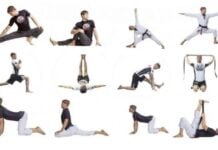

Learn BJJ: One Of The Best New Year’s Resolutions Ever

Learn BJJ: One Of The Best New Year's Resolutions Ever

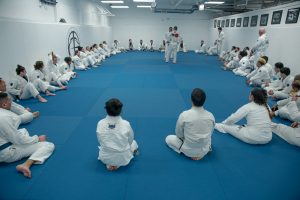
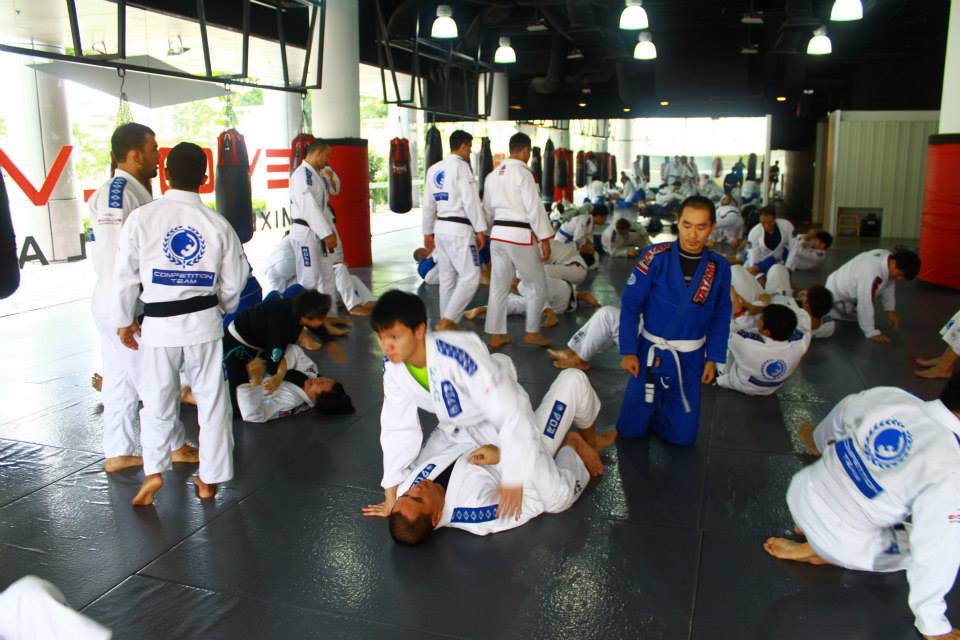
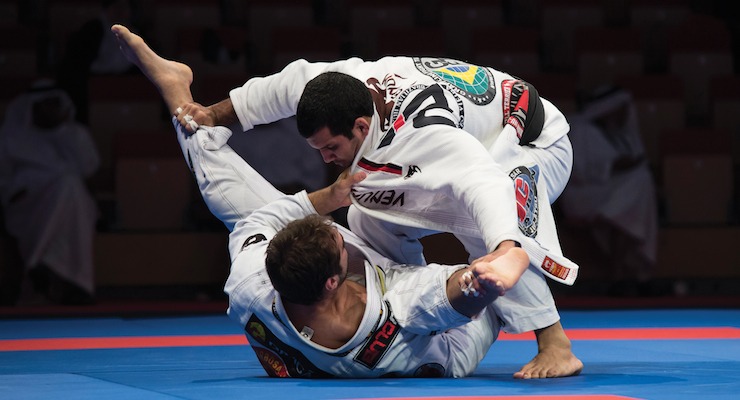
New year, a new decade, new you. Why not try a new sport altogether? To be honest, I can’t think of one good reason why you shouldn’t learn BJJ on any given day of any given year. Still, for those that like structure and like to make promises to themselves, this is just as good a time to start learning Jiu-Jitsu as any. There are a bunch of reasons why you should make learning BJJ your utmost New year’s resolution. There are even more reasons why choosing Jiu-Jitsu will trump any other thing you might have lined up. Oh, and there are e few more resolutions for all of you that have already stepped on the mats dawning a brand new Gi. 

Learning stuff is fun, as long as the stuff you’re learning is not tedious. Well, that’s one word you certainly won’t find in the same sentence with Brazilian Jiu-Jitsu. And that right there is more than enough for most to try and earn BJJ. I say “try” because you’ll never be able to achieve it. However, the process is what is fun, as well as the fact that the process will never end. That said, learning Jiu-Jitsu is one New Year’s Resolution that really takes guts and courage to make. It is a lifetime of dedication once you get sucked in, but every minute is more than worth it. And you’ll come out a better woman/man on the other end. Isn’t that what New Year’s resolutions are all about?

Why Learn BJJ? 

This is going to be my first new Year’s challenge – try to explain why everyone should learn BJJ in a couple of paragraphs. This is a subject for a book, let alone an article, but I’ll do my best. First of all, learning Jiu-Jitsu is unlike anything else you’ll undergo in your life. It is not just a martial art, it is not just a sport, not just any single thing in particular. The old ‘if you don’t train, then you don’t know” mantra is more than applicable here, and it is very true as well. However, that doesn’t mean you should trust it – give BJJ a try.

First of all, you’ll gain a new social circle. In the modern world of technology and social networks, having a circle of people who you talk to and exchange physical contact is a long-forgotten trait. It’ll do wonders for you, even if all that contact comes in the form of grappling. In fact, just because it comes in the form of grappling, you get even more benefits out of it. Of course, there’s the self-defense aspect. There’s also the sports aspect, whether recreational or professional. There’s also something that’s unique to Jiu-jitsu, and that only intensifies with learning this crazy martial art.
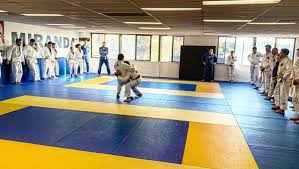
Learn BJJ: Best New Year's ResolutionsSo far I’ve trained plenty of martial arts all my life. None has required the physical and mental engagement BJJ requires just when you go out and have a fun roll with a training partner. Not to mention all the fun and crazy ways of training and drilling the moves. Moreover, there’s something in Jiu-Jitsu for people from all walks of life. As I’ did my transition towards a coach (yet remain a lifelong student) I notice the good Jiu-jitsu does to people that are as different as imaginable. All these people get something out of it, from groundbreaking stuff to small things that make them smile. And you get to see al lof them on the mats together, which no other aspect of life offers. Perfect for your brand new resolutions in this brand new decade.

A Whole New World

First up. Let me tall you what to expect when you join a Jiu-Jitsu class. You’ll get in not knowing whats going on. Perhaps you’re looking for just something physical to do, or you’re dead set on becoming a world champion. Regardless, your first experience is going to be an unusual one, to say the least. If the academy allows new people to roll (which is sparring in BJJ) you’ll even learn the humbling side of learning the Gentle Art. However, you’ll get out unscathed, and even though you’re dead tired, you have no idea what just happened, nor why you liked it so much, you clearly know you’ll be back for more next class.

Deciding to learn BJJ as your New year’s resolutions is the perfect way of actually tackling a few resolutions at once. One of them, the one most people make this time of year, is to become more physically active. Let’s face it that brand new “9-week body” instructional you just downloaded will stay on your hard drive used after a few initial attempts. The same will happen with any gym membership. On the other hand, BJJ is going to get you in shape in a fun and exciting way. Plus, when you’re surrounded by BJJ folks, you’ll learn everything you need about sustainable nutrition and weight loss as well. No need to buy the latest ‘craze@ diet book. And that’s just a small piece of the puzzle.

Apart from getting in shape, you’ll learn so much more. You’ll certainly gain confidence, given that Jiu-Jitsu is one of the best martial arts for actual real self-defense out there. Moreover, you’ll learn that there’s a crazy community of people worldwide that connect through JIu-Jitsu in a  very unique way. That means you also get a platform for traveling more, meeting new people, and never seizing learning JIu-Jitsu in the process. Who knows, it may even take you in the direction of becoming a world champ, or you might end up living off BJJ.

A Few BJJ Resolutions For Those That Already Train

For those of you that already train Jiu-Jitsu, New Year’s resolutions are ample. For one, you could try to learn BJJ even more in this next year. Learning is a given, though, provided that you’re already a part of the sport. Learning specific stuff is where the New Year’s Resolutions for grapplers really lie. Here are some of the most interesting ones to look into in 2020.

  • More Time On The Mats

Learn BJJ: New Year's ResolutionsThis is one that everyone could do with. It is simple – spend more time on the mats that you did last year. For some, it may mean adding one more class to their schedule, just because they can and want to. For others, it may mean less time doing breaks and trying to gat least get to one more class per week, or even month than last year. This is a surefire way to learn BJJ and actually make your time count, rather than just binge watch Netflix.

  • Choose A Subject To Specialize In

Everyone that’s been training for years needs a New Year’s resolution like this. I know it si a huge one for me, and I already have my net subject – escapes. As a submission hunter, I greatly lack in this area of Jiu=Jitsu, so ti’s about time I start exploring. The same holds true for anyone that trains – choose something you either love to do, or you’re really bad at. Make it a subject for 2020 and just see where it takes you. It may go on to be your subject for the decade, or it may open doors to new ones.

  • Compete

If you’ve never competed in BJJ, you absolutely do not have to. However, it is such a big part of Jiu-Jitsu, that giving it a try will only benefit you. A black belt once said to me that the experience from one competition is worth like a year spent in training. That has proven to be true, word for word. If you are already a competitor than compete more. Make going to even more tournaments your main goal this year. Just a couple more than last year will do, but I know most of you can actually make it to much more than that. Moreover, try different ones – Gi., No-Gi, submission only… The sky is the limit.

  • Go To A BJJ Camp

New Year's Resolutions - Learn BJJThis is a big one. Why just train at one gym? It would be perfect if we could all train at different spots around town, but BJJ politics prevents that. Instead of having a chance to learn BJJ the right way, you have to watch out for the Creonte tag. That’s where BJJ camps come into focus. Go to a camp s[end a few days or weeks rolling with hundreds of people and learning as many new things about Jiu-Jitsu as you can. Helps tick off the travel New Year’s resolution box as well.

  • Become A Submission Hunter

This is a New Year’s Resolution I personally made as a blue belt. Since then, I’ve been recommending it to most people that train. Getting to a position and holding it is not what Jiu-Jitsu is about. Go for submissions. Try and find them everywhere. Hata’s how you learn BJJ. Trust me, the more you hunt for submissions, the better your control of all positions is going to become. Not to mention it’ll open up new positions for you to thrive from.

  • Try Different Types Of Grappling

Try wrestling, Try Sambo, Go to a Judo class. Or, even better, make sure you at least introduce No-Gi classes to your usual Gi training schedule. Of course, the same holds true vice-versa – try getting a Gi on if you train exclusively in No-Gi. Jiu-Jitsu is vast, and you need to give yourself every chance to learn as much as possible. Plus, it will be new, it will be fun and it’ll open so many new directions in your grappling game.

Final Thoughts

Learn BJJ. It is a two-word, extremely easy New Year’s Resolution. Moreover, it is the only resolution you’ll need, as it contains so many different things. If you’re unfamiliar with Jiu-Jitsu, you’re in for the treat of your life. If you’re already training, then you have the source of the best New Year’s Resolutions at your disposal. Make this 2020 fun and exciting and go try Jiu-Jitsu! It’ll change your life forever!
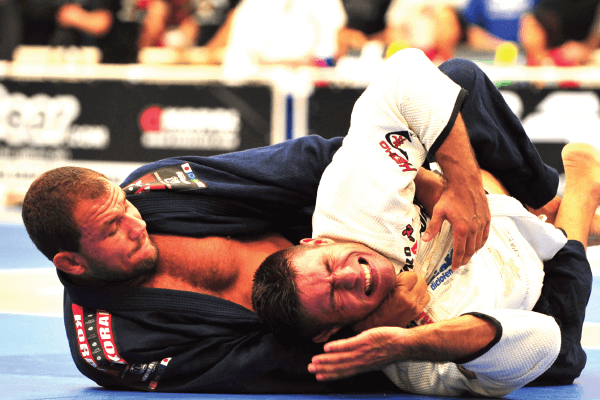
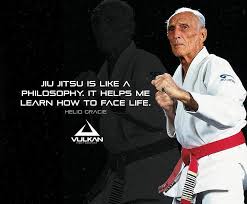
Understand Jiu-Jitsu With This Simple BJJ Philosophy

Simple BJJ Philosophy Cover

What is Jiu-Jitsu? I doubt anyone will give a good enough answer to that question any time soon. If ever. However, that doesn’t mean that we shouldn’t try and understand Brazilian Jiu-Jitsu. Everyone has their own way of thinking and categorizing things and that’s all perfectly fine. What I found really hard was to communicate this to others when I started coaching. Particularly to people that are just starting the art. Certain stuff in Jiu-Jitsu is very hard to “teach“ and it just so happens that’s the stuff that is immensely more important than the latest armbar setup So, I came up with a simple little BJJ philosophy. 

This is the first time that I’m sharing my BJJ philosophy with people outside the gym. I guess I’m ready for everyone out there to “proofread’ it and perhaps provide feedback. In any case, it is a piece of my mind worth sharing with everyone involved in grappling. I’ve seen it yield some great results with people in my academy and it has certainly helped me contemplate the deeper aspect fo Jiu-Jitsu more and in a better way.

An Extremely Simple BJJ Philosophy

The main thing to understand about Jiu-Jitsu is that it is simple. I’m not talking about something specific, like some crazy modern lapel guard variation. Tha’s complicated. But that’s not what Ju-Jitsu is about – it is just a trend. In essence, Brazilian Jiu-Jitsu is simple – use a specific set of tools to achieve a very specific goal. Let’s say you’re hunting for a submission. You need to get your opponent in a position to get a certain submission move. The goal is simple – get that tap. The process is not hard either – get to a position that’ll allow you to execute your goal. There’s one more thing you need to factor in though – the opponent’s unwillingness to cooperate. As I said, it is simple, but far from easy.

UNderstand BJJ- Simple BJJ PhilosophyThe main stumbling block in all of these is not the what (the goal) but rather the how (the process of getting there). In the process of getting there, I factor in what the opponent is doing to prevent you from achieving your goal. This is where my BJJ philosophy comes into play. And it goes like this: “there’s no right or wrong in Jiu-Jitsu. There’s easy, hard and dumb“. That’s it.
The notion behind this is actually pretty vast. There are no two people that can do Jiu-Jitsu the same way. With tens, if not hundreds of thousands of people across the world practicing BJJ, how can we claim what’s right and wrong? Everyone has a different approach to things. As was pointed out to me by someone training for only a couple of months just yesterday “even when we clap after the one-two, each of us claps at a different time”. So how can we claim something is wrong or right? Stuff will work, it is how they work that really helps us understand BJJ. Or, at least myself. For now.

The Easy Way

Let’s start off with the most desired outcome of all – getting to our goal in the perfect manner. Let’s say you start on the feet. You do a takedown, pass the legs, get a position you want, sink in the submission of your choice and finish. Everything happens perfectly, you spend no energy, you do not even break a sweat. This is when you use a trio of things to achieve the ultimate goal – submission. That trio consists of technical knowledge, your understanding of Jiu-Jitsu, and experience. The first one, you can ask for and learn from others. In fact, you have to. The second is more of a collaboration between you and your coaches and training partners. That’s why you need to talk, and talk often. The final one is all you.

If you have the technical knowledge, experience, and understanding, you’ll pretty much find solutions to every puzzle BJJ has to offer. That’s doing things the easy way. But that also implies you need to be patient, think outside the box, make split-second decisions, have a gameplan you’re willing to expand, always keep learning… You might recognize most black belts you’ve ever rolled with in this category. It is the hardest one to use, but the most rewarding one at the same time.

The Hard Way

This is where the majority of people find themselves the majority of the time. It is also what some refer to as “the wrong waѕ“. As I said, I do not like that train of thought. The hard way is when you use muscle, strength, and bags of luck to get what you want. Using the same example as before. You get your takedown, pass, and finish, but in a much more chaotic and less satisfying way. The outcome is the same, it is just that the path is harder. You’re now dead tired, grips aren’t shattered, you’re doubting whether your favorite moves actually work, you’re gassing out…

Is this manner of doing things effectively? By all means, yes. It is an integral part of My BJJ Philosophy as everyone, regardless of belt find themselves doing things the hard way, at least once ina roll. It may just e for a split second, or the entire roll or match, but we all do it. The most important thing is acknowledging that it is not wrong, but hard – and the solution is looking for the easy, rather than the right way of ding things.

The Dumb Way

Finally, there’s the way of doing things that most people associate with wrong. It is not. It is just..err…not that smart. Say you go for the same things as before – you try a takedown so that you can pass and, ultimately, finish. However, you get caught in a guillotine choke yourself at your very first attempt at the takedown. That right there is why you need to learn techniques. It is also why you need to understand what you’re trying to accomplish with that technique. And, if you take a look at the dumb way, you’ll see, that just like the easy way, it has a great lesson in experience to teach.

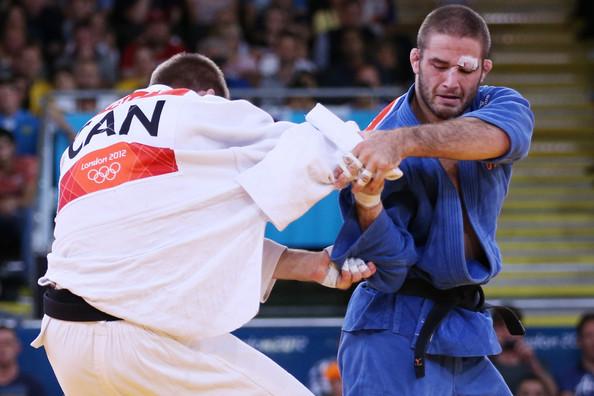
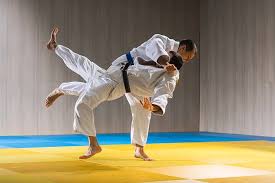
Ultimate BJJ Philosophy To Understand Jiu-JitsuSimply put, you start your Jiu-Jitsu journey by doing things the dumb way. We all do. Then, you’ll get to the hard way, and it’ll be a part of what you do for the entirety of your journey. Finally, at a certain point in time, you’ll figure out the easy way, and Jiu-Jitsu will become unexplainably more fun and even more addictive. The reason I’m sharing this with everyone is that I believe that if you know this BJJ philosophy as early as possible, your progress will be both faster, and much more meaningful.
Conclusion

Will this BJJ philosophy of mine fit everyone? No. Can it help everyone gain insight into how one grappler understands the process of learning Jiu-Jitsu? Certainly. I wish someone had told me this, or something similar to a white belt. It would’ve made much more sense along the way. Think about it this way – is ti easier to just learn techniques, or learn them while actually knowing what they’re intended to accomplish? Next time you’re on the mat,s try and figure if you’re doing things the easy, hard or dumb way, and let me know what you’re going to do about it.

How To Throw In Judo classes Into BJJ Training And Not Die

How To Schedule Judo Classes For BJJ

Judo is amazing. It is a really special grappling martial art, requiring a lot of time and dedication. It is not that other arts do not require the same, but Judo is very particular. Most of the action happens standing, which means even a split of a second can be along time. Paired with the heavy use of Gi grips and a need for understanding inertia and gravity, you see why it takes a lifetime to get a true grasp of Judo. Still, Judo is the one best martial art to add to any BJJ grappler’s schedule. Being in the roots of Jiu-Jitsu, Judo is really close to BJJ and has massive amounts of things to still contribute to the Gentle Art. But how do you go about including Judo classes in your BJJ schedule? There is a way that can help you learn Judo while at the same time survive the experience in the long run.

Training Judo is anything but easy. Training Judo and Brazilian Jiu-Jitsu together is nearly impossible. At least if you’re serious about both of them. Recovery time just isn’t there, no matter how much of an athletic specimen someone is. Thre is a smart way to go about it, but the fact remains that you’ll have to choose one of these two grappling martial arts as your main one. That leaves the other to play a supplemental role. And that’s perfectly fine. Since most people reading this are BJJ addicts anyway, let’s see how to integrate Judo classes to Jiu-Jitsu training, rather than the other way around.

Anatomy of Judo Classes

Have you ever taken any Judo classes? IF you have you know they are much different than Jiu-Jitsu ones. In fact, there’s hardly anything alike. With Judo, the focus is on a specific blend of age-old Japanese training modalities and modern ones. This close relation to the art’s Japanese roots makes Judo training a different experience to anything else.

Judo Classes And Jiu-JItsu trainingFor starters, the entire session of Judo training is at a pace that only probably wrestlers can rival. The moment training starts, you’re in for the warm-up of your life. Many people gas completely just by doing the warm-ups, given how strength-oriented they are. There’s a lot of running and bodyweight drills included along with crazy amounts of isometric training. And that’s just the general warm-ups part. Specific warm-ups come next with the most tumbling and falling you’ll ever do in your life. And just when you think it is all over, it is time for technical warm-up drills.
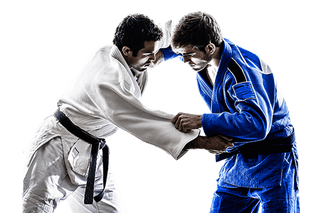
Until such a time you really try Judo classes you can’t know how much timing it requires. There’s a reason why Judokas do crazy amounts of drills that include entries into throws and timing of footsweeps. At all times, the grips get a real bating too. This is just half of what goes on in training, so imagine the pace. The second half is technical with lots of repetitions of throwing/sweeping techniques, or even ground fighting ones from time to time. Sparring, often in a specific manner then takes place. Depending on the Judo club and the aim of training, there might even be added conditioning at the very end.

Training Judo For BJJ The Right Way

So, Judo for BJJ. A subject that has been beaten to death. I’m not even going to go into why Judo is good for JIu-Jitsu. However, what I’d really like to stress is that to train Judo, you need a Judo club. Do not fool yourself that you can really train Judo without going to real Judo Classes in a real Judo school. Yes, you can learn stuff at BJJ, but it will never come close to what you’ll learn in just one Judo class. The same holds true the other way around anyway.

In order to really train Judo that will help your Brazilian JIu-Jitsu, you need to do some smart scheduling. As you can see from above, Judo classes are no joke. Pair that up with rolling several times a week and your conditioning routine and you’ll soon overtrain, regardless of age or how athletic you may be. So, there have to be sacrifices. You can either amend your conditioning routine, given how physically demanding Judo classes are or skip over an open mat or a regular BJJ class. To be smart, you have to make space for specific Judo training, and go into a solid school to get the most out of the experience.

Even then, just jumping into a Judo class won’t do you any good. My recommendation would be to accept that you’re very new at it first, despite your belt level in BJJ. SO, plan ahead – you’ll need a few months of just those pesky timing and entry drills to get comfortable with training the techniques. Only then can you approach the next step – very specific types of Judo classes, geared towards BJJ.

A Very Specific Focus

Judo Classes For BJJFirst of all, there’s no point in working on stuff in Judo classes that won’t relate to YOUR BJJ game. Speaking of which, you need to learn effective techniques. The best way to do that is actually talking to the Judo instructor and make it clear why you’re there. In my experience, they’re not only forthcoming in such situations, but even enthusiastic about figuring out how to send BJJ folks flying. So, first, the focus should be on a game plan, just like in BJJ. IF you just go about learning Judo like everyone else, you’ll be able to use moves only after years of training.
Secondly, your focus should be on learning techniques that will work against anyone. BJJ guys/girls and wrestlers might not be too hard to surprise with good Judo. However, you also need to learn how to deal with other Judokas, especially those that might have a very strong Judo background. After all, what’s the point in dedicating tie to Judo classes if you’re not going to use what you learn against everyone?

Finally, there’s the goal of not dying in the process. That doesn’t refer to Judo technical training but rather to the sparring and conditioning portions. There are two things you need to watch out for – overtraining and injuries. You can prevent overtraining easily, but injuries are unpredictable. Take no unnecessary risks and you’ll get the most out of Judo for BJJ.

Closing Arguments

The other way around would be using BJJ classes to improve a Judo. This also works perfectly and similar rules apply. BJJ training is not as demanding physically in terms of conditioning and strength training but it does involve more sparring and indifferent fashion. In any case, balancing BJJ and Judo classes is a possibility, you just can’t be the best at both.

The Crazy World Of Russian Martial Arts

Russian Martial Arts - Overview

Apart from Sambo, due to its grappling roots and connection to Brazilian Jiu-Jitsu, and a very vague idea of what Systema is, how much do you know about Russian martial arts? AS big as it is, Russia has uncharacteristically few martial arts. At least as far online research shows. If anyone has anything to add, please do so in the comments. So far, even though it doesn’t possess dozens of martial art styles, Russia does have everything, from grappling to striking and even mixed martial arts styles. And some of them are much older and much more diverse than you might think.

WE’ve talked about interesting and unusual martial arts from around the world before. Examples include African martial arts, as well as Brazilian martial arts that stretch past Jiu-Jitsu. There are a lot more martial arts out there, some of which are highly entertaining. When it comes to Russian martial arts, the one thing that’s immediately noticeable is that their martial arts are all still very much actively practiced across the country. Of course, some are more famous than others, but they do not have a martial arts style that’s completely forgotten or only practiced in a small isolated area of Russia. That said, let’s look at some of the most interesting martial arts in existence.

The Fighting Styles Of The World’s Largest Country

Which was the first Russian martial art? That’s pretty hard to say for sure. So far, evidence suggests that there might have been a form of Russian fist fighting as early as the first millennium AD. There’s obviously no clear way of confirming this, but given how martial arts developed in other spots around the world. I’d bet Russian martial arts are much older.

Basically, Russian martial arts really kicked off after the fall and breakup of the Soviet Union. Up to that point, they were not particularly encouraged and were even outlawed for a while by the Russian empire in the mid-1800s. During the Soviet era, the focus was on hand to hand martial arts that had a military application. A couple of those styles are still in large, both in Russia and the world now, and have morphed into sports, as well as hand-to-hand systems. Given the size and location of Russia, there are many people that belong to many cultures living there. That has been the case for centuries.

Apart from demographic diversity, this also means diversity when it comes to martial arts as well. Throw in all the war and conflict Russia has seen, and you have a perfect recipe for the development of martial arts. Most of them follow the pattern of other ancient martial arts – they’re first developed for battle and then turn into sports.

Russian martial arts got their day under the sun somewhere in the 1980s. After the Soviet Union, apart from the well known Systema and Sambo, a few other martial arts styles emerged. With roots in folk-type martial arts, they brought something slightly different to the world of martial arts. A couple worth mentioning is Buza and Russian All-Round-Fighting. Let’s look at each in more depth.

Russian Martial Arts – An Overview

Russian martial arts, at least those that I could find, number 8 different styles. Again, given the ethnic and geographic diversity of Russia, there are bound to be more, especially folk style ones. However, the ones that are not a local secret tradition include the well-known Sambo and Systema, to begin with. Of course, there are more specific ones too, like SKad, and Russian Fist Fighting. There are also folk-type martial arts in Buza and Russian All-Round-Fighting, as well as hand-to-hand styles like ARB.

Russian All-Round-Fighting

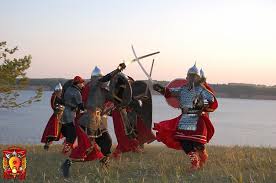
Russian Martial Arts Hand Fighting This one is a real traditional Russian martial art. In essence, it is knight-fighting, although it is nothing like ancient Templar battles you might be thinking of. We probably would not know much of this Cossack based saber-fighting art, if it wasn’t for M-1 promotions. In their regular MMA events, they know throw in sword fighting to honor Russian All-Round-Fighting. It is fun watching at tho knights battle out a sword fight int eh middle of a ring that usually houses MMA fighters. The sabers are now blunt, fo course, but this wasn’t always the case.
Systema

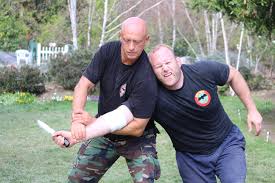
Russian Martial Arts SystemaArguably, the most famous of all Russian Martial Arts, at least in modern days. With the rise of styles like Krav Maga and of course, MMA, Systema not only gained popularity but managed to spread worldwide. Systema is a combat-oriented style that involves everything, from unarmed combat to knife fighting and gun defense concepts. It is a grappling based martial art more than it is striking one. It is mostly down to leverage and distance control to get control and finish an opponent quickly. Practiced by the Russian special forces, Systema also has a civilian version, although it is not a sports-type martial art.
The name, as you might presume, means simply “system”. It is a martial art that the world first met somewhere in the 1990s. In the post-  Soviet Union era Systema spread quickly amidst some controversy, though. Namely, it stakes a claim that is emerged as a result of “secret” fighting techniques of the Soviet Union’s special forces. The civilian version today is all about hand to hand combat geared towards self-defense. There’s no actual knife fighting done, but there are lots of knife and gun defense training in the system.

Sambo

For us grapplers, this is the most well-known Russian martial art. I guess sports-wise, this is the only one of the Russian martial arts that’s an actual sport.  Standing for “SAMozashchita Bez Oruzhiya” It translates literally to “Self Defense Without Weapons”. The basic notion behind it was to blenRussian Martial Arts Sambod the most effective aspects of all other martial arts. Two different people actually developed the art independently, one working on the catch-wrestling aspects of it, while the other on the softer aspects of martial arts. Their styles later merged to form what we know as Sambo today.
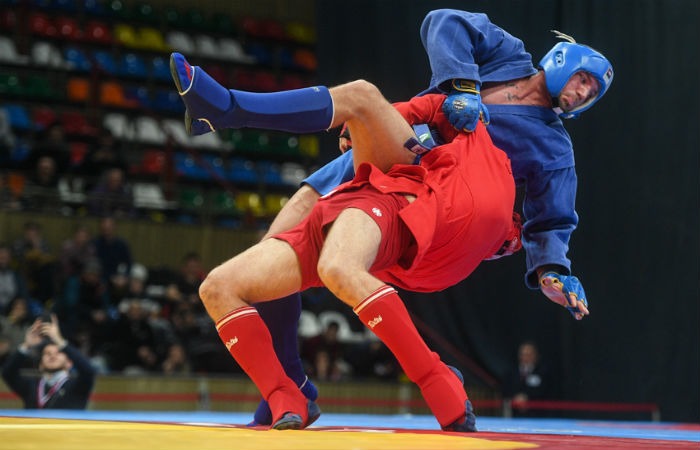
There are two main forms of Sambo today; Sport Sambo and Combat Sambo. Both works as sports and both have competitions around the world, including world championships. Sport sambo involves mostly Judo-type matches, just with lots more submissions, particularly leg locks. Chokes, for some reason, are illegal techniques. Combat Sambo is like MMA, including strikes and grappling, both standing and on the ground.

The Sambo attire is also very recognizable with one fighter being in blue and the other In red. Furthermore, they wear a top Gi jacket, but shorts on the bottom, as well as wrestling shoes of matching color.

Russian Skad

This is the Filipino Escrima od Russian martial arts. Okay, not quite but it does involve sticks. The sticks in question can be anywhere between 1 and 4 feet long, and the fighters do not use any protective gear whatsoever. In addition, to stick fighting, Skad also involves chokes, locks and other grappling techniques if the fight gets to the ground. This is a new art and is still in its development phases.

Russian Boxing

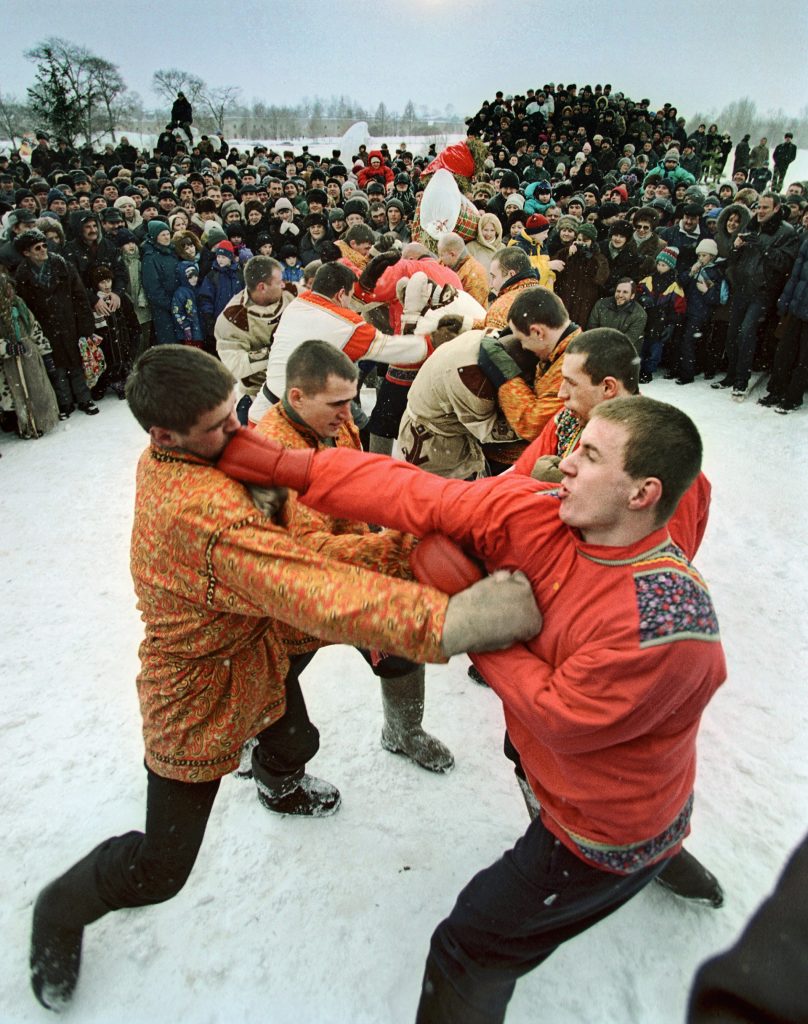
In essence, this is just Russian bare-knuckle boxing. There’s information about this art as far back as the 13th century, but it is bound to be older. It is connected to a celebration ceremony, one dedicated to Perun, a Slavic god. IN contrast, those that spread Christianity tried to outlaw it, by saying there is no space for those that engage in fist fighting. Needless, to say, this didn’t take with the Russians.

Russian Martial Arts Bare Knuckle BoxingMost fights took place during holidays in makeshift “rings” made out of the crowd. Traditionally even young kids fought, with matches involving older and older fighters until they got to the adult fighters. The popularity of the sport rose and fell with different Emperors and rulers of Russia. In popular culture, during the 19th Century, Russian fist fighting was mostly dead, only depicted in theater plays and operas.

Rules were different depending on the region. In some places, it was bare-knuckle, while in others, they wore stretched out sleeves over the fists. Apart from the usual one vs. one fight, there was also a team vs. team fight called “wall on wallЌ. In the one on one fights, there was an option to fight similarly to today’s boxing, as well as one where fighterс took turns hitting each other. In the team version, it was more f a massive brawl with people numbering from a dozen to over a hundred per team participating. The goal was to force the “walls” of people back and out of the predetermined area.

ARB

ARB is a Systema-like martial art, geared towards practical self-defense. It is an abbreviation of “Armeyskiy Rukopashniy Boy” or “Unarmed Hand Fighting. It was a military-style originating in 1979. Basically, ARB is a mixture of techniques and concepts for various different martial arts in the world. Competition-wise, there’s an annual championship that thе Airborne troops of the military hold, which is actually how it all started. Rules are distinctive, involving the option to finish an opponent that’s on their hands and feet while you’re still standing. In other words, it is pretty much NHB, with the option for a tap or verbal surrender, of course.

In a more modern sports sense, ARB fighters wear taekwondo-type protection, with body armor, helmets, gloves, and shin pads. The fighters compete in rings, with referees, weight, age and belt divisions included. There are lots of forbidden techniques that make it safer to train and compete in as a civilian sport.

Buza

Yet another hand-to-hand martial art.  It is a folkloric fight, though, and expressed as a dance battle, something along the lines of Brazilian Capoeira. This is one of the more interesting representatives of Russian martial arts, that involves people standing in a circle with two fighters in the middle. They wear traditional Russian costumes and there’s traditional music playing as well (again, like Capoeira). At times, there’s even the use of traditional weapons in the dance/fight performances.

Buza originates in Northwest Russia, where it has been developing over many centuries. It is still a big thing in village celebrations in the region. The fighters combine movements of spinning, sweeping and kicks during the “matches”.

Wrestling

Finally, a notable mention of Russian wrestling. It is not like wrestling is a Russian specific sport, but it is one that was developed in specific directions in Russia throughout centuries of work .tremember a certain UFC champ called Khabib Nurmagomedov and all fo the other Russian wrestlers no dominating the world MMA scene? Well, that wrestling has been a part of Russian culture for ages.

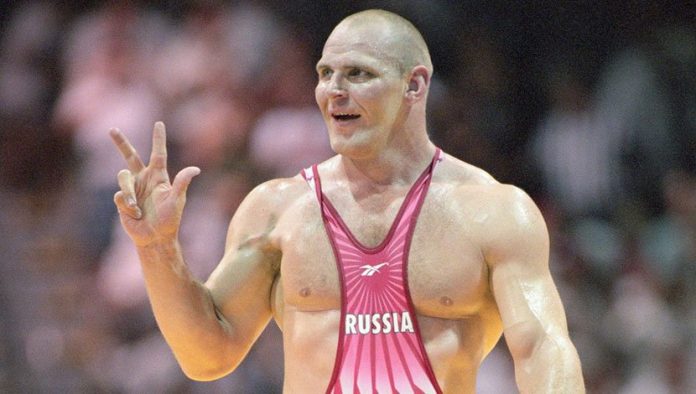
Historically speaking, wrestling is a big part of Russian culture, Russian folklore and mythology, and even the Russian military. IN celebrations wresting was often took a central role, with the winner claiming special privileges among the others in the village. Plus it was the preferred choice of entertainment for decades. Later on, Russian wrestlers became legendary on a world and Olympic level as well, starting from Alexander Karelin all the way to Khabib Nurmagomedov.

Conclusion

As with other things, Russian is full of surprises when it comes to Rusian martial arts. Hand-to-hand combat and Sambo aside, who would’ve thought Russia had a martial art that involved dancing and kicks like Capoeira? Or, a weird fighting system involving sticks, or even more bizarrely, a bare-knuckle boxing event where teams of hundreds of people clashed? Thre’s a lot of entertainment coming from there, for sure, and I can’t wait to see what else will be revealed about this intriguing country.

The Best BJJ Podcasts Grapplers Loved In 2020

Best BJJ podcasts Of 2019 / 2020

Right off the bat I’ll say that there’s no Joe Rogan experience of BJJ podcasts nor will there ever be. Rogan changed the world of both podcasting and martial arts with his podcasts. In Brazilian Jiu-Jitsu, though, there are plenty of people with lots and lots to say. That said. Even Rogan’s podcast is one of the bets for grapplers, even though we won’t feature it in our list. After all, he is the first man, apart from an old Matt Serra podcast to have John Danaher on. BJJ podcasts are fun to listen to, extremely informative and plentiful. This last one, in itself, requires a filter so that you know which the best podcasts to dedicate your time to are.

I personally love listening to BJJ podcasts. I’ve probably listened to most of them out there, some once, others more often. When it comes to certain BJJ podcasts, though, I’m almost religious about listening to new episodes as early as possible. They’re just that good. While most people usually see podcasts as entertainment, or simply informative, I actually view them as a great and heavily underestimated tool for actually learning grappling. It is not easy for someone to make a good podcast, and it’s even harder to keep or even raise the level of it throughout the months/years. Several people have done it, though, and we’ll be looking at them today.

An Underrated Learning Tool

How can you learn from BJJ podcasts? IT is easy. While most of them are usually audio-only, and mostly done over Skype, there’s still a lot to learn. Namely, you do not need to actually watch someone do techniques in order to learn Jiu-Jitsu. The art is extremely deep and there are many things to learn in many different ways. The best possible way of learning through BJJ podcasts, at least for me, is through experience. That’s what we’re really after in all those BJJ podcasts. Well, that and all the cool, wacky stories people have to share.

In all honesty, the one thing that most people love about podcasts, BJJ or otherwise, is the lack of any filter whatsoever. People in podcasts can say anything they want, from claims that the earth is flat, all the way to key concepts and principles of BJJ that will change your perspective forever. Plus, they’re extremely easy to gain access, to and listen to, given how much we commute on a daily basis. The information you can gain through a BJJ podcast is incredible. People in podcasts are usually laid back, having fun and they tend to let their conversation flow, which often opens up a subject you won’t otherwise hear in a regular class. That’s especially true for high-level coaches who always have their classes pre-panned and prepared. Sometimes,  though, we just want random stuff out of their brains.

BJJ podcasts are the best way to gain insight into how the “great minds of Jiu-Jitsu” think. As you spend more and more time in the Gentle Art, this information becomes a lot more useful than the latest armbar setups. Of course, BJJ DVD instructionals are still a huge way of improving your JIu-JItsu, but using them along with BJJ podcasts just takes things to a whole different level.

BJJ Podcasts To Keep An Ear Out For in 2020

That said, let’s just go straight of the deep end and check out some of the best BJJ podcasts of 2020. There’s nothing that indicates that they won’t be the leading ones in 2020 as well. I certainly hope that there’ll be new ones as well. In fact, there are a couple of new ones that I’m keeping my eye on. They have plenty to prove, but still, the potential is there.

In essence, what a podcast needs to achieve in order to be one of the best BJJ podcasts, is to be interesting, easy to listen to, and have a good choice of guests. Throw in a bit of humor (they all have it) and a story here and there that only JIu-Jitsu can provide and you have the winning recipe. If you’re interested in trying your hand at a podcast, do so. Who knows, yours might feature on this list next year! Until then, our top 5 choices.

The Raspberry Ape Podcast

BJJ podcasts ApeThis is by far my number one podcast when it comes to BJJ podcasts. In fact, it’s right there among my top podcasts of any category, period. The host is the exceptionally charismatic Daniel Strauss, a Roger Gracie black belt based out of England. Daniel is a high-level competitor and an overall funny guy to listen to. HE as numerous big stage appearances, from Polaris all the way to EBI. His Polaris match with AJ Argazm is one of the legendary ones that you simply have to watch. That said, he is just as good with his podcat as he is in BJJ. Perhaps even better, which is saying something.

The podcast works in an interview-style with most people actually coming in for a chat rather than calling. Always a winning recipe. The topics range from basic BJJ stuff to literally everything. Moreover, Daniel is a master at getting the most out of every guest he has had. And he has ad some of the most desirable personalities in BJJ on there.

A Fistful Of Collars

BJJ podcasts FistfulA Fistful of Collars is not only one of the best named BJJ podcasts, but also one of the best in every possible sense of the word. It is run by the FloGrappling guys and offers some of the best possible content out there. They have access to some of the world’s best grapplers and manage to bring them back over and over again. Everything from the top stories in Jiu-JItsu, to ways of training, organizing classes and insights into the life of the top professional BJJ athletes is covered in this podcast. The hosts are relaxed, funny and know how to set up an interview. Plus, they manage to work together perfectly, which is never easy, especially with three people plus the guests. Highly recommended.

The ChewJitsu Podcast             

BJJ podcasts CHewjitsu“Chewy”, AKA Nick Albin is another one of the most entertaining characters out there. He is not only extremely active on YouTube, with all his technique and tips videos, but also runs a highly successful BJJ podcast. His student Eugene is his co-host in this particular endeavor, and they make a great team. Even by Jiu-Jitsu standards, this is one of the most laid back and relaxed podcasts you’ll ever listen to. The setup is simple with a very precise and though out a selection of questions, that always include questions from listeners as well. The topics are extremely varied. In fact, in certain episodes, it is just Chewy himself explaining concepts and those pesky small things in BJJ that make or break everything. If you’re a recreational grappler that’s looking to really immerse themselves in the world of BJJ, this is the podcast to start with.
BJJ Brick Podcast

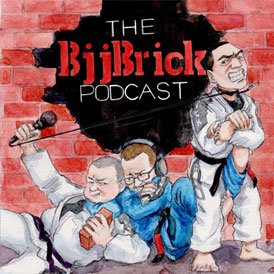
BJJ podcasts BJj BriclByron, Gary, and Joe are the three folks behind one of the all-time best BJJ podcasts out there. The Kansas city-based crew does an awesome job, providing some of the top guests in the game. However, their efforts do not stop there. They cover some of the subjects other podcasts often see as too broad but are actually something us mortal grapplers actually like to hear. Some of the plentiful subjects they cover from various angles include nutrition, training, popular stuff in BJJ and MMA, and pretty much everything you can think of. From Henry Akins, through Steve Maxwell to simple conversations between themselves, you’ll learn a whole host of things form this amazing BJJ podcast. If you haven’t heard it so far, you’ve got well over 100 episodes of catching up to do. Better get on it.

Grappling Central Podcast

BJJ podcasts Grappling CentralThe man in charge of the Grappling Central Podcast, one of the most renowned BJJ podcasts in existence, is Ryan Ford a BJJ brown belt and grappling enthusiast. His wife Karen helps him run the podcast and designs the cool art surrounding it.  The name really says it all, because Ryan is not just a BJJ guy. He actually loves everything grappling related, from Judo to Sambo, and the podcast reflects that perfectly. His guest list includes that who is who of MMA fighters, BJJ coaches, competitors, doctors, nutritionist, etc. In other words, he covers every possible aspect of grappling.

Moreover, the production of this podcast is of professional quality without exception. The defining moment of this podcast is the “Pummel”. This is a segment in the middle of each episode where Ryan fires quick Q&As on any and all possible BJJ subjects. This is the podcast for some of the best BJJ interviews around, featuring bot hold school legends and brand new stars of the sport.

In Conclusion

Brazilian Jiu-Jitsu has never been more accessible than today. In that sense, BJJ podcasts open a new door to learning the most versatile martial art out there. The number of BJJ podcasts is on the rise, meaning that next year’s list will probably have at least double the recommendations. Plus, there’s always Rogan, and all the crazy guests he gets to “interrogate”. If you’ve missed out on at least one of the recommendations above, then you’re in for a great New Years’ surprise! And, if you’re’ completely new, you’ve got tons of material to catch up on, so better get started right away! Happy New Year BJJ folks!

Ultimate Jiu-Jitsu Hacks – Simple Core Concepts

Ultimate JIu-JItsu Hacks - Core Concepts

Okay, let’s try something different. IN the past couple of years, and particularly the last 6 months, something seems to have clicked in my understanding of BJJ concepts. I’m talking general ones that work universally. How do I know they work? They’ve been paying off in rolls with people of all shapes and sizes at a period when I’\m nursing several long-term injuries, a couple of which serious, So I figured I’m doing something right and attempted to let a few people know what I’m actually doing. Given that it works for them, including in competition I decide to share a few of the ultimate Jiu-Jitsu hacks that are helping have a great time on the mats.

For now, I’m still in the early phases of experimenting with this stuff. However,  I’m confident enough it works, as I said. The general idea is that in certain situations in BJJ, we tend to take things for granted. In that sense, the first, most core concept would be to do the opposite – not take anything for granted. As long as you take everything I’m saying with a grain of salt, and simply think about it, you might end up having success with this Ultimate Jiu-Jitsu hacks stuff. I guess more experienced grapplers know most of this, but for me, it is a foundation of a very sustainable Jiu-Jitsu game.

  • Passing The Guard

Ultimate Jiu-JItsu hacks - guard passingThis is one of my “babies” when it comes to understanding how this craziness called Brazilian Jiu-Jitsu works. When it comes to passing the guard, the greatest realization I’ve had (so far) is that you can’t pass the guard. In fact, you can’t pass any guard for that matter. The guard, as a position, is custom-designed to give an advantage to the bottom person. That means whatever you do, you’ll never be able to pass an actual guard. So how then, do we get to side control and further?

My two cents on the subject involve a three-step process. First, ensure I don’t allow the person on the bottom to actually attack from the guard. I’ll take open guards in general as an example. Think about any open guard out there and you’ll realize that one leg acts as n attachment hook to you, and the other is free. It is this free leg that’s causing 99% of trouble in guards. Nullify that, get rid fo grips (not always a requirement) and you’ve done step number 1 – neutralized the dangers of the guard.

Part two, though, is what is really crucial. This is where you have to deconstruct the guard. If you are successful you can go to step three and actually pass. If not, you’ll go back and will need to repeat step one. Deconstructing a guard means dealing with that pesky attachment hook and any remaining grips. The final step is the easiest as now there’s no more guard, and you just pass the legs. That right there is an Ultimate Jiu-Jitsu notion that took me 8 years to realize – we pass the legs, not the guard.

  • Submission Hunting

As a submission hunter (self-proclaimed, of course), there’s nothing in my arsenal I favor above submission attacks. The goal in grappling for me is not just getting a submission, but getting it as close to perfection as possible. A fleeting goal, I know, but that’s what makes things interesting. Which brings me my next Ultimate Jiu-JItsu hack – letting go. Yeah, you read that right.

Letting go is the most important thing you can do when looking to finish any submission. As moves, submissions are very tricky, regardless of how high percentage they might be. Some people have crazy neck strength, others have ultra-flexible ankles, and sometimes, well, you’re just off for that crucial tenth of an inch. Whatever the case, holding on and trying to muscle your way through for submission is never a good idea. Letting go of it is the ultimate hack I can offer.

Ultimate Jiu-Jitsu Hacks - Submission Hunting Of course, letting go wouldn’t really make sense unless you’re ready to actually look for another one. Which brings me to “the loop system”.  I like using the term loop more than a chain simply because it implies you can always go back to the submission that saturated it all and keep going from there. Think about back control. You go for a rear-naked choke and everything is off, nothing seems to be working. Instead of squeezing like crazy, switch to a rear triangle. Now you can keep working a different aspect of the game. Still not working? The armbar is waiting. Having trouble with it as well? How about heading back to the rear-naked choke? You get my point, everything works together. Submission hunting is just that, a hunt and not a race, so you need a strategy to actually become a successful hunter.
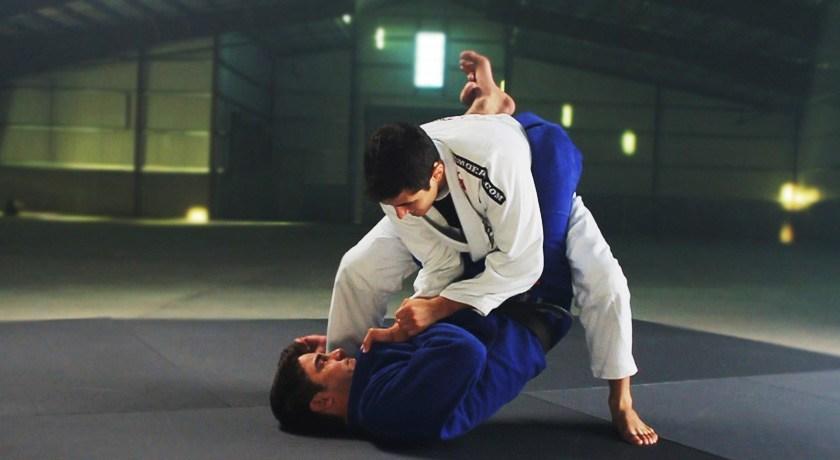
Oh, and never decide you’ll do a specific submission on a specific person. That’s the best way to end up disappointed with your submission skills. Remember the loop.

  • Choke Philosophy

ON the subject of submission hunting, one of my early favorites were chokes to this day, even though I’ve developed a hunger for lower limb submissions, chokes still remain my go-to. They’re just beautiful (I am aware of how I come off with this statement). Speaking of chokes, have you ever had one that doesn’t work>? Worry not, there are Ultimate Jiu-JItsu hacks for that too.

First up, you think about changing your perception of how chokes work. Rather than seeing any choke as a one-off submission move, see them as a position. You wouldn’t be in a hurry to just get in and out of mount straight away, right? Well, chokes give you control of the head and shoulders anyway, so why not get them and relax there? You might not get any points, but you’re going for something better anyway.

Looking at chokes as positions rather than submissions ties in with both submission hunting principles from before, and this next one – connection. If you go for a guillotine choke and do it 90’s UFC style, you’ll most likely burn out your hands, or the opponent will pop the head out. The focus should be plain and simple: connection. Now, connection is a concept people explain differently. The most simple way is to think about eliminating al space. That means getting whatever parts of your body are choking, as close to the neck without any space remaining. And I really mean ANY space. This will both allow you to stain in the position for a choke as much as you want, and finish without burning out.

IN fact, the one ultimate JIu-Jitsu top I can give you about chokes goes contrary to everything we know – do not squeeze. Squeezing is both tiring, and due to muscle contraction actually creates small pockets of space. Instead, think about hugging. You’re relaxed when you hug, right? The same applies to chokes. ON top of it all, never think a choke will work the second you get it. If someone taps to a choke before 10-15 seconds elapse, it means you’re squeezing. The goal is to hug and keep hugging for about 20 seconds, Then, you can think about adjusting and repeating the process. Chokes are slow submissions and the sooner you approach them as such, the better they’ll work for you.

  • The Art Of Escaping

This is a pretty new one for me and is probably the most experimental yet. Still, just like the previous ultimate JIu-Jitsu hacks, it seems to be working for me. The one thing that was always a problem for me was getting in a bad spot. In fact, it wasn’t being there, but my reaction to begin there. And that reaction is common to us all – panic. Well, escapes don’t work when you’re panicking, no matter how technical you try to be. Surprise, surprise.

The approach here is to think about actually being effective. The fact of the matter is you’re in a bad spot. You might as well  do something meaningful. In that sense, I see two main options that make sense – escape in a weird way, or go for a counter. Counterattacks from bad positions, lie doing an Ezekiel from bottom mount or a squirrel lock form bottom side control ara amazing ways of actually escaping. If you do it all right, you’ll get a tap in the process as well. The best part is, you waste no energy and it is a certain way out.

The somewhat weird way of escaping is actually a bit more technical but still based on one common concept – do nothing. Yup, there’s no point in actively trying to escape against someone that knows what they’re doing. There are countless “play dead” scenarios in which your structure will make you safe from anything they’re trying to do. On top of that, they’ll actually gift you a way out by trying to attack you while you’re in a position of safety. This one takes more work than any other concept, but is well worth it.

  • Ultimate JIu-Jitsu Closed Guard Hacks

Ultimate Jiu-JItsu Hacks - Clsoed Guard One of my favorite hacks of all time has to be attacking from the closed guard. Having trouble getting grips on an opponent from bottom closed guard? Well, there’s a simple solution – stop trying to get up. The only way of moving in the closed guard is side to side. As far as the ultimate Jiu-Jitsu hacks go, this has to be my favorite. Simply grab sleeves or wrists, they’re always there and move side to side. No one will be able to stop you and you’ll open up attacks of all kinds from there.
How? Well, you do two steps in a loop over and over again. Let’s the opponent has ultra-tough grips on you. First up is movement – become a ball. All you need to break someone’s posture in the guard is to get your knees to your chest. The second step is angle – side to side movement to get a better angle. In just two steps, you broke an opponent’s posture down without grip fighting and you have a great attacking angle. Guillotine chokes, armdrag to the back, a Kimura or a sweep are all looming there. And if nothing is there yet, just repeat it all, first do a movement, then look f r a better angle. A foolproof formula!

  • Understanding Pressure

Finally a few words on what has been the toughest aspect of Jiu-Jitsu for me to understand – pressure. It is not that pressure is inherently hard to understand in its nature. It is just hard for people to teach it since it involves a lot of feel to it. And that comes with time, and there’s no way around it.

That said a simple little Ultimate Jiu-Jitsu formula helped me really understand pressure form any possible position. In fact, it helped not only improve it but defend against it successfully. First up is angle. Unless you have a correct angle, nobody will feel the pressure. that said, after finding the angle you need to make sure you actually project pressure by choosing a direction of weight distribution. Finally, you need timing, in order for the above two aspects to work. UNless you time ti right, you might have a perfect angle and direction but no pressure since there’s too much space between you and the opponent.

Final Thoughts

Thre’s nothing set in stone in Brazilian JIu-JItsu. Things are simple if you keep an open mind and never believe anything you see for granted. IF that was the case, we’d have no open guards, leg locks, lapel craziness, and the likes today. BJJ is evolving at a rate too fast for anyone to keep up. Using universal principles and concepts, in the form of the ultimate JIu-JItsu hacks is a great way to understand what’s going on in any grappling exchange. Two more bonus concepts to wrap it all up – remember that structure is everything in BJJ and that lazy BJJ is the best way of achieving actual results.

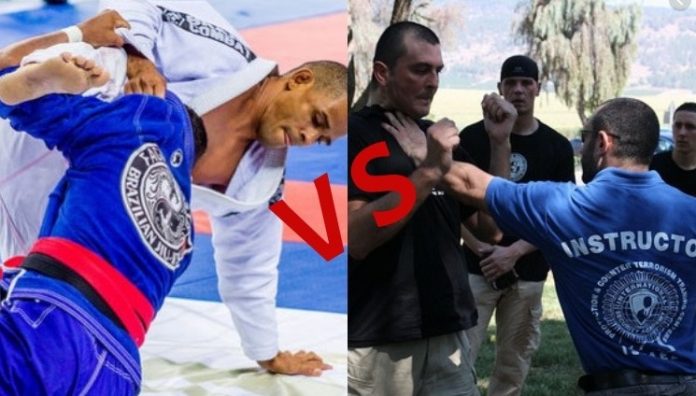
Krav Maga Vs BJJ For Self Defense – The Facts

BJJ vs Krav Maga for Self Defense

The world of martial arts is full of many different people. Of course, there are a lot of frauds among them, just looking for a payday. While they can’t really make it past established filters in sports martial arts training, they certainly roam wild in the domain of self-defense. The thing is that you can say anything you want about stuff that works, and, since you can’t train self-defense realistically, there’s no way to prove otherwise. Until you need to defend yourself, that is. IN truth, there are martial arts and fighting systems that work. There are many more that are as imaginary as Neverland and will only get you in trouble. Among those that work, Krav Maga and BJJ are two that stand out quite a lot. But, in reality, when we look at Krav Maga Vs. BJJ, which one ends up being the better self-defense option?

The reason I’m writing this Krav Maga vs. BJJ article is that I have strong opinions on both of these arts. I am neck-deep into BJJ and have been for the past 9 years. Before that, however, I’ve dabbled in everything martial arts-related, including a 4-year sting in Krav Maga. So, my experience includes both. And I was one of the lucky ones. I was able to train Krav maga under experienced and recognized instructors. The same holds true for my BJJ journey which is still ongoing. I never got to use any of them (much) in a self–defense scenario, but I do think this particular debate needs settling.

Real World vs. Fantasy Self Defense

What exactly is self-defense? Let me tell you what it is not. It is not what you see in the movies, where Steven Seagal takes on a dozen people armed with everything from knives to machine guns. It is not even what you use in more modern movies, where the number of opponents is reduced, but the damage taken on both sides is extremely unrealistic. Now, let me tell you what self-defense is all about – survival. And in self-defense one thing is as certain as the sun rising tomorrow – you won’t get out unscathed. Self-defense is ugly, never works as planned, and you’ll certainly be hit, and maybe somewhat injured in the process. If you come to think about it, it is not that different from rolling in BJJ…

Anyways, as I teach everyone in an Introductory BJJ class, there’s just one self-defense move that always works. It is 100% efficient and will get you out of any altercation without any injuries. That is running away. Fast.  However, in reality, this is sometimes impossible. When it comes to really having to defend yourself or your loved ones, you need something that works. And, if you’re thinking about Krav Maga vs BJJ in terms of what’s better, I can at least say you’re thinking in the correct direction. Both couldn’t be further apart in terms of how they’re set up, but their basic self-defense concepts and ideas are similar. The reason, as I said, is that both focus on surviving, and getting as far as possible from a conflict.

The main thing with both these martial arts is that they’re among the few self-defense systems that are realistic. Although Krav Maga does involve weapon defense, it does so in a really down-to-earth manner. No Ninja flying moves against guns and knives, or knocking out multiple opponents with death strikes. BJJ and Krav Maga are real, and can both help you find what you’re looking for, albeit in very different ways.

You Know BJJ But What Is Krav Maga?

There’s no point in looking at Krav Maga vs BJJ for self-defense before we actually know what both are. If you have no idea what BJJ is, feel free to browse through this website, and you’ll figure everything out. In terms of Krav Maga, I’ll try and keep things simple. It is a fighting system, rather than martial arts that has its origins in Israel. It was put together by Imi Lichtenfeld, before world war II. He was a boxer and wrestler, so you know where the foundations of the system are from. Moreover, karate and Judo made their way to complete the four foundational arts of the Krav Maga system.

In the beginning, it was used mainly as a military style. Of course, it develops throughout the years and is now IDF’s (Israeli Defense Force) main combat system. There’s also a civilian version of it being practiced around the world. That’s exactly what’s getting a lot of attention in terms of self-defense. The best part about Krav Maga is that like BJJ it does not stop evolving. Today, the art uses moves from Kickboxing and BJJ among other arts, gaining in-depth and efficiency.

Training Krav Maga is similar to other martial arts in the beginning – you learn stances, striking and grappling mechanics, and the likes. However, very soon, they start incorporating something that’s highly unique – a stress drill. They put people under real stress and scenarios that mimic those that happen outside. There are a few different major organizations (like in any other sport / martial art) and there’s a grading system, usually not involving belts. The style of training is impossible to use in a competitive form, so there’s no competition >there are, however, full-body armor, real fights, among other things, in order to help simulate real-world scenarios.

Krav Maga vs. BJJ For Self Defense

So, Krav Mag vs. BJJ for self-defense. Who wins? I’d have to say it is a tie. However, it is not a regular type fo tie. In terms of efficiency, both Krav Maga and Jiu-Jitsu are top choices. Still, BJJ does have a much bigger learning curve to Krav maga. ON the other hand, it offers a lot more control over opponents of all shapes and sizes, meaning you can stay away from needless lawsuits. After all, there’s a multitude of groin and throat strikes in Krav Maga that might land you in different kinds of trouble – legal ones. That said, both arts are very different. They involve fighting on the feet and the ground, but when down, BJJ clearly has the primate. Rolling on a constant basis equates to most of the stress drills that happen in Krav Maga.

One key difference in the Krav Maga vs. BJJ self-defense debate is dealing with multiple opponents and weapons. Both get attention in Krav Maga, but with a realistic approach. Namely, if you face more than one opponent. You’ll most likely be able to defend yourself but at cost of physical injury. AS should be expected. In terms of weapons, they teach a“watered-down” version of the military versions. It is clear this stuff works given that the Israeli military uses it in combat, but that doesn’t mean it’ll work for you. The crayon/lipstick drill is a perfect example of this.

In Krav Maga training, there’s a drill for knife defense where you wear a white T-shirt and a partner keeps attacking you with a red crayon.  Trust me, no matter how much of a knife defense expert you think you are, you’ll end up with red on that T-shirt. Krav Maga and BJJ are both honest. BJJ does not even include edged weapons defense. Krav Maga teaches you that you can survive, but you’ll get cut, and most likely badly in the process.

Summary

The best possible scenario is not looking at Krav Maga vs. BJJ for self-defense, but rather both of them for self-defense. They offer different dimensions but are complementary to each other. After all, BJJ is a big part of the ground fighting in Krav Maga anyway. So if self-defense is your goal, why not do both? Krav Maga will yield faster results, whereas BJJ will introduce a component of control otherwise lacking in Krav Maga. I love the combination and definitely recommend you try it yourself.

BREAKING: Gordon Ryan Announces Retirement

Gordon Ryan Retirement

Gordon Ryan wrote on his Instagram Profile:

“Thank you and farewell. It’s been years since I did anything besides training. I haven’t taken a vacation in 5 years. On this trip, I realized that there’s more to life than being stuck in a blue basement every day killing myself. I have proven I am the best over and over again and now its time for a change. Its time to start the next chapter of my life. I have some matches scheduled early in 2020 which I’ve committed to and will compete in but consider 2019 the last year of my competitive life span. I don’t need anything else in life. All I want and need now is to explore the world with the ones I love and help my teammates achieve twice as much as I have as well as help people around the world through instructional videos. I know it will pain a lot of you to see me go but this is something I’m sure about. I hope all the fans understand and have enjoyed the ride thus far. it’s not over. I couldn’t have asked for a better career. love you all ♥️. ? @jeffreyschu. @heysonnyy”

https://www.instagram.com/p/B6jd96ZJLco/?utm_source=ig_embed

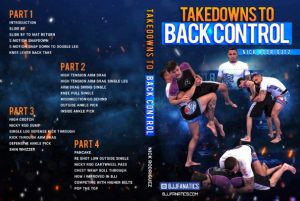
Nick Rodriguez DVD Review “Takedowns To Back Control”

Nick Rodriguez DVD Takedowns To Back Control

There’s, not one grappler alive that doesn’t know the name, Nick Rodriguez. It wasn’t the same a year ago. In fact, a couple of years ago, Nicky wasn’t even training BJJ. Now, he is n ADCC silver medalist in the heavyweight division. As a blue belt! Yeah, that’s when everyone took notice of the grappling machine that is being developed in the blue basement. Now, Nick takes things to the next level – he has his very first DVD instructional out. Named “takedowns to Back Control” it outlines his ADCC strategy that proved to be more than effective against the world’s toughest, and heaviest black belts. This Nick Rodriguez DVD is one instructional by a purple belt that I’ll be paying extremely close attention to.

ON SALE HERE:
Nicky Rodriguez – Takedowns To Back Control

Nick Rodriguez Takedowns to Back Control Instructional DVD
Techniques List

If you told me to buy a Nick Rodriguez DVD a year ago, my reaction would’ve been “who”? Not that I wouldn’t come to it at a certain point, but I’d never go for it as a first choice. Fast forward to now and I was actually anxious about this release. Of course, I know that I’ll never possess Nick’s athleticism or his wrestling background. But whenever someone breaks things down as good as Rodriguez does in the “Takedowns To Back Control” instructional, there’s a lot to learn. Whether you decide to follow his system or simply learn details to fix your own holes, this DVD provides a lot more than just a few techniques stringed together. I expect nothing less form a grappler of his caliber anyway.

“The Prodigy” Nicky Rodriguez

Nick Rodriguez literally burst on the grappling scene out of nowhere. Whenever Danaher and Gordon Ryan say they have surprises in the blue basement, I tend to believe. This time around, everyone was fooled, as Nicky Rod emerged. He is by all means extremely technical but he is also huge, ultra-strong and poses crazy athletic abilities.

At first, Rodrigez wen to the ADCC trials, at the West coast managing to get bronze. For a white belt, this is unexpected, although not an unseen accomplishment. What most people didn’t realize was that he only had barely 6 months of training experience under his belt at the time. However, at the East Coast Trials, just a few months later, he actually went through everyone like a hot knife through butte, winning gold with ease. And, he spent no more than 2-3 days at Renzo’s and two days wrestling in New Jersey prior to that. He included training at tom DeBlass’ Ocean County and two more days at South Jersey BJJ to really get in competition shape for the ADCC main event. And, he didn’t just have a dream debut, but he almost won the heavyweight division, reaching the final and losing only to Kaynan Duarte.

When you take a look at some of the “victims” of Nick Roddriguez along this ADCC run, it is scary, to say the least. He disposed of Mahamed Aly in the very first round, before making quick work of Orlando Sanchez. Then, in the semi-finals, he beat a legendary grappler in Roberto “Cyborg” Abreu, a black belt for well over a decade. And he did it all as a blue belt with barely over a year’s experience in BJJ. On that account, of course, I want a Nick Rodriguez DVD! Moreover, Nicky took everyone down, thanks to his immense wrestling background. Pair that up with Danaher’s back attacks and you have the perfect winning formula in the Takedowns To Back Control instructional.

Nick Rodriguez DVD Review: “Takedowns to Back Control”

Previously I wrote about a concept in Jiu-Jitsu, that preaches getting top position, and staying there for the remainder of a match. That’s a proven way of getting both points, and submission opportunities while minimizing risk as much as possible. To that extent, you’ll hardly get more experienced top game players than wrestlers. And Nicky Rodriguez is a top-level wrestler, to begin with.

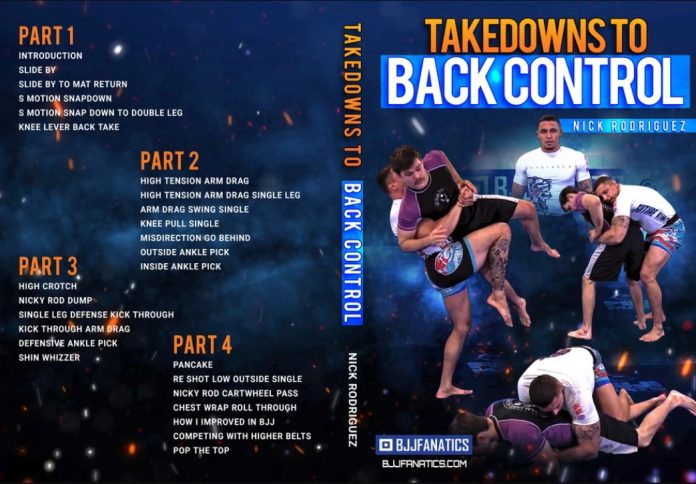
Nick Rodriguez DVD Review "Takedowns To Back Control"This Nick Rodriguez DVD has four volumes. Throughout them, he covers different ways of getting the match to the ground and going to the back. From there on, it is down to you to finish. Points wise, this means six points and a position of safety where you can choke people out. The first part covers snap downs, for the most part, followed by innovative back takes. Part 2 is all about arm drags and misdirections, before some wrestling classics in part 3. Finally, there’s some genuine Nicky Rod craziness in the fourth and final volume oft he “Takedowns To Back Control” Instructional.
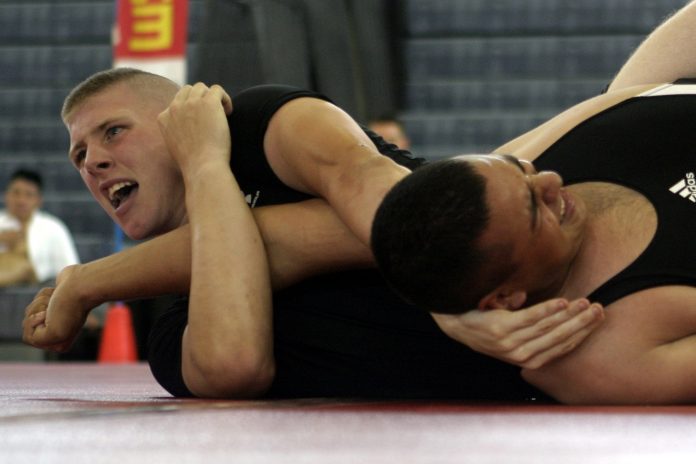
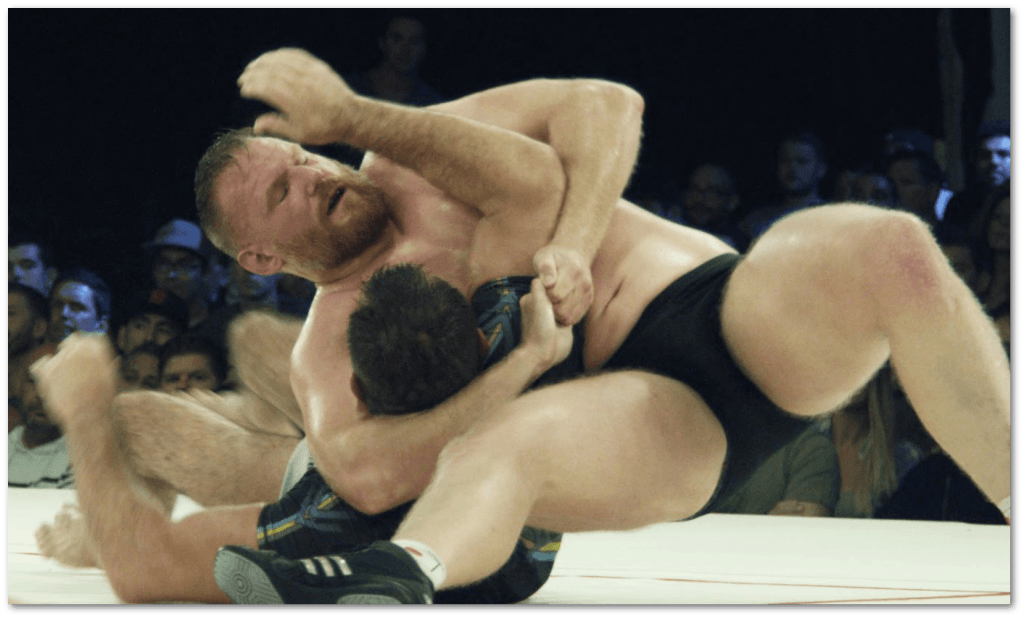
Part 1

After a short introduction, Nicky goes straight to work covering the slide by. This is one of the staple wrestling moves that people in BJJ, for an unknown reason, oftentimes shy away from. Ther are a couple of options here, including a mat return one. The following part is what really caught my eye, as I am a fan of front headlocks. The S- Snapdown is an advanced wrestling way of ensuring posture isn’t an issue when you’re snapping someone down.

In terms of back takes there are two chapters, each going over a bunch of never before seen details. Between the knee lever and cross trap back take, I have to pick the second one, although both are really sneaky and effective.

Part 2

The second portion of this Nick Rodriguez DVD goes over the arm drag during the first half. As far as wrestling classics go, the arm drag is something that writers learn at the earliest possible age. It works like a charm, all the way through to the highest levels of wrestling In Brazilian Jiu-Jitsu, it just opens up even more opportunities. The way Rodriguez likes to set it up is by using tension. So much so, in fact, that his arm drag variations are called the high tension arm drag. It opens up direct routes to the back (as expected) as well as key single-leg entries. The swing single is something well worth checking out.

The second part of the instructional covers a few interesting concepts before continuing with takedowns. The misdirection approach is amazing, and it really opens up the back like nothing we’ve seen before. Pair it with inside and outside ankle picks, that are also in this portion and the arm drag from before and it is an unbeatable way of getting on someone’s back. “Takedowns To Back Control” indeed.

Part 3

Part three is for people that truly enjoy throwing others around. In his ADCC match with Mahamd Aly Nicky Rod nearly killed a photographer when both came crashing on him after flying across the mats. Now, you can learn the same tactics, with his take on the hight crotch and the famed Nicky Rod Dump. And no, it turns out oy udon to need Nick’s amazing athleticism to pull the Dump off. It is all about leverage, as are most things Renzo Gracie related.

A bit of defensive tactics with a single leg defense kick through comes next. One defensive ankle pick later, though and it is back to the offense with the crazy shin Whizzer that’s the real game-changer in this “Takedowns To Back Control” Nick Rodriguez DVD.

Part 4

This is a special portion of this instructional. It contains true Nicky Rod signature stuff that’ll make you smile. However, it is not just nutty stuff like the Pancake or re-shooting on a low single. You’ll find details on the signature cartwheel pass Rodriguez does to perfection. You’ll also find invaluable information on how to actually roll and compete with higher belts, something he does on a regular basis. Thre’s also a portion on how he improved in BJJ so fast, so good. Finally, there are a few more awesome moves to round off a perfect DVD that’s really refreshing among all the DVD instructionals we see nowadays.

Wrapping Up

Nick Rodriguez DVD on taking people down and choking them is just what the doctor ordered before Christmas. This is the perfect time of the year to develop some mean and proven strategies of beating people in competitions. “Takedowns To Back Control” is one of a kind instructional that can help anyone, from white to black belt. Plus, Rodriguez really knows how to break everything down, not just throw people around lie rag doll. Check it out!

ON SALE HERE:
Nicky Rodriguez – Takedowns To Back Control

Nick Rodriguez Takedowns to Back Control Instructional DVD
Techniques List

Catch Wrestling Submissions For BJJ

Catch Wrestling Submissions For BJJ

If Brazilian Jiu-Jitsu is the gentle art, catch wrestling is the painful art. It is all about submissions, which, in essence, is not unlike all the other grappling martial arts out there. However, in the case of catch wrestling everything, from pinning to submissions is particularly painful and uncomfortable. Moreover, submissions are the centerpiece here, so the more one is painful, the quicker the tap. In fact, we owe a lot of submission grappling development to catch wrestling, and people who dig deep into it to find moves that benefit BJJ. And, given the nature of the art, catch wrestling submissions for BJJ are actually quite numerous.

Essentially, catch wrestling is the first submission only system out there. Catch wrestling is old, with roots in 1900 Great Britain. It was a way to pass the time without getting injured for miners and dock workers. This was then taken up by sailors, who kept collecting moves from around the world to add to the art. “Catch as a catch can” is the original name, which is basically another way of saying catch the other guy in a submission any way you can. Catch wrestling then went to America where people were mostly using it I carnivals and fair. As it matured, it turned into a real-life sport, although Folkstyle and even Olympic wrestling, which stem from Catch became far more popular. Needless to say, catch wrestling submission are now making their way into submission grappling sports, including JIu-Jitsu.

Catch Wrestling Submissions VS. BJJ Submissions

IN America, catch wrestling was part of the athletic shows at carnivals. The idea was to get locals to try their luck against a “strongman” and win some cash. Preparing to battle just about anybody, catch wrestlers started perfecting ways in which they can end a match decisively as early as possible. In other words, the came up with a barrage of catch wrestling submissions. As carnivals traveled they kept adding and adding to the arsenal of painful moves that define catch wrestling to this day. You won’t believe how many moves and variations there are when it comes to arm locks, leg locks, and spinal cranks. In fact, a lot of the moves in catch wrestling have roots in Irish Collar and Elbow wrestling.

In catch wrestling, you can win by pin or submission. All the while, in BJJ, the pin part is different. Although the are pins, you only get points for them.  In terms of winning by submission, it comes down to what you can use, rather than how. For starters, cath wrestling shied away from chokes, which were some times even banned. On the contrary, leg locks were the primary goal. The full nelson is one example of catch wresting submissions that are today used scarcely at best. Apart from outright choking someone, tough, anything was allowed in catch wrestling.

In that sense, there’s a key distinction between BJJ and catch wrestling submissions. In catch, people usually go for the submission immediately, whereas in Jiu-Jitsu it is all about position and control first. There’s not a lot of time spent positioning in Catch, as the goal is for the submission to come on painfully, quickly and out of nowhere. Most “flash” submissions that we use today can, in fact, be traced back to catch wrestling. However, that’s far from the extent of it and there are plenty of other that we never see in BJJ.

Catch Wrestling Submission Attacks

Catch wrestling submissions are all quite brutal and painful. That’s pretty much the only criteria. Or at least it was back when they were fighting in carnivals. Today, particularly in BJJ setting you need a bit more finesse. Htat doesn’t mean catch wrestling submissions do not work. Quite the contrary. It just takes an inventive approach in order to get a lot of taps. Believe me, they work against anyone, regardless of blet level, Gi or No-Gi. In essence, the best way to look at them is as supplemental submissions.

Supplemental submissions are moves you use to get taps when your regular stuff isn’t working. Since all the regular stuff works for you that means you need to attack from specific positions. Since catch wrestling works from anywhere, these submissions are pretty much a silver bullet. Apart from using them as follow up you can use catch wrestling submissions as setups as well. They’ll help pen up your regular submissions if you don’t get a tap first.

From The Back

In 10th Planet Jiu-Jitsu lingua, this is known as the Dan Severn. It is easy to figure out who it was named after. For the original, you just crank on the nack from a back mount. Make sure you make the distinction between the back mount and back control. In bac mount, the opponent is belly down and falt on the ground. It is easy to crank the neck from there in many ways. The “Dan Severn” is one. However, there’s a much more painful catch relating move from there. First up, you need to have one hook only. Form back control, get one hook out and do a hip bump and you’ll land right there, without too much fuss. For the submission, you need a grip around the head. Think of a rear-naked choke. Instead of threading the palm over the shoulder, you go around it that’s it.

Now comes the best part. Instead of pulling or struggling, you simply place the forearm of the other arm over the one that’s inside. Simple pressure forward will result in the ultimate neck crank.

Side Control Submissions

There are also options when it comes to side control. In fact, there are plenty given that this is one of the favorite pin positions in wrestling. Catch only introduces a bunch of crazy subs to make it even more difficult for whoever is on the bottom. For example, when  Kimura is not working, you can transition to a quick and painful one. Release the figure four, control the forearm with the inside arm, and sneak the other one under. In essence, you go in a similar position to the one before, only trapping an arm. Form there, you shift towards north-south and no amounts of Gi or belt grabbing will prevent the Kimura.

Another option that is a favorite of mine is the full nelson we talked about, This one is actually always there, and only subject to rule sets. To set it up, form a basic side control position, keep the near side arm trapped. This is key. With the arm that’s under the head, you aim to establish a deep grip inside the armpit, entering from the top. A simple pull of that elbow will get the opponent into the Nelson. Some will tap there, but for those that don’t, step the leg in the armpit, with the shin behind the head. Nobody will resist that neck crank.

Submissions From Everywhere

One of the best ever spots for a leg lock along with a submission to follow comes from catch wrestling. When you find yourself in a staple pass position, you simply need to switch your shin to the calf of the opponent. That’ll give you an angle to hit a real quick and ultra-painful foot lock simply by pulling the toes of the trapped foot upwards. I particularly enjoy this one.

Catch Wrestling Submissions For Jiu-JitsuOne of the craziest catch wrestling submissions ever stats from the mount and ends in the cradle. When hunting for an Americana from middle mount isn’t going your way, a top option is to switch the arm to the other side and place pressure on the elbow, like for a gift wrap. However, you sink in a submission directly, by grabbing the head and slapping on a tight figure four, like for a rear-naked choke. There’s a neck crank there, but what you want is to dismount for next level pressure that involves a choke and a crank. And if you need more leverage, there’s more. Get one arm out of the figure four and underhook the thigh of the opponent’s top leg. In other words, go for a cradle. Now you have all the elements for one of the nastiest crank/choke/stretch submissions in existence!

Closing Thoughts

Catch wrestling submissions are my favorite ways of breaking through resistance and catching people off-guard. Plus, exploring them will teach you lots of details about “every day” submissions as well, like leg locks and bent arm locks. They come in quite handy, particularly when you’re working with masters of escapes, or people who are higher level than you. Plus, it is a never-ending source of opportunities to add to your game.

Video 1