



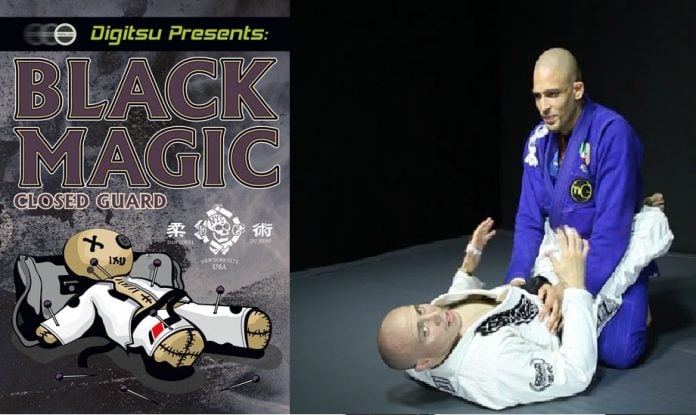
Dan Covel DVD Review – Black Magic Closed Guard

Dan Covel DVD Review - Black Magic Closed Guard

Ladies and gentlemen, the closed guard is definitely making a triumphant return to the top of JIu-Jitsu! The position that was among the most important ones which gave BJJ worldwide fame, is now coming back. We did shun it for a little while there, in favor of exploring different directions. While that’s all fine the closed guard was always there, waiting deep in the foundations of Jiu-JItsu. However, it is not the old-school closed guard that’s becoming increasingly popular nowadays. It is the modern little variations and changes that elevate this core position to new heights. Thee ‘Black Magic Closed Guard” Dan Covel DVD is one example of this. In fact, it is probably the best one available at the moment!

ON SALE HERE:
Dan Covel – Black Magic Closed Guard
Best BJJ Closed Guard Instructionals Black magic Closed Guard
Techniques List

As someone who spends all of my white belt days in the closed guard, I really am stoked to see it coming back. IN all honesty it never really left, but people did forget about using it. Not that it is not effective, it is just that different aspects of grappling came to the forefront. Well, now it is time to get back to the closed guard, albeit from a very different perspective. If you’re looking for the ultimate mind trick formula from the bottom, this Dan Covel DVD is tailor-made for you. In this instructional, you’ll learn the dark art of the closed guard and transform your bottom game in an instant. The Black Magic Closed guard instructional is a real piece of work and I doubt anyone is going to produce a similar piece of BJJ instructional.

The Return Of The Closed Guard

When something works in BJJ, it works. We saw that with the open guard, with the crazy inversions like Beribolos and baby bolos, and of course, as of late, with leg locks. When you find that winning formula you stick with it and bring home championships. Well, now it is time to take a look back, sort of speak, in order to get ahead of the competition. The closed guard is coming back and people will get right back on that horse in the near future. That said, if you like to have an upper hand, you need to be the first one to start using it.
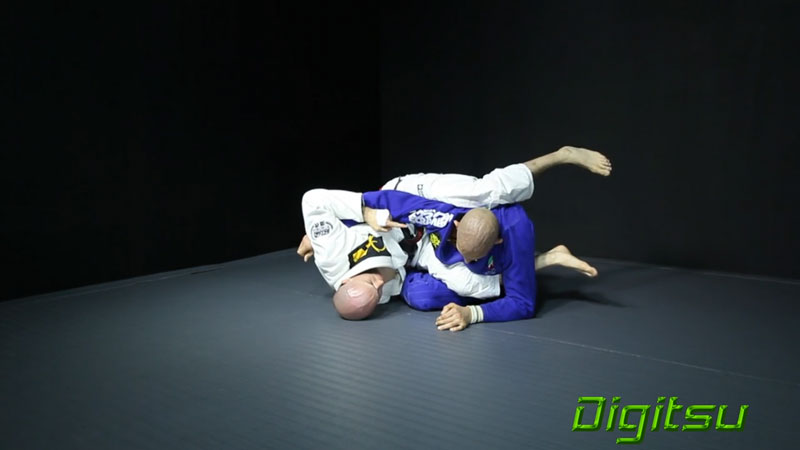
Dan Covel DVD Black Magic Closed GuardThe basic idea of any position that comes back to Jiu-Jitsu after a while si that it has become better. Well, If this Dan Covel DVD is anything to judge by, the closed guard has gotten crazy good. Black Magic Closed guard is exactly what you get with this one, thanks to one of the best black belts around. Dan Covel is not just a renowned BJJ black belt for more than 15 years now, but also a Judo black belt as well. That’s as rich a grappling pedigree as you can hope to find. The lightweight trains at Marcelo’s and is renowned for having one of the weirdest and most effective guard games ever! It is literally voodoo magic when you go up against this guy. And now, all of his information is available directly from the source.

“Black Magic Closed Guard”: Dan Covel DVD Review

Black magic Closed guard is a Gi instructional that offers a whole new way of looking at the BJJ closed guard. While the name is more than enticing, do not expect crazy stuff here – just proven, effective techniques. However, the way they’re all laid out in this Dan Covel DVD is definitely different than most. This is what makes it so special. You get to learn stuff like armbars, triangles, and Kimuras, only from a different angle. In fact, this type of closed guard is actually the most effective submission position in BJJ. In other words, the moment you start attacking, you’ll be changing attacks until you get an inevitable tap. True magic!

One thing that really makes this Dan Covel DVD stand out is his take on positioning and the “invisible JIu-JItsu”. Covel covers gripping, ways to control and break posture and angles as his main weapons, rather than straight-up submissions. This makes all of his attacks immensely effective and much easier to set up and finish. The DVD has 21 chapter s in total, and they all cover a wide variety of armlocks as the main submission. However, dispersed among the many armbars are chokes, transitions, pass counters and other voodoo stuff that’ll catch everyone off guard.

Personally, I really enjoyed this DVD even though I’m not much of a closed guard player. Well, not at the moment, really, However, with all the new instructionals coming out on the subject, it is great to get an upper hand. It was the title that drew me to check this one out but then, I couldn’t let it go. This review is my way of trying to give something back to Dan, who really has a masterpiece in the “Black Magic Closed Guard” instructional

  • Primary And Secondary Armlocks

The first half of this Dan Covel DVD is an introduction to the real “dark stuff”  that comes later. Not that these are any less effective./ As I said, it is all about how you angle yourself, how you grip and how you break the posture. This is all covered at length in the intro of the Black Magic Closed Guard instructional. A few core drills follow suite, making sure you get the essentials down before you get to learn the voodoo stuff. That said, try and do these drills every time you’re on the mats for maximum results.

In terms of specific techniques and concepts, it all starts with the basic closed guard armbar. Only this time, it is not so basic. Once you get to the armbar position, the game changes completely. Instead of only attacking a closed guard armbar you open up a bunch of great follow-ups too. They come in the form of inverted armlocks, secondary armlocks, and even armlocks that work against counters like stacks. The best one hs to be the armbar against running opponent’s that’ll get even the slickest and fastest of grapplers.

  • Black Magic Attacks

Part two expands on the subjects of attacking from the bottom even more. In fact, it covers a whole bunch of different armbars and armbar variations. It starts off with a triangle to freshen things up. The stuff that follows is different takes on the secondary and inverted armbars, that are truly magical stuff. A double kimura/triangle attack that works off the initial armbar just makes things more difficult for your opponents.
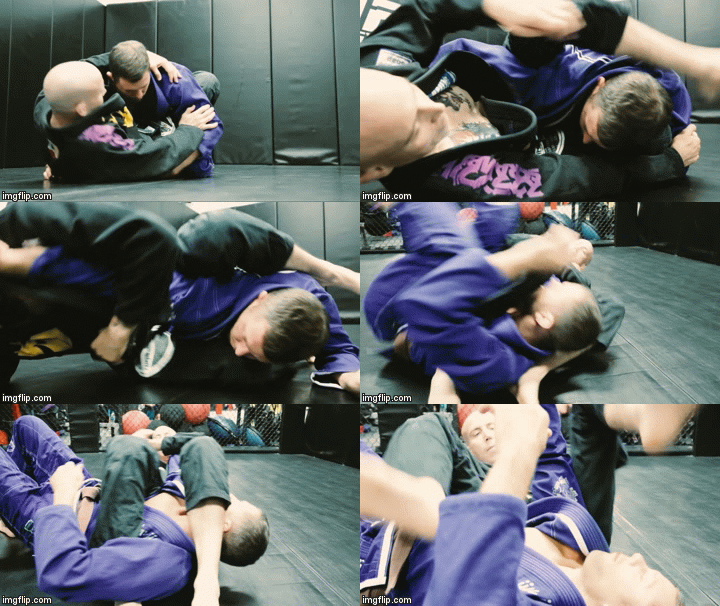
Black Magic Closed Guard Dan Covel DVDKnockover armbars, far side armbars, and the crazy Americana trap further demonstrate how deep the black magic closed guard system goes. There are even attacking options against the Sao Paolo pass, which is one of the most unstoppable ways of passing. The cherry on the cake is a double armbar, however not before an extremely sneaky back take that’s mesmerizing.

Conclusion

If you like to attack from the closed guard, then this is not the DVD for you. If you like to dominate and tap everyone 100% without effort than the Black Magic Closed Guard Dan Covel DVD is the right choice. This is some next level BJJ and it is applicable to literally everyone. Get on the closed guard wagon early and use this unorthodox approach so that you don’t have to play catch up later on.

ON SALE HERE:
Dan Covel – Black Magic Closed Guard
Best BJJ Closed Guard Instructionals Black magic Closed Guard
Techniques List

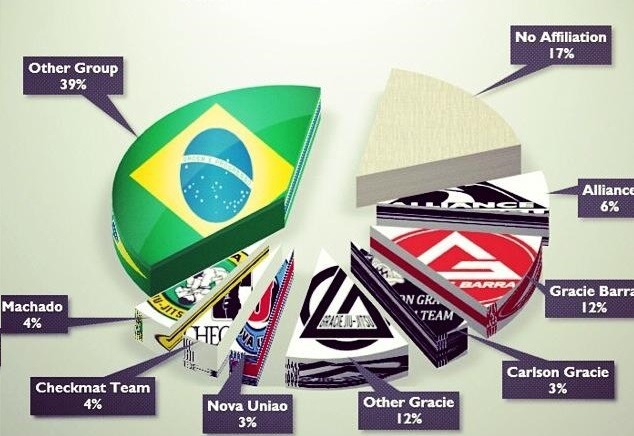
BJJ Affiliations On Trial – Enough Is Enough!

BJJ Affiliations On Trial - Do We Really Need them?

BJJ is evolving extremely fast, and we’re starting to see a lot of the “old school” things slowly become obsolete. By old-school stuff here I do not mean things like techniques. On the contrary, I mean some of the things in Jiu-Jitsu we often take for granted. One example is Creonteism and all the stupidity that come with that approach. It may have been right at home in Brazil in the previous century, but it’s completely useless nowadays. Another example that actually relates to this is the one of BJJ affiliations. Do we really need a connection to a “registered” and recognized team in order to compete and progress through the art? There are two sides to these questions, and I’ll give both of them a go.  Still, you might already know which way I’m leaning towards.

BJJ affiliations used to be a huge thing. People that had no affiliation to some recognizable name, or team, were considered to be outside the world of BJJ. Moreover, getting belts was next to impossible unless you have a Professor and recognized academy to grade you. Up to a certain point, this was all okay. However, as the landscape of Jiu-Jitsu changes, both in terms of training and competing, things like BJJ affiliations matter less and less. Nowadays, if we’re being honest, even belts are not as important as they once were, as proven by the latest ADCC edition. That said, should we really keep giving affiliation to one academy or another so much attention?

Opening Arguments

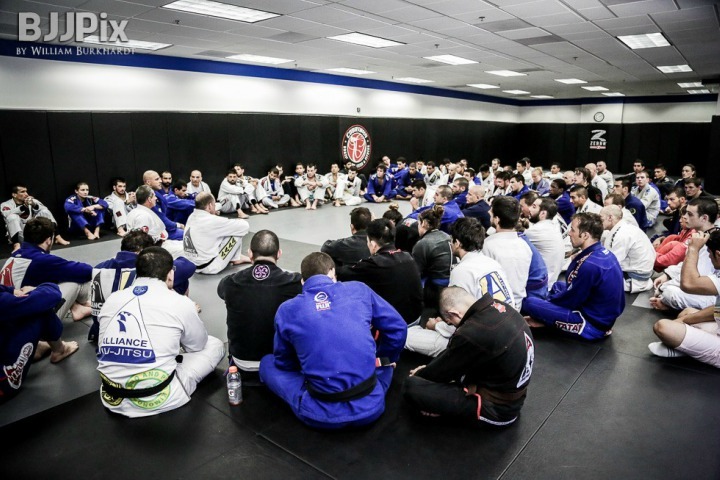
BJJ TeamsTo begin with, let’s try and see the two sides of the story. BJJ affiliations are “still at large” around the world. Almost every academy is affiliated to a larger organization or single individual. People looking to uphold this aspect of BJJ will tell you that this is non-negotiable. Being an affiliate not only makes you legitimate but also provides multiple benefits for students and coaches of the affiliate academy. Moreover, it may be quite hard to compete if you decide to keep your academy unaffiliated since registration is required in most major tournaments.
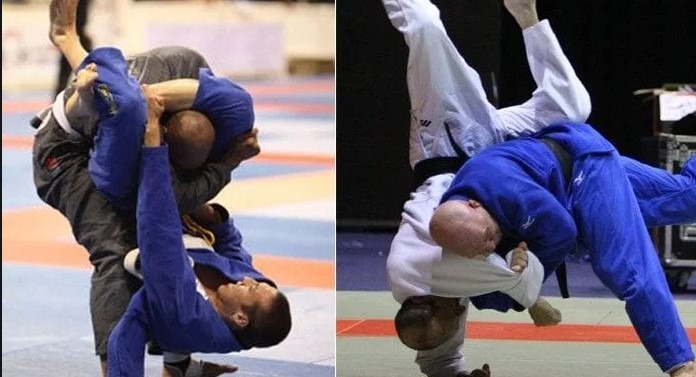
Form the other point of view, BJJ affiliations are holding Jiu-Jitsu back. Having to adhere to the rules and principles of different organizations actually make people less creative and expressive. This goes contrary to the nature of the sport, where individuality is embraced. Moreover, often some of the biggest name organizations that have hundreds of affiliates are not friendly to each other, cutting short valuable training resources for people that have nothing to do with the feud of just a few. All in all, the constraints of BJJ Affiliations seme to be a clear surplus at this point in Jiu-Jitsu.

The Prosecution’s View

When it comes to the idea of giving Jiu-Jitsu complete freedom, one huge argument is that academy owners will get a lot more leeway. For starters, they won’t’ have to pay affiliation fees and use affiliation rules and principles of training that they themselves do not agree with completely. You might think that you can do this anyway, but this is not the case. For now, BJJ affiliations are still mandatory. You need them for everything, from getting someone to grade you belts, to be able to compete or be recognized in the community. There are alternatives, of course, but more on that later on.

Being too invested in BJJ affiliations is also a great way of turning the Jiu-Jitsu experience int a “culty” one. First and foremost, it becomes more about the organization and how affiliates work. This is where things can get cult-like and end up producing robot followers instead of grapplers who need to take the art to new heights. Moreover, there’s bad blood instilled in people that have absolutely no idea why some other affiliates are “the enemy” and are “forbidden” to train with, talk to, or even look at out in the street.  Giving up on the whole concept of BJJ affiliations would set people free when it comes to training, progressing, competing and even running their own academies, regardless of size. However, it won’t yield nearly as much profit as it does now for the select few giant affiliations in the world. Politics 101.

The Case For The Defense Of BJJ Affiliations

To be completely honest, BJJ affiliations to big teams/organizations usually provide comfort and a sense of security. Comfort is not something we want as grapplers, but the feeling of belonging to something is often a great hook for people. To that extent, certain teams out there do provide grеat benefits for their affiliates. Belonging to a large team provides a much-needed social support system for people that actually require it in order to train. Moreover, people oftentimes do find mission statements and creeds of some of the big organizations meaningful and logical. Toa each their own.

Big teams also provide training camps, regular visits of high-level instructors and opportunities for competing. Moreover, worldwide organizations usually also offer a spot to train at for free, as long as you come from an affiliate gym. There’s also another huge caveat to being an affiliate of a recognized organization. The issue fo fake black belts is a serious one in BJJ. Having a clear and easy to confirm lineage does help mitigate this to a certain extent. Plus, you get to brag about having a lineage close to the Gracie family, or whoever it si you’re admiring.

Finally, there’s also access to knowledge. Some of the biggest organizations out there have online databases that they make available for all their instructors. This helps affiliates organize their curriculum exactly like that of the root academy. On top of it, they get to keep the same schedule throughout the year.

The Verdict

To be honest, the verdict is more of a compromise than an endorsement for annoy of the sides. BJJ affiliations won’t just go away overnight. The belt system, the gym wars, the team rivalries, and tournament systems are here to stay. People have been working on building them up for years, and they are a very profitable thing. Giving up profit for the sake of the growth of BJJ is something most people that are making a buck are not ready to do.

BJJ Affiliations On TrialAnd this is exactly where a  compromise is needed. Keeping affiliations is okay, and even a desirable option in certain cases. However, the business side of things, along with all the cult worshiping mentality need to be rid off, straight away! Moreover, all the rivalry prevents people from training. It also interferes with meeting new people and expanding their experience has to go as well. There’s just no point in living in a city with three academies and only being able to train with the same group of people in just one. And all of that just because your academy likes the color red, and the other one likes blue. It is as dumb as that when you come to think about it.
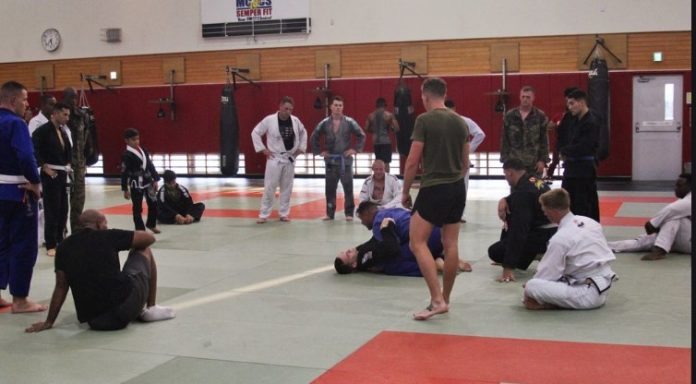
Removing BJJ affiliations completely is a great dream, but the community is not ready for it. There are certain organizations out there that are trying to push the “no affiliations” tag, and they’re doing a great job of it. However, it will take time and baby steps. And some of those baby steps are in removing the power that people behind huge affiliations have. Keeping the benefits of being an affiliate with someone, and dropping all the rivalry, business, and similar nonsense is a great first step. However, nobody is going to do it for us. We need to act as one big affiliation if we’re to change anything.

Conclusion

It is time to keep things simple and keep things playful. It is time we give all the non-sense a rest. How about we just train BJJ, compete, go to seminars and have a great ol’ time of it? The alternative is to recite creeds at the start of training, and bow to dead people in frames on the wall multiple times throughout. In the end, we’ll probably end up worshiping certain grapplers as gods. As far as my experience, I am blessed to be part of an academy that has a rare affiliation relationship with a certain Professor, who likes to keep things simple. Wrapping up, there’s no need to completely remove BJJ affiliations, nor is it possible, realistically. However, we do need to overhaul the entire concept, and fast!

BJJ Styles Around The World: What Is Yours?

BJJ styles

Whether you’re tall or short, big or small, male or female, you’ll find a Jiu-Jitsu game that works for you. In that sense, people develop different BJJ styles to suit them. Some styles out there are repetitive and we see them over and over again, Others are completely unique, and hard for people to figure out. The most interesting thing about it is that we can’t even imagine what’s to come. What we can do, is look at several of the distinct BJJ styles people have. Can you recognize your own in there?

BJJ styles often have to do a lot with the environment. Usually, at first, people try and do whatever they can try to find their space in Jiu-Jitsu. After a blue belt, it is usually time to copy the instructor and develop a style similar to theirs. AS you progress further, you start customizing everything. In modern BJJ, this is where DVDs come into play, helping people move away from their coach’s style. Finally, people sprinkle their own stuff at brown and black belts, developing either distinct styles or a unique blend of a few. Whatever the case may be, several BJJ styles are very easily recognizable and here to stay for years to come.

Figuring Out Brazilian Jiu-Jitsu

Brazilian Jiu-Jitsu is not an art you can master in a few years. In fact, if your aim is to master BJJ, you might as well stop training. That said, if you accept that Jiu-Jitsu is endless, you’ll also accept that you constantly need to progress and adjust. This is where figuring out a game comes in. Everyone that’s been training for more than a couple of years already has either a game or an idea of one. Ther are a lot of things that factor in it, though.

It all starts with the things you like to do the most. For example, some people like chokes way more than they like straight armbars. The same holds true for the other way around. Others like to pass guard, and certain people enjoy grappling off their backs. All of these inclinations give birth to different BJJ styles that then catch on. Given the sheer number of possibilities in Jiu-Jitsu, BJJ styles are probably jsut as endless as techniques are. However, there are some that really do stand out and you can see them everywhere.

As such, it is fun to point out each of them and look into how people that use them have figured Jiu-Jitsu out. Remember that in BJJ, nothing is set in stone. Most grapplers usually start with one style, just to change to a completely different one. In fact, people often change a few, and they might even go back to the very first one. Speaking off, let’s explore a few common BJJ styles.

Some of The Most Recognizable BJJ Styles

You wouldn’t expect a grappler like Paulo Miyao and a grappler like Gordon Ryan to have the same style of Jiu-Jitsu. Apart from being world champions, everything in their BJJ journeys is completely different. Miyao is a Cicero Costha black belt, featherweight and extremely well versed in modern open guards. Ryan is an unorthodox submission artist under John Danaher, and an expert in, well, pretty much everything. If you take a look at them both, though, you’ll see how different their styles are.

In that sense, matching up people with different BJJ styles usually brings about really exciting matches. Yes, pairing a couple of leg lockers might provide an unprecedented event of footsies. However, pairing a leg locker and an exquisite gaurd passer is bound to be a lot more entertaining and eventful. BJJ styles are not jsut important for competitors and entertainment, but also for anyone training .they’re a great way to help people focus on a certain aspect of their game and keep exploring Jiu-Jitsu.

Pressure Addict

If you’ve ever been up against someone with crazy pressure from th top, you know the type. Let’s make something clear, people with a great pressure game ar, not jsut great gaurd passers. On the contrary, those are the people that weigh a ton when they’re in side control, and at least two tons form mount. They’re those people that make you think nothing but “help” when they’re on top of you.

while it doesn’t take a specific build for pressure grapplers, they are most likely in the middle / light heavyweight divisions and have jacked bodies. Moreover, they tend to be highly athletic and do not really care if you have a Gi on, or jsut a rashguard. You’ll know one when you feel that you can’t catch a breath against them, and your struggles only end up making them crush you more. And it seems effortless for them.

Acrobatics

This is one of those BJJ styles that’s not for everyone. It is also something most people try and miserably fail at. The reason is simple – acrobatic stuff is more attractive to beginners than seasoned grapplers. And beginners trying to fly through the air, unless they’re former gymnasts, is never a good idea. That said, at black belt, ceratin people re-discover their desire for the unusual, albeit this time with a different rate of success.

In this BJJ style, people usually do nutty stuff like cartwheel passing or attacking flying submissions from everywhere. There’s literally nothing you can do about what they do because it is completely unexpected and unorthodox. People really into acrobatics are usually lighter but extremely athletic and agile. The’yer the type that looks like a cat playing with a mouse when they roll. Very common for purple belts.

Upside Down Wizardry

We can safely assume that every blue belt in the world had a sting in this BJJ style. Inverted guards are now jsut another open guard variation. However, at a certain point in time, they were crazy, incomprehensible things only available to a handful of people. Nowadays, most smaller grapplers are extremely good at inverting and doing crazy upside-down stuff. Moreover, they’re developing more and more inverted positions, actually making this one of the most sought after BJJ styles. When it comes to playing guard in Gi Jiu-Jitsu, hardly anyone does it without inverting, at least a little. It’s aslo there in No-Gi, just not as much given the more dynamic nature.

Old-Schoolers

Trust me, as you yourself grow into an OG grappler, you’ll start looking into this stuff more and more. By old-school, I mean the styles of the people that were there when Brazilian Jiu-Jitsu took place. These are the Rickson Gracie and Machado brothers’ type of people. They’re all about the closed gaurd, simple top control and devastating submissions preceded by unbelievable pressure. They’re the people you can never throw out of the mount, or use fancy escapes against. Also, they’re oftentimes stalling and going for the safe version, rather than the attractive one. This is one of those BJJ styles that are highly effective but might not be the most fun to watch.

Grappling Background

Have you ever gone up against a guy who comes in with a huge wrestling background? They’re right up there with black belt Judokas or Sambo experts. People that come with extensive experience in other grappling martial arts usually have very unique BJJ styles. They tend to integrate what they learn in Jiu-Jitsu to their already existing background. While doing things the other way around would be better for their Jiu-Jitsu, there’s no denying that this gives birth to some cray BJJ styles. Just take Nicky Rodriguez as an example.

The No-Gi Nut

I’d have to place my self in this category, t leat in the present time. I’ve gon through several of the BJJ styles we’re talking about here today. However, at the moment, I’m enjoying No-Gi so much that I’m using No_Gi grips even when I’m rolling with the GI. And yeah I’m still not that far gone to train exclusively No-Gi. However, there are those that have never dawned a Gi in their life, and still are extremely high-level grapplers. No-Gi people tend to develop some of the craziest styles, particularly when they’re in an academy that also offers Gi classes. Thre’s jsut something about No-Gi that makes people want to do it, so there’ are all kinds of people that try and bring something of theirs to this style of Jiu-Jitsu.

Lapel Fetishist

On the other end of the No-Gi spectrum, you have an extremely dedicated Gi specialist. Here’ it is all about collars, lapels and sleeve grips. From simple Ezekiel chokes all the way to extreme lapel bondage, some folk love to tie others up. There’s no denying that this is one of the most effective styles for both rolling and competition, though. Using the Gi as a weapon of offense is a crazy way of taking Jiu-Jitsu to new heights. Durgin the past couple of years, I’ve seen so much innovation in this are of Jiu-Jitsu that it is becoming frightening. Once again every Gi academy has its own lapel specialist(s).

Conclusion

BJJ styles are so numerous, it is impossible to write them all down. Still, recognizing other people’s styles, or even your own, if you’re a beginner is very fun! Moreover, it is extremely interesting to see people from clearly opposing styles match up, whether it is a tournament nor in rolling. BJJ Styles jsut make the art much more diverse and interesting. Plus, they’re a great platform for further evolution and make Jiu-jitsu “user-friendly” for just about anyone that walks on the mats.

BJJ Lessons: What Will You Learn On The Mats?

What will you learn on the mats

What will you learn once you start training Brazilian Jiu-Jitsu? If you’re hoping for a direct answer to this question, the best one I can provide is “you’ll learn what you’re looking for”. If you’ve gone to a BJJ Academy to learn self-defense, you’ll learn it. Moreover, if fitness and recreation is your goal, you’re all set. Becoming a top competitor? Sure, ti’s more than possible. Mental exercise and a different view of things? This one is guaranteed. I could go on and on about all the things Jiu-Jitsu has to offer to everyone. But how exactly do BJJ lessons work?

There’s a reason why I’m going to be talking about BJJ lessons rather than classes today. Class is something everyone can attend. A lesson, though is what you take away from a class. In that sense, BJJ usually teaches more lessons than classes. However, it is still a highly individual endeavor. Still, BJJ lessons extend well beyond the mats. On the mats though, the come in two distinct formats – in a group or individual setting. Let’s see what each of them can teach you, apart from the technical aspects of Brazilian Jiu-Jitsu.

Group Classes

When you start with BJJ, apart from an introductory class, you’ll most likely start off in a group. As such, most academies have fundamental classes that are a great fit for anyone starting the sport. These types of classes, when put together right, end up teaching you everything you need to know about BJJ before you actually start understanding it.

Group BJJ lessons usually follow a very precise structure, and that’s there for a reason. There’s a mandatory warm-up and oftentimes, students are asked to count along with the instructor. Thant’s not jsut there for a goof, but rather makes everyone looser, and eases further interactions between those in class. Nest, the specific warm-up part, teaches the necessary movement patterns that people end up using throughout their Jiu-Jitsu journey. Then comes the technical part of a class, before finally, people get to try it out in positional sparring or full rolling.

What’s the point of BJJ lessons organized in this way? Well, apart from teaching you Jiu-Jitsu (duh) you get to accomplish a lot. First up, you’ll learn that your mind gives up way before your body does. nest, you’ll see that being extremely close to people is no big deal. That in itself is a huge lesson for modern times. Moreover, you’ll get over all your social fears and anxieties, simply because different people will try to bend your joints and squeeze your neck, and you can’t jsut sit there and do nothing. Not to mention the crazy fitness benefits or those competition BJJ lessons that remain burned into your mind.

Private BJJ Lessons

On the other part of the BJJ lessons spectrum, you have the private classes. In most situations, people usually do not start with these. Folks that have been training for a while and want more technical, tactical or other types of insight are most commonly singing up for privates. However, privates are open to anyone, and there’s a lot to learn regardless of belt or experience level.

A private lesson in BJJ is a pretty unique thing. You get to pick an instructor’s brain in any way you like (except for literally). It is something that is pretty specific to Jiu-Jitsu, at least when it comes to sport-based martial arts. Given how usually cool and knowledgeable BJJ instructors are you get to learn much more than jsut a few ways of finsihing an armbar. From tactics, strategies and fundamental concepts, all the way to how to appraoch anything BJJ related. You can lern about nutrition, about conditioning, how to set everything up, figuring your style out, how to cope with some of the challenges you face rolling… The list goes on and on.

What private BJJ lessons can teach you is a lot more than jsut technique. Granted, they’re oftentimes expensive, but where else do you get life coaching, extremely high technical knowledge and rolling experience all in one? However, there’s the drawback of not being in a group setting, which not only robs you of the full BJJ experience but of all other group BJJ lessons benefits.

Off The Mats

As with everything else, it is best to find a balance between group and private BJJ lessons. What is the perfect balance? Whatever works for you. Jsut make sure that you’re including both and you’ll skyrocket through BJJ?

However, another thing that’ll happen when you really get into what BJJ lessons have to teach is a change of perspective. I’ve never been much of a fan of life coaches and stuff. However, Jiu-Jitsu is the best life coaching method that you’ll ever experience. Firstly, it is easily applicable to everyone, and the lessons you lern can be highly individual or broadly applicable. Extremely valuable lessons like dealing with failure on a daily basis and learning how to trust people area mong those you’ll learn really quickly.

Most people nowadays have a very difficult time accepting failure as part of life. That’s why most people that start training try and win every possible exchange in the beginning. The more you try, the more you fail, and that’s a lesson not easily learned nowadays, MOreover, you’ll get to learn trust, since you have to give your most valued possession, your body, to another person to “play with”. You’ll soon find out how important this particular lesson is for everything in life.

Final Words

Training Jiu-Jitsu brings out the best in people, physically, mentally, socially and in every possible sense. There are certain BJJ lessons that will teach you things no other lesson can. In that sense, classes are much more than jsut an hour of random martial arts techniques. Jiu-Jitsu is much more than just a martial art, or a sport, ti is a lifestyle and it has a lot to teach us all, regardless of the belt.

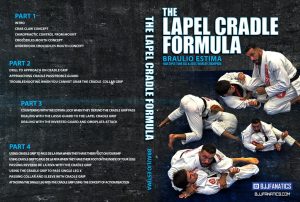
Braulio Estima DVD Review – The Lapel Cradle Formula

Braulio Estima DVD Review – The Lapel Cradle Formula

It has certainly been a while since I’ve looked at a Braulio Estima DVD. Back when I was starting BJJ, I often looked into one of his then popular releases. Not that it made too much sense to me as a white belt, but it did help. He had a few online stuff covering things like the D’arce choke, but never really committed to doing another full-length BJJ DVD instructional. Well, finally, Braulio seems to have changed his mind. It may be his brother Victor and all the stuff that he is putting out, but there’s a brand new Braulio Estima DVD out there called “Lapel Cradle Formula”. As usual, we have the first review!

ON SALE HERE:
Braulio Estima – The Lapel Cradle

Braulio Estima Lapel Cradle Instructional DVD
Techniques List

Where do I even begin with what Estima offers this time around? Once again, his instructional is a highly specialized one. And yet again, it is a highly effective one, particularly as it tackles a subject that is very unique. The cradle is one of the top moves you can do to keep someone uncomfortable on the bottom, whether it is wrestling or BJJ. The trouble is, you can’t really do much more. unless you include the lapels into the mix. then, you have a winning formula that for now, only Braulio had at his disposal. Well, “The Lapel Cradle Formula” is now out and this brand new, four-part Braulio Estima DVD has all the information you’ll ever need.

Braulio “Carcará” Estima

As far as legendary, old-school names in Brazilian Jiu-Jitsu go, Braulio is an unmistakable one. He is one of the top people in Gracie Barra at present, being a Carlos Gracie Jr. black belt. In fact, he is a 4th-degree black belt and multiple-time world champion. Also known for the Estima lock that he developed alongside his brother Victor, he is also one of the top competitors of all time and an incredible coach.

As far as his competitive career goes, Braulio has three IBJJF world titles and one UAEJJF world championship. Moreover, he has a double ADCC title from 2009, along with several European, Pans, and plenty of other titles. In short, he has won everything of worth out there when he was active. During his competitive career, he was also in the center of some controversy, testing positive for PEDs and losing his 2014 IBJJF world title a result. Braulio also tried his hand in MMA for a while, fighting in Titan FC.

Currently, Braulio lives and teaches in England, and is obviously on the path of some very welcomed innovations. His way of passing the half guard is unique, to say the least. As it turns out, it is a blend of moves from different grappling arts, coming together in the Lapel Cradle Formula Braulio Estima DVD.

The Wrestling Cradle

Before I go on, a few words on the cradle position. In wrestling, the cradle is one of the premiere pinning positions since it provides both upper and lower body control. There are several ways of obtaining it, although only two are applicable in BJJ – the near side and far side cradle. As such, the cradle is the perfect weapon to use against the half guard. However, given its wrestling background, it is all about No-Go, and people often find it hard to set it up when the kimono gets in the way. As a huge fan of the position, I can attest to this issue.

What this Braulio Estima DVD does is provide an answer to all cradle issues in regard to its use in Jiu-Jitsu. As it turns out, with just a few minor, but important grip adjustments, you can turn the cradle in one of the most powerful passing systems out there. In fact, if you throw in lapels into it, you get a real winning formula, one that’ll never fail you in half guard. Suddenly, thanks to this new Braulio Estima DVD, the cradle is not just a wrestling pin anymore. The “Lapel Cradle Formula” is the perfect answer to passing the half guard in the Gi, but it also offers much more than just a pass.

The “Lapel Cradle Formula” Braulio Estima DVD Review

As expected, Braulio is up to date with the modern BJJ DVD instructional format. This Braulio  Estima DVD follows the recognizable format of a four-part instructional, with clear progressions and in-depth explanations. As with all other similar releases, the material is available in both DVD and digital format.

The entire set starts off with a short introduction, before covering some interesting stuff along the lines of the crab claw and the crocodile mount in the first volume. The second one has a few key drills in relation to cradle grips and some cradle basics. Past halfway, in volume three, Estima goes over some common counters to lapel guards that ht are used as counters. In the final part, the focus is on passing a whole host of open guards with the cradle gripping system. As I said, much more than just a half guard passing DVD.

  1. The Lapel Cradle Formula

In the opening section, there’s the inescapable introduction that kicks this instructional off. From there on, though, Braulio heads straight into some of his original moves that sound, well, crazy. In essence, they’re just as nutty as they sound, but boy do they work! There are several key concepts here, like the crab claw which is basically a cradle position without gripping your hands together. Crazy, I know, but it works.

The rest of the chapters on this DVD covers some crazy mount concepts that are going to completely change your mount game. The chiropractor control and crocodile mount are stuff that I can’t really explain here. You’ll have to get the DVD and check them out. I can just say, they’re the perfect tools to confuse everyone, black belts included.

  1. Cradle Grips

After covering a “gripless” variation of cradle control in the first volume of the “Lapel Cradle Formula”, Estima goes on to explore the intricacies of the cradle grips in the second part. Here, he covers the basic wrestling cradle grips first. Then, he reinforces and reinvents them by introducing Gi grips, and some lapel craziness into the mix. This is what makes this Braulio Estima DVD really stand out among other “cradle for BJJ” instructionals.

The remaining two chapters of the second portion are about setting the cradle half guard pass. First up, is dealing with the dreaded Z guard, via establishing the cradle grips. The final one covers some troubleshooting in situations when collars are not available for gripping. In other words, Braulio covers just about every contingency you can think of and several you can’t even imagine.

  1. Countering Common Defenses

There’s some true Estima brothers craziness in this third volume. I have to say, this one is by far my favorite of this Braulio Estima DVD instructional. The very first chapter is a way of dealing with people that attempt to defend the lapel cradle pass. And that way is by using an Estima Lock to tap them quickly and cleanly.

However, options do not stop there. The lasso and inverted guard are common modern ways of attempting to block the cradle pass. In certain situations, they can be successful. So, Estima went above and beyond, offering counters to both, as well as a sneaky Omoplata counter that ends up right back in the cradle pass.

  1. How To Cradle Open Guards

The final chapter of the “Lapel Cradle Formula” Braulio Estima DVD contains more chapters than any of the previous three. In it, Braulipo moves on from the half guard and focuses on cradling people that play different open guards. These include the De La Riva, Reverse De La Riva, Single leg X, collar and sleeve guard, and a few others. Estima offers both direct attacks, as well as some intricate advanced concepts that are meant for higher belts. In any case, the stuff is pure gold, at least as far as I am concerned.

Closing Thoughts

Wrapping up, go and get this Braulio Estima DVD. I’m not kidding, even if you do not like the cradle, you need this passing system in your life. If you are training with the Gi more often than not then this is mandatory instructional. Even if you’re not, the lapel Cradle Formula will over new insight into using the cradle for the purposes of Brazilian Jiu-Jitsu. Not to mention the level of teaching that’s unique to Braulio Estima only.

ON SALE HERE:
Braulio Estima – The Lapel Cradle

Braulio Estima Lapel Cradle Instructional DVD
Techniques List

High Crotch Takedown For BJJ: Questions And Answers

High Crotch Takedown For BJJ Cover

You’ve heard of the High Crotch takedown. You’ve even seen it if you’ve ever watched any of Daniel Cormier’s MMA fights. But have you ever attempted to use it in BJJ? Moreover, have you give it a try wearing the Gi? Although this is one of those wrestling moves that are highly specific to wrestling, you’d be surprised how easy it is to pull off in Brazilian Jiu-Jitsu. There are countless ways of getting there, plus, at least as many ways of using it to get something else. Why aren’t we seeing more of the high crotch takedown in Jiu-Jitsu? Let’s try and answer some of the most common questions.

Wrestling is a perfect companion of Jiu-Jitsu – that much we all know. However, it is mostly single and double legs, and lately, front headlocks that people use. Of course,m there’s also the arm drag, but it has morphed so much that there’s now a BJJ and a wrestling version of it. And, as with all other aspects of Jiu-Jitsu (submissions, pinning, etc), we have to turn to techniques that are not as common to surprise opponents. A staple in wrestling, from the earliest moments training, the high crotch takedown is notoriously underused in BJJ. It doesn’t matter why, really. What matters is whether it works or not. I claim that it does.

What Is the High Crotch Takedown?

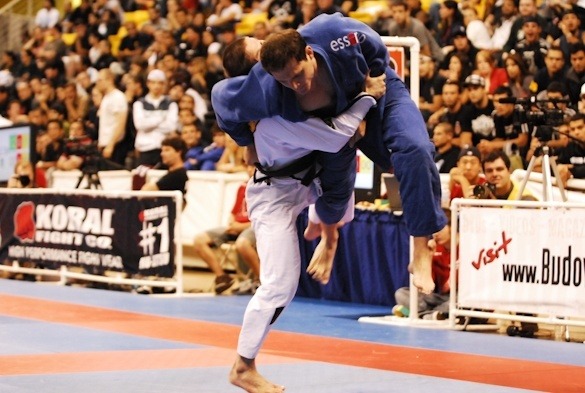
High Crotch Takedown For BJJIn wrestling, there’ no way you could compete without dedicating time to the high crotch takedown. When you come to think about it, it is downright perfect. To get it, you need to be really close to your opponent, solving the distance issue. Moreover, you’re not going to low, like shooting for a double or single, taking away sprawling as a defense. Moreover, given that we’re looking at it from a BJJ perspective, you’re literally halfway to the back from the position.
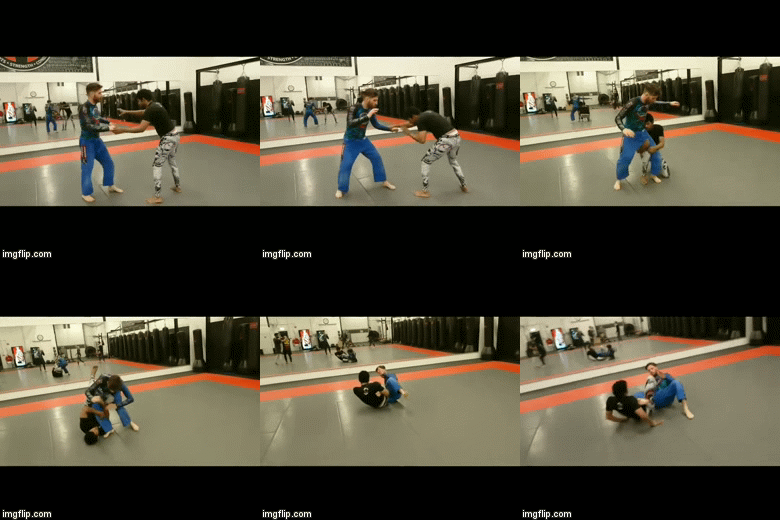
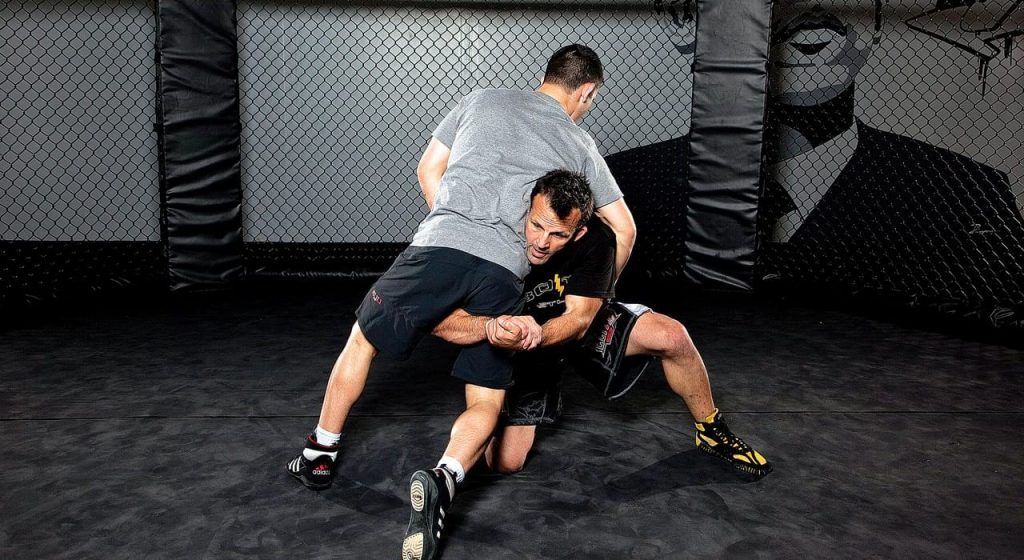
The high crotch takedown is like a single leg takedown but without any of the usual counters and a much better finishing rate. The difference is mainly in the placement of the arms. Instead of hugging at the knee level, you look to isolate the leg as high up as possible. Hence the name ‘High crotch”. The positioning of the arms influences how you position your body as well. Your head, even though on the side is safe form headlock attacks, and all sprawling motions are useless. Even a Kimura counter is notoriously difficult if you have your elbows tight. From there on, there are several ways of finishing or transitioning into their takedowns.

So far, we know that his works perfectly for wrestling and even MMA. But will it work for Gi BJJ? Why not? Granted, the approach is a bit different, but what you actually get are better ways to connect to your opponent and finish. Speaking of finishes, you can go single-leg style, or lift someone completely in the air before slamming them down. And yes, this type of slamming is legal in Brazilian Jiu-Jitsu.

  • How Do You Get There?

In No-Gi, getting to the high crotch takedown is fairly simple. A collar tie is usually a starting point, with a grip on the opposite side wrist also preferable. Collar tie controls distance, while the wrist grip is what will open the position up. In fact, it’s a surefire way of shooting. When you decide to shoot, you do the same as for a single leg. However, having that wrist grip, you pull the opponent towards you, while shooting to get your other ar deep and high up the crotch.

With the GI, you have even more options. Here, you have no need of actually connecting your hands together around the hip. You can simply hold on to the Gi pants and skirt to get incredible control and connection. Form there, finishing is much the same.

Check out all possible variations of the High Crotch as well as plenty of folkstyle wrestling magic. Adam Wheeler’s “Fundamental Folkstyle Wrestling” DVD is all you need to become more than well rounded on your feet.

  • Does It Work For BJJ?

In wrestling, there are several defenses for the High Crotch Takedown. It is a hugely important part of wrestling so it is understandable that people have figured out ways to deal with it. However, in BJJ, most people do not know high-level ways to defend it. Moreover, attempting defenses only opens up more attacks for you. The one thing you need to keep your eyes open for is a Kimura counter. However, if your arm is sufficiently high up the hip, there’s no way for an opponent to get it. In that sense, the answer is yes, the high crotch is perfect for BJJ. You shoot without risks of getting choked, you can stabilize the position easily and stay there, and you heave sever follow up options, both for taking someone down or attacking with other BJJ attacks.

  • What If It Fails?

As with everything else, you’ll probably fail with the high crotch from time to time. What then? Well, first of all, the easiest thing to do is disengage. However, since you’re not on your knees like in a double leg, you can do so easily. Moreover, you deny any grips when you disengage, which is often the case with failed single leg takedown attempts.

High Crotch Takedown However, nobody likes to actually disengage after getting to a position. If you can’t really throw your opponent using the high crotch. Perhaps you’d want to think about going to a different takedown. You can always hit a double leg, a knee tap, a single leg, or even try and go for a Frieamn’s carry from ta high crotch. Moreover, the back is always present, when an underhook is not, and vice versa. A win-win position.
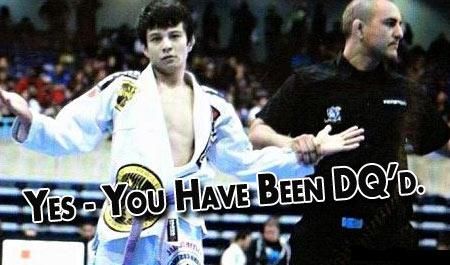
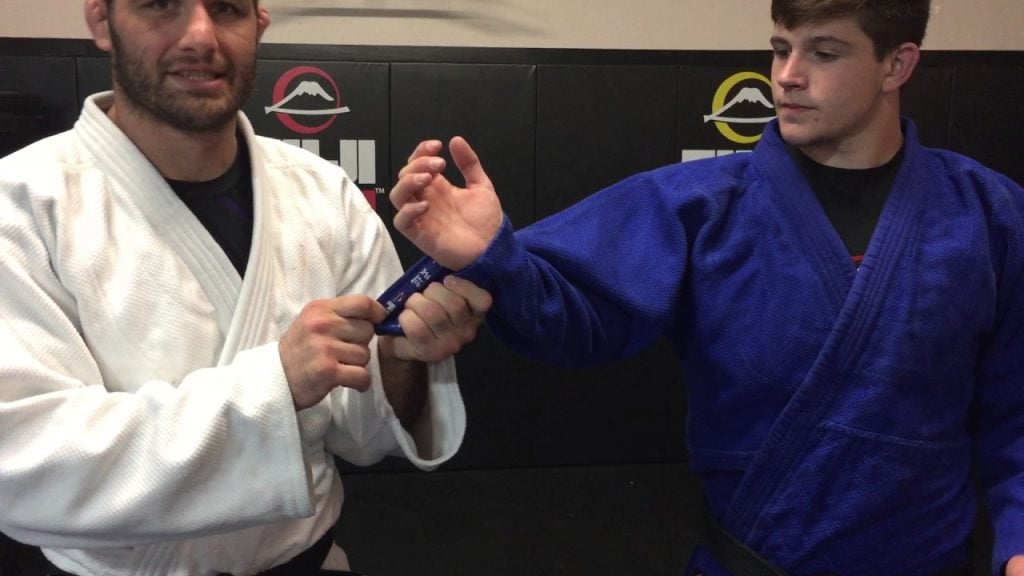
Learn an air-tight top game to have all the follow-up options you need from Lucas Barbosa. The “Hulk” will return you into a top position machine with his “Top Game” DVD set. Check it out now! 

Building A Game Around the High Crotch Takedown

Before we wrap it up, let’s talk about a few ways of using the High crotch takedown to build a great system for standing. In fact, it doesn’t have to be standing, as you could also set it up from a bottom turtle position in certain situations. That said, the logical follow-ups are double and single leg takedowns. What you need to consider here is to actually use the high crotch to set them up, if they’re your preferred choices. Think of it as the lazy way of getting a single or a double. I like to use an arm drag or a Russian tie to get to the side and hit a high crotch. From there it is very easy to get a single leg or go for a knee tap / double leg. It is lazy because you do not have to shoot at any point.

Taking the back is also a breeze form the high crotch takedown. You can do it in two ways. The first is transitioning while standing, and doing your thing form the. Another is actually finishing the takedown by lifting and slamming your opponent to the ground. In most cases, you’ll get a reaction in the form of turtling up. Remember that you have top grip still, meaning you can get he back or hit the Truck and do some fun stuff from there.

Of course, you can also switch gears completely and go for a leg lock. Whether you’re stuck in high growth or use it as fake, you can always transition to a leg lock on the opposite leg. All it takes is sitting down for half an Imanri roll, and transitioning into either 50/50 or an outside Ashi Garami. From there on, you know what to do.

Wrapping Up

Wrestling classics are always a good fit for BJJ. Whichever way you look at it, a high crotch takedown is going to be effective in Jiu-Jitsu. In fact, I’ll go as far as to claim it is more effective in BJJ than in wrestling, given all the options you have. Have some fun with this one, and if you have any more questions, let us know so we can add more answers to this article.


BJJ Cheating: What Can You Get Away With?

BJJ Cheating: When Are You Crossing The Line

Cheating is a part of any sport, so it is not surprising that we have it in BJJ as well. However, BJJ cheating is a more complicated subject than in other sports. OF course, there’s your usual stuff of trying to sneak in illegal moves which are glaringly obvious. That’s not the point, as there’s nod discussion about stuff like that. What complicates things is the nature of Jiu-Jitsu. In a tournament people often find themselves in situations neither they nor the referee has seen before. Moreover, referees have the right to call things the last they see them, adding to the confusion of things. Plus, there are a lot of things you can do off the mats to help you win, which may be considered as BJJ cheating as well.

When it comes to BJJ cheating, the fact of the matter is that it is a real thing. However, given the uniqueness of the sport, there are ways in which you can pull it off and make everything fun, and things you should never ever try and do. Some of the stuff may be toeing the line, but others are inexcusable. The question is, where do you draw the line when it comes to BJJ cheating? Let’s look at a few “good” and “bad” scenarios and figure out when is it ok to cheat while you roll.

Is There Really Such A thing As Cheating In BJJ?

Let’s be honest, you can’t say that you’ve never cheated or that you’ll never do it. Everyone wants to win, and apart from the no-ego, tap often stuff that every grappler likes to quite, everyone’s fighting to submit the other guy/girl. After all, that’s the nature, and the ultimate goal of the sport, so let’s not lie to ourselves. In doing so, every little edge you can gain, in both rolling and especially in tournaments is not something most people will think twice about. And it’s a normal thing to do.

BJJ Cheating: What you can DoWhen it comes to BJJ cheating, the better question is perhaps whether there is such a  thing in reality? Let’s take PEDs as an example. In BJJ, the use of performance-enhancing drugs is prohibited. However, nobody is checking athletes in any way or form, apart from maybe a select few black belts. That means you can get away with it, and no one will be the wiser. Is that really cheating? Thre are countless examples of things we do in Jiu-Jitsu that often cross the line of cheating. Form a more technical standpoint, you have moves that make opponents uncomfortable so that they give up other attacks. While it may seem ”unfair” most stuff like this are actually legal, and therefore, not technically cheating. Ass I said, the line is very blurred.
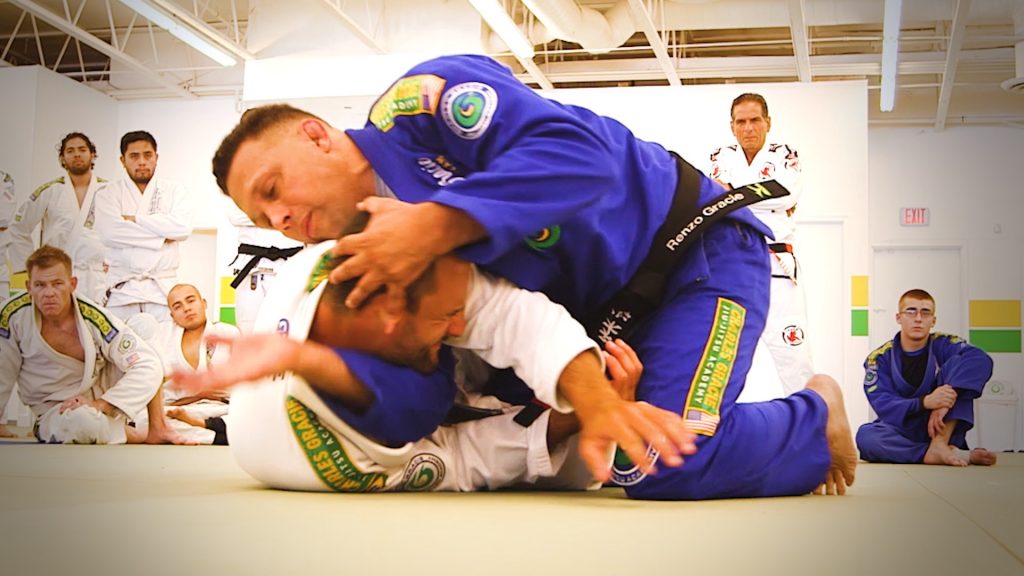
Still, there are some things that are undoubtedly deep into the BJJ cheating category. Most of them actually relate to training, rather than competition, given that it is the referee’s job to figure out what’s what when you’re fighting. Still, some stuff is completely out of line and as such, falls under the “bad” cheating category. To make things simple, we’ve outlined both the stuff you can pull off and the stuff you should never do below.

How Not To Cheat in BJJ

Let’s start with a few training ground “specials” before we move on to the tournament cheats. To kick things off, I’ll use a very familiar one – hygiene. Yes, neglecting your BJ Jhygiene is considered BJJ cheating. Why? If you put your smelly Gi in someone’s face and they tap, that’s cheating. And it is glaringly obvious, The same holds true for everything, from dripping bodily fluids to long fingernails. Get your state in order before you roll|

Next up, a “Brazilian” special – the “Brazilian tap”. This is a real “kick under the belt” in terms of BJJ cheating. Faking to tap, just so you get the partner to releasee some tension so you can get out is a really unfair way of trying to get out of a move. The thing is if you use it in a competition, is ti really BJJ cheating?

A huge one in competition, especially nowadays is the issue of transgender competitors. Having someone who has lived as a male for all their life, now transition as a female and fight int women’s divisions is a huge no-no! That’s BJJ cheating embodied, and there shouldn’t even be any discussion about it. This is a great example of being too politically correct.= for our own good. And yes, this is a much bigger issue than even PEDs.

Certain moves are also out of the question. Thos include stuff like “oil checks”| or sandbagging, which can often go unnoticed by referees. They’re not illegal per se, but definitely not fair, and there’s fall under the category of unwanted BJJ cheating. Keep this under wraps, both in rolling and tournaments.

Cheating at weigh-ins is also not cool. People sometimes ask lighter teammates that look alike to weigh-in, allowing them to go in a match with a huge weight advantage. That’s not what the sport is about. Moreover, you have the absolute division for such stunts if you earn your right to fight in them.

I’ll leave PEDs in the gray area for now, as without clear regulations and testing, there’s no way of knowing who is on and who is off it.

BJJ Cheats You Should Know                      

On the other side of the “line” are the moves that might be considered BJJ cheating, but in reality, are not even minor offenses. In terms of competition, a great example is using the advantages system. People that know how points and advantages work can game the system and get a win ina a sneaky way often thought of as cheating. Well, it is most definitely not. Learn the rules.

BJJ Cheating: Dirty MOvesThere’s also the case of “dirty” BJJ moves. Okay, eye gauging and striking, particularly in sensitive areas are clearly off-limits. However, smothering someone from mount using the Gi, or using moves that are considered dirty in other sports is perfectly ok. All kinds of catch wrestling submissions, or crazy wrestling pressure points for pinning are fair game and not considered BJJ cheating.
Another huge one in this category that I bet will spark controversy is stalling. Stalling in a BJ Jmatch is boring but it is not cheating. It actually ties in with gaming the system vie advantages and points. If you can get your opponent to get a penalty or earn an advantage, you’re free to stall as much as you can if you want to. It won’t make an entertaining match but it is a fair tactic in terms of getting a win.

Finally, there are several ways in which you can “cheat” with your Gi. In IBJJF tournaments there are clear guidelines and checkpoints. These checkpoints are exactly where people try to get in terms of Gi length, width, etc. This might seem unfair but is not really a big deal. Gripping might turn out to be more difficult, but I wouldn’t go as far as to call ti cheating. So if you can pull this one off, kudos to you.

In Conclusion

When it comes to BJ cheating, there are countless more examples of both good and bad ways to do it. In any case, feel free to take your pick, but be careful because “cheating” works both ways. Also, keep in mind that sneakiness is not the same as cheating, so there’s plenty of “grey” stuff out there that’s actually very sound both technically and tactically. So, next time you’re rolling or in a match, and looking to gain an advantage, just make sure you’re on the good side of BJJ cheating and go for it!

How To Run A Successful Brazilian Jiu-Jitsu Academy

How To Run A Successful Brazilian Jiu-Jitsu Club

If you want to be the person behind a Brazilian Jiu-Jitsu academy, you have hard work cut out for you. Well, at least if you want your club to be a successful one. If you think you can just rent a space, put on a gi, and get students, you’re fooling yourself, it takes crazy amounts of dedication and works to get things rolling. Still, it is going to be worth it when it all kicks off, and there’s a way to make sure you do all the right things. Following a set of simple rules and learning from others’ mistakes are probably the most important things to focus on.

I’ve never really had a real ambition of running my own Jiu-Jitsu club. Dream, maybe, but never really thought much about acting on it. Several months ago, due to situations in my own academy, I was kind of thrust into co-running a Jiu-Jitsu club. To be honest, I had no idea that running a BJJ gym could be so much work. That said, I do have help and guidelines, so I’m definitely not moaning about it. In fact, I’m loving it. Still, for those starting from scratch, it can be beyond hard to get things right. Unless you have a blueprint of sorts to elan on to. That’s where the experience of countless others comes into play.

How To Start From Scratch

When you’re setting up a Jiu-Jitsu club, you have more variables to take into account than you can think of. Form the initial logistical issues all the way to interpersonal relations and stuff beyond your control. And yes, you need to factor even stuff that is beyond your control into the mix, before you even start. Remember, if you do not want to be surprised, you need to think of every possibility out there, good or bad.

That said, let’s take a look at the stages of founding and establishing your own BJJ gym. First up, you need to know how to start and put things into motion. Next, even more important, you need to know how to run a Brazilian Jiu-Jitsu club and grow it as you do. Finally, remember not to fall into the pitfalls of being a Creonte or succumb to the lures of a McDojo. Keep things simple and everything else will take care of itself, once you get momentum in the right direction.

1. Business Experience

Let’s make something clear. If you want your Jiu-Jitsu club to succeed, you need to make it a business. Period. Whichever business model you choose, si down to you. Just make sure it is appropriate for what you’re trying to sell, otherwise, you’ll lose more students than you’ll gain .of course, having business experience helps, but not too much unless it is in a similar situation. A BJJ gym is different than other businesses, and lots of it has to do with how personally involved you need to become with your gym members. Still, unless you can pay the bills, a club won’t be able to exist. Moreover, you need to make a certain profit out of it, especially if it is intended as your only source of income.

2. Commitment

This is huge. There’s nothing, absolutely nothing more important than commitment. While you might start off in any basement with mats, not a lot is going to happen unless you’re truly committed and dedicated to your Jiu-Jitsu club. You need to make sure you’re the real deal, and you’re focused on Jiu-Jitsu and your students. Everything else is going to fail you in the long run. Despite your reasons to start, from business inspired, through having to travel too far, all the way to accomplish a personal dream, you can’t be fake as a Jiu-Jitsu club owner. Remember that and you’ll do just fine.

3. Short And Long Term Plans

This is huge. Once again, the reason for starting a BJJ gym is not really important. Whatoyur’e going to do with it is huge, though, Even when you start, you need to have an idea where you want your club to end up. There are different directions in which you can take your Jiu-jitsu club. Options include a recreational club, a competitor’s gym, a self-defense academy, or any combination of the above. Moreover, it is okay to start with JIu-Jitsu, but have plans to include strength training facilities or simply gear in the gym down the road. All that needs to be factored in from the very beginning. A great direction to thin about heading to is looking to set a BJJ gear shop of your own. Of course, this could only materialize after the club is up and running. Thre are countless examples of what you can do to constantly keep your club growing. Just make sure to have most of them ready before you even begin.

4. Off The Mats

If you think running a BJ gym only takes place on the mats, you’re much mistaken. Let me put it this way – you’ll become an expert at administration when you start a BJJ academy. From registrations for initial licenses, all the way to rents, leases, paperwork, and different legal stuff, you’ll become a black belt in no time. Moreover, there are logistics and sponsorships when it comes to competitors. There are promotion and marketing which hare things that require constant attention and just as much dedication off the mats as on them. Just be ready to drive a lot and be in a lot of meetings you’d usually avoid if you’re really interested in making your Jiu-Jitsu club a successful one.

5. Affiliation

Finally, you could always run a BJJ gym without any affiliation. For most people, this isn’t an option though, but you should know that in most cases, this can be limiting. The bigger the organization you’re affiliated with, the more demands and directions they’ll have of how you should run your Jiu-Jitsu club. This might make it easier, I agree, but in the long run, it may not be the direction you want. IF you choose to be an affiliate, make sure that your ideas and vision are in sync with those that are set as mandatory conditions for joining that particular affiliation.

The Rules For Running A Great Jiu-Jitsu Club

Before we wrapping up, let’s look at how you’ll want to run your Brazilian Jiu-Jitsu club once you have everything up and running. Starting anything is extremely hard, as you already know from training Jiu-Jitsu. However, if you’re to succeed, really succeed, you’ll need to follow several key rules. Even if you manage to make the best possible academy version, it won’t last unless certain things are in order. So, once again, as you go into building a legacy for yourself, make sure you have all the Is dotted and all the Ts crossed.

  • Location

First up, location. There are a few things to remember about location in terms of Brazilian Jiu-Jitsu. First up, it needs to be accessible. People need to be able to come reasonably close by car and have parking spots provided. You won’t believe how many potential members a bad parking spot might cost you. Furthermore, people need to know where your gym is, find it easily and preferably, not have to travel too much to get there. In that sense, you need to choose the best spot of town that’s acceptable for you to rent, but that has the best possible location. Moreover, having a big landmark near your Jiu-Jitsu club will make ie very easy to find, not just for new members, but visiting grapplers as well.  Finally do your best not to switch locations too much, and even if you do, try to find something really nearby.

Jiu Jitsu split
Jiu Jitsu academy in Split, Croatia INFINITY BJJ
  • Schedule

When it comes to schedule, the more is usually the better. In those terms, that means more training days per week, rather than more groups. At least at first. When you’re kicking things off, you’ll start off with one group of people. Remember that three times per week is the bare minimum you should start off with. Recommended is anything between four and five, whereas six would be ideal. As you keep going through, there won’t be any growth without adding in other training groups and classes.

One example is dividing your core group into advanced and fundamental. That means everyone up to blue belt goes in the fundamentals group and all others in the advanced. With time, the perfect division would be to break up the advanced group once again, this time ending up with intermediate and advanced. Also, you want to think about including kids’ classes, and you want to do it straight off the bat. It is amazing how much they can change how your academy works.

Finally, keep a clear structure, have a curriculum and make sure your classes follow the pattern. If every class is different and you seem like you’re doing things off the top of your head, you can even be a coral belt and you won’t keep people in your Jiu-Jitsu club.

  • Environment

Of course, the one thing that has people coming back for more, apart from beginning able to choke pother, is training environment. For Brazilian Jiu-Jitsu, the traditional eastern martial arts approach doesn’t really work well. Instead of rigidity, you need a loose atmosphere where people can come to learn. Remember, you’re working with adults mostly, so you can’t treat them like kids. That said, a certain level of discipline has to in place.

A shortlist of what is not acceptable will usually suffice. That said, the shorter and more precise the list, the better. Nobody likes learning a lot of rules. So, keep banter to a minimum while in class, roll respectfully, be clean and smile are great ones to start off with. Everything outside those is okay, and people should actually be encouraged to come and ask questions or questions about certain moves in order to understand them better. That’s what Jiu-Jitsu is all about anyway.

  • Online Presence

There’s no way around this in modern times. If you want your Jiu-jitsu academy to be successful and grow, you’ll need a strong online presence. That means for starters, having an awesome website. The better the website, the better your marketing is. On top of that, social media presence is a must. In those terms,  you can use whatever, but Facebook and Instagram are absolute musts. In the beginning, you’ll need to do it all yourself, and you’ll need to be very diligent about it. Later on, you might enlist someone’s help or even hire a professional to do your online marketing. However, you need to do it constantly otherwise your club will never grow. Make sure you ask everyone, especially visiting grapplers to leave reviews. This will do wonders for you online as well as give you insight whether you’re doing a good job or not.

  • Hygiene

Even the most beautiful Jiu-Jitsu academy, with the perfect location, incredible training environment, and great marketing, everything will come crashing down if hygiene is anything less than stellar. For starters, you need to have an extremely clean mat space for training. Next, dressing room hygiene also has to very high. You’ll need to have ground rules that are unquestionable when it comes to personal hygiene as well. The best option is to have showers in the facility you have your Jiu-Jitsu club setup in. If this is not an option things can be hard, but not impossible. Just make sure every other aspect of hygiene is pristine and you can’t go wrong. One ringworm outbreak, though, and even a well-established gym might never recover, so take this point really seriously!

Summary

Running a Jiu-Jitsu club is a lot of work, but also a lot of fun. Apart from the obvious returns, you also get a lot of personal satisfaction from classes and feedback from individuals. Plus, you get to do what you love for a  living and do it your own way. Thre’s really nothing like that feeling, but you always have to stay conscious about how you go there, and what you need to do to get to the next level. Best of luck!

Review: Introduction To BJJ DVD by Bernardo Faria

Introduction To BJJ DVD by Bernardo Faria

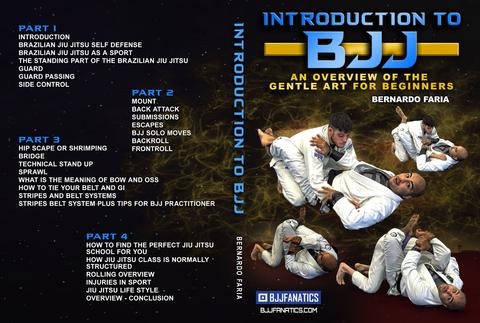
One of the hardest things in Jiu-Jisu is to introduce someone to the sport in the right way. There are just so many moving parts and variables, that people get completely lost. Luckily, there’s that addictive side of the sport, so people tend to push through the toughest periods. Still, having something that you can use, particularly outside of the gym, to help people get a proper introduction to Brazilian Jiu-Jitsu would be ideal. Luckily, such a thing is now available, in the form of Bernardo Faria’s “Introduction To BJJ DVD”. In yet another masterful instructional, Faria tackles one of the hardest subjects in Jiu-Jitsu. Read on to see if he is successful at it.

ON SALE HERE:
Bernardo Faria – Introduction to BJJ

Introduction to BJJ DVD by Bernardo Faria
Techniques List

Bernardo Faria is the man that changed the BJJ landscape just as much, if not more than Danaher and Gordon Ryan. He did not go deep into digging up lost techniques and turning them into powerful weapons. Instead, he focused on issuing instructionals in which he teaches his own, world – level game. It seems that at one point he decided he couldn’t fil enough of them, so he started focusing pon getting everyone to film. So, all the access to BJJ DVD instructionals we have today is down to Faria only. At the same time, he is relentless in issuing new ones himself. His latest one, the “Introduction to BJ DVD” is a real treat!

The Perfect Introduction to BJJ

Imagine how easy it is when you can actually recommend people to get a DVD that’ll explain everything that JIu-Jitsu is about! It is not that instructors can’t or won’t do it, it is just that outside of the mats, beginners can focus on learning from a world champion while not having to worry about what is going on around them. Something like this is exactly what the BJJ world has been lacking, and I’m surprised nobody saw the need for a DVD like this one earlier. Still, better late than never, and of course, all the gratitude goes to Bernardo Faria.

Getting to know what Jiu-Jitsu is about is hard, given the rich and complicated history and even richer and more complicated present of the sport. Jiu-JItsu encompasses a lot, from self-defense toa sport where people can train both recreationally, compete as amateurs or even be full-blown professionals. Moreover, Jiu-Jitsu works in just about every plane of motion, bringing together standing techniques with those that are the real mark of the art – ground fighting

In terms of ground fighting, BJJ is so vast nobody can hope to ever master it completely. That’s part of the challenge and the fun of it. Bernardo does a great job of reducing the clutter as much as possible to paint a picture that’s very easy to understand for complete beginners of the sport. IN fac,t even some older students will find the “Introduction to BJJ DVD” useful and highly informative. Faria doesn’t just stop at history and techniques but also covers creatin aspects of Brazilian Jiu-Jitsu training that are often a source of confusion for those involved. Particularly beginners.

Bernardo Faria: Introduction To BJJ DVD Review

Once again, Faria delivers the perfect Brazilian Jiu-JItsu instructional. He does not step away from his favorite format of spreading the material over four volumes. In fact, most people that issue instructional are following in his footsteps, bringing us more content than ever before. This time around, though, the instructional is a bit different in terms of content. The “Introduction To BJJ DVD’ covers very unique subjects in a highly original manner.

Opening up is an entire first volume of introductory lessons to the very essence of Brazilian Jiu-Jitsu. Here, Bernardo covers what Jiu-Jitsu is, and the differences between sports and self-defense BJJ. There’s also an introduction to the standing aspects of Jiu-Jitsu. Part two goes on to attacks and defenses, before looking at the essential movements and some key advice in part three. The final portion goes into the BJJ lifestyle, offering integral information on the most common questions BJJ beginners ask.

Part 1 – The Bare Essentials

Kicking the “Introduction T BJJ DVD” off is, well, an introduction. Here, Faria talks about what he is about to talk about and demonstrate in this one-of-a-kind BJJ instructional. Right after that mandatory introductory part, he starts talking about BJJ in terms of elf-defense. He goes into the roots of the sport, the Vale Tudo Days and even covers the state of self-defense BJJ nowadays. Right after, he paints the perfect picture for the sport of BJJ covering everything. Form competition information, to training essentials and everything that’s going on, nothing escapes Faria.

About halfway through, Bernardo’s attention shifts to the opening parts of any Jiu-Jitsu exchange – the standing moves and techniques. He goes over the concepts of standing battles in BJJ as well as covering the basics of the guard position from top and bottom as an introduction to the next volume.

Part 2 – Basic Attacks And Escapes

Part two keeps going with the ins and outs of Jiu-Jitsu from a positional standpoint. Here, he covers all the basic attacks to begin with – mount, back and submission attacks form those key Jiu-Jitsu positions. Moreover, there’s a huge section on here on escapes. However, instead of sharing escape patterns, Faria talks about how to start thinking about escapes. It is the perfect way to understand what the point of escapes is and build on that later on.

Keeping true to his style of organizing instructionals, once again Faria starts the introduction to the next part in the final few chapters of this volume. The Subjects here are basic BJJ solo movements and, as expected he starts with back and front rolls.

Part 3 – Essential Movement Patterns

Needless to say, the “Introduction to BJJ DVD” keeps going from where the last one left off. Solo drills, that are actually essential BJJ movements, make up the bulk of this volume. Faria explains both the technical aspects of doing sprawls, bridges, hip escapes, and technical stand up. Moreover, he covers the idea behind all of them, and how they will be with you every step of the way on your JIu-JItsu journey.

Announcing the final portion of this DVD is a portion of some key BJЈ аdvice for beginners. Examples include what some basic things mean, like bowing and saying “Oss”. Wrapping up is an awesome portion of tying your belt and setting up your Gi.

Part 4 – The BJJ Lifestyle

This is by far the most interesting part of the “Introduction To BJJ DVD” by Bernardo Faria. It focuses on the everyday aspects of Jiu-Jitsu we take for granted. However, if you take a look back at your own beginning, you’ll remember that most of this stuff confused you too. A lot. The final portion covers advice on finding the Bst JIu-Jitsu school for you, based on Bernardo’s experience and criteria. Moreover, he examines the stripes and belt system in detail, covering every possible frequently asked question.

Wrapping up is information on BJJ classes, essential tips on beginning rolling, injuries and the overall Jiu-Jitsu lifestyle. An unusual and really needed BJJ DVD instructional.

In Summary

Bernardo Faria has always impressed me with his DVD instructionals. However, the “Introduction to BJJ DVD” surpasses all fo the previous ones. It is different, in that it does not contain technical information, particularly not info intended for high-level competitors. It is a goldmine though, for coaches, and that’s where my focus lies at the moment.So this is not just an instructional for beginners, but also for anyone who coaches beginners, both kids, and adults.

ON SALE HERE:
Bernardo Faria – Introduction to BJJ

Introduction to BJJ DVD by Bernardo Faria
Techniques List

Defending Berimbolos And Other Spinning BJJ Stuff

Defending And Countering BJJ Berimbolos

Have you tried to do a Berimbolo? Of course, you have, it is the move to do. Or, at least it was. There’s no denying that Berimbolos are effective. I intentionally say Berimbolos, because there is more than just one version out there. That makes it more fun to play, but also harder to defend. I guess that’s the idea anyway. Regardless, there are certain ways of diffusing the dangers of the Berimbolo that will stop even experts in their midst.  

You know what? Defending BJJ moves is extremely easy. Yeah, you read that right. All you need to know is what is happening. Simple right? Well yes and no. To know what is happening, you need to know what the other guy/girl is doing. That means doing a few Berimbolos yourself, even if you do not enjoy doing them. That said, you should also know when to act against a Berimbolo. As usual, the most effective times are defending it really early, or countering it very, very late.  

The BJJ Bolo 

What is the BJJ Berimbolo exactly? It is one of those moves that are exclusive to Brazilian Jiu-Jitsu and looks crazy. In fact, seeing someone do it in a high-level match is always impressive, given the spinning nature of the move. IN essence, Berimbolos are moves that look really complicated because they include a spinning component. However, they’re actually really simple and easy to understand.  

Defending BJJ BerimbolosThe goal of a Berimbolo is to get you from a guard position to the back, without having to sweep and reposition yourself, or having to lift an opponent off their feet. The way to do this is to spin around one of their posts (legs) by doing a Granby roll type of motion. As far as the movement goes, understanding the Granby roll is a prerogative for bot attacking with, and defending from Berimbolos 

The next piece of the puzzle is how to stay connected to your opponent while spinning and inverting on the ground. The basic version has you holding on to the Gi pants from a De la Riva guard. The other arm usually stars with a sleeve grip, but you need to get the belt to ensure your bolo works. Both these grips will help pull you into the bolo both against a seated, kneeling or standing opponent. Once you finish the spin/roll/inversion you end up with one hook in and a clear path to the back. Or the truck, if you like the Dark Arts.  

Some new versions of the Berimbolo though, originate from a host of different positions, both top, and bottom. That means that you can’t just learn to counter it from the De la Riva, but rather develop a universal defense system. Let’s talk more about that.  

Defending Berimbolos Early 

The trick with early defenses against Berimbolos is to prevent the spin. AN opponent won’t make the attempt to do a Berimbolo without grips, so I’m not going to talk about grip braking now. When grips are in, just before the spin hits is when you need to think about early defenses because you can rest assured, the Berimbolo is coming.  

One way to really block the BErimbolo is by actually ending up in a near-pass position. Since you already know which leg the opponent will try and get first, you can focus on keeping it safe. AS the opponent gets their grips in, you grab the pants of the free leg. Then, you slide your free leg back, going into a position that’s like the pigeon pose in Yoga. A crossfade from there and you’re safe from any and all Berimbolos. Moreover, you’re almost in an extremely tight pressure pass.

Another interesting way to prevent Berimbolos early is to do something similar, but use it when you’re in a kneeling position. From a kneeling position, you’re in more danger given how low your hips are. However, you have the advantage of getting a collar grip, which is crucial here. The defense can start as the opponent attempts the belt grip. This time around, you stand up and you look to control the leg that’s hooked around yours. the goal is to pull the leg in one direction and pin the collar in another so that you stretch your opponent. This time, though, you end up directly in side control, as freeing your leg is a breeze.

Late Berimbolo Counters 

Late defenses are only effective when you leave them to happen very, very late.  This makes them more of counters than defenses, as you most often end up in a dominant position yourself. With Berimbolos, there’s one common theme to all late counters/defenses – you have to roll too. Whether you roll, spin or twist, you’ll end to get moving if you’d o not want to expose your back.

One top option is to end up on top, but in a better position than before. that means one that doesn’t open up Berimbolos for your opponent. One example is the back position. Instead of you giving away your back, you’re going to get back mount of your own.

From a kneeling position when you’re late to prevent the spin, you need to go with it. It takes timing and work, just like every other late escape. The one thing you really need for this counter is controlling the ankle of the free leg That’s the leg at provides momentum and a wedge on top of your hip. Controlling it low during the Granby roll means you can attack it. However, you’ll have to follow the roll by going on your back and kick off the hook leg with your own at a very precise time. Do it, and you’ll end up on the back of your opponent with ease.

The other option also gets you to the back, but in a much more impressive fashion. It requires you to do a complete roll in order to end up back on top. Once again, the key grip is the one on the ankle of the free leg. Simply put, as the opponent rolls to get behind you, you roll with them, over the near side shoulder. Controlling the leg means they can’t get your back. the goal is to roll full circle, like for a breakfall and end up on top in a knee staple or half guard.

Final Thoughts 

Whatever you do, do not fear Berimbolos. They do look mesmerizing when you first fall victim to them. However, they’re very easy to stop, even if you’re late with your initial defense. In fact, going for late counters might even prove more effective than trying to stop a Berimbolo. Don’t forget to keep practicing them yourself, as that’s the best way to identify the weaknesses and timing you need for a successful defense.