Andre Galvao, Multiple ADCC and BJJ World Champ Announces Comeback in MMA

Andre Galvao Announces return to mma after 10 years of retirement
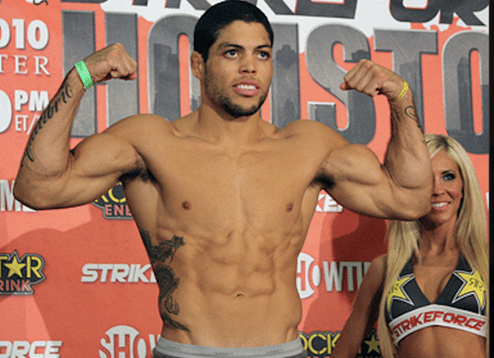
Photo by Mike Calimbas
Andre Galvao Announces return to mma after 10 years of retirement
Photo by Mike Calimbas

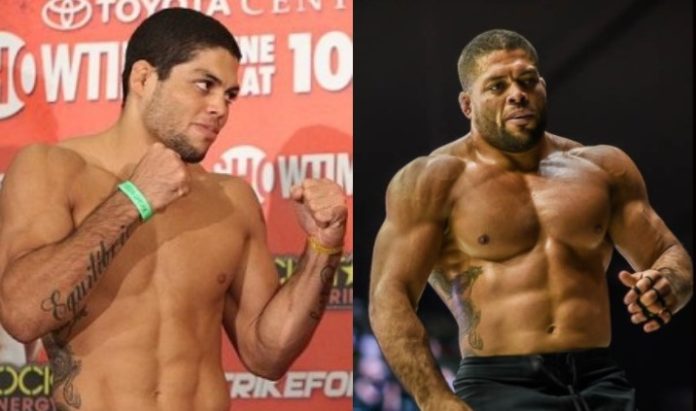
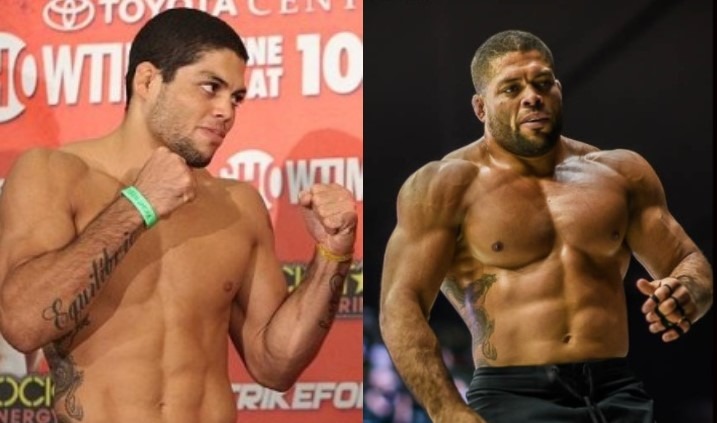
One of the biggest names and one of the most successful competitors of all-time Andre Galvao announced his comeback in the MMA. He decides to return to MMA and step again in the cage after 10 years of retirement.

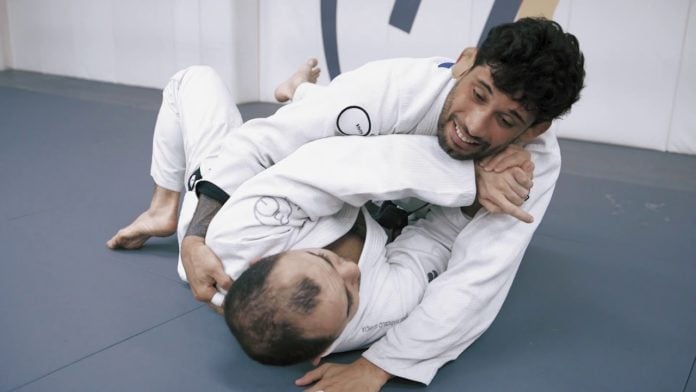
Andre Galvao, certainly one of the most famous names in the BJJ world. He is one of the greatest BJJ competitors of all-time, he won 6 IBJJF World Tittles as a black belt, and also six ADCC World Championships. He finished his great GI career in 2018 at the Abu Dhabi King of Mats 2018. His last grappling match was on the ADCC 2019 Worlds, where he defeated Felipe Pena in the ADCC Super-Fight.

Galvao wrote on his Instagram profile:

“If you didn’t know about it…now you know it.
7 fights 5-2-0 in 2.5 years. Between 2008-2011 I did MMA. Yes. Lots of BJJ fighters were happy about that during those years. They had the chance to win my world titles.
I didn’t fight worlds 2009-2012. Yeah! They all super happy about it. I could win a couple more world titles in BJJ. Haha!
Back in the day, I had no wrestling and no ADCC World Titles. My no-gi game is different now.
I competed only against top fighters never thought about making my cartel…I was ready for anyone.
Much respect to all my opponents ✊?.
All of my opponents has way more experience than me.
I want to show the world I can do it!
I want to get back and show the world I can do it well.
God’s plan…not my plan ✍??.”


View this post on Instagram


A post shared by Andre Galvao Official (@galvaobjj)

What most people did not know is that Galvao fights in the MMA as well, and has a record of 5-2-0. He began his pro career in 2008, and fight until 2010. Throughout his career, he fought in some of the best MMA promotions in the world, such as DREAM (Japan), and Strikeforce (USA).
He showed his superiority in Jiu-Jitsu already in his first matches, where he achieved three submission victories. All three of them were via an armbar.

Last MMA Fight

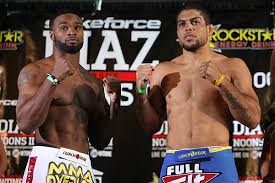
His last fight was on Strikeforce event: Diaz vs. Noons II, in 20010. Andre lost this fight against Tyron Woodley via TKO (punches). Tyron Woodley is one of the big names in the UFC, he is #6 in the UFC welterweight rankings, and he is also former UFC welterweight champion. In one interview for BJJ Heroes, from 2010, Galvao explained his plans to join The Ultimate Fighter TV show. However, that did not happen. But maybe that could be a plan for the near future, who knows …

galvao-woodley
Andre Galvao vs Tyron Woodley

Predictions

How would Galvao look today in the MMA world? Without a doubt, his grappling and his wrestling skills are at the highest level. His style of grappling, with pressure passing, as well as his wrestling, powerful takedowns can be very well translated to MMA. He has already shown that in his earlier career. His athleticism is also on the top level, honestly, at 38 he looks better than 90% of today’s fighters.

andre-galvao


But there is an interesting question for sure, what is with his striking and punching? To be honest we can’t find or see much of his striking abilities. In his previous fights, he used punches to shorten the distance, and immediately looked for takedowns, or throws, where he gets the fight to the ground.
However, it remains to be seen whether we will see his comeback into the octagon and when.

BJJ Knee Injury: Types, Symptoms and Rehab Protocol

Coming back quickly form a BJJ Knee Injury

Getting injured in Brazilian Jiu-Jitsu can vary from stubbing a toe to a fully blown-out knee. There’s no need to hide and downplay the fact that injuries are a part of Jiu-Jitsu. They are a part of any port, and trying to say they don’t happen in grappling only makes them seem worse when they inevitably do. That said like in any sport, some injuries are more prevalent in Jiu-Jitsu compared to others. BJJ knee injuries rank very high among those that you can expect to experience at least once.

If you’ve never had to deal with a BJJ knee injury, you’re either not serious about Jiu-Jitsu, or you’re just about to get one. They just happen, especially in academies that don’t shy away from training takedowns on a regular basis. The knees are sensitive joints under the best of circumstances, and getting one of the nastier injuries on a knee will keep you sidelined for months or might even force you to quit. So, while not getting one would be ideal, how you come back from an injury is extremely important.
BJJ knee Injury

Quick Knee Injury Facts

  • In Jiu-Jitsu the knee injury is one of the most common due to legs playing a huge role.
  • The most common injuries that will occur in BJJ are strains, sprains, dislocations, fractures, meniscus tears, bursitis, and overuse injuries.
  • Knee injuries are generally caused by bending or twisting force applied to the knee. Also, falls, direct blows, or extending the leg while side force is applied may cause injuries too.
  • Knee Pain and swelling are usually the signs and the symptoms of a knee injury
  • Knee injuries are best diagnosed with MRI. X-ray can’t “see” soft tissues like ligaments and tendons. History and Physical examination may be very useful.
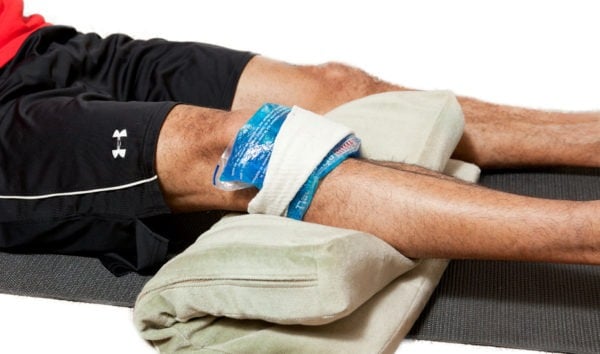
  • The treatment of an injured knee may involve RICE (rest, ice, compression, elevation) method, immobilization, physical therapy, or surgery.
  • The prognosis for a knee injury depends on the injury itself and whether it requires surgery or not.

Know The Extent Of Your Injury

The knee joint is a complicated joint, with a key role in our everyday lives and in grappling. The bones that this joint connects are huge ones, and all the muscles on top and below the joint are also massive. After all, the legs are the strongest part of our bodies. However, the joint itself is extremely vulnerable, much of which is due to the fact that its most sensitive structures are really exposed.

BJJ knee injury meniscus tearJust take a look at a leg, even a powerlifter’s or a sprinter’s leg and you’ll see that no matter how bad the thigh and calf muscles are, the knees are always the same size. And the knee joint doesn’t just work when we train, but round the clock. That means our knees really do get a beating on a daily basis, even without Jiu-Jitsu. If you work standing, and/or have a few pounds more than you should, this just exacerbates the p[pressure your knees have to withstand every day.

Any BJJ knee injury is based around two major sensitive structures of the knee – ligaments or meniscus. The former is the elastic strings that help keep the knee joint together, while the menisci are the cartilage pillows that prevent the thigh and shin bone from touching each other inside the joint. Tears to any of these structures require surgery and a rehab process that you just can’t skip. However, full tears are not as common as you might think, and oftentimes you can get back on the mats quite quickly after a partial tear if you follow a solid protocol.

Most Common Types of Knee Injuries in Brazilian Jiu-Jitsu and Grappling.

Knee Sprains

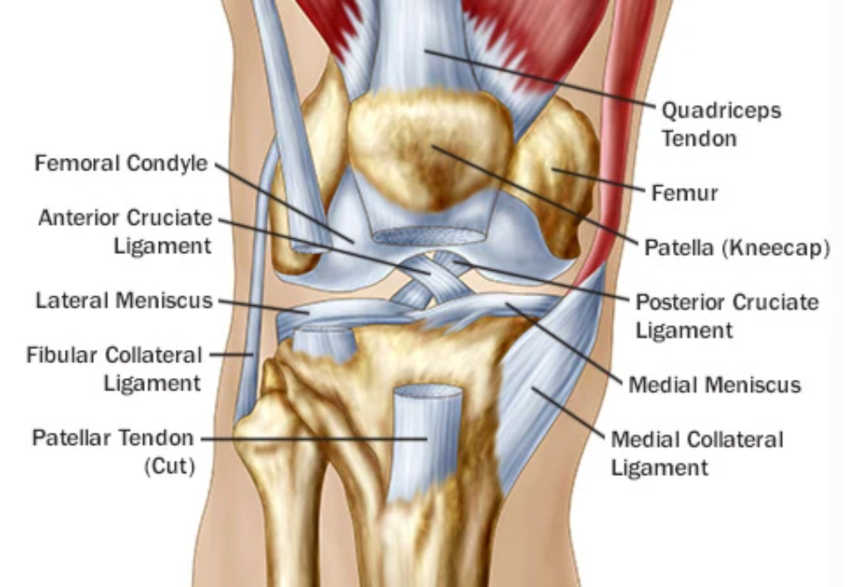
Knee sprains are the type of injuries that damages ligaments that hold your knee. There are 4 ligaments in your knee:

  • ACL – Anterior Cruciate Ligament
  • PCL – Posterior Crucicate Ligament
  • MCL – Medial Colateral Ligament
  • LCL – Lateral Colateral Ligament

ACL and LCL are ligaments placed across each other in the middle of the knee and they stabilize the knee movement from back to front.

LCL and MCL are ligaments that stabilize your knee so the upper and lower bone don’t slide from slide to the side.

Ligament sprains injury depends on the amount of stretching or tearing of the ligament and how much instability in the knee injury caused.

There are three grades of knee sprains:

  • Knee Sprain Grade 1 is when your ligaments are stretched and painful but no torn of ligaments and no instability is present.
  • Knee Sprain Grade 2 is when the ligament is partially torn, and you feel light instability.
  • Knee Sprain Grade 3 is when fibers of the ligament are torn and you feel that your knee is completely unstable

Knee Strains

Knee Strains are the type of injury when muscles or tendons that are surrounding the knee are stretched. It usually happens due to hyperextension or hyperflexion of the knee. You will usually feel pain outside of the knee joint, and you may feel dysfunction of the normal range of motion of your knee. The patellar tendon is stretched from the lower knee cap to the front of the leg in from of the tibia bone.

Knee Bursitis

Knee bursitis is when Bursa (fluid-filled pouch) in the knee is highly irritated, infected, or inflamed. Bursa is a shock absorber located around the joints. Its function is to absorb and minimize the friction between tissues. In the knee, there are two Bursas. One is above the knee cap, and the other one is below the knee joint near and in front of the tibia bone. Bursitis in BJJ is usually an acute injury, but in some cases, it’s a chronic problem.

Meniscus Tears

Tears of Meniscus happens inside of the knee. Tears may happen on the medial and lateral meniscus which are semi-round. The meniscus is articular cartilage that acts as a shock absorber. It usually locks your knee. While you can unlock it with some specific movement the chances are it will lock again. Due to low blood flow in the meniscus, meniscus injury requires surgery, but you’re back on the mats in about two months.

Knee joint dislocation

Dislocation of the knee joint usually happens due to high impact to the knee. It’s a very rare injury in Jiu-Jitsu and grappling sports. Once it happens it may damage the nerves and the blood vessels in the knee. This type of damage requires immediate surgery.

Patella Dislocation

Patella dislocation is the type of injury where your patella moves to one side of the knee. You can usually pop it back by use of your hand. While it’s not a dangerous injury it may hurt a lot and it requires rest, splinting, and physical therapy. Patella dislocation may happen again if not treated well the first time it happened.

Knee Fractures

Knee fractures are very rare in Jiu-jitsu and they happen due to high impact direct blows to the knee. They may occur due to sudden falling to the knee and people with osteoporosis are at a higher risk. Fractures of the long bones like the Tibia, Fibula, and Femur are less likely to be fractured in BJJ.

What causes a knee injury in BJJ, Jiu-Jitsu, and other Grappling Sports?

Most injuries in grappling sports happen by an external force twisting or bending the knee. Remember that the Knee is not flexible. It’s created to stay in place with only forward and backward movement. What makes the knee less likely to get injured is your hip flexibility. The hip flexibility allows your knee, read leg, to rotate.

Twisting of the knee usually happens due to Heel Hook submission, or sudden rotating movement while your lower leg is blocked by your training partner.

Bending of the knee where MCL or LCL may get hurt is when someone falls on your extended or less-extended leg.

One interesting injury that may happen in BJJ is when you’re playing guard and you suddenly extend your leg while your partner is holding it or blocking it. You’ll feel pain outside of the knee and you’ll have problems with bending the knee but in about 2 weeks you’ll feel completely ok.

Bursitis may be caused by overuse of the knee and in BJJ, prolonged kneeling usually causes it.

Degenerative joint disease, gout, and arthritis infections.

Knee Injury Signs and Symptoms

  • Knee pain
  • Swelling
  • Heat
  • Redness
  • Tenderness
  • Difficulty bending the knee
  • Clicking sounds
  • Popping Sounds
  • Knee Locking
  • Instability, and feeling of instability
  • Bruising

Acute knee injury usually involves swelling and knee pain. Chronic and overuse injuries symptoms are popping and clicking.

Should you be worried about your knee injury?

When you get a knee injury, there’s a simple auditory cue that will usually let you know whether or not it is severe even before the onset of pain. If you hear the dreaded sound of a cloth being torn, or a loud pop, you can rest assured that you’ve messed up your knee, possibly big time. Of course, I’m saying this in the context of a knee injury, as those sounds apply to any joint of our bodies as well.

BJJ knee injury rehab protocol that works

A second marker that should really have you take your BJJ knee injury seriously is swelling. The knee won’t swell up unless it is something really big, which full ligament or meniscus tears usually are. So if it swells up, especially the morning after, and it locks up, you shouldn’t take the “it’ll pass on its own” route of thinking but go to a doctor immediately.

Rehab Protocol To Recover Fast From A BJJ Knee Injury

If you have any type of BJJ knee injury following the checklist below is going to really shorten the time you spend off the mats, regardless of how serious the injury is. I speak from experience.

Go To A Specialist

The first thing to do is get some professional help and more importantly, a diagnosis. There are two menisci(plural of meniscus), two key tendons, and 4 ligaments that might be the reason for a BJJ knee injury. And that is when things have gone smoothly. In many cases of devastating injuries, more than one of these structures suffers damage.

When I’m saying go see a doctor, I don’t just mean any doctor. Go see a specialist. GO directly to someone who not just specializes in orthopedics, but really knows knee injuries. It would be ideal if they’ve grappled as well, but that is not a realistic expectation. Go to a specialist, get the diagnosis, and hear what they have to say. Following their advice in the early days of your injury is the smartest thing you can do, even if it is a small one.

Do The Time

The next point in our checklist is the hardest one for any athlete, and especially for BJJ athletes – rest. The fact that you can’t do anything athletic is scary, even when I think about it now, with all my limbs working just enough for me to train later today. When you’re nursing a BJJ knee injury you’ll need to rest, leg up in the air.

And you will have to listen to the recommendations for how long that rest should last. Doctors usually prescribe more than you need, but you’ll need to heed the advice for at least two-thirds of the recommended time on the sidelines. And this part is crucial!

If you get back on the mats too soon, you’ll be looking after your BJJ knee injury and you’ll have your other knee and other joints overcompensate, meaning you’ll likely get an injury on them as well. So, stay at home!

Rehab Exercises

Doing the time might feel like a prison sentence when it comes to training Jiu-Jitsu, but it does not mean that you can’t do anything. On the contrary, you should e looking into rehab protocols and especially rehab exercises.
BJJ knee rehab protocol

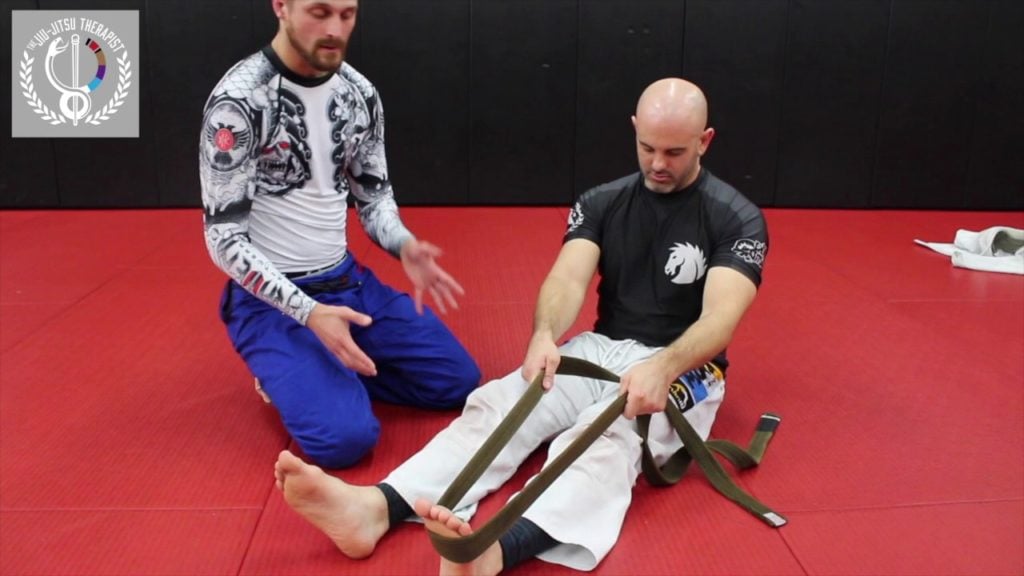
One thing to remember is to skip the urge of doing the first YouTube clips that seem like it will help. First of all, do your physical therapy bid, as you should according to the type of injury you have. Next, figure out a rehab training protocol with the help of your physical therapist and specialist that will actually help you strengthen the knee.

Strengthen Up

Speaking of strengthening your knee after a BJJ knee injury, you will need to think not just about the knee, but the entire leg. Even during your time off the mats, your other leg did a lot of the work while you were recuperating. So, you’ll need to bring the injured leg up to par, and then some, if you’re to go back to the mats. If you had surgery done on the knee, this is even more important.

Single leg exercises are the way to go here. First, you should aim to get back range of motion, carefully, while supporting your weight. You can then move on to bodyweight exercises, and isometric exercises that will help you build tendons of steel. Then you will “graduate” to using resistance bands, before finally going on to machines or free weights. At that point, it is time to contemplate a return to that mats after watching all those BJJ DVDs during your time off them.

Your “Back To The Mats” Schedule

This is probably the most important thing you can do to ensure your BJJ knee injury doesn’t re-activate, or you don’t get a new one. As you come back on the mats, you should know one thing – no rolling for at least two weeks, regardless of how ready you feel. In my academy, this is the norm for any injury.

Your return on the mats is going to be purely technical for at least one week. After that time, if you and your instructor feel like you’re okay, you could do some light drills, to see how your knee reacts at a faster pace. Flow rolling, with the instructor only, will follow.

After at least two weeks you can think about position sparring if there was no discomfort during the previous phases of your reintroduction. One or two weeks of position sparring with no issues will mean a complete return to rolling, although I’d refrain from takedowns for the time being if I were you.

Choose Your BJJ Knee Brace

Finally, let’s be realistic. If you had a medium to really serious BJJ knee injury, you’ll need support if you want to train hassle-free, both physically and psychologically. Picking up a knee brace that fits your injury is simply a must and not just any old knee wrap is going to do the trick. Check out the best BJJ knee brace options you have to train pain-free!

But, don’t wear a knee brace forever as it can create the feeling that you are incapable of training without it and you’re 100% healed. Instead, wear knee pads to protect your knees from bruising and to absorb impacts.

What is the recovery time after you suffered a knee injury?

Simple strains can last for up to two weeks.

Injuries like meniscus tears that require arthroscopic surgery could keep you off the mats from one to 3 months.

Major injuries like an ACL rupture, which is probably the most common major injury in grappling, may keep you off the mats for up to a year.

Chronic knee injuries may come and go from time to time and you never know with them. Medications, physical therapies, cortisone injections, etc. may provide relief for some time.

Conclusion

A BJJ knee injury can be something that keeps you home for a week or something that might threaten your entire Jiu-Jitsu career. Being smart about it is the right approach, and following the above protocol will make sure that you get back on the mats quickly and without endangering the injured joint, or any other body part.

Related:

What happens to your knees from a Heel Hook Injury?

What Happens To Your Knees From A Heel Hook Injury?

Escaping Side Control Like A Boss With A Surprise Armlock

Escaping side control with an armlock

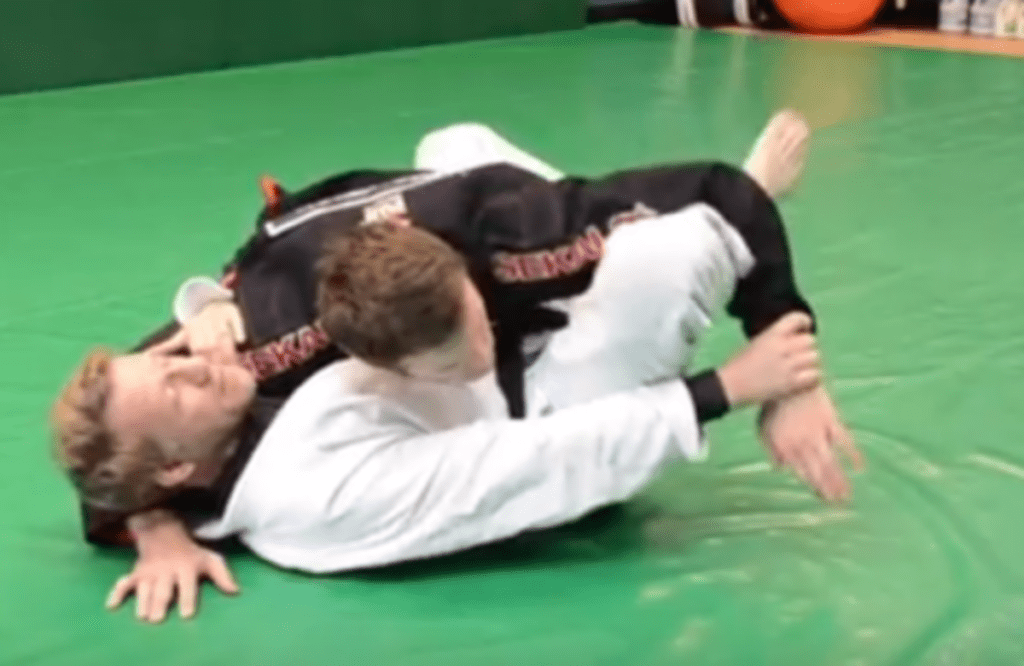
What do you do when you get caught in a bad so in Brazilian Jiu-Jitsu? As far as I can see, you either stay there and let the other person submit or advance, start jumping and flopping around like a fish out of water, or you get out of there. The final option seems like the best option if you ask me, and I am sure most of you agree. However, there’s one better. Why just escape, when you can actually attack instead? Escaping side control with the help of a very sneaky armlock is a great example of this concept. 

How do you get out of side control? The correct answer is – hard. If the top person knows what they’re doing, you’ll be stuck in between different side control variations until they see fit to submit you or go to the next checkpoint which is knee on belly, mount, or back control (in most cases). Unless you have a few tricks up your sleeve which will make escaping side control seem easy and effortless. And since you’re doing tricks, why not throw in a submission threat along the way?

Escaping Vs. Countering Bad Positions

As a small grappler (size, not age) I often had to figure out ways to get out of tight spots in manners that are not considered usual per see. There are plenty of different options out there and the realm of escapes is a huge and extremely interesting one. However, what I quickly learned while being crushed by people quite a lot bigger and stronger than me was that it is the mindset that mattes most when you’re in a tight spot (pun intended) in BJJ.

Escaping side control into an armlockIn most cases, escaping side control is a process that goes something like this; first, you panic, and claustrophobia sets in, while you’re unaware of what is being done to you. As you get more experienced in BJJ, you’ll run into the bridge/hip escape combination for escaping, and you’ll be bucking like a stallion every chance you get. Then comes peace, which was when escaping side control can actually take place. All of your previous efforts were panicky ways of providing experienced grapples with traditional and submission options.
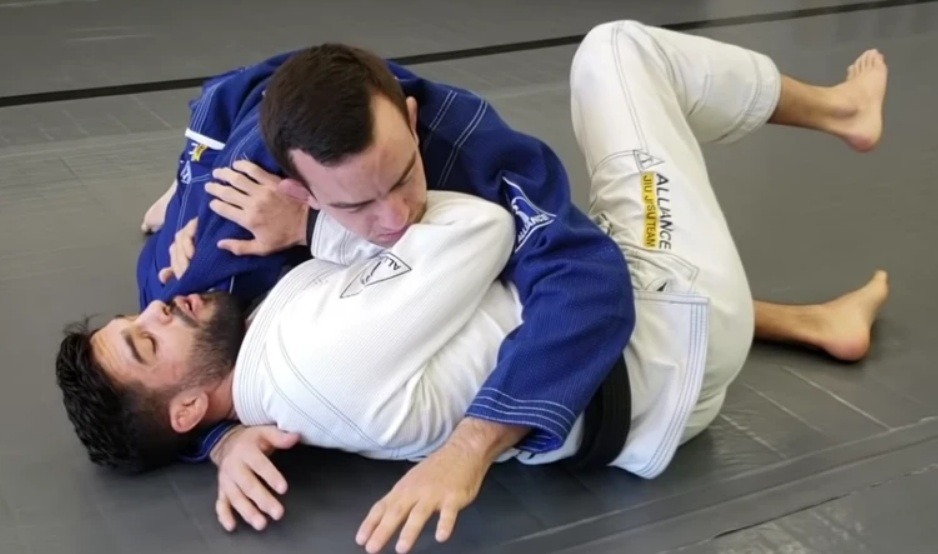
Escaping bad spots like side control should become fun. Yeah, you read that right. When you embrace the suffering and pressure and stop sweating the fact that someone got a better position than you, you’ll suddenly start seeing escaping options everywhere. Not just that but you’ll start seeing intricate ways in which you can counter the position completely forcing people to get up off of you on their own, under the threat of submissions. Or, better yet, you’ll actually get the tap from there.

The Challenges Of Escaping Side Control

Before I give you a simple way of escaping side control into an armlock, let’s see the few challenges you’ll surely encounter against an experienced top player. First up, weight distribution. It is not just the fact that someone is going to be heavy on top of you. They will also know where to project at pressure for maximum efficiency i.e. your chest, neck, jaw, etc.

Moreover, experienced grapplers will try and keep your body divided in order to prevent it from working together for an escape. That means that you’ll either end up with pinned head and shoulders, or hips. Even more so, they’ll try to pin arms to the ground, or cradle your legs in order to further twist you up into accepting defeat.

Escaping side control mindsetThe biggest challenge in escaping side control, though, is the sheer number of sid control variations and their interconnectivity. Wrestlers’ side control, 100 kilos, Judo side control, twister side control, North-South, and everything you can think of in-between are all side control variations. they’re not just difficult to escape on their own but are also easy to transition in between while keeping the bottom person (in our example, you) under constant pressure.
Finally, there’s gravity. When you’re on the bottom it is working against you, keeping the top person on top, and preventing you from sneaking away, regardless of your method of escape. If you anticipate all these challenges, you’ll find it very easy to deal with anyone and escape side control without much effort.

A Sneaky Armlock To The Rescue

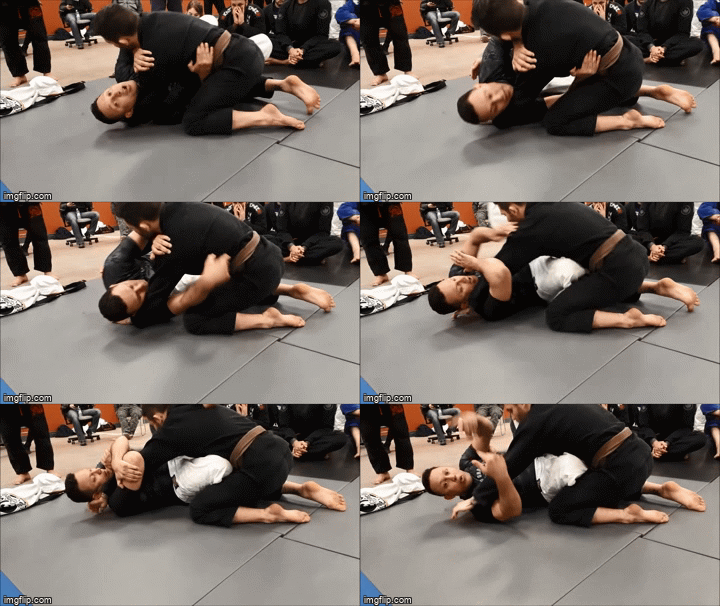
Escaping side control starts with your arms in a way that an opponent can’t isolate them over your head or pin them on the ground to your sides. In other words, you keep them tight to your body, in a frame structure. Try and keep your elbows to your ribs and you’ll be safe enough to start looking for escapes, or better yet, counters.
With the arms in place, you will make space by bridging, and looking to hip escape, However, and an experienced opponent will let you bridge but will follow you when you hip escape, most likely transitioning into another version of side control to keep you there. That’s where sneakiness and countering come in. Instead of thinking escape, you’ll think armlock
Escaping side control into and armlockThe moment you bridge, look to use the palms of your arms to grip behind the nearside shoulder. The bridge will get you access to this, as we las opening up space on the other end, diagonally, for your near side knee to sneak in. From there, use the shoulder grips as an anchor, and the arm as a pivot point as you threaten to head into guard.

If the opponent heads into you looking to transition, you’ll be waiting for them with a straight armlock. Simply extending your spine will get your grip down to their elbow, and their wrist on your shoulder where you can trap it with your head. Boom, you get a tap.

If the opponent decides to back away afraid of the submission, you’re now in guard, without having to hip escape, drag across the floor and attempt o keep your frames in as an opponent transitions to kill your escapes.

In Summary

Escaping side control doesn’t have to be difficult and excruciating, In fact, you don’t need to escape it at all. What if you could force an opponent off you by threatening to tap them out? This easy and sneaky armlock only requires you to slightly bridge so that you get the grips and the knee in. Form here on, you’re asking for their money or their life, and whatever the choice, you’ll emerge the winner.

Gordon Ryan Accuses Lachlan Giles for Steroids Use, Lachlan Fires Back With $500k Bet

Gordon Ryan Accuses Lachlan Giles for Steroids Use, Lachlan Fires Back With $500k Bet

Gordon Ryan accused Lachlan Giles of using steroids and received a response from Lachlan in the form of a bet.

Gordon Ryan and Lachlan Giles fought at the ADCC in 2019 when Gordon managed to stop Giles’ winning streak in the Absolute Category and secure himself a second gold medal.

However, that is not the only connection between Gordon and Giles. Their probably biggest link is Craig Jones who said he hates it when his parents quarrel while thinking of the duo of Ryan and Giles. Jones trained with Giles for many years until he moved to New York where he trained with Gordon, and now they have gone together to live and train in Puerto Rico. This is exactly the reason why many on social media speculate that Gordon Ryan has insider information from Craig Jones, but for now, these are just speculations.

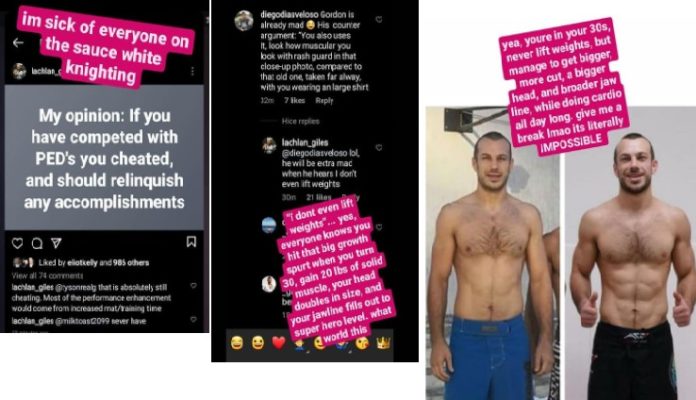
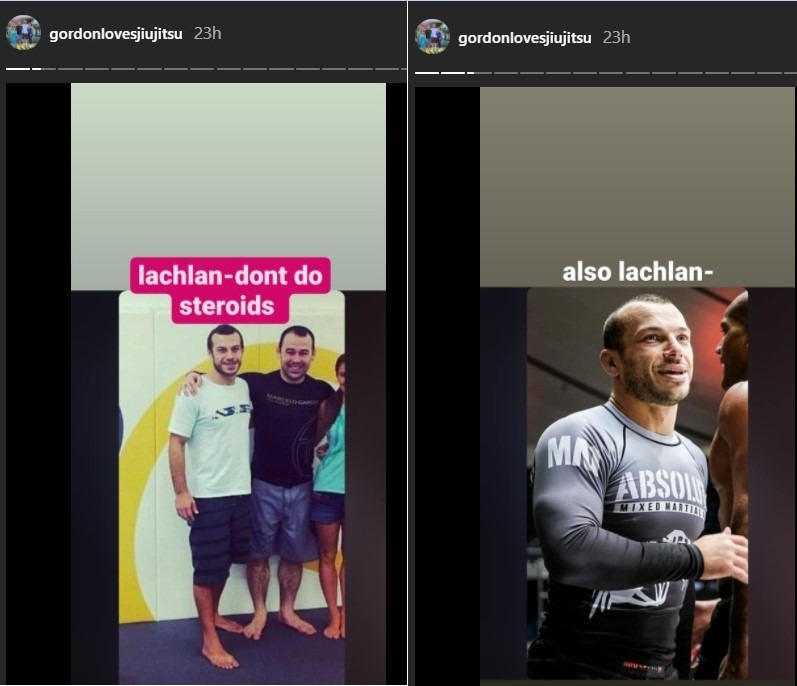
What has happened in recent days is that Gordon Ryan accused Lachlan Giles of using steroids by calling him out on Instagram and responding to his comment:

“My Opinion: if you have competed with PED’s you cheated and should relinquish any accomplishments” – wrote Lachlan Giles

“I’m sick of everyone on the sauce white knighting” – commented Gordon Ryan while tagging and taking a screenshot of Lachlan’s comment

“LOL, he will be Extra mad when he hears I don’t even lift weights” – wrote Lachlan Giles as an answer to some random guy’s comment that Gordon is already mad on his comment about PEDs

Soon after, Gordon replied: “I don’t even lift weights … yeah everyone knows you hit that big growth spurt when you turn 30, gain 20 lbs of solid muscle, your head doubles in size, and your jawlike fills out to superhero level. What world this “…

After that, Gordon continued:

“It’s no one’s fault that you’re sauced up and still can’t manage to win a single gold medal in any ruleset. Maybe try getting better, or just take more juice like everyone else”

“Like if you look at those 2 comparison pictures and think to yourself, Yea, a guy could attain that transformation in his 30s while never lifting weights, you’re a f… MORON.”

“Furthermore, every tournament besides IBJJF (and only in the last few years) allows PEDS. It’s not cheating in almost any tournament lmao. And if it is, Lachlan should give back his bronze medal along with all the money he’s made in DVDs, seminars, and sign-ups because of that medal. Oh, he doesn’t wanna do that? Ya don’t say?”

Gordon Ryan claims Lachlan is using steroids

Lachlan Giles then posted a photo of him when he was 17 with a comment that he was much bigger than he is today when he was actually lifting weights.

“17-years-old, bigger than I am today lol. Did actually go to the gym then.”

Gordon replied to the photo of Lachlan:

“I’m not sure what this has to do with gaining lean mass in your 30s without lifting…”

Soon after Ryan”s comment, Lachlan Giles decided to shut Gordon with a bet. He offered $500k of his own money for only $5k of Ryan’s money that he’ll pass any drug test from now on till ADCC 2021.

“my 500k vs your 5k, any time between now and ADCC 2021. You can tell me to get tested and I will go to ASADA to get tested as fast as possible. You pay for the test, and If I come back positive you get 500k” – wrote Lachlan Giles

Till now Gordon didn’t reply if he’ll accept the bet or not.
What’s your opinion on this? Is Lachlan on PEDs? Is Gordon afraid to put the money where his mouth is?

[easy-image-collage id=35042]

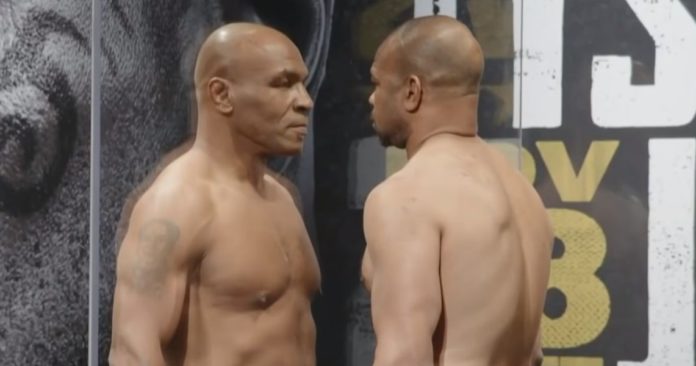
Mike Tyson and Roy Jones Jr. got into a serious fight, the match ended without a winner

Mike Tyson and Roy Jones Jr. got into a serious fight, the match ended without a winner

A very entertaining eight short rounds were done by Mike Tyson and Roy Jones Jr. in this long-awaited exhibition match. Without any restraint, the two boxing legends did their best, to the satisfaction of the fans in front of the small screens. There were no official referees, and those hired by the WBC scored a draw at the end of the match, which is certainly the fairest decision for such an opportunity.

Tyson started in his familiar style from the first second, aiming to get into the opponent and hit as many shots as possible, while with Jones we saw his familiar stance and evasiveness from the start. However, it could be noticed very quickly that they did not have the speed they once had. However, there was no restraint or calculation, from the beginning they both went for the victory.

Tyson certainly showed more desire in the first rounds, and there was anger on his face, which he managed to bring into the match this time as well. The first rounds certainly went to Mike, as he worked better and more, while Jones very often responded with a clinch. Roy got involved more seriously in the match during the third round when Tyson’s punches began to be predictable. The evacuations of the middle category legend were recognizable and with the shots from the counter he started to frustrate Tyson, who continued to attack, but without as many results as at the beginning of the match. There were some good exchanges at times, but every round except the first two was hard to score.

We saw part of old Tyson at the beginning of the sixth round when he threatened Jones with a blow to the body, but with that, he seemed to wake him up and Roy then fights back with a few of his specialties. The round was closed with another great goal by Tyson, after which the last two sections were entered. Seventh was certainly the best in the match for Jones, who kept more fitness and actually dominated those two minutes, while in the last section they both left the last atom of strength with a few changes and the match ended with the satisfaction of the fans. Tyson was not happy that the match failed to end, but Jones had no intention of allowing it.

The California Sports Commission, as announced, did not declare a winner, while the scores of the WBC’s “celebrity” judges were split. Christy Martin scored 76-76, Vinny Pazienza ruled six rounds in favor of Jones, while in Chad Dawson’s opinion Tyson took just as much. The match ended without a winner, which is the fairest thing to look at in the ring.

Fans will probably be satisfied with the show in the end, and Tyson said immediately after the match that he was ready for a rematch. He has announced that this will not be his one-time return and intends to abide by it. With an audience in the hall, it would definitely look even better.

All BJJ Guard Passing DVD and Digital Instructionals GI & No-Gi

Here is the collection of all Brazilian Jiu-Jitsu Guard Passing DVD and DIGITAL Instructionals and courses available in the market today:

Passing the Guard: BJJ Fundamentals – Go Further Faster by John DanaherPassing the guard Danaher DVD INStructional Review

Half Guard Passing and Dynamic Pins: BJJ Fundamentals – Go Further Faster by John DanaherJohn Danaher Instructional Review: Half Guard Passing and Dynamic Pins 2

Go Further Faster Bundle by John DanherDanaher-Go-Further

Enter The System Bundle by John DanaherEnter-The-System-Bundle-by-John-Danaher

Systematically Attacking The Guard by Gordon RyanGordon Ryan DVD Review

The Guard Passing Anthology: Half Guard by Lachlan GilesLachlan Giles DVD Review Of the guard Passing Anthology: Half Guard instructional

The Body Lock Pass by Lachlan GilesLachlan Giles Instructional Body Lock Pass DVD Review

Unifying The Systems: Navigating Between The DDS Submissions Systems by Garry TononGarry Tonon Unifying the Systems DVD Review

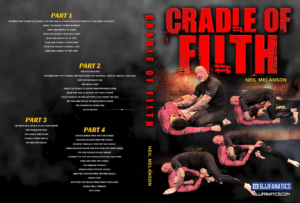
Cradle of Filth by Neil Melanson Cradle-of-Filth-by-Neil-Melanson

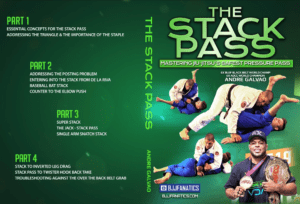
The Stack Pass by Andre GalvaoThe-Stack-Pass-by-Andre-Galvao

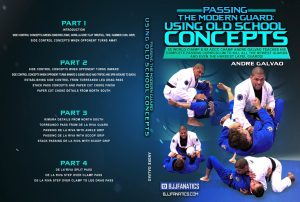
Passing Modern Guard Using Old School Concepts by Andre GalvaoAndre Galvao DVD: Passing Modern Guards Review

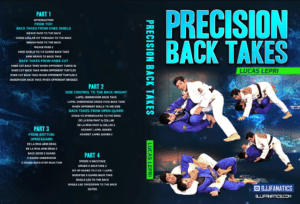
Precision Back Takes by Lucas LepriPrecision-Back-Takes-by-Lucas-Lepri

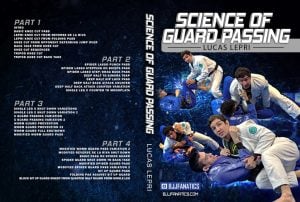
The Science of Guard Passing by Lucas LepriLucas Lepri DVD Science Of Guard Passing

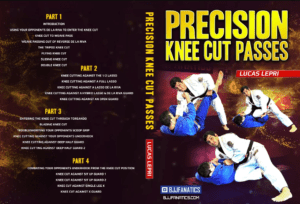
Precision Knee Cut Passes by Lucas LepriPrecision-Knee-Cut-Passes-by-Lucas-Lepri

LUCAS LEPRI CHAMPIONSHIP GUARD PASSING PART ONE [ON DEMAND]LUCAS-LEPRI-CHAMPIONSHIP-GUARD-PASSING-PART-ONE

LUCAS LEPRI CHAMPIONSHIP GUARD PASSING PART TWO [ON DEMAND]LUCAS-LEPRI-CHAMPIONSHIP-GUARD-PASSING-PART-TWO

LUCAS LEPRI NO-GI MASTER SERIES PART TWO [ON DEMAND]LUCAS-LEPRI-NO-GI-MASTER-SERIES-PART-TWO

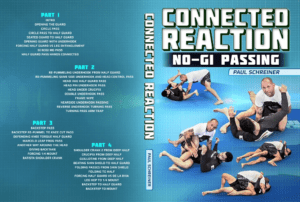
Connected Reaction: No Gi Passing by Paul SchreinerConnected-Reaction-No-Gi-Passing-by-Paul-Schreiner

PAUL SCHREINER: PRECISE PRESSURE PASSING [ON DEMAND]PAUL-SCHREINER-PRECISE-PRESSURE-PASSING

PAUL SCHREINER: PRECISE PRESSURE PASSING VOL 2 [ON DEMAND]PAUL-SCHREINER-PRECISE-PRESSURE-PASSING-VOL2

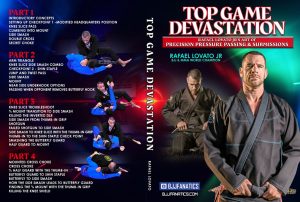
Pressure Passing and Top Game by Rafael LovatoTop Game Devastation Rafael lovato Jr DVD Review NEW

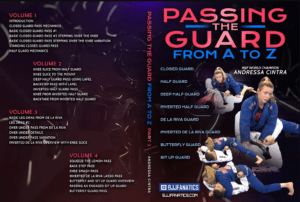
Passing The guard From A to Z by Andressa CintraPassing-The-guard-From-A-to-Z-by-Andressa-Cintra

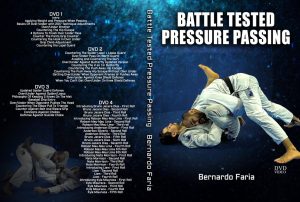
Battle Tested Pressure Passing by Bernardo FariaBernardo Faria Battle Tester Pressure Passing

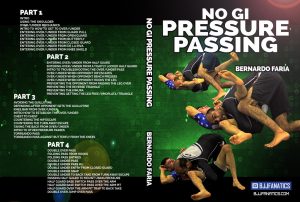
No Gi Pressure Passing by Bernardo FariaReview No-Gi Pressure Passing DVD Bernardo Faria

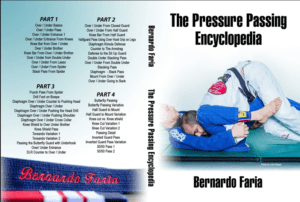
Pressure Passing Encyclopedia by Bernardo FariaPressure-Passing-Encyclopedia-by-Bernardo-Faria

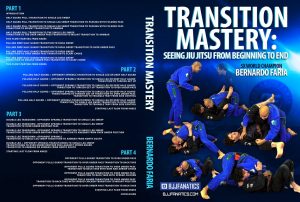
Transition Mastery by Bernardo FariaBernardo Faria Transition Mastery DVD REVIEW

Bernardo Faria Bundle by Bernardo FariaBernardo-Faria-Super-Bundle

Top Game Bundle by Bernardo FariaTop-Game-Bundle-by-Bernardo-Faria

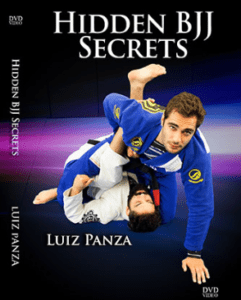
Hidden BJJ Secrets by Luiz PanzaHidden-BJJ-Secrets-by-Luiz-Panza

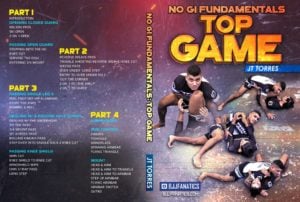
No Gi Fundamentals: Top Game by JT TorresNo-Gi-Fundamentals-Top-Game-by-JT-Torres

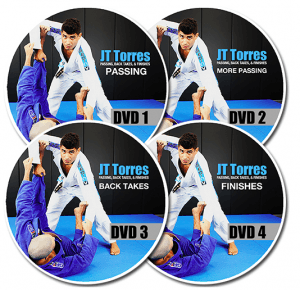
Passing, Back Takes & Finishes by JT TorresPassing Back Takes & Finsihes JT Torres BJJ DVD

Killing The Coyote by Lucas LeiteKilling-The-Coyote-by-Lucas-Leite

The Leg Pin Passing System by Kade & Tye RuotoloThe-Leg-Pin-Passing-System-Kade-Tye-Ruotolo

Basics To Advanced: The Leg Drag by Aaron BenzrihemBasics-To-Advanced-The-Leg-Drag-by-Aaron-Benzrihem

Destroying The Lasso guard by Gustavo BatistaDestroying-The-Lasso-guard-Gustavo-Batista

Old School Efficient BJJ by Chris HaueterOld School Efficient BJJ Chris Haueter DVD

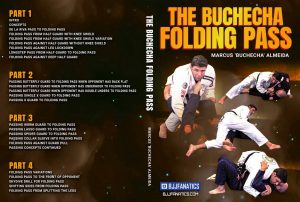
The Buchecha Folding Pass by Marcus “Buchecha” AlmeidaBuchecha Folding Pass DVD Cover

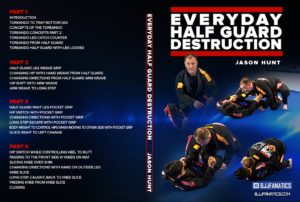
Everyday Half Guard Destruction By Jason HuntEveryday-Half-Guard-Destruction-By-Jason-Hunt

Passing The Butterfly Guard by Jason HuntJason hunt Passing The Butterfly Guard DVD Review

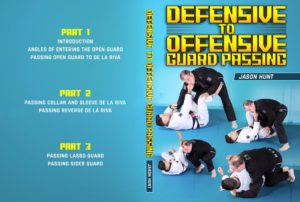
Defensive To Offensive Guard Passing by Jason HuntDefensiveTo-Offensive-Guard-Passing-by-Jason-Hunt

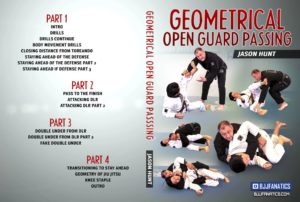
Geometrical Open Guard Passing by Jason HuntGeometrical-Open-Guard-Passing-Jason-Hunt

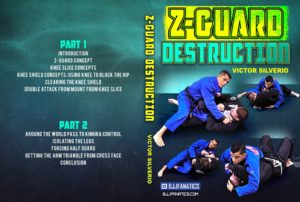
Z-Guard Destruction by Victor SilverioZ-Guard-Destruction-Victor-Silverio

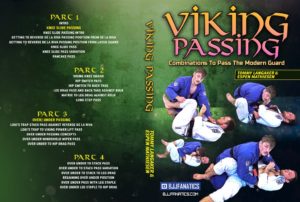
Viking Passing by Tommy Langaker and Espen MathiesenViking-Passing-Tommy-Langaker-and-Espen-Mathiesen

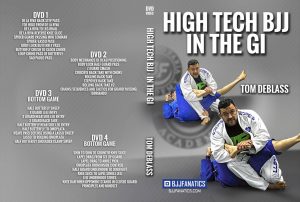
High Tech BJJ In The Gi by Tom DeBlassDe Blass DVD BJJ Fanatics Site Review

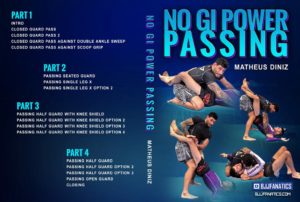
No Gi Power Passing by Matheus DinizNo-Gi-Power-Passing- Matheus-Diniz

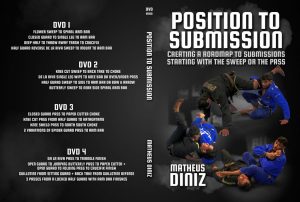
Position to Submission by Matheus DinizPosition to submission - Matheus Diniz Best BJJ DVD 2019

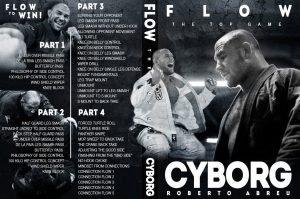
Flow: The Top Game by Roberto “Cyborg” AbreuBRAND NEW "Flow: Top Game" Roberto Cyborg Abreu DVD

The São Paulo Passing System by Leonardo NogueiraA Review Of The Leo Nogueira DVD "Sap Paolo Passing System"

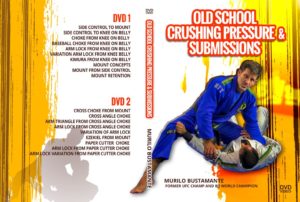
Old School Crushing Pressure and Submissions by Murilo BustamanteOld-School-Crushing-Pressure-and-Submissions-Murilo-Bustamante

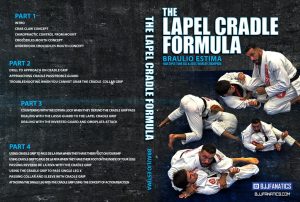
The Lapel Cradle Formula by Braulio EstimaBraulio Estima Lapel Cradle Instructional DVD

High Step Guard Passing by Mike PerezHigh-Step-Guard-Passing-by-Mike-Perez

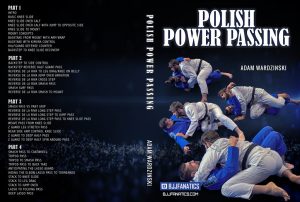
Polish Power Passing by Adam WardzinskiNEW Adam Wardzinski DVD Review - Polish Power Passing BJJ Instructional

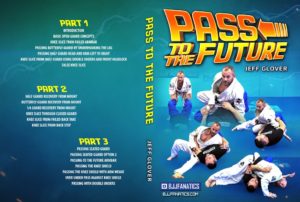
Pass To The Future by Jeff GloverPass-To-The-Future-by-Jeff-Glover

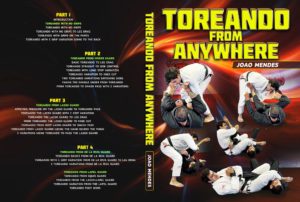
Toreando From Anywhere by Joao MendesToreando-From-Anywhere-by-Joao-Mendes

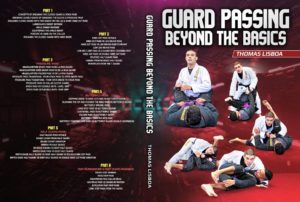
Guard Passing Beyond The Basics by Thomas LisboaGuard-Passing-Beyond-The-Basics-by-Thomas-Lisboa

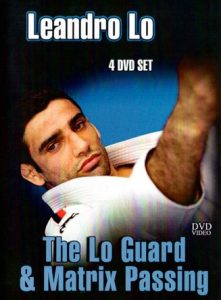
The Lo Guard & Matrix Passing by Leandro LoLeandro Lo Matrix Passing

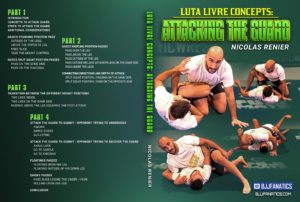
Luta Livre Concepts: Attacking The Guard by Nicolas RenierLuta-Livre-Concepts-Attacking-The-Guard-by-Nicolas-Renier

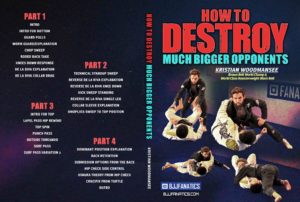
How To Destroy Much Bigger Opponents by Kristian WoodmanseeDestroy-Much-Bigger-Opponents-by-Kristian-Woodmansee

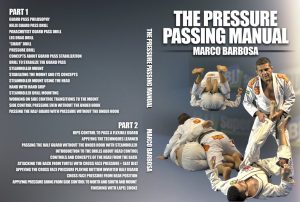
The Pressure Passing Manual by Marco BarbosaMarco Barbosa DVD Pressure Passing Manual

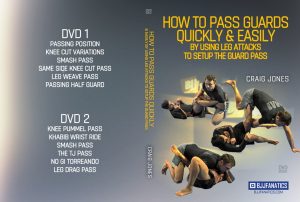
How to Pass Guards Quickly and Easily Using Leg Attacks by Craig JonesCraig Jones DVD guard Passing

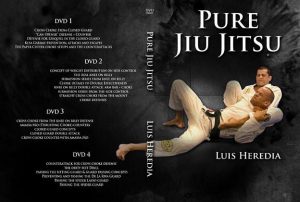
Pure Jiu Jitsu by Luis HerediaLuis Heredia DVD Review Pure Jiu-Jitsu

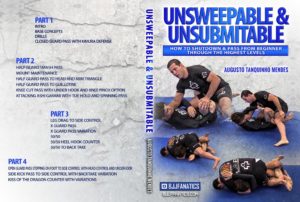
Unsweepable & Unsubmitable by Augusto Tanquinho MendesUnsweepable-Unsubmitable-by-Augusto-Tanquinho-Mendes

AUGUSTO “TANQUINHO” MENDES – GUARD PASSING [ON DEMAND]AUGUSTO-TANQUINHO-MENDES-GUARD-PASSING

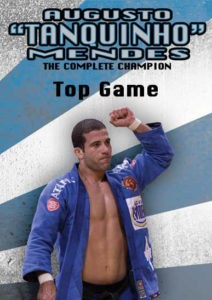
AUGUSTO “TANQUINHO” MENDES – TOP GAME [ON DEMAND]AUGUSTO-TANQUINHO-MENDES-TOP-GAME

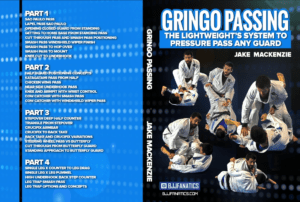
Gringo Guard Passing by Jake MackenzieGringo-Guard-Passing-by-Jake-Mackenzie

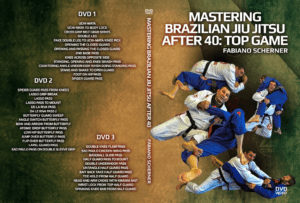
Mastering Brazilian Jiu Jitsu After 40: Top Game by Fabiano SchernerMastering-Brazilian-Jiu-Jitsu-After-40-Top-Game-Fabiano-Scherner

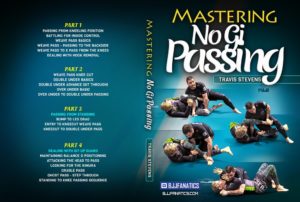
Mastering No Gi Passing by Travis StevensMastering-No-Gi-Passing-by-Travis-Stevens

Magic Guard Passing by Travis StevensMagic-Guard-Passing-by-Travis-Stevens

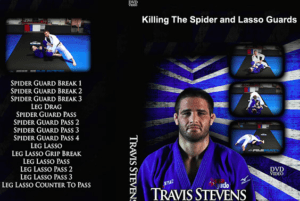
Killing the Spider and Lasso Guard by Travis StevensKilling-the-Spider-and-Lasso-Guard-by-Travis-Stevens

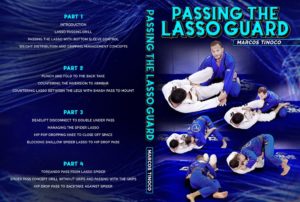
Passing The Lasso Guard by Marcos TinocoPassing-The-Lasso-Guard-by-Marcos-Tinoco

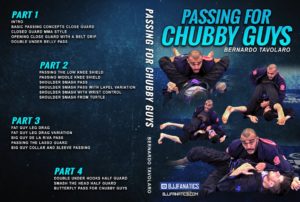
Passing For Chubby Guys by Bernardo TavolaroPassing-For-Chubby-Guys-by-Bernardo-Tavolaro

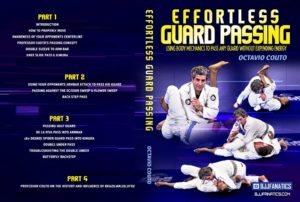
Effortless Guard Passing by Octavio CoutoEffortless-Guard-Passing-by-Octavio-Couto

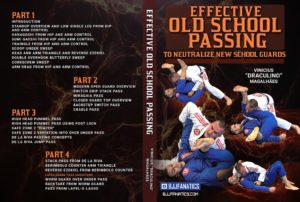
Effective Old School Passing by Vinicius “Draculino” MagalhaesEffective-Old-School-Passing-Vinicius-Draculino-Magalhaes

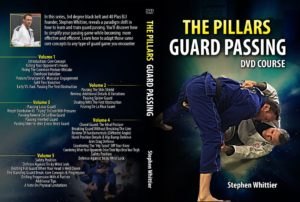
The Pillars Guard Passing by Stephen Whittier The-Pillars-Guard-Passing-by-Stephen-Whittier

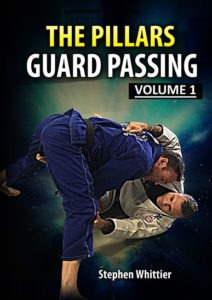
THE PILLARS GUARD PASSING BY STEPHEN WHITTIER VOL 1 [ON DEMAND]THE PILLARS-GUARD-PASSING-STEPHEN-WHITTIER-VOL1

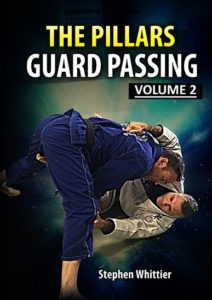
THE PILLARS GUARD PASSING BY STEPHEN WHITTIER VOL 2 [ON DEMAND]THE PILLARS-GUARD-PASSING-STEPHEN-WHITTIER-VOL2

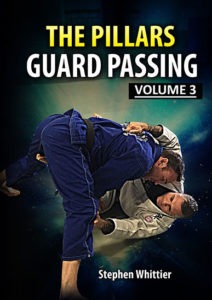
THE PILLARS GUARD PASSING BY STEPHEN WHITTIER VOL 3 [ON DEMAND]THE PILLARS-GUARD-PASSING-STEPHEN-WHITTIER-VOL3

THE PILLARS GUARD PASSING BY STEPHEN WHITTIER VOL 4 [ON DEMAND]THE PILLARS-GUARD-PASSING-STEPHEN-WHITTIER-VOL4

THE PILLARS GUARD PASSING BY STEPHEN WHITTIER VOL 5 [ON DEMAND]THE PILLARS-GUARD-PASSING-STEPHEN-WHITTIER-VOL5

40 PLUS BJJ SUCCESS VOL 3 – PASSING [ON DEMAND]40-PLUS-BJJ-SUCCESS-VOL3-PASSING

Pressure Passing for Older Guys by Mario SperryPressure-Passing-for-Older-Guys-Mario-Sperry

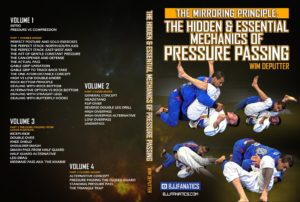
The Mirroring Principle: The Hidden & Essential Mechanics of Pressure Passing by Wim DeputterMirroring-Principle-The-Hidden-Essential-Mechanics-of-Pressure-Passing-by-Wim-Deputter

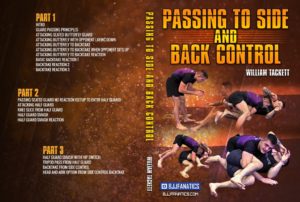
Passing To Side And Back Control by William TackettPassing-To-Side-And-Back-Control-by-William-Tackett

High Efficiency No Gi Jiu Jitsu: Top Game by Yuri SimoesYuri Simoes DVD

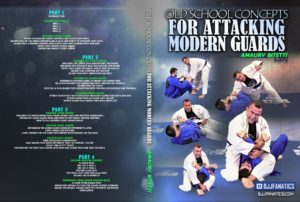
Old School Concepts For Attacking Modern Guards by Amaury BitettiOld-School-Concepts-For-Attacking-Modern-Guards-by-Amaury-Bitetti

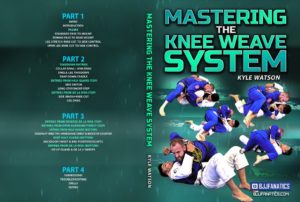
Mastering The Knee Weave System by Kyle WatsonMastering-The-Knee-Weave-System-by-Kyle-Watson

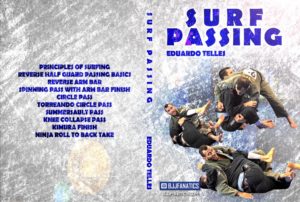
Surf Passing by Eduardo TellesSurf-Passing-by-Eduardo-Telles

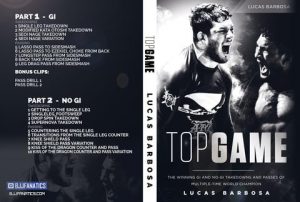
Top Game by Lucas BarbosaLucas Barbosa DVD Top Game

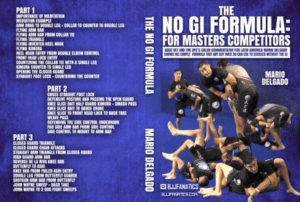
The No Gi Formula: For Masters Competitors by Mario DelgadoThe-No-Gi-Formula-For-Masters-Competitors-by-Mario-Delgado

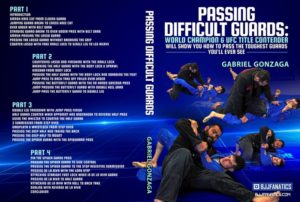
Passing Difficult Guards by Gabriel GonzagaPassing-Difficult-Guards-by-Gabriel-Gonzaga

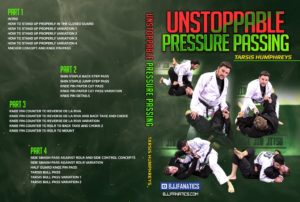
Unstoppable Pressure Passing by Tarsis HumphreysUnstoppable-Pressure-Passing-by-Tarsis-Humphreys

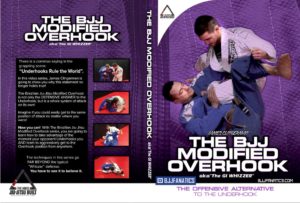
The BJJ Modified Overhook by James ClingermanThe-BJJ-Modified-Overhook-by-James-Clingerman

High Collar Passing by James ClingermanHigh-Collar-Passing-by-James-Clingerman

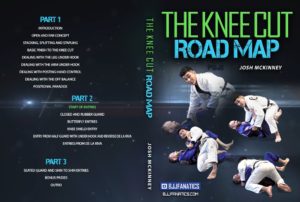
The Knee Cut Roadmap by Josh McKinneyThe-Knee-Cut-Roadmap-by-Josh-McKinney

The Trap Walk Guard Pass System by Manuel RibamarThe-Trap-Walk-Guard-Pass-System-by-Manuel-Ribamar

Jiu-Jitsu Domination (Smash. Pass. Finish) By Rodolfo VieiraJiu-Jitsu-Domination-By-Rodolfo-Vieira

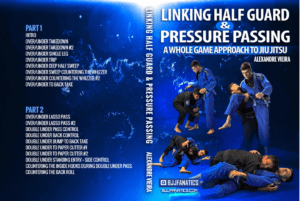
Linking Half Guard And Pressure Passing by Alexandre VieiraLinking-Half-Guard-And-Pressure-Passing-by-Alexandre-Vieira

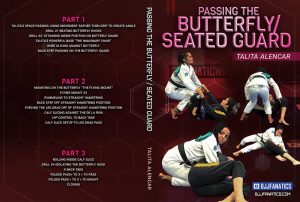
Passing The Butterfly/Seated Guard by Talita AlencarPassing Butterfly Guard Talita Alencar DVD Review

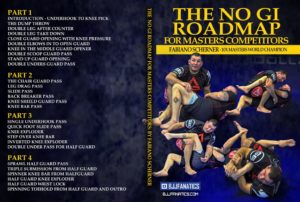
The No Gi Road Map For Masters Competitors by Fabiano SchernerNo-Gi-Road-Map-For-Masters-Competitors-Fabiano-Scherner

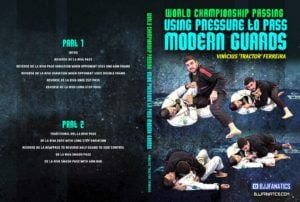
World Championship Passing by Vinicius FerreiraWorld-Championship-Passing-by-Vinicius-Ferreira

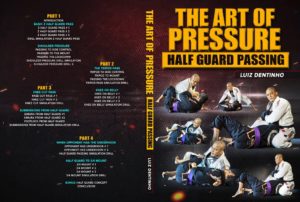
The Art Of Pressure: Half Guard Passing by Luiz DentinhoThe-Art-Of-Pressure-Half-Guard-Passing-by-Luiz-Dentinho

The Power Judo Guard Passing by Jimmy PedroThe-Power-Judo-Guard-Passing-by-Jimmy-Pedro

The Folding System by Fernando ReisThe-Folding-System-by-Fernando Reis

Grapplearts Fabio Gurgel’s BJJ Pressure Guard Passing SystemGrapplearts-Fabio-Gurgel-BJJ-Pressure-Guard-Passing-System

ROMULO BARRAL’S KNEE SLICE GUARD PASSING [ON DEMAND]ROMULO-BARRAL-KNEE-SLICE-GUARD-PASSING

ROMULO BARRAL’S NO-GI PASSING [ON DEMAND]ROMULO-BARRAL-NO-GI-PASSING

Luta Livre Guard Passing by Thomas LoubersanesLuta-Livre-Guard-Passing-by-Thomas-Loubersanes

DANNY STOLFI COMPETITION PASSING [ON DEMAND]DANNY-STOLFI-COMPETITION-PASSING

The 50/50 Arm Passing System by Leo VieiraThe-50/50-Arm-Passing-System-by-Leo-Vieira

GIANNI GRIPPO DLR PASSING SEMINAR [ON DEMAND]GIANNI-GRIPPO-DLR-PASSING-SEMINAR

JASON RAU: DYNAMIC NO-GI PASSING AND ATTACKING [ON-DEMAND]JASON-RAU-DYNAMIC-NO-GI-PASSING-AND-ATTACKING

BRUNO FRAZATTO – COMPLETE GUARD PASSING ENCYCLOPEDIA [ON DEMAND]Bruno Frazatto DVD Review Complete Guard Passing Encyclopedia

BRUNO FRAZATTO – GUARD PASSING SEMINAR [ON DEMAND]BRUNO-FRAZATTO-GUARD-PASSING-SEMINAR

TOP ROCK: TURBO – LEG LOCKING & PASSING UNIFIED – REILLY BODYCOMB [ON DEMANDTURBO-LEG-LOCKING-PASSING-UNIFIED-REILLY-BODYCOMB

ABMAR BARBOSA JIU-JITSU OUTLAW – PASSING GUARD [ON DEMAND]ABMAR-BARBOSA-JIU-JITSU-OUTLAW-PASSING-GUARD

Brazilian Jiu-Jitsu Techniques and Tactics: Passing the Guard DVD – BJJ Martial Arts Lessons Passing-the-Guard-DVD-BJJ-Martial-Arts-Lessons

Dynamic BJJ Vol-1 Passing The Guard Dynamic-BJJ-Vol1-Passing-The-Guard

Piercing the Shield DVD by Brent Littell [DVD]Piercing-the-Shield-DVD-by-Brent-Littell

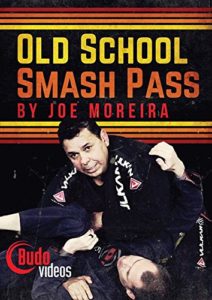
Old School Smash Pass DVD by Joe Moreira [DVD]Old-School-Smash-Pass-DVD-by-Joe-Moreira

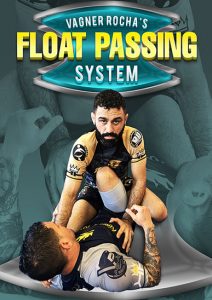
VAGNER ROCHA : FLOAT PASSING SYSTEM [ON DEMAND]Review of a Vagner Rocha DVD : The float passing System

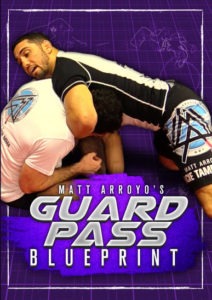
MATT ARROYO – GUARD PASS BLUEPRINT [ON DEMAND]MATT-ARROYO-GUARD-PASS-BLUEPRINT

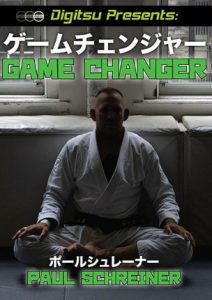
PAUL SCHREINER: GAME CHANGER [ON DEMAND]

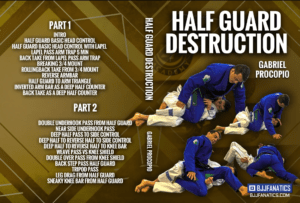
Half Guard Destruction by Gabriel ProcopioHalf-Guard-Destruction-by-Gabriel-Procopio

LEG DRAG WORKSHOP BY TIM SLEDD [ON DEMAND]

Roberto Leitao, Luta Livre Coach and Athlete, Dies At The Age Of 83 After Contracting COVID-19

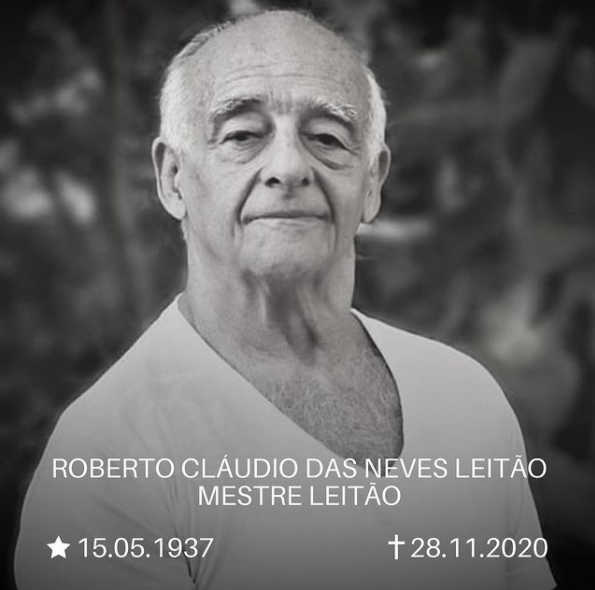
Roberto Leitão, a renowned coach and Luta livre athlete, passed away on November 28th, 2020. He was 83 years old. COVID-19 triggered his death.

Roberto Leitao, a well-known Brazilian martial artist, died on Saturday as a result of the Covid-19 virus. He was first admitted to the Hospital Vitória in Barra da Tijuca after being diagnosed with COVID-19, according to a family post on Instagram.

He was initially doing well but was admitted to the hospital owing to his age and past cancer and cardiac surgery. He sadly died on the morning of November 28th, according to reports.

Roberto Leitao’s Family wrote on Instagram:

“Today, at 9 am, Master Leitão rested. Thank you to everyone who has been with him throughout his journey and especially in thought during this last month. The master fought for everything in life without ever complaining. Victorious for forming a family that learned the true values ​​of life, competent engineer, sensitive artist, son, brother, husband, grandfather, and exquisite father, there was no one who didn’t like his company. He turned his love of fighting into a school. He taught, trained, encouraged, and stimulated many to sport and to physical and mental health those who had the privilege of being close to him. Rest in peace, you have fulfilled your path as a true master. We are grateful to have had the privilege of being a part of your journey. With all love, your children, grandchildren, son-in-law, and daughter-in-law.”

Roberto Leitao Passed Away

The death of such a martial arts hero is a major loss not just to the individuals who knew him personally, but also to anybody who benefited from his efforts in promoting Luta Livre.

Roberto Leitao

Roberto Claudio das Neves Leitão was born on May 15, 1937, in Santa Catarina, Brazil. He died on November 28, 2020, in Rio de Janeiro (aged 83). Luta Livre rank: 10th-degree black belt In judo University Pontifical Catholic University of Rio de Janeiro SAKURAJU.

Leitao, a black belt in judo and former head of the Brazilian Wrestling Federation, was known for teaching Luta Livre, or free fighting. Marco Ruas and Pedro Rizzo are two of his former students.

Leitao has also authored a book on the biomechanics of combat and was a professor of mechanical engineering.

At the age of 58, he dominated Olympic superheavyweight wrestling gold medalist Jeff Blatnick in a sparring bout by submitting him twice. Blatnick later told New York Magazine, “I was so frustrated – I’m an Olympic champion, and a 65-year-old man made me feel helpless.”

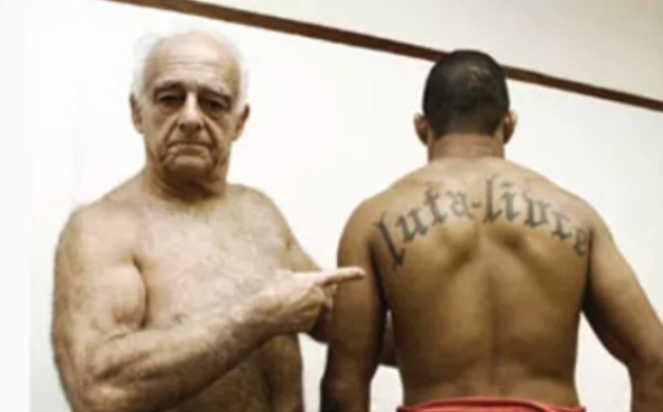
Roberto Leitao Showing Luta Livre Tattoo

Nelson Hold Variations Tailor Made For Jiu-Jitsu

Nelson Hold Variations For Jiu-JItsu

The most iconic grappling move of all time has to be the full Nelson hold. It is a staple wrestling move and one that had the reputation for being inescapable. Law enforcement officers use it to this day to control people when they need to. In wrestling, the Nelson is just another move that allows you to maneuver your opponent into a pin. And, us BJJ folks being the curios kind we are, should take a closer look at the Nelson hold. After all, if a move works, why not use it? The thing is, the full Nelson is just one of several Nelson variations we can use in BJJ to control and/or submit opponents.

What we do in BJJ, pretty much is recycle lots of stuff from other grappling martial arts. Of course, there are original things, but most of the things in grappling have already been seen. Just take a look at leg locks. They were around since forever, and yet, it took modification and adjustments to make them truly work in Jiu-Jitsu. Now, you can’t do without them. While not every move we recycle becomes as effective as leg locks did, they can still be useful. In that sense, wrestling has a lot to offer, particularly in the area of controlling someone, and making people head in directions they do not want to. Using a Nelson hold variation is just one of many ways of achieving such goals.

You Can’t Wrestle Without Nelsons

Yup, this is true word for word. In wrestling, you can’t have a complete game unless you have mastery of all, or at least one of the Nelson hold variations available. The Nelson in wrestling is done from lite5rally everywhere and has a simple task – block the opponent from moving before you make them touch their back to the ground for a match-winning pin.

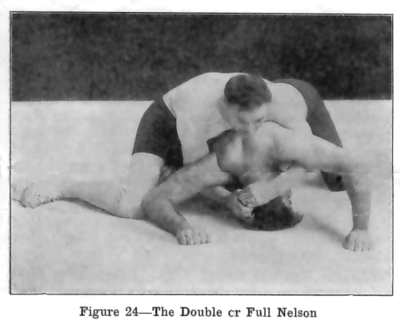
Nelson Hold Variations For BJJ - Full NelsonThe full Nelson hold, which is what most people think when they hear the term “Nelson” works from behind. The goal is to thread both arms under the armpits of the opponent first. You then head to interlace the fingers of your palms behind their neck or head. While it can be done standing, doing it while the opponent is facing the mats is usually when a Nelson is done.

The first use of the full Nelson hold is sometime in the early 19th century, from what we know. Of course, the move must’ve existed way earlier than that, given that I really think that wrestling is the world’s oldest martial art. The name of the hold is a reference to Horatio Nelson, a British officer in the Navy and an esteemed battle strategist. This association remains unclear to this day, though.

In collegiate wrestling and everything that comes prior to it (high school, middle school, etc.) the full Nelson hold is an illegal move. I bet this gets the attention of BJJ folks! The Nelson Is primarily controlling hold, which can also turn into submission in certain situations. However, with it being illegal, and the lack of offensive options, other variations of the Nelson emerged that open up more opportunities.

The Nelson Hold Fractions

The way the Nelsons are organized is via fractions. I’ll start explaining them backward since I already wrote about the full Nelson. This is the end position when it comes to Nelsons’ is always the full Nelson. There’s no better way of controlling someone from that particular configuration. However, you can go back from a full Nelson all the way to a quarter Nelson hold.

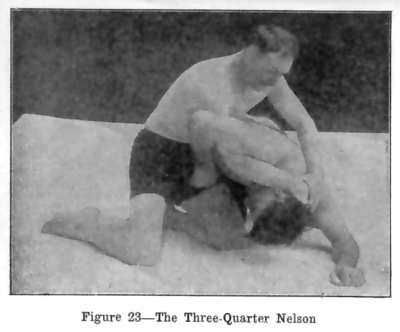
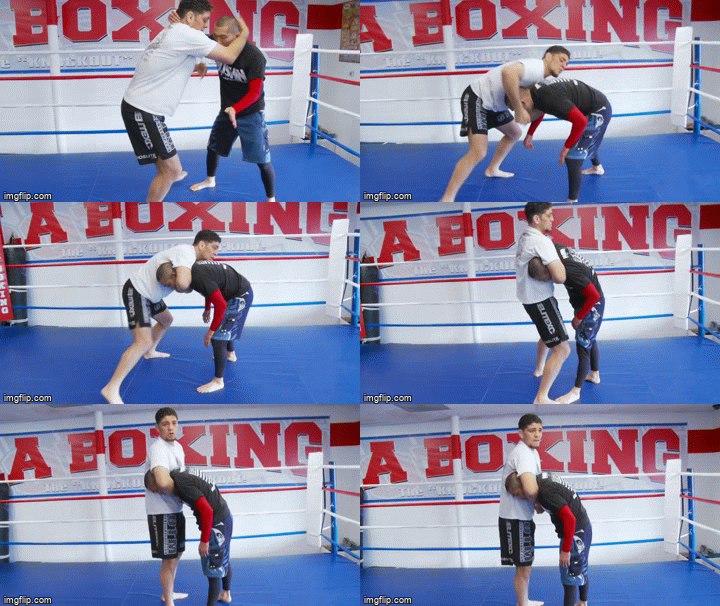
Nelson Hold Variations For BJJ threequarter nelsonFirst up, though, right behind the full Nelson is the three-quarter Nelson hold. For this variation, you let go of the arm that’s near to you, so that the only control over the shoulder comes from the far side underhook. The hands go behind the back of the neck again. This variation allows for much more mobility but offers a bit less control than the full Nelson hold.

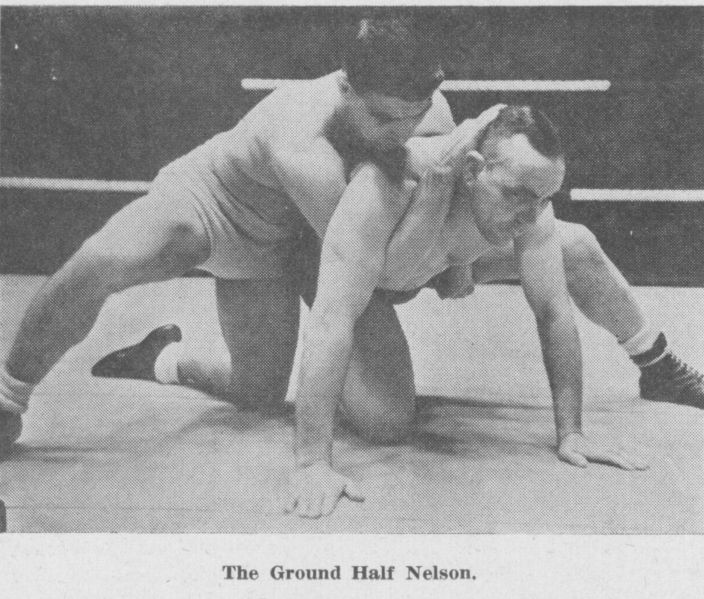
Nelson Hold Variations For BJJ - Half NelsonThe half Nelson is the next progression, or regression rather, in the world of Nelson holds. This is when you only have one ar in the Nelson position, and that is on the near side. It is literally half of the full Nelson control, but wrestlers do tend to grip the opposite side arm with their free arm for extended control.

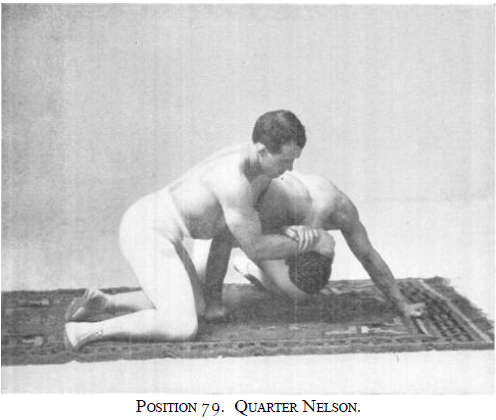
Nelson Hold Variations For BJJ - Quarter NelsonFinally, there’s the quarter Nelson, which is probably the variation most used in BJJ. Oftentimes, people don’t even realize they’re using it. The quarter is when you have an arm under the armpit, but not behind the head. Instead, you do a figure four with your wrists and place the palm of the other hand behind the opponent’s neck.

Nelsons For Ultimate Jiu-Jitsu Control

Now that we know all four Nelson hold variations, how do we put them to good use in BJJ? Well, there’s one position that simply cries for the use of Nelsons – the turtle. If you want to break down one of the most defensive positions in Jiu-Jitsu, you’ll need to use nelsons. In BJJ, people try to be wary of giving away the back, or headlock attacks when in the turtle. That is exactly what you can use against them.

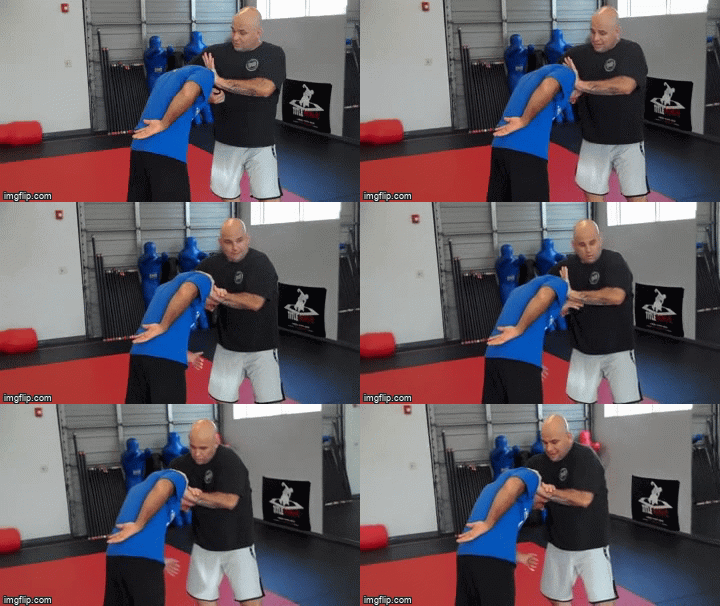
Nelson Hold Variations For Jiu-JItsuStarting with the quarter Nelson hold, you can easily turn every one to their side. Moreover, you open up North-South choke, D’arce choke, Anaconda, and all kinds of strangling attacks. All you need to do is actually bend your wrists towards yourself once you have the grips in place.

The half-nelson is a bit tricky to use in BJJ but does have its strengths. It can be hard to hold on to it unless you’re also controlling the far arm too. However, a half Nelson opens up back attacks while at the same time allowing you to turn the opponent in the opposite direction and get side control. Transitioning into guillotines is also really cool when doe from the half Nelson.

The three-quarter Nelson is something that’s very promising in BJJ. It is a great and unexpected way to get the back from the turtle without any fuss. All you need is to thread one arm in, and you can forget about the seatbelt. In fact, you’ll get much better back control with the three-quarter nelson. Submission-wise, forcing the opponent to turn will land you in an airtight armbar. Just tuck their head towards their chin.

The Full Nelson is pretty hard to get a hold of in BJJ, but if and when you do, your task si simple – neck crank.

Heeadhunter Guillotine Neil Melanson DVD
Free videos and Techniques List

Neil Melanson has explained the “Nelson techniques” in his DVD Guillotine Head Hunter. If you haven’t heard of him by now Neil Melanson is One of the world’s best grappling coaches and head coach at the famous Blackzilians. His game is one of the most effective and the most advanced.

All in All

Nelsons are awesome! You can’t imagine how many scrambles you’ll end up controlling if you get used to hunting for all four Nelson Hold variations. Moreover, you’ll have no issues with opponents turtling up ever again. If you’re a D’arce player by any chance, then the introduction of Nelsons to your game is simply mandatory. They’ll change your game forever!

Wrestling Half Nelson For BJJ: Wrap, Torture, Submit!

How To Make The Standing Guillotine Choke Work For You

Standing Guillotine Choke Setups For BJJ

Sometimes, if you try really, really hard, some of those moves you see in movies might just end up working for you in Brazilian JIu-Jitsu as well. If you’re expecting a flying leg scissor head grab to an inverted Gogoplata, you’re not getting it. What I’d like to dissect today is the standing guillotine choke. Not quite as attractive, yes, but extremely useful once you get the hang of it. After all, why wouldn’t you want to finish the job as early as possible in a match? And, even if the match has to end up on the ground, it’ll be on your terms, most often via a takedown.

A standing guillotine choke is not something you see in Brazilian Jiu-Jitsu really often. IN fact, in most grappling martial arts, including MMA, there are only a few instances of this move in a match or fight. And still, the one that has potential, has solid biomechanics and is not really that hard to pull off. I started considering it since people really do not take care of their necks too much when standing. That, combined with solid front headlock entries, means you can wrap up a match before it even starts. And yes, it does work on opponents of all levels. Moreover, you’re not just limited to one standing guillotine choke variation.

Why the Guillotine Choke Is So Powerful

The Guillotine choke is one of the best chokes you can do in Jiu-Jitsu. Why? Well first, you can do it from both top and bottom positions, including, but not limited to, guard, half guard, butterfly guard, mount, etc. Secondly, they work just as fine in Gi and No-Gi. Moreover, anyone can learn to execute them with pinpoint precision regardless of belt color or experience. And there’s also the fact that there are plenty of variations of the guillotine choke, making it a useful weapon for everyone.

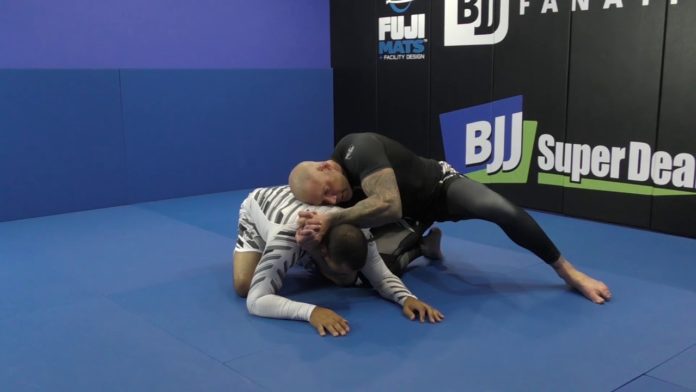
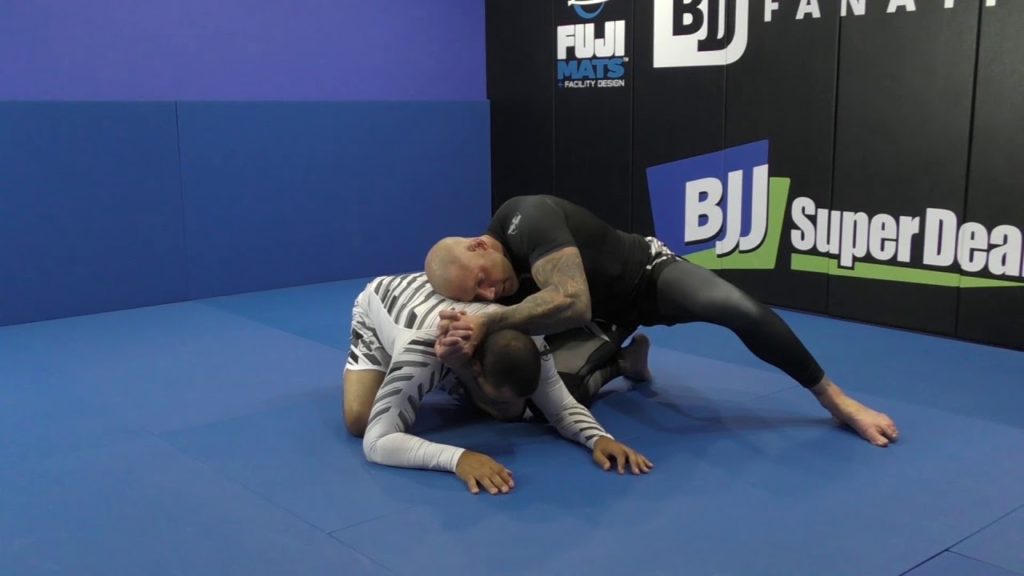
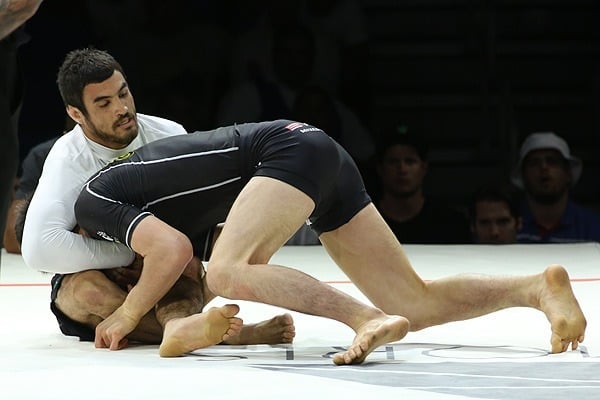
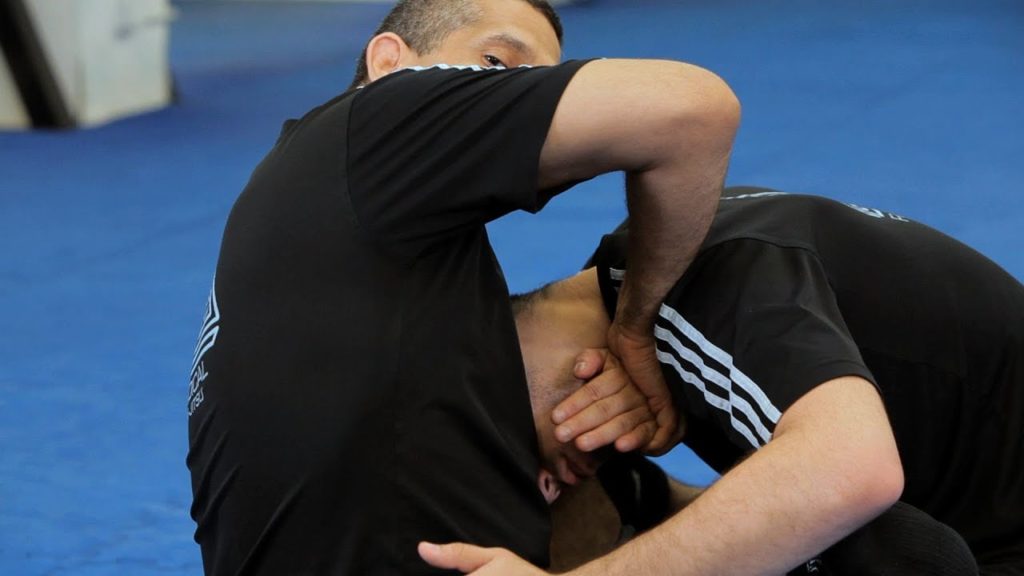
Standing Guillotine ChokeThe guillotine choke position is easy. Grab someone in a headlock from the front, and connect your arms under their chin. If you really want to make it efficient, use the palm of one hand to cusp the chin of the opponent (the chin-strap). From there, through a multitude of grip combinations, you can choke just about anyone out in a matter of seconds.

How the guillotine works, though, is oftentimes misinterpreted by people. Let’s talk about the two “basic” kinds of guillotines and move on from there. You can either hunt for a guillotine that has an opponent’s arm included in your grip (an Arm In guillotine), or you can go for a guillotine only attacking the head. With both variations, people get the urge to pull on the head once they get the grip, though. Pulling on the head will rarely get you a tap, whether it is on the ground or with a standing guillotine choke.

Finishing the guillotine depends on the variation. With a regular guillotine, that attacks the neck directly, you need a side crunch to put pressure on the arteries. With an arm-in guillotine, you need to make sure the chin of the opponent is trying to touch their chest. As you can see, in both instances, you’re trying to get your chest closer to the back of their head, as opposed to pulling. This is just one way of making the guillotine ultra-powerful for you.

Choking People Before They Hit The Ground

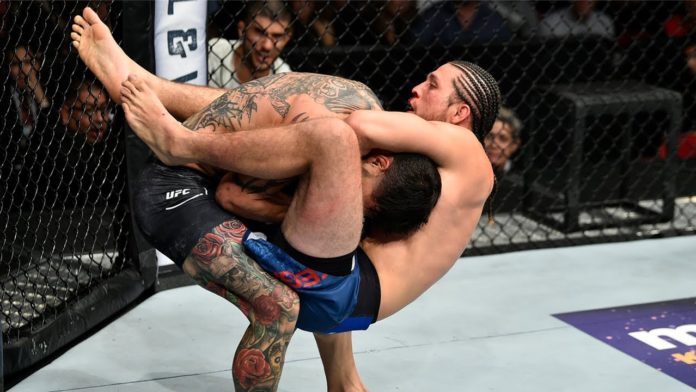
So, what’s the catch with the standing guillotine choke? There’s no real one, except for a slight adjustment in finishing. The deal with the standing guillotine choke is that you’re, well, standing. That means that you will need to adjust how you squeeze in order to finish. And still, you do not pull back on a guillotine choke! At least not if you want to finish one.

The basic idea behind the standing guillotine is to prevent the opponent from posturing up. Only then can you achieve crushing pressure by forcing their chin towards their chest. Intestinally enough, arm-in guillotines are much harder to get standing, so first and foremost, choose the right variation – the direct guillotine choke. Secondly, make sure your opponent’s head is trapped tightly under your armpit. You’ll have to focus on figuring out the sweet spot between their neck and the crown of the head that gives you the most leverage.

Standing Guillotine Choke GripAs far as the grip goes, the ball in socket variation will give you the most bang for your buck here. Simply have the arm that’s around the neck in a fist, and clasp it with your opposite side arm over the back of that fist. Finishing is done not with pulling, but rather, by pushing your hips as far forward as possible. At the same time, you should squeeze the neck, and force the chin of their head towards their chest.

Finally, getting to the standing guillotine choke is best done from an underhook scenario, given that you’re going to be looking for a direct guillotine. That said, feel free to use any collar tie that works for you, as long as you get a solid snap down and don’t go fishing for the head while the opponent has posture.
Interesting Standing Guillotine Choke Variations To Consider

One of the things that set the guillotine apart from other chokes is the number of possible variations, both standing and on the ground. A simple change of grip can completely change the dynamics and mechanics of this submission. In fact, with the standing guillotine choke, switching the grip can help you greatly enhance the power of the submission.

Standing Guillotine Choke SetupNick Diaz has a variation of the standing guillotine choke grip that guarantees, you end up with a submission that’s a lot tighter. Namely, he likes to use the ball-in-socket, but he grips the arm on the neck from the bottom up. This grip helps you push the choking arm directly into the artery. It gives you a much better squeeze to go along with the compression you’re getting from pushing your hips up.

Standing Guillotine Choke Figure Four finishThe figure four standing guillotine is arguably my favorite variation. The choking arm has to go a bit further on this one. More importantly, you’re going to lose the fist. Instead, you need an open palm so that you can make a figure four grip with your other arm which goes on the opponent’s shoulder. Extremely tight, but it will take some getting used to. However, you can easily finish this one on much taller opponents.
Standing Guillotine Choke Loop choke variationFinally, when you’re already in a great standing guillotine choke position, why not use a standing loop choke if there’s a Gi involved? All you need to do to finish is grab the lapel with your choking arm. Remember that for a tight loop choke, you actually need a loose grip on the Gi and you need the crown of the head under your armpit, rather than the entire head. Finish as usual from there on to get the tap.

In Conclusion

Why not end a match as early as humanly possible? We’re all in it for the rolling on the ground part. I get that, but in a match, you want a quick tap. Why even go to the ground if standing guillotine choke can deliver on that? Moreover, be double smart about it – go fro the choke, and if it doesn’t work you actually have options to choose from, you can do a takedown, you can get a cradle, you can get the back… the options are plentiful.

Russian PRO MMA fighter Darina Madzyuk Defeats 529 Pound Blogger

Russian PRO MMA fighter Darina Madzyuk Defeats 529 Pound Blogger

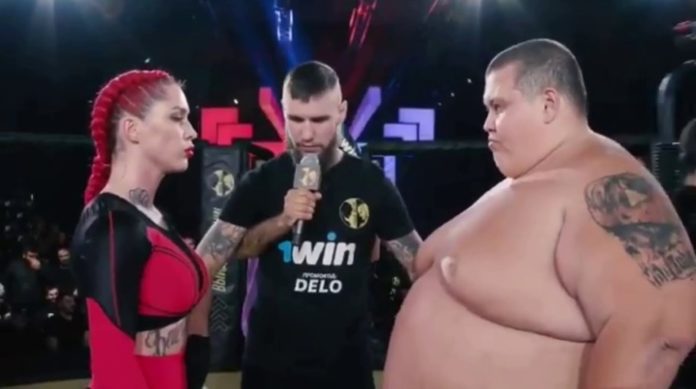
Russian MMA organization ‘Our Business’ organized an incredible fight in which professional fighter Darina Madzyuk and YouTuber Grigory Chistyakov entered the cage.

In short, Our Business organization paired an attractive professional fighter Darina Mazdyuk and YouTuber Grigory Chistyakov, the guy who runs the channel Polnoye Tv, with 117 thousand subscribers.

Mazdyuk has a lot to say about her professional MMA experience of four wins and one defeat, and she weighed 63 kilograms. Christyakov has absolutely no martial experience, but that is why he needed a special scale, as he weighs 240 kilograms. That is, as two UFC heavyweight limits.

The two of them really did the fight and one in which technique once again overcame strength, if what Grigory possesses can be called that. But the level of the “cringe” is certainly above the imaginary red line, and many would call what happened disturbing.

This fight proved that weight means nothing if there’s no skill involved in it. She showed that with a break in the first round.

This is almost as similar as when MMA PRO and BJJ Brown belt Tara LaRosa defeated internet troll Kristofer Zylinski who said he can’t lose to a woman in Jiu-Jitsu. Although Kristofer wasn’t as big as this guy and he was pretty agile and skilled a bit.

In the video below you can see how Darina managed to defeat this giant.

FIGHT VIDEO – Female MMA pro vs Internet Troll Kristopher Zylinski