



Brazilian Jiu-Jitsu still has a lot to learn from other grappling martial arts. Wrestling is just one example. When we mention wrestling in regard to Jiu-Jitsu, people usually think only about takedowns. While wrestling does offer a lot in the standing department it also has something to teach Jiu-Jitsu guys about the ground. Very often, we let rules impair our judgment on whether a move is effective for BJJ or not. The truth is that even positions that are used for pinning in wrestling can be great for BJJ attacks. One such position is the wrestling cradle. A few modifications here and there and you have a very powerful position to work from.
The key to using positions from different grappling martial arts with success is precisely modification. However, you need to have a sense of how much to change. In the example of the wrestling cradle position, there’s absolutely no need to modify the entries or the controlling mechanics. The things to change are what you can do from there to improve your BJJ attacks. And options are plentiful if you know where to look. Immense control, quick transitions, pressure, and submissions are all there for the taking.
As a position, the wrestling cradle is a really uncomfortable spot to be in. This is just one of the characteristics that makes it a perfect fit for BJJ. In wrestling, the cradle is a way of completing certain takedowns and controlling an opponent on the ground. It also allows wrestlers to shift their partners into pins. In essence, the cradle is a top position which opens up every possible scenario in Brazilian Jiu-Jitsu. So far, not many people in BJJ have used it, which means you can have the upper hand if you truly dedicate to mastering it.
The Wrestling Cradle
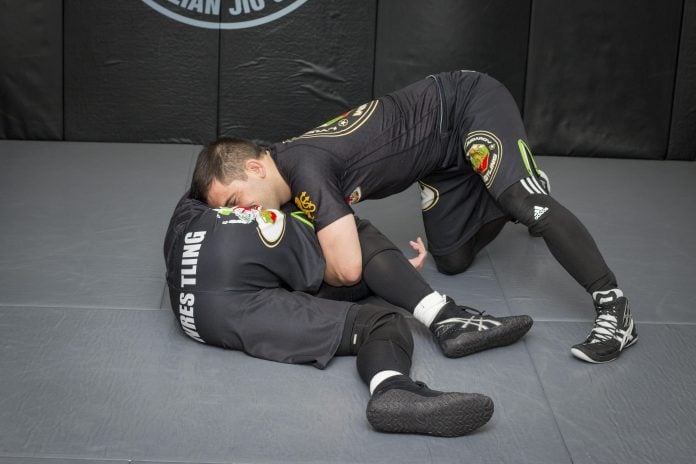
The wrestling cradle is a position that allows you to get the legs of your opponent near their head. As far as core concepts go, this is bang in the middle of a huge BJJ principle. Whenever you have an opponent “cradled” as such, two main advantages spring to mind. First, you have them in an extremely uncomfortable position that’s hard to escape., Nobody feels good when their knee is jammed in their jaw. Next up, folding someone like that gives you not only control but submission options like chokes and leg locks from the same exact spot.
As an example, the wrestling cradle is best explained from side control. If you’re in side control and your opponent turns away, you place one arm behind their head, and the other behind their top side knee. Your goal is to connect your hands together, thus folding your opponent. This cradle position is known as the far side cradle and is a great position for launching various BJJ attacks. There are multiple grip variations you can use, but nothing beats the S-grip, at least for initial control. For the far side cradle, straightening your elbows are going to at least double the discomfort level.

If you have your opponent facing you instead of away from you, you can still get a cradle. the principle is the same, you overhook the head and the top side leg once again. This time, though, you’ll be to the front of your opponent, in the so-called near side cradle. This variation gives you more mobility and transitional power while the far side offers crazy control and pressure.
BJJ Attacks From The Wrestling Cradle Position
The cradle position offers one thing that is crucial for BJJ players – variety. The fact that it can work from both the near and far side, plus top and bottom, means you can attack in plenty of different directions. As such, the cradle can be a source of BJJ attacks as well as a great checkpoint in between them.
One great example of using the cradle for BJJ is the half guard. All it takes from the top half guard is to get the head, and you can dominate your opponent with ease. Once you have the cradle, you’ve effectively passed the half guard. All you need is to sprawl and circle to a near side cradle. From there, you could switch to a far side one, or choose whichever attacking avenue you want.
Another really crucial use of the wrestling cradle is the turtle position. This is actually the reason I started using it myself. People can really easily shut you down completely by staying turtled up as if their life depends on it. It is very hard to break open the turtle position via standard means like back takes or the front headlock. However, the cradle is right there for the taking. The head is already exposed enough and you can easily get a leg of your choosing to control. Once you get your arms in position the slightest pressure is going to open up scape to establish grips. Once you have a grip, you can tip, turn or roll your opponent to whatever position you like.
Control
As far as control goes, all you need from the cradle is to maintain your grip. For the near side cradle, you need your arms bent and you need an S-grip. For a far side cradle, your best bet is to start the same but switch to a ball in socket grip and straighten your elbows. The ultimate goal is to cause your opponent massive discomfort. If you want to be particularly vicious, use a knee-on-ribs form the far side cradle. Aim for the floating ribs for maximum effect.
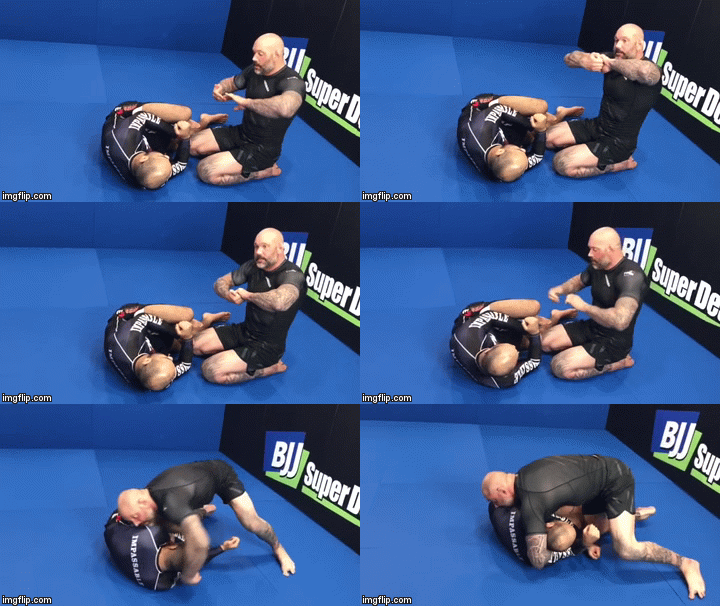 A great way of maintaining cradle pressure is to switch back between the far and near side cradle. This allows you to stay on top of the opponent and take space away after every switch. At one point, there’ll be no more space to try and escape and you can start you BJJ attacks.
Getting into pressure passing positions is one great way of using the cradle to your advantage. From the near side cradle, you can easily switch your legs and place them in between those of the opponent. This gets you in a leg drag-like position with the cradle on. Getting your hips behind the trapped leg puts more pressure on even the most flexible of opponents. PLus you can either go to the far side wrestling cradle or pass to the back with ease.
Transitions
Transitioning between the two wrestling cradle positions are not the only options. From a cradle, you can transition into virtually every category of BJJ attacks you want. Form the near side cradle, it is extremely easy to go straight into a front headlock, with your opponent down on their shoulder. This will get you in prime position for multiple choke attacks. The transition also works vice versa, going from the headlock to a cradle.
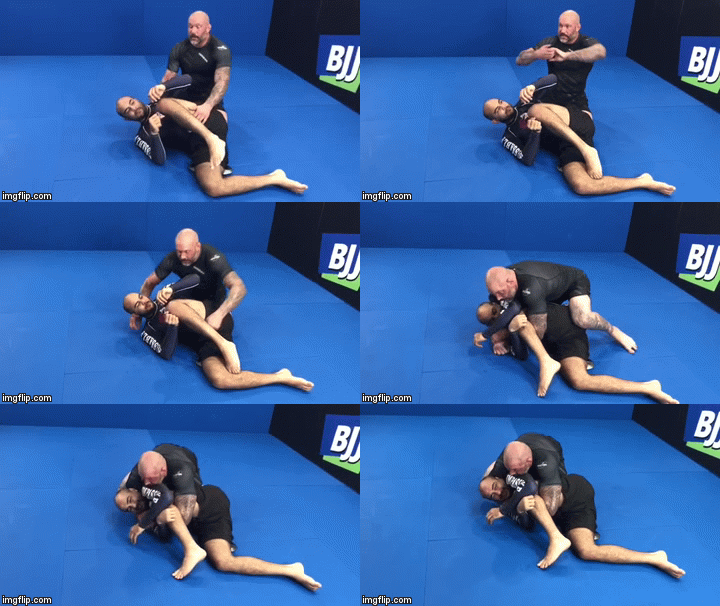 On the subject of the near side cradle, there are multiple entries into Ashi Garami positions as well. While there are not many direct leg locks, getting the Ashi Garami all but ensures a submission victory.
The far side cradle, on the other hand, is essentially side control on itself. If you use the wrestling cradle to pass and end up in a far side cradle you’re already ahead. The best part of it is that the position gives you an easy path to the back, along with a few direct choking options.
Neil Melanson has a complete and very detailed series on the wrestling cradle for Jiu-Jitsu. Integral control concepts, easy submission attacks, and lightning fast transitions. Check out his “Catch Wrestling Formula” DVD instructional set for valuable cradle information as well as plenty of other painful and efficient BJJ attacks.
Submissions
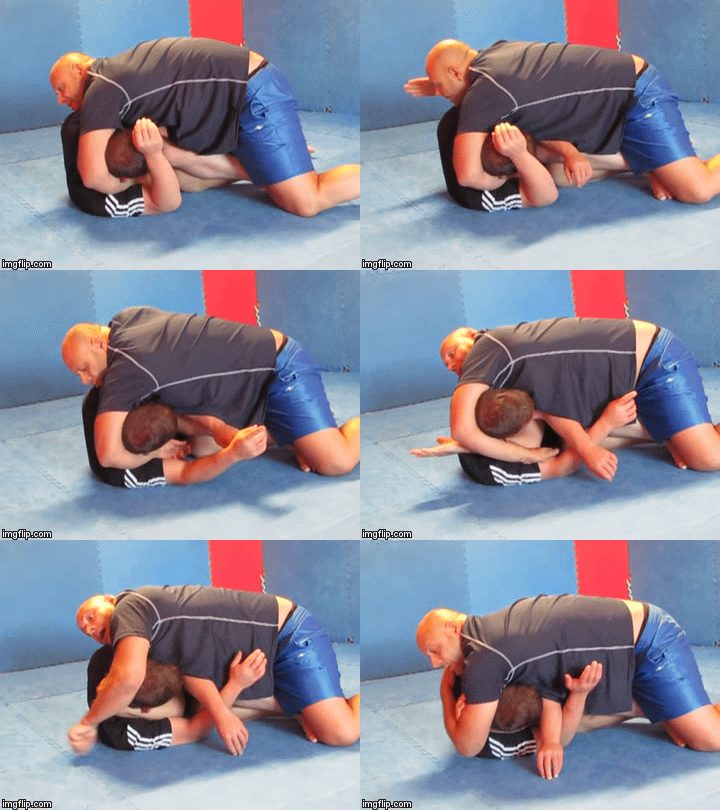 The fun part of BJJ attacks from the wrestling cradle. Getting your opponent to tap right away. The most obvious attacks are, of course, the front headlock chokes. From the far side cradle, most D’arce lovers are going to recognize openings right away. And not just D’arce. You could get an Anaconda, guillotine or any other choke variation you need. All you need to do form the far side cradle is release the leg and sneak the arm under the neck. the D’arce is the easiest option, but far from the only one.
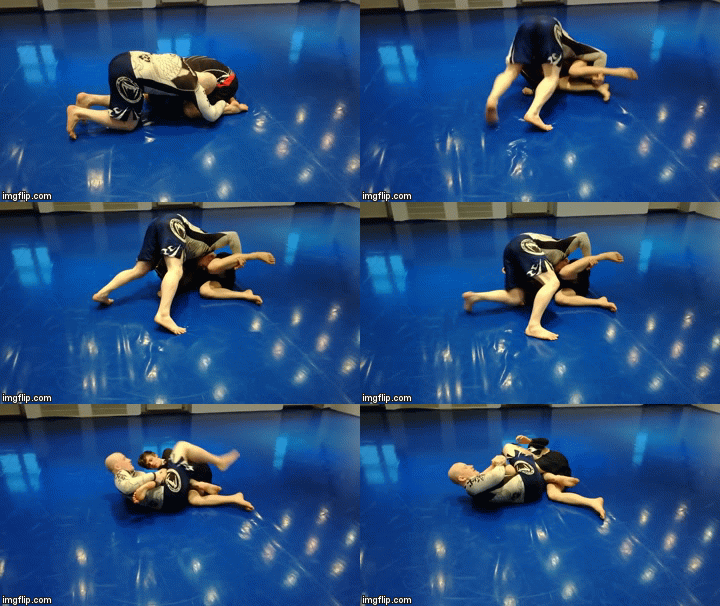 Getting leg locks from the cradle is a bit more difficult. You need to get into a clear Ashi Ggarami position to finish with any success. The easiest path is from a near side cradle into a top straight Ashi Garami. However, the far side cradle can open up even better BJJ attacks by getting you int the 4/11 position.
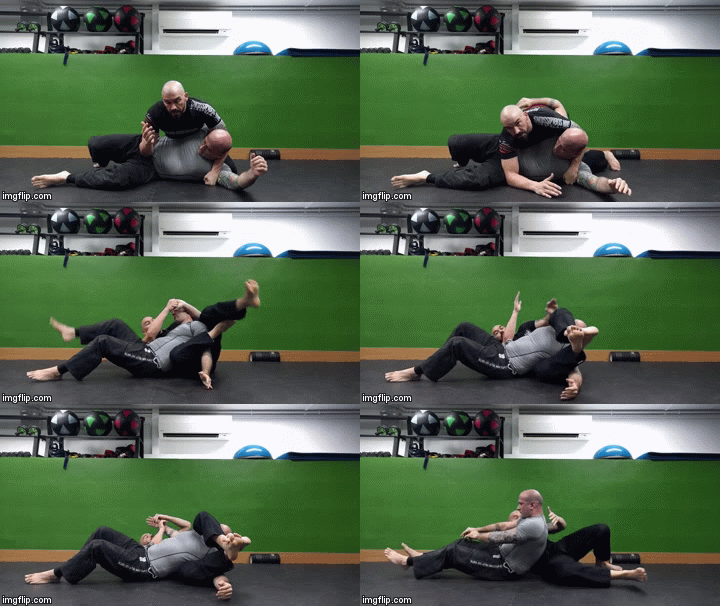 There are also really cool neck cranking options for that that like to live on the dark side more. Form a far side cradle, use the arm under the head to control their bottom armpit. This gets you in a great position to release the leg and roll your opponent on top of you, trapping their far sidearm with your legs. Now, you’re in a twister-like position with many cranks available.
Catch Wrestling vs BJJ and Which Art Has Better Submissions?