In the ever-evolving world of MMA, Joe Rogan’s opinions often serve as a guiding light for fans and fighters alike. Recently, Rogan weighed in on a heated topic: the Gordon Ryan PED physique and use of performance-enhancing drugs debate surrounding Brazilian Jiu-Jitsu competitors. Known for his candidness, Rogan’s comments have added fuel to the ongoing discussion about PED testing in the sport.
The Controversial Gordon Ryan PED Physique
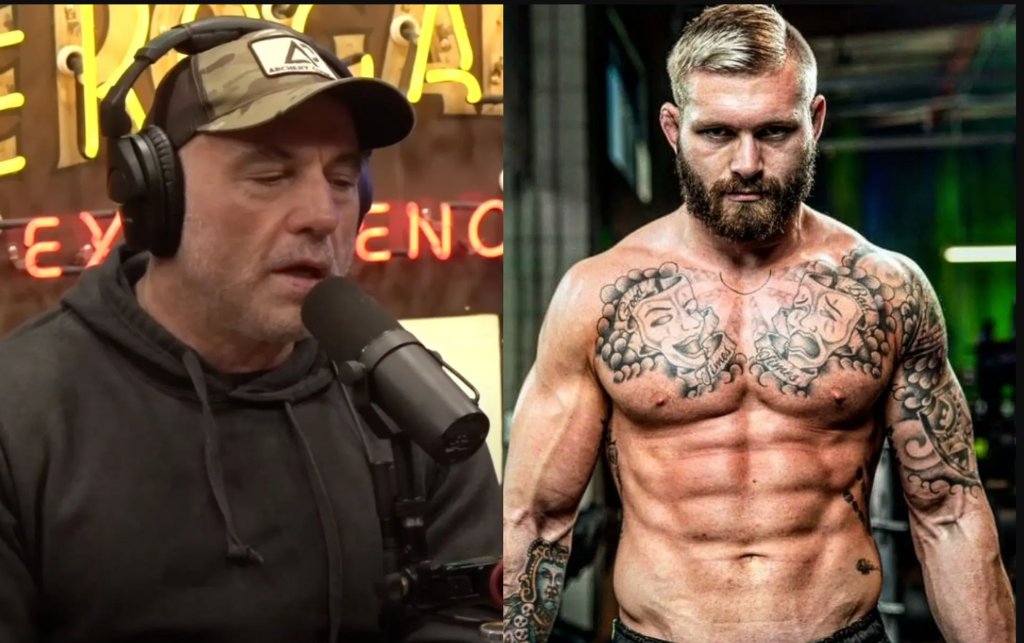
Gordon Ryan’s impressive physique has long been a subject of speculation. Rogan, during a recent episode of his podcast, didn’t hold back.
“He ain’t passing any tests,” Rogan stated, referring to the prevalent belief that Ryan’s muscular build is enhanced by PEDs.
This raw opinion from Rogan has resonated throughout the MMA community, igniting debates on the level playing field in BJJ and the effectiveness of its testing protocols.
BJJ’s Testing Loopholes
Rogan’s remarks also highlighted perceived loopholes in BJJ’s PED testing. He pointed out that the sport’s current protocols may not be stringent enough to catch athletes who use performance enhancers.
“There are loopholes in the system,” Rogan emphasized, suggesting that athletes like Ryan can navigate these gaps to maintain their competitive edge. This has led to calls for reform and stricter regulations within the sport.
The combat sports community’s reaction to Rogan’s comments has been mixed. Some fans and analysts support his straightforward approach, arguing that transparency is crucial for the integrity of the sport.
Others, however, feel that Rogan’s accusations were too harsh and could tarnish Ryan’s reputation without concrete evidence. People don’t really care about the Gordon Ryan PED physique as long as he keeps providing entertainment, it seems.
Gordon Ryan’s View
Despite the controversy, Rogan defended Ryan, calling him a pragmatist.”He’s making the most of the system,” Rogan explained.
This perspective suggests that Ryan’s actions, while controversial, are a result of exploiting the existing rules rather than outright cheating. This nuanced view has sparked deeper discussions about the ethics of PED use and the responsibilities of governing bodies in BJJ.
Gordon Ryan has not shied away from the controversy. In response to Rogan’s comments, Ryan has remained defiant, insisting that his success is due to hard work and dedication.
“I train harder than anyone,” Ryan stated in a recent interview. While he acknowledges the speculation, Ryan maintains that his achievements are a testament to his relentless work ethic and skill.
“That’s what happens when you abuse steroids.”
The amount of people who juice in BJJ is obscene, Gordon is just one of the few who actually talks about it.
His unique health issues aren’t a result of hormone use either.
— More Plates More Dates (@Derek_Fitness) June 4, 2023
The Future of PED Testing in BJJ
The debate ignited by Rogan’s comments has broader implications for the future of PED testing in BJJ and MMA. Experts suggest that the sport needs more robust testing protocols to ensure fairness and integrity.
“We need to close these loopholes,” said one analyst, advocating for stricter measures and more frequent testing. This incident has undoubtedly accelerated the conversation about how to effectively regulate PED use in combat sports.
Joe Rogan’s influence in the MMA world cannot be overstated. His ability to spark discussions and bring critical issues to the forefront is unmatched.
By addressing the Gordon Ryan PED physique, Rogan has not only highlighted a significant concern but also encouraged the community to seek solutions. His call for better testing protocols reflects a broader desire for transparency and fairness in the sport.
Will Anything Change?
As the MMA and BJJ communities grapple with the implications of Rogan’s comments, the need for change becomes apparent. Whether through stricter testing or revised regulations, it’s clear that the sport must adapt to maintain its integrity. The case of the much debated Gordon Ryan PED physique serves as a reminder that even the most celebrated athletes are not immune to scrutiny, and the quest for a level playing field continues.
One of the tightest armlocks ever is the reverse armlock, but it is almost never used with intention. You’ll see people capitalizing on it opportunistically, or using it to leverage themselves into position for something else, such as a sweep or another submission.
And yet, the reverse armlock is a submission that offers high reliability and has a very small learning curve. Speaking of picking the move up quickly, the Reverse Armlock Magid Hage DVD, which is a fairly short instructional if we hold it to modern standards, has everything you need to start getting taps with it. Read on to find out more.
Exploring Straight Armlocks
How often do you go for a straight armlock in BJJ? If you do it is most likely the armbar, am I right? Of course, there are those who like to mess around with Choi bars as well, but those are mostly seen as opportunistic these days.
For me, the revelation of reverse armlocks came from setting up triangles. it turns out that if you trap and block your opponent’s elbow while their arm is in a fully outstretched position, you can do pretty much whatever you want with them. If you ask me it beats the shoulder crunch by a country mile.
During the triangle research, I kept getting taps from people on account of the elbow pressure, so I decided to look into it. Reverse armlocks emerged, and they gave my game a completely new dimension not just in setup up subs, but also in creating the perfect environment for sweeping.
Then, I came across the Reverse Armlock Magid Hage DVD. It is an instructional that will help you understand what reverse armlocks are and how to finish them. You will need to do more research on your own, however, if you want to really make them a part of your game.
Magid “Gorilla Hands” Hage
The baseball choke is one of the best surprise attacks in the sport of BJJ. I’ve personally seen it put people to sleep in seconds, and what’s most interesting is that it usually involves lower belts snoozing upper belts with this sneaky move. The man we have to thank for the choke is Magid Hage.
Hage is a 2nd-degree black belt under Carlos Gracie Jr. which shows that have come up throw the Gracie Barra ranks. He leads GB Escondido in California and is very well-known and respected in competition circles.
Magid came to people’s attention when he submitted two black belts (Zack Maxwell and Clark Gracie) with his signature baseball choke in the same event, demonstrating that innovation can work even against much more experienced opponents.
Since then Magid has competed a lot, fine-tuning not just the baseball choke but also a bunch of other submissions people don’t see coming. He now demonstrates exactly how he developed a highly effective armlock system in the Reverse Armlock Magid Hage DVD.
Detailed Reverse Armlock Magid Hage DVD Review
For a three-part instructional, the Reverse Armlock Magid Hage DVD is fairly short, as each part lasts barely half an hour. That means that the entire instructional is just over an hour and a half long. However, on the positive side, the subject is not vast so this No-Gi DVD is pretty complete as far as reverse armlocks are concerned:
Part 1 – Grips and Positioning
The reverse armlock is a position many grapplers shun, which is a dumb move since this particular move is one of the best there is. Even if it doesn’t work a sa submission it opens up just about everything you want to get from guard with very little resistance possible.
In the Reverse Armlock Magid Hage DVD, the focus is on improving the finishing rate of the reverse armlock, as opposed to using it as scare tactics. The opening chapters of the instructional cover the key aspects of positioning starting with grips.
Grips are the make-or-break portion of reverse armlocks since the pressure on the elbow requires precision for both finishing and retaining the position. Magid does an excellent job at pinpointing these concepts, making them crystal clear before he connects them to actual guard setups.
Part 2 – Different Guard Setups
As you probably know from the popularity of the Choi Bar these days, reverse armlocks work particularly well from BJJ guards. The closed guard has long been a position for setting them up.
In fact, Magid makes closed guard setups on either side extremely easy in this part of the Reverse Armlock Magid Hage DVD. After explaining how to manage distance in a way that favors reverse armlocks it is easy to see why Magid’s armlocks are so tight.
The same principles apply to other guards as well, with butterfly and half guard setups also featuring in this part of the instructional. Hage offers slight adjustments compared to the initial closed guard set up to make the submission work almost effortlessly.
Part 3 – Combo Attacks
The final part of the Reverse Armlock Magid Hage DVD, which is also the longest one, goes deeper into the art of setting up the position and offers a few variations on finishing and possible follow-ups.
I really liked the fact that Magid does not abandon ship when the initial reverse armlock fails and goes for something else, but rather goes on to hunt for it on the opposite side creating an endless loop of the same attack.
The DVD concludes with a recap and some general ideas on using the reverse armlock system.
Spectrum Attacks in BJJ
There is an underlying concept in this Magid Hage Armlock DVD that is a great example of how you can think about diversifying your submission attacks without having to resort to different attacks as follow-ups.
Imagine you’re trying to do a triangle choke. The top person pushes forward (dumb, I know, but people still do it) and you end up mounting them. Can you finish the triangle? Yes, of course you can.
The idea here is that you stay on the same spectrum, i.e. you keep sticking to the same submission, just change the setting slightly to make it work. The same can happen with armbars, going belly down with an ankle lock, or switching from one reverse armlock to another.
The concept is super useful to show you that you can do follow-ups within the same submission hold you’re trying to do when you can quite make it work and you don’t have to change to something completely different immediately.
Add reverse armlocks to your game. They work in every possible scenario, they’re easier to figure out than armbars and bent armlocks and will help you understand Jiu-Jitsu better. The Reverse Armlock Magid Hage DVD is a great place to begin exploring this underrated submission and quickly start tapping out higher belts. Give it a try!
Gillian Robertson 12-6 Elbow Strikes Cause Controversy After Vegas Event
Gillian Robertson, a UFC fighter very well known for her formidable grappling skills, made headlines at UFC Vegas 100 not just for her winning performance, but for a controversial 12-6 elbow strike – to her opponent’s buttocks. This peculiar incident has sparked a whirlwind of reactions and discussions within the MMA community.
Gillian Robertson 12-6 Elbow Strikes to the Butt
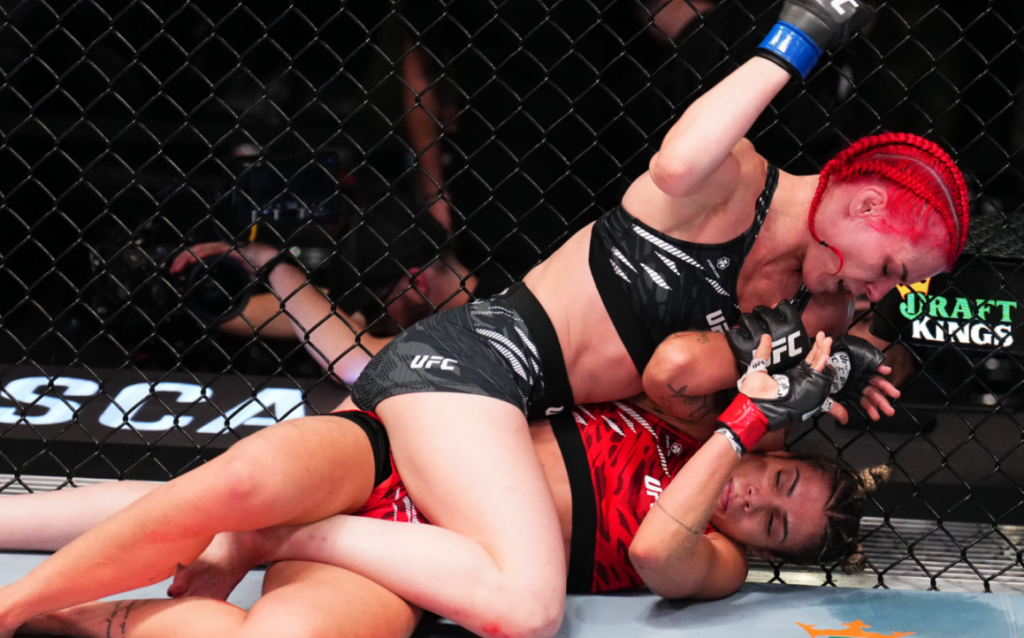
The bout between Gillian Robertson and Luana Pinheiro was anticipated to be a competitive clash. However, the bout took an unexpected turn when Robertson employed a 12-6 elbow, typically illegal when aimed at the head, to a surprising target.
Robertson delivered several downward elbow strikes to Pinheiro’s posterior, leading to immediate confusion and a significant amount of social media buzz. Fans were quick to label it as one of the most unusual moments in MMA history, especially given the targeted area.
Witnesses and fans quickly took to social media platforms, expressing a mix of amusement and bewilderment. The unusual nature of the strike prompted numerous memes and comments.
Even Robertson herself addressed the situation with humor, acknowledging the oddity of the strike and the uproar it caused.
“It was unconventional, sure, but it’s all part of the game. You have to keep your opponent guessing,” she stated.
Medical professionals have weighed in on the potential risks associated with such strikes, even when not aimed at the head. While the 12-6 elbow is banned primarily to prevent head injuries, strikes to other sensitive areas like the buttocks can still cause significant pain and injury.
This incident has prompted discussions about the need for clearer regulations regarding the legality and safety of such strikes. According to experts, even unconventional targets can lead to severe consequences if not addressed properly within the sport’s rule framework.
From a legal standpoint, there have been no formal penalties imposed on Robertson. The current UFC rules do not explicitly prohibit 12-6 elbows to areas other than the head, leaving a gray area that Robertson’s actions have highlighted.
This incident may lead to further discussions and potential rule changes to ensure fighter safety and clarity in the regulations.
Luana Pinheiro, the recipient of the controversial strikes, has taken the incident in stride. Despite the discomfort, she responded with professionalism, acknowledging the unexpected nature of the fight.
In a statement, she noted the pain caused by the strikes but also commended Robertson’s strategic unpredictability. “She elbowed my anus,” Pinheiro commented, adding a bizarre yet candid perspective to the incident. “To me, that’s disrespectful. I’d never do that to another athlete!”
The incident has also reignited debates within the MMA community about the conduct and behavior of fighters. While some view Robertson’s actions as innovative, others see it as pushing the boundaries of sportsmanship.
UFC fighters are known for their intense and sometimes volatile personalities, but incidents like this highlight the need for ongoing discussions about professionalism and respect within the sport.
Tactically speaking, the Gillian Robertson 12-6 elbow used in this manner can be seen as a blend of innovation and desperation. The strike, while legal in this context, was unorthodox and unexpected, catching Pinheiro off guard.
This element of surprise is a crucial aspect of MMA, where fighters constantly adapt and evolve their strategies to outmaneuver their opponents. The fact that Robertson could execute such a controversial move speaks to her adaptability and tactical acumen, albeit in a highly unusual way.
Future Implications for UFC Regulations
This incident is likely to have lasting implications for UFC regulations. As the sport continues to grow, the need for clear and comprehensive rules becomes increasingly important.
The controversy surrounding the now notorious Gillian Robertson 12-6 elbow underscores the necessity of reviewing and potentially revising existing regulations to ensure the safety and fairness of the sport.
The UFC may have to address this loophole to prevent similar incidents in the future.
What’s Next for Robertson and Pinheiro
Both fighters will undoubtedly continue to be in the spotlight following this incident. For Robertson, this could be a defining moment in her career, showcasing her willingness to innovate and push the boundaries of traditional fighting techniques.
For Pinheiro, it’s an opportunity to demonstrate resilience and adaptability in the face of unexpected challenges. Their upcoming fights will likely attract significant attention as fans and analysts alike watch to see how they respond to this controversy.
Gillian Robertson 12-6 elbow at UFC Vegas 100 has sparked a wave of reactions and discussions within the MMA community. As both fighters move forward, this incident will undoubtedly remain a memorable and defining moment in their careers.
The broader discussions it has initiated about MMA regulations and fighter conduct will continue to shape the sport in the years to come.
I am a fan of the closed guard. That said, I usually don’t bank too much on closed-guard BJJ DVDs to figure out the layers of this classic Jiu-Jitsu position. Instead, I like to watch and analyze fights, of both current and old matches, trying to piece the puzzle together on how to best utilize this timeless position.
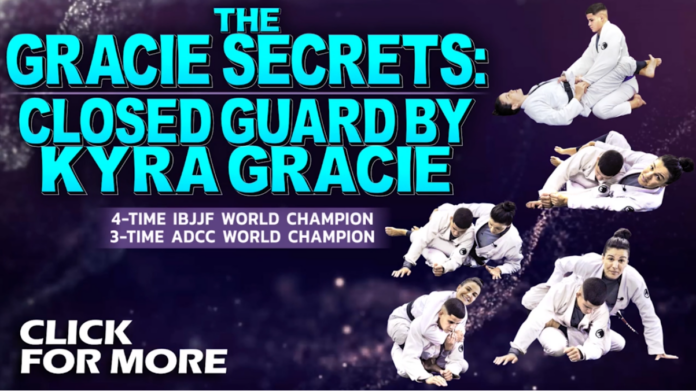
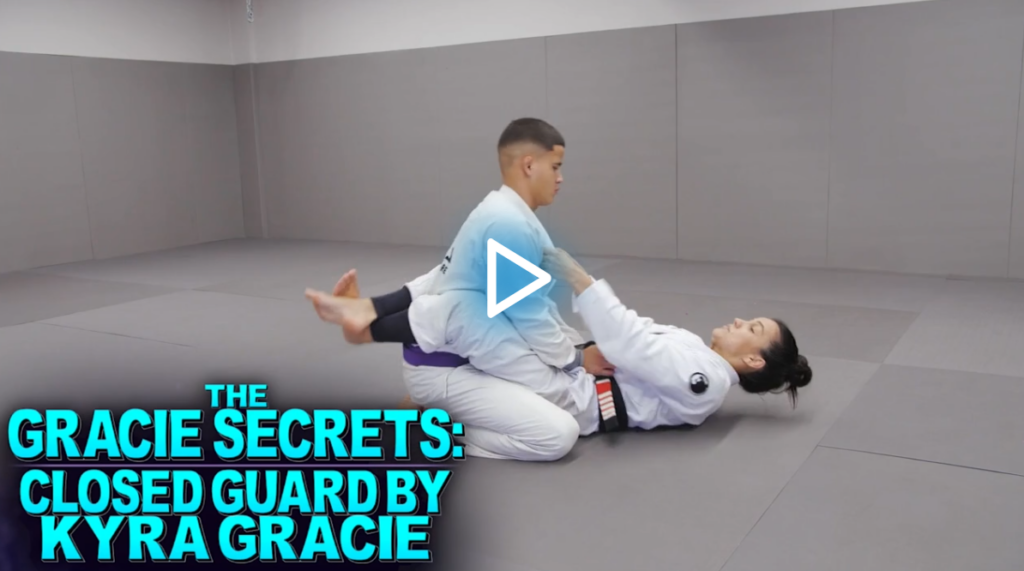
The Closed Guard Kyra Gracie DVD might just be an exception. I decided to take a look since it would be irresponsible of me to dismiss a resource on the position by one of the best closed guard players ever, simply because it’s instructional. Here’s what I found:
The Secret Everyone Knows
I always laugh when I see the word ‘secret’ used in BJJ terms. There are no secrets in the sport, and there are no grandmasters that live in the mountains and can teach you a one-touch toe hold.
However, there is an interesting play on the word in the context of the Closed Guard Kyra Gracie DVD we’ll be looking at today. Those who have seen Kyra compete know that the closed guard was her favorite position. The secret here is not the position itself, but rather the tactics Kyra used to set up her highly dominant game.
At the end of the day, what everyone knows is that the closed guard works. That said, for it to work you need to know what you’re doing – it is not a magical position that gives you guaranteed dominance and attacks just by getting to it. You’ll have to earn those, and Kyra knows all the best ways to constantly keep the top person guessing your next move.
Kyra Gracie – The Most Famous Female Gracie
It is wild when I talk to folks from the newer generations of grapplers and they have no idea who Kyra Gracie is. Understandably, they know about Ffion Davies and Danielly Kelly but the pioneer of female Jiu-Jitsu is completely off the map.
I guess that is what happens when you retire from teaching seminars and more importantly, competing. That said, Kyra did it all when pro-grappling did not exist, the only way for grapplers to make some petty cash was MMA, and when competitive women athletes were no more than a handful, and I am being generous.
Kyra Gracie is still actively training, holding the rank of 4th degree BJJ black belt under Carlso Gracei Jr. With three ADCC titles, five IBJJF world championships, and two Pans and Brazilian Nationals titles each, Kyra really did win it all back in the day. Her last title was the ADCC belt in 2011.
These days, Kyra is still teaching actively at Gracie gyms in the US. She has also been active lately in the digital BJJ realm, producing several instructionals on her competitive game plans. Since she was particularly notorious for her closed guard, I was really stoked to be able to take a peek at the Closed Guard Kyra Gracie DVD.
Closed Guard Kyra Gracie DVD Review
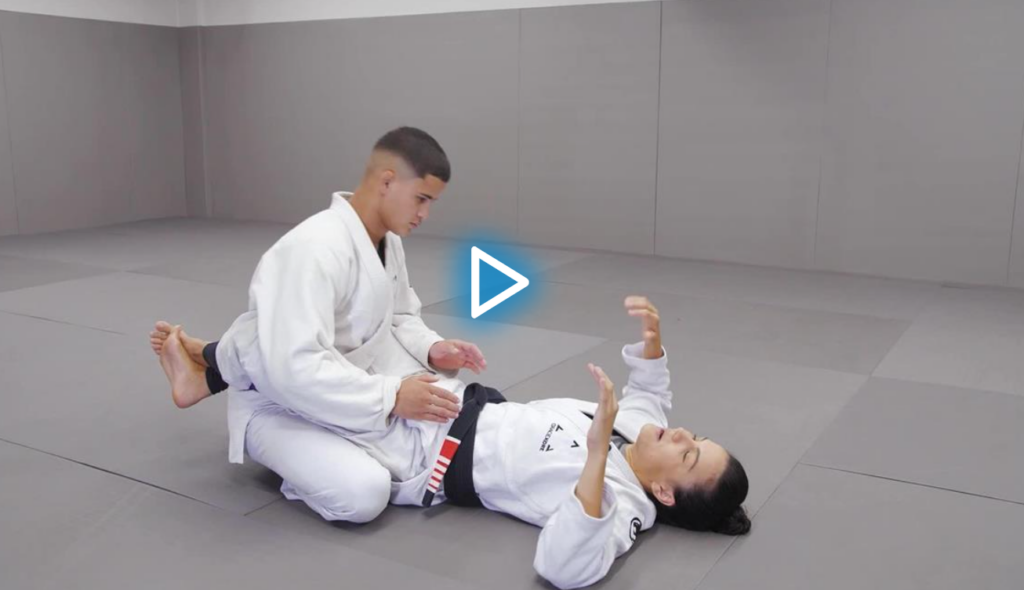
The three-part Closed Guard Kyra Gracie DVD is a Gi instructional offering the complete gameplan that one of the best closed guard players in the history of the sport used to beat everyone and anyone in her way. In it, you get just under 3 hours of super-high quality material by one of the most legit Gracie fighters ever.
Part 1 – The Competitive Closed Guard
Kyra throws everything and the kitchen sink in the first volume of the Closed Guard Kyra Gracie DVD. She starts by detailing how to safely jump guard, something Kron Gracie should’ve learned from her.
Jokes aside, Kyra provides the best options you have for quickly getting to guard, including a couple of sneaky pull variations. She follows up using the common progressions we’ve seen from her in tournaments – pull/jump guard and then torture the poor person by keeping them stuck like a fly in honey.
The classic task of breaking posture features heavily, with Kyra sharing how she achieves it with submission threats that pay off fully from time to time. The Kimura trap is her go-to for control, pass prevention, sweep, and submission threats, which is as progressive as BJJ gets from the closed guard.
Towards the end of the volume, Gracie goes over flanking attacks that expose the back and starts covering your best option when opponents resort to the inevitable – standing up inside your closed guard.
Part 2 – Sweep-Submission Combos
Dealing with standing opponents is still the focus as the second part of the Closed Guard Kyra Gracie DVD rolls on. Here, Kyra offers several sweep variations that don’t jeopardize your guard retention.
Sweeps continue to donate this part, with Kyra looking for the mount as her final destination. Along the way, she uses Kimuras and armbars to set up her sweeps, constantly causing dilemma scenarios. She tops it all with a few quick strangles in the form of guillotines and collar chokes.
Part 3 – Rare Gracie Attacks
The final part of the Closed Guard Kyra Gracie DVD was a real surprise for me. In it, I found moves that I’ve stumbled on as a blue/purple belt and tried to figure out on my own. Some of them, such as the Amassa Pao became my go-to’s, but seeing more details from Kyra means I now understand them a lot better.
For those wondering what the Amassa Pao or Roger Gracie armbar is, this DVD is the perfect way to get your hands on insider instructions on obscure and rare submission moves that work at the highest levels.
Kyra concludes the instructional with a series of overhook closed guard attacks, offering routes into the triangle choke and even more back attacks. She also talks about the forgotten art of using the legs as hooks as she shares the secrets to sweeping using underhooks.
Why is the Closed Guard Timeless?
Love it or hate it, the closed guard is never going to become redundant in BJJ. It simply offers too much and comes too instinctively to people to fade out of existence. It is the one guard position you will surely use and have to face, white to black felt and beyond.
Lately, the trend is to learn plenty of other guards, usually complex beyond reason first, and only try to understand the closed guard when BJJ starts making sense. I’d urge you to go back to the closed guard for the next few months – I don’t care what belt you are.
The Closed Guard Kyra Gracie DVD is the perfect resource to help you set up goals for your closed guard repetition or first-time use. I’ll even jump in on this challenge myself, as someone who went through all the phases of closed guard – loving it, hating it, and ultimately, understanding how crucial it is and playing it whenever I need to emphasize safety and efficiency.
The next time you roll, go for the closed guard. Even better, try out some of the stuff from the third part of the Closed Guard Kyra Gracie DVD! You’ll end up confusing anyone, including those who know the moves. Reverting back to old-school tactics and techniques and blending them with modern ones is a surefire way to improve any aspect of your game. It just so happens, we’re talking about the closed guard here.
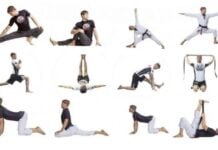
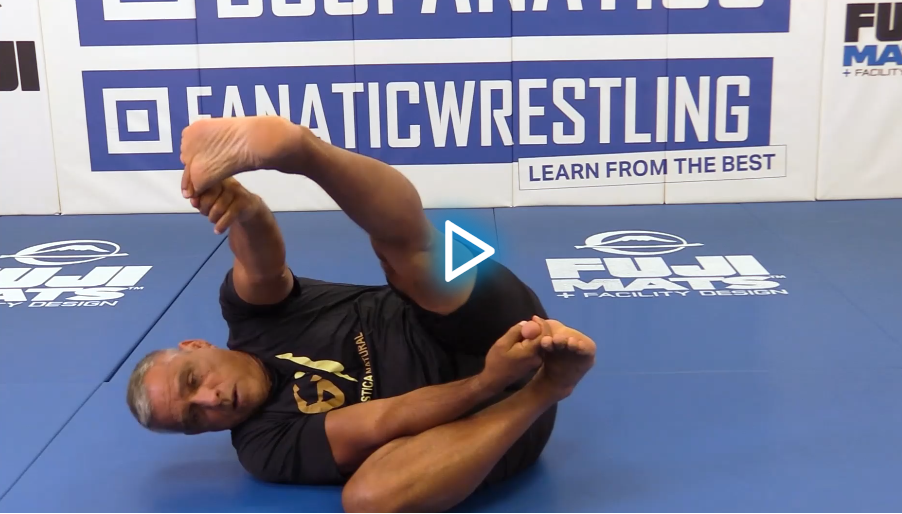
When I started BJJ a decade and a half ago, Ginastica Natural was pretty popular as a supplemental training method. Not many people outside of Gracie schools and affiliates used it, but most of us knew what it was and tried to figure out how to put together flows without having access to qualified instructors.
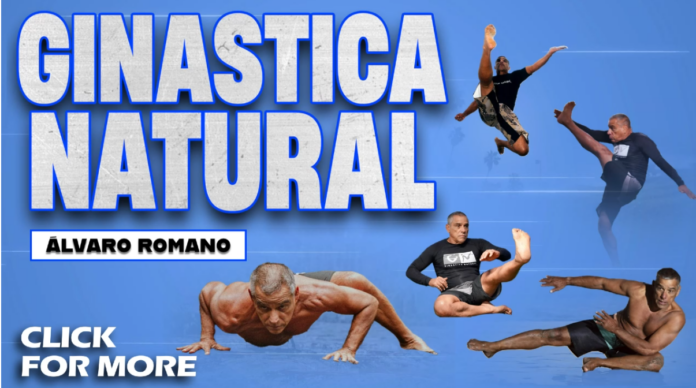
The Ginastica Natural Alvaro Romano DVD is not a first on the subject by the founder of the system, but this one is definitely a lot more refined and detailed than the original one. In the first few DVDs Alvaro demonstrated a lot of flows, but he did it at full speed without much explanation of the moves. This new instructional takes care of this lapse, finally making Ginastica Natural easily accessible to everyone in the BJJ world.
Movement in Grappling
What is the most basic foundation of grappling exchanges? Movement. If two grapplers face each other and nobody moves, there is no match or roll. So, everything we do comes down to movement.
There are two aspects of movement that are important to people in grappling – creating movement and preventing movement. It makes sense and seems easy when delivered like this, but in practice, it’s what BJJ is all about.
Moreover, you have two sources of motion to consider. One is your own body, which you need to be able to control and direct at will. The other is the body of the opponent, which you’re trying to move or prevent from moving.
This second aspect is a lot more difficult to figure out if you are not able to control your body first. Luckily, that’s an area you can improve in with the help of resources such as the Ginastica Natural Alvaro Romano DVD. All it takes is some practice.
BJJ Black Belt Alvaro Romano and Ginastica Natural
Have you heard of Alvaro Romano? He is a 4-th degree BJJ black belt under Rolls Gracie, Carlos Gracie Jr., and Rickson Gracie – quite an impressive teaching squad of BJJ legends. He is also a physical education professor who found a way to connect motor training with BJJ in a quest to create a movement-based training system for longevity.
He began to share his findings with the public in the 80s which led to the formation of the Ginastica Natural system which is fairly popular to this day. The blend of BJJ movement, gymnastics, and yoga ended up consuming Alvaro’s attention more than BJJ’s, although he kept grappling actively to constantly feed and upgrade his system.
The Ginastica Natural system made it to the curriculums in several Brazilian universities, some of which were taught by Alvaro himself. Many BJJ gyms, especially those with Gracie roots practice aspects of it actively, mostly during warmups. Now, the Ginastica Natural Alvaro Romano DVD makes it possible for you to enter and practice the system on your own.
Full Ginastica Natural Alvaro Romano DVD Review
The Alvaro Romano Ginastica Natural DVD is a conditioning instructional that offers a BJJ motion-based system you can do solo or with a partner. It combines BJJ, Yoga and gymnastics into flow-based classes, with the system’s founder, Alvaro, explaining every aspect of putting together these flows in this DVD.
The instructional has eight volumes, each targeting a specific area of Ginastrica Natural, and lasts around 4 hours.
Part 1 – Warming Up
Despite people only using Ginastica Natural for warm-ups in BJJ gyms these days, the system is actually a complete one, featuring mobility, strength, and conditioning components. The very first part of the Ginastica Natural Alvaro Romano DVD starts with the specific warmups that prime you to do the more demanding moves further on.
Alvaro explains some of the basic positions first, such as the cross leg and leg slide stretch, movements used a lot later on in the DVD. He also covers level changes in this opening part, as he explains how to put together basic combinations using the principles of the Ginastica Natural system.
Part 2 – Basic Movement
Part two is what most people who have an idea of what Ginastica Natural is associate with the term. It is broken down into several classes, offering some of the basic movements. For example, there is a class on hip switching, rolling, and grappling without a partner. He also shares Ginastica’s basic breathing patterns here.
The moves and breathing instructions in this part of the Ginastica Natural Alvaro Romano DVD serve as a foundation and/or connections between the combinations and flows that follow as you become more proficient in the system.
Part 3 – Rolling
Let’s get one thing clear – by rolling, this part of the Ginastica Natural Alvaro Romano DVD provides instructions on how to do solo drills such as inversions, front and back rolls, and spinning movements. It has nothing to do with BJJ sparring. At least not directly.
For this part of the instructional, Romano stays on the mats. Most of the movements and combinations are inspired by BJJ, although supplemented with gymnastics and yoga moves to add complexity. The flows in this part are useful for guard players in particular.
Part 4 – Hip Escapes
Personally, I don’t like the hip escape practices as a solo drill in BJJ as I find that it makes more problems than it solves, especially when people try to use it for defensive purposes. However, the hip escape class and the flow options offered in this portion of the Ginastica Natural Alvaro Romano DVD make sense.
They don’t change my mind on the subject, but since the hip escape has a role in other aspects of BJJ that don’t involve defense, this flow might actually be useful. The jury is still out, but I like what I saw.
Part 5 – Animal Movements
As the level of practice changes, the fifth portion of the Ginastica Natural Alvaro Romano DVD moves away from the ground, but not quite hitting standing yet. Animal movements, also known as animal drills among grapplers feature here, but in a way different than the endless gym-length practice we usually associate with them.
Instead, Alavaro organizes them in flows that move in 360 degrees, rather than a straight line. He also offers connection points to the ground movements already covered previously in the DVD, beginning to make Ginastica Natural combos look really appealing.
Part 6 – Strength Training and Breathing
The programming of the flows is what will define the physical gains you get from them. That’s the claim made by Alvaro Romano as he demonstrates how to incorporate the moves already demonstrated into a strength-oriented system.
While the Alvaro Romano Ginastica Natural DVD won’t help you increase your bench or deadlift significantly, it might do what conventional strength can’t – strengthen muscles in your body we use in BJJ, but are not accessible through weight training.
Part 7 – Bodyweight Strength
Still, on the subject of strength, the penultimate part of the Ginastica Natural Alvaro Romano DVD delves into the full-body strength exercises that can help you further challenge your body.
Most of the exercises added in this part are derived from gymnastics, making them very difficult to perform for anyone without a gymnastics background. I tried some and was surprised at how demanding they are.
Part 8 – Bonus Lesson
The final part of the Ginastica Natural Alvaro Romano DVD adds to the overall value of the instructional by offering a real-life class taught by Alvaro. Moreover, it is a private class, where ROmano takes Bernardo Faria through some Ginastica Natural flows.
By watching Bernardo and Alvaro it is easy to see both how challenging the system can be even for a multiple-time world champion who still actively trains, but also how the moves benefit anyone, from white to black belt.
The Best Conditioning for BJJ
The best conditioning method for BJJ is BJJ. There is an old Marcelo Garcia video showing exactly how you can use rolling as a conditioning tool, something the GOAT has proved to work for at the highest levels.
Alvaro Romano has used the same principle when coming up with the Ginastica Natural system. It is by far not the most complete or perfect compliment for grapplers, but it does offer a different perspective to training, along with different benefits to more conventional methods.
The biggest value of the Ginastica Natural Alvaro Romano DVD is in the ability to practice BJJ without a partner, as far as that is conceivably possible. Instead of doing mindless drills, Ginastica places you in positions you’ll likely encounter in BJJ, allowing you to identify ways out and around most obstacles.
Unless you can control your own body, there is little hope you’ll be able to deal with a resisting opponent during BJJ exchanges. The Ginastica Natural Alvaro Romano DVD offers an interesting and unusual way to master your own body for the specific needs of Brazilian Jiu-Jitsu. Plenty of high-level black belts use it to improve their game, so there’s not much to lose and a lot to gain by trying it out.
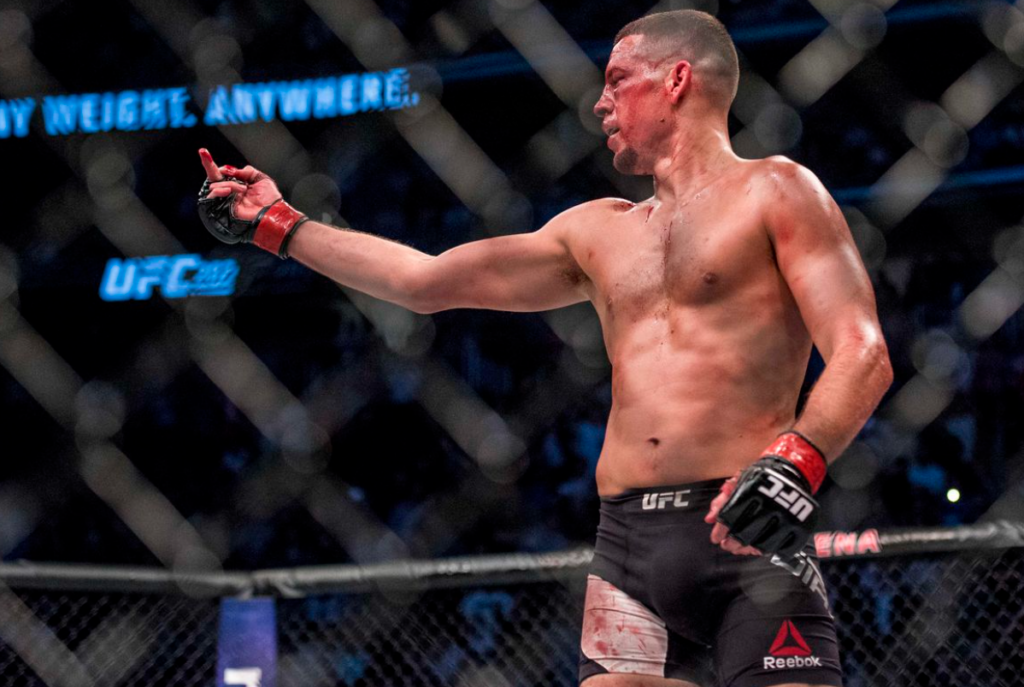
Nate Diaz Faces Battery Charges After Nightclub Altercation
UFC star Nate Diaz is back in the headlines, and not for his performance in the Octagon. The MMA fighter has been charged with battery following an alleged altercation with a bouncer at a Las Vegas nightclub.
The incident, which occurred late on December 10, 2024, has sparked widespread discussion within the MMA community and beyond.
According to reports from multiple sources, Diaz was involved in a heated exchange with a nightclub bouncer, which quickly escalated into a physical confrontation. Witnesses claim that Diaz struck the bouncer after being denied entry into the club.
The details of what led to the Nate Diaz nightclub altercation are still murky, but it appears that tensions flared when the bouncer refused to let Diaz and his entourage inside.
Las Vegas Metropolitan Police Department confirmed that Diaz was taken into custody shortly after the incident.
“We received reports of a disturbance at a local nightclub involving Mr. Nate Diaz. After reviewing the evidence and witness statements, we have charged Mr. Diaz with battery,” a police spokesperson said.
Legal Fallout
This isn’t the first time Diaz has found himself in legal hot water. The UFC veteran has had previous run-ins with the law, though none quite as serious as this latest charge.
If convicted, Diaz could face significant penalties, including fines and possible jail time. Diaz’s attorney has stated that his client plans to fight the charges.
“Nate Diaz maintains his innocence. We are confident that once all the facts come to light, he will be exonerated,” the attorney said in a statement.
Reactions of the MMA Community
News of the Nate Diaz arrest quickly spread across social media, with fans and critics alike weighing in on the situation. Many have expressed disappointment, while others have shown support for the fighter, urging everyone to wait for more details before passing judgment.
Within the MMA community, reactions have been mixed. Some fighters have come to Diaz’s defense, citing the pressures and challenges that come with the territory.
Others have called for stricter standards of behavior for fighters, emphasizing the need for professionalism both inside and outside the cage.
UFC President Dana White has yet to make an official statement, but it’s likely the organization will be closely monitoring the legal proceedings. Diaz’s future in the UFC could be at stake, depending on the outcome of the case.
Broader Implications as Nate Diaz Faces Battery Charges
This incident has reignited debates about the conduct of professional athletes outside their sports.
UFC fighters, who are known for their intense and sometimes volatile personalities, often find themselves under scrutiny for their actions off the mat.
Diaz, known for his brash demeanor and no-nonsense attitude, is no stranger to controversy, but this latest incident could have serious repercussions for his career.
As the legal process unfolds, all eyes will be on how the Nate Diaz battery charges unfold. His next court date is set for early 2025, and until then, the MMA world will be buzzing with speculation and analysis.
For now, Diaz’s fans can only hope that their favorite fighter can weather this storm and return to the Octagon with his reputation intact.
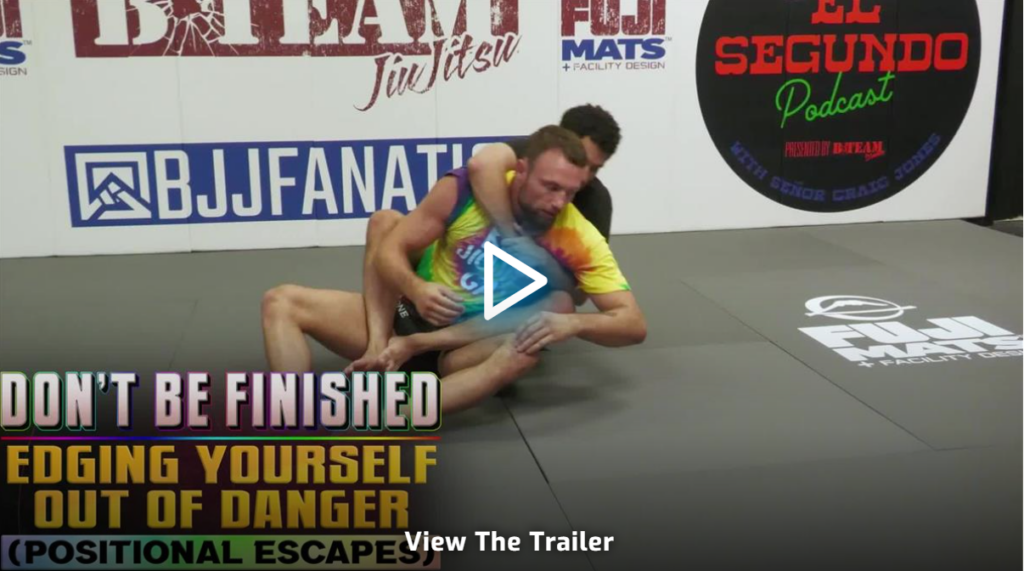
How do you best escape mount? How about side control? Is there a way to get out of back control? These are some of the most common questions I hear. Even when the subject is control from these positions, escapes come up, without exceptions.
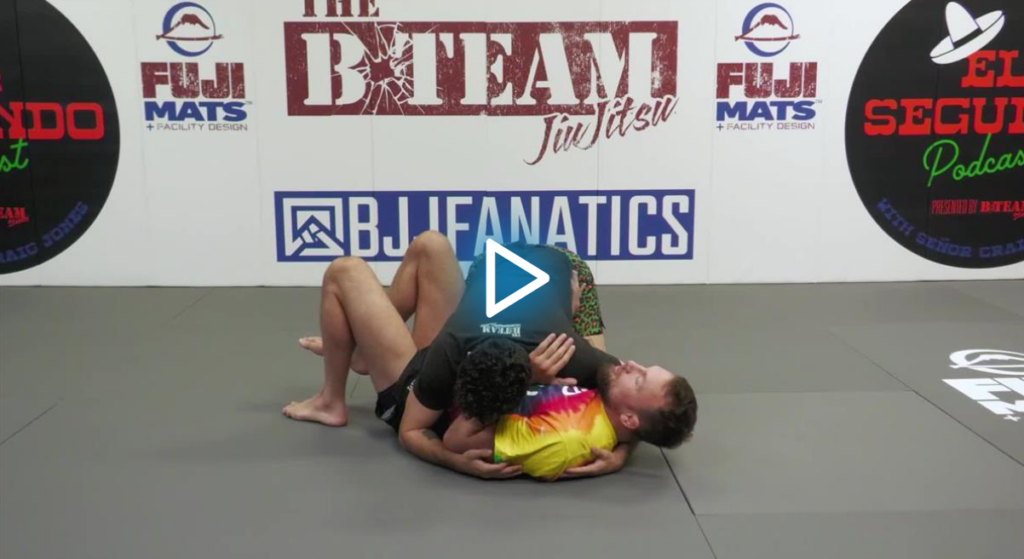
The Edging Yourself Out of Danger Craig Jones DVD covers all three positions from the perspective of the escapee, but without teaching you step-by-step escapes that are bound to fail. Instead, Craig helps you understand how to kill the good positions before you pick one of the many ways out of the bad ones.
BJJ Defense vs. Escapes
I’ve lost count of the times I’ve covered this particular debate on the site, but from what I am seeing in my academy and most matches in pro grappling circuits, this warrants a lot more repetition. So here it goes.
Do not mix up defending and escaping in BJJ. Escaping cannot happen effectively without defending. You can’t just get out of mount or back – if you can do it then you’re either very strong compared to your opponent or you’re a sandbagger.
What you need to focus on when caught in a position that costs you points is not to give away more points or submission by panicking. That means tidying up the space you have available and killing all offensive options your opponent has. That’s defense.
Once that’s in place, you can start thinking about getting out. Plenty of opportunities arise from annoying people with your defense, such as setting up your deliberate and favorite ways out or capitalizing on the top person’s mistakes born out of frustration.
The Edging Yourself Out of Danger Craig Jones DVD covers both these aspects – after all, Craig is the ultimate BJJ troll! It turns out, trolling is a great way to get out of tight spots if you can use it wisely.
The Nuttiest Person in BJJ – Craig Jones
There is not much about Craig Jones that people don’t know. In fact, his past is very much part of grappling folklore at this point – he came up grappling in Melbourne under Lachlan Giles, became an overnight sensation after almost submitting Gordon Ryan in EBI, switched camps to become a part of the DDS during COVID, and had a very public falling out with them, eventually forming his own, B-team.
Craig has since turned into a troll, making fun of BJJ dogmas whenever he can. That, however, does not undermine the quality of his Jiu-Jitsu, or that of the members of his team.
Moreover, Craig Jones managed to single-handedly stir up the professional grappling world when he decided to oppose the ADCC monarchy in No-Gi by launching his own invitational tournament on the same weekend as the ADCC. The CJI, a.k.a. Craig Jones invitational offered athletes huge payouts, with seven-figure prizes for champions.
With the second installment of the CJI tournament confirmed only days ago, the only unknown about Craig Jones is what he’ll do next to shock the BJJ World. Until then, we take a look at one of his instructionals – the Edging Yourself Out of Danger Craig Jones DVD.
Edging Yourself Out of Danger Craig Jones DVD Review
Edging Yourself Out of Danger Craig Jones DVD is a No-Gi instructional consisting of four different volumes. Craig delivers escape options for three of the main top positions in dedicated volumes, all preceded by one covering the key escape principles and concepts he uses. The instructional lasts around 3 hours.
Part 1 – Principles of Positional Escapes
One thing about Craig’s game that is hugely underestimated is his ability to defend. He has only been submitted three times since 2017, once by Kaynan Duarte and twice by Gordon Ryan.
The Edging Yourself Out of Danger Craig Jones DVD is a blueprint for the Aussie’s system for dealing with dominant positions, which ultimately renders the highest-percentage submission attacks useless. The first volume is all about the concepts Craig uses when stuck in a bad spot.
One of the biggest things you’ll learn in BJJ, which Craig opens his instructional with, is the value of small, deliberate movements as opposed to grand ones. When you’re defending, this is extremely important. Paired with the mentality of not accepting anything as finished, Jones does a great job at demonstrating that bad positions are not really that bad – all you need is patience and a few tactical options.
Part 2 – Side Control Escapes
The position everyone loves to hate in BJJ is definitely side control. You’ll end up in it one way or another in just about every roll you do, so you should be aware of what your best options are when you’re on the bottom.
The second part of the Edging Yourself Out of Danger Craig Jones DVD addresses this exact problem, offering a few directions for effective side control bottom escapes. Jones begins with hip escapes, before covering the static running man position that renders top side control useless.
He piles even more directional escapes by presenting slick escapes that lead directly to attacks, such as the Heisman and single leg. A solid escape strategy, based on the defensive power of the running man.
Part 3 – Getting Out of Mount
Mount is next on the agenda, with Craig Jones looking into the best ways to help you get out regardless of what the top person is doing. This last part is crucial, as all of Jones’ escapes work based on the fact that he kills off all the top person’s attacks.
Craig’s system involves combining a few different directions of escape, just like with the side control escapes. He shares details on knee-elbow escapes, the classic bridge escape, and kipping movements.
Nothing we haven’t seen before, really but it all makes sense in the very last chapter of this part of the Don’t Be Finished Craig Jones DVD that outlines how to beat the underhook, the most annoying aspect of defending mount.
Part 4 – Dealing with Back Mount
The back mount is the final position addressed by Craig in the Edging Yourself Out of Danger Craig Jones DVD. The back is not an easy position to get out of, even though preventing chokes and other attacks is no big deal.
Craig begins with the basics, offering a few sliding-back escapes that are classics, but offer more details to up both the flair and effectiveness of the escapes. Once again, he pinpoints key structures that you need to break, such as underhooks, the body triangle, and beating the very annoyingly boring single hook.
Stop Fearing Bad Positions
There is nothing bad about bad positions in BJJ. Understand this sentence in any way you want, but I meant it literally. Bottom mount, side control, knee on belly, or having your back taken are not going to be comfortable, but nothing bad is going to happen.
There is a dogma that follows these positions in BJJ which acts as a psychological rather than physical dominance. The old “don’t give your back or they’ll choke you” is a great example of the fallacy of bad positions in BJJ.
Someone having your back, hooks and all, does not guarantee they’ll finish you. The entire sport of BJJ is in between them having your back and choking you out. Once you remove panic as the source of your trouble from ‘bad’ spots, you can focus on getting to a dominant position yourself, slowly and patiently, just like in the Edging Yourself Out of Danger Craig Jones DVD.
The bottom line is that you don’t want anyone to submit you, right? Well, if you manage to hold people off from bad positions, and escape these bad spots, nobody is going to come even close to setting up a submission! The Edging Yourself Out of Danger Craig Jones DVD has the blueprint, all you need to do is put in the time to introduce it to your game.
The secrets to one of the most successful Gi guards in BJJ are now available, demonstrated by the grappler everyone (except maybe Gordon Ryan) loves – Mikey Musumeci. If you want to understand how to best use one of his best guards, then the Collar Sleeve Guard Mikey Musumeci DVD is tailor-made for you.
The best part about this instructional is that Mikey offers adjustments for bigger grapplers and people who can’t find a way to make his favorite setups work for them. Take it from a No-Gi guy – if there’s one guard you need to use when rolling/competing with the Gi it is the collar sleeve. This is how you learn it fast!
The Most Reliable Gi Grips for Guard Players
If you’re playing guard, and you’re not using the collar sleeve guard you’re missing out on one of the most effective options to control and attack the top person in BJJ. To be honest the only drawback the collar sleeve guard has is that it doesn’t work in No-Gi.
There is hardly a more paralyzing position to deal with than having one arm and one shoulder isolated as you’re trying to defy gravity and deal with guards as a passer. One very useful aspect of the collar sleeve guard is that you can opt for either collar and still end up with a huge set of offensive options.
The most common version, though, as demonstrated in the Collar Sleeve Guard Mikey Musumeci DVD is to isolate one part of the opponent’s body, meaning the same side sleeve and collar. This group structure alone creates an imbalance in the top person, which means it is ridiculously easy to start combining sweeps, submissions, and backtakes from there.
The Man of the Hour – Mikey Musumeci
Everyone in the BJJ world knows exactly who Mikey Musumeci is at this point. Despite having a heap of World Titles in Gi and No-Gi, and winning just about everything there is (No ADCC title yet), Mikey Musumeci is in the public’s eye a lot these days for more than just his crazy BJJ skills.
He started riding headlines earlier this year (2024) when he gave up on his ONE FC contract and left to go back to the USA. At the time, nobody was any wiser to the fact that Mikey was actually going back to spearhead the UFC’s attempt at signing the best grappling talent in the world for their new pro-grappling league.
Mikey already got his first ‘W’ in the UFC Fight Pass Invitational, defeating Felipe Machado on points on his debut for the promotion. The dominant win just cemented Mikey’s place as one of the best grapplers in the world, particularly in the lighter-weight divisions.
The diminutive Fabio Gurgel black belt is also one of the most sought-after teachers, filling his time in between matches with packed seminars. He also has quite a few DVDs out, and we’ll be looking more closely at his Collar Sleeve Guard Mikey Musumeci DVD here today.
Collar Sleeve Guard Mikey Musumeci DVD Review
The four-part Collar Sleeve Guard Mikey Musumeci DVD offers a deep dive into the collar sleeve guard, along with super-effective variations and modifications taught by one of the best grapplers in the world. Each volume covers a specific aspect of the guard system, with the full length of the material just over 2 hours.
Part 1 – Combat Base Collar Sleeve Guard
the task of the Collar Sleeve Guard Mikey Musumeci DVD is to provide a versatile and offensive option against one of the most common passing positions at the highest levels – the combat base, a.k.a. the half-kneeling position.
Musumeci first defines the combat base, outlining where its weaknesses are and offering the most easily attainable ways to exploit them. Mikey’s guards are legendary because people can’t find a way to break them, so a good portion of this first volume goes into explaining essentials like elbow positioning, grip attachments, foot placement, and hip motions.
As you’d expect from any resource featuring Mikey Musumeci, there is a section on how to drill the basic positioning, constantly attacking the weaknesses of the combat base. He wraps up the first part with an Omoplata attack as his focus shifts towards attacking.
Part 2 – Sweeping
The first set of attacks, or as Mikey likest to dub them ‘box’ of attacks contains sweeps. The second portion of the Collar Sleeve Guard Mikey Musumeci DVD contains just over 30 minutes of sweep chains, with Musumeci constantly showing dilemma and trilemma attacks.
He also includes flanking attacks in the sweep series, given how often people choose to end up on the bottom rather than allow a back take. Of course, Mikey also shows how to get the back despite the top person’s defenses, as well as how to constantly change between back takes and sweep chains.
Part 3 – Overhook Collar Sleeve
The real innovation in this Collar Sleeve Guard Mikey Musumeci DVD appears in the third part of the series, with Mikey managing to craft a brand new hybrid guard position. He combines the collar sleeve configuration with the overhook grip, ending up with what seems like the perfect guard for half-kneeling and kneeling opponents.
In the longest volume of this Mikey Musumeci DVD, you get to learn about the mechanics of the overhook collar sleeve guard, and how it leads to submissions such as Omoplatas and the super-fast shotgun armbar, as well as more sweep attacks you can add to your sweep chains.
Musumeci also covers some De la Riva options (it’s Mikey Musumeci, there was no way this DVD wouldn’t have DLR chapters) that work perfectly against the combat base. He sticks to the Omoplata as his main submission threat but does offer a different box of sweeps from the DLR version of the collar sleeve guard.
Part 4 – Modifications
Wrapping up a really great DVD is a volume offering modifications to some of the most common aspects Mikey already demonstrated. In a unique approach to DVD content delivery, Mikey acknowledges that his favorite setups from the collar sleeve might not fit all types of grapplers, so he offers ways to adjust.
The final part of the Collar Sleeve Guard Mikey Musumeci DVD contains modifications on the Omoplata entry, the De la Riva transition, and attacking setups, as well as the initial grip positioning and body alignment.
Pass Prevention 101
Have someone try to pass your guard as you keep pushing one of their shoulders to the mats. Even better, try it yourself.
What you’ll discover is one of the best defensive options you have to prevent guard passes. When only looking at guard retention, the common reaction for the guard player is to try and get the top person’s head to the mats at the same time they’re trying to pass. You’ll get a sweep.
The collar sleeve guard allows you the same, but without having to push the limits of your guard just before a pass works in order to implement it. As long as you can force a shoulder to the mats, and prevent the top person from posting out, you can sweep easily, or set up subs as they desperately try to block the sweep.
Guess what people don’t try to do when caught in such a dilemma? Pass. That makes that collar sleeve guard one of the best guards to prevent direct passing sequences, while at the same time having direct access to plenty of attacking options. Just like the ones in the Collar Sleeve Guard Mikey Musumeci DVD.
Mikey managed to beat all kinds of top-level opponents using his ways to break the most common passing position people use – the combat base. Now, you can use one of his proven methods, outlined in the Collar Sleeve Guard Mikey Musumeci DVD to do the same, transforming your guard from good to world-class.
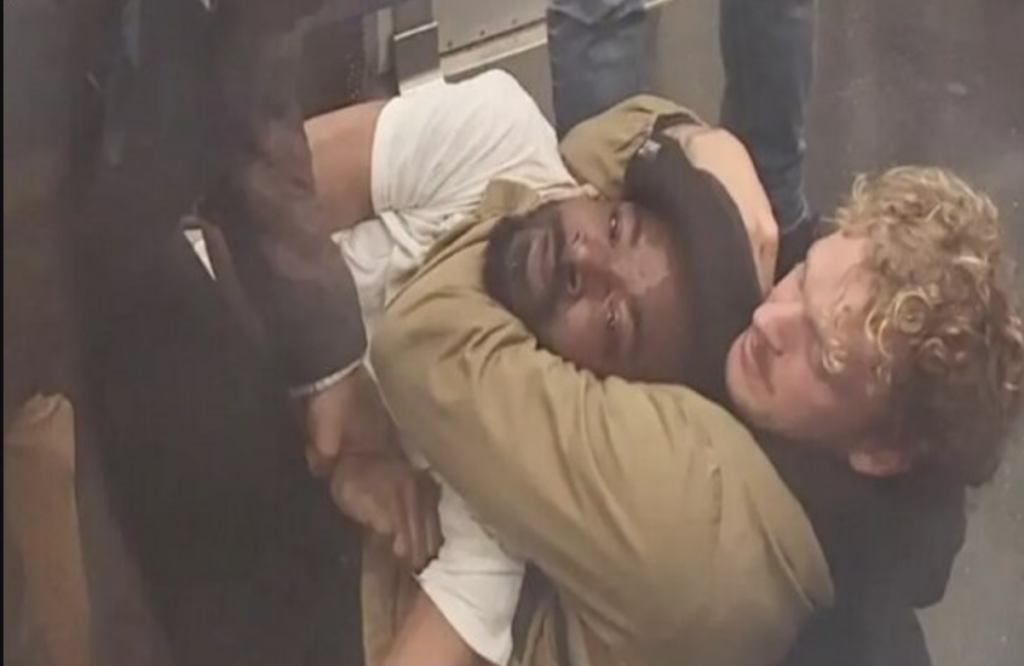
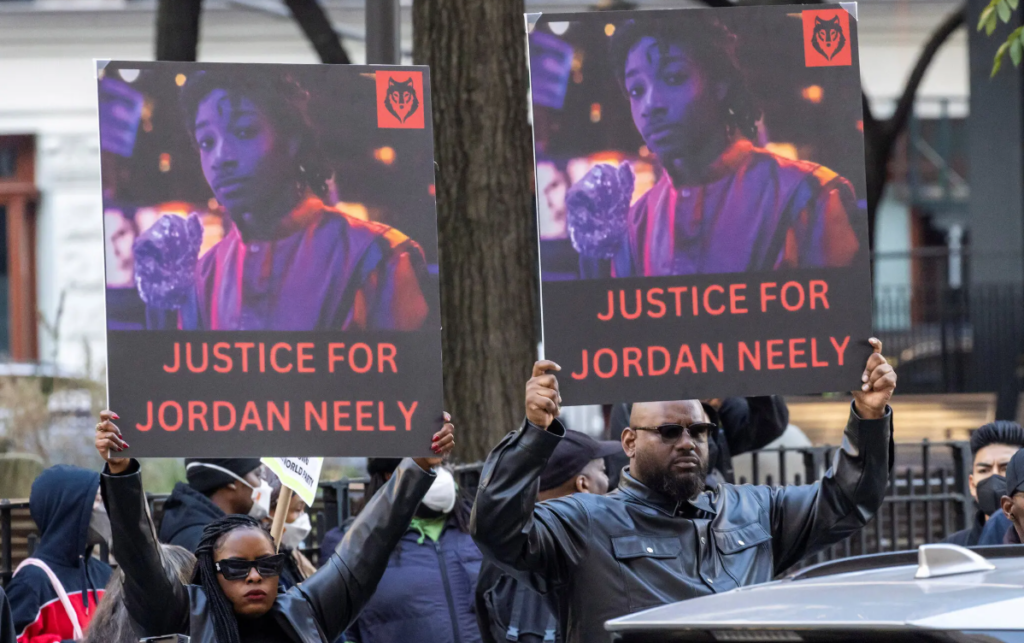
Ex-Marine Daniel Penny Not Guilty in NYC Subway Chokehold Case Which Resulted in the Death of Jordan Neely
In a verdict that has stirred significant public interest, former U.S. Marine Daniel Penny was found not guilty in the high-profile case involving the death of Jordan Neely. The incident, which took place on a New York City subway, sparked widespread debate about the use of force and self-defense in public spaces.
The Incident and Trial
On May 1, 2023, the usually routine commute on a New York City subway train turned tragic when Daniel Penny, a former Marine, used a chokehold on Jordan Neely, a street performer known for his Michael Jackson impersonations.
Neely, who was reportedly experiencing a mental health crisis at the time, died as a result of the confrontation. This NYC subway chokehold case quickly became a focal point for public discourse.
The prosecution argued that Penny’s actions were excessive and resulted in unnecessary loss of life. They painted a picture of a man who used his military training inappropriately, leading to a fatal outcome.
The defense, however, contended that Penny acted in self-defense and in defense of other passengers who felt threatened by Neely’s erratic behavior. This NYC subway chokehold case highlights the complexities involved in self-defense scenarios.
Ex-Marine Daniel Penny Not Guilty: Jury’s Deliberation and Verdict
After a lengthy trial that captivated the nation, the jury took several days to deliberate before reaching a verdict. On December 9, 2024, Daniel Penny was acquitted of all charges, including second-degree manslaughter and criminally negligent homicide.
The jury’s decision was based on the argument that Penny’s actions were justified given the circumstances he faced in the crowded subway car.
“I am relieved by the verdict,” Penny stated outside the courthouse. “It was never my intention to cause harm. My heart goes out to Jordan Neely’s family, and I hope this brings some closure to everyone involved.”
Public Reaction To Jordan Neely Death Trial
The not-guilty verdict has elicited mixed reactions from the public. Supporters of Penny argue that he acted out of necessity in a high-pressure situation, defending himself and others.
Critics, however, believe the case underscores systemic issues related to the treatment of individuals with mental health issues and the use of excessive force. The ex-Marine Daniel Penny not guilty verdict has sparked discussions about public safety and mental health.
Jordan Neely’s family expressed their disappointment with the verdict, calling for greater accountability and reforms to ensure that similar incidents do not occur in the future.
“We are heartbroken by the outcome. This case highlights the need for better mental health support and de-escalation training for the public,” the family said in a statement.
Broader Implications
The case of Daniel Penny and Jordan Neely has sparked a broader conversation about public safety, mental health, and the responsibilities of bystanders in emergency situations.
Advocates for mental health reform are urging for increased funding and resources to address mental health crises proactively, rather than reactively through law enforcement.
Legal experts have also weighed in, suggesting that this case could set a precedent for how similar incidents are prosecuted in the future.
“This verdict may influence how self-defense cases are viewed, especially in public settings involving individuals with mental health challenges,” noted one legal analyst.
Moving Forward
As the dust settles on this contentious case where the jury found ex-Marine Daniel Penny not guilty, the city of New York continues to grapple with its implications. The subway system, a lifeline for millions, is under scrutiny for its safety protocols and the way it handles passengers in distress.
Both supporters and critics of the verdict agree on one thing: the need for comprehensive measures to address the root causes of such incidents. Whether through improved mental health services, better training for civilians, or changes in legal standards, the hope is to prevent future tragedies and ensure justice for all involved.
Craig Jones Drops Bombshell: CJI 2 Confirmed, Warns BJJ Stars About UFC Deals
Craig Jones, the audacious and charismatic figure of the BJJ world, has just lit up the grappling community with a double whammy of announcements. Craig Jones reveals CJI 2 is set for 2025, while at the same time issuing a stark warning to BJJ athletes about signing exclusive deals with the UFC.
Craig Jones Reveals CJI 2 Date in 2025
In a move that has fans and competitors buzzing, Jones confirmed that CJI 2 will take place next year, thanks to secured funding that promises to elevate the event to new heights.
The first CJI event was lauded for its high-stakes matches and engaging format, setting the stage for an even bigger and better sequel. “Funding was a big hurdle, but we’ve cleared it. CJI 2 is happening, and it’s going to be a game-changer,” Jones announced with his characteristic flair.
Craig is bringing back the widely celebrated Craig Jones Invitational for a second installment, set for 2025. The event is expected to draw top-tier BJJ talent from around the globe, eager to showcase their skills on a premier platform free from the constraints of exclusive contracts.
Jones’ Warning: Beware of UFC Exclusivity
Jones didn’t just stop at the exciting news of CJI 2. He took a bold stand, advising BJJ stars to steer clear of signing exclusive contracts with the UFC.
His message was clear: maintaining flexibility and independence is crucial for athletes in the evolving landscape of combat sports.
“Don’t tie yourself down. Exclusive deals with the UFC might seem attractive, but they can limit your opportunities and growth in the long run,” Jones cautioned.
He emphasized the importance of keeping options open and exploring various avenues to maximize one’s career potential.
The MMA and BJJ Intersection
Jones’ statements reflect a broader conversation happening within the BJJ and MMA communities about the benefits and drawbacks of exclusive contracts.
The UFC, while offering significant exposure and financial incentives, often imposes restrictions that can hinder athletes from participating in other high-profile events like CJI.
“As a BJJ competitor, you want to have the freedom to compete in different formats and events. It’s about showcasing your talent on multiple stages, not just one,” Jones elaborated.
This sentiment echoes the frustrations of many athletes who feel constrained by the rigid structures of exclusive deals.
What to Expect from CJI 2
The upcoming CJI 2 promises to build on the success of its predecessor, with even more thrilling matchups and a wider array of competitors.
Jones has hinted at some exciting changes and improvements designed to enhance the viewer experience and increase the stakes for participants.
“We’re looking at some innovative formats and match rules that will keep fans on the edge of their seats,” Craig teased.
He also highlighted the importance of providing a platform where athletes can perform without the pressures of exclusivity, fostering a more dynamic and diverse competitive environment.
As anticipation builds for CJI 2, the BJJ community is abuzz with speculation about the potential line-ups and matchups. Jones’ dual announcement has not only set the stage for a thrilling event but also sparked important discussions about the future of BJJ and the role of independent events in providing opportunities for athletes.
Jones remains a pivotal figure in this ongoing dialogue, advocating for the interests of BJJ practitioners and pushing for a more open and competitive landscape. His efforts with CJI are a testament to his commitment to advancing the sport and supporting its athletes.