



Brazilian Jiu-Jitsu 101: Learn How To Fail In BJJ

Brazilian Jiu-Jitsu 101: Learn How To Fail In BJJ

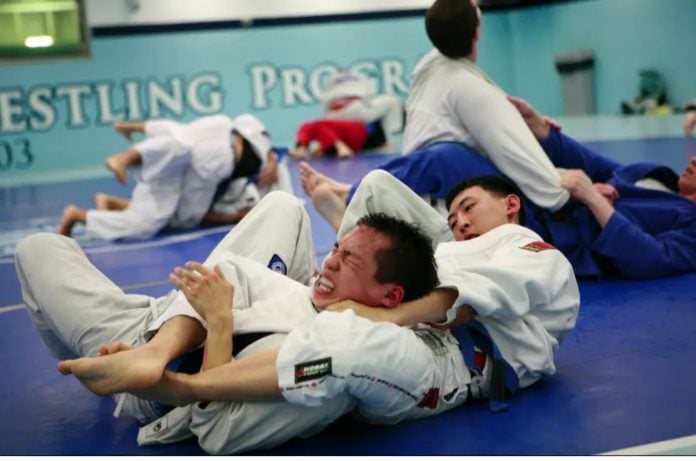
Failure is always an option in BJJ. In fact, it may just be an option you actually need to use more often. To be honest it is arguably the hardest way of learning BJJ, given human nature and all. however, as it is usually the case, the hardest way also yields the best results. You can, by all means, learn Jiu-Jitsu by actually striving to never fail. however, if you master failure as a learning tool, you’ll not only understand what BJ is all about, but you’ll have way more fun in every roll. It is Brazilian Jiu-Jitsu 101.

How often do you go to class with a plan to fail in as many things as you can during rolling? I’d wager that the majority of people will say never, or very rarely. More experienced people, or those choosing one of the more unusual learning methodologies of BJJ, would probably say most of the time, though. Depending on what you’re working on, actually looking to fail in something is so much more important than looking to succeed with it. At least at first. Brazilian Jiu-Jitsu 101 means that the more times you fail in something, the tighter and better it will be when it finally succeeds.

Brazilian Jiu-Jitsu 101: Failure
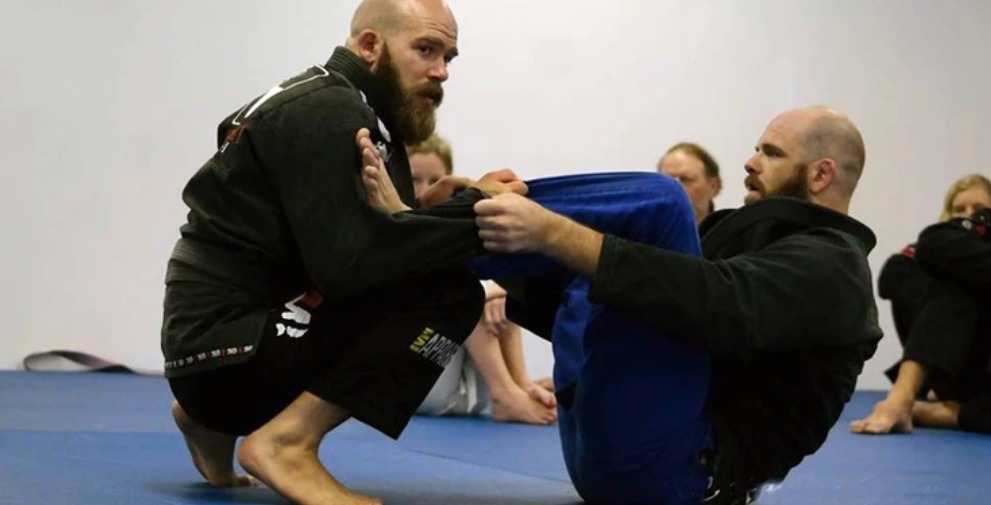
Brazilian Jiu-Jitsu 101: Learn How To FailFailing is something most people in the world avoid. Even within BJJ it is the hardest thing to master, if you ask me. Nobody likes to fail at anything, and yet, that’s the best possible way of actually learning how something works. In that sense, when it comes to BJJ, you learn quite soon that you’ll fail a lot. What folks usually do not comprehend straight away is that that will carry on fro the reminders of their Jiu-Jitsu journey.

So, Brazilian Jiu-Jitsu 101, lesson two; Do not expect to fail only in a defensive manner. Yes getting tapped is an invertible part of BJJ. And yes, the more you tap, the more you learn. However, you shouldn’t’ just see tapping out or losing positions as a failure. You can actually fail in just about anything that you do, from grip fighting, through attacks all the way to defending submissions. And that is where the secret of Jiu-Jitsu lies.

One thing everyone likes to use probably as much a saying “Oss” is saying that they’ve left their ego at the door. Well, that’s not true. Ego is always present, even in BJJ black belts. it is all about how we deal with the ego that makes all the difference. And, mastering the art of failing, or better yet, actually striving to fail, is a great way of making sure you can really control how you react in ego-driven situations.

Learn How To Fail

I have to admit, learning how to fail was the hardest lesson for me in BJJ. Even harder than learning how to pass the guard, I kid you not. Actually it took me getting to the brown belt to finally start figuring out what this Jiu-jitsu thing is all about. And it is not that hard. The concept is simple – go against your natural programming and do not be afraid to fail. In fact, embrace it.
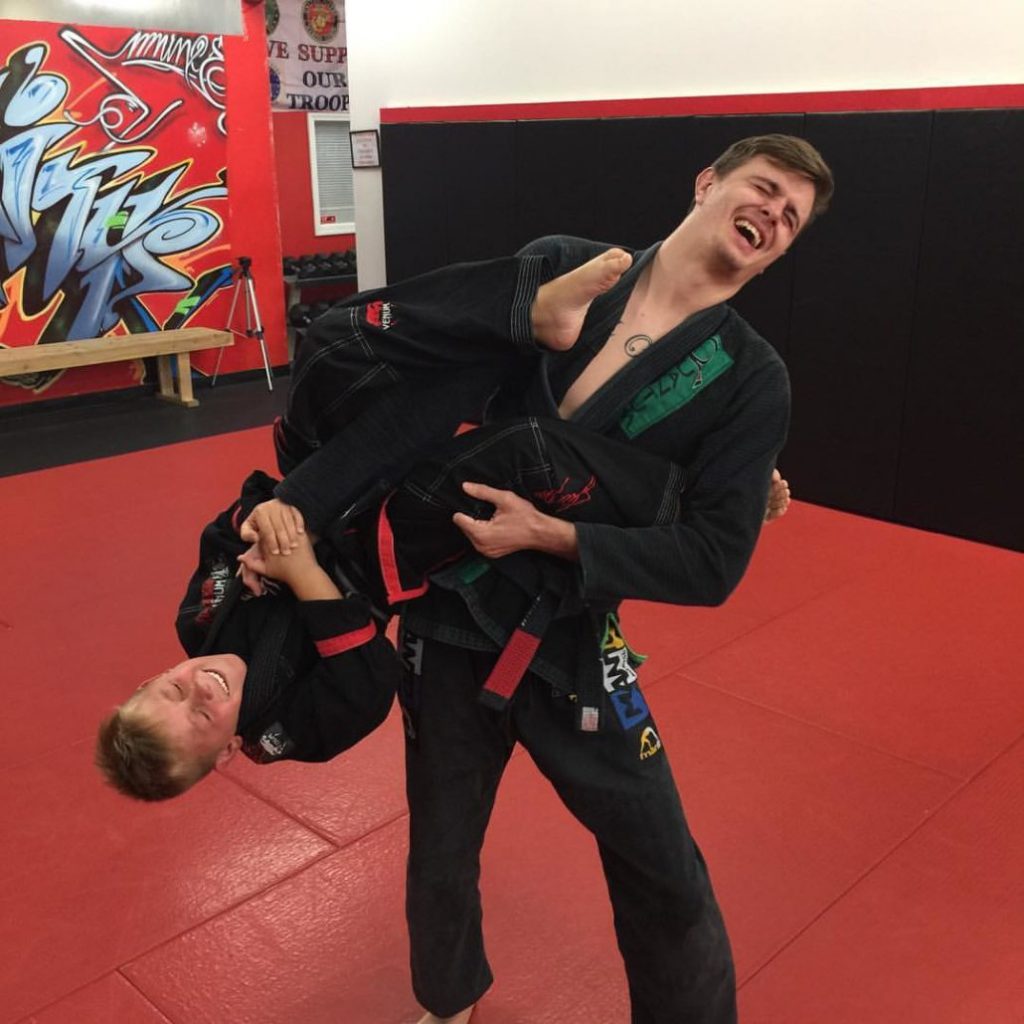
Brazilian Jiu-Jitsu 101: Learning How To FailLet’s use a few practical examples here. First of all, the defensive aspect. When people get you in a submission, you tap. They “win” the round, your “lose” and you restart. The same happens in the tournament, just without the immediate restart. What did you learn? If you learned that you can’t get out of an armbar, for example, you need to go back. What you can learn is how, when, where and why your opponent actually succeeded with that submission. And, unless you happen to it, you would have no way of discovering all these things.

The same is true for any escape out there. You can’t be good at escaping the mount, for example, if you ever end up in bottom mount. So go there intentionally, and fail to escape. Every failure will teach you much more about escaping than a month’s worth of mount escape lessons.

Finally, the same holds true for attacks as well. there’s the hidden benefit of actually becoming better at attacks by getting caught, so you already have the upper hand. But it is when you try to attack, that you also need to embrace failure. every failed submission attempt, guard pass or anything offensive will teach you much more about the move than actually pulling it off at first. And, the more critical you are about your success, the more you’ll fail, which means them more BJJ you’ll learn. As I said, this should be Brazilian JIu-Jitsu 101. People would learn so much more so much faster.

Hidden Lessons

There is more, though. It is not just about getting out of armbars and passing all the crazy guards of today. Failing will teach you another extremely important lesson – not giving up. If you want to use failure as a tool to develop a mean Omoplata, for example, you’ll need to really focus on failing with it for quite some time. In most cases, you’ll need months on an end to really polish a move. That means you’ll become so comfortable in situations where failure seems inevitable, that you’ll “forget” how to give up. And believe me, learning no to give up this way will be extremely beneficial when you step on the mats to compete.

Moreover, learning to embrace failure, as corny as it may sound will help you in any walk of life. Do you know what is the most important lesson people learn from BJJ? It is that they’re actually unimportant. In other words, they learn that they can, will land should fail. And they learn that there’s a lesson there to be learned in order to become better.

Now your appraoch can also be different and that;’ goes beyond Brazilian Jiu-Jitsu 101. Whether you choose to be analytical and logical about things or emotions, it is down to you. However, looking at how to beat the armbar triangle trap you fall in nonstop, whether with a cool head or just raging not to be caught, means you’re learning from failure. It is up to you how comfortable (or not) the process is going to be.

In Summary

Just as the title says. If there’s ever a Brazilian Jiu-Jitsu 101 that we teach across the world, it should be about the concept of learning how to fail. Those who grasp it sooner will get to understand BJJ much faster and progress accordingly. Presumptuous as it may sound, I firmly believe in this and even have a brand new group of students starting their Jiu-Jitsu journey from this basic lesson.

BJJ Bridge – The Fundamentals Of A Fundamental Grappling Movement

Deconstructing the BJJ Bridge

Okay guys, let’s do some bridges. This is something you hear at every BJJ class around the world, with no exceptions. It may be as part of the warm-up, as a part of a drill, the technique being shown or even shouted in rolling. In fact, you could argue that yelling bridge or “Upa” at any time will help someone achieve something positive. Jokes aside, the BJJ bridge is a more than just a fundamental move when it comes to grappling. However, it is astonishing how many people take it for granted and do bridges wrong. It is about time we clear up the BJJ bridge in terms of its aim, execution and some outside-the-box thinking.

It is not just Brazilian Jiu-Jitsu that relies heavily on bridging. Every grappling martial art out there, and of course, by extension MMA, centers their defensive game around the bridge to some extent. The movement is a wrestling staple, it can save your neck in BJJ, it can help you counter in Sambo, etc. However, in every grappling art, the bridge is done slightly differently, as a result of rules and the goals of the sport. That means that while the wrestling bridge can help you in Jiu-Jitsu, the subtle nuances of the BJJ bridge make it a far better option.

The Wrestling Bridge

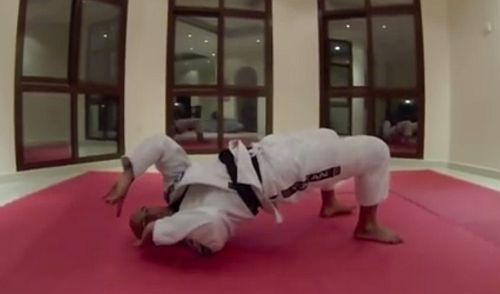
Wrestling bridgeLet’s start with the original bridge, at least when it comes to grappling. After all, wrestling is arguably the oldest form of grappling. Let’s start with the goal of the bridge in wrestling. The best way to win a wrestling match is to throw someone down and pin them. Of course, surviving means you have to avoid the match-ending pin, which translates to both your shoulder blade being pinned to the mats. The wrestling bridge is the answer here, which is precisely why wrestlers bridge using their head and neck.
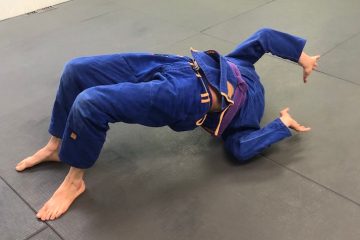
Neck bridging is highly effective in this context. Going for a BJJ bridge in this situation would only mean you’re helping your opponent pin you. Going on the top of the head, though, better known as neck bridging, will provide you with a post that keeps your shoulders of the ground. It does take specific training and conditioning, but the neck bridge can make all the difference. In a wrestling match. In Jiu-Jitsu, it may just get you into more trouble than it is worth.

When doing a wrestling neck bridge, the key thing to remember is safety. If you haven’t done hundreds of reps of it without a partner, do not try and do it in a roll. The wresting bridge hs its uses in BJJ in a sporadic fashion. It can provide a pivot point for transitioning between positions, but still, it is not something I’d encourage you to do on a regular basis. For this bridge, wresters use their legs to arch their bodies upwards, with only the top of the head and toes touching the ground. Often times helping with their arms they can keep the shoulder blades of the mats even if the hips turn to a side or come close to the ground. It is the perfect “hack” at least when it comes to wrestling rules.

Deconstructing The BJJ Bridge

When it comes to the BJJ bridge, we do things differently to wrestlers. In most cases, the BJJ bridge is used to escape the mount position, so I’ll use this position to explain the movement. However, the bridge will help you out of, or into lots of Jiu-Jitsu positions. The goal of the BJJ bridge is to get you out of a bottom position, like the mount, where you have an opponent attacking your while they’re on top of you. This means you don’t’ really have time to spend and your bridging needs to be inch-perfect if want to really escape from everyone’s pressure.

One thing people usually get wrong in BJJ is the power source for their bridge. Funny enough, nobody told me this and I discovered it while doing Yoga, out of all things. Next time you do a bridge, simply do it by taking your hips up, BJJ-style. What did you use as a power source? Most likely your hips, maybe your glutes. Now do it again, but focus on using your hamstrings as your main power source. The difference in power output is unbelievable.

BJJ Bridge - How It WorksThe second piece of the BJJ bridge puzzle is direction. Going straight up with your hips has no point in Jiu-Jitsu. That is why we usually take our bridges over our shoulders to the side. Direction has everything to do with escaping, particularly from the mount. I’ll share a breakthrough concept on escaping mount in the future. For now, just know that you need to move your head out of the way, and go slightly to your side every time you bridge. And this is important not just when doing mount escapes, but every time you do a BJJ bridge.
A final point to remember during execution is connection. I’ll make it simple – unless your pelvis isn’t connected to the opponent’s pelvis in the mount, don’t even try to ridge. Take all the slack out before you activate your hamstrings and hit the correct direction. That’s when a bridge will work for you every time.

What About The Hip Escape?

What about it? Well, let’s think long and hard (or just short and superficial) about the role of the hip escape in Jiu-Jitsu. Is it more important, just as important, or less important than the BJJ bridge? I’ll answer that in a moment. However, if you come to think about it, escaping your hips is the one thing every defensive BJJ movement has in common. From there on, if you take a look at the BJJ bridge,  you’ll notice that the end goal is the same – escape your hip from underneath your opponent. In fact, you might argue that the bridge is nothing more than a hip escape done with your hips higher off the ground.

Think about the bridge as a hip escape. It is out there, it breaks the usual ways of thinking about the bridge, I know. But that is exactly what makes it so powerful and effective. The fact that we use a direction to “push” our bridge into, means that our hips get to move back in the opposite direction. In other words, the next time you do a BJJ bridge, don’t push past your most powerful point. Instead, the moment you reach the peak of the bridge, pull your butt (i.e. your hips) a bit back. The results of this “elevated hip escape” will leave you speechless.

In short, everything in BJJ is about the hips. Even a bridge. Next time you need to bridge, think about being close to your opponent, using your hamstrings for power, and going in the right direction. Throw in the concept of escaping your hips away when you’re at the peak of the motion and you have a foolproof way of bridging. Now transfer all this knowledge to any other position that requires you to bridge.

Closing Arguments

The BJJ bridge is simple. However, it is not as simple as lifting your hips off the mats and trying to rotate your body.that’s just a simple way of giving away submission or your back, at least when in mount. On the other hand, understanding why you do the bridge, and how to do it will yield much better results. Throw in a nonconventional way of thinking in there and you’re’ all set to bridge yourself out of anything.

Why BJJ Belt Promotions Don’t Matter… Except For Black Belt

How IMportant Are BJj Belt promotions
When we come to think of it, we are really bad at the whole delayed gratification method. In the modern way of life, we want everything to happen right away. Luckily, a few things still do not work that way, and we do need to put in real work and earn them. As it should be with ost things. When it comes to BJJ belt promotions, everyone goes crazy about them. Some people even see them as one of the most important things in their lives. BJJ belts are a big deal, but living from promotion to promotion is not what Jiu-jitsu si al labor. 
Why do we rush Jiu-Jitsu belts? If you jsut take a loot at a BJJ roll, any roll you’ll see that rushing thing get you in trouble more times than it brings you success. Well, it is the same with belts. I have a theory that goes something like this: When we’re white/b blue belts, standing at the tail end of the line at the start and end of class, all we want is to hang out at the front, with the purple/brown belts. When we get there, we daydream about standing across, where the instructors stand. Well, once you stand there, do you know what you’re going to wish for? To be back at the start of the line with all the beginners. So, take a breather when it comes to BJJ belt promotions and enjoys the journey.

The Different Level Of BJJ Players These Days

It has been said time and time again that BJJ belts don’t really mean much. That’s a bit conflicting, as we try to put a value on the mat at the same time. Let me elaborate in an attempt to make things clear.
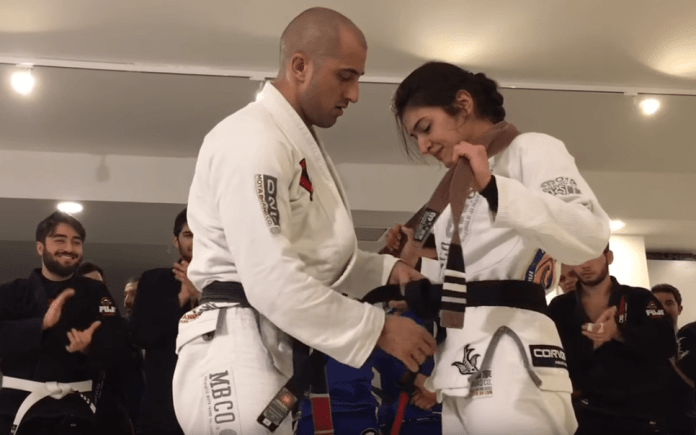
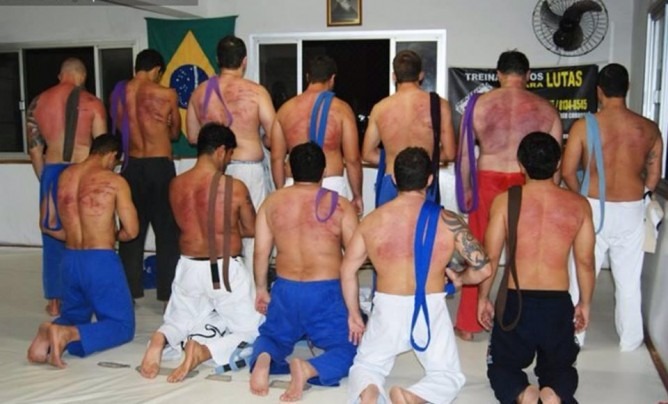
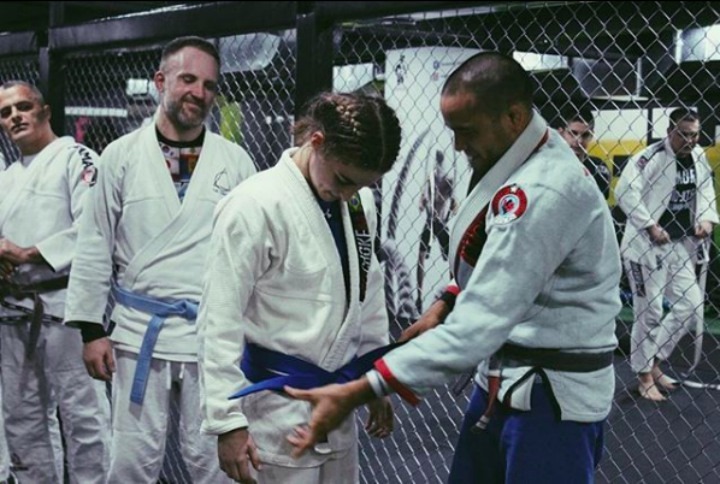
BJj Belt promotionsBack in the old days of Judo, there was only a white and black belt. It is only when Judo migrated to the west, where people need instant gratification did the colored belts appear. The idea behind martial arts belt, including BJJ, is to create a ranked structure of progress It works well, but it does make people focus on getting belts, rather than enjoying everything that is happening around them.
What we already know is that belts do not really show how far someone is in Jiu-Jitsu. Most of today’s purple belts would probably submit your everyday black belt of 20 years ago. Even among the very best grappler,s people with blue belts like Tye Ruotolo and Nicky Rodriguez proved belts don’t really mean much at last year’s ADCC. It is all about performance, rather than belts, which means that BJJ belt promotion shouldn’t be the milestones that guide us through Jiu-jitsu.

Requirements For BJJ Belt Promotions

This is another one of those topics that are open for discussion. When we come to think of it, different instructors do value different requirements when it comes to BJJ belt promotions. Moreover, they oftentimes expect people with different belts to fulfill very different requirements. that’s all fine, but it does leave us without a real standard as to what people, in general, need to accomplish in order to get their next belt.
Basically, instructors around the world look at a few things in common. One is the technical level of students, which is a given. Another that some people pay a lot of attention to is attendance to classes. There is also rolling, small things like personal hygiene, being on time, helping out others, etc. Moreover, for those that compete, more things are taken into consideration, including delaying a BJJ belt promotion in certain cases. These are jsut some of the requirements for getting a BJJ belt.
The real truth is that people don’t really know what they should do in order to get the next belt. At least not precisely, And this is perfectly ok. Jiu-Jitsu is different from other arts, where you have tests and timelines in getting a belt. In Jiu-Jitsu, your instructor should have the clearest idea of when you’re ready. Not you, and not your peers. That is exactly why sometimes people do put too much emphasis on BJJ belt promotions, and in particular, missing out on them. That doesn’t mean you don’t get to learn Jiu-Jitsu or process… In fact, it means the exact opposite.

What Does John Danaher Think? 

John Danaher is considered to be one of the best minds in JIu-Jitsu nowadays. Of course, he has his take on BJJ belt promotions as well, and it makes a lot of sense. Just recently he posted on his social media something in those terms, and I’ll try to point out the most important thoughts of his post.
BJJ Belt Promotions DanaherOne thing Danaher did was compared colored belts to the grades you get in junior high school.  His take on colored belts is that they are the same as your grades in junior high. On the other hand, getting a black belt is what marks the start of your adult life. If you come to think of it, nobody in your adult life has ever asked what your grades were in junior high, right? the same goes for BJJ.your’e going to spend most of your training as a black belt anyway, so why worry about how much time it took you to get between blue and purple, for example?

Danaher also talks about factors that actually influence your progress and how to correctly measure them. His take is that different requirements need to apply to different types of people. Among the factors, he lists age, background, and technical ability. It makes sense, as he says that an older grappler and a young professional grappler are not going to be promoted on the same basis. Background is also huge, as people with decades of experience in other grappling martial arts won’t progress at the same speed as someone who hasn’t trained.
I essence, Danaher likes to do BJJ belt promotions for people that deserve it on the base of merit alone. Tehcnical knowledge, how they rest in the stress of sparring are jsut two of the most important things he judges people upon. Also, he notes that it is performance that really counts and not the color of your belt.

Conclusion

To be honest, there is a lot of sense to what Danaher is saying. After all, train long enough, and you’ll become a black belt. How will you measure your progress than when stripes arrive every few years and there’s hardly any color change on the horizon? Focus on what is important, and that is your Jiu-Jitsu performance. BJJ belt promotions will happen, but they won’t have anything to do with how much actual BJJ you learn. Think about it.

BJJ Weight Loss Tactics: How To Use Thermogenic Foods

BJJ Weight Loss - Thermogenic Foods

Weight loss is the target of just about anyone alive these days. Even slim people seem to want to be even slimmer. While that’s far beyond my comprehension, losing weight for Jiu-Jitsu is another subject whatsoever. Things are simple: BJJ is a sport regulated by weight classes, among other things. In short, if you want to compete, you’ll have to watch out for you weight. It doesn’t necessarily bring you an advantage, but it won’t hurt either. Speaking of which, you can go about losing weight via weight cutting, or try the same approach and include oms long term BJJ weight loss strategies. Like using thermogenic foods, for example.

Choosing the right diet plan (whatever that might mean) is not an easy thing to do. There is a crazy amount of information available nowadays and most of it is not really effective. A huge reason for this is that things are usually presented out of context. It is like watching nothing but BJJ YouTube videos unrelated to each other and trying to learn Jiu-JItsu that way. If there’s one thing you can learn from BJJ, it is that trying to figure out how things work is always a good bet when you’re trying something new. IN that sense, approach BJJ weight loss from a different perspective: look at food choices rather than timing, meals, recipes, etc. Start with the fundamentals.

Why Weight Matters In Brazilian Jiu-Jitsu

Where do I start with bodyweight and Jiu-Jitsu? Obviously you do not need to be in peak athletic shape, ripped and shredded in order to be a great grappler. IF that was the case, there would hardly be any ultra heavyweights, apart from al those “slightly” enhanced specimens. However, being at a weight that’s perfect for you does provide a huge advantage.

BJJ Weight LossFirst of all, it has nothing to do with competing. Begin at a healthy weight means you can move much more efficiently and easily. Try being on the wrong end of a stack pass when you’re even a couple of pounds overweight, and you’ll know what I mean. Moreover, it is easier to have a better gas tank when you’re at the optimal weight for you. That said, finding out what your optimal weight does not really work well by using formulas and similar nonsense. See where you feel and move the best. Even more importantly, figure out a weight you can sustain without having to sacrifice your entire lifestyle and social life.
Apart from training, there’s the competition aspect. To make things clear, BJJ weight loss in this regard is only ok if you’re overweight and clearly above your best performance. I absolutely do not advocate weight cuts, even though there are great ways of setting them up to succeed. Instead, fight at a weight class you’re comfortable at. Use BJJ weight loss strategies to get there, sure. But try and stay there for an extended period of time without having to watch out too much about what you’re eating. Otherwise, going a weight class up might be a better solution.

BJJ Weight Loss Tactics: Food Choices

Brazilian Jiu-Jitsu becomes very easy and logical once you understand how it works. (Un)fortunately, it takes a long time to get there. Luckily, if you try to do the same with nutrition, you won’t have to spend years figuring things out. In essence, nutrition is simple. You need to ingest stuff that will make your bodywork. By work, you have the energy it needs just to keep you alive, energy for doing daily stuff, energy for doing physical activities. That’s actually the exact order in which your body rates them.

All this energy comes from the food you eat. The more you eat, the more you satisfy your body’s energy needs. That said, once you surpass them, the surplus energy gets stored for “rainy days”. Only if you keep overloading, you’ll just keep storing and storing. Or get fat, in other words.

When it comes to the food you eat, you need to ingest the three macronutrients (protein, fat, and carbs) as well as a host of micronutrients (vitamins, minerals, amino acids, phytonutrients, etc. ). Getting them all can be complicated, particularly if you follow ceratin restrictions (keto, vegan, carnivore or whatever). So, it all boils down to food choices.

The foods you choose to eat, are the fundamentals of how you’ll look and perform. IT is that easy. The more balanced and clean your food choices are, the easier it will be for you to figure out your ideal weight. Nt o mention that you can easily adjust for weight loss or gain just by switching the type of foods you eat. With that in mind, let’s approach BJJ with loss form this perspective. If you’re looking to shed weight, and still enjoy eating you need foods that support this goal. You need thermogenic foods.

Thermogenic Foods to Help You Lose Fat

SO what exactly are thermogenic foods? Those are the foods that help you lose weight silly because it takes more energy for your body to break them down than the energy they provide. That said, focusing on some, or all of them will allow you to eat plenty, eat tasty, and still achieve your BJJ weight loss goals. Once you know which foods are the best at helping your body burn more fat, you can easily find a way to tailor your diet/meal plan around them.

Cocoa is one of my personal favorites, so I’ll start there. Cocoa is not only delicious but also a very potent antioxidant. It is also a stimulant, as it is in the same category as tea and coffee. It has a host of health benefits and also causes your body to work at a higher rate. Plus, you can use it however you want.

Ginger is an obvious one. It is a staple of Asian cousine, and, nowadays, is used just about anywhere. Ginger actually ah the power to increase calorie burring for around 10%, which is significant. Ginger tea is one great way of getting your daily dose.

Coffee, of course, similarly to cacao, is one of the best (and most delicious) ways of putting your body in the next gear. The world’s most famous stimulant is a perfect fit for grapplers. It not only helps with BJJ weight loss goals, but also makes you feel energetic and keeps your mind sharp.

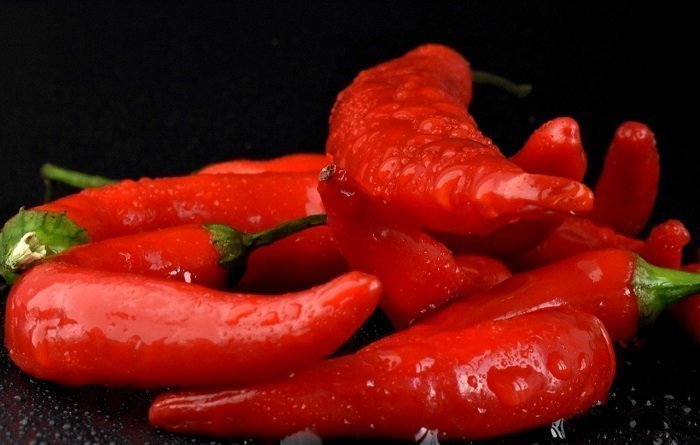
BJJ Weight Loss- chilli peppersChilli. Peppers, though, not just the spice and certainly not the dish. Hot peppers of all varieties will help you lose weight due to the very thing that makes them taste spicy – capsaicin. It is a heat-forming compound that stimulates the body to break down fat.

Green tea is a staple of weight loss programs, and there’s a good reason – it works. One to two cups a day will help you drop quite the amount of weight, due to the caffeine content and the polyphenols that it contains. Doesn’t do nearly as well if you put sugar in it, though.

Protein. All clean protein sources, whether they’re plant or animal-based, have a huge thermogenic effect. The body takes a lot more energy to break protein down, than the energy protein provides. That means a negative caloric balance, and reaching your BJjj weight loss goal. Plus, you’ll never feel hungry as protein is highly satiating.

Citrus Fruits are probably the most obvious superfood you can eat for the thermogenic effect. Grapefruits and tangerines top the list, given that very few people, can just eat a lemon. Similarly to protein, it takes a lot of work to digest.

BJJ Weight Loss - thermogenic spicesCinnamon Let’s wrap it out with the spice you either love or hate. This thermogenic spice works thanks to the abundance of antioxidants and phytochemicals that lower triglycerides and cholesterol like nothing else. Plus it regulates blood sugar and information on top of everything else. That, and it will curb any sweet tooth you might have. Just use George Lockhart’s simple trick.
Conclusion

One thing to forget when setting up a BJJ weight loss meal plan is all the fat burning supplements. They won’t work. Period. Instead, focus on your food choices., keep things simple – include as many thermogenic foods as you can. At the same time, keep things balanced by including micro and micronutrient as best as you can. Weight loss and healthy eating can be extremely simple, just like Jiu—Jitsu. All you need is to understand how things work.

Types Of BJJ Schools And How To Recognize Them

Common Types Of BJJ Schools

What kind of BJJ School do you train in? If the answer is “I don’t know” hat this article is tailor-made for you. If you are aware of the fact that there are different types of BJJ schools out there, but are not sure which they are, you’ll once again find this useful. Even if you’re aware of the different types of schools, you’ll get the chance to learn how to recognize them. That is before you decide whether they are a good fit for you or not. In that sense, there are far more types of schools than the ones we will look at. However, these are the most common and most important ones by far.

Speaking of BJJ schools, let’s first say “the ugly truth”. People that start in one BJJ school might end up moving to a different one, and even a third one after that, etc. Loyalty is a big thing in BJJ, or at least we want to paint it as such. However, when it comes to progress, and becoming the best grappling version of yourself, you can’t deny yourself the need to change school. If you see it as a solution, obviously. Most of us will develop in different ways throughout the years. While you can achieve everything in one academy, sometimes switching BJJ schools when you change the direction of your game is simply a smart thing to do. That, or traveling a lot and training as a guest.

Either way, you need to know what types of BJJ schools await you and which one is a good fit for you.

Not ALL BJJ Schools Are The Same

When we talk about Brazilian Jiu-Jitsu, people tend to think of things like the Gracies, Gis, and current top competitors like Gordon Ryan, for example. Just there I outlined three very distinct aspects of Jiu-Jitsu that we very often take for granted and see as one. The truth of the matter is, there are different directions in Jiu-Jitsu. Different BJJ schools tend to specialize in these different directions. Some like to go old-school and respect the roots. Others are all about doing new and effective stuff, etc. As such, I can outline three main directions of Jiu-Jitsu that are currently the most represented.

No-GI BJJ SchoolsFirst up we have the old school guys, Like all of Rickson’s students, that are all about Gracie JIu-Jitsu.Whether it is Rickson’s academy or a school led by one of his black belts, the philosophy is more on self-defense and fighting than sports. They do train in the Gi, as that’s part of the roots, but training is all about being able to defend yourself and beat someone up if need be. As far as representation goes, this type of BJJ school is the least represented out there. At least when it comes to really honoring Gracie Jiu-Jitsu.
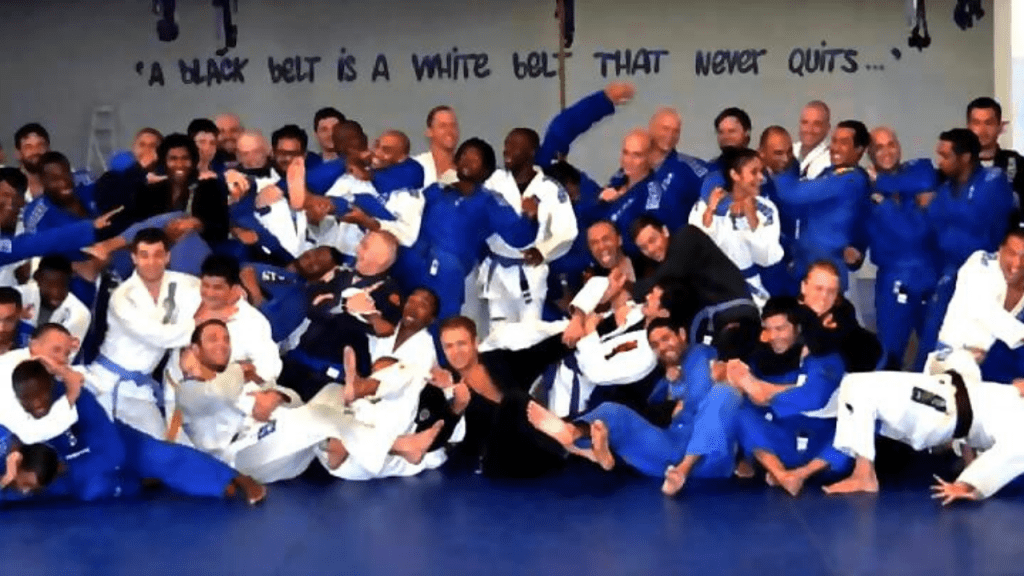
Next up, we have the direction in which the majority of people involved in BJJ nowadays are heading. That’s the Gi academy direction, where people train sports BJJ above anything else. There might be glimmers of self-defense training there. Still, most of the work is done with the Gi and with IBJJF rules as the main guideline. Most of the biggest teams out there like Gracie Barra, Alliance, Checkmate, etc. follow this sports Jiu-Jitsu direction in all of their BJJ schools and affiliates.

Last but far from least, there are the people that love going No-Gi. Eddie Bravo’s famed 10th Planet Jiu-Jitsu academy. is the perfect example. They go against the grain of both other directions, completely discarding the Gi. Moreover, they’re looking to invent lots of new moves and evolve the art even further.

Common Types Of BJJ Schools

When it comes to BJJ schools, you can hardly make a mistake by signing up. Okay, there’s one exception. We’ll talk more about that exception a bit later on though. For now, understand that you’ll learn BJJ wherever you decide to train. Whether or not it’ll be a school that’ll fit you for life, or you’ll decide to switch it a few months or years later, you’ll certainly get invaluable knowledge from there. Still, just like with everything else in life, we all tend to have our own distinct styles of BJJ. We all also go through different phases at different times. That’s why different types of BJJ schools exist, to make training easier and more focused.

Traditional BJJ Schools

This is your “standard” BJJ academy that you can find just about anywhere around the world. They tend to have well-equipped facilities, are often affiliated with some of the biggest teams and quite a lot of students of all levels. There’s hardly a better place to really get to know Jiu-Jitsu fundamentals than training in such an academy. These types of BJJ schools offer training for both competitors, recreation athletes, MMA fighters and everyone interested in training. They tend to work according to curriculums and are a type of academy you might decide to stick with for life.

Unorthodox Schools

Types Of BJJ SchoolsThere’s no real standard in deciding whether a certain BJJ school is unorthodox or not. I guess that as long as it doesn’t fall under any category, it can be considered as such. Of course, 10Th Planet Jiu-Jitsu is the first that spurs to mind. They like to name their moves, invents stuff, use other grappling martial arts to discover moves, and adopt them to BJJ. They are also very balanced in terms of housing professionals, amateurs, recreational practitioners, and every other category of grappler out there. The belt system still applies, albeit you don’t see that many (if any) belts in No-Gi. The best you can hope for there is a ranked rashguard.
Oh, and just about every BJJ Globetrotters type of gym out there definitely ranks in the unorthodox and ultra-fun BJJ schools category.

Competitor’s Dens

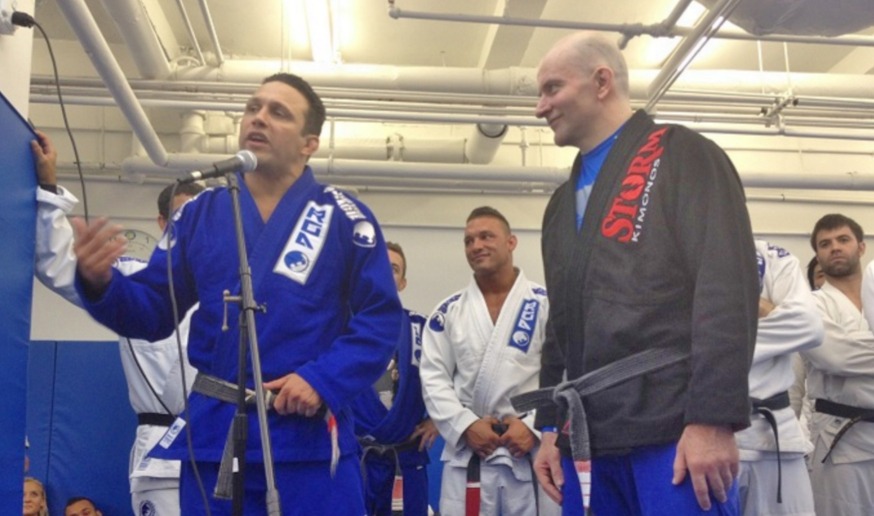
These types of academies might often operate as dual BJJ schools. They offer both a traditional and competitive type of training. That said, their true focus is on developing real monsters in their basements. They then release them to terrorize the grappling world at high-level competition events. Renzo’s blue basement in New York and Galvao’s Atos Team pop right up when we think of competitors’ dens. They are the spots where competitors get not only great technical training but also the opportunity to work on game plans, strategies, conditioning, and everything they need to become world-class. Training is ultra-hard, and getting into such a team will require you to prove you’re up for it.

The JIu-Jitsu Lab

BJJ SchoolsThis is probably the most fun type of BJJ school out there, along with the unorthodox ones. These are schools where people are encouraged to work on developing new stuff. To be honest, most of the innovation that ends up working legitimately is done by black belts, but that doesn’t mean that even lower belts do not contribute. Think about the Mendes brothers, or the Miyao brothers, for example. They come from schools where they tend to work on stuff like Berimbolos and then hit the world with them. Keenan is another one who is a huge name in the innovation side of BJJ, Nowadays he even has his own academy to use as a BJJ lab. Oh, and we can’t forget Danaher as well, with his school doubling up as a laboratory and competitors’ den.
McDojos

Finally, let’s talk about that one exception to the rule that you’ll be able to learn Jiu-Jitsu in all types of BJJ schools. That won’t be true if you have the bad luck of ending up in a McDojo. While such a school might be headed by a legitimate black belt (sometimes, even if that’s not the case), the goals behind the gym are simple – money. That means you need to pay for everything, and even offer your time to help around for free. All the while you’re not really getting to learn actual grappling in return, Or at least not at the level required. Make sure you know all the signs of such a gym.  Oh, and be sure to run far and fast if you’re near one.

All of the above types of academies are absolutely necessary if we want to both keep the BJJ legacy alive and keep the sport evolving on a constant basis. That said, there are general directions for training Jiu-Jitsu. Within each of them, we can fit different types of BJJ schools. In fact, the same types fit in each of the three main directions of Jiu-Jitsu.

Wrapping Up

Before we wrap things up, let me open up another can of worms for you. People that come to train at certain academies can change and might want to switch schools. Moreover,  the same can happen to entire BJJ schools as well. Yeah, that’s right. A school that starts off like Gracie Barra might end up being a 10th Planet Jiu-Jitsu gym, and vice versa. So, remember that nothing is set in stone. All the loyalty stuff is often misplaced and taken out of context in JIu-Jitsu. So, pick the school you like. Pick the school with the training schedule that suits you most. If you’re looking for morning Jiu-Jitsu classes pick one with hours you like etc.

How Many Brazilian Jiu-Jitsu Techniques Do You Really Need?

How Many Brazilian Jiu-Jitsu Techniques Do You Need?

How many Brazilian Jiu-Jitsu techniques do you know? And how many of them do you really use on a regular basis, against opposition of all levels? In reality, you do not need nearly as many techniques as you might think. Take a look at the very best grapplers of today. Go to a seminar of theirs, and you’ll think they know everything. Yet see them compete, and you’ll notice that they only perform a handful of select techniques time and time again. It is not as much about the choice of techniques, as it is about whether or not you can make them work. That leaves a lot of space for adjusting and figuring out what your arsenal should hold. It should, however, fit in your pocket, sort to speak.

Nobody alive is able to learn all the Brazilian Ju-Jitsu techniques. Even if, hypothetically, someone could, they’d have a pretty hard time accessing whatever needs to be accessed in a specific moment of rolling or a match. That brings us to the notion that in reality, you only need a few Brazilian JIu-Jitsu techniques, at any given moment. Of course, that will depend on your level, personal preferences, etc. Still, the less you go for quantity, the more you’ll get in terms of quality, which is what you actually need to be good at Jiu-Jitsu.

The Techniques Vs. Concepts Debate

When it comes to learning Jiu-Jitsu, there are two main avenues to do so at the moment. One is to go and collect as many Brazilian Jiu-Jitsu techniques as you can and build a game around them. Another is to go completely in the opposite direction and base your BJJ on concepts and principles of body mechanics and the goals of grappling. The most usual approach is blending both to a certain degree, but there are those that go to the extremes of either of those directions.

In truth, we can’t really learn concepts if there are no techniques that makeup Jiu-Jitsu. However, we couldn’t master techniques either, or evolve them, unless we can figure out why and how they work. So, Brazilian Jiu-Jitsu techniques and concepts have a complicated relationship. However, they can’t function separately, so there’s really no point in separating them. The idea here is that both techniques and concepts are parts of Jiu-Jitsu that we need to learn. Finding out the perfect blend for you will take time. In fact, it will take a lifetime and it will constantly change. So, embrace both.

That said, you might feel as if your workload has doubled now. How do you learn both concepts and techniques? Isn’t it too much? It won’t be too much if you decide to focus on things that make sense. The notion that simple is best applies here perfectly. Choose a few basic concepts that make sense, pair them with a few high percentage techniques that you like, and start having fun seeing how many combinations of them you can make. That is how you start to learn and discover Jiu-Jitsu for real, instead of just being a collector of moves.

How Many Brazilian Jiu-Jitsu Techniques Do You Really Need?

There’s no precise number I can offer as the answer to this question. Roger Gracie has this down to perfection. According to him, there’s no need to spend your time in Jiu-Jitsu, collecting all kinds of different techniques. That will not make you any better. In fact, it will hold you back.

Brazilian Jiu-Jitsu Techniques Roger GracieAccording to Roger, “All the top Jiu-Jitsu players are great at a few moves”. he is definitely right about that, as we already discussed before. At the highest levels of the game, it is all about baiting someone towards what you’re best at, not trying to catch them at their own game. The key here is to approach learning Brazilian Jiu-Jitsu techniques completely. that means trying to figure out every single detail behind a certain move. Give this a try, and you’ll find out that learning details only uncovers more and more tiny details that really make or break BJJ moves. What you need to be looking for in any move, is that “click” when everything starts to make sense. then, you have your go-to move.
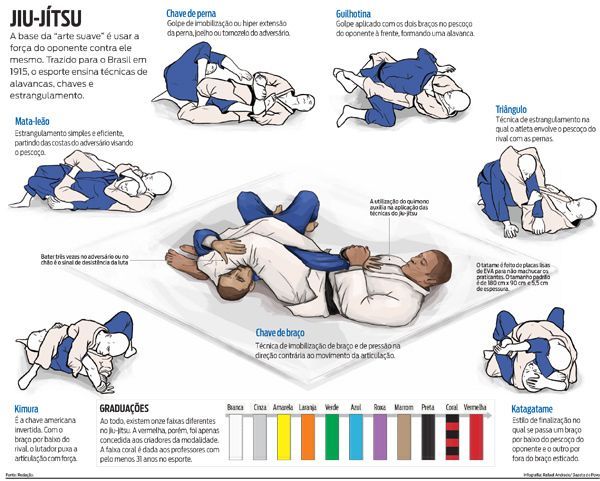
Let’s take a Kimura for example. If you’re great at a Kimura from side control, you don’t really need more side control submissions. In fact, you don’t even need to have a good Kimura from any other position. Instead, look to be unbeatable at that particular Kimura. That’s all you need. Remember how Roger beat everyone in his division and the absolute at the Worlds using nothing but the cross collar choke?

Evolving Your Game

Many people think that the more techniques they know, the faster they’ll get to the next belt. Jiu-Jitsu does not work like that. you do not need many moves to get to the next belt. You need to make the moves you know and like to work against everyone in order to see a progression in your game.

That said, if you decide you’ll learn two new techniques each week, in a year, you should know 104 new Brazilian Jiu-Jitsu techniques. Let’s say you need 10 years to get to the black belt. That amounts to 1040 techniques. Do you really think you can learn so many and be able to apply them when you need to?

Brazilian Jiu-Jitsu TechniquesEvolving your BJJ game is something you have to do. However, all you need to do is build on the moves you already have working. If you know that Kimura from side control, for example, you can start exploring the concept of the kimura trap in order to open up the transition to the back off of your favorite submissions. And vice versa, of course. The key is to keep working on concepts and techniques at the same time. that means that you need to know how to hold side control and a Kimura, in order to be able to apply al the finishing details you’ve been figuring out.
Final Thoughts

Do an experiment. Try and reduce the number of Brazilian Jiu-Jitsu techniques you do. For starters, have fun with just one technique, from each of the main positions. If you factor in offensive and defensive moves, you already have quite the number in there – in fact, you have everything you’ll ever need. Now go and research them as deeply as possible and become the authority on them. Progression, belts, an understanding of BJJ, and a host of other benefits will inevitably come your way.

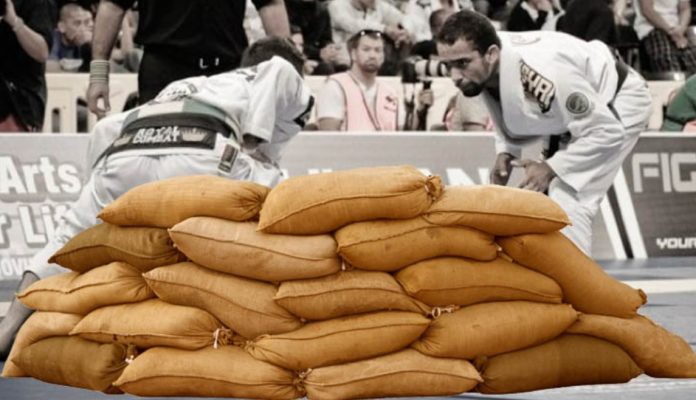
BJJ Sandbagging – Real Cheating Or Just An Excuse For Losing?

What Is BJJ Sandbagging?

BJJ is full of weird and unusual things. This is true for techniques, definitely language, and terminology, but also for some occurrences that are unique to the art. Some are cool, others are not, and some are just out there causing you to wonder “why”? One slightly controversial subject out there that falls under the “weird” category is BJJ sandbagging. What happens with sandbagging is actually very interesting, particularly given one of Jiu-Jitsu’s largest claims – that Jiu-Jiteros have no egos. Well, why si sandbagging such a big deal then?

I can’t help but marvel at how many things BJJ makes me wonder about. This art of ours is crazy and beautiful, in the most unique ways. BJJ sandbagging is something that people, mostly blue belts are having a field day with. It is not just blue belts, though, as sandbagging can and does affect others as well. It is just the blue belts that end up with the most bruised egos. However, I see more as a fun thing and a teachable moment rather than a problem. Not all share my opinion, though, so let’s discuss things further.

What Is Sandbagging?

BJJ Sandbagging belt promotionsLet me paint you a picture. You’re in the gym, a blue belt with two stripes and about three years of overall training experience. You’re also a competitor and a tough one at that. When you’re rolling, you’re a real nightmare for all the white and blue belts, and even most purple belts at the academy. Then, a new guy walks in through the door. He doesn’t have a Gi, he’s as white as a white belt can be. You go out to play your usual game but you soon discover the’ nothing you can do and you end up crushed under immense pressure. What just happened?

Sandbagging is a term that refers to people competing in divisions or at levels that are way below their actual experience. We will get back to BJJ sandbagging in grappling competitions later on. For now, let’s discuss sandbagging as a concept. Sandbagging is a term that’s often used in sports like golf, or racing. In other words, it is when you decide to compete in a bracket that is well under the level of your skillset. Done in a competitive format, it is most definitely a form of cheating.

In BJJ training, though, sandbagging is not really a thing. It is just a great way to paint the picture of what you might run into at a tournament. In the gym, you’re going to tap out and have hard rolls anyway, given the belt rank structure. However, it does seem most blue belts have real trouble with the fact that someone from the outside can come in and shut their entier game down without a day of Jiu-Jitsu training. What doesn’t occur to them, though is that they might just be up against a Wrelsting D1 champ, a Judo black belt or Sambo master.

The Curious Case Of BJJ Sandbagging

Once again, BJJ sandbagging only refers to things that happen in tournaments. Stop acting spoilt and accept that the wrestler that just walked through the door will give a hard time to 90% of the people in the gym. That’s skill though and not sandbagging.

In Jiu-Jitsu, there are cases of sandbagging in competition. However, if you take a look at most of the claims, you might just see a pattern there – people like to use BJJ sandbagging as an excuse. particularly at black belt. The fact of the matter is, that when you reach a BJJ black belt, you enter a whole new area of Jiu-Jitsu. You’re now in divisions with plenty of people that have been black belts for the better part of 30 years. Yeah, some of them have been training since they were kids, so you might just end up being completely dominated by an OG.

BJJ Sandbagging i ncompetitionThat said, this is not sandbagging either. It is just skill and experience. It is dumb to complain about being beaten by someone who is better than you. Let’ me put it in a perspective. If you’re with the same black belt since day one, the moment they award you your black belt, they’ll have at least a decade more experience than you at black belt. That’s before even mentioning how long they were a black belt before you decided to start BJJ. And on top of it all, how long they have spent at colored belts prior to that.

Accusations that people who have been training since a very early age are sandbaggers are completely out of line. So is using sandbagging as an excuse for losing, whether you’re the athlete or coach of an athlete. At the black belt level, there’s no sandbagging.

Cheating With BJJ Sandbagging

BJJ sandbagging does exist, though. It is possible to see it at every level below black, but it is usually most prominent among blue and purple belts. The belt system and competition formats usually prevent people from being able to sandbag on their own. That means you can’t really go and register for the blue belt division as a brown belt. However, there are certain things, like holding people at a certain belt level for longer, that people think is BJJ sandbagging. I still don’t think it is sandbagging. Sometimes, people need to spend more time competing at a certain division and the why is only clear to the coach. It is not cheating, though. There are plenty of reasons for holding back on a promotion, and they don’t all have to do with how well someone is doing in competition.

Real BJJ sandbagging is when academies sign people up in lower divisions. This does happen, with the clear goal of giving a certain grappler the best chance at winning. That means, though, that all the other athletes practically get robbed of a chance of having a fair shot at winning the tournament. Although rare, due to the rules and system, this does happen. And it is right out there in terms of severity of cheating as is the issue of transgender grapplers.

Another example of real BJJ sandbagging is letting a Judo black belt or a D1 wrestler compete in the white belt divisions. Some promotions do have rules about this, but they’re not quite clear and are easy to cicrcuimvent. While it may seem like someone new to BJJ should be fighting in the beginners’ division, with people coming from grappling martial arts, particularly those with submissions, this is just not the case. And yeas, that’s sandbagging, and it is cheating.

Conclusion

Cheating is not fun. BJJ sandbagging, though is not always cheating. In fact, it very rarely is coming to make a fuss about. In most cases, people just try to justify why they or their athletes lost to a better opponent. It is one of those idiosyncrasies of Jiu-Jitsu that are always a debate, but never seem to lead anywhere near a solution. As long as you’re not doing it on purpose and in the worst possible way, then have your fun.

Nootropics: A Hack To Improve Your BJJ Performance

Nootropics: A Hack To Improve Your BJJ Performance

If you haven’t head the Joe Rogan podcast, you must be a complete newbie in Jiu-Jitsu. Even then, I find it hard to believe you’ve never stumbled across Joe’s podcast. Even if you’ve only heard a handful of them, you have heard the word nootropics at least a few times. Have you ever wondered what nootropics are exactly? And, if you’re knee-deep into both Rogan’s podcast and JIuJitsu, have you ever wondered how you can use nootropics to improve your BJJ performance?

Nootropics are supplements that are often referred to as brain supplements. In essence, they help boost cognitive function in healthy individuals. They come in many forms, from powders to capsules, and are not an uncommon addition in grapplers’ supplement stacks. However, there are ways of using them, and there is a hierarchy of nootropics as well, some being better than others. If you’re looking to have nootropics boost your BJJ performance, then you’ll need to know a few basic things about them, rather than just popping supplements.

What Are Nootropics?

Nootropics, while some can be found in nature, usually refer to synthetic supplements. As a term, “nootropics” is fairly new. It derives from the Greek “nous trepein”, which translates to “turn the mind”.  The man behind the phrase and early research on the subject is a Romanian doctor by the name of Corneliu Giurgea.

BJJ performance on nootropicsGiven how new nootropics are, there are no real set standards as to what a certain supplement should fulfill in order to classify as a nootropic. Anything from the ability to enhance memory, to improving neural mechanisms can classify something as a nootropic. Protecting the brain, extending it’s longevity and maximizing its potential are the most common qualities people look for when turning to a nootropic supplement.

The reasons people use nootrpopics nowadays vary greatly. Some just like to have fun with them because Joe Rogan said so. And that’s perfectly ok. Others, though, turn to them for mental stimulation in order to do improve doing pretty much everything, from menial tasks to BJJ performance. Mostly, though, people turn to nootropics to boost their mood. Much like with morning coffee only consider the coffee to be on the same steroids Overarm is on.

The way a nootropic supplement works is not yet completely clear. So far, what research can confirm is that ceratin nootropic supplements do work. The precise mechanisms, though, are pretty much anybody’s guess. This has more to do with how complex our brains are, rather than the pharmacological dynamics of nootropics. Some ways in which they help is by increasing brain energy, positive effects on brain chemicals, improved blood flow, effects on brain waves, etc. There is still a lot of research to be done, but the bottom line is, nootropics do work.

How Can They Help Your BJJ Performance

When it comes to boosting athletic performance, nootropicsa re becoming an integral part of most professional athletes’ essential supplement stacks. There’s the notion that the strength of your mind and will determines how well you perform. As athletes, we all know this to be true. How often has your mind given up in BJJ way before your body did? Well, with a nootropic supplement, you might just find that boost you need to take your BJJ performance to the next level.

When it comes to supplements that can really boost BJJ performance, the focus should be on pre-workout nootropics. Certain nootropcis can greatly affect your focus during physical activities. This is a very welcome boost in all of sports. In BJJ, however, where your mind is just as important as your athletic abilities, it can be a game-changer. Some of the nootropic options out there are so potent, that they’re considered as PEDs under certain rules. According to me, that is taking it a step too far.

Another aspect of nootroppics is a boost in resilience. When your brain is working with a greater capacity, you’ve got better neural connections, better brain chemistry, and all the other benefits, you can make yourself do more. As a grapple, situations where you need just one extra push or pull come up in just about every roll and match you’ll be a part of.

However, there’s also another side to nootropics that’s immensely important or grapplers. It is not just about performing on the mats, but also recovering and organizing your thoughts and impressions.  Nootropics taken after training and before sleep can help you achieve much deeper and restorative sleep than usual. Moreover, they’ll help you really “digest” and organize all the information your brain gets in training, which is a lot, to say the least.

Getting the Most Out Of Nootropics

Deciding to take nootropic supplements is pretty much a choice of “when”, rather than “if”. However, they’re not just protein powder that you can gulp whenever you feel like it. Even with protein supplements, some are better than others. With nootropics, it is important to take into account dose, frequency, combinations and cycles of taking them.

Nootropics: to improve BJJ PerformanceIn terms of dose, you’ll have to figure that one out for yourself. Forget about the advertisements that more is better. If you want to maximize your brainpower, you’ll need to know exactly how much to take for yourself. That will require some tinkering when you first start.
Frequency is a bit easier to figure out. Nootropic supplements have windows of activity, meaning you’ll need to take them when you need them, i.e. before going to JIu-Jitsu, or before going to bed. You’ll need to also keep an eye out for tolerance, as we can develop resistance to certain nootropics over time. Once again, you can regulate this by adjusting the frequency of use, depending on the type of nootropic.

Combinations of nootropic supplements are also a big piece of the puzzle. If you’re only taking one you won’t have to bother with this., However, people often look to use the combined benefits of more than one nootropic when trying to boost BJJ performance. Some nootropics, like Racetams, actually work better in combinations, or “stacks”. That way, you get much more of an effect as opposed to taking them all by themselves.

Finally, you’ll need to consider cycling off these supplements from time to time. This is particularly important in situations where you develop a tolerance to a certain noootropic. Cycling doesn’t necessarily mean not taking any, though, it may just mean you’re going for a different one, that binds to different receptors. AS I said, there’s still a lot of research to be done.

Final Words

Nootropics are the supplements of the future, in my opinion. They are one of the first attempts we’ve made of trying to control or rather stimulate, our brains at will. While you can go deep into the subject and experiment with their effects on mood, anxiety, focus, sleep, etc, taking them to boost BJJ performance is easy. Find out what works for you, stimulate your brain before training, and help your brain organize everything and rest afterward. Not really rocket science.

BJJ Home Workout Series: Jiu-Jitsu Flexibility Training

BJJ Home Workout Series: Jiu-Jitsu Flexibility Training

Finally, let’s end our BJJ home workout series with something that is actually the easiest to train, but will yield immense benefits to grapplers. Jiu-Jitsu flexibility training is something we often take for granted, and we then complain about how brittle we are. Of course, some people just have that freaky flexibility that is unattainable for the rest of us. While you won’t get Eddie Bravo flexible with our home flexibility workouts, you’ll certainly be able to do things you couldn’t before, Not just that, but you’ll also correct some imbalances in your body and become more agile all over the board.

Jiu-JItsu flexibility training, in most people’s minds, is just stretching. However, stretching does not mean you’ll become more flexible. Moreover, there are certain body parts that you can’t make flexible any matte how you try. On the same note, there are body parts, like the hips and shoulder, for example, that are important to be flexible in BJJ, as opposed to other body parts. There are plenty of pieces to the flexibility and mobility puzzle. However, begin stuck at home, isn’t this the perfect time to put in some flexibility work? After all, even if you don’t turn into rubber by the time isolation ends, at least you’ll help all your nagging injuries heal.

Who Needs To Be Flexible For BJJ?

Everyone. Flexibility is huge in BJJ. Sure, you can do without it, but it does help. A lot. Actually, there is no good reason I can think of not to look at flexibility as an asset in JIu-Jitsu. However, we need to look at flexibility as a whole. Most grapplers think of flexible hips that help prevent most guard passes as flexibility. While hip flexibility is certainly important, it is also one of the qualities that are most easily trainable.

When it comes to grappling flexibility, it is important o develop overall limberness. It is not just about preventing the odd guard pas or two. It will help you get out of submissions, it will allow you to figure out scrambles and it will help you do attacks of your own. Yeah, you can use flexibility in an inoffensive manner as well. How many submissions require you to hold on to a body part to of yours in order to finish? Try doing a D’arce choke with inflexible wrists, for example. Even guard passing with a pair of flexible knees and even feet becomes a much easier task compared to having stiff legs.

Also, a word on mobility. This is often included along with flexibility but doesn’t get the recognition it needs. Mobility is far more than being elastic and having the ability to do impressively deep stretches. When it comes to Jiu-Jitsu flexibility, you need to be able to have a full range of motion on every joint, if you want tendon elasticity to have any effect on your Jiu-Jitsu game. Oh, and let’s not forgotten the muscles and all the tight spots that need breaking up in there.

Bodyweight Jiu-Jitsu Flexibility Training

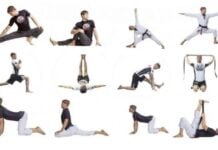
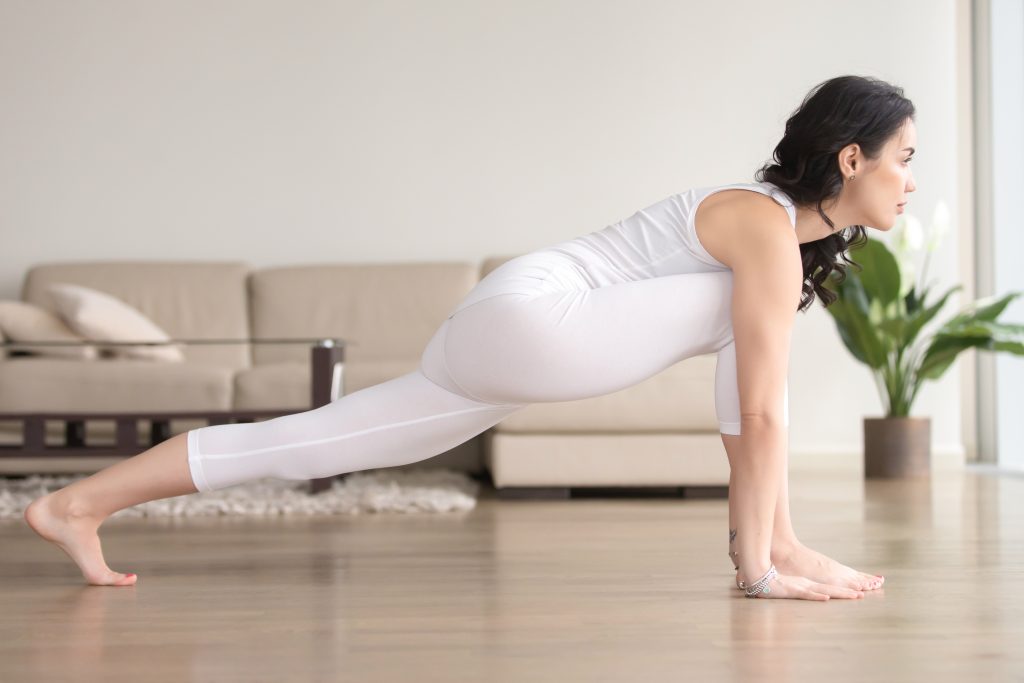
BJJ Home Workout Series: Jiu-Jitsu FlexibilityYou might’ve suspected from the title that one word was going to pop up sooner or later in this article: Yoga. Well, here we are. Ther’s no way to mention JIu-Jitsu flexibility training, particularly in a home setting without Yoga. Whenever you have no access to equipment, doing Yoga is going to provide you with a challenging workout that will undoubtedly improve your flexibility. Or, if you’re not into Yoga, or unable to do some of the more challenging poses (yet), you can always start with a few targeted BJJ-specific stretches.
When it comes to choosing the perfect Yoga routine for BJJ, there’s no such thing. Yoga is extremely diverse and comes in many forms and styles. While the best way to learn what you need would be to consult a Yoga instructor, that’s out of the question for now. Apart from some DVD options that offer specific Yoga for Jiu-Jisu flexibility, you also have interesting options on YouTube as well.

The trick is trying to do a certain workout before you judge how easy or hard it is. Trust me, most of the things that seem like a breeze to you will actually give a run for your money. Also, make sure you target the body parts you want to make more flexible, as well as those you need to use in BJJ the most. In other words, hips, shoulders, wrists, feet, and neck should be your focus points.

A Yoga routine will provide you with a flow that lasts anywhere from 10 minutes to a couple of hours. It also comes with breathing patterns and might be difficult to follow if you’re in a downward dog and can’t see your screen for the instructions. In cases where you’re not convinced by Yoga, specific stretching is always a good idea. Hip flexors should be the focus here, and there is plenty of BJJ specific motion that will help you develop insane hip flexibility. Check out this article for some ideas for hip mobility, as well as this one for developing overall BJJ flexibility.

Training Mobility And Flexibility With Minimal Equipment

Of course, when you have equipment you have the choice of combining or alternating Jiu-Jitsu flexibility workouts with no equipment, like Yoga, with those that require some gear. And while flexibility doesn’t require a lot of gear, you can actually do wonders for your mobility if you have aces to certain pieces of equipment

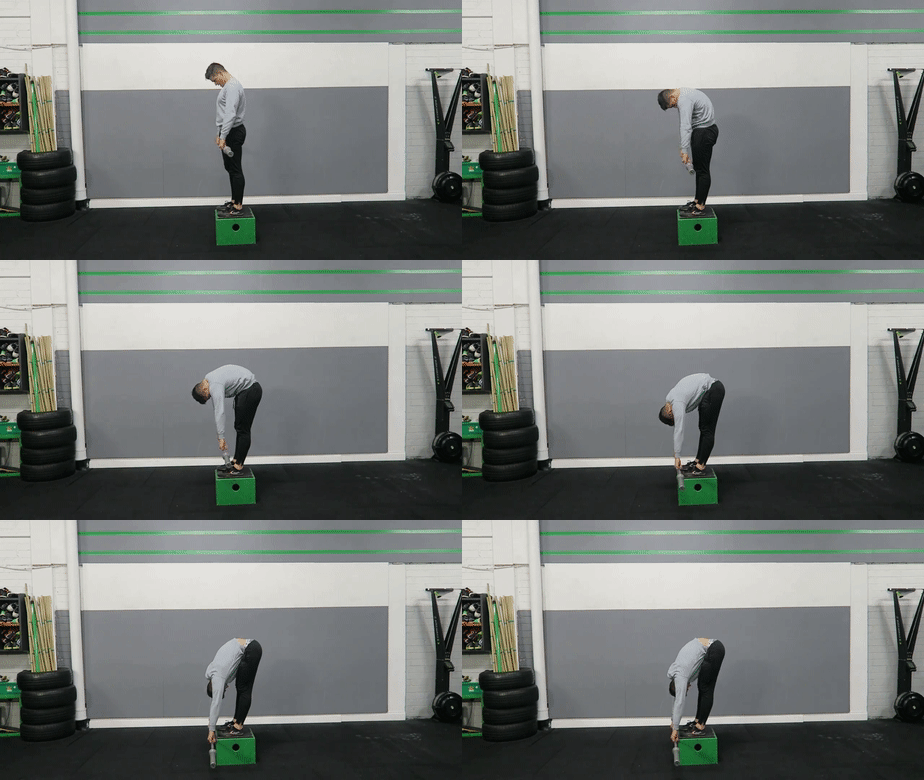
BJJ Home Workout Series: Jiu-Jitsu Flexibility Jefferson CurlsFor starters, let’s see how weights can help you develop more than just muscles. Ideally, you’d have aces stoa barbell, although a kettlebell will do the trick as well. Looking for the best overall mobility exercise fro BJJ? Do Jefferson curls. This gymnastic exercise is in essence, a deadlift taken well past the negative point. To do so, you’ll have to stand on a chair or something so that you can go past your toes holding a weight. Trust me and start of light here, with a kettlebell, dumbbell or an empty barbell at first. Other gymnastic options include weighted hanging off a pullup bar, shoulder dislocators (you can do them with a BJJ belt), and a myriad of weight one leg squat variations.

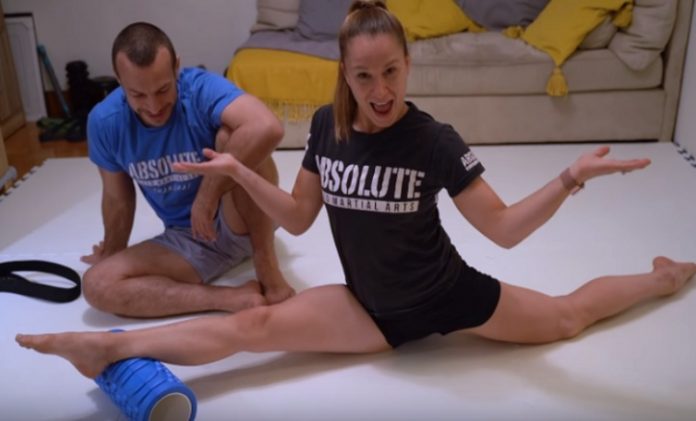
Also, let’s not forget about foam rolling and SMR (Self Myofascial Release). IF you have a foam roller, you’re pretty much set to give your entire body a deep tissue massage. Check out some routine ideas here. If you haven’t got aces toa foam roller a tennis ball will do the trick. Or you can make your own out of a PVC pipe and a yoga mat or something similar in texture. Once you try SMR though, ll your nagging injuries will start disappearing like magic. Thre’s hardly a better way to get into BJJ shape before getting back on the mats which has to be sometime soon.

Closing Thoughts

Jiu-Jitsu flexibility training at home might seem like te easier part of our BJJ home workout series. It is not. While most grapplers are already good at BJJ (obviously) as well las have solid levels of cardio and strength, they all lack in certain areas of flexibility and or/mobility. This is actually the most important aspect fo BJJ training you can do while stuck at home due to COVID-19.

BJJ Social Life – Buliding A BJJ Community Off The Mats

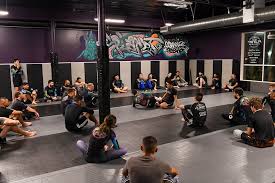
USe BJJ SOcial Events Off the Mats to build a BJJ Community

Often times you hear talk of the BJJ community. When it comes to the community, everyone that trains BJJ, no matter how “free” they might be is a part of it. that is ina worldwide manner of speaking. However, a BJJ community works on many levels. It is not just the global one, but also the one that’s the nearest to you. Communities work at the level of countries, cities, sometimes gender, and even within academies themselves. To that extent, creating a BJJ social life outside of the BJJ mats is a great way of building up your BJJ community and expanding it so you can reach more people with Jiu-Jitsu.

The BJJ community, both the global one and the one in the academy are very important to me, personally, The same feeling is shared by most grapplers around the world. Given how many hours we spend in close proximity to other people in the Academy, it is very understandable that we develop such great friendships in Jiu-Jitsu. creating a social life outside the gym gives everyone a chance to meet up with the people they’re already used to, but in a different setting than on the mats. And those interactions make the interactions on the mats even better.

More Than Just A BJJ Team

In today’s world, people take social interaction fro granted. In other words, not much time and attention goes in to actually interacting with someone. With most of the communication done over chats and phones, a lot of the personal touch of looking someone in the eyes is lost. And, despite all the contact we get in Jiu-Jitsu, there’s still a lack of contact, even amongst grapplers. In those terms, competition is seen as the proving ground not just for individuals, but also for BJJ teams.

BJJ Community team building social lifeHaving a competition team is a great thing. In fact, every great competitor has an even better team of coaches, other competitors and training partners behind them. However, you can go to a competition with just a team of people with the same goal as you, or you can go with a bunch that you consider to be close friends on top of being teammates. That is what a BJJ community is all about.
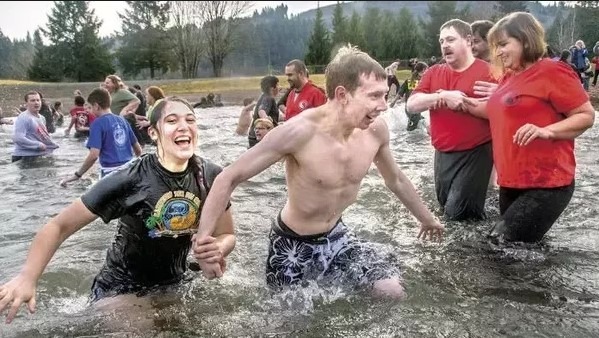
The BJJ community is laid back one, in general. People like to actually talk to others meet others and roll with people they don’t know, which makes it way easier to interact with grapplers than with regular people. Plus, the subject of BJJ is something everyone involved in it want to go on and on about. Building a BJJ community, though, rather than a team is a much more sustainable and long-lasting goal to have. A community will go to lengths no team will ever go, despite all the great intentions and comradery. And communities mean that people are there for each other, and not just while they’re wearing Gis and sweating on the mats.

Build A BJJ Community

When it comes to building a BJJ community, organizing a BJJ social life is just one piece of the puzzle. Yeah, it is a big one, but it is not where you should start. Building a community is actually something that professors, instructors, or whoever has the era of most people in the Academy, should initiate. In many situations, it just happens by itself, and that is the best way to go – spontaneous. However, in other situations, creating a community will require you to offer people choices.

That means that first and foremost, there has to be a great atmosphere on the mats. There’s shouldn’t be rules as much as principles and a codex of behavior. Just to guarantee people don’t just go about doing whatever it is they want. The moment you achieve an atmosphere that you can work with, you let people express themselves. In Jiu-Jitsu, this is huge. Nobody can teach you Jiu-jitsu but yourself, someone can only give you a mat space and help you find directions. The rest is up to you. Create an atmosphere like this in your Academy, and a community will start forming by itself.

Also, be social even when off the mats. People like to use social media to communicate. Remember that as an instructor, you’re the one people will turn to often with questions, ideas or just to chat. Make sure that you maintain great ties with everyone even when off the mats. This is a great way of using social media to actually create a BJJ social life for everyone in the academy. Any sort of group on any social media platform is a must, of course, so that people get to know each other. Going analog and hanging a huge message board in the academy also turned out to be a great idea in the academy I train at.

BJJ Social Life Ideas

When it comes to organizing a social life for people in your academy, consider why you’re doing it. IF you have more than one group of people or even just one really large one, there are not many chances for everyone to train with everyone. In fact, people might be training in the same group for months and never tried a technique, or rolled with each other. With people in different groups, most of them might not even recognize someone from the same academy out on the streets.

BJJ Social Life and Building a BJJ CommunityNow imagine that they’ve been out drinking partying and/or doing something together. Suddenly, people get to know each other. now, instead of a team, you get a circle of friends. The atmosphere changes immensely after just one BJJ social event. What you need to avoid, as a rule of thumb, though is taking people out in a way that’s usual. Going to a bar, for example, will just end up with people in tight little groups. Instead, if you can, do an event in the gym, but have people come in casual clothing, not Gis. How crazy you go is up to you. It can be anything from a meet and greet to a full-blown light show, sound system, and beer on tap party.

Another great way to get people bonding into a BJJ community is by doing activities related to BJJ. Rock climbing, surfing, some cool Yoga variety like beer Yoga, a camping trip with rolling included… Whatever crazy idea you get is achievable. Just remember one thing – always end with an after-party. Even if the event itself is a party. The things that happen between midnight and the early hours of the morning simply cannot happen at any other time!

Summary

Build a BJJ community, not just a BJJ team. A BJJ social life will help you immensely in providing people with a platform to simply get to know each other. And by that, I mean each other really, rather than just in the context of grappling. After all, it takes human contact to train BJJ. Why not be able to be friendly and comfortable? At least among those that you see multiple times a week. Not to mention how fun these events and afterparties can be!