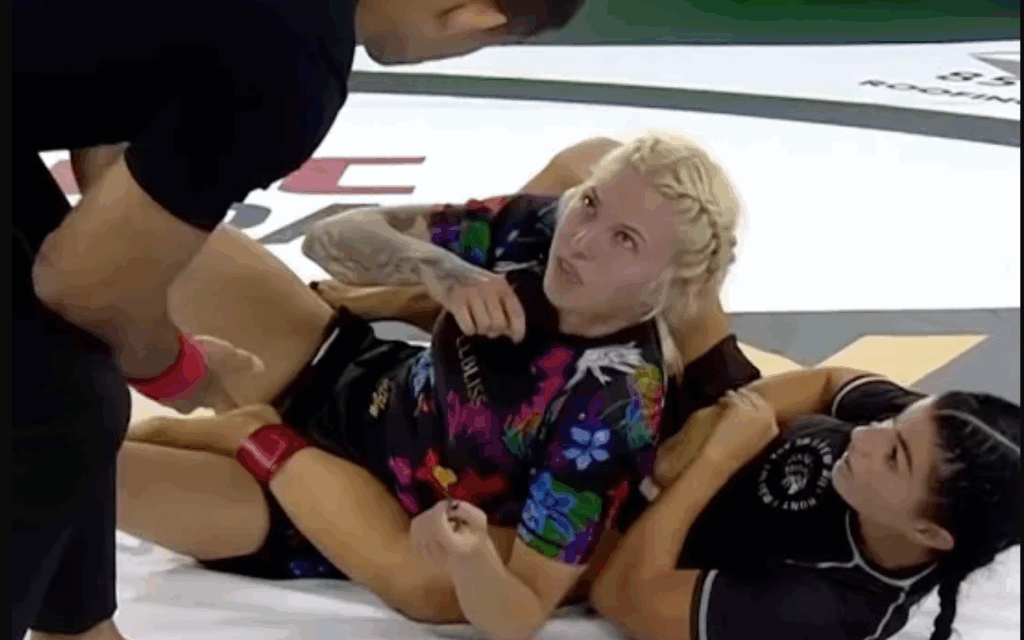



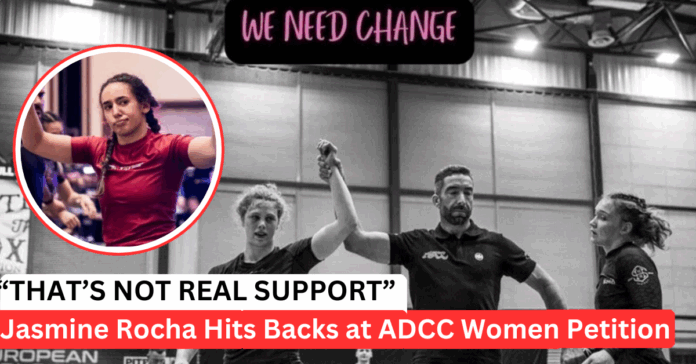
Equal Shots Or Empty Talk? ADCC Women Petition Sparks A Civil War In No-Gi

Equal Shots Or Empty Talk? ADCC Women Petition Sparks A Civil War In No-Gi
  • The ADCC women petition demands equal ADCC Trials opportunities: two chances to qualify and expanded women’s brackets.
  • A Trials winner says her result doesn’t count toward Worlds under the current system and calls it “inequality.”
  • ADCC medalist Jasmine Rocha fires back, slamming performative allyship and questioning whether a petition is the right lever.
  • Behind the shouting: bracket math, broadcast value, and whether parity means 2026 changes—or just louder debates.

Why The ADCC Women Petition Blew Up Overnight

The fuse was short: a European Trials winner argued she’d be en route to Worlds if she were male. Instead, she says, the first women’s Trials don’t count.

That claim lit up feeds, and within hours the ADCC women petition turned into the sport’s loudest culture war—equal shots, equal divisions, equal respect.

“If I were a man, I would be going to ADCC Worlds right now. I won the first European trials on the 6th of September—but because I am a woman, the first trials don’t count for me… Women only get one chance to qualify… This is not fair.”
– Petition statement –

The argument is simple: parity isn’t a slogan, it’s a schedule. If men get two Trials and five weight classes, how can one Trials and three divisions be called equal?

What The Petition Says—And The ADCC Trials Structure Behind It

Pull the emotion out and look at the mechanics. The ADCC women petition lays out two immediate goals: (1) for 2026, invite winners from both women’s Trials events to create 16-athlete brackets (like the men), and (2) by 2028, expand to five women’s weight classes—true parity end-to-end.

The core complaint is the ADCC Trials structure: men get two regional qualifiers; women often get one, with earlier events treated as prep rather than direct tickets.

Supporters argue that shrinking the women’s path throttles the sport’s growth at the exact moment viewership is surging. They point to modern No-Gi where teenagers are headlining, super-fights are selling, and womens divisions routinely deliver finish rates and drama comparable to the men.

In their view, parity isn’t charity; it’s smart programming. And the fix is straightforward: two Trials, two tickets, bigger brackets. That’s the math the ADCC women petition wants on paper before the 2026 show rolls around.

Jasmine Rocha Response: “Don’t Ask For Support If You Won’t Give It”

Then came the counterpunch—from inside the same locker room. ADCC medalist Jasmine Rocha questioned the campaign’s approach, accusing organizers of asking for public buy-in without doing the actual fan-to-athlete work behind the scenes.

“Here’s the reality: [the organizer] asked me and a bunch of other top women to sign this petition to ‘support women’ but she herself doesn’t even follow me or any of these other athletes. That’s not real support. Don’t ask for support if you’re not willing to give it.”
– Jasmine Rocha –

Rocha says progress is real—more women’s divisions than before, packed Trials, and equal prize money—and warns that optics without infrastructure can backfire.

“I’ve been competing in ADCC trials since I was 15… Now we have 3 divisions, packed trials, and equal prize money… ADCC has been on a consistent upward climb and that growth should be appreciated while we keep pushing for more.”
– Jasmine Rocha –
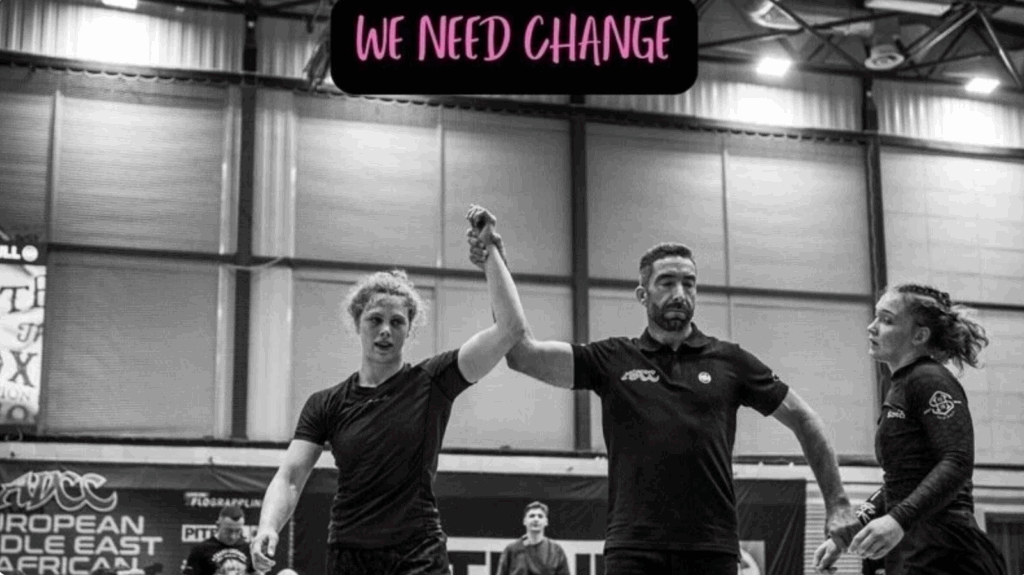
ADCC Women Petition

Signatures Vs. Seats: What Real Change Would Look Like

Strip away the slogans and the question is brutally practical: can the ADCC women petition convert signatures into seats?

Equal ADCC Trials opportunities require logistics—dates, venues, staff, production hours—and a confident bet that bigger brackets will improve the product (not just inflate it). That doesn’t happen by tweet; it happens by calendar.

Rocha also questioned whether a viral petition moves the needle with the people who actually make the calls.

“But a petition isn’t the way to get there. What are you going to do, send it to the president of ADCC? How do you think that looks?”
– Jasmine Rocha –

And her sharpest jab: show up for each other.

“They’re the ones consistently watching, sharing, and backing women’s matches. If we want more opportunities we as women have to actually show up for each other too.”
– Jasmine Rocha –

Where the two sides quietly agree is the destination. More meaningful qualifiers for women means deeper fields, clearer storylines, and better business: broadcast segments to build contenders, Trials-to-Worlds pipelines fans can follow, and brackets that feel earned—not improvised.

Rocha’s critique isn’t anti-parity; it’s anti-performative. The petition’s core isn’t anti-progress; it’s anti-gatekeeping. The overlap is where this should land: parity framed as a programming upgrade, not a press release.

If the stewards of the sport want a playbook, it looks like this:

  • Codify two women’s Trials per region;
  • Lock the 16-athlete bracket for Worlds;
  • Set a transparent path to five women’s divisions by 2028;
  • Measure success in viewership and finish rates, not vibes.

That’s how the ADCC women petition stops being a hashtag and starts being a calendar entry.

Until then, the temperature stays high. The petitioners say the clock is running out for 2026. Rocha’s camp says real support means buying the tickets, watching the cards, and amplifying the athletes now. Both can be true—and if the sport is serious, both will be necessary.
Well-Known BJJ Black Belt Challenged Cocky Wrestler At The Beach

BJJ Black Belt Challenged Cocky Wrestler At The Beach

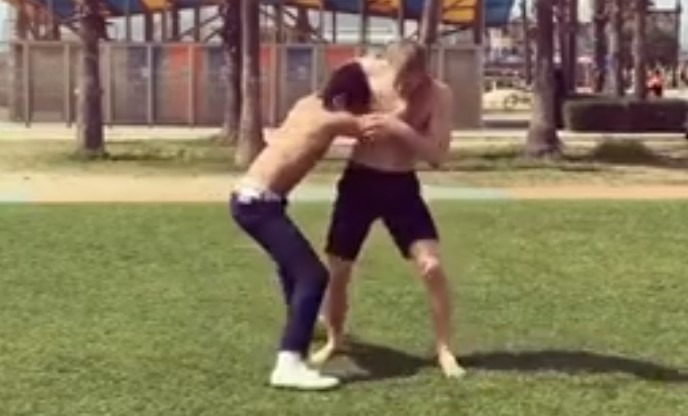
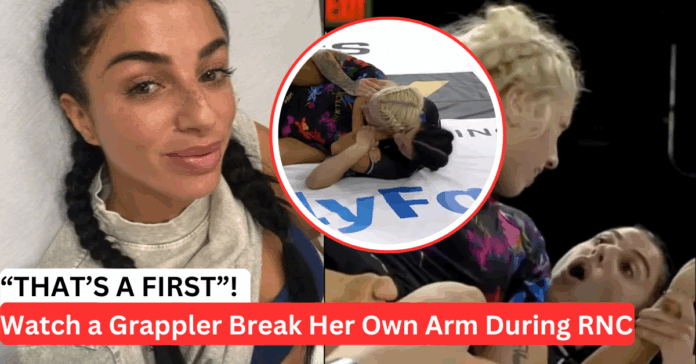
Sebastian Brosche, BJJ Black Belt and a well known guy to BJJ Community for his Yoga For BJJ videos challenged some wrestler in the par and put a show for the locals.

The BJJ Black Belt Challenged Cocky Wrestler for 20 dollars and who won you can check in the videos below:

Round 1:

Round 2:

You can also check a bit more serious challenge between BJJ Black Belt and a wrestler in a link below:

47 year old BJJ Black Belt Challenged by 23 year old Wrestler in a Park for $100

Or check video when Rener Gracie Was Challenged by 270 LB guy conviced that BJJ wouldn’t work on him:

Rener Gracie Challenged by 270lbs Guy convinced that BJJ wouldn’t Work on Him

WATCH: Grappler Breaks Own Arm While Finishing An RNC—And Stays Shockingly Calm

WATCH: Grappler Breaks Own Arm While Finishing An RNC—And Stays Shockingly Calm
  • Grappler breaks own arm attempting a rear-naked choke at a regional Cage Fury BJJ event; the bout is stopped immediately.
  • Video shows a face-crank style finish, a sudden snap, and the attacker—not the defender—suffering the injury.
  • Amanda Mazza is identified as the athlete; composure and fast stoppage prevent further damage.
  • The viral clip reignites debates over finishing mechanics and medical response at smaller shows.

Grappler Breaks Own Arm—RNC Turns Into A Freak Finish

It’s the kind of slow-mo that makes even black belts look away: grappler breaks own arm while closing a rear-naked choke. In seconds, a textbook back take mutates into a freak finish, there’s a sharp snap, and the referee waves it off.

The attacker—Amanda Mazza—sits upright, speaks calmly, and waits for medics as the entire room tries to process what just happened at Cage Fury BJJ 15.

“She suffered an arm injury while attempting to secure a rear naked choke—the bout ended when the arm broke during the submission.”

What We See On Tape: Rear-Naked Choke, Face Crank, Sudden Snap

Frame-by-frame, the sequence is clear. Mazza secures the back and begins to finish—more crank than blood choke—pulling hard across the face.

The leverage dumps stress into the pulling forearm; a split-second later, it gives. Both athletes freeze. The referee steps in. Mazza reportedly even thought she’d hurt her opponent’s mouth before realizing the damage was her own.

“From a face-crank angle, she pulled across the jawline; moments later, the forearm snapped and the match was stopped.”
– Fight report

What lingers after the clip ends is the eerie calm. No panic, no chaos—just a veteran doing everything right after everything went wrong.

“Video shows her sitting on the mat, speaking with her opponent and the referee while awaiting medical attention.”

Two debates caught fire as the clip went viral:

  1. Finishing mechanics. Expect coaches to hammer safer RNC chains for weeks: hand-fight sequences that avoid maxing out the pulling arm; body-triangle adjustments that let the squeeze—not the crank—do the work; and head-position cues that prevent the jawline from turning the attacker’s forearm into a pry bar.
  2. Medical response at regional shows. Viewers clocked how long it took for medics to hit the mat. Smaller promotions are growing fast; professional-grade medical protocols have to keep pace. When a grappler breaks own arm on live stream, the product is on the line, too—audiences expect a visible, immediate response.

A First In Grappling?

Choke-related injuries almost always punish the defender—neck strain, jaw pain, sometimes a shoulder tweak during desperate escapes.

Seeing the attacker get hurt is why grappler breaks own arm detonated across timelines: it flips the script.

Anatomically, a face-crank finish can load the attacker’s forearm in ways coaches warn about—poor wrist orientation, elbow line off the chin, shoulders not connected—turning your own radius and ulna into the lever doing the work and absorbing the resistance.

“That’s a first.”
– Broadcast reaction –

That’s why elite rooms obsess over back-take details: get the elbow line clean, set palm orientation, glue shoulder to shoulder, and chase blood choke mechanics before you brute-force the face.

A face-crank can work—but it’s also where rushed angles and over-pulling live, especially for lighter athletes who rely on speed and chains of position.

“Unlike typical injuries from defensive actions, this one occurred while she was applying the submission rather than escaping it.”
WATCH: Grappler Breaks Own Arm While Finishing An RNC

Lessons Hiding Inside A Freak Finish

Amid the shock, Mazza’s composure became its own viral note. That matters. It’s proof that poise can coexist with pain—and that quick, clear communication helps officials and medics do their jobs.

The recovery road is obvious; the technical homework is, too: film your finishes, audit your grips, and—above all—respect the difference between a clean choke and a forced crank.

The final word is simple and sobering: grappler breaks own arm is a nightmare headline, but also a teachable one. If the back take is your checkmate, the finish deserves the same precision you used to get there. A few degrees of wrist angle decided this outcome—and the forearm you were betting on.


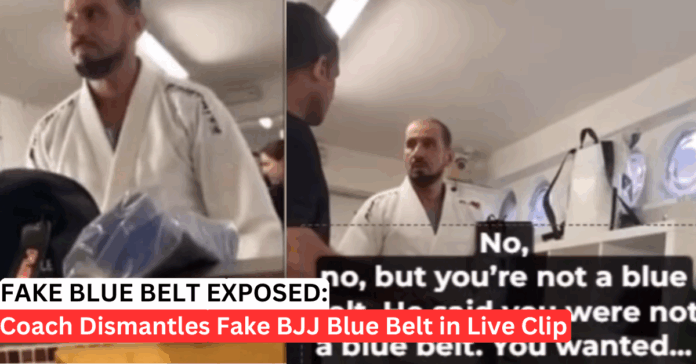
WATCH: BJJ Coach Puts Fake Blue Belt on Blast in Live Clip

WATCH: BJJ Academy Puts Fake Blue Belt On Blast Live
  • A visiting student was exposed as a fake blue belt, with the academy posting the moment publicly.
  • The instructor demanded proof of rank and lineage; the story spread via reels and write-ups.
  • The incident spotlights rank verification, visiting student etiquette, and how gyms police belt fraud.
  • In an era of self-promotion, this served as a high-voltage reminder: the mat is an honesty machine.

Fake Blue Belt Meets A BJJ Gym With Receipts

The clout era met its kryptonite when a visiting student tried to pass as a blue belt and ran into a coach who refuses to play along. The result: a fake blue belt exposed in a spectacle that sprinted across social feeds and BJJ news sites in hours. Headlines told the tale in one breath.

“I contacted Andrew Roberts. He said, yes, you’re not a blue belt. You’re like me, you’re not a blue belt.”
– Fernando ‘Nando’ Araujo –

The clip—short, sharp, merciless—captured the mood of a community that’s had it with belt cosplay. Gyms don’t just sell memberships; they sell standards. And when those standards are threatened, the receipts come out.

How The Bust Happened—And Why Rank Verification Matters

According to the posts and write-ups, the visiting student presented as a blue belt but stalled when pressed about basics—name of coach, gym, promotion path, and the kind of mat fluency that real rank makes second nature.

The coach kept it clinical: verify, clarify, then escalate. Within minutes, the story turned from awkward intro to an object lesson about rank verification and belt fraud in BJJ.

“A very upsetting situation has recently happened in our gym. A visiting student took a picture with the head coach in an attempt to add legitimacy to a self-promotion. Luckily, the student’s execution of techniques during practice and the request for picture afterwards caught the coach’s attention and he managed to react accordingly.”
– Fernando ‘Nando’ Araujo –

What makes this sting is how fake blue belt cases weaponize the aesthetics of rank—belt color, crisp Gi, confident swagger—while dodging the work.

Every serious academy should have a variation of the same protocol: ask for lineage, check mutuals, run a light roll to gauge competency, and, if things don’t add up, strip the illusion before it spreads.

The coverage hammered that point with a sledgehammer. In a crowded ecosystem where an IG clip can convert to seminar invites, padding credentials isn’t just lame—it’s predatory.

Visiting Student Etiquette — The Unwritten Rules Everyone Forgets

There’s a reason visiting student etiquette has become a recurring headline. You’re stepping into someone else’s house; the mat culture is fragile and hard-won. The basics are not complicated:

  • Tell the truth about your rank. If you’re between gyms, rehabbing, or rusty, say so.
  • Name your coach and academy. Good gyms respect clear lineage; it’s the backbone of the art.
  • Ask how the room rolls. Different gyms have different intensity norms; match the room.
  • Earn the trust first. Let your Jiu-Jitsu speak before your social feed does.

Most of all, accept that a quick skill check is not an insult; it’s quality control. If you’re legit, it’s a two-minute formality. If you’re not, it’s a two-minute reckoning.

That’s why this fake blue belt crash-and-burn resonates—because every coach who’s built a room knows how fast one bad actor can corrode the vibe.

Misrepresentation = No Training, No Refunds

This isn’t just another “gotcha” reel; it’s a fault line in gym culture. Social media blurred the boundary between training and performance. Students chase reels before they chase grips.

The fastest way to “level up” isn’t drilling—it’s pretending you already did. That’s why public call-outs like this land with a boom: they reverse-engineer the hype cycle. Instead of faking it till you make it, you fake it till the mat makes you stop.

It sounds harsh until you remember what rank actually is: proof.

Proof that you’ve survived the “boring” parts. Proof that you’ve failed, adjusted, and returned. A fake blue belt tries to bypass the proof—and that’s why the community reacts like a body rejecting a foreign object.

Public shame isn’t a comfortable tool, but it keeps appearing because it works. The moment someone sees that a fraudulent belt can cost you face, followers, and training access, the calculus changes.

The belt becomes what it should have been all along: a receipt, not a prop. The mat is the lie detector, and the community is the amplifier. In a sport addicted to proof, the fastest way to get humbled is to pretend you don’t need any.

Want One More Burst? Try The Baking Soda Tip For BJJ To Prevent Fatigue

Want One More Burst? Try The Baking Soda Tip For BJJ To Prevent Fatigue
  • A cheap baking soda tip for BJJ is trending: sodium bicarbonate can delay fatigue and squeeze more pace from late rounds.
  • Mechanism: it buffers acidity (hydrogen ions) so your arms don’t “turn to lead” as fast.
  • Evidence cited includes a boxer RCT and intermittent, hypoxic-style training data.
  • Real-world catch: 0.3 g/kg is the studied dose, 60–90 minutes pre-rounds—GI distress is the landmine, so test it in practice.

The Baking Soda Tip For BJJ You Don’t Know About

Fighters are passing around a kitchen-counter hack like it’s a secret IV drip: the baking soda tip for BJJ.

The claim is simple and sensational—sip sodium bicarbonate at the right dose and timing, and you’ll delay fatigue in BJJ just enough to keep scrambling when your room is wilting.

It’s not magic, but in a sport where inches decide sweeps and rides, a legal, low-cost buffer can feel like cheating without the commission paperwork.

“Sodium bicarbonate acts as a buffer in the body. A randomized controlled trial looked at boxers taking sodium bicarbonate… They showed improved performance and delayed fatigue when compared to placebo.”
Baking Soda For BJJ To Delay Fatigue

How The Baking Soda For BJJ Works (In Plain English)

Under hard pace—scramble-heavy guard passes, wall-grind clinches, or takedown chains—your muscles flood with hydrogen ions.

That acidosis is what makes your grip die and your legs feel like rebar. Sodium bicarbonate is an extracellular buffer: it mops up that acidity so you can keep firing a little longer before the shutdown.

<h5 class=”custom-quote”>“When you’re pushing hard… your muscles build up hydrogen ions… The idea is that baking soda helps neutralize that acidity, buying you more time before fatigue sets in.”<br></h5>

The lab receipts aren’t just bro-science. Beyond the boxer RCT, intermittent-effort research under reduced oxygen—the same “oxygen debt” vibe you feel in a grinder—also showed performance benefits with bicarbonate on board.

“The bicarbonate group again performed better, confirming its potential in combat sports settings.”

And it’s not only media sites kicking the tires. A decade-old S&C thread shows athletes were already experimenting:

“I was thinking of taking baking soda (increase bicarbonate to buffer hydrogen ions) and a 5-hour energy (caffeine). What do you all think?”

Dosing & GI Distress Risk: Where This Gets Real

Here’s where the baking soda tip for BJJ separates dabblers from planners. The internet loves the “half to one teaspoon” hack—but the studies don’t.

The effective dose is 0.3 g per kg of body weight, taken 60–90 minutes before hard work. For a 70-kg athlete, that’s roughly 21 grams—far more than a teaspoon—so eyeballing it with a cereal spoon is a rookie mistake.

“The effective dose is closer to 0.3 g per kg of body weight… For a 70 kg athlete, that’s about 21 grams, way more than a teaspoon.”

Now the landmine: GI distress. Dump too much too fast and you’ll sprint—not to the podium, but to the bathroom. Nausea, cramping, and bloating are common in the uninitiated. Smart athletes split the dose over time or use capsules to blunt the gut hit, and they run multiple gym trials before trusting it on a competition day.

“Be prepared for possible stomach issues. Take it 60–90 minutes pre-sparring or competition… Test it in training first.”
/h5>
Baking Soda Tip For BJJ To Prevent Fatigue

Test It Yourself!

If you’re going to play with this, treat it like any performance tool. Start light, scale toward 0.3 g/kg, and keep a log: dose, timing, session type, and GI notes.

Pair it with the boring stuff that actually wins fights—aerobic base, repeat-effort intervals, and positional rounds that punish sloppy pacing. The baking soda tip for BJJ won’t rescue bad habits, but it can buy one more high-output exchange when the room fades.

Bottom line: this is a legal edge with receipts, but your stomach is the referee.

The only way to know if you can cash it in under bright lights is to rehearse the protocol on dark Tuesday nights. Control the dose, control the timing, and don’t get cute on comp day.

Do that, and the baking soda tip for BJJ stops being a TikTok trick and starts behaving like what it is—a small buffer that turns into big moments when a match gets ugly.

“I Lost Over $7 Million”: New Gabi Garcia Abusive Marriage Allegations Surface

“I Lost Over $7 Million”: New Gabi Garcia Abusive Marriage Allegations Surface
  • Gabi Garcia abusive marriage claims resurface in a new interview, detailing alleged domestic violence and financial devastation.
  • Garcia says she fled with only her dog and that more than $7 million vanished.
  • A 2023 social media trail already outlined domestic abuse and fraud accusations against her estranged ex.
  • The revelations force BJJ to confront how stars disclose abuse, money, and control.

Gabi Garcia Abusive Marriage Claims Detonate The Timeline

The Gabi Garcia abusive marriage story just went nuclear. In a fresh interview, the multi-time ADCC and IBJJF BJJ World champion describes years of alleged violence, manipulation, and financial wreckage, saying she ran from her home with only her dog and that the losses exceeded $7 million.

For a sport that lionizes grit, the disclosure lands like a thunderclap—proof that even its most dominant figures can be trapped behind closed doors.

“I suffered domestic abuse from my ex-husband, and one day I woke up with police in my house. I had to pick up my things, and I only picked up my dog. He sold my house and I lost more than $7 million.”
– Gabi Garcia –

Inside The Allegations: Violence, Money, And A Flight Out The Door

Garcia frames the Gabi Garcia abusive marriage saga as a masterclass in coercive control—physical intimidation bundled with isolation, money games, and credibility attacks.

She calls the relationship “the worst years” of her life and says the dynamic operated like a trap: you doubt yourself, you protect the abuser, and you keep secrets because you think no one will believe you.

“I ended a relationship with a narcissist… they cloud your judgment. They manipulate you, so be careful.”
– Gabi Garcia –

Even as one of the most decorated grapplers alive, she says she kept quiet—until now, when she revealed plenty on the Jits and Giggles podcast.

“Nobody knows this because the world has so many sad stories.”
– Gabi Garcia –

Today, Garcia says the silence is over. She’s channeling the Gabi Garcia abusive marriage experience into advocacy, pointing to an upcoming documentary and delivering a blunt message to anyone stuck where she was:

“Be brave. Report to the police or get out… Don’t be shy. It’s not your fault.”
– Gabi Garcia –

From 2023 Posts To Today: What The Paper Trail Suggests

This isn’t the first time Garcia has aired the accusations. Back in 2023, she posted a barrage of statements on social media about domestic abuse allegations and fraud accusations tied to her estranged partner—claims that included threats, injuries, bank account tampering, and a legal path invoking Brazil’s Maria da Penha law.

“The time has come. It’s time to be brave and tell everyone why I’ve been away… They were the worst years of my life… A criminal… [He] asked for pension, my purses, my earrings… There are 19 cases of fraud on my credit card… He took the money from my payments.”
– Gabi Garcia –

Taken together, the 2023 posts and the new interview stitch a timeline: earlier public allegations about violence and financial control, followed by today’s explosive accounting of loss and the decision to speak without filters.

The Gabi Garcia abusive marriage narrative is no longer a whisper—it’s a case study in how status does not immunize anyone from intimate partner abuse.

New Gabi Garcia Abusive Marriage Allegations Surface

What This Means For BJJ’s Culture—And Survivors Watching

The fallout extends beyond one athlete. Combat sports are notoriously private about personal lives; gyms double as families, and reputations are currency.

When a star says out loud that she was abused, manipulated, and financially gutted, it shakes the myth that champions can muscle through anything.

It also poses an uncomfortable question for teams, promoters, and fans: What should change so the next survivor doesn’t need to torch their public life to be heard?

“Even with a restraining order and the Maria da Penha law by my side, he didn’t stop… I had to go to court to prove that I’m the owner of my own house.”
– Gabi Garcia –

For now, the message is surgical. If the Gabi Garcia abusive marriage revelations do anything, they demand that the culture around Jiu-Jitsu confront the realities of coercive control: the money, the isolation, the paper trails, and the danger of assuming strength equals safety. Garcia’s final advice is the point—safety first, call the police when needed, and get out.

The story will keep moving, but one thing is already settled: when an all-time great says the mat didn’t save her from what happened at home, the sport has to listen.

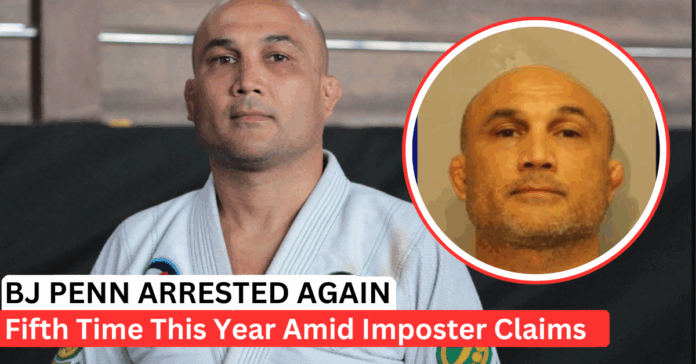
BJ Penn Arrested Again: Fifth Bust, Protective Order, And A Legendary Fall From Grace

BJ Penn Arrested Again: Fifth Bust, Protective Order, And A Legendary Fall From Grace
  • BJ Penn arrested again in Hilo for allegedly violating a court order for protection obtained by his mother.
  • Police say he entered a property in defiance of the order; bail set at $2,000, posted.
  • It’s Penn’s fifth arrest since late May; a grim pattern that has consumed the former champion’s year.
  • Family testimony in earlier hearings referenced Capgras syndrome–style beliefs; the saga shows no signs of slowing.

BJ Penn Arrested Again—Fifth Bust Since Late May

Another headline no one wanted: BJ Penn arrested again—and the calendar makes it sting. The former two-division UFC champion’s fifth run-in with police since late May exploded across MMA feeds after island authorities said he breached a restraining order filed by his mother, Lorraine Shin.

In a community that grew up on his legend, the rapid-fire arrests and family courtroom drama now overshadow everything he did in the cage.

“Hawai’i Island police arrested and charged 46-year-old Jay Dee ‘BJ’ Penn of Hilo, for violating a court order for protection.”
– Hawaii Police Department –

Inside The Hilo Arrest: Violating Protective Order

The official account is stark. Officers responded to a report on Puʻueo Street on September 15, 2025, determined Penn had entered a property barred to him under a standing court order, and took him into custody without incident.

He was charged the next day; bail set at $2,000; posted. It’s paint-by-numbers criminal procedure—but when the defendant is a Hall of Famer, every line reads louder.

“At 4:03 p.m… officers determined that Penn had entered a property in violation of the terms of a court order for protection… [He] was… arrested without incident… [and] charged… [B]ail was set at $2,000, which he later posted.”
– Hawaii Police Department –

For fans keeping score, this is the newest chapter in a troubling 2025: BJ Penn arrested again after a summer of police calls, court filings, and a family feud carried into public view.

Family Testimony, Prior Arrests, and Claims

To understand why BJ Penn arrested again is more than a stray headline; you have to trace the paperwork. Earlier this year, relatives testified in court that Penn had exhibited alarming behavior, and the family sought—and received—a protective order.

Reports summarized that testimony as describing a belief pattern in which loved ones were “imposters,” consistent with Capgras syndrome claims. The order was designed to keep distance and de-escalate. Instead, arrests kept stacking up.

Local outlets have chronicled the cadence: a May cluster of arrests tied to family incidents, the mother’s petition for protection, then fresh violations as the summer ground on. The details differ by incident; the trajectory doesn’t.

The deeper the legal entanglement, the less room there is to pretend this is a one-off. For a 46-year-old icon once defined by impossible comebacks, the comeback that matters now isn’t athletic—it’s compliance and treatment pathways laid out by the court.

BJ Penn Arrested Again—Police Cite Violation Of Court Order

Where This Spiral Leads Next

Legally, the next steps are procedural—appearances, hearings, and the slow machinery of misdemeanor cases tied to a protective order. But the subtext is personal and public: BJ Penn arrested again is no longer just a cautionary headline; it’s a rolling crisis for a family and a sport that watched one of its greats scrape bottom in real time.

This isn’t the place for armchair diagnoses. What’s on paper is enough: multiple arrests, a mother’s protective order, police stating he entered a prohibited property, and a bail slip that keeps getting signed.

The optics are brutal, and the stakes are obvious—safety for the family, compliance for the defendant, and clarity for a community that can’t keep pretending the old highlights live in the same world as this daily blotter.

“Screen Them Out” The Stephan Kesting Rainbow Flag BJJ Litmus Test

The Stephan Kesting Rainbow Flag Litmus Test: Who’s Really Welcome?
  • The Stephan Kesting rainbow flag suggestion ignites a community-wide fight over symbols, safety, and gym identity.
  • Supporters say it signals a safe training environment and filters out bad actors.
  • Critics argue dojos must stay neutral—no political symbolism on the walls.
  • One sentence from a respected black belt just reframed the sport’s culture war.

Why The Stephan Kesting Rainbow Flag Post Lit Up BJJ

One sentence—posted to social media by a veteran black belt—set the mat on fire. The Stephan Kesting rainbow flag prompt wasn’t a gentle nudge; it was a litmus test for gym values and who gets to define “welcoming.” Kesting’s claim was stark: a visible Pride flag doesn’t just decorate a wall; it sorts people at the door.

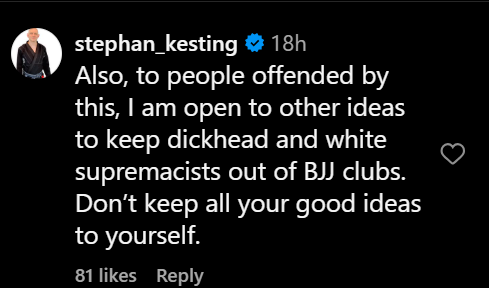
“BJJ clubs that want to discourage dickheads and white supremacists from joining could screen out 95% of problem people by hanging a pride flag on the wall somewhere.”
– Stephan Kesting –

That line detonated instantly because it hits two live wires: student safety and the expectation that martial arts spaces are “neutral.” The Stephan Kesting rainbow flag framing isn’t about rainbow décor; it’s about broadcasting a boundary—telling would-be students exactly what kind of behavior will not be tolerated before anyone slaps hands and bumps fists.

The Case For A Pride Flag In The Dojo

Supporters say a Pride flag in the dojo is the simplest, lowest-cost policy tool in the sport—one square of fabric that compresses a code of conduct into a universally recognized symbol.

If you’re LGBTQ+, a woman walking in alone, a parent signing up a teenager, or anyone who has reason to worry about harassment, a visible sign of inclusivity can flip the decision from “maybe later” to “I’ll try a class tonight.”

In that view, the Stephan Kesting rainbow flag idea isn’t “politics”; it’s basic risk management that deters the worst actors and reduces headaches for owners and coaches who would rather spend time teaching than policing.

Advocates also argue that symbols work precisely because they’re legible at a glance. Gym websites can talk policies; intake waivers can talk rules; but a flag tells you—in two seconds—who this room is for.

If the community wants BJJ inclusivity to be more than a buzzword, they say, then the on-ramp must be obvious the moment you step through the door.

The Case Against: Neutral Mats Or Political Banner?

Opponents counter that the mats should be Switzerland: no politics, no slogans, no flags beyond the national or team banner—just jiu-jitsu.

They worry that picking any ideological symbol fractures the room, alienates students who don’t want culture-war messaging in their hobby, and invites never-ending escalation.

If one cause gets a wall, do five more follow? At what point does a fight gym begin to feel like a comment section?

There’s also a practical argument: you can create a safe training environment with crystal-clear rules, consistent enforcement, and consequences—no flag required. Gyms already expel creeps and bullies; they already post codes of conduct; they already monitor locker-room dynamics.

For these critics, the Stephan Kesting rainbow flag formula is unnecessary at best and polarizing at worst. They say a strong, visible policy—backed by swift action—does the job without adding a symbol some students will inevitably read as partisan.

Stephan Kesting Rainbow Flag Post BJJ

What This Flashpoint Says About Gym Culture Now

Strip away the online fireworks and here’s the uncomfortable truth: the flag discourse is really a proxy fight about who gets to define the soul of a modern academy.

Is a dojo a refuge from outside noise, or a micro-community that must declare its values up front? The Stephan Kesting rainbow flag debate forces owners to pick a road: rely on policies and trust that “neutral” still communicates safety, or pin your colors to the wall and make your boundary unmistakable.

Either choice has costs. Symbol-first gyms will be accused of importing BJJ politics; symbol-free gyms will be accused of looking the other way. But the sport is changing—faster, bigger, and more visible than ever.

John Danaher Sparring Doctrine: Seven Days A Week Or You’re Pretending

John Danaher Sparring Doctrine: Seven Days A Week Or You’re Pretending
  • John Danaher sparring mantra: only live rounds prove skill.
  • Danaher says he never competed but sparred seven days a week.
  • He insists there’s “no faking” in live rounds—sparring reveals truth instantly.
  • Gordon Ryan’s take on Dagestani grappling dominance in MMA underlines why live resistance wins.

Why ‘John Danaher Sparring’ Became The Proof Standard

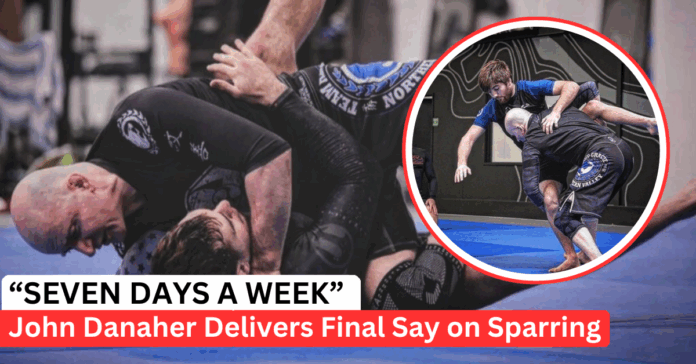
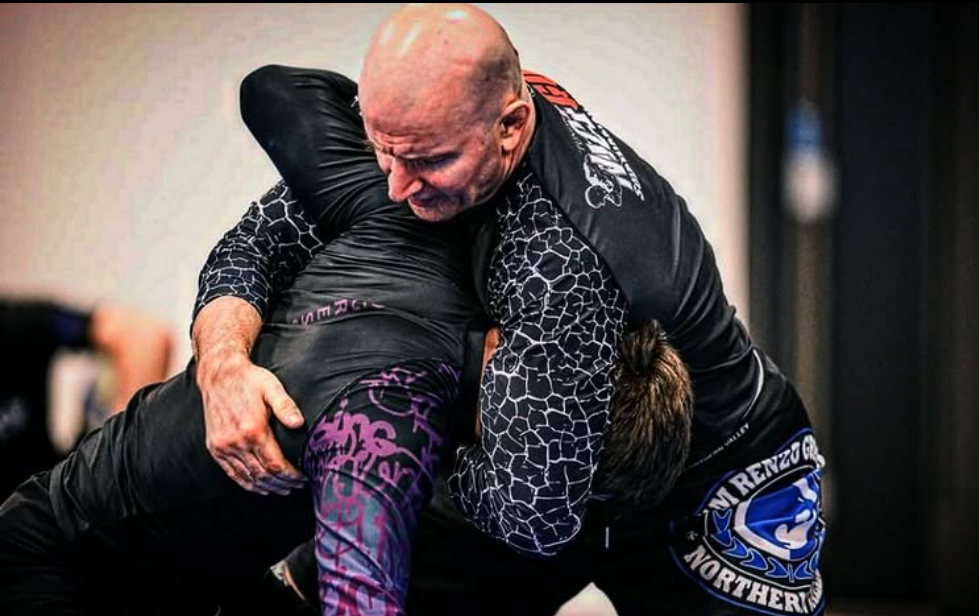
In an era obsessed with medals and highlight reels, John Danaher sparring reduces everything to a single, uncomfortable audit: can you do it live?

Danaher is blunt about the credibility question that followed him because he never competed—and just as blunt about how he answered it on the mat.

“I never actually competed, so there was always this credibility question – how do you know he’s any good, having never competed.”
– John Danaher –

The remedy wasn’t a trophy case—it was relentless rounds.

“I would spar with people in class every single day. I used to spar seven days a week and every class I would spar in the classes.”
– John Danaher –

That volume matters. It’s not performative grind; it’s data. Over and over, live rounds force technique to hold up under pressure or break in front of witnesses. That’s why John Danaher sparring resonates beyond fandom: it collapses theory into outcome, quickly.

From Live Rolling To Dagestani Grappling Dominance

It’s easy to chant “train hard.” It’s harder to explain why live resistance at scale flips entire weight classes. Enter Gordon Ryan—whose read on MMA grappling maps perfectly onto Danaher’s thesis.

When he talks about what separates world-class grapplers from “even high-level MMA competitors,” he points to an unforgiving technical gap that only live rolling exposes.

“The level of grappling is just so significant. There’s such a difference in the technical knowledge and application between world-class grapplers and even high-level MMA competitors who haven’t dedicated the same focused attention to ground fighting.”
– Gordon Ryan –

And then there’s the cultural X-factor behind Dagestani grappling dominance: a mindset that prizes the art, not just beating the art.

“[Those who] love jiu-jitsu… [are] far more successful [in MMA] than those who want to ‘beat jiu-jitsu.’ ”
– Gordon Ryan –

Technical superiority plus ruthless consistency produces a vicious math. The better grappler dictates pace while the other guy drowns.

“Their work rate is always three, four, five times as high as mine. Most guys, even at the highest levels, like if you give them the reason to quit, they’ll quit.”
– Gordon Ryan –

When a room is built on John Danaher sparring—rounds, rounds, and more rounds—those mental and technical edges aren’t slogans; they’re measured differences that show up as takedown chains, control rides, mat returns, and finishes under the lights.

BJJ Training Without Alibis

There’s a reason the phrase John Danaher sparring trends every time the sport argues about what “proficiency” means. Drills refine; live rounds define.

Danaher’s seven-days-a-week stretch wasn’t bragging—it was a dare. If skill is real, it survives contact with someone who’s trying to stop you. If it wilts, the belt ranking and gym myths don’t matter.

“There’s a clear sense where when you spar with someone – you can immediately judge their skill level… there’s no faking when you’re sparring… sparring is the clearest means by which you can demonstrate skill level.”
– John Danaher –

So the question isn’t whether competition matters—it does. The question is whether you can replicate your A-game when the other person is actively tearing it down.

In Danaher’s world, the answer lives in the room, not the bio. That’s why his students and admirers cling to the proof standard: John Danaher sparring turns BJJ training into an honesty machine.

John Danaher Sparring Doctrine: Seven Days A Week Or You’re Pretending

Last Round, Best Round: Put It On The Line

Strip away the romance and this is the sport’s lie detector. When the cage door closes or the gym timer starts, John Danaher sparring is either baked into your game or it isn’t—and the result is merciless.

Ryan’s read on Dagestani grappling dominance isn’t mystical; it’s the inevitable outcome of thousands of hard, resisting reps where technique and mindset are stress-tested daily. If you want the payoff, you have to pay the price where it counts: live rounds.

The verdict is sensational precisely because it’s simple: if your jiu-jitsu can’t cash out against resistance today, it won’t cash out on fight night. And that’s why the final word belongs to the mats. John Danaher sparring isn’t a slogan—it’s the sport’s closing argument.

Gable Steveson Dive Claim Blows Up After CJI 2—And Craig Jones Fires Back

Gable Steveson Dive Claim Blows Up CJI 2—And Craig Jones Fires Back
  • On Ariel Helwani’s show, the Gable Steveson dive claim alleges Craig Jones floated a “work” before their scrapped CJI 2 superfight.
  • Steveson cites “funky stipulations,” turf toe, and says he kept quiet—until now.
  • Jones claps back on Instagram, mocking the logic and dredging up Steveson’s past legal issues.
  • The feud now overshadows CJI 2’s already-tense aftermath and raises match-fixing alarm bells across grappling.

Inside The Gable Steveson Dive Claim

The Gable Steveson dive claim landed like a grenade in the middle of an already chaotic CJI 2 postmortem.

Speaking with Ariel Helwani, the Olympic champion alleged Jones floated the idea of a “work” ahead of their marquee match—one that never happened after Steveson withdrew with turf toe in late August.

He says he kept his head down at first, even while Jones taunted him publicly, but he wasn’t done telling his side.

“I’m going to retire after this match. I don’t want to take this loss. Can you do this for me?”
– Gable Steveson –

Steveson framed it as part of a string of “funky stipulations,” insisting he wanted an “exciting match” and not an exhibition with a pre-written ending. He also jabbed at Jones’ résumé—pointing at losses to Gordon Ryan—and defended his silence after pulling out: “I stayed quiet because I’m a man.”

The Gable Steveson dive claim now sits at the center of a perfect storm: a hyped superfight canceled late, an injury that fans questioned, and a promotion already under the microscope.

Craig Jones Response, Receipts, And The CJI 2 Backdrop

If Steveson poured gasoline, the Craig Jones response struck a match. Jones posted a black-screen note on Instagram and went straight for the logic of the accusation, poking the “work” narrative and reviving Steveson’s off-mat controversies to demolish his credibility.

“So you agreed to a ‘work’? But then got injured and had to pull out of a work. Make that make sense for me?”
– Craig Jones –

Jones’ rebuttal lands at a volatile moment for CJI 2. The event’s $1 million team final already ignited weeks of debate, accusations of bias, and even a now-rescinded promise to pay the runners-up.

Into that noise drops the Gable Steveson dive claim, transforming a canceled main event into something much uglier: a public match-fixing allegation. And it’s not just Jones’ reputation on the line. Promoters, sponsors, and athletes who bet their brand on CJI’s legitimacy are now tied to the fallout.

This is why Jones’ tone is so pointed: if fans believe the “dive” story, it stains the whole enterprise. If they don’t, Steveson looks like a sore no-show whose turf toe became a pretext. Either way, the Gable Steveson dive claim has hijacked the post-event storyline.

What The Timeline Tells Us—And Why The Optics Are Brutal

The timeline is combustible. Steveson exits CJI 2 with a turf toe injury; days later, he wins his pro-MMA debut in 98 seconds at LFA 217. In a news cycle shaped by clips more than context, that juxtaposition is devastating.

Jones capitalizes, framing the injury as convenient and the “work” accusation as incoherent. Steveson, meanwhile, suggests he tried to preserve dignity by staying quiet until Jones needled him one time too many.

“I stayed quiet because I’m a man… I’m not gonna go out there and speak bad about somebody… Maybe he doesn’t because he hasn’t accomplished anything in his field.”
– Gable Steveson –

Strip away the rhetoric and you’re left with two hard facts: the match never happened, and the allegation did.

That’s enough to trigger existential questions for modern grappling, which is fighting to scale into mainstream sports without importing pro-wrestling’s staged-finish stigma. The Gable Steveson dive claim doesn’t just bruise egos; it dents consumer trust at the exact moment elite jiu-jitsu is selling itself as sport, not spectacle.

Aftershocks: Who Wins This PR War, And What’s Next?

In the near term, Jones wins the volume war—screenshots, one-liners, and a feed full of Craig Jones response posts that travel fast. Steveson’s counterpunch is the nuclear allegation itself, and he knows it.

If he sticks to MMA, he can let highlight reels drown out the blowback. Jones, as promoter-in-chief, must keep CJI’s credibility airtight; any whiff of prearranged outcomes is poison. That’s why this isn’t just a spat; it’s a test case.

If the claim fizzles, Jones emerges harder to rattle and CJI 2’s turbulence recedes. If the Gable Steveson dive claim continues to dominate headlines, sponsors and athletes will ask uncomfortable questions about safeguards and transparency.

For now, both men are dug in—and grappling’s reputation is the rope in the tug-of-war.