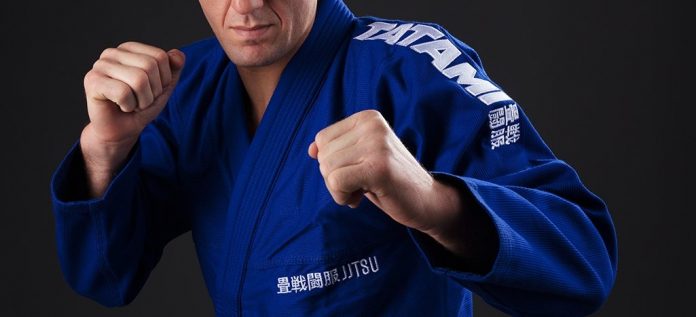
When you first walk into a BJJ academy, you’ll immediately notice the “uniforms” people are wearing, there’s no way past it. The Gi is an integral part of Brazilian Jiu-Jitsu, and one could even go as far as calling it a defining aspect of the Gentle Art. After seeing the Gis though, and of course, realizing you want one (or 10), a hundred questions will pop in your head. This is the article that will answer each and every Jiu-Jitsu Gi question you have, so much so, that we’ll even cover No-Gi Jiu-Jitsu!
Gi Jiu-Jitsu
First of all, let’s talk about Jiu-Jitsu a little bit. What do you think of when you hear about BJJ? There are several ways in which people perceive the Gentle Art, and not all of them include a Gi. For example, all the casual MMA fans often think of Jiu-Jitsu as stuff that happens on the ground and don’t often have a perception of their favorite fighter training in a Jiu-Jitsu Gi during preparations. The hardcore and old-school MMA fans, though, will remember the rarely UFCs where Royce fought in a Gi, as well as some of the Pride fighters that helped launch mixed martial arts.
Outside of MMA, though, most people will get an image of two people wearing (mostly) white pajama-like clothes, tangled up on the ground. Even those that train exclusively No-Gi, like 10th Planet Jiu-Jitsu affiliates, know that most of the Brazilian Jiu-Jitsu practitioners train with Gis.
The Brazilian Jiu-Jitsu Gi is an unmistakable symbol of BJJ. The original Jiu-Jitsu was created around the Gi, and it doesn’t just have to do with the Japanese origins of Jiu-Jitsu. Tere’s a practicality to the use of the Jiu-Jitsu Gi in the actual exchanges of BJJ, one which goes far past just gripping the collar, sleeve, and pants. Given that Gi’s for BJJ is such an integral aspect of training, it is no wonder that there are plenty, if not too many options out there at the moment. That just means it is even easier to get lost among the different brands, colors, weaves, weights, and styles of Gi’s out there, not to mention figuring out sizes and how to take care of them. Or, at least it was, until now. Keep on reading to get detailed answers to all BJJ Gi-related questions!
BJJ Kimono or BJJ Gi?
Before we proceed with everything Gi related, let’s tackle a question that arises all the time: is Gi or Kimono the correct term for the Brazilian Jiu-Jitsu uniform?
Both terms are Japanese, and as such, do have different meanings in their country of origin. Kimono literally translated means “thing to wear”. In Japanese “ki” is “wear”, and “mono” is “thing”. In Japanese culture, that refers to clothes people wear daily, often associated (but not limited to) the robes women wear.
The Gi, on the other hand, is an abbreviated version of either “Keikogi” and/or
“Dogi”. The first means training clothes (Keiko-train, Gi-clothes). “Dogi” on the other hand, is somewhat less used and means a similar thing, but from a more philosophical standpoint, where “Do” means “way”, which is how most eastern martial arts are usually described.
 The differences might be obvious, in Japan with Gi the more precise word to use in terms of training martial arts. Around the world, though, both terms are loosely used, and it has to do more with the habit of people at the certain geographical or linguistic locations, rather than getting into the technical terms behind the phrases. Portuguese speaking countries and some European ones tend to go with Kimono, which mostly, I guess, has to do with habits acquired from Karate, which is arguably the sport that popularized the Gi or Kimono. In the USA, people are more used to the term Gi. It doesn’t really make a difference too much, and when it comes to BJJ, it is much more customary to hear about a Jiu-Jitsu Gi rather than a Kimono. In summary, neither of the terms is wrong.
Brazilian Jiu-Jitsu Gi Origins And History
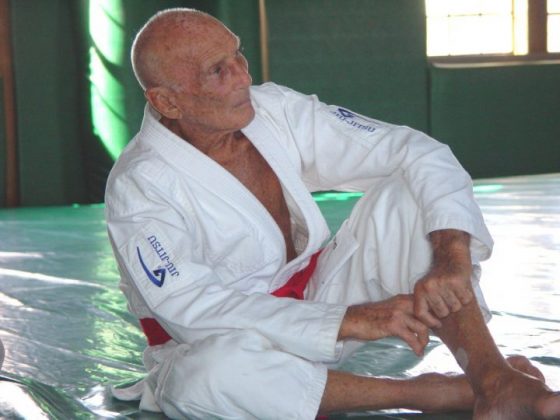
How come we wear Gis in Brazilian Jiu-Jitsu when Brazil doesn’t have a history of such clothing? Well, as you are probably aware from BJJ history, the origins of the sport lie in the mixture of Kodokan Judo and catch=wrestling that Mitsuo Maeda brought to Brazil. A prominent student of Dr. Jigor Kano (the founder of Judo), Maeda wore a Gi when teaching his unique style of grappling. His students, Carlos Gracie Sr. among them, also wore Gis, which later turned out the be the Jiu-Jitsu Gi.
But how did the Gi become a part of martial arts in the first place?
The very first Gi has to do with the Samurai and the ancient combat art of Japanese Ju-Jitsu, somewhere around the 17th century. As such, it is interesting to note that the first Gi was, in fact, a kimono. Why? Back in the day, the Samurai had to fight on the battlefield in life or death situations, and not in dojos. As such, the clothing they wore under all the battlefield armor was simply known as kimono, a term we explained earlier. This “undergarments” were not given much thought until such a time that the armor came off, and the combat art turned into a martial art, during a time of peace.
The direct predecessor of the Brazilian Jiu-Jitsu Gi we know and love to wear today was the Judo Gi. In terms of design, it went through a couple of different versions before arriving at what Judokas use today. The first one was modifying the original Samurai Kimono, which was meant to be worn under the armor and not as training clothes. Jigoro Kano modified it in the 19th Century, creating the first practice Gi, or “Keikogi”.
Kano made the Gi from a tougher type of material, and made it shorter, completely changing the traditional style of the Kimono. The goal of the new “keikogi” was to allow for grips that are crucial to setting up Judo techniques. Later on, the Judo Gi got another wave of modification, one that addressed the width of the sleeves, and the length of the skirt.
-
The Brazilian Jiu-Jitsu Gi
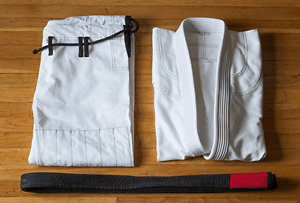 Originally, there wasn’t a specific Jiu-Jitsu Gi. The Gracies, along with every other Maeda student wore Judo Gis. However, the Gracies deemed them ineffective for what they developed alter, and re-structured the Gi yet again, this time arriving at the Brazilian Jiu-Jitsu Gi version we know today (more or less). The BJJ Gi is most notably different in the sleeves, compared to a Judo Gi. The width is notably smaller, making grips a lot harder. The jacket is also not just shorter, but also narrowed, providing a lot less gripping options. In terms of materials, sturdiness, and Gi design, as expected, BJJ Gis utilizes every possible technological innovation, which further makes them unique.
Types Of Brazilian Jiu-Jitsu Gis
In terms of types, the most important aspect of a Gi is the weave. The weave determines how much a Gi weighs, how sturdy it is, and how comfortable it is to wear. not everyone loves a heavy-duty, sturdy competition Gi. While the weave does determine the weight, it is not the only factor, so weight is considered a different factor altogether that determines Jiu-Jitsu Gi types.
What is a weave? It is the manner in which the fiber of the material, which with BJJ Gis is almost always cotton, are woven together. The weaves are important in terms of Gi quality, Gi weight, and how long a Gi will last under the rigors of constant grappling training. There are several types of weaves that are more commonly used, along with a few more modern ones.
Single Weave
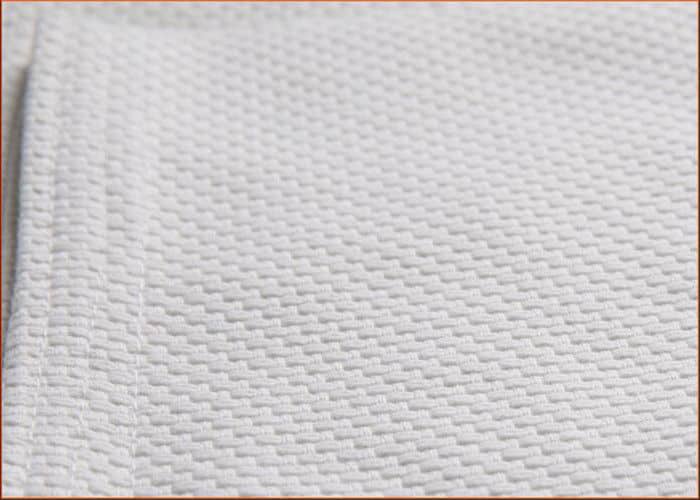
The single weave the simplest weave, usually used in lightweight Gis, but that’s not necessarily always the case. Single weave Gis are cheaper than others, and not as sturdy, though. The fabric is thin and they’re great for hot weather training, or for people who enjoy lighter weight Gis. The Gis are soft, comfortable, and allow for lots of unrestricted movement.
Double Weave
 The double weave makes for heavier and sturdier Brazilian Jiu-Jitsu Gis. In simple terms, it is double the thickness of the single weave. They are denser, woven in a tighter fashion, and quite hard for an opponent to maintain grips on. They’re great for competitors as they are quite uncomfortable on the other person, sometimes as rough as sandpaper on their faces. Given the amount of material required for the double weave, this Gis tends to be on the more expensive side.
Gold Weave
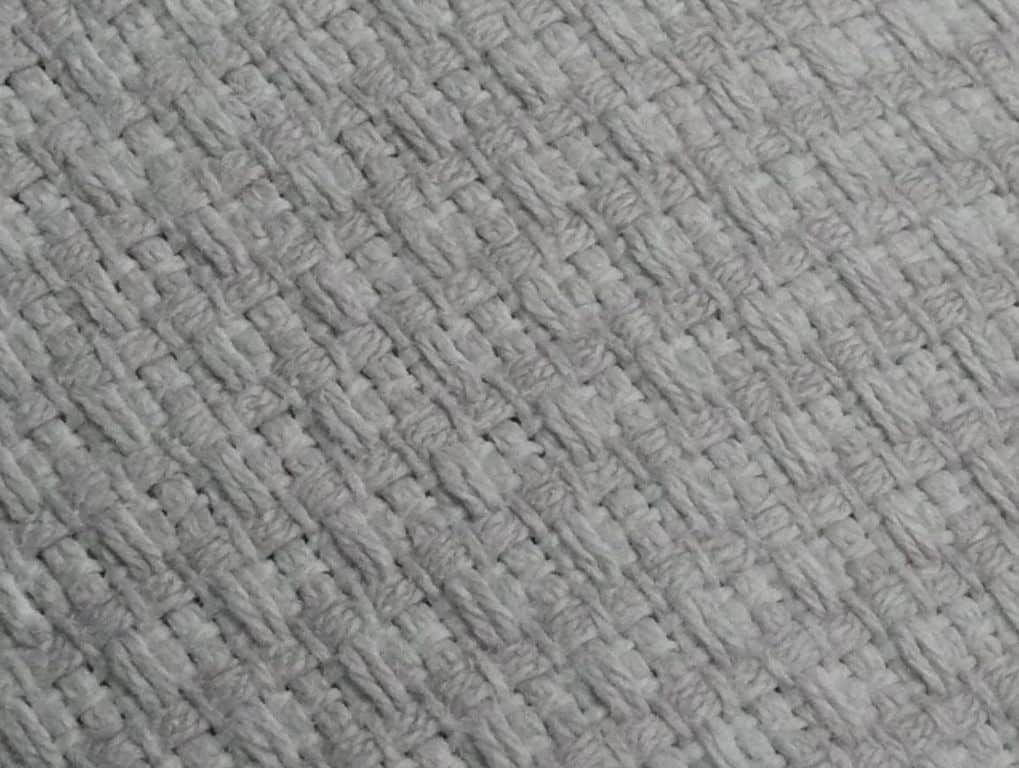 The gold weave is one of the most sought-after versions of Gis for Brazilian Jiu-Jitsu, along with the pearl weave. The gold weave was the original lightweight weave, but comes in with a significant “flaw” – it tends to shrink. They are, however, extremely comfortable and very durable. Moreover, the shrinkage rate doesn’t always have to be a bad thing – sometimes people like to have their gis shrink to fit perfectly.
Pearl Weave
 The highest percentage of Gis in the world today have a pearl weave or a variation of it. It took over the gold weave mostly due to the fact that shrinkage is almost a non-issue. The pearl weave is pretty much the perfect one for Jiu-Jitsu: it is durable, doesn’t shrink, and it is cheaper than gold and double weave and can be used to make Gis of different weights.
The one thing to consider with pearl weaves, though is variation within the weave. There are several different ones, which means the gi can range from a soft and supple version to a stiff and sturdy one.
Special Weaves
More modern weaves come in different versions, all boasting unique qualities. The iceweave GI clams to have integrated cooling capabilities as a result of the weave pattern. The aeroweave provides the lightest ever Gis that come in a weave pattern. The crystal weave is somewhere between the gold and pearl ones, offering shrinkage and comfort, along with durability. There’s also a honeycomb weave Gi, with a cell-like structure that is light and allows for good air circulation.
Ripstop
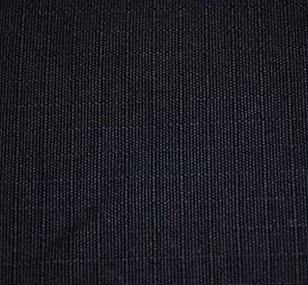 Ripstop patterns are usually seen in Gi pants, while the jackets feature a weave pattern. The reason for this is that ripstop jackets are not IBJJF legal for competition. However, such Gis do exist and they are the highest weight Brazilian Jiu-Jitsu Gi options available on the market. The ripstop pattern involves a grid of squares that are a result of thick stitching woven through a grid of a thinner one.
Cotton Drill
The predecessor of ripstop[ patterns in Gi pants, this is a weave that is not seen too much these days. The pattern included diagonal ribs, providing thickness, and sturdiness. The same weave is used for pants in other martial arts, from Judo to Karate and Taekwondo.
In terms of Gi weight, you’ll see the usual light, medium heavy-weight Gi annotations, but more often, you’ll encounter something called GSM. When you buy a new Gi, especially online, seeing abbreviations that make no sense really doesn’t help the case, particularly as you have to consider weaver, shrinkage, size, color, and other variables. GSM tends to be the key factor when it comes to Gi weight, as different weaves can end up producing different GSM.
What is GSM? It stands for Grams Per Square Meter. This does not refer to how heavy a Gi actually is, but rather to the density of the material. A 350 GSM measurement usually describes the lightest weight Gis out there, although, at present, there are even Gis that go under 200 GSM. 450 GSM is where most “regular-use” Gis fall under, and are usually pearl weave ones. Anything above this number, like 550 GSM is a mark of heavyweight Gi, most often in a Premium version.
Figuring Out Gi Sizes
The key thing with a BJJ Gi is finding your size. However, this is going to prove difficult, as most brands have different sizes of Gis even though all use that same system. This comes down to the type and design of Gi, as well as the materials used. So, when picking a Jiu-Jitsu Gi, know your weave and weight first, and then you can focus on figuring out size.
In most cases, “A”, which stands for “Adult” is what is taken to be common in terms of Jiu-Jitsu Gi sizes. The “A” is followed by a number, which at first, was simple. The numbers originally ranged from A0-A6. In most cases, there’s a height and bodyweight attributed to every one of these sizes. It all sounds very practical, but in reality, it is not as simple. Different brands produce different types of Gis, and not all feature the same height and weight numbers in terms of the same “A” size. moreover, certain brands have started selling “in-between” sizes, like A1L, or A1 1/2, etc, that further complicates things.
The ‘A” marked Gis are usually male, but they can be seen as unisex, and ladies often opt for these versions. There’s, in fact, a special designation that marks female Gis – “F”. They range between F0 and F4 and face similar problems like the “A” sizes in terms of unification and new in-between size versions.
Kids’ sizes are marked with an M and are a story of their own. They range between M000 and M 4, as there’s a lot of sizes that are needed for children of different ages. Usually, they present even more of a challenge in comparison to adult Gis, as kids grow up and constantly require a different size, sometimes even skipping one, depending on their growth spurt.
All in all, in terms of Gi sizes, the best thing to do when figuring it out for the very first time is talk to your instructor, to the academy’s resident Gi hoarder. Then, try on a Gi for size, just to see which “A” or “F” category you’re in. When it is time to buy a Gi, very carefully consult the charts that every Gi brand supplies. They have precise height and weight measurement,s along with shrinkage rates that you should consider.
BJJ Gi Colors And Designs
When it comes to choosing the design of your Brazilian Jiu-Jitsu Gis, things tend to get very interesting. Originally, in Japan, and in Brazil, later on, only white Gis were an option. That has, changed, however, and nowadays, there are Gi colors and designs that would probably make Jigoro Kano consider Zumba instead of Judo if he were alive to see them.
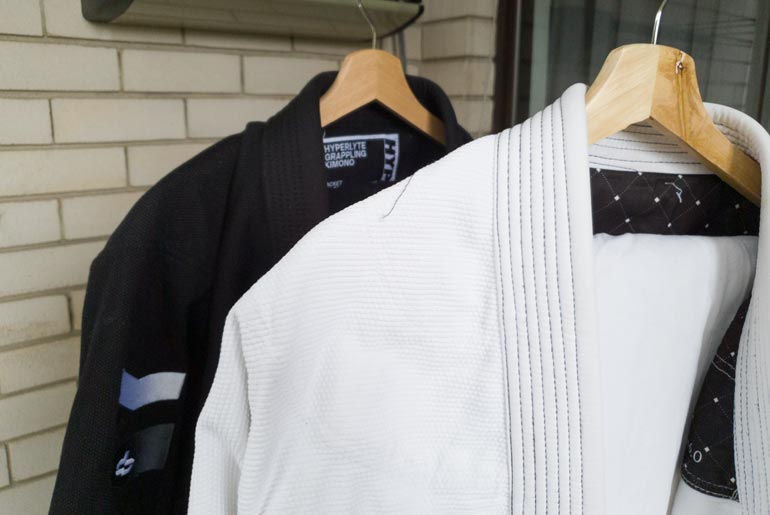 First of all, let’s get the legal stuff out of the way. If you want to compete under the IBJJF / AJP banner, you’ll need to wear a “legal” color, which comes down to blue, white, and black (at least at the moment). This is the reason why most BJJ Gis tend to be in one of these colors. However, that doesn’t’ stop brands from making different color Gis, nor people from buying them.
Apart from certain academies organized like cults, where you have to wear their Gi, bought from them, with their patch and only from one or two brand others are very liberal about what kind of Gi you wear in training. That’s where all other colors, ranging from stuff like green or grey, all the way to pink, denim-inspired gis, and even camo versions come into play.
Speaking of weird Gis and unique designs, beware that some might be considered too much for most academies out there. they re fun though, and I have to confess that I’m a big proponent of weird and unusual Gis, be it a Ninja Turtles design or an imitation of an ancient Samurai armor. Custom Gis fall under this category and are definitely an option if you’re willing to splash the cash to have a Jiu-Jitsu Gi made especially for you.
How To Pick A Jiu-Jitsu Gi For You
Finally, we arrive at the reason you’re reading this article – how to pick a Gi for Brazilian Jiu-Jitsu. First of all, you’ll have to understand that you can’t train with just one Gi – there’s simply no way. If you train more than a couple of times a week, you’ll need at least two Gis. I doubt you’ll stay at that number, though, so let’s take a look at how the closet of a “normal” BJJ athlete looks like.
For your first Gi, the best option is going for something that’s not overly expensive. Namely, given that you still have no idea whether you like lighter or heavier weight Gis, what weave make you feel the most comfortable, and there’s a lot to figure out in terms of size and shrinkage, it is best if you stick with a medium-heavy, medium quality Gi, that is affordable and versatile. A pearl weave 450 GSM, preferably fitting you perfectly (regular size, not one of the in-between options) is a great place to start. Also, go for plain colors, even if they’re not IBJJF legal, and leave the fancy and unorthodox designs for later.
The easiest part about picking a competition Jiu-Jitsu Gi is color. You only have three options, so there’s not much variety available in that department. However, other things really do make a difference. the type of weave, and particularly sturdiness will make a lot of difference in how tightly people can hold you with their grips. Moreover, the stiffer the Gi, the more likely you are to cause discomfort with its sandpaper-like structure. Once again, this comes down to weaves. Moreover, wight plays a role as well, as the heavier the Gi, the more weight you’ll have to cut, given that you do weigh-ins with the Gi and belt on.
 This is probably going to be your favorite Gi. This is the Gi you enjoy wearing the most. That means you know exactly what you like in terms of weight, weave, size, and design. It may be the same Gi you wear as a competition Gi, to a completely different one that no competition will allow. As long as you feel comfortable in it, you shouldn’t worry about anything, Moreover, this is the type of Gi you’d like to stack up on, given that you’ve found your perfect Gi. Anything goes here.
Lightweight, or better yet, ultra-lightweight. If you can pull off a ripstop jacket, that would be the best possible option here. I have a couple and enjoy training in them much more than any other type of Gi. They take up almost no space, are much easier to fold in a suitcase, and are extremely lightweight, yet durable. Not to mention how ultra-comfortable they are, and not at al least to get grips on, despite what most people think. Outside of ripstop jackets and pants, going under 350 GSM should be the norm, with any weave yo like an option.
Similarly to the everyday Gi, this can be anything, it can be a Gi you originally used to figure out what you like. That means that you might’ve misjudged the size, color, design, weave, or weight of the Gi and don’t really enjoy wearing it,. However, it will come in handy from time to time, when others Gis are not dry from washing, or you need to attend seminars with several training sessions a day. If you’re buying a brand new Gi with the intention of using it as a backup, the same recommendations as for your first Gi apply – don’t invest too heavily and try to go with a legal color and a proven brand.
Taking Care Of Your Gi For Jiu-Jitsu
A key aspect of extending the longevity of your Brazilian Jiu-Jitsu Gi is to take good care of it. Forgetting it in your gym bag does not only result in unwanted odors and immediate loss of training partners but also help you use your Gi for a longer period.
 The first thing that happens when you come home from training, is you need to open your gym bag, and get your Gi out. In most cases, it will still be damp from training, so allowing it to air dry is the best thing you can do. Once it is dry, you can place it in a washer, and wash it as quickly as possible. It is best if you just use detergent and low temperature, but that depends on the color as well. If you like to soften up a Gi, or remove stains, you can use the appropriate products, but try and avoid bleach or anything too aggressive. Just about every Gi you get is machine washable.
Something to keep in mind is the temperature at which you wash your Gi. Depending on the Gi type, and especially the weave, you can expect every Brazilian Jiu-Jitsu Gi to shrink at least a bit, if not more. Consider that the higher the temperature, the more shrinkage you’ll get, so be wary with it, especially with a brand new Gi.
Also, leave your Gi to hang dry and try to avoid dryers.
Jiu-Jitsu Gi Brands
There are literally hundreds of Gi brands out there, and they all offer original products. Some, are of course better than others, but that is also something that changes as time passes by. Bad Boy was the first official Brazilian Jiu-Jitsu Gi brand. Later on, a bunch of other specially Gi brands followed, like Atama, which still remains one of the top brands for competitors to this day. Shoyoroll, Scramble, and a bunch of others also came out with not just high quality, but unique, and sometimes, limited edition designs.
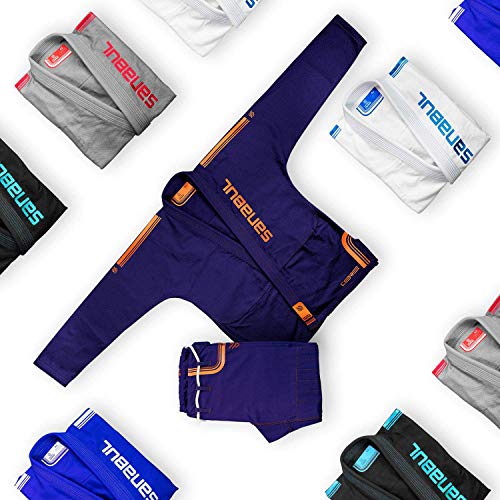 Nowadays, there are plenty of brands available,. Some like Grips, Submission Sniper, Moya, etc focus solely on making BJJ gear, in the form of gis, belts, shorts, rashguards, etc. Other brands that people enjoy are Tatami, Venum, Kingz, Sanabul, Gameness, Manto, Hayabusa nad similar, which do make all kinds of other gear like MMA gear and Judo Gis as well. This does not make their products inferior, but they do come in less variety than specialized gi brands offer.
Finally, you can get some specialty stuff like Meerkatso or BJJ Glboetrottres Gis that are limited editions and feature some of the craziest designed out here. These ar all just a few of the brands that are available and it will take research and experimentation to figure out what will work best for you.
No-Gi Jiu-Jitsu
ON the other end of the spectrum of Gi Jiu-Jitsu is NO-Gi Jiu-Jitsu. That is when you don’t wear a Jiu-Jitsu Gi to train. While most academies do offer both (or they should, at least) there are still those that train exclusively with or without the Gi. People fuss about how one can make the other better and vice versa. Let me give you a simple formula that will help you immensely – train both at all times. Simply refrain from grabbing the Gi when you’re in Gi class, and you’ll be able to learn a lot more by working from an inferior position (opponent’s get to grab your Gi). Also, wear Gi in No-Gi class, or at least Gi pants, for the same purpose. You’ll not only figure out how to break Gi grips but also become a real wizard in guard passing, among other things.
No-gi Jiu-jitsu is integral to learning Brazilian Jiu-Jitsu, but you mustn’t forget Gi training as well. Train Gi, train No-Gi, come with No-Gi gear but Gi pants, and even go full-on Sambo mode with just shorts on and Gi top. Try everything!
The Best Gis For Brazilian Jiu-Jitsu
Choosing the best Gi for you is the easy part. Finding out the Gi that has everything you need is a lot harder, given how much choice there is out there. Along with advertising, you will be led to believe that every Gi is the best one for you. Not all BJJ Gis are made equal, and you will need to do your bit of research when looking for a new one. But we got you covered. We did all the research for you, and we have the ultimate guide to the best BJJ Gis you can get, complete with detailed reviews and criteria for each and every entry. Check them out:
The Best BJJ GIs in 2024
The Curious Case Of Jiu-Jitsu Gi Patches
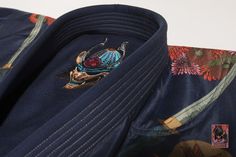 Before we wrap this article up, let’s talk about BJJ patches. Most Brazilian Jiu-Jitsu Gis, regardless of color do have a fair bit of matches on them. In most cases, it has to do with the Gi brand, and often, those patches also include academy affiliations or sponsorships for professional grapplers. Once again, in training, you can wear anything you like, but you have to be careful how your Gi looks ie patch-wise when it comes to tournaments. Otherwise, you’ll be stuck at the edge of the mat, frantically looking for a sharp object to tear patches off in order to be allowed to compete.
Patches are allowed in the middle of the back, along the collar lines, on the shoulders, front and back of the pants, and the skirt of the Gi jacket. You could also place patches on the side of the pants, but you have to be careful how far they’re placed from the bottom of the Gi. All patches that are not properly seamed, made of cotton, and placed in allowed areas will be removed, o you will not be able to compete.
Wrap Up
I doubt there’s anything left in the area of Brazilian Jiu-Jitsu Gis that we haven’t covered above. After all, I’ve spent a decade in the sport and I’ve had a fair share of Gis during that period. To this day, choosing a Jiu-Jitsu Gi is not an easy task,. but it is a fun one. Lately, I’ve been looking more and more in custom Gis, but that’s only because all my other mandatory categories are filled up. And I don’t even consider myself a Gi addict, unlike some people in my academy that have in excess of a dozen Gis. If there’s anything else you’d like us to cover, let us know in the comments, and be amazed at how fast we respond!
The Concept Of The Gi As a BJJ Uniform And Why It Is Dumb
How To Have Your BJJ Gi Last Longer
10 Game Changing BJJ Tips Everyone Should Know









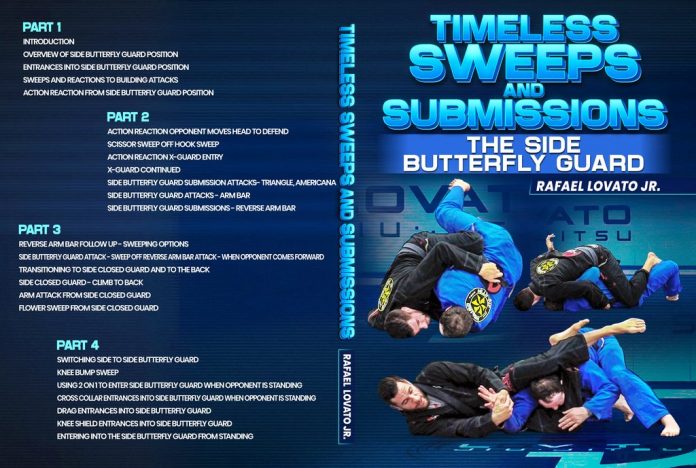

 Rafael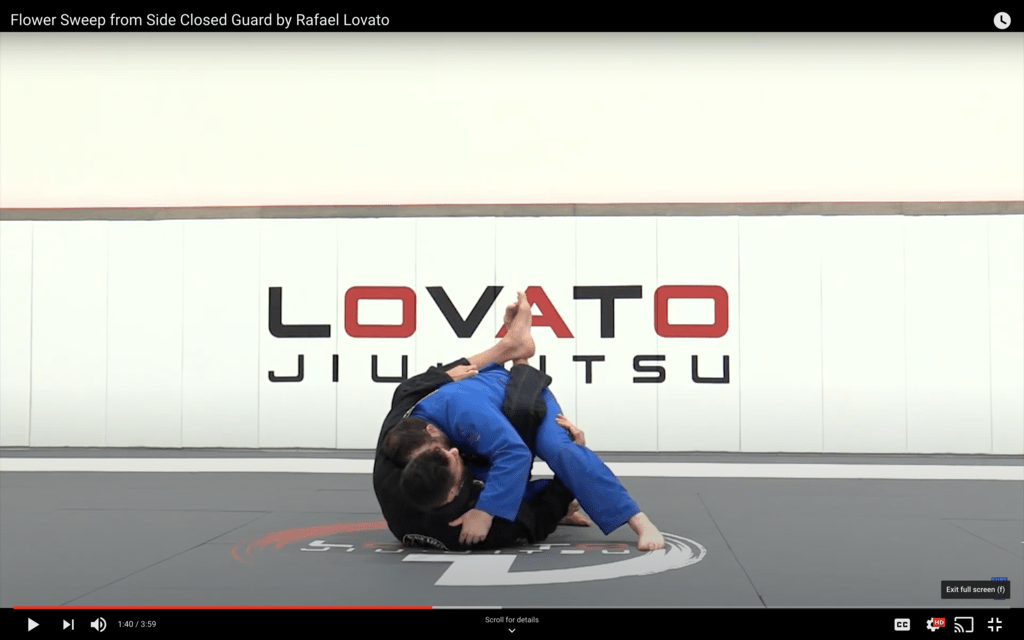


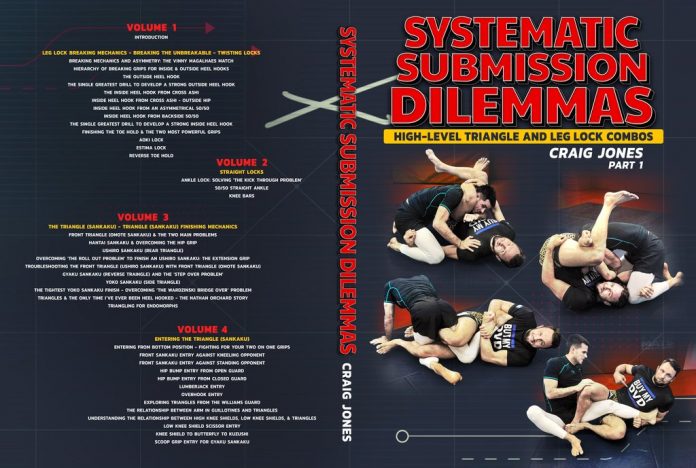

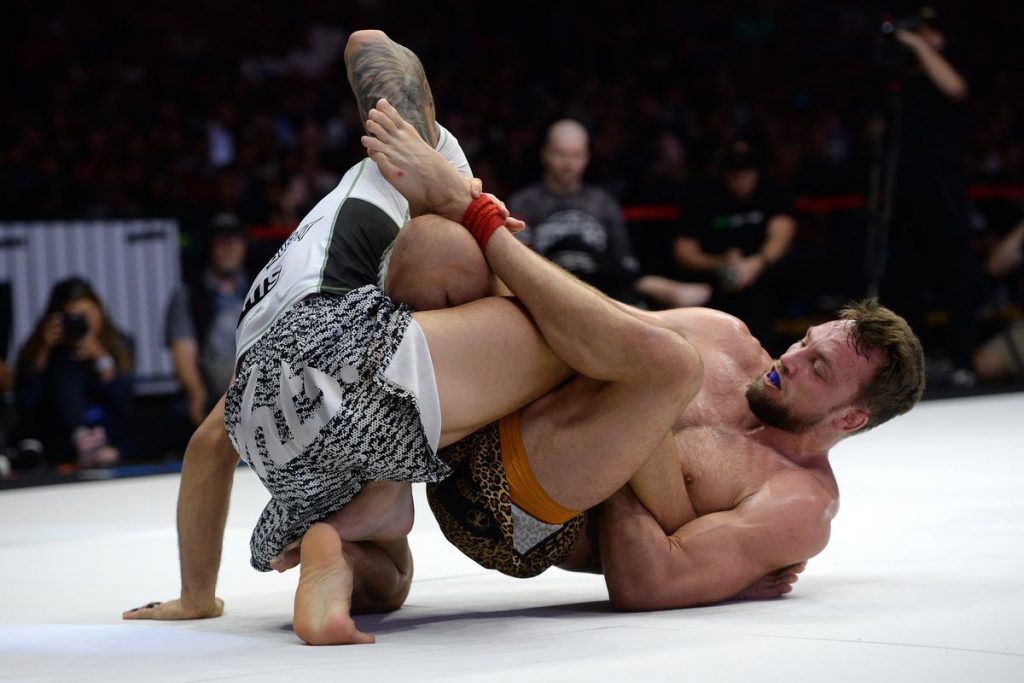 The approach to creating dilemmas that Craig Jones employs in his “Systematic Submission Dilemmas: High-Level Triangle and Leg Lock Combos” DVD is not a new concept. However, the way Craig sets everything up, the way he links attacks, and the way he explains it all is original in many areas. Not many people really connect Triangles and leg locks, and especially not in the way he does in his latest BJJ instructional.