



Gina Carano MMA Comeback? Coach Says She’s ‘Got That Fire Lit’ And Is Training Every Day

Gina Carano MMA Comeback? Coach Says She’s ‘Got That Fire Lit’ And Is Training Every Day
  • Gina Carano is back in full-time MMA training at Syndicate MMA in Las Vegas, with coach John Wood saying she’s in the gym “every day” and working hard.
  • Talk of a Gina Carano MMA comeback has exploded, especially with Ronda Rousey also rumored to be plotting a return to combat sports.
  • Carano left MMA with a 7–1 record and helped carry women’s MMA into the mainstream before transitioning into a successful Hollywood career.
  • Away from the spotlight, she’s in a long-term relationship with former Muay Thai champion Kevin Ross, who helped start her journey in combat sports.
  • There is still no signed fight or official comeback announcement — but the way she’s training makes this feel more serious than a casual fitness kick.

Why The Gina Carano MMA Comeback Talk Just Got Real

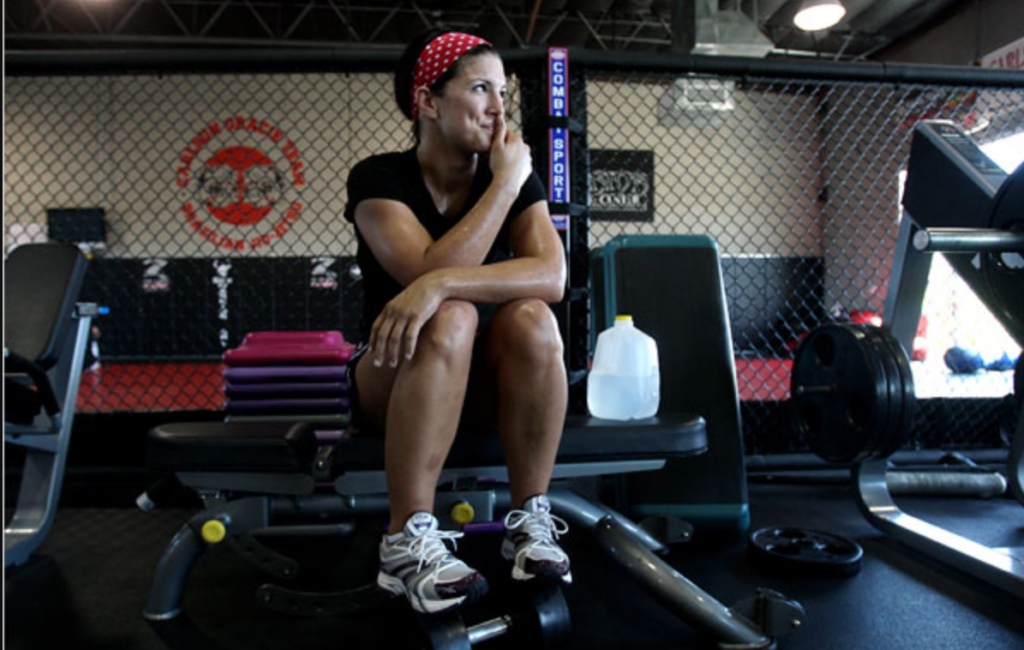
Sixteen years after her last professional fight, Gina Carano is suddenly training like a serious contender again. Recent footage shows the 43-year-old working pads hard in Las Vegas, and her longtime coach John Wood has confirmed that this isn’t just a quick nostalgia visit to the gym.

She’s back in there every day. She’s got that fire lit and she’s training her butt off.
– John Wood –

That kind of language is exactly why talk of a Gina Carano MMA comeback has gone from fantasy match-making to a legitimate possibility.

Wood emphasizes that any decision to fight again is ultimately up to Carano, but he’s also clear that she still hits hard, looks sharp, and could “absolutely” compete if she chose to.

The timing has only poured fuel on the fire. Carano’s return to structured training has come just as Ronda Rousey is once again linked to a combat sports comeback of her own, including talk of potential boxing.

Fans immediately revived the long-discussed — but never realized — Carano vs Rousey superfight, whether in MMA or a crossover bout.

For now, though, the reality is simpler: Carano is in the gym, pushing herself, and the people holding pads for her believe she still has real fight left.
Gina Carano MMA Comeback

From Strikeforce Star To Women’s MMA Pioneer

Before anyone knew her from Star Wars or big-budget action movies, Gina Carano was one of the faces dragging women’s MMA into the mainstream. Competing from 2006 to 2009 in promotions like EliteXC and Strikeforce, she put together a 7–1 professional record and became a genuine crossover star.

Carano racked up wins over names like Julie Kedzie, Tonya Evinger, Kaitlin Young, and Kelly Kobold, showing clean Muay Thai, physical strength, and a willingness to trade in the pocket.

Her fights weren’t just competitive — they were often the most entertaining bouts on the card, earning “Fight of the Night” honors and television spotlight at a time when women’s MMA struggled for visibility.

The pinnacle came in August 2009, when she faced Cris Cyborg for the inaugural Strikeforce women’s featherweight title. It was the first time two women headlined a major MMA event, and while Carano was stopped by Cyborg via TKO at 4:59 of the first round, the bout cemented her place in history.

After that loss, Carano never fought again. There was no dramatic retirement speech; she simply drifted away from active competition as Hollywood opportunities began to stack up.

Yet for many fighters and fans, she remained the original gateway into women’s MMA — the person who proved that women could headline and sell big shows.

That legacy is a big part of what makes any Gina Carano MMA comeback feel bigger than just another veteran returning: it would be a pioneer stepping back into the world she helped build.

Inside The Gym: Gina Carano Coach John Wood On “That Fire Lit”

Carano is currently training at Syndicate MMA in Las Vegas, a room packed with active UFC and high-level fighters. According to John Wood, she hasn’t just dipped her toe back in; she’s shown up consistently over the last month or two and thrown herself into hard sessions.

She’s a legend in the sport, not just in women’s MMA but the sport in general… To have her in the gym and to be able to share time with her and Kevin Ross has been really, really cool.
– John Wood –

Wood makes it clear that there are no official fight contracts, no date, and no opponent locked in. But he also hints that people might “hear some things” down the line if Carano decides to follow through.

This is also where Carano’s personal life quietly blends with her training story. Wood mentions Kevin Ross — a decorated Muay Thai champion and Carano’s long-time partner — as part of the picture in the gym.

Ross was a key figure in getting her into Muay Thai in the first place, and the two now appear to be back in lockstep as she pushes herself again on the mats and in the ring.

With Ross’s striking pedigree and Wood’s MMA coaching, Carano’s current training environment is a far cry from a nostalgic “hit pads once for social media” session. It’s a structured camp setting, which is why observers are taking this phase so seriously.

Gina Carano Hollywood Career, Lawsuits, And Life Outside The Cage

When Carano walked away from competition after the Cyborg bout, she didn’t fade into obscurity — she jumped straight into Hollywood.

Her breakout lead role came in Haywire (2011), where her real-world fighting style made the action scenes feel unusually grounded compared to typical stunt-heavy movies. That led to roles in Fast & Furious 6 and Deadpool, cementing her status as an action star.

The biggest mainstream exposure came with The Mandalorian, where she played Cara Dune in the first two seasons of the mega-popular Star Wars series. That run ended in 2021, when controversial social media posts saw her dropped from the show.

Carano later built a new lane working on independent and politically charged projects, including Terror on the Prairie and My Son Hunter.

In 2024, she filed a high-profile lawsuit against Disney and Lucasfilm over her firing, claiming wrongful termination and discrimination, and that case was settled in 2025 with both sides signaling they were ready to move on.

Away from the legal headlines, her personal life has stayed relatively low-key. She has a long-term relationship with former Muay Thai and kickboxing champion Kevin “The Soul Assassin” Ross, a partnership that stretches back to the early days of her fighting career.

By all accounts, Ross has been both a technical influence and a grounding presence — exactly the kind of person you’d expect to see in her corner if a Gina Carano MMA comeback actually happened.

If Gina Carano Really Returns, What Does It Mean For Women’s MMA?

The big question is whether this flurry of pad work and “fire lit” talk actually turns into a signed bout sheet. At 43, with 16 years away from professional fighting and a body that’s been through both combat sports and stunt work, any comeback would come with serious physical questions.

There’s also the competitive reality: womens MMA has evolved massively since 2009. Athletes who grew up watching Carano are now title contenders and champions, with deeper skill sets and more complete games.

A returning legend would likely need a carefully chosen opponent and rule set, whether that’s MMA, boxing, or some kind of exhibition match.

Still, the symbolism would be huge. A genuine Gina Carano MMA comeback — even for one fight — would close a loop that never quite felt finished. She left after a single, brutal loss at the exact moment women’s MMA was about to explode.

Watching her step back into the arena now, with a full Hollywood career and public controversies behind her, would say something about resilience, reinvention, and unfinished business.

For the moment, the story is simple but compelling: Gina Carano is back in a real MMA gym, under a serious coach, pushing herself hard, and surrounded by people who believe she can still do damage.

Whether that leads to a walk to the cage, or just a healthier, more grounded version of herself, is a choice only she can make — but the combat sports world is already watching closely.
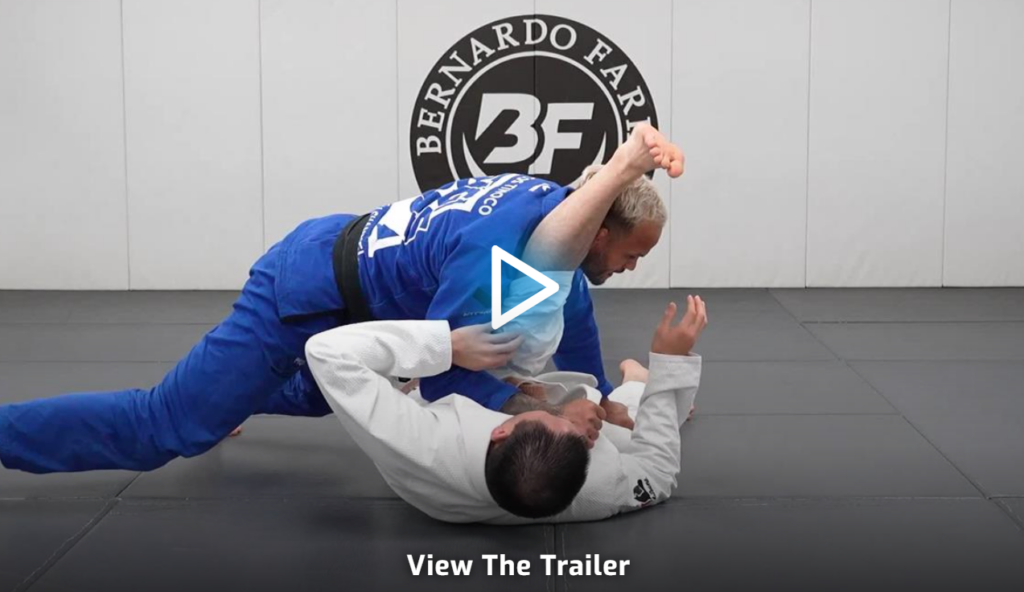
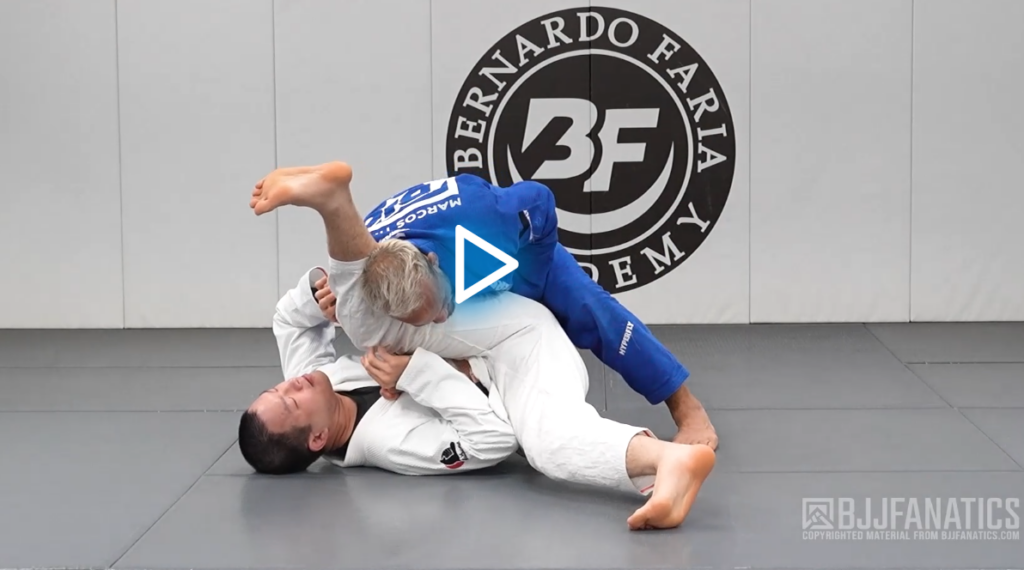
3 Distances One Passing System Marcos Tinoco DVD Review [2025]

3 Distances One Passing System Marcos Tinoco DVD Review

Key Takeaways

  • A conceptual passing system built around three distances: far, mid, and close.
  • Very structured coverage of passing open guard, seated guard, De La Riva-style guards, knee shields, half guard, and deep half.
  • Geared toward making you think in passing “phases” rather than collecting random techniques.
  • Strong fit for modern guard-heavy training rooms where you’re constantly dealing with seated and supine players.
  • Best for blue belts and up who already have basic balance and passing fundamentals.
  • Rating: 8/10

3 DISTANCES ONE PASSING SYSTEM MARCOS TINOCO DVD GET HERE

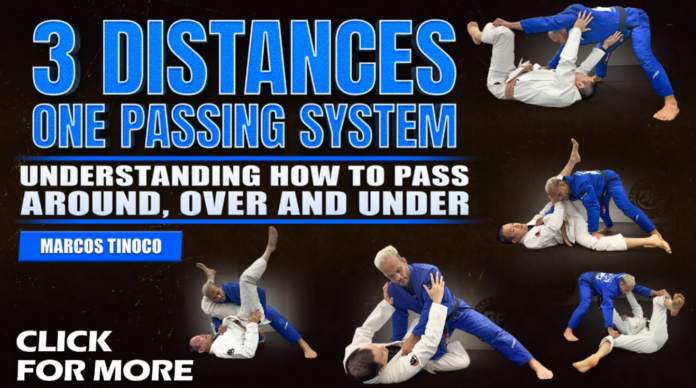
If you’ve ever felt overwhelmed trying to memorize a dozen different passes for every single guard variation, 3 Distances One Passing System Marcos Tinoco DVD goes in the opposite direction. Instead of adding more techniques to your plate, it gives you one structured framework built around three universal distances: around, over, and under.

World-class black belt Marcos “Lekinho” Tinoco uses this instructional to walk you through how he thinks about passing in real matches: where you stand in relation to the guard player, what threats you should respect at each range, and how to systematically move from one “distance” to another until the guard breaks.

The end result is a passing roadmap that’s designed to work in both Gi and No-Gi, with a clear bias toward simplicity and repeatability rather than flashy one-offs. In this review, we’ll break down who Tinoco is, how the three-distance system is structured across the volumes, what kind of grappler will benefit most, and where the instructional sits in the current landscape of passing-focused BJJ instructionals.

Figuring Out Distances When Passing 

Guard passing is one of those areas of Jiu-Jitsu that can easily spiral into chaos. You face spider guard one round, De La Riva the next, knee shield after that, and soon you feel like you’re studying five different sports at once. A distance-based framework, like the one behind 3 Distances One Passing System Marcos Tinoco DVD, tries to cut through that noise.

By categorizing engagements into far, mid, and close distance, you start from where you are in relation to the guard rather than which specific guard you’re in. That’s a big mental shift. Far distance means you’re mostly on your feet, dealing with open legs and frames. Mid-distance is where hooks, De La Riva, and knee shields come alive.

Close distance is when you’re chest-to-chest and trading underhooks, stacking, or smashing from half guard-style positions. When you view passing this way, guards stop being isolated problems.

Instead, they become variations inside one passing ecosystem. That’s the underlying promise of this Marcos Tinoco passing DVD: once you understand the three distances, you can adapt to new guard trends without having to rebuild your top game from scratch every time.

Who Is Marcos Tinoco?

Marcos Vinícius da Silva Tinoco, better known as “Lekinho”, is a Brazilian Jiu-Jitsu black belt under Marcelo Garcia and a long-time representative of the Alliance team. As BJJ Heroes notes, Tinoco is part of a stacked generation that bloomed under Marcelo’s coaching in New York, where he became known for a well-rounded, technically sharp game.

Tinoco racked up serious credentials on the world stage: CBJJ Brazilian Nationals champion, multiple-time IBJJF European Open champion, IBJJF New York Summer Open champion, and a World Championship silver and bronze medalist at black belt, along with No-Gi Pan titles and No-Gi Worlds medals.

These results make it clear he’s not just a competent passer – he’s proven himself against the best in both Gi and No-Gi across major IBJJF events. Tinoco now channels that experience into teaching kids and adults in the Boston area, with a strong emphasis on helping students reach their competitive and personal goals.

That teaching background shows in the way he structures this three-distance guard passing framework: methodical, progressive, and focused on making concepts stick for regular students, not just elite competitors.

Detailed 3 Distances One Passing System Marcos Tinoco DVD Review

The 3 Distances One Passing System Marcos Tinoco DVD instructional is organized into three volumes, each anchored to one of the core distances. That structure lines up nicely with how real rolls feel: you start at range dealing with open guard, get entangled in hooks and knee shields in the mid zone, and eventually have to smash or stack your way through half guard and deep half to actually score the pass. Let’s break down each volume.

Volume 1 – Far Distance

The first volume introduces the overall idea behind 3 Distances One Passing System Marcos Tinoco DVD, and immediately drops you into far-distance scenarios. You’re mostly standing while the opponent is open or seated, trying to control distance with their legs and grips.

Tinoco starts by passing open guard and even “tornado-style” scrambles without grips, which is a bold but very useful way to force you to rely on footwork, angles, and timing rather than clinging to the pants.

From there, he covers seated guard passing, showing how to approach and off-balance opponents who are scooting toward you and trying to get under your base. The X-pass features as a core tool here, acting as a bridge from a far distance into either mid or close distance, depending on how the bottom player responds.

Tinoco then looks into classic Gi-style open guards: lasso/spider and collar-sleeve. He doesn’t try to cover every tiny detail of each guard; instead, he shows how the same pass principles apply. You learn to step off center, clear hooks and frames, and commit to angles that make guard retention difficult, all while staying conscious of the opponent’s ability to swing into modern attacks.

Volume 2 – Mid Distance

Part two is where a lot of people will feel they’re finally getting answers to the guards that annoy them most. Mid-distance is where De La Riva, headquarters positions, knee shields, reverse De La Riva, and butterfly all come into play, and this volume is essentially Tinoco’s playbook for navigating that chaos.

He opens with De La Riva and headquarters, outlining how to pin the leg lines and upper body so the bottom player can’t freely invert or swing into leg entanglements. Knee shield passes and weave passes show up next, with a strong emphasis on when to prioritize smashing straight through versus when to redirect and circle.

The classic knee cut gets a lot of love, which will make any mid-range passer happy, but it’s framed inside the bigger pass over distance rather than as a random stand-alone move. Tinoco also addresses reverse De La Riva and butterfly guard, tying them back into the same themes: control the inside space, dictate which side the opponent can face, and force them into predictable reactions.

Volume 3 – Close Distance

The final part is all about close distance passing, where you’re chest-to-chest or heavily connected and trying to finish the job. Half guard is the central hub here: double underhook half guard passes, single underhook with lapel, and options when opponents dig into deep half.

Stack passing, over-under, and double-under passing are all treated as part of the same “pass under” universe. Rather than teaching them as disconnected systems, Tinoco explains how your upper-body position, head placement, and control of the hips and shoulder line interact across each variation.

That’s important for grapplers who struggle to decide which type of stack or over-under they should commit to in the moment. The volume concludes with single-underhook options, a set of dedicated passing drills, and an outro that reinforces how to tie all three distances together.

Learn While You Roll

On the mats, a system like this lives or dies based on how easy it is to remember and apply under pressure. The good news is that 3 Distances One Passing System Marcos Tinoco DVD is built to be drilled in chunks.

You can spend a week focusing only on far distance against open and seated guard, then gradually layer in mid-range sequences vs De La Riva and knee shield, and finally devote time to close-range half guard smashing and stack passing.

The volumes also lend themselves well to positional sparring. You can start rounds only from seated guard or headquarters and allow yourself to use only the tools from that distance. That makes it easy to collect enough reps in each scenario without getting derailed by a completely different position every thirty seconds.

DOWNLOAD 3 DISTANCES ONE PASSING SYSTEM MARCOS TINOCO DVD

Who Is This For?

This is not a day-one white belt DVD. Beginners can watch it, but they’ll get far more value if they already have basic balance, stance, and movement from the top. Realistically, blue belts and up will benefit most from 3 Distances One Passing System Marcos Tinoco DVD, especially those who are tired of collecting random passes and want a clearer conceptual map of the guard-passing problem.

Guard-oriented players who usually pull and stay on bottom can also gain a lot here, particularly if they’re trying to round out their game for competition. Seeing how a high-level Alliance New York guard passing DVD structures engagements from the top can help bottom players understand what their opponents are actually trying to achieve and what reactions their guards tend to trigger.

Pure No-Gi specialists will still find value – the concepts are universal and the product page explicitly emphasizes that the framework works in both settings – but visually, some sequences lean on Gi grips, especially in the collar-sleeve and lapel-based half guard entries. If you never train in the Gi, you’ll have to mentally translate a few sequences into wrist- or head-control versions.

Pros & Potential Drawbacks

Pros:

  • Clear three-distance framework – Organizing passing into far, mid, and close distance helps you make sense of a chaotic area of Jiu-Jitsu and reduces decision fatigue in live rolls.
  • Well-structured volumes – Each part focuses on a logical cluster of guards (open/seated, De La Riva and knee shield variations, half guard and stacks), making it easy to focus your drilling.
  • Gi and No-Gi friendly concepts – While some examples are Gi-specific, the underlying principles of angle creation, pressure, and shoulder-line control translate well to No-Gi.
  • Emphasis on drills and skill development – The inclusion of passing drills at the end of the instructional helps bridge the gap between “I watched it” and “I can actually do it.”
  • Instructor credibility – Tinoco’s major IBJJF titles and history under Marcelo Garcia and Alliance give weight to his ideas about high-level passing.

Potential Drawbacks:

  • Not ultra-beginner friendly – Brand-new white belts without solid base and posture may find the pacing fast and the positional context hard to follow.
  • Some Gi-heavy sequences – Players who are 100% No-Gi may wish there were more explicitly grip-agnostic demonstrations in positions like collar-sleeve and lapel half guard.
  • Less focus on entries to top – The instructional assumes you’re already on top; there’s minimal coverage of how to reliably get there from guard or stand-up, which some people might see as a gap.

Master the Distance – Master the Pass

Overall, 3 Distances One Passing System Marcos Tinoco DVD delivers exactly what the title promises: a unified passing framework that revolves around managing three core distances, rather than a grab-bag of techniques. If your current top game feels like a collection of isolated passes that don’t quite connect, Tinoco’s approach can give you the connective tissue you’ve been missing.

Dillon Danis UFC Lawsuit: Logan Paul Says He’s Suing After Wild MSG Brawl

Dillon Danis UFC Lawsuit: Logan Paul Says He’s Suing After Wild MSG Brawl
  • Dillon Danis is reportedly preparing a Dillon Danis UFC lawsuit over the UFC 322 crowd brawl at Madison Square Garden, with Logan Paul saying he’ll “sue Madison Square Garden and the UFC.”
  • The brawl saw Danis clash with members of Islam Makhachev’s team and claim he was “jumped by 10 guys,” leading to a lifetime ban from UFC events.
  • Danis’ lawyers now say he suffered a “severe concussion” in the melee and have asked to delay his deposition in the separate Nina Agdal lawsuit.
  • The incident adds to a long list of controversies, from the UFC 229 post-fight riot with Khabib to the chaotic Logan Paul boxing match and a revenge-porn case.
  • If a lawsuit is filed, it could test where fighter/celebrity responsibility ends and venue and promotion duty of care begins.

How The Dillon Danis UFC Lawsuit Idea Emerged From The UFC 322 Brawl

On November 15, 2025, UFC 322 at Madison Square Garden turned into yet another Dillon Danis side-show.

Danis wasn’t on the card. He was in the crowd, close to Islam Makhachev’s team, when a mass brawl erupted in the stands before the main card kicked off.

Footage shows Danis tangling with members of Makhachev’s entourage, including Abubakar Nurmagomedov and others, before security and police dragged him out of the arena.

In the days that followed, UFC CEO Dana White made it clear he’d had enough.

You will never see Dillon Danis at a UFC fight ever again.
– Dana White –

White admitted he’d been warned that Danis was wandering around fighter seating instead of staying in his assigned spot and accepted blame for not removing him earlier. But the outcome was brutal: a lifetime ban from all future UFC events.

Danis, for his part, now claims the brawl left him with a severe concussion after being attacked by “at least 10 people” in the MSG crowd. His attorneys say he’s undergoing treatment in California and has not been medically cleared to compete or sit for lengthy questioning.

That claim sits at the core of two parallel storylines:

  • Why he’s out of his upcoming Misfits MMA title defense against Anthony Taylor, and
  • Why talk of a Dillon Danis UFC lawsuit is suddenly everywhere.

Logan Paul’s Take On Danis’ Legal Strategy

The loudest voice pushing the lawsuit angle isn’t Danis – it’s his longtime rival, Logan Paul.

In a recent appearance, Paul said he’s convinced Danis is gearing up to sue both the promotion and the venue over what happened at UFC 322:

I would bet a lot of money that he is preparing to sue Madison Square Garden and the UFC.
– Logan Paul –

Paul went further, sketching out what he believes will be Danis’ argument:

His argument will be that when he went to Madison Square Garden, he didn’t expect to get jumped by 10 guys.
– Logan Paul –

According to Paul, that opens the door for Danis to “claim damages” on the basis that security failed to protect him from an attack in the stands.

At the same time, Paul has publicly questioned whether Danis is exaggerating the concussion claims to gain leverage in court and buy time in another case – the ongoing lawsuit filed by Paul’s wife, Nina Agdal.

That part is opinion, not proven fact, but it’s inflamed an already toxic feud and pushed the Dillon Danis UFC lawsuit narrative into the spotlight.

So far, there’s been no public confirmation that a formal civil complaint against the UFC or MSG has actually been filed. But the combination of a high-profile brawl, medical claims, and a vocal rival spelling out a strategy has made it a live story long before anything hits a courtroom docket.

From Nina Agdal To UFC 229: Dillon Danis’ Running Chaos

To understand why a possible Dillon Danis UFC lawsuit is such a lightning rod, you have to zoom out. This is not a one-off moment; it’s the latest chapter in a long saga of chaos:

  • UFC 229 melee (2018): Danis was in Conor McGregor’s corner when Khabib Nurmagomedov jumped the cage and attacked him after their fight, sparking one of the wildest post-fight brawls in UFC history. Danis was later fined and suspended for his role.
  • Bellator and cancelled fights: His early MMA career showed promise, but injuries and withdrawals became a running joke; a significant percentage of his scheduled bouts never happened, feeding a reputation for drama over activity.
  • Logan Paul boxing spectacle (2023): Danis finally crossed into influencer boxing, only to get disqualified against Paul after attempting a takedown and sparking yet another mass brawl in the ring and at ringside.
  • Nina Agdal lawsuit: Paul’s now-wife sued Danis over explicit content and harassment on social media, securing a temporary restraining order. The case is still active, and both sides are pushing for a jury trial.

The UFC 322 incident plugged straight into that history. Not only did it reignite the old McGregor-Khabib/Makhachev tensions, it also immediately spilled into Danis’ existing legal mess.

His deposition in the Agdal case was scheduled for December 9, 2025. Danis’ lawyers have now asked the court to push that date back, citing the “severe concussion” he says he suffered in the MSG brawl and arguing he’s not medically fit to sit through questioning.

In the same week, independent physicians ruled him out of his Misfits Mania fight with Anthony Taylor based on health concerns linked to the UFC 322 melee. The chaos from one night at Madison Square Garden is now echoing through every part of his career.

What A Dillon Danis Lawsuit Could Mean

If Danis does move forward with a lawsuit and potentially a parallel claim against MSG, it will raise some uncomfortable questions for the industry.

On one side of the argument:

  • Danis is a professional fighter with a long record of instigating or getting involved in brawls.
  • He wasn’t an athlete on the card at UFC 322, yet still ended up in a fight in the crowd.
  • The UFC has already distanced itself with a lifetime ban and no criminal charges.

On the other side:

  • Video and eyewitness accounts show him surrounded and struck by multiple members of another fighter’s team in a supposedly secure area.
  • His camp claims he suffered a brain injury serious enough to keep him out of competition and legal proceedings.
  • The New York authorities have opened an investigation into the brawl and the assaults that took place in the arena.
  • That tug-of-war goes beyond Danis. If a court finds that the UFC or MSG failed in their duty of care, it could set a precedent for how promotions and venues handle high-risk personalities, rival camps, and security around title fights.

At the same time, if the Dillon Danis UFC lawsuit stalls or gets tossed, it will reinforce the idea that fighters and entourages are expected to manage their own conduct – and that if you’re known for lighting fires, you may find little sympathy when you get burned.

History Making Timeless No Gi Rafael Lovato DVD Review [2025]

History Making Timeless No Gi Rafael Lovato DVD Review

Key Takeaways

  • A 6-part No Gi system that connects hand fighting, takedowns, pressure passing, and top submissions into one coherent roadmap.
  • Strong focus on wrestling entries and defensive fundamentals, especially for people who don’t come from a wrestling background.
  • Heavy emphasis on body lock, knee-cut, smash and knee-shield passing – perfect if you like to flatten people and cook them on top.
  • Designed with longevity in mind: structure, timing and pressure over athletic explosions, making it ideal for “masters” and hobbyists.
  • Light on bottom game – this is very much a top-player blueprint rather than a complete guard system.
  • BJJ World Expert Rating: 9.5 out of 10.

HISTORY MAKING TIMELESS NO GI RAFAEL LOVATO DVD DOWNLOAD

Rafael Lovato Jr. has been quietly building a brand around one big idea: that you can play elite-level Jiu-Jitsu well into your 40s if your game is based on timeless fundamentals rather than athletic spikes. History Making Timeless No Gi is the clearest expression of that idea so far – a complete, top-player roadmap built for control, pressure, and longevity in No Gi.

The Timeless No Gi Rafael Lovato DVD takes the scattered pieces of his stand-up, passing and submission game and organizes them into a clean, repeatable system. Across roughly 4.5 hours and six volumes, Lovato walks you from the first hand fight on the feet, through takedowns and shot defense, into crushing passing sequences and finally into arm triangles, mounted triangles, guillotines and neckties.

It’s not about trickiness or novelty – you’ve seen many of these moves before – but about how he wires them together so that you’re always a step ahead, even against younger and more explosive partners.

Learn What Works

There are two ways people typically approach No Gi these days. One is a very guard-centric, leg-lock heavy style that tries to bypass takedowns and top control altogether. The other is a wrestling-forward approach where the match is decided by who can bring the fight to the mat and stay on top. Lovato is firmly in the second camp – but with a distinctly Jiu-Jitsu flavor.

Rather than trying to turn you into a pure wrestler, this system shows how to use wrestling concepts to build a pressure-heavy, submission-oriented top game. That’s the core appeal of the Timeless No Gi Rafael Lovato DVD – it doesn’t treat takedowns, passing and finishing as separate modules. Lovato constantly connects them.

The underhook battle on the feet turns into a body lock; the body lock leads into knee-cut or side smash passing; passes are finished in ways that naturally funnel into arm triangles or front-headlock strangles.

The Unstoppable Rafael Lovato Jr.

Rafael Lovato Jr. is one of the most accomplished American grapplers of all time, and his resume explains why he’s so confident about building a no-nonsense, history-making No Gi blueprint.

A black belt under Carlos Machado, with deep ties to Saulo and Alexandre Ribeiro, he became the first non-Brazilian to win the CBJJ Brazilian Nationals at black belt, and later the first non-Brazilian to win the absolute division there as well.

He’s an IBJJF World Champion in the Gi, a World No Gi champion, multiple-time Pan and European champion, and an ADCC silver medallist. On top of his grappling achievements, Lovato also captured the Bellator middleweight title in MMA, proving that his pressure-based game works under strikes and against world-class opposition.

In the last few years, he’s added major No Gi titles at Pans and Europeans in the masters divisions, reinforcing the idea that his “Timeless Jiu-Jitsu philosophy” genuinely scales with age. When someone with that track record says “here’s the exact No Gi system I’m still using to beat top guys in my 40s,” it’s worth listening.

The Complete Timeless No Gi Rafael Lovato DVD Review

Structurally, the Timeless No Gi Rafael Lovato DVD is divided into six volumes, each one focused on a specific phase of the fight. Rather than overwhelming you with hundreds of techniques, each part narrows down to a few core ideas and then shows variations and reactions. That makes the material feel like a “history making No Gi blueprint” instead of a random move dump – you always understand why a certain takedown, pass or submission fits into the bigger picture.

Volume 1 – Hand Fighting, Underhooks and the Single Leg

The first volume starts exactly where most No Gi rounds begin: on the feet, with people collar tying and reaching. Lovato spends time on the initial approach and winning the hand fight, then shows how to clear collar ties and build offensive positions instead of hanging out in a neutral pummel.

From there, everything revolves around obtaining the underhook and using it to create snapdowns, rear body locks and throw-by angles. Once he establishes the rear body lock, Lovato shows clean options for dragging people to the mat, then transitions into a series of single-leg finishes.

The detail level is high but not overly fussy – it feels like the way an experienced competitor actually thinks about the position. If you’ve ever felt lost in No Gi hand fighting, this part alone can justify picking up the Timeless No Gi Rafael Lovato DVD.

Volume 2 – Knee Taps, Body Locks and Flowing Takedowns

Volume 2 builds directly on that underhook and body-lock framework. Lovato introduces the knee tap as a bread-and-butter option for people who don’t want to dive on low shots, then layers in offensive options from bodylocks so that you can turn defensive reactions into opportunities.

There’s a nice emphasis on using the opponent’s attempts to pummel back or sprawl as triggers to switch directions or climb to the back. The arm drag, Suloev stretch, and head-pinch takedown all reinforce the same idea: your takedown game shouldn’t be one-and-done. Y

ou’re constantly cycling through off-balances, re-shots and angle changes until they hit the floor. Wrestlers will recognize a lot here, but non-wrestlers get a very digestible path into that style without sacrificing their Jiu-Jitsu posture and balance.

Volume 3 – Wrestling Defense and Early Passing

Volume 3 is titled “Wrestling Essentials: Building Confidence Through Shot Defense,” and it delivers exactly that. Lovato tackles the psychological side of stand-up first: if you’re terrified of getting taken down, you’ll never attack freely.

To fix that, he walks through defending single-leg attempts from standing, using the whizzer intelligently, and escaping when your leg is already compromised. The “spin cycle” segments and front-headlock defense are particularly useful for Jiu-Jitsu players who routinely get stuck in scrambling situations and don’t quite know how to come out on top.

The volume then transitions into pressure passing from the knees and against butterfly guard. It’s a subtle but important bridge: once you realize every defended shot can spill straight into a top position, the Timeless No Gi Rafael Lovato DVD feels even more like one continuous system instead of separate slices of the game.

Volume 4 – Body Lock Style Passing and Classic Top Pressure

With takedowns and defensive wrestling in place, part 4 digs into body-lock style passing and classic upper-body control. Lovato shows how to secure and climb a tight body lock, use it to immobilize the hips, and then slide into knee-cut and cross-shoulder passes without giving the guard player any real chances to invert or expose your legs.

The sections on dealing with knee shields here are a nice complement to the more focused work in the next volume. Lovato demonstrates how to stay heavy, keep your head in safe positions, and “fold” the shield so that you end up chest-to-chest, not dangling in leg-lock range.

Volume 5 – Side Smash and Knee Shield Solutions

This portion of the DVD is where the modern half-guard and knee-shield game gets taken apart. Lovato starts with his side smash approach, then shows options for passing the knee shield even when you don’t have perfect wrist control – a very real-world scenario, especially in scrambly No Gi rounds.

The modern passing variation is a nod to how the game has evolved, but it’s still delivered through his classic lens of balance and incremental pressure. From there, he demonstrates ways to “melt through the knee shield”, including knees-on-the-floor style pressure and a final “knee pop” sequence that helps you clear stubborn hooks.

Grapplers who constantly get stalled out in half guard will probably replay this part a lot. It’s also another spot where the Timeless No Gi Rafael Lovato DVD shows its age-friendly design: you don’t need crazy speed, just the patience to follow the steps.

Volume 6 – Arm Triangles, Front-Headlock Finishes and Neckties

The last volume is all about closing the deal. Lovato walks through his arm triangle, focusing heavily on how to control the opponent’s turn-away reactions and maintain crushing pressure as you settle the choke.

He then transitions into the mounted triangle, then shifts to finishing the guillotine from the front-headlock position and finally the Japanese necktie. What stands out is how naturally these submissions flow from the preceding volumes.

Bodylock passes and knee-cuts often land you in positions where the arm triangle or mounted triangle is right there. Front-headlock sequences from the wrestling and shot-defense sections now become direct finishing opportunities.

Timeless Base, Modern Game

A lot of people buy big instructionals and never really squeeze value out of them. This one lends itself well to a structured approach. One simple strategy is to spend a couple of weeks on each major phase: first, run through the hand-fighting and underhook work from Volumes 1–2, drilling entries and a single favorite takedown.

Next, add the wrestling defense and early passing from Volume 3 into your positional sparring. Only then do you layer in the body-lock and knee-shield solutions from Volumes 4–5, and finally the submissions from Volume 6.

Lovato’s teaching style makes this easier – he repeats key cues, uses clear names, and ties each technique back to the overall goal for the position. If you’re a coach, the Timeless No Gi Rafael Lovato DVD can double as a curriculum backbone for a No Gi cycle focusing on top players.

For hobbyists and masters competitors, the main takeaway is to train the way he does: lots of focused positional rounds in the exact scenarios shown on the video, with an emphasis on staying relaxed and efficient instead of trying to “win practice” with speed. Over time, that’s how you build an age-defying Jiu-Jitsu game.

GET HERE HISTORY MAKING TIMELESS NO GI RAFAEL LOVATO DVD

Who Is This For?

This instructional is ideal for grapplers who want to build a serious No Gi top game without turning into full-time wrestlers. Solid white belts with some mat time, through blue and purple belts, will probably get the most immediate benefit.

Brown and black belts who already like pressure passing will still find plenty of useful details and new chain-linking ideas, especially around body locks and modern knee-shield passing.

If you’re a strict guard player or leg-locker looking for elaborate bottom entries, this is not that product. There’s very little bottom game, and minimal focus on attacking the legs. Gi-only players can still translate many ideas, but the grips and pace are tuned to No Gi.

Total beginners with zero stand-up experience might find the wrestling sections dense at first, although the defensive material can still help them feel safer on the feet. For everyone else who wants to feel in control from the first grip to the final tap, the Timeless No Gi Rafael Lovato DVD lines up well with that goal.

Pros & Potential Drawbacks

Pros:

  • Truly cohesive system: Connects hand fighting, takedowns, shot defense, passing and submissions into one clear roadmap rather than separate mini-courses.
  • Wrestling made digestible for Jiu-Jitsu players: Emphasizes underhooks, body locks and knee taps over low singles and doubles, which suits non-wrestlers very well.
  • Modern pressure passing answers: Detailed solutions for butterfly guard, knee shield and half guard that fit current No Gi meta without drifting into leg-lock wars.
  • Longevity-friendly design: Focus on leverage, structure, and incremental pressure instead of explosive scrambles makes it perfect for “over 30” athletes.
  • Clear teaching and pacing: Lovato explains the why behind positions, not just the how, and keeps each chapter focused on one core idea.

Potential Drawbacks:

  • Top-heavy focus: Virtually no bottom game; you’ll need to pair this with a separate guard or leg-lock instructional if you want a complete No Gi toolkit.
  • Assumes basic literacy in positions: Beginners who don’t recognize standard wrestling and passing positions, yet might need to pause and rewind more often.
  • Less appeal for pure leg-lock hunters: There’s passing to leg-lock-heavy guards, but the finishing chains are classic upper-body submissions rather than heel hooks.

Becoming Timeless

The History Making Timeless No Gi Rafael Lovato DVD feels like the logical evolution of Rafael Lovato Jr.’s teaching – a streamlined, no-nonsense package that shows exactly how he still wins at the highest levels without relying on youth or freak athleticism.

If you’re looking to build a No Gi game that starts with confident hand fighting, flows through high-percentage takedowns, and ends with crushing top pressure and classic submissions, this delivers in spades.

Are YouTube BJJ Techniques Ruining Your Learning? Draculino, Roger Gracie & Dima Murovanni Weigh In

Are YouTube BJJ Techniques Ruining Your Learning? Draculino, Roger Gracie & Dima Murovanni Weigh In
  • Coral belt Vinicius “Draculino” Magalhães warns Jiu-Jitsu beginners to stay away from YouTube when they’re starting and focus on their academy’s basics instead.
  • Roger Gracie calls copying advanced BJJ YouTube techniques “the biggest mistake” for beginners, because it skips building posture, base, and escapes.
  • Dima Murovanni argues that technique-collecting from videos keeps students stuck by making them think in moves, not concepts.
  • Many hobbyists admit a big part of their game is influenced by YouTube, but coaches are seeing confusion, bad habits, and slow progress as a result.
  • Used with a plan, YouTube can help; used without structure, it’s one of the easiest ways for BJJ students to ruin their own learning.

Are YouTube BJJ Techniques Ruining Your Learning?

Are YouTube BJJ techniques ruining your learning, or are they just an easy scapegoat?

A group of very different coaches – Vinicius “Draculino” Magalhães, Roger Gracie, and Dima Murovanni – are all arriving at the same conclusion: for a lot of Jiu-Jitsu beginners, the way they use YouTube is quietly wrecking their progress.

Instead of reinforcing what happens in class, students are bingeing highlight reels and instructionals, chasing berimbolos and leg entanglements while still struggling to escape mount.

The result is a generation of white belts who “know a lot of moves” but can’t do them under pressure.

Are YouTube BJJ techniques ruining your learning from day one? Top coaches are worried because they’re seeing the same pattern, over and over:

  • A new white belt gets obsessed with BJJ YouTube techniques.
  • They start trying to self-coach from random channels and clips.
  • Their game becomes a rotating playlist of half-understood moves that never stick.

On social media and forums, plenty of hobbyists openly admit that a huge portion of their game comes from YouTube. That’s not automatically bad – higher belts can use online study very effectively – but at beginner level, the lack of structure is brutal.

Instead of moving through a curriculum designed for Jiu-Jitsu beginners, they let an algorithm decide what they see next. Flash wins over fundamentals, novelty wins over repetition, and their actual coach is forced to compete with thumbnails.

That’s the backdrop for the simple but uncomfortable question: Are YouTube BJJ techniques ruining your learning more than helping it? For Draculino, Roger, and Dima, the answer is often yes.

Draculino on how YouTube BJJ Techniques Ruining Your Learning

Draculino’s Message To Beginners: Stay Off YouTube At First

Vinicius “Draculino” Magalhães is a coral belt, a long-time Gracie Barra leader, and a coach with decades of experience producing champions. When he tells new students to “stay away from YouTube” when they’re starting, he’s not being dramatic – he’s trying to protect their foundations.

Stay away from YouTube when you’re starting Jiu-Jitsu.
– Vinicius “Draculino” Magalhães –

His main issues with beginners living on YouTube:

  • Information overload – A few weeks into training, some white belts have already watched dozens of different guards, submissions, and transitions.They can’t possibly retain it, and they don’t drill any one thing long enough to own it.
  • Wrong progression – Algorithms push what’s exciting to click, not what’s right for your level. So the first things you see aren’t posture, base, and escapes – they’re advanced lapel traps and tournament highlights.
  • Eroded trust – When students constantly show up with “a move I saw online”, they’re essentially telling the head instructor that a random video has the same authority as the academy’s curriculum.

From Draculino’s point of view, the safest approach is simple: if you’re a beginner, let your gym be your main source of information. Learn your academy’s warm-ups, escapes, and key positions first.

Roger Gracie On Copying YouTube Instead Of Building Fundamentals

Roger Gracie might be the cleanest example in modern Jiu-Jitsu of fundamentals done at the absolute highest level. Closed guard, mount, cross-collar chokes – nothing fancy, just perfect basics.

So when he says copying YouTube is the “biggest mistake” BJJ beginners make, it’s worth paying attention.

Copying YouTube is the biggest mistake from BJJ beginners.
– Roger Gracie –

What he’s seeing on the mats:

  1. Beginners obsessed with advanced guards and transitions that even black belts struggle to stabilise.
  2. Students trying to copy every detail of a world champion’s sequence, without the base, timing, or balance that make it work.
  3. People who can name dozens of techniques, but can’t hold side control or finish a basic choke on a resisting partner.

Roger’s hierarchy is clear: first, you learn to survive; then you learn to control; only after that do you get creative. If you flip that order and build your “game” out of YouTube BJJ techniques before you’ve earned solid fundamentals, you’re effectively building on sand.

For him, YouTube isn’t evil – it’s just dangerous when it becomes a substitute for the slow, sometimes boring process of grinding basics. So, are YouTube BJJ techniques ruining your learning? If you’re skipping that grind, then yes, in a very real way, those YouTube BJJ techniques are ruining your learning.

Dima Murovanni: Stop Thinking In Techniques, Start Thinking In Concepts

Dima Murovanni comes at the same problem from a more conceptual angle. As a coach known for working with high-level athletes, he argues that copying techniques frame-by-frame is exactly what keeps many grapplers stuck.

This is why you’re not getting better – you’re thinking in techniques and not in concepts.
– Dima Murovanni

His critique of learning Jiu-Jitsu online looks like this:

  • Technique-collecting – Students treat their Jiu-Jitsu like a shopping list: more entries, more submissions, more “secret” details. They feel productive, but nothing shows up in sparring.
  • No “why” behind the move – They know what to do with their hands and feet, but not why it works, so they can’t adapt it when the opponent reacts differently.
  • Copy-paste mentality – They try to replicate their favourite athlete’s grips, stance, and sequences, even though they don’t have the same body type or timing.

Dima’s alternative is a simple progression:

  1. Understand the concept (off-balancing, creating wedges, killing posts).
  2. Understand why the move works.
  3. Adapt the details to your own body and timing.

Used this way, even a short clip can be useful. But if you’re just replaying a highlight and trying to clone what you see, you’re setting yourself up for frustration – especially as a beginner.

How To Use YouTube BJJ Techniques Without Ruining Your Learning

So, where does that leave you if you love watching Jiu-Jitsu online?

The question “Are YouTube BJJ techniques ruining your learning?” really comes down to how you use them.

Here’s a framework that lines up with what Draculino, Roger, and Dima are all saying:

  • Follow your coach’s lead first – For your first year or so, your main roadmap should be your academy’s curriculum. Use YouTube to revisit positions you’re already drilling (like mount escapes or guard retention), not to chase entirely new systems every week.
  • Watch with a purpose – Instead of scrolling until something looks cool, start from a problem: “I keep getting stuck in half guard”, “My back control is always slipping.” Search for clips that answer that specific question, then compare them with what you’re being taught in class.
  • Look for concepts, not just steps – When you watch a video, ask: what is the concept here? Where is the off-balance, the lever, the wedge? If you can’t explain that in simple terms, you haven’t really learned the move yet.
  • Pressure-test in drilling and live rounds – A technique isn’t part of your game until it works against resistance. Pick one or two ideas from YouTube at a time, drill them, and then try them in positional sparring.

Used like this, YouTube can absolutely accelerate your progress. Used as a replacement for coaching, structure, and fundamentals, it’s one of the fastest ways to cap your potential.

If you’re honest and realise that most of your training ideas come from your “Recommended” feed instead of your coach, that’s your sign: for now, YouTube BJJ techniques might be ruining your learning more than they’re helping.

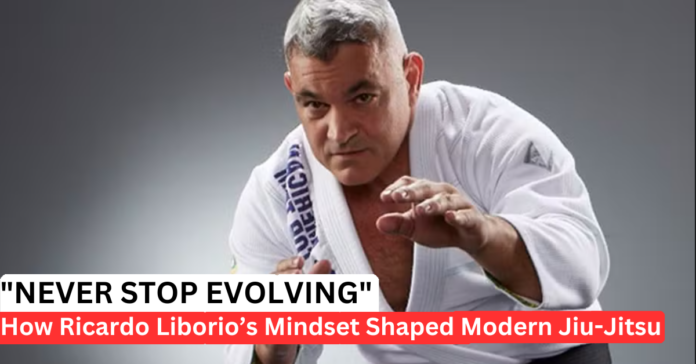
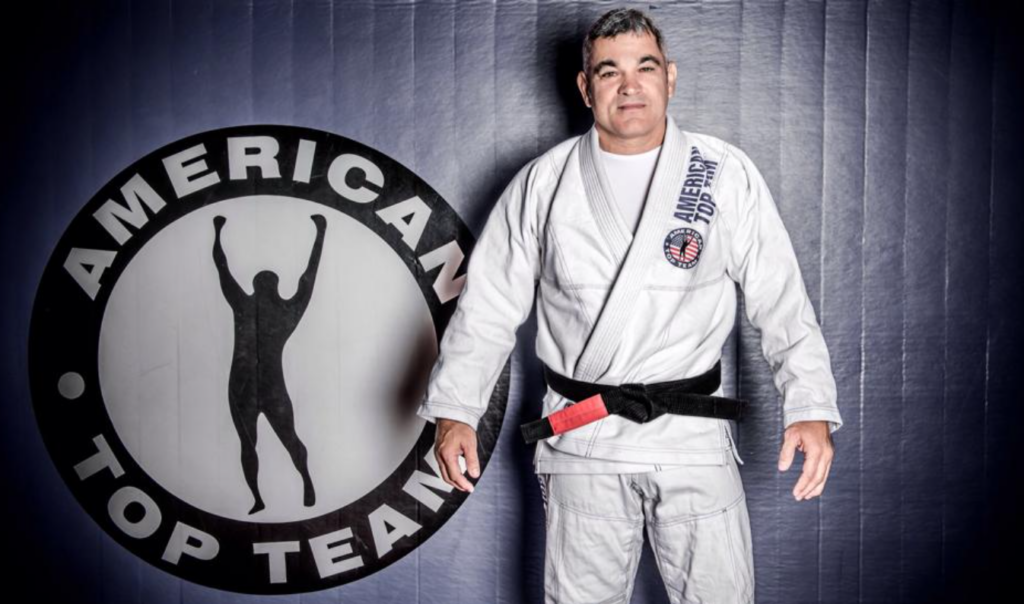
Why Ricardo Liborio Still Might Be The Most Underrated Coach In Jiu-Jitsu

Why Ricardo Liborio Still Might Be The Most Underrated Coach In Jiu-Jitsu
  • Ricardo Liborio went from Carlson Gracie’s brutal “Room 301” to becoming the first super-heavyweight IBJJF World Champion in 1996 despite being undersized.
  • He co-founded Brazilian Top Team, then helped create American Top Team, turning it into one of MMA’s most dominant gyms.
  • After a shattered jaw and later a broken wrist, Liborio still came back to win an ADCC Superfight against Mario Sperry, embodying his “never stop evolving” mindset.
  • Legends like Rhadi Ferguson and Marcos “Parrumpinha” Tavares tell stories of Liborio tapping out entire Carlson Gracie competition room line-ups.
  • Today, Liborio is focused on education and programs like Martial Arts Nation and university/afterschool Jiu-Jitsu, pushing grappling into schools and mainstream sport.

From Carlson Gracie Room 301 To World Champion

To understand Ricardo Liborio, you have to start in Rio, long before American Top Team and UFC belts. As a teenager, he walked into Carlson Gracie’s famous academy in Copacabana and was quickly identified as a workhorse with serious potential.

Carlson’s gym had multiple training areas, but the most notorious was “Room 301” – reserved for the true sharks of the competition team. Liborio ground his way into that room in less than a year by training four to five hours a day, living on pressure rounds against killers.

Carlson understood my time was limited, but he never let me slack, he kept saying I had to train and compete.
– Ricardo Liborio –

That mindset peaked in 1996. At the first ever IBJJF World Championship, Ricardo Liborio chose to fight two divisions above his natural weight in the super-heavyweight bracket just to avenge a previous loss to Leonardo Castello Branco.

He ran through the division, took gold, and then reached the open-weight final – earning the tournament’s “Most Technical Black Belt” recognition and cementing his status as one of Carlson’s greatest black belts.

Ricardo Liborio

How Ricardo Liborio Helped Build Brazilian Top Team And American Top Team

Success didn’t protect him from politics. As Carlson Gracie began spending more time in the United States, tension grew with his Brazilian competition team.

When Liborio left to compete at ADCC and then flew straight to Japan to corner Murilo Bustamante, he returned to find that he and several top teammates had been expelled from the team.

Rather than sulk, Ricardo Liborio helped turn a crisis into a super-team. Along with Mario Sperry, Murilo Bustamante and Bebeo Duarte, he co-founded Brazilian Top Team, one of the first powerhouse cross-over squads driving Jiu-Jitsu talent into MMA.

Soon, a new opportunity appeared. A Japanese promoter wanted Liborio to coach abroad, but a stopover in Florida changed everything.

There, he met businessman Dan Lambert. Liborio passed on the full-time Japan move, cut contractual ties with BTT on good terms, and partnered with Lambert plus Marcelo and Conan Silveira to launch American Top Team in 2001.

ATT exploded. Within its first decade, Florida became a magnet for MMA hopefuls, and ATT fighters started appearing on almost every major MMA card.

Black Belt later highlighted that ATT was the only MMA camp with two active UFC champions at the same time: welterweight Tyron Woodley and women’s bantamweight Amanda Nunes.

Even with that success, Liborio made it clear he wasn’t interested in shortcuts when some fighters popped for PEDs under the ATT banner, stressing it was the athlete’s responsibility and backing stricter testing to protect fighters’ health.

ADCC Superfight Vs Mario Sperry: Growth Mindset In Action

The Black Belt feature builds its core around a defining late-career chapter for Ricardo Liborio: his ADCC Superfight against Mario Sperry.

Almost twenty years after his early BJJ reign was cut short by a horrific jaw injury that required 11 surgeries, Liborio finally decided to return to big-stage competition.

Then, three weeks before the Superfight, he fractured his wrist in training.

ATT assistant coach Mike Brown remembered watching him barely able to tolerate drilling because of the pain – and still watching him walk out and beat Sperry anyway.

I thought there was no way he’d be able to compete, but he did and he won – his skills were always legendary.
– Mike Brown –

Liborio’s own take on modern MMA underlines his “never stop evolving” stance. He separates rule sets clearly – Jiu-Jitsu, No-Gi grappling, MMA, self-defence – and adjusts training goals for each. He even warns that if you teach MMA athletes only to “win,” you risk producing boring fighters who can’t keep fans in their seats.

For him, completing the Sperry Superfight with a broken wrist wasn’t just a macho moment; it was a lived example of adapting, problem-solving and pushing through adversity – the same mentality he demands from his fighters.

Legends In The Room: Gym Stories That Built The Myth

Ask around long enough and you’ll hear wild gym tales about Ricardo Liborio, the kind of stories usually reserved for Rickson Gracie or fictional movie characters.

Judo Olympian and BJJ black belt Rhadi Ferguson once described deciding to “see what Liborio really had” in sparring.

Liborio swept, mounted and submitted him quickly, then repeatedly tapped him – nine times in under three minutes – with the same thing happening to other elite black belts on the mat.

Marcos “Parrumpinha” Tavares, another Carlson black belt, recounted a day when the whole Carlson Gracie competition team was preparing for ADCC.

Liborio arrived from work, asked if he could squeeze in 15–20 minutes of rolling on his lunch break, and proceeded to tap multiple world-level teammates several times each in five-minute rounds.

One of those teammates later went on to win his ADCC division and absolute – but that day, Liborio ran through them all, then joked that the room was “too tough” for him as he left.

Those stories echo what Mike Brown told Black Belt about Liborio’s coaching style on the ATT mats.

For someone with so many credentials, he’s as open-minded as can be – he’ll even stop to study a good move from a white belt.
– Mike Brown –

That combination of murderous mat ability plus genuine curiosity is rare – and it’s a big part of why people still talk about sharing rounds with Ricardo Liborio like it was a once-in-a-lifetime experience.

Why Ricardo Liborio’s Blueprint Still Matters To Modern Grapplers

These days, Ricardo Liborio is less the guy choking everyone in the room and more the architect behind systems.

After leaving day-to-day duties at ATT, he launched Martial Arts Nation, a consultancy focused on helping academies grow and get properly licensed, while also building a Jiu-Jitsu program at the University of Central Florida and an after-school martial arts initiative in Orange County.

BJJ Weekly also notes his role as head coach of the US National Grappling Team and his involvement in efforts to bring grappling into the Olympic conversation – a natural extension of his belief that rule sets and formats matter as much as techniques.

For today’s competitors and coaches, Liborio’s blueprint is straightforward but brutal:

  • Embrace pressure – like Carlson Gracie’s Room 301 – as the crucible where real Jiu-Jitsu is forged.
  • Cross-pollinate relentlessly between Jiu-Jitsu, No-Gi, wrestling and striking to stay ahead of the meta.
  • Treat every rule set – IBJJF, ADCC, MMA – as its own game with different main objectives.
  • Stay a student, no matter how many titles are on the wall.

From Carlson’s mat rooms in Rio to mega-gyms in Florida and university programs in Orlando, Ricardo Liborio has been quietly shaping how modern teams train and think.

For any serious grappler trying to build a long career – whether on the IBJJF podiums, ADCC mats or in the UFC cage – his “never stop evolving” philosophy isn’t just a slogan. It’s a roadmap that still holds up under the heaviest pressure rounds.

ADCC Asia Trials Mats Laid On Concrete Setup Shocks Competitors

ADCC Asia Trials Mats Laid On Concrete Setup Shocks Competitors
  • Competitors at the ADCC Asia & Oceania Trials 2025 in Bangkok arrived to find thin puzzle mats laid directly over polished concrete.
  • ADCC rules allow slams to escape submissions and continued action off the mat area, magnifying safety concerns about the hard under-surface.
  • Photos and videos circulating online show visible gaps between mat sections and little apparent shock absorption.
  • Despite the controversy, big names like Izaak Michell and Jozef Chen still punched their tickets to ADCC Worlds 2026.
  • As the ADCC Asia Trials mats laid on concrete setup draws more criticism, many in the grappling community are asking whether ADCC will tighten standards across all Trials before someone gets seriously hurt.

How The ADCC Asia & Oceania Trials 2025 Turned Into A Safety Flashpoint

The ADCC Asia Trials mats laid on concrete controversy erupted almost as soon as athletes walked into the CU Sports Complex in Bangkok on 7 December.

Instead of thick roll mats or tatami-style flooring, they found thin jigsaw puzzle mats laid directly over polished concrete – the fighting surface for a Trials that decides who gets to compete at ADCC Worlds 2026.

Footage and photos shared online show the puzzle mats sitting flush against what appears to be bare concrete, with small but noticeable gaps between tiles.

Grapplers who had flown in from across Asia and Oceania expecting world-class infrastructure suddenly had to weigh up the risk of hard landings in a rule set that openly embraces slams and big takedowns.

For many, it wasn’t just about comfort. This was billed as a pinnacle Bangkok grappling tournament – a once-in-a-career shot at ADCC Worlds, with entry fees that, according to competitors, stretched into a couple of hundred US dollars for some divisions.

Seeing a mat setup they felt wouldn’t pass at a solid local comp turned the event into a lightning rod for broader concerns about ADCC’s regional oversight.

Puzzle Mats On Concrete At A Slam-Heavy Event

On their own, puzzle mats can be a perfectly reasonable option for lower-impact training, especially when they’re thick, high-quality tiles, properly locked together and sometimes paired with an underlayment.

Some manufacturers even advertise 1.5-inch puzzle mats with a tested “critical fall height” of around four feet for head protection – but they also note that underlayment and sprung subfloors can further improve safety for heavy throws.

That’s where this ADCC Asia Trials mats laid on concrete setup becomes such a problem. At the ADCC Asia & Oceania Trials 2025, athletes weren’t dealing with casual drilling; they were competing under ADCC slams rules, where it’s legal to stand and slam to escape submissions – including powerbomb-style counters to triangles – and to take opponents off the mat area entirely, often onto whatever surface surrounds the mats.

The original post that helped spark the backlash spelled it out bluntly: the mats were estimated at just 2–3 cm thick, described as having “almost zero shock absorption”, with fully legal slams and the possibility of being taken down straight onto polished concrete if the action spilled off the mat.

One grappler’s reaction, captured in a social post and widely shared, summed up the initial shock:

That’s insane.
– Brandon Reed –

Others pointed out that even mid-range local tournaments routinely invest in thicker tatami or roll mats, often on top of wooden or sprung flooring, specifically to reduce the risk of concussions, spinal injuries, and broken bones from throws and awkward falls.

Industry guidance also notes that floors with a sprung undercarriage absorb more shock, while hard, polished surfaces increase the risk of mats shifting or bottoming out on impact.

What ADCC’s Reputation Demands From Its Safety Standards

Part of why the ADCC Asia Trials mats laid on concrete setup hit such a nerve is ADCC’s brand. For many grapplers, ADCC is the gold standard – the “Olympics” of No-Gi – with Trials seen as the most prestigious qualifiers in the sport.

The expectation is that everything about the event, from refereeing to production values and mat quality, reflects that status.

When athletes arrive at an official Trials, they assume that risk management has been taken seriously: adequate mat thickness, stable footing, and enough padding or spacing around the competition area to handle scrambles that spill off the edge.

Mat manufacturers themselves warn that puzzle mats are a budget-friendly, modular solution that can wear down, separate and offer less stability and impact absorption than full-size tatami designed for repeated hard falls.

The perception that different Trials around the world are operating under very different safety standards — despite all sending winners to the same World Championship — has left many wondering whether ADCC’s central leadership will tighten oversight or leave things up to local organizers.

ADCC Asia Trials Mats Laid On Concrete

Competitor Reactions, Entry Fees And The Human Cost

Beyond the flooring itself, a big part of the anger stems from how much competitors invested just to be there and find ADCC Asia Trials mats laid on concrete wiht no second thought.

The official registration fee for professional men’s divisions was listed at 5,400 THB (around $170 USD), while some athletes reported paying up to about $360 AUD after currency and processing.

For many, that’s on top of flights across Asia or Oceania, accommodation, and weeks of camp-style preparation. To then fight on a surface that, in their view, wouldn’t fly at a well-run regional open felt like a bait-and-switch. One Reddit user didn’t mince words when describing the setup:

No one should have to wrestle or grapple on shitty puzzle mats, especially in a relatively serious competition. That’s a ridiculously poor setup.
– Reddit user –

Another warned that the combination of slams, concrete and thin mats is “a recipe for eventual disaster”, predicting it’s “only a matter of time” before a catastrophic injury occurs at an ADCC event if nothing changes.

The ADCC Asia Trials Mats Laid on Concrete Issue Seems to be a One-Off

And yet, the sporting stakes were enormous. Winners like Ryoma Anraku at 66 kg, Izaak Michell at 77 kg, Jozef Chen at 88 kg, Nicholas Maglicic at 99 kg and Tito Carle in the heavyweight division all earned their spots at ADCC Worlds 2026, while Ju Chin Shin secured the women’s under-65 kg bracket.

As of the latest reports, ADCC officials had not issued a public statement addressing the mat setup, leaving competitors and fans to speculate about whether this will be treated as a one-off misstep or a sign that safety is taking a back seat to cost-cutting and convenience at some regional shows.

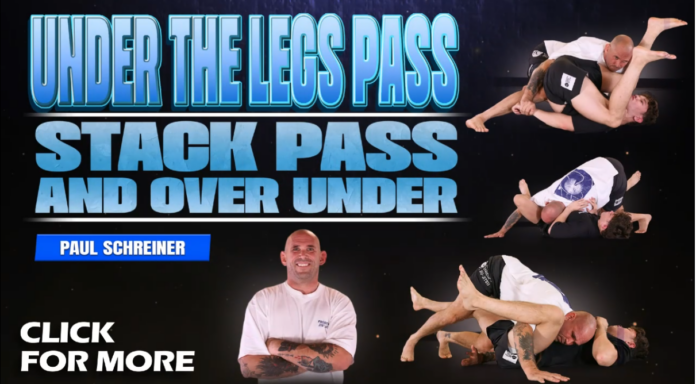
Under The Legs Passing Paul Schreiner DVD Review [2025]

Under The Legs Passing Paul Schreiner DVD Review

Key Takeaways

  • Systematic stack pass roadmap that connects classic pressure passing with modern guard scenarios
  • Clear conceptual teaching that helps you understand why the positions work, not just how
  • Smart blend of Gi and No-Gi options so the system carries over to every ruleset
  • Ideal for smaller or older grapplers who want crushing pressure without relying on athleticism
  • Rating: 9/10

UNDER THE LEGS PASSING PAUL SCHRENIER DVD DOWNLOAD

Pressure passing never really goes out of style, but most grapplers struggle to make the stack pass feel safe, consistent, and usable against flexible modern guards. The Under The Legs Passing Paul Schreiner DVD steps into that gap as a complete system for turning the classic stack into a reliable primary passing route.

Coming from one of Marcelo Garcia’s most respected coaches, this review of Paul Schreiner’s latest release looks at how the material promises not just techniques, but an actual framework you can plug into your training right away.

The Under The Legs Passing Paul Schreiner DVD reads and plays like a carefully structured seminar, starting from core principles and then layering on options so that each chapter feels like a natural continuation of the last rather than a random add-on.

A Good Stack Pass Goes a Long Way

In Brazilian Jiu-Jitsu, the stack pass sits in a special place in the passing toolbox. It’s one of the first under-the-legs passes many people learn, yet at high levels you still see it deciding matches when done with proper mechanics.

A good stack pass lets you combine control of the hips, broken posture from your opponent, and relentless forward pressure that forces them into awful choices: concede the pass, expose the back, or risk submissions. The problem is that many students only learn a single version of the move, with no real troubleshooting for frames, posts, inversions, or modern lapel and guard variations.

That’s where a structured passing system becomes valuable. Instead of seeing each pass as a standalone technique, you build a tree of decisions: how to enter the stack, how to manage grips, how to adjust angles, and how to transition when the guard player changes their responses.

Done well, this makes your top game feel simpler, not more complicated — you recognize familiar reactions instead of getting surprised by every new guard. For athletes who feel they “can’t pass flexible guards,” a systematized stack game can be a huge turning point, because it turns their opponents’ mobility into a liability rather than a strength.

The other big benefit of focusing on under-the-legs passing is longevity. Pressure passing — especially stack-style passing — rewards posture, frames, and angles more than explosive speed. That makes it a fantastic direction for older grapplers, lighter athletes, or anyone who wants a style that ages well.

Marcelo’s Best Academy Coach – Paul Schreiner

Paul Schreiner is one of those names that quietly shows up whenever coaches talk about who they trust for technical guidance. A black belt under Claudio França, he started Jiu-Jitsu in Santa Cruz in the late 1990s, training extensively with figures like Garth Taylor before spending long stretches in Brazil competing and sharpening his game.

During those years, he became one of the few American athletes to medal at major events held in Brazil, earning a reputation for toughness and deep technical understanding rather than flash or athleticism.

His real impact on the sport, though, has come as a coach. Schreiner spent around 14 years teaching at the Marcelo Garcia Academy in New York, where he helped shape the games of numerous high-level competitors and became known for his ability to organize complex positions into clear, repeatable systems.

Many top athletes describe Paul Schreiner as the person they turn to when they need to “clean up” an area of their game or understand the conceptual links between positions. Today, he leads Frogtown Jiu-Jitsu in Los Angeles, continuing the same process-driven, detail-heavy teaching style that made him such a respected voice in the community.

Across his various instructionals, seminars, and articles, the pattern is consistent: Schreiner breaks big problems into manageable pieces, then connects them with enough detail that even hobbyists can plug the ideas into their rolling. The Under The Legs Passing Paul Schreiner DVD fits squarely into that lineage, applying his coaching style to one of the most important under-the-legs passing families in Jiu-Jitsu.

Under The Legs Passing: Stack Pass Paul Schreiner DVD Review

Before diving into the individual volumes, it’s worth looking at how the course is organized overall. The four-part structure of the Under The Legs Passing Paul Schreiner DVD mirrors the way a good coach would teach in the academy: you begin with baseline mechanics and essential positions, then move into problem-solving details, followed by broader connections to neighboring passes and, finally, a related but distinct passing family that reinforces the same concepts.

Volume 1 – Stack Pass Basics

Opening the Under The Legs Passing Paul Schreiner DVD is a volume that lays the foundation for the whole system. Schreiner starts with a short intro and then moves straight into the core idea of the stack pass, explaining how posture, angle, and weight placement create the conditions for a safe and dominant stack.

Rather than rushing to “finish the pass,” he emphasizes understanding what makes the position structurally strong so that it survives when your opponent bridges, twists, or tries to square back up. That conceptual layer helps advanced players just as much as newer ones, because it clarifies why certain details matter so much.

From there, he walks through a series of core variations: the Gi stack pass, the basic stack from both knees, the one-knee-up version, and finally the standing stack entry. Each option is presented as a logical branch of the same tree, not a separate technique you have to memorize from scratch.

Volume 2 – Solving Common Stack Passing Problems

Volume 2 dives into the situations that usually kill people’s stack game: posts, frames, and stubborn upper-body defenses. The chapters on addressing the near-side post and alternating grips are especially useful, because they show how small grip changes completely change the leverage battle.

Instead of simply insisting on one grip configuration, Schreiner gives you options that let you redirect your opponent’s frames, collapse their structure, and keep your head safe while you drive your weight through their hips.

The final section on controlling the far arm ties the whole idea together. Once the near-side post is neutralized and your grips are set, the far arm is usually the last piece your opponent has for recovery or inversion.

Controlling it properly not only makes the stack tighter but also opens easy transitions into back exposure and dominant passing finishes. Overall, this part feels like the “troubleshooting manual” for the base positions you learned in the first part, and it’s where a lot of intermediate and advanced grapplers will probably find the biggest immediate gains from Under The Legs Passing Paul Schreiner DVD.

Volume 3 – Leg Drag Pairing

Part three expands the system horizontally, showing how the stack pass connects to other classic top-game positions. Schreiner starts by linking the stack to leg drag scenarios, explaining how the same principles of shoulder control and hip isolation let you flow into a crushing leg drag when the guard player turns or kicks out.

From there, he covers stack passes to north-south, sequences that become especially valuable when you’re dealing with flexible opponents who insist on recomposing guard with their legs. There’s also a thoughtful section on using the stack pass during guard recovery attempts, which is a situation many people overlook.

Instead of resetting and starting over every time the bottom player scrambles, Schreiner shows how to treat their hip movement as a trigger for re-entering the stack or switching to single-leg style stacks. Taken together, this part of the Under The Legs Passing Paul Schreiner DVD shows the system’s reach: it’s not just one pass, but a web that touches leg drags, north-south, and backtakes.

Volume 4 – Over Under

The final volume rounds out the instructional by layering the over-under family onto the stack ideas. Schreiner begins with an over-under introduction and Gi-focused review that situates this passing style within the same conceptual framework: hips elevated, shoulders pinned, and your head and spine aligned so you’re never hanging in space.

The later chapters show how to camp safely in over-under, convert that pressure into stack-style control, and then finish to mount or even transition into a knee bar from the over-under configuration. What’s nice is that none of this feels tacked on; the over-under material acts like a sister system to the stack, giving you another high-percentage lane when opponents deny you your preferred grips or leg positions.

Using the Under The Legs Passing Paul Schreiner DVD in Training

In terms of day-to-day training, this instructional is built to be implemented in layers. Working through Under The Legs Passing Paul Schreiner DVD one volume at a time makes it easy to structure focused weeks of training around stack mechanics, troubleshooting, and transitions.

White and blue belts can start with the basic stack entries from Volume 1 and a couple of the troubleshooting ideas from Volume 2, then simply try to reach that structure every time they get closed guard or basic open guard.

More experienced grapplers can immediately incorporate the transitions in Volumes 3 and 4, building sequences that move from stack to leg drag, to north-south, to over-under, depending on how the bottom player reacts. Because the decision trees are so clear, it becomes easy to design specific situational rounds around each phase.

One of the biggest strengths of the Under The Legs Passing Paul Schreiner DVD is how much the material supports development over time. Instead of chasing endless new passes, you can double down on one core family of under-the-legs passes and just keep deepening your understanding.

GET IT HERE: UNDER THE LEGS PASSING PAUL SCHRENIER DVD

Who Is This For?

Under The Legs Passing Paul Schreiner DVD is ideal for grapplers who want a serious, concept-driven passing system rather than a highlight-reel collection. Competitors at purple belt and above will appreciate how well the material holds up against modern guards, especially flexible, inversion-heavy players who are hard to pin with looser styles.

At the same time, motivated white and blue belts can absolutely get a ton of value here, especially if they already like being on top. The focus on fundamental mechanics makes the instruction accessible, and the clear organization keeps newer students from getting lost.

If you’ve ever felt that pressure passing “isn’t for your body type,” this course makes a strong counter-argument. And if you already enjoy other Paul Schreiner projects, this is a natural addition to that library alongside any other Paul Schreiner DVD titles you might own.

Pros & Potential Drawbacks

Pros:

  • Truly systematic approach that links stack, leg drag, north-south, and over-under passing into one family
  • Excellent conceptual explanations that clarify posture, angle, and pressure for long-term improvement
  • Strong mix of Gi and No-Gi material without feeling like two separate products
  • Great for smaller, older, or less explosive grapplers who want to develop a heavy top game
  • High production values and clear chapter structure make it easy to re-watch specific problem areas

Potential Drawbacks:

  • Beginners with very limited mat time might find the decision trees overwhelming at first
  • Guard players looking mainly for submission chains rather than positional dominance may wish for more attack coverage

Get Under (the Legs)

The Under The Legs Passing Paul Schreiner DVD delivers exactly what it promises: a complete, pressure-oriented under-the-legs passing system taught by one of the most respected coaches in Jiu-Jitsu. The emphasis on posture, alignment, and intelligent weight use means the lessons age well, and the mix of Gi and No-Gi content keeps the material relevant regardless of how you like to train.

Megadeath’s Dave Mustaine Promoted To BJJ Black Belt in His Mid-60s

Megadeath's Dave Mustaine Promoted To BJJ Black Belt in His Mid-60s
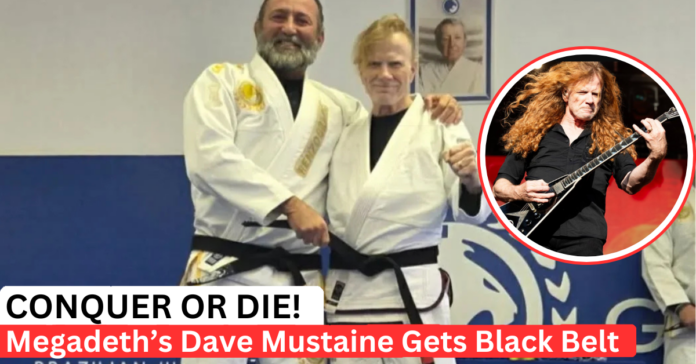
  • Dave Mustaine promoted to BJJ black belt by Professor Reginaldo “Reggie” Almeida at Gracie Barra Spring Hill BJJ & Self-Defense in Tennessee.
  • The Megadeth frontman has spent years grinding through every belt, reportedly over three years at brown alone, and started Jiu-Jitsu in his 50s.
  • Mustaine already held black belts in Taekwondo and Ukidokan karate under Benny “The Jet” Urquidez before falling in love with grappling.
  • His promotion comes after a throat cancer battle, reinforcing him as a flagship example of Brazilian Jiu-Jitsu after 60.
  • The story isn’t just another bit of celebrity BJJ news – it shows what late starters and hobbyists can actually achieve with consistency.

Dave Mustaine Promoted To BJJ Black Belt In Tennessee

Dave Mustaine promoted to BJJ black belt is not a headline from some meme page – it’s official. The Megadeth frontman has been awarded his Brazilian Jiu-Jitsu black belt by Professor Reginaldo “Reggie” Almeida at Gracie Barra Spring Hill BJJ & Self-Defense in Tennessee, after years of steady work on the mats.

Outlets covering the promotion describe Mustaine as now in his mid-60s – one report calls him 63, while another notes the belt came just a few months after his 64th birthday – making the achievement even more eye-catching in a sport where promotions are notoriously slow.

The promotion details tie back to the same team: Almeida and the Gracie Barra Spring Hill crew, who have guided Mustaine’s Jiu-Jitsu journey from blue belt all the way to black.

His friend Jon Milan summed up what this moment represents for those close to him:

Congratulations to my friend Dave Mustaine on getting his black belt after a long hard fought road.
– Jon Milan on Facebook –

Inside Dave Mustaine’s Jiu-Jitsu Journey With Reginaldo Almeida

The Dave Mustaine Jiu-Jitsu journey with Reginaldo Almeida has been a slow burn rather than a viral overnight story. Mustaine earned his purple belt in January 2021 at age 59, not long after successfully battling throat cancer.

Almeida posted publicly when he promoted Mustaine to purple belt, writing:

After 2 years as a blue belt and hard training and lots of ups and downs today I had the honor to promote Mr @davemustaine.
– Reginaldo “Reggie” Almeida on Instagram –

The timeline has him spending roughly two years at each rank: blue to purple in early 2021, then purple to brown by October 2022, when he was 61. Mustaine then remained a brown belt for more than three years before this week’s promotion to black belt.

In other words, Dave Mustaine promoted to BJJ black belt is not a celebrity fast-track – it’s a pretty textbook timeline for a serious hobbyist who shows up and takes the long road.

Almeida has been described as “instrumental” in Mustaine’s development, especially since the musician relocated to the Nashville/Franklin area and made Gracie Barra Spring Hill his home base.

For a guy who spends much of his life on the road, locking in with one coach and one room seems to have been a key part of turning him from curious white belt into legitimate black belt.

From Taekwondo To BJJ Black Belt: A Lifelong Martial Artist

If you only follow celebrity BJJ news, it might look like Mustaine just wandered into a Jiu-Jitsu academy a few years ago and got hooked. The reality is that he’s been a martial artist for decades.

His martial arts history traces back to 1999, when he started Taekwondo in Arizona after experimenting with kung fu and other styles.

From there, Mustaine went deep: he eventually earned black belts in both Ukidokan karate and Taekwondo, training under kickboxing legend Benny “The Jet” Urquidez.

Mustaine explains that Urquidez’s system blended multiple arts, from karate and kung fu to Jiu-Jitsu, wrestling, Muay Thai and boxing – essentially an old-school mixed-martial-arts curriculum before “MMA” was a mainstream acronym.

That makes the shift to grappling feel less like a random late-career pivot and more like a natural next chapter. Once Mustaine settled in the Franklin, Tennessee area, he began training Jiu-Jitsu with Almeida, starting over as a white belt and working his way up through blue, purple, brown and finally black.

Dave Mustaine promoted to BJJ black belt is the culmination of a martial arts story that has already spanned Taekwondo, Ukidokan, Sanshou, kickboxing and more – this isn’t a vanity belt for a rockstar who just wants something new to flex in promo photos.

Why Brazilian Jiu-Jitsu Promotions After 60 Tend To Be Memorable

Plenty of people earn black belts in their 20s and 30s. Brazilian Jiu-Jitsu after 60 is a different conversation entirely.

By the time Mustaine started to really climb the BJJ ranks, he was already in his late 50s and carrying the mileage of both a long touring schedule and a cancer battle. He got his purple belt “shortly after successfully battling throat cancer,” before moving on to brown and then black.

When you zoom out, Dave Mustaine promoted to BJJ black belt hits harder than a standard “Megadeth frontman black belt” headline. It’s an example of what can happen if you:

  • Start BJJ  in your 50s.
  • Accept being a beginner again, despite being famous and already a black belt in other arts.
  • Keep showing up for years while dealing with health issues and age-related wear and tear.

For older hobbyists watching from the sidelines, it quietly demolishes the “I’m too old to start” narrative.

BJJ Black Belt Numbers Rise Between A-List Celebrities

Celebrity BJJ stories usually split into two categories: quick-hit PR fluff or rare cases where the person actually puts in the time. Dave Mustaine promoted to BJJ black belt clearly belongs in the second group, along with Ashton Kutcher, Guy Ritchie, Zoltan Bathory and, potentially, one day, Tom Hardy.

The promotion under Reginaldo Almeida at Gracie Barra Spring Hill plugs straight into a lineage and a room that’s known more for quietly building Jiu-Jitsu players than for chasing headlines.

The timeline hows Mustaine doing the same grind as everyone else: stripes, years at each rank, injuries, life, cancer, then back on the mats.

For the wider BJJ scene, Dave Mustaine promoted to BJJ black belt is one of the rare pieces of celebrity BJJ news that actually maps onto what everyday hobbyists experience: juggling work, age, injuries, and life while slowly chipping away at a brutally long learning curve.

And for the metal fans who’ve just discovered what Mustaine’s been doing between tours, it might be the nudge that gets them through the academy door for the first time.

Amanda Mazza Explains Breaking Her Own Arm During Shocking Rear Naked Choke Finish

Amanda Mazza Explains Breaking Her Own Arm During Shocking Rear Naked Choke Finish
  • BJJ brown belt Amanda Mazza snapped her own forearm while finishing a rear naked choke at Cage Fury BJJ 15.
  • At first, she genuinely believed she’d broken her opponent’s jaw before realising the gruesome sound came from her own arm.
  • On the Jits and Giggles podcast, Amanda Mazza explains breaking her own arm in detail, describing how she stayed eerily calm and felt no real pain until the hospital.
  • A surgeon later told her it was a “perfect storm” injury caused by her choke pressure and her opponent pushing into the elbow at the wrong angle.
  • Despite calling 2024 her “year of injuries,” she’s already focused on rehab, her team, and getting back to Jiu-Jitsu competition.

From Dominant Back Take To Disaster At Cage Fury BJJ 15

By the time the snap echoed around the venue, it looked like the match was already done.

BJJ brown belt Amanda Mazza had hit a clean duck under, taken the back, and sunk a rear naked choke during her bout with Emily Hansen at Cage Fury BJJ 15. On the broadcast, it appeared to be a textbook finish: back control secured, hooks in, arm under the chin – or so everyone thought.

Then came the noise.

Mazza’s arm visibly jolted as she squeezed the choke, forcing her to release the hold. Both athletes looked confused. The referee initially let the match continue because, from the outside, nothing about the position screamed “catastrophic injury.”

Seconds later, Mazza clutched her arm and the seriousness of the situation kicked in as medical staff were waved in.

At the time, fans and commentators could only guess what had happened. It wasn’t until later, when Amanda Mazza explained breaking her own arm in interviews and on a podcast, that the picture really came into focus.

“I Thought I Snapped Her Jaw”: Mazza’s First Reaction

On the Jits and Giggles podcast, Mazza admitted that her first thought wasn’t about herself at all – it was about her opponent’s jaw.

I literally thought I snapped her jaw
– Amanda Mazza on Jits and Giggles –

She was squeezing with everything she had, and when the sound rang out, it made sense to assume the pressure had landed across the jaw rather than under the chin. In that instant, Mazza was less worried about winning the match and more terrified she’d seriously injured another athlete.

Only when she tried to adjust her grip did the reality hit. She felt something shift inside her forearm and realized, with a kind of grim clarity, that the damage was hers.

From the outside, it’s a brutal BJJ injury highlight. From her perspective, it was a slow-motion mental pivot: from “I’ve hurt her” to “No, this is my arm.”

How Amanda Mazza Explains Breaking Her Own Arm And Staying Composed

The most striking part of the story isn’t just that Amanda Mazza explains breaking her own arm – it’s how she describes her own reaction.

She told the podcast she stayed oddly calm on the mat and in the aftermath. There was no screaming, no dramatic scene.

Her boss, physical therapist JJ Thomas from Primal Physical Therapy, was there with her team and immediately started assessing the injury, but Mazza herself barely reacted. Her composure actually unsettled people more than if she’d panicked.

I literally was not in pain until we got to the hospital
– Amanda Mazza –

That detail – no real pain until the hospital – sums up a lot about how she processes adversity.

Even as she absorbed that she’d suffered a serious break in the middle of a match she was winning, BJJ brown belt Amanda Mazza was already slipping into problem-solving mode: talking to coaches, talking to medical staff, trying to understand what had just happened.

Later, when Amanda Mazza explains breaking her own arm publicly, the emphasis is less on the gore, more on the mindset. She talks about frustration, sure, but she also talks about perspective: better her arm than her opponent’s jaw, better a fixable fracture than a career-ending injury.

Surgeon’s ‘Perfect Storm’ Verdict On The Amanda Mazza Rear Naked Choke Injury

Once the scans came back, the verdict was harsh: a complete fracture of the radius in her forearm. Mazza needed surgery and ended up with a titanium plate running almost the length of the bone.

According to her surgeon – who also works with UFC athletes – this wasn’t a case of reckless technique or sloppy positioning.

It was, in his words, a “perfect storm” situation. Mazza’s choke was generating serious squeezing pressure, and at the exact same moment, Hansen pushed up into the elbow line, effectively turning the arm into a lever against itself. Without that extra push, he told her, the arm probably wouldn’t have broken.

That explanation slots the Amanda Mazza rear naked choke injury into a small but growing category of freak accidents in grappling – like buggy choke self-injuries or ankles popping from awkward triangle adjustments.

The intent isn’t to scare people off Jiu-Jitsu, but it is a reminder that when force, timing and angles all misalign, the athlete applying the submission isn’t automatically safe.

For Mazza, hearing that it was a “perfect storm” provided a strange kind of reassurance: she hadn’t done anything wildly wrong; she’d just been on the wrong side of physics that night.

Amanda Mazza Explains Breaking Her Own Arm During Rear Naked Choke

A Year Of Injuries For Mazza

If this were a one-off, it would already be a wild story. But as Amanda Mazza explains, breaking her own arm, she also reveals that 2024 has been, in her words, a “year of injuries.”

Before Cage Fury BJJ 15, she’d already broken her hand in wrestling practice and suffered a nasty finger dislocation just weeks earlier.

Despite all that, the official result of the bout went down as a loss, even though she was in a dominant position when the arm went.

She’s admitted she wondered if it should’ve been ruled a no contest, but ultimately she’s more relieved that her opponent walked away unhurt than she is bitter about the L on her record.

The projected recovery window is six to eight weeks, which many people have told her “isn’t even a long time.” For someone who lives on the mats, it feels like an eternity – but she’s leaning hard on her team at Web MMA and the staff at Primal Physical Therapy to stay ahead of schedule physically and mentally.

In the end, the way Amanda Mazza explains breaking her own arm says more about her than the slow-mo replay ever could. It’s equal parts horror story, technical lesson, and mindset clinic – the kind of tale only Jiu-Jitsu can produce, and one she clearly intends to turn into fuel rather than a full stop on her competitive career.