




Key Takeaways
- Systematic stack pass roadmap that connects classic pressure passing with modern guard scenarios
- Clear conceptual teaching that helps you understand why the positions work, not just how
- Smart blend of Gi and No-Gi options so the system carries over to every ruleset
- Ideal for smaller or older grapplers who want crushing pressure without relying on athleticism
- Rating: 9/10
UNDER THE LEGS PASSING PAUL SCHRENIER DVD DOWNLOAD
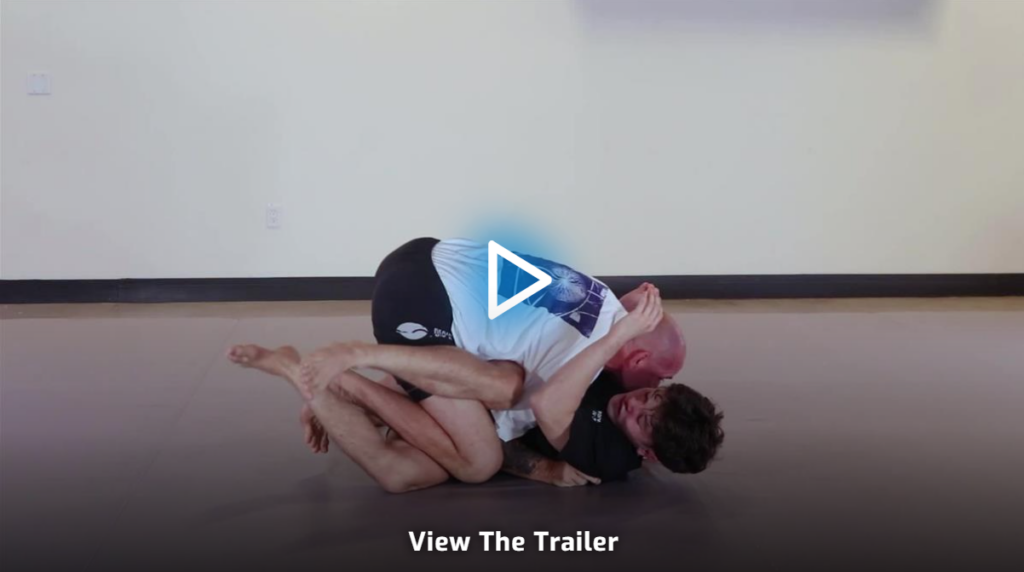
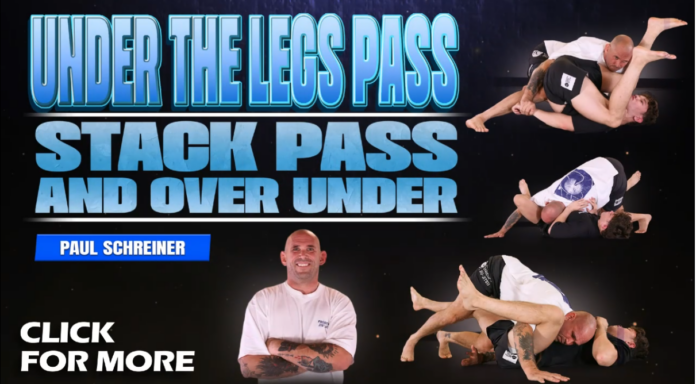
Pressure passing never really goes out of style, but most grapplers struggle to make the stack pass feel safe, consistent, and usable against flexible modern guards. The Under The Legs Passing Paul Schreiner DVD steps into that gap as a complete system for turning the classic stack into a reliable primary passing route.
Coming from one of Marcelo Garcia’s most respected coaches, this review of Paul Schreiner’s latest release looks at how the material promises not just techniques, but an actual framework you can plug into your training right away.
The Under The Legs Passing Paul Schreiner DVD reads and plays like a carefully structured seminar, starting from core principles and then layering on options so that each chapter feels like a natural continuation of the last rather than a random add-on.
A Good Stack Pass Goes a Long Way
In Brazilian Jiu-Jitsu, the stack pass sits in a special place in the passing toolbox. It’s one of the first under-the-legs passes many people learn, yet at high levels you still see it deciding matches when done with proper mechanics.
A good stack pass lets you combine control of the hips, broken posture from your opponent, and relentless forward pressure that forces them into awful choices: concede the pass, expose the back, or risk submissions. The problem is that many students only learn a single version of the move, with no real troubleshooting for frames, posts, inversions, or modern lapel and guard variations.

That’s where a structured passing system becomes valuable. Instead of seeing each pass as a standalone technique, you build a tree of decisions: how to enter the stack, how to manage grips, how to adjust angles, and how to transition when the guard player changes their responses.
Done well, this makes your top game feel simpler, not more complicated — you recognize familiar reactions instead of getting surprised by every new guard. For athletes who feel they “can’t pass flexible guards,” a systematized stack game can be a huge turning point, because it turns their opponents’ mobility into a liability rather than a strength.
The other big benefit of focusing on under-the-legs passing is longevity. Pressure passing — especially stack-style passing — rewards posture, frames, and angles more than explosive speed. That makes it a fantastic direction for older grapplers, lighter athletes, or anyone who wants a style that ages well.
Marcelo’s Best Academy Coach – Paul Schreiner
Paul Schreiner is one of those names that quietly shows up whenever coaches talk about who they trust for technical guidance. A black belt under Claudio França, he started Jiu-Jitsu in Santa Cruz in the late 1990s, training extensively with figures like Garth Taylor before spending long stretches in Brazil competing and sharpening his game.
During those years, he became one of the few American athletes to medal at major events held in Brazil, earning a reputation for toughness and deep technical understanding rather than flash or athleticism.
His real impact on the sport, though, has come as a coach. Schreiner spent around 14 years teaching at the Marcelo Garcia Academy in New York, where he helped shape the games of numerous high-level competitors and became known for his ability to organize complex positions into clear, repeatable systems.
Many top athletes describe Paul Schreiner as the person they turn to when they need to “clean up” an area of their game or understand the conceptual links between positions. Today, he leads Frogtown Jiu-Jitsu in Los Angeles, continuing the same process-driven, detail-heavy teaching style that made him such a respected voice in the community.
Across his various instructionals, seminars, and articles, the pattern is consistent: Schreiner breaks big problems into manageable pieces, then connects them with enough detail that even hobbyists can plug the ideas into their rolling. The Under The Legs Passing Paul Schreiner DVD fits squarely into that lineage, applying his coaching style to one of the most important under-the-legs passing families in Jiu-Jitsu.
Under The Legs Passing: Stack Pass Paul Schreiner DVD Review
Before diving into the individual volumes, it’s worth looking at how the course is organized overall. The four-part structure of the Under The Legs Passing Paul Schreiner DVD mirrors the way a good coach would teach in the academy: you begin with baseline mechanics and essential positions, then move into problem-solving details, followed by broader connections to neighboring passes and, finally, a related but distinct passing family that reinforces the same concepts.
Volume 1 – Stack Pass Basics
Opening the Under The Legs Passing Paul Schreiner DVD is a volume that lays the foundation for the whole system. Schreiner starts with a short intro and then moves straight into the core idea of the stack pass, explaining how posture, angle, and weight placement create the conditions for a safe and dominant stack.
Rather than rushing to “finish the pass,” he emphasizes understanding what makes the position structurally strong so that it survives when your opponent bridges, twists, or tries to square back up. That conceptual layer helps advanced players just as much as newer ones, because it clarifies why certain details matter so much.
From there, he walks through a series of core variations: the Gi stack pass, the basic stack from both knees, the one-knee-up version, and finally the standing stack entry. Each option is presented as a logical branch of the same tree, not a separate technique you have to memorize from scratch.
Volume 2 – Solving Common Stack Passing Problems
Volume 2 dives into the situations that usually kill people’s stack game: posts, frames, and stubborn upper-body defenses. The chapters on addressing the near-side post and alternating grips are especially useful, because they show how small grip changes completely change the leverage battle.
Instead of simply insisting on one grip configuration, Schreiner gives you options that let you redirect your opponent’s frames, collapse their structure, and keep your head safe while you drive your weight through their hips.
The final section on controlling the far arm ties the whole idea together. Once the near-side post is neutralized and your grips are set, the far arm is usually the last piece your opponent has for recovery or inversion.
Controlling it properly not only makes the stack tighter but also opens easy transitions into back exposure and dominant passing finishes. Overall, this part feels like the “troubleshooting manual” for the base positions you learned in the first part, and it’s where a lot of intermediate and advanced grapplers will probably find the biggest immediate gains from Under The Legs Passing Paul Schreiner DVD.
Volume 3 – Leg Drag Pairing
Part three expands the system horizontally, showing how the stack pass connects to other classic top-game positions. Schreiner starts by linking the stack to leg drag scenarios, explaining how the same principles of shoulder control and hip isolation let you flow into a crushing leg drag when the guard player turns or kicks out.
From there, he covers stack passes to north-south, sequences that become especially valuable when you’re dealing with flexible opponents who insist on recomposing guard with their legs. There’s also a thoughtful section on using the stack pass during guard recovery attempts, which is a situation many people overlook.
Instead of resetting and starting over every time the bottom player scrambles, Schreiner shows how to treat their hip movement as a trigger for re-entering the stack or switching to single-leg style stacks. Taken together, this part of the Under The Legs Passing Paul Schreiner DVD shows the system’s reach: it’s not just one pass, but a web that touches leg drags, north-south, and backtakes.
Volume 4 – Over Under
The final volume rounds out the instructional by layering the over-under family onto the stack ideas. Schreiner begins with an over-under introduction and Gi-focused review that situates this passing style within the same conceptual framework: hips elevated, shoulders pinned, and your head and spine aligned so you’re never hanging in space.
The later chapters show how to camp safely in over-under, convert that pressure into stack-style control, and then finish to mount or even transition into a knee bar from the over-under configuration. What’s nice is that none of this feels tacked on; the over-under material acts like a sister system to the stack, giving you another high-percentage lane when opponents deny you your preferred grips or leg positions.
Using the Under The Legs Passing Paul Schreiner DVD in Training
In terms of day-to-day training, this instructional is built to be implemented in layers. Working through Under The Legs Passing Paul Schreiner DVD one volume at a time makes it easy to structure focused weeks of training around stack mechanics, troubleshooting, and transitions.
White and blue belts can start with the basic stack entries from Volume 1 and a couple of the troubleshooting ideas from Volume 2, then simply try to reach that structure every time they get closed guard or basic open guard.
More experienced grapplers can immediately incorporate the transitions in Volumes 3 and 4, building sequences that move from stack to leg drag, to north-south, to over-under, depending on how the bottom player reacts. Because the decision trees are so clear, it becomes easy to design specific situational rounds around each phase.
One of the biggest strengths of the Under The Legs Passing Paul Schreiner DVD is how much the material supports development over time. Instead of chasing endless new passes, you can double down on one core family of under-the-legs passes and just keep deepening your understanding.
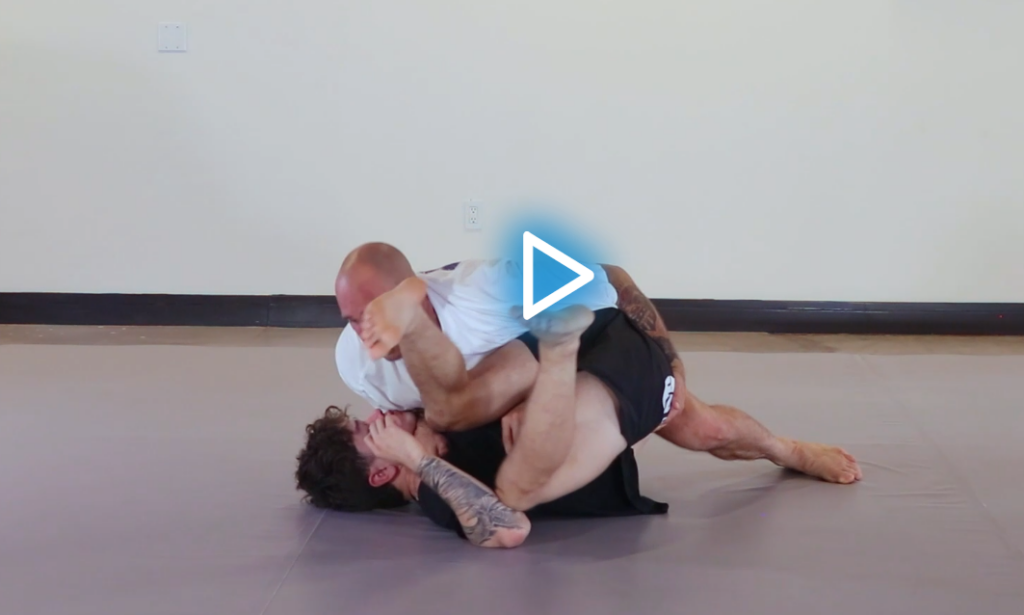
GET IT HERE: UNDER THE LEGS PASSING PAUL SCHRENIER DVD
Who Is This For?
Under The Legs Passing Paul Schreiner DVD is ideal for grapplers who want a serious, concept-driven passing system rather than a highlight-reel collection. Competitors at purple belt and above will appreciate how well the material holds up against modern guards, especially flexible, inversion-heavy players who are hard to pin with looser styles.
At the same time, motivated white and blue belts can absolutely get a ton of value here, especially if they already like being on top. The focus on fundamental mechanics makes the instruction accessible, and the clear organization keeps newer students from getting lost.
If you’ve ever felt that pressure passing “isn’t for your body type,” this course makes a strong counter-argument. And if you already enjoy other Paul Schreiner projects, this is a natural addition to that library alongside any other Paul Schreiner DVD titles you might own.
Pros & Potential Drawbacks
Pros:
- Truly systematic approach that links stack, leg drag, north-south, and over-under passing into one family
- Excellent conceptual explanations that clarify posture, angle, and pressure for long-term improvement
- Strong mix of Gi and No-Gi material without feeling like two separate products
- Great for smaller, older, or less explosive grapplers who want to develop a heavy top game
- High production values and clear chapter structure make it easy to re-watch specific problem areas
Potential Drawbacks:
- Beginners with very limited mat time might find the decision trees overwhelming at first
- Guard players looking mainly for submission chains rather than positional dominance may wish for more attack coverage
Get Under (the Legs)
The Under The Legs Passing Paul Schreiner DVD delivers exactly what it promises: a complete, pressure-oriented under-the-legs passing system taught by one of the most respected coaches in Jiu-Jitsu. The emphasis on posture, alignment, and intelligent weight use means the lessons age well, and the mix of Gi and No-Gi content keeps the material relevant regardless of how you like to train.