





Could The Gordon Ryan Moneyberg Course Damage His Legacy More Than Any Loss?

  • Gordon Ryan is heavily promoting a high-ticket wealth program, the Gordon Ryan Moneyberg course, alongside controversial finance coach Derek “Moneyberg”.
  • Fans worry he’s either being exploited or knowingly steering his audience into a questionable “get rich” ecosystem.
  • Ryan has publicly claimed Moneyberg could beat a ten-year black belt, which many see as pure hype to sell the brand.
  • Old praise from big-name podcasters clashes with long-running skepticism about Moneyberg’s credentials and sales tactics.
  • The Gordon Ryan Moneyberg course could boost Gordon’s bank account – but it may cost him trust with the grappling community.

When clips started circulating of Gordon Ryan sitting next to Derek “Moneyberg” and hyping a Cyber Monday wealth training with Gordon Ryan, many fans shrugged – athletes launch side businesses all the time. But as details about the Gordon Ryan Moneyberg course spread, the tone shifted from curiosity to concern.

In one recent write-up, it was summed up bluntly:

Gordon Ryan has found himself in the center of a controversy after aggressively promoting a business course alongside Derek “Moneyberg”.
/h5>

For a guy widely considered the No-Gi GOAT, the question isn’t whether Gordon has the right to cash in. It’s whether lending his name to this project makes him a savvy entrepreneur… or the front man for something his own fans see as a Derek Moneyberg scam.

Why Fans Fear Gordon Ryan Is Being Exploited By Moneyberg

Scroll through comments and message boards and a theme jumps out fast: people aren’t just mad that Gordon wants to make more money.

They’re worried that the Gordon Ryan Moneyberg course is built on the kind of “wealth guru” promises that usually target desperate, star-struck followers.

The marketing hits all the classic notes:

  • Emphasis on “results-driven business and career accelerating advice”.
  • Talk of “elite” networks and world champion athletes in your corner.
  • A one-time Cyber Monday live training framed as the gateway to a whole new financial life.

Moneyberg’s own branding leans hard into the “winners vs losers” narrative:

Losers fumble around by themselves. Winners get expert guidance.
– Derek Moneyberg –

Paired with Gordon’s reputation and highlight reels, that kind of copy can be extremely persuasive to a young blue belt who believes his hero has cracked not just the code to grappling, but to life and money.

That’s where the “exploited” angle comes in. Some fans genuinely think Gordon is out of his depth in the world of finance and business coaching – and that Moneyberg is using his star power as a funnel to pull martial arts fans into expensive programs they don’t really understand.

Others suspect Gordon knows exactly what he’s doing and simply doesn’t care how aggressive the sales pitch looks, as long as it pays.

@derekmoneyberg

Moneyberg & Gordon Ryan Live Online Q&A Wealth Training

♬ original sound – Derek Moneyberg

The Gordon Ryan Moneyberg Course And The Black Belt Claim Backlash

The controversy kicked into overdrive when clips surfaced of Gordon claiming that Derek Moneyberg could beat an average ten-year black belt. That line, repeated on social and in various discussions, tied directly back to the Gordon Ryan Moneyberg course launch.

To a lot of grapplers, this wasn’t just normal trash talk. It sounded like narrative engineering:

  • Pump up Moneyberg’s legitimacy on the mats.
  • Use the association with jiu-jitsu toughness to sell an unrelated wealth program.
  • Lean on the idea that “if Gordon trusts him with jiu-jitsu, you should trust him with your finances.”

Combine that with old podcast segments where big-name hosts praise Moneyberg’s black belt and frame him as a serious operator, and it’s easy to see why the whole thing feels orchestrated.

Ryan’s claim about the ten-year black belt became the perfect lightning rod: symbolically huge, impossible to verify, and obviously useful for marketing.

For fans already skeptical, it confirmed their worst fear: that the Gordon Ryan Moneyberg course is selling more story than substance, and that Gordon is willing to stretch credibility to keep the pitch alive.

Scam Or Smart Play? Why The Community Is Split On Derek Moneyberg

Underneath all this is a bigger argument about who Moneyberg really is. Depending on who you listen to, he’s either:

  • A hard-nosed wealth coach with an abrasive style but real business chops, or
  • A serial course seller who has bounced from niche to niche – pickup, finance, mindset, investing – with a trail of unhappy customers and eyebrow-raising claims.

People dissect his rapid promotion to black belt, his insistence on being treated like a high-status guru, and his habit of surrounding himself with champions and influencers.

Critics see a guy who buys proximity to winners and then uses that proximity to reposition himself as a peer. Supporters see someone who invests heavily in coaching, networks, and branding, and then monetizes those investments aggressively.

Gordon stepping into this world via the Gordon Ryan Moneyberg course only intensifies the split. For his defenders, it makes sense: he’s entering the business-education space with someone who lives there full time, and if it works, he sets himself up for post-competition income.

For his critics, it’s a nightmare pairing – the sport’s most dominant grappler standing shoulder-to-shoulder with a man they see as the epitome of “internet success guru” culture.

What The Gordon Ryan Moneyberg Course Could Mean For His Legacy

The strangest part of this story is that Gordon Ryan doesn’t need any of it to be relevant or rich.

His instructional sales, superfight purses, sponsorships, and seminar fees already put him in a different financial bracket than most grapplers. The Gordon Ryan Moneyberg course isn’t about survival; it’s about scale and leverage.

But reputation is a kind of currency too. Gordon has built his brand not just on winning, but on a loud, uncompromising persona: calling out steroids, accusing others of hypocrisy, and presenting himself as a rare truth-teller in a fake world.

When that same figure suddenly appears in highly produced sales funnels and wealth webinars, some fans see a jarring contradiction.

If the course turns out to be genuinely useful, with practical frameworks and realistic expectations, the backlash may fade, and this era will be remembered as Gordon branching out into business.

If, on the other hand, buyers feel misled or burned, the damage won’t land on Moneyberg alone. It will land on the man whose name is on the marquee.

That’s the real risk of the Gordon Ryan Moneyberg course. Not that it exists – athletes chase opportunities all the time – but that in chasing it, Gordon might spend more trust than he can afford to lose.

Inside The So-Called BJJ Dating Epidemic: Are Married Women Really Chasing Their Instructors?

Inside The So-Called BJJ Dating Epidemic: Are Married Women Really Chasing Their Instructors?
  • A viral dating “guru” clip and follow-up coverage claim there’s a BJJ dating epidemic of married women cheating with their Jiu-Jitsu instructors.
  • The claim has exploded across Reddit and social media, but comes with zero hard data and a lot of speculation.
  • Women in BJJ and a dating coach inside the scene describe a more nuanced reality: gym romance can be great or creepy depending on consent and boundaries.
  • Real scandals involving coaches and students show that power dynamics and grooming, not some quirky fetish trend, are the real problem.

How A Dating Guru’s Claim Sparked The BJJ Dating Epidemic Debate

A dating expert claims that there’s an “epidemic” of women having flings with their Jiu-Jitsu instructors, framed as part of a bigger warning about martial arts gyms and infidelity.

The guru even points to a case where he says a man’s wife left him for a Brazilian Jiu-Jitsu instructor, then stretches that into speculation that “many” women could be doing the same.

The language is strong – and deliberately inflammatory. The expert has “kicked up a fuss” by suggesting there’s an epidemic of women having flings with instructors, reigniting long-running debates about the pitfalls of mixed-gender training in Brazilian Jiu-Jitsu.

On Reddit, users questioned his evidence, poking fun at the “epidemic” framing, and sharing their own gym experiences – most of which looked far more mundane than the viral panic suggests.

The result is a loud, messy, and funny conversation: is there really a BJJ dating epidemic, or just a handful of ugly stories being stretched into a grand theory about women, BJJ, and cheating?

Are Married Women Really Chasing Their Instructors?

What Women In BJJ Really Say About Gym Romance

A useful counterweight to the panic comes from inside the community itself. Some have positive experiences dating teammates, others have horror stories about creeps who turned training into a hostile space.

She doesn’t talk about a BJJ dating epidemic – she talks about behaviour:

We can either make girl’s experience amazing or creepy.
– Dating coach –

Her advice is simple but much more grounded than the guru’s viral rant. If you’re interested in a teammate:

  • Don’t corner them after class or during rolls.
  • Accept a “no” without turning cold or vindictive.
  • Be aware that women are massively outnumbered; one guy’s weirdness can poison an entire gym for them.

That lines up with broader relationship pieces in the BJJ space, which warn that gym romance in BJJ can be fun and healthy – if both people are genuinely free to say yes or no, and if one isn’t leveraging rank or status to get what they want.

In other words, the people actually listening to women in the sport aren’t screaming about a tidal wave of cheating. They’re asking much more practical questions about consent, respect, and how to keep Brazilian Jiu-Jitsu relationships from turning toxic.

BJJ Dating

BJJ Coach–Student Boundaries When Dating Goes Wrong

Where things get genuinely serious isn’t the “my wife left me for her professor” fantasy – it’s the very real pattern of coach-student boundary violations that BJJ has wrestled with over the past decade.

We’ve already reported on the story of Sirena Allen-De Guzman, who says she was groomed by her coach from age 15 and later kicked out of the gym once the affair was exposed.

We also reported on a Reddit post from a 17-year-old student alleging that her 30-year-old married instructor was pursuing her, sparking a wave of outrage and calls for better safeguards.

Pieces aimed at coaches and gym owners keep hammering the same point: the issue isn’t consensual dating between two fully independent adults – it’s power. As one widely shared article on dating your Jiu-Jitsu instructor puts it:

Power Dynamics: In any teacher-student relationship, there is an inherent power dynamic. Your instructor holds a position of authority and influence, which can complicate the relationship.
/h5>

When a coach controls promotions, mat time, competition opportunities and even someone’s sense of safety in the gym, “dating” can very quickly slide into coercion.

That’s why several BJJ lifestyle and safety pieces flat-out advise coaches not to date students at all, calling it “a terrible decision” that risks the gym’s culture and reputation.

So while the dating expert’s narrative centers on married women supposedly hunting down BJJ instructors as part of a BJJ dating epidemic, the documented cases usually run in the opposite direction: coaches abusing their position with younger or more vulnerable students.

Helio Gracie Competition Rules: How A Ruthless Allowance Deal Forged Relson Into A Champion

Helio Gracie Competition Rules: How A Ruthless Allowance Deal Forged Relson Into A Champion
  • Helio Gracie Competition Rules turned teenage Relson’s allowance into a win-or-wait system tied directly to tournament results.
  • If he lost, skipped, or missed an event, he often had to wait up to six months for another chance at getting paid.
  • On top of that, Helio bribed him with a separate cash deal per gold medal, pushing Relson into becoming one of the family’s most active competitors.
  • The rules went beyond money: school performance, belt promotions, surfing and even lifestyle were all folded into Helio’s strict approach.
  • These Helio Gracie Competition Rules are controversial by modern standards, but they helped shape the wild, undefeated “Campeão” era that defined Relson’s legend.

Inside The Helio Gracie Competition Rules Relson Lived Under

When Relson Gracie talks about his Jiu-Jitsu upbringing, one theme keeps coming up: nothing in his teenage life was separated from competition. The Helio Gracie Competition Rules at home were simple and brutal – his allowance lived and died by his performance on the mats.

Relson has described how his father linked pocket money to the tournament calendar. Each competition cycle ran for roughly six months. If he entered a championship and won, he got paid.

If he lost, skipped the event, or even missed it due to illness, there was no allowance until the next major tournament rolled around. One bad weekend could mean half a year with no cash in his pocket.

It wasn’t just a motivational poster on the wall – it was the financial reality of his youth. Helio’s system made every bracket feel like a title fight. There were no consolation prizes, no “good effort” payments; either you delivered or you waited.

Over time, the pressure turned competition into something much bigger than medals. For Relson, each match decided whether he could live like a teenager with some freedom, or go back to grinding through another long allowance drought.

This was the core of the Helio Gracie Competition Rules: performance first, then rewards – never the other way around.

Helio Gracie Competition Parenting And A Rebellious Surfer Son

Helio’s strict system didn’t appear in a vacuum. Relson was famously rebellious, more interested in surfing and hanging out on the beach than in school. Accounts of his youth paint him as a kid who hated studying and clashed constantly with his father’s expectations.

Helio’s response was to double down on competition as a life path. If school wasn’t working, then, as the story goes, he told his son that he’d better become the best fighter instead.

From that point on, success on the mats became the alternative to academic progress. If Relson stacked up titles, he could step away from traditional schooling; if he didn’t, there was nothing to fall back on.

The allowance setup meshed with this bigger deal. At the same time that Helio was tying money to competition results, he was also using belt promotions and school attendance as leverage.

Skipping classes at school meant blocked promotions in Jiu-Jitsu, no matter how good Relson looked in training. Surfing, meanwhile, was dismissed as a “bum sport” – a lifestyle choice that clashed directly with the disciplined fighter Helio wanted to shape.

Put together, the Helio Gracie Competition Rules and his broader parenting style boxed his son into a narrow path: if you’re going to rebel against school and chase waves, you’d better win absolutely everything in Jiu-Jitsu to justify it.

From $100 Per Gold Medal To An Undefeated Champion

The allowance system wasn’t the only lever Helio pulled. According to Relson’s later recollections, his father also introduced a straight-up cash bonus for winning – a set amount paid out for every gold medal he brought home.

This “bounty” on tournament wins worked alongside the do-or-die allowance cycle, stacking extra reward on top of a structure that already punished losses harshly.

That blend of pressure and reward turned Relson into one of the Gracie family’s most obsessive competitors. He threw himself into local tournaments, collecting titles and building a reputation that extended far beyond the academy walls.

Over time, he built a long unbeaten run and developed the wild, aggressive style that would define his legend. Some accounts credit him with well over a hundred no-holds-barred fights without official defeat, and decades spent as a feared representative of the clan.

The stakes weren’t only athletic. Relson’s nickname, “Campeão” – Champion – came from his surfing circle, who saw him constantly topping podiums in Jiu-Jitsu even while living a beach-focused lifestyle.

The more he won, the more the Helio Gracie Competition Rules seemed to work: he had money, status, and a way to justify skipping the traditional path his father had originally pushed.

By his own account, the system gradually did what Helio wanted all along. It transformed a rebellious surfer kid into an unshakeable competitor whose whole identity revolved around never losing when it counted.

Helio Gracie Competition Rules

What The Helio Gracie Competition Rules Say About Old-School Jiu-Jitsu

Seen through a modern lens, the Helio Gracie Competition Rules look extreme. Today, most parents would balk at tying a kid’s allowance to a single tournament every six months, or blocking belt promotions over school behaviour while also telling them that competition can replace formal education. But in the context of Helio’s life, they fit a broader pattern.

A deep look into his history shows a man obsessed with systems, discipline, and measurable results.

In the famous Rio Branco academy, Helio tracked students through elaborate card systems, timed instructors down to the minute, and even used Gi laundry loads to cross-check whether anyone was cheating his schedule.

Punctuality, protocol, and performance were everything. It’s not a stretch to see how that same mentality carried into his home: if you want students and teachers to live by tight rules, your own sons are not going to get a looser deal.

For Relson, those rules were both burden and fuel. They created immense pressure, but they also gave him a clear scoreboard for success: keep winning, keep getting paid, keep moving forward.

The fact that he later followed his father’s “guidebook” on diet, lifestyle, and self-defence, and remained proud of his career, shows how deeply that old-school philosophy sank in.

In the end, the Helio Gracie Competition Rules are a snapshot of another era in Jiu-Jitsu — one where family, finances, and fighting were all tied together, and where becoming a champion wasn’t just about glory. It was about proving, over and over again, that you deserved your place in the Gracie story.


Ground Defense Chad Lyman DVD Review [2025]

Ground Defense Chad Lyman DVD Review

KEY TAKEAWAYS

  • Concept-driven self-defense system built from real law-enforcement and MMA experience
  • Clear framework for managing strikes, getting up safely, and sweeping from bad spots
  • Strong focus on supine vs standing threats, closed guard under fire, butterfly, and half guard
  • Ideal for cops, security, and self-defense–minded grapplers who still love Jiu-Jitsu structure
  • A bit more “tactics” than “sport comp prep”, which some pure competitors may not need
  • Rating: 8/10

GET THE GROUND DEFENSE CHAD LYMAN DVD 

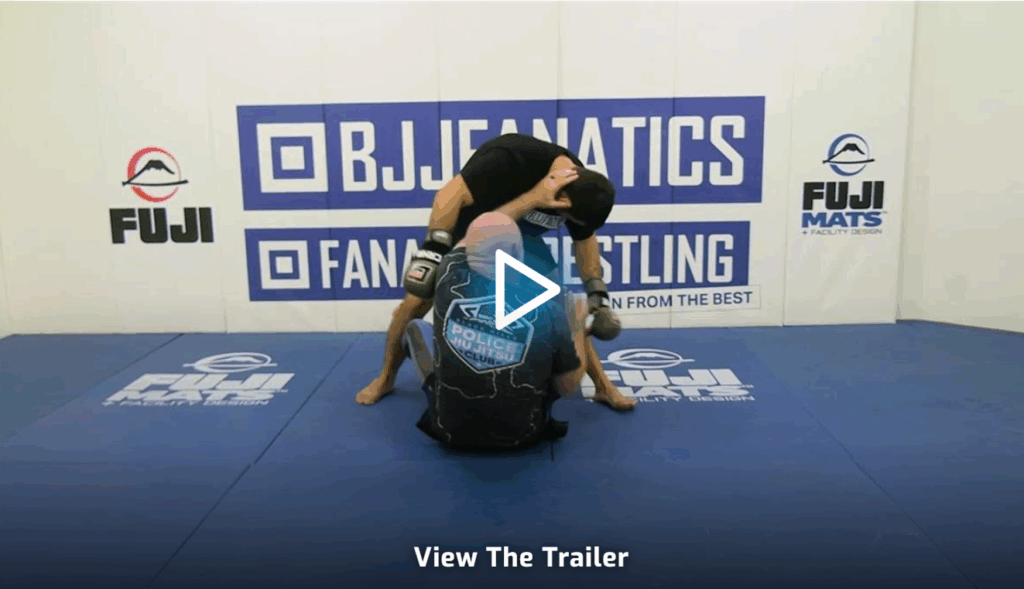
When you hear “ground defense”, you hope for more than just basic self-defense drills with a few token Jiu-Jitsu references. In this Ground Defense Chad Lyman DVD review, we’re looking at a system that was clearly built from live duty, not theory.

Chad Lyman’s four-part series promises to bridge Brazilian Jiu-Jitsu fundamentals with real-world conditions where people strike, scramble, and sometimes bring weapons into the mix. The structure, from supine defense on the floor to half guard on top and bottom, shows a deliberate progression.

Is BJJ for Self-Defense Still a Thing? 

In Jiu-Jitsu circles, “self-defense” often either means old-school stand-up Gracie material or a token chapter bolted onto an otherwise pure sport curriculum. What Lyman does here is different: he starts from situations that patrol officers and civilians actually see, then works backwards into positional Jiu-Jitsu.

Throughout this Ground Defense Chad Lyman DVD, one theme stands out: your goal on the ground isn’t to play a long guard battle, but to survive strikes, manage space, and either sweep decisively or stand up safely.

The course content follows that logic. You get an opening volume on supine defense against a standing suspect and sweeps from the floor, then move into closed guard vs strikes, tactical stand-ups, and finally butterfly and half guard scenarios.

The techniques themselves are recognizable to any Jiu-Jitsu practitioner—tripod and sickle sweeps, underhooks, hooks, and cross posts—but the way they’re packaged is firmly self-defense first. That makes the series especially attractive for people who train in a modern Jiu-Jitsu academy yet need material that translates to the job or street.

OG Grappling Machine Chad Lyman

To understand why this material lands so well, you need to know who is behind it. Chad Lyman has been training Mixed Martial Arts and Brazilian Jiu-Jitsu since the late 1990s, pairing that mat time with a full-time law-enforcement career.

He started his Jiu-Jitsu journey under a Rickson Gracie affiliate in Portland that later became associated with Rigan Machado and earned his blue belt from Chris Haueter, one of the famous “Dirty Dozen” first American black belts. Over the years he progressed to black belt (now a multi–degree black belt) while coaching Jiu-Jitsu and MMA consistently since the mid-2000s.

Professionally, Lyman served with the Portland Police Bureau before moving to Las Vegas, where he has worked in patrol, as a Field Training Officer, in gangs, on SWAT, and as part of specialized units like the Mobile Crimes Saturation Team and Advanced Officer Skills Training.

That blend of on-the-job experience and instructional pedigree eventually led him to become Director of Combatives for Progressive F.O.R.C.E. Concepts and a subject-matter expert in defensive tactics, use of force, and tactics for the Las Vegas Police Protective Association.

On the Jiu-Jitsu side, he is head BJJ coach at Xtreme Couture in Las Vegas, has coached competition teams, and serves as a personal ground-fighting coach for professional fighters. All of that informs the choices you see in the Ground Defense Chad Lyman DVD material—nothing feels like it was dreamed up in a vacuum.

Full Ground Defense Chad Lyman DVD Review

At a high level, Ground Defense is organized into four parts. The first two focus on supine defense and sweeps against a standing opponent, as well as using closed guard against strikes and a tactical standing sequence. Volumes 3 and 4  layer in posture, cross posts, and a variety of sweeps as a dynamic platform for either reversal or getting up.

Volume 1 – Principles of Stand Up Grappling

The opening volume lays the foundation for everything that follows. Lyman starts with an intro and “Intro To Principles”, which is where the series’ self-defense mindset really comes through.

Instead of jumping into random moves, he talks through how your body should be aligned on the ground, what your priorities are when a suspect is standing over you, and why careless movement can expose you to strikes or weapons. This is where the course first shows the difference between a generic sweep tutorial and a true Ground Defense Chad Lyman DVD approach.

From there, he moves into a set of structured responses when you’re flat on your back with someone on their feet in front of you. The follow-up chapters take familiar Jiu-Jitsu sweeps and plug them into those same realities.

The tripod and sickle options will be instantly recognizable to any modern guard player, but the emphasis here is on creating space, off-balancing quickly, and not eating clean shots while you work. Volume 1 is concise, but it does a good job of turning common sweeps into a survival toolbox instead of just point-scoring moves.

Volume 2 – Tactical Closed Guard

As the Ground Defense Chad Lyman DVD goes on, it narrows the focus to closed guard under fire, starting with closed guard. Rather than advocating a loose, open game, Lyman shows a clamp-based approach where you tie up posture, control distance, and prevent the kind of posture breaks that invite big punches or headbutts.

The goal is to make your guard miserable to strike from while still giving you options to off-balance and move the opponent. For people who have only ever played closed guard for collar chokes and arm locks, this alone is a valuable perspective on why the position still matters in a self-defense context.

Here, the Ground Defense Chad Lyman DVD emphasis on sequencing becomes obvious: you clamp, manage strikes, off-balance, and then create enough space to stand with your hands and eyes still in the fight. It’s simple on paper, but fills a gap that many traditional Jiu-Jitsu students never really close.

Volume 3 – Posture and Sweeping

The third volume shifts into a more dynamic blend of posture work, standing, and butterfly-based offense. The long chapter titled “Good Posture Cross Post And Get Up” ties together several ideas at once.

Lyman looks at how you can build a strong base, use cross posts to prevent being driven backwards, and choose between sweeping or standing depending on what the opponent gives you. This isn’t a purely “sport butterfly guard” approach; it’s a mobile platform that lets you either take the top or exit safely.

Each technique builds on the same movement themes—angles, off-balancing, and tight upper-body control—so nothing feels random. As with the other sections in this Ground Defense Chad Lyman DVD, the focus is always on what keeps you safest under pressure, not on collecting moves for their own sake.

Volume 4 – Sweeps

The final part of the Ground Defense Chad Lyman DVD dives into half guard from top and bottom, using underhooks, short hook sweeps, and named options like the Forklift and Push Up sweeps to reverse the script from compromised positions. It’s a compact but coherent curriculum that keeps circling back to one idea: protect yourself, improve position, then disengage or dominate as the situation demands.

Practice Sport, Think Street

One of the main questions with any self-defense instructional is: will people actually train this, or will it just become “shelf Jiu-Jitsu”? Lyman gives you a solid chance of the former.

Most chapters in the series are built around clear, repeatable scenarios—supine vs standing suspect, closed guard vs strikes, butterfly or half guard under pressure—so it’s easy to plug them into warmups, situational sparring, and law-enforcement in-service blocks.

Because the system is concept-heavy, you can also build themed weeks around strike management or tactical stand-ups, then fold the named techniques in as specific examples. For officers and security personnel, the material in this Ground Defense Chad Lyman DVD maps well onto policy-driven training: you’re not chasing submissions so much as you’re working to improve your position, disengage, or control.

The inclusion of half guard and butterfly also means you’re not limited to pristine starting positions; there’s realistic coverage of what to do when the fight looks messy. The Chad Lyman Ground Defense DVD works best when used alongside live drilling, pad work, and department-level scenario training, but it provides a structured technical backbone many programs lack.

GROUND DEFENSE CHAD LYMAN DVD DOWNLOAD

Who Is This For?

Belt-level wise, the sweet spot is probably late white belt through brown belt. Brand-new students can still get value from the posture and stand-up material, but having a basic understanding of guard, sweeps, and frames makes the content click faster.

Blue and purple belts who have mostly trained sport Jiu-Jitsu will likely feel the biggest shift, because the series shows how their familiar positions need to adjust once strikes and weapons are in play. High-level competitors will see less directly for IBJJF gameplans, but they may still appreciate the focus on posture, standing up safely, and decisive sweeps.

From a professional standpoint, the series is clearly designed with law enforcement and security in mind. If you’re a patrol officer, detention deputy, or private security working around confined spaces, you’ll recognize the situations Lyman is building around.

At the same time, self-defense–minded civilians who don’t care about tournament medals will find a lot to work with. They might not need every part of the curriculum, but the blend of positional Jiu-Jitsu and stand-up options makes this Ground Defense Chad Lyman DVD Review relevant to anyone who worries about the realities of a ground fight outside the academy.

The Ground Defense DVD is especially useful for coaches who want to add realistic self-defense blocks into an otherwise sport-heavy program without rewriting their whole curriculum.

Pros & Potential Drawbacks

Pros:

  • Concept-based structure: each volume revolves around a small number of clear scenarios and ties the techniques together with consistent ideas—protect yourself, control distance, off-balance, then either sweep or stand.
  • Instructor credibility: Lyman’s background lends instant trust; he’s refining what has worked across decades of law enforcement and Jiu-Jitsu coaching rather than guessing what might work in a chaotic situation.
  • Familiar, adoptable techniques: the series uses recognizable options like tripod and sickle sweeps, closed-guard clamp concepts, plank and butterfly sweeps, and half guard solutions, which most academies can plug into existing curricula without confusing students.
  • Efficient use of time: instead of padding the runtime, the instruction moves briskly through focused chapters, making it easy to re-watch a single piece before training and immediately build a round or class segment around it.

Potential Drawbacks:

  • Limited sport-game depth: students looking for a deep dive into pure sport Jiu-Jitsu strategy may find the material too narrow, since it’s not about lapel tricks or tournament meta.
  • Demanding for total beginners: some absolute beginners might feel overwhelmed by the speed of the instruction without in-person guidance, even though, for the target audience, the balance of depth and practicality keeps this Ground Defense Chad Lyman DVD sitting comfortably in the “useful” column more often than not.

Learn Real Jiu-JItsu

Ground Defense is a focused, no-frills series that does exactly what it promises: brings modern Jiu-Jitsu fundamentals into the messy realities of self-defense and duty work. Across the four parts, Lyman walks you from supine defense against a standing suspect, through closed guard vs strikes and tactical stand-ups, into butterfly and half guard solutions that still respect strikes and weapons.

It never tries to be a one-stop-shop for every aspect of Jiu-Jitsu; instead, it stays in its lane and refines the pieces of the game that matter most when things go wrong fast. That clarity of purpose is a big reason this Ground Defense Chad Lyman DVD lands on the practical side.

Sarah Galvao On Gi And No-Gi: “They’re Two Different Sports”

Sarah Galvao On Gi And No-Gi: "They’re Two Different Sports"
  • In a new interview, Sarah Galvao on Gi and No-Gi draws a hard line between the uniforms, calling them “two different sports” with their own demands and rhythms.
  • She argues that No-Gi is nonstop motion with little chance to stall, while Gi Jiu-Jitsu lets athletes slow things down and build layered positional games.
  • Her stance comes on the back of a huge 2025 season: Brasileiro double gold, dominant Gi and No-Gi runs, and a breakout year on the elite circuit.
  • As André Galvao’s daughter and now a freshly promoted black belt, she’s carrying a family legacy while helping shape the future of women’s Jiu-Jitsu at Atos HQ.
  • With Sarah Galvao on Gi and No-Gi becoming a talking point across the community, her take could influence how the next generation chooses to specialise – or tries to master both “sports” at once.

Sarah Galvao On Gi And No-Gi: Why She Sees Two Different Sports

If you wanted someone to settle the Gi vs No-Gi debate, you could do a lot worse than a newly minted black belt who has been winning in both. That is exactly what fans are getting with Sarah Galvao on Gi and No-Gi in her recent podcast appearance, where she flat-out says they are “two different sports.”

For Galvao, it is not just about putting on a kimono or shorts. She breaks it down in terms of pace, decision-making, and the kind of athlete each format demands.

In No-Gi, she stresses, there are no sleeve or collar grips to slow an opponent down, so matches become an almost constant scramble. You have to move more, work harder for every position, and accept that any opening might be the only one you see all match.

“Between Gi and No-Gi, it’s two different sports. It’s so different. You can’t tell me it’s the same because it’s completely different”
– Sarah Galvao –

By contrast, Gi Jiu-Jitsu gives you handles – literally. With strong grips, you can freeze an opponent in place, build layered attacks, and lean more on tactical stalling or tempo changes. That is why she compares the divide to completely different combat sports sharing the same family tree, rather than two “flavours” of the same thing.

It is a bold stance from someone who competes in both formats at the highest level. But coming from Sarah Galvao on Gi and No-Gi, it hits differently: she is living the contrast every week, and her recent run of results backs up that perspective.

Gi vs No-Gi Jiu-Jitsu Explained Through A Champion’s Lens

When you watch Galvao’s matches, the theory behind Sarah Galvao on Gi and No-Gi turns into something you can literally see on screen.

In Gi events, her game leans on strong grips, structured passing, and classic back-taking sequences that look straight out of the Atos playbook.

In No-Gi, everything is sharper and looser, built around blitz passing, re-attacks, and the kind of edge-of-balance scrambles that Gi fabric would normally shut down.

She often talks about how hard it is to truly stall in No-Gi. Without a lapel to clamp down on, even a technically perfect guard pass can vanish in a second if you do not immediately stabilise.

“No-Gi is so much more movement. You have to move so much more and you have to work for position so much more than you would in the Gi,”
– Sarah Galvao –

In the Gi, Galvao can apply a different toolkit. She uses collar-and-sleeve grips to drag opponents off-balance, set up stack passes reminiscent of her father’s style, and extend exchanges on the ground where micro-adjustments matter more than raw speed.

Her wins over other young stars in major Gi championships showcase how much she trusts those positional layers – she is willing to cook opponents in dominant positions, not just hunt frantic scrambles.

The result is that Sarah Galvao on Gi and No-Gi is not an abstract debate. It is a direct reflection of how she has to adjust her mind and body for each ruleset, often within the same month of competition.

From Dream Team Prodigy To 2025 No-Gi Pans Champion

The timing of this conversation could not be better for her career arc. Galvao has been on radars for years as André and Angelica Galvão’s daughter, but 2024 and 2025 are the seasons where her results caught up with the hype.

At Atos HQ, she has been a core part of the women’s “Dream Team” project, built to push a new generation of female competitors to the top of the sport. Her bio there highlights a Purple Belt Grand Slam, an early sign that she was capable of clearing an entire season’s major titles.

“In the Gi we don’t really think about that stuff (grips). Usually we can just hold on to the person and usually they tire out,”
– Sarah Galvao –

From there, she kept stacking results. She took double gold at the Brazilian Nationals, then replicated that form at major Gi events like the IBJJF Pans, including a much-discussed win over Helena Crevar in the absolute division.

In 2025, she turned that momentum into a brutal run across Gi and No-Gi. She captured Brasileiro double gold again while surging in international No-Gi brackets, then helped Atos secure the team title as IBJJF crowned them 2025 No-Gi Pans champions.

Galvao herself emerged as one of the standout black belt women on the card, unaderlining why so many people now quote Sarah Galvao on Gi and No-Gi when they talk about modern rule-set specialisation.

Her 2025 Worlds campaign ended with something even bigger: after a storming performance in the lightweight brown belt division, Galvao was promoted to black belt on the podium by her parents – a passing-of-the-torch moment that felt inevitable but still hit hard emotionally.

A Father’s Reflections And Sarah’s Future In Women’s Jiu-Jitsu

If you want to understand the pressure and promise around Galvao’s career, André Galvão’s own writing about his daughter is essential. In his “A Father’s Reflections” piece about the CJI2 event in Las Vegas, he describes the weekend as one of the longest and most meaningful of his life, juggling coaching, seminars, and watching his daughter step under the bright lights.

He talks openly about the sacrifices involved: how often she has chosen training camps over “normal” life milestones, how faith anchors their family through wins and losses, and how their shared goal is bigger than medals – it is about what kind of person Jiu-Jitsu helps her become.

“It’s so hard to stall in No-Gi. There’s always something happening.”
– Sarah Galvao –

That is the backdrop to Sarah Galvao on Gi and No-Gi. When she says these are two different sports, she is not trying to win an internet argument. She is mapping out the reality she lives every day: switching gears between Gi Grand Slams, No-Gi super fights, and high-stakes invitationals like CJI2, all while carrying one of the heaviest surnames in modern Jiu-Jitsu.

And as long as Sarah Galvao on Gi and No-Gi keeps winning across both formats, her opinion is only going to carry more weight in every academy where the “Gi or No-Gi?” question gets asked.

Gold Standard Gi Submissions Joel Tudor DVD Review [2025]

Gold Standard Gi Submissions Joel Tudor DVD Review
  • Compact Gi submissions instructional built around a small set of high-percentage chokes and joint locks.
  • Emphasis on classic closed-guard and top-position attacks rather than trendy modern lapel games.
  • Strong alignment between Joel Tudor’s competitive pedigree and the techniques he chooses to highlight.
  • Best suited to white–brown belts who want to weaponize a few reliable Gi submissions, not learn an entire system.
  • Rating: 7/10

GOLD STANDARD GI SUBMISSIONS JOEL TUDOR DVD GET HERE

This review takes a close look at the Gold Standard Gi Submissions Joel Tudor DVD and whether it really earns a spot in your training rotation in 2025. As with most modern BJJ Fanatics releases, the promise here is a focused, concept-driven look at Gi submissions that you can plug straight into live rolling.

The question is how well that promise is delivered in practice, and where this instructional sits compared to the flood of modern Gi content. Rather than trying to cover every position under the sun, this series zooms in on classic collar chokes, triangles, and shoulder locks, with an emphasis on smooth, repeatable sequences.

We’ll walk through what’s actually on the instructional, how the material flows across the volumes, how it connects to Joel’s background as a world-class surfer and Jiu-Jitsu black belt, and what type of grappler is most likely to benefit. We’ll also be honest about the limitations, so you can decide if this is the right purchase or if your money is better spent on something more system-heavy.

Gi Submissions Are Still Relevant

For most people, Gi submissions live or die on a few core mechanics: how well you use the collar, how you connect your grips to off-balancing, and how cleanly you transition from control to the choke or joint lock.

The Gold Standard Gi Submissions Joel Tudor DVD positions itself squarely in this space, focusing on the kind of bread-and-butter attacks that never really go out of style. Instead of trying to reinvent the wheel, it leans into tried-and-true concepts like loop chokes, cross-collar pressure, and classic triangle chains tied directly to sweeps.

This instructional aims to sharpen those high-percentage sequences and present them in a way that a white belt can follow, while still giving purple and brown belts details they may have overlooked. From a broader BJJ perspective, this type of material is best thought of as a fundamentals-plus resource.

It doesn’t try to give you a full game from guard pull to referee’s bow, but it does reinforce the idea that your Gi submissions should come from positions you already know well. If you’re the sort of grappler who likes making a few favorite moves absolutely bulletproof, the structure of this course is likely to make sense.

Joel Tudor: Hanging Loose on the Mats and on the Board

Joel Tudor is a rare case of someone who became a legend in one sport and then quietly built a serious résumé in another. Born in San Diego in 1976, he made his name first as a professional longboarder, winning multiple world titles and becoming one of the defining stylists of his generation in the surf world.

That same sense of timing, balance, and respect for tradition shows up clearly in his approach to Jiu-Jitsu. Joel started training Jiu-Jitsu in the early 2000s and earned his black belt in 2008 from Carlson Gracie black belt Rodrigo Medeiros, after already establishing himself as a star in surfing.

Along the way, he picked up important results on the IBJJF and ADCC circuits, including American Nationals and Pan American titles as well as No-Gi world championships in the masters divisions. He has also spent time on the mats in judo and other grappling arts, which helps explain the blend of classic collar chokes and wrestling-style transitions you see in his game.

When someone with that much time in both worlds releases something like the Gold Standard Gi Submissions Joel Tudor DVD, the expectation is that you’re getting a distilled version of the techniques he actually trusts, rather than a random grab bag of moves.

Play-By-Play Gold Standard Gi Submissions Joel Tudor DVD Review

At its core, this is a very focused Joel Tudor Gi Submissions DVD that divides the material into compact volumes built around a small number of high-percentage attacks. Instead of sprawling into dozens of chapters, each section stays on theme, revisiting the same families of techniques from slightly different angles so you actually remember what you’ve learned.

That structure will feel familiar if you’ve followed Joel’s surfing career, where he has always favored depth and style over sheer trick count. The upside is that you’re much more likely to walk away with one or two true “A-game” finishes you can rely on, even if the overall menu of techniques is relatively narrow compared to some of the huge multi-hour mega-sets on the market.

Volume 1 – Chokes & Strangles

Volume 1 opens with a brief intro before diving straight into Joel’s take on the loop choke, the cross-collar lapel choke, and a scissor-sweep-to-triangle chain. The pacing reflects what the product description promises: little fluff, lots of time spent on the actual mechanics of finishing chokes once you’ve broken posture or tipped an opponent off balance.

If you already use these attacks, you’ll recognize the positions immediately, but the emphasis here is on subtle details that make them bite harder in live rolls. As the first slice of the Gold Standard Gi Submissions Joel Tudor DVD, this volume functions like a primer on using standard collar grips in a much more ruthless way.

The loop choke section is especially useful if you like to threaten from standing or from a broken-open guard, while the cross-collar material reinforces how to turn a basic grip sequence into a real threat rather than a token attempt before you open guard and move on.

Volume 2 – Armlocks

Volume 2 shifts the focus toward shoulder locks, closed guard combinations, and a north–south armbar, rounding out the submission palette without straying too far from classic Gi positions.

The shoulder lock material connects naturally to the collar chokes from Volume 1, giving you a way to punish defensive frames and failed posture breaks.

The closed guard combinations feel like the logical continuation of the earlier triangles and chokes, adding joint locks that keep your opponent guessing about which limb is really under threat.

In the context of the overall Gold Standard Gi Submissions Joel Tudor DVD, this second volume is where the system feel really starts to show. By the time you reach the north–south armbar segment, you’ve already seen how Joel likes to transition off collar attacks and guard work, so the armbar becomes another endpoint on the same road rather than an isolated trick.

Setting Traps in BJJ

On the mats, the real test of any instructional is how quickly you can plug it into live training. The material here lends itself well to positional sparring: start from closed guard with a deep cross-collar grip, set a timer, and try to cycle between loop choke, scissor-sweep-to-triangle, and shoulder lock threats without abandoning control.

Because the techniques are based on very standard Gi positions, you don’t need a special game to try them – most recreational grapplers will find themselves in these spots several times per round. One of the easier ways to implement the Gold Standard Gi Submissions Joel Tudor DVD is to pick just one sequence from Volume 1 and one from Volume 2 and make them your sole focus for a month of training.

For example, you might anchor your closed guard around the scissor-sweep-to-triangle chain while also looking for north–south armbars any time you pass. That kind of narrow focus lines up well with how the series is constructed and gives you a realistic chance of seeing progress fast.

Because Joel’s background includes both high-level surfing and years of competitive Jiu-Jitsu, the pacing and sequencing feel well suited to older or busier hobbyists as well as younger competitors. Nothing here requires freak athleticism or unusual flexibility; the key is putting in enough drilling that the grip changes and angle adjustments become second nature.

DOWNLOAD GOLD STANDARD GI SUBMISSIONS JOEL TUDOR DVD

Who Is This For?

In terms of belt level, the sweet spot for this Gold Standard Gi Submissions Joel Tudor DVD is probably late white belt through brown belt. Total beginners can still benefit, but they may need some extra help from an instructor to understand when to chase the collar versus when to transition to a sweep or armbar.

More experienced grapplers will appreciate the emphasis on refining staple submissions rather than chasing the latest trend, especially if they already like playing closed guard or basic top control in the Gi.

If you’re a competitor who prefers a small, high-percentage toolkit rather than a giant playbook, the Gold Standard Gi Submissions Joel Tudor DVD lines up nicely with that philosophy. Hobbyists who roll a few times a week and want to become “the collar choke person” or “the loop choke person” at their gym will also get clear value, since the series repeatedly pushes you back toward the same finishes.

Pros & Potential Drawbacks

As with most focused instructionals, the Gold Standard Gi Submissions DVD comes with a clear set of strengths and a few trade-offs you should know before buying. The biggest positive is how tight and theme-driven the content feels. At the same time, that tight focus means the series may not satisfy grapplers who want a single purchase to cover an entire Gi system from takedown to back control.

Pros:

  • Clear, tightly organized structure that makes it easy to remember the small number of techniques presented.
  • Strong emphasis on classic Gi fundamentals – loop chokes, cross-collar pressure, triangles, and shoulder locks – that work at every belt level.
  • The Gold Standard Gi Submissions Joel Tudor DVD repeatedly revisits the same submissions from different angles, which is ideal if you learn best through focused repetition.
  • Joel’s long competitive and coaching background gives the details a lived-in feel rather than a theoretical one.
  • Production quality is solid and the runtime feels digestible, making it realistic to rewatch the key sections several times in a month.

Potential Drawbacks:

  • The narrow scope means you won’t find a full positional system here – there’s little to no coverage of guard retention, passing, or modern lapel-based guards.
  • Advanced competitors who already have dialed-in collar chokes and triangles may feel there isn’t enough new material to justify a full-price purchase.
  • Because the series stays quite compact, some viewers might wish for more troubleshooting sections or sparring footage to see how the sequences look against fully resisting opponents.

Focus on the Collars!

Taken as a whole, the Gold Standard Gi Submissions Joel Tudor DVD is a compact, collar-choke-heavy instructional that delivers exactly what the product page promises: a handful of Joel’s trusted Gi submissions, presented without much fluff. It’s not trying to be the definitive word on Gi Jiu-Jitsu, and it doesn’t need to be.

Instead, it offers a tight collection of sequences that can realistically become a core part of your A-game if you commit to drilling them. If you know what you’re buying – a sharp, traditional Gi submissions tune-up rather than a full game overhaul – the Gold Standard Gi Submissions Joel Tudor DVD worthwhile addition to your digital library.

[WATCH] How AI Video of Islam and Ali Kissing & Religious Mocking Kicked Off The Dillon Danis UFC Brawl

Dillon Danis UFC Brawl
  • The Dillon Danis UFC brawl at UFC 322 erupted after Danis showed an AI deepfake of Islam Makhachev and Ali Abdelaziz kissing to the Dagestani section at Madison Square Garden.
  • The melee involved members of Makhachev’s team in the crowd and briefly threatened to overshadow his welterweight title win.
  • Coach Javier Mendez says Danis not only used an offensive AI-generated video, but mocked Islam as a religion, crossing a line far beyond normal fight promotion.
  • UFC CEO Dana White has now issued a lifetime ban, vowing Danis will never attend another UFC event after the UFC 322 chaos.
  • The incident throws up serious questions about AI-generated “content,” religious disrespect, and how promotions police fighter behaviour outside the cage.

Inside The Dillon Danis UFC Brawl At Madison Square Garden

Islam Makhachev’s dominant welterweight title win at UFC 322 should have been the headline story coming out of Madison Square Garden. Instead, much of the post-fight conversation has centred on the Dillon Danis UFC brawl that exploded in the crowd and led to his permanent ban from all future UFC events.

The confrontation broke out in the spectator section, not the cage, during a break between championship fights on the New York card.

Video from multiple angles shows Danis tangled up with members of Makhachev’s team — including Abubakar Nurmagomedov and others — as punches fly and security floods the area to split people apart.

Beer and debris can be seen flying as the Dagestani section surges forward. What might look like “just another” combat sports skirmish had a very specific trigger.

According to several eyewitness accounts and coaches close to Team Makhachev, Danis hadn’t simply been jawing with the Dagestani fans; he was walking around the arena, settling into different seats, and eventually positioning himself right next to Khabib Nurmagomedov’s crew.

From there, the Dillon Danis UFC brawl moved from simmering tension to full boil in a matter of seconds — and it all started with one phone screen.

How An AI Deepfake Turned Trolling Into A Flashpoint

The spark behind the chaos wasn’t a shove, a bad call, or a beer thrown from the cheap seats. It was an AI-generated deepfake.

Coach Javier Mendez, speaking after the event, said Danis was deliberately showing the Dagestani section fabricated clips of Islam Makhachev and manager Ali Abdelaziz in a romantic embrace. He added that there were other sexually explicit deepfakes involving Makhachev, all designed to humiliate and provoke.

They showed me the videos he was playing – Islam and Ali in a relationship-type embrace.
– Javier Mendez –

Mendez has been blunt about what bothered the team most: it wasn’t just that Danis was using fake images of his fighter, but that he was mocking Islam as a religion in the process.

You’ve got to stop taking on people’s religion like that. He was making fun of it.
– Javier Mendez –

According to Mendez, Danis deliberately chose to sit near Team Khabib and the Dagestani supporters while playing the clips on his phone, essentially waving a red rag in front of a section full of fighters and fans who saw the content as a direct attack on their faith and culture.

He sat right where Team Khabib was. You’re asking for trouble when you do that with that kind of video.
– Javier Mendez –

The episode fits a pattern. In the build-up to his boxing match with Logan Paul, Danis flooded social media with manipulated and explicit content aimed at Paul’s fiancée, behaviour that ultimately resulted in a defamation lawsuit.

Now, he has followed a similar script — only this time, the targets were a devout Muslim champion, his manager, and a whole section of Dagestani teammates and supporters in the arena.

When the crowd realised exactly what he was showing, shoves turned into punches and the Dillon Danis UFC brawl was on. Security and police eventually dragged people apart, but the damage — reputational and otherwise — was already done.

Dillon Danis Banned From UFC After 322 Chaos

In the immediate aftermath, all eyes turned to UFC CEO Dana White. By the time the dust had settled on Makhachev’s title win, White had already made up his mind about Danis’ future in the organisation.

Several outlets citing White’s post-fight comments report that Danis, 32, has been permanently banned from attending UFC events. White confirmed that no criminal charges would be pursued over the UFC 322 incident, but said Danis would “never” be allowed at another show under the promotion’s banner.

He won’t be back at any UFC event – ever.
– Dana White –

White has also shouldered some of the blame himself. He acknowledged that officials had warned him Danis was roaming around and taking other fighters’ seats, yet he let the situation ride, not expecting it to explode into a mass brawl right next to one of the most high-profile teams in the sport.

In a separate post-fight media appearance, Makhachev made it clear he felt the punishment could have gone even further.

For Danis, who was famously involved in the infamous post-fight melee at UFC 229 between Conor McGregor and Khabib Nurmagomedov’s camps, the UFC 322 fallout looks like the end of any formal connection with the world’s biggest MMA promotion. What began as another night of trolling has now turned into a career-altering line in the sand.

Why The Dillon Danis UFC Brawl Could Change MMA’s Relationship With AI

Beyond the drama and memes, the Dillon Danis UFC brawl has opened up a new front for combat sports: how to deal with AI-generated content that crosses into harassment, defamation, and religious abuse.

In one sense, this isn’t new. Fighters have always used trash talk, edited images, and call-outs to hype fights and build narratives.

What’s different now is the speed and realism with which AI tools can manufacture damaging images — and how quickly those images can go from a timeline to a live arena full of people with real emotions and real stakes.

There are also obvious implications for event security. Danis wasn’t on the card at UFC 322; he was in the crowd, moving around with a phone in his hand. That was enough to trigger a melee involving elite fighters, families, and paying fans.

Expect promotions to rethink how they handle known agitators sitting near rival teams — especially when AI “content” can be deployed like a weapon.

BJJ Black Belt Ivan Skoko Tackles Pickpocket In Dramatic London Underground Takedown

BJJ Black Belt Ivan Skoko Tackles Pickpocket In Dramatic London Underground Takedown
  • BJJ black belt Ivan Skoko tackles pickpocket on the Northern line platform at Borough Underground station after hearing a woman scream.
  • The Croatian-born gold medalist uses a judo-style foot sweep to drop and control the suspect for around 25 minutes until British Transport Police arrive.
  • Officers later find a claw hammer and two allegedly stolen phones, including one with a Hello Kitty case, on the suspect.
  • Skoko, a Brazilian Jiu-Jitsu champion at British Open and London Fall IBJJF events, says his intervention was a “natural reaction” shaped by years of training.
  • The incident has reignited debate around BJJ self-defense in real life, public safety on the London Underground, and the role of trained fighters as protectors.

BJJ Black Belt Ivan Skoko Tackles Pickpocket On London Underground

On an ordinary Tuesday evening commute, BJJ black belt Ivan Skoko tackles pickpocket might sound like the headline to a wild gym story – but this one unfolded in front of stunned passengers on the Northern line platform at Borough Underground station.

The 29-year-old Croatian national had just left Fight City Gym in south London and boarded a northbound train when a piercing scream cut through the noise of the carriage. Skoko initially thought someone had been seriously injured or even stabbed.

He removed his AirPods, quickly assessed the situation and asked nearby women if they were OK. One passenger pointed out a man she said had tried to rob her phone just as the train doors were about to close.

Skoko forced the doors back open, stepped onto the Borough Underground station platform and closed the distance on the suspect within seconds.

Video and eyewitness accounts describe a controlled takedown rather than a wild brawl: the martial artist used a foot sweep to dump the alleged pickpocket on the ground and secure top control, pinning him in place as other commuters watched.

Skoko later explained that he moved the struggle toward a wall to reduce the risk of both men tumbling towards the tracks, showing the sort of spatial awareness usually drilled in competition prep, not rush hour chaos.

From BJJ Gold Medalist To Real-Life Underground Hero

This wasn’t some hobbyist intervening on instinct. Before the night where BJJ black belt Ivan Skoko tackles pickpocket became a headline, he had already built a serious résumé on the mats.

Skoko has established himself as a Brazilian jiu-jitsu champion on the UK circuit, winning the men’s ultra-heavy division at the British Open earlier in the year and taking a gold medal at the London Fall International Open IBJJF Jiu-Jitsu Championship.

He began training in martial arts as a teenager in Croatia. Eventually, he relocated to London, where he now teaches and trains regularly, including at Fight City Gym near Elephant and Castle.

On the night of the incident, he was simply changing lines on the London Underground en route to another session in Hackney when everything kicked off.

Stepping in felt like a duty for Skoko, not a photo opportunity. He described his actions as a “natural reaction to defend women, children, and elderly people as a professional fighter”, reflecting a mindset where a Brazilian Jiu-Jitsu champion carries their responsibilities off the mats as well as on them.

That experience, he says, helped push him deeper into training and reinforced his determination not to stand by when he sees vulnerable people targeted.

Training, Mindset, And The Foot Sweep That Stopped A Robbery

What makes this case so striking to the BJJ community is how textbook fundamentals translated into real-world stakes.

Witness accounts describe Skoko using a judo-style foot sweep — a staple takedown in many grappling gyms — to dump the suspect cleanly to the floor. From there, classic pressure and positional control did the rest.

Skoko reportedly kept his weight centered, shifted toward the wall to avoid the platform edge, and gave clear verbal commands. At one point, footage captured the man on the ground saying he didn’t “want to stab” Skoko, underscoring that this was more than a petty scuffle.

When British Transport Police finally reached the Northern line platform at Borough, they arrested a man in his 20s on suspicion of theft, possession of an offensive weapon, and handling stolen goods.

Officers recovered two smartphones — including one with a Hello Kitty case — and a rusty claw hammer concealed in the suspect’s clothing.

Despite that discovery, Skoko insists he never lost control of his emotions. He was quoted to be “controlling the situation physically and verbally at all time without using any unnecessary use of force,” underlining how martial arts training can emphasize restraint, not just aggression.

What Ivan Skoko’s Intervention Says About BJJ, Masculinity, And Public Safety

As the story of how BJJ black belt Ivan Skoko tackles pickpocket spread, debate quickly widened beyond one dramatic arrest. For Londoners, it tapped into concerns about rising thefts; for grapplers, it became a living case study in BJJ self-defense in real life.

British Transport Police figures show more than 79,000 reports of pickpocketing in the capital between March 2023 and March 2024, with only a tiny fraction of those cases solved.

Skoko has publicly criticized what he sees as weak deterrents, arguing that offenders often target students, women and smaller commuters they perceive as easy victims.

He’s also unapologetic about framing his actions in terms of masculinity and responsibility. In one striking quote, he warns that “if you kill masculinity, we will kill society,” pushing the idea that physically capable men have an obligation to step in when vulnerable people are threatened.

At the same time, his comments make clear he doesn’t advocate reckless vigilante justice. He talks about calculated intervention, years of drilling technique, and the importance of remaining calm under pressure — essentially a blueprint for how BJJ self-defense in real life should look when it’s done right.

Whether you agree with all of his views or not, the night BJJ black belt Ivan Skoko tackles pickpocket on the London Underground will live on as a vivid reminder of what can happen when high-level grappling, composure, and a split-second decision collide on a crowded platform.

The Arm Drag Attack System Dan Vallimont DVD Review [2025]

The Arm Drag Attack System Dan Vallimont DVD Review

Key Takeaways

  • Tight, system-based approach to arm drags that links setups, finishes, and counters into one roadmap.
  • Strong focus on hand fighting and positional discipline that transfers well to wrestling and Jiu-Jitsu stand-up.
  • Clean progression from basics to advanced chains; the defensive volume makes the system feel complete.
  • Production and structure are straightforward and easy to navigate, though some sections rush past finer details.
  • Best for grapplers who already have basic stance and motion; true beginners may need to pause and drill a lot.
  • Rating: 9/10

ARM DRAG ATTACK SYSTEM DAN VALLIMONT DVD DOWNLOAD

The Arm Drag Attack System Dan Vallimont DVD is all about turning one of wrestling’s most reliable ties into a full-blown gameplan. Rather than treating the arm drag as a single move, Vallimont uses this instructional to show how it can become the centre of your neutral strategy, from first contact all the way to scoring and finishing.

You get three volumes that move in a logical sequence: first, earning the drag and controlling ties; second, converting those positions into takedowns; and third, dealing with opponents who try to drag you or counter your entries. It’s presented as a wrestling instructional, but a lot of what’s here is directly useful for Jiu-Jitsu and No-Gi takedown work, especially if you favour back takes or chain wrestling into leg attacks.

This Dan Vallimont DVD Review walks through the structure of the series, looks at how it fits into modern grappling, and helps you decide if it deserves a spot in your training rotation.

The Art of Kuzushi Using the Torso

Arm drags live in that sweet spot between safety and aggression. You’re not diving underneath someone or giving up position; you’re off-balancing them, opening angles, and forcing reactions without overcommitting.

In broad BJJ terms, you can think of the drag as a standing kuzushi tool. From collar ties, wrist control, or 2-on-1s, you’re constantly trying to move the other person out of their stance, expose their back, or create a path to the hips.

A good drag doesn’t just “pull the arm”; it shifts their weight, turns their shoulders, and puts you on the better angle—exactly what you want before a takedown or back take. An instructional like the Arm Drag Attack System Dan Vallimont DVD shines because it doesn’t just show isolated moves.

It digs into how to earn the position in the first place, how to manage wrist control battles, and how to connect your drags to doubles, singles, fireman’s carries, ankle picks, and more. For Jiu-Jitsu athletes used to collar ties and over-unders, that kind of structured neutral game can be a big upgrade over “just shoot a double”.

Penn State Captain Dan Vallimont

Dan Vallimont isn’t just a coach who likes arm drags—he has the competitive résumé to back up a system-heavy approach. He was a two-time NCAA Division I All-American for Penn State, taking third in 2008 and making the NCAA finals in 2010 at 165 pounds, and across four NCAA Championship appearances, he never finished lower than the round of 12.

Before that, he was a standout at Jefferson Township High School in New Jersey, where he became a two-time state champion and posted a 134–9 high-school record while also serving as a multi-year team captain.

At Penn State, Dan Vallimont captained the Nittany Lions for two seasons, graduating with a degree in architectural engineering—so you’re getting a system from someone who literally thinks in structures.

After college, Vallimont stayed on the competitive path, making Team USA’s World Cup freestyle squad in 2014 and collecting solid results at senior-level events like the US Open and international tournaments.

Alongside competing, he built a serious coaching résumé, spending years as an assistant and head assistant coach at Hofstra before taking on roles with programs like Penn and the Pennsylvania RTC.

The emphasis on fundamentals, positional discipline, and clear drilling sequences is very much in line with his other instructionals, and it’s easy to see how the lessons in the Arm Drag Attack System Dan Vallimont DVD have been pressure-tested at NCAA and international levels.

Complete Arm Drag Attack System Dan Vallimont DVD Review

The Arm Drag Attack System Dan Vallimont DVD is structured as three volumes that move from foundations, to offensive conversions, to defensive drags and counters. Each volume covers a specific phase of the game, but they’re clearly designed to feed into each other so that the arm drag never exists in isolation.

Volume 1 – Getting to the Arm Drag

Volume 1 is all about earning the arm drag and getting comfortable living in those ties. Vallimont opens with an introduction and then goes straight into the basics of positioning and entries, which is exactly what you’d hope for: stance, distance, and the mechanics of how to control an arm rather than just grabbing and yanking.

From there, he layers in various drills that help you feel how to move an opponent’s weight without blowing your own base. The wrist-control chapters are a big highlight. They show how to navigate those mini-battles that happen before any big move—how to recover when your opponent has your wrist, how to use their grip against them, and how to re-establish your own preferred ties.

The Arm Drag Attack System Dan Vallimont DVD really leans on these details, because if you can’t win the wrist fight, you’ll rarely earn a clean drag in live resistance. From there, Vallimont moves into variations like the “Underhook Drag”, “Over-Tie Drag”, and 2-on-1 options to both the near and far side.

Volume 2 – Arm Drag Attacks

If Volume 1 builds the frame, Volume 2 is where you start cashing it in for points. It kicks off with arm drag takedowns, immediately connecting your drag to a scoring position where you’re behind your opponent with your hips close. A couple of hip drags show different ways to finish when your partner is trying to stay upright or lean away.

As the volume progresses, Vallimont mixes classic finishes with drag-based entries: back finishes off the sag, ankle picks, outside-step fakes into drags, doubles, traditional fireman’s carries, and sweep singles.

There’s a nice sense of chain wrestling here—if they post, you go one way; if they square up, you have another option; if they try to limp arm out, you’re already transitioning to a different finish.

The later chapters continue this theme with sequences like drag to 2-on-1,  the Sag Head Lock, and arm spin, along with far-side options including ankle picks, fireman’s carries, and sweep singles. This middle portion of the Arm Drag Attack System Dan Vallimont DVD feels the most directly “plug and play” for competitive grapplers.

Volume 3 – Drag Defense

The final part flips the script: instead of being the one doing all the dragging, you’re often the one being dragged—or at least being attacked from the front headlock and similar positions. It opens with headlock defense, immediately addressing a common fear in both wrestling and Jiu-Jitsu: getting stuck underneath after a failed attack or being yanked into a front headlock.

Volume 3 of the Arm Drag Attack System Dan Vallimont DVD shows how to use those situations to create your own drags and takedowns instead of just defending. It covers a series of defensive drag” chapters that answer specific scenarios: front headlock escapes, counters to failed fireman’s carries, and high-crotch counters.

The idea is that whenever someone tries to run you into a bad position, you’re ready with a drag of your own. The Re-Drag material closes the loop nicely, reinforcing the idea that arm drags are a two-way weapon: if they drag, you drag back and reclaim the initiative. I

Early Back Exposure in Grappling

From a practical standpoint, the system is very drill-friendly. Volume 1 gives you specific partner drills for earning the drag, winning wrist control, and feeling how to pull someone out of stance without chasing.

You can plug those reps into warm-ups or specific training rounds, especially if you’re trying to build better hand fighting into your Jiu-Jitsu stand-up or wrestling classes.

Volume 2 is ideal for sparring scenarios: pick one or two finishes—say, drag to double and drag to ankle pick—and run constrained rounds where you’re only allowed to score from those options. Over time, you start to feel how to steer ties so that those finishes naturally present themselves, rather than forcing them from bad angles.

The Arm Drag Attack System Dan Vallimont DVD gives you a focused blueprint for turning collar ties, wrist grabs, and 2-on-1s into back exposure or leg attacks. Grapplers who like to play guard can also benefit by using the same concepts when coming up on singles or chasing the back from seated guard, since the off-balancing and angle changes are essentially the same.

ORDER HERE ARM DRAG ATTACK SYSTEM DAN VALLIMONT DVD

Who Is This For?

The Arm Drag System Dan Vallimont DVD is best suited to grapplers who already understand basic stance, motion, and level changes, and who want a more organised neutral game. If you’ve been hand-fighting for years but mostly looking for single doubles without a clear tie-up strategy, this series can give you a solid backbone for your stand-up.

Intermediate and advanced grapplers will probably get the most out of it, since the pace assumes you’re comfortable with common finishes and can visualise how they plug into live matches. For experienced Jiu-Jitsu players who cross-train wrestling or No-Gi, it’s a great way to sharpen the tie-up phases that often get neglected in typical Jiu-Jitsu warm-ups.

Beginners can still use it, but they’ll need to pause frequently and spend extra time on the fundamentals shown in Volume 1 before trying to run the full chains from Volume 2 and 3. For absolute newcomers, the Dan Vallimont Arm Drag DVD is more of a roadmap for where you want your neutral game to end up rather than a true “day one” starting point.

Pros & Potential Drawbacks

Pros:

  • Clear, logical structure from basics to advanced chains, making it easy to build a full arm drag game.
  • Strong emphasis on hand fighting, wrist control, and positioning that translates well to both wrestling and Jiu-Jitsu.
  • Wide variety of finishes from the same core tie, including doubles, singles, fireman’s carries, ankle picks, and inside trips.
  • Defensive volume rounds out the system by covering front headlocks, failed attacks, and re-drags.
  • Production quality is straightforward and functional: the chapter list is detailed, navigation is simple, and the pacing keeps you engaged.

Potential Drawbacks:

  • True beginners may find the volume of material overwhelming without a coach to guide which pieces to prioritise.
  • Some sections move quickly over fine grip details that more methodical learners might want broken down even further.
  • If you’re looking for extensive mat-wrestling or par terre work, this series stays firmly focused on the neutral game.

Snap ‘N’ Drag

Dan Vallimont has put together a well-structured look at one of grappling’s most versatile tools. The series takes you from earning the drag to converting it into high-percentage takedowns, to surviving and countering when opponents try to drag you instead. For wrestlers and Jiu-Jitsu athletes who want a clear, repeatable plan from neutral, it offers a lot of value.

Overall, the Arm Drag Attack System Dan Vallimont DVD earns its place as a specialized tool in a grappler’s library—especially if you care about building a reliable, angle-based stand-up game that works in both wrestling and Jiu-Jitsu contexts.

Ashton Kutcher BJJ Black Belt Journey: 12 Years, Health Scares And Dawn Sessions

Ashton Kutcher BJJ Black Belt Journey: 12 Years, Health Scares And Dawn Sessions
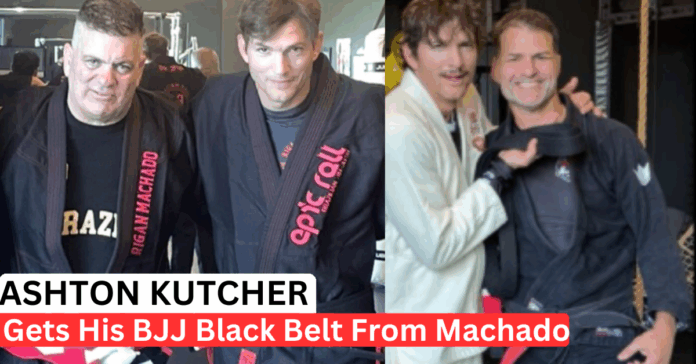
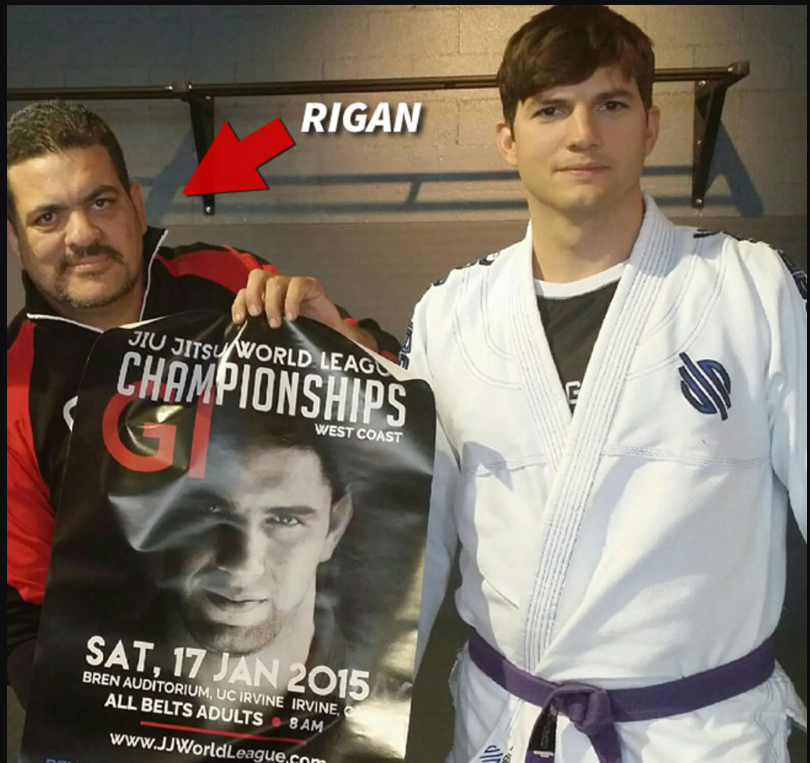
  • Ashton Kutcher has been promoted to BJJ black belt under Rigan Machado after more than a decade on the mats.
  • The journey started in 2012 in Brazil, ran through fast early belt promotions, and included years of pre-dawn training around a hectic Hollywood schedule.
  • Machado and Joe Rogan have both publicly defended his skills and legitimacy, even as some fans question any celebrity BJJ black belts.
  • Reports differ slightly on the exact length of his training—some say “more than 12 years,” others “around 15”—but all agree he’s been consistent for over a decade.
  • Beyond the headlines, the Ashton Kutcher BJJ black belt promotion shows how long-term commitment can coexist with family life, health issues, and an A-list career.

How Ashton Kutcher Fell In Love With Brazilian Jiu-Jitsu

Ashton Kutcher’s relationship with Brazilian jiu-jitsu didn’t start as a vanity project. According to long-form breakdowns of his Kutcher BJJ journey, he first tried BJJ in 2012 while in São Paulo, Brazil, during a fashion campaign.

Training at Ricardo De La Riva’s academy, he wanted a tougher way to stay in shape and quickly gravitated toward grappling, helped by a background in Iowa high-school wrestling.

That early exposure stuck. Once back in the United States, he settled under Rigan Machado BJJ, joining the network of celebrity students who sneak in sessions before sunrise to make training work around filming schedules and family life.

From the beginning, this wasn’t a casual hobby. Sources describe Kutcher routinely fitting in warm-ups, technical drilling, and live sparring, even when he could have just coasted on private “light” sessions.

Over time, Ashton Kutcher Brazilian jiu-jitsu stopped being just conditioning for acting and became a core part of his day-to-day identity.

Ashton Kutcher BJJ Black Belt Journey: 12 Years

Timeline: Ashton Kutcher BJJ Black Belt Journey

Pinning down the exact length of his training is where the numbers start to diverge. Detailed timelines put his BJJ start in 2012, with work under De La Riva in Brazil before fully moving under Machado.

From there, things moved quickly: a blue belt in early 2014 and a purple belt by the end of the same year.

That rapid rise raised eyebrows across the community. Yet even back then, Machado pushed back, pointing to Kutcher’s wrestling base and commitment on the mats. In one widely reported comment, he said his famous student was effectively his top pupil and backed Kutcher to become a serious problem in jiu-jitsu.

Kutcher’s progress slowed to a more familiar pace at the higher belts. He earned his brown belt in 2019 after roughly five years at purple, and from there settled into the long grind toward black.

Some outlets now describe the newly minted Ashton Kutcher BJJ black belt as the product of “more than 12 years” of training, while others note he’s been on the mats for “around 15 years.”

Either way, this wasn’t a weekend crash course—it’s over a decade of consistent work.

Inside Rigan Machado’s Celebrity BJJ Room

To understand the promotion, you have to understand the room. Machado has long been the go-to coach for high-profile clients, building a training model around early-morning privates and even house calls so actors can train before their kids wake up or they head to set.

On the Combat Base podcast, Machado described how Kutcher and other students hit the mats before 8:00 a.m. because after that, family and business demands take over.

He praised Kutcher and his wife for refusing full-time babysitters so they could stay immersed in their children’s daily routines, noting that a lot of the training happens around school runs and practices.

This “Flow Jiu-Jitsu” environment does cater to busy celebrities, but Kutcher hasn’t been insulated from real resistance.

He has spent mat time with high-level names, including Craig Jones rolling with Ashton Kutcher in rounds that made BJJ news sites precisely because Jones treated him like a proper training partner, not a prop.

Along the way, he also pushed through serious health issues. Craig Jones has spoken about Kutcher suffering a major medical condition that left one side of his body barely working, yet still finding ways to get back on the mats.

That doesn’t automatically earn anyone a black belt—but it does tell you a lot about his persistence.

Is Ashton Kutcher’s Black Belt Legit? What The Evidence Says

The legitimacy question was inevitable. Celebrity BJJ black belts always attract scrutiny, and the Reddit thread around his promotion is already full of debate.

So what does the evidence actually say about whether this Ashton Kutcher BJJ black belt is legit?

First, the timeline: more than a decade of continuous training with documented belt promotions in 2014 (blue and purple), 2019 (brown), and 2025 (black) lines up with what most serious practitioners would call a reasonable, if accelerated, path—especially for someone who came in with a wrestling base and access to daily coaching.

Second, the technical endorsements are unusually strong. Years ago, Joe Rogan—himself a long-time black belt—set the tone with a simple verdict on his purple belt:

If Ashton Kutcher got a purple belt from Rigan Machado, that shit is legit.
– Joe Rogan –

Machado has been equally clear for years, publicly calling Kutcher his number one student and backing him even in hypothetical grappling match-ups against elite fighters.

Third, the training conditions. Far from attending the occasional photo-op seminar, Kutcher’s BJJ black belt promotion comes after years of early-morning work, private technical sessions, and rounds with top-level grapplers.

He doesn’t compete—sources point to injury risk and the reality that a serious tournament injury could derail his acting career—but competition has never been a strict requirement for rank in most academies.

Put together, the picture leans more toward Ashton Kutcher black belt legit than “paid-for celebrity stripe.” You don’t have to love every aspect of celebrity training culture to acknowledge that the receipts here look solid.

Why This Celebrity BJJ Black Belt Actually Matters For The Sport

It’s easy to roll your eyes at celebrity BJJ black belts, but this one is bigger than a quick headline. Kutcher’s promotion will blast Brazilian Jiu-Jitsu into mainstream feeds that normally never mention closed guards, ADCC, or IBJJF brackets.

Some of those people will Google gyms in their area. Some of their kids will end up in your kids’ class. That matters.

At the same time, the scrutiny around Ashton Kutcher BJJ black belt is healthy for the sport. The debates force coaches to think about what their black belt represents and remind fans that rank is earned on the mats, not on the red carpet.

When a promotion like this stands up to that level of inspection, it quietly reinforces what a BJJ black belt is supposed to mean.

Kutcher’s story also sends a useful message to older, busier beginners: you don’t need to be a full-time competitor to chase high-level jiu-jitsu. You can be a parent, run a demanding career, fight through health scares, and still build a legitimate Kutcher BJJ journey all the way to black—if you’re willing to show up for more than a decade.