










- Why Royce Gracie wears a blue belt: he says dark blue signified instructors in early Gracie Jiu-Jitsu; black arrived later with federation standardization.
- He refuses to wear a coral belt after Hélio’s death—he’ll accept a family promotion ceremonially, but not tie it on.
- Archived community notes echo a light-blue/dark-blue instructor hierarchy long before today’s belt economy.
Why Royce Gracie Wears a Blue Bеlt Instead of Black
Ask fans why Royce Gracie wears a blue belt and you’ll trigger an argument older than most Instagram threads. By modern timelines he’s at coral rank, yet he still ties navy.
The topic flared again after fresh remarks linking his choice to a pre-standardization era—when, he says, instructors wore dark blue and students wore white—and to a vow he made after his father Hélio passed away.
The clash is irresistible: lineage vs. today’s rulebook, symbolism vs. bureaucracy.
“The original was white, light blue, and dark navy blue for the instructor… Back then, it was black-and-white photos, so it looked black, but it wasn’t a black belt; it was the dark blue belt.”
– Royce Gracie –
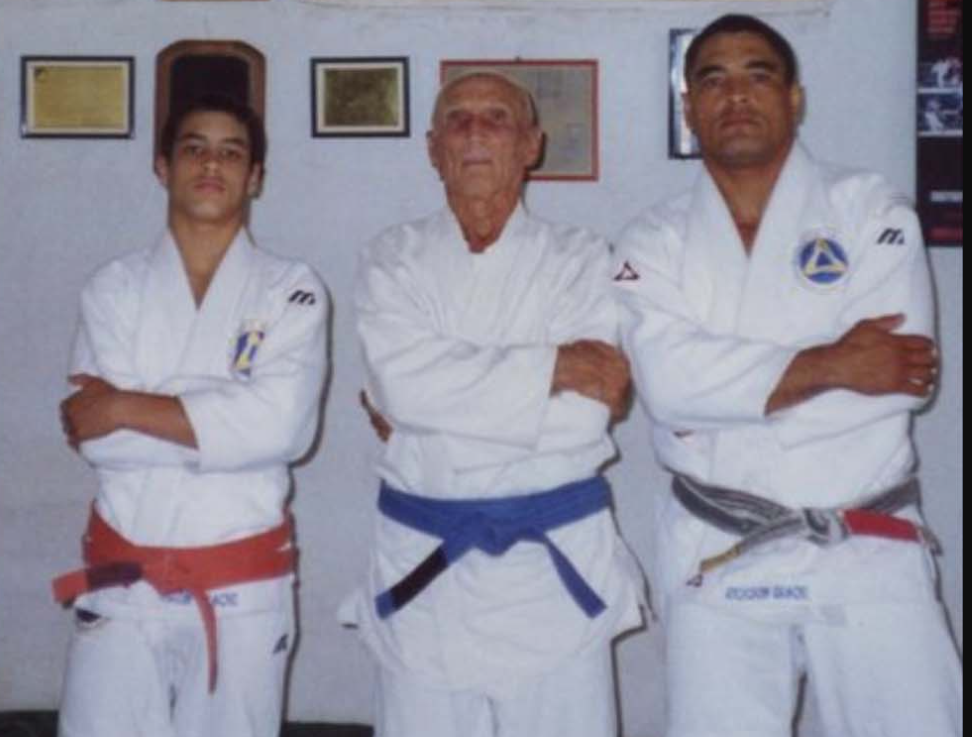
“We Switched To Black In ’67”: The Lineage Claim
Gracie pins the turning point to the late 1960s. In his telling, a formal federation introduced the black belt into the hierarchy and phased out the navy instructor color.

That’s why, for him, why Royce Gracie wears a blue belt isn’t aesthetic—it’s archival. He’s not re-ranking himself beneath black belts; he’s faithfully wearing an earlier instructor color from his family’s system.
“Until ’67, we used the dark blue belt to teach.”
– Royce Gracie –
The line rattles modern sensibilities because blue is coded as “beginner” in today’s IBJJF-inflected vocabulary. But taken literally, his claim reframes blue as an instructor designation from an older rule set—one that predates the belt ladder most of the sport grew up with.
Refusing Coral: The Personal Line He Won’t Cross
The second pillar of why Royce Gracie wears a blue belt is personal and immovable. He says every promotion he ever received came from Hélio, and after his father’s death he chose to honor that history rather than continue up the visible ranks.

He’s even said he’d accept a ceremonial family promotion—but hang the belt on the wall instead of wearing it.
“I was always promoted by my father… After he passed, I put on an old blue belt like his, navy blue with his signature, in honor.”
– Royce Gracie –
To modern competitors, that sounds like willful non-compliance; to loyalists, it’s a clean line between family tradition and federation optics. Either way, it’s a rare case of a legend choosing symbolism over status.
“If my brother gave me the promotion, I’ll take it—but I’ll put it on the wall. The one I use is my father’s.”
– Royce Gracie –
Instructor Blues Before Black—What The Archives Remember
If you’ve been around long enough, you’ve seen the old blurbs and forum screenshots: white for students, light blue for instructors, dark blue for head professors at the Gracie Academy.
While not a universally adopted system across Brazil, those references explain why photos of Hélio and other pioneers often show dark belts that look black in grainy prints but weren’t.
That context is why why Royce Gracie wears a blue belt keeps boomeranging back into the feed. It’s not just a fashion choice; it’s a tug-of-war over which past the sport wants to honor.
Today’s belt structure is standardized, commercialized, and tied to time-in-grade, competition, and pedagogy. Gracie’s stance quietly pokes at all three.
When a founding figure declines to wear coral, it raises awkward questions about what belts measure: tenure, teaching, trophies—or something closer to custodianship of a style?
Gracie’s answer is written around his waist. He’s not rejecting progress so much as choosing an origin story over an org chart.
For gyms that market rank progression, that’s a messaging problem; for traditionalists, it’s a loyalty play. For everyone else, it’s a reminder that belt colors have meant different things at different times—and that the photos we rely on can mislead, especially in monochrome.
So, Why Royce Gracie Wears A Blue Belt—Really?
Strip it to the studs and you get two clear pillars:
- A lineage account in which dark blue denoted instructors until a late-’60s federation pivot to black, and
- A promise to honor Hélio by wearing the same navy belt he did.
Agree or disagree, that’s why Royce Gracie wears a blue belt—a history lesson tied in a knot—and that’s why the debate won’t die every time he takes a seminar photo or steps onto a mat.