







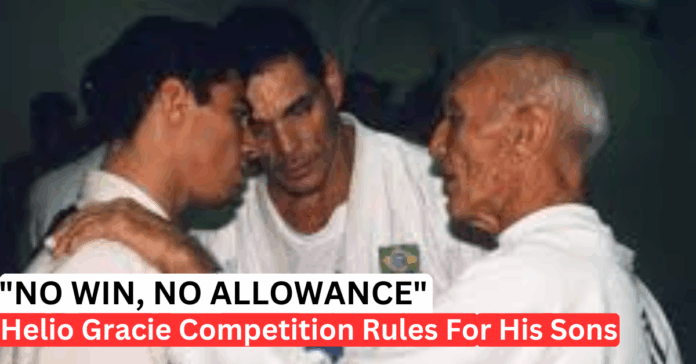

- Helio Gracie Competition Rules turned teenage Relson’s allowance into a win-or-wait system tied directly to tournament results.
- If he lost, skipped, or missed an event, he often had to wait up to six months for another chance at getting paid.
- On top of that, Helio bribed him with a separate cash deal per gold medal, pushing Relson into becoming one of the family’s most active competitors.
- The rules went beyond money: school performance, belt promotions, surfing and even lifestyle were all folded into Helio’s strict approach.
- These Helio Gracie Competition Rules are controversial by modern standards, but they helped shape the wild, undefeated “Campeão” era that defined Relson’s legend.
Inside The Helio Gracie Competition Rules Relson Lived Under
When Relson Gracie talks about his Jiu-Jitsu upbringing, one theme keeps coming up: nothing in his teenage life was separated from competition. The Helio Gracie Competition Rules at home were simple and brutal – his allowance lived and died by his performance on the mats.
Relson has described how his father linked pocket money to the tournament calendar. Each competition cycle ran for roughly six months. If he entered a championship and won, he got paid.
If he lost, skipped the event, or even missed it due to illness, there was no allowance until the next major tournament rolled around. One bad weekend could mean half a year with no cash in his pocket.
It wasn’t just a motivational poster on the wall – it was the financial reality of his youth. Helio’s system made every bracket feel like a title fight. There were no consolation prizes, no “good effort” payments; either you delivered or you waited.
Over time, the pressure turned competition into something much bigger than medals. For Relson, each match decided whether he could live like a teenager with some freedom, or go back to grinding through another long allowance drought.

This was the core of the Helio Gracie Competition Rules: performance first, then rewards – never the other way around.
Helio Gracie Competition Parenting And A Rebellious Surfer Son
Helio’s strict system didn’t appear in a vacuum. Relson was famously rebellious, more interested in surfing and hanging out on the beach than in school. Accounts of his youth paint him as a kid who hated studying and clashed constantly with his father’s expectations.
Helio’s response was to double down on competition as a life path. If school wasn’t working, then, as the story goes, he told his son that he’d better become the best fighter instead.

From that point on, success on the mats became the alternative to academic progress. If Relson stacked up titles, he could step away from traditional schooling; if he didn’t, there was nothing to fall back on.
The allowance setup meshed with this bigger deal. At the same time that Helio was tying money to competition results, he was also using belt promotions and school attendance as leverage.
Skipping classes at school meant blocked promotions in Jiu-Jitsu, no matter how good Relson looked in training. Surfing, meanwhile, was dismissed as a “bum sport” – a lifestyle choice that clashed directly with the disciplined fighter Helio wanted to shape.
Put together, the Helio Gracie Competition Rules and his broader parenting style boxed his son into a narrow path: if you’re going to rebel against school and chase waves, you’d better win absolutely everything in Jiu-Jitsu to justify it.
From $100 Per Gold Medal To An Undefeated Champion
The allowance system wasn’t the only lever Helio pulled. According to Relson’s later recollections, his father also introduced a straight-up cash bonus for winning – a set amount paid out for every gold medal he brought home.
This “bounty” on tournament wins worked alongside the do-or-die allowance cycle, stacking extra reward on top of a structure that already punished losses harshly.
That blend of pressure and reward turned Relson into one of the Gracie family’s most obsessive competitors. He threw himself into local tournaments, collecting titles and building a reputation that extended far beyond the academy walls.
Over time, he built a long unbeaten run and developed the wild, aggressive style that would define his legend. Some accounts credit him with well over a hundred no-holds-barred fights without official defeat, and decades spent as a feared representative of the clan.
The stakes weren’t only athletic. Relson’s nickname, “Campeão” – Champion – came from his surfing circle, who saw him constantly topping podiums in Jiu-Jitsu even while living a beach-focused lifestyle.
The more he won, the more the Helio Gracie Competition Rules seemed to work: he had money, status, and a way to justify skipping the traditional path his father had originally pushed.
By his own account, the system gradually did what Helio wanted all along. It transformed a rebellious surfer kid into an unshakeable competitor whose whole identity revolved around never losing when it counted.
What The Helio Gracie Competition Rules Say About Old-School Jiu-Jitsu
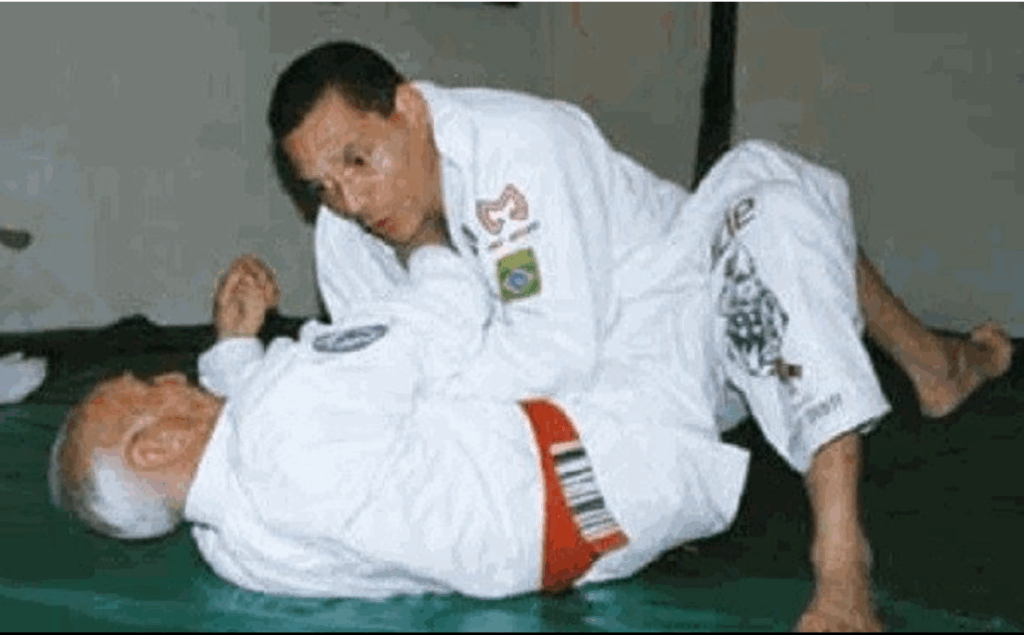
Seen through a modern lens, the Helio Gracie Competition Rules look extreme. Today, most parents would balk at tying a kid’s allowance to a single tournament every six months, or blocking belt promotions over school behaviour while also telling them that competition can replace formal education. But in the context of Helio’s life, they fit a broader pattern.
A deep look into his history shows a man obsessed with systems, discipline, and measurable results.
In the famous Rio Branco academy, Helio tracked students through elaborate card systems, timed instructors down to the minute, and even used Gi laundry loads to cross-check whether anyone was cheating his schedule.
Punctuality, protocol, and performance were everything. It’s not a stretch to see how that same mentality carried into his home: if you want students and teachers to live by tight rules, your own sons are not going to get a looser deal.
For Relson, those rules were both burden and fuel. They created immense pressure, but they also gave him a clear scoreboard for success: keep winning, keep getting paid, keep moving forward.
The fact that he later followed his father’s “guidebook” on diet, lifestyle, and self-defence, and remained proud of his career, shows how deeply that old-school philosophy sank in.
In the end, the Helio Gracie Competition Rules are a snapshot of another era in Jiu-Jitsu — one where family, finances, and fighting were all tied together, and where becoming a champion wasn’t just about glory. It was about proving, over and over again, that you deserved your place in the Gracie story.