Craig Jones on The MMA Hour: Talks UFC 298, Kazakhstan & Karate Combat

On the MMA Hour show with Ariel Helwani, Craig Jones, the leader of the grappling “B-team” and the IBJJF world No-Gi BJJ purple belt championand a 2-time ADCC silver medalist, shared his thoughts in the week before upcoming UFC 298 main event. Craig is a teammate in Alexander Volkanovski’s corner. In addition to discussing his prediction and opinion on Illia Topuria, he talked about his recent experience in Kazakhstan, his plan for filming a worldwide martial arts series and his upcoming events

Craig said that Volkanovski has been training very hard and is highly motivated to prove his dominance in the division. Craig was impressed by how hard Volkanovski trains, especially compared to himself as a jiu-jitsu athlete. This time, Volkanovski has taken it up a notch again, leaving Craig even more surprised.

Craig acknowledged that Illia is a talented fighter who hasn’t yet faced the top fighters in his division. Therefore, it is difficult to gauge how good he could potentially be based solely on the caliber of opponents he has faced so far.

Regarding Craig’s expert MMA opinion, for his final prediction, Craig thinks Volkanovski will finish Topuria by flying triangle in the first round. He says he pushes Volkanovski every fight for it although he knows his legacy is on the line but says to him, “just think about my instructional sales”.

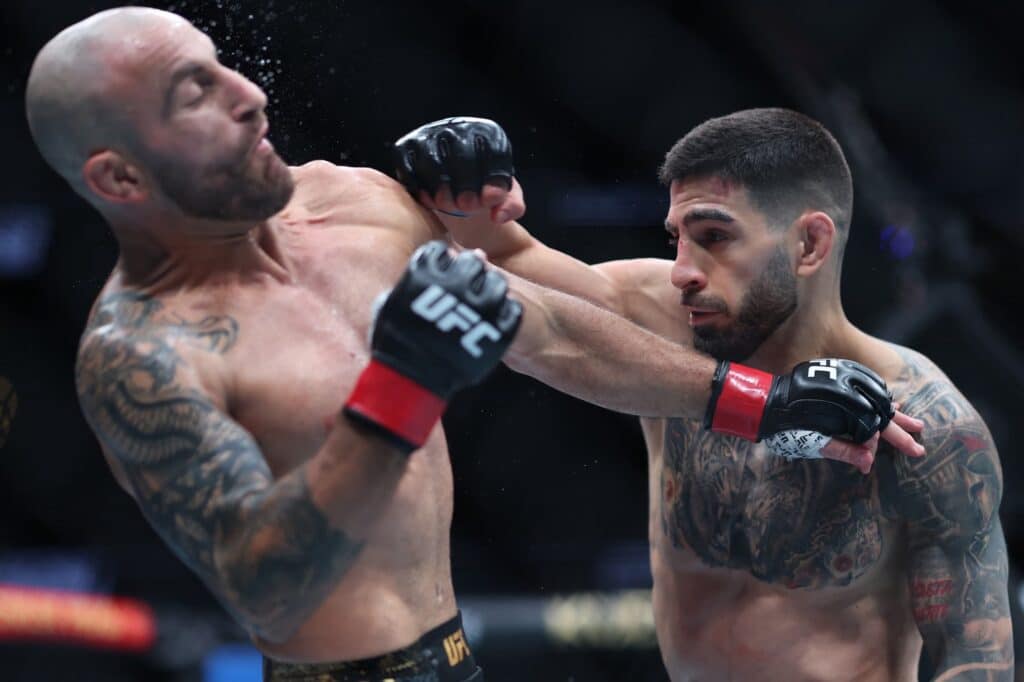
Unfortunately, Volkanovski did not listen to Craig and ended up losing his belt as Illia knocked him out before he could attempt a flying armbar. But at least you can learn a lesson, listen to Uncle Craig.

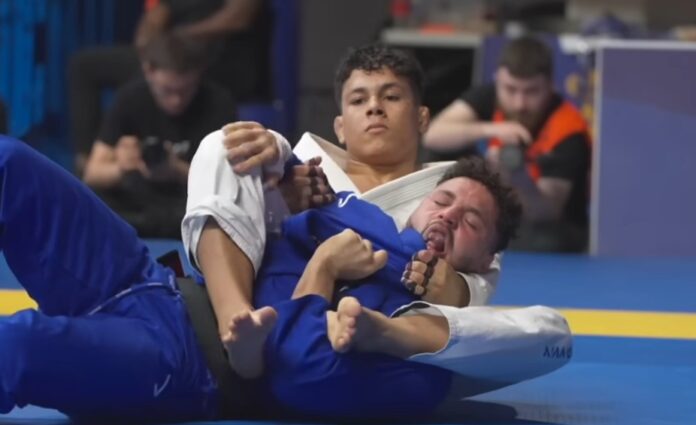
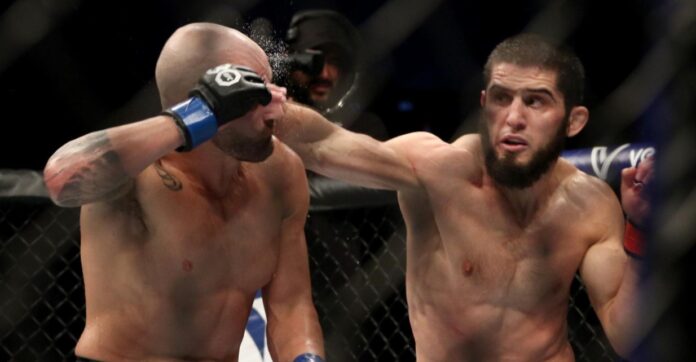
Ilia Topuria defeats Alexander Volkanovski at UFC 298 for the featherweight title

Craig In Kazakhstan

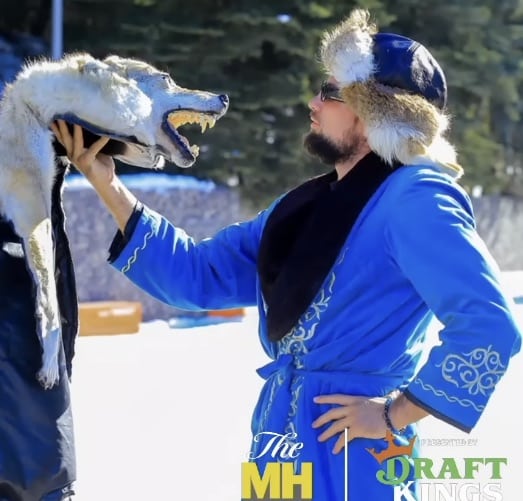
Craig Jones takes pictures dressed in Kazakhstani culture in snow circumstances

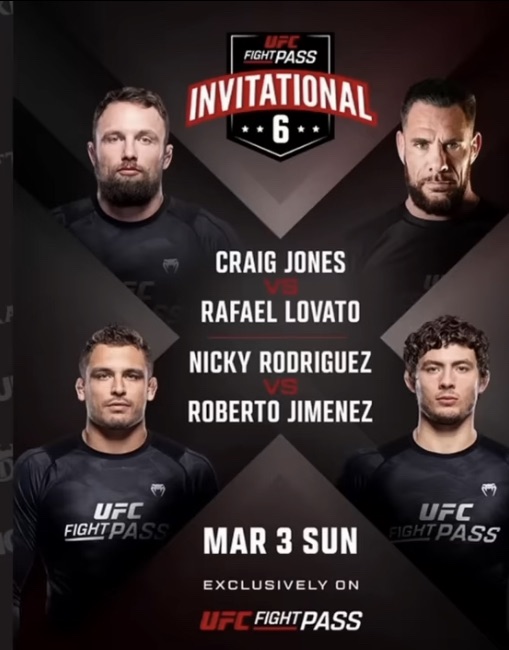
Craig has two upcoming events: his Karate combat debut against Phil Rowe in Mexico City on February 23rd and a UFC fight pass invitational match against Rafael Lovato on March 3rd. To prepare and focus for these events, Craig went to the mountains of Kazakhstan. He has close friends there because of the ADCC trials held there in the past, but he went there mainly for the adventure as Craig admits that he wants to do the bare minimum and enjoy his bonuses as much as he can. He received the contract for the Lovato bout while he was in the mountains, but he didn’t even read the rules or the weight division he was fighting in. While in Kazakhstan, Craig delved deep into Kazakhstani culture during a photoshoot. He said he is working on filming a travel series for martial arts, filming “wild stuff,” and that Kazakhstan is definitely on the map.

Craig Jones fights at Karate Combat versus Phil Rowe poster
Craig Jones fights at UFC Fight pass Invitational versus Rafael Lovato poster

How Does Jozef Chen Train Jiu Jitsu? Jozef’s Beginnings, Training Concepts & Philosophies

Nanjing was the first place he encountered martial arts, starting Muay Thai at 13.

He started jiu-jitsu at 15 years of age under the coaching of Guillaume Leclerc, saying “This was the first time I wanted to get good at something” as he had very little motivation with school success.

Jozef explains that he fell in love with jiu-jitsu because of the way it was presented to him. He differentiates it from other things presented to him, such as school, by stating that it was his decision and his alone to train in jiu-jitsu. This fact of not being forced to do it allowed him to enjoy the sport.

Jozef’s Development

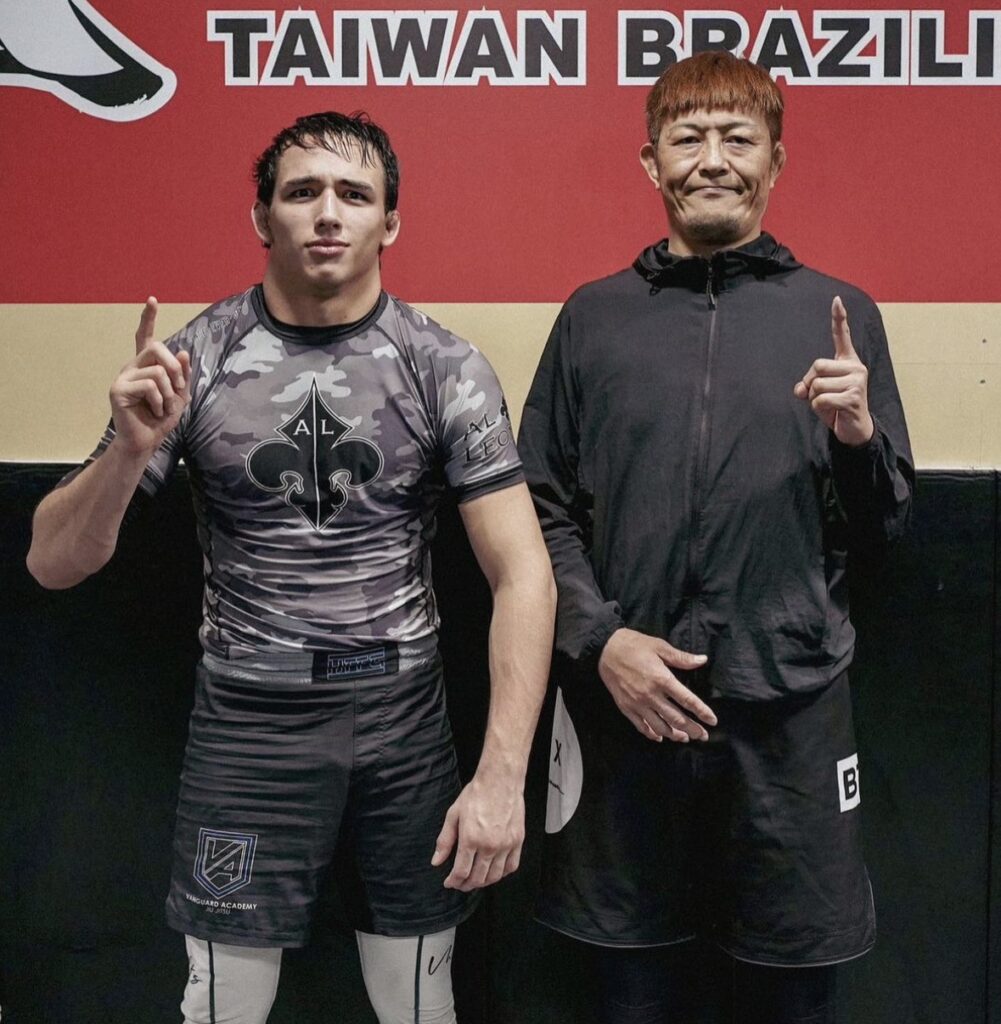
Jozef Chen at Taiwan Brazilian Jiu Jitsu Academy with coaches and teammates.

It’s known that Guillaume Leclerc remained Chen’s main instructor from the kids’ belts to the purple belt rank—the moment when Jozef started adventuring in the international competition scene.

During COVID-19, Jozef’s Jiu Jitsu journey underwent a transformation. He was presented with an opportunity to focus more on Jiu Jitsu as he didn’t have any school obligations. He was fully immersed in the sport, except for the time he spent watching instructional videos. Jozef deliberately learned and searched for information from BJJ materials such as “BJJ Mental Models,” “BJJ Fanatics podcast,” and “Grappling rewind.” These resources gave him insight into many Jiu-Jitsu athletes and powerful motivation to progress.

Jozef has been learning jiu-jitsu under the guidance of his instructor Guillaume, who has been trained by Rob Bernacki. According to Jozef, Guillaume’s teachings have been immensely helpful in clarifying many conceptual ideas related to jiu-jitsu, such as base, frames, and levers. Now, Jozef has a better understanding of these concepts and is able to apply them effectively. For instance, it has helped Jozef conceptualize that base refers to the platform from which he generates and absorbs force.

Guillaume also advised Jozef to seek out information by himself, so that he’s in a position to learn more without being dependent on him, then to test the research with his partners and coach.

Jozef Chen outdoor photoshoot in sky blue “Al Leone” rash guard with cloudy blue background

Jozef’s Jiu-Jitsu concepts in training

One of the first concepts Jozef learned is the “Ecological learning process”, which is the process that involves creating an environment that highlights specific skills. In a particular context, certain reactions are required to achieve a specific goal, which leads to the development of good habits and skills when interacting with a partner. Basically, having a desired outcome, such as maintaining defense or pressuring more, helps you design a game around it.

Training and Learning with the use of games

The first game principle that was taught for training Jozef is called “Crazy Turtle”. In this position, the person on the bottom starts in a side pin position, but without the chest to chest contact. The person on the bottom then tries to turtle, creating a situation where the person on top has to keep the person from “re-guarding” while being pinned, without using his chest.

According to Jozef, when the top person in a grappling situation is handicapped, they are forced to think more critically about the mechanics involved, such as frames, levers, and wedges, rather than relying purely on their physical strength. As the top player gains more experience in this situation, they become more adept at analyzing why their opponent is able to turtle up and what they can do to counter it.

Jozef suggests that everyone should incorporate this type of training in their routine. If you have an idea of what you want someone to do, you can design your game accordingly. Jozef implemented this approach in the context of ADCC by having someone start in Guard and their goal being to stand up while the other person tries to hold them down. According to Jozef, this approach forces people to think more about a given problem rather than just engaging in open round sparring.

Tracking your progress

Jozef has a unique way of learning. He journals everything he learns in class and then processes it to come up with his own thoughts and conclusions. He believes that relying solely on instruction doesn’t give him the “first-hand” experience that sticks to his mind. Similarly, he doesn’t write down anything from watching instructionals unless he has personally experienced it. To make the most of the instructional videos, he records the parts he wants to review and tries to apply them in his training. If he finds anything of value, he writes it down for future reference.


Jozef Chen interview photo cover for the BJJ Fanatics podcast #606 with the host Ryan Ford

If you’re interested in progressing like Jozef, apply concepts and games to your sessions, and make sure you train with intent, check him out at https://bjjfanatics.com/products/engaging-without-regrets-by-jozef-chen

BJJ GI Brands List From A-Z

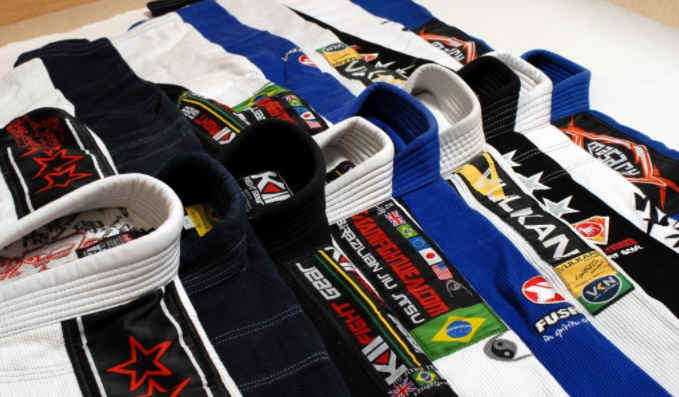
BJJ GI Brands List
Created with GIMP

BJJ Gi Brands vary by price, quality, cut, durability, how it fits the BJJ practitioner, and whether or not you should branch out from your current BJJ Gi Brand. BJJ GI Brands also vary depending on how experienced in BJJ you are.

Each BJJ Gi Brand is different, and it’s important to find the BJJ GI that fits your BJJ lifestyle and your actual needs.

BJJ GI Brands can range anywhere from $20 for a starter BJJ GI, to upwards of $800 for someone who really enjoys having a super quality GI together with the brand he’s paying for.

Below is the list of BJJ GI brands that are active at the moment of writing this article. Don’t forget that most of the Brazilian Jiu Jitsu brands are not selling Gis only. Most of them sell other BJJ gear and apparel like spats, shorts, rashguards, etc.

So, if you’re looking for any kind of BJJ GIs or other gear you want to purchase check the links of your favorite brands below.

In the case, we missed some brands feel free to contact us and we’ll add any BJJ brand currently active and operating.

BJJ Gi Brand

Amazon Store Link
93 Brand Jiu-Jitsu
Fight Aesthetic
Albino & Preto
ALMA
Armor Kimonos – AKBJJ
ARAKU Sports
Atama Atama Amazon Shop
Athletes on the mat
Atlas
Bad Boy Bad Boy Amazon Shop
Battle Armour
Battle Gear
BCKimonos
BJJ Globetrotters Amazon Shop
BJJ Religion BJJ Religion Amazon Shop
BOA Fightwear FR BOA Fighwear Amazon DE, UK
Booster Fight Gear
Braus
Bravo
Brazil Combat Amazon Shop
Break New Ground
Break Point FC Amazon Shop US, UK
Bruiser ES
Bull Terrier Fight Gear Amazon Shop
Cascagrossa BR
Century MA Amazon Shop
Choke & Chill Amazon Shop
Conca
Combat Corner CRNR Amazon Store
CTRL Industries Visit website
Da Firma Kimono Company
Datsusara
Day By Day Jiu Jitsu
Dojo Chimp
Dokebi Combat Outfitters Dokebi Amazon US, UK
Dragao Kimonos
Drako Impact Sports
E Nois Clothing
Elite Sports Elite Amazon Sports Store
Essimo
Faixa Preta
Fenom Kimonos
Fire Team Fit Fire Team Fit Amazon Store
Flow
Fortitude Fortitude Amazon UK Store
Future
Fuji Fuji Amazon Store
Fumetsu Fumetsu Amazon UK Store
Furia
Fushida
Fusion Fight Gear Fusion Amazon Store
Gameness
Gimono
Gold BJJ Gold BJJ Amazon Store
Gorilla Gear
Gr1ps
Grab and Pull
Gracie Store Gracie GI Amazon
Ground Fighter Ground Fighter Amazon
Ground Force
Ground Game Ground Game Amazon UK
Habrok Sports Habrok Sports Amazon Store
Half Sumo
Hayabusa Hayabusa Amazon Store
Hitman International Sports
Hooks
Hyperfly Hyperfly Amazon BJJ GI
Humble Fightwear
Hunter Fight Wear
Inverted Gear
Isami
Jitsugi
Jiu Jitsu Brotherhood
Jiu Jitsu Progear
Jiujiteiro
Jotunn
Ju-sports
Kano Sports Kano BJJ GI on Amazon
Kauai Kimonos
Keiko Sports
Killer Bee Killer Bee Amazon Store
Kingz Kimonos KINGZ Amazon Store
Koral
Krugans
KVRA
KWON
Labyrinth
Lanky Fight Gear
Live Love Fight
MA1
Maeda
Macaco Branco
Manto
Maximus Kimonos
Meerkatsu
Modern Flow Brand
Moya Brand Co
Muae Wear / Vital Kimonos
My Lucky Gi
N & C (Noughts and Crosses)
Newaza
Nine Lives Jiu Jitsu
Origin
OSS Clothing
Ouano
Platinum Jiu Jitsu
POSS
Proforce
Progress Jiu Jitsu
Rainha Fightwear
Raven Fightwear
Red Journey
Red Star
Revgear Revgear Amazon Store
Rios Gear
Roll Supreme
Rolljunkie Rolljunkie Amazon Store
Ronin Brand Ronin Brand Amazon Store
Sanabul Sports Sanabul Sports Amazon Store
Scramble Scramble Amazon Store
Senki Kimonos
Senso Jiu Jitsu Senso Amazon Store
Shoyoroll
Spartan Combat
Standard Kimono Company
Storm Kimonos
Sub Apparel
Submission Sniper Submission SNiper Amazon BJJ GI
Tatami Fightwear Tatami Amazon Store
Thegis
Torah
Toraki
Tricks and Traps
Unlimited Fightwear
Valor Fightwear Valor Amazon BJJ GIs
Vandal Kimonos
Vanguard Kimono
Venum Venum Amazon Store
VHTS – Very Hard to Submit
Viking Gear MMA
Vulkan Fight Company
War Tribe Gear
We Defy Foundation
Wolfhound Fightwer
X-Guard Brand
Xanadu


Which BJJ Gi brand to go for?

The BJJ GI is an important part of the BJJ wardrobe. It’s used in BJJ class, competitions, and occasionally for rolling at the park.

There are many BJJ gi brands out there, most are easy to get your hands on, but some are ultra-exclusive.

The BJJ GI market has really taken off over recent years and BJJ players expect more than ever from their BJJ GIs. BJJ gis made of light materials, fit well and look awesome.

What BJJ GI brands should you buy your BJJ gi from? Well first let’s tackle the elephant in the room: BJJ is about a sport where you need to feel comfortable in your wearings and we don’t recommend people to buy BJJ gis based on brands. We recommend BJJ people buy BJJ GIs that fit well and feel good. And with our BJJ GI Brands List, you have plenty of choices to go for. Just take your time and find the best Gi for yourself.

Highlights: Watch Mica Galvao’s Stellar Fashion Return At Europeans 2024

Highlights: Watch Mica Galvao's Stellar Fashion Return At Europeans 2024

After being suspended for a year Mica Galvao made a triumphant return at Euros 2024. He secured the title of 2024 Jiu Jitsu European Champion after a series of highly challenging matches.

In the video below where Galvao’s Euros highlights are shown, he shares his experience and strategies which were changing frequently during the matches. He shares how he managed to adapt his mid-fight strategies to turn the tide. At one point he decided to transition from attacking the opponent’s back to targeting the arm cause he figured out that his opponent was “hard on the neck”. Galvao Emphasized the importance of adaptability in matches and the need to swiftly change strategies to win against his opponents.

In the semifinals, Galvao described how he managed to respond very quickly to the opponent’s tactic while evading several submission attempts. At the same time, he explains how he managed to counter the attacks with the submission of his own for the win.

In the finals, Mica faced Andy whom he never fought before. Galvao expressed excitement about his opponent while stating he knew the fight was going to end in a quick submission from any side. He said he knew they were all just going fo attack and there was no way the fight would go to distance.

After a short but intense match, Galvao was the one to earn the victory via armbar submission earned him the title of European Champion.

Check out the highlights in the video below:

John Danaher DVD Review: Feet To The Floor Volume 1

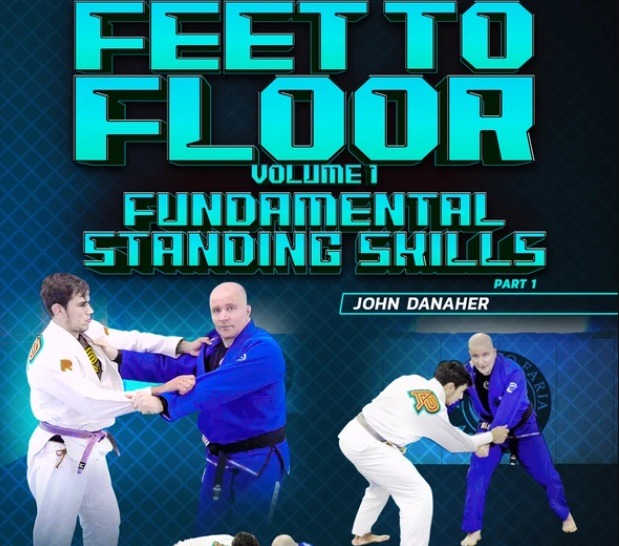
John Danaher DVD Review: Feet To The Floor Volume 1 Cover

Takedowns. If there is one thing BJJ people love to pretend they didn’t hear it is the task to train and do more takedowns. Well, ok, that and warm-ups. IT is baffling how lazy Jiu-Jitsu people get given the comfort of pulling guard and having multiple perfect stalling options by wrapping lapels around folks Well, it is time to put a stop to it all. And the man to do it is once again Mr. Danaher. The latest John Danaher DVD Review we have for you is of his brand new “Feet To The Floor” series. We start, of course, with Volume 1. 

Danaher certainly changed the BJJ world. First, it was leg locks, then his submission heavy No-Gi systems. He quickly followed up with a long series of DVDs covering the fundamentals of BJJ in the Gi. Basically, he is awesome at identifying where the BJJ community lacks precise and in-depth instructions, and then covers everything there is on the subject and does so in style. So far, every John Danaher DVD review has been a story of its own, and that is the case once again with the “Feet To The Floor” Volume 1 instructional. The best part is that it is just the tip of the takedown iceberg!

Fundamental Standing Skills

As a BJJ instructor myself, I have to admit that takedowns are truly a sketchy subject. For people that are involved in grappling, BJJ folks rally do not like putting in the effort to take the fight to the ground. Given that it is a truly essential skill there is a clear vacuum when it comes to material that will help people achieve this goal. While there are many takedown instructionals out there, ones that specifically target throws, trips, and takedowns that have a place in Brazilian Jiu-Jitsu are not so numerous.

For starters, Brazilian Jiu-Jitsu does not have too many takedowns of its own. In fact, it barely has a few, and that’s if we’re counting guard pulling as a means of taking the fight to the ground. That said, the takedowns we use in BJJ are mostly “borrowed” from other grappling martial arts like Judo, Wrestling, and Sambo. There’s a catch though.

While all the takedowns that people do in Judo, Wrestling, and Sambo work perfectly for their respective arts, they are not quite as easy to apply to BJJ. In fact, trying to “copy-paste” a takedown from Judo, for example, will probably land you in more trouble than it will help you achieve the goal of taking a match to the ground.

The john Danaher DVD Review you are about to read will help you see what you can expect to find in what is probably the most in-depth instructional about takedowns for Brazilian Jiu-Jitsu. “Feet To The Floor” is unlike most things you have seen, even when it comes to Danaher and DDS members’ instructionals. Simply put, it is the holy grail of takedowns for BJJ everyone has been waiting for.

John Danaher DVD Review: Feet To The Floor Volume I

So, you’ve decided to actually learn BJJ takedowns, and you’ve picked a John Danaher DVD to do so. That is probably the best choice you can make on the subject. What you can expect from the “Feet To The Floor” instructional is an in-depth system that covers the basics of takedowns, trips, and throws for BJJ with the Gi. It is important, though, to have realistic expectations.

If you think that by picking up this DVD you’ll be able to throw people around like Judokas, or take them down with the speed and precision of wrestlers you’re sorely mistaken. Apart from actually training full-time in wrestling or Judo, you won’t be able to replicate their throws and takedowns like the athletes from these arts do them. You will, however, get the best possible takedowns system for Gi BJJ.

In this DVD, Danaher will take you step by step through stance, grip fighting, motion, creating off-balance, and positioning. Moving on from the basic principles he covers a bunch of takedown subjects, including but not limited to front takedowns: ankle picks, the double leg, single-leg, knee picks, and rear takedowns. OF course, Danaher will connect everything into a system, and even introduce several special studies of how takedowns work in a competitive setting. That said, take a look at the play-by-play John Danaher DVD review of the “Feet To Floor” DVD.

Part 1 – Stance

Opening up this Danaher DVD instructional is the mandatory introduction where John talks about the ideas that drive the system forward. he lays the building block of the six essential principles behind every successful takedown. He also addresses the crucial subject of criteria for takedown selection for Jiu-Jitsu athletes and creating a standing game plan.

The very first key precursor skill of BJJ takedowns is the stance. Unless you know how to stand firm, you will end up on the ground before you even have the chance to think about a takedown. You can expect a lot of Judo terms (i.e. Japanese terms) in every part of his instructional, and they start in the very first volume. Left and right stances and the differences between them take up a large portion of this volume.

The final part of this part has to do with the introduction of the second key precursor for takedowns: grip fighting. John covers the basics before moving on to dedicate a full volume to the subject, as you’ll see further along in our John Danaher DVD review.

Part 2 – Grip Fighting

Part two of the “Feet to The Floor” John Danaher instructional DVD covers grip fighting. Everything you can think of, and even more that you’ve never thought of about the subject matter is in this volume. When to use a front and arear hand, where to place them, how to grip the Gi, how to grip the limbs and head, and much much more is covered in depth.

Danaher goes so deep that he shares six levels of dominance that have to do with grip fighting, and are all based on establishing good grips, which, of course, is also covered in extreme detail.

The best part of this volume though, are the grip fighting strategies that Danaher covers through clear and precise examples.

Part 3 – Motion, Kuzushi And Position

Motion is one of the most important aspects of takedowns for any sport. Danaher clearly covers how to move with intent, how to integrate movement with grips, and the intriguing puppet principle.

Kuzushi is a principle that has been already covered in pretty much every other John Danaher DVD review – it is the ability to make people lose their balance. In terms of takedowns, it is not just among the five crucial precursors to taking people down. but it may just be the most important of them all.

Finally, there is position as a principle that helps all the other four actually work. John uses it to transition into the more technical aspects of his instructional, looking at teh five minimum technical requirements that are essential to coming good in the standing aspects of grappling.

Part 4- Front Takedowns: Collar Drags

Front takedowns, according to Danaher, include all the takedowns that have you in front of an opponent. The first one that he covers in teh “Feet To Floor” instructional and considers to be the first people should learn is the color drag. He explains the collar drag by going through the 5 prerequisites and spending a hefty amount of time on each, in order to make everything make perfect sense.

Apart from the basic principles of collar drags, John also talks about the disadvantages of collar drags in BJJ. He covers the likes of predictability, attacking off the grip, movement, etc. Of course, he also offers ways to plan for them and get them out of the way.

As this volume nears its end, John also talks about combining the collar drag with other takedowns, mostly Judo-based throws. He ends by exploring what he calls the great relationship between the collar drag, single leg takedown and back takes.

Part 5- Ankle Pick, Double And Single Leg Takedowns

The ankle pick is arguably one of the most efficient takedowns you can use in Brazilian Jiu-Jitsu, in both Gi and No-Gi. there are plenty of insights into the ankle pick, from conceptual to technical. However, the few that really caught my eye during this John Danaher DVD review are the portion on troubleshooting the ankle pick and the explanation of why grapplers need to develop a strong ankle pick.

In the second portion of part 5 of this instructional, John goes over teh basics of the double and single leg. He does so by uniquely tying together all the most important wrestling mechanics with the needs and goals of BJJ. Since this is a Gi instructional, a lot of the focus is on grip placement, as one of the essential 5 precursors of takedowns.

Part 6- Snap Downs & Rear Takedowns

The snap downs represent the final front takedowns that Danaher covers in the first volume of his “Feet to Floor” series. Despite the snap-down being a mostly wrestling move, Danaher uses a lot of Judo grips and principles to set everything up. For example, he ties in Seoi snaps and Ude Gaeshi perfectly with teh mechanics of the good old wrestling snap-down.

Halfway through this volume Danaher switches his attention from front to rear takedowns, exploring the rear body lock as the best example. Of course, he ties rear and front takedowns demonstrating the first aspect of his takedown system. It will require other takedowns from other volumes, though, to get anywhere near a complete system.

Part 7 – Golden Rules Of Takedowns For Self-Defense

This is a highly interesting volume, particularly given John’s history as an NYC bouncer. He covers takedowns from a self-defense standpoint, which is unique and extremely useful, to say the least. Namely, he shares his thoughts on using them in such a fashion, as well as his golden rules for using takedowns in self-defense scenarios.

The volume wraps up with john covering teh three best takedowns for a self-defense situation. The high single leg, ankle block, and classic Tai Otoshi are the ones that get his stamp of approval.

Part 8 – Specials

As we near the end of our John Danaher DVD review of his latest “Feet To Floor” instructional, all that is left is the final part that contains special chapters. One of them is a special study of the use of the single leg takedown in Jiu-Jitsu. Another is the arm drag, and its role as the best method of getting behind an opponent and/or entering into takedowns.

The impact of clothing in takedowns for self-defense as well as the SVG theory are the two chapters that bring the first volume of this highly interesting and informative John Danaher DVD set to a close.

In Summary

Despite knowing what to expect to a certain extent, every John Danaher DVD Review ends up being quite a unique experience. Apart from watching more than 10 hours of material to give you our opinion on the  “Feet To The Floor” Volume 1 instructional, there are no drawbacks, really, to this particular DVD. It is a great way of starting to see takedowns from a different perspective, and finally, include them into everyday BJJ training like you would any other technique.

“Feet To Floor 2” The John Danaher Takedowns DVD We Needed

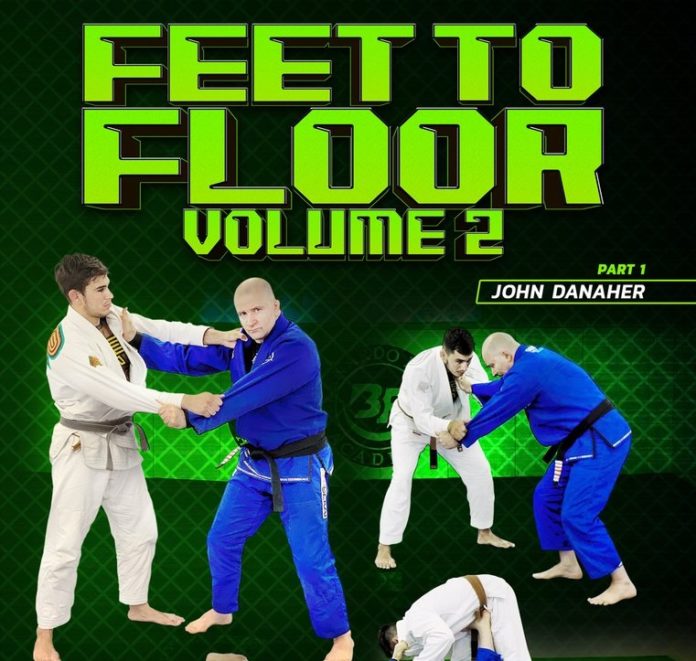
"Feet To Floor 2" John Danaher Takedowns DVD

Danaher’s quest to teach people the art of taking fights to the ground continues. We are proud to bring you a complete review of “Feet To Floor 2”, the second installment in the  John Danaher Takedowns DVD series. The legendary NYC Renzo Gracie Academy Professor, now relocated to Puerto Rico has embarked on a mission to clarify, structure, and systematize Gi takedowns for Brazilian Jiu-Jitsu. So far, he has a volume that introduces his take on takedowns. The second volume now expands on the first one, going deeper into the world of Judo for BJJ. 

Taking people down to the ground against their will is not an easy thing to accomplish. Taking them down when they’re not just trying to stop you, but do the same to you is even more complicated. However, it does open up options for you, especially if you are willing to think in several different directions instead of just one. This John Danaher Takedowns DVD focuses on the art of throwing people by going to the ground first yourself, and also explores the world of sweeps and trips. “Feet To Floor 2” will work best, though, when paired up with its predecessor and original Danaher takedown DVD so make sure you know the basics before going further faster.

The Secrets To Judo Throws For BJJ

How do you make Judo work for BJJ? Well, you have two realistic options to get good at actually performing Judo throws successfully in a Brazilian Jiu-Jitsu setting. One is to go and learn Judo properly, dedicating years, if not decades to it, and try and train BJ Jat a high-level at the same time. The other one is getting the “Feet To Floor” John Danaher Takedowns DVD series and using the only viable shortcut to highly effective Judo for BJJ in existence.

When thinking about Judo for BJJ, especially in terms of effectiveness and a quick learning curve, Ashi Waza, or sweeping techniques are your best bet. It will take proper timing and a bit of grappling “tango” to really get the hang, but once you do, you’ll be sending people flying with just a flick of your feet. or so it will seem to your opponents.

The second volume of the “Feet to Floor” series by Danaher focuses precisely on that. He teaches basic Judo movements, grips, and tactics that will allow you to sweep people. When I say sweep here I mean having their legs fly above their head before you send them crashing to the floor in a heap.

But that is not the gist of this John Danaher Takedowns DVD. It is only half of it, in fact. Danaher also covers throws that involve you hitting the ground first and then sending your opponent flying overhead. The Tomoe Nage and Sumi Gaeshi are true Judo classics, and work extremely well, particularly when a smaller grappler is facing a bigger one. Danaher puts them into perspective here, connecting them with foot sweeps and of course, all the principles previously covered in the first volume of the ‘Feet to Floor’ series.

“Feet To Floor 2” The John Danaher Takedowns DVD We Were Waiting For

The moment you read that this is a Danaher DVD, you probably already knew it would be an 8 part DVD series with nearly 12 hours of ultra high-quality material. moreover, there’s a clear progression that takes you with baby steps through the full system, from the most fundamental things to advanced setups, combinations, and counter throws. Nobody can do that better than John, but then again, you already knew that or you wouldn’t be reading this John Danaher Takedowns DVD review and considering getting it for yourself.

“Feet To Floor 2” covers Judo throws from two main categories – foot sweeps and “sacrifice” throws. Half of the volumes cover going underneath your opponent for throws, while the other half covers select foot sweeping techniques that have been proven to work like a charm in Brazilian Jiu-Jitsu. The setups and situations covered in his instructional are mainly intended for use with the Gi, but most of them can easily be adapted to No-Gi with just a few key grip adjustments.

DVD #1 – Grips And Footwork

As you would expect from a Danaher DVD you won’t see too many throws in the opening sections of the instructional. In fact, there are hardly any in the entire first volume, given the extreme importance of grips and movement that Danaher covers. Once again, he refers to principles and concepts for the first ‘Feet to Floor’ DVD set which you should definitely acquire before looking into any of the follow-up sets.

Grip-wise, John offers a simplified theory of gripping that pretty much sums up all his grip fighting and dominance principles. He then discusses the Tomoe Nage as an example of how you put most of these grips into practice. Footwork follows suit, with a precise elaboration on why certain movement patterns work so well with certain grips.

The first volume of this John Danaher Takedowns DVD also explores the Tomoe Nage as one of the most ideal takedowns for Jiu-Jitsu. Of course, he starts in his recognizable pattern, exploring the central problem of the Tomoe Nage, before going into the two main forms, and some basic mechanics like foot placement and the hollow body principle.

DVD #2 – Yoko Tomoe Nage 

The Yoko Tomoe Nage is what I consider to be the perfect small grappler takedown. As a smaller grappler myself, and a Judoka, I’ve used int on multiple occasions. It confuses even experienced Judokas, so imagine how BJJ people react when they get spun and throw with this slick move.

The second portion of the “Feet To Floor 2” DVD goes over the Yoko (meaning side) Tomoe Nage. Here, Danaher offers some alternative finishes to the original Judo version, like the cross body variation. He also covers the two main stages of Tomoe Nage, taking a lot of the guesswork and explosiveness out of the equation. Finally, there is a chapter in there that explains how to turn even a failed Tomoe Nage into a successful throw.

DVD #3 – Front Tomoe Nage & Sumi Gaeshi

The front Tomoe Nage is the version of the throw people use more often. One reason why it is so good for BJJ is that people won’t know whether you’re going for a guard pull or a throw, which brings you lots of options. While the Yoko Tomoe Nage has a very high degree of success, the front version is much easier to set up and execute.

Danaher covers the mechanics, movement, and most importantly, landing aspects of the throw. He also talks about the Sumi Gashi offering an interesting hybrid of the two throws before heading to explore the Sumi Gaeshi in a lot more detail.

In fact, Danaher calls the Sumi Gaeshi the best throw for Jiu-Jitsu. I tend to agree with that. Of course, John explains why he thinks along those lines, before covering the three basic versions of the throw. He wraps this part of the instructional up with a portion covering every aspect of Sumi Gaeshi mechanics you can think of, from directions and penetration to the “right, right, right” rule.

DVD #4 – Sumi Gaeshi Variations

At the halfway point of the “Feet To Flor 2” John Danaher takedowns DVD, he wraps the Sumi Gaeshi up by going deeper into the most important variations of the throw. Those include mainly grip combinations and foot placement variations, the likes of arm traps, half traps, triceps and cuff grip and the over back Sumi Gaeshi.

Of course, Danaher won’t just make a claim that any technique is the perfect one, pinpointing the central problem this throw has – predictability. he does, however, offer solutions to the problem, as well as explore the connection between the Sumi Gaeshi and the Uchi Mata.

The Ukli Waza, or backward sacrifice trip is the final sacrifice throw covered by Danaher. In fact, it serves as the bridge between sacrifice throws which are the tomoe Nage and Uchi Mata, and the Ashi Waza or foot sweeping techniques that are the focus of the second portion of this Danaher DVD set.

DVD #5 – Kouchi Gari

The Kouchi Gari is an awesome trip/sweep option for Brazilian Jiu-Jitsu. It seems very simple to execute ut it has fine points that you should either learn from a high-level Judo coach or John Danaher. that is exactly what you’ll get in the fifth volume of the “Feet to Floor 2” instructional.

From the basics of the Kouchi, to different grip combination that is extremely useful for BJJ and a tactical system, Dnahaer really does not leave any stone unturned. Of course, he connects it to the front and rear takedowns and the sacrifice throws. Just to introduce a bit of variety and further options for those feeling particularly adventurous, John also covers the Kosoto Gari here, as the next logical step in the system.

DVD #6 – Ashi Waza Secrets

Ashi Waza is a term of tall the foot sweep techniques used in Judo. This part of the JOhn Danaher Takedown DVD covers the general aspects of the Ashi Waza and some more specific examples. The example in focus here is the Ouchi Gari as the perfect representative. The hand assists Ouchi Gari is something that will be particularly handy for Jiu-Jitsu athletes.

As you might have guessed, the Osoto Gari is not far behind teh Ouchi Gari, as is usually the case. The one trip everyone learns during their first days in BJJ and then never use is the Osoto Gari. A staple of Judo, the Osoto requires using your brain as much as your body, something Danaher has a knack for forcing out of people.

DVD #7 – Mechanics Of Sasae

The instructions covering teh Osoto Gari extended to the 7th volume of the “Feet To floor 2” instructional. Here, John explores the knee-drop version of the trip, which is basically more of a reap. It also serves as the perfect introduction to the Sassae Tsuri Komi Ashi, which is one of Danaher’s (and the DDS) favorite foot sweeps.

The Sasae is basically an Uke Waza without the sacrifice component. It is a trip in which you force the opponent towards you and send them flying as you are moving backward. As you likely expect, this type of move requires a lot of precise mechanics and timing which Danaher manages to explain and pinpoint better than most lifelong Judo coaches out there. He also talks about the tactical side of the Sasae and how to build a standup game by involving it to a great extent.

DVD #8 – De Ashi Harai

If you have ever trained in Judo or Karate, you have heard of the De Ashi Harai sweep, or even done it. It is an easy trip that is done to the outside of the foot, and when combined with proper Kuzushi it is next to impossible to defend. It is the one move, though, in this entire John Danaher Takedowns DVD that absolutely requires inch-perfect timing. Luckily, Danaher shares his tactical setups as well in the final part of the instructional. Along with the strong mechanical details and the fundamental concept of the De Ashi Harai, it really is the best shortcut to learning it I have ever witnessed in a lifetime of doing martial arts.

Conclusion

“Feet To Floor 2” is the John Danaher Takedowns DVD that was missing in the BJJ world. It is the ultimate bridge that connects Judo and BJJ in a way no other instructional has. Namey, you can expect to develop a pretty solid level of Judo throws and trips by using the advice in this instructional, and of course, drilling as much as you can. While you won’t be able to deal with world-class Judokas, you’ll definitely seem like one to your BJJ teammates and more importantly, opponents.

Review Of “Feet To Floor 3” John Danaher Standing DVD Instructional

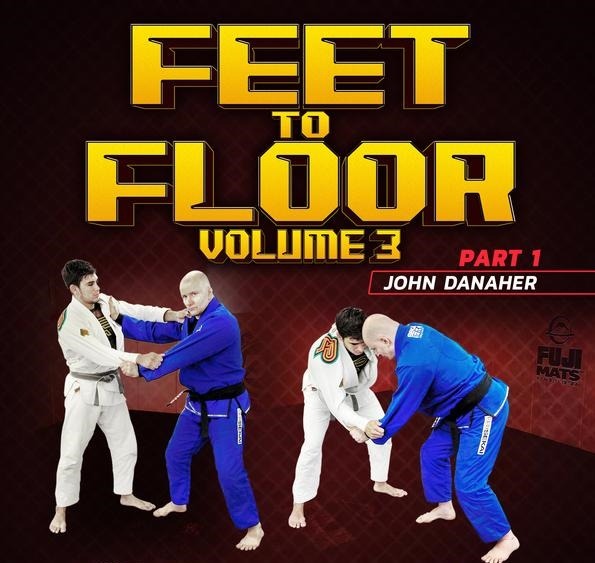
"Feet To Floor 3" John Danaher Standing DVD Instructional

John Danaher has started sharing his secrets on takedowns for Brazilian Jiu-Jitsu and the entire grappling world is more than grateful to him for that. His new “Feet To Floor” instructional series contains a Gi-based curriculum, but most of the things are also quite easily transferrable to No-Gi, as John himself often points out. What is important to point out is that he demonstrates takedowns for BJJ, and not just takedowns in general as done in other arts like wrestling, Judo, and Sambo. In fact, this third installment of the John Danaher Standing DVD series covers some rolling Sambo takedowns with leg lock attacks, along with some interesting takes on guard pulling as a means of taking a fight to the ground. 

The Feet To Floor John Danaher Standing DVD instructional already has two volumes out. The first one is a real essential for anyone looking to learn how to take people down, especially in a BJJ context. The second one is all about Judo from BJJ, along with all the grip fighting tips and tricks that come with it. While both are great, you’ll absolutely need the first one in order to make sense of the references Danaher often makes during the third volume of his series which we are reviewing here today. I think this one might just be the best of the three DVDs on the subject of standing exchanges he has released so far.

The Fascinating Subject Of Pulling Guard In BJJ

Pulling guard is a highly divisive subject in BJJ. People that like to pull guard defend their choice and option to do so. On the other hand, all those that enjoy doing wrestling or Judo-style takedowns and throws, usually belittle gaurd pullers as being lazy and not knowing any takedowns.

Pulling guard is most definitely a valuable option in Jiu-Jitsu, otherwise, it would not be such a frequent thing. While the action of pulling guard does not bring immediate points as such, it does provide a plethora of attacking opportunities later on. The only drawback is that you end up on your back having to play guard which is not always the best course of action. However, there are huge merits to pulling guard as a means of getting a match to the ground, especially if you know you’re up against someone that is a seasoned Judoka or wrestler, and they can take you down at will. By pulling guard, you’ll at least control how a match goes to the ground and can get the upper hand.

Another aspect of gaurd pulls that supports the notion of training them is the reason to know how to counter them. If a person pulls guard, and they have a full strategy from the eon, you might find yourself in trouble if you’re not a guard passing aficionado. That is exactly what you can expect to learn from the third edition of the “Feet To Floor” John Danaher Standing DVD instructional. Apart from a couple of volumes (of the total of 8), all other parts focus on various ways of turning guard pulls into takedowns, or at least positions of advantage for yourself. The contents of those other volumes are all about rolling kneebar attacks, takedown counters, and mat returns.

Full Review Of “Feet To Floor 3” John Danaher  Standing DVD

We’ve come to expect nothing less than 8 volumes per DVD set from John Danaher over the past several years. He does not disappoint, once again treating us with nearly 10 hours of ultra high-quality material. This time, it is an interesting blend of Sambo, BJJ and wrestling tactics that will offer you a slightly different perspective of the standing game for Brazilian Jiu-Jitsu. The most important aspect of the takedown/throw aspect of grappling eh covers in this particular DVD has to do with pulling guard, as previously discussed.

The way this instructional is structured is by exploring the possible follow-ups that come off of guard pulls, and how you can make them all seem like one uninterrupted motion. In short, you’ll learn how to use guard pulls to get sweeps, get dominant positions, get submissions, or at the very least, earn an advantage. Of course, you will also learn how to counter guard pulls which is a skill you will need to use in matches a lot more than you might think, especially during the white, blue, and purple belt days.

Volume 1- Rolling Kneebars

The rolling kneebar is one of the most attractive moves you’ll see in grappling. While the kneebar is a submission that is pretty much universal among grappling martial arts, the rolling setup is a more specific one. I have no idea who did it first, but it was Sambo that popularized it. In Sambo, rolling from standing into a kneebar on the ground is known as teh Victor roll, and it is a very powerful and reliable move to pull off. All it takes is spending enough time to perfect it.

In the third volume o the John Danaher Standing DVD series, John goes over this move with a fine-tooth comb, making it tighter, even more reliable, applicable to BJ, and easier to learn and master in significantly less time than the original Sambo version.

The way John approaches takedowns is clear by now from his two previous ‘Feet to Floor” volumes. Basically, he goes over the fundamental mechanics first, covering subjects like grips, stance, positioning, and movement. He then covers the move in its entirety, outlining the key moments that make it all work.

Finally, he offers several different grip variations for getting the rolling kneebar, which includes belt grips, lapel grips, the arm trap grip, and a few others.

Volume 2 – Pulling Guard To Sweeps

After going over the basic points of pulling guard in the final chapter of the first volume of the DVD, Danaher switches directly to ways in which guard pulling can end up being the same as a takedown for you. The most obvious direction is via sweeping, which will earn you the same amount of points (2) as a takedown would.

The first thing John covers, though, is the guard to which you will be pulling to. While many people usually think of the closed guard as the endpoint of a gaurd pull, the truth is that you can end up in pretty much any gaurd you want. For example, John demonstrates pulls into Ashi Garami positions, the X guard, half guard, and butterfly guard, among others. He goes over the fine points of each guard position in which you want to end up after the pull first.

The reason for this is that you will require that precise guard position to be able to hit a sweep as soon as possible. Without the mechanical power of the guard, you won’t be able to move an opponent that has managed to establish a meaningful base. The Sumi Gaeshi and Tomoe Nage variations covered in the “Feet To Floor Volume 2” are the most common options here, along with hook sweeps and a very slick fake guard pull into ankle pick. The tripod sweep wraps the second volume of this instructional up.

Volume 3 – Pulling Guard To Advantage

Pulling into advantage requires you to have a specific mindset. While guard pulling as a takedown does mean you’ll need to think outside the box, settling for advantages will challenge your mind even more. It is well worth it, though, as is the case with most Danaher instructionals. The thing is that advantages do not mean you’re giving up the top position. Quite the contrary. The concept is that you’re pulling guard into a position that will allow you to stop for a short time, and then head off straight into something that will unmistakably land you in a top position.

Examples of some of the advantage positions you will find in this volume of the John Danaher Standing DVD are the shoulder crunch, kata gatame, pinch headlock, and slide-by. Conversely, after you pull guard into any of those positions, you can use them to get actual takedowns, the likes of Ude Gatame, Sumi Gaeshi, Hiza Guruma, or elevator sweep.

Volume 4 – Pulling Guard To Position & Pull Counters

Pulling guard into position means that you use the guard pull to obtain your go-to position. This is a highly individual and John offers a basic concept that covers his main ideas behind this philosophy, before heading into guard pull counters.

Now, this is a subject you shouldn’t just glance over. It all start s with the philosophy of winning the guard pull battle. That does not mean pulling guard yourself after dealing with an opponent’s attempted pull. Guard pull counters work best when you let the person go to the ground, but you prevent them from establishing a meaningful guard position. The idea is to go straight into passes off of an attempted pull, which is something John explains in great detail.

Some of the options you will see in this part of the ‘Feet To Floor” DVD are the hand post, jump pull counter, O Soto pass, long step and more.

Volume 5 – Pulling Guard To Submissions

Arguably, the most important skill in relation to pulling guard that you will need in BJJ. Of course, this is a John Danaher DVD, meaning that leg locks are not far behind. In fact, the first thing that he shows is an Achilles lock straight off of a guard pull. It is sneaky, powerful, and legal for every belt in both Gi and No-Gi. A couple of seated pull counters also make an appearance here, with the kneebar and flying triangle being the submissions on choice.

This fifth volume of the DVD is basically divided into two parts. The first is submissions off of guard pulls, while the second is all about negating the guard pull option for your opponent. Danaher also calls these the cheap shot takedowns off of the guard pull and the knee drop method. The armbar is the method of choice here that is the perfect follow-up when it comes to pulling into submissions. The Achilles lock and triangle choke make an appearance once again toward the end, after at least half a dozen different armbar setups with top and bottom finishes.

Volume 6 – Takedown Counters

The more advanced you become in BJJ and especially the standing aspects of it, the more important counter takedowns are going to become. It is not just about defending takedowns and ending up somewhere neutral, it is about turning your opponent’s attacks into attacking options for your own, while of course, scampering their attempts to throw you to the ground.

It all starts with a philosophy of takedown counters, which explains Danaher’s approach to the subject in a nutshell. I really like the fact that he covers the rules of Jiu-Jitsu in regard to takedown counters, thus ensuring you don’t do any stuff that, while very efficient, is illegal under the current general BJJ competition rules.

From there on, he goes into the first aspect of takedown counters – preventing upper-body throws. Hip checks are the method of choice, with several variations covered. In typical Dnahaer fashion, countering a takedown is far from enough, and the follow-ups are, of course, submissions. Strangle holds, armbars, a very cool Ezekiel choke and an even cooler arm trap guard pull off of a hip check all make an appearance in this volume of the instructional.

Volume 7 – Lower Body Takedown Defense

After the upper body takedown counters, there’s an entire volume dedicated to the remaining 50 % of the human body – lower body takedown counters. A couple of step-around counters open up the chapters, which basically means you will be able to deal with most foot sweep attacks.

Lower body counters start off with legal disclaimers as well, once again pertaining to Jiu-Jitsu competition rules. One of the most valuable things you’ll learn from this instructional is Dnahaer’s take on sprawls, covering every possible aspect of the move. Let’s just say you’ll be doing sprawls a bit differentially from now on.

Following suit are other awesome lower body takedown counters, including Judo throws against the single leg in the form Of Harai Goshi, Sumi Gaeshi, Yoko Sakaku, etc. Finally, he touches upon the subject of high-risk high reward takedowns like the drop Seio Nage, Tai Otoshi, and Ogoshi.

Volume 8 – Mat Returns

The final volume of the third edition of the “Feet to Floor” John Danaher Standing DVD instructional. Covers the highly interesting (and crucial) aspect of grappling- mat returns. In wrestling, that refers to keeping people on the ground after you complete a takedown and they attempt to get back on their feet. Basically, without the ability to recognize when a takedown turns into a mat you’ll struggle with actually finishing takedowns and keeping people on the ground after you manage to get them there.

The final chapter of the instructional is on the subject of recovering after you fail with a takedown attempt, which is arguable, a situation you’ll find yourself into more often than any other covered in this instructional. At least until you master all the information in the “Feet To Floor” series.

Wrapping Up

The third installment in the ‘Feet To Floor” John Danaher Standing DVD instructional is the most interesting so far. The first one covered the fundamentals, and the second went into Judo takedowns, mostly of the foot sweep variety. However, addressing gaurd pulling and takedown counters in such a detailed fashion is something not many people have done before Danaher. Add to that the rolling kneebar setups as the cherry on top and you have the perfect standing instructional for both people that love takedowns, and those that love guard pulls.

The Best BJJ GIs in 2024

Best BJJ Gi

If you’re looking for the best BJJ GI possible for your training or competition you’re at the right spot. I’ve been trying a lot of GIS lately and together with all the old ones I tried it’s really hard to conclude the best one, but I’ll do my best to tell you which ones are the best and why.

I’ll split them into a few categories like the cheapest GIs, the best GI overall, etc. so you can find the one that suits your needs more easily.

Here are the list of the best GIs in the market right now: 

The Best Gi Overall

Hayabusa Goorudo 3

[amazon box =”‎‎B01MYPNKHA”]

“The first GI and the one that I find the best right now in 2024 is the Hayabusa Goorudo 3. Maybe I’m a bit biased toward this GI as I’ve been wearing them for a long time right now, but in years of wearing Hayabusa, I still can’t find something that I hate on these GIs. While I own a grey color and I like it with white patches, this Gi comes in 4 colors: grey, blue, white, and black. I’ll now try to explain what I like about it.

This Gi can’t go unnoticed in front of your teammates. It simply looks sick. Considering it looks super, everyone will ask where you got it, what its price is, etc. I’ve had it for 6 months now, and I can say that no traces of use are visible on it, and I use it minimally once a week. I haven’t noticed any significant shrinkage, but generally, I take care of my gis, and stretch the arms and legs before drying, so I’m not authoritative in this case.

The only problem I noticed is that this kimono smells weird, or rather, it stinks for the first few washes. After a few washes, everything is okay, but it can be inconvenient for your teammates.”

The Best Lightweight GI

Fuji Suparaito

[amazon box =”B09XBHY3WN”]

I’ve been wearing the Fuji Suparaito for years now, and all I can say is that I’m still impressed with it. This is one of those gis that will undoubtedly fit you perfectly, and in which you’ll feel comfortable at all times. However, Fuji GIs are known for fitting people well. I think the reason is in the shoulders, which have a wider cut, so all those with “shorter shoulders” will be extremely satisfied with this kimono because it will make them look broader.

Considering it’s a lightweight kimono, I can say that the quality is excellent, and it’s a very durable kimono. Shrinkage is almost nonexistent, or at least I haven’t noticed it.

In short, if you want a kimono in which you look good, feel good, and which is lightweight and durable, don’t look any further because you can’t go wrong with this one.

The Best Budget GI

Zafco Grace BJJ Gi

[amazon box =”B0CJ796T16″]

I received this Gi a few months ago, and I must admit I’m thrilled with it considering its price. You really can’t ask for much more for this money because this is a product that will last and in which you’ll move like never before. You’ll feel like you hardly have it on.

Unfortunately, I’ve only worn it about 10 times, so I can’t confirm how durable it actually is. From what I see, all the important parts on this GI are reinforced, so I don’t think there should be any issues with the durability of the kimono.

If you’re looking for a super cheap GI, this is the right choice for you.

Other Valuable GI Options

Tatami Estilo 6.0
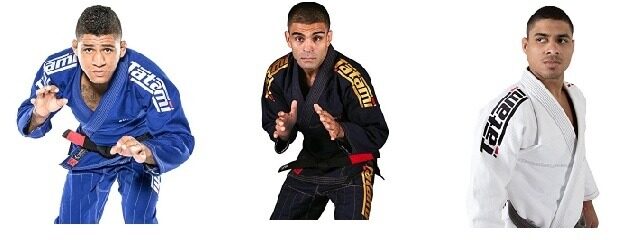
Tatami Estilo 6.0 Features:

  • Jacquard Drawstring Printed.
  • 12oz Canvas Pants. 550GSM Pearl Weave Jacket.
  • Embroidered Logos.
  • The neck lining is sublimated inside.
  • Unique Y-Jacket Vents. Includes Tatami’s S, L, and XL sizes.
  • IBJJF Approved

Since we went over the Estilo 5.0, the updated 6.0 version hit the market. Not only that but I also had the chance of giving it a try. You won’t find many BJJ GI brands out there that take one Gi model to such lengths as Tatami did with the Estilo series. But they can make a quality Gi, as they’ve proven over and over again! The latest Estilo Gi is a long-lasting, pearl weave Gi that is surprisingly light for such material. It is the perfect fit for people that compete often. It fits all competition standards while having a longer lifespan than most others. Plus it won’t make you cut excessive weight. Also from a competition standpoint, the latest Estilo is reinforced right where it needs to be. It also fits perfectly, reducing the opponent’s gripping options as much as humanly possible. Furthermore, the Estilo comes in a larger variety of sizes than other Tatami Gis. As far as this Gi is concerned, every competitor should own at least one. It also makes a good choice as a competition GI according to BJJ Community.

[amazon fields=”B077Q25PQG” value=”button”]


GOLD BJJ Calavera
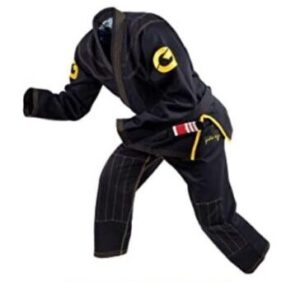
Gold BJJ GI Calavera Features:

  • 450gsm medium-weight renowned Ultra Strong Gold Weave for durability.
  • Inspired by Dia de Los Muertos Rashguard neck lining “Calavera”
  • Ultra-light 10oz Ripstop Pants
  • Reinforced with EVA rubber Stiff Collar
  • IBJJF Approved
  • White belt comes with it
  • Replacement Guarantee with no questions asked

After having this GI for 6 months now I can say that Gold BJJ’s Calavera gi is an excellent mid-weight uniform, not too light but not too heavy. It’s available in a wide variety of sizes including Long and Heavy variants, as well as 3 colors (White, Black, and Royal Blue). I really like the special gold weave fabric Gold BJJ chose for this gi. It’s a bit softer than classic pearl weave and will last a long time. They added a rashguard liner to the neck panel of the gi. It has a cool sugar skull pattern and is one of those touches that makes a jacket super comfortable to put on. Whether you’re a casual BJJ practitioner or an active competitor, you can’t go wrong with this Jiu-Jitsu gi as one of the best BJJ gi choices. It’s good for competition and everyday training.

[amazon fields=”B07XVF2R6P” value=”button”]


Hayabusa Pearl Weave
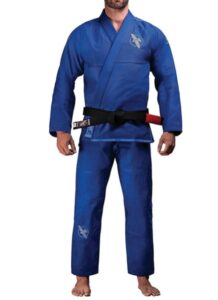
Hayabusa Pearl Weave BJJ Gi Features:

  • Lightweight GI  with a 420-gsm pearl-weave jacket and 8oz ripstop cotton-polyester
  • All seams are Reinforced
  • Pre-treated for color-fade prevention
  • Prewashed, not preshrunk
  • IBJJF Approved

The Hayabusa is a quality Gi that is the perfect fit for anyone. If you’re a complete beginner, and you don’t know what you’re looking for, this is a top option to start with. If you’re a seasoned competitor, then you’ll see that his Gi is one of the best you can have for top performance. This Gi comes in a variety of colors, from orthodox IBJJF legal ones to cool-looking green, grey, and stone white options. The Hayabusa is a lightweight Gi that is ideal for all body types. The lapel and other stress areas feature strategic reinforcements. The jacket is 420 gsm PEARL weave and 100% percent highest quality cotton. Pants feature a polyester and cotton blend in a ripstop pattern. Once again, the pants have strategic reinforcements in key stress areas. There are patches on both shoulders, the chest, back, and legs. Sizes range from A0 to A5. Great fit guaranteed!

[amazon fields=”B073JYNVK3″ value=”button”]


Kingz BALISTICO 2.0
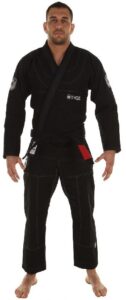
Kingz BALISTICO 2.0 BJJ Gi

Features:

  • 480 GSM High Tech Pearl Weave with 8oz ripstop polyester pants
  • No-Grip technology involved
  • Triple reinforced stitching
  • Reinforced Knee Paddings
  • Made of one piece of fabric
  • IBJJF Approved

Kingz is a brand that made a really big bang when it first came on the market. Since then, all their Gis are synonymous with quality. The Kingz Balistico 2.0 is no different. The Gi is available in three colors, featuring the main IBJJF legal white, blue and black. Sizes are also available in a larger variety than most. Apart from the usual A0 – A4 sizes, there are plenty of custom, in-between sizes. Some examples are A00, A1L, A3H, and others. Due to the uniques size options, make sure you consult the size chart carefully when getting this Gi. The jacket is 100 % cotton and is one of the most comfortable fits you’ll ever get from a Jiu-Jitsu Gi. This Gi also comes pre-shrunk and in a 480 GSM Perl Weave pattern. The sleeves feature COOLMAX lining and No-Grip technology. All the embroidery on the jacket is made with a high-stitch methodology. The pants feature a ripstop pattern and double stitching over the knee pads. They weigh 8oz and are made of a cotton and polyester blend. Seams are triple-stitched and strategically reinforced.

[amazon fields=”B07WXR9M7B” value=”button”]


Venum Elite 2.0
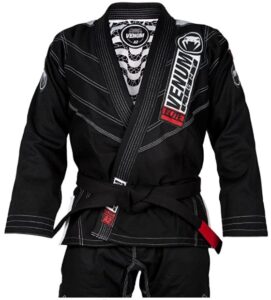
Venum Elite 2.0 BJJ GI Features:

  • Jacket 450 gsm Pearl Weave fabric.
  • 280 gsm Ripstop with reinforced stitching at the inside of the leg and ankle circumference.
  • Reinforced stitching
  • Preshrunk
  • You get the lightweight Gi bag with this GI
  • IBJJF Approved

A lightweight GI for competition straight out of the top drawer. The Venum Elite Light is one of the toughest Gis available on the market today. It is a 450GSM reinforced pearl weave Gi that makes it super strong and durable gi. At the same time, you’d be hard-pressed to find a more comfortable kimono anywhere. As far as competition Gis go, having one of these is a must as after some time it becomes impossible to grip. People from my gym are literally going crazy when trying to grip me. Additional features include advanced moisture management, Ripstop technology all over, but I noticed a bit of shrinkage. Reinforced slots on the jacket. Venum Elite 2.0 is not a cheap Gi but it brings you all the benefits! The top choice for competition and very useful for training as well. Perfect for frequent travelers.

[amazon fields=”B07D88G9VF” value=”button”]


SENSO JIU-JITSU Yuki Gi
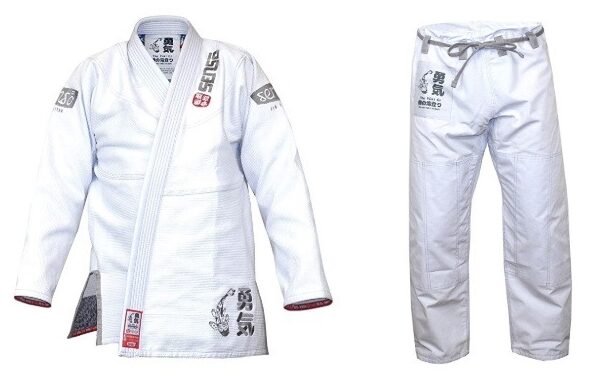
Senso Yuki BJJ Gi Features:

  • 450 GSM Pearl Weave 100% Cotton Jacket with 10oz Ripstop pants
  • COOLMAX fabric lining inside the jacket
  • High definition embroideries
  • Slim Fit Jacket
  • Reinforced knee pads
  • Collar made of EVA foam which is probably the hardest collar to grip
  • Inspired by the legend of a dragon
  • IBJJF Approved

The Latest Creation of the Senso Brand is the Yuki Gi! Yuki GI jacket is made of 100% cotton pear weave of 450 GSM. There’s a COOLMAX material over which lines the shoulder and the waits. The material that is made of makes it feel very soft and comfortable. Whether you’re using a rashguard underneath or not, it still feels great. If you wonder about the collar, I can say that it’s great. It’s made of EVA foam and it’s neither stiff nor soft. I feel like it’s just what it should be like. It has some really neutral feel that a lot of grapplers will enjoy having. If you like branding on the exterior of the upper part you’ll love this one. All of the patches are sorted very well and the design is pretty nice. Although not many people will like this many patches and branding around if you do you will love this GI. The only color of this BJJ Gi is white. The material is not “pure white” as it has some kind of very faint blue hue so it’s just a bit different than “normal” white Gis but it still looks great. No matter, the very faint blue color it’s still IBJJF legal. The pants are made of ripstop material, 10oz 100% cotton. For those who like reinforced kneepads, Yuki GI has doubled them up with reinforcement. Just like the jacket, pants also have Coolmax material inside to make them feel comfortable enough. There’s taping found at the cuffs of the pant’s legs. Thanks to elastic rope drawstring your pants will be kept in place.

[amazon fields=”B085HBP9V2″ value=”button”]


Design Your Own Gi!
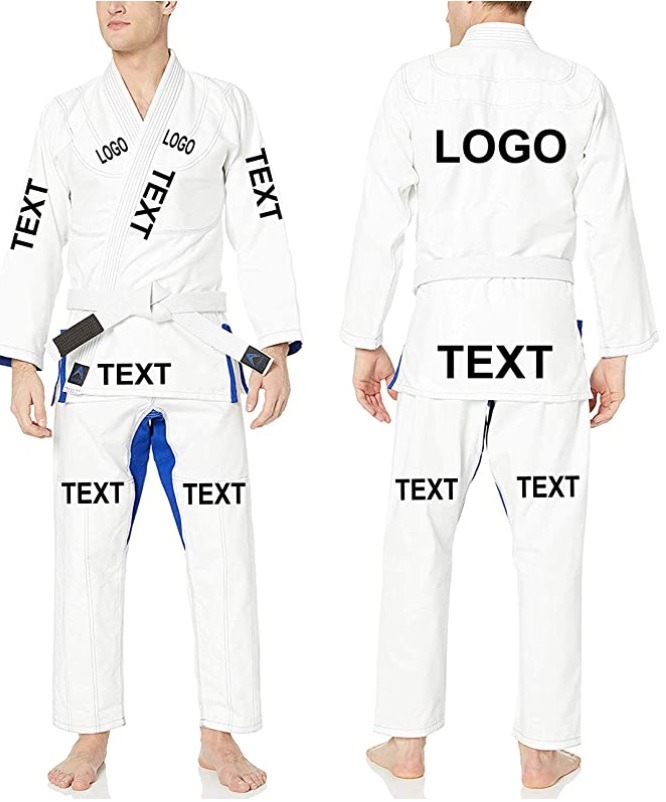
Gi Jiu Jitsu: Design your own BJJ Gi Features:

  • 350 GSM 100% Cotton Jacket with 8oz pants
  • Lightweight
  • Custom Design
  • high-quality direct embroidery

Speaking of Gi Jiu-Jitsu, while you can’t really control what type of Gi your opponent has, you can certainly pick and choose one for you that will provide you with all the options you want. In fact, there’s an option out there that allows you to completely customize your Gi, ending up with the cool-looking BJJ Gi you’ll ever wear in BJJ! The Athlete Jiu-Jitsu Gi is a preshrunk, 350 GSM (pretty lightweight) dense single-weave cotton Gi that fits all requirements for training and competition. It is heavy-duty despite the lightweight, with rubberized collars and tapered sleeves. Available in blue, white, and black color and 7 different sizes (A0-A6). The best thing about this Gi is that it is fully customizable – you choose whatever embroidery or art you want and it will be placed on the Gi in ultra-high quality. So, why not make a perfect BJJ gi for yourself?

[amazon fields=”B08KS7VFYQ” value=”button”]


Sanabul Sanabul Essentials V.2 Ultra-Light Preshrunk
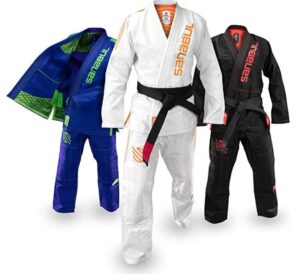
Sanabul Sanabul Essentials V.2 Ultra-Light Preshrunk BJJ Gi Features:

  • Ultralight
  • Preshrunk
  • John Danaher is the owner of one
  • IBJJF Approved
 

Sanabul’s Essentials V.2 Gi is one of the best BJJ GI choices on the market if you’re looking for the lightest gi possible. It is perfect for training, competition, or even as a second Gi. Approved by the IBJJF in white, black, and blue, this GI is also available in grey, green, and navy. colors. You can pick up the Snabul Essentials V.2 in sizes A0-A4.  This is an ultra-light kimono, weighing in at a total weight of only 3.4 pounds. It has been tested and approved by some of the biggest names in BJJ, including John Danaher. The Gi features stiff, rubberized collars, dense single weave fabric, and tapered sleeves. All this adds up to a very lightweight, yet durable Gi that will keep you moving smoothly, yet remain firm when needed. A free belt of your choice comes with the Gi. Machine washable, preferably in cold water. Hang to dry. 

[amazon fields=”B01CFVA02O” value=”button”]


Fuji BJJ Uniform
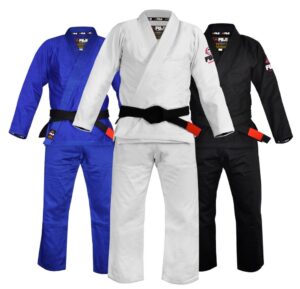
Fuji BJJ Uniform Features:

  • Mid-weight Jiu-Jitsu GI made of Premium Cotton Blend
  • Stiff and thick collar
  • Multi-layer reinforced
  • IBJJF Approved

The legendary Fuji GI is yet another in a line of lightweight Gis that are very popular at the moment. This is classic style Gi, uncluttered in terms of design and very comfortable. You are looking at one of the best-selling and most trusted Gis in the world here. The GI is available in four different colors, with pink being an addition to the usual trio of white, black, and blue approved by the IBJJF. Sizes range between A1-A6 with female models also available in sizes W1-W6.  The Fuji Gi is a medium-heavy Gi, featuring multi-layered reinforcements across common stress points and a thick, rubberized collar. The jacket and pants are 100% premium cotton. This Gi is the first choice for many of the leading faces of the BJJ world like  Renzo Gracie, Rilion Gracie, Roger Gracie, Brazilian Top Team, and many others. 

[amazon fields=”B00H87UA2G” value=”button”]


Tatami Nova Absolute
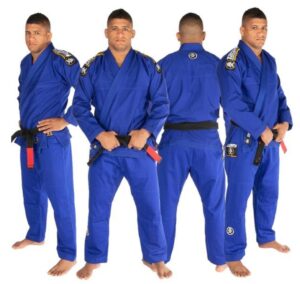
Tatami Nova Absolute Brazilian Jiu-Jitsu Gi Features:

  • Pearl Weave lightweight jacket
  • Shorter jacket and tapered pants
  • Tatami’s usual large size ranged
  • IBJJF Approved

Tatami is a brand that is among the very best in the world when it comes to Jiu-Jitsu Gis. Once again, this is a lightweight BJJ Gi, built for speed and unimpeded movement. White, black, blue, and khaki are the colors in which you can get it, while the sizes offer everything from A1 to A5 including the Tatami-specific in-between sizes as well (a total of 9 different sizes). 

The model of the Gi features a new, athletic cut with a shorter jacket and tapered pants. In other words, this is the perfect competition Gi that is also a great fit for day-to-day training, given its durability and comfort. Pearweave fabric means the Gi is machine washable, preferably in cold water. A free white belt accompanies any Tatami Nova Absolute Gi purchase.

[amazon fields=”B07LBQYRL2″ value=”button”]


Vector Sports
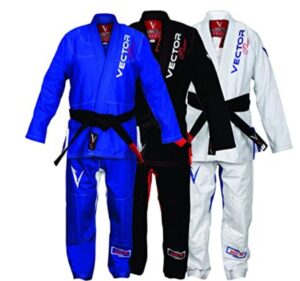
Vector Sports Brazilian Jiu-Jitsu Gi

  • 450 GSM double pearl weave 100% cotton fabric.
  • 10 oz pants with reinforced Ripstop.
  • Preshrunk
  • Quadruple stitching on stress points
  • IBJJF Approved

Not as popular as some other GI Brands, but this is one very good Gi that you can get. 100% cotton, weaved with a special double pearl weave and pre-shrunk. The weight of the jacket is 450 GSM, placing it in the medium-heavy Gi category. It also means this is one of the strongest Gis on the market, a fact supported by the 10oz full ripstop pants. The available colors are the IBJJF approved a trio of blue, black, and white. Sizes range A0-A4.  The design of the Gi is also aimed at competition performance, with a minimum number of patches and a strategically placed soft inner fabric lining for rash protection and extra comfort. Quadruple stitching on strategic stress areas and a tapered athletic cut further add to the competition qualities of this Gi. Recommended to wash in cold water and leave to hang dry. 

[amazon fields=”B06Y15BDCY” value=”button”]


Twister Progress 5.0
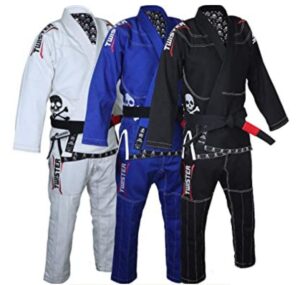
Twister Progress 5.0 BJJ Gi

  • 475 GSM Jacket with 10oz pants
  • Eva Rubberized Collars
  • Packed in Parachute Bag with Twister Fight Wear Logo.
  • Preshrunk
  • IBJJF Approved

The Twister Progress 5.0 BJJ Gi is a very cool-looking Gi that is also very durable and comfortable. It has the perfect balance between softness and weight, and is the perfect do-it-all Gi for training, competition, and even traveling. It is available in blue, white, and black, and the usual size range A0-A4.  The design of the Gi features patches and embroidery on the lapel, chest, shoulders, back, and legs. It is made from pre-shrunk pearl-weave fabric with EVA rubberized collars and ripstop pants. All major stress points are triple stitched, ensuring the long life of this Gi. The jacket weighs in at 475 GSM. 

[amazon fields=”B06XDJQLZS” value=”button”]


SHOGUN Fight Jiu-Jitsu Ultra Light ‘Kanji’ Gi

SHOGUN Fight Jiu-Jitsu Ultra Light 'Kanji' BJJ Gi

  • 350gsm lightweight pearl weave cotton jacket.
  • Reinforced base of jacket and interior sleeve cuffs.
  • Ripstop pants for grappling. 6 drawstring loops.
  • IBJJF Approved

At 350 GSM the “Kanji” Shogun Fight BJJ Gi is one of the lightest Gis you can find online. Made from 100% cotton, this Gi comes in black color with gold embroidery and patches, or a blue and silver combination. Tried and tested by BJJ competitors to ensure the design features the perfect fit, style, and durability. Available in sizes A0-A5.  Despite the great-looking designs, this Gi is also a very durable option for training and competition. It has a reinforced base on the jacket and interior sleeve cuffs. The pants are particularly sturdy, designed in a ripstop fashion with a 6 loop drawstring for closure. The material for the entire gi is a premium cotton blend.

[amazon fields=”B084L4559H” value=”button”]


Tatami Ultralite 2.0
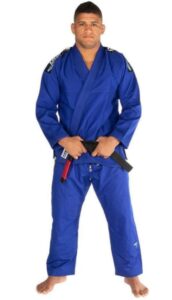
Tatami Ultralite BJJ Gi 2.0 Features:

  • Extremely lightweight
  • 250 gsm pearl weave jacket
  • 7oz ripstop pants
  • Preshrunk with fabrics that prevents shrinkage
  • IBJJF Approved

Tatami is a classic BJJ Gi brand. It has been around forever, and there are plenty of Gi variations on offer. This time, it is version 2.0. The Ultralite is a universally accepted Gi that is a great fit for everyone, especially those just starting BJJ. The latest version has the best fit so far, in terms of the jacket. The Gi is a pearl weave, which makes it sturdy yet mobile. Once you buy it, you’ll feel its lightness as it’s one of the lightest gis in the market today Make note that the sizes tend to be big so you’re best off choosing on the smaller side. The Tatami Ultralite 2.0 BJJ Gi comes in a very wide variety of colors and is very comfortable to wear. It has a medium price tag but it is worth every penny in terms of durability for an ultralight Gi. Highly recommended if you want an ultra-light premium Gi.

[amazon fields=”B07V9PMDLT” value=”button”]

Basic Brazilian Jiu Jitsu Gi Properties

OF course, the financial availability of Gi is one of our primary concerns. But, this must not be the only determinant of whether or not you’re going to acquire new armor. There are a few more factors that massively influence how a BJJ gi is going to fit you.

  • BJJ Gi sizes range from A0 to A5. The letter A stands for adult sizing. The number is a representation of the actual size of the Gi, in terms of adults. These are just the main numbers, as there are categories that are in between. For example, some brands offer sizes like A 1,5, etc. Remember to always check the size chart of the brand you’re considering buying. While you’re looking at size, also make sure you choose the correct BJJ Gi size that fits you. You want neither a tight BJJ Gi nor a very baggy one.
  • The rate of shrinkage is the rate at which the Gi is going to get smaller after you wash it. This plays a huge role if you’re at the upper border of a Gi size. For example, buying an A3 Gi might not be smart if you end up looking at A4 sizes after washing them a few times. Nowadays, most Gis is pre-shrunk. However, always leave a little room for skepticism as a small shrinkage rate might still be in play.
  • BJJ Gi Color is important if you are a competitor. Later on, we’re going to discuss competition rules more, but for now, know that you’ll be limited to three main colors. If you’re Gi is not white, black, or blue, you won’t be able to compete in it. Check out the IBJJF Gi color rules here. When you train, you can go for any color or combination of colors you like.
  • Collar build is an important part of every premium GI. Most BJJ GI collars are filled with cotton or rubber. If the collar is thick it will be harder to choke you because gripping is much harder with a thick collar. Especially those filled with rubber foam. However, this is not something everyone would agree to. It’s not the case with thin collars, but they are harder to keep in place. The only advantage of thick collars is when someone tries to choke you with them it will be hard for them to keep their hand on your carotid arteries.

How to Choose the best size for your GI

If you train in Brazilian Jiu-Jitsu selecting the proper size is very important. Brazilian Jiu-Jitsu gis is usually not too baggy, it’s all in the fit. You don’t want to be swimming in fabric, but you don’t want to feel like your outfit is compressing you either. Luckily, most BJJ brands offer size charts for every model they make so you can look up your body measurements online or by talking to someone at the academy store. There tend to be two ruler sizes: height and weight, so if you’re a short/lightweight guy with long arms or a girl with a small waist – go for a smaller size so it will perfectly fit your proportions, while people with a longer torso, wider shoulders or larger waist should go for a bigger one.

BJJ GI Weaves and Fabrics:

Single Weave
Best BJJ Gi review

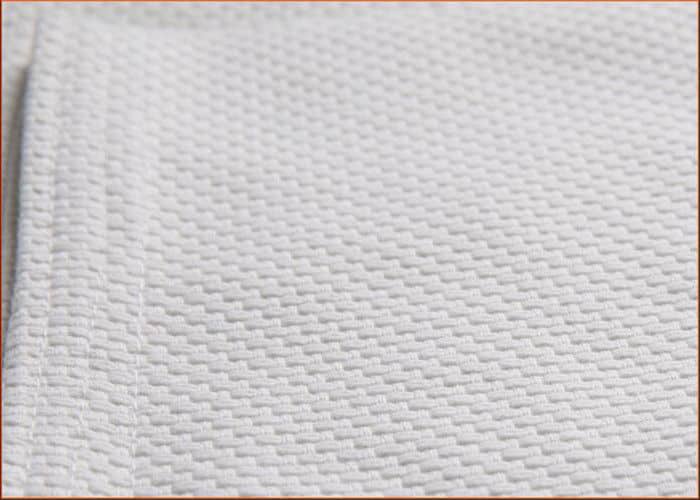
Single Weave is the most basic Brazilian Jiu-Jitsu Gi weave. It is a popular type of weave among grapplers, mostly due to its price. It is very similar to the double weave but with the added benefit of less weight. This makes them perfect for competitors or training in hot areas. One more category of grapplers that can consider a single weave Gi are beginners. It is affordable, comfortable, and easy to take care of. The drawback of this Gi is obviously, durability. Furthermore, Single Weave Gi offers a good gripping surface for your opponent which can also be a hindrance.

Double Weave

Best BJJ Gi review

Double Weave Gi contains the same pattern found in a single weave Gi. The main difference, though, is that the single weave is repeated. This feature makes the double weave one of the best out there. It provides more thickness, and durability and is heavier compared to a single weave. It is very difficult for opponents to establish grips on a double weave Gi. The thickness which may make it hard to wear is the only con of this weave.

Gold Weave

Best BJJ Gi review

Gold Weave is a combination of double weave and single weave. Its primary function is to take only the best of both and discard the useless. it has the thickness and durability of a double weave but possesses the light weight of a single weave. In the modern-day game, many competitors go for the gold weave. It offers a lot of advantages and next to no faults. What it also does, is cost more than a single and double weave. In the end, the gold weave is strong enough to withstand competitions and everyday training.

Pearl Weave
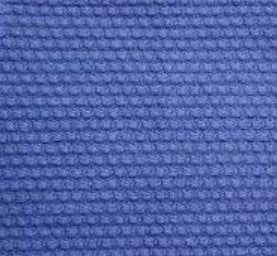
Pearl Weave

Pearl Weave is currently the most used weave in Jiu-Jitsu GI production. The main advantage of the pearl weave is that it’s durable even when used with low GSM fabrics. Being a very durable weave it’s well known for being very comfortable to wear. If you can afford it, don’t think twice.

Ripstop

Ripstop

Ripstop material is a great way to reinforce the materials used for Brazilian Jiu-jitsu GI. It’s used in the way that the original fabric is reinforced with another material to increase its resistance to ripping and tearing. It is usually used on BJJ GI pants to make them more durable. It’s a square pattern that looks like it’s added to the main Jiu-Jitsu GI fabric.

Which Fabric and Weave to Look For When Buying a new GI

This is where most people go wrong. As you become more experienced in Jiu-Jitsu, you’ll discover where your desire lies in terms of BJJ Gi material. For now, you need to be aware of the basic options and what each of them brings. Honestly, considering the average cost, what people mostly look for is durability. This is very closely tied to the material and weave the Gi is made of.

The thickness of the Gi is one more very important property that people should consider. The thicker the BJJ Gi, the harder it is for the opponent to grip and manipulate. The tougher it is for them to close their fist, the better for you. However, thickness often time means more weight, so be careful. The thickness is determined by its weave. There are several main types of weaves common to Jiu-Jitsu Gis.

If you train in grappling, chances are you will sweat a lot. Being sweaty is not bad by itself – it’s the body’s way of cooling down, but if your gi gets soggy and sticks to your skin then it becomes unpleasant. There are several types of materials that Jiu-Jitsu Gis can be made from cotton, pearl weave, gold weave, etc. If you want to get rid of all the moisture as fast as possible, go with 100% cotton or ripstop pants and lightweight material for the top. And even if you don’t like ripstops because they make a lot of noise when rolling on them, at least try to get one that has a double layer on the knees and seat

Competition GI Hacks

When you compete, there are several guidelines you need to follow with your BJJ Gi. It has to fit the standards set by the organizers. It also has to give you every advantage over your opponent. There are a few aspects of a premium jiu-jitsu gi that you have to consider in this sense.

Rule-wise, you need to have either a blue, black, or white Gi. Apart from the patches that come with it, you most likely won’t be allowed anything more. So make sure you do not have an academy or personal patches on your competition Gi. Furthermore, you need to have the size and state of your Gi right. Your sleeves can’t be too long or too short. This also holds true for your pants. Furthermore, you need to have a clean GI with absolutely no tears anywhere. Otherwise, you won’t be able to even enter the competition area.

The best bet for competitors is going for a lightweight Gi. When you cut weight, this is going to come in really handy. Furthermore, any Gi that makes your opponents struggle for grips is a great option. The BJJ gi also needs to fit you perfectly and not impede your movement. Look for a Gi with narrower sleeves. do not forget the rules and shrinkage rate, though. In terms of Gi pants, what you want is durability. Always go for ripstop versions.

BJJ Gi History

The Gi is not specific to Brazilian Jiu-Jitsu. The Gi, or Kimono was the traditional outfit of the Japanese samurai. In those days, different colored Gi’s demonstrated affiliation with different clans. Those Gi’s were nothing like the ones we know today, though. The modern concept of the Gi is mainly due to Judo’s founder, Dr. Jigoro Kano. His modifications resulted in a tighter Gi, that fit better and was also sawn differently.

This model of the Gi is what we still have today, with certain small modifications. Actually, Gis for different martial arts has the same base but different specifications. Compared to Kano’s model, the BJJ Gi has tighter sleeves and is made from a much sturdier material.

In the beginning, BJJ only had white Gis, just like Judo. It was somewhere around the 1970s that people started experimenting with different colored GIs. As the competitive scene of Jiu-Jitsu grew, so did the interest of different businesses. This, in turn, resulted in the first patches of sponsors appearing to the Gis of competitors. As we all know, today’s BJJ Gi variations are endless, although only a few fit competition requirements.

What is a good BJJ GI?

It’s hard to answer what is a good BJJ GI as it depends mainly on your affinities. There are many different options from fabrics to colors. So, the answer would be that the good BJJ GI is the one that suits you best and makes you feel good while wearing it.

What Color BJJ GI should I get?

If you want to compete there are only three colors approved by IBJJF, white, royal blue, and black. In case, you’re not a competitor you can choose any color you want. The most popular color for non-competitors is Navy Blue.

How tight should BJJ Gi be?

BJJ Gi shouldn’t be too tight or too loose. Tight Gi will greatly impact your moving ability while loose Gi will make you “easy to catch”, giving your opponent an advantage. Make sure to buy Gi with a wider groin so it won’t limit your leg’s range of motion.

How long do BJJ Gis Last

BJJ Gi usually lasts around 2 years if you use it regularly. Its duration is mostly about the time spent on the mat. Pants usually last less than a jacket but you can purchase them separately.

How Many Gis Should I Own?

It depends on how many times a week you’re training. It also depends on GI weight weather. If you dry the GI in the fresh air the heavier kimono takes a long time to dry depending on the weather. So, having 2 BJJ Gis is the optimal number if you want to have fresh Gi for every training session.

How much does BJJ Gi cost?

The cost of the BJJ Gi is somewhere around $50 to $200. Simple Gis will cost around $50-$70 while better-looking and more durable Gis will cost around $150-$200. Some GIs cost over $200 but it’s usually about the brands and limited edition series.

Can white belts wear black BJJ Gi?

Yes, of course! White belts are allowed to wear any Gi color in most academies. Although some BJJ academies like AOJ allow only white Gi color.

Does the color of your GI matter in BJJ?

No! The color of your BJJ Gi doesn’t matter by any means. The only restriction on colors is that IBJJF and a lot of other BJJ competition federations only allow white, royal blue, and black Gi colors.

Should I wash my GI after every use?

Absolutely! In the BJJ training session, you change partners, roll on the mats with others and you’ll sweat a lot. Your Gi will be full of bacteria and dirt. While it’s not good for your health you will also smell bad if you show up with unwashed Gi.

How do I choose a BJJ Gi?

You’ll choose your GI while having your affinities on your mind and taking the GI you like the most. Watch for:

  • GI Weave type – choose the weave of your preference. Durability, weight, comfort, etc. depend heavily on GI weave type.
  • Reinforcements – Reinforced knees, stitchings, or collar improves the GI quality and wearing experience.
  • Weight – People usually choose lightweight Gis for summer and heavy Gis for winter.
  • Size – Make sure you check the chart sizes of your chosen gi for the best fit
  • Color – White, Royal Blue, or black if you’re a competitor, any other color if you’re not a competitor.
  • looks – If you look good you feel good, and if you feel good you roll good.

Do you Wear clothes under your Gi?

Yes, you need to wear a rashguard under your Gi jacket and underwear under your Gi pants. Some people wear compression pants under the Gi, especially in the wintertime but it’s uncommon. Also, wearing shorts under Gi pants makes it easier for you to switch from Gi to No-Gi training and sparring.

What is the best weave for a BJJ gi?

Pearl Weave is the best weave because even with the low GSM it’s still strong and durable and can withstand everyday training and competition. It’s the most used weave nowadays.

Closing Thoughts On The Best BJJ GI

Is it possible to recommend the best BJJ gi? One that will fit your body type, your personal needs, and preferences best out of all the other hundreds of gis on the market?

The answer is no. Every GI, even premium GIs is different for everyone because every human being has a different morphology (body type), and physique, and their way of using them is also specific. If you are short, have wide shoulders but a small waist, have long limbs with a short torso – so basically an X-shaped body type – you can’t expect a kimono made for someone who fits into O or square shapes to fit you perfectly even if they’re labeled as “unisex” size.

Therefore, I can just give some advice from my experience and hope it will be helpful, but in the end, you will have to try it out to see what fits your body type best. Also, if after trying several models you don’t like any of them, then look for other brands.

Jiu-Jitsu GI Guide You’ve Been Looking For
Best Lightweight BJJ Gi and Jiu-Jitsu Gi in 2021
Types of BJJ Gis You Need To Know
Best Women’s BJJ Gi 2021 Guide and Reviews
Cool BJJ GIs and Jiu-Jitsu Gis For 2021 – Reviews and Guide
BJJ Gi size guide
BJJ Gi Guide For Beginners
How to Have Your Jiu-Jitsu GI Last Longer
A Few Practical Ways to Fold Your BJJ Gi
Cool, Funny, Ridiculous, and Cheap BJJ Gis for Everyone’s Pocket

(VIDEO) Watch Jon Jones Getting Injured in Training Ahead of Stipe Miocic Fight

(VIDEO) Watch Jon Jones Getting Injured in Training Ahead of Stipe Miocic Fight

With the news that greets us today, it is with heavy hearts that we have to deliver the disappointing news for all martial arts fans. The planned fight between the two greats, Stipe Miocic and Jon Jones, will unfortunately not take place anytime soon due to a shoulder injury Jones suffered during wrestling training. Dana White, the president of the UFC, personally made this news public through his Instagram profile, trying to provide as much information as possible about the situation and share with fans a video of Jones’ injury.

According to Dana White, Jon Jones will have to go through a demanding operation to repair an injured shoulder tendon. This seriously disrupts his sporting plans and will require a lengthy recovery process estimated at eight months. White didn’t go into more detail about the injury, but it’s clear that Jones’ immediate priority will be rehabilitation and recovery.

The replacement for this fight was not an easy task because such fighters as Stipe Miocic and Jon Jones are difficult to replace. The UFC has decided that Russian fighter Sergei Pavlovich and British fighter Tom Aspinall will try to win the interim heavyweight title, which remains a promising heavyweight bout, but leaves a bitter taste with the cancellations of Miocic and Jones.

Of course, the UFC 295 event will not be without an attractive main match, as Alex Pereira and Jiri Prochazka will fight for the position in the center of attention. But despite that, it’s hard to forget how much we all wanted to see Stipe Miocic and Jon Jones in a fight that could change heavyweight history.

Now the question is whether we will ever see this fight between the two giants of the martial arts world at all. Given Jones’ injury and planned eight-month layoff for recovery, and the time frame he needs to prepare for the bout, we arrive at a figure of over a year before the fight could happen. Then Stipe Miočić will be 43 years old, and the question is whether he will still be interested in this fight.

The answers to this question remain uncertain, and all that is left for us is to follow the development of the situation and wait for official confirmation of the date of the fight. Fighters have learned that injuries are part and parcel of this sport, but that doesn’t stop them from coming back stronger than ever

Below you can watch a video showing the moment of Jon Jones’ injury during training. As he tried to take down his sparring partner, the injury happened almost instantly, reminding us just how much risk these athletes put in order to thrill us in the Octagon.

Despite the disappointment, the fighters will continue their journey, and the fans will impatiently wait for the day when the two legends, Stipe Miocic and Jon Jones, will finally meet in the ring and bring us an unforgettable spectacle.

UFC 294 Event in Abu Dhabi: Fighters’ Earnings and Information on PPV sales

UFC 294 Event in Abu Dhabi: Fighters' Earnings and Information on PPV sales

This past weekend we witnessed the UFC 294 event in Abu Dhabi which brought a lot of excitement and great fights. Although there were controversies surrounding the decisions of the judges and the roles of the doctors, in general we can say that it was an extremely good event under the auspices of the UFC.

Highlights included Makhachev’s knockout of Volkanovsky, Chimaev’s win over Usman and the draw between Ankalaev and Walker. With this dynamic event, there were many questions about PPV sales over the weekend.

According to information from the MMA Salaries portal, UFC 294 managed to sell around 700,000 PPVs. These are the individual earnings of the fighters on the show

Islam Makhachev was the top-paid fighter with total earnings of $2,492,000, including a knockout bonus over Volkanovski. With the bonus, his earnings exceed $2.5 million.

Alexander Volkanovski, who agreed to fight in a ‘last minute’ situation against Makhachev, earned an impressive $2,392,000.

Kamaru Usman and Chimaev earned equal earnings of approximately $1,616,000.

A significant drop in earnings follows. Magomed Ankalaev earned $161,000, almost $1 million less than the top fighters on the main card. Johnny Walker won $131,000.

Shara Magomedov, who opened the show in his UFC debut, earned $24,000.

For more detailed information about the salaries of the other fighters in the show, visit the relevant source. There is an interesting difference in fighters’ salaries, which depend on their popularity and contractual arrangements. UFC 294 provided plenty of excitement and spectacular moments, with fighters being rewarded for their performances in the cage.