ADCC European Trials 2023 Results

ADCC European Trials 2023 Results

The ADCC European Trials 2023 marked a significant milestone in the world of professional grappling. The event, featuring top-tier talent and fierce competition, delivered moments of excellence and determination that will be remembered for years to come. Join us as we delve into the highlights of this historic tournament and recognize the winners who earned their places on the world stage.

ADCC European Trials Winners:

Men’s Divisions:

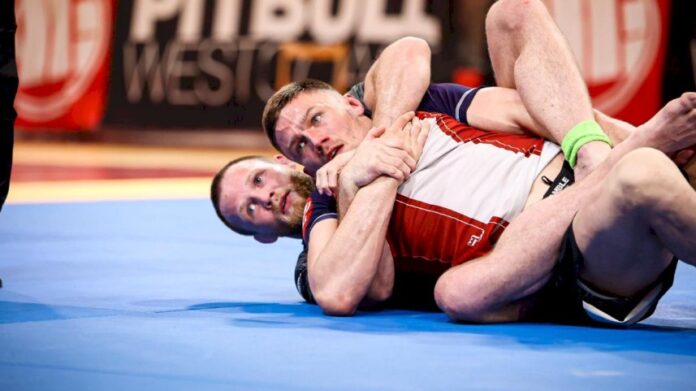
Owen Jones – 66kg

Emerging as a rising star, Owen Jones made a lasting impression in the 66kg category. Jones accumulated 15 unanswered points, showcasing both his technical proficiency and adaptability. His milestone victory in the semifinals against 2022 ADCC veteran Ashley Williams, secured via decision, underscored his potential in the world of professional grappling.

Owen Jones

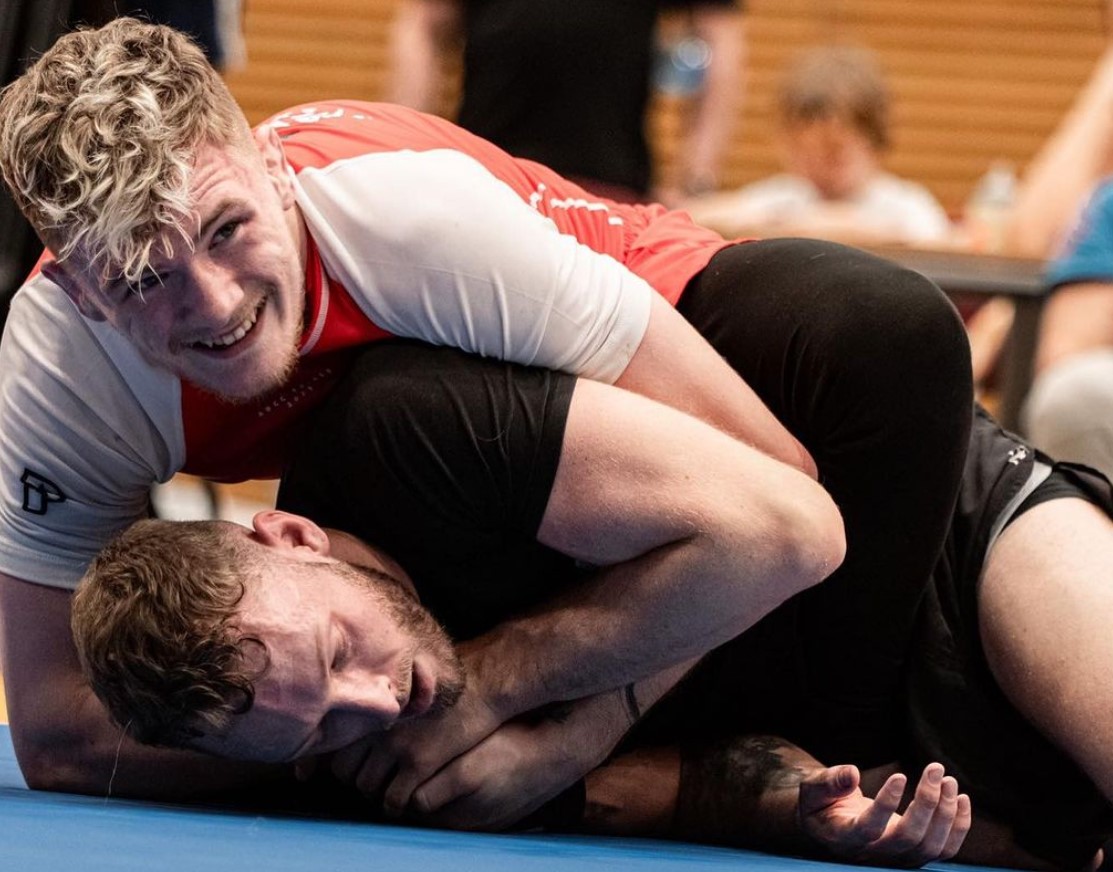
Jozef Chen – 77kg

Jozef Chen, a talented 18-year-old brown belt, showcased his skills by securing victory in the 77kg category. He submitted his first two opponents in the preliminary rounds, displaying both technique and determination. In the quarterfinals, he faced ADCC 2022 veteran Mateusz Szczeciński and emerged victorious through a decision. His journey continued with a nine-point victory over Tommy Langaker in the semifinals and a thrilling overtime win against Oliver Taza in the final. Chen’s performance earned him a well-deserved spot at the 2024 ADCC World Championships.


View this post on Instagram


A post shared by FloGrappling (@flograppling)

Luke Griffith – 99kg

Luke Griffith, the 2022 ADCC European Trials winner, demonstrated his consistency by triumphing in the 99kg category. Griffith’s path to victory included an impressive five-win streak marked by a 100% submission rate. His mastery of chokes from the back was evident, and he sealed the deal with a dominant smothering asphyxiation victory in the final.


View this post on Instagram


A post shared by FloGrappling (@flograppling)

Santeri Lilius – 88kg

Santeri Lilius, a familiar face from the 2022 trials, returned to the world stage by dominating the 88kg category. With 13 uncontested points accumulated in five matches, Lilius showcased his exceptional grappling skills. His journey reaffirmed his status as a formidable contender in the ADCC arena.

Heikki Jussila – +99kg

Finland’s Heikki Jussila secured his spot at the 2024 ADCC World Championships by defeating fellow 2022 veteran Dan Manasoiu via penalties in the +99kg final. Jussila’s tenacity and strategic prowess were on full display, making him a force to be reckoned with in the heavyweight division.

Women’s Divisions

Scandinavian Dominance in Women’s Divisions: While the female division contenders did not secure ADCC Worlds contention in the inaugural trials, the Scandinavian athletes left their mark:

  • Josafine Modig – 55kg Category (Norway): Modig secured her victory with two impressive submissions in four matches.
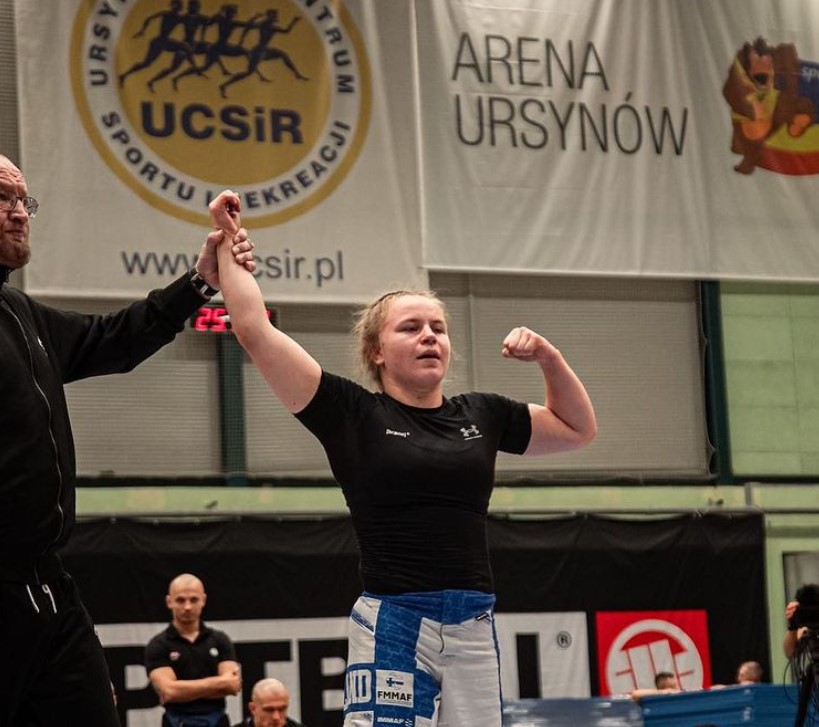
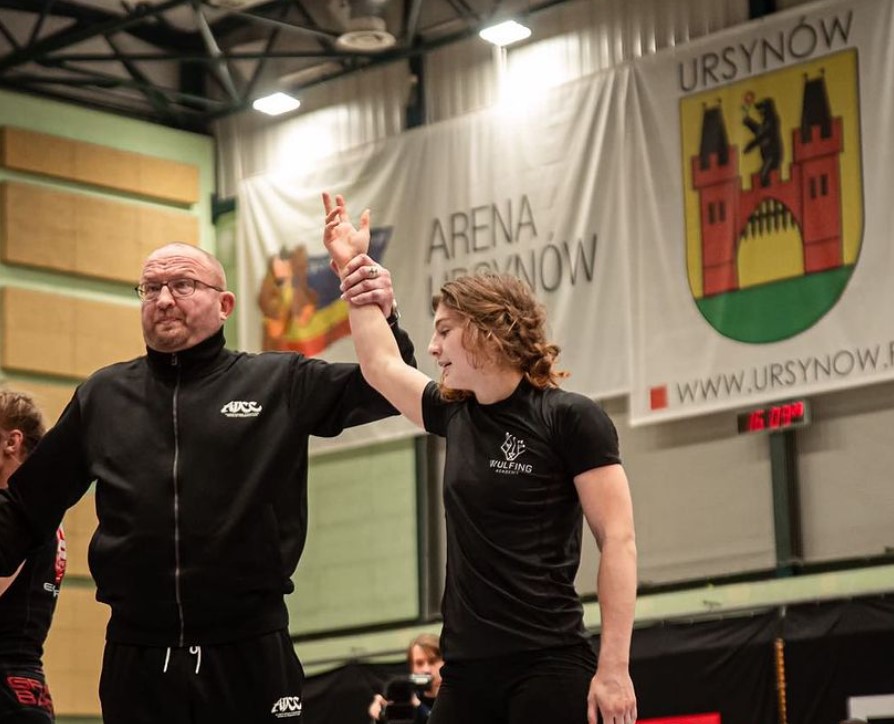
    Josefine Modig
  • Sani Brannfors – 65kg Category (Finland): Brannfors asserted her dominance, winning all five of her matches to claim the gold.
    Sani Brannfors
  • Ane Svendsen – +65kg Category (Norway): Svendsen clinched +65kg gold with a triumphant three-win run.
    Ane Svendsen

Conclusion:

The ADCC European Trials 2023 showcased excellence and determination in the world of professional grappling. From the triumphs of Jozef Chen, Luke Griffith, Santeri Lilius, Heikki Jussila, and Owen Jones to the dominance of Scandinavian athletes in the women’s divisions, the event served as a testament to the skill and dedication of its participants. As we look ahead to the 2024 ADCC World Championships, the legacy of these remarkable athletes continues to grow, promising more thrilling moments in the world of ADCC. You can watch all matches by subscribing to Flograppling.

BJJ Purple Belt Meaning: Role, Skill, Symbolism, etc.

BJJ Purple Belt Meaning: Your Journey to Skill, Style, and Leadership

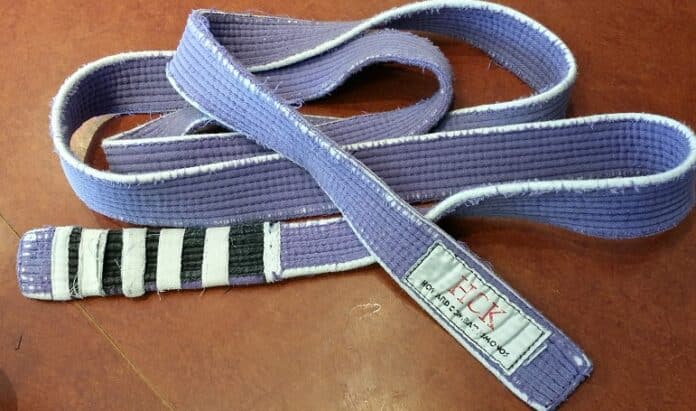
In the kaleidoscopic, ever-shifting realm of Brazilian Jiu-Jitsu (BJJ), practitioners embark on a labyrinthine journey marked by belts, each a distinct milestone on the path of personal evolution, mastery, and metamorphosis. Nestled betwixt the azure and chestnut belts, the BJJ purple belt emerges as a significant, enigmatic beacon that unveils an intricate mosaic of prowess, ingenuity, and leadership. Let us embark on an all-encompassing expedition to unravel the enigma of the BJJ purple belt, dissecting its quintessence, its resonance in personal development, and its pivotal role in shaping the BJJ community.

Comprehending BJJ Purple Belts: An Overarching Prelude to Excellence

Picture BJJ belts as jagged stepping stones on an ascending spiral staircase of progression. Commencing at the nadir with the unblemished white belt, one advances through the azure corridor, and upon reaching the purple echelon, a transcendent realm unfolds. The purple belt resembles an advanced level in an intricate video game, where the rudiments are no longer learned but adroitly mastered.

Mastery of Fundamentals: The Proficiency of a Purple Belt

Envision BJJ techniques as an eclectic collection of intricate puzzle pieces. White and blue belts possess an assortment of these pieces, albeit with a disjointed fit. As the ascent continues to the purple stratum, these fragments coalesce with a graceful finesse. You metamorphose into a maestro of puzzles, completing intricate enigmas with swiftness and nonchalance. Purple belts possess an adroit proficiency in the rudimentary maneuvers, executing them with fluidity and unwavering confidence.

Cultivating Your Jiu-Jitsu Persona: The Artistry of Purple Belts

Visualize BJJ as an abstract art form. In the novice stages, you’re tethered to paint-by-number constraints. As progression ensues, a kaleidoscope of colors beckons, and you unleash your individual brushstrokes. The purple belt serves as the canvas for your artistic expression. Having assimilated the rules, you now employ them as the brushstrokes, forging a unique masterpiece. Purple belts possess the ability to infuse personal flair into techniques, an idiosyncratic touch that sets their style ablaze.

The Odyssey to Purple: A Journey from Replication to Innovation

At the outset of the BJJ odyssey, you are akin to an eager sponge, eagerly absorbing the teachings of your mentors. However, as the path ascends towards the purple belt, it’s akin to departing from a conventional recipe and concocting your culinary creations. You extract a morsel from one move, sprinkle in a dash from another, culminating in the birth of something novel. This is where your voyage towards forging your unique BJJ identity commences in earnest.

Empowering Others: The Purple Belt’s Role as a Torchbearer

Conjure a scenario: you are proficient in a video game and now, you take up the mantle of guiding your friends in their nascent attempts. While not a world champion, your expertise can illuminate their path. In the realm of BJJ, purple belts embark on a similar endeavor. They master the art of instructing, steering, and bolstering others. They ascend to the position of mentors on the mat, sharing their erudition and assisting fledgling practitioners in their progression.

Revealing Mastery: The Multifaceted Symbolism of the Purple Belt

Contemplate the purple belt as a multifaceted gemstone, a jewel earned through a crucible of diligence and devotion. It stands as a symbol that declares, “I’ve traversed this far, and I yearn for more.” While it doesn’t herald the culmination of the journey, it signifies one’s advancement, expertise, and latent potential. Draping the purple belt signifies that you are not merely a BJJ enthusiast; you are an embodiment of the BJJ ethos, a devotee living and breathing the art.

Embracing the Odyssey: Your BJJ Purple Belt Quest

Within the dynamic panorama of BJJ, the purple belt embodies an odyssey replete with challenges, accolades, and revelations. Similar to a character navigating a role-playing game, your journey with the purple belt is strewn with hurdles, achievements, and epiphanies. As you persist on this expedition, remember that your purple belt transcends the confines of fabric; it symbolizes your unwavering commitment to the mastery of BJJ and your contribution to the flourishing BJJ community.

Blazing a Trail: The Role of Purple Belts in the BJJ Ecosystem

The influence of purple belts stretches far beyond the confines of the mat. In BJJ communities, they frequently emerge as the bastions of support for novices. Having treaded the arduous path through white and blue belts, they possess an innate understanding of the struggles faced by neophytes. As they enter the stratum of purple belts, their amassed wisdom and experience endow them with the tools to be efficacious mentors. Purple belts play a pivotal role in fostering an environment teeming with growth, camaraderie, and mutual reinforcement.

The Evolution Persists: Constructing Upon the Purple Belt Foundation

Transitioning from a purple belt to the loftier echelons is akin to ascending grander summits on your BJJ sojourn. While the purple belt exemplifies an impressive amalgamation of skill and imagination, it serves as a launchpad for continued growth. Brown and black belts loom on the horizon, each signifying fresh vistas to explore, novel techniques to master, and innovative avenues to contribute to the tapestry of the BJJ community.

Conclusion: Your BJJ Purple Belt Soiree Laid Bare

As you traverse the variegated terrain of BJJ, acknowledge that the purple belt transcends being a mere belt; it serves as a testament to your unwavering dedication, your fervor, and your eagerness to undergo transformation. Every technique honed, every imaginative adaptation, and every mentoring moment contributes to your evolution as a BJJ aficionado and as an individual. The BJJ purple belt marks a chapter in your narrative, replete with trials, triumphs, and an unending realm of potentialities. Embrace this chapter with zest, cognizant that you don’t simply wear a belt; you bear a legacy of excellence, innovation, and leadership in the captivating universe of Brazilian Jiu-Jitsu.

Teenager Uses Jiu-Jitsu for Self-Defense in Street Confrontation

In the realm of martial arts renowned for its grappling and submission techniques, jiu-jitsu has consistently stood out as a formidable tool for self-defense. A recent viral video that emerged on social media has underscored this fact, showcasing the remarkable skills of a young teenager who adeptly employed his jiu-jitsu prowess in a real-world altercation.

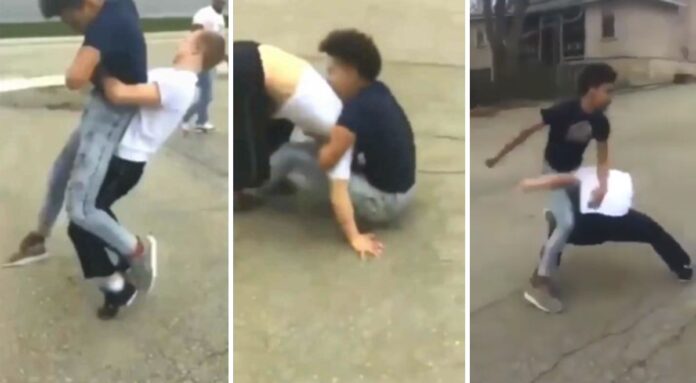
The video captures an intense encounter between two teenagers, the catalyst behind their conflict remaining shrouded in mystery. Despite facing a taller and presumably stronger opponent, the teenager sporting a white shirt showcased an unparalleled command over both wrestling and jiu-jitsu. Over the course of a gripping one-minute skirmish, he repeatedly brought down his adversary, executing well-coordinated takedowns and executing precise ground-and-pound maneuvers.

What truly set the teenager’s performance apart was his exceptional ability to evade incoming strikes. While there were instances of exchanged blows, his proficient grasp of jiu-jitsu enabled him to remain firmly in control of the confrontation, while effectively mitigating the impact of any inflicted harm. His opponent found it an uphill struggle to mount a viable offense against the teenager’s adept grappling techniques.

It is imperative to underline the fact that jiu-jitsu’s effectiveness in one-on-one combat is its hallmark. The martial art offers pragmatic self-defense tactics that emphasize control and submission, without resorting to unnecessary aggression. However, it is vital to acknowledge that when confronting multiple adversaries, depending solely on jiu-jitsu might not be the optimal strategy.

Nonetheless, cultivating proficiency in jiu-jitsu remains exceptionally advantageous for personal self-defense. In situations where one faces a single opponent, it imparts individuals with the indispensable tools to protect themselves with efficacy. Moreover, engaging in jiu-jitsu training contributes to enhancing core strength and overall physical fitness.

One cardinal principle to bear in mind is the importance of steering clear of the ground when confronted by numerous opponents. While jiu-jitsu thrives in ground-based combat, initiating grappling maneuvers on the floor against multiple assailants can swiftly render one disadvantaged. In such scenarios, it is of paramount significance to prioritize evasion, situational awareness, and identifying opportunities to disengage, instead of becoming embroiled in protracted ground confrontations.

The video serves as a compelling testament to the power of jiu-jitsu as a self-defense tool and highlights the significance of well-rounded tactics in varying circumstances.

Female Judo Prodigy Shocks Audience by Throwing Security During Public Confrontation

Female Judo Prodigy Shocks Audience by Throwing Security During Public Confrontation

Kazakhstan, a nation historically celebrated for its array of gifted athletes, has recently thrust into the limelight another sensation – the mesmerizing Aigerim Abilkadirova. Beyond her striking demeanor, Abilkadirova has garnered much attention as a formidable judo professional, proving that beauty and brawn can indeed coexist harmoniously.

For many, combat sports paint a picture of sheer aggression, power-packed punches, and brutal takedowns. Yet, Abilkadirova stands as a testament to the fact that a fighter can exhibit both finesse and tenacity. Making her mark in the judo world since 2010, this 27-year-old has been a beacon of Kazakhstan’s sporting prowess, achieving remarkable milestones on both national and global stages.

Diving deeper into her illustrious career, one can’t help but marvel at her achievements. She has clinched four illustrious bronze medals, with two shining from Kazakhstan’s national tournaments, one glittering from the rigorous European competitions, and another eminent one from the esteemed Continental Championships Cadets. Besides these, her tally of six sterling silver medals from identical tournaments showcases her consistency and dominance in the sport. However, the feather in her cap was undoubtedly the resplendent gold medal she bagged at the Asian Open held in Aktau in 2018.

Sporting the physique of an elite athlete, Abilkadirova effortlessly combines allure with raw power. However, her allure isn’t merely skin deep. In a testament to her multifaceted persona, she clinched the revered 2022 Miss Europe Continental title, making her a force both on and off the judo mat.

Yet, her recent claim to fame, which set the digital realm abuzz, isn’t rooted in her sporting or pageant victories. In a riveting episode of Ruh Fighting Championship (RFC), a popular talk show by Kazakhstan’s premier MMA organization, Abilkadirova found herself embroiled in a fiery exchange with a co-guest. Emotions flared, leading her to launch a water bottle in the guest’s direction.

As onlookers waited with bated breath, a security personnel stepped in, attempting to quell the situation. But, in a twist that left viewers gobsmacked, Abilkadirova channeled her judo expertise, taking the security guard by surprise and effortlessly grounding him with an expert judo maneuver. Although the situation could have escalated further with the guest, quick thinking by the show’s host steered the situation away from chaos. Clips of this unexpected altercation spread like wildfire online, with netizens pouring in their reactions.

Social media was inundated with reactions:

  • “A jaw-dropping display! Judo Champion and Miss Europe Continental Aigerim Abilkadirova leaves viewers stunned!”
  • “Aigerim Abilkadirova’s judo finesse shines brightly. Truly a spectacle to behold!”
  • “Abilkadirova’s agility, combined with her acute judo skills, was front and center. A moment for the history books!”
  • “A sublime showcase of raw power and expertise. Aigerim Abilkadirova truly stands out!”
  • “She’s a phenomenal amalgamation of beauty, strength, and skill. Aigerim Abilkadirova undoubtedly owned the moment.”

3 Essential Components for Brazilian Jiu-Jitsu Mastery – Unlock Your BJJ Potential

3 Essential Components for Brazilian Jiu-Jitsu Mastery - Unlock Your BJJ Potential

Brazilian Jiu-Jitsu (BJJ) is a fascinating martial art that requires a harmonious blend of physical and mental attributes. As you delve into the world of BJJ, understanding the key components of flexibility, strength, and balance becomes vital. This comprehensive guide provides in-depth insights into these elements, paving the way for a well-rounded BJJ training experience.

Part 1: Flexibility & Mobility in BJJ

1.1 Understanding Flexibility & Mobility

In Brazilian Jiu-Jitsu, flexibility and mobility play a critical role. They enable smoother transitions, better positioning, and help to prevent injuries.

  • Flexibility allows your muscles to stretch to their full potential, aiding in reaching and maintaining difficult positions.
  • Mobility refers to the ability to move your joints and muscles in a full range of motion, enhancing your agility on the mat.

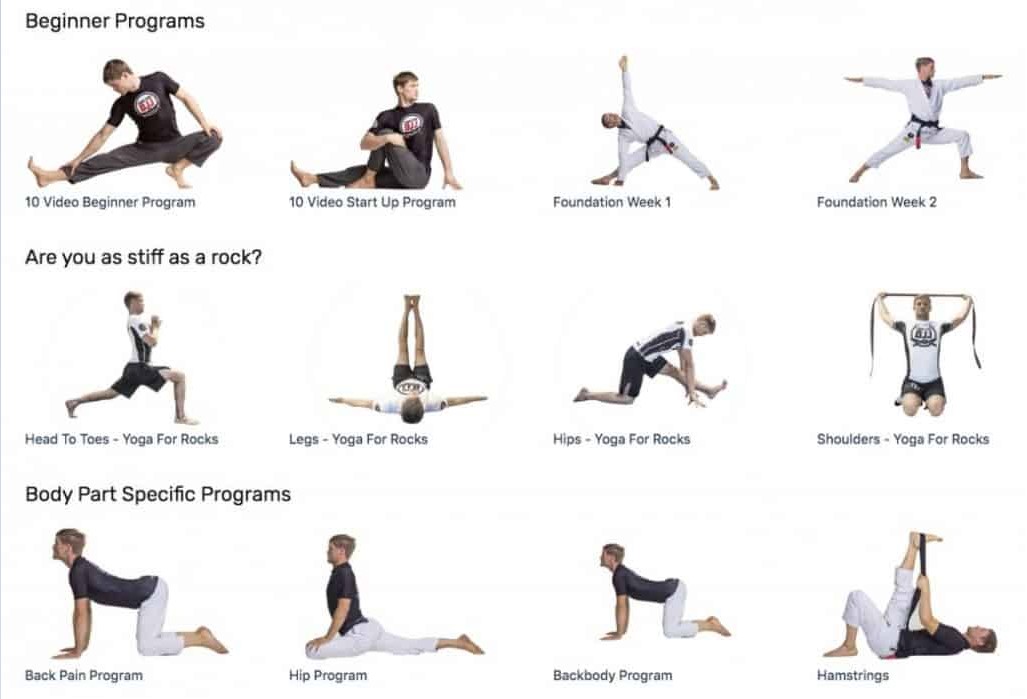
Flexibility and mobility for bjj beginners program

1.2 Benefits in BJJ

  • Enhanced Techniques: Improving flexibility aids in executing complex techniques in BJJ.
  • Injury Prevention: Regular mobility exercises protect joints and muscles from unnecessary strain.
  • Speedy Recovery: Proper stretching and mobility work can enhance recovery after intense BJJ sessions.

1.3 Tips for Improving Flexibility & Mobility in BJJ

  • Consistent Practice: Make stretching and mobility exercises a routine part of your BJJ training.
  • Specific Exercises: Focus on movements that translate directly to Brazilian Jiu-Jitsu techniques.
  • Monitor Progress: Keep track of your improvements in flexibility and adjust your routine as needed.

Part 2: Strength & Conditioning for BJJ

2.1 Understanding Strength & Conditioning

Strength and conditioning in BJJ are not just about lifting weights. They involve building functional strength and endurance that directly translates to your performance on the mat.

  • Strength is about developing the power needed to control opponents and execute techniques effectively.
  • Conditioning focuses on building the stamina and endurance necessary for sustained performance in BJJ.


2.2 Benefits in BJJ

  • Enhanced Control: Proper strength training helps maintain positions and control opponents in BJJ.
  • Endurance: Conditioning ensures peak performance throughout a match or training session.
  • Injury Resilience: Strength training can fortify vulnerable areas, reducing the risk of injuries in BJJ.

2.3 Tips for Effective Strength & Conditioning in BJJ

  • Functional Training: Choose exercises that mimic BJJ movements.
  • Balance Strength and Endurance: Create a routine that includes both strength and conditioning exercises to cover all bases.
  • Recovery Management: Balance intense workouts with proper rest to avoid overtraining.

Part 3: Balance & Core Stability in BJJ

3.1 Understanding Balance & Core Stability

Balance and core stability are often overlooked in BJJ training, yet they are foundational to success.

  • Balance is the ability to maintain equilibrium, crucial for both offense and defense in BJJ.
  • Core Stability is about controlling the body’s center of gravity, which underlies every BJJ movement.

Image: Examples of balance and core stability exercises for BJJ.

3.2 Benefits in BJJ

  • Positioning Advantage: Core stability helps maintain balance, which is essential for effective positioning in BJJ.
  • Increased Precision: Good balance aids in executing techniques with greater accuracy and efficiency.
  • Overall Athleticism: Balance and core exercises improve coordination and reaction time in BJJ.

3.3 Tips for Enhancing Balance & Core Stability in BJJ

  • Regular Practice: Include balance and core exercises in your daily BJJ training.
  • Use of Props: Utilize stability balls, wobble boards, and other tools to challenge your balance.
  • Mind-Body Connection: Focus on the quality of movement to develop true core stability.

Conclusion: Your Path to BJJ Mastery

Brazilian Jiu-Jitsu is more than a sport or martial art; it’s a lifelong journey. The road to BJJ mastery is paved with dedication, understanding, and application of flexibility, strength, and balance.

Embrace these elements, incorporate them into your training routine, and observe how they transform your BJJ experience. From unlocking new potentials, and reducing injury risks, to achieving greater success, these three components enrich every aspect of your BJJ journey.

Whether you’re a beginner or a seasoned practitioner, let these insights guide you in cultivating a more holistic approach to Brazilian Jiu-Jitsu. Engage with these principles, and immerse yourself in the endless possibilities and profound rewards that BJJ offers.

Ready to elevate your BJJ practice? Click here to discover the Yoga for BJJ program and begin your journey toward BJJ mastery today.

Brazilian Jiu-Jitsu: Exploration of Sport and Self-Defense Aspects

Brazilian Jiu-Jitsu (BJJ) is a multifaceted martial art renowned for its effectiveness in both sport and self-defense. Its roots trace back to a time when it was considered the epitome of combat techniques. This comprehensive guide delves into the various aspects of BJJ, from its historical significance to its modern-day evolution, focusing on both sport and self-defense facets.

1. Brazilian Jiu-Jitsu’s Rise to Fame in Combat

The Legacy of Royce Gracie

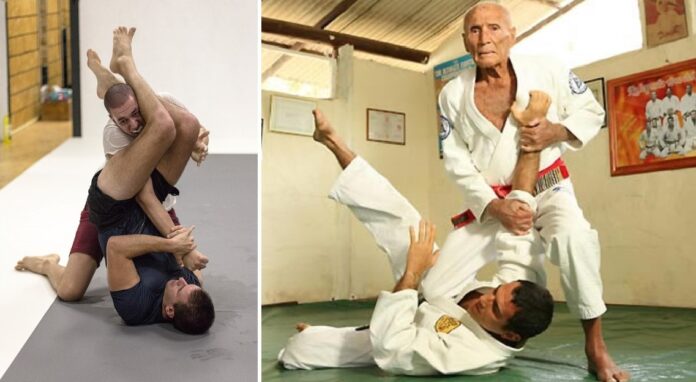
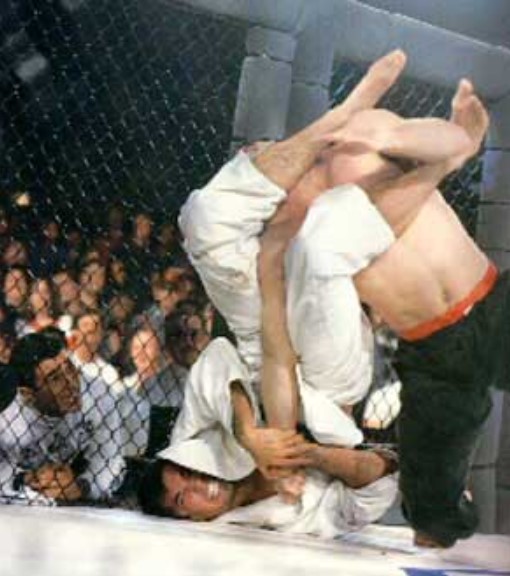
BJJ’s reputation as a formidable self-defense art was cemented with Royce Gracie’s victories in the early UFC matches. Videos of Gracie in action showcased BJJ’s supremacy, even against larger opponents. This sparked global interest and prompted many to explore Brazilian Jiu-Jitsu for self-defense.

Royce Gracie in a UFC match, demonstrating Brazilian Jiu-Jitsu techniques

BJJ vs. Other Martial Arts Styles

Comparative studies with styles like Muay Thai, Krav Maga, and wrestling opened new dialogues about effective self-defense techniques. Still, BJJ’s ground-based approach set it apart as a unique and essential combat skill.

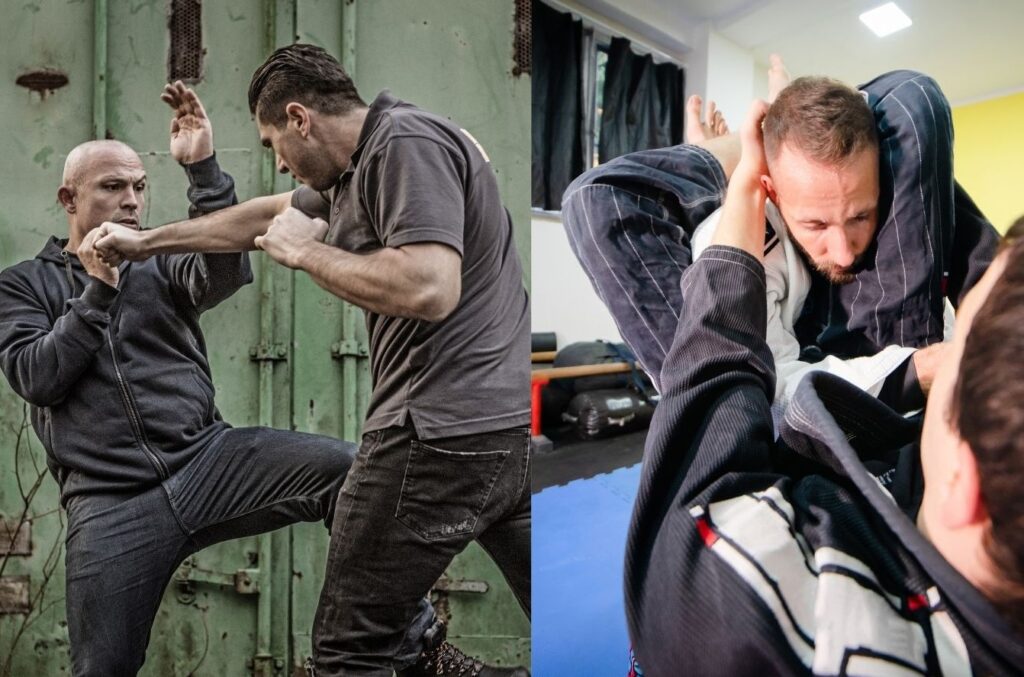
Comparison of BJJ with Muay Thai, Krav Maga, and wrestling techniques in action

2. Evolution of Brazilian Jiu-Jitsu: Sport vs. Self-Defense

The transformation of BJJ schools’ focus towards sportive techniques led to a gradual shift from its core self-defense principles. This section explores the distinction between the two.

Sport-Oriented BJJ

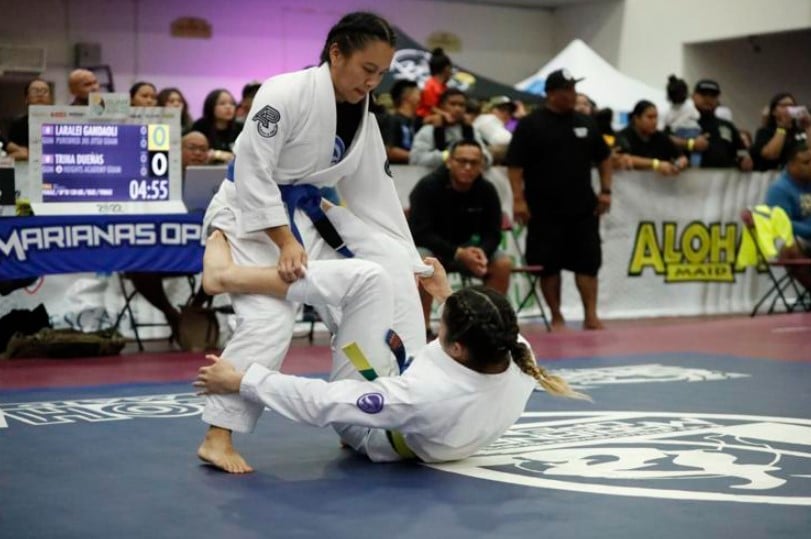
Sport BJJ emphasizes winning point competitions and ground-based strategies. It often overlooks standing positions and strikes defense and offense. The growing popularity of sport BJJ tournaments has led to this specific focus in many training schools.

BJJ athletes competing in a sport-focused tournament, showcasing ground-based strategies

Self-Defense-Oriented BJJ

Contrarily, self-defense BJJ encompasses a holistic approach that includes techniques to defend against strikes, use strikes, and achieve takedowns. Some schools excel in balancing sport and self-defense, offering a comprehensive BJJ experience.

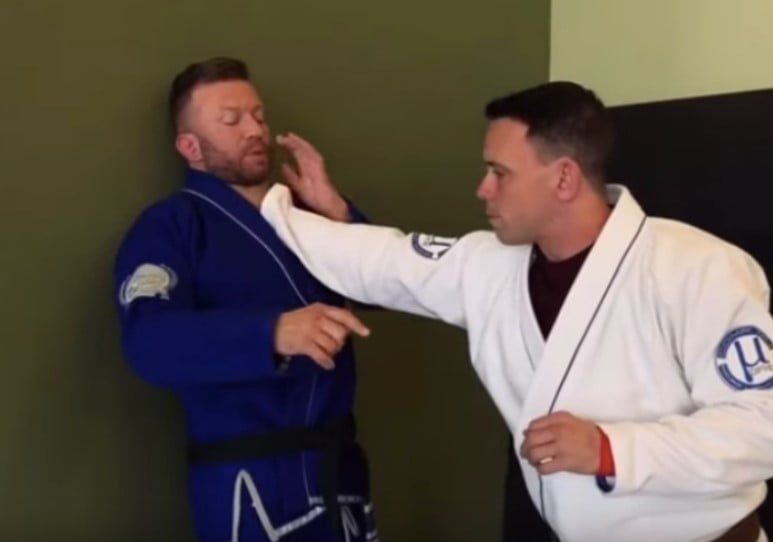
A BJJ practitioner demonstrating self-defense techniques, including strikes and takedowns

3. Striking a Balance: Sport and Self-Defense in Brazilian Jiu-Jitsu Training

BJJ does not necessitate a binary choice between sport or self-defense. Its expansive nature encourages practitioners to explore both aspects without limiting themselves.

Benefits of Sport BJJ

Sport BJJ provides an avenue for high-intensity, injury-free training. Competing in tournaments can help acclimate oneself to real-world stress and improve performance in actual confrontations.

High-intensity training session in sport Brazilian Jiu-Jitsu, with focus on competition preparation

Importance of Self-Defense BJJ

Ignoring the self-defense side may lead to unpleasant surprises in real combat scenarios. Simple slaps, headlocks, or basic jabs can disrupt sport-trained techniques. A well-rounded approach is crucial for true mastery of BJJ.

4. Encouraging Open Dialogue and Exploration

Whether at a sport-only BJJ school or a self-defense-only dojo, open communication with your coach can lead to a more diverse and enriching training experience.

Asking for Specific Training

Coaches are often willing to share their knowledge in both aspects of the art. If your current school lacks what you desire, consider attending seminars, and workshops, or finding alternative training locations that embrace the full spectrum of BJJ.

A BJJ student discussing training preferences with a coach, emphasizing open dialogue and exploration

Embracing All Facets of BJJ

Engage with different techniques, training with strikes involved, or discovering a passion for the sports side. The key is not to be afraid to ask and explore.

5. Conclusion: The Dynamic World of Brazilian Jiu-Jitsu

The allure of Brazilian Jiu-Jitsu lies in its multifaceted nature, serving both as a sport and self-defense method. It is an art that has rapidly evolved, offering endless opportunities for exploration, growth, and mastery.

Choosing to engage with both the sport and self-defense aspects of BJJ enhances the training experience, leading to a more comprehensive understanding of this rich martial art. As trends continue to evolve, the true practitioner of Brazilian Jiu-Jitsu embraces the entire scope of this martial art form.

Whether you’re seeking effective self-defense techniques, the thrill of sport competition, or a blend of both, Brazilian Jiu-Jitsu offers a dynamic and fulfilling journey. Explore the richness of BJJ with a curious mind and open heart, and let this unique martial art form guide you toward personal growth and empowerment.

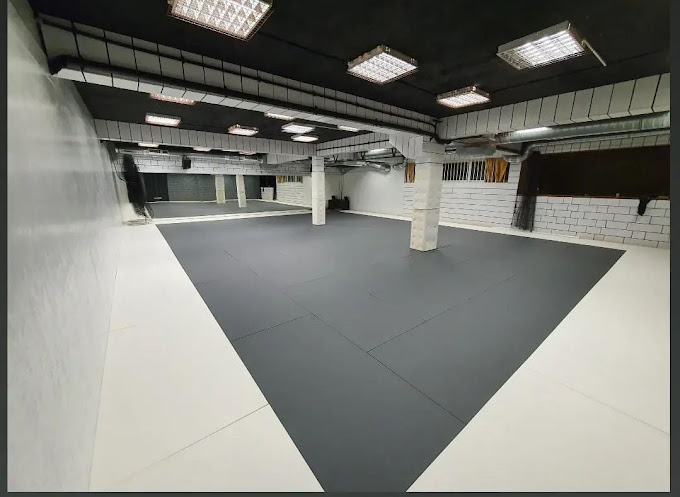
Panoramic view of a Brazilian Jiu-Jitsu dojo, symbolizing the dynamic and comprehensive nature of the art

Frequently Asked Questions

Q: What is the main difference between sport BJJ and self-defense BJJ?

A: Sport BJJ focuses on competition, techniques to score points, and ground control, while self-defense BJJ emphasizes real-world applications, including defense against strikes and awareness of surroundings.

Q: Is Brazilian Jiu-Jitsu effective for self-defense?

A: Yes, BJJ is highly regarded for its self-defense capabilities. It teaches techniques for controlling an opponent using leverage, enabling someone to defend against larger and stronger attackers.

Q: How can I find a BJJ school that teaches both sport and self-defense?

A: Researching local schools, reading reviews, and talking to coaches or instructors about their curriculum can help you find a BJJ school that balances sports competition and self-defense training.

Q: Can I train in BJJ solely for fitness and not for competition or self-defense?

A: Absolutely! Many people train in BJJ for fitness, camaraderie, and personal growth, without necessarily engaging in competitions or focusing on self-defense.

Q: What are the basic techniques I should learn in BJJ?

A: BJJ involves learning various techniques, including takedowns, submissions, guard positions, and escapes. Both sport and self-defense training include these fundamental elements but may emphasize different aspects.

Q: How long does it take to become proficient in BJJ?

A: Proficiency in BJJ depends on factors like frequency of training, individual effort, and instructional quality. Typically, consistent training over a few months to a year can lead to noticeable improvements.

Q: Is Brazilian Jiu-Jitsu safe to practice?

A: Like all physical activities, BJJ carries some risk of injury. However, with proper instruction, adherence to safety protocols, and mindful practice, it can be a safe and rewarding endeavor.

Q: Can children practice Brazilian Jiu-Jitsu?

A: Yes, many BJJ schools offer programs specifically designed for children. These programs focus on fitness, discipline, teamwork, and self-confidence, often in a fun and supportive environment.

Q: What equipment do I need to start training in BJJ?

A: Generally, a BJJ Gi (uniform) is required for traditional training. Some schools also offer no-Gi classes, where athletic wear like rash guards and grappling shorts are appropriate.

Q: How does BJJ complement other martial arts like Muay Thai or Krav Maga?

A: BJJ’s focus on ground fighting and submissions complements striking arts like Muay Thai and Krav Maga. Together, they provide more comprehensive self-defense or mixed martial arts (MMA) skill set.

All Free Courses and Instructionals on BJJ Fanatics

Master Your BJJ Skills with FREE Instructionals on BJJ Fanatics

Brazilian Jiu-Jitsu (BJJ) is more than a sport; it’s a continuous journey of learning, growth, and self-discovery. For those passionate about this martial art, free BJJ instructionals and courses available on BJJ Fanatics provide an unprecedented opportunity to learn from the best in the industry.

Discover BJJ Fanatics Free Download Options

In the world of BJJ, continuous learning is key. The BJJ Fanatics free download section hosts an impressive array of free BJJ instructionals, including top-notch courses from renowned professionals.

The Daisy Fresh Knee Slice by Andrew Wiltse

Elevate your BJJ game with Andrew Wiltse’s free instructional on ‘The Daisy Fresh Knee Slice.’ Available for free download, this course can be a game-changer for your ground techniques.

The Switch: Wrestling Applied to BJJ by Dinu Bucalet

Interested in blending wrestling with BJJ? Dinu Bucalet’s ‘The Switch,’ another free BJJ instructional available for download, provides a seamless transition between these two powerful combat arts.

Top 10 Dumbbell Movements by Jason Khalipa

Physical strength complements technique. ‘Top 10 Dumbbell Movements’ by Jason Khalipa, also available as a free BJJ Fanatics instructional download, offers targeted training to enhance your fitness level.

Judo at Home Workouts by Travis Stevens

Judo and BJJ share many similarities. Travis Stevens’s ‘Judo at Home Workouts,’ part of the free BJJ Fanatics download selection, is designed for martial artists aiming to explore this convergence.

Self Mastery: Solo BJJ Training Drills by John Danaher

Solo training is an essential aspect of BJJ. John Danaher’s ‘Self Mastery: Solo BJJ Training Drills,’ accessible for free download, is a comprehensive guide for individual practice.

Exclusive Gordon Ryan Instructionals and Courses

Gordon Ryan, one of BJJ’s finest practitioners, offers exclusive instructionals and courses. If you want to train like a pro, exploring Gordon Ryan’s courses and instructional materials is a must.  – High Percentage Gi Passes with Gordon Ryan

Why Explore Free BJJ Fanatics Instructionals?

  1. Unlimited Access: Free BJJ Fanatics download options allow for continuous exploration and learning.
  2. Quality Content: Free BJJ instructionals on BJJ Fanatics ensure top-notch guidance from industry experts. It’s not like you’re getting something that’s not worth watching. Actually, everything you see here is very quality content that can improve your jiu-jitsu pretty easily.

The list of free instructionals on BJJ Fanatics:

– Self Mastery: Solo BJJ Training Drills by John Danaher

– High Percentage Gi Passes with Gordon Ryan

– The Daisy Fresh Knee Slice by Andrew Wiltse

– The Switch: Wrestling Applied to BJJ by Dinu Bucalet

– Judo at Home Workouts by Travis Stevens

– Top 10 Dumbell Movements by Jason Khalipa

Conclusion: Begin Your Journey with Free BJJ Instructionals

The availability of free BJJ Fanatics, including Gordon Ryan instructional materials, is an incredible resource for BJJ enthusiasts. Whether you’re a beginner or a seasoned athlete, these free BJJ instructionals are tailored to enhance your understanding and mastery of the sport.

Dive into the world of free BJJ Fanatics instructionals today, including exclusive content from Gordon Ryan. Your journey toward excellence starts with a single click. Explore the free BJJ Fanatics download options and take your BJJ journey to the next level, only at BJJ World.

The Best Krav Maga DVDs – Reviews

The best krav maga dvd and digital instructionals

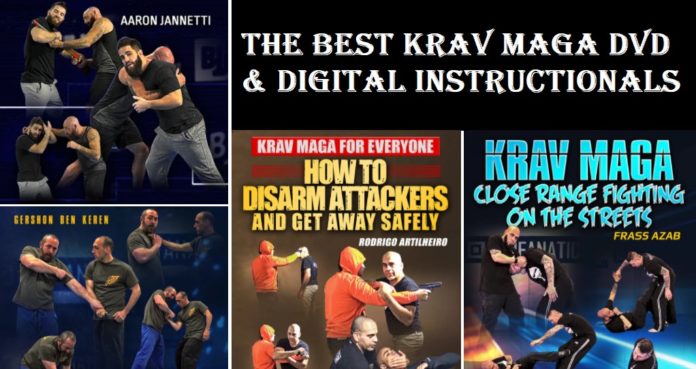
Krav Maga is a fighting system developed for the needs of the Israeli military. While many consider it a martial art, its founder, Imi Lichtenfeld never intended it as such. It is basically a combination of many other martial arts combined together in the most efficient system for hand-to-hand combat. Well, one of the most efficient ones, at the very least. That said, Krav Maga has since evolved into a civilian version as well, one that is very popular around the world. While training in a gym is irreplaceable, you can learn a lot about the system from the Krav Maga DVD instructional and we have the ultimate collection lined up for you. 

Krav Maga has been somewhat mocked last of late, and there is a good reason for it – there are a lot of “wannabes” out there that claim they’re experts at teaching people self-defense. When the proverbial excrement hits the fan, and people realize that they’ve been taught nothing of use, the name of the entire system gets dragged to the mud. Obviously, if it didn’t work it would not be used by the Israeli special forces, the FBI, and the likes. That just means you need to learn from a proven source, like the Krav Maga DVD instructionals we have here.

The Best Krav Maga Training DVD Collection

Krav Maga is something I got involved in before I even started BJJ. The system was originally a combination of Judo, Karate, boxing, and kickboxing, combining all of them in a way that benefits the needs of soldiers on the battlefield in close-quarters situations. The system has since evolved by incorporating BJJ and MMA tactics and combinations to make it even more effective.

The thing that makes Krav Maga different from other self-defense systems out there is the way they train. There are not many techniques, but rather just simple and effective ones based on the natural reactions most of us have as humans. Krav Maga is usually set up in scenario-like situations, covering most violent altercation situations which are statistically likely to happen. The simplicity of the system makes it easy to pick up in just a few months, in terms of effectively being able to defend yourself. It also has ranks and it takes a few years to achieve an expert level.

One aspect of Krav maga training that is very useful is the so-called stress drills. These are scenario drills where people really do attack you, even though it is in a controlled environment in the gym, and cause your body to elicit the same stress reaction you would have in a real-life situation. Some of those drills are part of the Krav Maga DVD instructionals in our list, which is exactly why they made it into our collection.

The best Krav Maga DVD – Editor’s Choice

Out of all the Krav Maga DVD instructional we have for you today, there’s one that stands above the others when it comes to the material it has to offer. We classify it as our top pick, and it is a great one, to begin with, even if you have no prior experience in Krav Maga or martial arts in general.

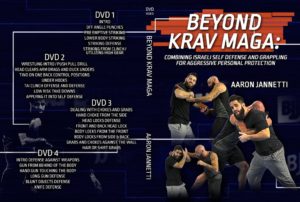
Beyond Krav Maga by Aaron Jannetti

Beyond Krav Maga by Aaron Jannetti

Beyond Krav Maga is a DVD that teaches a very efficient combination of Krav Maga and submission grappling, with self-defense as the main goal. From Krav Maga and grappling basics all the way to weapon defense and scenarios, this Krav Maga DVD is perfect for everyone. Keep in mind that while this instruction will teach you about Krav Maga, it will take drilling in a gym with real stress drills to actually learn how to defend yourself in real-life scenarios.

The rest of the Krav Maga DVDs worth mentioning:

Below are a few more Krav Maga DVD instructionals that are definitely worth your time, if you’re looking to pick up a very effective and fast to learn self-defense system.

  1. Fundamental Krav Maga by Gershon Ben Keren

Fundamental Krav Maga by Gershon Ben KerenFundamentals of Krav Maga. The title says it all, really. This three-part instructional will teach you just about everything about the basics in Krav Maga, from the 360 blocking system to some key training drills.


2. Krav Maga Close-Range Fighting On The Streets by Frass Azab

Krav Maga Close Range Fighting On The Streets by Frass AzabLots of scenarios in this one, similar to those in live training Four volumes in this DVD set cover well over 50 different situations where KravMaga might help you out of a tight spot.


3. Krav Maga For Everyone: How To Disarm Attackers by Rodrigo Artilheiro

Krav Maga For Everyone: How To Disarm Attackers by Rodrigo Artilheiro

Rodrigo Artilheiro has put together one of the best Krav Maga DVD instructionals ever in his “Krav Maga for Everyone” set. The four-part DVD covers some of the key concepts for Krav maga, like personal space, lines of attack, mindset, etc. he also covers how to disarm attackers yielding some of the most common weapons, like guns, knives, and sticks.


4. Ultimate Krav Maga

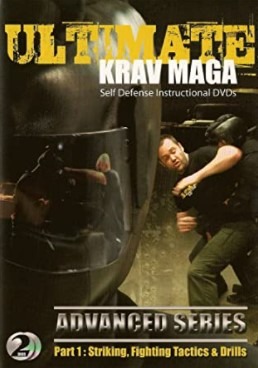
The Ultimate Krav Maga

This is one of the most popular Krav Maga DVD courses out there. Winning international prizes, including Aurora gold and Telly awards, really means something if we’re going to spend our money to learn Krav Maga.

The best thing about Ultimate Krav Maga is that it doesn’t teach only how to do something, but it also teaches you why. It’s a pretty in-depth detailed way of teaching. Maybe the best part of this DVD is that it’s made by some of the best Krav maga instructors in the world, like Amnon Darsa, John Whitman and others.

The good part about this set is that there’s a lot of drills and if you’re going to go through everything you’ll sweat a lot, that’s for sure. But, that’s the only way to really learn and be effective in real-life self-defence scenarios.

This DVD set includes a lot of Fighting and striking tactics like headbutts, spinning kicks, Chops and other combinations combined with Pressure drills focused on the psychological effect of being attacked and other useful stuff.


What is the best Krav Maga DVD?

It’s hard to tell what’s the best Krav Maga training DVD because Krav Maga schools have different approaches to training. Some include real sparring and some not. There are urban krav maga DVD courses and ultimate Krav Maga DVDs. I’ve been training Krav Maga and Grappling so from my point of view the best combination is to take DVDs that combine the best of both worlds.

In Conclusion

Krav Maga is a great option for self-defense, provided you train with a renowned instructor. The same applies to Krav Maga DVD instructional – they’re only as good as the person teaching. Any of the instructional above will help you understand Krav Maga better and give you some training ideas.

However, you can’t hope to learn self-defense by only watching the Krav Maga DVD course so enrolling in a Krav Maga school is really a no-brainer. What’s even more important is that you should try to find a Krav Maga school that offers live sparring sessions with a combination of striking and grappling martial arts like Brazilian Jiu-Jitsu. With real sparring, you’ll be able to understand how and where to use moves that you learned together with the pressure and adrenaline rush you get when in a real fight scenario.

Imagine Dragons’ Front Man, Dan Reynolds, Competes in Jiu-Jitsu Tournament (VIDEO)

Imagine Dragons' Front Man, Dan Reynolds, Competes in Jiu-Jitsu Tournament (VIDEO)

Brazilian Jiu-Jitsu (BJJ) has been steadily gaining popularity worldwide, attracting attention from various celebrities who have taken up the sport and showcased their impressive skills. Among these notable figures are Tom Hardy, Dave Bautista, and the latest addition, Dan Reynolds, the lead singer of the internationally acclaimed band ‘Imagine Dragons’.

Tom Hardy, known for his acting prowess, has consistently demonstrated his dominance in BJJ tournaments, leaving audiences in awe of his remarkable abilities beyond the silver screen.

Meanwhile, Dave Bautista, the iconic WWE wrestler, recently achieved a highly respected BJJ Brown belt, further solidifying his dedication to the sport. His transition from the wrestling ring to the BJJ mat has been captivating to witness.

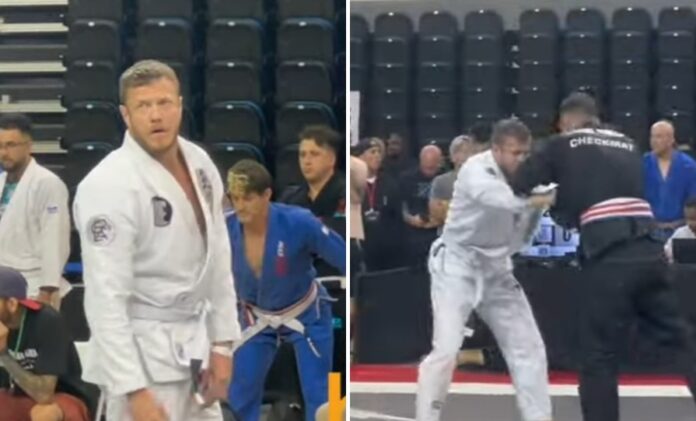
However, the most captivating crossover into the world of BJJ belongs to Dan Reynolds, the talented lead singer of Imagine Dragons. While many were celebrating Independence Day, Reynolds was busy competing in a jiu-jitsu tournament. Specifically, he participated in the Masters 2 tournament, competing in the 222 & under weight bracket at the Jiu Jitsu World League 2023 event held at UCLA’s Pauley Pavilion. Reynolds captivated both fans and critics alike with his exceptional grappling skills and profound understanding of BJJ. Trained at the prestigious Renzo Gracie Los Angeles Academy of Jiu-Jitsu, he left an indelible mark on the mat.

Dan Reynolds' girlfriend
Dan Reynolds girlfriend

Despite not emerging as the victor in his match against Tyree Saxton Jr., Reynolds concluded his outstanding performance with a well-deserved bronze medal. However, Reynolds’ commitment to fitness extends beyond mere accolades. The lead singer of Imagine Dragons has been diagnosed with an autoimmune disorder called ankylosing spondylitis, which has posed various challenges in his life. To overcome these obstacles, Reynolds turned to weightlifting as a means to maintain blood flow and pressure, thereby alleviating the symptoms of his condition.

Moreover, Reynolds has found solace in the practice of yoga and incorporates stretching exercises into his routine. These activities serve as vital components of his recovery and emphasize the significance of holistic well-being in his life. Reflecting on his first venture into BJJ tournaments in 2021, Reynolds described the experience as nothing short of “incredible.”

For those intrigued by Reynolds’ journey in the realm of BJJ, witnessing his skills firsthand is an absolute must.

The 10 Best Martial Arts for Self-Defense

The 10 Best Martial Arts for Self-Defense in 2023

As a fighter in BJJ, MMA, or wrestling, it’s really crucial to be able to protect yourself in any situation. Martial arts are good for staying in shape, getting better at fighting, having fun, and protecting yourself if you ever end up in a street fight.

But what are the best martial arts for self-defense situations? Which ones will give you the edge in a real-life scenario? How can you choose the right martial art for your goals, preferences, and budget?

In this article, we’ll explore the most popular martial arts for self-defense, trying to figure out what the most effective martial arts are. We’ll also look at the pros and cons of each martial art, how to train them, and where to find them.

Let’s get started!

Taekwondo

Taekwondo is a Korean martial art that was founded by Choi Hong Hi and other army officials and martial artists after World War II. It is based on Choi’s Theory of Power, which states that speed is more important than mass for generating powerful strikes. Therefore, Taekwondo emphasizes kicks over punches, since legs can deliver faster and heavier blows than arms.

Advantages and Disadvantages of Taekwondo for Self-Defense

Taekwondo helps you move your body better. It makes you more flexible, balanced, and coordinated. It also teaches you how to use your legs as weapons and how to defend against kicks. Taekwondo is also one of the most popular and widely available martial arts in the world, so you won’t have trouble finding a school or instructor near you.

A clear disadvantage of Taekwondo is the fact that it relies too much on kicks, which can be impractical in close quarters or uneven terrain. It also lacks effective techniques for grappling, clinching, and ground fighting. Taekwondo also tends to be more sport-oriented than street-fighting-oriented, meaning that it follows rules and regulations that may not apply in real-life scenarios.

How to Train Taekwondo for Self-Defense

If you want to train in Taekwondo for self-defense, you should look for a school that teaches realistic applications of the techniques and offers regular sparring with different opponents. To improve your skills in Taekwondo, try learning as many other martial arts as you can, especially ones that focus on grappling skills or using your hands to hit.
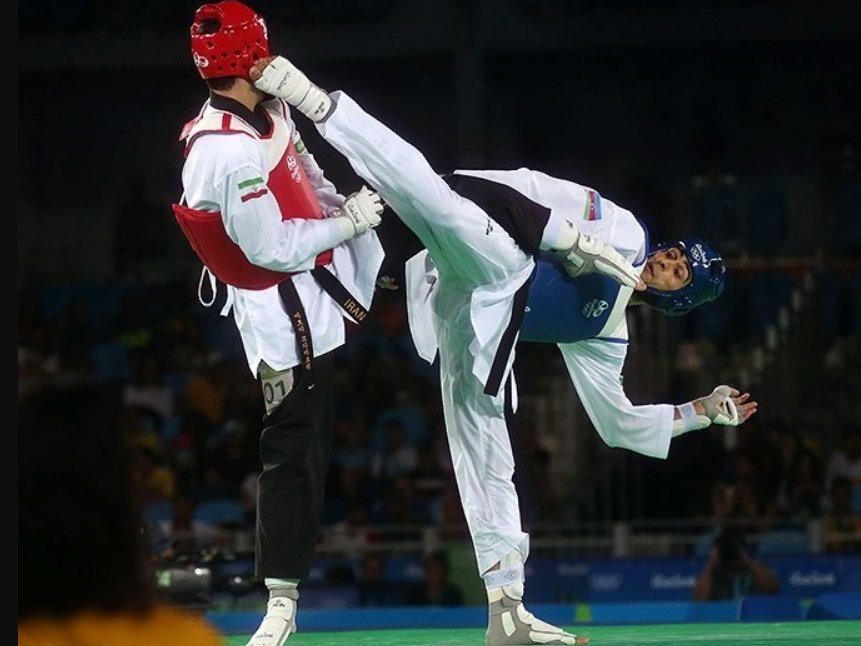
Taekwondo self-defense martial arts

Judo

Judo is a type of fighting that started in Japan a long time ago, made by a man named Jigoro Kano. It is one of the most popular Japanese martial arts, derived from various styles of Ju-Jitsu, which are ancient forms of unarmed combat. Judo means ‘the gentle way’ and it focuses on using leverage, balance and timing to throw or immobilize your opponent.

Advantages and Disadvantages of Judo for Self-Defense

Some of the advantages of Judo are that it teaches you how to use your opponent’s strength and momentum against them and how to control them on the ground with pins or submissions. It also develops your strength, endurance, reflexes, and mental toughness. Judo is also an Olympic sport and one of the most practiced martial arts in the martial arts world, so you won’t have trouble finding a school or instructor near you.

Judo skills can be hard to master because you need to practice a lot and be skillful enough to throw someone safely and well. It also has limited striking techniques compared to some other arts on our list and may not work well against multiple attackers or armed assailants.

How to Train Judo for Self-Defense

If you want to train Judo for self-defense, you should look for a school that teaches both standing and ground techniques and has a focus on Judo techniques which are practical for self-defense situations. Since it is the official Japanese martial art of the Tokyo police department, this should not be a problem.

You should also learn how to adapt your throws to different situations and environments and how to defend against strikes or weapons.
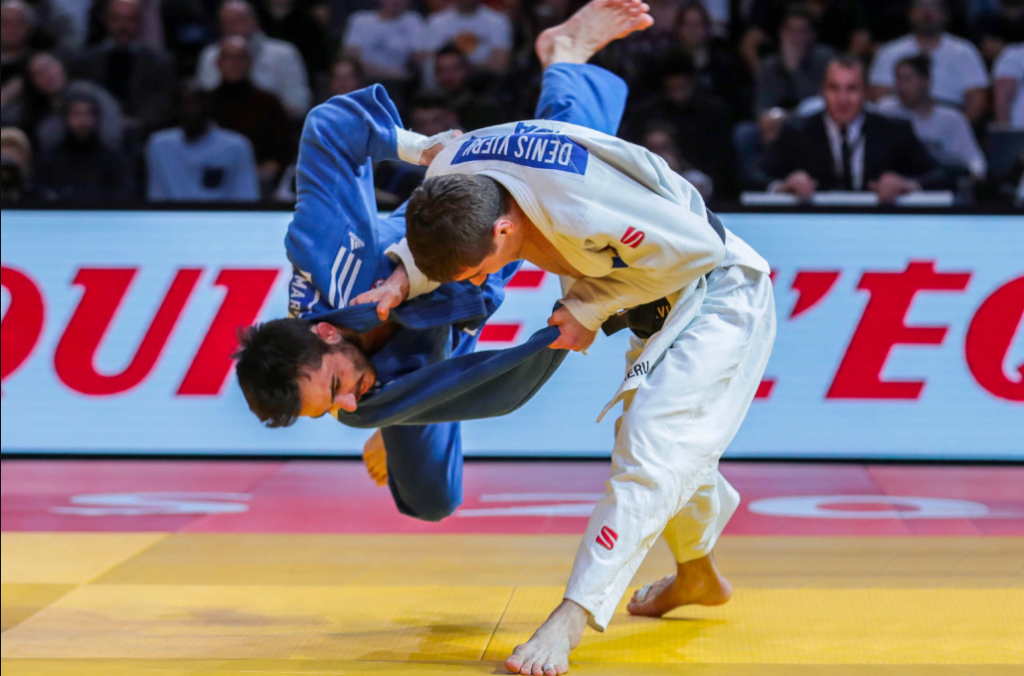
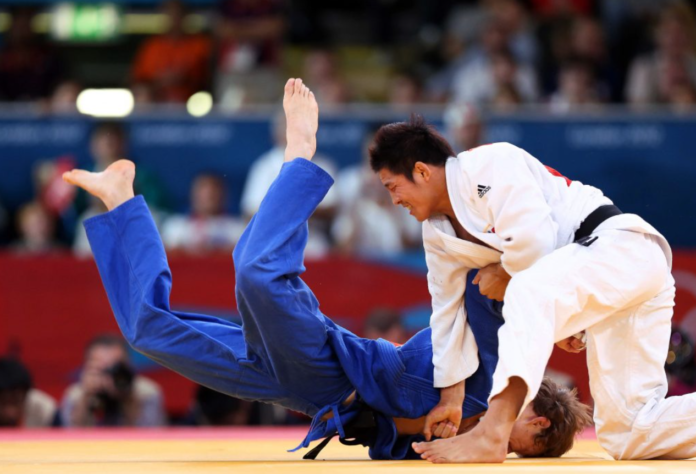
Judo for self-defense

Boxing

Boxing is one of the oldest and most universal forms of combat sports. It dates back to ancient times when people fought with their fists for entertainment or survival. Boxing involves using your fists to strike your opponent’s head or body while avoiding their attacks.

Advantages and Disadvantages of Boxing for Self-Defense

Boxing helps you learn how to hit hard, fast, and precisely. It also teaches you how to protect yourself by moving your feet, dodging with your head, and blocking punches. It also improves your cardio, stamina, coordination, and confidence. Boxing is one of the most popular and accessible combat sports in the world, so you won’t have trouble finding a gym or instructor near you.

A distinct drawback of the sweet science of Boxing is that it only focuses on one aspect of fighting (punching) and neglects other areas such as kicking, grappling, or weapon defense. It also exposes your face to potential injuries such as cuts, bruises, or concussions.

How to Train Boxing for Self-Defense

Training Boxing for self-defense means you should look for a boxing gym that teaches realistic scenarios on top of sports tactics and sparring. You should also learn how to use your elbows, knees, or other improvised weapons if necessary and how to deal with multiple attackers or armed assailants in addition to fancy footwork and life-saving bobs and weaves.
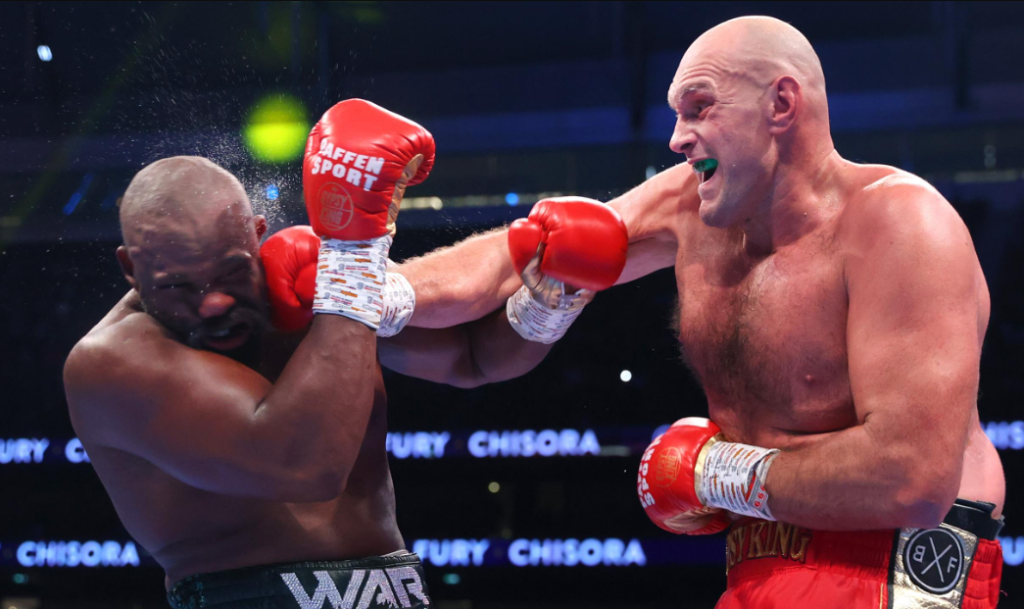
Western boxing self-defense

Wrestling

Wrestling is one of the oldest grappling arts and forms of human competition and combat. It involves using various techniques such as takedowns, throws, pins, or submissions to control your opponent on the ground or standing up.

Advantages and Disadvantages of Wrestling for Self-Defense

Some of the advantages of Wrestling are that it teaches you how to take down your opponent quickly and effectively and how to dominate them on the ground with pressure or submissions. It also develops your strength, speed, flexibility, and endurance. Wrestling is one of the most common backgrounds for an MMA fighter, so you won’t have trouble finding a gym or instructor near you.

A drawback of this grappling martial art is that it does not teach any striking techniques or weapon defense, and it may not work well against multiple attackers or standing opponents.

How to Train Wrestling for Self-Defense

If you want to train in Wrestling for self-defense, you should look for a gym that teaches both freestyle and Greco-Roman styles and also dabble in some catch wrestling if you can find it. Learning to adapt your takedowns to different situations and environments and defending against strikes or weapons gives wrestling a realistic self-defense angle.

Defending yourself with wrestling

Muay Thai

Muay Thai is a martial art originating in Thailand. It was developed for battlefield purposes by Siamese warriors over centuries of warfare. It is based on using eight limbs (fists, elbows, knees, and shins) as weapons and targets to strike your opponent’s head, body, and legs. Muay Thai is also known as Thai boxing or The Art of Eight Limbs.

Advantages and Disadvantages of Muay Thai for Self-Defense

Muay Thai employs the use of many strategic parts of your body as weapons to strike with and defend yourself. They include kicks, punches, elbows, and knees, as well as clinching tactics and trips. It also improves your cardio, stamina, power, and toughness. Muay Thai is one of the most popular and respected martial arts in the world, so you won’t have trouble finding a gym or instructor near you.

Some of the disadvantages of Muay Thai are that it exposes your legs to potential injuries such as sprains, fractures, or cuts. It also requires a lot of stamina and conditioning to maintain a high pace and intensity.

How to Train Muay Thai for Self-Defense

If you want to train Muay Thai for self-defense, you should look for a gym that teaches realistic scenarios. The original art behind Muay Thai, known as Muay Boran was brutally effective, so anyone trained in it should be your first choice. Best Martial Arts for Self-Defense: Muay Thai
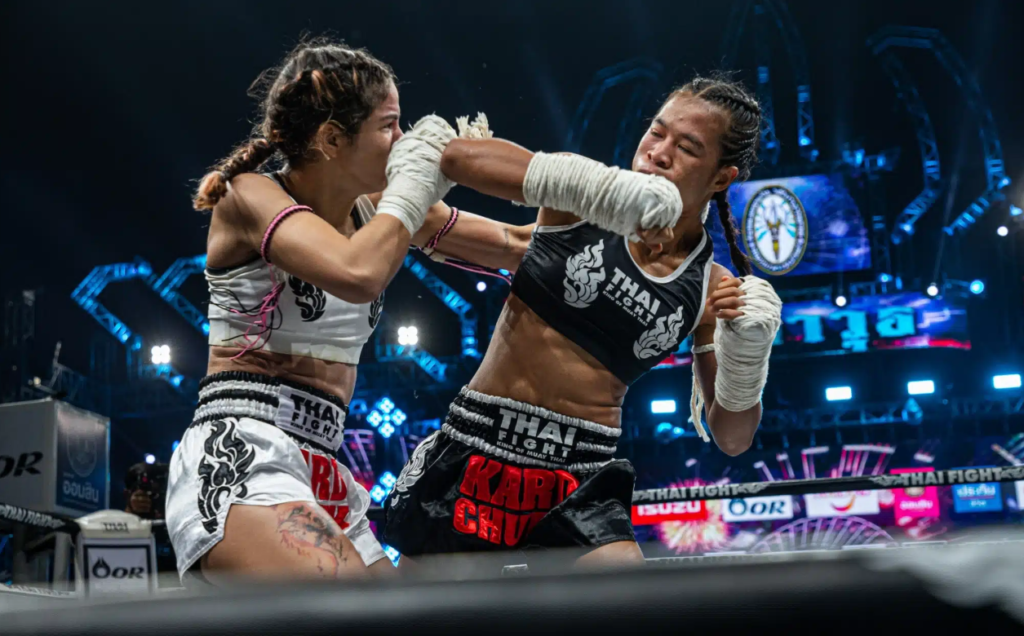
Brazilian Jiu-Jitsu

Brazilian Jiu-Jitsu is a Brazilian martial art that was developed by brothers Carlos, and Hélio Gracie, after Carlos learned mixed grappling techniques from a Japanese judoka named Mitsuyo Maeda in 1925. BJJ is one of the grappling-based martial arts, with a strong focus on ground fighting, and submission holds. It focuses on using leverage, technique, and timing to overcome larger and stronger opponents.

Advantages and Disadvantages of Brazilian Jiu-Jitsu for Self-Defense

Brazilian Jiu-Jitsu is uniquely effective in teaching you how to defend yourself against any size or strength of the opponent and how to use various BJJ techniques like chokes, joint locks, and holds to make them submit or pass out. It also improves your flexibility, balance, coordination, and mental toughness. Brazilian Jiu-Jitsu is one of the most practiced and respected martial arts in the world, so you won’t have trouble finding a school or instructor near you.

Some of the disadvantages of Brazilian Jiu-Jitsu are that it does not teach any striking techniques or weapon defense and may not work well against multiple attackers or standing opponents.

How to Practice BJJ for Self-Defense

If you want to train Brazilian Jiu-Jitsu for self-defense, find a school that covers both Gi and No-Gi classes. A school with a specific focus on self-defense training, which is at the roots of this effective martial art is an obvious best choice. The original Gracie Jiu-Jitsu approach included a lot of scenarios that teach you how to escape from bad spots and how to defend yourself against strikes or weapons.
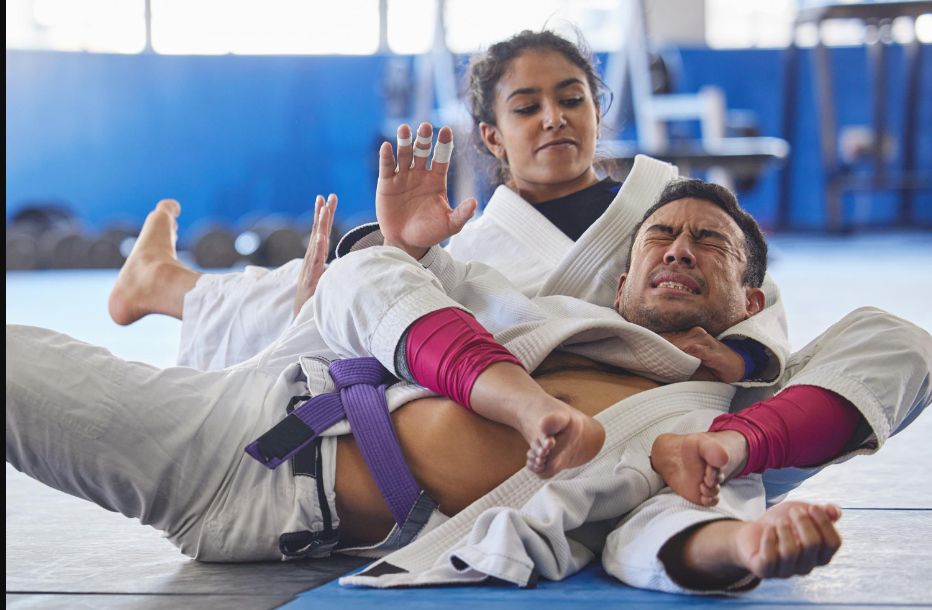
BJJ best martial arts for self-defense

Krav Maga

Krav Maga is an Israeli martial art that was developed by Imi Lichtenfeld and other army officials and martial artists for the Israeli Defense Forces. It is based on a combination of self-defense techniques from various martial arts. Krav Maga means ‘contact combat’ and it focuses on real-world situations and extreme efficiency.

Advantages and Disadvantages of Krav Maga for Self-Defense

Krav Maga is an extremely effective combat system, as it teaches you how to protect yourself by using everything in your reach as a weapon and how to defend against different kinds of attacks like punches, grabs, and weapons.

It also improves your awareness, reflexes, aggression, and confidence. Krav Maga is one of the most respected and widespread martial arts in the world, so you won’t have trouble finding a certified instructor or school near you.

Krav Maga has some drawbacks because it can be very violent and not good for everyone. It also requires a lot of training and dedication to master the skills and mindset.

There is a significant issue with certain Krav Maga schools that enroll individuals who lack any athletic abilities. Consequently, these schools structure their curriculum based on the limited capabilities of their students, resulting in a subpar training experience. The absence of authentic sparring and the overall lack of intensity make it unsatisfactory for individuals who possess genuine fighting skills and a genuine desire to learn.

In that case, Jiu-Jitsum boxing, MMA, etc. are MUCH BETTER for any kind of fighting and self-defense, and unfortunately, that’s the case in 99% of Krav Maga schools today.

Check out krav maga instructionals and courses to learn krav maga at home.

How to Train Krav Maga for Self-Defense

If you want to train Krav Maga for self-defense, you should look for a certified instructor or school. Krav Maga is designed specifically for self-defense, so the only thing to consider when enrolling in a club teaching the civilian version is that it is not a scam or McDojo.
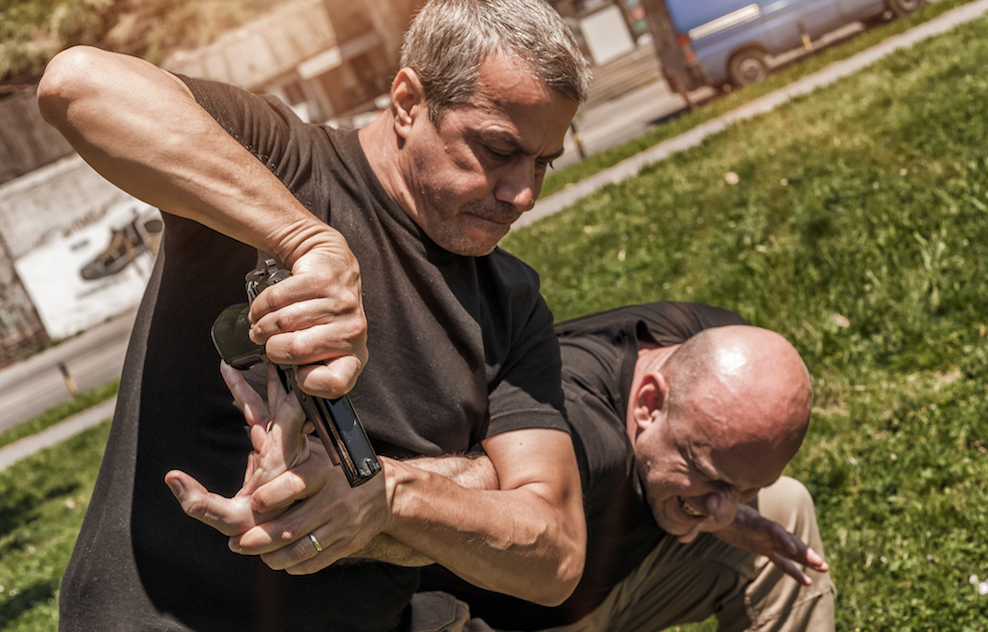
Self Defense Martial Art Krav Maga

Sambo

Sambo is an excellent martial art that was created by Vasili Oshchepkov and Viktor Spiridonov in the early 20th century for Russian military needs. It is derived from various styles of folk wrestling, judo, Ju-Jutsu, and other martial arts. Sambo means ‘self-defense without weapons’ and it involves using throws, takedowns, locks, chokes, and strikes.

Advantages and Disadvantages of Sambo for Self-Defense

Some of the advantages of Sambo are that it teaches you how to use your body weight and leverage to control your opponent and how to apply various submissions and strikes to end the fight quickly. It also develops your strength, speed, flexibility and endurance. Sambo is an official sport in Russia and many former Soviet countries, so you won’t have trouble finding a qualified instructor or club near you.

Some of the disadvantages of this Russian martial art are that it does not teach any weapon defense or multiple attacker scenarios and that it may not be widely available or recognized in some countries.

How to Train Sambo for Self-Defense

If you want to train Sambo for self-defense, you should look for a qualified instructor or club that teaches both sport and combat sambo and spars regularly with different opponents. Combat Sambo gets the nod over sport Sambo for effective self-defense.
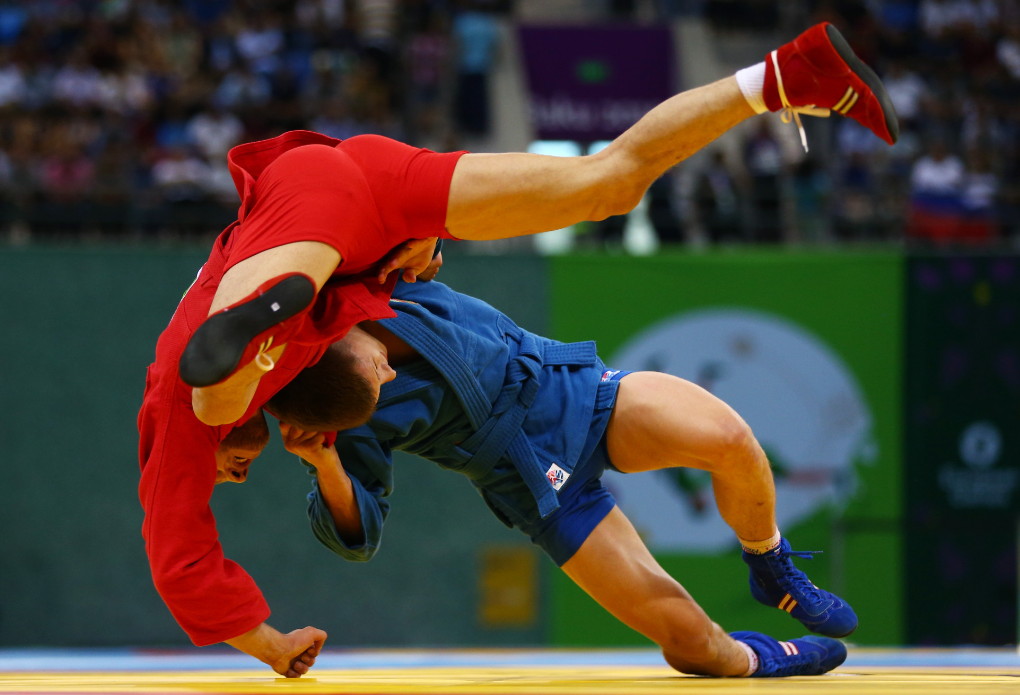
Sambo Self Defense Without Weapons

Filipino Kali

Filipino Kali is a type of martial art from the Philippines that focuses on using weapons like sticks, knives, and blades. They may also use other items they can find as weapons. The term Kali is most likely derived from the pre-Hispanic Filipino term for blades and fencing, Kalis. Filipino Kali is influenced by various cultures and martial arts such as Indonesian silat, Chinese kung fu, Spanish fencing, and native wrestling.

Advantages and Disadvantages of Filipino Kali for Self-Defense

Some of the advantages of Filipino Kali are that it teaches you how to use any weapon or object as a weapon and how to defend against armed or unarmed attackers. It also improves your coordination, reflexes, timing, and awareness. Filipino Kali is one of the most respected and widespread martial arts in the world, so you won’t have trouble finding a certified instructor or school near you.

Filipino Kali is not a very popular martial art, making it difficult to find places to practice in some countries. It also requires a lot of practice and discipline to master the skills and techniques.

How to Train Filipino Kali for Self-Defense

While most Kali schools teach a version that focuses on self-defense if you truly want to be effective, find a school that works on all three aspects of Kali: stick fighting, knife fighting, and unarmed close-quarters combat.
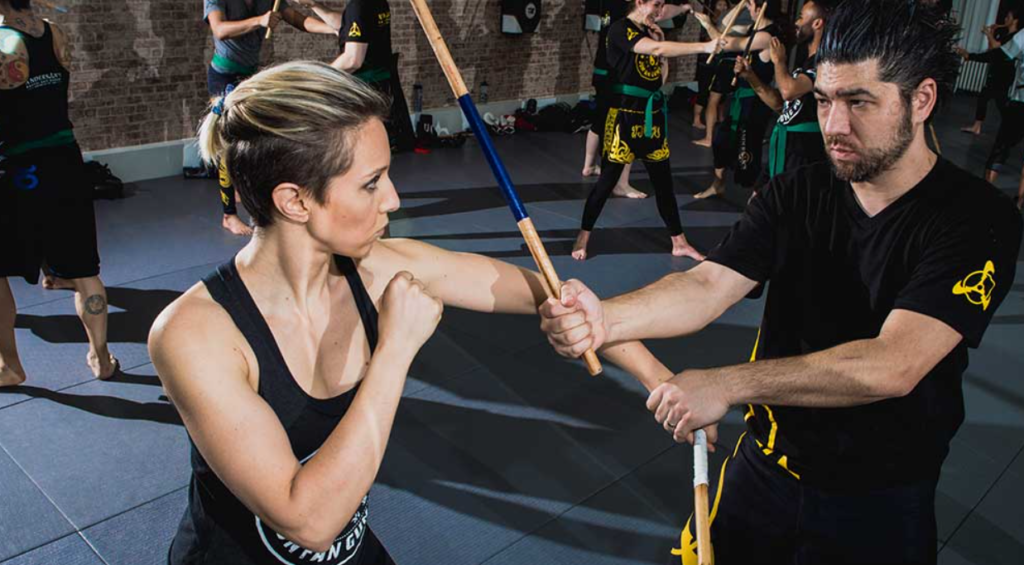
Filipino Kali training

Mixed Martial Arts (MMA)

MMA is a type of sport where people fight using moves from several martial arts like Western boxing, muay thai, wrestling, judo, and Brazilian Jiu-Jitsu. MMA was popularized by the UFC (Ultimate Fighting Championship) in 1993, which showcased fighters from different disciplines competing against each other under minimal rules.

Advantages and Disadvantages of MMA for Self-Defense

The best thing about mixed martial arts is that it teaches you to have an open mind and mix and combine different effective techniques from different fighting styles. It also develops your endurance, strength, speed, and agility. You won’t have trouble finding a local gym or instructor by searching online or asking around.

Disadvantages of MMA include the long training time and dedication to master multiple skills and that it exposes you to a lot of injuries and risks. It also may not be suitable for everyone, especially those who are not comfortable with full-contact fighting or blood.

How to Train MMA for Self-Defense

MMA fighters are well-prepared for self-defense, regardless of where they train. Any gym that teaches a well-rounded curriculum of striking, grappling, and conditioning will do the trick even if you do not want to be a competitive MMA fighter.
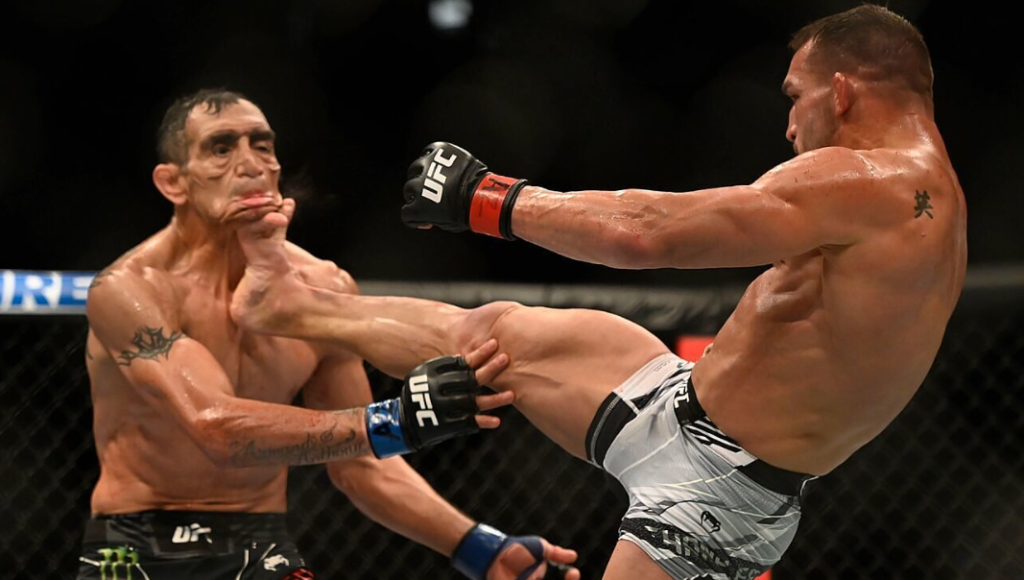
MMA knockout power

The Best Martial Art for Self-Defense for Beginners

Based on the information we have provided in this article, we can suggest one great martial art that may be suitable for most beginners who want to learn self-defense tactics quickly and effectively.

That martial art is Krav Maga.

Krav Maga is an Israeli martial art that was developed for the Israeli Defense Forces. It is based on a combination of techniques from judo, karate, boxing, and wrestling. Krav Maga means ‘contact combat’ and it focuses on real-world situations and extreme efficiency.

Here is why Krav Maga is the most effective martial art for self-defense for people with no combat sports experience:

  • It teaches you how to use all parts of your body as weapons and how to defend against strikes, grabs, chokes, weapons, and multiple attackers.
  • It does not require any special equipment or uniform. You can train in your regular clothes and shoes.
  • It does not have any rules or regulations. You can use anything.
  • It does not rely on any specific physical attributes. You can use your speed, strength, size, or flexibility to your advantage.
  • It does not take long to learn the basics. You can learn the most essential techniques in a few weeks or months.
  • It improves your awareness, reflexes, aggression, and confidence. You will learn how to react quickly and decisively in any scenario.

Of course, Krav Maga is not perfect or flawless. It has some drawbacks and limitations as well, despite being a highly effective martial art. Some of them are:

It can be very dangerous and brutal. You may injure yourself or others during training or sparring.

It may not be suitable for everyone. Some people may find it too violent or stressful.

It requires a lot of training and dedication to master the skills and mindset. You need to train regularly, consistently and realistically to develop your proficiency.

However, we believe that the benefits of Krav Maga outweigh the drawbacks for most beginners who want to learn self-defense.
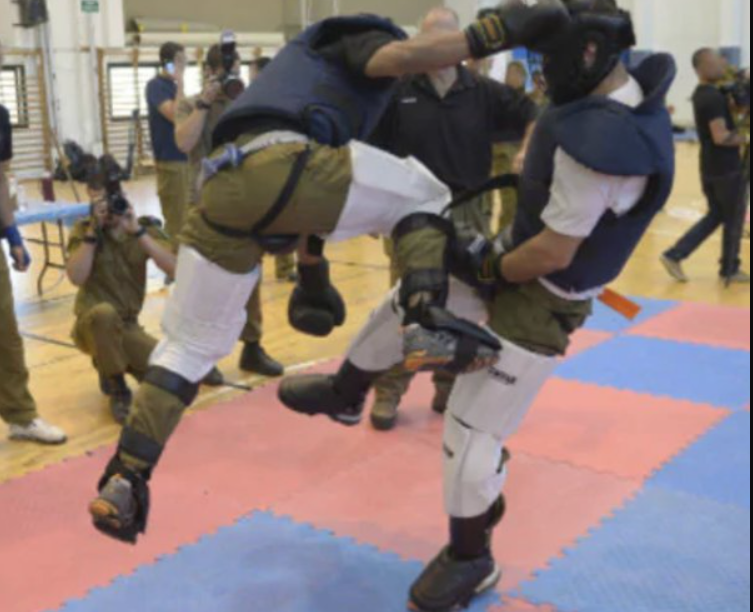
Krav Maga realistic best martial arts for self-defense stress drills

Conclusion

As you can see, there are many martial arts that can help you defend yourself in various situations. However, no martial art is perfect or superior to another. The best martial art for self-defense depends on your personal goals, preferences, and circumstances.

Whatever martial art you choose you need to train regularly, consistently, and realistically to develop your fighting skills, confidence, and awareness. You also need to avoid unnecessary conflicts and use your common sense and judgment to stay safe.

Thank you for reading and happy training!

FAQs about The Best Martial Arts for Self-Defense:

1. What are the best martial arts for self-defense in 2023? In this article, we explore the top 10 martial arts for self-defense, covering their advantages, disadvantages, and suitability for various situations.

2. Why is self-defense important in martial arts? Self-defense is a critical aspect of martial arts, ensuring personal safety and the ability to protect oneself in real-life scenarios.

3. How do I choose the right martial art for my self-defense goals? The article offers insights into each martial art’s strengths and limitations, helping you make an informed decision based on your preferences, circumstances, and objectives.
4. What are the advantages of Taekwondo for self-defense? Taekwondo enhances flexibility, coordination, and kicking techniques. However, it may have limitations in close-quarters combat or grappling situations.

5. Is Boxing suitable for self-defense? Boxing trains powerful punches and defensive skills. While effective for striking, it lacks techniques for grappling and weapon defense.

6. What makes Brazilian Jiu-Jitsu effective for self-defense? Brazilian Jiu-Jitsu specializes in ground fighting and submissions, offering techniques to defend against larger opponents. However, it doesn’t cover striking or weapon defense.

7. How does Krav Maga stand out for self-defense? Krav Maga focuses on real-world scenarios, allowing practitioners to use anything as a weapon and defend against various attacks. It’s efficient but intensive in training.

8. Which martial art is recommended for beginners seeking self-defense skills? For beginners, Krav Maga is suggested due to its practicality, versatility, and quick learning curve for effective self-defense.

9. Are there disadvantages to practicing Muay Thai for self-defense? Muay Thai offers powerful striking techniques using eight limbs, but practitioners should be aware of potential leg injuries and the need for stamina and conditioning.

10. How can I find the right school or instructor for self-defense training? The article advises seeking certified instructors or schools that prioritize realistic scenarios and self-defense applications for the chosen martial art.

11. What is the significance of Mixed Martial Arts (MMA) in self-defense? MMA combines techniques from various martial arts, providing a comprehensive skill set. However, it requires dedication, covers multiple areas, and carries injury risks.

12. Can I practice Filipino Kali for self-defense if it’s less popular in my area? Filipino Kali focuses on weapons and improvised objects. While it may be less accessible, finding a school that covers stick fighting, knife fighting, and close-quarters combat can be beneficial.

13. Is self-defense training suitable for everyone? While self-defense training can be beneficial for most individuals, personal preferences and comfort levels should be considered, especially for more intense martial arts like Krav Maga.

14. How long does it take to learn self-defense techniques? Learning timelines vary based on martial art complexity and personal commitment. Some basics can be learned in weeks or months, while mastery requires ongoing practice and dedication.

15. Can I apply martial arts for self-defense in real-life situations? Yes, with proper training and practice, the techniques learned in these martial arts can be applied effectively in real-life self-defense scenarios.

16. Is it necessary to practice more than one martial art for self-defense? While not necessary, learning various martial arts can enhance versatility and adaptability, making you better prepared for a wide range of situations.

17. How do I get started with self-defense training? To begin self-defense training, research local schools or instructors specializing in your chosen martial art and inquire about beginner-friendly classes or programs.

18. Can I use martial arts for self-defense against multiple attackers? While some martial arts emphasize techniques against multiple attackers, it’s essential to remain aware of your surroundings and prioritize safety when facing such situations.

19. Are there any age restrictions for learning self-defense through martial arts? Many martial arts schools offer classes for all age groups, making self-defense training accessible to children, teenagers, adults, and seniors.

20. Where can I find more detailed information about each martial art for self-defense? The article provides an in-depth overview of each martial art’s advantages, disadvantages, and training aspects. For comprehensive details, consider seeking guidance from certified instructors or specialized resources.