Surprise Scorpion Lock Submission From Back

The Scorpion Lock Surprise Submission From Back
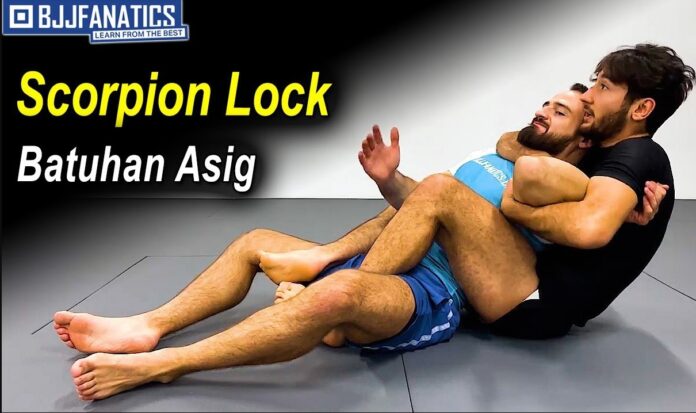
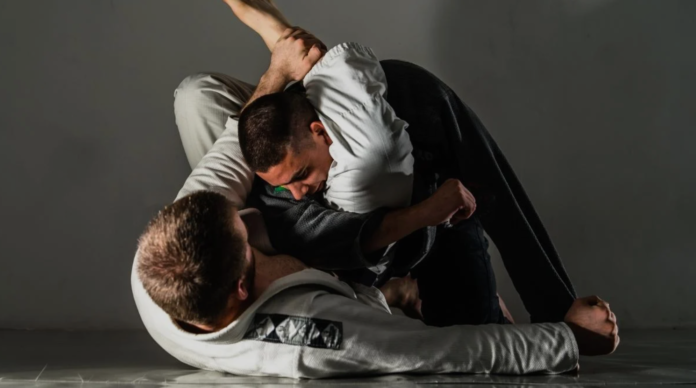
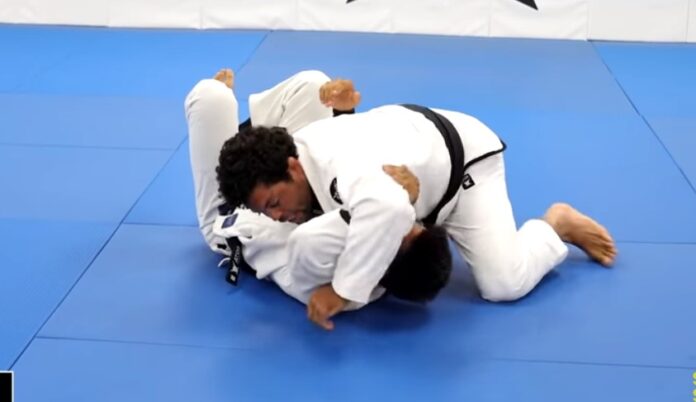
Some of the best submissions in grappling are based on the catch-as-a-catch-can principle which means if you can get, it to work, you should. The Scorpion Lock shoulder lock submission is one such submission, especially when set up from back control.

If you want people to be surprised when you attack a submission, do not do the submission that they expect you go for from s specific position. For example, you don’t have to only look for a rear naked choke from back control when you can easily switch things up and add surprise submissions like the Scorpion Lock from the same position.

The Scorpion Lock works off of a rear-naked choke threat, which is one of the reasons why this shoulder lock has such a high percentage finishing rate. As an opponent is using both their arms to defend a rear-naked choke, you use their actions against them.

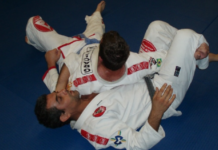
The first thing to do is place the foot of the leg which is on the side opposite of your choking arm on the hip of your opponent. This provides ample space for you to sneak your free arm in over their shoulder as if you were switching arms for the choke.

Instead of choking, though, you will circle your arm to the outside, trapping the opponent’s wrist in your armpit. This puts the opponent’s arm in the Scorpion Lock position, which is essentially an Americana lock, just done from a weird angle.

For the finish, turn into your opponent with your entire upper body. It is important to resist the urge to extend your hips and lie backward, as this will help the opponent get the arm out, instead of placing pressure on their shoulder. As long as their elbow goes forward while you have the wrist trapped, the Scorpion Lock is going to work and break the opponent’s shoulder.


Jocko Willink: How To Keep Kids In Jiu-Jitsu

JOcko Willink on how to keep kids in Jiu-JItsu
Jocko Willing needs no introduction, he is one of the biggest Brazilian Jiu-Jitsu advocates out there. When recently asked how to keep kids in Jiu-Jitsu from a young age onwards, Joco had an experience-based answer, given that all his kids actively train.

At a recent camp (Origin Immersion Camp, someone asked Jocko about his daughter’s training (she has a blue bel) and how to keep kids in Jiu-Jitsu and prevent burnout, to which Willink had a very simple and straightforward answer:

Make it fun, and you got to remember “make it fun” is different for different kids. There are kids that fun for them is playing a game. If you make a game, playing sumo makes it fun for them, it is fun because, grab a sword, fun games like that. There are other kids that fun for them is going out and annihilating the opponents. So you’ve got to figure out what fun is for your kids, and you’ve got to make it fun for them.”

Jockownt on to talk about what happens to kids in Jiu-Jitsu when they are forced to train by parents, sharing some really useful advice:

“There is no food that is so delicious that you’ll like it if I force it down your throat. And it is the same thing with Jiu-Jitsu, and it is the same with basketball and football, studying, and anything. What you’ll end up with is rebellion. Mutiny. And, you know, a kid that doesn’t want to participate in really anything that you do.

So, just use caution.”

Jocko’s previously shared his “failure” in his approach to involving his kids in Jiu-Jitsu. According to him, it is better to make training fun once a week is better than making kids hate it three times a week.

“The best possible thing you can do is not make them train in Jiu-Jitsu, make them enjoy it,” said Jocko.

His approach was to take his daughters to Jiu-Jitsu, 6 days a week when they were around 6 years old. He also made them compete, and put them in a higher weight class, against older kids, and if they lose, it won’t matter because it will make them tougher. It didn’t.

They got beat and was not fun. By age 10 they didn’t want to do it anymore.

Jocko’s advice for getting kids in Jiu-Jitsu is to find a good school, with fun Jiu-Jitsu, classes and not force it down their throat if they don’t want it at the moment.

He is also a big advocate to put kids in JIu-JItsu in order to make them bully-proof:

“Get your kid into Jiu-Jitsu immediately to start to learn how to deal with people physically and built real confidence. You want your kid to train Jiu-Jitsu. You want your kid to train boxing, you want your kid to be an actual force to be reckoned with.”

Is Osoto Gari An Effective Throw To Use In Jiu-Jitsu

Is Osoto Gari An Effective Throw To Use In Jiu-Jitsu

As effective and attractive as they might be, Judo throws for BJJ are not easy to master, at least when the goal is hitting them in competition against elite opposition. Simply put, Judo throws take a lot of time to master, as there are many fine details to motion and balance that are crucial for the success of the techniques. Judo throws, on the other hand, like the Osoto Gari, are simply perfect for use in Jiu-Jitsu.

Judo Fundamentals: Osoto Gari – The Outside Major Reap

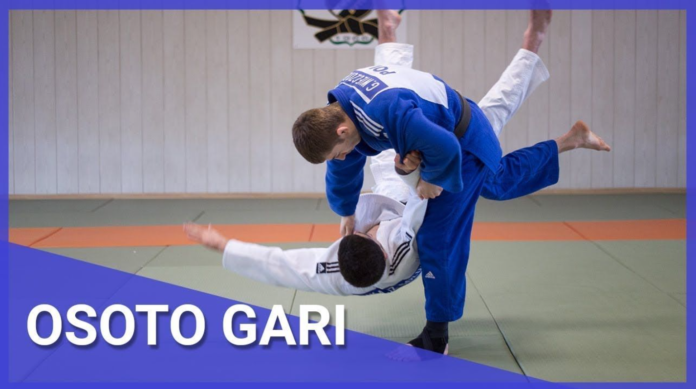
The Osoto Gari, a.k.a. the Outside Major Rip or Outside Trip is one of the first things taught to Judokas. It is part of the foot sweeping techniques in Judo (Ashi Waza) and a move that is deceptively complex. It is far easier to master than hip throws and complicated motion set ups, but it will still require you to understand balance and timing.

The Osoto Gari is like a basic schoolyard fight trip – you grab a hold of the opponent’s torso step to the side and use your leg to hook their leg, pushing them over the tripping point you’ve created with your leg.

It is a bit more complex than that In Judo, of course. You’re holding a collar and sleeve grip while standing in front of the opponent. hips squared. The goal is to use the grips to off-balance the opponent, pulling them towards the leg you’re tripping and pushing them back while moving your body to the side of theirs, and using the calf of your leg to hit the calf of theirs.

The Osoto Gari works perfectly in combination with other trips and footsweeps too, but for Jiu-Jitsu purposes, mastering the really basic version is going to be all you’ll ever need to throw anyone to the ground, white belt to black.

Markings Of An Effective Outside Trip Takedown

There are plenty of technical aspects to the Osoto Gari that you’ll need to learn, especially the footwork and hand motions, but those can only come after you understand the three things that make every trip, regardless if it is from Judo, wrestling, Sambo or something you’re making up on the spot, work.

Those three things are connection, manipulating balance, and being precisely aware of timing.

Connection

The way you connect to an opponent is crucial in standing, as your hands are the first part of the body that makes contact and in most cases the only method of connecting you to the person you’re looking to throw.

The connection for an outside trip needs to provide you with the means of keeping the opponent from switching the angles in terms of hip positioning while allowing you to start moving into position for the trip. The connection is also key for disrupting balance and completing the action once the time is right to execute the trip.

Balance

Disrupting balance, or Kuzushi is one of the founding principles of the entire sport of Judo. The same applies to throwing people in all other grappling martial arts. If you want to use the Osoto Gari (or any other trip, throw, or takedown) against someone, you will have to off-balance them first, otherwise, they won’t fall to the ground.

For the purpose of tripping someone with the outside reap, you will need to make sure their weight is on the leg you’re tripping, so that once you take it away, they’ll have no choice but to fall. This is where the technical aspects of the Osoto Gari are important, including footwork, hand motions, and finishing mechanics.

Timing

The third foundational component of every Judo throw, after connection and manipulating balance, is timing. Takedowns happen as the two opponents are moving around, not from a stationary starting point. This means that you will have to be aware not just of the direction an opponent is moving in, but also if they’re lifting the leg you’re after off the ground or set it down on the ground. This is something that will take practice to really get the hang of.

How To Set Up The Osoto Gari Throw

Setting up the Osoto Gari is best described in steps, with a strong emphasis on footwork. In every step that follows, I will mention the three staples described above, thus providing the full picture in your quest to master tripping people up in Jiu-Jitsu.

Step 1

Grab the collar and sleeve of your opponent. The collar grip is at collarbone level, and the sleeve grip is behind the triceps. You want to start using the grip to off-balance your opponent immediately as you take your first step.

Step 2

If you’re going to trip the opponent’s right leg, with your left leg to the side of their right leg. The aim is to step with your left foot parallel to their right foot, right next to the opponent, on the side where you’re holding the sleeve grip.

As you step forward imagine you’re driving a huge truck and your hands are on the stirring wheel. You want to turn the stirring wheel towards the direction you’re stepping in for at least 45 degrees.

Step 3

Placing your weight on your left leg, get your right leg through in between your left leg and the opponent’s right leg. At this point, the opponent should be tilted towards the side you’re stepping in as a result of the grips. That is connection and balance all taken care of.

The moment your right leg comes in between, make sure you extend it forward so that it goes past the leg of your opponent. Your hips should be next to theirs, but facing the opposite side at this point.

Step 4

Use the calf of your right leg, which is swinging like a pendulum at this point, to strike the calf of the opponent’s right leg. Avoid trying to hook their leg at knee level as this can get you out of balance and open up counter throws.

Make sure you use the leg forward first and hit back at their calf swinging your legs backward as if you’re trying to kick behind you. As you kick back, use the arm gripping the collar to push the opponent backward, placing the fist of your gripping hand on their collar bone.

Step 5

The final part of the puzzle is staying on top after executing an Osoto Gari. To achieve this, as you feel your opponent falling after kicking their leg and pushing them backward and sideways, lift with both your palms towards your chest. This will cause the falling opponent to spin around their spine as the axis, landing them sideways.

It will also help you stay postured up and avoid getting pulled down to the mats and reversed by way of inertia.

The fact that the opponent is falling sideways means there’s also an armbar right there for the taking.

Osoto Gari No-Gi Variation For Jiu-Jitsu

For the No-Gi variation of the Osoto gari, not many changes in the way of mechanics, especially in terms of off-balancing and timing. The only slight difference is in the connection, with the collar grip being replaced by a collar tie, and the sleeve grip at the triceps level replaced by an outside biceps tie.

In Conclusion

The Osoto Gari is a very powerful trip that can be a great asset for BJJ athletes. It requires less time to drill to perfection compared to many other Judo throws and also works perfectly in No-Gi. You will need to be patient though, and give it time and reps before you figure out the exact variations that best fit your game.

What Happened To The Competitive Career Of Kron Gracie?

What Happened To The Competitive Career Of Kron Gracie?

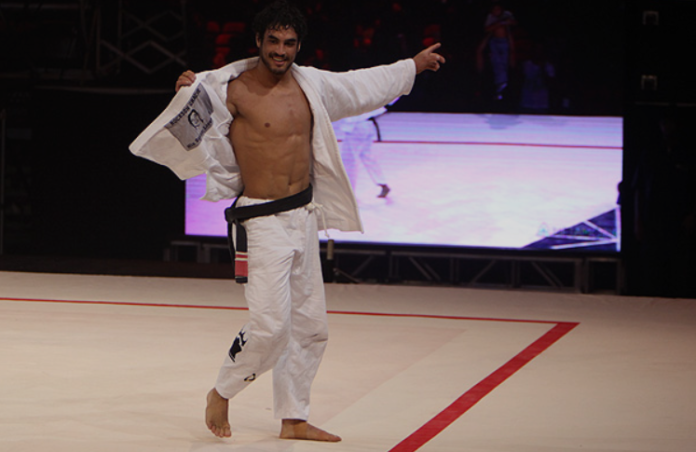
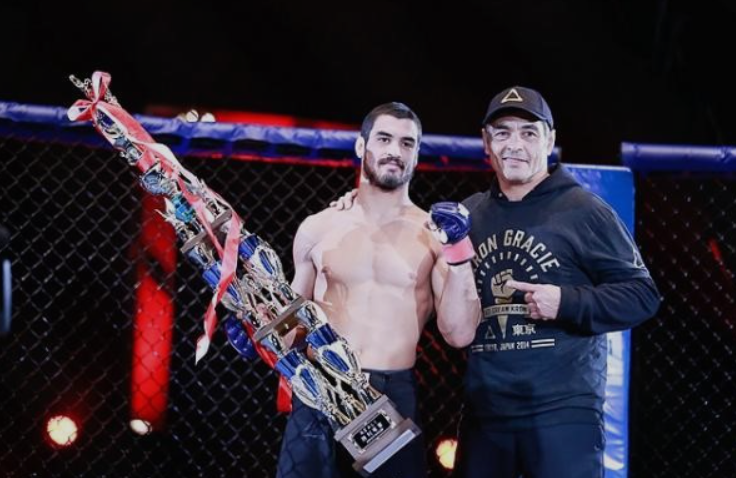
Kron Gracie is a name that everyone in Brazilian Jiu-Jitsu recognized at one point. He was at least as famous as Gordon Ryan is now, in a BJJ world that had merely a fraction of the online presence it has now. That is saying something, as Kron was the epitome of the next generation of Gracie greats, following in the footsteps of his father Rickson Gracie. Kron managed to accomplish big things in grappling, and moved on to MMA, excelling in Rizhein and winning his UFC debut, before getting his first loss in MMA inside the octagon. That was in 2019, though, and since then Kron seems to have fallen off the face of the Earth, at least when combat sports are concerned.

What Happened To Kron Gracie?

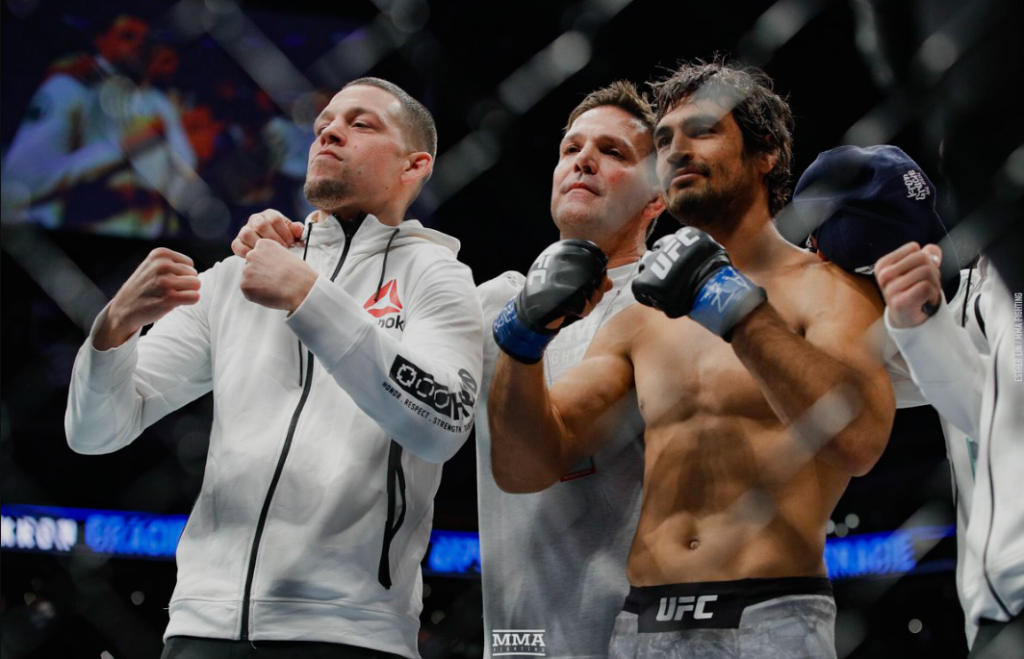
Kron had a really good start to his UFC career in  2019, beating the unpredictable Alex Caceres via submission with a rear-naked choke. He came into the octagon undefeated, with each victory by way of submission. Many expected him to follow in the footsteps of his father Rickson Gracie, who claimed to have had an unbeaten 410-0 record. While nobody expected the same out of Kron, people did perceive him as being on a similar path of success.

Then came his first MMA loss to the entertaining Cub Swanson, by way of a unanimous decision. The fight happened in 2019, and Kron’s last octagon performance before the Covid pandemic hit was largely underwhelming, with Swanson directing what happened by keeping the exchanges standing.

After the world restarted, Kron was nowhere to be found. He was part of the Diaz brothers’ crew, notorious for their no-nonsense approach to training, fighting, and pissing people off.  After his loss, Kron Gracie moved to Montana to open a new gym.

As his father, Rickson said in the Trocação Franca podcast:

“Right now we’re giving each other some space, you know? We had some small arguments and now he’s moved to Montana, he’s with his new gym there, and he’s training. I don’t know exactly what his plans are for MMA, but I root for him.”

He went on to hint he is hopeful that Kron will come  back to fighting, saying:

“I know he has great potential, not only as a fighter but also as a great teacher, a great man. I’m rooting for him, and I’m also curious, like everybody else, to know what he’ll do next.”

Rickson has his own analysis of what happened the night that Kron Gracie lost to Cub Swanson:

“He wanted to prove to himself and to his friends that he could take a punch, that he’s not afraid of getting punched, that he wasn’t worried about using only one skill and delicate technique to win fast without getting hurt, keeping his face clean.

“What he showed me was a lack of ability to work strategically on someone else’s weakness. I never liked clashing heads — I always liked catching someone when they were distracted, to surprise them. I don’t like taking the toughest path, I like taking the door that’s open, the easier way to win.”

The Rise And Fall Of Rickson Gracie’s Successor

Kron Gracie is the youngest son of Rickson Gracie, born in 1988 in Rio. He lived most of his life in Los Angeles, though, and started training as soon as he could crawl. With Rickson as his father and Helio as his grandfather, Kron had the best coaching since before he could talk.

A 7-year-old Kron is featured in Rickson’s legendary “Choke” documentary from 1995, play-fighting with his father. It wasn’t long after that he won his first Jiu-Jitsu medal, at the age of 10.

While it may seem that Kron Gracie had a carefree childhood filled with Jiu-Jitsu training, the reality was quite a bit different. After his brother Rockson tragically died when he was 12, much of the expectations of Rickon’s successor fell directly to a very young Kron, who was part of a family that barely held together because of the tragedy.

Kron accepted the challenge, winning the Worlds and Pans at purple and brown belt. he had a different path as a black belt, winning the Europeans once in 2009 and the ADCC in 2013. He has a couple of second-place finishes in the Worlds and Pans as a black belt, though.

Kron transitioned to MMA in 2014, choosing the notorious Diaz brothers’ Scrap Pack Team as his home.

Rickson and Kron Gracie

The Kron Gracie Legacy

Kron Gracie might be off the map at the moment, but at 34 years old he still has a lot of his prime years ahead to conquer both MMA and BJJ accolades. In the meantime though, he has left quite a mark on the BJJ world, even though newer generations of grapplers might not recognize him for the great grappler that he is.

Kron Gracie Record

Kron Gracie BJJ Fights

Kron Gracie has a very impressive grappling record, ranging back to 2008 when he got his black belt. He started off his black belt career with a submission loss to Sergio Moraes in the 2008 Worlds but jumped back in the win column at the Pans by submitting Tom DeBlass with a triangle.

He went on to win the Europeans in 2009, just a couple of days after his grandfather Helio Gracie died.

From there on, Kron had more wins than losses, only failing to defeat some of the greatest ever like Marcelo Garcia, Marcus Almeida, and Lucas Leite.

Kron’s grappling record to date is 30-12-0, with 24 submission wins and only 3 submission losses.

Kron Gracie MMA Career

In professional MMA, Kron never had a fight run its course prior to his UFC loss to Cub Swanson. His first four fights came in Rizin, against fairly unknown opponents. Only his fourth fight against went into the second round, when Kron Gracie got a rear-naked choke.

His first three submissions in MMA are armbar, triangle, and another rear-naked choke, all in the first round. The same thing happened in his first UFC performance when he submitted UFC vet Alex Caceres also in the first round.

Kron Gracie MMA careerKron’s official MAM record is 5-1. He is still on the UFC roster as a middleweight.


The Kron Gracie Diet

One thing that was very popular a few years ago was the way Kron Gracie approached his diet. People in BJJ are always trying to figure out the best way to eat for grappling and everyone wanted to replicate Kron’s performances.

In a feature episode of VICE’s FUEL, Kron outlined his mostly vegetarian diet that only included fish as a meat source. The BJJ community quickly picked up on Kron’s pescatarian diet, which he described as focused to primarily fuel his performance:

“My priority isn’t eating, my priority is training, so I am gonna eat what I need just to get me through the training.

My diet is healthy. I think that’s the way to define it. I don’t have any hard rules: I think I eat the things my body needs at the time it needs them. In principle, I don’t eat meat, don’t eat chicken, turkey breast, I don’t eat animals that come from a farm.”

Kron Gracie Quotes

Kron’s legacy also includes some famous quotes that many people in Jiu-Jitsu have found, and still find super motivational and useful:

  • Jiu-Jitsu for sure will save your ass, one way or another. Not necessarily a physical fight but also being able to deal with yourself, know about yourself, and really improve yourself as a whole.
  • If I knew I was going to win, I probably wouldn’t even fight.
  • There’s always a way you can get better. You can never be satisfied. You can never say, ‘That’s good enough’.
  • All these feelings that you get before you fight or when you’re fighting or training for a fight, makes me feel alive, and I love that feeling.

Conclusion

We’d really like to see Kron Gracie back on the mats, regardless if it is the UFC or any of the new professional grappling promotions. There are some highly interesting opponents for Kron out there, and we certainly hope he’ll find the motivation to get back to what he does best.

Marcelo Garcia Facing Chemo And Surgery For Stomach Cancer

Marcelo Garcia Facing Chemo And Surgery For Stomach Cancer
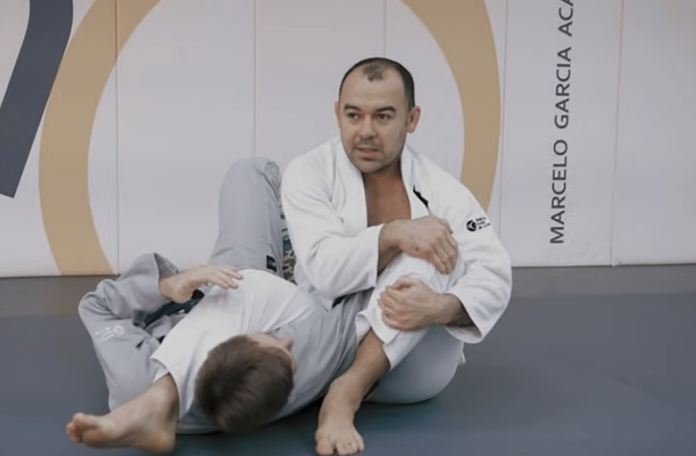
“I am about to fight the biggest fight of my life” shared the legendary Marcelo Garcia on his Instagram account, revealing his stomach cancer diagnosis. The 40-year-old ADCC Hall Of Famer, 4 x ADCC winner, and 5 x BJJ World Champion is now facing a 3-month long round of chemotherapy before going in under the knife to remove the tumor.

Marcelo Garica is one of the most beloved characters in Brazilian Jiu-jitsu. Always full of energy, the Brazilian has revolutionized the sport on multiple occasions by coming up with techniques we consider to be staples of modern Jiu-Jitsu today. He used things like the X-guards and guillotine combinations to surprise the highest level of opponents as he went on to win huge titles like the ADCC and IBJJF Worlds.

Marcelo is also one of the greatest teachers ever, with his New York academy a real den for BJJ fanatics of all levels. Garcia was always a complete fighter as well, winning with and without the Gi.

It seems that the Brazilian is now in need of the community’s support as a very different foe lurks in the opposite corner. Marcelo Garcia has been diagnosed with stomach cancer, although at this point it is not clear what form or how progressed it is.

As per his post on Instagram, he has a round of chemotherapy set for the next 3 months, and surgery scheduled afterward, which are all good signs when it comes to the sneaky disease he is facing.

I’m about to fight the biggest fight of my life, I have stomach cancer and will start chemo for 3 months and back at MSK for surgery to remove the tumor,” wrote Garcia on his Instagram. “Please keep me and my family in your prayers. Get your check-ups, and listen to your body, all I had was hiccups after eating and I’m glad I went to see a doctor .just wanted to say thank you to everyone who’s supporting me now, you all know who you are and I will never forget it.”

The news has been met with a strong reaction of support from everyone in the BJJ community, including some very big names, like Bernardo Faria, Gordon Ryan, Rafel Lovato Jr., and many others.

Support for Marcelo Garcia's Stomach Cancer diagnosis


Renzo Gracie Promoted To Coral Belt By Rickson Gracie [VIDEO]

Renzo Gracie Promoted To Coral Belt By Rickson Gracie [VIDEO]
Renzo Gracie, the legendary coach behind John Danaher and a whole host of other BJJ and MMA Hall of Famers, just received his coral belt from Rickson Gracie. In doing so, Renzo became one of the few black-and-red coral belts in the world, a group that includes Rickoson as well.

Rickson Gracie had the pleasure and honor of promoting Renzo Gracie to his red-and-black coral belt in a special ceremony that took place in Abu Dhabi. After spending decades as a Carlos Gracie Jr. black belt, Renzo now finally reached the rank of 7th-degree black belt, which is marked by the coral belt.

Renzo Gracie had a stellar career in both BJJ and MMA. Representing the Gracie family in early No Holds Barred and Vale Tudo matches, Renzo grew to be a fan favorite and a Pride and UFC veteran, holding a 14-7-1 (1) professional record. He also won the ADCC in 1998 and 2000 and was inducted into the ADCC Hall Of Fame during the latest 2022 edition of the event.

Renzo is also the man behind one of the most successful academies in the world, his New York “blue basement” that produces people like John Danaher and Gordon Ryan who are now re-shaping the world of Jiu-Jitsu as we know it.

The newly promoted coral belt was also often the focus of controversy, with the famous New York City night club brawl that got him arrested before he live-tweeted a mugging attempt as he beat his attackers up.

It will take Renzo at least 7 years of teaching and training at the red-and-black coral belt before he is eligible for promotion to the red-and-white coral belt. He remains one of the best competitors and coaches in the world, and one of the most charismatic people in BJJ.

Renzo Gracie announced the news of his promotion on his Instagram account.


View this post on Instagram


A post shared by Renzo Gracie (@renzograciebjj)

Creatine vs BCAA: Best BJJ Supplement For Performance

Creatine vs BCAA: Best BJJ Supplement For Performance

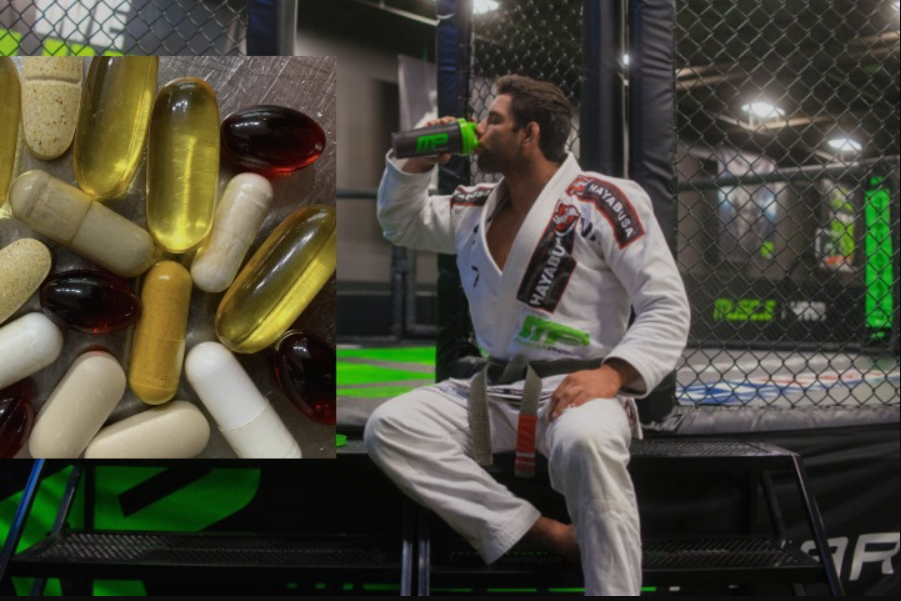
If you want to be able to perform an athletic activity more than 3 times a week, you most likely take some supplements. If not, you should consider starting. In today’s sports world, supplements are no longer just intended for professional athletes but are essential additions to every regular Joe’s nutrition. In fact, regular people who do not follow a strict nutrition protocol will benefit a lot more from taking a BJJ supplement or two to improve their performance on the mats. Speaking of performance, today we’ll square off creatine vs BCAA to figure out which one suits grapplers’ needs better.

BCAA vs Creatine: Which Supplement Is Better For BJJ?

Both BCAA and creatine are stapling supplements in the world of sports training. I say sports training because they go beyond just being bodybuilding aids, which is unfortunately the only way most people see them.

While supplements were a thing pioneered by bodybuilders, today they are something that is widespread in every household, from pro-MMA fighters to Yoga moms. Everyone takes a supplement or two, ranging from vitamins to those crazy pre-workout concoctions most weight lifters and CrossFitters seem to be addicted to.

Creatine and BCAA are performance-oriented supplements, providing the body with the energy required for training and recovery. Despite the marketing in supplement stores (which seems to be the same for every product in there) not everything is going to build muscle and burn fat. Actually, very few products will work in the way.

Supplement use is so precise, in fact, that using creatine is not the same as BCAA, especially when it comes to mat performance for grapplers. In a duel of creatine vs BCAA, there can only be one clear winner in terms of improving your Jiu-Jitsu, despite both supplements having certain specific benefits.

bcaa vs creatine: which is better for BJJ?

What Are BCAAs?

BCAA stands for Branched Chain Amino Acids. Even more specifically, they refer to just three of the branched chain amino acids called Leucine, Isoleucine, and Valine. More specifically than that, BCAA supplements contain a very specific ratio of these amino acids (2:1:1 Leucine: Isoleucine: Valine).

Benefits of BCAAs

BCAAs are amino acids that have a direct role in muscle metabolism, providing energy and building blocks for muscle recovery after rigorous training. They reduce recovery time and limit muscle damage during training. They are also involved in energy production (gluconeogenesis) that spares the muscles yet provides fuel for your performance.

Do BCAAs Really Work?

One major reason why the creatine vs BCAA “issue” is the notion that BCAAs do not really work after being taken, or at least not universally for everyone, making them a BJJ supplement that is not factually effective.

The bottom line is that despite their heavy use, and the bioscience backing up the way our bodies utilize BCAAs, there is no real scientific evidence, despite numerous studies on the subject, that supplement form BCAAs, isolated from other amino acids from, for example, whey protein, do not have any substantial or tangible effect on the body.

What Is Creatine?

Creatine is a supplement made up of two amino acids, arginine and methionine, also considered to be essential amino acids, just like BCAAs. Unlike BCAAs, though, creatine is a compound that our bodies can make. It is also readily available in food, primarily red meats.

The most popular (and effective) form of creatine is creatine monohydrate, the most used supplement in the world along with whey protein.

Benefits of Creatine

Creatine is an energy supplement, that helps the body work more in terms of explosive power movement. It is stored in the muscles and helps significantly reduce muscle fatigue during training, as well as aid in recovery.

One thing creatine does not do, compared to BCAA or whey protein is build muscle. The amino acids in creatine are not building blocks of muscles, but rather a way to store more fuel for immediate release during high energy demands of the muscles.

What Is The Best Time To Take Creatine And BCAAs?

In the creatine vs BCAA debate, the timing always seems to have a major role. Namely, there are three usual periods when sport performance supplements should be taken: before training, during training, and after training.

While many people swear by taking both BCAAs and creatine before a workout, to “fuel” their training, the body does not really work in such a black-and-white way. Taking supplements before training to ensure they’re utilized during the workout requires careful timing in order to make them available to the body at the right time, which also includes whether or not you’ve eaten solid food along with the supplement.

Since both of these supplements get depleted during training, it makes sense to replenish them afterward. The sooner you put in either of these (or both) in your body after rolling, the better.

Also, you should note that BCAA and creatine both have a cumulative effect in the body. That means that you need to consume them on a regular basis as opposed to just occasionally if you want to see real effects.

creatine vs bcaa bjj supplements

What Is The Difference Between BCAAs And Creatine?

The main difference between creatine vs BCAA is how each of those affects athletic performance.

BCAAs help protein synthesis, which translates to directly helping you rebuild muscle tissue that got damaged during training. Creatine helps increase the power output of the muscles during rigorous training, by providing the muscles with a specific energy source (ATP) that allows them to work longer at full power.

Both help with the recovery of muscles after training, which coincides with the best time to use either of these.

BCAA vs Creatine: Which Is Better For BJJ Performance?

So, what is the bottom line when it comes to creatine vs BCAA for Jiu-Jitsu athletes? The answer is not really straightforward as different people respond differently to both supplements. Usually, seeing people that are nonresponsive to creatine is much rarer than seeing people who do not feel or see any tangible effects from consuming BCAAs.

BCAAs are supposed to protect against muscle loss and mostly, aid in quicker recovery after hard training so that you can train again soon.

Creatine has a much more precise effect in storing energy in the muscles, allowing them to work more efficiently and longer, on top of aiding in recovery as well as BCAAs. It has no effect on muscle building or preventing muscle breakdown, but it does bring water to the muscles, which is helpful in muscle metabolism.

The bottom line is that creatine has been shown to work better for most people compared to the individual effects BCAAs have, and as it provides a better power output it is much more important for explosive endurance athletes, which grapplers are, as opposed to the muscle building/recovery effects BCAAs have which are better suited for those engaging in strength training.

creatine vs bcaa for grappling perform

Can You Mix BCAAs And Creatine?

Both creatine and BCAA have been studied in depth in terms of their safety and have no side effects whatsoever. As long as you drink enough water on a daily basis, both these supplements are even safer than consuming caffeine.

Since they both get depleted during training and work in a cumulative way, taking both together after training is something you can do safely and for unlimited periods of time. There is no need to “cycle off” these supplements and if both works for you to help you perform better on the mats and recover faster off them, you can freely mix them together.

In fact, there are supplements available that have already done the mixing for you. All you have to do is ensure creatine is in monohydrate form and that you know the source of BCAAs (preferably from animal protein).

Final Verdict

Creatine vs BCAA for BJJ athletes tilts in favor of creatine if you really have to pick just one BJJ supplement to use. That said, there’s no harm in adding BCAAs to your creatine if you’d like to see improvements in your recovery and perhaps even help prevent muscle loss during training, and most importantly, during weight cutting.

The Best Grappling Single Kettlebell Workout For Beginners

The Best Grappling Single Kettlebell Workout For Beginners

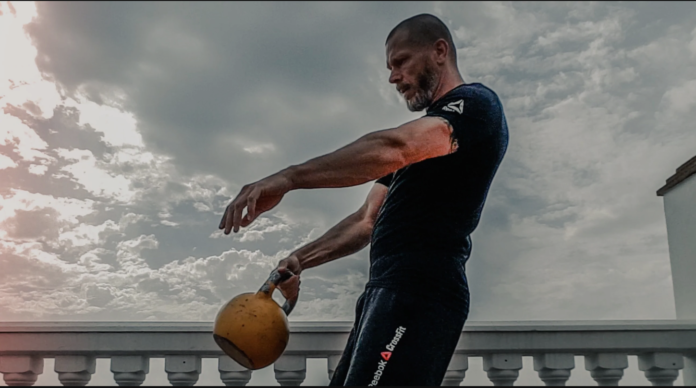
Kettlebells are a multiuse tool when it comes to conditioning. Athletes particularly seem to like them, and they are pretty much a mainstay in any combat sports gym, from BJJ and wrestling to MMA and Muay Thai. As useful as they are, though, kettlebells are not something to be taken lightly (pun intended). Learning how to use them has a large curve, so focusing on a single kettlebell workout for beginners is a great way to get yourself going, and build up some strength and juice for better Jiu-Jitsu performance.

Kettlebell Essentials

Kettlebells originate from Russia, used first as a training tool to help local farmers counterweight goods they were measuring in the markets. Originally called girya, farmers soon figured out they could use them for physical exercises, eventually creating a competitive sport based on performing certain moves with more and more weight. Girya competitions were mainly held at festivals and circuses in the beginning. By 1948, the sport became the national sport of the Soviet Union.

Kettlebells are iron balls that have a handle welded on top. They are extremely minimalistic in nature but offer an extreme range of training modalities.

After the “functional fitness” craze took over the fitness world about a decade ago, kettlebells quickly found themselves in the focus as odd objects to train with. They quickly ended up in just about every gym in the world, although not many gyms have actually certified and knowledgeable kettlebell coaches to teach people how to use them.

When it comes to moving an iron ball that can weigh anywhere from 5 lbs to 240 lbs around your head, you need to take precautions. Just like in JIu-Jitsu, you can’t go immediately into flying armbars and Berimbolos, but rather have to work through the basics, accepting that you are a beginner.

It is the same with kettlebells, and despite the now world-famous girya being a truly fantastic tool for grappling conditioning, you need to start with a kettlebell workout for beginners first, focusing on learning how to work with just one kettlebell, before moving on to juggling a couple of 70 lbs iron balls up in the air above you.

Kettlebells For Brazilian Jiu-Jitsu

A single kettlebell will get you really, really far in terms of specific strength, conditioning, power, stability, and range of motion for Brazilian Jiu-Jitsu. All you need to do is tailor a single kettlebell workout for beginners, grappling-specific, using the best exercises for the job. The trick is knowing what effects/benefits you are after with kettlebell training for BJJ.

Grip-Strength

A true essential for Jiu-Jitsu, regardless if you’re a Gi or No-Gi grappler. The fact that you’re holding the handles of kettlebells, which are usually thick (intentionally so) means your forearms are going to have to work all the time, in a dynamic fashion, covering a bunch of different angles and positions. Sounds familiar?

Every exercise is going to tax your forearms, but kettlebell carries are going to really challenge you, particularly when you’re doing them with only one kettlebell.

Correct Imbalances

A kettlebell workout for beginners should focus on stability. The exercises outlined later in this article do just that, along with the fact that you will only train with one kettlebell at a time. The constant movement in different planes when training with kettlebells means deep-laying muscles that have a stabilizing role get activated, similar to rolling.

Apart from helping you develop a balanced body, kettlebell workouts will help you tune your body up precisely for the needs and requirements of grappling.

Progressive Skill Development

Another parallel between kettlebell workouts and Jiu-Jitsu. you’ll have to learn the basics and you’ll be building on those basics by expanding your skillset to become a lot more precise with your what you’re doing. In BJJ that means more control, better pins, and submissions, and crisper escapes.

For kettlebell training, that translates to mastering the basic kettlebell moves first, so that you can start using more complex and refined moves with bigger weights to turn your single kettlebell workout for beginners, into a double -kettlebell one, before ditching the “beginner” tag and moving on to get your blue belt in training with Russian weight.

Versatile Conditioning

Apart from building solid amounts of muscle training with kettlebells, you also get the added bonus (or main goal) of a significantly increased gas tank. It all comes down to the weight you are using and how you program your workout, but with the beginner kettlebell exercises we have outlined here, and the workout at the end of the article, you’re certain to increase your conditioning significantly in a matter of months.

Full Body Integration

One more benefit of kettlebells for combat athletes is that kettlebell training does not isolate muscles. even if you’re doing biceps curls (which you won’t be) you’re doing them with a weight that is oddly positioned and shifts as you work, unlike dumbbells or barbells.

This means your entire body has to work to move the weight, and this becomes particularly obvious as you start increasing the weight of the kettlebell you’re using for your workouts.
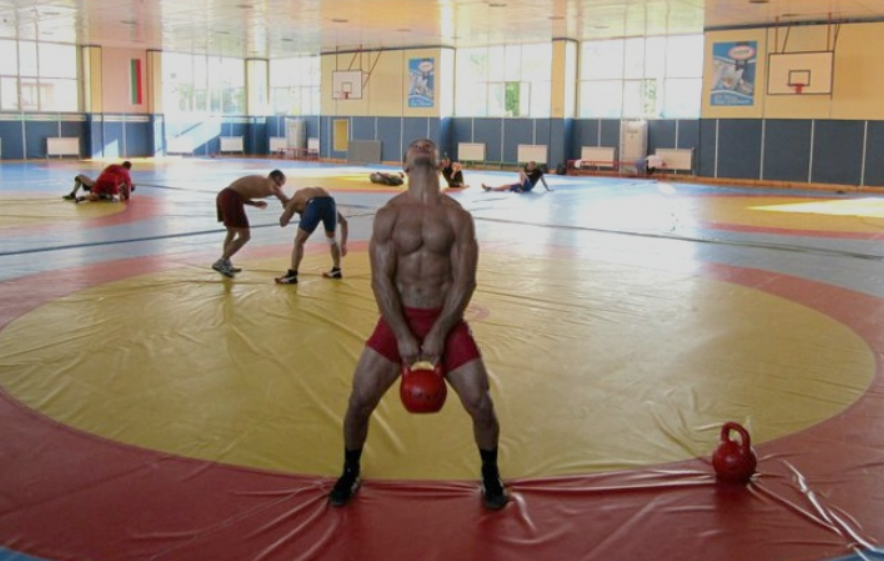
BJJ kettlebell workout for beginners

5 Best Kettlebell Exercises For Grappling

The best kettlebell exercises you can be doing are ones that will push you in a physical sense but are still at your level of expertise. Since we’re talking about building a kettlebell workout for beginners with no prior experience the exercises that follow are the best-suited ones to offer the benefits we already described.

Swings

Kettlebell swings are probably the most popular kettlebell exercise in the world. It is a move that is specific to kettlebell training and was not done in fitness before the emergence of these versatile tools.

Swings have you using momentum to pull the kettlebell forward and upward and back, with plenty of variations and progression available to make this one a truly challenging exercise even for experienced lifters.

How To Perform Kettlebell Swings

The swing involves holding a kettlebell in front of you, with both your hands on the handle, arms straight, and legs wide apart. The goal is to start with the kettlebell at your hip level and use your hips and shoulder to swing the kettlebell upwards.

The hip extension and clenching of your butt cheeks are crucial here to protect the spine. As the weight comes down, you use your hips to bend, hinging so that you accommodate for the inertia that has built up, and reverse the momentum for another repetition of the upward motion.

Goblet Squats

A pretty straightforward exercise, but one that is in pretty much every kettlebell workout for beginners, whether it is combat athletes or pilates.

The motion is the same as with most regular barbell or dumbbell squats, with the exception of the way you’re holding the weight. The kettlebell goes in front of your chest, arms bent at the elbows, hands supporting the weight by gripping the handle from the bottom up on each side at the junction of the handle and the bell.

Since the load is in the front this exercise is extremely useful and relates directly to Jiu-Jitsu.

How To Perform Kettlebell Goblet Squats

Grab the kettlebell with both palms facing upwards, like you’re grabbing a barbell to do curls. The goal is to curl the kettlebell so that it is tight to your chest and use the bent arms to support the weight so that your biceps don’t tire out.

With feet parallel, the goal is to squat ass-to-grass (a.k.a. as low as possible), while attempting to prevent your knees from going past your toe-line as you squat down.

Turkish Get Ups

The ultimate kettlebell exercise for grapplers. The motion of a Turkish get up is the same as a technical stand up BJJ drill, just with weight held pretty awkwardly over your head. While it may seem daunting it is a beginner’s kettlebell exercise and as long as you follow the correct form you’ll be perfectly safe doing it.

The goal is to start supine with a kettlebell in one hand and get all the way up to your feet, holding the kettlebell over your head at all times. Once you get up, you need to get back down the same way so that you can complete the repetition by going back to the starting position.

How To Perform Kettlebell Turkish Get Ups

Start laying down on the ground with one kettlebell near your chest. Then, bench press the weight upward. Once the arm is in full extension, rotate the shoulders so that you can use your other arm to help prop your torso up (elbow, then palm on the ground).

From there it is all about performing a technical stand up with the exact same steps you’d use in grappling, just keeping your eyes on the kettlebell in the arm extended overhead at all times.

Carries

The easiest exercise in a kettlebell workout for beginners, at least when it comes to explaining it. As the name suggests you carry the kettlebell with you while walking for time or distance (depending on available space). Since we’re talking about a single kettlebell workout, you’ll only be carrying weight on one side, and the easiest progression to start with is a suitcase carry.

It won’t be nearly as easy when you first give it a try.

How To Perform Kettlebell Carries

Grab a kettlebell with one arm at the mid-point of the handle, and pick it up off the ground by squatting next to it. Try to hold your body symmetrically, not allowing the weight to pull you to one side as you walk around with the weight, taking steps of medium length, similar to the ones you use to walk.

Of course, you want to switch arms so that both sides of your body get an equal amount of work.

Russian Twists

A dynamic core exercise that will leave your midsection burning and your arms as tired as they were after your first-ever Gi match.

The Russian twist exercise can be done without a kettlebell too. You want to sit on your butt with your torso and legs off the ground. Nothing should touch the ground except your butt. The goal is to clasp your hands together and twist from side to side, trying to place the clasped palm on the floor as you do.

How To Perform Kettlebell Russian Twists

Russian twist with a kettlebell work in the same way as bodyweight ones, only you’re holding a kettlebell instead of clasping the palms together. The goal is to hold the kettle ell palms up, the same way as you would for kettlebell Goblet squats. Make sure the bell stays close to your chest and keep twisting trying to place the bottom of the bell on each side.

The Best Grappling Single Kettlebell Workout For Beginners

Now that the exercises are done and you know what to expect out of kettlebell training, let’s put together the perfect grappling single kettlebell workout for beginners.

The programming is in a circuit style, so you get the extra conditioning component of training with kettlebells. That means you’ll do the prescribed amount of work for each exercise and move on to the next one without rest until you finish one set of all five exercises back to back.

The easiest way to measure the circuit is to start with a set amount of time you’re going to be training. Let’s place that at 10 minutes for starters. You’ll do every swings and Goblet squats for 5 repetitions, Turksih get ups for 2 repetitions on each side, Russian twists for 5 repetitions on each side, and finish with 50 yards of suitcase carries on each side. Rest if needed, but try to get back to it as fast as possible, so that you can do as many repetitions of the circuit in 10 minutes.

10 minutes of constant work with minimal rest: 

  1. Kettlebell Swings (two arms grip, 5 repetitions) 
  2. Kettlebell Goblet Squats (two arms grip, 5 repetitions)
  3. Turkish Get Ups (one-handed grip, 2 repetitions on each side) 
  4. Russian Twists (two arm grip, 5 repetitions on each side) 
  5. Suitcase Carries (one-handed grip, 50 yards carrying per side)

After a couple of weeks, increase the minutes to 15. After a couple more, go for 20 minutes, and keep doing the same thing until you can do it for 30 minutes straight.

After you’re able to do  30 minutes of kettlebell training, you can think about increasing the weight but drop the time down to 15 for your first couple of weeks.

A good starting weight is 8-12 kg (17-26 lbs ) for women and 12-16 kg (26-35 lbs) for men who are complete beginners.

How Often Should You Workout with Kettlebells

If you’re training Brazilian Jiu-Jitsu or wrestling three times or more per week, then doing this workout two times per week will be more than enough to get you stronger, faster and in better shape than ever before. All you’ll need is a kettlebell and the place to do the carries. Since most BJJ gyms nowadays have kettlebells, I think this is not going to be an issue for anyone.

Key Takeaways

  1. Accept that you’ll have to start with a kettlebell workout for beginners and work your way up, just like in BJJ.  
  2. Use the best exercises suited for beginners who look to improve grappling performance through kettlebell training. Those are swings, goblet squats, Turkish get ups, suitcase carries, and Russian twists. 
  3. Use a timed circuit style training to make sure you push yourself constantly and be extremely effective with the time you spend training strength and conditioning. 
  4. Use just one kettlebell for the first few months of kettlebell training. 

4 Bread Cutter Choke Variations And 3 Effective Defense Tactics

4 Bread Cutter Choke Variations And 3 Effective Defense Tactics

Choking people with the Gi can be difficult since the grips often g I’ve it away. As effective as the cross collar choke is unless you’ve put in the time Roger Gracie has in perfecting it, your grips are going to give you away and people will defend it. That leaves Gi chokes with not-so-obvious, sneaky grip setups as much more potent options, chokes like the bread cutter choke.

Bread Cutter BJJ Choke Essentials

The bread cutter choke, also known as the paper cutter is one of the most effective Gi chokes from side control, if not the most effective one. It works from different side control variations and north-south, and as you are going to see further in this article, it can also work from the bottom.

The brad cutter choke version that most people know is done from side control, taking advantage of the bottom person sneaking the near side arm between you and themself. This can lead to sneaky ghost escape and Darce for the bottom person unless the top person exploits the opening to get an essential grip that will ultimately lead to a bread cutter BJJ choke.

The grip in question is a back-of-the-collar grip, with your far arm going underneath the armpit of the opponent, trapping the arm they placed in between you and them in the process. This is the anchor grip that will allow you to both hold your opponent in place, and tighten the collar for the choke.

Your other arm goes with the forearm across the opponent’s neck, gripping the opposite side collar with a thumb-in grip. Finishing the choke requires you to place the elbow of the arm going across the throat to the mats (hence the name bread cutter), and point it toward the opponent’s ear. Sprawling and tilting your torso so that it is facing the opponent’s face helps wrap the choke up.

There are people that are so good with this submission that they’ve built a bread cutter game that is extremely difficult to deal with and prevent. The variations in gripping and setting this choke up offer many options, making it effective due to said unpredictability and the easy setup that requires very little motion.

4 Variations To Improve The Bread Cutter Side Control Choke

The above-described version of the brad cutter choke is going to work, and you will be able to get the grips in before the bottom person gets a grasp of what is going on However, there are defenses that can get the bottom person out, both at an early and late stage of the submission threat.

If you are really a fan of the choke, though, you won’t have to accept defeat there. There are several variations of the bread cutter that will work like a charm, surprising even the most skilled opponents.

Shoulder Lock Bread Cutter

This is an old-school variation that has been proven to block all sorts of bread cutter escapes and is brought to you by BJJ legend Pedro Sauer.

It involves a slightly different grip with the anchor arm (the one that usually grips the back of the collar). Instead of getting this grip first at the usual anchor point, Sauer likes to get the choking arm in place first. He then sneaks the anchor arm underneath the armpit but grabs the biceps of his other arm (like for a rear-naked choke) rather than going for the back of the collar.

This both amplifies the power of the choke, and puts lots of pressure on the shoulder, making escapes really difficult to perform.

Shallow Grip Bread Cutter Choke

This one is similar to the Pedro Sauer variation but does not require gripping your own biceps. Instead, it works by sneaking in the setup of the bread cutter choke from a reverse Kesa Gatame side control variation.

The setup begins when you place your far side arm underneath the opponent’s armpit on the far side. You can then sneak this arm around, palm up, to grab the far side shoulder, or preferably, the collar on the far side. Unlike the basic version of the choke, you don’t have to go deep and grab the back of the collar.

From a position like this, you’re clear to get the thumbs in grip as well without the opponent being any the wiser about what you’re planning to do. When you’re ready to choke, you’re just going to move your body to the opposite side, going over their head and the choke is going to sink in super tight.

Cross Collar Bread Cutter Finish

This one is going to catch even those that are good at defending the bread cutter choke by surprise. It is a version that does not require control over the near side arm/shoulder, and as such is super easy and quick to set up.

This one also works with setting up the choking arm first. Once that is in place, you won’t have to chase the shoulder, but rather sneak the free arm over the opponent’s chest and grip the collar on the opposite side of the choking arm, using four fingers on the inside.

It is essentially a cross-collar bread cutter choke hybrid that works incredibly well.

Bottom Side Control Bread Cutter Variation

Finally, let’s see a switch in position in terms of top and bottom, and how you can really take people by surprise by setting up the brad cutter choke from the bottom.

The brad cutter from the bottom works with a finishing grip configuration rally similar to the Pedro Sauer variation. The choking arm goes across the throat, just like hen setting u the choke from the top.

You want your other arm to sneak in under the opponent’s armpit, which usually is not a problem as they won’t mind it being there, thinking they have the upper hand. Your end goal is not to grab the back of the collar but go over their shoulder, grabbing the biceps for a rear-naked choke grip.

Finishing the choke will require you to shovel under the opponent, moving your legs toward the top person’s.

Bread Cutter BJJ Defenses And Escapes

Dealing with the brad cutter, as you can see, is no easy feat. If people know different variations of the brad cutter game, you’re in for a long roll/match. However, there re some things you can do, at various stages of the choke setup, which can help you defend, escape or even get a submission counter if you time it just right.

The Elbow Push

The elbow push is a bread cutter defense that is going to work before the opponent sets up in a choking position. It works when the choking arm is in place, so it is not an early escape, but there is a point of no return – when their elbow drops below your shoulder.

The escape si quite easy – grab the elbow of the choking arm with your near side arm (it is free anyway) and use it to push the opponent’s elbow across your chest and towards the ceiling, This will not only get you out of the brad cutter BJJ choke but also out of side control.

Armbar Counter

The armbar counter works early when you eel the opponent setting up the choke by grabbing the anchor grip on the back of your collar. This counter won’t work after they’ve sprawled, so it is even more dependent on correct timing than the elbow push escape.

The goal here is to use the arm in between you and the opponent to establish a post on their hip, creating space for your far side leg to swing over their head, and your near side leg to sneak in between your torso’s in a knee-shield fashion.

In the best-case scenario you get an armbar from her, and worst case you’re out of the choke.

Pass-By Escape

This one works fairly late during the choke and is extremely effective. The key moment is not panicking and allowing the person to try and finish the choke so that you can move your head.

You want to use your far side arm to grab the far side of the opponent’s head and pull so that you force their ear to their shoulder on the near side. This opens up space for you to pass your head by theirs/ The way you accomplish this is by grabbing behind their shoulder with the near side arm (one in between you and them) so that you can arm drag yourself up and away from the choke.

Conclusion

Giancarlo Bodoni Set To Face Pedro Marinho At Tezos WNO

Giancarlo Bodoni Set To Face Pedro Marinho At Tezos WNO
Gordon Ryan is not going to be the only New Wave Jiu-JItsu team member at the Tez trios Who’s Number One event set for February 25 in Costa Mesa, CA. H Nis New Wave Jiu-Jitsu teammate and -88kg division ADCC 2022 champion Giancarlo Bodoni joins him on the card, taking on one of Ryan’s former opponents in the always dangerous Pedro Marinho.

Giancarlo Bodoni, the recently named Breakthrough Grappler of the Year by FloGrappling is set to test his skill against one of the best light heavyweights in grappling Pedro Marinho.

Bodoni, who won the ADCC North American trials in 2021, before submitting his way through the -88 kg division, starting with Matheus Diniz, who was the ADCC division champion at the time. Bodoni showcased a versatile game of submissions, defensive prowess, and wrestling to defeat the likes of Eoghan O’Flanagan and his personal nemesis Lucas “Hulk” Barbosa to win the ADCC gold in his first attempt.

His opponent Marinho is one of the best in the business, with a double No-Gi title in Tezos WNO in 2021, and also conquering the ADCC trials (East Coast) the same year. Craig Jones was one of Marinho’s most notable victims in his quest for the light heavyweight WNO title in 2021.

Marinho and Bodoni have met several times before, with Giancarlo getting a submission win at purple belt, while Pedro got his own finish later, in the finals of the 2021 IBJJF Orlando No-Gi Open.

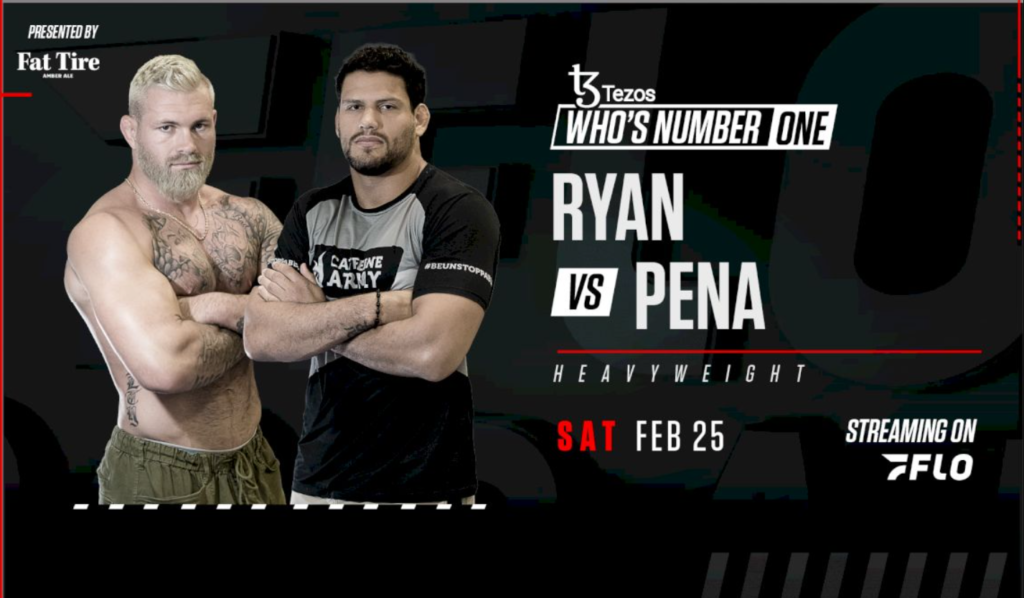
The same card is going to feature a rematch between Gordon Ryan and Felipe Pena, who happens to be the Gracie Barra teammate of Pedro Marinho.

Ryan vs Pena IV WNo tezos February 2023