




The Submission Land Ryan Scialoia DVD Bundle Review [2025]

The Submission Land Ryan Scialoia DVD Bundle Review

Key Takeaways

  • A two-part BJJ bundle covering the subject of setting up and finishing submissions with the Gi.
  • Offers all the highest percentage moves, organized into systems that allow you to move between them.
  • 10+ hours of strangles, arm locks, and leg locks, paired with infinite loop attack systems, such as the Twister Hook.
  • BJJ World Expert Rating: 8 out of 10.

THE SUBMISSION LAND RYAN SCIALOIA DVD BUNDLE AVAILABLE HERE

The Submission Land Ryan Scialoia DVD Bundle Cover
The Submission Land Ryan Scialoia DVD Bundle

Submission hunting isn’t just about finishing submissions. This point often gets lost in instructionals promising to make you a dangerous submission artist. That’s why it is refreshing to have a resource such as the Ryan Scialoia Submission Land Bundle to provide realistic instructions on the subject.

This very long bundle is going to give you all the information you need on finishing not just more, but all submissions in BJJ. There is no position left uncovered, and no submission left unexplored — exactly what you were after, right?

Who’s Ryan Scialoia?

I had the same question in my mind when I picked up his first DVD. Normally, I wanted to know more about the man than the DVD description offered, just because I’m curious to know what to expect from someone who is covering such an attractive subject — submissions.

Ryan turns out to be the real deal. He is a BJJ black belt with over 20 years of experience (some of it in Karate, though) and a full-time instructor. You can find Scialoia teaching classes at Gracie Barra Orlando, where he is much sought after.

Part of Ryan’s notoriety as a coach is that he likes to focus on things that work. His association with law enforcement and constant training of officers in Orlando showcases his passion for the more practical side of BJJ — and nothing screams practical more than submissions.

The Submission Land Ryan Scialoia DVD Bundle shows a glimpse of what Ryan’s approach to finishing moves in grappling is all about. It is a Gi instructional, which means there’s lots of variety and real-world application potential (especially if you’re a LEO).

The Submission Land Ryan Scialoia DVD Bundle Review

The Submission Land Ryan Scialoia DVD Bundle offers a lot, especially in the realm of submissions. It won’t just teach you how to finish, but also about the relationship of submissions and positions.

Combining High Percentage Submissions DVD — GET IT HERE

Subject Matter:

The first DVD in the Ryan Scialoia Submission Land Bundle might as well be a bundle on its own — it covers just about every high-percentage submission you can think of: triangles, armbars, Kimuras, RNCs, Ezekiels, North-South chokes, etc.

Key Points Covered:

The Submission Land Ryan Scialoia DVD Bundle begins with a DVD outlining key submission categories and explaining the concept of a Zero Sum game. Quickly following are all the submissions, organized into mini-systems of their own, Ryan dubs “series.”

The rear naked choke is first, supplemented by arm triangle chokes and collar strangles that offer options from just about every position, not just the back. The leg triangle choke introduces bottom finishes, with plenty of variations to it, including Kimura and armbar combos.

The DVD provides plenty of tactical information on how to set up the submissions from specific positions, in transitions, or in combination with each other.

Technical DVD Specifications:

There are eight volumes in this DVD, each containing a different amount of instruction, ranging from 20 minutes to a couple of hours. The full length of this BJJ instructional is over eight hours!

Twister Hook Back Takes DVD — AVAILABLE HERE

Subject Matter:

In the second portion of the Submission Land Ryan Scialoia DVD Bundle, the star of the show is the Twister Hook and all the back-attacking opportunities it presents. Ryan uses it to present the idea of infinite attacking loops in BJJ.

Key Points Covered:

This part of the bundle is not nearly as long as the previous one, but it is just as elaborate and effective. In fact, it may just be the silver bullet strategy for solving any back attack issues you might be facing.

Scialoia first explains the Twister Hook and why it offers such a great attachment point for maximal control. Lots of positional details for each body part involved in the control feature are provided in this part of the DVD.

Direct submission finishes from the Twister Hook, including the banana split, calf slicers, and Twister, immediately offer brutally effective choices. These are followed by a ton of setups and entries from all kinds of positions: mount, knee-on-belly, back, arm drags, guards, sweeps, passes, dog fight, and even scrambles.

Ryan ends with a study of the relationship between leg locks and back attacks, and where the Twister Hook fits in. That opens the door for a very strong finish to the DVD, featuring several bear trap options.

Technical DVD Specifications:

This Ryan Scialoia Submissions Bundle DVD lasts about two hours, with the material organized into two volumes. Most of the meat and bones of this instructional is in the second volume, which is more than an hour long.

How Tactical Sub Hunting Improves Your Entire Game

You won’t get the tap every time — you have to make your peace with that. It doesn’t mean you shouldn’t try or hunt for submissions every chance you get, but it does mean that you need to master one of the hardest things in BJJ, which is knowing when to let go.

The idea with submissions in the context of the sport of BJJ is that they open things up, even if they don’t yield the result you were originally after — the tap. There are plenty of examples in the Ryan Scialoia Bundle of transitions between positions that end up scoring you plenty of points, as a result of a direct submission threat.

Being a submission hunter doesn’t mean that you’ll have to abandon scoring and positions. It just means that your focus shifts to always looking for a submission from every position. It also means that the submissions will allow you to reach such positions with a lot less resistance than you would without them.

THE SUBMISSION LAND RYAN SCIALOIA DVD BUNDLE DOWNLOAD

Go for the Kill!

Time to up your submission tally! Your first task — pick up the Submission Land Ryan Scialoia DVD Bundle. Then, use the ideas from it to look for submission finishes from every position you find yourself in — even bad ones. There’s no better way to become a super-dangerous submission hunter in BJJ.

Black Belt Priest Faces Scrutiny After Alleged Exorcism Turns Violent

Black Belt Priest Faces Scrutiny After Alleged Exorcism Turns Violent
  • Police are investigating an incident at a São Manuel mass where a woman says she was struck during a supposed exorcism.
  • The Brazilian Jiu-Jitsu black belt priest at the center of the case has been suspended from ministry while facts are established.
  • The story ignites debate over spiritual authority, athletic identity, and safeguarding inside places of worship.
  • Verified facts only; all claims of violence remain allegations under investigation.

What Witnesses Say Happened in São Manuel

In a small church in São Manuel, Brazil, a routine mass reportedly turned chaotic when a woman appeared to collapse and display signs that some present interpreted as possession.

Amid the confusion, the celebrant—identified publicly as a black belt priest—is alleged to have struck the woman while attempting what witnesses described as an exorcism.

According to bystanders, father Bezerra slapped and kicked the woman, pulled her by the hair, and forced her into a pew. Police recorded the complaint and opened an inquiry into possible minor bodily injury; the black belt priest, João José Bezerra, left the scene as congregants tried to restore calm.

No court findings exist yet, and the investigation is ongoing. (We’ll avoid speculation and stick to what’s been formally reported.)

 Violent Exorcism - Black Belt Priest Attacks Woman

When Faith Meets Fight—Public Reaction to the Black Belt Priest Assault Story

The phrase black belt priest now sits at the heart of how people are processing the story. One identity confers spiritual authority; the other signals expertise in physical control and restraint.

For supporters, a black belt priest suggests discipline and duty—someone trained to manage stressful, physical situations with composure.

Critics argue that mixing combat-sport credibility with religious authority can blur boundaries and, in crisis moments, tilt responses toward force instead of first-aid, de-escalation, or clinical intervention.

Either way, the optics matter: a black belt priest officiating a mass where a congregant is hurt will always invite a sharper lens on proportionality and judgment.

Church Response and What “Precautionary Suspension” Really Means

Within hours, diocesan leadership moved to steady the ship. In a public note, the Archdiocese emphasized that acts of violence are incompatible with the mission of the Church and confirmed a precautionary suspension pending the facts.

They also pledged to assist the alleged victim, including covering medical expenses. Two key lines from the Church’s statement capture the tone:

“Situations of violence, of any nature, are absolutely incompatible with the mission of the Church and with the Gospel of Our Lord Jesus Christ.”
– Archdiocese of Botucatu (official note, translated) –

For readers, the takeaway is simple: a black belt priest remains a priest first, subject to canonical process, civil law, and institutional safeguarding rules. Suspension here isn’t a verdict—it’s a risk-management step while authorities determine what actually happened.

Black Belt Priest Attacks Woman as Exorcism Turns Violent

Safeguards, Training, and the Risk of Authority Overlap

Whatever the police conclude, the episode exposes a recurring blind spot: who takes charge when a parishioner collapses or behaves erratically in a crowded church?

“We express our solidarity to the faithful involved and are providing all necessary assistance, including medical expenses, while the facts are duly investigated.”
– Archdiocese of Botucatu (official note, translated) –

Best practice in 2025 prioritizes triage and safety—clear pathways for medical evaluation, crowd control, and basic crisis response before anything resembling a ritual escalation.

A black belt priest may possess grappling skills, but that training is not a substitute for medical protocols, trauma-informed response, or safeguarding briefings tailored to religious spaces.

If faith communities want to avoid repeat headlines, they’ll need practical drills and written policies that separate pastoral care from physical intervention, and ensure that anyone—clergy or lay—knows exactly when to stop, step back, and call professionals.

Final Word—Why this Moment Won’t Fade Quietly

This isn’t just about one mass or one black belt priest. It’s about how institutions react when identity, authority, and crisis collide in public view. If investigators confirm the allegations, accountability will follow.

If they don’t, the conversation still matters: churches will be pressed to prove that their protocols prioritize care over confrontation, and that even a black belt priest is trained to default to medical and safeguarding pathways when seconds count.

Either way, this story won’t be easily filed away—it’s a stress test for trust, and the results will echo well beyond São Manuel.

The Case For Bringing Back BJJ Striking Training

Striking in BJJ training

This is not something we hear very often in connection to Brazilian Jiu-Jitsu training. It is, however, something that we desperately need, as an amazing martial art slowly turns into a sport. If there are any lessons to be learned from Judo and Karate, it is that “sportifying” martial arts too much takes away much of their efficiency. In terms of grappling, there’s no better art out there than BJJ.

When it comes to integrating it into MMA training, Jiu-Jitsu also fits perfectly. However, when it is the other way around, and we need to bring strikes to BJJ, many high-level grapplers will end up clueless. And this needs to change!

It is probably obvious by now that I am all for BJJ striking training. After all, striking arts and grappling arts are two separate portions of martial arts training. Granted, there is MMA, but that’s just a connection between the different types of martial arts.

However, BJJ striking training needs to both be a regular feature of Jiu-Jitsu training, and it needs to take place in every single academy across the globe. Certain schools have them featured in smaller roles. If we want BJJ to go back to being a complete martial art, we need to make it a regular practice. After all, as Combat Jiu-Jitsu demonstrates, grappling competition with striking is not just possible but also very fun to watch!

BJjJStriking in Combat Jiu-Jitsu

Grappling Vs. Striking 

Let’s explore some key aspects of grappling and striking as polar opposites. Apart from the different plane of movement, there are key differences to both martial art styles. A huge case for grappling is the fact that there’s a lot less head trauma, to begin with.

Granted, certain studies do point to chokes being responsible for CTE as well, but those need more time and attention. On the other hand, striking training has a shorter learning curve and provides a much more instinctual way of fighting.

That means that in both competition and real-life scenarios, striking comes naturally and is inevitable. So, apart from MMA training, how do we prepare grapplers to face strikes nowadays?

BJJ striking is virtually non-existent as a concept in Jiu-Jitsu nowadays. For an art that claims to be the ultimate one-on-one self-defense art, the lack of striking sure puts a huge question mark over that claim.

Don’t get me wrong—I’m involved in BJJ on a daily basis and love it. This is actually why I’m bringing up BJJ striking training in the first place. The rift between grappling and striking is so big that it takes years of MMA training to be able to bridge it. This was not the original intention of Gracie Jiu-Jitsu.

Brazilian Jiu-Jitsu, Gi or No-Gi, is in danger of falling down the pitfalls of Judo. As efficient as Judo was, the ever-changing and increasingly restrictive rules have practically castrated an ancient martial art. BJJ is much younger than Judo, but we’re already seeing generations upon generations of grapplers that have no idea how to act when striking is introduced.

Striking As Part Of The Original Brazilian Jiu-Jitsu

Let’s be completely honest—BJJ striking was a huge part of the original Gracie Jiu-Jitsu. At the time, knowing how to punch and kick was just as important as knowing how to choke someone from the back. In that regard, the Jiu-Jitsu of old was very similar to the traditional Japanese Jiu-Jitsu that still exists today.

Helio and Carlos Gracie understood the value of grappling in real-life altercations and exchanges. They did not diminish the importance of striking, though. Quite the contrary.

The Gracies used newspapers to post infamous challenges to everyone who dared test themselves against their fighting style. At the time, BJJ was known as Vale Tudo and was more of a fighting style than a martial art.

Back then, Vale Tudo matches were real NHB fights, with no illegal moves. That meant that while the Gracies didn’t need extensive striking training, they certainly needed to understand distance, movement, and defense at the very least. Carlson Gracie is a great example of how BJJ striking can tie in with Jiu-Jitsu training to great effect.

In fact, my professor, who spent a lifetime training with Carlos Gracie Jr., taught me a very valuable rule they had. He said that when they trained BJJ, even at Gracie Barra, they always took striking into account.

To that extent, in every potential exchange, they’d keep count of how many times the opponent hit them. The ultimate goal would, of course, be to take the fight to the ground.

Once in BJJ territory, the rule stated that they return two strikes for each of the opponent’s strikes when standing. However, it is clear that they understood striking and knew how to match it and beat it using grappling skills. This is an ability modern grapplers sorely miss.

MMA knockout power

Bringing Back BJJ Striking Training

Most of the Gracie family members are still very keen on BJJ striking as a concept to this very day. There’s no one more vocal than Rickson Gracie on the subject. This has brought about the division of “self-defense-oriented Jiu-Jitsu” and sport BJJ. And in a real fight, the former is going to emerge victorious 10 times out of 10.

What Rickson advocates, though, is a far cry from some of the “BJJ striking training” that takes place in gyms. Gracie Barra has a self-defense portion in their curriculum that includes “striking.”

However, this is more akin to Karate training than it is to real striking. Scenarios are often unreal and centered around sport Jiu-Jitsu, providing no real-life striking experience at all.

Eddie Bravo is the best testament to how we can integrate BJJ striking into everyday training. His take on BJJ has always been one that puts emphasis on MMA. To that extent, he brought to us Combat Jiu-Jitsu, which is pretty much grappling with strikes.

The striking is open hand only, but it is more than enough. Just like with grappling you need to be comfortable with striking in a realistic environment. That means getting slapped a few times before you get timing, distance, and maneuvering right.

Alliance has a black belt test that includes having to deal with striking during a live roll. It is a great way of demonstrating how important BJJ striking training is to becoming an expert in the art.

In Summary 

There’s no need for you to go out and challenge everyone once you ad BJ Jstriking training to your curriculum. You’re not in Rio in the mid-’90s. Safety is also not really a factor now since there are great ways of training striking without accumulating brain trauma.

After all, the goal is to know how to throw a strike or two not set up your grappling. Or, know how to deal with striking until grappling becomes available. Imagine how much more effective grappling is going to be in a street fight when striking is a regular part of the training.

Heath Pedigo Eye Surgery Details After Freak Accident Nearly Costs Him an Eye

Heath Pedigo Eye Surgery Details After Freak Accident Nearly Costs Him an Eye
  • Heath Pedigo eye surgery followed a freak training accident; eye injuries escalate fast and demand immediate care.
  • The priority after any ocular impact: stop, shield the eye, and get urgent evaluation from an ophthalmologist.
  • Retinal and orbital damage can be subtle at first—flashes, floaters, double vision, or a “curtain” effect are red flags

A Freak Moment and a Fragile Organ

Heath Pedigo, the owner and BJJ coach in charge of Pedigo Submission Fighting, was teaching a seminar when the accident occurred, and he underwent emergency surgery shortly after.

Witnesses described it as a freak training accident during a routine session—one of those split-second collisions that happen a thousand times in a grappling room and almost never matter.

This one did. The Daisy Fresh legend immediately reported vision changes, and coaches halted practice on the spot. He was moved for urgent evaluation, where doctors confirmed the need for Heath Pedigo eye surgery the same day to address acute trauma to the eye.

“Heath was recently teaching at a seminar when he suffered a severe eye injury that required emergency surgery. Unfortunately, he will need additional surgeries right away”

From a medical standpoint, the next few weeks will be about protecting the repair, watching for red-flag symptoms (new floaters, flashes, curtain-like shadows), and rebuilding confidence with controlled, noncontact movement before any talk of live rounds.

Inside Heath Pedigo Eye Surgery

What most people call “eye surgery” can mean very different procedures. Surgeons might repair a laceration, decompress a blowout fracture of the orbital floor, drain a hyphema that’s pressurizing the eye, or—most serious—address a retinal tear or detachment.

The unifying theme is time. The faster the diagnosis, the better the odds of preserving vision, depth perception, and the ability to safely return to the mat.

That’s the practical value of Heath Pedigo eye surgery as a case study. It underlines a chain of decisions every team should rehearse:

  1. Stop the roll;
  2. Protect the eye;
  3. Call an ophthalmology clinic or head straight to urgent care that can route you to a specialist;
  4. Provide a clean timeline of symptoms.

In many cases, imaging (CT for orbital bones; ultrasound or dilated exam for retinal status) guides whether you’re looking at days, weeks, or months before contact is even an option.

Eye Injury in BJJ isn’t Just Another Bruise

Grapplers rightly fear knees and shoulders, but ocular trauma is uniquely unforgiving. Retinal detachment risk rises after a significant blunt impact.

Classic warning signs: sudden floaters, light flashes, or that “curtain” drift over part of the visual field. Orbital fractures can present with numbness in the cheek or upper lip, double vision in upward gaze, or swelling that seems disproportionate to the hit.

Corneal abrasions burn and tear but can also co-exist with deeper issues you can’t see. Here’s the line that should be on every gym’s wall: if symptoms are escalating—or if you’re guessing—don’t roll.

The mantra after Heath Pedigo eye surgery remains the same for everyone else: eyesight first, podium second.

Coaches should normalize calling sessions early when an athlete is blinking hard or struggling to focus. Teammates should be trained to recognize that behavior and halt the round without debate.

Heath Pedigo Eye Surgery  Freak Accident

What Heath Pedigo Eye Surgery Should Change About Your Training tomorrow

Let this moment tighten your standards. Put a laminated “Eye Impact Protocol” by the front desk. Add a pre-warm-up minute where partners check nails and quietly confirm sparring etiquette for the day. Script safe-exit behaviors when two pairs collide.

Stock a rigid eye shield in the first-aid kit. Most of all, make it culturally normal to stop a round—even a great round—at the first sign of trouble.

If Heath Pedigo eye surgery becomes the reason your room catches one retinal warning sign in time this year, it will have changed careers you’ll never hear about. That’s the quiet kind of victory that lasts.

IBJJF Competitor Dies After Match at Chicago Open, Raising Urgent Safety Concerns

IBJJF Competitor Dies After Match at Chicago Open, Raising Urgent Safety Concerns
  • The grappling community is reeling after an IBJJF competitor dies at the Chicago Open, collapsing shortly after his match and never regaining consciousness.
  • Witness accounts suggest there was no defibrillator or paramedics on-site—an absence that has sparked an intense conversation about medical readiness at Brazilian Jiu-Jitsu events.

A Sudden Collapse That Stunned the Crowd

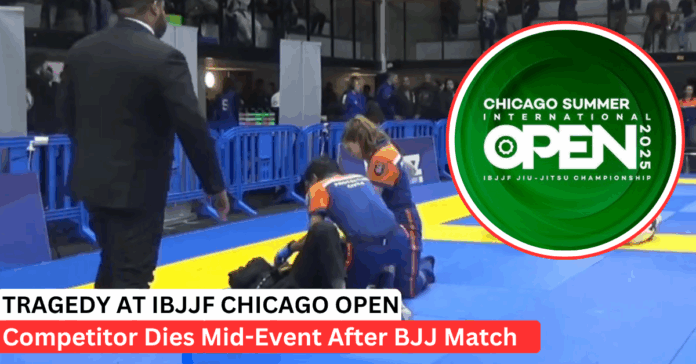
The incident in which an IBJJF competitor dies occurred just minutes after his match ended. At first, onlookers assumed he was recovering from exhaustion. But when he remained unresponsive, panic spread through the mat-side crowd.

Coaches and volunteers rushed to help, improvising an emergency response without the benefit of professional equipment.

“There was no AED. No ambulance. No trained emergency staff. Just coaches and volunteers trying to help.”
– Reddit witness account

Bystanders attempted CPR, but witnesses say it took several minutes before paramedics arrived from outside the venue. In situations involving sudden cardiac arrest, each minute without defibrillation reduces the chance of survival by 7–10%, underscoring how critical immediate intervention can be.

IBJJF Competitor Dies After Match at Chicago Open

No Margin for Delay in Medical Response in BJJ Events

In combat sports, injuries are expected—but medical emergencies like this one demand a different level of readiness. BJJ, while generally safer than striking-based disciplines, still pushes athletes into extreme exertion under intense physical pressure.

The reality is that even healthy, well-conditioned competitors can face sudden cardiac events, dehydration complications, or respiratory distress.

At this Chicago Open, witnesses allege that no emergency medical technicians were stationed in the building. Without an on-site AED or paramedic, those crucial first moments relied solely on the efforts of non-medical personnel.

For many in the community, this was an alarming oversight that should never occur at an IBJJF-sanctioned event. Whether another IBJJF competitor dies before regulations are changed remains to be seen.

The IBJJF’s Growing Responsibility as the Sport Expands

Brazilian Jiu-Jitsu’s rise from niche martial art to global sport has been driven in large part by the IBJJF’s high-profile tournaments. With its influence and resources, the organization sets the tone for safety expectations across the competitive landscape.

Critics point out that major combat sports promotions like the UFC or professional boxing commissions have long-established protocols requiring ringside physicians, EMTs, and emergency gear. Such a BJJ emergency protocol is non-existent, though.

In contrast, BJJ tournaments often vary widely in preparedness. The IBJJF competitor dies incident highlights the gap between the sport’s professional image and its actual safety infrastructure.

IBJJF Competitor Dies After Match

Why BJJ Tournaments Need a Safety Overhaul Now

The IBJJF Chicago Open death has sparked conversations about simple, effective measures that could save lives. Sports medicine experts emphasize the importance of:

  • Mandatory AEDs within reach of every competition area
  • Licensed medical professionals present from the first match to the last
  • Rehearsed emergency protocols involving staff, referees, and volunteers

Some athletes have gone further, calling for the IBJJF to implement a visible “medical readiness checklist” at each venue, much like fire safety inspections, to reassure competitors that they’re stepping onto the mats in a prepared environment.

A Tragedy That Could Spark Reform

Teammates and friends of the fallen competitor have shared heartfelt tributes online, remembering him not only as an athlete but as a mentor and friend. Several described his love for teaching kids’ classes and the way he encouraged newcomers in the gym.

For them, the loss is deeply personal, and the questions about whether better preparation could have saved him are hard to bear. In the wake of the IBJJF competitor dies incident, petitions are already circulating online demanding stricter medical standards at all IBJJF events.

While nothing can reverse what happened in Chicago, the hope among many is that this loss will be the catalyst for long-overdue changes. If the IBJJF adopts consistent, mandatory medical protocols, future athletes may never face the same risks—or the same tragic outcome.

Off The Mat Improvement Jeff Glover DVD Bundle Review [2025]

Off The Mat Improvement Jeff Glover DVD Bundle Review

Key Takeaways

  • A three-part bundle with many interesting methods for BJJ athleticism used by Jeff Glover.
  • Features drills, solo and partner scenarios, flows, stability ball training, and injury recovery protocols.
  • ~4 hours of Glover brilliance, inspired by his very serious spine injury and the road to recovery that followed.
  • BJJ World Expert Rating: 8.5 out of 10.

OFF THE MAT IMPROVEMENT JEFF GLOVER DVD BUNDLE GET HERE

I am not a big fan of instructionals claiming to offer unique movement skills to grapplers off the mats. Most of them have no carry-over to the real deal, as most of them don’t factor in a live person giving you resistance when you train or compete.

Well, trust Jeff Glover to figure out how to add that resistance (to a point) and change my mind. While I’m still not going to do everything, I was in the Off The Mat Improvement Jeff Glover DVD Bundle during this review, and I will stick to a few favorites. I tried every move from every chapter — here’s what I think of them.

Grappling Rebel Jeff Glover

The man who always went against the grain on the mats has some super useful advice for you about what to do off them. Jeff Glover has always been a fun character to watch, and not just because of his shenanigans — he knows how to grapple.

Having spent a lifetime in Jiu-Jitsu and fought (sometimes even beating) the who’s who of early 2000s BJJ greats, the “Human Monkey” always brought the element of entertainment. Even when he lost, Jeff did crazy stuff that ended up not just being talked about, but even replicated.

His nutty Donkey Guard even forced the IBJJF to change their rules, after some unpredictable behavior from competitors trying to copy it and annoying opponents. But Jeff Glover isn’t just about wacky behavior and super experimental grappling moves.

He can actually move — inversions, flying attacks, crazy scrambles — they were all in his arsenal simply because he had the athleticism to pull them off. This Jeff Glover BJJ DVD Bundle explains (to a point) where all that athleticism comes from off the mats.

Off The Mat Improvement Jeff Glover DVD Bundle Review — The Details

The Off The Mat Improvement Jeff Glover DVD Bundle delivers interesting, unusual, and certainly unorthodox ways to get limber and fit for BJJ. It’ll benefit you if you’re looking to improve the range of motion or if you’re coming back from an injury.

BJJ Drills for BJJ Skills DVD — AVAILABLE HERE

Subject Matter:

BJJ drills are not having the best of times in terms of reputation at the moment. That doesn’t mean that the versatile ideas and setups from the first part of the Off The Mat Improvement Jeff Glover DVD Bundle are not worth exploring, though.

Glover’s drills are not boring and repetitive, but rather very much focused on complex motor skill development.

Key Points Covered:

Jeff begins with a very valuable introduction, which explains exactly what he considers to be a BJJ drill — it’s not what you likely expect. He then goes immediately into examples, talking about the thing nobody in BJJ wants to practice — break falls.

A set of super cool shooting and sprawling drills follows, requiring quite a bit of conditioning, and leading into some classics such as shrimping, bridging, and stand-ups. Those are just the basics from volume one.

As the DVD rolls on, Glover also covers turtle, closed guard, and open guard drills, moving to more positional organization. He ends with plenty of takedown and escape drills, capped off by a very weird yet seemingly effective way to practice guillotine defense.

Technical DVD Specifications:

The opening salvo of the Jeff Glover Off The Mat Bundle delivers just over an hour of diverse drill ideas, organized in three volumes and covering solo and partner bottom and standing drills.

Glover’s Balls DVD — DOWNLOAD HERE

Subject Matter:

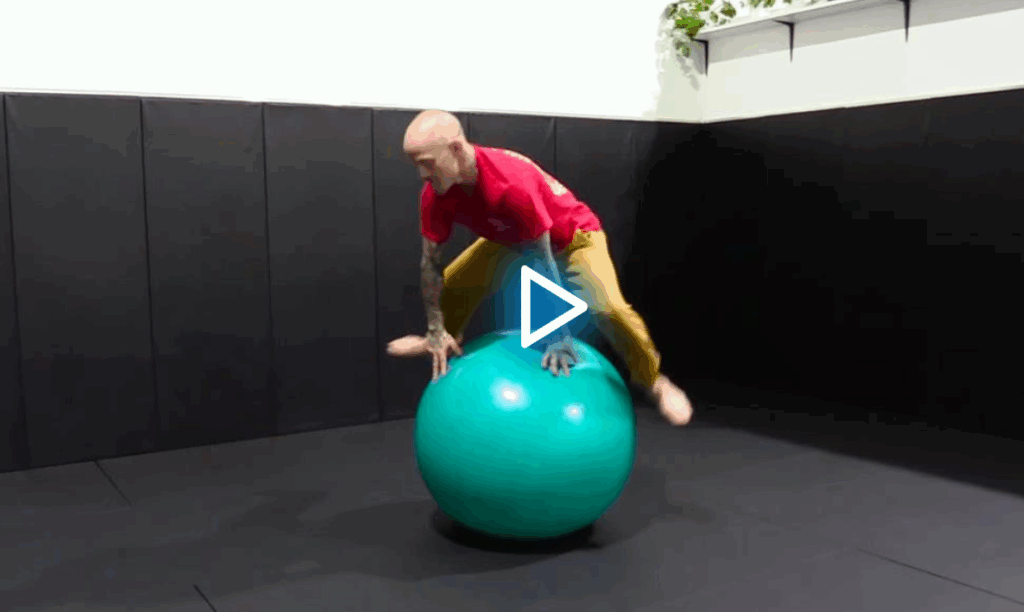
The second part of this Jeff Glover Off The Mat Bundle explores the use of stability balls for improving grappling skills. This is one of Jeff’s signature methods for developing the unpredictable, movement-focused style he’s so recognizable for.

Key Points Covered:

This instructional is like no other, not just in grappling, but anywhere. All Glover talks about is exercise balls and how they can affect and improve your Brazilian Jiu-Jitsu skills. He begins by exploring games and workout ideas using small balls, some of which offer very cool twists on classics such as dodgeball.

He then moves on to medium-sized balls, which help mimic BJJ flow scenarios, helping you develop balancing and motor skills that are hard to build when you’re fighting off submissions. Big balls and increasingly acrobatic and dangerous moves wrap up this weird part of the Jeff Glover BJJ Bundle.

Technical DVD Specifications:

Glover delivers more information on training with stability balls than I’ve seen anywhere else (not that I’ve looked too hard). This two-part instructional offers approximately an hour and a half of super fun and valuable guidance.

Back to the Fitness DVD — GET IT HERE

Subject Matter:

Part three, which is also the final member of the Jeff Glover Off The Mat Bundle, addresses the optimal road to getting back on the mats after recovering from serious injuries. It was inspired by Jeff’s path back to grappling after a bad spine injury.

Key Points Covered:

This is basically a DVD offering BJJ drills, most of which require a partner, that are loaded so you can easily get back some of the grappling skills you had before taking an injury-induced break. The first part is solo, with Jeff offering a crazy but sensible way of training Shadow Jitsu.

After sharing super valuable advice on moderating speed and intensity, he introduces partner training, starting with some mellow takedown drills. Passes and guard drills follow, along with some interesting turtle scenarios that would be fun to try even if you’re not injured.

The best part comes at the very end, where Glover puts combinations of drills together, offering very interesting flows. As long as you are working with a cooperative partner, these are bound to get you back into rolling shape very quickly.

Technical DVD Specifications:

As we reach the end of the Off The Mat Improvement Jeff Glover DVD Bundle, we get three more volumes of Jeff’s instructions, this time delivering a total of an hour of instructional material.

Do Your Grappling Homework

There is something about Jeff Glover that makes you want to learn from him, even if you never intend to do some of his crazier stuff. The man has got charisma and all the necessary skills to back it up.

This Jeff Glover Bundle offers something that is so different from what we’re used to from Jeff that I had to check a few times if this is the same Jeff Glover we’re talking about. It turns out it is, and an injury he sustained prompted him to develop and record this super-useful BJJ DVD.

It clearly demonstrates how all the work you do off the mats — let’s call it homework — can affect your grappling performances on them. Understandably, not dedicating time to improve your athleticism and motion off the mats will also show on the mats, but in a negative way.

OFF THE MAT IMPROVEMENT JEFF GLOVER DVD BUNDLE DOWNLOAD

Set Up For BJJ Success! 

Grab the Off The Mat Improvement Jeff Glover DVD Bundle. Even if you’re not injured or in great shape at the moment, that won’t be the case forever.

While this bundle won’t bulletproof you for BJJ, it will most certainly help get you back on the mats faster. Even more importantly, it will help keep you injury-free for as long as can be reasonably expected in our sport.

What Rickson Gracie Thinks About leg Locks?

Rickson Gracie about Leg Locks

Rickson Gracie thoughts on Leg Locks are probably the opposite of what a lot of people think. Recently Rickson said:

“Leg Locks are very effective, no doubts about it. It’s something really hard to defend. That’s very much it. Leg locks, knee locks, foot locks are very powerful tools to submit as armbars and chokes.

The problem is that a lot of people in the community of Jiu-jitsu don’t train too much and they only do no-gi or the guys that are coming from Sambo… I think that leg locks have to be brought to the practice to be comfortable with. Not only to execute but to defend, escape, move your hips…

Leg Locks are good practice and I like the techniques involved in leg locks.”

10 Best Leg Locks DVDs and Digital Instructionals

Yes, Jar Jar Binks BJJ Black Belt Is a Thing—And It’s Awesome

Yes, Jar Jar Binks BJJ Black Belt Is a Thing—And It’s Awesome
  • Actor Ahmed Best—best known as the voice and motion‑capture performer behind Star Wars’ Jar Jar Binks—is actually a BJJ black belt.
  • He began martial arts young, inspired by a family steeped in judo and karate, and later studied under the Machado lineage, dedicating years on the mats to earn Jar Jar Binks BJJ black belt.
  • In interviews Best describes BJJ as an “honest” art and says being a black belt is measured by how often you’ve tapped out rather than how many people you submit.
  • His journey highlights a wider trend of Hollywood figures embracing BJJ for discipline and fitness, from Joe Rogan to Tom Hardy.

From Intergalactic Antics to Arm Bars

When audiences first met Jar Jar Binks on the marshy world of Naboo, few could have predicted that the man behind the playful Gungan would one day be celebrated for something other than slapstick antics.

Yet Jar Jar Binks BJJ black belt isn’t a punchline—it’s the product of decades of training by Star Wars actor and musician Ahmed Best. Born in 1973 and raised in New York City, Best grew up in a family where martial arts weren’t exotic but everyday life.

His grandfather earned a judo black belt during World War II. His father, a U.S. Air Force veteran, practised karate on the islands of Guam and Okinawa and later earned his own black belt back home.

Watching Kung‑Fu films on Saturday mornings and travelling to Brownsville, Brooklyn, for karate classes with his dad instilled in Best a love for movement, discipline, and performance.

That foundation would later serve him on stage and screen. Before becoming the face of an alien sidekick, Best’s physicality and rhythm made him a standout member of the percussion and dance ensemble Stomp, whose performers are known for their timing and athleticism.

But while theatre and film launched him into pop‑culture history, Jiu‑Jitsu offered a different kind of stage. During downtime in Hollywood, he sought out training at RCJ Machado academies.

Over years of consistent practice, he rose through the ranks, eventually earning a black belt under the Machado lineage—an achievement more than a decade in the making.

Jar Jar Binks BJJ Black Belt—Actor Ahmed Best trains with Rigan Machado

Unmasking the Journey: What it Takes to Earn a BJJ Black Belt

It would be easy to dismiss headlines about a Jar Jar Binks BJJ black belt as a novelty, but Best’s philosophy underscores why Brazilian Jiu‑Jitsu transcends celebrity fads. In a candid interview on the Karbis Sarafyan YouTube channel, he explained what drew him to the art and why he stuck with it for so long:

“I always felt like Jiu‑Jitsu was incredibly honest. It’s one of the very few creative spaces where you put your money where your mouth is. A lot of people talk a lot of game, especially in Hollywood or other martial arts, where it’s dangerous to go full out. But in Jiu‑Jitsu, you can go full out and be the thing you say you are. It really is a great equalizer.”
– Ahmed Best –

For Best, honesty comes from vulnerability. He has emphasized that gaining a black belt isn’t about racking up tapouts; it’s about surviving the journey. On the same podcast, he reflected on his years as a purple belt:

“Being a black belt has very little to do with how many people you tap. It has a lot more to do with how many times you’ve tapped. As a purple belt, I was tapping black belts, but I didn’t get promoted the next day. It was the time I had to spend on the mat, learning, and I’m glad for that journey.”
– Ahmed Best –

Those words resonate across dojos. In an era where some celebrities receive “honorary belts” or quick promotions, Best’s humility and long apprenticeship reflect a traditional path.

The Machados are known for rigorous standards and for producing world‑class competitors as well as actors and musicians. Best’s black belt under their banner signals years of drilling, sparring, and, as he put it, “tapping.”

That dedication is why his achievement is celebrated by the BJJ community rather than mocked. The phrase Jar Jar Binks BJJ black belt now carries weight precisely because of the sweat behind it.

Celebrities and the Gentle Art in 2025

Ahmed Best is not the only figure from film and television drawn to the mats. Over the last decade, BJJ has become a favourite pastime for actors, directors, and musicians seeking both a workout and an antidote to Hollywood’s superficiality.

Comedian and UFC commentator Joe Rogan received his black belt under Jean Jacques Machado and later from Eddie Bravo; he often credits Jiu‑Jitsu with keeping him grounded amid fame.

Tom Hardy, an Oscar‑nominated actor and purple belt, frequently competed at local tournaments as a blue belt, surprising fellow hobbyists with his ferocity. Other names—Mario Lopez, Ashton Kutcher, Guy Ritchie—have been spotted rolling or competing.

In that context, a Jar Jar Binks BJJ black belt fits into a broader narrative. BJJ offers celebrities a rare environment where credentials can’t be bought, and the Machados have come up with a special celebrity BJJ traiing system in Hollywood.

Meesa Wants to Roll! 

Perhaps the most compelling aspect of a Jar Jar Binks BJJ black belt is what it says about resilience. The character of Jar Jar Binks is one of the most polarizing in Star Wars history—mocked by some fans and even blamed for the missteps of the prequel trilogy.

Ahmed Best endured years of criticism and even personal attacks after portraying the Gungan, which took a toll on his mental health. In interviews, he has spoken about overcoming that backlash and rediscovering joy in performance when he returned as Kelleran Beq, a Jedi Master, in The Mandalorian.

The story of a Jar Jar Binks BJJ black belt reminds us that anyone—actor, accountant, or alien—can benefit from the discipline and honesty that Jiu‑Jitsu demands.

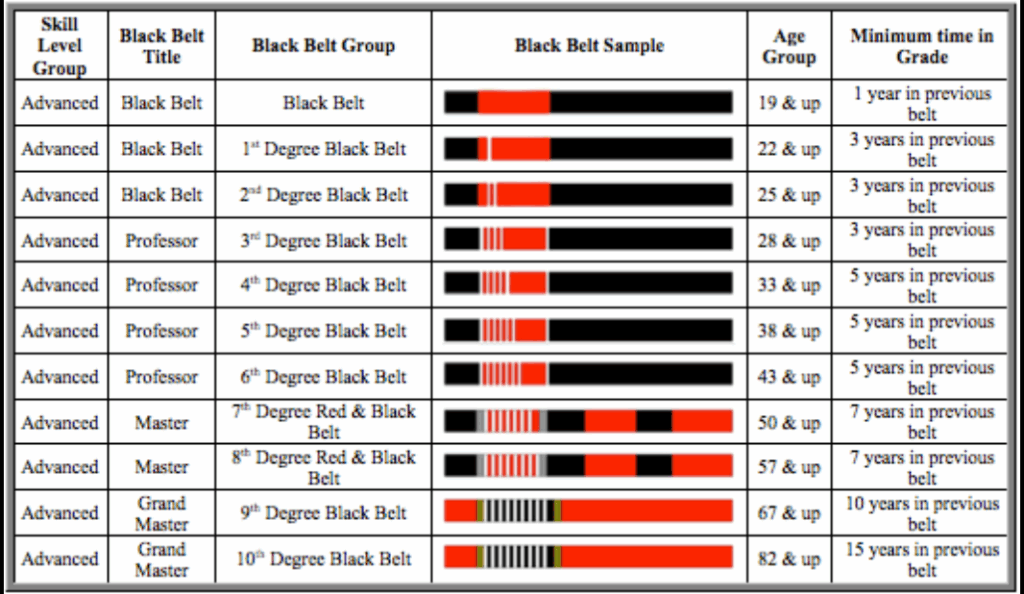
What Do Different BJJ Black Belt Bars And Stripes Mean?

What Do Different BJJ Black Belt Bars And Stripes Mean?
  • BJJ black belt bars aren’t just decoration—they reveal rank, role, and legacy.
  • White bars often signal competitors, red bars often mark instructors.
  • BJJ stripes (degrees) show years of service and experience.
  • Coral and red belts represent decades of commitment to the art.
  • Belt markings are deeply tied to BJJ tradition and lineage.

Belts That Speak Without Words

In Brazilian Jiu-Jitsu, the belt around a practitioner’s waist is more than a marker of skill—it’s a story told in color and stitching.

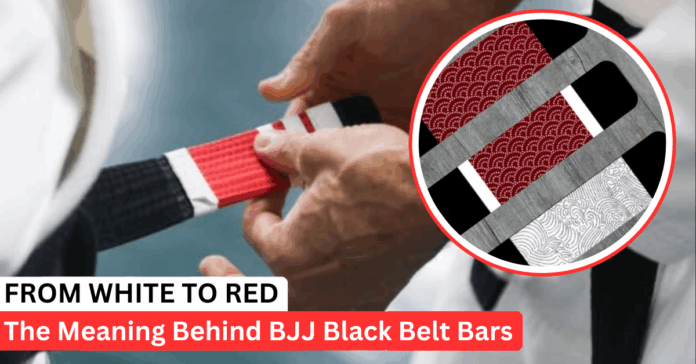
Those rectangular bars on each end of a BJJ black belt might seem like small details, but they can instantly tell you if someone is an active competitor, a seasoned instructor, or a master who’s dedicated decades to the sport.

To the untrained eye, the difference between a white bar and a red bar is negligible. To insiders, it’s the difference between an athlete sharpening their game for the next tournament and a professor refining the next generation’s technique.

Different BJJ Black Belt Bars And Stripes

What BJJ Black Belt Bars Colors Say About You

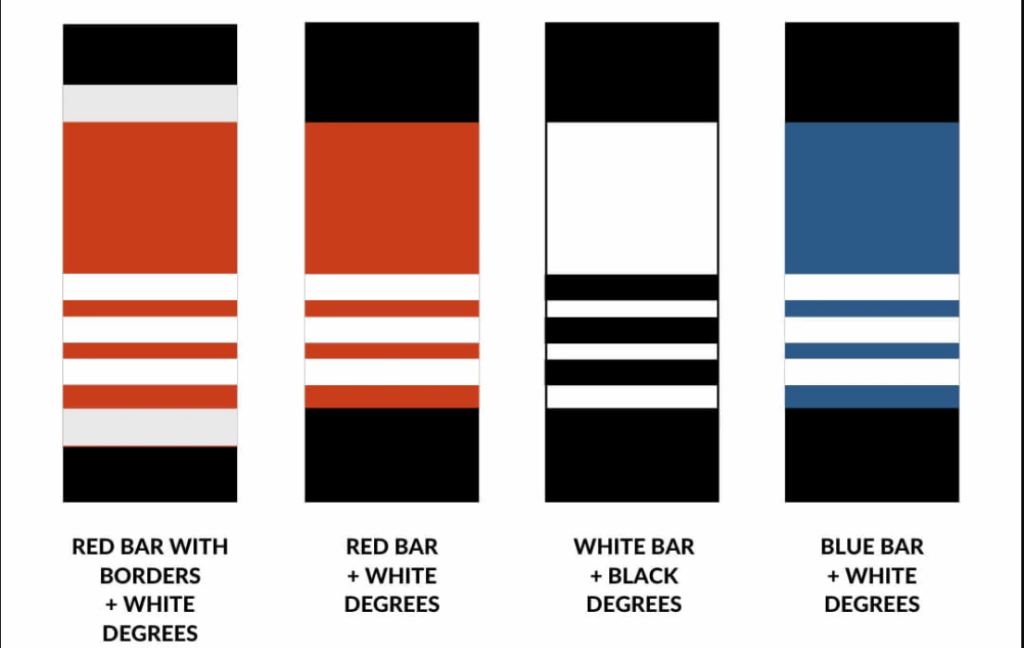
The most common BJJ black belt bars are white and red, each carrying a distinct meaning.

  • The white bar black belt is traditionally worn by competitors, particularly those still actively testing themselves in tournaments.
  • The red bar black belt is often linked to instructors—professors who dedicate most of their mat time to teaching rather than competing.

Stripes, or “degrees,” appear on these bars to indicate how long someone has held their belt. Earning each new stripe requires years of commitment, with IBJJF standards placing the time between promotions at three years for early degrees and even longer for the later ones.

The degrees on BJJ black belt mark not just skill but service—each one is earned through years of dedication to the art.

While most practitioners will spend the rest of their careers wearing the same black belt with white or red bars, a rare few move beyond.

After decades—often 31 years or more of continuous training and teaching—a black belt may be awarded the coral belt BJJ rank, a distinctive blend of red and white or red and black. This signals a master-level instructor whose influence on the sport has become part of its history.

From there, the final step is the solid red belt, an honor reserved for the most senior figures in BJJ, often those who’ve spent half a century shaping the art.

BJJ Black Belt Ranks

Competition, Classroom, and Cultural Roots

Your BJJ black belt bars don’t just mark time served—they reveal where you stand in the ecosystem of the sport.

Competitors typically opt for the white bar to stay aligned with IBJJF rules, which require this marking for tournament eligibility. Instructors, on the other hand, often prefer the red bar, a subtle but powerful symbol of their role in passing on knowledge.

In some gyms, belt traditions are flexible. Others adhere strictly to lineage-based customs passed down from founders.

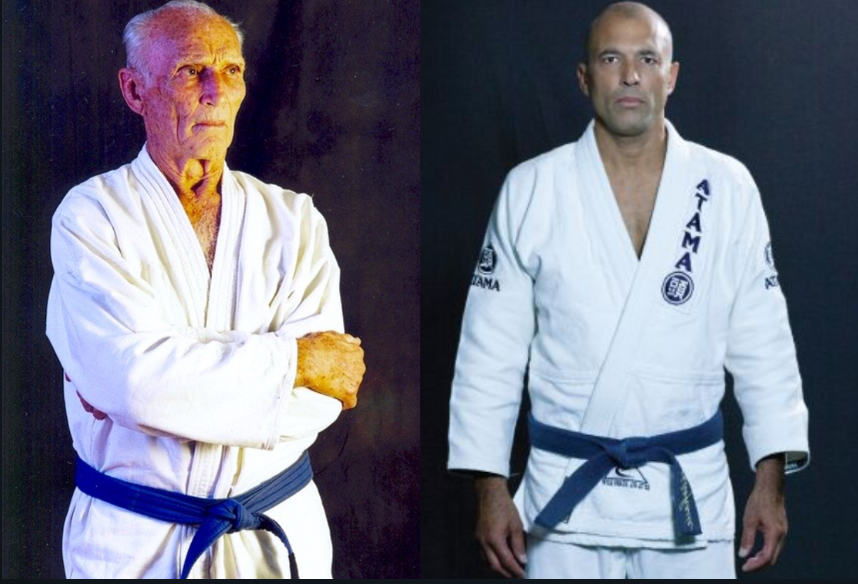
Some old-school practitioners even maintain unique belt colors or designs in homage to their teachers—Royce Gracie famously wore a navy belt as a tribute to his father, Helio.

Understanding BJJ black belt bars also means understanding the culture behind them. These markings are part of a broader ranking system that has evolved over more than a century, tracing back to early judo influences before BJJ became its own distinct art.

Helio and Royce Gracie Navy Belt BJJ

Beyond the Bars — The Role of Tradition in Modern Rankings

Today, the International Brazilian Jiu-Jitsu Federation (IBJJF) sets standardized rules for belt promotions, but many academies also incorporate their own customs, sometimes delaying promotions until students have demonstrated loyalty, teaching ability, or exceptional competition results.

In addition, the positioning and stitching of the bar can vary slightly by country or lineage, creating subtle visual clues about where someone has trained. For example, some Gracie-affiliated schools place a heavier emphasis on traditional bar sizes, while others adopt modern, minimalist designs.

Simplify the System Brian Glick DVD Bundle Review [2025]

Simplify the System Brian Glick DVD Bundle Review

Key Takeaways

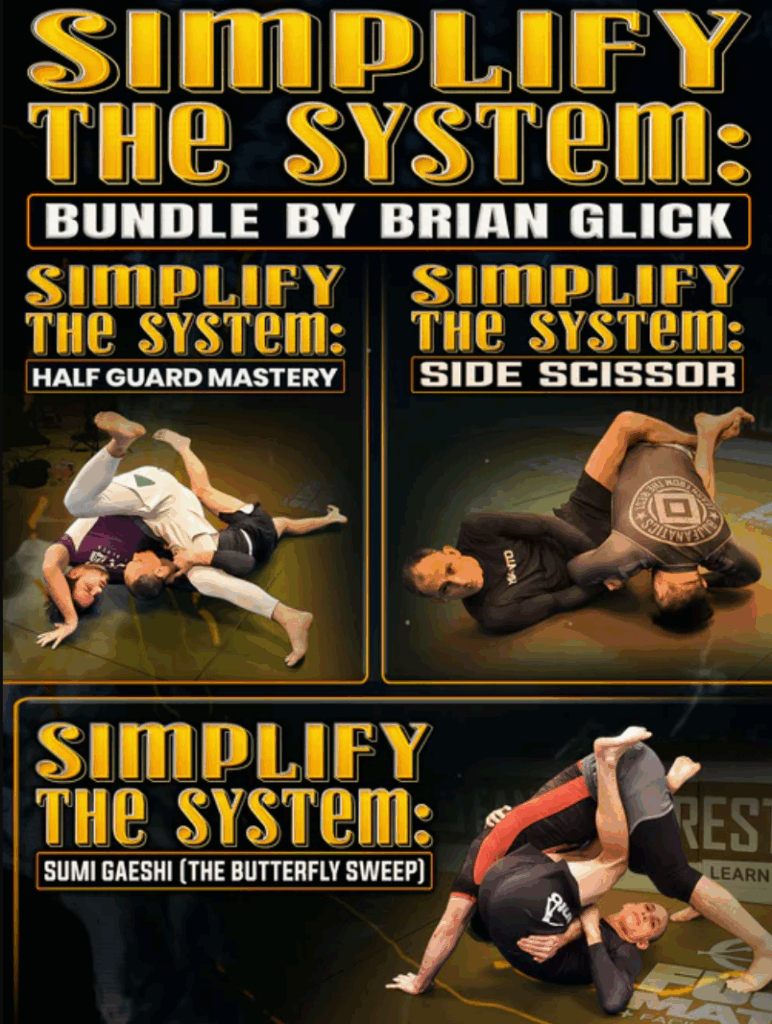
  • A three-part bundle covering several different guard positions for No-Gi.
  • Delivers complete systems for playing the half guard, side scissor, clamp, and butterfly guard.
  • 17+ hours of precise instructions on how to set up and keep guards, and sweep, back take, or submit from them.
  • BJJ World Expert Rating: 9.5 out of 10.

SIMPLIFY THE SYSTEM BRIAN GLICK DVD BUNDLE AVAILABLE HERE

For those of us who like to grapple, with no intentions of “making it to the big stage” or winning world titles, the secret to success on the mats is longevity. When I come to think about it, figuring this out is a lot more complicated than training to be a world champion.

Simplicity is key when you’re trying to preserve as much of your body as you can while rolling with as many people as you can. Learning from someone who has been through it all is one proven way of getting ahead of the curve fast. The Simplify the System Brian Glick DVD Bundle is one such resource.

The Man Who Was Not Supposed to Make it in BJJ

Imagine this scenario: You’re training Jiu-Jitsu in one of the toughest spots on earth — Renzo’s blue basement in New York. It’s the late ’90s, BJJ is still very new in the USA, and John Danaher comes up to you after a hard training session.

His suggestion? Perhaps you should look into switching sports since your body type and athletic (dis)abilities are ill-suited to handle the pressure and raw intensity of the blue basement. What do you do?

Brian Glick faced this exact scenario during a period when Jiu-Jitsu was as chaotic and brawly as a grappling martial art can get. Luckily for us, he decided to stick with it, earned his black belt from Danaher, and is now responsible for instructional gems such as the Simplify the System Brian Glick DVD Bundle.

The Full Simplify the System Brian Glick DVD Bundle Review

The Brian Glick Simplify the System Bundle contains three instructionals on different No-Gi guard applications, delivering 19 volumes and over 15 hours of video material.

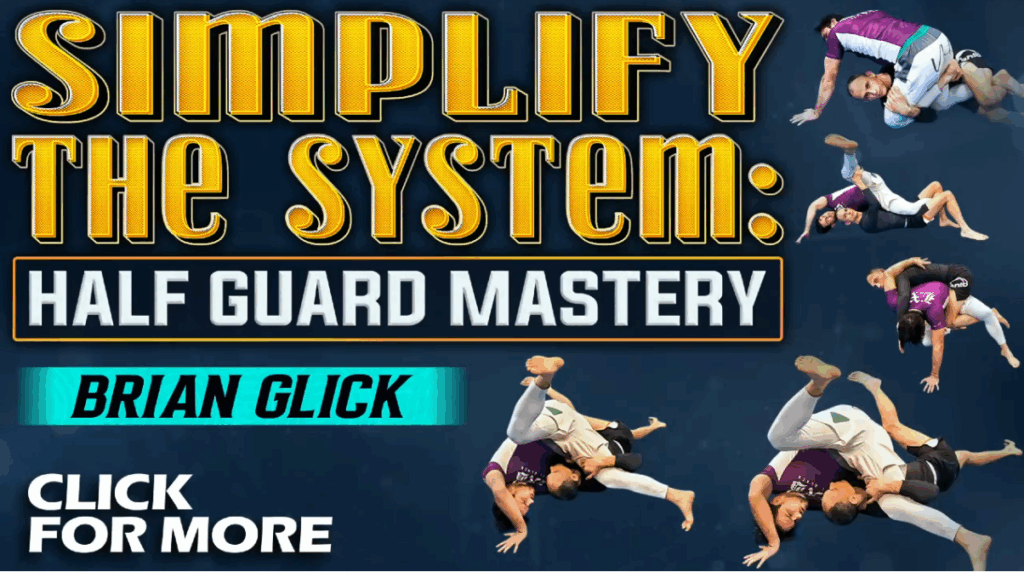
Half Guard Mastery DVDDOWNLOAD HERE

Subject:

First up is one of the best guides to a position you will certainly play, especially if you are a tiny-sized grappler — the No-Gi half guard.

Key Points Covered:

This opening portion of the Simplify the System Brian Glick DVD Bundle covers just about every aspect of the half guard you’ll ever need. From answering why you need the position to all the tactical and conceptual aspects of it, Glick delivers detailed answers and troubleshooting.

He shares the three key skills you need to master and play the half guard, and centers his entire system around them. His attacks? Trilemmas that capitalize on forced mistakes that happen because of optimal grip and body placement.

Attacks are mostly represented by sweeps and back exposure, although the odd submission pops up here and there in this DVD, too. Brian also covers plenty of ways to get to the half guard from other positions and offers interesting insights into the dogfight position.

Technical DVD Specifications:

An eight-part instructional that has lots of content in it. The total running length of this Brian Glick BJJ DVD is over seven hours, and it’s all about the half guard bottom.

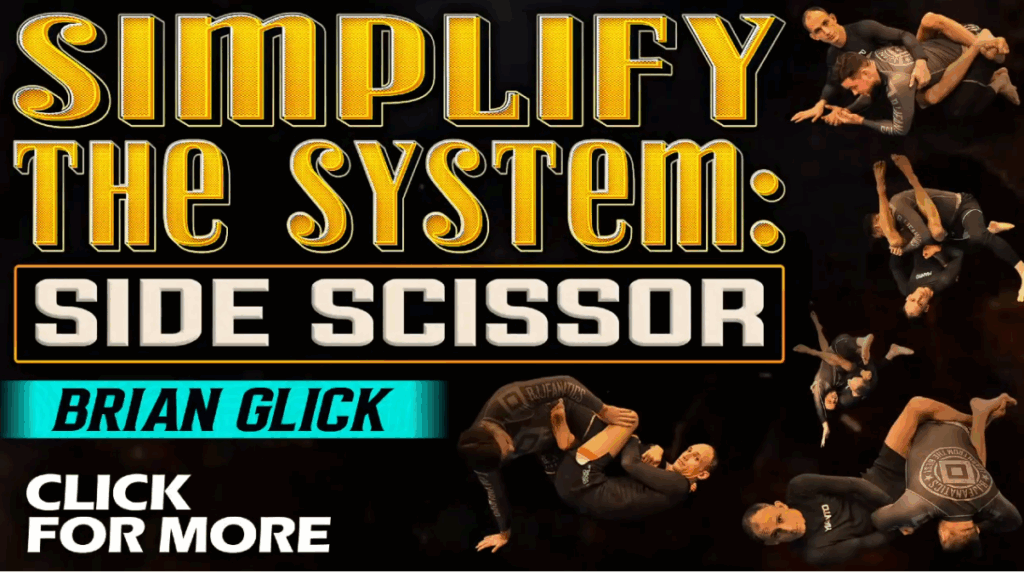
The Side Scissor DVDGET IT HERE

Subject:

According to me, this is the best part of the Simplify the System Brian Glick DVD Bundle. Glick offers a different take on the closed guard that will allow you to beat bigger, stronger, and more experienced grapplers.

Key Points Covered:

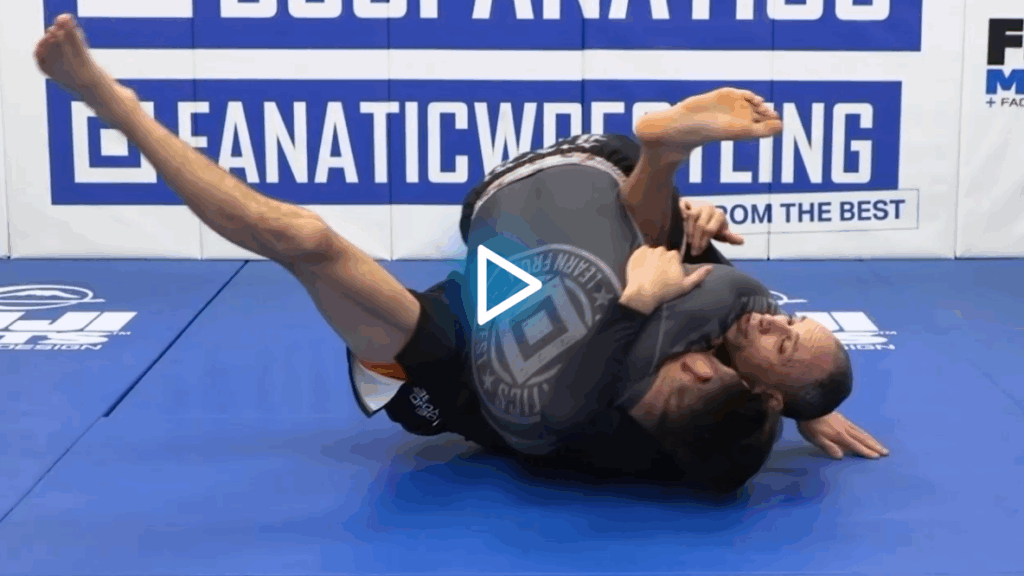
This super-information-rich DVD is a real godsend to folks who like to play guard but have next to no athletic abilities to help them in this quest. Brian delivers a combo of two guard variations here — the side scissor and clamp — that all but guarantee you’ll become a very proficient guard player.

Glick kicks off with an introduction to both positions, explaining how the side scissor is the preferred method for outside attacks that lead to upper body finishes or the back mount. He builds on it with the inside guard variation, which is the clamp, creating plenty of sweeping opportunities.

Everything is organized into attack sets that always hold more than one threat, and Brian does an exceptional job tying the two guard variations together toward the end of this portion of the Brian Glick Simplify the System Bundle.

Technical DVD Specifications:

This part of the Brian Glick bundle offers five volumes of No-Gi guard tactics, spread over the course of more than five hours. Organization-wise, Glick makes it very easy to find things using chapters and blocks, even though the instructional is super long.

Sumi Gaeshi Butterfly Sweep DVDFULL DOWNLOAD

Subject:

The final DVD of the Simplify the System Brian Glick DVD Bundle is focused on yet another guard — or more specifically, a part of one — the butterfly sweep, or Sumi Gaeshi, if you prefer Judo-derived Japanese terminology.

Key Points Covered:

Throwing people over your head is not easy, but if there is one person who can make it possible to execute, it’s Brian. This DVD has everything and the kitchen sink in it concerning the butterfly sweep.

Glick starts with grips, explaining their role in creating off-balance (kuzushi) to get sweeps or set up Ashi leg locks. Each volume covers a different grip variation (overhooks, underhooks, collar ties, wrist ties, and their combos), followed by the best dilemma attacks to use from there.

Brian also covers a real Judo special that rarely features in butterfly sweep instructionals — the sideways sweep or Yoko Sumi Gaeshi. He also provides several study guides, making sure all the information is delivered rationally and doesn’t confuse you.

Technical DVD Specifications:

Wrapping up what turns out to be a masterpiece, this final contribution to the Brian Glick Simplify the System Bundle delivers over five more hours of top-quality material. Brian organizes everything using six volumes in this instructional.

Simple Beats Fancy — Most of the Time

If you’re one of those middleweight fellows who has the genes to carry muscle, move like a cat, and have endless cardio, then any instructional will do the trick for you. In fact, you probably don’t even need an instructional — you can just wing things and manage to have solid grappling performances. Just take a look at early Nicky Rod stuff.

That said, the case is completely opposite for those who are on the other side of this physical spectrum. Folks who are smaller, weaker, and/or don’t possess any athletic abilities have to rely on technique and cunningness. To that extent, what they do has to be simple and straightforward, yet work most of the time against different opponents.

There’s no magic bullet here for the small folk (I know because I am one), but there is a silver lining — it’s called strategy. Building systems that exploit the strength of simple moves, along with their fairly short mastery curves, is a proven method of evening the playing field.

The Simplify the System Brian Glick DVD Bundle is not going to transform you into one of the superhumans we see on the mats quite often these days. It will provide you with the ammunition to stave off their pressure, though, and occasionally, force them to tap.

SIMPLIFY THE SYSTEM BRIAN GLICK DVD BUNDLE DOWNLOAD

Train Smarter

The old mantra of training smarter rather than harder is much more than just a cliché in BJJ — it’s a solid base for a super-effective game plan. The trouble is, you have no idea where to start — I get it, I’ve been there. My advice is to start with the guard and use the Simplify the System Brian Glick DVD Bundle to build a system that works for you.