It’s Official! Gabi Garcia vs Craig Jones, ‘If I Lose I’ll Retire’

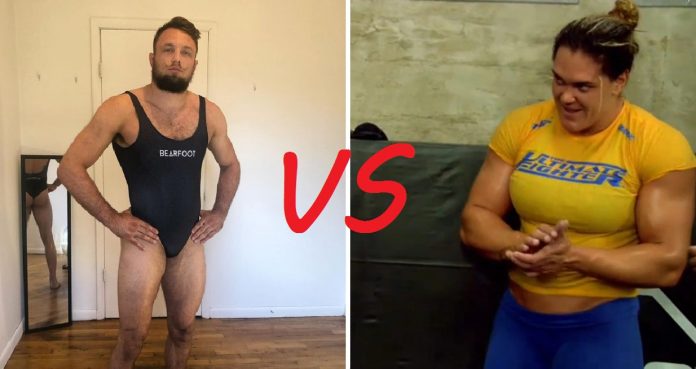
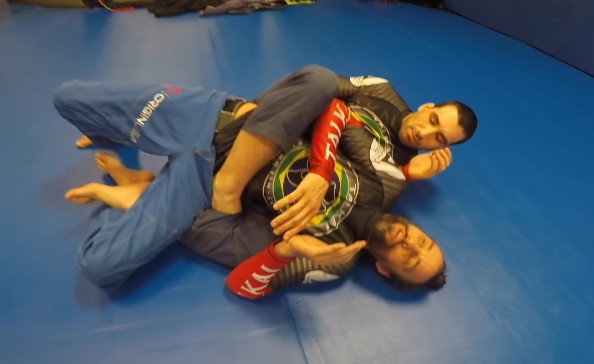
Craig Jones vs Gabi Garcia

Pretty weird things are going on lately and this is definitely one of them. Craig Jones will face Gabi Garcia on March, 28.

If you think this is a joke you’re in for a pleasant surprise. March 28 @gabigarciaofficial – Wrote Craig JOnes on his Instagram Profile


View this post on Instagram


A post shared by Craig Jones (@craigjonesbjj)

I’m flying to LA on Sunday to fight Gaby Garcia. It’s gonna be a no time limit, sub only match in her gym, and we’ll stream it for free. It’s happening 100%. – said Craig Jones

On a question how it is gonna go for him he answered:

“Hopefully well for me. Otherwise, if I lose, I’ll retire.”

“Obviously, a lot of people think it’s a joke, but just because of the interest we thought why not?”


View this post on Instagram


A post shared by Craig Jones (@craigjonesbjj)

Combat Jiu-Jitsu: Everything You Wanna Know

Combat Jiu-Jitsu: Everything you wanna know

Combat Jiu-Jitsu (CJJ) brought some new competition rules into the world of grappling highly connected with Brazilian Jiu-Jitsu. In this article, we’re going to go through some main aspects of CJJ including creator, events, athletes, and more.

What is Combat Jiu-Jitsu?

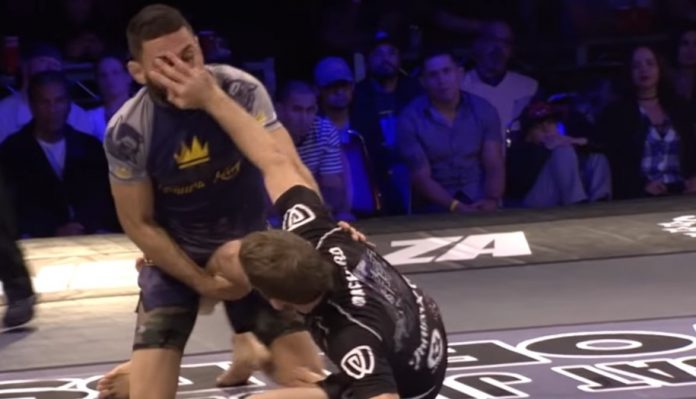
Combat Jiu-Jitsu (CJJ) is arguably the most important innovation of Brazilian Jiu-Jitsu to appear in the last decade. It’s designed to bridge the gap between sport Brazilian Jiu-Jitsu (BJJ) and Mixed Martial Arts (MMA) by allowing open-palm strikes once the fight between competitors goes to the ground. It makes Jiu-Jitsu competitors fight in a more realistic environment.

From a spectator’s point of view, it appears to be “Jiu-Jitsu with slaps on the ground”, in some ways similar to the Japanese hybrid wrestling promotion of Pancrase, due to these gloveless open-hand strikes being allowed. Unlike Pancrase, CJJ does not allow striking from standing, or competitors to wear speedos and wrestling boots.

Who Created Combat Jiu-Jitsu?

Combat Jiu-Jitsu was born out of 10th Planet legend Eddie Bravo’s belief that sport BJJ was moving away from the intended purpose of martial art. He felt that “sport Jiu-Jitsu” was beginning to get clustered with unrealistic moves and stalling unlikely to be beneficial to an actual real-life altercation and decided going back to the basics tenants of self-defense would make things closer to Maeda’s original vision.

Combat Jiu-Jitsu Rules

  • Matches can only be won by TKO, submission, or by EBI overtime rules. There is no point system.
  • All submissions are permitted.
  • Matches are a single ten-minute round, although overtime is available.
  • Standing grappling will not go on for longer than one minute. After this, the “get down rule” takes place and the referee will stop the action, then toss a coin to decide ground positions. The winner of the coin toss will decide if they want to be on top in butterfly guard or with double underhooks on the bottom.
  • Open hand slaps and strikes are allowed when one competitor is on the ground.
  • Competitors cannot exchange strikes when they are both standing. Additionally, no closed fist punches are permitted.
  • “Purgatory” position occurs when one person is standing and the other is on the ground, and the standing competitor is not engaging in either guard position or leg entanglement. A competitor is allowed thirty seconds of “purgatory” for the whole match, any time after this half-minute period will be added to the overtime round. This rule was designed to discourage stalling and to promote active guard passing from the person on top. As soon as the person on top’s knee touches the ground, they are regarded to be passing and the timer stops. This timer will resume if the competitor becomes inactive again and stands if their opponent is grounded.
  • It is not considered purgatory if a competitor is standing while their opponent has a full guard or engages them with a leg entanglement. If the standing competitor disengaged from a leg entanglement or breaks guard they are given only ten seconds to re-engage their opponent before the purgatory timer begins.

Combat Jiu-Jitsu Overtime Rules

  • Overtime rules begin with a coinflip. The coinflip winner chooses to start attacking from the back or in an armbar position or “spiderweb”.
  • Competitors take turns to begin in their selected position
    If one competitor taps and the other escapes, he is selected, winner
  • The next overtime round begins if both competitors escape (there is a maximum of three overtime rounds)
  • At the end of the three rounds, if there are no submissions, the competitor with the total fastest escape time wins the match.

Competitive Combat Jiu-Jitsu and the future

Eddie Bravo has been running competitive CJJ matches since his eleventh invitational (EB11). Nick Honstein, Sheridan Moran, Chad George, and JM Holland all acted as guinea pigs, competing for the bantamweight (135 lbs) title. These three matches were considered the most exciting of the night, drawing attention on Twitter from both BJJ and MMA big names. The audience had a lot of fun, often drawing laughter from onlookers as the sound of slaps was made.

Due to this making the sport get compared to Eastern European slapping contests, this laughter though is something that may not draw the right attention for long-term growth. This has not stopped Eddie Bravo from moving away from his normal invitational events in favor of Combat Jiu-Jitsu Worlds events.

These events are increasing curiosity in the sport and it’s likely to see more BJJ practitioners flock to it. Having Bravo as its progenitor and biggest proponent of the sport though can be seen as a double-edged sword. Known for his “out there” conspiracy theories, Eddie is certainly not without his charm, but his whacky beliefs tend to paint him as an eccentric which more serious competitors may avoid. He has, however, kindly put up many of the matches including Combat Jiu-Jitsu Worlds 1 (2018) in a video below.

Check also: Is Combat Jiu-Jitsu Going to Stick around?

Notable Combat Jiu-Jitsu Competitors

  • Vagner Rocha
  • Nathan Orchard
  • Ritchie Martinez
  • Masakazu Imanari
  • Denny Prokopos
  • Tyson Griffin.
  • Wilson Reis

Effectiveness of Combat Jiu-Jitsu in a street fight scenario

It is obviously preferable to either avoid a fight or escape to safety, unfortunately, this is not always possible. While the footwork of various striking arts might benefit someone posed with multiple attackers due to the fact that going to the ground with one assailant might leave you open to stomps and kicks of their accomplices, in a one-on-one scenario, Brazilian Jiu-Jitsu is famed for its self-defense effectiveness. Being able to grapple with someone typically disables their ability to throw strikes, which can be absolutely devastating.

A common tragedy in any society today is that lives are lost as a result of wild punches. Someone who is knocked to the ground may land on their head wrong, leading to brain damage, or even a blood clot. Whether this punch was thrown as an attack, or in self-defense doesn’t detract from death being a typically needless tragedy.

Ideally, a trained grappler can often defend themselves from being struck, or from a lifetime of legal trouble and guilt which may result in an unintended manslaughter scenario.
In addition to the benefits of standing grapple, knowing even basic grappling puts the combatant in an incredibly advantageous position over the average man on the street.

For this reason, Brazilian Jiu-Jitsu is famed for giving a smaller, out-of-shape practitioner a big advantage over a larger, more athletic one. Particularly as, whether intended or not, a large proportion of fights end up on the ground. Despite these advantages, the average “sport jiu-jitsu” practitioner may not be prepared to handle certain problems which may come out of a grappling scenario on the street, however.

As Mike Tyson famously said, “Everyone has a plan until they get punched in the face”.

While CJJ doesn’t allow either standing or closed fist strikes, it still requires the practitioner to become accustomed to the feeling of being struck in the face while attempting to outstrike or submit their opponent.

Additionally, certain high-risk high reward guard pulling or guard passing moves seen in competition BJJ which may put the user in danger of being struck in a real-life scenario are typically avoided in CJJJ. Indeed, CJJJ is in many ways closer to the old-school style of Gracie Jiu-Jitsu seen in videos of martial artists taking on the “Gracie challenge”, or like Royce Gracie’s early UFC dominance.

Is combat Jiu-Jitsu more effective on the streets than sport Jiu-Jitsu?

While both CJJJ and BJJ are pretty dominant marts arts in the streets in one on one scenario, CJJ has its advantages there. In CJJ you’re more focused on getting yourself safe from being slapped, which increases your overall awareness of being punched or even kicked, we can say that CJJ is more effective in street fight scenarios than BJJ.

What martial art can “beat” Combat Jiu-Jitsu?

As previously mentioned, on the street, striking-based arts like boxing, Muay Thai or Krav Maga may be more effective than Brazilian Jiu-Jitsu at handling multiple attackers. This is more about buying time for help to arrive, utilizing space, or providing an escape, rather than being able to disable or knock out the attackers. That being said, getting into a street fight is usually avoidable and the chances are low.

Multiple attackers is again an unlikely worst-case scenario. If there is only one assailant though, it is difficult to find a more effective martial art than CJJ. This largely extends to MMA as well.

A fully rounded fighter with great striking and takedown defense will always provide a significant threat to a Brazilian Jiu-Jitsu specialist of any variety. While many schools will teach their students to use head movement, feints, and evasive movement to dodge or absorb strikes thrown at them before they shoot for a takedown or throw, MMA has shown that a striker with great footwork or high-level counter grappling can be a challenge to a Brazilian Jiu-Jitsu user.

Wrestling, for example, or similarly leveled Jiu-Jitsu practitioner, coupled with boxing or Muay Thai will put a fighter in good stead if his opponent is unprepared for this. Almost all current champions in the UFC have had a significant level of BJJ training, showing that it is still as an important part of a competitor’s arsenal as it was back in the Royce Gracie days.

Does combat jiu-jitsu ruin your body?

At this moment in time, CJJ is too new to see if it greatly increases damage to your body compared to its open-palm strikes-free counterpart. Theoretically strikes to the face, even open-hand ones will make nose bleeds, perforated eardrums, and black eyes somewhat more likely.

Knockouts are an acceptable method of victory in a CJJ match, so this can lead to concussion and brain damage. Time will tell if this is a genuine concern or a minor risk. Compared to full contact MMA sparring, however, the risks of damage in CJJ are almost certainly diminished.

More about Jiu-Jitsu and how it affects your body

Jiu-jitsu is known as the “gentle art” as again, compared to striking martial arts it typically does much less damage to the brain. However, no intensive physical activity is without its risk of injury and all full-contact martial arts have an increased number of these.

Standing grappling and throws can have a heavy impact on the hips, back, and knees, while increased pressure from uncomfortable angles on joints can result in muscle wear and tear, and ligament, or tendon damage.

There are a ton of ways to reduce the chances of injury, typically common sense orientated – submissions should be applied slowly, the intensity of sparring should be monitored and emotions should be kept in check, but any long-term practitioner will tell you that they have picked up a few “niggling” injuries along the way, whether they’re a knee that clicks on the odd step, or fingers which aren’t quite as dexterous as they were from gi grips. That being said – there are many practitioners of the art in their seventies and even eighties.

And please remember that you don’t want to spar in combat Jiu-Jitsu early in the morning classes as it just may ruin your day.

Combat Jiu-Jitsu: Is It Really Going To Stick Around?

Toshihiko Koga, Olympic Judo Champion and Coach, Dies at Age 53

Toshihiko Koga

The death of legendary Japanese judo athlete and coach Toshihiko Koga, who passed away on Wednesday, March, 24. at the age of 53, has caused a stir in the martial arts community.

According to the media, cancer was the cause of death for Koga,  Last year, the athlete underwent surgery after being hospitalized with the disease.

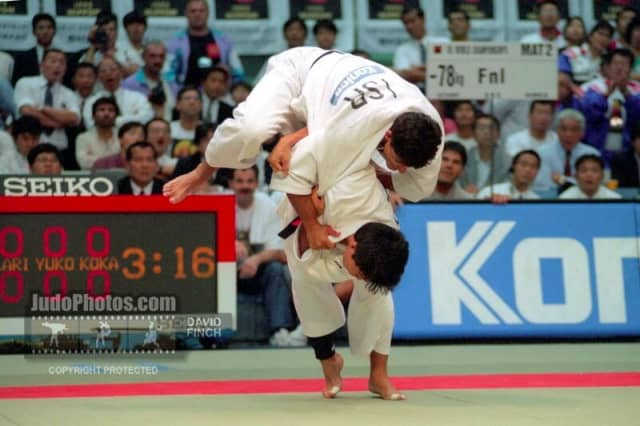
His double-handed morote-seoi-nage, one of his most famous throws, combined with his legendary ippon-seoi-nage, will always be remembered together with his saying: “I think you always have to have an open mind to take new approaches and new paths in solving problems.” He lived by this principle until he died.

Toshihiko Koga ippon seoi nage
Toshihiko Koga’s trademark technique ippon seoi nage

He received his 9th-degree black belt from the Kodokan a day before he died.

It is certain that Toshihiko Koga will be imitated by the youth in order to replicate the tatami artists.

The entire martial arts world is saddened by the news of his death, and we join with his family and friends in conveying our most heartfelt condolences.

Thank you for the art, legend!

Toshihiko Koga

Koga was born in Saga, Prefecture, Japan. He trained at the Kodo Gakusha judo institution in Tokyo, sharpening his abilities under the tutelage of Japan’s top judoka. At age 18, when he was a student at Nippon Sport Science University, Koga won the Jigoro Kano Cup Tokyo International Judo Tournament.

At the time he won several accolades including five straight championships at the Kodokan Cup and six consecutive titles at the All-Japan Judo Championships (all in the 71 kg division).

He achieved third place in the World Judo Championships held in Essen in 1987 and was chosen to compete at the 1988 Summer Olympics, where he was defeated by a Russian competitor in the third round.

The “highlights” of his career happened at the Barcelona Games when Koga was named captain of the Japanese Olympic delegation. Unfortunately, Koga injured his left knee ligament before the Olympics, during a practice session. He couldn’t walk without holding on to someone’s shoulder, and it appeared he wouldn’t be able to compete.

Still, Koga didn’t give up and fought to take home the gold medal in a daring show that delighted his people.

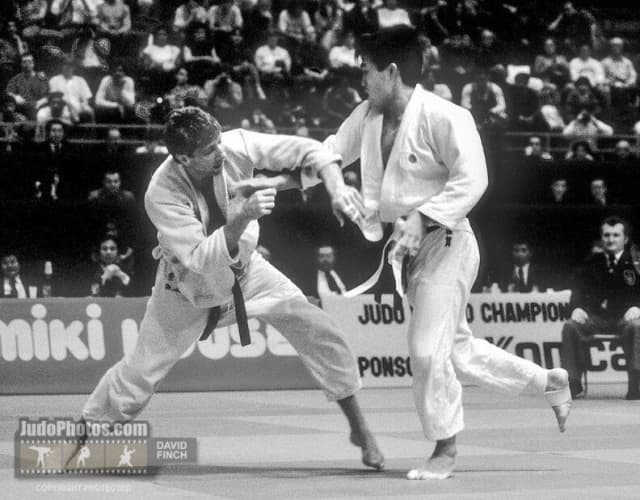
Toshihiko Koga Belgrade 1989

After winning the 1989 and 1991 World Judo Championships, Koga went back to the Olympics in 1992, but he severely injured his left knee during a randori (sparring) session against Hidehiko Yoshida, preventing him from utilizing his best move; the Ippon Seoi Nage. He won the gold medal without sacrificing his performance, and he was presented with the JOC Sports Award by the Japanese Olympic Committee.

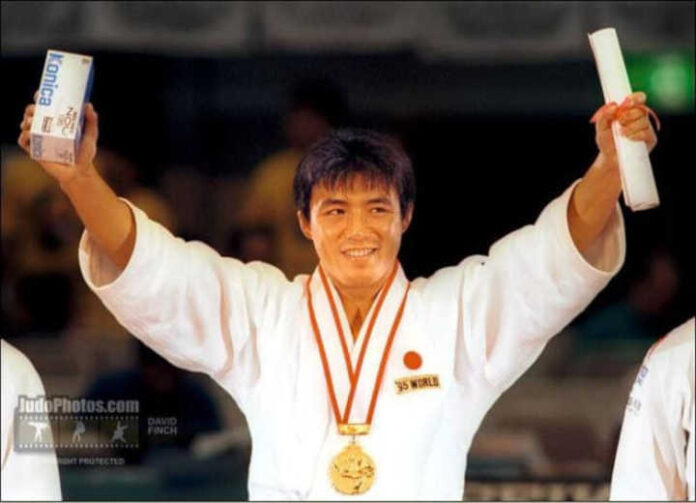
Koga briefly retired from competitive judo after winning gold at the Olympics, but he made a comeback with a gold medal at the 1995 World Judo Championships in Chiba, Japan.

However, he was not expected to do well in the 1996 Summer Olympics because of his previous Olympic experiences. He ended his third appearance at the Olympics with a silver medal in the -78 kg class.

Koga retired from the competition in 2000 and started coaching.

Koga’s Coaching Career

He was the head coach of Japan’s national women’s team from 2005 to 2008, and he assisted Ayumi Tanimoto in capturing a gold medal at the 2004 Athens Olympics.

He worked as a professor at International Pacific University in Okayama Prefecture from 2007 until 2014, when he became general director of the women’s judo team.

He worked hard to integrate a medical viewpoint into judo training. The reason for that because he was studying at the graduate school of Hirosaki University in Aomori Prefecture when he was 40 to obtain his medical degree.

He was also active in promoting judo and training future judokas. He founded the Koga Juku dojo in Kawasaki, which he wanted to use as a training center for other people. “I’d like to create a judoka who is respected by others,” Koga stated on numerous occasions.

Colorado Shooting, Suspect, Double NAGA Champion, and Victims Identified

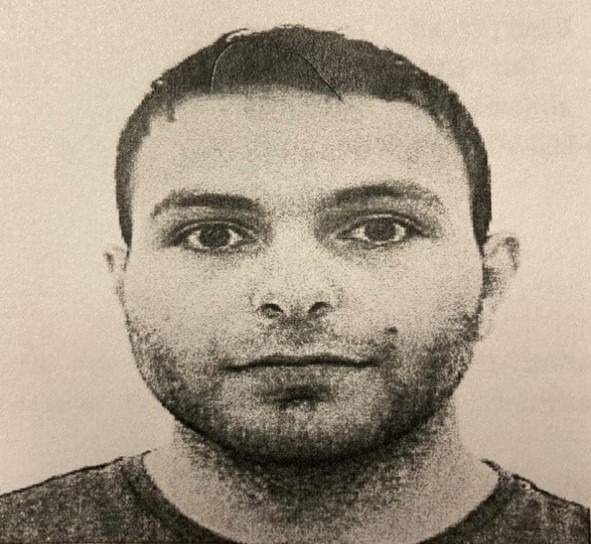
Ahmad Al Aliwi Alissa Naga colorado shooter

POLICE have identified a suspect in the murder of ten people at the supermarket in Colorado. It is about a 21-year-old named Ahmad Al Aliwi Alissa.

The suspect is from Arvada, Colorado and was in stable condition after sustaining a leg wound in a collision with officers who responded at the King Soopers point of sale in Boulder, about 45 miles northwest of Denver, on Monday afternoon.

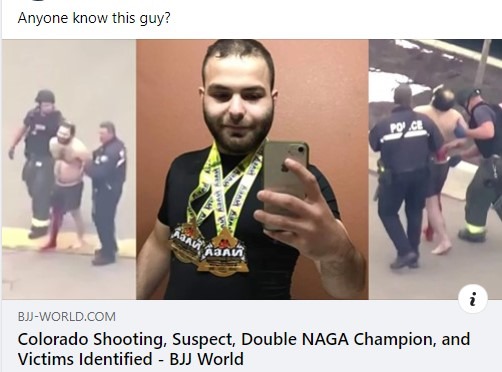
He’s also Brazilian Jiu-Jitsu practitioner and competitor in grappling tournaments. As we can see in the picture above he took a selfie after winning two NAGA gold medals.

Who is Ahmad Al Aliwi Alissa?

Ahmad Al Aliwi Alissa colorado shooter
Ahmad Al Aliwi Alissa (©Boulder Police Department)

According to Conan daily

Ahmad Al Aliwi Alissa lives in Arvada, Colorado, and he’s a resident of U.S. He was born in Syria and moved to the U.S. in 2002, according to his Facebook account. He is interested in computer science and martial arts like wrestling, Jiu-Jitsu and kickboxing.

He describes himself as a 138-pound grappler trying to make the world a better place. He is 13 years younger than his brother Ali Aliwi Alissa, who described him as very anti-social, paranoid, and mentally ill.

He has a sister who is 9 years older than him. She described him as nice and quiet. One day, while having lunch with his sister in a restaurant, according to Ali, he told her there were people in the parking lot looking for him but when she went out, there was no one.

On Facebook, he shared posts against gay marriage, abortion, and Donald Trump’s stance on immigration.

From March 2015 to May 2018, he attended Arvada West High School. In 2017, he was arrested and accused of cold-cocking a classmate at school. He allegedly punched the victim in the head. He claimed that weeks before the attack, the victim made fun of him and called him racial names.

As a high school student, he got bullied a lot and he would describe being chased, having someone behind him, and being looked for by someone, according to his brother Ali. (c)

He often posted about mixed martial arts and Jiu-Jitsu on his Facebook page and sometimes about Islam. In April 2016, he posted a photo of himself while wearing an Arvada West High School uniform while walking on a wrestling mat. (b) (c)

In 2018, he pleaded guilty to an assault charge in the case related to the classmate he allegedly attacked in 2017. In May 2018, he graduated from Arvada West High School.

In July 2019, he wrote on Facebook, “Yeah if these racist islamophobic people would stop hacking my phone and let me have a normal life I probably could.”

On March 22, 2021, he fired at the King Soopers grocery store in Boulder, Colorado, killing Denny Strong, 20, Neven Stanisic, 23, Rikki Olds, 25, Tralona Bartkowiak, 49, Suzanne Fountain, 59, Teri Leiker, 51, Eric Talley, 51, Kevin Mahoney, 61, Lynn Murray, 62, and Jody Waters, 65.

He was 21 years old when he was arrested on March 22, 2021. He was charged with 10 counts of first-degree murder. His Facebook page was deleted after his arrest.

John Danaher words on how Jiu-Jitsu affects people

Just like John Danaher said in his earlier interview for Newyorker.

“A knife can be used to make a sandwich; a knife can be used to save somebody’s life—as you’re struggling to get out of a car, you can cut the seatbelt and escape—a knife can be used to serve justice, it can be used for murder. It can be used for the greatest things, the most mundane things, and the most terrible things. It’s morally neutral. It’s only as good as its owner. Jujitsu is exactly the same. Jujitsu doesn’t make you good, it doesn’t make you bad. It will just reinforce what you already are.”

All victims of the Colorado shooting

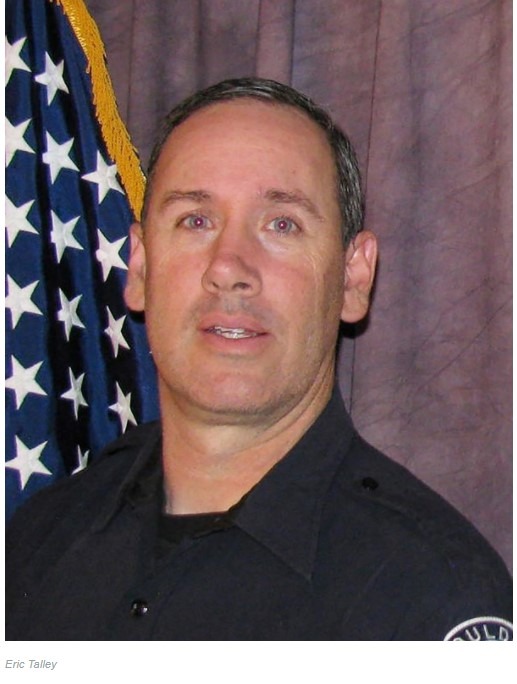
Authorities also identified the remaining nine victims, after it was previously announced that 51-year-old police officer Eric Talley was among those killed.

Eric Talley colorado shooting
Eric Talley


The names of all the victims have been published.
“The victims ranged in age from 20 to 65,” said local police chief Maris Herold.

The names of all the victims have been published:

Denny Strong (20), Neven Stanisic (23), Rikki Olds (25), Tralona Bartkowiak (49), Suzanne Fountain (59), Teri Leiker (51), Eric Talley (51), Kevin Mahoney (61), Lynn Murray (62) and Jody Waters (65).

One of the victims is a 25-year-old store employee.
The New York Post reported that one of the victims was 25-year-old supermarket employee Rikki Olds. This was confirmed to them by her grandmother Jeanette Olds.

“She loved her job, it probably killed her,” Jeanette said.

“She enjoyed working with people. She always looked after others and thought of others instead of herself,” added the grandmother, who had not seen her granddaughter for a long time due to the coronavirus pandemic. But Jeanette recently received a second dose of the vaccine and expected to see her granddaughter soon.

“She called me on Sunday to wish me a happy birthday and told me she loved me,” the devastated grandmother said.

Rikki Olds Colorado shooting
Rikki Olds


The suspect was wounded and is currently being treated at the hospital, and should be transferred to the county jail today, Boulder District Attorney Michael Dougherty said.

Investigators do not yet know why the attacker started firing inside the store, Dougherty added. He said the investigation was at an early stage, but that detectives believed the suspect was the only attacker.

A police source told the Associated Press that the attacker was armed with a light semi-automatic AR-15 rifle.

Hundreds of police officers arrived at the scene during the shooting on Monday, and terrified customers and employees fled the store in a panic.

“My heart hurts today,” Governor Jared Polis said, adding that not only have we lost ten lives, but this is real horror and terror for everyone.

The motive is still unknown

“It would be premature for us to draw any conclusions at this time,” said Michael Schneider, an agent in charge of the FBI’s field office in Denver, at an information meeting on the possible motive for the killings.

As the attacker began firing, terrified customers and employees began fleeing across the store, as numerous police teams began arriving at the scene, about three miles from the University of Colorado campus.

Videos from the scene broadcast by local television stations showed a bearded man in boxer shorts being handcuffed from a store and thrown into an ambulance. According to those recordings, it appears that the suspect had a bloody leg.

Scary scenes

Witnesses in Colorado described a chaotic and frightening scene in the store.

“It was pretty scary,” witness Ryan Borowski, 37, said. “The fastest firefighting exercise I’ve ever been to,” he added.

Sarah Moonshadow, 42, was at the box office with her adult son Nicholas when the shooting began.


Moonshadow said she tried to help the victim she saw lying on the sidewalk in front of the store, but her son dragged her away telling her, “We have to go.”

In Washington, White House Secretary Jen Psaki wrote on Twitter that President Joe Biden was aware of the shooting.

Congresswoman Nancy Pelosi, the Democratic leader of the House of Representatives, said the case reiterated the need for stricter gun laws, which stalled in Congress amid the Republican opposition.

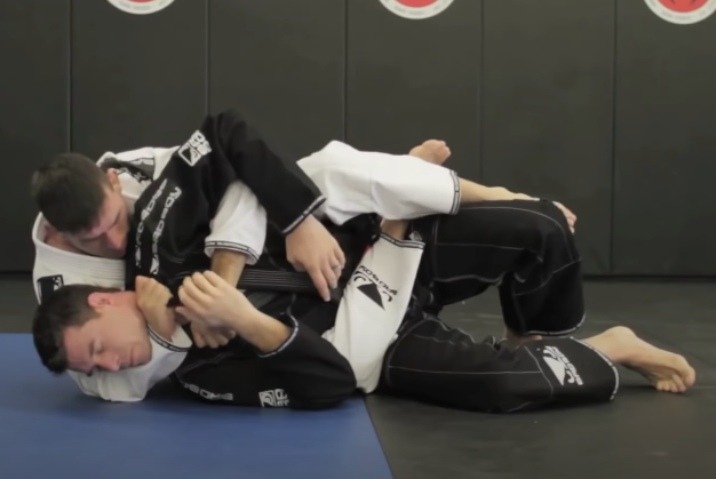
How To Beat The Dreaded Body Triangle Jiu-Jitsu Position

How To Beat The Dreaded Body Triangle Jiu-Jitsu Position

Ever had your back taken in BJJ? Sure you have, it is BJJ! It probably happened on your first day, when you got reacquainted with reality and how easy it is for someone the beat you up, basically. Well, having people behind you doesn’t get any easier as you go through the ranks. In fact, even then it can be a real sticky place to get out, especially if the person holding back control is good at it, which many people are. A great example of the level of annoyance back control can yield is the body triangle Jiu-Jitsu position. That one can be a nightmare to solve!  

The body triangle Jiu-Jitsu position is one of the best spots to be in – if you have someone’s back. The body triangle will offer you more control than you ever thought possible and it will help you annoy opponents to extreme levels. However, getting out of it is where you need to have some skill and a calm mind. otherwise, you’re in for the most horrible ride of your life, one that will most likely end in you tapping out to a choke.

The Versatility Body Triangle Jiu-Jitsu Position 

The body triangle is a very powerful position. In fact, let me re-phrase that. The triangle Jiu-Jitsu position is a very powerful position. Whether you do a triangle choke from the front, side, back, or inverted, a triangle around someone’s leg, to a body triangle, you are the person that is in pretty much complete control. The triangle configuration is one of the most powerful ones in BJJ, which is exactly why the body triangle is such a nightmare of position to be caught in.

The triangle position is so strong because of several mechanical advantages. For one, you get to use your legs against different body parts o your opponent. Even in the case of using them against their legs (think Honeyhole), you still have two legs against one. In other words, you use your strongest body parts to control a leg, an arm, the neck, or the waist of an opponent.

Moreover, you get to used not just a closed circuit to control a position, but you get to reinforce it. Danaher likes to call triangles “reinforced wedges” which is probably the best description. It also shows why it can be so hard to break out of one – the strongest body parts are configured in the strongest possible configuration.

That, and the inescapable fact that when you’re doing the body triangle Jiu-Jitsu position, you are behind someone. That, in combination with the above fact, means that a body triangle is not a spot you want to be stuck in. However, as is the case in BJJ, there is always a way out!

Vody treiangle Jiu-jitsu escapes

What You Need To Know

In terms of the body triangle, everything you need to know was already covered above. However, when it comes to escaping, there is also a sequence in which you need to do things to make sure that you do not just get out of the body triangle Jiu-Jitsu position, but also not get choked out n the process.

Before we look at the actual mechanics of escaping the body triangle, let’s look at the tactics behind back escapes in general. Pun intended. The way to approach escapes from the back has a two-step process that has to be down in sequence if you are to get out and not tap. Whether it is a body triangle, hooks, twister hooks, lockdown, or whatever, the sequence of escaping the back remains the same – first defend that choke, then beat the legs.

Winning the grip fighting game when you’ve already been caught in the body triangle is an absolute priority. Unless you’re able to stop a choke from taking place, looking for a way out of the boy triangle is not going to be possible.

That said, when you are certain you can’t get choked out, you should definitely focus on beating the bottom leg, or bottom hook. If you truly want to get out of the back, beating the bottom hook, joint by joint from the ankle towards the hip is your best bet. That is precisely why the body triangle is so devastating – it protects this bottom hook better than many other back control variations.

How To Beat The Body Triangle Jiu-Jitsu Position 

First of all, you need to remember to stay relaxed when you’re caught in any bad spot. Out of them all, the body triangle Jiu-Jitsu position is the worst one to panic in, given that any tension means you feel the pressure of the triangle configuration a lot more. Once you’re relaxed, simply win the grip fight and look to beat the body triangle. Beating the triangle, though, does not always involve opening it before you get out. On the contrary.

Getting out of a body triangle involves you turning towards the opponent. If they are not behind you, there is no power or advantage to the body triangle. In that sense, all you need to focus on is change the angle. With the triangle locked on top of your hips, your goal is to turn the hips towards the opponent, and not towards the ground. A simple hip sitch will get you there, as long as you are careful not to give away control over the knee of your top leg. The moment you turn enough so that the triangle configuration is no more, you’ll have no problem getting out. Just be conscious of mount transitions.

The one thing that is a weak point of the body triangle is where this locked. When locked on top, it is powerful, but if the lock ends up on the bottom, the person escaping can use it to their advantage. That just means that when you’re stuck really deep and can’t switch the angle, positioning the lock on the bottom will allow you to actually get a footlock counter. All it takes is extending your hips and pulling on the knee. If the person decides to unlock it, you simply use that fact to clear the bottom hook and escape. Foolproof and easy!

In Conclusion

Beating any triangle Jiu-Jitsu position is difficult. Beating the rear body triangle is next to impossible if you do not understand how it works, where its weaknesses are, and the sequence of steps that will guarantee your safety. Equipped with this knowledge, though, and combining counter-attacks (like the footlocke) with escapes at various spots in the body triangle means you have the best chances of getting out.

Gordon Ryan MMA Debut Set For ONE Champonship

Gordon Ryan MMA Debut Set For ONE Champonship

The long-awaited Gordon Ryan MMA Debut is finally on the horizon! One FC chairman Chatri Sityodtong announced on social media that Ryan has signed a professional contract with them that includes both MMA and grappling bouts. It is expected that “The King” will compete as a heavyweight under the One banner. The date for his official MMA debut, as well as his opponent, is currently not known.

Gordon Ryan, arguably the greatest BJJ competitor of all times, and probably the biggest superstar of our sport is finally going to test himself in the Mixed Martial Arts waters. “The king” is going to follow in the footsteps of Danaher Death Squad teammate Gary Tonon, who started his professional MMA career exactly two years ago, debuting for ONE Championship in March 2018. Tonon has so far stayed undefeated in the ONE cage.

ADCC 2019 winner Ryan is set to compete both in pro-MMA bouts and submission grappling matches under the One Championship banner. Currently, there is not much information available on the Gordon Ryan MMA debut.

No opponent or date has been set, and it is not clear whether his first appearance is going to be in MMA or submission grappling. The One CEO simply announced over social media that Gordon officially signed a contract with the company.

What is interesting is that Marcus “Buchecha” Almeida is also on the ONE FC roster, and is also a heavyweight. While it is not probably that the two will meet in the first Gordon Ryan MMA fight, it would certainly be fun to see them hit it off later on.

https://twitter.com/yodchatri/status/1373994327307812870

Until such time as Ryan has to fulfill his new obligation towards ONE championship, he is set to fight on the “Who Is Number One” in yet another grappling super fight. In fact, he is set to face Vagner Rocha in a30 minute submission-only match on March 26. His latest outing saw Ryan submit Roberto Jimenez at “Who’s Number One” before partaking in the now infamous Andre Galvao slap incident.

Making Sense Of The Most Important Jiu-Jitsu Positions

Making Sense Of The Most Important Jiu-Jitsu Positions

What are the most important Jiu-Jitsu positions? The answer is much simpler than you think. While it will involve every position you know (and perhaps don’t know of) it is still going to be exceedingly simple. The most important positions in BJJ are top and bottom. As long as you are able to organize everything you do around those two aspects of positioning relative to the ground, you will be able to make sense of all of them. Read on. 

Looking at Jiu-Jitsu positions through the prism of top and bottom seems like an oversimplification. However, the way to understand BJJ is by simplifying it, not trying to overcomplicate things as people usually do. So, while you are probably aware of all the usual and perhaps a few of the unusual BJJ positions, understanding how it all works in the grand scheme of things will not require you to learn the mechanical nuances of every variation of every position – that I si impossible. instead, you need a “string theory” of BJJ, something that explains how everything works in order to be able to organize all those fancy guards, passes, pit stops, etc. That is exactly what we will provide for you in this article.

The Evolution Of Jiu-Jitsu Positions

Back in the day, when Brazilian Jiu-Jitsu was simpler, one of the reasons for that was that were much fewer positions than we have today. Back then, people had a closed guard, a simple half guard, and perhaps a version of the open guard that they didn’t;’t really perceive as a guard. Side control, mount, and back were the positions you were hunting for, and the entire game revolved around that. That said, the principle of top and bottom still applied back then.

The first evolution of Jiu-Jitsu was through the guard. Apart from the half guard, which was an invocation forced via an injury, all the open guards happened as part of much-needed experimentation. It was simple – people started standing up and destroying the closed guard, and the bottom player had to evolve. Enter spider guard, De la Riva, the tripod guard, and other early open guards.

In turn, this led to the evolution of more passing systems and scenarios to try and counteract the new bottom positions that evolved. However, when people saw they could get away with pretty much everything while experimenting, the door was now open. Positions like the turtle, that were deemed horrible to be in, now turned into guards, and the ways in which you can hold someone from the top changed to accommodate the growing number of escape and counters. With leg locks, and athleticism starting to play a huge role, the entire game has changed, and we have never had more Jiu-Jitsu positions than we do today. And still, they all boil down to being either a top or bottom position.

Making Everything Simple Again

Chris Haueter has it right. It is not the first time I’ve written about this, but boy, does it all make sense. His take on things is simple – be the person on top. Why? Because it is easier to be there, the bottom person has to work to achieve anything, and all the points are awarded to folks that are on top. Easy.

There are, of course, finer points to all of this. When you’re up against someone’s guard, you are on top but haven’t earned any points yet. And still, you have the advantage. Why? Well, the bottom person will only get points if they end up on top (sweep). You will get points for passing the legs. You have the easier task. So, when you’re on top, as Haueter says, stay on top.

Conversely, when you are on the bottom, try and prevent the top person from passing your legs (a guard you shall not pass). Then, aim to get back up. As fun as doing guards and some other bottom Jiu-Jitsu positions might be, points-wise you would like to be on top. the reason for that, and for the points awarded to each top portion is because of potential damage you can cause from there. With BJJ originally an art that was used in Vale Tudo and NHB fights, positions where you can trike and not get hit were considered the most desirable, for obvious reasons. The points awarded to this day have their roots in those same rulesets, and it makes a lot of sense.

Key Top Positions

Let’s take a look at a few of the key top Jiu-Jitsu positions, and what you need to know about each and every one of them. Basically, the common thing that is true for all of them is that you can’t hold any of them for an indefinite amount of time. Not possible, forget about it. People will have the chance to escape, no matter how good you are at holding a position. All they need is time.

The second thing to keep in mind is the actual “string theory” of Brazilian Jiu-Jitsu. What are you fighting for from those e top positions? Well, since you’re on top and you have the advantage, as we saw earlier, your task is simple – remain in the inside space of an opponent that you have already conquered when achieving your point awarding top position. What is the inside space? Everything in between the shoulder and the knees of your opponent is the inside space you are hunting for.

Side Control
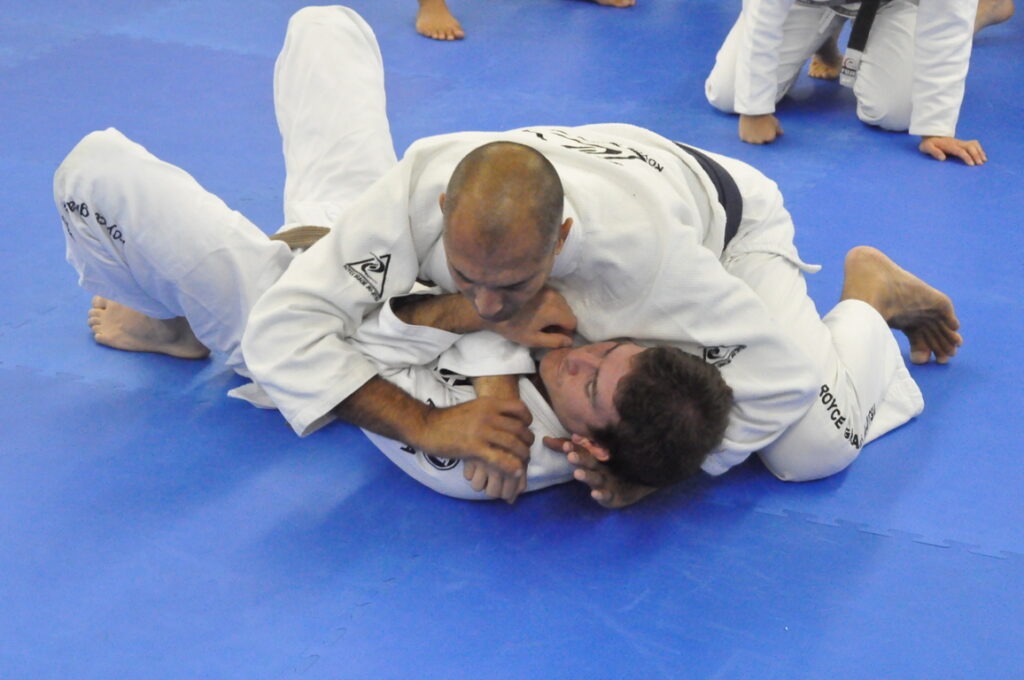
Jiu-Jitsu Positions side controlSide control is the one top position that won’t give you points. Many times you’ll get points for ending up there, but that’s just because you’ve passed the legs (guard) of an opponent. The reason for this is that it doesn’t offer too much control, but it is a great position to help you access more controlling top positions.

Positioning: There are plenty of different side control variations (100 kilos, wrestling side control, twister side control, Kesa Gatame, etc..). In any of them, the goal is the same – keep your chest in the inside space of the opponent, and try to keep the opponent’s elbows open (away from their ribs). IF you can also turn their head to one side you’ll be in cruise control.

Mindset: When in side control, your way of thinking would be to progress. Use the position to gain even more control before you look for a submission. Any of the next top Jiu-Jitsu positions are awesome options, but if submission presents itself, you can go for it. Just make sure you don’t lose top position, or get drawn back to a guard.

Knee On Belly
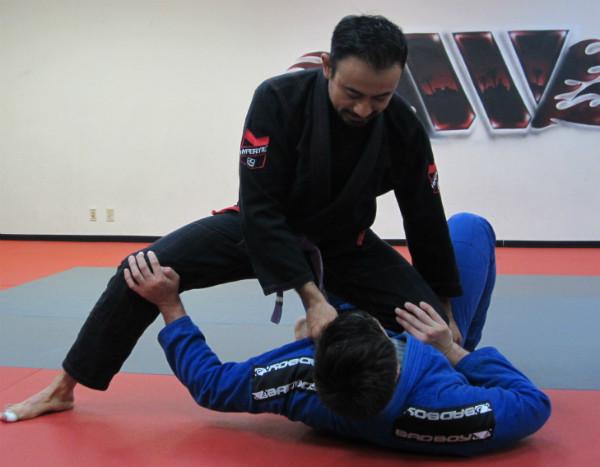
BJJ Knee On Belly ControlKnee on belly is the first of the top Jiu-Jitsu positions that will earn you points. It brings two points if you can stay in it for 3 seconds or longer.

Positioning: Your shin should go across the belly of an opponent. following the belt. The knee should protrude on the far side, and your foot should be hooked on the near side of the hip. Neither should be touching the ground. The other leg is posted for balance, and you would aim to keep your head over the nearside shoulder. Finally, try and resist holding your opponent with your grips – instead, have your arms free to post and adjust.

Mindset: Go to mount. That should be the first task you have in mind if you’re in the knee on belly and have collected your points for it. Alternatively, if you can hit an armbar or one of the nasty lapel chokes available, you could go for them as they keep you in top position. So do leg locks, to a certain extent, but only if you are comfortable with them.

Mount
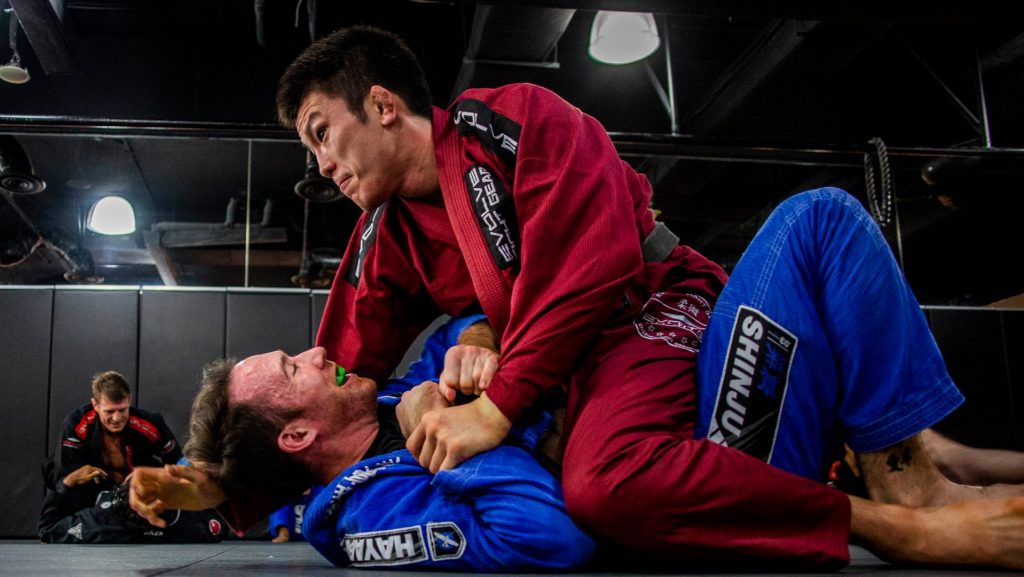
BJJ Mount MaintenenceThe mount is often referred to as the king of positions in BJJ. It is one of the two positions that will learn you the most points (4). If you are in the mount, you can stay for as long as possible or go for the back. There are no negative points for stalling because the mount is at the top of the mountain – no other positions are left to conquer.

Positioning: The mount also has several variations You can be in low, medium, high and S-mount for the most part. There’s also a technical mount, and “vegan” mount for all the leg lockers out there. The positioning is simple – your hips are in the inside space of an opponent. IN fact, your entire body is in there, which is why this is one of the best Jiu-Jitsu positions you can get to. Submissions are readily available, especially in terms of arm locks and chokes.

Mindset: Submit. When you are in mount you want to stay there and finish. An alternative would be to go for the back, as the only other possible position of maximal control. Apart from that, however, you should try and not regress back to other positions that came before the mount.

Back Control
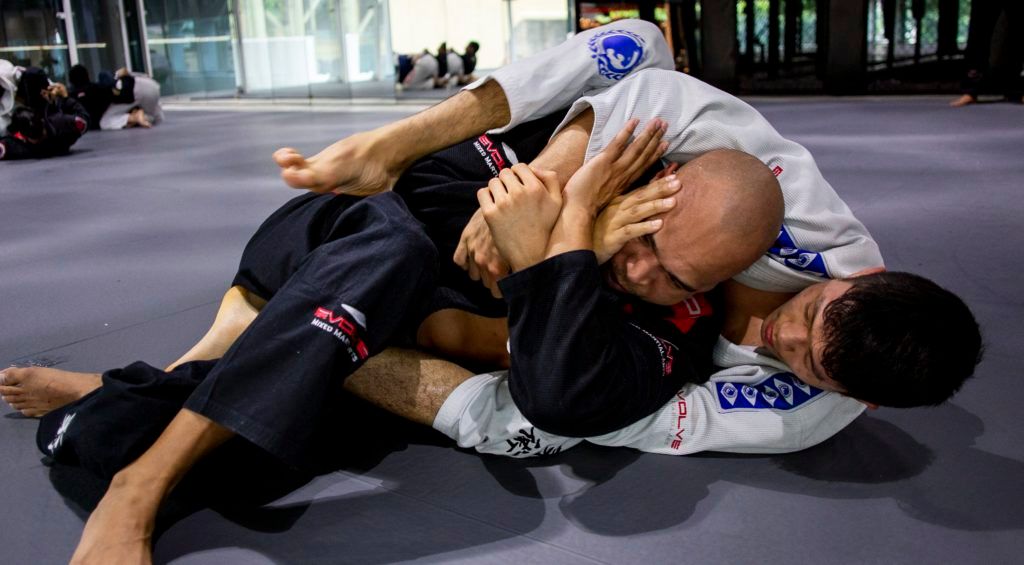
Jiu-Jitsu Positions back controlThe back is universally thought to be the best spot to be in BJJ. It places you behind your opponent, provides inside space control, and plenty of highly reliable submission options. Moreover it will bring you 4 points, similarly to mount, and there are no negative points for stalling. It is basically mount done from behind.

Positioning: The back position also has several variations, mostly in terms of leg positioning. You can use hooks, body triangles, post rear mount etc. The well-known seatbelt grip provides upper body control, with one arm over the shoulder and the other under the op[posite side armpit. In any case, the goal is to control the hips and shoulders from rotating towards you.

Mindset: Submit, preferably via choke. You can go direct or use the collars or lapels. Armlocks is also a possibility but will require adjusting your position. There are no next position to think about transitioning into, but you could consider some in-between Jiu-Jitsu positions to help you out in submitting.

A Word On Passing
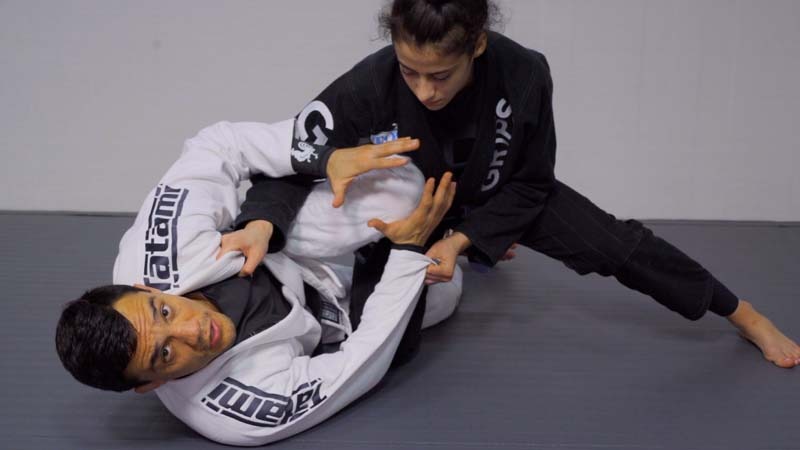
BJJ theory for open gaurdsHow do you pass guard? You don’t. You can pass the legs, not the guard. The reason is simple – the guard is meant to provide a sweep or submission, but only after it keeps you in place. There’s no way to pass it unless you break its structure first. In terms of inside space, you first need to get your opponent’s hooks and grips out of yours and then insert as many body parts as you can in theirs. That will work against any guard.

Positioning: Passing is not easy to portray universally, given the number of different guard positions. And yet, there are ground rules. Keep your elbows close to your body, keep your head over your butt and try to keep your feet and hips in a straight line. From there on, you can proceed to break a guard’s structure and conquer inside space.

Mindset: Break the guard. In terms of Jiu-Jitsu positions, nothing provides more variety than guards. Unless you break their structure, you won’t be able to pass the legs and conquer inside space. The Holy thing to consider is not fighting against a guard but rather against legs.

Understanding Bottom Jiu-Jitsu Positions

The bottom positions, AKA guards, offer lots of options and lots of fun. The guard is the one thing that other grappling martial arts did not have before BJJ came along. To be honest, they still don’t as the guard remains a position-specific to Jiu-Jitsu. That said, the guard actually doesn’t provide any points, unless you use it to get the top position or hit a submission that ends the match then and there.

The Closed Guard
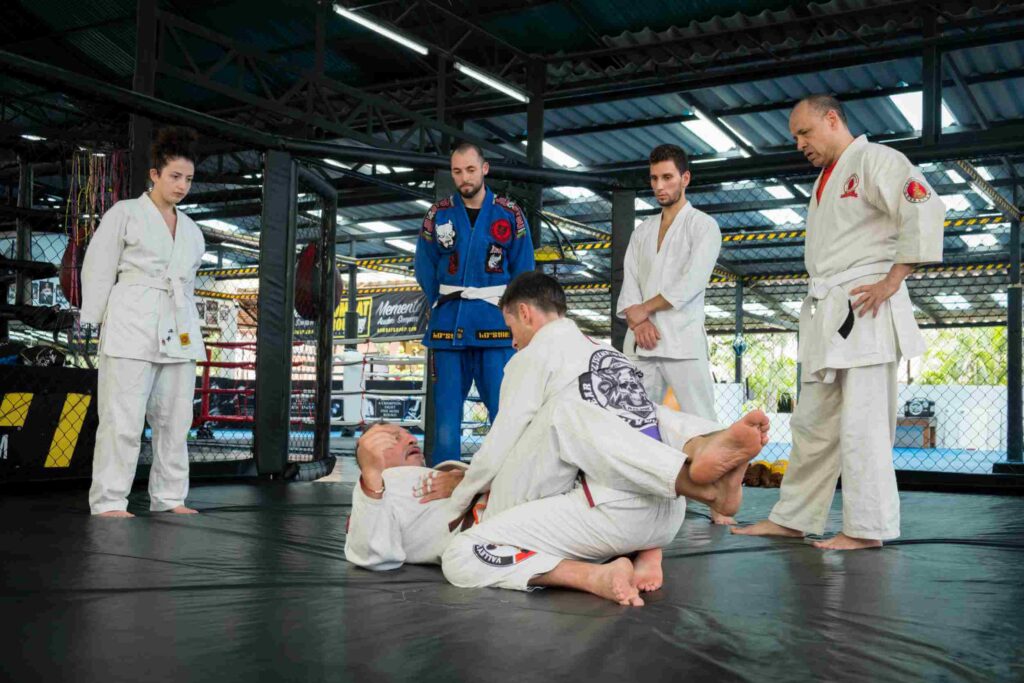
Closed guard Jiu-Jitsu PositionsThe most iconic of Jiu-Jitsu positions. It was the position that launched Jiu-Jitsu and has remained a big part of it despite all the experimentation and evolution. In fact, there are many different closed guard variations now that provide variety from the position and help deal with some of the modern passing systems.

Positioning: You have inside space, retain it. As long as you keep your legs in the inside space, there’s no way for the top person to pass. Controlling the arms via your grips will further provide safety and allow you to get their posture broken, and start attacking.

Mindset: Slap on submission and use it to get to the top. If you think this way, you attack with a double attack from the get-go. In other words, you’ll either finish a triangle choke or end up in the mount with the possibility of a triangle still an option. BJJ 101.

Half Guard
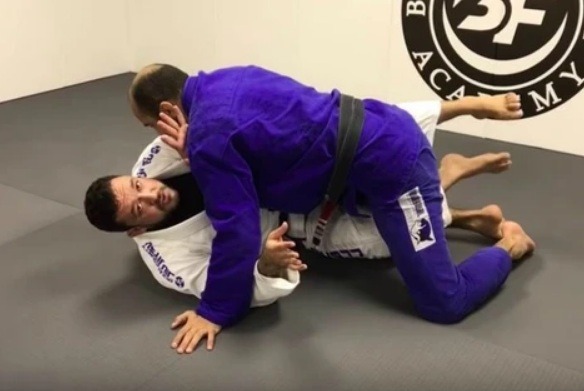
Tom DeBlass Instructional DVD Half Guard Domination 2.0 CoverThe half guard is pretty much a closed guard, just done around one leg of an opponent instead of around the waist. The thing with the half guard is that you can only play if you can protect the inside space – which means you have to be on your side. The moment you lie down with your back on the ground, half guard disappears.

Positioning: The most utilized of Jiu-Jitsu positions is also the most misunderstood one. it is not about the leg you are holding. You can have a knee shield, butterfly hook, z-guard, deep half guard, etc. The goal is staying on your side and using the top arm and leg to keep your inside space yours. Keep your elbows to yourself, and b be prepared to battle for different top leg configurations.

Mindset: Make them overcommit. No need to reach, people need to pass your legs. The moment they try, as long as you’ve set up, you can use their movement to sweep them depending on which side of the centerline their head is positioned. Conversely, you can submit them based on whether you have their upper or lower body in reach. The key here is patience.

Open Guards

Jiu-Jitsu open guards The biggest category of Jiu-Jitsu positions. There’s no way to go over them, but we can certainly go over some foundational principles. Basically, when you are in guard, you want to stay in guard until you are ready to get on top or submit. Rushing for either will mean you get passed.

Positioning: Have the right hooks. Every open guard has a passive hook (the leg that is keeping you attached to your opponent) and an active hook (the leg that is free and roaming). The first one is there to protect your inside space, the second one should conquer the opponent’s side space.

Mindset: Don’t let them pass. It seems defensive, but if people can pass you, then you can’t play guard. So, first, stay on guard, then think about attacking with double attacks.

Turtle

The turtle is one of the most interesting Jiu-Jitsu positions Until such time that you start to play it you won’t understand the power it has. It is the ultimate bottom p[position that will protect you from everything while offering more ways of getting on top than most guards.

Positioning: There are different ways to position yourself in the turtle, but one that really pays dividends is to keep your elbows in your hips, hands in front of the chin, forehead on the ground and feet sealed to the ground. The feet should be the first thing to change when you switch to offense and look to stand up, or switch to guard.

Mindset: Patience. You are impenetrable, but it won’t last forever. Timing is key, and you need to use your chance when the opponent is moving to get out of the turtle and get a top position of your own. Or a submission if you are crafty enough.

“In Between” Positions

These are curious and interesting and do have their place. However, these are also the Jiu-Jitsu positions that you need to understand quite deeply in order to play. Basically, you need to know not just how they work, but how they tie into the top and bottom positions that eventually lead to getting points or winning opportunities. Let’s go over some of the more common ones.

Ashi Garami
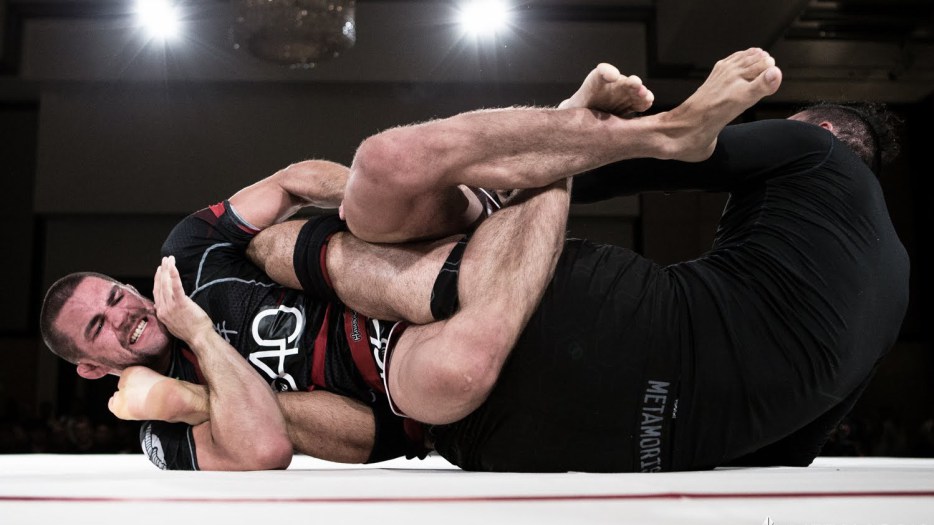
Leg Locker Ashi Garami entriesYou can’t really do Jiu-Jitsu nowadays without considering Ashi Garami positions for your game. Leg locks are something that is not unusual, and you need to know the positions that allow you to hunt for high-level leg locks like heel hooks. However, Ashi Garami positions will also help you to go into other useful Jiu-Jitsu positions, top and/or bottom.

Positioning: The key with an Ashi Garami is controlling the hips. You need both of the opponent’s hips to be lower than yours, in order to even think about controlling the position. The knee line comes next, with their knee-deep in between the line that your knees make. Finally, you have control of both legs, mostly by using your grips, taking away the opponent’s chances of defense.

Mindset: Finish with a leg lock, preferably heel hook. If that fails, though, be sure you can either transition into a pass, to a sweep that will help you end up directly in a scoring top position.

The Truck
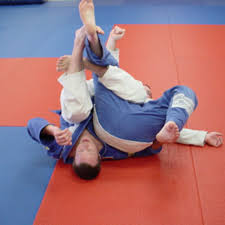
The truck BJJ positionThis position is something that is out of the 10th PLanet Jiu-Jitsu system, but it is a really huge one to know and understand. The truck is pretty much a stop in between back control and many other positions, ranging from passes to guards. AS such, it won’t score you points but offers a lot of attacking options.

Positioning: You want to have your legs entangled around one of the opponent’s legs, while making sure their hips are resting on your belly. You control the other leg with your grips and you can use the position to submit with lots of leg locks, or transition towards the back or into a top position.

Mindset: Stay in the position to try and finish, most likely with a calf slicer. However, if this is not an option, go for the back first, before resorting to using the Turck to get back to top Jiu-JItsu positions.

Front Headlock 
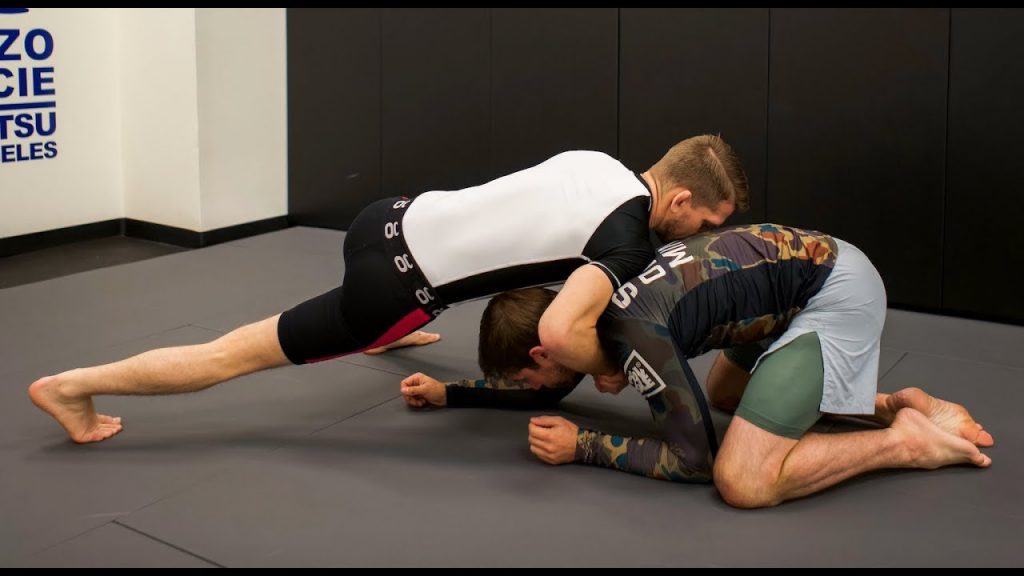
Front Headlock TakedownThe front headlock position is a sneaky one. It seems like it is a top position, but you can still play it from guards, making it quite a universal one. The front headlock will work from pretty much everywhere as long as you understand how you control the entire body by manipulating a very small part of the opponent’s inside space.

Positioning: Grips are everything. The front headlock is one of those Jiu-Jitsu positions with plenty of varieties and options, but it all boils down to the chin strap grip. Once you have the chin strap, your other arm should control the elbow of one arm, which is how you control the inside space, albeit indirectly. Without these two aspects of control, there’s no front headlock, regardless if you’re standing, versus a turtle or on the bottom playing guard.

Mindset: End up on top. Whatever you might think you can do from the front headlock, your primary goal should be to end up in a scoring top position. If you can do it while slapping on a choke, (which you can), then it is even better. However, submissions come second here at least if you want to get the most out of the position.

Submissions

Dogbar BJj Kneebar SubmissionDo you consider submissions to be Jiu-Jitsu positions as well? You should! Why not use an armbar, or an Americana, or a Darce choke to control an opponent until you can set up better for either that submission finish, another submission finish, or even a transition into a scoring position? It is not that unconventional – just think of the Kimura trap system!

Positioning: Any submission offers you control as long as you establish two things – tension and torsion. If you put the body part you are attacking under tension and you also twist it ever so slightly, you’ll be able to stay there for much longer than usual. Then you can think about finishing or consider follow-up options.

Mindset: Not going for a finish might be strange, but looking for tension and torsion will actually help you finish more submissions. Consider staying in a sub longer. So many more options will open up.

Wrapping Up

Jiu-Jitsu positions do not have to be complicated just because there are so many of them. A simple way to do so is to organize them in a simple system that makes sense. “Top and bottom” is as simple as things get. As long as you are aware of what the “string theory” or task of every position is, you’ll have no trouble achieving any gaol from any given position in BJJ.

Danaher’s Uke Placido Santos Seriously Injured From Estima Lock

Placido Santos Seriously Injured From Estima Lock

Placido Santos, the man who took an enormous amount of torture as John Danhaher’s uke in many of his instructional DVDs, has suffered a really serious injury. The brown belt competed in an event and ended up reaching the finals, only to get his leg torn in two by a very powerful Estima lock applied by a Tom DeBlass brown belt.

The Brutality Of The Estima Lock

In case you do not know what the Estima lock is, it is one of the most devastating leg locks in Brazilian Jiu-Jitsu. It used to be legal at all belt levels until a few years ago, even though it is by mechanics a toe hold. The move is one of the best inventions of the Estima brothers who are known to come up with brutally effective submission holds.

The Estima Lock is a toe hold that you apply with the help of your torso and your arms, which is part of the reason why the move is so powerful. Basically, it is a trap submission, one which is extremely easy to set up. It works best when done from the top against guards which makes it even more dangerous and unexpected.

To set up the lock, all you need is an opponent’s foot on your belly, like for example from half guard. The moment the side of the foot is at your belt level, all you need to do is slap on a rear-naked choke on the leg. Everything becomes extremely tight right then and there, but if you apply a bit of torque and squeeze, then you end up with a very brutal finish that can literally tear a foot off. Unfortunately, that is what happened to everyone’s favorite uke, Placido Santos.

The Estima brothers came up with the move by accident when preparing for the 2009 ADCC, which Braulio ended up winning, mostly due to that particular lock.

What Happened To Placido Santos? 

So, what exactly happened to Placido Santos?  Well, he took place in the Enigma Jiu-Jitsu Academy invitational tournament yesterday. The event featured a host of awesome up and coming grapplers who took part in a host of different matches, ranging from combat Jiu-Jitsu to sub-only EBI rules 15-minute matches. Placido was one of the favorites and managed to reach the finals. In the final match, he squared against Calvin Tacey, a brown belt under Tom DeBlass, and apparently, a very efficient leg locker.

As you can see from the video below, Placido ended up getting caught extremely fast, and barely had time to tap. that is exactly why the Estima Lock is so dangerous – when done right, it comes on immediately, and whoever is on the receiving end barely has time to tap. Calvin did everything perfectly and the result was gruesome as Placido’s foot pretty much tore off from the rest of his leg for a split second. Moreover, it seems like he also sustained some damage to the shinbone in the process as well.

Later on, Placido Santos wrote on his Instagram accountSometimes you win, sometimes you lose….and sometimes you lose while getting your foot torn off. The latter was my unfortunate situation tonight.”

Tom DeBlass, Calvin’s coach also sounded off, saying  “The Estima lock is a lock that must be applied quickly and aggressively, as the knee line is not controlled. If it is applied gently, then the opponent will simply invert out of it.” He also offered Placido comfort, writing “Heal fast champ, just a bump in the road.”

Any Hope Of Defending The Estima Lock?

Basically, like Tom DeBlass says, the Estima Lock is not too difficult to get out of because there is no actual control over the hip and the knee line. That makes it possible to sneak out of, but only if the person doing it doesn’t get it correct straight away. That means that defense is basically a race, one in which the person hunting the hold has all the advantage.

To be honest, inversions seem to work against Estima Locks, or at least they did. As the move became popular, Victor Estima elaborated on it, solving most of the common defenses and making it a very high-percentage submission. Currently, under IBJJF rules, the hold is only legal for brown and black belts.

Final Thoughts

We certainly hope Placido Santos makes a quick recovery. The extent of his injury is currently unknown, but it doesn’t seem like it was one of those you just shake off. It was a legit submission though, and an impressive finish against a very high-level grappler. Keep an eye out for Calvin Tacey though!

The Best 15 BJJ White Belt Tips

The Best 15 BJJ White Belt Tips

Being a white belt in BJJ is unlike being a white belt in any other martial art. The reason for that is simple – if you train BJJ, you’ll able a white belt for about two years. In traditional martial arts, you could get a brown belt in the same amount of time. That just demonstrates how long a time we spend at white belt. It also means that not all white belts in BJJ are the same, and not all of them will benefit from the same BJJ white belt tips. 

The one thing that all white belts have in common, from those that are on their first day, to those that have been training for a couple of years, is getting to blue belt. I’ve covered the reason for that many times before. it si simple – nobody wants to be a beginner. That is precisely why the blue belt is the most coveted belt in Brazilian Jiu-Jitsu. That said, white belts with different training timelines usually have different questions and goals aside from the blue belt. That simply means that there’s no way to give all white belt tips that will universally work for them. It is also why I organized this article in a way that will offer BJJ white belt tips to complete newbies and those nearing blue belt alike.

Not All BJJ White Belts Are The Same

The one thing many people fail to grasp is that given the length of time people spend at a given belt level in BJJ, you can’t really consider the same things apply to everyone within a rank. While we oftentimes say that the experience gap between someone about to be promoted and someone brand new might as well be a gap between a white and a black belt, we seem to forget about it immediately when it comes to giving people of certain rank advice. This is especially true for white belts.

First of all, it is the coaches’ task to be aware of this and not try and give out universal advice, especially not to white belts. Those white belts that have been training for years and those brand new ones shouldn’t even be in the same training group, provided that is a possibility.

The mind of a “seasoned” white belt works much differently than that of a newbie. hWHIle survival is still in the focus, there’s a much clearer picture of what is going on. On the other side, a grappler with a few months of experience is still lost in the complexity of it all and as such, requires different guidelines.

So, just like not all white bels are the same, all BJJ white belt tips should not be the same as well.

BJJ White Belt Tips For Newbies

Let’s start with some of the most important things a brand new Jiu-Jitsu white belt should have in mind. That said, the selection f tips here s what I share with my white belts in my academy, and these tips have been proven to yield results.

Consistency

The most important thing for people starting to train is staying consistent with their training. For a newbie white belt, nothing beats consistency. .Begin thrown in a new environment is hard enough when everyone in the environment is not trying to kill,. In BJJ, people are not just trying to but can do whatever they want with you, and there’s so much information in classes that it is paralyzing. So, the more consistent people are with their training, the faster they’ll be able to refer to the second portion of BJJ whit belt tips in these article.

Ask Questions

Another huge one that has seen people get through white belt level quicker than any other tip. The simple act of asking why something works the way it is shown will not only make people better when they get the answer but also gets them thinking about things early.

Roll With Different People

A huge thing for me white belts that they need to overcome is the fear of rolling. It is normal to be afraid to go sparring with anyone when you don’t have any tools to use in such a situation. That, however, just means that you’ll get experience when you roll with different people as opposed to just rolling with a few of your peers. Seek out everyone in the gym and roll with every belt level on regular basis. This is one of the most important early BJJ white belt tips I can give you.

Have Fun

Having fun as a white beltWhile this is a piece of advice that goes for everyone, white belts in particular need to stop taking everything so seriously. Just mess around, have fun, and enjoy training. If you are waiting to go to training and learn something in a single BJJ training session, you’re in for a  disappointment/. At that level it is all about the experience, having fun, and perhaps trying to understand the general chaos of things in the BJJ  world.
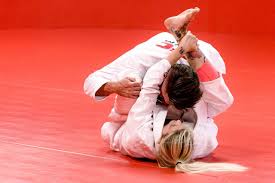
Think About Competing

This early in your BjJ career, going out to compete would probably be a bad idea. You simply need a bit more idea of what is happening in a BJ exchange to be able to grasp the demand of a match. However, thinking about competing is a great way of getting a clear direction in your early day,s and eliminating a lot of the clutter.

Trust The Instructors

I know it doesn’t make sense. I also know you probably think you should be doing other stuff, more exciting stuff. However, if you do what your instructor shows you, and stick to their system early on in your BJJ Journey, you’ll advance much faster than if you’re the one determining what’s the best thing to learn as a white belt.

Tips For Experienced White Belts

More experienced white belts, on the other hand. have slightly different things that they should focus on. Conversely, the BJJ white felt tips you’d give them should not be the same you give to someone that just walked through the doors of the gym. You wouldn’t give them both the same details to a move, so why think that you should guide them the same through the maze that is Jiu-Jitsu?

Don’t Try To Avoid Mistakes

The first thing you will understand after spending a year or so in BJJ is how many mistakes you are making. Naturally, your first instinct will be to stop making any. First of all, you can’t. Second of all, you shouldn’t aim to stop making mistakes in BJJ. In fact, embrace them. Mistakes are one of the best learning tools in our sport. Make sure you make the most of the opportunity to learn both off of yours and those your opponents make.

Have A Purpose When Rolling

WHite belt tips for newbiesWhile most people claim they have a purpose when rolling, when you ask them what it is, you get a very broad answer. Control or submission are great examples. One of the best BJJ white belt tips for experienced white belts is to have precise purposes when rolling. For example, trying to figure out every time a sweep happens and also recognize every opportunity for one. Understanding why that purple belt is always heading in what seems like a bad spot and ending up with a submission. Those kinds of things will make a world of difference.
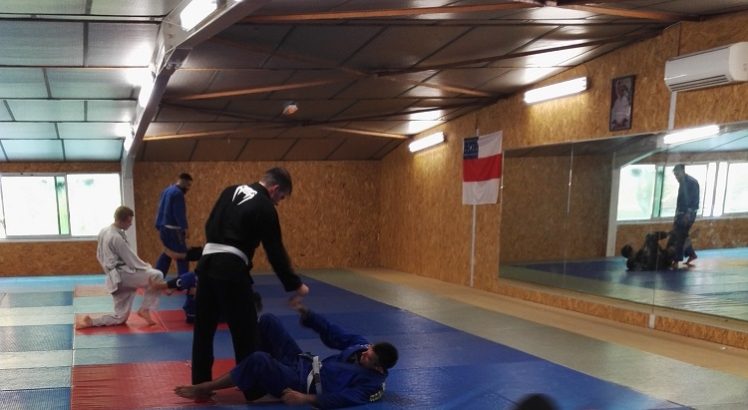
Figuring Out When To Tap

Most people will say tap as early as often. That is perfectly fine in your early white belt days – it will keep you safe. However, later on, if you tap the moment someone gets a hand around your neck, or gets into the spiderweb position, you’re not really accomplishing anything, you’re not learning how to defend, and you’re also denying your partner the chance to learn how to get actual submissions. Before you become a blue belt, you need to figure out taps and how to get the most out of each and every one of them.

Warm-Up! 

I guess this es piece of advice is more at home for purple belts than among BJJ white belt tips. but still – don’t skip warm-ups! While most seasoned white belts won’t skip the warm-ups intentionally, they’ll slack through them.

Drills

The one thing you will have a lot of time to hate on later on in BJJ are drills. As a white belt though, they are the one thing that will help you prgoress extremely fast. The best part is that at that point, you don’t have to come up with how to do them – just listen to instructors of more experienced training partners.

Try Competing

The emphasis her iso, not the word “try”. Going into a competition preparing like you’re going to fight for a UFC belt is a great way to start hating competitions as early as a white belt. This is basically building upon the have fun and think about competition BJJ white belt tips. Simply go and give it a try. One tournament regardless of the outcome is worth as much as a year of classes in the gym.

Set Goals

Your goals as a white belt will be humble, even if you’re just weeks removed from becoming a purple belt. However, it is the first time you should set some, and with that, do the first step towards developing a game for yourself. By goals, I mean things like trying to do one move more than others, whether it is a pass, sweep submission, or takedown. Even if ti is a defensive move or escape, you need to make it a priority. If you start setting goals at this level, you’ll have no trouble keeping up with setting and reaching multiple of them further on.

Don’t Rush

This has to do mostly with techniques. I understand the flying submissions and spinning leg lock entries are what the “cool kids do”, but at this point in your journey, you should still figure out the basics. If you can’t re-guard from the turtle, pass the legs, sweep or be able to submit people with at least one move, you should not be looking at the fancy stuff. It just so happens, this is on the BJJ white belt tips people chose to ignore the most.

Stop Thinking About The Blue Belt

BJJ White Belt Tips for xpereinced whtie beltsThe hardest thing to do, I know. In fact, it is so hard I will only ask you to do it sporadically. How? SImple. Every couple of months set a goal not to think about the blue belt that you already feel is coming. Simply enjoy BJJ, look at your goals, roll with a purpose, etc. Do anything but think about promotion. it is imperative to learn who to do this at white belt, because you will need it later on. A lot.

In Conclusion

BJJ white belt tips need to evolve as the game does. While it may have been easy to just tell people to suck it up and roll a decade ago, today we have a different approach to BJJ. the reason is simple – the sport has evolved and so must our approaches. One of those new things is considering the gap within a given rank and treating people in that rank accordingly so that we can help them grow as fast as possible.

A Proven Wrong Way To Do Leg Lock BJJ Escapes

A Proven Wrong Way To Do Leg Lock BJJ Escapes

Did you see that infamous Gordon Ryan slap? Of course, you did, there’s nobody in the grappling world that hasn’t seen it. While that might have been the most viral moment of the latest Who’s Number One grappling event, it was not the only thing worth noticing. the vent itself was a huge success, although not for the Altos gym in particular. In the main event of the night, we saw Craig Jones beat another big name in BJJ competition circles in Ronaldo Junior. That raises the question once again about leg lock BJJ escapes and what most people are doing wrong, even at the highest levels.

Leg Lock BJJ Escapes are not an easy thing to do against people that are really good at leg locks. The people that might have a chance of pulling off successful escapes against leg lock aficionados are the people that do leg locks themselves. However, a lot of people are still shying away from leg locks. This means that people are trying to figure out leg lock defense without gathering inside knowledge on leg locks. It can work, but unless grapplers understand leg locks, it doesn’t matter how many world titles they have – they’ll do them escapes wrong and get caught over and over again. Just like Ronaldo did against Craig.

Dealing With Leg Locks In BJJ – The Evidence

The latest example of Ronaldo Junior vs Craig Jones is just one more in a series of examples of high-level grapplers completely underestimating leg locks. With Craig Jones, you pretty much know what is going to happen – he’ll sit to guard and go for your legs. Not taking that seriously and thinking about defending things both early and late is a great way of ensuring you tap to a leg lock. I mean, you would train back escapes if having to compete against Marcelo Garcia, or worm guard passes if grappling Keenan, right? Why not take leg locks just as seriously?

While there are many ways to pull off leg lock BJJ escapes, there are also many ways in which you should not try and get out of lower body submissions. What perplexes me the most, is that most people, especially high-level athletes, tend to gravitate to these proven wrong methods when up against expert leg locker, expecting a successful outcome. Let’s look at the evidence.

Craig Jones vs Ronaldo Junior match analysis

The Match

The match was a short affair, lasting under 5 minutes. It went pretty much the way everyone expected – Craig sat down to guard, and Ronaldo was wary that leg locks are not far away. In fact, Ronaldo did well in his initial attempts to avoid entangling in Ashi Garami situations, but it was far from enough. IT meant he was doing a Schaub, running away from Craig instead of actually engaging in a grappling match. The moment he tried to pull something off, he got stuck and did everything wrong, allowing Craig an easy 5101/50 heel hook.

The Attacks

Craig was actually pretty patient with his attacks, not allowing Ronaldo any time to think or rest while they were engaged, but staying really calm when they were at a distance or engaged in grip fighting. During the entire match, Ronaldo was only allowed to do leg lock BJJ escapes and quite early ones at that and did not set up an attack of his own.

Craig’s attacks came in different forms. During an opening couple of engagements, he went aggressively for an entry off and nearly got a solid Ashi Garami in the opening minutes. It turned out though, that he needed to work more methodically against a wary Ronaldo, which he did in subsequent attempts, leading the 50/50 after several adjustments that we will cover in detail later. You can also check out an analysis in the video at the end of the article.

The Escape Attempts

When it comes to leg lock BJJ escapes, Ronaldo did the right thing in terms of denying Craig the option so start attacking with leg locks. However, that simply means that he was trying to turn away from Craig and escape to safety, aiming to disengage completely. While ti worked several times, it seemed that Ronaldo did not have a game plan for what to do next. Craig simply changed his approach a bit, and the moment Ronaldo couldn’t turn away, he started to fall into the traps of panicked, wrong escape attempts that ended in an inevitable heel hook finish for Craig.

Why You Shouldn’t DO Leg Lock BJJ Escapes This Way

Let’s do an analysis of what Ronaldo did wrong in his leg lock BJJ escapes against Craig, and why. To begin with, he did right in denying Jones the option of getting an Ashi Garami which is the one thing that absolutely has to precede a leg lock finish. However, while he did manage to get away from entanglements, he did so very one-dimensionally.

Namely, Ronaldo got away from Craig’s entries but had nothing ready to use in order to improve his positioning off of that. Moreover, he had nothing to kill subsequent attacks, which left him doing the same escape over and over again a few times. It was all Craig needed to adjust his game.

What Jones did was he traded direct entries for control, by opting to entangle Ronaldo in his half guard, or more precisely, his scary good Z-guard. The moment he managed to limit Ronaldo’s movements he started threatening a different type of entry, by looking to control the ankle of Ronaldo’s leg.

Junior managed to disengage a few times more y controlling Craig’s ankles, but eventually, Craig made him place all his weight on one leg, which is all he needed. He went for a Honey hole entry initially but switched to a 50/50 the moment Ronaldo focused on trying to control his feet again. That was a wrap because it meant Craig got control of the hips, got the hips to the ground, and was able to finish with ease.

In Summary

What do you need to get a leg lock in BJJ? Get control of the hips with an Ashi Garami. Get the hips to the ground and prevent the opponent from raising them back above your own hips. Dig for a leg lock and then apply braking mechanics. Where did Ronaldo’s leg lock BJJ escapes fail? He let Craig gain control of his hips and did not focus on getting his hips free, but rather panicked about his heel which was not yet in danger. The result from there was predictable – an inside heel hook for Craig Jones.