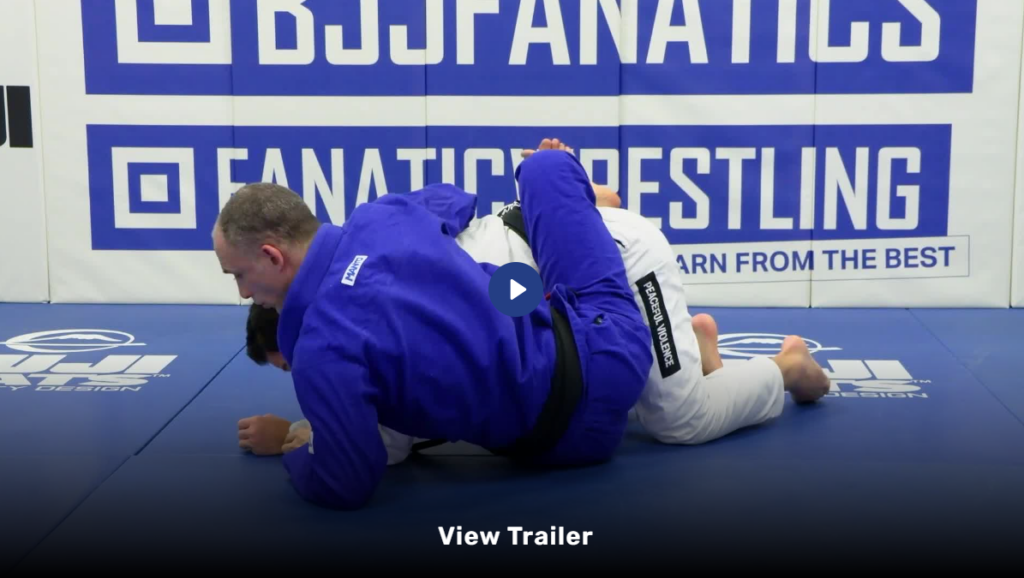
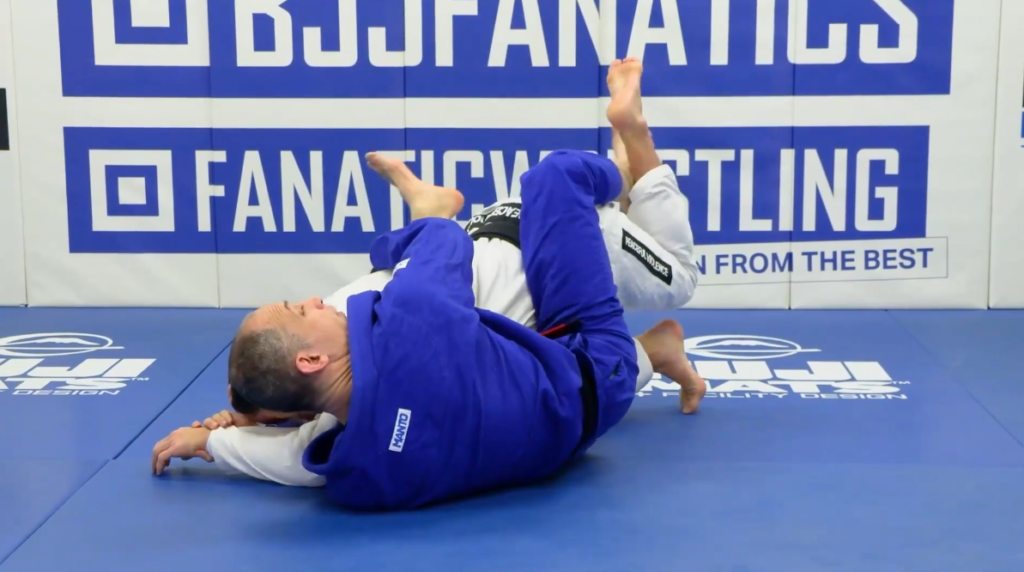
Francisco Martínez Hernández, a 59-year-old BJJ black belt dies in gym during training at Villegas MMA in Tijuana on April 10.
Police and Red Cross responders found him unconscious and attempted CPR, but he could not be revived.
Early local reporting linked the emergency to a submission sequence during sparring, but no publicly confirmed final medical cause has surfaced.
The training partner was detained initially, while later reporting said the gym and both families treated the incident as a tragic accident.
That uncertainty is what makes this story hit so hard: a BJJ black belt dies in gym headline sounds simple, but the reality is much murkier.
When a BJJ black belt dies in gym headlines start circulating, people immediately assume they know what happened. In this case, that is exactly where things get messy. What is clearly established is that Francisco Martínez Hernández, 59, died during an evening training session at Villegas MMA in El Dorado Residencial, Tijuana, on April 10. What is not clearly established in public reporting is the final medical cause of death.
That distinction matters, because the first wave of coverage came in hot. One local report stated that police detained a 27-year-old training partner after he allegedly applied a strangulation technique during sparring.
Later accounts, including statements attributed to gym owner Mike Villegas, framed the incident as a supervised training accident and suggested that whatever killed Martínez Hernández may have gone beyond the submission itself.
BJJ Black Belt Dies in Gym During Rolling
According to local reporting, the incident happened at roughly 6:51 p.m. Officers on patrol were alerted outside the gym and entered to find Martínez Hernández unconscious while Red Cross personnel attempted to revive him. CPR efforts were unsuccessful, and he was pronounced dead at the scene.
The earliest version of the story presented a stark sequence: Martínez Hernández was training with another practitioner identified as Joshua “N” or Joshua Isaac Suárez Briseño, 27, and a choke or strangulation technique was reportedly applied before the emergency unfolded.
That version is why the story exploded online so quickly. It turned a gym tragedy into a potential criminal case in the public imagination almost instantly.
But even in that first reporting, the crucial gap was obvious. Police described what was alleged to have happened in the room, not a confirmed forensic cause of death. That is a major difference, and one too many outlets blur when a combat-sports incident turns fatal.
The gym’s later account adds a lot more nuance. In later reporting, Mike Villegas described the sequence as a wrestling exchange that ended in a katagatame or arm choke, after which Martínez Hernández briefly appeared to “go to sleep” and then deteriorated rapidly. Villegas said Martínez Hernández showed signs of a respiratory collapse and dropping pulse, prompting an emergency call and immediate CPR.
Villegas also reportedly said he believed there was something more after the choke and pointed toward a cardiac event rather than presenting the submission itself as a fully explained cause of death.
That is not proof of what happened medically, but it is important because it moves the story away from the lazy framing that a tap-free choke automatically explains everything.
The academy’s own statement took a similar line, stressing supervision, safety protocols, and the reality that contact sports carry risks that can spiral beyond control in exceptional circumstances. That is not a legal defense on its own, but it does show the gym publicly positioned this as a tragic accident, not an act of malice or reckless gym culture gone wild.
It was an accident. – Mike Villegas –
That may sound simple, but it changes the emotional center of the story. A BJJ black belt dies in gym piece built around blame is one thing. A story about a normal training round ending in a sudden fatal collapse is much harder, and much more unsettling, for everyone in grappling.
The Unanswered Cause of Death
One reason the story grabbed so much attention is that police detained the younger training partner at the scene. In Mexico, that kind of detention can instantly make an accident look like a prosecution-in-waiting, especially once screenshots and translated headlines hit social media.
But later reporting said he was released, and Villegas said both families handled the aftermath without public blame.
That still leaves the biggest question unresolved. Was the fatal event caused by strangulation, triggered by the stress of the exchange, or tied to another underlying medical issue that surfaced at the worst possible moment?
Based on the public reporting available right now, none of those answers has been officially locked down. It is that a training exchange preceded a fatal medical emergency whose final cause remains publicly unclear.
Key Cause-Of-Death Question Remains Open
Martínez Hernández was remembered in later coverage as a respected martial artist, a man close to turning 60, and someone who still loved hard training. That part of the story lands heavily because it strips away the usual assumptions.
This was not written up as a reckless beginner incident. It was an experienced black belt on the mat in what sounds like a normal session until it suddenly was not.
That is why this BJJ black belt dies in gym story will keep circulating. Not because the facts are perfectly settled, but because they are not. Grapplers are left staring at the most uncomfortable version of the truth: training can look routine right up until the moment it becomes irreversible.
And until a definitive public medical finding emerges, the most accurate way to tell this story is with caution, not certainty.
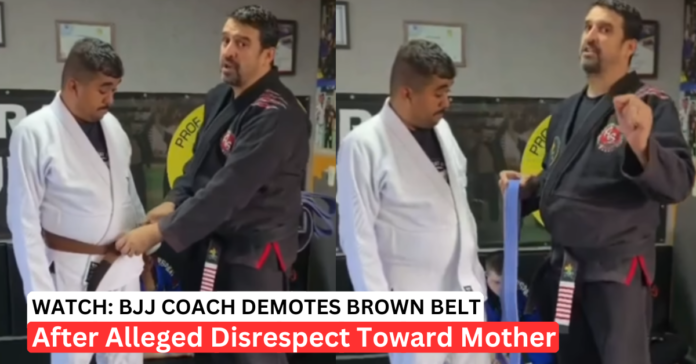
A Brazilian Jiu-Jitsu instructor publicly demoted a brown belt to blue belt in front of teammates.
André Seabra said student Igor had disobeyed his mother and ignored his instructor.
The demotion was presented as temporary, with Seabra saying Igor could regain the rank after rebuilding trust.
The incident has sparked a wider debate over whether BJJ belts should reflect skill, behavior, or both.
BJJ Coach Demotes Brown Belt In Public Ceremony
A BJJ coach demotes brown belt, replaces it with a blue belt, and turns the whole thing into a public lesson in obedience. Unsurprisingly, the Jiu-Jitsu internet has questions.
The video shows Brazilian Jiu-Jitsu instructor André Seabra removing student Igor’s brown belt during what appears to be a formal team gathering. Seabra then ties a blue belt around him while explaining why he believed the punishment was necessary.
The issue, according to Seabra, was not a bad competition performance or lack of technical level. It was behavior. He said Igor had disobeyed his mother, failed to respond properly to his instructor, and crossed a line serious enough to lose rank — at least temporarily.
If there’s one thing that makes us very sad, it’s when a student disobeys their teacher, right? There’s a great principle, it’s biblical, which is to honor your father and mother. So we need to fulfill this principle. – André Seabra –
That line alone explains why the story hit a nerve. This was not just a BJJ belt demotion. It was a coach stepping into a student’s personal conduct outside the mat and using rank as the punishment.
A Public Belt Demotion is Rare
The phrase “BJJ coach demotes brown belt” sounds dramatic because it is. Belt rank in Jiu-Jitsu carries heavy meaning. It represents time, skill, mat experience, trust, teaching ability, and a coach’s judgement.
That is exactly why public belt demotion feels so explosive.
On one side, traditionalists may see Seabra’s move as old-school discipline. In many martial arts rooms, the instructor is not treated as a casual fitness coach.
The professor is expected to guide behavior, enforce standards, and protect the culture of the academy.
On the other side, modern grapplers are far more likely to ask where that authority ends. Should a coach be able to remove rank over a personal family issue?
Should a student’s relationship with his mother affect whether he is considered a brown belt on the mats? And if the demotion is temporary, is the belt really a technical rank — or a behavior badge?
That tension is the story.
Igor accepted the punishment in the video and apologized.
I’m sorry. I won’t do it again. – Igor –
Still, acceptance does not settle the wider debate. A public apology in front of teammates can look like accountability to some people and humiliation to others.
André Seabra Frames The Punishment As A Lesson In Respect
Seabra made clear that he did not see the demotion as permanent exile. The BJJ coach demotes brown belt Igor from brown to blue, but he also said the original rank could return once trust was rebuilt.
When you regain trust again, you’ll return to your rank. – André Seabra –
In a follow-up statement, Seabra described Igor as his “champion” and said the consequence was meant to make him understand the gravity of the mistake. He also framed the instructor’s role as something broader than technique correction.
Teacher is synonymous with care, affection, commitment, empathy, kindness, guidance and transformation. – André Seabra –
That is the most charitable version of the incident: a coach trying to use Jiu-Jitsu rank as a tool for character development.
But even then, it raises uncomfortable questions. If rank can be temporarily removed for disrespect, what else can cost someone a belt? Missing training? Arriving late? Arguing with family? Leaving the team? Posting something the coach dislikes?
Once belt rank becomes a disciplinary lever, the standard can get slippery very quickly.
Should BJJ Rank Reflect Skill Or Behavior?
Brazilian Jiu-Jitsu discipline has always involved more than armbars and guard passing. Respect, humility, consistency, and loyalty are baked into many academy cultures. Nobody sensible would argue that character is irrelevant.
The problem is where character ends and control begins.
A brown belt is not a participation trophy. It usually means the student can handle advanced technical situations, train responsibly, help lower belts, and represent the academy at a high level.
If Igor still has those skills, then demoting him to blue belt creates a strange contradiction.
Is he technically a blue belt again? Or is he a brown belt being forced to wear blue as punishment?
That difference matters. A blue belt competing with brown belt skill would create obvious problems in tournaments.
Inside the gym, it can also confuse the meaning of rank for everyone else. If a belt can be removed for non-technical behavior, then the belt is no longer only a marker of grappling ability.
At the same time, many coaches will argue that technical ability alone is not enough. A reckless, disrespectful, unsafe, or disruptive student might not deserve to wear a higher rank even if they can perform like one.
That is the difficult middle ground. Rank should mean skill, but in Jiu-Jitsu, it has never meant only skill.
A four-part passing instructional built around a conceptual opening section, then separate No-Gi and Gi knee-cut material, before a short section on secondary follow-ups.
The strongest selling point is structure: Kit Dale does not jump straight into random finishes, but first frames the pass through gripping, body positioning, frame-breaking, and entry mechanics.
The material looks most useful for grapplers who already use knee cuts sometimes and want a cleaner system, rather than for people hunting for a giant encyclopedia of every passing scenario.
A nice bonus is that the set covers both Gi and No-Gi, which makes it easier to translate ideas across training formats.
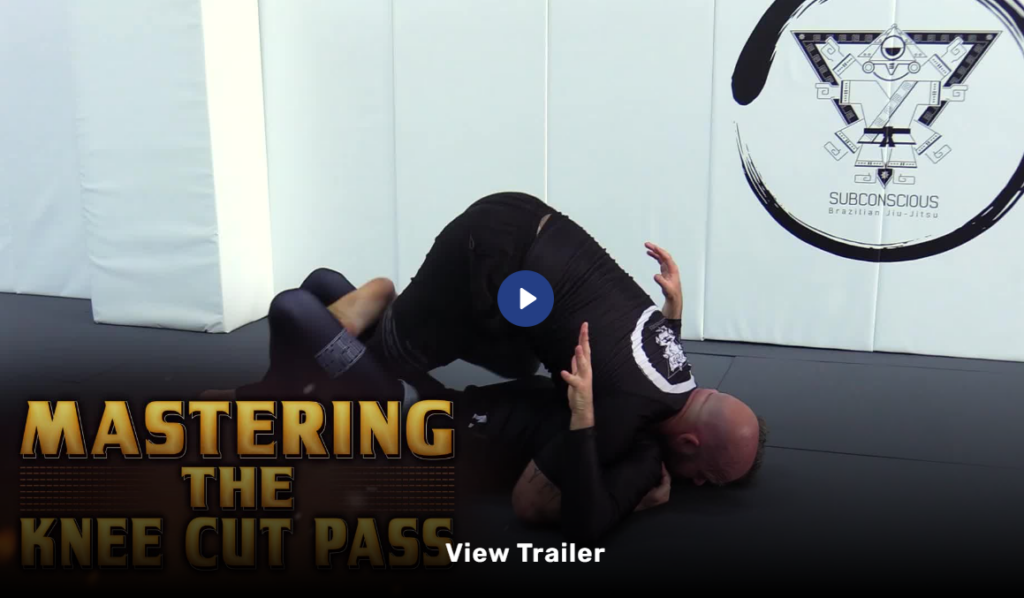
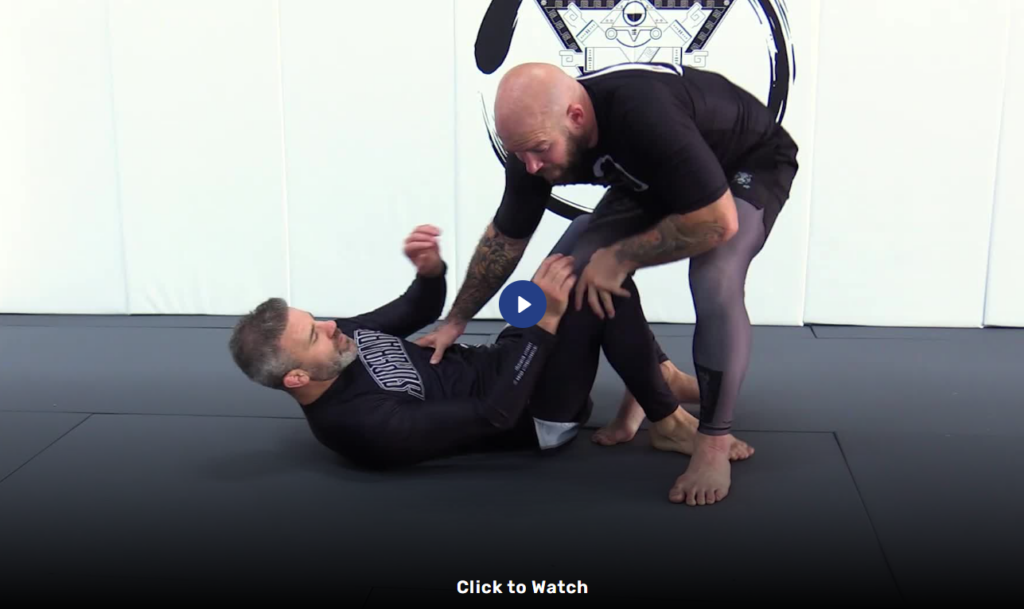
The Knee Cut Pass Kit Dale DVD is the kind of instructional that immediately makes sense on paper. The knee cut is one of those passes that never really goes out of style, because it works at every level, and connects naturally to pressure. This series is a four-part system focused on conceptual passing, Gi and No-Gi application, and secondary follow-up attacks, which is exactly the kind of scope you want from a niche passing instructional.
What I like right away is that this is not being sold as a flashy novelty pass. It is a study of a classic. Too many passing instructionals try to win you over with unusual entries or trendy movement patterns, but most people still build their top game around a handful of reliable, repeatable passes.
Knee Cutting 101
The knee cut sits in that sweet spot between pressure passing and mobility. You do not need to be the heaviest person in the room to make it work, but you also do not need to turn the match into a speed-based scramble every time you pass. That balance is why the pass stays relevant whether you train Gi, No-Gi, hobbyist rounds, or competition rounds.
What makes the Knee Cut Pass Kit Dale DVD interesting is not simply that it covers the pass, but that it tries to systematize it. That is important because the knee cut often gets taught as a single snapshot: underhook, shin across, slice through, settle.
In live rolling, though, it is never that clean. People frame, hip out, knee shield, sit up, and re-guard. A useful knee cut instructional has to help you deal with those layers, not just show the ideal finish.
That is also why I think the knee cut remains one of the best passing subjects for instructionals. It forces you to understand distance, angle, upper-body control, and the relationship between your cutting leg and your posting structure. If you learn it properly, you do not just get one pass. You get a better sense of passing in general.
About Kit Dale
The reason the Knee Cut Pass Kit Dale DVD carries some weight is obvious enough: Kit Dale has long had credibility as both a competitor and a teacher. He’s an ADCC veteran who reached black belt in four years under Yuri Simões. He won the 2017 ADCC Japan Trials, has multiple IBJJF Sydney titles, and has a knack fort he knee cut/slice pass.
That background matters for two reasons. First, Dale has long been associated with conceptual teaching rather than brute-force accumulation of techniques. Second, he is not teaching some random area disconnected from his own game. If anything, the knee cut is exactly the sort of position you would expect him to build a course around.
I would not call him the most detail-obsessed instructor in the classic, hyper-granular sense. His appeal is different. He is usually strongest when he explains why something works and how to make it fit into a broader game. For a passing instructional, that can be a very good thing.
Play-by-Play Knee Cut Pass Kit Dale DVD Review
The Knee Cut Pass Kit Dale instructional is organized into four parts: a conceptual first volume, a No-Gi section, a Gi section, and a final section on secondary attacks:
Volume 1 – Conceptual Framework For Passing
In practice, the Knee Cut Pass Kit Dale DVD starts in the right place. Before you get any how-to, you get the foundation: conceptual passing, gripping, access to the position, and frame management.
That is a smart decision. The biggest reason most people fail at knee cuts is not that they do not know the final motion. It is that they arrive there badly. Their posture is off, their grips are weak, their angle is late, or the bottom player’s frames are already doing the real work. A pass like this lives and dies in the setup.
The five limbs idea is the sort of thing that fits Dale’s style well. Even without overcomplicating it, it pushes the viewer to think in terms of control and resource management rather than memorized choreography. For me, this is one of the stronger parts of the whole set, because it gives the rest of the material a spine.
Volume 2 – No-Gi Applications
This is where the Knee Cut Pass Kit Dale DVD becomes more directly useful to modern grapplers. The No-Gi section covers low underhook and high underhook knee cuts, arm-smothering variations, an arm-lace option, seated-guard entries, and a double-underhook route to mount.
It is not trying to be absurdly exhaustive, but it does cover the core problem most people face in No-Gi: how do I keep my opponent pinned enough to slice through when cloth grips are gone and movement speeds up? The answer seems to be variation through upper-body control rather than abandoning the pass altogether.
I especially like the inclusion of both low and high underhook approaches. That suggests Dale is treating the knee cut as an adaptable family of passes, not a single frozen technique. That alone makes the material more realistic.
Volume 3 – Gi Variations
The Gi material is one of the better reasons to consider the Knee Cut Pass Kit Dale DVD, especially if you train both formats and want one passing language instead of two separate games. This section includes bottom-leg and collar-sleeve versions, lapel-based seated-guard entries, a lapel-wrap variation from the back, a hip-hole route, arm-lace with cross-face, and a high knee cut.
The Gi gives you more control, but it also gives your opponent more ways to slow you down. A knee cut that works in the Gi has to deal with friction, collars, sleeve frames, and layered guard retention.
From a buyer’s perspective, this is probably the section that raises the value ceiling. Plenty of instructionals do a decent job with No-Gi knee cuts. Fewer do a neat job of connecting Gi and No-Gi without making them feel like unrelated systems.
Volume 4 – Secondary Attacks
The last section is brief, but it is a good closer. Dale uses it for bottom-arm pin to mount, gift wrap to the back, and a hip-switch answer to the knee shield.
That matters because a passing system should not end the moment the opponent stops giving you a clean lane. Good passers do not just finish passes. They threaten adjacent control positions until the defender runs out of good choices. This section seems to acknowledge that.
I would not say Volume 4 turns the course into a full top-game encyclopedia. It is more of a practical extension. Still, that is better than ending the instructional the second the knee touches the mat.
Stapling Shins
For most people, the best way to use the Knee Cut Pass Kit Dale DVD is not to binge it once and then expect magic. This is the kind of material that should be studied in layers.
Start with Volume 1 and spend a week or two just working on entries, grips, and frame-breaking. Then pick one No-Gi variation and one Gi variation that suit your current game. Do not try to absorb every version at once. The whole point of a conceptual system is that it should narrow your focus, not scatter it.
This is also an instructional that seems to lend itself well to positional sparring. Begin from seated guard. Begin from knee shield. Begin from shallow half guard. Start with the top player already halfway into the knee cut and force both people to solve the position live. That is where the material is most likely to stick.
The Knee Cut Pass Kit Dale DVD will suit a pretty broad range, but not equally. It makes the most sense for blue belts through black belts who already pass actively and want a cleaner structure around a pass they probably use anyway.
Competitive grapplers should also get something from it because the knee cut remains one of the highest-percentage ways to pass when people are hard to hold down. It is also a nice fit for coaches, because conceptual passing material is usually easier to teach across a room than a pile of ultra-specific technique chains.
Brand-new white belts can still use it, but I would not call them the ideal audience. The pass itself is beginner-friendly, yet the value here seems to be in refinement and system-building. If someone barely understands base, posture, and guard passing priorities, they may not get the full return yet.
Pros & Potential Drawbacks
Pros:
Strong conceptual foundation: Volume 1 gives the set a real backbone instead of treating the knee cut like a one-off move.
Useful format crossover: Covering both Gi and No-Gi makes the material more flexible for everyday training.
Variation without chaos: Dale seems to add options that solve real problems rather than padding the course with random branches.
Good top-game continuity: The secondary-attack section helps connect passing to mount and back exposure.
Potential Drawbacks:
Not the deepest passing course ever made: This is focused material, not a complete guard-passing library.
Best value likely comes after you already use knee cuts: Total beginners may understand the pass, but not fully appreciate the refinements.
Volume 4 looks a bit short: The follow-up section seems useful, but some buyers may want even more chaining after the pass begins to stall.
Start (Knee) Cutting!
The Knee Cut Pass Kit Dale DVD looks like a well-built, practical passing instructional centered on a pass that actually matters. The biggest strength is not novelty. It is clarity. Dale appears to approach the knee cut as a repeatable system built on entries, gripping, frame management, and format-specific adjustments.
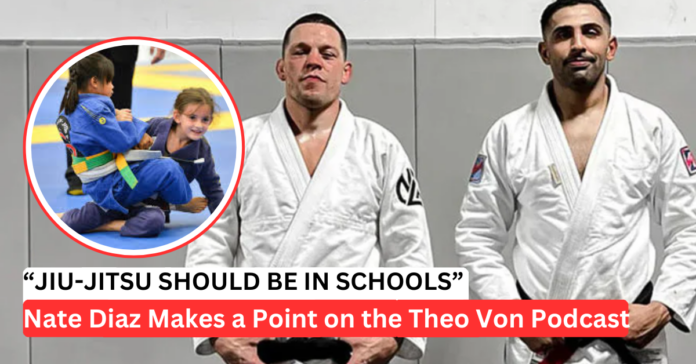
Nate Diaz argued that Jiu-Jitsu should be taught in schools, not just for fighting, but for awareness, stability, and self-defense.
His comments came during a recent appearance alongside Theo Von and Chris Avila.
Diaz compared learning Jiu-Jitsu to learning how to swim, framing it as a basic life skill rather than a niche combat hobby.
The idea lands harder because Diaz tied it to real-world confidence, social development, and even better law enforcement preparedness.
With Nate Diaz set to fight Mike Perry next month, the clip is giving him a fresh headline outside the usual fight-promo cycle.
Nate Diaz on Jiu-Jitsu in schools is the kind of quote that instantly grabs grapplers, fight fans, and anyone who thinks martial arts talk usually drifts into cliché. This one did not.
Diaz was direct, almost dismissively simple about it: people should learn how to defend themselves, schools are the obvious place to start, and society would probably be better off if more people had even a little real experience with physical conflict.
That is what makes the clip pop. Diaz was not pitching Jiu-Jitsu as some magical cure-all, and he was not dressing it up in polished self-help language either. He framed it the way he usually frames everything: bluntly, practically, and with a little edge.
In his view, too many people walk around with a false sense of confidence and no real clue what happens when things get physical. That gap, to him, is not just naive. It is dangerous.
I think jiu-jitsu should be. – Nate Diaz –
Why Nate Diaz On Jiu-Jitsu In Schools Is Resonating Beyond MMA
Plenty of fighters have praised martial arts before, but Diaz’s version hits differently because he stripped the argument down to basics. He did not talk about medals, belt promotions, discipline posters, or inspirational slogans.
He talked about awareness. He talked about people being “a little more stable walking around.” He talked about the idea that even limited training changes how a person sees risk, conflict, and their own limitations.
That is where the quote stops being just another fighter soundbite. Diaz is essentially arguing that Jiu-Jitsu should sit closer to practical life education than extracurricular sport.
Not everybody becomes a swimmer, but almost everybody agrees learning how to survive in water is useful. He placed grappling in that same category.
Jiu-jitsu, I think is necessary for everybody. It’s like learning how to swim. Like, I think everybody should learn how to swim. What if you fall in some water? – Nate Diaz –
There is also a sharper layer to what he said. Diaz was not only promoting self-defense. He was calling out the illusion of self-defense. That is a very Diaz way of making the point, but it is also why the clip spread so quickly.
A lot of people say they could handle themselves. Much fewer people have ever actually trained enough to test that belief.
What Theo Von And Chris Avila Pulled Out Of Him
The setting matters. Diaz made the comments in a loose conversation, sitting with Theo Von and Chris Avila, which helped the whole thing feel less rehearsed and more revealing.
He was not reading from a promotional script. He was following the thread where it led, and that let the strongest part of the argument come out naturally.
When the conversation touched on law enforcement, Diaz took the idea even further. His point was not that training should begin when someone joins the police. His point was that by then it is already late.
If people had been exposed to Jiu-Jitsu in school, they would arrive at adulthood with a more realistic understanding of force, control, and what they do not know.
That is a big reason this topic has legs. Diaz was talking about a cultural shift, not a PE class gimmick. In his mind, early exposure would create more awareness across the board, from ordinary civilians to people in positions of authority.
But if they did it in school, then by the time they get to law enforcement, they would know. – Nate Diaz –
Diaz’s Own Story
What saves this from sounding like empty fight-world posturing is that Diaz has been making versions of this point for a while.
He has spoken before about Jiu-Jitsu giving him direction when he was young, keeping him busy, and putting him on a track that eventually defined his life.
Diaz started training at 11 under Cesar Gracie, stayed tied to that team identity throughout his career, and has repeatedly credited the mats with shaping more than just his fighting style.
That background matters because Diaz did not present Jiu-Jitsu as something that merely made him dangerous. He has described it as something that made him more social, more connected, and more grounded.
That part is easy to overlook because the public image of Nate Diaz is all scar tissue, Stockton swagger, and middle fingers in big-fight moments. But underneath that image is a guy who keeps circling back to the same point: training gave him structure.
I learned how to talk to people and understand people and communicate. So it helps with just falling into the social pipeline. – Nate Diaz –
That is probably the most interesting part of the whole story. Diaz is not just saying kids should learn takedowns and chokes. He is saying the environment around training teaches people how to relate, how to calm down, how to compete, and how to understand themselves better.
“Learn To Swim”
Nate Diaz on Jiu-Jitsu in schools is not a policy blueprint. It is not a detailed curriculum proposal. It is a much simpler and much more combustible idea than that: people would be safer, smarter, and more honest with themselves if they learned a little grappling early.
That is exactly why it will keep getting traction. Some people will hear “fighting in schools” and instantly recoil. Others will hear “self-defense, confidence, awareness, and control” and think it makes obvious sense. Diaz probably does not care much which side finds his wording too rough. He said what he meant.
It feels like one of those arguments the grappling world will keep dragging back into public conversation every few months, especially every time another athlete, coach, teacher, or parent realizes the same uncomfortable truth Diaz was pointing at: most people are a lot less prepared than they think.
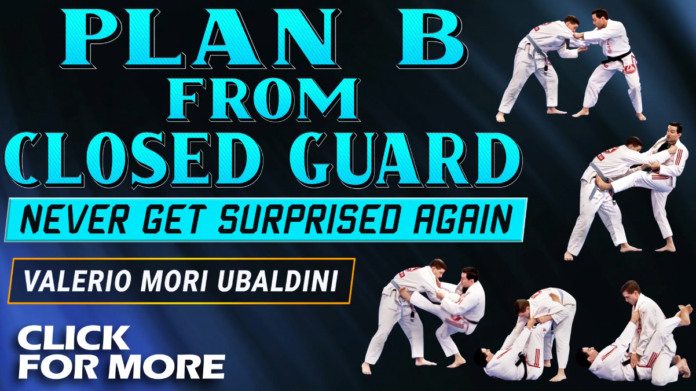
A three-volume closed guard instructional built around the idea of always having a second answer when the first attack or sweep stalls.
Best suited to grapplers who already like playing from their back and want a more proactive, layered way to attack from closed guard instead of just holding position.
Strongest in its emphasis on guard pulling with immediate offense, classic sweep chains, and follow-up options when opponents start standing or pressuring to pass.
The material looks especially useful for Gi players, thanks to topics like lasso guard and loop choke, even though much of the strategic logic carries over beyond one ruleset.
The Closed Guard Valerio Mori Ubaldini DVD is built on a simple but valuable premise: closed guard works best when you stop treating it like a stall position and start treating it like a command center. That sounds obvious, but plenty of instructionals still teach the closed guard as a set of disconnected moves rather than as a live system with contingencies, transitions, and immediate threats.
That is where this release earns attention. The “Plan B” theme is not just a catchy title. It runs through the structure of the material, especially in the way Valerio frames failed sweeps, standing opponents, and pass attempts as moments to redirect rather than reset. If you enjoy classic closed guard but want it to feel less static and more modern in application, this instructional has something real to say.
Back to the Closed Guard
The Closed Guard Valerio Mori Ubaldini DVD lands in a part of Jiu-Jitsu that many people claim to respect but do not always study deeply. Everyone knows the closed guard. Everyone has used it. But a lot of grapplers move away from it too early, either because they get bored or because they assume newer open guards automatically offer more options.
That is only partly true. The closed guard still gives you direct control over posture, distance, angles, and tempo. It is one of the few positions in Jiu-Jitsu where you can slow somebody down, force them to carry your decisions, and build dilemmas without needing explosive athleticism. For hobbyists, that matters. For competitors, that matters even more.
What usually separates a dangerous closed guard from a passive one is not flexibility or trickiness. It is timing. The best closed guard players do not wait around. They pull with intention, attack before posture settles, and flow from one problem to the next. That is why a system built around backup plans makes sense. The closed guard is rarely about one perfect move. It is about making your opponent increasingly wrong.
GB Instructor Valerio Mori Ubaldini
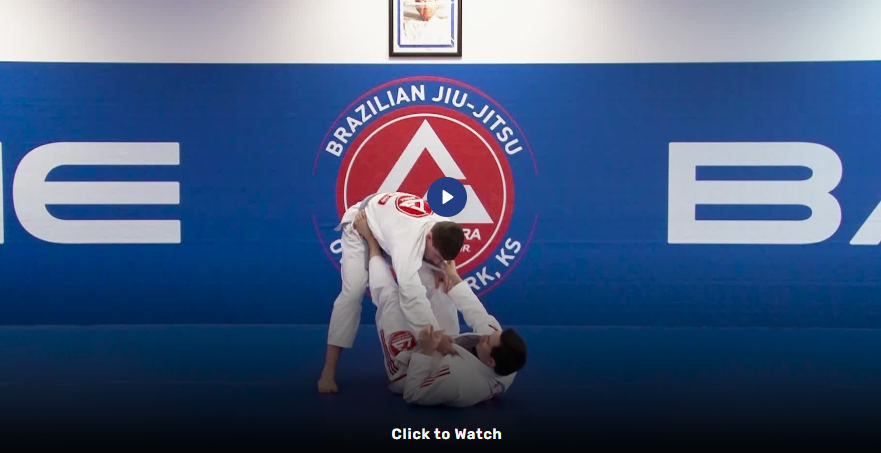
The Closed Guard Valerio Mori Ubaldini DVD is taught by an instructor who is a Gracie Barra coach and academy leader, with CanvasRebel identifying him as a black belt, head instructor, and co-owner at Gracie Barra Overland Park. He also shows him teaching a practical body clinch response when an opponent stands inside closed guard, which lines up neatly with the problem-solving tone of this instructional.
Ubaldini is not presented here as a pure highlight-reel specialist selling flashy closed guard tricks. He comes across more like a coach who wants students to understand how to stay offensive when the position starts changing shape. That is a useful mindset for this topic, because closed guard usually stops working when people freeze as soon as the opponent stands, drives in, or begins forcing a pass sequence.
Detailed Guard Valerio Mori Ubaldini DVD Review
The Closed Guard Valerio Mori Ubaldini DVD is a three-volume instructional with roughly three and a half hours of material. Structurally, it is laid out well:
Volume 1 – Pulling Guard
The Closed Guard Valerio Mori Ubaldini DVD starts in the right place: not with submissions, but with entry. That is a smart decision. Too many closed guard instructionals assume you are already there with grips, posture broken, and everything under control. Real rolling does not work like that.
Valerio spends the opening section talking about the closed guard itself, when to pull guard, and how to pull it with better timing. That already tells you a lot about the product. He is interested in the moment before the position is established, which is usually where a lot of guard players either win or give away initiative. From there, he moves into immediate attacks off the pull: armbar, triangle, and omoplata.
What I liked most here is that the volume does not stop at the obvious trio. It also branches into open guard such as De La Riva, tripod, lasso guard, Single X, and a super useful fake pull.
Volume 2 – Sweeps
The Closed Guard Valerio Mori Ubaldini DVD becomes more traditional in Volume 2, but in a good way. The focus here is on four familiar sweep platforms: scissor sweep, pendulum sweep, sit-up sweep, and flower sweep. On paper, that might sound basic. In practice, it is the exact sort of material that still decides rounds in gyms and tournaments.
The value is in the title concept: Plan B. It is framed more as a study of what to do when those classic attacks do not immediately solve the exchange. That is a much more useful way to teach the closed guard, because very few decent opponents will simply fall over on the first attempt.
This middle section is probably the most broadly useful part of this Valerio Mori Ubaldini instructional. It connects well with beginners who already know the names of the sweeps, but it also gives more advanced players a reminder that fundamentals become dangerous again when they are layered properly. If Volume 1 is about initiative, Volume 2 is about persistence without stubbornness.
Volume 3 – The Cool Stuff
The Closed Guard Valerio Mori Ubaldini DVD gets more eclectic in Volume 3, and that is where the set develops more personality. The listed topics include originals such as the De Luca Kimura, loop choke variation and Gargon sweep, to mention a few standouts.
The moves here show that Valerio is not trying to keep the guard frozen in a textbook shape. He is dealing with what happens when opponents begin standing, stacking, driving under the hips, or forcing you into adaptation. In other words, he is addressing the moments where many closed guard players lose the plot.
The body clinch material stands out especially well conceptually. It reinforces the idea that when someone stands in your guard, that should not automatically mean your offense is over. You can intercept, come up, and turn the exchange back in your favor.
A Plan B That Doesn’t Fail
The Closed Guard Valerio Mori Ubaldini DVD is the kind of instructional that benefits from being studied in chunks rather than binged once and shelved. The best way to use it is to take the first volume and work on entry plus first attack for two or three weeks. After that, move to Volume 2 and build two reliable sweep chains. Then use Volume 3 to solve the moments that keep breaking your rhythm in live rounds.
For most grapplers, that means positional sparring will matter more than endless drilling. Start from guard pull to attack. Start from failed scissor sweep to second attack. Start with the top player standing in your guard. Start with the passer threatening double unders. That is how this material becomes part of your game instead of remaining a list of remembered chapters.
In practical terms, this instructional can help three different things: your confidence pulling guard, your ability to keep attacking after resistance, and your capacity to stay calm when the position changes. That last part is the most important. A lot of closed guard players are good until the script changes. This set is at its best when teaching you not to panic at that moment.
The Closed Guard Valerio Mori Ubaldini DVD is best for white belts with some mat time, blue belts, and purple belts who already like the idea of playing closed guard and want to become more assertive from it. It also makes sense for instructors looking for a teachable framework, because the progression from pull to first attack to backup option is easy to build into class structure.
Gi players are the clearest audience. The presence of lasso guard and loop choke gives the material a Gi flavor, even though the strategic concepts are broader than that. Competitors who pull guard regularly should get plenty out of it, but so should hobbyists who prefer a more methodical game from bottom.
The least ideal audience is probably the brand-new white belt who still struggles with basic posture breaking and angle creation. That person might still find value here, but some of the material will probably land better after a few months of real rolling. Likewise, a pure No-Gi player hunting a modern leg-lock-heavy bottom game may want something more specialized.
Pros & Potential Drawbacks
Pros:
Strong central concept: the “Plan B” idea gives the whole instructional coherence instead of making it feel like a bag of unrelated closed guard moves.
Good structure: the progression from entry, to classic sweep families, to adaptive problem-solving makes sense and is easy to study.
Useful blend of fundamentals and secondary layers: scissor, pendulum, sit-up, and flower sweeps are familiar, but the surrounding follow-ups make them feel more alive.
Practical handling of common reactions: standing opponents, double-under passing pressure, and posture shifts are all addressed rather than ignored.
Coach-friendly material: this is the kind of system you can build into rounds and lesson plans without a lot of translation work.
Broad real-world value: even if you do not adopt every chapter, the mindset of attacking immediately and chaining to backups is applicable well beyond closed guard.
Potential Drawbacks:
Gi-leaning content: if you are mainly a No-Gi athlete, some of the specific material will not be as directly useful.
Not a pure beginner primer: the instructional is logical, but it assumes you can already function from closed guard at a basic level.
Some chapter titles are more intriguing than fully self-explanatory: that can be exciting, but it also means certain sections may take a little mat testing before they click.
The Secondary Closed Guard
The Closed Guard Valerio Mori Ubaldini DVD succeeds because it understands the real problem with closed guard for most people: not the position itself, but the dead space between first attack and second decision. Valerio’s answer is to build a game where the next option is already waiting. That makes this release more useful than a lot of technically solid but strategically flat guard instructionals.
Andrew Tackett retained his UFC BJJ welterweight title by unanimous decision against Vagner Rocha in the UFC BJJ 7 main event on April 2, 2026, at Meta APEX in Las Vegas.
The post-fight conversation quickly shifted from Tackett’s win to footage that appeared to show him biting Rocha during the match.
He then poured fuel on the Andrew Tackett bit Vagner Rocha story himself, posting, “That’s what you get for the oil check, Vagner,” before later adding that he should not have done it.
Rocha had taken the title shot on short notice after, by his account, other opponents fell out, which made his gritty performance look even more credible.
For UFC BJJ, this is the kind of viral moment that creates attention fast, but not necessarily the kind of attention a young promotion wants hanging around its title scene.
Brazilian Jiu-Jitsu has always had a strange relationship with ugly moments. A little chaos can make a match feel real. Too much of it can swallow the actual performance whole.
That is exactly what happened here, because Andrew Tackett bit Vagner Rocha became the talking point almost immediately after Tackett’s title win, even though the match itself was a legitimate, hard-fought main event.
Tackett still did the important part. He won. He kept his belt. He handled a dangerous veteran over three rounds and came out on the right side of the scorecards.
But instead of people breaking down his pace, his control, or the way he managed the title fight, the clip everyone wanted to replay was the one that made the match look grubby.
Did Andrew Tackett Bit Vagner Rocha?
The reason this story exploded is simple: it had video, it had a title fight, and it had a champion who did not exactly try to calm things down afterward.
Footage circulated that appeared to show Tackett biting Rocha during the match, and Tackett’s first public response was not a denial or a careful explanation. It was a joke.
That’s what you get for the oil check, Vagner – Andrew Tackett –
That line was always going to travel. It is crude, memorable, and perfectly built for grappling group chats to light up for 24 hours straight.
Tackett followed it with “Keep it clean kids,” which only made the whole thing feel even more like a wink instead of an apology. Then came the second post, where he admitted he should not have done it, but still treated the moment like a punchline rather than a problem.
I don’t encourage biting. I shouldn’t have done it, but it is still funny – Andrew Tackett –
That is the kind of response that keeps a controversy alive. If Tackett had gone quiet, the clip probably still would have spread. By leaning into it, he made the bite angle impossible to separate from the result itself.
Lost in the noise is the fact that Tackett actually fought well. He beat Rocha by unanimous decision in the UFC BJJ 7 main event, and the match was not some meaningless squash.
Rocha made him work, kept things competitive, and forced the champion to stay disciplined for the full three-round fight.
By the available match recaps, Tackett’s best stretch came late, when he established stronger positional control and took over more clearly in the third round. That matters, because it reinforces something people already knew about him: he can push pace, force action, and still look composed when a match gets messy.
Ironically, this one got so messy that the technical part of the performance now risks being treated like background noise.
The setting also matters here. This happened under the UFC BJJ banner at Meta APEX in Las Vegas, a promotion still trying to define what kind of product it wants to be. Viral moments help with visibility, sure.
But there is a difference between “people are talking about the match” and “people are talking about whether the champion bit someone in the main event.”
Why Vagner Rocha Made This So Much Messier
Rocha was not supposed to be some soft touch or easy storyline prop, and the background to the matchup actually made him a compelling opponent. He said the title shot only came together because other opponents fell out and he happened to be there while coaching his daughter, which gave the whole booking a short-notice, old-school feel.
That night apparently he had a lot of people fall out that didn’t want to face him. I happen to be here for my daughter to coach her and they know that I’m a game opponent and asked me, hey, would you be interested in that and I was like, I’m in. – Vagner Rocha –
That detail is important because it made Rocha look exactly like what fans expect from him: tough, available, experienced, and absolutely willing to make life ugly for a younger champion.
He is 43, he has been around forever, and he brought enough grit to make the match feel like more than a routine defense. So when the controversy hit, it was not attached to some forgettable title defense against an overmatched name. It landed on a fight that already had tension built into it.
Rocha also understood what the opportunity meant. He openly said he was jumping the line for the belt and did not pretend otherwise. That honesty made the matchup feel raw in a way a lot of polished pre-fight promotion does not.
Why This Story Won’t Leave Andrew Tackett Alone
The uncomfortable truth for Tackett is that Andrew Tackett bit Vagner Rocha is now a cleaner headline than “Andrew Tackett won a hard decision over a respected veteran.” That does not mean the fight was bad. It means the image that came out of it was stronger than the sporting takeaway.
And for UFC BJJ, that is the real issue. A newer promotion can survive controversy. Sometimes it can even benefit from it in the short term. But title scenes are supposed to build legitimacy, not meme energy.
Tackett is still one of the most watchable athletes in the format. That part did not change on April 2. What changed is that this win now comes with a clip attached to it, and clips like that have a way of sticking.
So yes, Tackett kept the title. But until he gives people a bigger performance than this story, Andrew Tackett bit Vagner Rocha is going to follow him a lot longer than the unanimous decision.
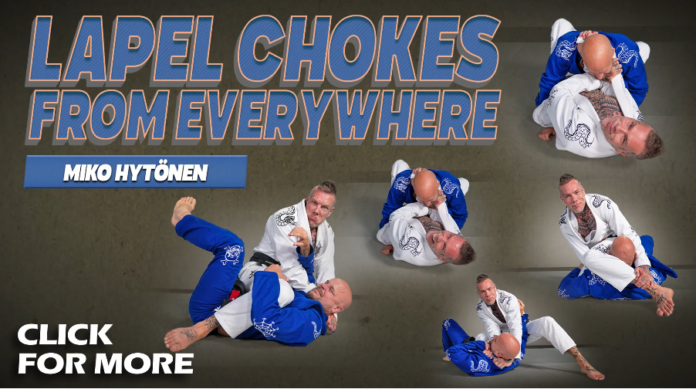
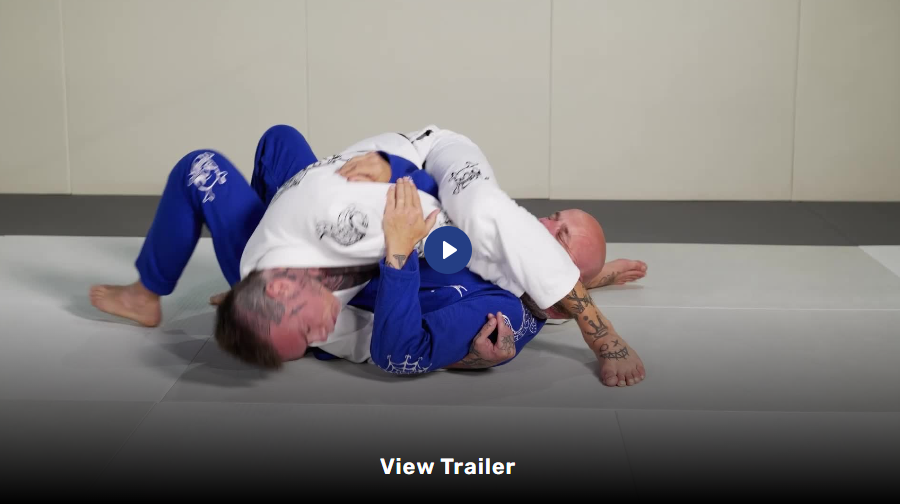
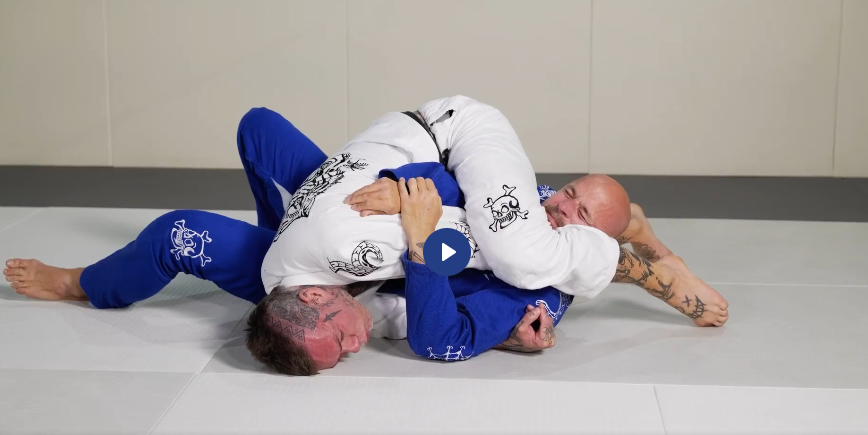
The Lapel Chokes From Everywhere 2 Miko Hytonen DVD is a Gi-focused submission instructional built around turning the lapel into a constant choking threat from guard, side control, mount, the back, and transitional spots.
Miko Hytönen presents the material as a connected system rather than a random bag of tricks, which is a big part of why this release feels practical instead of gimmicky.
The course looks best suited to grapplers who already understand positional control and want to add more efficient finishing routes to their Gi game, especially from common top-and-bottom positions.
Its biggest strength is variety without total chaos: you get attacks with your own lapel, the opponent’s lapel, and several chains that connect classic chokes to more modern lapel control ideas.
The Lapel Chokes From Everywhere 2 Miko Hytonen DVD is the kind of instructional that immediately appeals to a certain type of Gi grappler: the one who loves finding submissions in places other people stop looking. On the product page, Miko Hytönen frames it as a systematic way to turn the gi into a constant threat, with attacks available from guard, passing, side control, scrambles, mount, and the back rather than from one narrow specialist position.
That broad promise is what makes this release interesting right away. After going through what is listed for the Lapel Chokes From Everywhere 2 Miko Hytonen DVD, the biggest positive is that it does not read like a “watch me do weird lapel stuff” project.
Lapel Chokes for all BJJ Folks
Lapel attacks have always occupied a funny place in Gi Jiu-Jitsu. They are undeniably effective, but a lot of grapplers either underuse them or treat them like occasional trick submissions. The smarter approach is to see the lapel for what it really is: extra gripping material that can help you create pressure, kill posture, trap limbs, and tighten finishing angles without needing explosive movement.
That is why a good Gi lapel choke system can be so valuable. It changes the way you look at ordinary positions. Closed guard stops being just a sweep-or-armbar platform. Side control becomes more than pinning. Mount and back control become even nastier because the clothing itself adds another layer of control. When somebody can consistently weaponize fabric, they become harder to predict and much harder to defend late in exchanges.
The other reason lapel instructionals matter is that Gi players often get stuck learning isolated finishes instead of connected attacking logic. A strong lapel game works best when grips, traps, and chokes all feed each other. Based on the course description and chapter layout, that is clearly the lane this instructional wants to live in, and that is a good sign for anyone looking for a practical Gi submission instructional rather than a flashy compilation.
Who Is Miko Hytönen?
Miko Hytönen’s appeal as an instructor is not just that he is known online. He is a Brazilian Jiu-Jitsu black belt coach and a well-known BJJ personality whose technique content built a wide following, while an older profile from 2019 shows a useful bit of background: at that point he had been training for about seven years, was working out of Lilius & Barnatt in southern Spain, and said he had started leaning more heavily into Gi training and lapel work.
Miko is somebody whose public identity and technical interests have grown in the same direction over time. That matters for the Miko Hytonen instructional angle here. Plenty of instructors can demonstrate lapel chokes, but not all of them have spent years building a recognizable style around creative choking mechanics and teaching them in digestible ways. Lapel experimentation has long been a key part of his game, so this topic feels like a natural fit rather than a random product assignment.
Full Lapel Chokes From Everywhere 2 Miko Hytonen DVD Review
The Full Lapel Chokes From Everywhere 2 Miko Hytonen DVD reads like a structured Gi submission instructional for people who want reliable choke mechanics, recurring lapel control concepts, and smoother transitions between attacks. That is a much stronger sales point than novelty alone, and it is why this course deserves serious attention from the right audience.
Volume 1 – Attacking with Own Lapel
The first part of the Lapel Chokes From Everywhere 2 Miko Hytonen DVD opens with an intro and then moves straight into attacking the arm with your own lapel, an Ezekiel variation using the opponent’s lapel, lapel lasso attacks, and two triangle setups tied to lapel control.
That is a smart opening because it immediately establishes range: this is not just about one classic choke, but about using lapel control to create arm traps, neck threats, and transitions into other submissions.
What stands out here is the blend of direct finishing and setup-based thinking. Miko is not treating the lapel as a final flourish added at the very end of a sequence. He is using it earlier to shape the exchange.
Volume 2 – Attacking with Opponent’s Lapel
Part 2 shifts more clearly into guard-specific offense. The listed material includes combo attacks with the opponent’s lapel, such as closed guard lapel chokes and armpit twist strangles. In other words, the course doubles down on guard rather than rushing away from it after one section.
That is a good decision. Closed guard can become stale if all you do is chase the usual collar chokes and armbars, but lapel-assisted work gives it another dimension. It also suggests that the Lapel Chokes From Everywhere 2 Miko Hytonen DVD is at its best when it takes common Gi positions and makes them more annoying, more layered, and harder to read.
Voolume 3 – Lapel Arm Traps
The next volume moves to top pressure and includes lapel arm trap attacks. The standout or me is the lapel paper cutter. A lot of grapplers love lapel chokes from side control, but their game falls apart when the opponent starts moving. The inclusion of arm traps, step-over pressure, and a side-control-to-triangle transition suggests Miko is trying to keep the section dynamic instead of purely static. That makes Part 3 one of the more intriguing segments in the whole release.
Volum 4 – Mount & Back Attacks
The final part covers a lapel mount attack, and a bunch of related chokes, such as a lapel helicopter finish and a lapel bow-and-arrow variation, before the outro. That is a strong finishing stretch because it goes to two of the most decisive control positions in Gi Jiu-Jitsu: mount and the back.
What I like about this layout is that the Lapel Chokes From Everywhere 2 Miko Hytonen DVD does genuinely seem to earn its “rom everywhere framing. The course starts with more experimental-feeling guard and lapel-lasso ideas, then keeps widening into closed guard, side control, mount, and back finishes.
Strangling With the Cloth
The best way to use the Lapel Chokes From Everywhere 2 Miko Hytonen DVD is not to binge it once and then try to remember twelve grips during sparring. This looks like a course that rewards theme-based study.
Pick one zone at a time: first closed guard, then side control, then mount and back. For each zone, isolate one lapel entry, one direct choke, and one transition submission. That is how you make a system feel like part of your actual game rather than trivia.
It also helps to treat this material as positional enrichment rather than a wholesale reinvention. If you already play a decent closed guard, use the lapel sequences to strengthen what you do well. If you are a top player, add one or two lapel threats from side control instead of trying to become a full-time trickster overnight. Instructionals built around fabric manipulation tend to land best when they supplement a good base, not replace it.
For competitors, the upside is obvious: lapel attacks can slow people down, punish defensive shelling, and create finishes from otherwise stable positions. For hobbyists, the value is just as real. A well-built lapel game often lets you use timing and grip intelligence instead of speed.
That is one of the reasons the Lapel Chokes From Everywhere 2 Miko Hytonen DVD should appeal to more than just young, athletic Gi specialists.
The product page explicitly points this course toward Gi practitioners looking to expand their submission arsenal, especially intermediate and advanced players who want a more strategic edge and who are tired of opponents shutting down traditional attacks. That sounds accurate.
Solid blue belts and above are probably the sweet spot. They tend to have enough positional awareness to understand where these lapel controls fit, but still have plenty of room to become much nastier with their finishing chains. Purple belts, brown belts, and black belts who enjoy specialized Gi attacks should have a lot of fun here too.
Brand-new white belts are the least ideal audience. Not because the material is impossible, but because lapel offense works much better when you already understand posture breaking, angle creation, and how not to lose dominant positions while hunting submissions. This is much more of a “make your Gi game more dangerous” course than a foundations course.
Pros & Potential Drawbacks
Pros:
Broad positional coverage. The course includes guard, closed guard, side control, mount, and back attacks rather than living in one narrow corner of the Gi game.
System feel instead of random tricks. The sales page repeatedly frames the material as a connected blueprint for control, pressure, and submission, and the chapter layout supports that.
Good balance of direct chokes and setups. Arm traps, lapel lassos, triangles, paper-cutter variations, and back attacks give the material more depth than a one-note choke series.
Useful for different game styles. Guard players, top-pressure players, and back hunters all seem to get something here.
Instructor-topic fit is strong. Miko’s public identity and prior bio material both line up well with a lapel-heavy submission course.
Potential Drawbacks:
Probably not ideal for true beginners. White belts without a decent Gi base may struggle to apply the details cleanly in live rounds.
Breadth can cut both ways. Covering so many positions is exciting, but some buyers may prefer deeper specialization in one area rather than a wider submission map.
Lapel Nastiness
The Lapel Chokes From Everywhere 2 Miko Hytonen DVD looks like a strong release because it understands what makes lapel offense worthwhile in the first place. It is not just about catching flashy strangulations. It is about using the Gi as a control tool that quietly turns ordinary positions into finishing positions. Based on the product structure, that idea carries through the whole DVD.
A 13-year-old boy in Ribas do Rio Pardo, Brazil, was allegedly forced to run a belt-whipping gauntlet during a Jiu-Jitsu session tied to a municipal social-sports project.
The family says the boy returned home bruised, needed medical treatment, and the case was reported to police as intentional bodily injury.
The instructor, Haroldo Gonçalves Inverso, was removed from his role, classes were suspended, and the city opened an administrative disciplinary process.
What turned this into a bigger scandal was the defense from supporters, who reportedly described the BJJ gauntlet punishment as a “traditional” practice meant to build resilience.
That combination — a minor, a city-backed youth project, visible injuries, and a “this is normal” defense — is exactly why this story is hitting so hard.
The BJJ gauntlet punishment story out of Brazil is ugly enough on its own. A 13-year-old boy reportedly left training with bruises after being made to pass through what local reporting described as a “corredor polonês” — essentially a gauntlet where other participants strike the person moving through it with belts.
But what really makes this story combustible is where it allegedly happened: not in some rogue basement gym, but inside a youth program connected to the local municipality and promoted as a positive outlet for children and teenagers.
Another BJJ Gauntlet Story
Combat sports can survive a lot of bad headlines. What they do not survive cleanly are stories involving minors, visible injuries, and adults trying to frame humiliation as character-building.
That is why this BJJ gauntlet punishment case has traveled well beyond one town in Mato Grosso do Sul. It touches the exact fear parents have when they put their kids into martial arts: that “discipline” can become a cover word for abuse if the wrong adult is running the room.
The setting matters here. The Jiu-Jitsu project had been publicly presented as an opportunity for kids to build discipline, confidence, and healthy routines through sport, and posts tied to the program highlighted competition results and the role of coach Haroldo Inverso as a municipal sports employee.
According to the police report details published locally, the incident happened on March 26. The boy, who had reportedly been in the program for around 45 days, said he was made to go through a corridor formed by other practitioners striking him with belts.
He allegedly crossed that corridor four times and did so without his Gi, which helps explain why the bruising shown afterward looked so severe.
The family says he came home with bruises across his back, arms, and torso, and was later taken for medical treatment for pain and fever. A forensic body exam reportedly found serious injuries, although police reportedly treated the case as a lighter bodily-injury classification while the investigation proceeds.
Just as damaging is the emotional side. The father said his son was not only hurt physically, but afraid of becoming a joke afterward. That detail matters because one of the biggest myths around “old-school punishments” in martial arts is that they toughen kids up. In reality, they can just as easily humiliate a young student out of the sport altogether.
How A Youth Jiu-Jitsu Project Became A Police Case
Once the family went to police, this stopped being an internal gym controversy and became a public scandal. Local reporting says the case was registered as intentional bodily injury, the instructor was removed from his role, and the municipality suspended Jiu-Jitsu classes while opening a disciplinary process.
This is also where the BJJ gauntlet punishment angle becomes bigger than one bad decision in one class. Municipal sports projects exist because local governments want sports to function as prevention, guidance, and social development.
Once a youth project ends with a child leaving bruised and a police investigation following behind, the entire sales pitch of “martial arts build character” comes under pressure.
The backlash inside Jiu-Jitsu was predictable. The state federation publicly repudiated violence and humiliation in the sport, while other organizations reportedly condemned what happened but noted they do not directly supervise individual academies or instructors.
In other words, the sport’s governing bodies can reject the behavior morally, but the actual accountability here still runs through police and local government.
The reason this BJJ gauntlet punishment case is likely to stick is simple: it hits every nerve at once. It involves a child, a public-facing youth program, visible injuries, a police investigation, and a defense that sounds completely out of step with how modern martial arts want to present themselves. That is a brutal combination.
And for BJJ, the long-term problem is not just this one case. It is the suspicion it creates. Every parent now reading about this will ask the same question: if a gym talks about discipline, what exactly do they mean by it?
That is why this BJJ gauntlet punishment story matters more than a single ugly headline. It forces the sport to decide, publicly and clearly, whether “old-school” methods still get protected when a kid is the one paying for them.
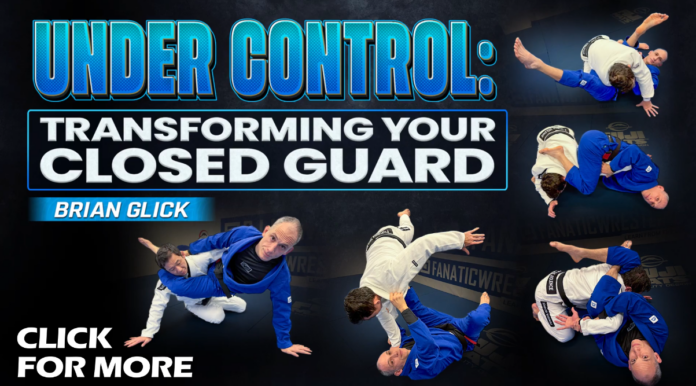
The Transforming Your Closed Guard Brian Glick DVD is a control-first closed guard instructional built around efficiency, timing, posture management, and linked attacks.
Its strongest selling point is structure: the course moves from foundations and entries into specific systems.
Brian Glick is a longtime John Danaher student, a black belt, and the head instructor at 555 Jiu-Jitsu in Brooklyn.
This looks especially useful for smaller grapplers, methodical players, and anyone whose closed guard currently feels more reactive than offensive.
The Transforming Your Closed Guard Brian Glick DVD looks like exactly the kind of instructional Brian Glick should be making at this stage of his teaching career. Rather than selling closed guard as a magical position that fixes everything on its own, the course is framed as a full system for making the position tight, efficient, and reliable regardless of size or athleticism.
A smart angle, because closed guard still gets taught badly in a lot of rooms: people learn a few isolated submissions, but not the layers of posture control, distance management, grip fighting, and transition logic that actually make the position work.
Glick’s pitch is that control comes first, attacks come second, and the whole thing should function through timing and leverage rather than strength. That is a very Danaher-adjacent philosophy, but it also fits Glick’s own reputation for clarity and practicality.
The Closed Guard – Again
Closed guard is one of those positions that never really leaves Jiu-Jitsu, even when trends swing hard toward leg locks, wrestling, and open guard movement. People love to call it old school, but that misses the point. Closed guard remains relevant because it gives the bottom player a direct way to slow tempo, limit passing lanes, and force the top player into a problem-solving exchange. When it works, it does not feel outdated at all. It feels suffocating. That is why an instructional like the Transforming Your Closed Guard Brian Glick DVD still has a real place in the market.
What matters with closed guard is not just whether you can lock your legs. It is whether you can manage posture, create angles, threaten sweeps, and keep the opponent in a cycle of reactions. The instructional page leans heavily into those exact themes: control before submission, posture breaking, seamless transitions, and high-percentage attacks without unnecessary complexity. In practical training, closed guard becomes dangerous when the top person never gets to settle into comfort, not when the bottom player desperately chases one submission at a time.
That also explains why the Transforming Your Closed Guard Brian Glick DVD seems especially suited to people who are not relying on speed or explosive inversion-heavy exchanges. Glick explicitly frames the material around precision, timing, and intelligent control, with a particular appeal to smaller grapplers and anyone looking for a technical edge.
Danaher’s Greatest Coaching Creation – Brian Glick
Brian Glick’s background matters a lot here because this sort of instructional lives or dies on trust. According to the course page, he is a black belt under John Danaher and one of BJJ Fanatics’ more established instructors. His academy site describes him as the head instructor at 555 Jiu-Jitsu in Brooklyn and says he has spent more than 25 years developing a structured, thoughtful, and safe approach to teaching Jiu-Jitsu.
Glick began Jiu-Jitsu in 2000, had no previous martial arts background, and was not an athlete before starting. He focuses on clarity, composure, and problem-solving rather than brute-force performance. Brian is one of John Danaher’s early black belts from the Blue Basement era, which gives extra weight to his systematic approach.
For this specific topic, that background is a plus. Closed guard instruction is usually at its best when taught by someone who clearly values positional mechanics over flashy improvisation. Glick’s coaching profile points in that exact direction: patient teacher, system builder, longtime Danaher student, and a coach whose style is meant to make high-level Jiu-Jitsu more accessible.
Transforming Your Closed Guard Brian Glick DVD Review
What stands out immediately is that the Transforming Your Closed Guard Brian Glick DVD is marketed less as a highlight reel of tricks and more as a structured answer to a common problem: too many grapplers end up using closed guard as a stalling shell instead of a genuine attacking hub.
Volume 1 – Foundations
The Transforming Your Closed Guard Brian Glick DVD opens with a foundations section built around knee pull, elbow awareness, heisting, and breaking grips. That is a strong start, because too many closed guard instructionals rush past the small mechanics that determine whether everything else will work later. If Glick spends real time on elbow awareness and grip breaking, that is exactly the kind of nuts-and-bolts material you actually need.
What I like here is the implied priority order. Before you start hunting submissions, you need to understand how to pull the opponent into your structure, how to recognize where their elbows and posture are vulnerable, and how to strip away the grips that let them feel stable. Not glamorous content, true, but it is the kind of content that makes the rest of the Transforming Your Closed Guard Brian Glick DVD more believable as a real system.
Volume 2 – Entries To Closed Guard
The entry section covers standing entries through Yoko Tomoe Nage and Uchi Mata, plus open guard entries against a partner with one knee up or a standing partner via Tomoe Nage.
This is a very welcome inclusion. A lot of closed guard material assumes you are already there, which is fine for drilling but not enough for actual rolling. If a course wants to be a system, it needs a bridge into the position, and the Transforming Your Closed Guard Brian Glick DVD appears to provide one.
I also like that the entries are not overly broad. Rather than trying to become an all-purpose takedown instructional, Glick seems to stay focused on practical routes that feed directly into his closed guard ecosystem. That makes the course feel tighter. You are not learning random standing techniques; you are learning how to arrive in the exact position the rest of the course is built around.
Volume 3 – Side Scissor System
The side scissor system looks like one of the real feature attractions of the Transforming Your Closed Guard Brian Glick DVD. The page breaks it into control and maintenance, then two attack series: one focused on taking the back and another on sweeping from underneath.
The attacks listed under it are varied enough to show range, but still connected enough to feel like a real positional family rather than a bag of disconnected options. From a review standpoint, this is exactly where the course seems to separate itself from basic closed guard products. A named subsystem like this shows that Glick is teaching how to stabilize a specific branch of the position before opening up rear strangles, rolling armbars, flower sweeps, pendulum sweeps, knee levers, and sumi gaeshi options.
Volume 4 – Top Lock System
The top lock section may be the other major selling point. It is organized into control and maintenance, then an armlock series and a trap triangle series. That is a smart structure because top lock is one of those closed guard tools that instantly makes your attacks feel more connected if you understand it properly.
The inclusion of stack counters and troubleshooting for losing the shoulder is especially reassuring, because those are exactly the moments where many armbar-heavy instructionals become unrealistic. The triangle branch also looks well chosen. Rather than stopping at a standard triangle, Glick includes reverse triangle and reverse legs kimura material, which suggests the Transforming Your Closed Guard Brian Glick DVD is trying to teach overlap and continuation rather than one-and-done finishing attempts.
Volume 5 – Attacking Upright Posture
This part addresses one of the most important closed guard realities: eventually, plenty of people will posture up, kneel tall, or stand to escape. Glick splits this into sweeps against a kneeling partner and sweeps against a standing partner, which is exactly how most people should think about the problem.
The kneeling set includes several hip bump variations and follow-ups into clamp and pinch headlock scenarios, while the standing set includes scoop sweep, leg trap sweep, and K guard. Honestly, this is what might determine how useful the Transforming Your Closed Guard Brian Glick DVD feels in the gym.
A closed guard system is only as good as its answer to posture. If the top player can simply get upright and start disengaging, the whole thing falls apart. By building a full posture-response section, Glick is at least addressing the most common way people try to neutralize the position.
Volume 6 – Back Attacks And Submission Overlaps
The closing material is brief on paper, but strategically important. The page lists back attacks from the surrounding sequences, specifically rear strangle and ushiro sankaku, then highlights overlapping submissions like Juji Gatame variations, trap triangle and reverse triangle options, and the reverse legs kimura.
Even if this part is not the longest in the course, it shows a coherent design principle: different branches of the system keep feeding the same high-value finishes. They reinforce recurring threats from multiple angles, so you end up with stronger recognition during live rounds. In that sense, the Transforming Your Closed Guard Brian Glick DVD seems built less around volume and more around repeated exposure to a tight set of core attacks.
There’s Still a Place for the Closed Guard in Modern BJJ
In practical terms, the best way to use the Transforming Your Closed Guard Brian Glick DVD would be in phases. Start with the foundations and one entry pattern, then pair that with either the side scissor system or the top lock system for a few weeks of focused training. That is especially true for hobbyists.
If you try to absorb every listed attack at once, you will probably miss the real value, which is the control logic tying the material together. This also looks like the kind of course that should translate well to positional sparring. One round can begin with grip-breaking and knee-pull work. Another can start directly in top lock.
Another can start with the top player already upright, forcing you to solve the exact problems Glick lays out in that section. That kind of targeted training is where a system-based instructional usually proves its worth.
Competition players can get value here too, but not necessarily because this is ultra-sport-specific material. The appeal is that the closed guard can still be a very efficient tempo changer in training and in matches, especially for athletes who want to slow down bigger or scramblier opponents.
The clearest audience for the Transforming Your Closed Guard Brian Glick instructional is smaller grapplers, methodical technicians, and anyone who wants a less chaotic bottom game. The product page says that outright, and the structure backs it up. This is not positioned as a wild, hyper-athletic course. It is positioned as a way to neutralize advantages, create pressure, and build reliable attacking chains.
I also think solid white belts, blue belts, and early purple belts would likely get a lot from it, provided they are willing to study patiently. Brand-new white belts may still need a coach helping them understand basic posture, angle changes, and arm positioning in live time, but the course does not seem overly abstract. In fact, its biggest selling point may be that it aims to simplify rather than overwhelm.
Who may not be the best fit? Grapplers who dislike closed guard on principle, or competitors who only want ultra-modern open guard layers, may not connect with it as strongly. Also, anyone looking for a highly detailed runtime-heavy mega-course might be disappointed if they expect a giant encyclopedia, because the product page emphasizes system headings and outcomes more than exhaustive runtime detail.
Pros & Potential Drawbacks
Pros:
Excellent structural clarity. The course is laid out in a logical sequence from foundations and entries into specific attacking subsystems and posture responses.
Strong focus on control before submission. That usually makes instruction more usable in live rolling than products built around isolated finishes.
Good fit for smaller grapplers. Glick explicitly frames the material around leverage, timing, and precision rather than athleticism.
Promising subsystem design. The side scissor system and top lock system both look like real game-building modules, not random chapter clusters.
Useful answers to upright posture. Sweeps against kneeling and standing partners are essential if you want a closed guard that survives contact with experienced passers.
Credible instructor for this topic. Glick’s long Danaher lineage and teaching reputation fit a detail-driven, principle-based closed guard course.
Potential Drawbacks:
The product page does not disclose runtime. That makes it harder to judge depth versus price compared with other instructionals.
Less ideal for people who barely use closed guard at all. The system looks strong, but it still assumes you want closed guard to be a real part of your game.
Back to Basicss
The Transforming Your Closed Guard Brian Glick DVD looks like one of those instructionals that should age well. It is not trying to win you over with chaos or novelty. It is trying to make your closed guard tighter, smarter, and more dependable through structure, posture control, and linked attacks. For a lot of grapplers, that is far more valuable than another course full of cool-looking moves they never quite land.
The ecological BJJ debate just got a lot sharper after Lachlan Giles argued that ecological training and explicit instruction are not natural enemies.
Greg Souders then pushed back from a different angle, saying “ecological” is now becoming a buzzword in Jiu-Jitsu and that too many coaches are using the language without doing the deeper work.
That matters because the fight is no longer just about games vs drilling. It is about who gets to claim they are teaching the “modern” way.
The twist is that even coaches and rooms outside the hardcore ecological camp have clearly embraced task-based training ideas, which makes the old either-or framing look weaker by the week.
For months, the ecological BJJ debate has been framed like a culture war: old-school instruction on one side, games and constraints on the other. But the latest comments from Lachlan Giles and Greg Souders suggest the real split may be even messier than that.
Giles is saying the whole thing has been turned into a false dichotomy, while Souders is warning that “ecological” is now being thrown around so loosely that it risks becoming just another shiny coaching label.
That is exactly why this story has legs beyond niche coaching circles. The ecological BJJ debate is no longer just about how to run class. It is now about credibility, authority, and who gets to say they actually understand how grapplers learn.
Why The Ecological BJJ Debate Just Got Messier
Lachlan Giles did not come in swinging like someone trying to bury traditional coaching. Instead, he cut right into the cleanest myth in the conversation: that ecological methods and explicit instruction have to cancel each other out.
In his view, they do not. He separated the constraints-led approach from ecological dynamics itself and argued that coaches can still use direct teaching alongside structured games and live problem-solving.
Yeah, I agree it’s a false dichotomy. – Lachlan Giles –
That line matters because Giles is not some random internet contrarian. He is one of the most respected analytical minds in Jiu-Jitsu, and his point lands precisely because it sounds less ideological than practical.
He is basically saying: stop acting like a coach has to pick one religion. Build good training, then use the tools that help.
Lachlan Giles Says Explicit Instruction Was Never The Enemy
Giles’ broader point is even more interesting than the headline-friendly part. He explained in a recent podast that constraints-led training is a practical method built around goals, scenarios, and boundaries, while ecological dynamics is the deeper theory about how movement learning happens.
That distinction is easy to blur on social media, but it changes the whole argument. If constraints-led work is just one coaching approach, then explicit instruction is not automatically banned from the room.
That should sound familiar to anyone who has ever learned Jiu-Jitsu in the real world rather than in a philosophical echo chamber. Plenty of great rooms already blend short verbal instruction with live, constrained tasks. The athlete gets a clear problem, a clear goal, resistance, and enough guidance not to drift into nonsense.
Greg Souders Thinks “Ecological” Is Already Being Hijacked
If Giles attacked the false war, Greg Souders attacked the people cashing in on it. His warning was not really that ecological training is wrong. It was that the term is being diluted by coaches who want the marketing benefit without the intellectual work.
In other words, the ecological BJJ debate may be getting popular at exactly the moment its language is becoming least precise.
People are so eager to say they know it. – Greg Souders –
That hits hard because it describes a pattern everybody in BJJ has seen before. A new concept gets traction, people slap the label on what they were already doing, and suddenly half the sport claims it was ahead of the curve all along. Souders’ frustration seems to be that “ecological” is at risk of becoming less a method and more a badge. Once that happens, the conversation stops being about learning and starts being about branding.
What John Danaher And Task-Based Training Do To TheArgument
The funniest part of this whole saga is that the sport has already moved toward the middle, even while people online keep yelling from the edges.
Greg Souders’ influence on eco being adopted to BJJ is undeniable, but it is also argued that even John Danaher and New Wave-style rooms see value in task-based training. It specifically described constrained rounds tied to positional goals in high-level prep.
That lines up with what athletes like Jason Rau have said about Danaher’s coaching emphasis too. Rau described a system built less around memorizing isolated moves and more around understanding positions deeply enough to create your own answers.
That is not identical to ecological language, but it absolutely makes the ecological BJJ debate harder to reduce to “thinking coach” versus “old-school coach.”
The Real Fight Isn’t Drilling Vs Games, It’s Who Owns The Future Of Coaching
This is why the story matters beyond seminar nerds and coaching Twitter. The ecological BJJ debate now sits at the center of a bigger struggle over status in the sport. Lachlan Giles is saying the camps are not as incompatible as people pretend.
Greg Souders is saying too many people are using the language without understanding the method. Put those together, and the real argument becomes obvious: not whether training should evolve, but who gets to define what “evolved” actually means.
And that is where this gets genuinely explosive. Because once terminology becomes currency, everyone wants to own it. Coaches want to look modern. Students want to feel like they are training smarter.
Gyms want to market a better system. The ecological BJJ debate is not cooling off any time soon, because at this point it is about much more than games, drilling, or instruction