




Key Takeaways
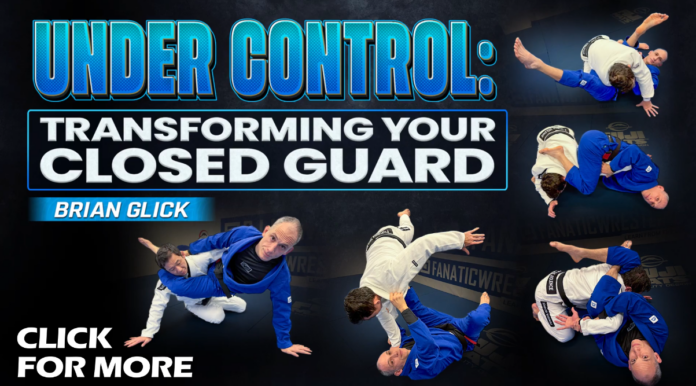
- The Transforming Your Closed Guard Brian Glick DVD is a control-first closed guard instructional built around efficiency, timing, posture management, and linked attacks.
- Its strongest selling point is structure: the course moves from foundations and entries into specific systems.
- Brian Glick is a longtime John Danaher student, a black belt, and the head instructor at 555 Jiu-Jitsu in Brooklyn.
- This looks especially useful for smaller grapplers, methodical players, and anyone whose closed guard currently feels more reactive than offensive.
- Rating: 9/10
DOWNLOAD TRANSFORMING YOUR CLOSED GUARD BRIAN GLICK DVD
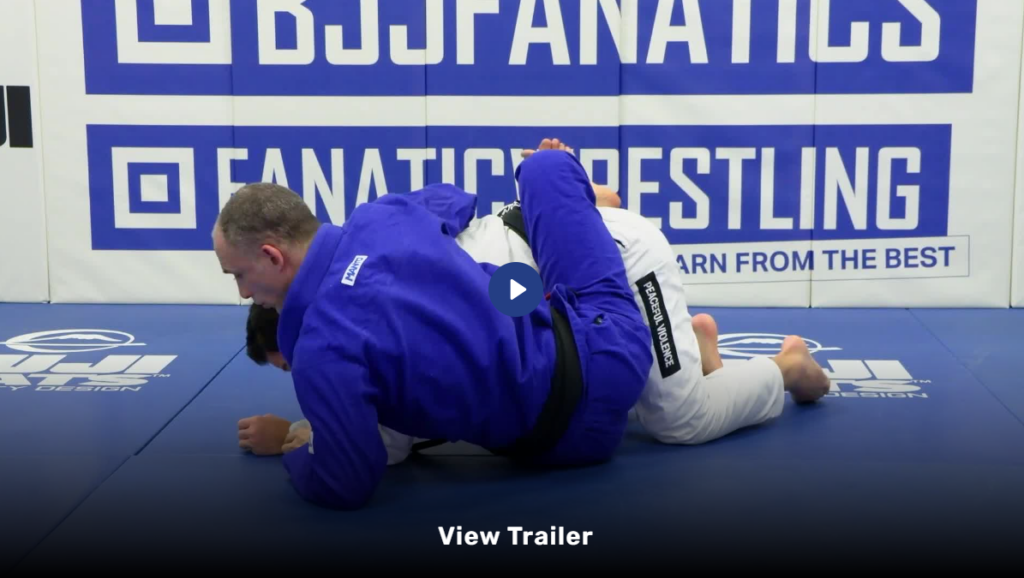
The Transforming Your Closed Guard Brian Glick DVD looks like exactly the kind of instructional Brian Glick should be making at this stage of his teaching career. Rather than selling closed guard as a magical position that fixes everything on its own, the course is framed as a full system for making the position tight, efficient, and reliable regardless of size or athleticism.
A smart angle, because closed guard still gets taught badly in a lot of rooms: people learn a few isolated submissions, but not the layers of posture control, distance management, grip fighting, and transition logic that actually make the position work.
Glick’s pitch is that control comes first, attacks come second, and the whole thing should function through timing and leverage rather than strength. That is a very Danaher-adjacent philosophy, but it also fits Glick’s own reputation for clarity and practicality.
The Closed Guard – Again
Closed guard is one of those positions that never really leaves Jiu-Jitsu, even when trends swing hard toward leg locks, wrestling, and open guard movement. People love to call it old school, but that misses the point. Closed guard remains relevant because it gives the bottom player a direct way to slow tempo, limit passing lanes, and force the top player into a problem-solving exchange. When it works, it does not feel outdated at all. It feels suffocating. That is why an instructional like the Transforming Your Closed Guard Brian Glick DVD still has a real place in the market.
What matters with closed guard is not just whether you can lock your legs. It is whether you can manage posture, create angles, threaten sweeps, and keep the opponent in a cycle of reactions. The instructional page leans heavily into those exact themes: control before submission, posture breaking, seamless transitions, and high-percentage attacks without unnecessary complexity. In practical training, closed guard becomes dangerous when the top person never gets to settle into comfort, not when the bottom player desperately chases one submission at a time.

That also explains why the Transforming Your Closed Guard Brian Glick DVD seems especially suited to people who are not relying on speed or explosive inversion-heavy exchanges. Glick explicitly frames the material around precision, timing, and intelligent control, with a particular appeal to smaller grapplers and anyone looking for a technical edge.
Danaher’s Greatest Coaching Creation – Brian Glick
Brian Glick’s background matters a lot here because this sort of instructional lives or dies on trust. According to the course page, he is a black belt under John Danaher and one of BJJ Fanatics’ more established instructors. His academy site describes him as the head instructor at 555 Jiu-Jitsu in Brooklyn and says he has spent more than 25 years developing a structured, thoughtful, and safe approach to teaching Jiu-Jitsu.
Glick began Jiu-Jitsu in 2000, had no previous martial arts background, and was not an athlete before starting. He focuses on clarity, composure, and problem-solving rather than brute-force performance. Brian is one of John Danaher’s early black belts from the Blue Basement era, which gives extra weight to his systematic approach.

For this specific topic, that background is a plus. Closed guard instruction is usually at its best when taught by someone who clearly values positional mechanics over flashy improvisation. Glick’s coaching profile points in that exact direction: patient teacher, system builder, longtime Danaher student, and a coach whose style is meant to make high-level Jiu-Jitsu more accessible.
Transforming Your Closed Guard Brian Glick DVD Review
What stands out immediately is that the Transforming Your Closed Guard Brian Glick DVD is marketed less as a highlight reel of tricks and more as a structured answer to a common problem: too many grapplers end up using closed guard as a stalling shell instead of a genuine attacking hub.
Volume 1 – Foundations
The Transforming Your Closed Guard Brian Glick DVD opens with a foundations section built around knee pull, elbow awareness, heisting, and breaking grips. That is a strong start, because too many closed guard instructionals rush past the small mechanics that determine whether everything else will work later. If Glick spends real time on elbow awareness and grip breaking, that is exactly the kind of nuts-and-bolts material you actually need.
What I like here is the implied priority order. Before you start hunting submissions, you need to understand how to pull the opponent into your structure, how to recognize where their elbows and posture are vulnerable, and how to strip away the grips that let them feel stable. Not glamorous content, true, but it is the kind of content that makes the rest of the Transforming Your Closed Guard Brian Glick DVD more believable as a real system.
Volume 2 – Entries To Closed Guard
The entry section covers standing entries through Yoko Tomoe Nage and Uchi Mata, plus open guard entries against a partner with one knee up or a standing partner via Tomoe Nage.
This is a very welcome inclusion. A lot of closed guard material assumes you are already there, which is fine for drilling but not enough for actual rolling. If a course wants to be a system, it needs a bridge into the position, and the Transforming Your Closed Guard Brian Glick DVD appears to provide one.
I also like that the entries are not overly broad. Rather than trying to become an all-purpose takedown instructional, Glick seems to stay focused on practical routes that feed directly into his closed guard ecosystem. That makes the course feel tighter. You are not learning random standing techniques; you are learning how to arrive in the exact position the rest of the course is built around.
Volume 3 – Side Scissor System
The side scissor system looks like one of the real feature attractions of the Transforming Your Closed Guard Brian Glick DVD. The page breaks it into control and maintenance, then two attack series: one focused on taking the back and another on sweeping from underneath.
The attacks listed under it are varied enough to show range, but still connected enough to feel like a real positional family rather than a bag of disconnected options. From a review standpoint, this is exactly where the course seems to separate itself from basic closed guard products. A named subsystem like this shows that Glick is teaching how to stabilize a specific branch of the position before opening up rear strangles, rolling armbars, flower sweeps, pendulum sweeps, knee levers, and sumi gaeshi options.
Volume 4 – Top Lock System
The top lock section may be the other major selling point. It is organized into control and maintenance, then an armlock series and a trap triangle series. That is a smart structure because top lock is one of those closed guard tools that instantly makes your attacks feel more connected if you understand it properly.
The inclusion of stack counters and troubleshooting for losing the shoulder is especially reassuring, because those are exactly the moments where many armbar-heavy instructionals become unrealistic. The triangle branch also looks well chosen. Rather than stopping at a standard triangle, Glick includes reverse triangle and reverse legs kimura material, which suggests the Transforming Your Closed Guard Brian Glick DVD is trying to teach overlap and continuation rather than one-and-done finishing attempts.
Volume 5 – Attacking Upright Posture
This part addresses one of the most important closed guard realities: eventually, plenty of people will posture up, kneel tall, or stand to escape. Glick splits this into sweeps against a kneeling partner and sweeps against a standing partner, which is exactly how most people should think about the problem.
The kneeling set includes several hip bump variations and follow-ups into clamp and pinch headlock scenarios, while the standing set includes scoop sweep, leg trap sweep, and K guard. Honestly, this is what might determine how useful the Transforming Your Closed Guard Brian Glick DVD feels in the gym.
A closed guard system is only as good as its answer to posture. If the top player can simply get upright and start disengaging, the whole thing falls apart. By building a full posture-response section, Glick is at least addressing the most common way people try to neutralize the position.
Volume 6 – Back Attacks And Submission Overlaps
The closing material is brief on paper, but strategically important. The page lists back attacks from the surrounding sequences, specifically rear strangle and ushiro sankaku, then highlights overlapping submissions like Juji Gatame variations, trap triangle and reverse triangle options, and the reverse legs kimura.
Even if this part is not the longest in the course, it shows a coherent design principle: different branches of the system keep feeding the same high-value finishes. They reinforce recurring threats from multiple angles, so you end up with stronger recognition during live rounds. In that sense, the Transforming Your Closed Guard Brian Glick DVD seems built less around volume and more around repeated exposure to a tight set of core attacks.
There’s Still a Place for the Closed Guard in Modern BJJ
In practical terms, the best way to use the Transforming Your Closed Guard Brian Glick DVD would be in phases. Start with the foundations and one entry pattern, then pair that with either the side scissor system or the top lock system for a few weeks of focused training. That is especially true for hobbyists.
If you try to absorb every listed attack at once, you will probably miss the real value, which is the control logic tying the material together. This also looks like the kind of course that should translate well to positional sparring. One round can begin with grip-breaking and knee-pull work. Another can start directly in top lock.
Another can start with the top player already upright, forcing you to solve the exact problems Glick lays out in that section. That kind of targeted training is where a system-based instructional usually proves its worth.
Competition players can get value here too, but not necessarily because this is ultra-sport-specific material. The appeal is that the closed guard can still be a very efficient tempo changer in training and in matches, especially for athletes who want to slow down bigger or scramblier opponents.
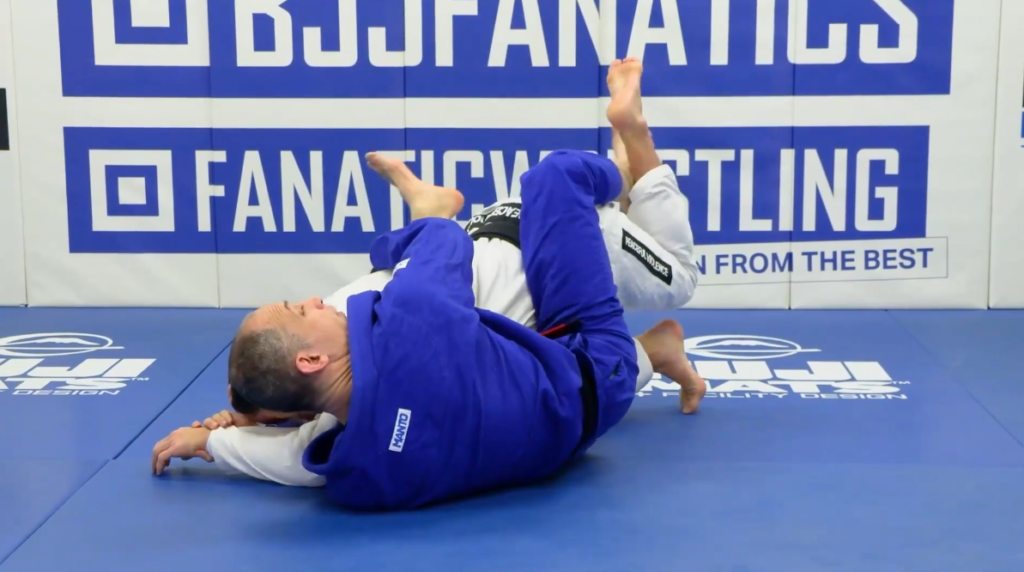
GET HERE TRANSFORMING YOUR CLOSED GUARD BRIAN GLICK DVD
Who Is This For?
The clearest audience for the Transforming Your Closed Guard Brian Glick instructional is smaller grapplers, methodical technicians, and anyone who wants a less chaotic bottom game. The product page says that outright, and the structure backs it up. This is not positioned as a wild, hyper-athletic course. It is positioned as a way to neutralize advantages, create pressure, and build reliable attacking chains.
I also think solid white belts, blue belts, and early purple belts would likely get a lot from it, provided they are willing to study patiently. Brand-new white belts may still need a coach helping them understand basic posture, angle changes, and arm positioning in live time, but the course does not seem overly abstract. In fact, its biggest selling point may be that it aims to simplify rather than overwhelm.
Who may not be the best fit? Grapplers who dislike closed guard on principle, or competitors who only want ultra-modern open guard layers, may not connect with it as strongly. Also, anyone looking for a highly detailed runtime-heavy mega-course might be disappointed if they expect a giant encyclopedia, because the product page emphasizes system headings and outcomes more than exhaustive runtime detail.
Pros & Potential Drawbacks
Pros:
- Excellent structural clarity. The course is laid out in a logical sequence from foundations and entries into specific attacking subsystems and posture responses.
- Strong focus on control before submission. That usually makes instruction more usable in live rolling than products built around isolated finishes.
- Good fit for smaller grapplers. Glick explicitly frames the material around leverage, timing, and precision rather than athleticism.
- Promising subsystem design. The side scissor system and top lock system both look like real game-building modules, not random chapter clusters.
- Useful answers to upright posture. Sweeps against kneeling and standing partners are essential if you want a closed guard that survives contact with experienced passers.
- Credible instructor for this topic. Glick’s long Danaher lineage and teaching reputation fit a detail-driven, principle-based closed guard course.
Potential Drawbacks:
- The product page does not disclose runtime. That makes it harder to judge depth versus price compared with other instructionals.
- Less ideal for people who barely use closed guard at all. The system looks strong, but it still assumes you want closed guard to be a real part of your game.
Back to Basicss
The Transforming Your Closed Guard Brian Glick DVD looks like one of those instructionals that should age well. It is not trying to win you over with chaos or novelty. It is trying to make your closed guard tighter, smarter, and more dependable through structure, posture control, and linked attacks. For a lot of grapplers, that is far more valuable than another course full of cool-looking moves they never quite land.