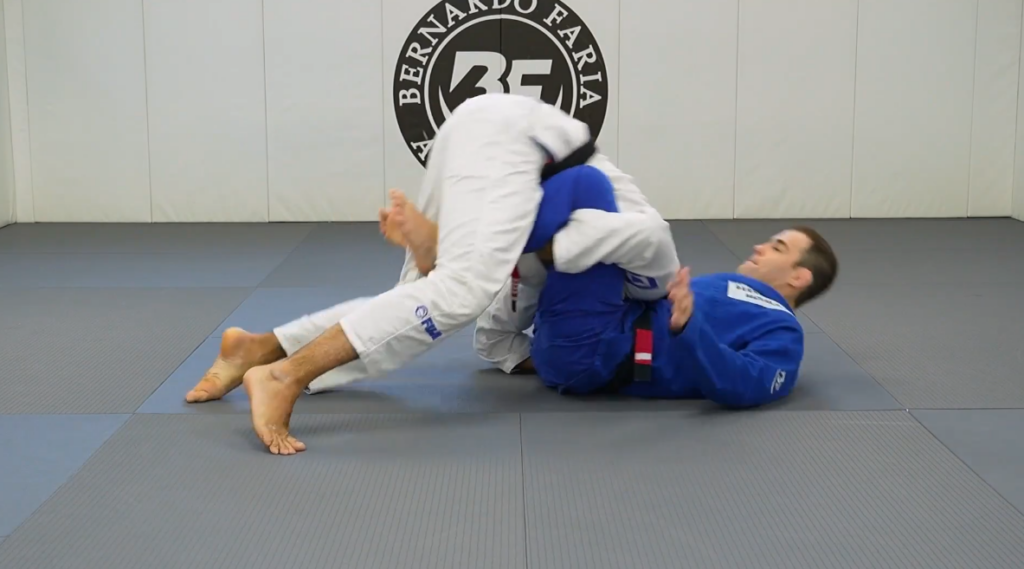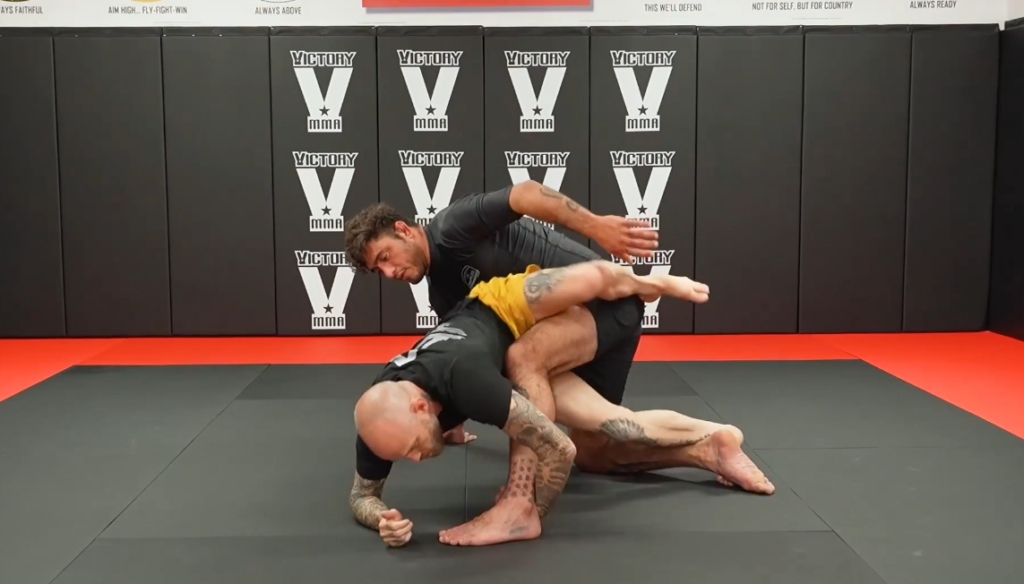





Mastering Jiu-Jitsu Escapes From Bottom Joe Woo DVD Review [2026]

Mastering Jiu-Jitsu Escapes From Bottom Joe Woo DVD Review

Key Takeaways

  • A concise, fundamentals-first escape course that targets the big four bad spots most people dread: mount, side control/north-south, knee on belly, and back control (plus turtle).
  • Gi-friendly details show up immediately (including pant-grip options), but the mechanics translate cleanly to No-Gi with small grip swaps.
  • The best value is in the repeatable structure: frame first, create space, win an angle, then recover guard or come up to your knees—no panic-scrambling required.
  • Short runtime means it’s easy to rewatch the Jiu-Jitsu Escapes From Bottom Joe Woo DVD and drill, but advanced grapplers may want more depth on layered counters and late-stage “oh no” scenarios.
  • Rating: 7.5/10

DOWNLOAD JIU-JITSU ESCAPES FROM BOTTOM JOE WOO DVD

If you’ve ever had a roll derailed by getting flattened under mount, crossfaced in side control, or stapled with knee on belly, you already know the real issue isn’t toughness—it’s having a plan. The Jiu-Jitsu Escapes From Bottom Joe Woo DVD is built around that exact problem: giving you a dependable, repeatable blueprint for surviving, creating space, and escaping without burning your gas tank in the first minute.

Joe Woo’s approach here is refreshingly practical. Instead of dumping a hundred cool variations on you, he organizes the material around the positions you’ll hit constantly in training. The result is a Joe Woo BJJ instructional that feels like a training partner talking you through what matters: where your frames go, how to keep your elbows safe, when to bridge, and when to slow down so you don’t give up your back trying to be a hero.

At its best, the Jiu-Jitsu Escapes From Bottom Joe Woo DVD works like a reset button for your rounds: you get pinned, you follow the checklist, and you start climbing back to safety—either to guard or to your knees—without the chaos.

Tactical vs. Explosive Escapes 

Escaping bottom pins in Jiu-Jitsu is less about escaping and more about undoing control. Most pins work because the top player wins three things: your head position, your hip line, and your ability to rotate. When all three are taken away, even strong athletes feel helpless.

The universal starting point is framing—especially with forearms and elbows—because frames buy you the one thing you can’t fake: space. Space lets you recover alignment. Alignment lets you turn. And turning is what actually breaks pins. That’s why good escape systems almost always look similar under the hood: you frame, you make a wedge, you shift your hips, you win an angle, and only then do you go.

Timing is the second pillar. Explosive bridges and hip escapes work great—but only when the top person’s weight is committed in the wrong direction, or when they’re transitioning. When you try to bridge at the wrong moment, you give the top player your back, your arms, or your energy. A good bottom game isn’t passive, but it’s also not frantic. It’s patient pressure applied at the right second.

Finally, the goal of most real-world escapes isn’t a highlight-reel reversal. It’s regaining a playable position: closed guard, half guard, seated guard, or coming up to your knees into a wrestle-up. If your escapes reliably land you in one of those hubs, your defense becomes offense without you needing to be a submission wizard.

That’s the lane the JiuJitsu Escapes From Bottom Joe Woo DVD sits in: practical pin escapes that prioritize structure over improvisation.

Faria Instructor Joe Woo

Joe Woo is a black belt in Brazilian Jiu-Jitsu under Bernardo Faria and Marcos Tinoco, with decades of martial arts experience across multiple styles. He’s also not coming at instruction from a purely sport-only lens—his background includes professional MMA competition, security work, and long-term coaching experience.

That matters for an escapes instructional because teaching defense well is largely about filtering. Plenty of people know escapes. Fewer people can teach them in a way that keeps students calm and consistent under pressure.

Woo’s general coaching profile suggests a fundamentals-based mindset: emphasis on repeatable mechanics, reliable body positioning, and decision-making that doesn’t fall apart when the opponent is bigger, tighter, or more experienced. In other words: he’s a credible voice for a topic where overcomplication is the enemy.

Detailed Jiu-Jitsu Escapes From Bottom Joe Woo DVD Review

The Jiu-Jitsu Escapes From Bottom Joe Woo DVD is divided into four volumes and runs roughly an hour and a half total—short enough to revisit often, but organized enough to build an actual training plan around.

Volume 1 – All Mount

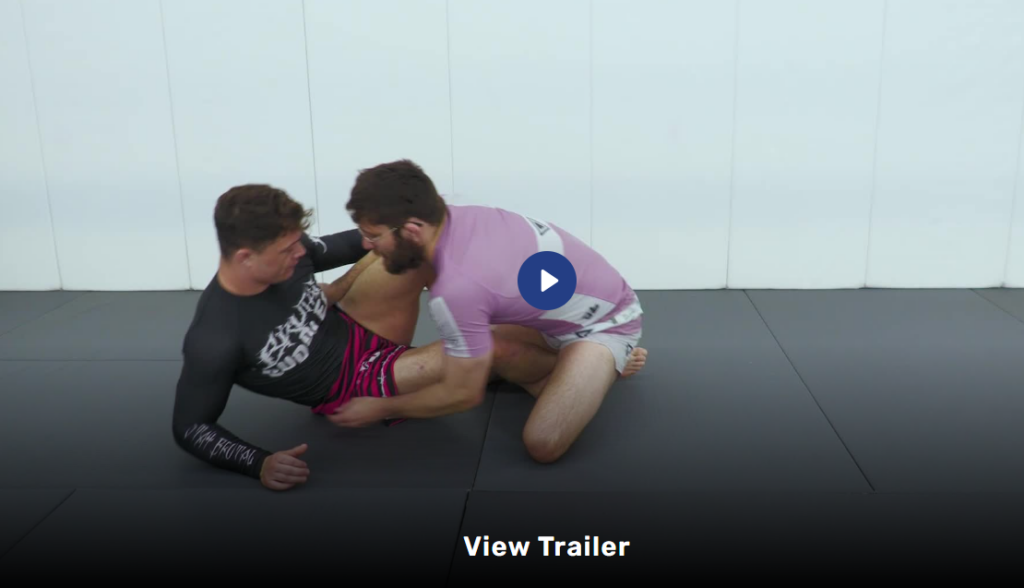
The first volume is all mount, and it starts in the most useful place possible: the elbow escape. The early chapters revolve around building the basic structure—protecting your neck and arms, keeping your elbows tight, and using incremental hip movement rather than trying to bench press someone off you. From there, Woo adds practical variations like foot-trap details and a pant-grip option (a clear signal this is Gi-friendly material).

He also covers upa-style escapes with specific leg/ankle considerations, which is helpful because a lot of people bridge hard but don’t control the base that makes the bridge actually work. The through-line of the volume is that mount escapes don’t need to be dramatic—they need to be systematic. If you suffer in mount and donate your arms constantly, this section alone justifies spending time with the Jiu-Jitsu Escapes From Bottom Joe Woo DVD.

Volume 2 – Framing From Side Control

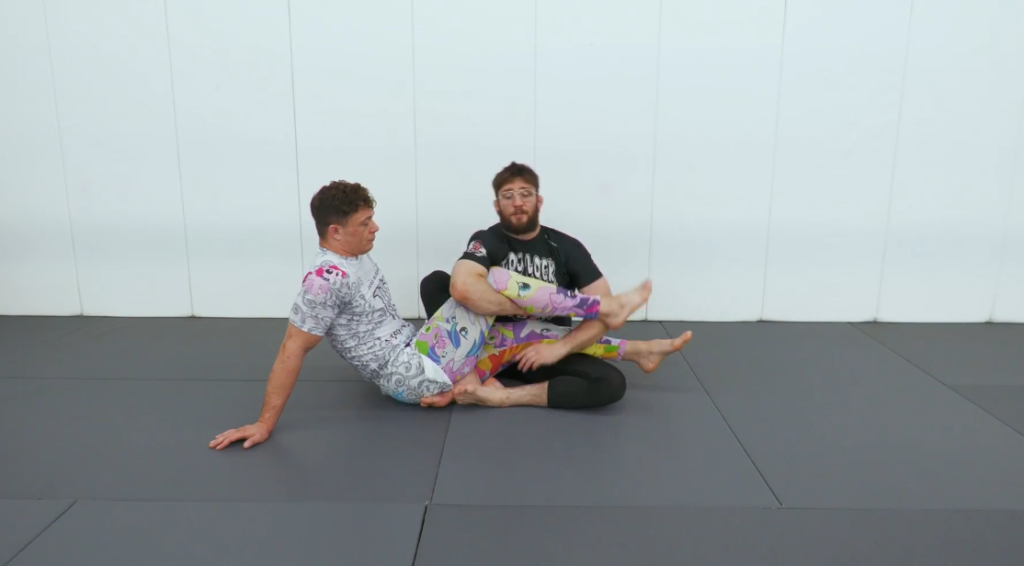
Volume 2 shifts to side control and north-south, and the primary theme is framing—especially with a double-forearm structure. That choice makes sense: side control is where people panic most, and frames are the quickest way to turn panic into a plan.

Woo walks through escaping to guard and escaping to your knees, which is a key distinction. Guard recovery is great when your guard is a weapon; coming up to knees is often the better choice when you want to wrestle, scramble, or simply stop getting smothered.

One standout element here is the inclusion of transitions into offense—specifically armbar threats off the escape motion. Even if you never finish those, the threat changes how the top player pressures you. It’s a smart reminder that good defense often becomes easier when the opponent has to respect consequences.

North-south gets its own mini-section with the same framing emphasis. If you’ve ever felt stuck because the top player’s hips and head position shut off your turning, this volume gives you a practical way to rebuild your ability to rotate.

Volume 3 – Knee on Belly Solutions

The third portion focuses on knee on belly, and it’s an underrated inclusion. Knee on belly is one of those positions that isn’t always a pin in the classic sense, but it’s a control hub that leads to mount, side control, and submission threats while making you feel like your ribs are being taxed.

Woo’s choices here are pragmatic: first, a methodical escape route back to your knees using belt/hand placement and posture; then foot-trap routes that recover half guard and even deep half guard; and finally elbow-to-knee framing variations that either get you up or recover guard. The progression is logical: reduce pressure, win inside space, then choose whether you want a guard layer or a stand-up layer.

For lighter grapplers, or anyone who routinely gets knee-on-bellied by the gym’s pressure passer, this volume will likely feel immediately usable—especially if you drill it as a survive 10 seconds and then escape positional game.

Volume 4 – Back Mount & Turtle

Volume 4 is the longest and arguably the most real-life rolling part of the instructional: back control and turtle escapes. The back section starts with no-hooks situations—an area people often ignore until it’s too late—then addresses hook-based control with a leg-wedge approach to recover guard. That’s valuable because escape the back” is rarely one move; it’s usually a sequence of small wins against hooks, chest connection, and head control.

The turtle portion is extensive and practical: options to come up on top, variations when a hook is removed, and rolling escapes to different sides. This is where the course feels most like a defensive blueprint instead of a collection of techniques. Turtle is a common consequence of escaping side control or mount poorly, so having a dedicated structure here plugs a real gap in many people’s games.

If your rolling pattern is “I escape… and immediately give my back,” this volume alone makes the Jiu-Jitsu Escapes From Bottom Joe Woo DVD feel like a system rather than a patch.

Framing Out of Bad Spots

The best way to use this course is to treat it like a weekly defensive curriculum, not a one-time watch. Because the runtime is compact, you can cycle it repeatedly without feeling like you’re behind on content

Pick one position (mount or side control). Watch the relevant volume once, then drill two escapes for 10–15 minutes after class for three sessions. Add one constraint: start every positional round in that bad spot. Your only goal is to hit your escape once per round—then reset.

As you figure stuff out, blend positions: start in side control, escape to turtle, then use the turtle section to finish the sequence to guard or top. Ask partners to hold you down at 70–80% and transition, not just freeze. Your job is to stay calm, frame, and only explode on the correct timing cue.

Because the Jiu-Jitsu Escapes From Bottom Joe Woo DVD emphasizes structured frames and predictable pathways, it pairs well with positional sparring and one-minute escape games. If you’re coaching, it also fits perfectly as a class theme because the positions are universal and the movements are easy to scale across belt levels.

MASTERING JIU-JITSU ESCAPES FROM BOTTOM JOE WOO DVD GET NOW

Who Is This For?

This is a strong fit for white belts and early blue belts who routinely get stuck under pins and need a simple, repeatable escape framework. Gi players who want details that match common grips and friction-based control, but still want fundamentals that carry over to No-Gi should also consider it.

The DVD is tailor-made for smaller grapplers who can’t rely on strength to bench-press out of bad spots and need better structure and timing. Also useful for hobbyists who care more about not getting smashed than building a super-niche competitive system.

It’s less ideal for advanced competitors who already have consistent escapes and are looking for deep layers against elite-level pinning chains and grapplers who want a massive encyclopedia-style course with tons of branching scenarios.

Pros & Potential Drawbacks

Pros:

  • Clear positional organization: mount, side control/north-south, knee on belly, back/turtle—no filler positions.
  • Frames-first emphasis: great for building calm, energy-efficient escapes that don’t rely on athletic scrambling.
  • Gi-friendly details without being Gi-only: pant-grip and grip-aware options show up, but the mechanics stay universal.
  • Practical offense connections: armbar threats off side control escape sequences are a smart way to punish lazy pressure.
  • Easy to drill and rewatch: shorter runtime makes repetition realistic, which is what escape skill actually needs.
  • Solid turtle coverage: many instructionals treat turtle as an afterthought; here it’s a major tool for survival and reversal.

Potential Drawbacks:

  • Compact depth: the concise format means fewer layers for advanced late-stage problems against very skilled pinning.
  • Position scope is focused: if you want extensive bottom half-guard problem-solving (beyond what appears as a recovery destination), you may want additional resources.

No More Bad Spots!

The Jiu-Jitsu Escapes From Bottom Joe Woo DVD is a fundamentals-first defensive course that does its job: it gives you reliable, high-percentage ways to get out of mount, side control, knee on belly, and back control—plus a meaningful chunk of turtle work that connects the whole system.

The biggest strength is the structure. If your defense currently depends on grit and hope, this course replaces that with frames, timing, and pathways you can drill into muscle memory. The biggest limitation is simply that it’s compact—advanced grapplers may want more layers and more worst-case troubleshooting.

San Diego Jiu-Jitsu Gym Owner Abuse Allegations: A Decade-Long Claim, A Public Reckoning, And A Sport On Edge

San Diego Jiu-Jitsu Gym Owner Abuse Allegations: A Decade-Long Claim, A Public Reckoning, And A Sport On Edge
  • A woman has publicly accused a San Diego Jiu-Jitsu gym owner and black belt of abusive behavior spanning roughly a decade.
  • She says she has been sharing her story for years, including video clips and screenshots, because she believes others may be at risk.
  • The allegations have reignited familiar debates in grappling: hero worship, “gym family” culture, and what accountability actually looks like when the accused runs the room.
  • No criminal findings are presented in the shared materials; the story currently lives in the space between personal testimony, public receipts, and community reaction.

The Claims Behind The San Diego Jiu-Jitsu Gym Owner Abuse Allegations

The latest wave of San Diego Jiu-Jitsu gym owner abuse allegations centers on Beany Galletta Trapani, who has accused black belt and gym owner Ron Casper—associated with Odyssey Training Center—of a long pattern of abuse during a relationship she says stretched from 2011 to 2021.

In her telling, the most unsettling part isn’t just what she claims happened privately, but how sharply it contrasts with the public identity she says he built inside martial arts spaces.

For years he built a reputation as a protector. A black belt. A teacher. A leader. Behind closed doors, he was my abuser. And I am not the only one.
– Beany Galletta Trapani –

Trapani says she first met Casper in 2008 at a boxing gym where he worked as an instructor. She has also described coming out of a long marriage that began when she was a teenager, framing herself as inexperienced at recognizing early warning signs in new relationships.

At this stage, what’s verifiable is the public nature of the accusation—and the fact that it’s being presented with supporting material (screenshots and video clips) intended to show behavior she describes as intimidation and harassment.

The central question for readers is the same one the sport keeps getting dragged back to: when a coach owns the room, who has the leverage to challenge him?

What Trapani Says Happened Between 2008 And 2021

Trapani’s timeline begins with an initial meeting in 2008, then escalates to a relationship she says became increasingly volatile. She describes a progression from verbal harassment in gym environments to what she characterizes as prolonged rage and intimidation at home.

One of the most cited elements of her story is video footage she shared where she can be heard yelling for him to leave her home.

Get out of my house. Get out of my house. Where the f**k were you at? Get the f**k out. I don’t want you here. I never told you to come over.
– Beany Galletta Trapani –

She has also said she contacted police at least once after alleged threats toward her children, but claims she withdrew at the time out of fear of retaliation.

From there, her account includes multiple moves and a claim that she was repeatedly located even after trying to distance herself. She has said she ultimately left California abruptly and relocated to Florida, describing it as a final break intended to protect herself and her family.

Trapani has also connected the stress of the situation to health issues, stating she was diagnosed with breast cancer in 2021 and that she believes years of chronic stress played a role. That’s a personal belief, not a medical conclusion—and it’s important to separate what’s alleged from what’s provable.

Still, the reason this story spreads fast isn’t because it’s tidy. It’s because it’s messy in the exact way real-life coercion and control often is: blurred lines, delays in reporting, fear, and the reality that leaving isn’t a single moment—it’s a long, exhausting process.

Odyssey Training Center, Loyal Followers, And The “Protector” Problem

Every scandal in grappling has its own names and details, but the same tension shows up again and again: the “protector” branding versus what happens when the protector is the one being accused.

That’s the nerve this particular San Diego Jiu-Jitsu gym owner abuse allegations story hits. Trapani isn’t just describing a private relationship; she’s arguing that the gym ecosystem itself can become a shield—loyal students, reputation laundering, and a social cost to speaking up.

I am just one of the many survivors of Ron Casper. What makes my story a little bit different is that I am the first to expose him and I’ve been doing so for four plus years now showing his name, face, business, as well as proof of the abuse in an effort to protect as many other women as I possibly can.
– Beany Galletta Trapani –

She has also claimed that other women have reached out to her privately with stories of “inappropriate behavior,” including an allegation involving minors.

He continues to have loyal followers who know of the abuse and don’t care. I have had many women reach out to me privately with their own stories of his inappropriate behavior, some just 13 years old at the time.
– Beany Galletta Trapani –

That’s an especially serious claim—and one that readers should treat with care. At the time of writing, it exists as an allegation inside her statement, not as an established fact tested in court.

But it also explains why this story doesn’t stay contained to one couple or one gym. Once minors are mentioned, the stakes change instantly.

The other accelerant here is visibility: the moment recognizable names or bigger communities amplify a claim, it stops being a “local gym issue” and becomes a sport-wide conversation—again.

San Diego Jiu-Jitsu Gym Owner Abuse Allegations: A Decade-Long Claim,

Why These Stories Keep Landing In Jiu-Jitsu

The most brutal truth about San Diego Jiu-Jitsu gym owner abuse allegations stories is that they don’t feel rare anymore. Not because every gym is unsafe—most aren’t—but because the structure of Jiu-Jitsu makes the bad cases uniquely hard to confront.

The sport is built on hierarchy and proximity. Coaches aren’t just teaching technique; they’re gatekeepers to belts, competition opportunities, social belonging, sometimes even jobs and housing. Add in the trust required to train—literal physical control—and you’ve got an environment where power can be used responsibly… or abused.

When a gym is healthy, the hierarchy is functional: clear boundaries, transparent behavior standards, and systems that protect students more than reputations.

When it isn’t, the hierarchy becomes a pressure cooker: “keep it in-house,” “don’t cause drama,” “he’s done so much for the community,” “think about the team.”

And that’s why stories like this hit such a nerve. They force every gym owner, coach, and student to answer an uncomfortable question: if something ugly happened here, would we actually handle it well—or would we protect the room first and the person second?

Why The San Diego Jiu-Jitsu Gym Owner Abuse Allegations Won’t Go Away

What happens next depends on whether more information emerges—additional alleged victims going public, formal complaints, legal action, or a direct response that addresses specifics rather than just vibes.

But even without that, the reason this story sticks is simple: it’s not just a claim about one man. It’s a stress test for how modern Jiu-Jitsu reacts when accusations land on someone who holds real status inside the sport.

For some readers, the existence of video clips and years of public posting will feel like credibility.

For others, the absence of a court outcome will be the only thing that matters. Both instincts exist in combat sports, and they collide hard whenever the accused is a coach—because coaches don’t just represent themselves. They represent a room full of students who didn’t sign up for any of this.

Whatever the truth ultimately is, the sport keeps learning the same lesson the hard way: if you don’t build accountability into the culture, the culture will keep getting rebuilt by scandals.

BJJ Schools Gi Requirement: Are Coaches Pushing Gi Class To Sell You Another Uniform?

BJJ Schools Gi Requirement: Are Coaches Pushing Gi Class To Sell You Another Uniform?
  • A black belt’s clip argues some academies emphasize Gi training less for “technical development” and more because selling Gis is a reliable revenue stream.
  • The BJJ Schools Gi requirement debate quickly spilled into the usual hot zones: Instagram comments, gym group chats, and long Reddit threads about mandatory uniforms.
  • Supporters say uniform policies build culture and keep standards consistent; critics call it a stealth tax that can price people out.
  • The real fight isn’t Gi vs No-Gi — it’s transparency: are students being told the truth about why the schedule and rules look the way they do?

The Clip That Lit Up The Mat Space

Every few months, Jiu-Jitsu gets a new “mat truth” that hits a nerve because it’s painfully plausible. This week’s version: the idea that a lot of Gi-heavy schedules aren’t about tradition or better learning — they’re about the pro shop.

The spark came from a short clip where black belt Sam Gaier framed Gi training as a business lever, not a technical necessity.

The reason it landed is simple: most students can feel when a policy is about coaching… and when it’s about commerce. And nothing raises eyebrows faster than a rule that seems designed to funnel your money toward one very specific rack of gear.

Sam Gaier’s Blunt Claim: “That’s His Moneymaker”

Gaier didn’t dance around it. He put the suspicion into plain language — the kind that makes people laugh, then immediately check their bank app.

Your coach isn’t having you train in the gi because it’s making you more technical.
– Sam Gaier –

He followed with the punchline that turned the clip into gasoline:

He’s having you train in the gi because that’s his moneymaker at the gym.
– Sam Gaier –

From there, Gaier went a step further — not just “they want to sell you a Gi,” but “they’re designing the entire schedule to attract the kind of students most likely to buy in.”

That’s the part that makes this feel bigger than a gear complaint. It’s not only about fabric — it’s about who gets catered to, who feels welcome, and who quietly disappears when the costs stack up.

BJJ Schools Gi Requirement: Tradition, Control, Or Cash?

To be fair, the BJJ Schools Gi requirement conversation isn’t new. Plenty of gyms have required uniforms for decades, and not every uniform rule is a scam. Some academies want a clean, consistent look.

Some want to limit abrasive materials, weird pockets, or novelty gear that turns training into a costume party. Some have affiliations that standardize uniforms across locations.

And yes — some gyms genuinely believe Gi training develops certain attributes: patience, grip fighting, slower problem-solving, and a different kind of positional control. Even if you disagree, that argument exists in good faith.

But the skepticism arrives when the requirement becomes specific and non-negotiable:

  • Not “train in a Gi,” but “train in our Gi.”
  • Not “patches are optional,” but “you need these patches.”
  • Not “we prefer team gear,” but “you can’t step on the mat without it.”

This is where the vibe shifts from “team culture” to “toll booth.”

Because for most students, the Gi isn’t a one-time purchase. It’s two or three Gis if you train often. It’s replacing a ripped one. It’s upgrading sizes. It’s buying a second set so you’re not washing at midnight like you’re prepping fight kits for a traveling circus.

And if the rule is “only our stuff,” then the pro shop becomes part of your monthly training plan whether you asked for it or not.

Gaier’s bigger point isn’t that gyms shouldn’t sell gear. It’s that students shouldn’t be sold a fairy tale about why certain rules exist.

I’m not faulting them for wanting to run a successful business.
– Sam Gaier –

And then the line that explains why the clip hit so hard:

I will fault them for lying to you and telling you that the gi is making you more technical because they know that it’s not that.
– Sam Gaier –

Whether you agree with his technical take or not, that accusation — “they’re lying” — is what turns a mild gripe into a full-on culture war.

When “Team Uniform” Starts Feeling Like A Tax

The most relatable evidence in this debate isn’t a theory — it’s the endless supply of student stories. One of the most common: the growing kid, the wrong size, the ripped sleeve, the “I can afford a new Gi… just not your new Gi.”

In one popular thread, a teenager described asking to buy a better-fitting Gi elsewhere and being told no — the only solution was purchasing a replacement directly from the academy. The coach’s explanation was that allowing outside Gis would “mix up everyone” and open the door to students showing up in anything.

That’s the perfect example of why this argument never dies. Because even if you accept “uniformity” as a legitimate goal, the student experience can still feel like: pay the fee or don’t train.

And then there’s the other side of the financial squeeze: people selling gear just to keep showing up. Another discussion thread revolved around the idea of selling Gis to cover training costs — and the comments quickly turned into a reality check about how expensive the sport can get when you’re trying to stay consistent.

You don’t need a spreadsheet to see the pattern:

  • Tuition goes up.
  • Required gear multiplies the cost.
  • Students start making “temporary” decisions (selling equipment, skipping classes, training less).
  • Eventually, “temporary” becomes “I stopped training.”

That’s the uncomfortable truth behind the BJJ Schools Gi requirement debate: mandatory academy uniforms don’t just affect aesthetics. They shape retention. They decide who can stick around long enough to become good.

BJJ Schools Gi Requirement: All about the money?

If This Is About Money, Students Want Honesty — Not A Lecture

The reason this topic explodes every time is because it’s happening in a sport that sells itself as humbling, character-building, and community-driven. That brand collapses the moment students feel squeezed.

If a gym says, “We require team Gis because it supports the academy, helps us keep the lights on, and keeps the room looking professional,” a lot of students will shrug and accept it — even if they don’t love it.

But if a gym says, “You must buy our Gi because Gi makes you more technical,” while the real engine is merchandise revenue, that’s when people get angry — and they get louder than any marketing pitch.

Gaier’s clip didn’t accuse every coach of running a racket. It did something more dangerous: it gave students a simple question to ask themselves every time a policy “for your development” lines up perfectly with a purchase.

So the story isn’t really Gi vs No-Gi, or even whether the Gi is “dying” or thriving. It’s about whether gyms can be upfront about business realities without hiding behind tradition, technical jargon, or a guilt trip.

Because once students suspect the BJJ Schools Gi requirement is less about coaching and more about cashflow, it’s hard to unsee. And in a sport built on trust — trust in your training partners, trust in your coach, trust that you’re not being played — that’s the kind of doubt that sticks.

0 To 100 Open Guard Passing Felipe Pena DVD Review [2026]

0 To 100 Open Guard Passing Felipe Pena DVD Review

Key Takeaways

  • A Gi-focused passing course built around the most common problem guards you’ll actually see in training: De La Riva, lasso, and spider.
  • The structure is refreshingly tight: five volumes, each centered on one guard cluster, with a small set of repeatable passes instead of 40 unrelated options.
  • Pena’s big selling point is pressure that ramps up step-by-step—less explode past the legs, more suffocate the frames until the guard breaks.
  • Best suited for people who already pass sometimes and want to pass reliably against experienced guard players (solid white belts through black belts).
  • Rating: 9/10

0 TO 100 OPEN GUARD PASSING FELIPE PENA DVD GRAB NOW

The Open Guard Passing Felipe Pena DVD is one of those instructionals that shows you what elite pressure passing looks like when it’s stripped down to core problems and direct answers. Instead of trying to give you open guard passing in the abstract (which usually turns into a messy grab-bag of techniques), Pena narrows the scope to three guards that routinely stall out even strong top players in the Gi: outside/middle/inside De La Riva, lasso, and spider.

That focus matters, because these guards aren’t just positions—they’re systems of grips, distance, and tempo. If you’re late on one detail, the guard player doesn’t just retain, they start building offense (tilt sweeps, back takes, triangles, omoplatas, and the dreaded slow-motion grip death). Pena’s goal here is to stop the guard from ever feeling comfortable enough to start that chain.

If you’ve been looking for a Felipe Pena instructional review angle in one sentence: this is a pressure passer’s blueprint for turning popular Gi open guards into predictable checkpoints—and then walking through them without rushing.

Navigating Sticky Guards

Open guard passing in the Gi is mostly a battle over attachments. In No-Gi, you can sometimes win with speed, body positioning, and hand-fighting. In the Gi, the bottom player can staple you in place with sleeve grips, collars, and hooks—and once they’ve attached, they get to decide the rhythm.

That’s why the best passers don’t just do a pass. They solve three problems in order:

  1. Kill the distance (or force the guard player into a distance they don’t want).
  2. Remove their strongest frame (usually a shin, a lasso, or a spider hook tied to a sleeve).
  3. Land in a stable checkpoint (quarters/half/side control/mount) where the guard no longer exists.

What I liked about Pena’s approach is that it respects how guards actually work in live rounds. He doesn’t treat De La Riva like a static pose; he treats it like a moving dilemma where your reaction determines whether you end up leg-dragging, knee-slicing, or getting loop-choked while your posture collapses.

And since this is primarily De La Riva guard passing, a big theme is recognizing which De La Riva you’re dealing with (outside, middle, inside) and choosing a compatible solution—rather than forcing your favorite pass into the wrong shape.

Felipe “Preguiça” Pena

Felipe “Preguiça” Pena is one of the era-defining big men in modern Jiu-Jitsu: a heavyweight who can actually play guard, invert when needed, and still apply top pressure like he’s closing a hydraulic press. He’s widely recognized as a multiple-time IBJJF World Champion in the Gi and an ADCC champion, which matters because it proves his game holds up across very different rule sets and styles of resistance.

He’s also the kind of competitor whose passing doesn’t depend on athletic bursts. Pena’s best work tends to look slow until you’re the person under it—then you realize the slowness is the trap. He consistently upgrades position, tightens your hips and shoulders, and turns your guard reactions into predictable openings.

That competitive identity is exactly why a course like this makes sense. Passing De La Riva, lasso, and spider isn’t about memorizing ten techniques per guard—it’s about understanding where pressure goes, which grips matter, and how to keep climbing from a half-pass to a real pass without giving the guard player a reset.

Full Open Guard Passing Felipe Pena DVD Review

The best way to describe this course is: a small passing toolbox applied to five distinct guard scenarios, with Pena showing how he chains pressure forward rather than bouncing between unrelated techniques. You’ll see recurring ideas—leg drags, knee slices, smash passing, stacking—because those are the workhorses. The difference is how he aims them at the specific shape each guard creates.

Volume 1 – Outside De La Riva Passes

Volume 1 is the hello reality section, because outside De La Riva is everywhere in the Gi, and it’s often the first guard people build when they’re not a dedicated spider/lasso player. Pena’s solution set here is compact: he shows a direct pass to side control, then layers in an inverted knee slice option, and finishes by addressing how he handles the transition into quarter guard as the guard player starts to scramble and clamp.

What stands out in the opening portion of the Open Guard Passing Felipe Pena DVD is how he treats outside De La Riva like a posture problem first. The grips and hooks are annoying, but the real danger is that your posture breaks and your hips drift out of alignment—then your legs become available for off-balancing, and your arms become available for lasso/spider upgrades.

Pena’s early answers are designed to stop that spiral before it starts. This is also where the course begins to show its personality: it’s not trying to impress you with novelty, it’s trying to give you a reliable baseline that survives rounds with stubborn training partners.

Volume 2 – Middle De La Riva Passing

Part 2 of the Open Guard Passing Felipe Pena DVD narrows the lens to middle De La Riva and keeps it short and purposeful—exactly how it should be. The main idea revolves around a leg drag from this configuration, with a bonus pass variation to round it out.

I like this organizational choice because middle De La Riva can be a grey zone for many passers: it doesn’t always feel like classic outside De La Riva, but it’s not quite inside De La Riva either. People hesitate, and hesitation is where the bottom player gets their second sleeve grip, starts setting up the lasso, or angles for a tilt.

Pena’s answer is basically: stop treating it like a mystery, treat it like a checkpoint. Get to your preferred alignment, commit to the leg-drag mechanics, and use pressure to prevent the guard player from re-threading their hooks. This is where the 0 to 100 passing system begins to feel very real—small upgrades, constant control, no big leaps.

Volume 3 – Inside De La Riva

Inside De La Riva is where a lot of passers start to panic, because the guard player’s hooks and angles can feel closer to your base, and the off-balancing hits harder. Pena’s solutions here are a knee slice from inside De La Riva, a smash pass option, and then a smash pass route that takes you all the way to mount. He finishes with a practical quarter guard to side control segment—because that’s where a lot of real passing success actually lives.

This volume does a great job of framing success correctly. Passing isn’t always the clean highlight-reel moment; sometimes it’s winning the ugly half-pass and then refusing to give it back. Pena shows how to turn that half-pass into inevitability. The inside De La Riva chapter choices also mesh well with the rest of the course: you can tell he’s steering you toward a consistent top identity rather than creating five different passing personalities.

Volume 4 – Lasso Guard Pass

The fourth volume is where the course becomes a real quality of life upgrade for Gi training, because lasso is one of the easiest guards to stall with—and one of the hardest to look good against if you don’t have a plan. Pena addresses lasso half guard pressure passing first, then adds variations for when the opponent turns and faces you (a common moment where people lose structure). He also includes a steering wheel pressure pass, which fits the overall theme while adding some flair: keep control of the frame, keep your alignment, and keep walking forward.

Then you get the stand-up pass vs the Spider-Lasso, which is an important bridge because good guard players rarely stay in one guard position. They’ll start lassoing, you start to solve it, and they’ll re-thread into spider or vice versa. Finally, he addresses spider guard stack passing as a lead-in to Volume 5, which is smart sequencing. Lasso and spider are cousins; treating them separately is fine, but acknowledging the overlap is crucial.

Volume 5 – Spider Guard Passing

Spider guard is one of those positions where you can know passes and still get nowhere, because the bottom player’s grip and foot connection is what makes everything sticky. Pena’s volume is built around a spider guard stepping pass.

The practical highlight for me is that he doesn’t pretend spider passing is always clean. He includes answers like pinning the legs down and transitioning into stack to double unders—because in real rounds, spider often collapses into a messy in-between where you either secure control or you get re-guarded immediately.

And yes, there’s a specific Spider guard stack pass pathway here that will make heavy-pressure passers happy. If you’re the kind of top player who wants the guard player’s knees pointed the wrong way while you stack and climb, this volume will feel like permission to do what you already want to do—just with cleaner structure.

Not Panicking in Gi Guards

If you want to get full value from the Open Guard Passing Felipe Pena DVD, don’t treat it like a watch once, then freestyle instructional. Treat it like a set of problems you’re going to deliberately hunt in training.

A good way to do it is to pick one guard or a guard player that plays it (outside De La Riva is usually the best start). Try to force that exact situation in sparring, even if it means you lose other passing opportunities. Your goal is repetition, not dominance.

Add the next guard (middle/inside De La Riva). Your job is to identify the variation quickly and choose the correct response without stalling. Start chaining. The key is to train the decision-making, not just the moves. These guards are all about timing and posture.

Also, don’t skip the quarter guard moments. That’s where passes become real. If you learn to stabilize the half-pass and keep progressing, your open guard passing will improve even against people who are “better guards” than you are passers.

DOWNLOAD THE 0 TO 100 OPEN GUARD PASSING FELIPE PENA DVD

Who Is This For?

This Open Guard Passing Felipe Pena DVD is best for white belts to advanced belts who already understand basic passing posture and want a reliable system for common Gi open guards, pressure passers who like controlling hips, stacking, and upgrading position rather than sprinting around legs and competitors (or serious hobbyists) who keep running into the same guard problems—De La Riva, lasso, spider—and want consistent answers.

Brand-new white belts who still struggle with stance, grips, and maintaining base will aslo struggle with these passes—this DVD assumes you can stay upright long enough to apply the ideas.

Pros & Potential Drawbacks

Pros:

  • Clear problem-solving structure: each volume targets one guard family, so you’re not guessing what you’re supposed to learn.
  • A coherent pressure identity across all sections—leg drags, knee slices, smash passing, and stacking show up as connected tools.
  • Practical handling of messy almost passed situations (quarter guard, half-pass, leg pinning) that actually decide rounds.
  • Strong overlap management between lasso and spider, which is how good guard players really behave.
  • Techniques are compact enough to drill and then apply quickly, instead of requiring a month of choreography.

Potential Drawbacks:

  • The scope is intentionally narrow: if your main problems are collar-sleeve, lapel guards, or modern inversion-heavy guard systems, you’ll need other resources.
  • Because it’s pressure-based, lighter passers who rely on mobility might need time to adapt the pacing to their body type and style.

Passing at 100 MPH

As far as Gi passing instructionals go, the Open Guard Passing Felipe Pena DVD hits a sweet spot: narrow enough to be usable, broad enough to matter. The course doesn’t try to teach passing in general. It teaches you how to deal with three of the most common Gi open guards by using a small number of high-percentage answers and building pressure in a predictable way.

Craig Jones Calls Out ADCC Prize Money — Then Offers $48K To Embarrass Them Into Equal Pay

Craig Jones Calls Out ADCC Prize Money
  • Craig Jones calls out ADCC prize money after the promotion announced a payout increase that boosts men’s purses while women’s division payouts stay the same.
  • Jones says the gap across the three women’s weight divisions adds up to $48,000 — and he’s pledging that amount through the Fair Fight Foundation to “match” the pay.
  • The move turns a long-running debate about grappling pay into a very public “here’s the receipt” moment, putting pressure on ADCC to respond.
  • It also lands during a messy stretch for ADCC, with Jones separately criticizing the organization’s silence around the Izaak Michell situation.

ADCC tried to announce “more money for athletes.” Craig Jones heard “more money… for some athletes,” and decided to make it everyone’s problem.

Craig Jones calls out ADCC prize money following ADCC’s newly published prize structure, where men’s division payouts jump while women’s division payouts remain at the previous level. And instead of just posting another angry caption into the void, Jones went straight for the most effective weapon in modern combat sports discourse: a number, a total, and a payment plan.

He says the difference across the three women’s divisions comes to $48,000 — and he’s pledging that amount to close the gap so the women’s divisions are paid on the same scale as the men.

The $48,000 “Receipt” That Changed The Conversation Overnight

Jones framed his move as a practical fix and a very deliberate statement: if the promotion won’t adjust the numbers, he’ll force the issue in public and dare everyone to argue with arithmetic.

They doubled the men’s pay… that’s a $16,000 difference per women’s division… total $48,000.
– Craig Jones

In other words, he isn’t just talking about the winner’s check. The gap comes from the overall payout per division (first through fourth), where the men’s totals rise and the women’s totals don’t move in step.

Then came the second part — the part that makes promoters sweat: he attached his name, his foundation, and a dollar figure to the problem.

I’ve decided… and the Fair Fight Foundation to pay the $48,000 difference so women and men get paid the same for ADCC.
– Craig Jones –

It’s a simple play with outsized effect. It doesn’t require ADCC to admit wrongdoing, negotiate sponsors, or rewrite a press release. It just puts a spotlight on the gap — and makes ADCC look like the organization that needed an athlete to step in and do the optics for them.

And, because it’s Craig Jones, it also carries that familiar undercurrent of troll energy: this isn’t only about equality — it’s about making the promotion uncomfortable enough that the next announcement can’t be business as usual.

ADCC Prize Money Breakdown: Where The Gap Actually Comes From

The easiest way to understand the controversy is to stop thinking “winner’s purse” and start thinking “division payout.”

Under the newly announced structure, men’s divisions list:

  • 1st: $20,000
  • 2nd: $10,000
  • 3rd: $3,000
  • 4th: $1,000

Women’s divisions list:

  • 1st: $10,000
  • 2nd: $5,000
  • 3rd: $2,000
  • 4th: $1,000

That means the total money allocated per men’s division is $34,000, while the total per women’s division is $18,000 — a $16,000 difference each time. Multiply that by ADCC’s three women’s weight divisions, and you get the number Jones keeps hammering: $48,000.

ADCC also lists major prizes for the top-of-the-pyramid events — including the Absolute and Super Fight — which is part of why the payout announcement landed with extra noise. When the headline is “more money,” the fine print matters.

This is also why Jones’ move hits harder than a generic “pay women more” post. He’s not just arguing principle — he’s pinpointing the delta and saying, “Here, I’ll cover it. Now what?”

Why Craig Jones Calls Out ADCC Prize Money Is Bigger Than One Pay Bump

On paper, ADCC raising payouts is still a step forward. The problem is the message it sends when only one side of the bracket gets the meaningful upgrade.

That’s where Jones’ callout turns from moral argument into promotion politics.

This isn’t happening in a vacuum. Grappling has been dragged — sometimes reluctantly — into a more competitive marketplace. Between rival events, bigger streaming dollars, and more athletes building real brands, the “compete for prestige” pitch doesn’t land the way it used to.

Even inside Jones’ own orbit, there’s an acknowledgement that the sport is still figuring out how to pay people like a professional ecosystem.

@cjiofficial couldn’t match pay either, but we trying.
– Craig Jones –

That line matters. It’s basically the quiet part out loud: even the rebels aren’t swimming in cash. But it also reinforces why Jones chose this tactic — because if nobody can easily “solve” grappling pay overnight, the next best move is forcing the biggest brand in the room to justify why it’s choosing who gets the bump.

Craig Jones Calls Out ADCC Prize Money

Here’s the uncomfortable part for ADCC: Jones’ $48,000 pledge isn’t a solution that lets everyone move on. It’s a spotlight that stays on until the promotion either changes something… or decides it’s fine being the organization that needed a GoFundMe-style rescue from an athlete.

And even if ADCC never publicly responds, the idea is already out there: the men’s bump didn’t have to be “men’s bump.” It could have been an “across-the-board bump.” Instead, Jones now gets to stand in front of the whole sport and say he did the math — and ADCC didn’t.

So yes, this story is about money. But it’s also about leverage. Craig Jones calls out ADCC prize money because he understands what modern grappling actually runs on: not just brackets and prestige, but optics, pressure, and who controls the conversation when the cameras turn on.

White Belt Sandbagger With 52 Wins: The Screenshot That’s Making Beginners Rethink Competing

White Belt Sandbagger With 52 Wins: The Screenshot That’s Making Beginners Rethink Competing
  • A first-time competitor prepping for a white belt bracket spotted an opponent with 50+ logged wins on Smoothcomp — and the internet did what it always does: screamed “sandbagger.”
  • The post blew up because it hits a raw nerve: white belt divisions are supposed to be the safest place to learn competing.
  • Not everyone agreed it’s “cheating” — some argued it’s a messy belt system issue, not a villain issue.
  • Either way, the white belt sandbagger with 52 wins moment exposes a real problem: beginners pay the price when rank and reality don’t match.

The White Belt Sandbagger With 52 Wins

Every grappler remembers that first competition sign-up: equal parts excitement and dread, refreshing the bracket like it’s the UFC rankings. This time, a white belt did what almost every modern competitor does — he checked the names, checked the match history, and tried to mentally prepare.

Then he saw it.

A “white belt” opponent with a record that didn’t look like a beginner record. Not even close. The screenshot showed a competitor listed at white belt with over 50 wins, including a huge chunk by submission — the kind of numbers you expect from someone who’s been living on competition mats for a while.

That’s where the phrase white belt sandbagger with 52 wins took on a life of its own. It’s the most click-friendly version of the outrage, even if the exact totals people cite vary depending on what’s being counted (wins vs total matches vs filtered results).

The core point stayed the same: a brand-new competitor felt like he was walking into an ambush disguised as a beginner bracket.

I was getting ready to sign up for my first competition as a white belt (Grappling Industries). This is one of the competitors. How is this not sandbagging lol.
– Reddit user (first-time competitor) –

That’s the gut punch. White belt divisions are where you’re supposed to learn how your Jiu-Jitsu holds up under adrenaline, referees, and the weird chaos of a tournament day.

When the first opponent looks like he’s collecting scalps for sport, the whole “welcome to competing” vibe turns into “why am I paying money for this?”

White Belt Sandbagger With 52 Wins

Grappling Industries And The Smoothcomp “Receipts” Era

What makes this story explode now — and not just quietly ruin someone’s Saturday — is visibility.

A decade ago, you could sandbag (or simply stay unpromoted) and most people would only learn the truth the hard way: by getting steamrolled.

Today, platforms like Smoothcomp function like a public fight record. For better or worse, the community can screenshot, zoom, circle numbers, and “drop receipts” in seconds.

And the setting matters. The competitor who posted said he was entering a Grappling Industries event, which is exactly the kind of tournament many beginners pick because it’s local, common, and feels accessible.

That’s why the outrage sticks: this wasn’t a niche pro bracket. It was the “normal people tournament” where someone’s first comp story is supposed to begin.

52 wins, should have skulls as kill markers at that point.
– r/bjj commenter –

Jokes aside, that comment captures the social mood: disbelief that anyone with that much competitive mileage is still showing up under a white belt label. Whether it’s malicious or not, it looks like a mismatch — and in combat sports, perception is half the battle for trust.

Is It Sandbagging… Or Is The Belt System Just Broken?

Here’s where it gets uncomfortable: “sandbagging” is often treated like a moral crime, but Brazilian Jiu-Jitsu belts are not a standardized license.

There’s no global test. No universal timeline. No central authority that can realistically enforce promotions across gyms, affiliations, and countries.

In most places, your belt comes down to your instructor’s criteria — which can range from competition dominance to attendance, technical benchmarks, maturity, or even “you haven’t trained in the Gi enough.”

That’s how you get the sport’s strangest paradox: a white belt can be a brand-new student… or a seasoned grappler who competes nonstop, trains mostly No-Gi, moves gyms often, or simply hasn’t been promoted yet.

The internet sees the record and screams white belt sandbagger with 52 wins. The gym might see a student who hasn’t met their internal promotion standards.

Both realities can exist at the same time — but only one of them is experienced by the person staring across the mat thinking, I’m about to be somebody’s highlight reel.

And that’s why the debate never dies. Because even if there’s no conspiracy, the outcome for the beginner is the same: an opponent with vastly more mat-time under pressure.

The “World Pro” Warning: When Sandbagging in Jiu-Jitsu Gets So Bad It Triggers Action

If you think this is just online whining, there’s history that shows how ugly it can get when rank manipulation (or rank confusion) meets big events.

One of the most infamous examples came at the Abu Dhabi World Pro, where a competitor entered at white belt despite evidence he had already been promoted to blue belt earlier — and the situation escalated to the point the federation took action, including disqualification.

That incident became a reference point because it showed the nightmare scenario: a higher-belt competitor in a beginner division, collecting medals that were never meant to be theirs.

That’s the fear hiding behind every white belt sandbagger with 52 wins screenshot. Not just “I might lose,” but “this division is no longer what it claims to be.”

And it’s not only about fairness. It’s about safety and retention. When beginners feel tricked — especially in their first tournament — they don’t just lose a match. They lose faith in the system.

BJJ Sandbagging Story 2026

When “Beginner” Doesn’t Mean Beginner

Here’s the brutal truth: the beginner absorbs most of the risk in a sport with inconsistent rank standards.

They sign up in good faith. They pay the entry fees. They cut weight, buy the Gi, bring family, and take that big nervous step onto the mat. If the bracket is stacked with someone who has “50+ wins energy,” the new competitor doesn’t get a clean measuring stick — they get a confidence crater.

People love to propose fixes: mandatory promotion after a win threshold, skill-based divisions, organizer review of match histories, clearer restrictions for athletes with extensive grappling backgrounds.

All of those ideas have merit. None of them are universal. And until something changes, the internet will keep doing what it did here: crowning the next villain of the week, circulating the next screenshot, and reviving the same argument with a new face.

So even if the individual in question isn’t twirling a mustache and hunting beginners, the headline sticks — because the experience is real.

And as long as beginners keep running into situations that feel like white belt sandbagger with 52 wins, this story is going to keep returning like a bad rash guard odor: impossible to ignore, and somehow always back at the worst time.

Systematically Dismantling Octopus Guard Gordon Ryan DVD Review [2026]

Systematically Dismantling Octopus Guard Gordon Ryan DVD Review

Key Takeaways

  • A No-Gi anti-meta instructional built around shutting down Octopus Guard/overback style attacks before they turn into scrambles.
  • Strongest value is the positional logic: knee positioning, hip control, and “thresholds” that keep you from getting dragged into weird angles.
  • The middle volumes give a very specific map for dealing with overback from half guard and from side control (two places people love to get cute).
  • Bonus sections cover buggy choke counters and a D’arce escape module, plus rolling footage with commentary to see the ideas under stress.
  • Rating: 6.5/10

DOWNLOAD DISMANTLING OCTOPUS GUARD GORDON RYAN DVD

Counter instructionals are tricky to judge, because they’re never supposed to feel like a complete game. They’re more like insurance: you buy them because you’re tired of one specific problem showing up in the room and hijacking your rounds.

That’s exactly what the Dismantling Octopus Guard Gordon Ryan DVD is. The theme is simple: stop letting trendy, overhyped positions force you into frantic exchanges. Gordon frames this as a system of denial—deny the structure first, then deny the movement, and only then worry about passing or advancing. At a high level, the DVD earns its keep when you already understand the basics and you want specific answers to specific problems—without guessing.

Why Bother With the Octopus Guard?

Octopus Guard is one of those positions that looks creative, but the reason it spreads is simple: it gives bottom players a way to come up and threaten reversals when your top pressure is slightly lazy. In practice, it often shows up as an overback-style connection—your opponent clamps around your upper body and tries to climb to your back or off-balance you into a scramble.

The hard part isn’t knowing the name. It’s recognizing the moment it becomes dangerous. People usually try to solve it late—when the bottom player already has their hips turned, their knees positioned, and their torso glued to you. That’s when you start doing the classic BJJ thing: try harder and hope balance saves you.

The smarter solution (and the one this instructional leans on) is preemption: win the battle of knees, keep your hips in the correct lane, and treat the position like a set of checkpoints. If you’re hunting for octopus guard counters, you’ll notice a pattern across the material: Gordon keeps coming back to structure and alignment—where your hips sit relative to your opponent’s knees, and how you prevent them from building height.

The Retired “King” Gordon Ryan

Gordon Ryan is one of the defining No-Gi competitors of his era, rising through the Danaher Death Squad ecosystem before competing under the New Wave banner. He’s widely known for a competition style that blends ruthless position control with a very clinical finishing approach—especially in leg entanglements and dominant upper-body control.

He was born in 1995 in New Jersey and earned his black belt through the Danaher/Tonon lineage. His resume includes major titles across the top end of submission grappling, with repeated success at ADCC (including multiple wins across weight and absolute/superfight contexts) and other elite formats.

In February 2026, Ryan publicly announced a retirement from competition, citing ongoing stomach/immune-system related health issues that have impacted his ability to train and compete the way he wants. That context matters for this DVD, because it reinforces what you feel throughout the material: it’s “thinking-first” Jiu-Jitsu. Even when he’s talking about chaotic positions, the goal is to remove chaos—not win chaos.

Systematically Dismantling Octopus Guard Gordon Ryan DVD Review

This Dismantling Octopus Guard Gordon Ryan DVD is organized into eight volumes and runs roughly 5.5+ hours total. The structure is consistent: a core conceptual foundation, then situational problem-solving (half guard and side control), then a few “low-percentage move” counters, followed by rolling footage and commentary.

Volume 1 – Over Back Theory

Volume 1 is the philosophical and mechanical backbone. It opens with the tone-setter mindset and then quickly gets into over back theory and the battle of the knees from both top and neutral/bottom contexts.

This is where you’ll either buy in or bounce off. Gordon isn’t trying to entertain—he’s trying to give you a framework that applies before the position fully develops. Chapters like “Hips Between Knees,” “Dilemma Games,” and “Position Threshold” are basically telling you: if you can control these relationships early, you don’t need a heroic late escape later. For the Dismantling Octopus Guard Gordon Ryan DVD, this volume is the why that makes the later how make sense.

Volume 2 – Overback From Half Guard

Part 2 gets very specific with a chain of counters depending on what the bottom player is doing with their grips and secondary controls. This is one of the more practically useful sections because it lives in a high-frequency problem area.

A lot of people run Octopus/overback ideas from half guard specifically because it’s easier to connect your upper body while your legs stall the pass. Here, Gordon’s answers are largely about stripping the route—not just reacting to the moment. It’s also where you’ll get a clearer picture of overback from half guard as a repeatable situation, not a random scramble.

Volume 3 – Passing & Pinning

The next volume continues the half-guard battle, but shifts into what happens when the bottom player tries to bridge and force movement. It starts with a back take counter and then follows the consequences: to mount, and pinning domination.

The connective tissue here is pin-building. Once Gordon frames a solution, he tries to land in a control that keeps you from re-entering the same mess. It’s also one of the better places to study how he thinks about heists and opponents returning to their knees.

Volume 4 – Butterfly Half Guard

Volume 4 pivots into the Butterfly Half Guard, which is a smart inclusion because many Octopus/overback threats show up when the bottom player has a butterfly hook that helps them build height. The key focus here is on controlling the space between the knees— basically, the entire game when you’re trying to stop someone from turning into you and climbing.

From there, it progresses throughstep over and cut through passing. The final chunk ties it back to the reality that people mix in off-balancing and hooking games to create the angle for the upper-body clamp. If you like instruction that gives you a small set of high-leverage ideas rather than endless variations, this volume will click.

Volume 5 – Overback From Side Control

This part is all about the overback from side control, and it’s one of the more underrated reasons to consider this course. Side control is supposed to be safe, which is why overback/Octopus-style counters from there feel extra annoying—like someone is stealing your turn.

The volume focuses on preventing the overback in the first place, plus what to do when the opponent starts the heist and tries to reinsert knees. The chapter list makes it clear Gordon is obsessed with the domino effect: if they bring the knee inside, it changes what’s easier or harder for both players.

Volume 6 – Countering the Buggy

Volume 6 is all about the Buggy choke, or rather, how to beat it. Gordon treats the buggy choke as a low percentage move that becomes a problem mostly when top players get careless with head and hip positioning. It breaks the subject into mechanics, head position, pinning hips, transitioning to north-south, and late escape ideas.

Even if you don’t see buggy attempts daily, the underlying lesson is valuable: a lot of viral attacks only work because the top player gives the bottom player two things at once—space and alignment. As a focused module on buggy choke defense, it’s solid and fairly digestible.

Volume 7 – D’arce Escapes

The penultimate part is a bonus covering Darce choke escapes. It covers a handful of scenarios like countering peak outs, and a couple of situations that resemble common grappling transitions. If you’ve been looking for a D’arce escape instructional that emphasizes positional logic over frantic hand-fighting, you’ll likely appreciate how this is framed.

Volume 8 – Narrarted Rolling

Volume 8 is rolling footage followed by rolling commentary. In a course that’s about preventing scrambles, it helps to see the concepts appear during live exchanges—especially when the opponent’s reactions aren’t scripted. If you like seeing real movement and hearing the thought process, it rounds out the package well.

Practical Application

The most effective way to use this course is to treat it like a troubleshooting manual, not a curriculum. Pick one position that keeps burning you—overback from half guard, overback from side control, or butterfly half guard connections—and build short training loops around it.

Start in half guard with the overback connection already in place. Your job is to win the knee/hip relationship before you try to pass. Then, explore side control with your opponent hunting the overback. Focus on preventing the entry and shutting down the heist. Be sure to add a failure rep round where you start late—then compare how much harder it feels when you skip the early checkpoints.

If you do it that way, the Dismantling Octopus Guard Gordon Ryan DVD becomes a set of constraints you can plug directly into positional sparring. It’s also a very coach-friendly instructional: the chapter themes map cleanly to the kind of games you can run in class (space between knees, hips between knees, far-hip pin).

DISMANTLING OCTOPUS GUARD GORDON RYAN DVD GET HERE

Who Is This For?

This is best for blue belt through black belt, especially people who already pass and pin but get dragged into scrambles by “come-up” guards, No-Gi focused grapplers who deal with overhooks, overbacks, and butterfly half guard dilemmas regularly and competitors and coaches, because the material is built around eliminating high-variance exchanges.

I didn’t like it, and neither will brand-new white belts who don’t yet understand basic pinning and guard-passing posture (you’ll miss why the checkpoints matter) and Gi-only players looking for grip-specific solutions (the themes still apply, but the scenarios are clearly No-Gi rooted).

If your main pain point is exactly what the title suggests, the Dismantling Octopus Guard Gordon Ryan DVD will feel targeted. However, if your problem is the Octopus guard, you need to figure out Jiu-Jitsu better, because it is so useless that it shouldn’t be.

Pros & Potential Drawbacks

Pros:

  • Very clear positional logic. The recurring themes (knees, hips, space, thresholds) make it easier to troubleshoot in live rounds.
  • High-frequency scenarios. Overback threats from half guard and side control are common problems, not niche edge cases.
  • Teaches prevention, not just reaction. You’ll spend more time avoiding bad structure than learning flashy late escapes.
  • Useful coaching material. The chapter themes translate well into positional sparring games.
  • Bonus modules add practical room problems. Buggy choke counters and D’arce escapes are real issues people run into.

Potential Drawbacks:

  • Narrow by design. If you don’t face Octopus Guard/overback attempts often, parts of this will feel like overkill.
  • More defensive than offensive. It’s about shutting things down; it won’t build your top game from scratch.

A Needless Instructional

As a concept-driven counter manual, this is a good—not essential—addition to the library. The best parts of the Dismantling Octopus Guard Gordon Ryan DVD are the ones that turn a messy position into a checklist: win the knee line, keep your hips in the right lane, deny the heist, then stabilize and pass. For anyone who’s tired of being pulled into chaos by overback/Octopus-style movements, that’s real value.

Atos Cover-Up Claims Explode As A Loyal Black Belt Points The Finger At Departing “Champions”

Atos Cover-Up Claims Explode As A Loyal Black Belt Points The Finger At Departing “Champions”
  • Fresh Atos cover-up claims erupted after an ATOS affiliate leader accused unnamed departing “champions” of underage misconduct — without naming names or posting public proof.
  • The comments land during a wider ATOS exodus tied to separate allegations against founder André Galvão, which he has denied.
  • Angelica Galvão has broken her public silence, framing ATOS as a “home” rather than addressing specifics.
  • European affiliates are expanding the Atos Pink Team free women’s Jiu-Jitsu programs — and critics say the timing looks like damage control.

The Atos cover-up storyline around one of Brazilian Jiu-Jitsu’s most powerful teams just got nastier. What began as allegations aimed at André Galvão has now turned into a counter-accusation war — with an affiliate leader suggesting the real threat isn’t the founder, but the stars who walked out.

So far, none of the accused athletes have been named, and no public charges tied to those new claims have been reported.

The Instagram Comment That Lit The Fuse

The latest flare-up centers on Jonatas Eliaquim, head instructor of an ATOS affiliate in Zurich, Switzerland. In Instagram replies, Eliaquim accused several unnamed “champions” who left ATOS headquarters of serious misconduct involving underage girls — and implied their exits were motivated by fear of exposure.

The real danger is not André… the champions who slept with under 16 girls…
– Jonatas Eliaquim (Instagram comment) –

Eliaquim also suggested the situation had been raised through “protocols,” claimed there was documentation behind the scenes, and implied that others chose to protect athletes rather than pursue the issue.

But in the public thread itself, he did not attach evidence or identify who he was talking about — turning a claim into a cloud.

That’s why this moment matters in the Atos cover-up debate: it doesn’t just defend ATOS leadership. It pulls the departing competitors into the center of the controversy, without giving anyone a clear target to respond to.

ATOS Coach Accuses Departed “Champions” Of Underage Misconduct

How The Atos Cover-Up Narrative Flipped Overnight

The public fallout started with allegations made by former student Alexa Herse, who says she trained at ATOS since childhood.

Herse accused André Galvão of inappropriate touching during training and repeated comments about her body over a period of months, and she said she filed a report with local law enforcement. Galvão has denied wrongdoing.

The “cover-up” piece comes from Herse’s allegation that she sought help from Angelica Galvão — and was discouraged from speaking up.

Not to say anything
– Alexa Herse (alleging what she was told after seeking help) –

In the weeks that followed, high-profile competitors publicly announced they were leaving ATOS, turning the team’s internal crisis into a sport-wide talking point.

Names linked to departures in public reporting include Josh Hinger, Kaynan Duarte, Lucas “Hulk” Barbosa, Gustavo Batista, JT Torres, Dom Bell, and others.

Here’s the key nuance: Eliaquim has not publicly named which “champions” his underage allegations refer to. That leaves every departure sitting under an ugly question mark — even when those athletes have never been publicly accused of anything.

Angelica Galvão Says ATOS Is “A Home” As The Exodus Continues

Angelica Galvão’s first major public statement since the departures did not directly address the allegations. Instead, she focused on personal history, faith, and what the academy means to her.

It has always been, and continues to be, a home.
– Angelica Galvão (public statement) –

Supporters read it as a defense of the team’s culture. Critics heard a dodge — an emotional frame that avoids the questions athletes, parents, and sponsors are asking.

In a scandal, silence looks strategic. And every day without clear answers becomes another day where people decide they can’t afford to “wait and see.”

Atos Pink Team And The Optics Problem

While the controversy has centered on San Diego, European affiliates have announced the launch and expansion of Atos Pink Team — free women’s Jiu-Jitsu programs in places including Combourg (France), Zurich and Basel (Switzerland), and Barcelona (Spain).

Promoted features include multiple classes per week, no contracts, and no requirement to explain personal circumstances.

Organizers have said Zurich and Basel previously opened more than 200 spots for women through similar initiatives, and described multi-year financial commitments — framed as a long-term investment in women’s development inside the network.

That’s the optics problem in a nutshell for anyone tracking the Atos cover-up saga. In a normal news cycle, it’s a clean win. In the middle of Atos cover-up claims, the timing becomes combustible: is this a genuine shift, or a PR shield?

Even if the local programs are sincere, the wider brand crisis makes every “good news” announcement feel like it’s being weighed on a suspicion scale.

When A Superteam Turns Inward, Everyone Gets Burned

ATOS built its reputation on dominance. But scandals don’t care about titles — they care about trust. And trust is the one thing you can’t muscle through.

Right now, Atos cover-up claims aren’t only about what happened (or didn’t) inside one academy. They’re about how power works in Jiu-Jitsu: who gets protected, who gets believed, and who gets pressured to stay quiet.

Eliaquim’s counter-accusations raise the stakes by dragging “unnamed champions” into the blast radius. If those claims are baseless, they’re reckless. If they’re true, the sport’s accountability problem is bigger than one team — and this won’t be the last domino to fall.

Either way, the next chapter is obvious: people will want names, evidence, and direct responses — not more vague accusations fired into a crowded room.

Gringo Guard Passing Knee Shield Faris Ben-Lamkadem DVD Review [2026]

Gringo Guard Passing Knee Shield Faris Ben-Lamkadem DVD Review

Key Takeaways

  • A three-part, chain-based approach to dismantling the knee shield that leans heavily on squaring the hips and winning wrist control before you try to pressure through.
  • The system’s backbone is the wrist pin—used to shut down frames, prevent guard resets, and connect directly into passing routes like the over-back and leg weave sequences.
  • Best moments come when Faris links pass threats and finish threats together, so the knee shield stops feeling like a dead-end and starts feeling like a funnel.
  • Not a pure “beginner crash course”: you’ll get more out of it if you already understand half guard, underhooks, and leg entanglement danger.
  • Rating: 7.5/10

GET HERE PASSING KNEE SHIELD FARIS BEN-LAMKADEM DVD

Knee shield half guard is the kind of position that makes otherwise confident passers feel like they’re trying to run through a closed door. You’re close enough to feel the guard player’s pressure, but still stuck at arm’s length—eating frames, losing posture, and getting your forward momentum turned into a reset (or worse, a leg entanglement).

That’s the problem Passing Knee Shield Faris Ben-Lamkadem DVD aims to solve with a clear, connected roadmap. Instead of giving you twenty unrelated answers to the knee shield, Faris builds a sequence that starts with structure—how to square the guard player up, how to deny inside position, and how to win wrist control—then progresses into specific passing routes and finishing options.

The Knee Shield Problem

The knee shield works for one reason: it creates distance while still keeping the bottom player connected enough to threaten. A good knee shield player can frame your shoulder, hide their hips, block your chest-to-chest pressure, and constantly angle their knees and toes toward inside position. That’s the real danger zone—once the bottom player starts winning inside space, your passing becomes risky and your base becomes vulnerable.

Most people fail against the knee shield in predictable ways:

  1. They chase pressure too early. They try to flatten the guard player before they’ve neutralized the frames and underhooks that make flattening possible in the first place.
  2. They accept bad alignment. They pass while being angled, which makes them easy to off-balance and easy to re-guard.
  3. They ignore wrist control. They treat hands as a nuisance instead of the steering wheel of the entire position.

A good knee shield passing system isn’t just about which side you pass to. It’s about how you force the guard player to stop rebuilding the same shape. That’s why squaring up is such a recurring theme in modern pressure passing: you don’t need to be heavier, you need to be better aligned.

What I like in principle about Faris’ approach is that it respects how modern guard players behave. They don’t just sit there with a static knee shield. They frame, pummel, underhook, and hunt entanglements. So a passer’s first job is to reduce those options—then apply pressure. If you try to do it in reverse, you’re basically giving the bottom player your momentum for free.

Faris “Faradinho” Ben-Lamkadem

Faris Ben-Lamkadem is a British black belt under Roger Gracie and is widely associated with the Roger Gracie Academy lineage. He built his reputation through consistent performances across major circuits, with notable success in No-Gi at black belt, and he’s also competed extensively in Gi earlier in his career. He’s often referred to by the nickname “Faradinho,” and he’s been part of high-level competitive rooms where details matter—especially in grinding positions like half guard and knee shield.

One of the things that makes Faris a credible voice on this topic is that his competitive era is the era where knee shield isn’t half guard-lite. It’s a full-on hub for frames, underhooks, and leg-lock transitions. You can see that reality reflected in how this instructional is structured: he doesn’t just show passing routes—he spends real time on avoiding inside position and connecting the pass to control or finish.

He’s also been publicly vocal about athlete-treatment issues in the sport, including speaking out about a payment dispute with Polaris—something that, at the very least, signals he’s not trying to play the polite PR game when he feels something is off. That same bluntness shows up in his teaching style here: direct, practical, and geared toward what works when someone is actually resisting you.

Gringo Guard Passing Knee Shield Faris Ben-Lamkadem DVD Review

This is a course that feels more system-first than move-first. It doesn’t pretend the knee shield is easy. It just gives you a way to stop treating it like a puzzle and start treating it like a repeatable problem with repeatable solutions.

Volume 1 – Avoiding Danger

Part 1 of Passing Knee Shield Faris Ben-Lamkadem DVD is where Faris sets the tone: you don’t beat knee shield by forcing forward pressure. You beat it by making the guard player lose structure. The early chapters focus on squaring the opponent up, clearing the basic knee shield, and—crucially—addressing inside position before it turns into a bigger problem.

This is also where the conceptual framing becomes obvious. He’s not treating the knee shield as one static configuration. He’s treating it as a dynamic problem where your alignment and hand positioning decide whether you’re passing or scrambling. That’s why the upper body vs upper body idea matters: if you can win that battle, you can stop getting held at arm’s length, and you can start controlling how the exchange evolves.

The final piece of this first section is the introduction of the wrist pin and the goal behind it. The wrist pin isn’t presented as a gimmick grip—it’s the control mechanism that stops the bottom player from resetting frames and buying time.

Volume 2 – Knee Shield Passes

The second part is the engine room: this is where Faris stacks a series of knee shield passes around connected ideas—frame removal, wrist pin control, and forward pressure that arrives at the right time. The section starts with a knee shield passing route that includes a cross-shoulder frame and a Rau drag, and quickly moves into a chain that connects the Rau drag into an over-back pass, then into leg weave options.

This is where the course feels most like a wrist pin knee shield pass system rather than a loose collection of moves. You’re not just learning a pass. You’re learning how one control choice creates a predictable next choice. Faris shows multiple ways to use wrist pins to pass, how to square the opponent up when they try to angle away, and how to pummel legs and smash knees together so the bottom player can’t rebuild the shield.

One of the more valuable inclusions is a specific answer to the underhook battle—an over-back pass counter that addresses the underhook via a reverse body lock concept. If you’ve ever felt your pass collapse the moment the bottom player wins an underhook, you’ll immediately understand why that matters.

Volume 3 – Finishing After the Knee Shield

Volume 3 is where Faris adds teeth to the system. Instead of stopping at you passed, he builds in finishing options and higher-risk transitions that punish the guard player for overcommitting to defense. This includes submissions off the wrist pin (Kimura and armbar variations, plus a Darce sequence), as well as leg-lock threats like heel hook and kneebar options that appear once the opponent’s hips and knees are compromised.

There’s also an important conceptual message baked into the structure: if the guard player knows you only want to pass, they can defend the pass forever. If they think passing pressure might also lead to immediate submissions or back exposure, the entire defensive posture changes.

That’s why the wedge back take material is a smart inclusion—it turns the knee shield exchange into something that can end with back control, not just side control if everything goes perfectly.

Breaking the Shield

The best way to get value out of Passing Knee Shield Faris Ben-Lamkadem DVD is to treat it like a short training cycle, not a one-night binge-watch. Start every positional round in knee shield half guard. Your only goal is squaring up and clearing the basic knee shield structure. Don’t rush to pass—win alignment first.

Add wrist pins. Focus on preventing resets: if the bottom player frames and rebuilds, treat it as a failed rep and immediately restart the sequence. Choose one passing chain (Rau drag → over-back → leg weave options, for example) and run it repeatedly with progressive resistance.

Proceed with introducing one punishment layer—either a back take or a submission threat—so opponents stop defending with the same lazy frames. If you do it this way, the instructional becomes a practical skill-builder instead of a technique library you forget in two weeks.

PASSING KNEE SHIELD FARIS BEN-LAMKADEM DVD DOWNLOAD

Who Is This For?

This course is best for solid blue belt through black belt grapplers who already understand half guard basics and want a cleaner, more connected answer to knee shield. It’salso good for passers who like structure and control—especially people who prefer pressure passing but keep getting stalled at the“can’t get chest-to-chest stage.

No-Gi athletes who regularly run into opponents using inside position threats and want more confidence engaging half guard without instantly ending up in a scramble will gain a lot from the Guard Passing Knee Shield Faris Ben-Lamkadem DVD.

It’s less ideal for brand-new white belts who don’t yet understand the underhook/frame battle in half guard. You’ll still learn, but you might not know what to prioritize and people looking for “entering half guard passing from standing.” This is primarily about solving the knee shield once you’re already in the exchange.

Pros & Potential Drawbacks

Pros:

  • Systemic structure instead of random answers: the course is built around connected progressions, not isolated cool moves.
  • Wrist control as a real passing tool: the wrist pin concepts are practical and help solve a common problem—endless frame resets.
  • Clear passing chains: the over-back and leg weave sequences give you repeatable routes that don’t rely on perfect timing.
  • Leg entanglement awareness: early emphasis on avoiding inside position keeps you safer in modern No-Gi exchanges.
  • Built-in punishment layer: submissions and back takes make the knee shield defense more costly for your opponent.

Potential Drawbacks:

  • Wrist-pin dependency: if you don’t develop the hand-fighting and control feel, some of the system loses its punch.
  • Not a omplete half guard passing encyclopedia: it’s focused on the knee shield problem, not every half guard scenario from scratch.

Pass Like a Gringo

As a targeted solution for one of the most annoying modern guard problems, Passing Knee Shield Faris Ben-Lamkadem DVD mostly delivers. The strongest value is the structure: square the opponent up, deny resets with wrist control, and run connected passing chains that don’t collapse the moment the bottom player frames or underhooks. The system leans heavily on specific controls (especially wrist pins), and it doesn’t try to be a full half guard passing from every situation course.

Granby Roll vs Dagestani Wrestling: Gordon Ryan’s Claim And Why Wrestlers Laugh At It

Granby Roll vs Dagestani Wrestling: Gordon Ryan's Claim And Why Wrestlers Laugh At It
  • Gordon Ryan has been pushing a Granby roll vs Dagestani wrestling idea as a way to survive (and reset) against suffocating, back-taking wrestling pressure.
  • The angle is obvious: is the Granby roll really enough to stop “Dagestani wrestling” like Islam Makhachev or Khabib Nurmagomedov built their reputations on?
  • UFC star Khamzat Chimaev didn’t entertain it for a second—he responded with a blunt dismissal.
  • The real debate isn’t “Granby roll: yes or no.” It’s whether you can chain it, threaten, and stand up before you get handcuffed and dragged right back down.

The internet loves a silver bullet. And nothing triggers grapplers faster than the idea that one “basic” movement could solve the nastiest problem in MMA: the kind of top control that turns elite athletes into passengers.

That’s why the Gordon Ryan Granby Roll vs Dagestani Wrestling conversation blew up so quickly. Ryan’s take is simple on the surface—if a wrestler is trying to ride you from turtle, climb your back, and glue you to the mat, you don’t accept the ride.

You move. You roll. You keep rolling. You force scrambles until there’s daylight to stand.

But the moment the idea touched a name like Khamzat Chimaev—one of the sport’s most physically imposing wrestle-grapplers—the response was immediate and aggressive.

Big bulls—t.
– Khamzat Chimaev –

And now we’ve got the perfect click-fight: the most dominant No-Gi grappler of his era promoting a classic wrestling escape as a “Dagestani problem-solver”… and one of the most feared MMA wrestlers alive calling it nonsense.

Granby Roll vs Dagestani Wrestling – Will it Work?

Let’s separate what’s hype from what’s actually being argued.

Nobody serious is claiming the Granby roll is a magic spell that turns Islam Makhachev into a white belt. The real claim is more specific: if you can’t win the initial takedown battle, and you can’t stop the ride once they get behind you, then your best chance is to refuse the position and force motion before the top player locks you into their control system.

That’s the entire Granby roll vs Dagestani wrestling conversation in one sentence: it’s not just takedowns—it’s the ride, the pressure, the wrist control, the constant mat returns, and the ability to keep you facing away while they climb to your back.

In that context, the Gordon Ryan Granby roll argument isn’t “roll once and you’re free.” It’s that repeated Granby attempts can create the chaos you need to get your hips back under you and get to your feet—especially if you can threaten something (a leg entanglement, a front headlock, a roll-through attack) so the top player can’t just follow mindlessly.

What A Granby Roll Actually Does (And Why It’s Not New)

Here’s the part that makes this so polarizing: the Granby roll is not some secret DDS technique. It’s old-school wrestling.

It’s generally used from an inferior position—often when the top player has a waist ride or is in the process of taking the back. The bottom player turns their shoulders, elevates, and rolls through to either escape, recover position, or force the top player to re-grip and re-stabilize.

In Jiu-Jitsu terms, it’s one of the first “don’t die in turtle” movements most people learn. It’s why some grapplers hear “Granby roll is the answer” and immediately react like: That’s it? That’s the plan?

But the reason it keeps resurfacing is also obvious: in the right moment, it can be one of the fastest ways to break a tight ride before hooks and seatbelt control are fully locked in. But does it consistently come on top in the Granby roll vs Dagestani wrestling matchup?

The Catch: Granby Rolls Can Get You Handcuffed

This is where the sensational headline meets the ugly reality.

If you Granby lazily—especially in MMA—you can hand the top player exactly what they want:

  • Your back

  • Your hips drifting away from the fence

  • A clean lane to insert hooks or trap a wrist.

The Dagestani-style ride is built around control before submission. It’s not just “take the back and choke.” It’s “break your posture, trap your hands, flatten you, and keep you there.”

If the top player can clamp onto your hips and keep your shoulders turned away, a Granby roll becomes less of an escape and more of a predictable loop they can follow like a drill.

That’s why the chain matters.

A Granby roll that doesn’t lead to a second movement is often just a reset… for the guy on top.

And that’s the hidden truth behind the Gordon Ryan Granby roll debate: you’re not debating a move—you’re debating whether you can build an escape sequence under pressure that doesn’t end with you giving up the back.

Khamzat Chimaev’s Reaction Shows What Fighters Really Think

Chimaev’s blunt response is funny, but it also reveals something practical: wrestlers don’t fear “cool moves.” They fear being forced into transitions where they lose their grips and their ability to settle.

And he didn’t just dismiss the Granby roll vs Dagestani wrestling —there was also a challenge thrown back, essentially asking for the explanation of why it wouldn’t work.

Let get you on the show explaining why it’s [bulls—t].
– Joaquin Buckley –

Chimaev’s reply kept the tone the same:

You too same s—t.
– Khamzat Chimaev –

That exchange is the whole story in miniature: grappling world says “here’s an escape concept,” top MMA wrestlers say “sure… in theory,” and then everyone argues past each other because they’re imagining different scenarios.

Because yes—Granby rolls show up in MMA. But they usually show up in moments where:

  • The fence is involved

  • Strikes are a factor

  • The top player is actively trying to punish movement, not just follow it.

If You’re Betting On The Gordon Ryan Granby Roll, This Is The Real “Dagestani” Test

If you’re a grappler reading about Ryan’s take on Granby roll vs Dagestani wrestling and thinking, “Okay, but could it work?” the honest answer is: only if it’s not your only idea.

The Granby roll is a tool—a way to create a break in the ride. The real escape package looks more like this:

  1. Hand fight first (because if your wrists are trapped, you’re rolling into a cage).
  2. Granby to force a grip change, not to “win” the position outright.
  3. Immediately connect it to a stand-up, a re-guard, or a threatening angle—something that punishes the top player for following.
  4. Repeat if needed, because the first escape often just buys you a half-second of space.

That’s the version that has a chance against the “Dagestani wrestling” archetype: not one roll, but a relentless refusal to be ridden.

And that’s also why this debate is going to stick around. The Gordon Ryan Granby roll idea is clickbait on the surface—but underneath it is a real question MMA has been trying to answer for years:

When someone’s whole game is pressure + ride + mat return… what do you do when “just stand up” isn’t available?

Sometimes the answer is grim: you get stuck anyway. But sometimes, the only way out is to move so aggressively that the top player has to choose between control and chaos.

That’s what Ryan is really selling—and what Chimaev is really rejecting.