





Key Takeaways
- A Gi-focused closed guard blueprint that prioritizes posture control, simple leverage, and repeatable decision-making over “move collecting.”
- Strong on the unglamorous stuff that actually makes closed guard work: shutting down the inside knee, breaking posture in layers, and re-closing the guard when things get messy.
- The teaching is concise and structured across six volumes, building from control and posture breaks into sweeps, back takes, and a handful of finishing options.
- Best for closed guard players who want a clean, competition-friendly “default game” — but the concepts also translate well to hobbyists who just want to stop getting stood up and flattened.
- Rating: 8/10
CLOSED GUARD EFFICIENCY RAYRON GRACIE DVD AVAILABLE HERE
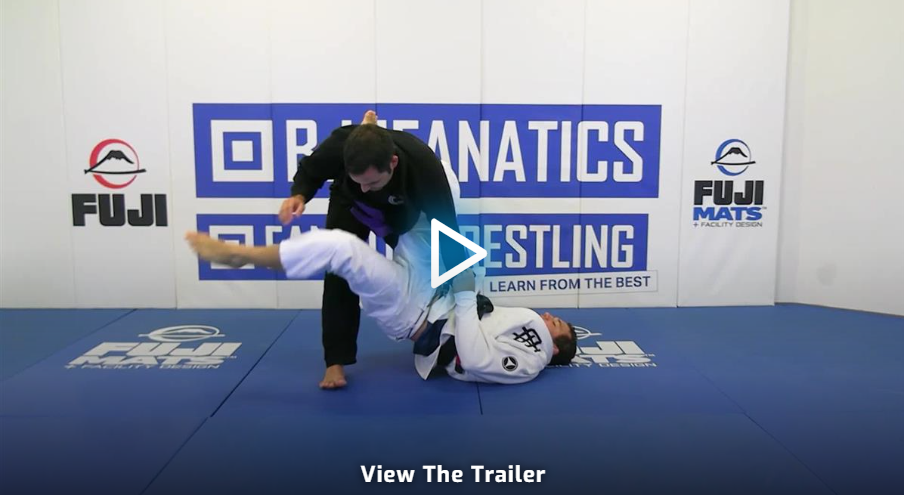
Closed guard is the one position everyone “knows”… right up until someone with solid base, good posture, and a mean knee wedge makes your guard feel like a pair of dead legs. That’s why Closed Guard Efficiency Rayron Gracie DVD is an interesting release: it doesn’t try to sell you a secret guard nobody has seen before.
It’s aiming at something much harder — making classic closed guard feel reliable again against people who actively deny you your favorite grips, angles, and hip movement. The promise here is efficiency: high-percentage grips, posture breaks that don’t require perfect timing, and a clear route from “I’m holding closed guard” to “I’m forcing reactions.”
If you’ve ever had rounds where your closed guard turns into grip-fighting purgatory (and then you get stood up anyway), this Closed Guard Efficiency Rayron Gracie DVD is built for that exact frustration.
The Point of Closed Guard in BJJ
The closed guard has a weird reputation in modern Jiu-Jitsu. On one hand, it’s considered “basic.” On the other, it’s still one of the toughest guards to deal with when the bottom player understands two things: posture management and inside-knee denial.
Closed guard isn’t about having 40 submissions — it’s about running a tight loop of control that makes the top player progressively less stable, less upright, and less free to disengage.

In practical terms, closed guard success usually comes down to a few recurring battles:
- Posture and head height: If the top player stays tall with their spine stacked, your angles become expensive to create.
- The inside knee: The moment a knee sneaks into your hip line, you’re defending a pass instead of attacking.
- Grip quality: You can “grab stuff,” or you can build grips that force predictable reactions.
That’s why a system that starts with posture and knee management tends to scale well. The best Gi closed guard sweeps don’t happen because you memorized them — they happen because your opponent is already compromised when you pull the trigger.
Rayron Gracie – A New Grappling Hope
Rayron Gracie’s credibility for this topic isn’t just Gracie last name marketing. His competition footprint has largely been built in the Gi, and his results at the colored belts are the kind that make people re-watch matches for details.
He’s a member of the 4th generation of the Gracie family who was promoted to black belt by Kyra Gracie in June 2023. They also highlight his activity on the IBJJF circuit, including major podiums and titles at Worlds and Pans across colored-belt divisions.
Rayron positions himself as a multiple-time world champion and leans heavily into the “efficiency, fundamentals, and legacy” framing — which, to be fair, lines up with what the instructional actually delivers.
The main takeaway for buyers: this is someone who’s lived the closed guard in high-level Gi competition, and the material reflects that pressure-tested, points-aware mindset. If you’re specifically looking for a Rayron Gracie closed guard game that doesn’t drift into overly fancy detours, this is very much in his lane.
Detailed Closed Guard Efficiency Rayron Gracie DVD Review
At a structural level, Closed Guard Efficiency Rayron Gracie DVD is split into six volumes, and it feels intentionally paced: control first, attacks later, and plenty of “here’s what to do when they stand” woven throughout. It’s not an encyclopedic closed guard library — it’s more like a tight operating system you can actually run in sparring.
Volume 1 – The Foundations
The opening volume sets the tone with the high percentage vs low percentage framing and then immediately gets into the practical guard problems: preventing posture, stopping the inside knee, and hitting posture breaks that don’t require your opponent to cooperate.
This is the stuff people skip because it’s not Instagram-friendly, but it’s the backbone of closed guard competence. What I liked here is that the posture breaks don’t feel like “one magic snap.”
They’re layered: deny posture, deny the knee, then use a sequence of mechanical steps to open angles. If you’ve been guilty of trying to climb too high too early (and getting your guard opened), this volume nudges you back toward being systematic. It’s also where the instructional’s “closed guard posture breaking” theme becomes obvious: Rayron is trying to make posture denial feel automatic.
Volume 2 – Kimura Wrist Locks
Volume 2 of the Closed Guard Efficiency Rayron Gracie DVD shifts into more aggressive control and attack entries, including wrist lock options and a Kimura pathway that connects to the back. The closed guard wrist lock material isn’t presented like a gimmick; it’s more of a compliance tool to force posture reactions and give your upper-body control more bite.
The highlight, for me, is how the volume treats the Kimura as a connector rather than a single submission attempt. The upgraded Kimura details and the transition into Kimura to back feel like the kind of practical escalation you can apply without needing a dramatic off-balance first. If you’re already comfortable controlling posture but struggle to convert that into meaningful movement, this volume is where you start getting answers.
Volume 3 – Omoplatas
The next part leans heavily into grip-breaking and sweep/submission pairing. You get belt and sleeve grip breaks (another sign this is Gi-first), then a sequence that moves into sweeping threats like the Lumber Jack sweep and follow-ups into Omoplata variations.
This is where the instructional becomes more “game-plan-ish.” Instead of isolated moves, you can see a pattern: break the grip that’s stabilizing their base, create a predictable post, then attack the base.
The Omoplata material here is especially useful if you’ve ever felt like you can enter Omoplata but can’t keep it tight long enough to matter. Even when you don’t finish, the follow-ups create productive scrambles where you’re the one choosing the next position.
Volume 4 – Closed Guard Battles
Volume 4 is one of the most practically valuable sections because it deals with a reality: closed guard isn’t always clean. People stand, posture up, and force you into “save the guard” decisions. This volume covers re-gaining closed guard, breaking standing posture, and then moving into sweeps that aim for dominant outcomes — including a route that ends in mount and a back take option.
If you compete (or just roll with pass-first, spazzy people), the emphasis on standing posture problems is a big deal. Too many closed guard instructionals treat standing as a single moment. Here, it’s treated like a phase you need answers for. And if you’re the kind of grappler who gets frustrated when the round turns into they stand, you scramble, they pass, Volume 4 is a stabilizer.
Volume 5 – Sweeps
The penultimate portion of the Closed Guard Efficiency Rayron Gracie DVD tightens the focus to a classic set of attacks: hip bump variations, a knee push sweep, and an armbar sequence, then finishes with training advice. On paper, that might sound “basic,” but that’s kind of the point: these are the attacks you can hit even when your timing isn’t perfect, provided your control work is in place.
The upgraded hip bump content is particularly nice for people who want to attack without constantly opening their guard and gambling. Used correctly, the hip bump threat forces posts and gives you access to follow-up attacks even when the sweep itself doesn’t land. And because the volume ends with tips on how to train, it reinforces the instructional’s biggest strength: it’s trying to make you better at closed guard rather than just more knowledgeable about closed guard.
Volume 6 – Back Takes & Triangles
Finally, the Closed Guard Efficiency Rayron Gracie DVD rounds things out with back take variations and a finishing cluster that includes chest-to-chest and bear hug style chokes, then triangles (including a mount-to-triangle pathway), plus a guard pull and outro.
This is a smart way to finish: you’re not left with “okay I swept them… now what?” Instead, it frames the closed guard as a position that should eventually funnel into the back or a high-control finish. The triangle material is also a good reminder that triangles don’t need to be a complicated web — if your posture control and angle creation are consistent, triangles become a natural consequence rather than a forced event.
A Practical Closed Guard is a Game Changer
If you want to actually absorb Closed Guard Efficiency Rayron Gracie DVD, treat it like a closed guard training cycle, not a one-week binge. The material is straightforward enough to drill, but the real gains come from constraint-based reps: forcing yourself to win the posture-and-knee battle before you “allow” yourself to chase submissions.
Start with control-only rounds. Begin every positional spar from closed guard with one rule: your first goal is posture denial and inside-knee denial. No submissions until you can consistently break posture or force hands to post.
Then, introduce one sweep and one connector. Pick a primary sweep from the set (for example, one of the knee push or Lumber Jack style options) and pair it with one connector (Kimura to back, Omoplata follow-up, or back take pathway).
You can pressure-test the “standing” phase once you’re comfortable. Start rounds with the top player already standing inside your closed guard. Your goal is to re-close, break posture, or sweep — in that order.
The main lesson: efficiency isn’t about doing fewer techniques; it’s about spending less time in neutral. This instructional helps most when you stop treating closed guard like a “submission hunting ground” and start treating it like a control system that earns the attack.
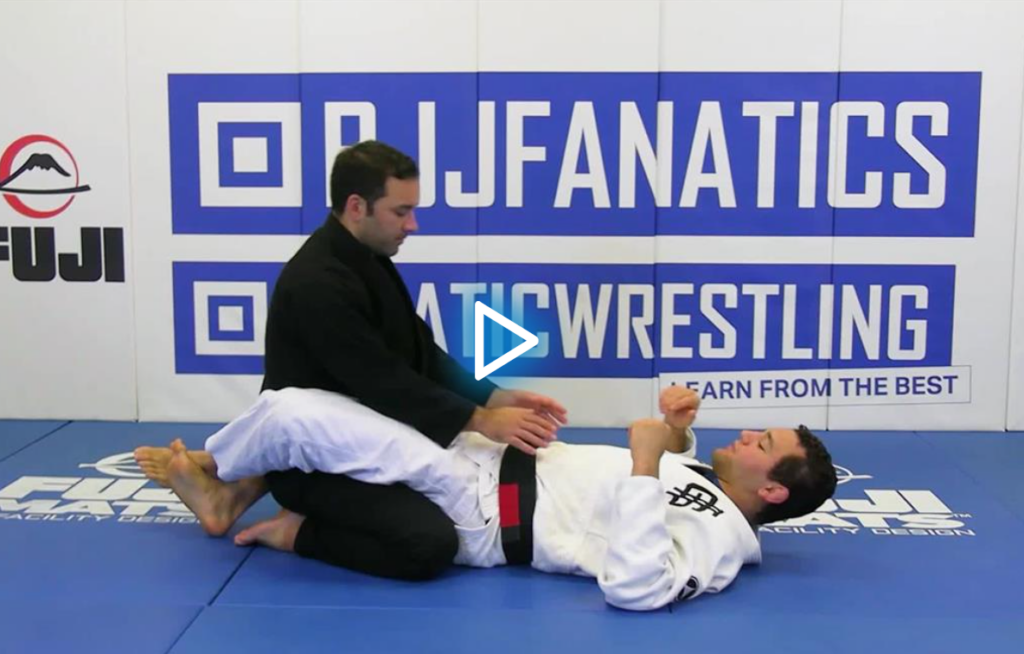
DOWNLOAD THE CLOSED GUARD EFFICIENCY RAYRON GRACIE DVD
Who Is This For?
This is a strong fit for white belts who already understand basic closed guard mechanics and want a clear “what matters most” roadmap. Also, blue to purple belts who can hold closed guard but struggle to consistently break posture or stop the stand-up sequence.
Gi-focused competitors who want repeatable attacks that don’t rely on athletic scrambles, even though this DVD teaches you how to scramble optimally. Finally, it’s a glove-in fit for those who like a tidy, fundamentals-led approach more than an experimental “new guard” style.
Those that won’t find this DVD helpful include pure No-Gi players looking for a No-Gi-specific closed guard system. You’ll still benefit from posture concepts, but the grip choices and sequences are clearly Gi-leaning.
People who want a massive closed guard encyclopedia will also be disappointed (probably). This is a system, not a library. Oh, and all you brand-new white belts who can’t yet keep their legs connected and their hips active — you may need a little base closed-guard competency first.
Pros & Potential Drawbacks
Pros
- Clear closed guard priorities. The instructional repeatedly returns to posture, inside-knee denial, and grip quality — the real levers of closed guard success.
- System feel without over-complication. It’s structured across volumes in a way that feels like a progression, not a random playlist.
- Practical answers for standing opponents. The “they stand up” phase gets meaningful attention, which is where many closed guard games die in sparring.
- Strong connectors to dominant outcomes. Back takes, mount, and follow-up submissions are treated as natural endpoints, not lucky bonuses.
- Training guidance included. The “how to train” section helps turn techniques into habits, which is where efficiency actually comes from.
Potential Drawbacks
- Gi-first emphasis. If you’re allergic to grips, belt/sleeve ideas, and Gi-based dilemmas, you’ll need to translate more on your own.
- Not an exhaustive closed guard course. You won’t get every possible entry, reaction tree, or niche submission — by design.
- Some viewers may want more modern cross-guard blending. If your closed guard game is heavily tied to leg entanglement transitions or modern No-Gi dilemmas, this stays more traditional and linear.
How to Win at Closed Guard
If your closed guard currently feels like hold on and hope, Closed Guard Efficiency Rayron Gracie DVD gives you a more realistic path: win posture, win the inside knee battle, then attack with sweeps and connectors that don’t require perfect conditions. It’s not trying to re-invent closed guard — it’s trying to make it dependable, which is honestly the more valuable goal for most grapplers.
The Gi emphasis is real, and it’s not the most expansive closed guard resource on the market. But the upside is that it stays on-mission: remove fluff, focus on what works, and give you a closed guard you can actually run under pressure.