




Key Takeaways
- The Take the Back from Closed Guard Paul Schreiner DVD is a focused three-volume instructional built around one core idea: turning closed guard into a reliable route to back exposure and back control.
- Its biggest strength is the way Schreiner organizes related attacks, reactions, and follow-ups so the material feels like a connected system rather than a random set of back takes.
- This is not a full closed guard encyclopedia. It is a narrower, more tactical study of how to create angle, win head-and-arm positions, and convert common upper-body attacks into back takes.
- Grapplers who already use closed guard but feel stuck between sweeps and stalled submission attempts will likely get the most from it.
- Rating: 9/10
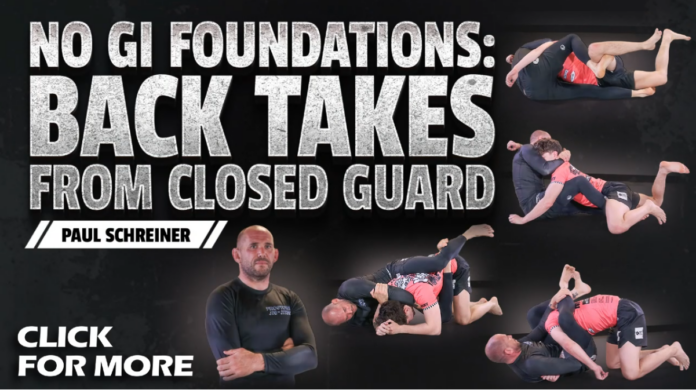
GET HERE TAKE THE BACK FROM CLOSED GUARD PAUL SCHREINER DVD
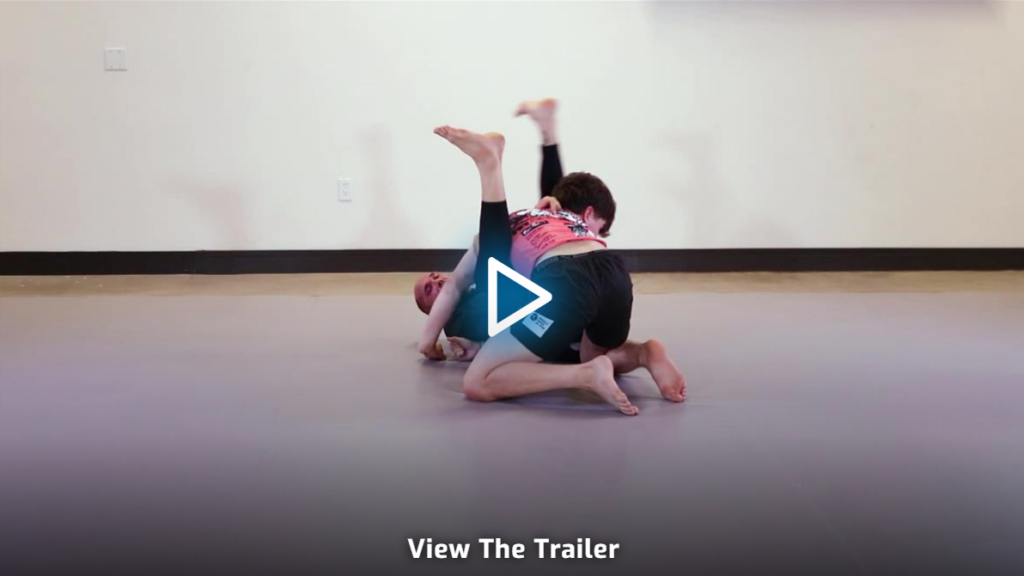
The Take the Back from Closed Guard Paul Schreiner DVD is a smart release for grapplers who already believe in closed guard, but want it to do more than just slow the round down. It is structured as a three-volume set, which immediately gives it a cleaner, more purposeful feel than many instructionals that simply dump techniques into broad positional buckets.
What makes this one stand out is the choice of destination. A lot of closed guard material is still built around the classic triangle-armbar-omoplata triangle, or around sweep-first thinking. Schreiner is not ignoring those worlds entirely, but the center of gravity here is different. The Take the Back from Closed Guard Paul Schreiner DVD keeps asking a more modern question: how do you make the opponent pay for every attempt to posture, hide, or recover by exposing their back instead?
The Guard That Won’t Go Away
Closed guard is one of those positions that never really leaves the sport. Trends come and go, leg lock eras reshape the open guard conversation, and standing exchanges keep evolving, but closed guard still survives because it solves a timeless problem: it gives the bottom player a way to clamp down, slow momentum, and create offense from direct contact.
The difficulty is not whether closed guard works. The difficulty is whether the person using it has enough detail to make it dangerous against somebody who knows how to posture, hand-fight, and avoid obvious traps. That is why closed guard back takes are so interesting. They sit in a sweet spot between old-school control and modern offensive flow. When the opponent is obsessed with defending armbars, triangles, and hip-bump style dilemmas, the back often becomes the reward for overdefending in predictable ways.
In that sense, the Take the Back from Closed Guard Paul Schreiner DVD is built around a very practical reality of live rolling: many people are good at seeing front-facing attacks coming, but much worse at recognizing when they are gradually giving their back away.

There is also a larger developmental benefit here. Learning to attack the back from closed guard teaches more than a handful of techniques. It sharpens your sense of angle, posture manipulation, and transitional control. It also improves your understanding of back control from guard, which is a skill that often separates decent guard players from genuinely dangerous ones.
The Legendary Paul Schreiner
Paul Schreiner is a credible person to teach this subject for reasons that go beyond a generic black belt label. He is a black belt under Claudio França who also worked extensively with names like Garth Taylor, Marcelo Garcia, and Dave Camarillo. The same source notes his competitive credentials, including podium finishes at IBJJF Worlds and Masters Worlds, while also highlighting his role at Marcelo Garcia’s academy in New York.
Schreiner has taught Jiu-Jitsu for over 20 years, including 14 years at Marcelo Garcia Academy in NYC, and notes that he was part of the coaching team behind major academy successes there. He has a reputation as a focused teacher with a non-denominational teaching approach, which actually fits the tone of this instructional quite well.

Schreiner has stated that Jiu-Jitsu took over his life after he first walked into a school as a teenager, and how he eventually made a career out of teaching at Marcelo Garcia Jiu-Jitsu Academy in New York. He is a coach who has spent years refining positions that work in real rooms, with real students, under a very technical lineage.
Take the Back from Closed Guard Paul Schreiner DVD Review
The Take the Back from Closed Guard Paul Schreiner DVD is organized into three volumes. It follows a progression that starts with core closed guard posture-breaking and upper-body control, then narrows into a pinch headlock system, and finally expands into armlock, high guard, arm drag, and kimura interactions that all feed the back-taking theme. The full set runs a little over two hours, which is long enough to develop the idea properly without feeling bloated.
Volume 1 – The Route to the Back
The first volume is where Schreiner builds the framework with setups and finishing material from the back and three-quarters back mount (yeah, new to me too). That chapter list tells you a lot about the teaching philosophy already: this is not closed guard as a static shell, but as a sequence of controls that progressively ruin posture and expose turning angles.
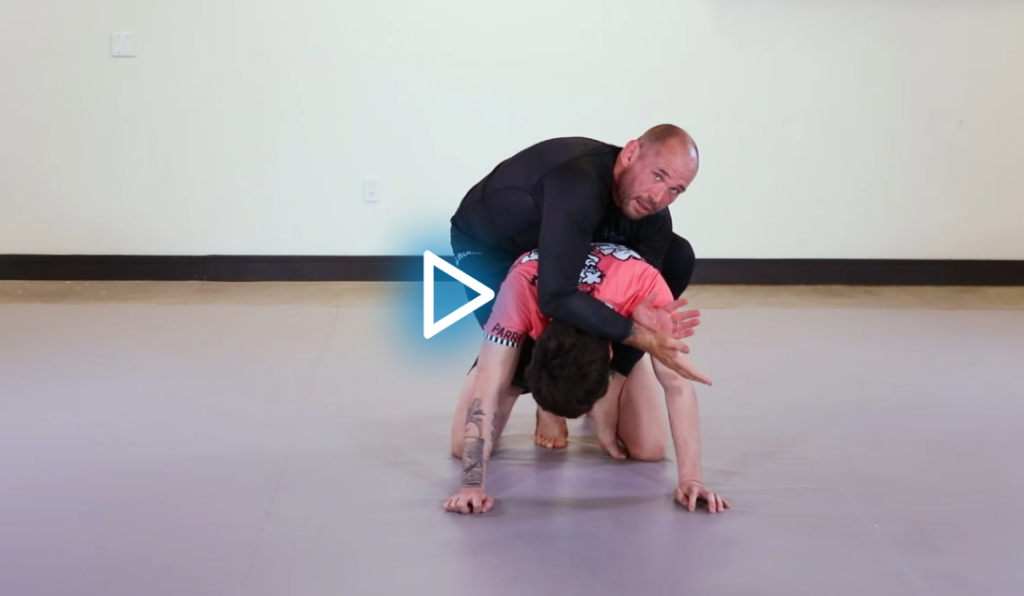
The Take the Back from Closed Guard Paul Schreiner DVD seems to understand that back takes fail when people chase the finish before they have actually shifted the opponent’s structure. Volume 1 appears designed to solve that problem. The material on arm positioning, tipping, underhooks, and head-and-arm situations suggests a very deliberate path: first make the opponent structurally weak, then move behind them.
Volume 2 – Sweeping Connections
Part 2 is shorter, but it looks purposeful rather than thin. It is a tight cluster of ideas, and it gives the second volume a more specialized identity. What I like about this section conceptually is that it broadens the way the viewer can think about the back.
Instead of treating the back take as a separate category, Schreiner appears to connect it to sweeping reactions and upper-body entanglements. In practical terms, that is how good closed guard offense usually works. You threaten one lane, the opponent shifts to save themselves, and the real score comes in the second or third beat.
This part of the Take the Back from Closed Guard Paul Schreiner DVD may end up being especially useful for people who already have basic closed guard attacks, but do not yet chain them well. The pinch headlock focus gives the volume a narrow lane, but that is also why it could be so effective. Rather than throwing twenty ideas at you, it looks like Schreiner is trying to make one family of reactions extremely dependable.
Volume 3 – Finsihing
The final volume appears to bring the system into more familiar attacking crossroads. It’s a very attractive final section because it links the back-taking theme to attacks most grapplers already recognize. This is where the instructional seems most likely to click for a broad audience.
A lot of grapplers understand the front-facing threats of the armlock and kimura, but they do not always see how those attacks can function as steering wheels. Schreiner seems to use them as transitional hubs instead of dead-end submissions. That approach gives the Take the Back from Closed Guard Paul Schreiner DVD a more layered feel, because it is no longer just “here is how to take the back from one setup.” It becomes a web of interconnected threats.
Volume 3 also helps the set avoid feeling too narrow. Yes, the theme is specific, but the pathways into it are not. High guard, arm drags, and kimura interactions give the material enough familiarity that the average grappler can probably plug parts of it into existing rounds fairly quickly.
Implementing the System
The best way to use the Take the Back from Closed Guard Paul Schreiner DVD is not to binge it and then randomly hunt back takes in sparring. This is the kind of material that benefits from focused study in layers. Start with the first volume and isolate the posture-breaking and angle-creation pieces. Then do short rounds where the only goal is to move the opponent into the first stage of exposure rather than finish the whole sequence.
From there, add the follow-ups. One good method would be positional sparring from closed guard with the top player instructed to posture, pummel for inside position, or stand in realistic ways. That creates the exact kinds of reactions Schreiner is trying to exploit. Once that starts feeling natural, the second and third volumes become much more useful, because you are no longer memorizing techniques in a vacuum.
The practical value here is strong because the subject has real spillover into general guard development. Even if you never become someone whose entire game revolves around back takes, the Take the Back from Closed Guard Paul Schreiner DVD can improve how you think about chaining attacks, using upper-body controls, and converting defensive reactions into offense. That is high-value material for regular training, not just niche competition prep.
BACK TAKE FROM CLOSED GUARD PAUL SCHREINER DVD DOWNLOAD
Who Is This For?
This instructional looks best suited for blue belts and above, especially grapplers who already play closed guard enough to appreciate subtle improvements. A newer white belt can still learn from it, but they may struggle if they do not yet understand how to keep posture broken, manage grips, or maintain angles under resistance.
It is also a strong fit for players who prefer control before explosion. If your idea of guard offense is forcing predictable reactions and then advancing position, this will likely make sense immediately. If you are more of a fast-submission hunter who wants a giant catalogue of finishes, the Take the Back from Closed Guard Paul Schreiner DVD may feel more methodical than exciting at first.
Competitors should get a lot from it too, especially because back exposure and back control remain so valuable across many rulesets. The best audience is the grappler who already believes closed guard can be offensive, but wants a more organized answer for opponents who defend the obvious stuff well.
Pros & Potential Drawbacks
Pros:
- Clear system design: The material appears built around connected reactions instead of disconnected techniques, which makes it easier to study and actually apply.
- Strong positional focus: Keeping the emphasis on back exposure and back control gives the set a clear identity instead of trying to be every closed guard instructional at once.
- Practical chapter selection: The inclusion of underhooks, pinch headlock work, armlock interactions, and kimura-to-back sequences hits realistic training problems.
- Good teacher-topic match: Schreiner’s long coaching background makes him a believable guide for a detail-heavy subject that depends on timing and transitions.
- Useful for long-term development: Even outside the exact techniques, the material should improve the viewer’s understanding of angle creation and transitional offense.
Potential Drawbacks:
- Narrower than a full closed guard course: If you want a broad survey of sweeps, submissions, entries, and defenses from every closed guard scenario, this is not that.
- Probably better for experienced guard players: Brand-new grapplers may not have enough feel yet to appreciate the small details that make these back takes work.
- Volume 2 is more specialized: The pinch headlock section may feel slightly more niche unless that connection already exists in your game.
Old School CG Attacks
The Take the Back from Closed Guard Paul Schreiner DVD does exactly what a good specialized instructional should do: it takes one idea, organizes it well, and makes it feel much more accessible than it might on first glance. Our initial review supports that impression with a logical three-volume structure and a chapter list built around progression, not filler, given that Schreiner has spent years teaching exactly this kind of detail-oriented Jiu-Jitsu.