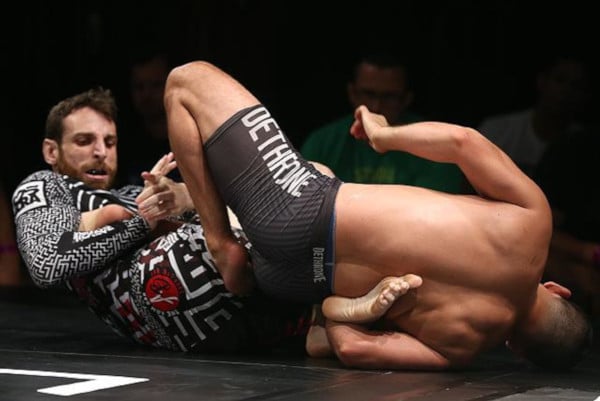
Philadelphia hosted an interesting grappling event last night featuring a number of UFC fighters.
The end of the year is not classically full of MMA events, but martial arts fans had the opportunity to see a handful of interesting grappling last night. Namely, the 2300 Arena in Philadelphia hosted the FURY Pro Grappling 3 event, and the program was full of UFC fighters, but also top, renowned grapplers.
The event was led by Carla Esparza and Danielle Kelly. By the way, Kelly is an excellent ground floor master and owner of a black BJJ belt, while Carla Esparza has the reputation of a former UFC champion, but she is still at the very top of the straw category. Esparza jumped into this match as a replacement for Rose Namajunas, and lost the match with a break, due to a cut she received on the forehead while trying to “straw”. The referee stopped the match after four minutes and 26 seconds of fighting.
The undefeated @UFC welterweight @SeanBradyMMA earns the judges decision!
Still, the show was stolen by Sean Brady. The undefeated UFC welterweight (15-0, 5-0 UFC) had probably the most difficult task on paper. His opponent was Craig Jones, a master of grappling who belongs to the very top of the sport. The Australian has won a number of major tournaments and a series of medals at the most prestigious grappling championships. Gordon Ryan would often stop him on his way to gold, but every grappling connoisseur knows what Gordon Ryan’s name means in the sport. Jones according to the BJJ Heroes page has 51 wins and 16 losses and even celebrated 41 times with a break. It should be taken into account that these are matches mostly against elite competition. Heel hooks and similar interventions with which he attacks the opponent’s leg are his specials.
Despite everything, Sean Brady provided a big surprise and celebrated the referee’s decision. The UFC welterweight, with his strength and excellent wrestling, neutralized all the attacks of the opponent who spent most of the match in the lower position. Brady could not pass the guard of the great Jones, but maintaining the dominant upper position was enough to celebrate in this match.
” I’m a jiu-jitsu guy, but I’m an MMA guy too. I wanted to use my own pressure and tactics. However, not much happened because I could not pass his guard, ” said Sean Brady, just after the match.
The undefeated @UFC welterweight @SeanBradyMMA earns the judges decision!
Of the other results, the defeats of Neil Magny and Donald Cerrone are worth mentioning. Two renowned UFC fighters were also defeated by UFC fighters. Joe Solecki defeated Donald Cerrone by suffocation (RNC) after three minutes and 17 seconds of the match. Despite Solecki weighing almost 20 pounds (9.07 kg) on the scales, he controlled the fight brilliantly and won.
Neil Magny lost to Joaquim Silva, a “guillotine” after just under three minutes of fighting. The beginning of the fight was a test of strength, but Silva used the first opportunity to lock the “guillotine” and thus came to victory. After two knockout defeats under the auspices of the UFC, the Brazilian finally got to one celebration, though not in MMA.
It is worth noting that Kevin Holland also appeared at last night’s event. The UFC middleweight fighter is known for his preference for standing fights but decided to try his hand at a grappling match. As always, Kevin afforded the attraction and the audience enjoyed his acrobatics. However, that was not enough for him to win and he lost to Kody Hamrah by a judge’s decision.
Fighters like Clay Guide, Billy Quarantillo, Renato Moicano, etc. also performed at this event, and you can read the complete results below:
FURY Pro Grappling 3 – results:
Danielle Kelly def. Carla Esparza via interruption due to injury (cuts) – 4:26
Sean Brady def. Craig Jones via decision
Joe Solecki def. Donald Cerrone via submission (rear-naked choke) – 3:17
Clay Guida def. Billy Quarantillo via decision
Renato Moicano def. Chase Hooper via decision
Nicky Rod def. Steve Mowry via submission (RNC) – 5:30
Joaquim Silva def. Neil Magny via submission (guillotine) – 2:47
Jonathan Piersma def. Philip Rowe via decision
Alex Caceres def. Eddy Torres via submission (RNC) – 2:35
Cheats Hamrah def. Kevin Holland via decision
Andre Petroski def. Phil Hawes via decision
Gillian Robertson def. Chrissy Briggs via decision
Joe Rogan may not be a part of the UFC in recent years, but for Dana White, he remains an important member of UFC and the MMA community in general.
The UFC has significantly reduced the number of times Rogan commentates. The most recognized voice in the broadcast booth now only does U.S.-based pay-per-views – and not all events deserve his expertise
He’s still an incredible standup comedian, actor, and podcast host who’s also well known for being one half (with Dana White) behind “The Fight Game” on Fox Sports 1 with Dominion Television Group which specializes primarily or mixed martial arts promotion fights
Rogan, who only worked six UFC events over the past year has been criticized by many fans. However, Rogan addressed those critics, and even though White thinks he deserves respect for helping educate fans about combat sports in general; other than Gracie family members-White says there is no one else more instrumental to popularizing the ground game of MMA as much like it was back then
A lot of people have had issues with Dana White’s response on Jake Rogan being overweight but what they don’t seem to realize or know is how integral this man really did when it comes down to having knowledge within mixed martial arts alone!
“Another guy who deserves a ton of credit for helping build this sport during our era is Joe Rogan,” said White on THE FIGHT with Teddy Atlas. “The reality is that when we got into this, everybody understood standup fighting no matter what happened.”
“I remember watching those early fights and thinking to myself: How are they going to understand these guys. The big thing for me was when it goes to the ground, how many people will really understand what’s happening”.
“I think it’s really cool that the main voice behind debates about jiu-jitsu is also a practitioner of this martial art. Joe Rogan was passionate about his sport, and he knew how to explain things so well.” – said Dana White
White, the UFC president and CEO of 7 years with a net worth over $500 million has also sought out Rogan’s help when he faced COVID-19. With monoclonal antibodies as part of his methodology to recovery from virus White said this is one time where you can’t put a price tag on saving your life or someone else’s.”
Rickson Gracie is a 9th-degree red belt in Gracie Jiu-Jitsu and a retired mixed martial artist from Brazil. This legendary MMA fighter, and Jiu-jitsu practitioner was awarded Red Belt in Brazilian Jiu-Jitsu by Rorion Gracie on October 23rd, 1995. He was born on November 21, 1958, in Rio de Janeiro, Brazil as one of Helio Gracie’s 9 kids.
In this blog post, we will explore Rickson’s life story, as well as learn about some of his fights and most famous accomplishments.
Quick Facts About Rickson Gracie
Nickname: The Last Samurai
Birth: November 21, 1958 (age 63), Rio de Janeiro, Brazil
Birth Sign: Sagittarius
Height: 1.78 m
Blood Type: 0
Wife: Cassia Gracie
Children: Kron Gracie, Kauan Gracie, Kaulin Gracie, and Rockson Gracie who passed away.
Famous quote: “If we fight for money, I’ll stop hitting you when you ask me to. If we fight for honor, I’ll stop hitting you when I feel like it.”
Books: Rickson Gracie 21st century warrior’s spirit, The Breathe
Net Worth:Rickson Gracie’s net worth is approximately $1.5 Million.
Ethnicity, religion & political views: Unknown according to IMDB, Wikipedia, and other media sources
Rickson Gracie’s Early Age
Rickson Gracie grew up in Favelas of Rio De Janeiro as the third son of legendary Brazilian Jiu-Jitsu Co-founder Helio Gracie.
As Helio was spending the majority of his life on the mats together with his kids he saw the potential for fighting in Rickson since he was a kid so he trained and prepared him to take over as the family’s leading fighter.
Young Rickson Gracie with his father Helio
But it wasn’t easy at the start because Rickson was skipping Jiu-Jitsu classes regularly to spend time in Ipanema Favela. There, he befriended some older boys and almost took a bad path with guys who smoke marijuana and surf.
Fortunately, he decided to abandon his friends from Ipanema once they started to steal and consume drugs.
After that, he was regular on Jiu-Jitsu training and that’s where his serious training starts.
Rickson Gracie Brazilian Jiu-Jitsu Career
Jiu-Jitsu’s record of Rickson is impressive, to say the least. He has never been defeated in an official Jiu-Jitsu match. The record below only shows the most popular fights, but we need to take notice that he competed in Jiu-jitsu matches since he was 6 years old.
Rickson Gracie MMA Career
He holds a perfect 11-0 career record, with all of his victories coming via submissions. Rickson has never been knocked out or even taken to a decision in any of his bouts.
He’s retired as undefeated he’s considered as one of the greatest mixed martial artists of all time and is still being praised by many fighters such as Fedor Emelianenko, Bas Rutten, Matt Hughes, and others.
First Fight vs Rei Zulu
In 1980, Waldemar Santana, the man who had previously beaten Helio Gracie in a historic no-rules bout, reestablished friendship with Helio. One day Santana inquired if the Gracie family had anyone in their class capable of challenging Rei Zulu (Santana’s student).
Rei Zulu
Zulu was a great fighter with tremendous athletic ability, and he had never lost in his NHB career. In Brazil, no one wanted to fight him, so Waldemar, Zulu’s promoter, was having trouble finding fights for his fighter.
When Rickson was 18 years old and weighed roughly 20kg less than Zulu, his father decided to allow him to fight against Zulu. Although Rickson was not feeling 100% ready, he faced adversity when the battle took place in Brasilia at Rei Zulu’s home crowd. He had no prior experience as an amateur and didn’t know what to expect.
Carlos Gracie, a spiritualist and aura supporter, instructed Rickson not to compete because he didn’t believe it was his battle to win.
Remaining truthful to his father Rickson decided to fight what happened to be a good decision as he won the bout via Rear Naked Choke (RNC).
He later recalled feeling dizzy throughout the fight, which was attributed to the difference in air quality in Brasilia (which is considerably drier than Rio de Janeiro’s air he was used to).
Second Fight vs. Rei Zulu
Four years later Gracie faced Zulu for the second time. Again, he did not quarrel with “Zulu,” but when the man of Brasilia spoke severely to him, the fight was arranged for Maracanazinho Stadium, which could accommodate up to 40,000 spectators. The stadium was full for the fight, and no one was disappointed as it was a real battle in which Rickson won by choke again.
Rickson Gracie vs Rei Zulu
Luta Livre Challenges and Bouts
In 1988, promoters tried to organize a bout between Rickson and Luta Livre exponent Marco Ruas. However, Hélio Gracie refused, demanding that Rickson should be paid more money or that the fight take place within the Gracie Academy, both of which were rejected. As a result, the bout didn’t happen.
Ruas, meanwhile, had been criticized for not defending the honor of Luta Livre. Later, during a meeting with Luta Livre fighters at the Clube Boqueirão do Passeio, Rickson himself challenged Ruas. The cause for this second fight’s cancellation is a point of contention: Rickson said Ruas requested time to prepare; whereas Ruas claimed Helio shut down the proposal on the basis that he did not consider Ruas to be a genuine Luta Livre representative.
Denilson Maia Challenge
Later, Rickson was challenged by Lutador Denilson Maia. He accepted to fight, but Denilson had to pull out due to his father’s death, so he was replaced with Duarte.
Fights with Duarte
Despite Duarte’s only desire being to participate in a pay-per-view event, Gracie met him on the beach and smacked him in front of his pupils before demanding him to compete there, so Hugo stepped down and fought Rickson on the sand.
Rickson Gracie vs Hugo Duarte
After Duarte surrendered to punches to the face, Gracie won. Shortly after, Duarte showed up at Rickson’s gym demanding another bout, claiming that Rickson had kicked him and thrown sand in his eyes during the fight. Once again, Gracie prevailed, resulting in a riot that necessitated the involvement of the police.
Rickson Gracie vs Hugo Duarte 2
Following the bout Rickson departed Brazil for the United States, so the rivalry between Brazilian jiu-jitsu and Luta Livre continued without him.
Vale Tudo Japan
In 1994 Rickson was invited to Japan, where he saw a fantastic way to promote his family’s name outside of Brazil, and with a hefty prize on the table, he accepted. The 8-man tournament was called “Vale Tudo Japan 1995,” and Rickson Gracie prevailed, defeating all of his opponents in one night.
He continued to fight in Japan, winning several more fights (all by submission) and keeping his record perfect. This tremendous triumph for Rickson incurred the wrath of some Japanese fighters who regarded their nation and martial arts tradition as having been besmirched. The Japanese pro wrestler Nobuhiko Takada was one of those fighters who made a public challenge to Rickson, but Rickson refused to accept the challenge, fuelling Japanese fury even more.
Yoji Anjo Dojo Storm Challenge and Fight With Rickson
Yoji Anjo, a Japanese fighter who was trained by Takada, decided to go to California and reclaim his country’s pride, bringing with him a large media presence. He came to the Gracie family’s doorstep unannounced in order to confront Rickson who had to be contacted from his house. As soon as Rickson received a call he showed up and accepted the challenge.
Photo was taken when Yoji Anjo dojo stormed Rickson Gracie
Despite the fact that Anjo and his companions sought to entice Rickson to compete in a Japanese promotion, he refused and announced that the bout would take place there behind closed doors. As Yoji reluctantly agreed to the terms, Rickson said his most famous quote:
“If we fight for money, I’ll stop hitting you when you ask me to. If we fight for honor, I’ll stop hitting you when I feel like it.”
The fight was a one-sided beatdown, with Rickson having the option to submit Yoji quickly but opting for a statement instead. Just like he said before the fight he gave Anjo a real beating. The Gracie family kept the video of the bout as a memento and has never shown it
After their dojo storm challenge fight in 1989, Rickson declared that he was much better and Yoji had no chance to win.
PRIDE Career
In 1997, Gracie accepted a bout with Yoji Anjo’s superior Nobuhiko Takada in the Pride 1 event. In front of 47,860 fans at the Tokyo Dome, Rickson vanquished the inexperienced Takada by mounting him and locking an armlock after 4:47 minutes of the fight.
According to Gracie, he was offered to fight Mario Sperry at Pride 3, but the process was halted because of Carlson Gracie’s refusal. He was also asked to take Royce Gracie’s place in his postponed bout with Mark Kerr, but he refused, claiming that a one-month preparation time wasn’t enough.
Akira Maeda, a Japanese MMA fighter, also challenged Gracie and proposed a fight as his own retirement bout, but it was turned down. Rickson agreed to a rematch with Takada at Pride 4 only because it was the match for the title.
“I feel Takada is a warrior and deserves the chance to try and redeem himself.” – Rickson stated
In their second bout, Takada had improved and was able to wrestle Rickson to neutralize his groundwork advantage, but the Brazilian master utilized a failed leglock attempt to sweep him and mount him.
Nonetheless, Takada managed to fight his way out of Rickson’s mount and manages to dismount him. Soon after his mount escape, he threatened with a heel hook attempt and an armbar. Gracie was waiting until the end of the round to prevent Takada from capitalizing, so he applied an armbar and submitted him again.
Rickson Gracie vs Takada Pride 1
Colosseum Events
After Kazushi Sakuraba bested Royler Gracie in the Pride 8 event in May 2000, he took the microphone and challenged Rickson, who was sitting in the Gracies corner. But nothing ever happened out of it. At Colosseum, Rickson chose to face Masakatsu Funaki, who had retired from Pancrase.
The bout was nearly canceled when Rickson wanted special conditions that ban headbutts, elbow strikes, and ground blows, but an agreement was reached when the Pancrase management agreed to ban headbutts and elbows.
The bout, which was aired live to 30 million TV Tokyo viewers, at the Tokyo Dome, Gracie and Funaki began clinching in the corner. It appeared that Masakatsu had a guillotine choke applied, but Rickson was able to go to the floor because it was loose.
They traded kicks with no effect until some well-timed low kicks from Gracie blew out Funaki’s shattered knee. They clinched again but the Japanese’s injury prevented him from wrestling Rickson correctly, and he was taken down by the Brazilian grappler who took advantage of this situation and mounted him.
After the third round, Masakatsu was visibly shocked as Rickson battered his face with ground and pound and Gracie forced his way into a rear-naked choke. [19] “Gracie said that one of Funaki’s hammerfists caused him to go temporarily blind,” according to the post-fight interview.
Rickson Gracie vs Funaki Colosseum 2000
After the Colosseum event, Gracie expressed an interest in competing against judo bronze medalist Naoya Ogawa, who had been signed up for the next Colosseum bout. He also turned down Pride management, who suggested that he should fight Kazushi Sakuraba, who had previously defeated Royce Gracie. “He didn’t have the warrior’s spirit,” said Rickson for Sakuraba. Later he stated that he didn’t want to fight a guy who is so much smaller than him.
However, since Hashimoto had not yet fought in New Japan Pro-Wrestling at the time, he was invited to face Manabu Nakanishi, Kazuyuki Fujita, or even Shinya Hashimoto. They were refused, however. The bout with Ogawa was scheduled for the next year.
Scheduled Fight Against Kazushi Sakuraba That Never Took Place
Rickson Gracie’s last bout was supposed to be against Kazushi Sakuraba, the man who had defeated every member of the Gracie family he faced. He was nicknamed “The Gracie Hunter” because he beat every Gracie family fighter he faced and said he’ll beat any Gracie he’d face.
The words from Sakuraba were enough for Rickson to accept the fight with Sakuraba, but tragedy struck him when Rickson’s son Rockson Gracie tragically passed away.
He continued to claim he was open to fighting again throughout the next few months but nothing came out of it. When the bout with Sakuraba was mentioned again, Rickson stated that he was uninterested in it, although he acknowledged, “in my heart, I believe that Sakuraba deserves to be beaten.”
Kazushi Sakuraba defeats Royce Gracie in Pride
Rickson Gracie Loss to Ron Tripp in a Sambo Bout
Rickson Gracie faced World Sambo Champion Ron Tripp in the 1993 US Sambo Championships in Norman, Oklahoma. In 47 seconds, Tripp “absolutely” beat Gracie by using “Uchi Mata,” giving him absolute victory according to FIAS International Sambo rules.
When Ron Tripp defeated Rickson in a Sambo bout, he said that he had no idea about the rules.
Actually what Rickson said about rules makes sense because in Jiu-Jitsu when you go to the ground fight actually starts. That’s not the case with Sport Sambo which has a rule like Ippon in Judo that means immediate victory.
Rickson Gracie vs Ron Tripp
Rickson Gracie’s Retirement
After defeating Masakatsu Funaki in may, 2000. at the CK event, Rickson didn’t mean to retire, but after his son’s death, he wasn’t able to continue with fighting. He focused his energy on teaching and spending more time with his family.
Rickson Gracie as a Teacher of Gracie Jiu-jitsu
Rickson believes that he is a Gracie Jiu-Jitsu practitioner rather than an MMA fighter, and he took pleasure in the fact that he did not cross-train in other fighting arts in order to face the best fighters in the world at the time.
That’s exactly the reason why Rickson is probably the loudest representative of Gracie Jiu-jitsu and the way of training he represents.
He doesn’t accept Jiu-Jitsu training as a sport. Just like his father Helio he thinks that Jiu-Jitsu training should involve all aspects of fighting and self-defense. His mind is set on submitting opponents rather than winning on points.
His main accomplishment as a teacher came with his Son Kron Gracie whom he was teaching since he could walk.
The moment when Kron won the ADCC finals in 2013 Rickson considers as one of the best moments of his life.
Rickson Gracie’s 400:0 record
Rickson Gracie claims that he has a 400:0 fighting record.
Many people dispute Rickson Gracie’s 400-0 record. Even Helio Gracie, Rickson’s father, stated that the claim of his son was false.
“I can’t recall how many fights I had. I would say about 50, more or less. If you count all fights including Rickson who says he has 400 fights then I have a million. Because for the last 60 years I’ve been teaching Jiu Jitsu for 20-30 students a day. If you multiply that it could be more than a million. Rickson fought twice in Brazil and the rest of his fights were in Japan. Tournament matches and stuff where little kids play I don’t count as fights.” – said Helio Gracie in an interview
So it’s still in question what Rickson meant when he said 400:0. He was probably counting all the Jiu-Jitsu tournament matches under his fighting record.
Rickson Gracie Filmography
The Incredible Hulk 2008 – Aikido Instructor
Elite Squad 2: The Enemy Within 2010 – (martial arts consultant)
Gracie 2021 (Documentary) (pre-production)
Watters’ World 2014 (TV Series) – Self
The Joe Rogan Experience 2008 (Podcast Series) – Self
UFC 1: The Beginning (TV Special) – Self (uncredited)
The Joe Rogan Experience 2010 (Podcast Series) – Self
The Gracies and the Birth of Vale Tudo Self (Documentary)
Rickson Gracie Choke Documentary
Rickson Gracie Accomplishments
Aside from his impressive martial arts record, Rickson Gracie is also well known for his many accomplishments outside of fighting. Rickson has been awarded several black belts in different disciplines including Judo, Aikido, and Brazilian Jiu-Jitsu.
In 1995, Rickson was inducted into the Black Belt Hall of Fame as “the most influential fighter of the 20th century.”
In 2000, he was named one of the 25 greatest fighters of all time by ESPN.
Rickson also founded Rickson Gracie International, a Jiu-Jitsu association with schools in many countries including the United States, Japan, Mexico, and Australia.
Rickson also opened his own line of Jiu-Jitsu equipment called Koral Brazil.
Rickson is a founder of JJGF – Jiu-Jitsu Global Federation. He founded it to unify the competitive rules of different Jiu-Jitsu organizations and ensure that all tournaments are judged using the same criteria. Rickson’s goal is to have a fair and level playing field for all competitors regardless of affiliation.
The Rickson Gracie Foundation is a non-profit organization that provides educational opportunities for children in Brazil.
Rickson Gracie is an inspiration to all who know him and his story is one that should be remembered by all!
Rickson Gracie Famous Quotes
If we fight for money I’ll stop hitting you when you ask me to. If we fight for honor, I’ll stop hitting you when I feel like it.
True strength is not always shown through victory. Stand up, try again, and display the strength of your heart.
In life, when faced with any situation, breathe, take your time, focus, and then decide what to do.
Our fears don’t stop death, they stop life.
Jiu-Jitsu puts you completely in the moment, where you must have a complete focus on finding a solution to the problem.
I’m a shark, the ground is my ocean, and most people can’t even swim
If size mattered the elephant would be the king of the jungle
Sometimes, you don’t have to win, you can’t win. But that has nothing to do with losing
The journey has to be based on passion. Put yourself in something you love to do. If you love what you do you’re able to dedicate yourself, overcome obstacles.
A brave man, a real fighter is not measured by how many times he falls, but how many times he stands up.
If you do not speak up when it matters, when would it matter? Even a dead fish can go with the flow.
The biggest gift I received as a Martial Artist is without a question the capacity to be in peace.
Born to fight, learn to win, live to help
If you’re ready to die, then you’re ready to live
What makes you tough is your mindset and I believe everyone can be tough.
The most important thing is not the victory. The most important thing is to not get defeated.
Frequently Asked Questions about Rickson Gracie
What happened to Rickson Gracie’s son?
Rickson’s eldest son, Rockson Gracie, died of a drug overdose soon after arriving in New York to pursue a modeling career.
Rickson was supposed to fight Japanese MMA star Kazushi Sakuraba in a highly anticipated bout when The Sakuraba bout was called off due to reasons unknown, and he never fought professionally again.
Is Rickson Gracie the best
It’s hard to tell if he’s the best in Jiu-Jitsu or MMA even though he’s undefeated in both sports. However he is widely considered as the best fighter of the Gracie family, and many people think of him as the best Jiu-Jitsu practitioner of all times.
Is Rickson Gracie married?
Yes! He’s married to Cassia Gracie.
Who gave Rickson his Red Belt?
Rickson was given the red belt by his older brother Rorion Gracie. According to Renzo and Royler Gracie, in Brazilian jiu-jitsu, the Red Belt is reserved for those who achieve “influence and fame”. It’s worth noticing that he received his Red Belt several years before he could receive it officially.
Rickson Gracie is a 9th-degree red belt in Gracie Jiu-Jitsu and a retired mixed martial artist from Brazil. This legendary MMA fighter, and Jiu-jitsu practitioner was awarded Red Belt in Brazilian Jiu-Jitsu by Rorion Gracie on October 23rd, 1995. He was born on November 21, 1958, in Rio de Janeiro, Brazil as one of Helio Gracie’s 9 kids.
In this blog post, we will explore Rickson’s life story, as well as learn about some of his fights and most famous accomplishments.
Quick Facts About Rickson Gracie
Nickname: The Last Samurai
Birth: November 21, 1958 (age 63), Rio de Janeiro, Brazil
Birth Sign: Sagittarius
Height: 1.78 m
Blood Type: 0
Wife: Cassia Gracie
Children: Kron Gracie, Kauan Gracie, Kaulin Gracie, and Rockson Gracie who passed away.
Famous quote: “If we fight for money, I’ll stop hitting you when you ask me to. If we fight for honor, I’ll stop hitting you when I feel like it.”
Books: Rickson Gracie 21st century warrior’s spirit, The Breathe
Net Worth:Rickson Gracie’s net worth is approximately $1.5 Million.
Ethnicity, religion & political views: Unknown according to IMDB, Wikipedia, and other media sources
Rickson Gracie’s Early Age
Rickson Gracie grew up in Favelas of Rio De Janeiro as the third son of legendary Brazilian Jiu-Jitsu Co-founder Helio Gracie.
As Helio was spending the majority of his life on the mats together with his kids he saw the potential for fighting in Rickson since he was a kid so he trained and prepared him to take over as the family’s leading fighter.
Young Rickson Gracie with his father Helio
But it wasn’t easy at the start because Rickson was skipping Jiu-Jitsu classes regularly to spend time in Ipanema Favela. There, he befriended some older boys and almost took a bad path with guys who smoke marijuana and surf.
Fortunately, he decided to abandon his friends from Ipanema once they started to steal and consume drugs.
After that, he was regular on Jiu-Jitsu training and that’s where his serious training starts.
Rickson Gracie Brazilian Jiu-Jitsu Career
Jiu-Jitsu’s record of Rickson is impressive, to say the least. He has never been defeated in an official Jiu-Jitsu match. The record below only shows the most popular fights, but we need to take notice that he competed in Jiu-jitsu matches since he was 6 years old.
Rickson Gracie MMA Career
He holds a perfect 11-0 career record, with all of his victories coming via submissions. Rickson has never been knocked out or even taken to a decision in any of his bouts.
He’s retired as undefeated he’s considered as one of the greatest mixed martial artists of all time and is still being praised by many fighters such as Fedor Emelianenko, Bas Rutten, Matt Hughes, and others.
First Fight vs Rei Zulu
In 1980, Waldemar Santana, the man who had previously beaten Helio Gracie in a historic no-rules bout, reestablished friendship with Helio. One day Santana inquired if the Gracie family had anyone in their class capable of challenging Rei Zulu (Santana’s student).
Rei Zulu
Zulu was a great fighter with tremendous athletic ability, and he had never lost in his NHB career. In Brazil, no one wanted to fight him, so Waldemar, Zulu’s promoter, was having trouble finding fights for his fighter.
When Rickson was 18 years old and weighed roughly 20kg less than Zulu, his father decided to allow him to fight against Zulu. Although Rickson was not feeling 100% ready, he faced adversity when the battle took place in Brasilia at Rei Zulu’s home crowd. He had no prior experience as an amateur and didn’t know what to expect.
Carlos Gracie, a spiritualist and aura supporter, instructed Rickson not to compete because he didn’t believe it was his battle to win.
Remaining truthful to his father Rickson decided to fight what happened to be a good decision as he won the bout via Rear Naked Choke (RNC).
He later recalled feeling dizzy throughout the fight, which was attributed to the difference in air quality in Brasilia (which is considerably drier than Rio de Janeiro’s air he was used to).
Second Fight vs. Rei Zulu
Four years later Gracie faced Zulu for the second time. Again, he did not quarrel with “Zulu,” but when the man of Brasilia spoke severely to him, the fight was arranged for Maracanazinho Stadium, which could accommodate up to 40,000 spectators. The stadium was full for the fight, and no one was disappointed as it was a real battle in which Rickson won by choke again.
Rickson Gracie vs Rei Zulu
Luta Livre Challenges and Bouts
In 1988, promoters tried to organize a bout between Rickson and Luta Livre exponent Marco Ruas. However, Hélio Gracie refused, demanding that Rickson should be paid more money or that the fight take place within the Gracie Academy, both of which were rejected. As a result, the bout didn’t happen.
Ruas, meanwhile, had been criticized for not defending the honor of Luta Livre. Later, during a meeting with Luta Livre fighters at the Clube Boqueirão do Passeio, Rickson himself challenged Ruas. The cause for this second fight’s cancellation is a point of contention: Rickson said Ruas requested time to prepare; whereas Ruas claimed Helio shut down the proposal on the basis that he did not consider Ruas to be a genuine Luta Livre representative.
Denilson Maia Challenge
Later, Rickson was challenged by Lutador Denilson Maia. He accepted to fight, but Denilson had to pull out due to his father’s death, so he was replaced with Duarte.
Fights with Duarte
Despite Duarte’s only desire being to participate in a pay-per-view event, Gracie met him on the beach and smacked him in front of his pupils before demanding him to compete there, so Hugo stepped down and fought Rickson on the sand.
Rickson Gracie vs Hugo Duarte
After Duarte surrendered to punches to the face, Gracie won. Shortly after, Duarte showed up at Rickson’s gym demanding another bout, claiming that Rickson had kicked him and thrown sand in his eyes during the fight. Once again, Gracie prevailed, resulting in a riot that necessitated the involvement of the police.
Rickson Gracie vs Hugo Duarte 2
Following the bout Rickson departed Brazil for the United States, so the rivalry between Brazilian jiu-jitsu and Luta Livre continued without him.
Vale Tudo Japan
In 1994 Rickson was invited to Japan, where he saw a fantastic way to promote his family’s name outside of Brazil, and with a hefty prize on the table, he accepted. The 8-man tournament was called “Vale Tudo Japan 1995,” and Rickson Gracie prevailed, defeating all of his opponents in one night.
He continued to fight in Japan, winning several more fights (all by submission) and keeping his record perfect. This tremendous triumph for Rickson incurred the wrath of some Japanese fighters who regarded their nation and martial arts tradition as having been besmirched. The Japanese pro wrestler Nobuhiko Takada was one of those fighters who made a public challenge to Rickson, but Rickson refused to accept the challenge, fuelling Japanese fury even more.
Yoji Anjo Dojo Storm Challenge and Fight With Rickson
Yoji Anjo, a Japanese fighter who was trained by Takada, decided to go to California and reclaim his country’s pride, bringing with him a large media presence. He came to the Gracie family’s doorstep unannounced in order to confront Rickson who had to be contacted from his house. As soon as Rickson received a call he showed up and accepted the challenge.
Photo was taken when Yoji Anjo dojo stormed Rickson Gracie
Despite the fact that Anjo and his companions sought to entice Rickson to compete in a Japanese promotion, he refused and announced that the bout would take place there behind closed doors. As Yoji reluctantly agreed to the terms, Rickson said his most famous quote:
“If we fight for money, I’ll stop hitting you when you ask me to. If we fight for honor, I’ll stop hitting you when I feel like it.”
The fight was a one-sided beatdown, with Rickson having the option to submit Yoji quickly but opting for a statement instead. Just like he said before the fight he gave Anjo a real beating. The Gracie family kept the video of the bout as a memento and has never shown it
After their dojo storm challenge fight in 1989, Rickson declared that he was much better and Yoji had no chance to win.
PRIDE Career
In 1997, Gracie accepted a bout with Yoji Anjo’s superior Nobuhiko Takada in the Pride 1 event. In front of 47,860 fans at the Tokyo Dome, Rickson vanquished the inexperienced Takada by mounting him and locking an armlock after 4:47 minutes of the fight.
According to Gracie, he was offered to fight Mario Sperry at Pride 3, but the process was halted because of Carlson Gracie’s refusal. He was also asked to take Royce Gracie’s place in his postponed bout with Mark Kerr, but he refused, claiming that a one-month preparation time wasn’t enough.
Akira Maeda, a Japanese MMA fighter, also challenged Gracie and proposed a fight as his own retirement bout, but it was turned down. Rickson agreed to a rematch with Takada at Pride 4 only because it was the match for the title.
“I feel Takada is a warrior and deserves the chance to try and redeem himself.” – Rickson stated
In their second bout, Takada had improved and was able to wrestle Rickson to neutralize his groundwork advantage, but the Brazilian master utilized a failed leglock attempt to sweep him and mount him.
Nonetheless, Takada managed to fight his way out of Rickson’s mount and manages to dismount him. Soon after his mount escape, he threatened with a heel hook attempt and an armbar. Gracie was waiting until the end of the round to prevent Takada from capitalizing, so he applied an armbar and submitted him again.
Rickson Gracie vs Takada Pride 1
Colosseum Events
After Kazushi Sakuraba bested Royler Gracie in the Pride 8 event in May 2000, he took the microphone and challenged Rickson, who was sitting in the Gracies corner. But nothing ever happened out of it. At Colosseum, Rickson chose to face Masakatsu Funaki, who had retired from Pancrase.
The bout was nearly canceled when Rickson wanted special conditions that ban headbutts, elbow strikes, and ground blows, but an agreement was reached when the Pancrase management agreed to ban headbutts and elbows.
The bout, which was aired live to 30 million TV Tokyo viewers, at the Tokyo Dome, Gracie and Funaki began clinching in the corner. It appeared that Masakatsu had a guillotine choke applied, but Rickson was able to go to the floor because it was loose.
They traded kicks with no effect until some well-timed low kicks from Gracie blew out Funaki’s shattered knee. They clinched again but the Japanese’s injury prevented him from wrestling Rickson correctly, and he was taken down by the Brazilian grappler who took advantage of this situation and mounted him.
After the third round, Masakatsu was visibly shocked as Rickson battered his face with ground and pound and Gracie forced his way into a rear-naked choke. [19] “Gracie said that one of Funaki’s hammerfists caused him to go temporarily blind,” according to the post-fight interview.
Rickson Gracie vs Funaki Colosseum 2000
After the Colosseum event, Gracie expressed an interest in competing against judo bronze medalist Naoya Ogawa, who had been signed up for the next Colosseum bout. He also turned down Pride management, who suggested that he should fight Kazushi Sakuraba, who had previously defeated Royce Gracie. “He didn’t have the warrior’s spirit,” said Rickson for Sakuraba. Later he stated that he didn’t want to fight a guy who is so much smaller than him.
However, since Hashimoto had not yet fought in New Japan Pro-Wrestling at the time, he was invited to face Manabu Nakanishi, Kazuyuki Fujita, or even Shinya Hashimoto. They were refused, however. The bout with Ogawa was scheduled for the next year.
Scheduled Fight Against Kazushi Sakuraba That Never Took Place
Rickson Gracie’s last bout was supposed to be against Kazushi Sakuraba, the man who had defeated every member of the Gracie family he faced. He was nicknamed “The Gracie Hunter” because he beat every Gracie family fighter he faced and said he’ll beat any Gracie he’d face.
The words from Sakuraba were enough for Rickson to accept the fight with Sakuraba, but tragedy struck him when Rickson’s son Rockson Gracie tragically passed away.
He continued to claim he was open to fighting again throughout the next few months but nothing came out of it. When the bout with Sakuraba was mentioned again, Rickson stated that he was uninterested in it, although he acknowledged, “in my heart, I believe that Sakuraba deserves to be beaten.”
Kazushi Sakuraba defeats Royce Gracie in Pride
Rickson Gracie Loss to Ron Tripp in a Sambo Bout
Rickson Gracie faced World Sambo Champion Ron Tripp in the 1993 US Sambo Championships in Norman, Oklahoma. In 47 seconds, Tripp “absolutely” beat Gracie by using “Uchi Mata,” giving him absolute victory according to FIAS International Sambo rules.
When Ron Tripp defeated Rickson in a Sambo bout, he said that he had no idea about the rules.
Actually what Rickson said about rules makes sense because in Jiu-Jitsu when you go to the ground fight actually starts. That’s not the case with Sport Sambo which has a rule like Ippon in Judo that means immediate victory.
Rickson Gracie vs Ron Tripp
Rickson Gracie’s Retirement
After defeating Masakatsu Funaki in may, 2000. at the CK event, Rickson didn’t mean to retire, but after his son’s death, he wasn’t able to continue with fighting. He focused his energy on teaching and spending more time with his family.
Rickson Gracie as a Teacher of Gracie Jiu-jitsu
Rickson believes that he is a Gracie Jiu-Jitsu practitioner rather than an MMA fighter, and he took pleasure in the fact that he did not cross-train in other fighting arts in order to face the best fighters in the world at the time.
That’s exactly the reason why Rickson is probably the loudest representative of Gracie Jiu-jitsu and the way of training he represents.
He doesn’t accept Jiu-Jitsu training as a sport. Just like his father Helio he thinks that Jiu-Jitsu training should involve all aspects of fighting and self-defense. His mind is set on submitting opponents rather than winning on points.
His main accomplishment as a teacher came with his Son Kron Gracie whom he was teaching since he could walk.
The moment when Kron won the ADCC finals in 2013 Rickson considers as one of the best moments of his life.
Rickson Gracie’s 400:0 record
Rickson Gracie claims that he has a 400:0 fighting record.
Many people dispute Rickson Gracie’s 400-0 record. Even Helio Gracie, Rickson’s father, stated that the claim of his son was false.
“I can’t recall how many fights I had. I would say about 50, more or less. If you count all fights including Rickson who says he has 400 fights then I have a million. Because for the last 60 years I’ve been teaching Jiu Jitsu for 20-30 students a day. If you multiply that it could be more than a million. Rickson fought twice in Brazil and the rest of his fights were in Japan. Tournament matches and stuff where little kids play I don’t count as fights.” – said Helio Gracie in an interview
So it’s still in question what Rickson meant when he said 400:0. He was probably counting all the Jiu-Jitsu tournament matches under his fighting record.
Rickson Gracie Filmography
The Incredible Hulk 2008 – Aikido Instructor
Elite Squad 2: The Enemy Within 2010 – (martial arts consultant)
Gracie 2021 (Documentary) (pre-production)
Watters’ World 2014 (TV Series) – Self
The Joe Rogan Experience 2008 (Podcast Series) – Self
UFC 1: The Beginning (TV Special) – Self (uncredited)
The Joe Rogan Experience 2010 (Podcast Series) – Self
The Gracies and the Birth of Vale Tudo Self (Documentary)
Rickson Gracie Choke Documentary
Rickson Gracie Accomplishments
Aside from his impressive martial arts record, Rickson Gracie is also well known for his many accomplishments outside of fighting. Rickson has been awarded several black belts in different disciplines including Judo, Aikido, and Brazilian Jiu-Jitsu.
In 1995, Rickson was inducted into the Black Belt Hall of Fame as “the most influential fighter of the 20th century.”
In 2000, he was named one of the 25 greatest fighters of all time by ESPN.
Rickson also founded Rickson Gracie International, a Jiu-Jitsu association with schools in many countries including the United States, Japan, Mexico, and Australia.
Rickson also opened his own line of Jiu-Jitsu equipment called Koral Brazil.
Rickson is a founder of JJGF – Jiu-Jitsu Global Federation. He founded it to unify the competitive rules of different Jiu-Jitsu organizations and ensure that all tournaments are judged using the same criteria. Rickson’s goal is to have a fair and level playing field for all competitors regardless of affiliation.
The Rickson Gracie Foundation is a non-profit organization that provides educational opportunities for children in Brazil.
Rickson Gracie is an inspiration to all who know him and his story is one that should be remembered by all!
Rickson Gracie Famous Quotes
If we fight for money I’ll stop hitting you when you ask me to. If we fight for honor, I’ll stop hitting you when I feel like it.
True strength is not always shown through victory. Stand up, try again, and display the strength of your heart.
In life, when faced with any situation, breathe, take your time, focus, and then decide what to do.
Our fears don’t stop death, they stop life.
Jiu-Jitsu puts you completely in the moment, where you must have a complete focus on finding a solution to the problem.
I’m a shark, the ground is my ocean, and most people can’t even swim
If size mattered the elephant would be the king of the jungle
Sometimes, you don’t have to win, you can’t win. But that has nothing to do with losing
The journey has to be based on passion. Put yourself in something you love to do. If you love what you do you’re able to dedicate yourself, overcome obstacles.
A brave man, a real fighter is not measured by how many times he falls, but how many times he stands up.
If you do not speak up when it matters, when would it matter? Even a dead fish can go with the flow.
The biggest gift I received as a Martial Artist is without a question the capacity to be in peace.
Born to fight, learn to win, live to help
If you’re ready to die, then you’re ready to live
What makes you tough is your mindset and I believe everyone can be tough.
The most important thing is not the victory. The most important thing is to not get defeated.
Frequently Asked Questions about Rickson Gracie
What happened to Rickson Gracie’s son?
Rickson’s eldest son, Rockson Gracie, died of a drug overdose soon after arriving in New York to pursue a modeling career.
Rickson was supposed to fight Japanese MMA star Kazushi Sakuraba in a highly anticipated bout when The Sakuraba bout was called off due to reasons unknown, and he never fought professionally again.
Is Rickson Gracie the best
It’s hard to tell if he’s the best in Jiu-Jitsu or MMA even though he’s undefeated in both sports. However he is widely considered as the best fighter of the Gracie family, and many people think of him as the best Jiu-Jitsu practitioner of all times.
Is Rickson Gracie married?
Yes! He’s married to Cassia Gracie.
Who gave Rickson his Red Belt?
Rickson was given the red belt by his older brother Rorion Gracie. According to Renzo and Royler Gracie, in Brazilian jiu-jitsu, the Red Belt is reserved for those who achieve “influence and fame”. It’s worth noticing that he received his Red Belt several years before he could receive it officially.
What do you get when you cross Jiu Jitsu and a Car? You guessed it, Car Jitsu! Till now, there are no schools or Jiu-jitsu classes to teach you this type of fighting. This new way of practicing Jiu-Jitsu is quickly gaining popularity and has been sweeping the people training in BJJ. If you’re competitive by nature, love cars, or just want an exciting hobby that will challenge both your mind and body then this way of fighting is for you!
Ever since Jiu Jitsu became popular in the early 2000’s, there have been new offshoots of the martial art. One such offshoot is Car Jitsu. Car Jitsu teaches people how to fight while inside a car. The training involves some drilling and sparring on mats with other students who are also learning Car Jiu-Jitsu, but it also includes some practical exercises that take place in cars!
Car Jitsu training
– Car Jitsu can be practiced in any type of car whether it’s a sedan, sports car, or even the family minivan. The only thing that matters is your skill level and how you use your vehicle to dominate your opponent!
– Some people might think that learning how to fight while inside a car is stupid and will make you look a bit offline, but actually, we’ve found quite the opposite. Once you get good at Car Jitsu, your reactions and skills become second nature to where not only are you able to fight like a pro but also you’re able to avoid any kind of danger and attack by instinctively knowing what move to use next!
But why Jiu-Jitsu In The Car?
Before you think about how stupid jiu-jitsu in the car is take a moment to think about some situation where you can find yourself being attacked with or without any particular reason.
Just think about how many situations are there where you can actually get in a fight while in the car or even driving? How many times someone is screaming at you because you forgot to turn on the turn signal, or you changed lanes without warning?
Maybe someone left his car to attack you and you’re hoping that he’ll go away at some point, but he’s not. He suddenly opens up your car doors and attacks you? How would you react? You would try to go out and get 10+ punches in the head while doing so?
What if you’re an angry driver and you provoke someone enough to run to your car just to hit you in the head?
Or imagine that you’re a taxi driver with so many drunk people on weekend nights? It’s really not hard to get into a fight when someone throws up in your car or destroys something in it because he’s drunk or on drugs?
What if you’re a girl and you get attacked in the car by some drunk and horny driver who wants to rape you?
Well, the chances are that you can get attacked in your car, so learning the skills of defending yourself in the car is not stupid as it seems at the first glance.
Unfortunately, a lot of people spend more time in the car nowadays than walking around so the chances you’ll be attacked in the car are pretty high.
I’ve tried Car Jitsu and it makes sense.
When I first saw the Car Jitsu tournament happening in Russia my first thought was I can’t believe someone can be this stupid to even try this.
After that, it took me 5 minutes to figure out it maybe makes sense so I called my friend and told him to come to my pace to fight me in my old car.
I can’t even explain that laugh I heard over my mobile phone and a voice telling me “man, are you drunk or crazy?”
“No I’m not” – was my serious answer
“OK, then you’re high” – my friend replied
“Just come and let’s fight in my car” – I said while being pretty angry cause I was full of ideas on how to dominate him in the car.
It took him about half an hour to come while I was thinking of good ways to submit him. Actually, it’s not hard to submit him cause he’s not training Jiu-Jitsu at all, but submissions in the car against someone with more than 50 lbs on me could be challenging. But it actually wasn’t.
Submitting someone who doesn’t train in Jiu-jitsu is probably a much easier thing than on the mats.
My car Jiu-Jitsu fights and scenarios
We had many scenarios while we were fighting in the car and I’ll mention some of them.
I’m in the driver’s seat and he opens up my door and tries to kick me with some kind of an upfront leg. As soon as he came to open up the doors of my car I was already in the driver’s seat. I can’t even explain how fast I applied a heel hook while he was hanging outside of the car while trying to run on his hands or something 🙂
In the second scenario, he opened up my doors with me again jumping on the driver’s seat. This time he entered with his head first just to be in the triangle choke in about 7-8 seconds since he first touch my doors.
The third situation is when he tried to choke me from the back seat. Ok, this was a bit rough but he couldn’t connect the RNC because of the headrest so it took me some time to go to the backseat and choke him with a guillotine.
The fourth scenario was with me in the backseat. It’s was the pretty quick one cause I’m pretty ok with pulling his head in the middle of the car and locking the RNC.
the fifth and sixth scenario was with me in the driver’s seat and he was in the passenger seat and vice versa. Both times I guillotine choked him in about 10 seconds.
the seventh and eighth scenario was the same but this time I would just face him with my legs and it was a pretty quick triangle and armbar submission on him.
We did a few more scenarios, but he was completely exhausted for some reason so there was no point in continuing the fighting.
What’s even more important is I couldn’t even feel that it would be any different if he would try to punch and kick me cause there’s really no space for anything but grappling.
With so little space around us, punches wouldn’t really do any harm to me because there would be no power in them.
Car Jitsu tournaments are a bit different cause they have some rules, but for self-defense in the car, Jiu-Jitsu is simply enough to not get beaten and dominate your opponent. Of course, if I practiced it with someone training in Jiu-Jitsu it would be much harder and messy, but then the one more experienced would win, right?
That actually means you have to train something if you want to be good at it and as I mentioned before there are several reasons why to be good at car jiu-jitsu.
Car Jiu-Jitsu Tournaments
This new type of Jiu-Jitsu tournament is quickly becoming popular.
“Car Jitsu” (jiu-jitsu in the car) is Russians’ latest invention. It is actually a very simple sport. Two fighters are inside the car doing a grappling / BJJ match.
It is a sport that is enjoying increasing popularity in Russia, especially because of the YouTube channel Vika Mikheeva, which regularly publishes recordings of matches, but also the best moments from the tournaments held.
Yes, you read well. “Car Jiu-Jitsu” even has its own tournaments, and from the attached summaries, it is clear that the female population is happy to participate in this sport. By the way, Vik Mikheev is a black belt in BJJ and Judo, and some of the videos on his channel have reached over 100,000 views.
Otherwise, there are certain rules for such matches. The fight lasts two rounds, and each of the fighters starts one round from the driver’s seat. Dominant positions and submissions are scored. The seat belt, steering wheel, mirrors, and all other things in the car may be used as aids during combat.
Make sure to check out the best moments from the first three tournaments in the video at the bottom of the text, and we recommend that you have fun with other videos shared by Vik Mikheev.
Final Words
If you’ve ever thought about getting in your car and using Jitsu to defeat an attacker, then Car Jitsu is for you! This branch of Jiu-Jitsu competition that is designed specifically for vehicles will teach you the skills necessary to defend yourself if you find yourself attacked in a vehicle. It also provides training on how to use a vehicle as a weapon against attackers.
If you’re looking for an exciting way to challenge your mind and body, give car Jitsu a try! You won’t regret it!
A quick tip for all of you who wants to try it is to disable the horn somehow because when I was fighting my friend I felt like the horn is on like 99% of the time, and it’s a bit annoying when you just think of choking someone in your car. 🙂
Who has the best guard in BJJ? The answer to this question changes every few years. It also depends a lot on the new guards that are sprouting all over, and on new innovative players that adopt and develop them. Still, throughout the history of our sport, some people will always remain known for having incredible guard games. The Mendes brothers rank very high on that list, and in particular, Gui Mendes, who now shares a different perspective on approaching the guard game for Jiu-Jitsu players in his “Understanding The Distance From Guard” DVD instructional.
Overview
Mendes brothers’ DVD instructionals have been scarce given how famous they are in the BJJ world. In fact, there are only two titles currently available, both by Gui Mendes. One of them is what we are reviewing here today.
The subject matter is understanding the distance from guard, an approach to BJJ guards that is not often talked about or utilized as much as it should be. Not all guards in Jiu-Jitsu work at all distances, which is a concept that is at the center of this DVD. He covers near distance, middle distance, and far distance dedicating a full volume of the instructional to each. the fourth volume covers sparring, which Gui Mendes narrates, breaking down the uses of all the concepts and techniques outlined in the first three volumes.
Gui covers several guard positions while trying to present his concept which is by no means restricted to only those guard positions.
Techniques List and Free Videos
Instructor Background
Guilherme Mendes is one half of the famous Mendes brothers duo with a legendary status in the BJJ community. Born in 1998 in Rio Claro, Brazil, Gui HE started training along with his brother Rafa in 2001 under Ramon Lemos and they both got their black belts in 2008. The brothers switched teams a lot, from Nova Uniao to Atos, eventually opening their now-famous AOJ academy.
Gui Mendes has 42 wins and 8 losses at black belt, claiming 4 World, 1 Pans, 2 European, and 1 Brazilian Nationals title in the process. He is best known for his incredible guard play, involving lots of inverting and unorthodox attacks. However, the Mendes brothers are also wizards from the top, which makes their understanding of how to play guard even more impressive and detailed.
Subject
The instructional covers X Guards, De la Riva, and Reverse De La Riva, as well as the collar and sleeve guard. Form each, Gui shares concepts of defense, attack, and maintenance, while also focusing on how you can change the guards as the distance between you and the opponent changes.
Apart from covering concepts on managing the three distances, Gui Mendes also offers narrated rolls. This help bring things into perspective for the viewer, especially those looking to use the entire system to improve their guard game
The main approach to everything is control, aka guard maintenance. Mendes starts by defining the distance, then the guard configuration, ensuring it is difficult to pass, and only then talking about attacks: sweeps, submissions, and transitions.
Complexity
The instructional will benefit grapplers of all levels, although those at purple belt and above are the ones that will get the most out of it. Gui Mendes is a great teacher, but Rafa is the better one at teaching when it comes to the Mendes brothers. That just means that people with more experience will have an easier time understanding the concepts offered in this DVD.
The techniques themselves do not go into Berimbolo territory and are simple by Mendes standards. Gui explains everything in detail and although he focuses on Gi moves, most of the concepts, especially those referring to distance are also applicable in No-Gi.
Technical Details
From a technical standpoint, the “Understanding The Distance From Guard” DVD instructional is good. The sound is clear, and Gui, although having a strong Brazilian accent speaks fluently and precisely.
The instructional is available both in DVD format and a digital download, with pristine video quality.
Each of the four volumes lasts roughly about an hour, bringing the total of this instructional at four hours.
Detailed Analysis Of “Understanding The Distance From Guard” by Gui Mendes
DVD #1
In the introductory portion of the first volume, Gui Mendes focuses on the concept of framing and gives his definition of distance from a guard player’s perspective. After a very interesting chapter on distance control, he goes straight into exploring near distance.
Gui opens up with offensive concepts that include braking posture, forcing posts, crossing the centerline, and more. Triangles and collar chokes are the submissions of choice from this distance, and there are great examples of how to chain attacks starting from the submissions themselves.
DVD #2
The medium distance is where most people spend most of their time in guards, especially in the Gi. Most people’s favorites De La Riva and X-guards (which also happen to be Mendes Brothers’ favorites) make appearances throughout this volume.
After explaining the concept of middle distance and a few tips on guard retention, Gui launches straight into attacks. He offers transitions between the De La Riva, Reverse De La Riva, and the X-guards while showing common guard pass counters.
Famous Mendes brothers’ finishes in the form of toe holds and kneebars dominate this volume, as well as some innovative concepts on using the transitions between middle distance guards in order to counter specific guard passes.
DVD Preview Video
DVD #3
The far distance guards, as defined by Gui Mendes, are the ones that have the most distance in between the guard payers and the top player’s hips. Despite many people associating far distance with the supine guard, Gui goes seated, choosing to play the collar and sleeve guard.
Even though this guard might seem vulnerable, it is actually extremely easy to hold and very offensive. Collar drags, are of course the start of the show, followed up by stuff like ankle picks, armbars, and Omoplatas.
DVD #4
The final volume gives us a glimpse into how the Mendes brothers think in terms of match analysis and strategy. In this one, Gui Mendes goes over 12 different sequences as they’re executed in live sparring situations. He narrates all of them but does not go extremely deep with the analysis.
The instructional wraps up with a couple of chapters on drilling and student corrections, which I personally found interesting.
How We Grade “Understanding The Distance From Guard” Gui Mendes DVD
Considering this Gui Mendes DVD’s technical aspects and quality of content, we come to an overall score for this instructional that I’ll deliberate in short below.
Technical Quality: 10/10
This being a BJJ Fanatics DVD, there’s not much to comment on from a technical standpoint. They know how to put their stuff together so nothing but ht highest grade here.
Quality of Content: 8/10
Content-wise, this DVD offers a lot of quality. It is just long enough to cover lots of aspects in regard to the subject matter, covering all of the three distances in-depth, but not going overboard. The precision of the content in terms of length is very important, as many instructional nowadays go astray the longer they are.
While complex, the material covered is still not difficult for everyone to grasp. Gui Mendes makes the necessary connections between the guards, distances, and all the general concepts. It does require previous knowledge of the guard positions, though, and more than just working knowledge. Also, most of the techniques in the instructional are Gi only, which is one of the reasons this is not a perfectly rated instructional.
The narrated roles are also a bit rushed, although the students’ corrections chapter is an interesting thing to put in a BJJ DVD.
Overall Score: 9/10
If you are a guard player, get this DVD. If you follow the Mendes brothers and like their style of guard work, definitely go for this instructional.
DVD video Preview
Wrap Up
I guess any Mendes brothers DVD is one worth checking out. This is a highly specialized instructional, though, and Gui Mendes c certainly delivers some guard magic, as promised in the title. You can hardly go wrong by getting this instructional, but do take into consideration that becoming proficient in each distance of guard will take quite a long time. Even with Mendes brothers guard BJJ DVD instructional.
A pretty weird situation happened at the Daisy Fresh gym after Jakob Spatchy Brooks runs the Gi Class.
He explains the whole situation and why he likes to settle down things with people fighting instead of talking.
“Fighting while growing up wasn’t a big deal for me. We would simply take a couple of fights a week. I’m not saying this to look like a tough guy or something like that. It’s just what would happen and how we would do it. It wasn’t a big deal because you would remain friends with a guy you fought, and you knew you would fight someone tomorrow too.”
“So, once I see that some guys in the gym have some problems going on I just tell them to fight. I tell them they need to fight to settle down the s**t. Because when you’re upset you talk a lot of s**t, so why would you talk when you can fight. It’s not a big deal.”
“The worst thing that can happen is to get your a** whooped” – Explained Jakob Spatchy Brooks
After you get the chance to vote for the UFC Knockout of the Year, in front of you is the choice of the best coercion to surrender or “submission” performed during 2021 in the Octagon.
The four nominees are Glover Teixeira, Brandon Moreno, Vicente Luque and Khamzat Chimaev.
Glover came to the nominations thanks to the end of the fight against Jan Blachowicz, that is, the suffocation by which he took away his title. With his suffocation, Moreno became the first Mexican to win the UFC title, while Luque escorted Tyron Woodley out of the UFC with his intervention. The last is Khazmat Chimaev who strangled Li Jingliang. With the addition of how he did it against a fighter without any “ground game.”
To us, this choice seems to be quite marketing-oriented, since this year the Octagon has seen a lot more moves that are quite difficult to perform. In short, four chokes were nominated, and no levers. But, obviously, the importance of the fight was looked at, as well as the additional building of the hype, we all already know well which fighter.
We will just say that this year two BJJ grandmasters, Jacare Souza of Andrea Muniz and Rodolfo Viera against Anthony Hernandez, suffered defeats with much more impressive techniques.
Masahiko Kimura’s life is nothing but amazing. It’s filled with Judo Competitions, personal life events, and lots of fights. What we bring you today is another fight in Kimura’s life.
In the summer of 1946, Kimura was standing at the end of a line of 60 or 70 people waiting for the train in the “Mukae-Machi” station, near Kumamoto city.
Suddenly 4 policemen broke through the entire line. One of them grabbed the man at the front of the line and struck him in the nose. The man dropped down to the floor from the pain.
The policemen did the same thing to everyone, even women.
Kimura was standing in the line and his turn came up. One of the policemen tried to grab him, but Kimura struck him in the hand.
Immediately all four policemen surrounded him and took him to the “Nagaroku” bridge near the station.
For Kimura, this wasn’t an ordinary fight. His main intention was to defend the honor of Judo.
The first policeman threw a right hand at Kimura, but kimura blocks it and kicks him straight in the groin. The policeman collapsed on the spot.
The second policeman attempted to grab him from behind, extending his arm, but Kimura’s quick reaction while using “Seoi-Nage” throws the policeman to the river.
Soon after that Kimura delivers a head butt to the third policeman knocking him out as well.
The 4th policeman was eliminated when Kimura grabbed his balls and squeezed with full force.
In junior high school, Kimura earned the nickname “Master Groin Squeezer”, so he was pretty confident with this technique.
Kimura was later congratulated and thanked by the police headquarters as these policemen had a history of assaulting women, eating and drinking without paying, and several other crimes. They were even looking for a way to punish them.
The main thing that Kimura was preaching is that Judo is not just a set of techniques. For him, Judo is a way to defend one’s self and the weak, and rectify society through its moral and intellectual education.
Fortunately, Kimura was in the right place and at the right time that day. He managed to defend the honor of Judo and taught us all that when you’re in a position of power you have a responsibility towards the people you live with.
Judo’s, and other martial arts moral education is so crucial because power in the hands of the immoral will only create a dystopian world for all of us.
The highest percentage submission in BJJ is the armbar. It is probably the same, or similar in terms of MMA and submission grappling as well. Factor in the Kimura, Americana, Omoplata, and all other arm locks, and you definitely have the highest percentage submission holds of any grappling martial art and/or combat sport in the form of arm locks. Learning all the ins and outs of arm attacks in BJJ is not easy, given the numerous variations on the subject. However, there are arm attacks DVD instructionals that can really help you master the highest-percentage submission moves in any sport. They are all listed below!
Not everyone loves arm attacks in grappling, but everyone uses them. They’re too reliable and available not to. Given that you can do them with and without the Gi, on a straight or a bent arm, from virtually any position imaginable and against opponents of all sizes and levels, it comes as no surprise that they’re so effective. If you are interested in becoming a true arm lock aficionado, you’ll need to get through lots of material, though. There’s an extreme amount of information out there, and not all of it is going to come in hand. Every arm attacks DVD below has been proven effective and does bring something to the table that will improve your arm attacks.
The Best BJJ Arm Attacks DVD Instructionals Collection
What is your favorite arm attack in BJJ? As you probably know by now, Brazilian Jiu-Jitsu arm attacks come in two major categories. They are either straight arm attacks, usually targeting the elbow or bent arm locks, that focus on the shoulder joint. In terms of attacks on the arm there are also wristlets and muscle slicers (mostly on the biceps), but, we’ll leave those for different articles.
The one main principle all arm attacks share si that you use your body to entangle and arm, control it and force a joint to bend in a direction it is not meant to, by applying mechanically superior force. IN simple terms, you isolate an arm and put pressure on a single joint until lit “breaks”. You don’t really break an arm with BJJ arm attacks, but rather destroy the soft tissues in a joint (ligaments, tendons, joint capsule, cartilage, etc.). This can end up being much more devastating than a break to the bones.
A major principle behind arm attacks that I like to teach is the control of two neighboring joints. regardless of what type of armlock you’re going for, if you control the joint above and below the one you’re attacking, you’ll be able to stay in a position long enough to set up a devastating lock. This is a principle you’ll recognize in every one of the arm attacks DVD instructionals we have complied for you in our ultimate arm-locking collection.
The Top 10
Let’s start by looking at 10 arm attacks DVD instructionals that among them, provide the ultimate break down of any and all BJJ arm locks.
Kazushi Sakuraba is the man who broke Renzo Gracie’s arm with a Kimura. As if that’s not enough he also used the Kimura to beat several other Gracie members as well. Sakuraba has one of the most unique takes on this old-school bent arm lock. IT just so happens, his take is a highly effective one, and it works perfectly well for modern BJJ.
Karel Pravec, AKA the Silverfox is a Renzo Gracie black belt and one of the best BJJ professors in the world. Whatever he explains is certain to become crystal clear. However, he does have a fascination with arm locks, and his DVD on armbar mechanics is the proof o that. Simply put, if you fancy yourself as an armbar hunter, you have to get this instructional.
Bernardo Faria needs no introduction, as the multiple-time world champion is a household name in the BJJ world. His instructionals are really setting the pace for every other instructional out there, but nobody has quite matched his DVD on Omoplatas. This arm attacks DVD is a title that every Gi grappler should have at home. Just in case.
Buchecha is yet another superstar of Brazilian Jiu-Jitsu that everyone knows about. In this four-part instructional he uncovers some of the key secrets behind his unique version of the straight armbar. With this one, you’ll get details on finishing the armbar from everywhere without any chance of the opponent defending.
Neil Melanson is arguably, the most unorthodox grappler alive. He has a very unusual grappling system combining Judo, Sambo, Catch wrestling and BJJ. he is also highly creative, often coming up with moves that are just as effective as they’re unusual. His “filthy” Kimura is just one such example. This one works like a charm in both Gi and no_Gi and might just be the most brutal Kimura lock variation in existence.
A true classic in terms of arm attacks DVD instructionals. As the title suggests, you get over 50 different ways of finishing a match via an armbar, courtesy of Renato Canuto. This four-part instructional is a real armbar bonanza, and while some techniques might seem a little out there, they are all tired and tested at the highest levels of the sport.
Another highly creative Kimura variation, this time by the charismatic Mau-Mau Lima. His take on the Kimura actually bears his name and is one of the most underrated Kimura variations in existence. It works, though, and is something you can use to surprise even black belts.
Glover is hands down one of the best grapplers in the world. He has a really crazy style of grappling, which is in big part, a result of his crazy setups and entries into moves we already know. that is exactly what you get in this Jeff Glover arm attacks DVD instructional. In three-volumes, he covers all the major arm locks of BJJ and offers plenty of original setups and entries.
The armbar is actually considered to be a Judo move, originally. Known as the Juji Gateame, it is one of the most used submissions ins Judo as well. In this incredible instructional, Judo and BJJ black belts Travis Stevens and Jimmy Pedro team up to teach you the secrets of the Judo armbar for BJJ.
Wrapping up our top 10 arm attacks DVD instructionals is a bonus DVD on wristlocks. In it, Pet “The Greek” Lestos shares an incredible amount of information on some of the sneakiest submissions in Brazilian Jiu-Jitsu.
List Of Every BJJ Arm Attacks DVD Instructional Out There
The above instructionals might be our pick for the top ten arm attack DVD instructional in BJJ, but they’re far from the only ones! Check out dozens of more high-quality instructionals on everything about armlocks below:
Similarly to the back attack instructional, but obviously, with even more arm attacks. the turtle position is one that offers direct routes to arm locks, and Ryan doesn’t shy away from them.
Speaking of Danaher and arm attacks DVD instructional, he also has highly specialized ones on bent and straight armlocks. this particular one covers the Kimura, and everything related to it in Danaher’s unique style.
Another of Danaher’s specialized arm attacks DVD instructionals, this time on the straight armbar. This one will help you understand even the smallest details in regard to anything armbar related. It is, however, an 8-part instructional that will take a lot of time to go through.
Tonon has pretty interesting DVD instructionals. He likes to cover broad subjects and go into detail about different stuff in different volumes. This instructional helps you connect all the attacks Danaher explains in his own specialized instructional into a meaningful system.
Fabio Gurgel is a true representative of old-school Jiu-Jitsu, and this side control instructional proves that once again. An entire section of it is all about armbars, and you’ll get some crazy old-school tips and trick in this one.
Faria’s one strap back take system si crazy enough to want to learn it on its own. In terms of the armbar options it offers, though, it is a must for any arm lock fan out there.
The closed guard is a position usually associated with lots of arm locks: Kimuras, Omoplatas, straight armbars. that is exactly what you get with this instructional.
Lovato has an interesting guard variation in his side butterfly guard. Conversely, there are a lot of arm locks that become available, as you’ll learn from this DVD.
One more Dave Camarillo instructional, this time focusing on how to finish armlocks in extreme detail, rather than covering all the various ways of setting them up.
Galvao is a name that needs no introduction. While this title is not a specific arm attacks DVD, it does offer plenty on the subject, given that it is all about the mount position.
One position that offers a really unique and brutal arm attacks is the crucifix. Learn all about them as well as several chokes that work perfectly with the arm locks.
Pete Lestos has so much to say on the subject of wrist locks that one 3-part instructional wasn’t enough. So, he shot three-more volumes, expanding on everything he taught in the first instructional.
Clark Gracie is known as the Omoplata guy, with nobody calming the move as their own more than him. That said, he has a lot to teach on the subject, as his four-part arm attacks DVD has to show.
Tom DeBlass knows a thing or two about arm attack,s given how keen on submissions he is. Simply put, there is no better name for this instructional than Kimura Domination – that is exactly what you get.
Here one that narrowly missed out on the top ten. Tarik Hopstock has a crazy Kimura / Omoplata variation he does with his legs that have proven to be highly effective. This instructional will teach you all about it.
Roberto Jimenez is one of the top up and coming competitors of today, and he is a true specialist in certain areas, like that back and the guard, for example. In this instructional, you get to learn all about the guar,d with lots of arm attacks from the position, of course.
Eli Knight has one of the best overall instructionals out there in this one. it is all about positioning, transition, and finishing from all over. As you’d expect arm locks play a huge part in this instructional.
Matheus Gonzaga’s instructional covers side control from an offensive standpoint, which, among other things, means having fun with lots of bent and straight armlocks.
Stephen Whittier is one of the best coaches alive, and his mount dominance DVD will not only teach you how to stay in the mount indefinitely but also how to finish most people with chokes and arm locks.
I have no idea why Wim Deputter’s mirroring instructionals are so underrated, but I don’t mind as they are a real secret weapon. HIs mirroring principle applied to submissions is high-level JIujitsu that is now accessible for everyone.
While you can get arm locks from anywhere, getting them from top positions is a much more reliable option. The Top Game Submission Manual will teach you how.
Quite originally named, this arm attacks DVD instructional explores the why behind one of the most devastating and common BJJ submissions – the Kimura.
Speaking of traps, you can use arm locks to force your opponents into plenty of mouse traps from the guard. This instructional is all that you’ll need.
The Omoplata works perfectly in both Gi and No-Gi, but this instructional goes really deep into the world of the latter, especially in terms of grips and finishing mechanics.
The best positions to control someone are the same positions where you submit people from. The Kimura happens to be one such position of incredible control.
If you’re interested in the Mau-Mau Kimura we covered in the “top ten” portion, then you’ll absolutely love this one. Mau-Mau goes even deeper into how he sets up and finishes his recognizable variation of the Kimura lock.
Seth Daniels is the man behind Fight2Win and he also happens to be a high-level black belt. He outlines his entire system in this instructional, which, as you’ll notice, has lots and lots of armbars.
Kristian Woodmansee is another Onoplata aficionado who seems to have the uncanny ability of slapping it on from everywhere. After watching this arm attacks DVD, you will have the same ability too.
Vagner Rocha’s 50/50 of the arms is an arm pummeling system that will always keep you in control of the upper body. that, in turn, means arm locking options whenever you decide to wrap u pa match or roll.
Domynika is one of the best female competitors in the world of Jiu-Jitsu and a real wizard from that guard. She also has a unique variation of the Omoplata she developed herself, which later became known as the Domoplata. In this DVD, she uncovers how ti works.
An interesting arm lock submission is an original one. The Capizzi locks will give you an upper hand over anyone when it comes to finishing with arm locks.
The only time an Aikido black belt might come in handy is if you also have a black belt in BJJ and like to explore wristlocks. Roy Dean fits this description to a “T”.
The Kimura is perfect to control people with, especially if there’s no Gi to grab on to. This instructional will not only teach you how to submit people with it but also keep them where you want them.
Being advanced in BJJ is all about being sneaky with what you do. This instructional will provide you with the building blocks of BJJ sneakiness, especially when it comes to arm lock submissions.
Wrapping up our collection of all the best arm attacks DVD instructional is one more title covering wristlocks, this time by Tom Mcmahon. Highly recommended.
In Conclusion
The above collection of arm attacks DVD instructionals is quite an extensive one, but then again, we did say we’ll list ALL the best instructional on the subject Reagedlessof how many, or which, of the reviewed instructional you pick up, you can bet that you will become better at certain aspects of submitting people with armlocks, or all fo them. Happy hunting!
Afraid of heel hooks? Tapping too soon? Well, let’s work on fixing that once and for all. In essence, there are two ways of becoming good at defending heel hooks. The first is to become an experienced leg locker yourself, which will allow you to recognize and deflect attacks before they even happen. The other is to use a proven system of heel hook BJJ escapes developed by the original DDS leg lock master Eddie Cummings and never worry about tapping to leg locks again!
Understanding The BJJ Heel Hook
Where is the power of the heel hook coming from? Is it the twist of the heel? Is it the grips? Oh no, wait, it has to be the Ash Garami positions Danaher put together. While all of these help, none of them are directly responsible for the catastrophic damage the knee endures during heel hooks, particularly inside heel hook variations.
Similar to most things in Jiu-Jitsu, it is the hips that are responsible for the success of heel hooks. In fact, if you look at a heel hook similarly to how you look at an armbar or a kneebar, you’ll actually have a lot more success with it. Simply put, the “break” in the knee during a heel hook comes from projecting your hips to either side of the knee, depending on the variation you’re using.
Imagine you’re in a very tight Honeyhole position, heel hook grips wrapped up and everything in order. You can twist as much and eventually, you’ll get someone to tap out just before you feel like you’re at your end range of motion and your control is about to fall apart. What would happen if instead, you focused on getting the grip, twisting a bit, and then projecting your hips into the knee? A very efficient and very quick tap, that’s what.
Think about it this way. We talk about applying twisting motions to all straight submissions, like armbars, kneebars, and ankle locks. Why wouldn’t we apply straight pressure to twisting submissions to accentuate the pressure on the joint we are attacking? That’s precisely why heel hook BJJ attacks work so well, and exactly what you need to prevent/defend in order to escape them.
Heel Hook BJJ Escapes: Timing
When you’re looking to perfect heel hook BJJ escapes, your focus should be on remaining calm enough to know when to move and when to stay put. Timing is everything in leg lock defense and you can really mess up epically if you miss your window. And by mess up, I mean end up injuring yourself.
First things first – forget about trying to break their grips with your hands. No amount of grip fighting will get you out of a tight heel hook grip done from a solid Ashi Garami. Instead, think about what makes heel hooks strong and take it away from your opponent. before we go into the nuts and bolts of it, though, let’s talk about when you need to go for your heel hook escapes.
Your first checkpoint for escaping should be the moment you use someone going for an Ashi Garami. This is when you’re going to look for early ways out i.e. preventing the Ashi Garami from becoming a controlling position for your opponent.
The second checkpoint is when you’ve missed out on early defense, and now have to be content with getting out really really late. By late, I mean the moment they start applying breaking pressure. This is when you’ll use the power of heel hook mechanics against the submission, thus forcing a safe and reliable way out for yourself.
In both cases, you have chances to go immediately into counter leg locks once you’re safe. If you’re a leg locker yourself, that is.
Early Heel Hook Defense
Speaking of dealing with heel hooks BJJ attacks early, you should never let anyone grab a heel hook grip (or any leg locking finishing grip) from a solidified Ashi Garami position. Dealing with the Ashi Garami early is a lot easier than you might imagine – simply hold on to the knee of the leg under attack with the same side arm. Seriously, just hug your knee and watch as your partner effortlessly attempts to do any sort of leg lock.
The reasoning behind this type of defense is simple – no hip control means no breaking mechanics. Given that many people are too eager when they hunt leg locks and focus more on trying to grip a heel hook grip first and then find an Ashi Garami, this type of defense is extremely easy to set up and will annoy even seasoned leg lockers.
The only catch is that you need to time it right. The moment someone locks a tight Ashi around your hip, if your arm is not already threaded you won’t get a chance to do so and you should shift your attention to late-stage defense instead.
Eddie Cummings Approved Late Heel Hook Escapes
Back in the day when the Danaher Death Squad popularized heel hooks, Eddie Cummings was unbeatable in the department. He did not only fight a bunch of people who were thought to be leg lockers and submit them but never tapped himself. the secret to his success was understanding the mechanics of the Ashi Garami position and its relation to heel hooks.
The way the “Wolverine” approached heel hook BJJ escapes was to remove the knee of the leg under attack away from the opponent’s hips. There are a couple of very important things to know before you attempt this, though.
The first is that you actually need to wait for your opponent to establish a heel hook grip. Don’t worry, you’ll have time to get away, although not too much (after all, it is a late escape). The second is that you can’t just get the knee away from them in a simple motion.
Let’s analyze the position of your leg. Whether it is an inside or outside heel hook, your knee needs to be close to the opponent’s hips. If you draw an imaginary line from your ankle to your hip, your knee is not going to be on that line, but rather to one side of it. Your goal with late-stage heel hook BJJ defense – get it to the other side.
Simply trying to move the knee across this imaginary line will blow your knee out. However, if you get your butt near to your opponent and then shift (do a small hip escape) so that the leg under attack is not on the bottom, the knee will safely end up on the opposite side of the line. In other words, it’ll be very far away from the reach of the opponent’s hips, and you’ll be safe(ish).
In order to completely get away, you’ll need to straighten your foot (like a ballerina) and use a small land repeated see-saw motion to do a “heel slip”. The moment the heel is out of danger, you don’t have to actually escape the position. You can turn to your favorite heel hook BJJ counterattacks instead.
https://www.youtube.com/watch?v=HEUk2K1QgaE
In Conclusion
Heel hook BJJ escapes do not have to be complicated. It does not take a different way to escape every heel hook variation out there. All you need is one battle-tested way to beat the most feared submission in BJJ history. And who better to learn from than the original modern heel hook master himself – Eddie Cummings?



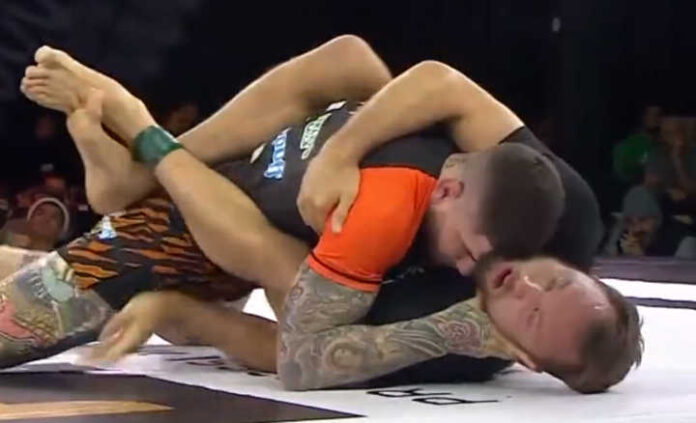
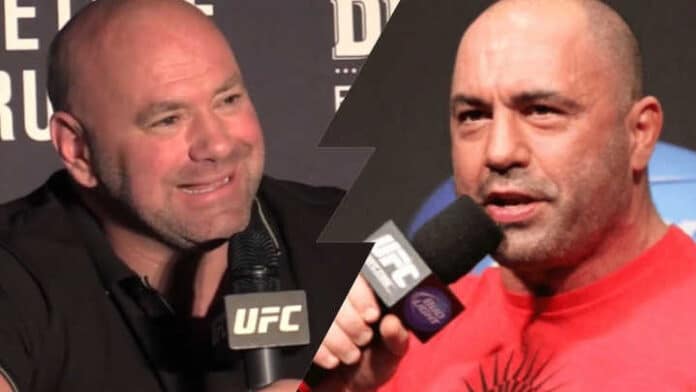
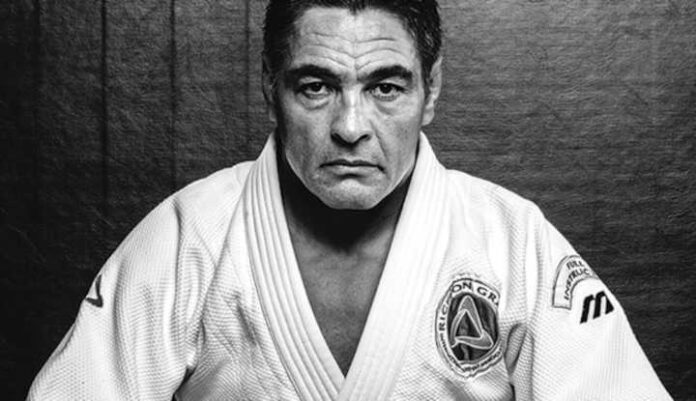
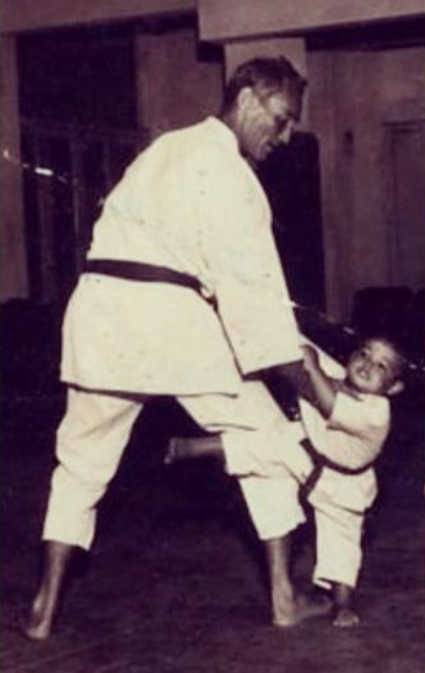
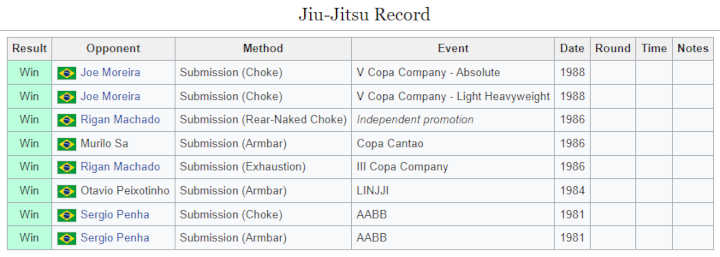
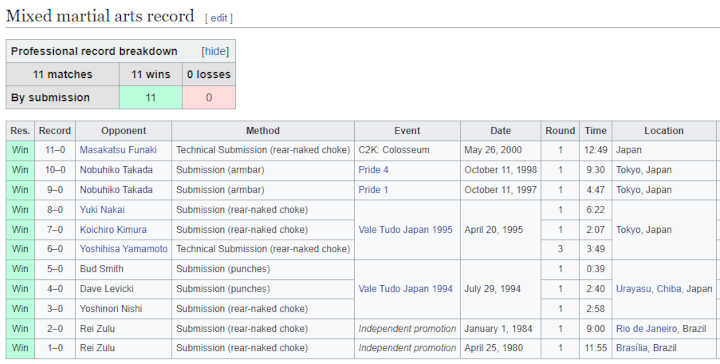
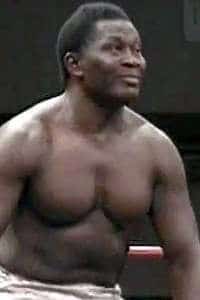
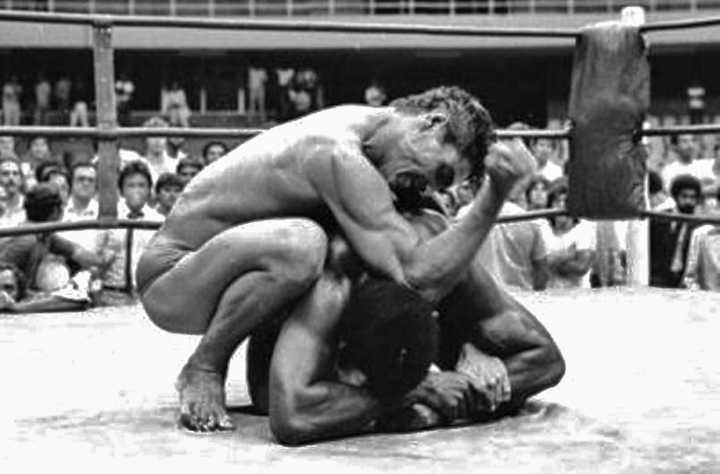
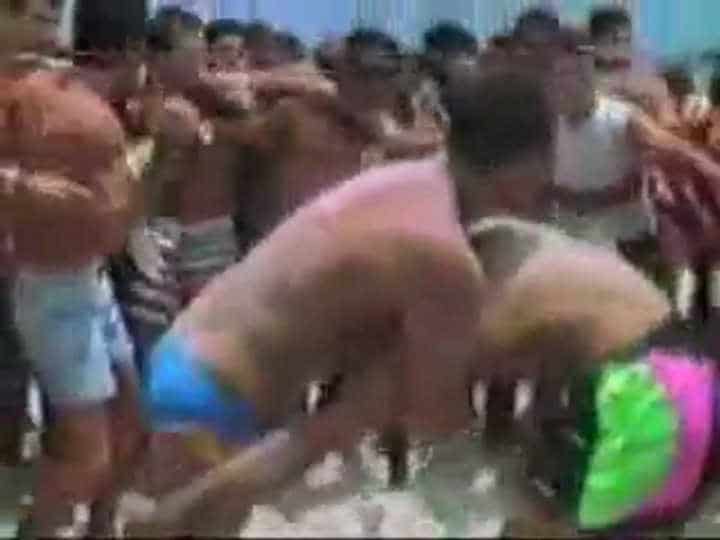
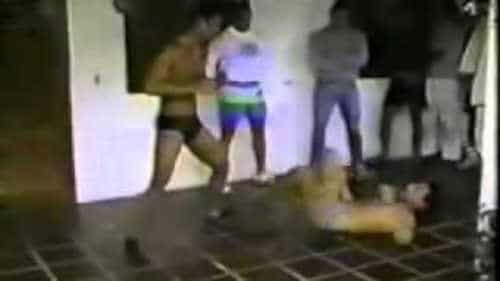

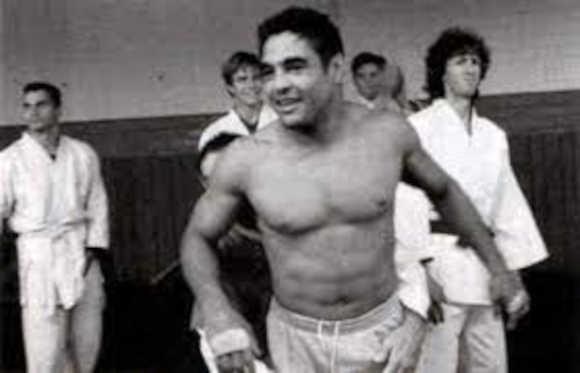
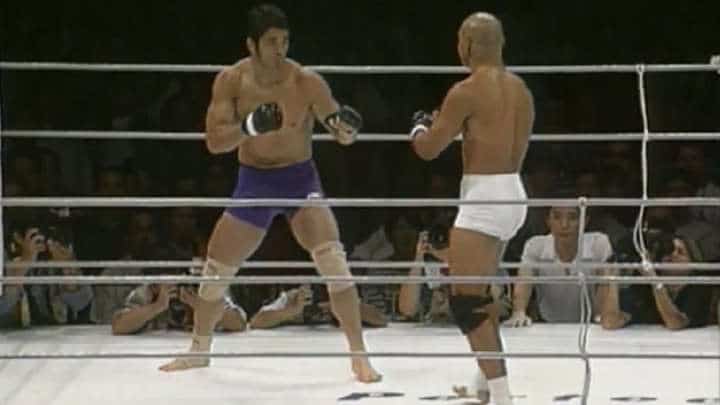
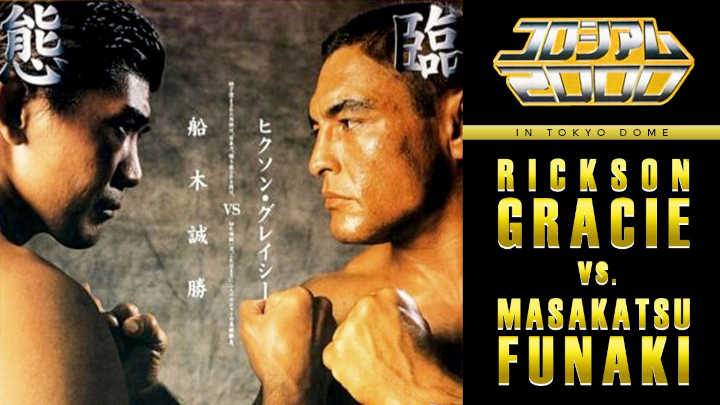
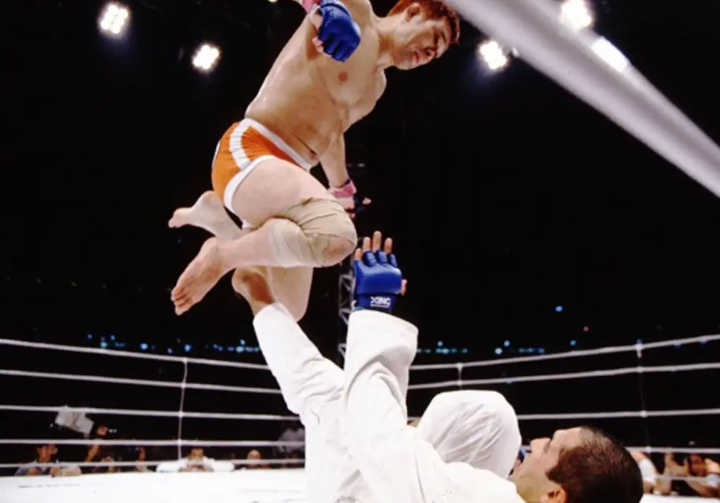
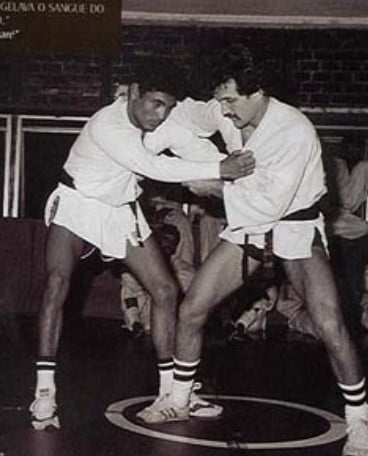
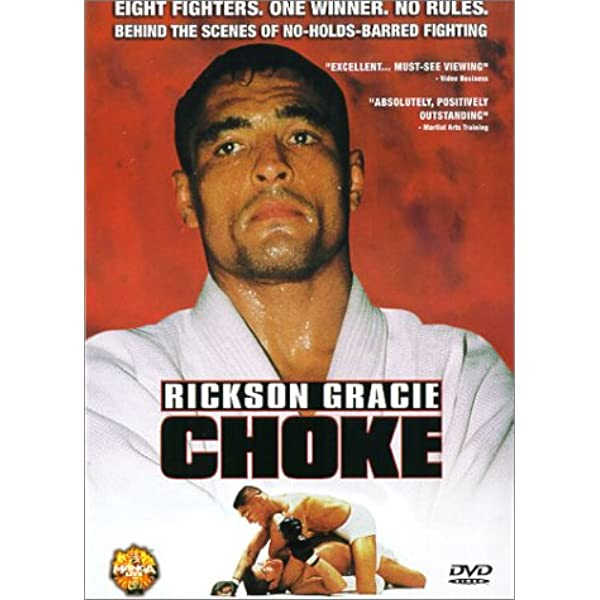
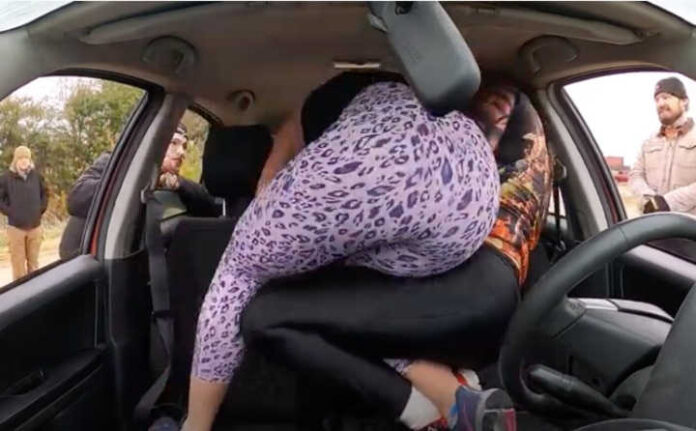

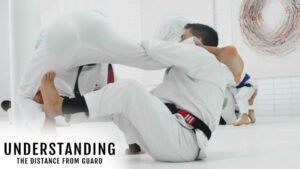
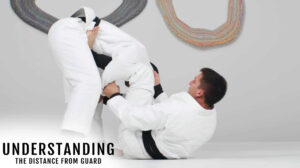
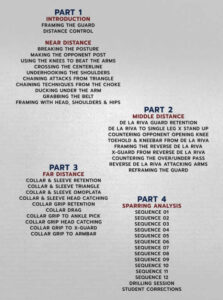

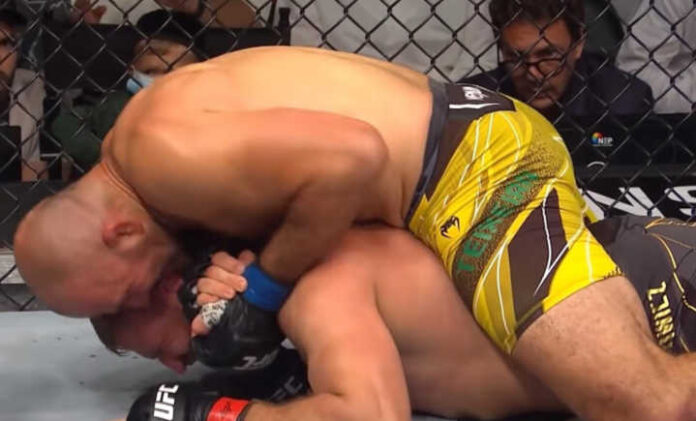
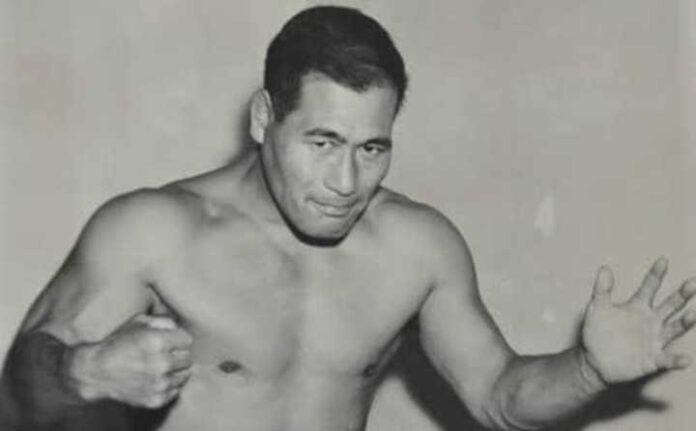
 Kazushi Sakuraba is the man who broke Renzo Gracie’s arm with a Kimura. As if that’s not enough he also used the Kimura to beat several other Gracie members as well. Sakuraba has one of the most unique takes on this old-school bent arm lock. IT just so happens, his take is a highly effective one, and it works perfectly well for modern BJJ.
 Karel Pravec, AKA the Silverfox is a Renzo Gracie black belt and one of the best BJJ professors in the world. Whatever he explains is certain to become crystal clear. However, he does have a fascination with arm locks, and his DVD on armbar mechanics is the proof o that. Simply put, if you fancy yourself as an armbar hunter, you have to get this instructional.
 Bernardo Faria needs no introduction, as the multiple-time world champion is a household name in the BJJ world. His instructionals are really setting the pace for every other instructional out there, but nobody has quite matched his DVD on Omoplatas. This arm attacks DVD is a title that every Gi grappler should have at home. Just in case.
 Buchecha is yet another superstar of Brazilian Jiu-Jitsu that everyone knows about. In this four-part instructional he uncovers some of the key secrets behind his unique version of the straight armbar. With this one, you’ll get details on finishing the armbar from everywhere without any chance of the opponent defending.
 Neil Melanson is arguably, the most unorthodox grappler alive. He has a very unusual grappling system combining Judo, Sambo, Catch wrestling and BJJ. he is also highly creative, often coming up with moves that are just as effective as they’re unusual. His “filthy” Kimura is just one such example. This one works like a charm in both Gi and no_Gi and might just be the most brutal Kimura lock variation in existence.
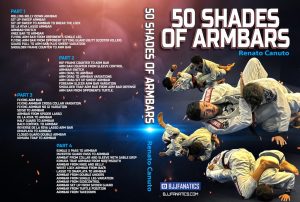 A true classic in terms of arm attacks DVD instructionals. As the title suggests, you get over 50 different ways of finishing a match via an armbar, courtesy of Renato Canuto. This four-part instructional is a real armbar bonanza, and while some techniques might seem a little out there, they are all tired and tested at the highest levels of the sport.
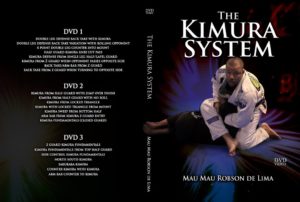 Another highly creative Kimura variation, this time by the charismatic Mau-Mau Lima. His take on the Kimura actually bears his name and is one of the most underrated Kimura variations in existence. It works, though, and is something you can use to surprise even black belts.
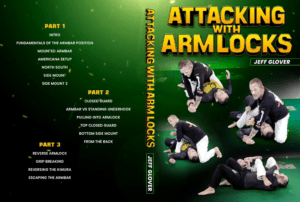 Glover is hands down one of the best grapplers in the world. He has a really crazy style of grappling, which is in big part, a result of his crazy setups and entries into moves we already know. that is exactly what you get in this Jeff Glover arm attacks DVD instructional. In three-volumes, he covers all the major arm locks of BJJ and offers plenty of original setups and entries.
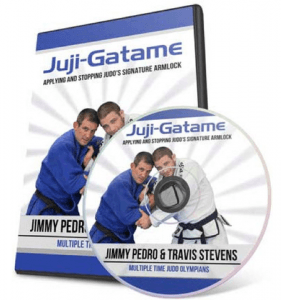 The armbar is actually considered to be a Judo move, originally. Known as the Juji Gateame, it is one of the most used submissions ins Judo as well. In this incredible instructional, Judo and BJJ black belts Travis Stevens and Jimmy Pedro team up to teach you the secrets of the Judo armbar for BJJ.
 Wrapping up our top 10 arm attacks DVD instructionals is a bonus DVD on wristlocks. In it, Pet “The Greek” Lestos shares an incredible amount of information on some of the sneakiest submissions in Brazilian Jiu-Jitsu.
 Gordon Ryan’s instructional about back attacks actually feature to of Kimuras and armbars with a crazy amount of details.
 Similarly to the back attack instructional, but obviously, with even more arm attacks. the turtle position is one that offers direct routes to arm locks, and Ryan doesn’t shy away from them.
 Danaher’s turtle DVD is a Gi instructional that covers mostly strangles in terms of the turtle position. There are, however, plenty of armbars among the many chapters of this 8-volume DVD that are more than worth looking into.
 Speaking of Danaher and arm attacks DVD instructional, he also has highly specialized ones on bent and straight armlocks. this particular one covers the Kimura, and everything related to it in Danaher’s unique style.
 Another of Danaher’s specialized arm attacks DVD instructionals, this time on the straight armbar. This one will help you understand even the smallest details in regard to anything armbar related. It is, however, an 8-part instructional that will take a lot of time to go through.
 Fabio Gurgel is a true representative of old-school Jiu-Jitsu, and this side control instructional proves that once again. An entire section of it is all about armbars, and you’ll get some crazy old-school tips and trick in this one.
 Faria’s one strap back take system si crazy enough to want to learn it on its own. In terms of the armbar options it offers, though, it is a must for any arm lock fan out there.
 This DVD is all about the sneaky ways in which you can use BJJ/Judo wristlocks to surprise and tap anyone.
 The
The  Lovato has an interesting guard variation in his side butterfly guard. Conversely, there are a lot of arm locks that become available, as you’ll learn from this DVD.
 An arm attacks DVD covering all types of arm locks imaginable. The DVD has 8 volumes, covering every aspect of arm locking people with the Gi.
 One more Dave Camarillo instructional, this time focusing on how to finish armlocks in extreme detail, rather than covering all the various ways of setting them up.
 Galvao is a name that needs no introduction. While this title is not a specific arm attacks DVD, it does offer plenty on the subject, given that it is all about the mount position.
 Faria’s four-volume instructional on the highest-percentage submissions in Jiu-jitsu is mostly about arm locks, as you might expect.
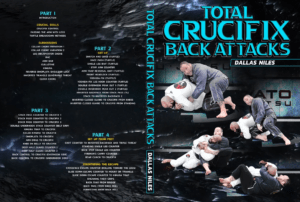 One position that offers a really unique and brutal arm attacks is the crucifix. Learn all about them as well as several chokes that work perfectly with the arm locks.
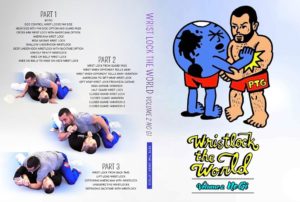 Pete Lestos has so much to say on the subject of wrist locks that one 3-part instructional wasn’t enough. So, he shot three-more volumes, expanding on everything he taught in the first instructional.
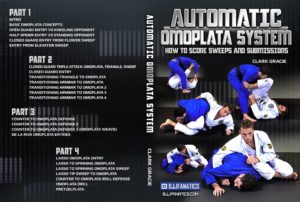 Clark Gracie is known as the Omoplata guy, with nobody calming the move as their own more than him. That said, he has a lot to teach on the subject, as his four-part arm attacks DVD has to show.
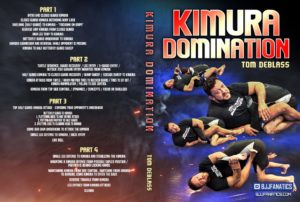 Tom DeBlass knows a thing or two about arm attack,s given how keen on submissions he is. Simply put, there is no better name for this instructional than Kimura Domination – that is exactly what you get.
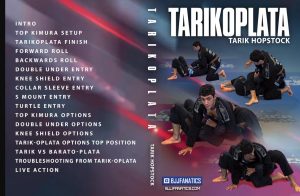 Here one that narrowly missed out on the top ten. Tarik Hopstock has a crazy Kimura / Omoplata variation he does with his legs that have proven to be highly effective. This instructional will teach you all about it.
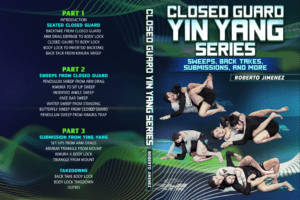 Roberto Jimenez is one of the top up and coming competitors of today, and he is a true specialist in certain areas, like that back and the guard, for example. In this instructional, you get to learn all about the guar,d with lots of arm attacks from the position, of course.
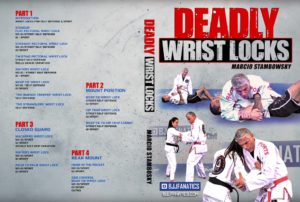 As the name suggests, lots of extremely painful wrist locks in this arm attacks DVD.
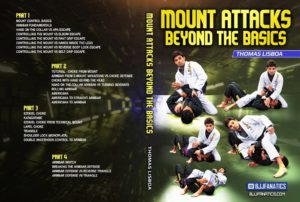 Thomas Lisboa will show you extremely detailed setups of armbars and Americanas from the mount in the four instructional of this DVD.
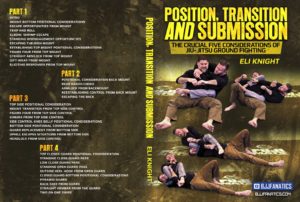 Eli Knight has one of the best overall instructionals out there in this one. it is all about positioning, transition, and finishing from all over. As you’d expect arm locks play a huge part in this instructional.
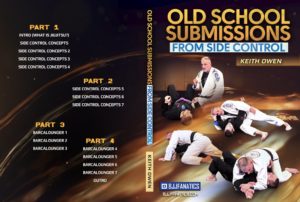 Keith Owen refreshes us with some long-forgotten and heavily underused old-school submissions options that are perfect to catch people off guard.
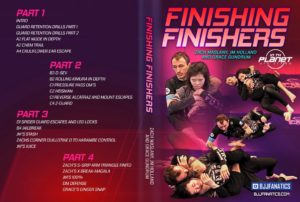 This DVD offers a 10th Planet Jiu-Jitsu submission Party, including lots of No-Gi armlocks, most of which are far from ordinary.
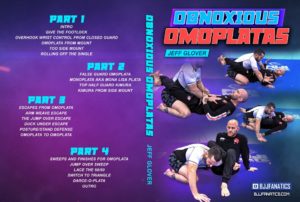 Jeff Glover strikes again, this time exploring the world of Omoplatas, with lots of setups from positions you’ve probably not considered before.
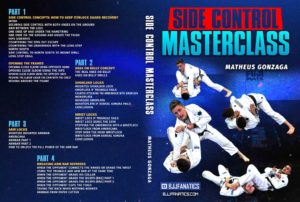 Matheus Gonzaga’s instructional covers side control from an offensive standpoint, which, among other things, means having fun with lots of bent and straight armlocks.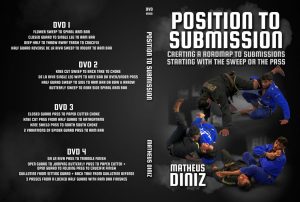
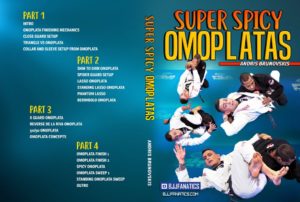 How do you like your OMoplatas? Andris Brunovskis likes them spicey, and that’s exactly how he delivers them in this arm attacks DVD.
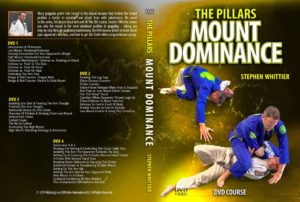 Stephen Whittier is one of the best coaches alive, and his mount dominance DVD will not only teach you how to stay in the mount indefinitely but also how to finish most people with chokes and arm locks.
 I have no idea why Wim Deputter’s mirroring instructionals are so underrated, but I don’t mind as they are a real secret weapon. HIs mirroring principle applied to submissions is high-level JIujitsu that is now accessible for everyone.
 While you can get arm locks from anywhere, getting them from top positions is a much more reliable option. The Top Game Submission Manual will teach you how.
 A different take on arm locks. Ivan Vasylchuk offers decades of Sambo knowledge, uncovering even more secrets behind the mechanics of arm attacks.
 Quite originally named, this arm attacks DVD instructional explores the why behind one of the most devastating and common BJJ submissions – the Kimura.
 Once again a Kimura DVD, but this time, offering a system that revolves around the grip and traps that this arm lock offers.
 Speaking of traps, you can use arm locks to force your opponents into plenty of mouse traps from the guard. This instructional is all that you’ll need.
 The Omoplata works perfectly in both Gi and No-Gi, but this instructional goes really deep into the world of the latter, especially in terms of grips and finishing mechanics.
 The best positions to control someone are the same positions where you submit people from. The Kimura happens to be one such position of incredible control.
 Become a real arm locking machine with the help of this incredible instructional by Fabio Holanda.
 If you’re interested in the Mau-Mau Kimura we covered in the “top ten” portion, then you’ll absolutely love this one. Mau-Mau goes even deeper into how he sets up and finishes his recognizable variation of the Kimura lock.
 Seth Daniels is the man behind Fight2Win and he also happens to be a high-level black belt. He outlines his entire system in this instructional, which, as you’ll notice, has lots and lots of armbars.
 Kristian Woodmansee is another Onoplata aficionado who seems to have the uncanny ability of slapping it on from everywhere. After watching this arm attacks DVD, you will have the same ability too.
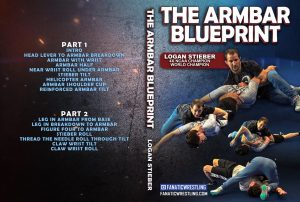 As the name suggests this two-part instructional will provide you with a blueprint of setting up and finishing straight armbars.
 Vagner Rocha’s 50/50 of the arms is an arm pummeling system that will always keep you in control of the upper body. that, in turn, means arm locking options whenever you decide to wrap u pa match or roll.
 Dan Camarillo has yet another instructional on attacking the arms in Brazilian Jiu-Jitsu.
 The title promises extreme armbars, and that is exactly what you get in this crazy arm attacks DVD instructional.
 An old school DVD on arm locks that includes not just techniques and setups, but also tactics when hunting for them.
 Terere’s “Favela Jiu-Jitsu” DVD is one that you can use to learn more about every aspect of BJJ. That of course, includes bent and straight armlocks.
 Domynika is one of the best female competitors in the world of Jiu-Jitsu and a real wizard from that guard. She also has a unique variation of the Omoplata she developed herself, which later became known as the Domoplata. In this DVD, she uncovers how ti works.
 The perfect instructional for submission hunters, especially if you’re leaning mostly towards arm locks.
 An interesting arm lock submission is an original one. The Capizzi locks will give you an upper hand over anyone when it comes to finishing with arm locks.
 Paul is one of the OG crew as well, and he has a really brutal and simple style of BJJ. Exactly what you want to introduce to your game.
 The only time an Aikido black belt might come in handy is if you also have a black belt in BJJ and like to explore wristlocks. Roy Dean fits this description to a “T”.
 The Kimura is perfect to control people with, especially if there’s no Gi to grab on to. This instructional will not only teach you how to submit people with it but also keep them where you want them.
 Being advanced in BJJ is all about being sneaky with what you do. This instructional will provide you with the building blocks of BJJ sneakiness, especially when it comes to arm lock submissions.
 The originally named “Arms Race” arm attacks DVD instructional will teach you how t obe the first one that sets up an armbar with lightning speed.
 If you want to learn a unique Gi guard, and all the associated armadas that come with it, this Kristina Barlaan DVD is exactly what you need.
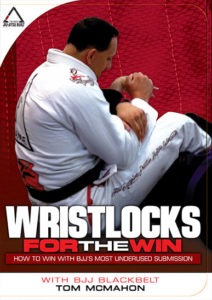 Wrapping up our collection of all the best arm attacks DVD instructional is one more title covering wristlocks, this time by Tom Mcmahon. Highly recommended.