BREAKING: Anthony ‘Rumble’ Johnson Dies at 38

Anthony "Rumble" Johnson dies at age 38
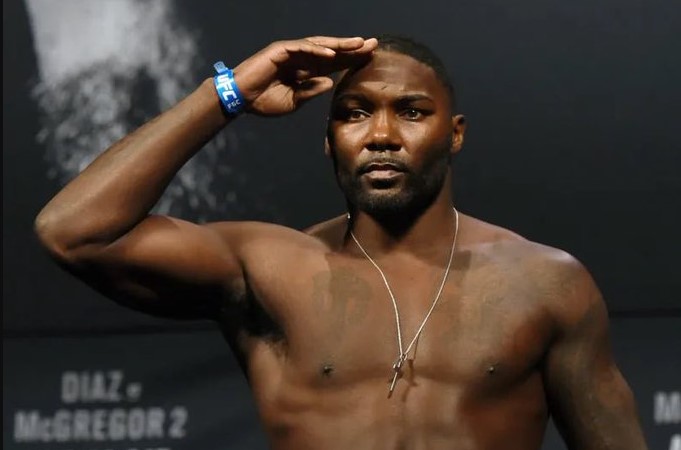
Former UFC fighter and two-time title challenger Anthony ‘Rumble’ Johnson has passed away at the age of 38, due to health-related reasons which have not yet been specified at this point.

Anthony ‘Rumble’ Johnson was active in the UFC between 2007 and 2017, fighting as a welterweight, which often proved difficult for him in terms of weight cutting, and then at light heavyweight, where he truly shined as one of the best knockout artists in the UFC.

Victories over the likes of Glover Texeira, Alexander Gustafsson, Phil Davis, and Ryan Bader got him to the top of the ladder and he fought for the light heavyweight title on two occasions. Anthony “Rumble” Johnson retired after his second title loss to Daniel Cormier in 2017, but then returned to Bellator in 2021, where he won yet another fight by knockout (over Jose Augusto) before having to withdraw from the Bellator Grand Prix due to an undisclosed illness.

Last month, his manager Ali Abdelaziz asked everyone to pray for Anthony “Rumble” Johnson in an ESPN interview, saying:

Rumble, he’s going through some health problems right now. It’s very sad. I think I want everybody to pray for him. Pray for Anthony. It’s not going well. He’s very strong, spiritually. But pray for him.

I want to give a shoutout to Bellator, Scott Coker. They’ve been supporting him. You could not imagine how much support they’re giving them, Anthony, be strong. A lot of people love you. He’s going to be okay, but he’s not doing well.”

Bellator president Scott Coker talked cryptically about Anthony “Rumble” Johnson’s condition previously, stating:

Without getting too much into his medical condition, he’s got to worry just about being healthy first, he’s got to heal up and get healthy because there’s so much more in life than just fighting. I want him to have a long, healthy life, and that’s the most important thing.”

Anthony “Rumble” Johnson had a record of 23-6 as a professional. The entire MMA community, from fellow fighters to fans and reporters is mourning his loss.

RIP Anthony “Rumble” Johnson.

What is Jiu-Jitsu? An Intro to the Gentle Art

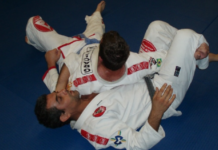
Jiu-Jitsu-Back-take

Whether you’re a fan of MMA or martial arts in general, you’ve probably heard mention of this grappling art.

If you’re unfamiliar with it, you’ve also probably found yourself asking “what is Jiu-Jitsu?”

Look no further, because we’re here to tell you all about this wonderful martial art.

From its origins and techniques to the benefits of practicing the sport and a glossary of terms. This article will cover everything you need to know about Jiu-Jitsu.
what is jiu jitsu

What is Jiu-Jitsu?

First and foremost, we need to cover what Jiu-Jitsu is, and what it accomplishes.

Commonly referred to as Brazilian Jiu-Jitsu or just BJJ, Jiu-Jitsu is primarily a ground-based martial art. It focuses on grappling with an opponent to maintain control of them.

Where it differentiates from many other martial arts, like karate or boxing, is that it doesn’t involve any striking.

The goal of Jiu-Jitsu is to exert control over your opponent, eventually leading them to submit, or tap out.

It is much more similar to other grappling arts, such as wrestling or judo. Where it differs from these is that it is primarily based on the ground.

Jiu-Jitsu also differentiates itself from other martial arts through its complexity and emphasis on live sparring – A.K.A. ‘rolling’.
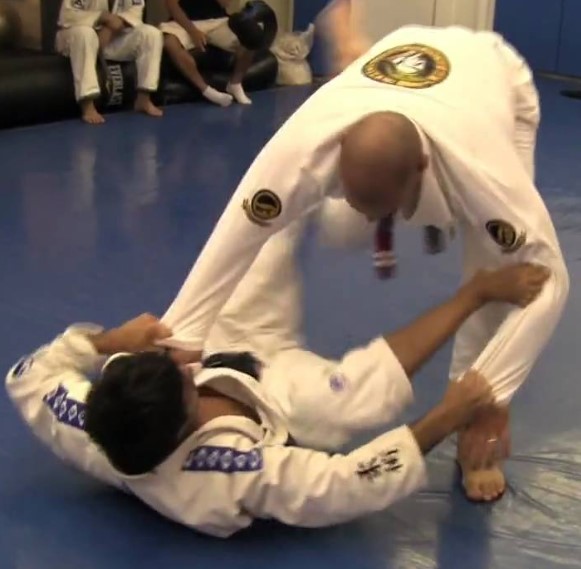
Largely considered the most cerebral martial art, Jiu-Jitsu has hundreds of techniques that take years to truly master.

These techniques are also genuinely being battle tested against training partners. Most schools place a heavy emphasis on live sparring or ‘rolling’ as it’s usually called in Jiu-Jitsu.

Jiu-Jitsu, aside from being a fun and competitive sport, is also a very viable form of self-defense.

Studies show that approximately 85% of street fights end up on the ground. Therefore, it’s vital to know how to defend yourself in these positions.

It is also one of the most defensive martial arts. Jiu-Jitsu allows you to keep yourself safe in a physical altercation without inflicting unnecessary damage to another person.

Origins of Jiu-Jitsu

While the true origins of Jiu-Jitsu likely trace back 1000s of years, what we refer to today as Brazilian Jiu-Jitsu only goes back to the 1910s.

Japanese judoka Mitsuyo Maeda was sent by his master, and the founder of judo, Kano Jigoro, to travel abroad and demonstrate his art to the world. This eventually led him to Brazil in 1914 where he began teaching Carlos Gracie.

Carlos’ brothers soon began learning from Maeda as well. His brother, Helio Gracie, was the smallest of the group and did not have the required strength to perform many of the throws being taught. This is what led to him focusing on the ground-fighting aspects of the sport, which relied more on leverage than strength.

And thus, Brazilian Jiu-Jitsu was born.

The Gracies went on to continue developing the sport, which slowly rose in fame over the years. This was largely due to a series of videotapes titled “Gracie in Action”. These videos showed the family using the art to great success against a wide variety of skilled opponents.

The sport truly reached prominence in 1993 with the formation of the UFC. The first, second, and fourth of the events saw Royce Gracie use Jiu-Jitsu to achieve victory against significantly larger opponents.

The sport has gone on to be known for its effectiveness when used by smaller people. It is one of the few martial arts where pure technicality tends to best athleticism.

How does Jiu-Jitsu Work?

Jiu-Jitsu works by maintaining control over an opponent, eventually leading them to submit. Often described as ‘human chess’, Jiu-Jitsu is an incredibly complex and cerebral sport that demands incredible skill from its athletes.

There are many different positions in Jiu-Jitsu that form a sort of hierarchy of control. Each position has its unique advantages and disadvantages. If you are in a disadvantageous position, it should be your top priority to first survive, and then escape to a more advantageous one.

Once you are in a dominant position, you may begin looking for submissions. These are specific holds – usually around a joint or the neck – that are used to make your opponent ‘tap out’.
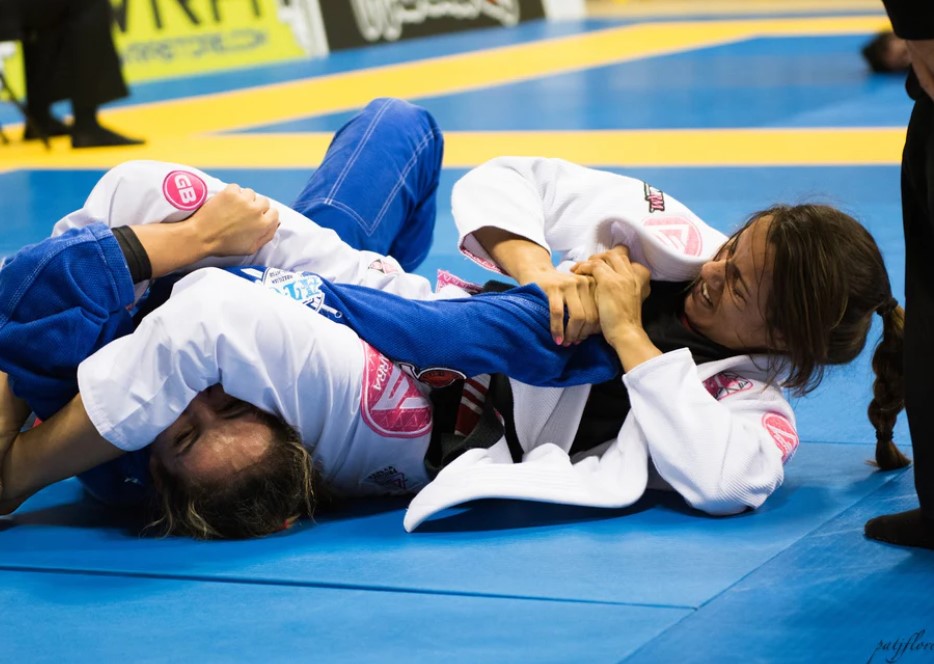
jiu-jitsu-armbar

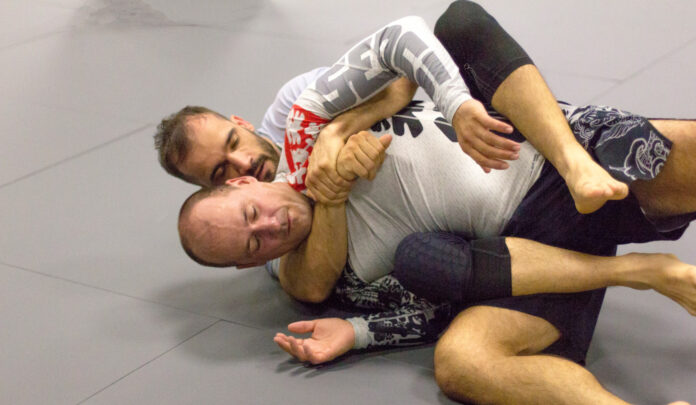
There are dozens of submissions in Jiu-Jitsu, with some of the most common being the rear naked choke, the arm bar, and the kimura lock.

In most Jiu-Jitsu competitions, points are awarded for maintaining dominant positions. If there is no submission to decide the outcome, a decision is made based on who held the more dominant position throughout the match.

What are the Different Belt Rankings in Jiu-Jitsu?

Jiu-Jitsu has a total of 5 different belts progressing from white to black. Each belt signifies a different point in your training journey.

The time spent at each belt varies widely depending on your coach’s standards, the amount you train, and whatever is going on in your life.

Black belt won’t come as fast as you think unless you’re someone from this list, but you know you earned it and for a lot of Jiu-Jitsu practitioners, it’s something precious. It takes an average of 10 to 15 years of consistent training to earn a black belt.

White Belt

The first belt in Jiu-Jitsu. This is where you spend your time as a fresh beginner.

The primary goal for any white belt should be learning to survive and escape from the worst positions in the sport.

This is also where the vast majority of people give up on Jiu-Jitsu. It is estimated only 3 out of every 10 white belts will make it to the next rank.

Blue Belt

The second rank in Jiu-Jitsu. This is where you are solidly past your beginner stage but are still clearly a novice compared to the higher ranks. In this stage, defense is still a priority, especially against other colored belts.

This belt is where people tend to try out all sorts of different techniques and begin to form their own game.

Purple Belt

The third rank in Jiu-Jitsu This is where you begin to clearly define your own game, and begin to master certain techniques.

This belt rank is where people begin to focus their game and begin to better understand the offensive aspects of the sport.

Brown Belt

The fourth rank in Jiu-Jitsu. Brown belts are just one step away from becoming black belts.

This is the stage where your game is well-defined, and you are at a black belt level with some of your techniques.

This rank is all about honing your skills and making those minor adjustments that will take you to the next level.

Black Belt

The fifth and highest rank in Jiu-Jitsu, earning a black belt signifies that you have become a true master of the sport.

At this stage, you have mastered many of the techniques in the sport and could easily submit almost anyone on the planet.

This belt is where the sport becomes less about improving, and more about teaching and sharing what you’ve learned along the way.
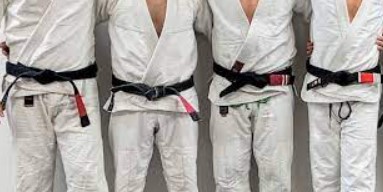
jiu jitsu black belts

What are the Benefits of Training Jiu-Jitsu?

Jiu-Jitsu is much more than just a sport. It is a bona fide lifestyle that has many benefits which carry over into everyday life. From fitness to mindfulness, these are some of the most prominent benefits the martial art has to offer.

Improved Physical Fitness

Jiu-Jitsu is an intense and challenging workout for every part of your body. The average class lasts from an hour to an hour and a half, and during this time you will be pushed to your limits. Especially when rolling with all you have, Jiu-Jitsu is an excellent test of your physical conditioning.

The martial art also requires you to get into positions that your body is likely not used to. This means added flexibility is a huge bonus after several months of training.

If you’re not currently in peak physical shape, then Jiu-Jitsu would be perfect for you. Unlike many other forms of cardio, Jiu-Jitsu is incredibly mentally stimulating, and a lot of fun. This means it will likely keep you motivated to train, even when you don’t want to.

Greater Mental Clarity

Another benefit of Jiu-Jitsu is the added mental clarity many people feel after training.

Jiu-Jitsu can be very mentally demanding. Because of this, it’s hard to think about whatever may be making you anxious while you’re training.

When you step on the mats, Jiu-Jitsu will probably be the only thing on your mind. Many people report Jiu-Jitsu helping them greatly with stress and anxiety. This is likely because the sport promotes a kind of active mindfulness.

Meeting New People

One of the best parts of Jiu-Jitsu is getting to form relationships with your training partners and coaches. It is rare to find a social setting where people can motivate you and inspire you to become better each day.

To improve at Jiu-Jitsu you need to have training partners who will push you and challenge you. These are relationships that can develop from acquaintances at the gym into lifelong friendships.

There is also no substitution for the value a good coach can provide. Aside from simply teaching you new techniques, they can be there to give you valuable advice, and genuine support in your life.

Discipline and Determination

There are only a few activities you can take up that are as genuinely challenging as Jiu-Jitsu is. Because of this, it is a perfect way to practice the discipline and determination it takes to improve in anything.

There will undoubtedly be times when you don’t feel like training, or when you feel like giving up. It is the test of pushing through these moments that will teach you to stay determined through even the most difficult challenges.

To improve in Jiu-Jitsu you need to hold yourself accountable for mistakes you’re making and adjust accordingly. By doing so, you’re teaching yourself the skills it takes to succeed in so much more than just Jiu-Jitsu.

Self-Defense

Perhaps one of the most valuable things Jiu-Jitsu will teach you is the skill of self-defense.

Although ideally, you’ll never have to use what you learn through Jiu-Jitsu, it is much better to have the skills and not need them rather than the opposite.

Aside from the actual use of Jiu-Jitsu in self-defense, the confidence that comes with knowing even just a little bit of Jiu-Jitsu is unparalleled.

Glossary

If you’re unfamiliar with Jiu-Jitsu, there are a boatload of terms in the sport that are probably unfamiliar to you. While there are plenty of others, these are probably the most important terms to know as a brand-new beginner.

Gi

The standard uniform of Jiu-Jitsu. It consists of a jacket, pants, and a belt.

Many techniques stem from taking grips on the sleeves and collar of the jacket. Many submissions utilize the collar of the jacket as well.

Your belt color signifies what rank you are, and there are 5 belts in Jiu-Jitsu — white, blue, purple, brown, and black.

Typically you will get 4 stripes on each belt before progressing to the next, but not every gym does this.

Be sure to wash it after every class. There’s nothing worse than a sweaty gi. Also, don’t put it in the dryer unless you want it to shrink to a children’s size.

No-Gi

The type of Jiu-Jitsu that doesn’t require a gi. Instead, you will wear a rashguard (a type of compression shirt) and shorts.

The main difference between the two is that you don’t typically have the same gripping options in no-gi, so techniques will vary between the two. This leads to it being a more fast-paced, and slippery game.

Gyms usually offer both gi and no-gi classes. People tend to prefer one or the other, but there’s no harm in doing both!
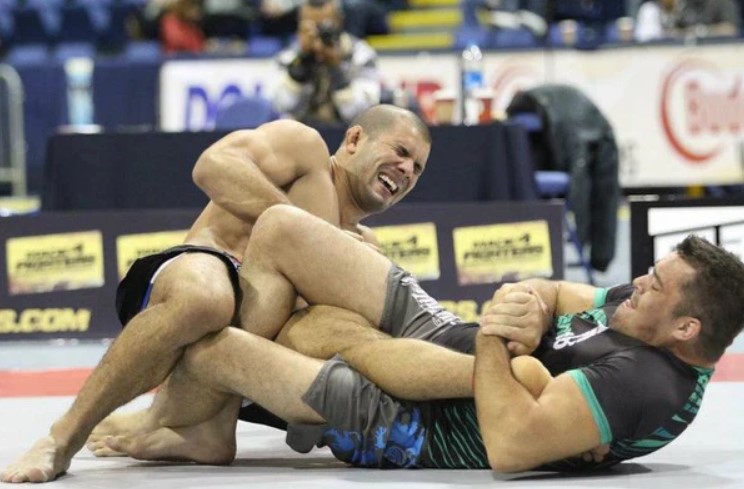
no gi jiu jitsu

Drilling

This is the action of practicing techniques against a complying partner. This is to figure out their mechanics and to see how they will work in action.

Instructors will usually demo a technique a few times, and explain how it works before you partner up and test it out yourself.

Drilling is usually how the first half of a regular Jiu-Jitsu class will be spent.

Rolling

This is what we call sparring in Jiu-Jitsu. Usually done at the end of the class, it’s when you and a partner will test out your techniques against each other in a live scenario.

Rolling can range from an all-out war where both people are giving their all, to a flow session where the focus is placed on movement and technique.

A good rule of thumb is to always communicate with your training partner and to try and match their pace to gauge your level of intensity.

Break Fall

This is the action of literally breaking your fall.

It is done by falling backward onto the mat and simultaneously tucking your chin.

You then slap both of your arms out to your side to avoid hitting your head. This is to distribute your weight and avoid injury broadly.

This technique helps to prevent injuries that would occur if you fell hard on one specific part of your body.

Shrimping/Hip Escape

These terms are used interchangeably to signify one of the most fundamental movements in Jiu-Jitsu.

While on your back you push off from your feet to scoot your butt out to the side. This is typically used to create distance from your opponent.

It’s very awkward at first, but it will become second nature in no time.

Submission

Typically either a stranglehold or a joint lock, submissions are moves that make your training partner say ‘I quit’.

There are hundreds of submissions to learn in your Jiu-Jitsu journey. Some of the most popular submissions are the rear naked choke, armbar, kimura, and triangle.

Tapping

The way you tell your training partner ‘I quit’ when they catch you with a submission.

It is done by tapping your palm 2-3 times somewhere on your training partner’s body. This can also be done by verbally saying the word ‘tap’.

Guard

This essentially means you have your legs & hips in front of your training partner.

A closed guard is when you have your legs wrapped around your opponent, and an open guard means your legs are keeping them off in another way.

These can be very offensive positions that may lead to either sweeps or submissions. If someone gets past your legs to a better position, this is called a guard pass.

Sweep

This is the action of using your guard to advance to a better position on your opponent (ie. mount, side control, or back mount).

This is done most effectively by purposely off-balancing your opponent.

Side control

An offensive position where you are perpendicularly on top of your training partner, usually with a headlock and under hook.

From here, you will either look to submit your partner or advance your position.

Knee-on-belly

This offensive position is quite self-explanatory. It is when your knee is on your opponent’s stomach with your other leg to the side.

It is incredibly uncomfortable for the person on the bottom. Like side control, you will be looking for submissions or better positions.
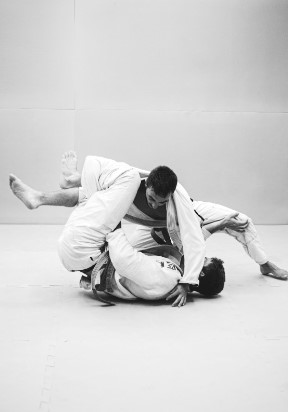
knee on belly

Mount

The second-best offensive position in Jiu-Jitsu. It is when you are essentially sitting on your opponent’s chest.

From here you are looking to submit, or advance to the best possible position which is…

Back Mount

The best position you can be in. With your chest to your partner’s back and head glued to their shoulder.

From here you will take a ‘seatbelt grip’ which is one hand over the shoulder (the strangling arm) and the other under the armpit.

You will then sink your hooks in, which essentially means wrapping your legs around them and hooking inside their thighs.

Look for submissions from here.

Bottom Line

Jiu-Jitsu is an incredibly deep and complex martial art, so it’s impossible to cover everything about the sport in a single article. This was designed to be a general overview of the sport for people with little to no pre-existing Jiu-Jitsu knowledge.

There is truly no comparison between reading about Jiu-Jitsu and trying it out for yourself. Most gyms offer a free trial period, so there’s absolutely no risk for you. If you’re interested in the sport at all, then give it a try. You won’t regret it.

Dana White Launches The “Power Slap League”

Dana White Launches Power Slap League Slap-fighting championship
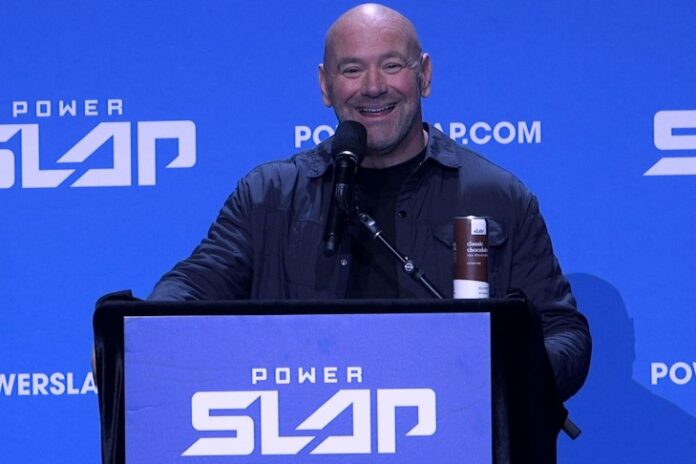
Dana White’s latest project is a US-based slap-fighting championship called the ‘POwer Slap League” which he just launched officially at a press conference in New York.

Following the success of slap-fighting championships in Europe, Dana White has decided to bring slap-fighting to the USA, and he is introducing it directly on the big stage. The face of the UFC as we know it, is now happy to launch the “Power Slap League”.

The first destination is Nevada, which makes sense, given the UFC’s (and therefore, Dana White’s) long-standing relationship with the Nevada State Athletic Commission, which gave its approval for the Power Slap league last month (October 2022).

Slap-fighting is a sport where fighters take turns slapping each other in the face until one of them gets knocked out or gives up. Still considered controversial, the sport is very big in Europe and is often televised in prime slots on sports networks.

Countering the criticism coming his way for the Power Slap League, White has introduced some rules to slap-fighting that are new, and according to him, make this combat sport safer.

The inaugural Power Slap League matches will air on TBS in a series format, featuring eight episodes. The show is expected to air in December 2022.

Similar to the Ultimate Fighter, White has organized trials in order to draw as many top-level slap-fighting competitors as possible, and pick the very best for his Power Slap League. White also said at the press conference that UFC fighters, past, and present, might end up in the slap-fighting mix too.

Rules-wise, a coin toss determines who gets the first turn, with the ability to win by points, awarded by a panel of judges, in addition to winning by knockout. The point system wil be the same 10-point system used in boxing and MMA and will feature negative points as well.

Moreover, the Power Slap League will also feature weight classes for female and male fighters.

According to White:

This thing is big right now in Russia, Poland, other parts of the world,” White said. “We wanna launch this thing here and take this thing global like we did the UFC…we have a much bigger platform than when we started…the level we do this, the sport of slap fighting is going to go to a whole new level.”

You can learn more about the leaguethrough their website.

Guy Dojo Stormed BJJ School and Fought a Brown Belt in an MMA fight!

Guy Dojo Stormed BJJ School and Fought a Brown Belt in an MMA fight!

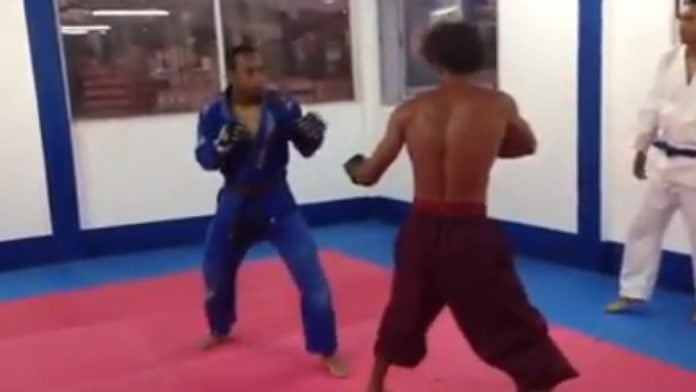
There will always be someone thinking he can beat a trained fighter. This guy came to Estrella Team BJJ Dojo and challenged anyone to a fight. Brown Belt accepted a challenge and the fight was on.

“He came and asked for a MMA fight in our Dojo at Estrella Team. He was like Rickson Gracie quotes about anyone who doesn’t practice BJJ: I am a shark, the ground is my ocean, and most people can’t even swim.” Anyway, it was a good experience for him, guess he’ll train BJJ now”

marcelo garcia butterfly guard


Also, check a video when Karate Guy challenged a BJJ guy to a Bare Hand fight.

Karate Guy challenged BJJ Guy to a Bare Hands fight

You can also check in a video below how it looks like when someone with no takedown skills tries to take someone down in a street fight.

Jiu Jitsu Guy With No Takedown Skills in a Street Fight – FAIL

Kade Ruotolo Will Defend ONE Belt Vs. Matheus Gabriel

Kade Ruotolo To Defend ONE Belt vs Matheus Gabriel
Kade Ruotolo will defend his ONE submission grappling lightweight title against the seasoned and dangerous World Champion Matheus Gabriel on December 2 at the ONE on Prime Video 5 event.

Kade Ruotolo has no intention of slowing down in 2022, even as the year draws to an end. The ADCC lightweight champion and inaugural ONE submission grappling champion is set to face yet another huge opponent in BJJ World and Pans champion Matheus Gabriel on December 2 in one of four title bouts on the main card of Othe NE on Prime Video 5 event.

Ruotolo feels that he is now the person everyone’s after rather than the young underdog, which puts him in a new and unfamiliar role, that he openly accepts:

“I feel like I’m the hunted rather than the hunter. I’ve always been looking after that number one spot, trying to get to the top, and now it kind of almost feels like I’m there.
I got a lot of hungry people coming after me. And that’s exactly what I want. So I can’t wait to face everybody.”

Matheus Gabriel, a Checkmate representative and one of the best featherweights in the world is certainly going to be a big test for young Kade, known as one of the most difficult grapplers to submit, but Ruotolo is very confident in his skillset. Just recently, Kade publically claimed that nobody could leg lock I’m and his brother, and that included Gordon Ryan.

With both grapplers big on submissions, and both quite difficult to submit, the no-points rule setting in the ONE circle make this a particularly interesting match to watch.

In his last outing for ONE, Kade easily won the lightweight submission grappling belt by submitting Russian Sambo Champion Kurzhev with a leg lock and has been building a new gym in Costa Rica from scratch with his brother Tye in between matches, with their favorite pastime being teasing Gordon Ryan on social media.

One submission grappling title match Ruotolo vs Gabriel

See Gordon Ryan Tapped In Training With The Gi (VIDEO)

Gordon Ryan Tapped Out In Training With Gi
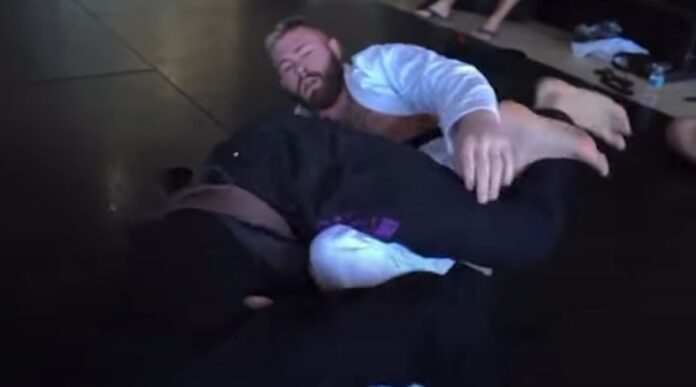
How often do you think Gordon Ryan tapped in training? In a video from the 2020 Modolfo camp, we see Gordon Ryan rolling in the Gi with a then brown belt Ethan Crelinsten, who manages to tangle him up in a tight kneebar, to which the “King” had to tap out.

BJJ World, take notice. Gordon Ryan tapped in training! During a sparring session at the 2020 Modolfo camp, which featured elite athletes rolling and sharing knowledge, Gordon Ryan rolled with the Gi, and one of those sessions, in which he tangled with Crelinsten ended up with Gordon Ran tapped out.

The short video shows Ryan holding a worm guard, and attempting to expose Crelinsten’s back by inverting it. Ethan re-adjusts to block the back take, getting an opening to go for Gordon’s legs. He manages to get the “King’s” top leg trapped deep into a triangle kneebar.

Gordon did try to spin out of the submission, going both ways but only allowed Ethan to sink it in deeper, and left without a way out without an injury, Gordon Ryan tapped verbally.

Everyone learns by tapping out, and the great Gordon Ryan is obviously no exception. However, this kneebar tap in training is far from Ryan’s kryptonite, as it was done in training, lightly, and in a very friendly manner. Basically, Ryan made an error in judgment trying out something he doesn’t generally do.

It is funny that something which happens to everyone else every time they train is something that gets reported as a “fluke” or super rare when the best grappler in the world is in question.

To be honest, we don’t see anyone actually getting Gordon Ryan tapped by a kneebar in actual competition, even Ethan Crelinsten.

And still, the question remains whether someone will actually be able to submit the King in a competitive match, even with the Gi?

Was AJ Agazarm Robbed At ADCC 2022 (VIDEO)

Was AJ Azarm robbed at ADCC 2022?/

When AJ Agazarm was complaining about being robbed at the 2022 ADCC when he lost in the first round to Jeremy Skinner nobody paid much attention to him, as this is far from his first time complaining. However, when all the ADCC dust settled, let’s revisit the question was AJ Agarazarm robbed at the latest ADCC?

AJ Agazarm – The Boy Who Creid Wolf?

AJ Agazarm’s behavior on and off the mats hasn’t exactly been one to look up to, which does not say it does not attract attention. He has a reputation for being notorious and controversial and has often been accused of having an anti-Jiu-Jitsu game.

AJ’s flamboyance gets him in trouble in almost every match, from getting slapped more than any other grappler out there, to getting literally front-kicked off stage.

The former wrestler, who found MMA through wrestling, and Jiu-Jitsu through MMA have been on the mats since he was a freshman. Started Jiu-JItsu in college, as he got a scholarship and joined the Ohio D1 program, Agazarm has titles and accomplishments at every belt level.

he also has the image of a bad boy, getting kicked out of his Gracie Barra gym, taunting opponents in matches, and never, ever tapping to a submission. Seriously he’d rather let a joint break, or go to sleep, to even leave the mat area to get DQed than tap.

HE left the BJJ scene briefly in 2019, trying his hand t MMA. AJ had 4 fights in Bellator, never really adopted striking, won two by submission, and lost two decisions, before deciding that he is a grappler more than a fighter.

That did not stop him from doing his antics in the cage just like on the mats.

AJ Agazarm At ADCC 2022

When AJ is in question, many wouldn’t think twice before writing him off as doing shenanigans again. However, there is a legitimate question about the last ADCC: Was AJ Agazarm robbed?

Agazarm jumped back into competitive BJJ in 2021, but lost about a dozen matches or so after his MMA stint. He seemed to be lagging behind everyone else but re-kindled his form at the ADCC West Coast Trails, where he won 5 out of 6 matches to earn a call back to the ADCC.

In the first round of the -77kg division, AJ Agazarm faced Jeremy Skinner, an experienced leg locker who won the Asia and Oceania ADCC Trials. After spending most of the first period of the match in leg entanglement,s AJ started working and managed to successfully attach to a low single-leg takedown.

Skinner counted it, jumping on AJ’s back for a rear triangle. After a short while of trying to choke AJ out, Skinner decided to let go and play off of his back. This is the moment that stirred up the “was Agazarm robbed” debate.

According to ADCC rules, 2 points for a takedown only get awarded if the person getting taken down accepts the takedown and gets their back on the mat. While this did not happen immediately in the Agazaram – Skinner takedown-triangle exchange, it was the eventual outcome.

Even the commentators of the match certainly thought he got the takedown, saying: “I’m not sure how it wouldn’t be a takedown

The logic behind the decision not to award AJ points has to do with the interpretation of Skinner’s submission attempt as an end to AJ’s takedown. From there, the action counted as a submission attempt, and when Jeremy gave up on it, the referee did not see it as a completion of AJs takedown.

This proved to e a crucial point in Skinner’s decision victory over a very distraught AJ.

Was AJ Agazarm Robbed?

So, was Agazarm robbed of a takedown? This time it is not just AJ crying out for justice. Many people in the BJJ community do agree that the takedown should’ve stood. From the ADCC commentators to anyone who saw the match on video afterward, even people that originally booed AJ, people are siding with his take on things now.

After the decision, Agazarm didn’t leave the mat, holding up the entire event. he stood in the middle to extensive boos from the crowd, and argued with the officials, demanding his two points (holding up two fingers).

After eventually leaving the stage in what appears to be yet another display of his usual antics, AJ called for video reply technology to be included in high-level professional Jiu-Jitsu events, in order to help clear up incidents of this type.

In a real-life example of the boy who cried wolf, AJ was robbed of a chance to keep competing at the ADCC.

Conclusion

The question that lingers is not whether was Agazarm robbed, but rather would it have been any different if another fighter, like Gordon Ryan or Lovato JR. were in AJ’s place? His recommendation for video replies sounds like a good one and the IBJJF decided to give it a go at the recent Pans for the highest-level black belt matches.

ALL Nicky Rod Submissions From EBI 20 (VIDEO)

All Nicky Rod submissions at EBI 20

B-Team’s Nick Rodriguez submitted everyone at the latest Eddie Bravo Invitational, winning the absolutes belt. Check out all Nicky Rod submissions from EBI 20, and how he set them up to work against elite opposition.

Analyzing All EBI 20 Nicky Rod Submissions

The Nicky Rod submissions bonanza at EBI 20: Absolutes was obviously something he planned for and worked on for some time. The ADCC 2022 silver medalist came int EBI 20 ready to demonstrate his progress and that he is not just a two-trick pony.

“It’s good to do jitz,” Rodriguez said at the start of his highlight video.

“Well, I just want to show diversity in my game, you know. Previously I am known for wrestling, and taking the back and rear-naked chokes, but here, today, I was just using different moves and it paid off.”

First Round – Reverse Triangle Choke

Kicking things off for Nicky Rod was a match with Ezekiel Zurita, which saw Nicky impose his usual top game, dominating takedowns and passes and eventually wrapping up a very tight reverse triangle choke from the Kimura trap, to get the tap in regular time.

Quarter Finals – Armbar (OT)

The quarter-finals saw Nicky Rod pushed into overtime (OT) by a very resilient former teammate Luke Griffith, who managed to survive the onslaught of submission attacks Nicky threw at him.

IN the overtime, though, the EBI rules favor Rodriguez, who is known for his rear-naked choke finishes. And despite him not being able to sink in his favorite submission, he got a very quick armbar off of a rear-naked choke threat, which saw him add variety to the Nicky Rod submissions count of the night.

Semi-Finals – Triangle Choke

Rodriguez met Ausitin Baker in the semi-finals, instead of an anticipated match with New Wave Jiu-Jitsu standout and ADCC champion Giancarlo Bodoni, who got injured in the first round.

Nicky crushed Baker throughout the round, throwing him around with takedowns, and taking out a couple of innocent photographers (again) in the process. Rodriguez started setting up a triangle-armbar attack from the mount, which went into a rolling armbar and ended up as a triangle choke finish in regulation time.

Final – RNC (OT)

In the finals, Rodriguez rounded off his display of submissions by forcing 10th PLanet Jiu-Jitsu black belt Kyle Boehm into overtime, where he yet again utilized the ruleset to his advantage, handing Bohem his first-ever EBI defeat via a rear-naked-choke.

All in all, a very impressive display of the Nicky Rod submissions arsenal, which looks much more diverse than anyone gave him credit for.

MMA Coach Arrested For Sexual Abuse Of A Minor

MMA coach arrested for child sexual abuse
An MMA coach from Illinois has been arrested on charges of sexual assault and sexual abuse of a minor, according to Tri State Public Radio. The charges are in regard to three different incidents of a similar nature.

Beau W. Admire, 42, is an MMA coach and a personal trainer at Badger Combatives in Galesburg, Illinois was arrested on charges of two counts of criminal sexual assault and one count of aggravated criminal sexual abuse. Admire is charged with three separate incidents involving the alleged charges.

The 42-year-old, who fought professionally in MMA (1-4), is accused of engaging in acts of sexual penetration and sexual misconduct with a minor. The fact that makes it worse is that he did it from a position of authority and trust, as an MMA coach and personal trainer.

The MMA coach later posted bail but is expected to appear before the court on December 2 to plead his case. All three charges are Class 1 felonies, meaning he could get up to 15 years in Illinois.

Ironically, the MMA coach said in an old interview that his goal was to make Galesburg safer for young people:

We live in scary times and Galesburg and the surrounding areas are no exception to this,” said Admire. “We teach a realistic self defense system for real world situations. We train all of our students in boxing and kickboxing style striking. We drill many different self defense scenarios for the student to learn how to deal with these possible situations. This builds confidence in our students and helps prepare them for possible threats.”

Law enforcement started investigating in September after many former students claimed that Admire was acting favorably and inappropriately towards female students. This includes sending flirty text messages, according to one of the victims, who also claimed the MMA coach tried to lure her into a room alone with him.

Another victim accused Admire of asking her to spend a week at his house so that he could help with her weight cut.

A third victim claimed that the MMA coach would intentionally enter weird positions when grappling with girls that had nothing to do with actual grappling whereas a fourth complaint accused the MMA coach of being mentally, physically, and sexually abusive during a relationship that yielded two children.

Ethan Crelinsten Shows How To Defend The False Reap

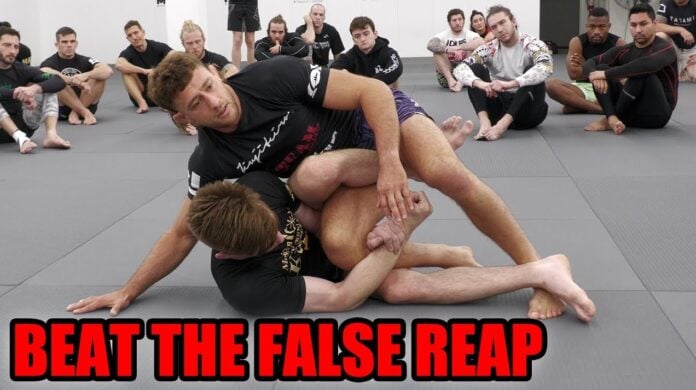
How To Defend the False Reap by Ethan Crelinsten

Leg lock expert and B-team top competitor Ethan Crelinsten demonstrates how to defend and counter one of B-team leader Craig Jones’ best moves – the false reap.

What Is The False Reap?

The false reap is a guard position that allows for several different entries into the dreaded Inside Sankaku position. The reason it is so dangerous is that it lures people into a knee cut pass which is never really going to work. At least not in the way the passer envisioned it.

The guard player “trapped” in a knee cut position places the top leg in a reap position, over the near leg, and inside the crotch. The main detail in the false reap is the grip, which is a palm-to-palm grip behind the knee of the leg pressing for the knee cut.

The moment the passer tries to pass, the bottom leg slips back, opening inversions and shovel-unders that lead straight into the world of leg locks.

How To Defend The False Reap

Ethan has likely suffered a lot of false reap submissions at the hands of Craig, and more to less, most of the B-team. His defense is two-fold: going for a pass vs. the false reap, or rolling into a back take.

Passing The Guard

According to Crelinsten’s instructions, when you’re looking to defuse the danger of the false reap, you need to follow several steps in order to succeed:

1. Turning To The Correct Side

Despite what instinct might suggest, you need to make sure you’re turning your chest and hips away from the person that has a false reap, instead of toward them.

2. Weight Distribution

As you turn in the knee cut direction,  you’ll need to shift your weight forward. Ethan posts his arm behind the opponent’s back and leans all his weight into the reaping leg with his hip.

3. Sticky Hooks & Backstep

A very important step in ensuring all the attacking directions are shut off is to make sure the bottom leg can’t slip behind your trapped leg. Ethan does this by placing both his feet behind the bottom leg.

Once secure, Crelinsten backsteps and immediately brings the leg back into the sticky hook position.

  1. Underhook & Sprawl

To finish the pass, Ethan underhooks the opponent’s top leg, which is no longer in a false reap position. This puts him into a great passing position, as long as he can break the grip behind the knee.

Breaking the grip is easy, according to Ethan, as long as you have everything else – you just need to sprawl your hips and you’re out and past the guard.

Taking The Back

An alternative way to deal with the false reap is to repeat the first three steps, ensuring you still have the correct angle, weight distribution, and sticky hooks. Instead of doing a backstep and going for a pass, Ethan reaches for the neck with his far arm.

A powerful hip switch enables him to break the grip and he goes for a rolling back take, by walking his shoulder as close to the opponent’s hip as possible. The way the legs are positioned helps Ethan force the opponent straight to back control.