
6 Full Mount BJJ Variations You’ve Never Thought Of

6 Full Mount BJJ Variations

The “king” of Brazilian Jiu-Jitsu positions, the only real rival to staples like back control and Ashi Garami, the position that everyone instinctively wants to be in when fighting under any circumstances – the mount. One thing most people are not aware of, though is that there are many different variations of the full mount BJJ position. And yes, they do extend past just low mount, high mount, and S-mount. In fact, the ones I am about to present here today are much more fun (for you) and much more painful and nightmarish (for your opponents).

The Real Reason You Can’t Stay in The Full Mount BJJ Position For Long

Why can’t you keep a hold of people in the full mount BJJ position? The answer to this is easy – they can move. If they can move, they can create space, if they can create space they can replace the guard, get a reversal or perhaps turtle up. All of the above options are not what a person in mount control has as a goal. So, how do you stop it?

The biggest advantage of the mount position is that the person on the bottom has no way of retreating – there’s an entire planet behind them (regardless of your affiliation to either of the round or flat Earth claims). That takes care of one direction of escape. So., how come it is still difficult to prevent someone from snaking out? I used the term “snaking” here on purpose.

The only way somebody can effectively escape your mount is by wiggling forward or back in relation to you. In both situations, the person will need to either:

  1. Move you, and keep themselves still;
  2. Keep you in place, and move themselves;
  3. Move you and move themselves in a different direction.

If you take a closer look, you’ll notice that these types of movements cover every full mount BJJ escape you probably know so far: shrimping out (move themselves, keep you in place), bridge and roll (move both themselves and yourself), hip bump to butterfly (move you, while staying stationary themselves)… I could go on, but you get the point.

Bottom line is that as long as you understand how to control a snake it won’t be able to bite you. In terms of the mount in Jiu-Jitsu the same rules apply as if you’re trying to subdue a snake. You need to control the nake’s head, and the snake’s tail in order to keep it under control and stay safe.

In the mount, you are already past the legs, so the tail of the snake you need to focus on is the hips. Thea head of the opponent keeps the role of the head of the snake. That provides you with two points of control (hips and head) which will allow you to control someone from the top mount for very long periods of time.

While you could use the usual suspects (low, high, S-mount) to obtain control and pressure over your opponent, you could also opt for some more underrated and obscure-looking BJJ full mount variations.
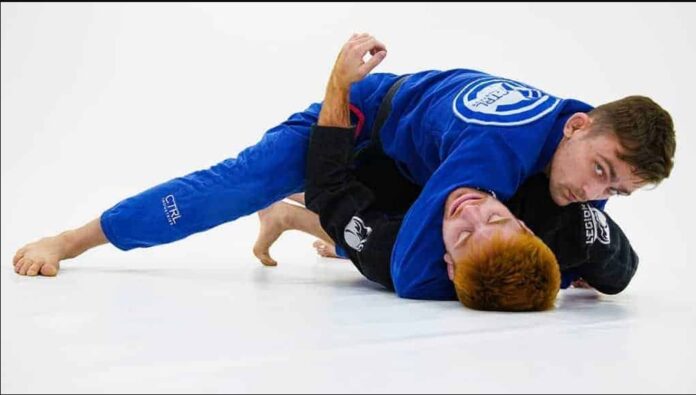
Full Mount BJJ

Cruel And Unusual Full Mount BJJ Variations 

The beauty about the full mount BJJ position is that you can adjust in a bunch of different ways and still be in the mount position. Keep in mind, though, that if you’re after points, some versions of the mount will not land you the expected 4 points even though you are practically in mount. The rules are dumb, I concur, but still, they are the rules… for now, at least. So, if you go into a mounted triangle for example, or if an opponent has both arms inside your legs, you won’t get any mount points. Just something to think about if you are a points chaser.

Apart from that, switching between different mount variations is how you should actually aim to play mount. Nothing happens in a vacuum in Brazilian Jiu-Jitsu, and there is no way to pin somebody to the ground and completely restrict them from moving. If you switch up the way your body is positioned in relation to theirs, though, even subtle shifts can completely disrupt an opponent’s escape attempts.

While we’re on the subject of switching up between different full mount BJJ variations, why not throw in a few curved balls while you’re doing it? Some of the positions I’ll explore below provide lots of pressure and will cause your opponents to panic. Others will make you feel light as a feather but will keep people stuck, or open up effortless entries into devastating submission holds.

Dope Mount

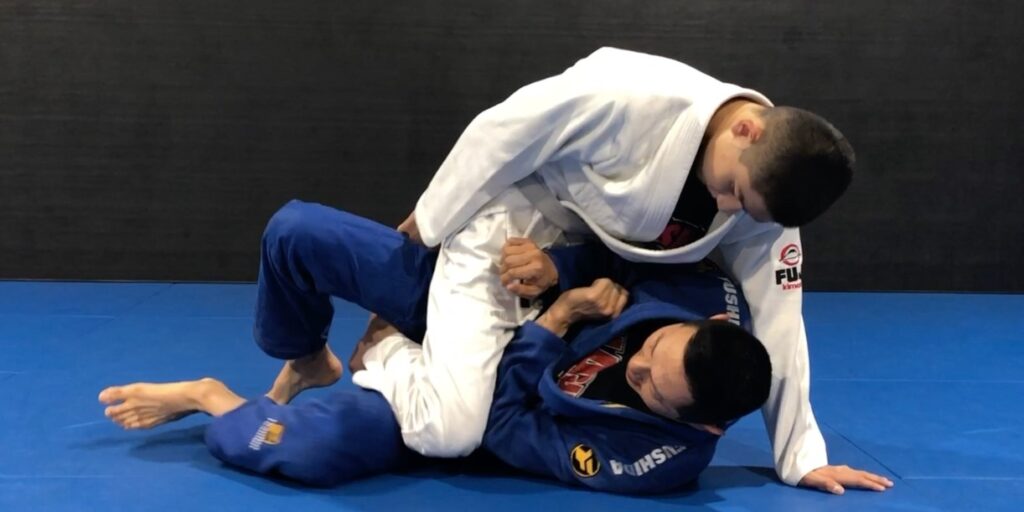
The Dope Mount can be a precursor to the full mount, but it could also be used to keep someone in place when they’re trying to escape and gaining ground doing so. It is basically mount that places your hips over one leg of the opponent (the top leg), while their bottom leg is essentially outside of the mount. So, you’re not riding their torso, but rather one of their legs, your hips at thigh level. This gives you control over the tail of the snake.

Controlling the head comes in the form of double underhooks, or at least one underhook (on the side opposite of the leg you’re riding) and a crossface. in any case, the goal is to have the opponent’s shoulder blades on the ground, while their hips are winded up to the side.

The position makes going into full mount easy, while also opening up interesting submission attacks and spinning/rolling transitions. It won’t get you points, but it will help you stay in mount.

https://www.youtube.com/watch?v=PumK7JZnOu0

Vegan Mount

One of my absolute favorite BJJ full mount variations. It is not just fun because you can get to the Honeyhole from it, but because it confuses opponent’s so much that they’ll stop wiggling and struggling on their way out and they’ll stay calm while attempting to figure out their next step. That is as easy as top control can get.

The Vegan mount concept is something I saw from Reilly Bodycomb. It is fairly simple, but you do have to remember that you need to keep your chest over the opponent’s head when doing this. Also, your arms should preferably touch the mats, over each shoulder, or hold a deep crossface. The concept is easy – put both of your feet on the inside of the opponent’s hips. Your knees should still aim to touch the ground.

While perhaps not that impressive at first sight, this BJJ full mount variation allows you to directly control the hips, aka the tail of the snake. Paired with head control of your choice, you can easily hold someone there. Moreover, you have the option of sneaking a leg in between the opponents, which can take you directly into the Inside Senkaku (aka Honeyhole) to hunt for heel hooks.

Why the name Vegan mount? As Bodycomb says: “It looks and tastes the same, but it is just not the real deal”

Wet Blanket Mount

One of the variations of the BJJ full mount I use on a regular basis. This one causes the most panic in the person on the bottom (in my experience) and is extremely easy to maintain. It is the perfect resting position for you that “happens” to provide you with an extreme amount of pressure that you can place onto your opponent.

The concept is easy – get to middle mount, place both of the opponent’s arms over their head, turn their head to break their posture, and relax. The last one here, relaxing is the most important aspect of this mount variation. You literally need to let your body go limp.

The analogy I use (learned it from Matt Thronton, I think) is that you are just like a wet blanket that has been placed on top of a person. The blanket is both heavy and it goes into every nook and cranny it can find aiming to reach the ground. DO the same with your body and you’ll be surprised at how easy it is to keep opponents still. Oh and expect them to emit a bunch of different groaning sounds as they suffer to come to terms with your pressure from top.

Technical Mount

A variation of mount that many shun because it seems like they are not in mount. It is a pity, given that the position not only offers great controlling and attacking options but it will also earn you the 4 points that you’re after.

The technical mount is a variation that has you with one knee and shin on the ground, and the other leg touching the mats with your foot. The opponent is usually turned on their side. All your weight is on top of the leg that has the shin on the ground, while your other leg is placed over the opponent, hamstring on top, and the calf across their stomach or chest.

The position is virtually halfway between mount and back mount, but it still constitutes a mount, which means you get 4 points if you can hold it for at least three seconds.s Holding the position becomes really easy if you are using the Gift Wrap grip, which will open up both mount and back mount control for you. The technical mount is the best spot to establish said grip.

A common reason why people skip over the technical mount as a control option is that they view things in black and white. It is either mount or back mount, anything in between is not as good. The technical mount is a great example of why this way of thinking is highly flawed.

Three-Quarter Mount

The three-quarter mount is technically not a mount, so no points for this full mount BJJ position. However, that doesn’t mean you should immediately dismiss it. The three-quarter mount is essentially a technical mount in which the top leg is still trapped between the opponent’s legs. That said, having a leg in there (a foot, to be more precise) is the main strength of this position rather than its weakness, as is often perceived.

The main idea here is that you can use the positioning of the “trapped” leg to gain easy back control (one hook is already in). Alternately, you can just stay in control of the snake’s tail via the “trapped” leg, while you establish a grip on their head.  The Gift Wrap is once again a very efficient solution.

WHtehre you go to technical mount, full mount, or back control from there is down to you. Oh yeah, you can also choke people from the three-quarter mount. With lots of chokes.

Nightmare Mount

This has to be the worst possible scenario for the bottom person. I’ve gotten so many taps throughout the years from this mount variation, that I avoid using it often, as it feels like I am cheating. I found out the nuts and bolts of this full mount BJJ variation from Brandon McCaghren.

The “Nightmare” mount is a blend between an S-mount and the 10th Planet Jiu-Jitsu Spiderweb position. The goal is not to have an S-mount that lands you flat on your opponent’s chest. You want them to tilt so that your tailbone is actually pressuring their floating ribs. Ouch, I know!

In terms of S-mount positioning, just think about being at a 90-degree angle in relation to your opponent, while trapping both their arms in an S-mount configuration. The trick that will make you enormously heavy form there is to insert a deep hook with the arm that is near the opponent’s head. The goal is to thread it behind the crook of their elbow and try to connect that palm of that hand to the hip on the opposite side.

BU that is not all! If you want to make your opponent feel like they’re being crushed like a trash compactor, post with the ree arm on the mats, right next to their hips. Enjoy the pressure taps you’ll get from there!

Notable Mentions

There are a few other full mount BJJ variations that will help you keep people in place, regardless of how good their mount defense is. Here are three versions of the mount that should asl obe on your radar. Each of them deserves a separate article, so keep your eyes peeled if one of these options ends up being your favorite.

Monkey Mount. This is another 10th Planet Jiu-Jitsu position. It is a high mount variation in which one of your legs is deep under the armpit of an opponent (as if setting up a Monoplata). The other can be in a regular position by their body, or you could be stepping with your foot on the forearm of their opposite side arm. Needless to say, you can torture people from there in various fun ways.

Reverse Mount. Won’t’ get you points, but it will frustrate your opponents. As the name suggests, you’ll need to be sitting facing the legs rather than their head. While you could sneak your legs under their armpits, and hug their hips to get control of the snake, it is an lt more fun to just… sit on them. Hug both legs below their knees, and sit on your opponent. It will block their movement, frustrate them and you can do lots of fun stuff from there. Russian cowboy comes to mind first.

Turtle Mount. Once again, this full mount BJJ variation is as simple as the name suggests. You simply get t on top of your opponent and then ignore the fact that there’s a person underneath you. Simply go for the tightest turtle position you know, and you’ll end up with an air-tight mount that will keep even the most explosive 20-year-old wrestler in place.

In Summary

The full mount BJJ position is quite specific in terms of where you need to be in relation to the opponent, and in relation to the ground. Outside of those two aspects though, the position is still open for interpretation. Feel free to experiment with your own variation, or just go the easy route and try the 6 options I went over in this article. Happy hunting!
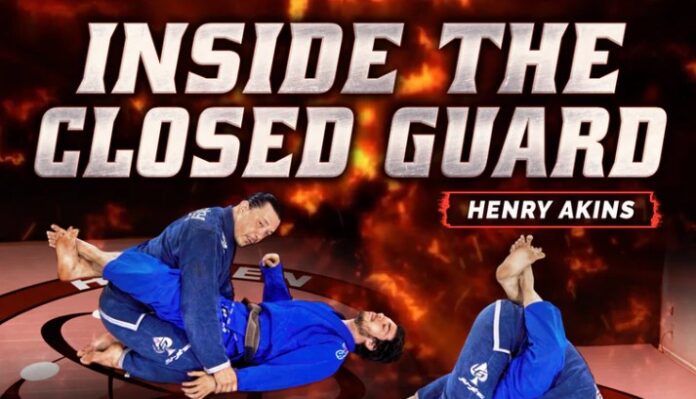
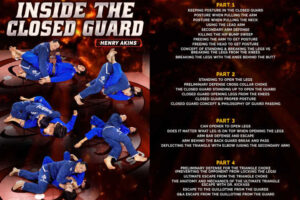
Henry Akins: Inside The Closed Guard BJJ DVD Review

Henry Akins: Inside The Closed Guard BJJ DVD Review

The number one complaint I get from people is in dealing with the closed guard. It was high on the list of puzzles difficult to solve, especially for beginners as far as 10 years ago. In modern BJJ, where so many guards and different styles are available, the closed guard remains a puzzle for most. Moreover, it is used quite a lot more than most think, hence the need for a system that will help you deal with it. Today, I will be looking at an instructional by Henry Akins, an instructor I admire very much called “Inside The Closed Guard”. 

Henry Akins Insite The CLosed Guard Cover Techniques List
Click for Techniques List & More Info

Overview

 “Inside The Closed Guard” is a four-part BJJ instructional that focuses on what to do when someone has you on their guard. It does not just cover opening and passing the BJJ closed guard, but also about how to remain safe in the position until such time comes that you can go about opening it. 

The instructional lasts just over 2 hours and is presented in a very easy-to-understand fashion. Everything Akins shows is with the Gi, although most of the underlying concepts in the DVD are applicable without it too.

This instruction will help you stay safe in anyone’s closed guard, break free, dismantle their defenses, and pass. You can expect to see a few “controversial” moves here, like the “arm behind the back” pass and the “can opener”, so try to keep an open mind.

Instructor Background

Henry Akins is a BJJ black belt under the iconic Rickson Gracie. He was so valued by the legendary Gracie fighter, that he was in charge of teaching classes at Rickons ‘s academy for a long while. 

Akins’ martial arts story begins in Taekwondo in his native Oklahoma. a highly analytical and intelligent fighter, he quickly understood that grappling had lots more to offer, as he got interested in wrestling during high school. Contrary to most people who discovered BJJ through Royce’s exploits in the first few UFC events, Akins saw some Rickson Gracie Vale Tudo tapes that opened the door to Jiu-Jitsu for him.

He went to seek out Rickson, moving to California and enlisting in Rickson’s academy.  Akins went through the belts with the help of Luis Heredia and earned his black belt from Rickson Gracie in 2004.

Subject

Akins is one of the best BJJ instructors in the world, period. He has a very keen sense of organizing the content in his instruction so that it flows in a logical and easy-to-follow way. In this DVD he starts with posturing and keeping your limbs and neck out of harm’s way, before exploring how to kill pretty much every sweep attack with ease.

He also covers standing openings of the closed guard, as well as a few that start from the knees. Last but not least, Henry Akins teaches very intelligent ways of defending against some of the most common submissions from the closed guard in Jiu-Jitsu: armbars, triangles and guillotines.

Akins’ approach to BJJ is very similar to that of Rickon: he likes fundamentals tuff and he likes to go extremely deep into he details and fine aspects that make everything tick.

Complexity

Anyone training Brazilian Jiu-Jitsu (or similar grappling that allows the use of the guard) will benefit from this BJJ DVD. Akins will talk about things that white and blue belts will miss, and only black belts will pick up, The beauty of his way of teaching is that everyone will learn, regardless if you take everything he says into account or only focus on the gross portions of his material. 

Technical Details

“Inside the Closed Guard” is available in a DVD format, or as a digital download via the BJJ Fanatics platform. It contains four volumes, each lasting around 30 minutes (the first one is nearly 40). The organization of the material is flawless, as is the delivery. 

Audiovisually, everything is shot in HD and there are multiple angles to the most important aspects of the things Henry Akins demonstrates.While the camera does not move around him, he and his uke change the angles to put the most important thing into perspective.

Detailed Analysis

DVD #1

In the opening portion of the instructional, Akins covers the key thing when dealing with the closed guard: keeping your posture. He does elaborate on the subjects, stating that you don’t always need to try and posture up at any cost, with which I agree completely.

He does, however, outline the importance of posture, as well as ways of obtaining it smartly under different circumstances. These include people pulling you forward via your arm or neck, or trapping your head or arm(s). Henry demonstrates how to stop people from sweeping you with the usual suspects (like the hip bump sweep) and how to approach opening the closed guard, from standing, kneeling, and half-kneeling.

DVD #2

In the opening sections of the second position of the ‘Inside the Closed Guard” Henry Akins BJJ DVD, the subject is how to deal with the closed guard by standing up. Akins covers both what you should do and what to look out for. He’ll teach you how to avoid getting collar choked while safely standing up to break open the full guard.

He then changes levels and starts talking about dealing with the closed guard from a kneeling position.

A couple more chapters on even more details about posture wrap the second volume up.

DVD #3

Volume Number Three starts with a bang, featuring a modified can opener to help you pry the opponent’s legs open. Henry goes as far as discussing how to act depending on which leg is on top in the opponent’s closed guard structure.

The rest of this part is all about defending. Akins explains how to prevent armbars from ever occurring, as well as how to escape if you’ve been caught in a deep one. He also kills the triangle choke set up from the bottom by using his elbows.

This part ends the way it started – with another bang. This time it is the “arm behind the back” pass, aka, Tozi pass variation.

DVD #4

 In the final portion of this Henry Akins DVD, the focus is almost entirely on triangle defense. Early defense, late escapes, and everything in between is jam-packed in this volume of the instructional. 

There’s a solution to the closed guard guillotine too, before a final chapter that addresses guillotine escape Q&A.

How We Grade The “Inside The Closed Guard” Henry Akins Instructional

Considering this Henry Akins instructional DVD’s technical aspects and quality of content, we come to an overall score for this instructional that I’ll deliberate in short below. 

Technical Quality: 10/10

Nothing is surprising here, it is just another DVD up to today’s standards in terms of video and audio quality. 

Quality of Content: 10/10

 I rarely give out 10s, usually because there is at least something missing from most instructions. This is one of the rare ones that I can’t find a flaw in. it is made for everyone, it is sufficiently long, addresses a very important subject, and offers answers to all the right questions. 

Overall: 10/10

 A BJJ DVD is worth your time and money. Get this one right after reading this review, regardless of your belt level. Afterward, spent at least three months trying out Henry’s stuff. After that period, no closed guard is going to bother you again. Ever! 

Wrap Up

Henry Akins is always a joy to watch. he is one of the best and definitely extremely underrated BJJ instructors out there. So far, I’ve learned game-changing details from him about different aspects of BJJ. “Inside The Closed Guard” is yet another one of his instructional that won’t leave anyone who watches it disappointed. The only thing you’ll be wanting is more of Henry’s grappling wisdom. 

Henry Akins Insite The CLosed Guard Cover Techniques List
Click for Techniques List & More Info

Mikey Musumeci BJJ DVD: Foundations Of Guard Attacks REVIEW

Mikey Musumeci BJJ DVD: Foundations Of Guard Attacks REVIEW

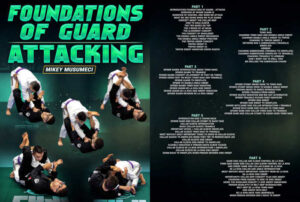
The man of the hour, Mikey Musumeci has a brand new instructional out. At the moment, I guess people will run headfirst into anything that Mikey has to offer. they wouldn’t be wrong, as he is most definitely one of the best grapplers actively competing at the moment. Moreover, he is a true BJJ nerd, one that is as eloquent with his words when teaching as he is versatile with his techniques when he is competing. “Foundations Of Guard Attacks” is the latest Mikey Musumeci BJJ DVD that promises to help change your guard. Will it?

Mikey-musumeci-guard-attacking-techniques-cover
Click for Techniques List & More Info

Read on to learn our take on it.

Overview

The name pretty much says everything here. One of the best lighter-weight fighters of modern JiuJitsu discloses secrets about attacking with your back to the ground.  The instructional is Gi-based and offers Musumeci’s competitive attacking gameplan from closed and open guards. 

What you get is 6 volumes of closed guard, spider guard, collar and sleeve, and De la Riva guard attacks. The way Musumeci organizes and presents the material is different from most guard instructional, and he will help you make connections between different guard-based attacks. in the words, he delivers on the promise he suggests in the title of this instructional.

Instructor Background

Given that he just beat Masakazu Imanari via submission, Musumeci is not somebody who needs a lot of introduction. He represents half of the Musumeci duo, with his sister Tammy completing the sibling grappling super force. 

Born in New Jersey in 1996, Mikey got his black belt under Gilbert “Durinho” Burns and Jonatas “Tagarela” Gurgel. He began training at the age of 4. His family moved a lot so he trained all over the US, meeting up with the Mendes Brothers in the process, which helped define his style a lot. In the meantime he worked with Caio Terra, Heth Pedigo, and Emyr Bussade, to name a few. He got his black belt in 2015 at the age of 18.

To date, he has 4 world titles in the Gi and 1 in No-Gi. Musumeci also has 1 Pans title, 1 European title, 1 American national title, and Abu Dhabi World Pro and Grand Slam titles. He was also a multiple-time world champion at almost all-colored belts.

Subject

The guard is one of those subjects in BJJ that will always be open for learning and interpretation. That said, most people do not make the distinction between the defensive and offensive aspects of the guard. In reality, those are two sides of the same coin, but just like a coin, you can’t see them both at the same time. In other words, you need to focus on each of them separately, and then aim to consolidate them into a well-rounded guard game. 

This Mikey Musumeci BJ jDVD focus on the offensive aspects of the guard. “Foundations Of Guard Attacks” goes over a bunch of ways to achieve the two most desirable outcomes from guard positions – sweeps and submissions. It also covers transitions to better-controlling positions like the back. OF course, there are plenty of Berimbol and baby bolo transitional options as well. After all, they are the hallmark of Mikey’s game, aren’t they?

Complexity

This instructional is a good fit for everyone but only if you manage your expectations to fit reality. If you are a white belt looking to Berimbolo to the back and sneak triangles from everywhere, somebody needs to revoke your access to BJJ fanatics. That said if you’re hoping to understand how a guard works, especially in terms of attacking then “Foundations Of Guard” will fit your needs perfectly. 

Simply put, the chapters and volumes covering stuff like the closed guard and collar and sleeve guard are so fundamental that everybody can understand them and everybody can use them, white to black belt.

The De la Riva and Spider Guard sections are intended for purple belts and above. There’s lots of movement there that is just not accessible (in a meaningful way) to most people that have been training for less than 5 years.

Technical Details

The “Foundations Of Guard Attacks” Mikey Musumeci BJJ DVD instructional consists of 6 volumes. Each of them lasts in the range of 40-45 minutes, bringing the whole running time of the instructional to around 4 and a half hours, which is lots of material.

The DVD is yet another in a long line of instructional from the BJJ fanatics production. That means that the sound and video quality are HD, and there are multiple angles to all fo the key aspects of every technique. Moreover, the instructional is available both as a digital download and in a DVDD format.  

Detailed Analysis

DVD #1

Mikey Musumeci starts off by looking at some of the most foundational aspects of playing guard. HE first explains what you can expect from the instructional.

The entire first volume is about understanding the guard. Musumeci talks about where the guard is, how to control it and what the goals are when playing guard. he also talks about grips, holding them, setting them up, and everything there is to teach about the collar and sleeve grips.

The key concepts of the entire system outlined in this Mikey Musumeci BJJ instructional are midway through the first volume. They refer to the two bases (of the top person) and the three boxes of attacks (for the bottom person). These feature heavily throughout all other volumes, so skipping this volume when you’re trying to learn from this particular instructional is a bad idea.

Further in this part, Mikey covers some sweeps, starting with the double ankle sweep and exploring a few variations of the fundamental tripod sweep as well.

DVD #2

Part two keeps going with sweeps, building on the momentum from the first volume. In it, Musumeci focuses on chaining sweeps, adding the Tomo Nage to the tripod and double ankle to create a very cool trilemma attack.

Not far behind the sweeps are submissions, coming in the form o the very foundational triangle, Omoplata, and armbar. Mikey explains how they work, where the entries are, and how to use the submission box system to set them up and chain them together. He truly keeps to the Foundations Of Guard storyline but goes deep into advanced detail on all the foundational stuff he demonstrates.

This part ends with some drills Mikey likes to do in order to settle into the sweep and submission chains.

DVD #3

Up until this point in the instructional everyone can find something useful. Starting from volume three, only advanced grapplers can follow Mikey, and even most of them might find it difficult at times.

The opening few chapters of this instructional cover the spider guard. Once again, after a short introduction of how all the previously outlined concepts apply to the spider guard, Mikey starts connecting the foundational dots. He once again focuses on the Tomoe Nage, double ankle sweep, triangle, and Omoplata.

Towards the end, he switches his attention to the transitions from the spider to the De la Riva guard. however, Instead of looking only into full transitions in between the guards, Musumeci teaches hybrid attacks in the form of sweeps from the “De la Spider” guard.

DVD #4

While you might have thought the De la Riva guard is next, this Mikey Musumeci BJJ DVD is not done with the spide guard just yet. In this volume, he shares come very innovative variations of the guard and setups that lead to his favorite attacks.

For example, he covers the spider stomp setup into sweeps as well as playing seated spider variations to set up triangles. he also goes over some scenarios (i.e. opponents kneeling or going into half kneeling positions) and even a side spider position.

A few collar grips from the spider guard help Musumeci connect the spider guard to the collar and sleeve guard, creating yet another chain between those two and the De la Riva.

DVD #5

In the penultimate part of the “FOundations Of Guard Attacks,” DVD Mikey Musumeci goes into back takes, connecting them to his box attacks concept. He uses the collar and sleeve guard to blend together back attacks and Omoplata/triangle combinations. Moreover, he shares key little details that are crucial to the success of all said attacks.

The second portion of the fifth volume is dedicated to the collar and sleeve guard, and direct attacks that stem from it via the base and box systems. At the end of the fifth part, Musumeci re-introduces the De la Riva again.

DVD #6

Yup, it took as long as getting through to the sixth and final volume of this Mikey Musumeci BJJ DVD to see some bolos. Still, it was more than worth it, in my opinion, even if you are one of those fidget-spinning bolo addicts. 

Collar and elbow De la Riva Tomo Nages kick off this volume, paving the way to a new approach to the traditional collar and ankle De la Riva. There is lots of work on angles in this part of the DVD, most notably in terms of switching from front to side sweeps and vice versa. A few belt grip sweeps round this final volume off, but not before Mikey provides answers to most of the common submission defenses/counters the top person might try.

How We Grade The “Foundations Of Guard” Mikey Musumeci BJJ DVD Instructional

Considering this Mikey Musumeci BJJ instructional DVD’s technical aspects and quality of content, we come to an overall score for this instructional that I’ll deliberate in short below. 

Technical Quality: 10/10

 AS per usual, the standard set by BJJ Fanatics is displayed perfectly in this instructional. Multiple volumes of high-quality material, recorded and organized in an optimal fashion. Mikey is a native English speaker and a very eloquent teacher, so following his thought throughout the instructional is easy. 

Quality of Content: 8/10

The content is going to provide everyone with answers in terms of how to attack from guard. Given the length and the wide application of the material (in terms of people with different levels of understanding of BJJ), the only drawbacks are that this is a highly Gi specific instructional, and that, as is the case with most DVDs put together by high-level competitors, it only outlines one aspect of Mikey’s personal game, which is most definitely not going to be a great fit for everyone. 

Overall: 8/10

This is a very fair overall grade of a DVD that I know most Gi-loving, Berimobolo-addicted grapplers will consider being a 10+. That is precisely why it cannot be a 10/10. 

Wrap Up

The “Foundations Of Guard Attacks” Mikey Musumeci BJJ DVD does help cast light on something that is being missed by most in the BJJ community – the big separation between defensive and offensive guards. This instructional will help everyone improve aspects of their guard game but will be particularly useful to the lighter weight, Gi purple, and above competitors that love to play modern guards. 

Click for Techniques List & More Info

Ryan Hall BJJ DVD REVIEW: The Modern Defensive Guard (2022)

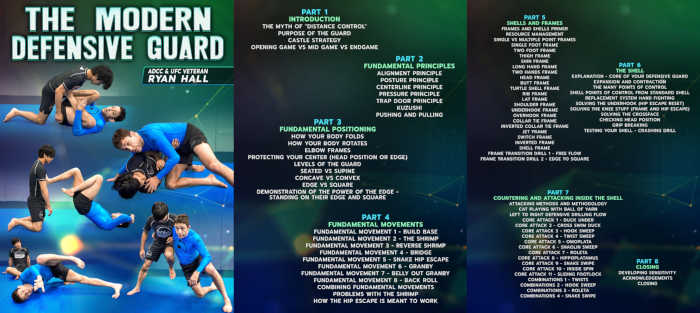
The man who basically pioneered learning from BJJ instructional, Ryan Hall a.k.a. the “The Wizard” is finally back in the business of making Brazilian Jiu-Jitsu DVDs. Ryan had a series of instructional (I am pretty sure they were 10 in total) that lasted for hours and covered just about every subject back in the day. He was the first to produce tens of hours of highly organized material in his DVDs, one of which was all about how to play the defensive guard in BJJ. Now, he has decided to re-visit that subject, focusing this time on The Modern Defensive Guard in a brand new Ryan Hall BJJ DVD instructional.

Ryan Hall Defensive Guard jiu jitsu dvd cover
Click for Techniques List & More Info

Overview

For me, a Ryan Hall DVD is always something worth having. The way he structures things and explains the material is very rare, even among the best of the best in terms of BJJ instructors. Ryan is a true wizard at teaching JIu-Jitsu and making you see both the details and the big picture at the same time. 

This instructional does just that. Already accustomed to talking for hours, Ryan seems to have had no trouble in unleashing an 8 part instructional about the Modern Defensive Guard.

In this instructional, Hall takes us through the fundamentals of developing an unpassable guard. These include fundamental principles, positioning, and movements. He follows up on that by sharing his concepts on shelling, frames, and counterattacks. He also addresses the key aspects of his defensive guard in which he has changed his approach compared to his previous instructional on the subject, in order to adjust to modern-day Jiu-Jitsu.

Instructor Background

Ryan Hall is a  black belt under Felipe Costa and is one of the best minds in Jiu-Jitsu in the history of the sport. Currently on the roster of the UFC with a 9-2 record. Ryan was also an early adopter and pioneer of leg locks, following in the footsteps of Dean Lister long before they became popular. in fact, he likes them so much that his BJJ academy in D.C. bears the name 50/50 Jiu-Jitsu.  

As a grappler, Ryan has several big accomplishments before he earned his black belt, including winning the Worlds and Europeans at purple belt. As a black belt he won ADCC trials in 2009, but then quickly changed his focus to MMA, turning pro in 2012.

He immediately got in the UFC by way of The Ultimate Fighter and has been quite impressive in the octagon since.

Ryan Hall picked up BJJ in 2004. he soon sought out Lloyd Irvin’s team and his skill level quickly exploded. He got all his belts up until brown under Lloyd, but left the team after disagreements with Irvin in 2009. He was promoted to black belt by Felipe Costa in 2010.

Subject

The subject of this Ryan Hall BJJ instructional is clear from the start: how to develop a foolproof defensive guard game.  Playing a defensive guard is not high on most people’s list, which is exactly why so many guards are exceedingly easy to pass. Ryan knew about the importance of the defensive guard game decades ago and was the first to address the subject in one of his early DVDs. 

Since then, the common perception of guards has not improved too much. While there is more o the subject of defending your guard nowadays, the information is still scarce. So, when somebody like Ryan Hall, who has spent the past 15 years exploring the defensive aspects of gaurd comes out with new material, he jumps at the front of the queue.

What you can expect to learn in this DVD is how to keep people from dismantling your guard, how to be aware of where they are, how to move when you’re on your back so that your guard is never in danger and how to develop a defensive shell that can be used for lighting quick counter-attacks.

Complexity

Ryan Hall is an amazing instructor for people of all levels. That said, I used his old DVDs as a white/blue belt and learned a lot. since then, I have revisited his material at every belt level, and always had something new to discover, even though I could pretty much recite his work for a while. 

This last Ryan Hall BJJ DVD is the same. Across 8 volumes, Ryan systematically breaks down what the guard siss, what your defensive goals are, and how to achieve them. regardless of how experienced you are, you will learn new about defending your guard.

Technical Details

This instructional is produced under the BJJ Fanatics umbrella, which guarantees the level of all the technical aspects. The quality of both video and audio is in high definition, there are multiple angels to every technique, and the material is available in both DVD format and as a digital download. 

The material is organized in 8 volumes, each lasting differently, depending on the subject (the shortest one is ¬15 minutes, while the longest exceeds two hours). The complete running length of the instructional is just under 8 hours.

From a Jiu-Jitsu standpoint, Ryan uses the first volume to talk about concepts, the broad idea, and how his take on the defensive guard has evolved since his last instructional. The complete organizational system of this instructional is as close to perfect as possible with a very easy-to-follow progression through the material. 

Detailed Analysis

DVD #1

The first part Ryan Hall’s “Modern Defensive Guard” instructional is the introduction to the entire concept and system offered later on. He begins by discussing distance control, and how why it is nothing more than a myth.

He moves on to talk about the purposes of guard, setting the tone very early about what is truly important. Hall also shares an interesting analogy he calls @the castle strategy@ It perfectly describes what a defensive guard should be about.

The final concept in this first volume is about timing. It focuses on the guard game in three stages, the opening, mid, and end game.

From the get-go this new Ryan Hall BJJ DVD seems to be the real deal!

DVD #2

Part two is about principles. In this volume, Ryaan goes over the 7 principles he builds his defensive guard game around.

The first couple of principles are most likely known to you in some fashion: alignment and posture. Ryan sheds new light on them, offering a slightly different, defense-driven perspective.

Following suit is principles about pressure, the role of the centerline, and the highly entertaining trap door principle. Each principle builds upon the previous ones, showing you a systematic perspective of the entire system from the very beginning.

The volume wraps up with Ryan presenting the principle of Kuzishi and talking about pushing vs. pulling.

DVD #3

The third volume is still on the subject of fundamentals, but this time focusing on positioning. This is where Ryan shares his take on how the body moves primarily around two main axis – folding and rotating.

He then explains the role of elbows frames, and how to best utilize them to protect your center. His take on frames shared here is different from the framing concepts most of us know and use, usually with limited success.

Something that featured in his old defensive guard instructional, the principle of levels of guard finds its place in volume 3 as well. Of course, this time the principle is in an updated format.

Body shape comes next, defining seated vs. supine, concave vs. convex, and edge vs. square. Wrapping up is a demonstration of this last principle, about the power of the edge.

DVD #4

Volume number four of this Ryan hall BJJ DVD is the final volume that contains principle-focused material. In it, hall shares the fundamental movements that will help you defend your guard against anyone.

Things like base, shrimping and reverse shrimping, and bridging are a big part of this volume. However, Ryan has a different way of looking at them and presenting them. simply put, he takes all the unnecessary motion out of shrimping and offers a new and improved way to move.

Snaking out your hips, a couple of different Granby rolls, and back rolls complete the list of fundamental defensive movements for BJJ guard players.

I really loved the way Ryan finishes this volume. Namely, he offers connections, helping you see how you can combine all the fundamental movements for an ultra-effective defensive guard game.

DVD #5

Past the halfway point in this instructional Ryan Hall starts sharing technical details on playing a defense-oriented guard. In this volume, Ryan shares the concept of the shell and where frames fit in. It is the longest volume, lasting over 2 hours.

The way Ryan organizes the material is by explaining where the shell and frames meet. From there he looks into different types of frames, including but not limited to foot, thigh, shin, hand, head, butt frame, and more.  Basically, he shows you how to frame every single part of your body, upper and/or lower, while still maintaining guard.

he also covers inversions and how they relate to the shell. A few drills on transitioning between different frames to keep your shell bring this volume to close.

DVD #6

Part 6 goes on about the shell. Hall introduced the concept in the previous volume, but this is where he truly gets into the nuts and bolts of it. In his words, the shell is the core f your defensive guard.

What you can expect to learn is how to expand and contract the shell, the points of control, hand fighting, etc. Ryan also offers solutions to common problems like underhooks, knee stuffing, the crossface, and more.

He ends with a drill that will help you test your shell. It is named the crashing drill.

DVD #7

Right before the end of this Ryan Hall BJJ DVD the attacks come into the spotlight or better said counterattacks. Hall starts with his methodology on attacking from a defensive position and then launches into examples.

he shares 11 different core attacks, ranging between sweeps, submissions, and transitions. Some of them are duck under, cross swim duck, Omoplata, Shaolin sweep, the snake swipe, and others.

The best part is that at the end of this volume, Ryan Hall connects all of the attacks not just to the shell and frame concept, but also to each other.

DVD #8

Similar to the introductory first volume of the “Modern Defensive Guar” Ryan Hall BJJ instructional, the final volume is basically an outro.

 Ryan uses this volume to talk about something nobody has covered before – developing sensitivity. the more you train and spend time on the mats, the more you’ll be able to sense how people move and use the appropriate countermoves. 

he wraps up by sharing a few acknowledgments and giving his closing thoughts.

How We Grade “The Modern Defensive Guard” Ryan Hall BJJ Instructional

Considering this XXXXXX instructional DVD’s technical aspects and quality of content, we come to an overall score for this instructional that I’ll deliberate in short below.

 Technical Quality: 10/10

The grat audiovisual realization of this instructional, along with Ryan’s organization of the material make it one of the best BJJ DVDs in existence.

Quality of Content: 10/10

Once again, a true win. One of the best Jiu-Jitsu DVD instructionals I have ever seen, and I have seen more than my fair share. This Ryan hall BJJ DVD tackles a subject that is just as important as it is ignored in the BJJ community. The fact that one of the best instructors ever is behind this instructional just adds to its weight. 

Gi or No-Gi, MMA or grappling, white or black belt, if you use the guard in your martial art,you will benefit from this DVD.

Overall: 10/10

I have become so critical of the way people teach BJJ that I very very rarely give out the perfect score. This one, though, deserves it from every possible aspect. Hats off to Ryan Hall for this masterpiece. 

Wrap Up

 “The Modern Defensive Guard@ DVD by Ryan Hall is one of those that will become a staple in the game. just wait until the first few high-level grapplers share the success they had with his concepts in competition WHy not get the jump on everyone and invest in this now?

Ryan Hall Defensive Guard jiu jitsu dvd cover
Click for Techniques List & More Info

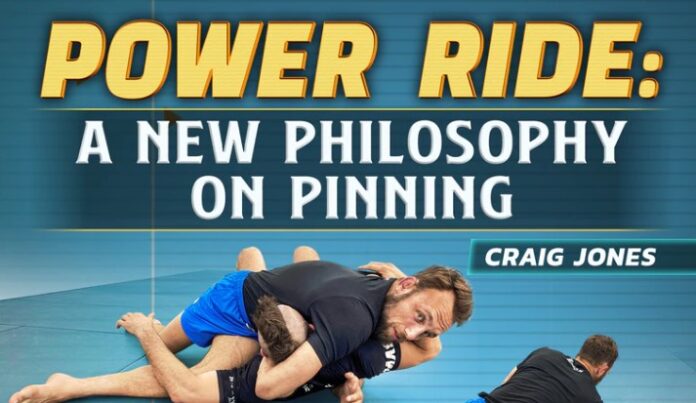
“Power Ride Pinning” Craig Jones Jiu-Jitsu DVD Instructional REVIEW

Here’s something you’ve never seen before! A Craig Jones Jiu-Jitsu DVD! Oh wait… that’s right, you’ve seen a bunch of them. perhaps even more than any other black belt out there. So why is this one different? I will do my best to do “Power Ride: A New Philosophy On Pinning” justice and tell you exactly what everyone’s favorite Aussie grappler has to teach this time.

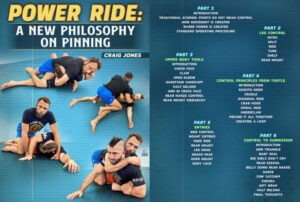
Craig Jones pins instructional cover
Click for the techniques list & more info

Overview

Since founding B-Team Jiu-Jitsu, Craig has been extremely active, competing, promoting the team, and putting together instructional. One thing that is very noticeable in terms of every B-tam member’s name is their wrestling. And I am not just talking about takedowns here.

This particular Craig Jones Jiu-Jitsu instructional focuses on pinning opponents by utilizing a wrestling classic – riding. I’ll explain the concept of riding further in the article, but it is a skill sorely missed by modern BJJ grapplers and one that the B-team and New Wave Jiu-Jitsu are leaning heavily towards.

In 6 volumes Craig covers leg and body rides of different varieties. The goal is to use them in order to pin opponents and eventually gain maximal control over them which will lead into submissions. SInce rides don’t just happen out of the blue, Jones also covers entries in his Power Ride pinning system.

Instructor Background

It s Craig Jones. I can leave it there and everyone will know everything they need in terms of the instructor behind the “Powe Ride: A New Philosophy On Pinning” instructional.

Still, let me repeat a few major things about Craig Jones:

  • He was born in Australia and currently lives in Austin Texas.
  • Craig is a black belt under Lachaln Giles, promoted in 2016.
  • He is predominantly a No-Gi grappler, who has won silver in the last ADCC, is he 205 and 185 Polaris champion, and has some outstanding performances in sub-only tournaments like EBI, Kasai, and SUG.
  • Craig was a part of the Danaher Death Squad and put together his own B-team Jiu-JItsu after the DDS broke apart.
  • Founder of Mexican Karate.
  • There are currently no less than 13 Craig Jones Jiu-Jitsu DVD instructional available, with more undoubtedly on their way.
  • Wears signature leopard-themed uncomfortably short shorts.

Subject

As promised, I’ll try and explain more about the concepts of rides, which is something BJJ people do not know about. At all. And that is a real shame. Rides are a staple of wrestling and include a series of different ways to attach yourself to an opponent and force them to move, while at the same time not having to actively follow them as they do, but rather hitch a ride on a certain body apart of theirs, so you still end up in a better (mostly top) position than them.

In other words, rides are ways wrestlers use to break down defensive positions like the turtle or the referee’s position and get a match-winning pin – press both of the opponent’s shoulder blades on the mats. This is easy to do when you have your body strategically attached to one of their leg or torso.

In the six-part “Power Ride Pinning” DVD, Craig talks about how you can control and submit people in BJJ by using these age-old wrestling tactics which are not at all difficult to master.

Complexity 

This is a No-Gi instructional that involves wrestling techniques and BJJ positions. In the case of both, no real deep prior knowledge is required. Craig Jones is a good coach that knows how to break things down. in this case, he does so perfectly when attempting to teach BJJ grapplers how to get better at pinning by using underestimated wrestling techniques.

Given the general lack of knowledge about wrestling (outside of takedowns and headlock) in BJJ, even most black belts are going to be white belts on the subject of rides. In other words, this Craig Jones Jiu-Jitsu instructional will make anyone a better grappler. Guaranteed.

Technical Details 

This instructional is available as a hard copy DVD or as a digital download. In both situations,  it consists of six volumes of HD video and sound quality material, very carefully organized in a progressive learning system.

The full running length of the ‘Power Ride: A New Philosophy On Pinning” DVD is around 240 minutes (~4 hours). The first couple of introductory volumes is the shortest (each at around 30 minutes. Parts three through five last just over 400 minutes each, with the sixth one lasting over an hour.

Craig is a native English speaker and an eloquent one at that. While he does speak with an Australian accent it is not overwhelming and it is very easy to follow his thought process.

Detailed Analysis

DVD #1

After a short intro, Craig starts to explore the traditional scoring system of BJJ and exposes one key fact – points do not equal control. On that note, control is much better defined in terms of other grappling martial arts, especially in wrestling.

In order to understand how the control works, one first needs to figure out movement. How movement is created, where the power comes from, and the standard operating procedure of BJJ grapplers are all things Jones dwells on in the first portion of his “Power Ride” instructional.

DVD #2

While part one of this Craig Jones JIu-Jitsu DVD is about theory, part two is where he puts it to practice. This volume covers leg rides, which in turn, provide you with leg control. It is different from AShi Grami or other types of leg control (like takedowns) that you might know so far.

Leg rides involve using your legs to entangle the opponent’s leg(s) and prevent them from moving or following them when they move in a direction you actually want them to go towards.

The volume covers some classic wrestling rides like the Turk and the Shelf, as well as some interesting takes on the rear mount.

DVD #3

In part three of the “Power Ride” DVD, Craig JOnesexplores upper body controls that often lead to successful pinning.

Once again, there is a lot of classic wrestling stuff in here that BJJ people do not use (for reasons beyond my understanding).  Things like claw rides, cross face control, Nelson variations, etc are all a staple for wrestlers. Quite often, they are also the reason why wrestlers outperform BJJ athletes on the mats.

There’s more rear mount work here, wrestling-style (as opposed to classical BJJ back control).

The star of this volume is of course the Dagestani handcuff. You’ll recognize it easily when you see it.

DVD #4

Can Craig Jones e the one to solve the biggest defensive puzzle of modern BJJ – the turtle position? Well if anything can be used to beat the old wrestling-inspired defense,  it has to be wrestling-inspired offense, right?

In volume number four, Craig Jones looks at diagonal rides, crab hooks, spiral rides, and other simple ways of breaking down a heavily turtled-up opponent. He throws in some cradles and underclaws in there as well, to create a loop you can keep an opponent in endlessly.

OF course, Craig offers a way to piece everything together at this point before moving on to bridge the gap between wrestling for wrestling and wrestling for BJJ.

DVD #5

How do you combine all the wrestling stuff Craig Jones demonstrated in previous volumes so that they improve pinning success in BJJ? This is the volume that brings everything together.

\IN the first chapters, Craig goes over side control, mount, knee on belly, and back control entries. he utilizes all of the things demonstrated earlier in the “Power Ride” instructional, tying them to the most important (and point scoring) positions in Jiu-Jitsu.

The second portion of the fifth volume looks into some passing and top control positions that are not point scoring but do provide lots of control. Leg drags, dope mount, smash passing, and everyone’s favorite new toy – the body lock.

DVD #6

Wrapping up what turns out to be one of the best Craig Jones Jiu-JItsu instructionals ever is a volume that covers submissions. it wouldn’t be a Craig Jones DVD if it did not have a bunch of crazy subs in it, would it?

This is where you’ll learn how to execute many of the submissions you’re already doing. From arm triangles to Darces and rear naked chokes, Craig goes over BJJ submission while offering wrestling-based pining control that improves their finishing rate. Plus, he throws in some catch wrestling surprises like the Half Nelson finish and the Cow Catcher, finely mixing things up.

How We Grade The “Power Ride: A New Philosophy On Pinning” Craig Jones Jiu-Jitsu Instructional

Considering the “Power Ride: A New Philosophy On Pining” instructional DVD’s technical aspects and quality of content, we come to an overall score for this instructional that I’ll deliberate in short below. 

Technical Quality: 10/10

 NO mistakes here, as once again BJJ fanatics prove why they are the gold standard when it comes to BJJ and/or wrestling DVD instructionals. 

Quality of Content: 10/10

This is as complete an instructional, as a grappler can hope for. Perfect length, a very underrated subject brought to light, connecting different grappling martial arts and all of it done by one of the world’s best grapplers (both competitive and teaching-wise). This instructional is a great fit for grapplers of all ages and levels, including those that only grapple with a Gi on. 

Overall: 10/10

 Just what the doctor ordered. I am rarely impressed by a BJJ DVD nowadays, but this one certainly did the trick. Has to be my personal favorite Craig Jones Jiu-Jitsu DVD today. 

Wrap Up

Why would you ignore 50 % of the human body? IF that famous quote made sense to you then why would you ignore thousands of years of grappling knowledge simply because the prefix BJJ is not in front of it? Wrestling offers exactly that, and now that Craig Jones did all the hard work funneling it into one instructional, there are no excuses not to, and get this one for yourself or your favorite grappler. 

Craig Jones pins instructional cover
Click for the techniques list & more info

Ethan Crelinsten: Leg Lock Counters BJJ DVD Review

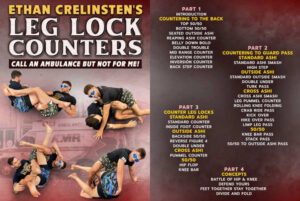
Ethan Crelisten leg lock counters review

Here is an interesting BJJ instructional by one of the now-defunct DDS squad black belts that is not one of the Ryan brothers or Gary Tonon. This time, Ethan Crelinsten is the one sharing leg lock knowledge, and he does so in the opposite direction of what we are used to seeing from the Danaher bunch – he teaches leg lock counters in his first BJJ DVD instructional so far. 

Ethan Crelisten leg lock counters
Click for techniques list & more info

Overview

The leg lock game has reached new heights in the past decade. From the obscure and demonized moves they were until the 2010s, leg locks are now a staple in any gym’s curriculum. That evolution, though, means that most people now know how to attack with some of the most common lower limb submissions from the infamous Ashi Garami positions. Not only that, but people are also getting good at defense. AS the threat of leg locks rises, Ethan Crelinstein steps in to offer a different kind of leg lock defense – direct leg lock counters. 

The 4-part Jiu-Jitsu instructional addresses the most common leg lock attacks and offers ways to counter them. Counters include both positional counters, that will land you in a better controlling position, as well as direct leg locking counters.

As you might expect from a DDS member, this is a No-GI instructional.

Instructor Background

Ethan Crelinsten is a John Danaher black belt that came up splitting his time between the NYC blue basement of Renzo Gracie’s BJJ Academy and Firas Zahabi’s TriStar gym in Montreal. He started off as one of the junior members of the Danaher Death Squad, eventually going on a run of big victories himself, most notably at the ADCC North America Trials in 2017 and 2018. 

Crelinsten was born in Montreal, Canada in 1994. He took up MMA training at the age of 19, having no previous experience with sports whatsoever. Since TriStar is the spot to train in Montreal, he quickly ended up blooming under the tutelage of fellow Danaher black belt Firas Zahabi. Crelinsten quickly shifted his focus to Jiu-Jitsu. Connecting with the mother-gym in NYC was only a question of time, and Ethan ended up training with the DDS regularly as a purple belt.

In his short and fruitful career so far, Crelinsten has two ADCC Trials wins, as well as notable wins in submission-only super fights against big-name opponents. Most of those came before his promotion to black belt. Ethan got his black belt along with Nicky Ryan in 2020.

After the Danaher Death Squad disbanded, he went over to form B-team Jiu-Jitsu with Craig Jones, Nicky Rod, and a few other standout grapplers.

Subject

There is no real surprise that a former DDS member, now a member of the B-team has a leg lock instructional. However, the specific aspect of leg locking that Etha Crelinsten covers in this BJJ DVD instructional is highly interesting. Instead of trying to demonstrate attacks, or straight out defense, he chose to focus on leg lock counters. 

Throughout the 4 volumes of the instructional, Crelinsten demonstrates how to get the back, or pass guard when a bottom person is attacking you with leg locks. He also shares sneaky and extremely effective leg lock counters to leg loc attacks, meaning you’ll get a leg lock submission off your own using the opponent’s set up to enter into Ashi Garami.

A very interesting thing he does in this instructional is that he offers his concepts and principles in terms of countering leg locks in the final volume as opposed to the first (as most others do).

Complexity

This DVD instructional will help you deal with leg locks in a more efficient and advanced fashion. However, it requires a least fundamental understanding of some of the most effective submissions and positions. 

In modern Jiu-Jitsu, this does not exclude people in terms of belts, given that some white belts out there are much more experienced in leg locks than some of the old-school black belts. That said, the DVD is not for those without any leg lock experience, regardless of belt level.

The reason for that is if you do not understand leg locks, you’ll most likely try to use the leg lock counters Ethan teaches in a way that won’t work and will only get you in more trouble.

If you are a leg locker, though, this DVD will open up a whole new dimension of options, particularly when grappling fellow lower limb fanatics.

Technical Details

A BJJ Fanatics production delivering the usual high-quality video and audio aspects of the DVD. The instructional is available in DVD format, as well as a digital download. 

The material is organized in 4 volumes. The first two volumes last around an hour, while the third volume caps off at the 50-minute mark. All of these are filled with leg lock counters techniques and are divided into chapters. The last volume lasts around 20 minutes and focuses on the concepts and principles that Ethan Crelinsten uses to set up his leg lock counters.

That brings the total running time of this instructional just over 3 hours.

Detailed Analysis

DVD #1

In the opening volume, Crelinsten starts off offering a series of slick back takes when an opponent is attempting to hunt for leg locks. He begins by addressing the 50/50 a.k.a. the modern bane of leg locking positions. He offers both top and bottom 50/50 entries to the back mount.

Ethan then moves on to explore how to deal with the outside Ashi, reaping, and even double trouble situations.

Some of the most innovative aspects of Crelinsten’s counter leg lock game are in the final few chapters of this volume. In them, he shares ways to get the back off of elevation and inversion attacks which are pretty much a big part of every leg locker’s game.

DVD #2

Part two of “Leg Lock Counters” looks into guard passing as the final result of countering lower limb attacks. Ther is a different multi-chapter section for techniques in terms of dealing with 4 of the most common Ashi Garami positions from the top.

The first section covers straight Ashi Garami. There are two chapters, the Ashi smash and high step vs. Ashi to easily get you past a straight Ashi. As it is essentially the same as the Single Leg X-Guard, you get double the value of these passing counters.

The outside Ashi is next up for passing counters. Again, Ethan Crelinsten starts with a smashing pass, before exploring a double underpass. He also uses a wrestling leg ride called the Turk to beat the outside Ashi (my personal favorite).

The largest part of the techniques in this volume addresses the Cross Ashi Garami (Hoenyhole). After Ethan’s favorite smash pass, the options spread to include countering leg pummels, rolling knee folds, and kick overs. In addition, Crelinsten turns to wrestling again, this time using the crab ride to deal with the Cross Ashi and pass. A couple of slick movement-based passes round this section up.

Finally, it is back to the 50/50, looking to expand on the top position counters already touched upon in the first volume. Apart from the straightforward stack pass, both other passes include a direct leg lock submission opportunity for the top person.

DVD #3

Part three is exactly what makes leg lockers water at the mouth (and maybe other places). Once again there are sections covering straight, outside, cross Ashi, and 50/50 positions.

The counters include transitioning into Ashi variations yourself, killing the original attacker’s options by doing so, and opening up a host of leg lock finishes to ap them out. Some of the moves you’ll see here include the infamous backside 50/50, reverse figure four finishes, hip flops, and a bunch of other sneaky counter leg lock submissions.

DVD #4

I am still curious as to why Ethan left his conceptual approach and the way he thinks about leg lock counters for the very end. That said, this volume does contain some extremely important information for anyone that likes to dabble with leg locks.

The concepts Ethan Crelinsten talks about are the relation of the hip and knee in an Ashi Garami. He explores this crucial battle from both an offensive, defensive and counter-attacking perspective.

Another cool concept he offers is keeping the feet together to prevent people from ever gaining a deep control of one of your legs. He also talks about dividing the opponent’s attention and resources and folding them in order to strip Ashi Garami positions away easily.

How We Grade The “Leg Lock Counters” Ethan Crelinsten Instructional

Considering this Ethan Crelinsten BJJ instructional’s technical aspects and quality of content, we come to an overall score for this instructional that I’ll deliberate in short below.

Technical Quality: 10/10

As previously mentioned, every technical aspect of this DVD is bang on point, from audiovisual quality to multi-angle camerawork and the way Ethan explains the material.

Quality of Content: 9/10

Content-wise, this is a gold mine. The length of the instructional is also in the perfect 3-5 hour sweet spot for a BJJ DVD. As usual, everything shown in a No-Gi instructional is very easily transferable to Gi Jiu-Jitsu, and this instructional is no exception. 

The only drawback of this particular DVD is that you absolutely need previous leg lock knowledge in order to get the most out of it. In fact, the more you already know about leg locks, the more useful this instructional is going to be for you.

Overall: 9/10

 A solid 9 out of 10 for Ethan Crelinten’s first instructional. I advise everyone to give this one a try, as, at one point or another, everybody will have to expect that leg locks are here to stay. 

Wrap Up

I have always loved the concept of countering from bad positions instead of only defending and escaping. In the context of leg locks, this is pretty much readily available, given the proximity to Ashi Garami for both players. In “Leg Lock Counters” Ethan Crelinsten precisely outlines how you can counter the modern leg lock game not just by more leg locks, but also by passing or aiming to obtain back control.

Ethan Crelisten leg lock counters
Click for techniques list & more info

REVIEW: “The Rody Lock” Guard Passing Nicky Rod BJJ Instructional

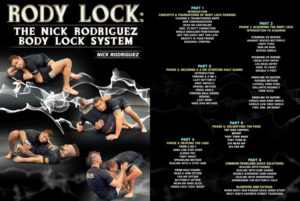
Nicky Rod Body Lock

Nicky Rod. Even if this is all I write, you’re probably going to want to go and get this DVD immediately. Such is Nicky Rodriguez’s reputation, and every bit of it is more than well-deserved. HE is a true grappling phenom, one that gives his teammates the likes of Craig Jones and Ethan Crelinsten huge headaches on a daily basis. Imagine what he does to his opponents. Well, now he shares a bit of his signature body lock guard passing system he proudly calls “The Rody Lock”.

Click for Techniques List & More Info

Overview

This is not just another body lock instructional trying to outdo Gordon Ryan’s famous one. This one might actually be the better option, given Nicky’s wrestling background. It is a blend of Jiu-Jitsu and wrestling body lock techniques, all focused on helping you pin people down while you pass their legs. 

The instructional has 6 parts, and instead of offering a dozen different body lock variations that stem into even more different guard passes, it is more of a study of the most basic way you can use the body lock guard pass.

Nicky Rod starts with concepts, moves into ways to get to the body lock, explores grips and how to force half guard, and solidifies the passing position before beating the legs. He also covers solutions to common problems well as a couple of really cool and funny stories.

The “Rody Lock” instructional is No-Gi, which makes it useful for everything, from Gi BJJ to MMA.

Instructor Background

Nicky Rodriguez is a purple belt under Jay Regalbuto and one of the most athletically gifted professional grapplers in the world. The 25-year-old beat the who is who of world-class black belts with decades of experience at the 2019 ADCC, and did it as a blue belt!

Nicky started training in wrestling at the age of 12 and had a fair amount of success on the mats at the collegiate level (a record of 34-7). He decided to drop wrestling while pursuing a full-time modeling career. In doing so, he chose Jiu-Jitsu to stay active but ended up so drawn by the sport that he found his career path in it.

Rodriguez began raining under Jay Regalbuto at South Jersey BJJ. HE started competing just three weeks into his training and remained undefeated at a professional level for the next two months.

After a private lesson with Gordon Ryan in 2018, Nicky Rod got introduced to the Danaher Death Squad, which he became a full member of in 2019. After the DDS break up, Rodriguez went on to Craig Jones’ B-Team.

Subject

Passing the guard is a subject that is constantly in everyone’s focus, simply because you can’t train BJJ without knowing how to pass. As guards change and develop, so do guard passes. Recently looking into wrestling has become the thing to do for both defensive and offensive Jiu-Jitsu. Body locks are an integral part of wrestling, which is clearly visible in the “Rody Lock” instructional, in which Rodriguez blends wrestling philosophies perfectly with BJJ tactics.

Body lock passing si new to BJJ, hence its immediate effectiveness against most forms of guards. many consider it to be  No-Gi only tool, which I strongly disagree with. The Body lock is a very powerful weapon that you can use not just to pass a guard, but also to pin an opponent to the ground, both before and after you deal with their legs.

Complexity

The “Rody Lock” contains great information on body lock passing but it is not really intended for everyone. As an amazing competitor as Rodriguez is, he still lacks in the teaching department. 

While everyone will find details in this instructional I’d say that it is best suited for people between blue and brown belt. The way Nicky Rod presents the material is organized but lacks cohesion. He shares stuff similar to how wrestlers do, going into detail about the position, but not really connecting the big picture dots.

As such, this is too complex for beginners (apart from those with prior wrestling knowledge) but will lack substance for black belts, especially those that have seen Gordon Ryan’s body lock passing DVD

Technical Details

 A BJJ Fanatics production. The quality of the video and audio is in HD. You can acquire the “Rody Lock” DVD in hard copy, or in the form of a digital download. 

The instructional contains 6 volumes. Different volumes have different lengths, ranging from 20 minutes to an hour and a half. The entire length of this No-Gi instructional is around 5 and a half hours.

Detailed Analysis

DVD #1

Kicking things off, Nicky talks about the main concepts and foundations of body lock passing. The grips are first up, with Nicky Rod explaining how and shy you should aim to grip and how to transition between different grip configurations.

HE also talks about how to position the head, which I halve always found to be the one main weakness of body lock passing.  He also talks about how to kill the opponent’s legs and how to time going forward so that every movement you do helps you gain ground.

DVD #2

Part two of the “Rody Lock” is all about getting to the body lock configuration. Building on the explanations of what your main goals and principles are (from part 1), Rodriguez covers four different scenarios to launch the body lock from. Those are against a seated and supine opponent when standing, and against a seated and supine opponent when kneeling.

Each category involves methods of acquiring the body lock specific to it. Examples are chest pushing, shin to shin, lateral knee push, knee slice, etc.

Rodriguez calls this phase 1 of passing via his body lock system.

DVD #3

Halfway into the DVD Nicky Rod explores how the 2-on-1 grip can help you force half guard from the Rody lock position. In what he calls phase 2, he covers ways to counter butterfly hooks, knee swivels, and crossed ankles.

Nicky also shows how to use the sprawl to open the legs and force half guard without getting yourself into trouble.

DVD #4

this brings us to part four of the instructional where Rodriguez shares phase 3 of his passing system: beating the legs.

Once again, he keeps going based on the previous volume, so he uses the 2-on-1 and a half guard to demonstrate the best ways (according to him) to get past the opponent’s legs.

A basic idea of the direction in which he moves from the 2-on-1 is to elbow pry or holds a tight waist in order to step over the knee line, sprawling as needed.

From the half guard, the head and arm, knee slice and brutal crossface tight waist caught my eye somewhat.

DVD #5

Phase four is all about making sure you don’t give away the position you worked so hard to earn by passing. This volume covers top pinning positions you are familiar with.

As expected, side control features first, followed closely by mount. Nicky Rod also covers scenarios in which opponents try to turn both into and away from you. Something i liked was his take on playing from the 3/4 position, covering options on both the near and far hip.

DVD #6

In the final part of the Rody Locks instructional, Nicky shares some FAQss. he covers common issues like frames, overhead sweeps, underhooks, and the threat of butterfly guard. He offers his take on how to solve all these issues easily. 

Finally, he shares a couple of crazy stories, that for me, were the best part of this entire BJJ DVD instructional.

How We Grade The “Rody Lock” Nicky Rod BJJ DVD Instructional

Considering this Rody Lock instructional DVD’s technical aspects and quality of content, we come to an overall score for this instructional that I’ll deliberate in short below. 

Technical Quality: 10/10

I like the way the instructional is organized (into the different phases of passing). In terms of the audiovisual technicalities, the DVD is up to the industry standards set by BJJ fanatics. It is also not too short or long, with the total time topping off somewhere around the five and half hours mark.

Quality of Content: 7/10

I’d say it is a high grade, all things considered. Once again, I like that every volume covers a distinct phase of the body lock pass. I am still not sold on it. Moreover, Nicky’s approach, despite the organization in phases is still very technical and scenario-based, covering only very specific aspects of passing in an “if-this-than-that” format. 

Similar to most successful competitors out there, the material is based on what works for Nicky Rod, and given his crazy athletic abilities, not everything shown in this instructional is a good fit for most “mortals” out there.

Overall: 7/10

The “Rody Lock” is a good instructional if you like to mess around with the body lock pass. Whether or not Nicky’s approach will work for you, depends on your skill level and athleticism, along with your body shape. if you are similar to Nicky, you’ll most likely do fine. That said if you’re looking for a way to pass the guard, I’d encourage you to look in a different direction. Especially if you araa Gi player. 

Wrap Up

There is always value in a great competitor’s BJJ DVD instructional. However, manage your expectations as most of the best competitors out there are not even close to being as good teachers as they are fighters. If the body lock is your niche, you’ll find useful info in those Nicky Rod instructional. 

Click for Techniques List & More Info

Research shows 48% less injuries to police officers training in Jiu-Jitsu within an “Adopt a Cop” program

Research shows 48% less injuries to police officers training in Jiu-Jitsu within an "Adopt a Cop" program

Police departments across the USA implementing Jiu-Jitsu training through the “Adopt a Cop” program

With the light of attention now focused on police departments following public outcry over police violence, more and more agencies are recognizing that their cops require more training in how to contain and defuse conflicts. Not only for the safety of the general public but also for their own safety.

However, many police chiefs, have stated that training is essential for law enforcement. According to several police officials, cops don’t get nearly enough training. After completing the police academy coursework, it drops considerably and as any reader may assume, it is a perishable skill.

Yesterday, Dray Clark from Morning America spent some time in a Brazilian Jiu-Jitsu gym in lower Manhattan where they have an “Adopt A Cop” program going on.

It’s a Jiu-Jitsu program for police officers who’re on patrol. They’re allowed to learn Brazilian Jiu-Jitsu for free until they’re a blue belt. What’s happening right now is that more and more police departments are implementing Brazilian Jiu-Jitsu into their police department training because research shows that it lessens the number of injuries when police officers are involved with the suspects who are combative.

The average police officer can go the entire career without firing a single shot, but they will all have to use their hands often. Sometimes as a means of direction, and sometimes to get an upper hand.

“We teach them how to use leverage instead of brute force” stated BJJ Black Belt and Instructor Brandon Adames.

He’s a certified black belt with decades of experience.in Brazilian Jiu-Jitsu and Mixed Martial Arts. He instructed dozens of police officers.

“If they feel like they need to go to a situation where they need to go with their hands-on they’ll go there with more confidence, fewer nerves, and less comprehension” Added Adames.

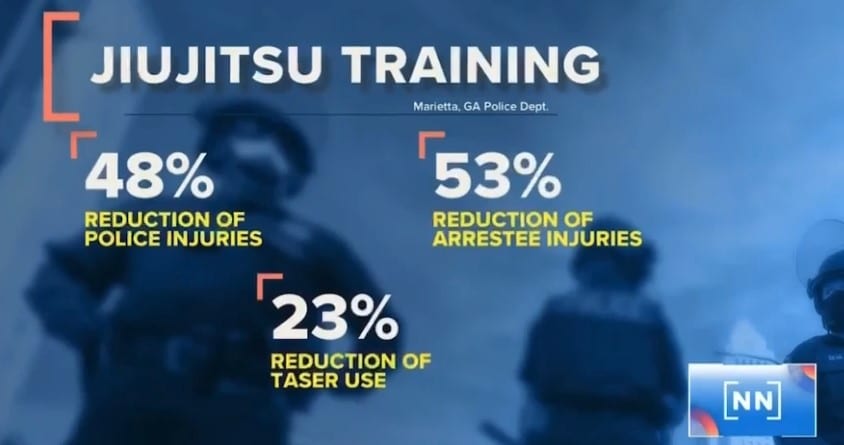
In Georgia, Jiu-Jitsu has become the main de-escalation tactic. in 2020, one year after the department started using Jiu-Jitsu in their training it reported a 48% reduction of police officers’ injuries, 53% reduction in arrestee injuries, and 23% reduction in taser use.

Research on how effective adopt a cop jiu jitsu program is in Georgia

Still, most countries don’t require de-escalation training for Police officers, but the concept has call on with police departments across the country. More departments are interested but don’t have the funding which is why in Georgia the latest leisure has considered funding Jiu-Jitsu for every police department in the state.

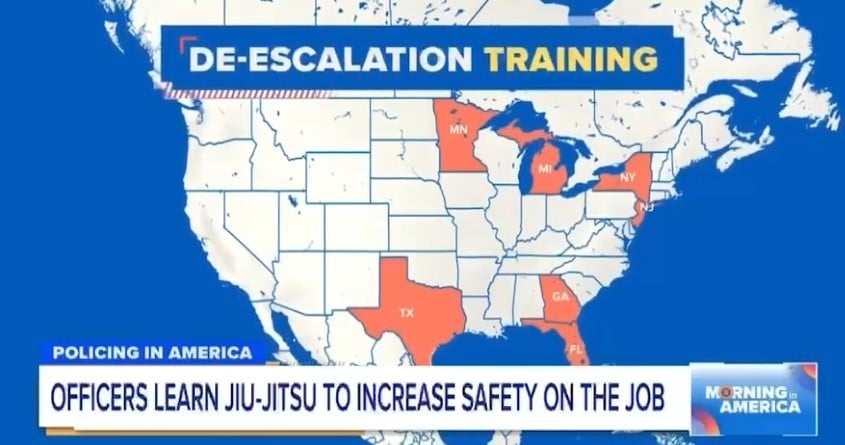
Countries using Adopt a cop jiu jitsu training in USA
Countries using Adopt a cop jiu-jitsu training in the USA

Unfortunately, not everyone believes in the concept. NAACP and a Georgia Based human rights organization both see it as another tactic for officers to act like warriors eager to test out their new moves on suspects, while others say that evidence is overwhelming.

“Jiu-Jitsu belongs to law enforcement. Less violence, less injuries, means better policing” – stated Dray Clark

Right now there are many researchers looking out to check if Jiu-Jitsu is a real deal.

Check out the video below:

UFC 274 Results: Charles Oliveira Chokes Justin Gaethje in the First Round

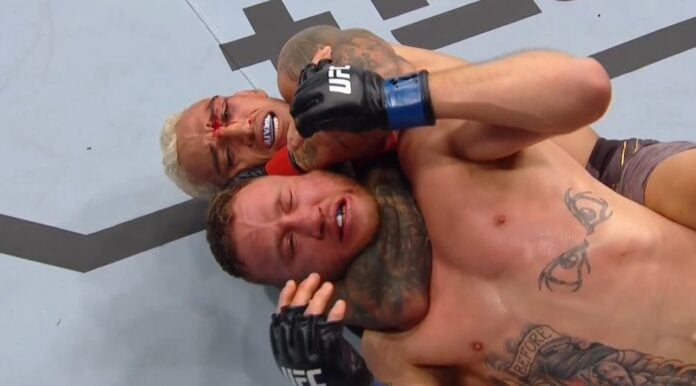
Charles Oliveira Chokes Justing Gathje at UFC

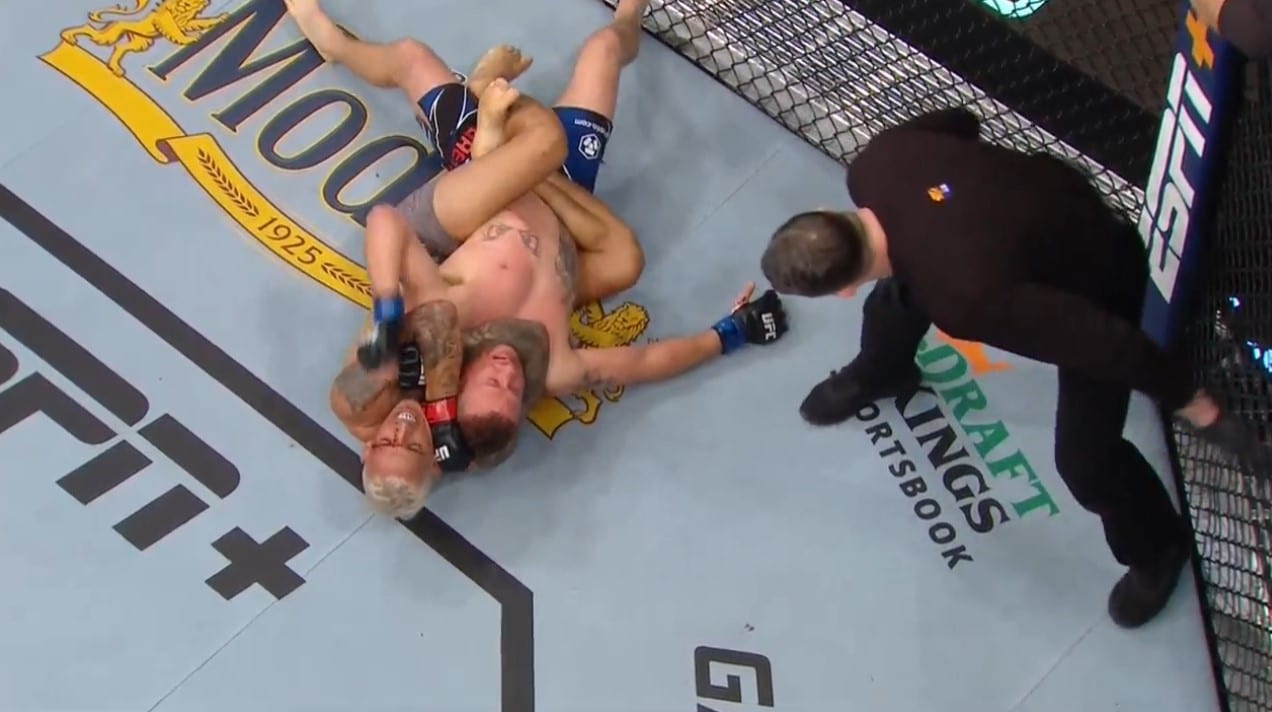
What a wonderful performance by Charles Oliveira! Charles Oliveira and Justin Gaethje had put everything they had on the line. In one of the best rounds ever, Oliveira defeated Justin Gaethje at UFC 274 by Rear Naked Choke and celebrated 11 times in a row, giving the American his second defeat in belt fights. Oliveira proved again why he’s the best Jiu-Jitsu practitioner and Jiu-Jitsu black belt in UFC. They both went to the floor in those wondrous minutes, and Oliveira came back from the knockdown again, grabbed the challenger by the neck after a few changes on the ground floor, and chokes with RNC.

But as he did not pass the weigh-in, Charles Oliveira did not become the champion, but the lightweight title will remain vacant. It is easily possible that Oliveira will get a chance to regain his belt in the next fight, clearly if he passes the scales, and now it remains to be seen who will be his next opponent. Maybe even Conor McGregor …

Charlees Oliveira Chokes Justin Gaethje

Esparza ascended the throne again after eight years

One of the worst title fights in UFC history was done by Carla Esparza, who became the new champion, and Rose Namajunas, the favorite who was left without a belt with her zither approach.

Rose Namajunas (11-4), a UFC straw fighter, enters the match after two wins over Weili Zhang and Jessica Andrade, preceded by a defeat again by Jessica Andrade with the famous ‘straw’ at UFC 237 that cost her her belt. Currently, her last title defense was at UFC 268 against Zhang, and she enters the match against Esparza as a bookmaker favorite.

Carla Esparza (18-6) enters the match against Namajunas after an impressive streak of five wins and was last defeated back in 2018 in a match against Tatiana Suarez, where she lost by technical knockout in the third round. Second-ranked Esparza has won four of their last five fights by referee’s decision, but bookmakers still trust Namajunas more in tonight’s clash.

At the beginning of the first round, Rose took the center of the cage, but in the first round, the fight was only around him. The first round to the displeasure of the audience passes without too much action, Esparza moved forward a couple of times but would retreat after a counter-attack by Rose.

In the second round Esparza knocks down Namajunas but only briefly, Rose managed to get up almost immediately. The rest of the round passed practically without action, just like in the first.

Esparza opens the third round of dew directly into the body, she took down Rose in the same way again, but she gets up again. The rest of the round was identical to the previous two with some unsuccessful attempts at demolition by Esparza.

In the fourth round, Esparza knocks Rose down twice and briefly takes his back, but Rose is soon on her feet. At the end of the round, Rose hits the right crochet, but Esparza crashes again and takes the round.

The fifth round again without action, eight seconds before the end of this time Rose knocks down Esparza.

Carla Esparza took the victory with a divided judge’s decision, thus becoming the new champion of the straw category.

Chandler turned off Ferguson with an incredible blow

The long-awaited fight between Michael Chander and Tony Ferguson ended in Chandler’s victory with a great knockout at the very beginning of the second round.

The fight started very dynamically and it was clear that they were both waiting for the right moment to attack. He was first greeted by Chandler, but Ferguson countered superbly with a left-handed direct, after which Chandler was on the floor. He immediately got up and continued, after which Ferguson continued to look for another blow. Still, right in the middle of the round, Chandler surprised him with a perfectly hit demolition and taking the fight to the floor. He worked well from the guards there, but Chandler quickly went through the same and hit several sets with his elbows by the end of the round.

The second round didn’t even make it, and it was all over. Chandler found a front kick to the head, in the style of legendary knockouts Lyot Machido and Anderson Silva, and Ferguson fell asleep at the same time. The fourth defeat in a row and maybe the end of his career.

St. Preux and Shogun put the spectators to sleep

The second fight on the schedule brought a rematch of the fight from 2014, in which Ovince St. Preux defeated Mauricio Shogun Ruu after just over half a minute. In the return match, the winner remained the same, but the fight was not nearly exciting, although it lasted almost 30 times longer.

It’s actually very easy to describe what was going on. The first two rounds were a fight in which the Shogun moved more aggressively, looking for space for attacks, but it can be said that they both scored equally, although without any too strong effect. Without too much content, especially one that would leave a more significant impression, it was hard to judge.

So the last round is very easy to conclude how he got St. Preux. He started hitting the tired Shogun more regularly, but it was still nothing that would lead to the end. But sure to take the round and eventually win. Namely, one judge gave him all three rounds, the other scored 29:28 in favor of the OSP, while one judge thought that two rounds belonged to the Brazilian.

The fight without the favorites was confirmed as such

The UFC 274 event kicked off with Randy Brown with a split decision by the judges over Khaos Williams.

Williams is a fighter who started his UFC career with two wins that took him half a minute, to show something more in his next three appearances. He entered this fight with a total of four wins from five UFC appearances. Brown is a bit more experienced and came in with a UFC ratio of 8-4, but also with four wins in his last five appearances.

Williams has confirmed himself as a fighter who aggressively opens fights and he did the same this time. At the beginning of the somewhat more reserved Brown, he managed to send a kick to the floor in the middle of the round, but he did not finish it so shaken. Still, he made enough to take the round. In the second, Williams is more tired, which Brown uses. He raised the pace, moved and scored well and equalized the situation after two rounds.

Brown continued in the last round, but in the middle of it, Williams took another bad blow and was again a fighter from Jamaica on the floor. He recovered and managed to catch his rhythm by the end of the round and finish it with more punches, but it was hard to guess what the judges would say about the last leg of the fight.

In the end, two judges scored Brown’s aggression and more shots, while only one thought that Khaos managed to steal the round with the blow. Great win for Brown, fifth in the last six fights.

UFC 274 Results

Charles Oliveira def. Justin Gaethje – 1st Round submission (RNC)

Rose Namajunas vs. Carla Esparza (c) – unanimous decision

Michael Chandler def. Tony Ferguson – Knockout, Round 2 (0:17)

Ovince St. Preux def. Mauricio Shogun Rua – split decision of the judges

Randy Brown def. Khaos Williams  split decision of the judges


Jocko Willink and Dean Lister’s 5 Most Painful Submissions

Jocko Willink and Dean Lister's 5 Most Painful Submissions

Submissions, usually, aren’t there to hurt, right? They’re meant to be tapped and that’s it. So, once you feel the pain you tap and the pain is gone. But, there are submissions that once they hurt they really hurt bad, and the time it takes you to tap is usually the worst pain you can experience.

The good thing about it is that it stops immediately as your partner let it go unless you tap late or you didn’t tap at all. But, that’s for another topic.

In the video below we can see Jocko Willink and Dean lister shows us techniques that they think hurt the most.

They introduce the calf slicer that turns into a toe hold called “The Hobbler”. With a good amount of pressure and a bit of unnecessary force, you’re sure to lose a training partner for good.

The other techniques they show are Kimuras with the “elbow to the ribs” technique that don’t really do anything special but hurts a lot. There are also Triangle variations with an elbow to your opponent’s temple. There’s a Khabib’s Fukrum Choke, and an Ezekiel choke with some Jocko Willing added pain moments, etc.

While this video is very entertaining and informative using some of these techniques in your gym with your JIu-Jitsu friends won’t really help you gain more friends, and you’re actually losing some. But, maybe, they’re good for competition because in competition anything legal goes. You wanna win, right?